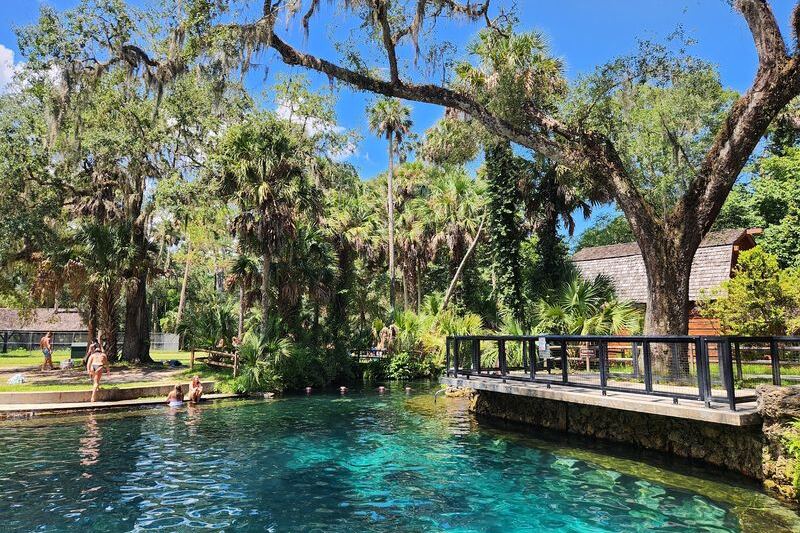
Fort Myers has no shortage of sun-soaked attractions, but tucked away on Ortiz Avenue sits a 105-acre sanctuary that most tourists completely overlook. This place blends nature trails, live wildlife encounters, and a full-blown planetarium under one roof, and somehow manages to keep admission prices surprisingly low.
I stumbled across it on a whim and ended up spending an entire afternoon there, which tells you everything you need to know. Whether you have curious kids in tow or just want a quiet escape from the beach crowds, this spot delivers a genuinely memorable experience that feels nothing like the typical Florida tourist trap.
Finding the Place: Address, Location, and First Impressions
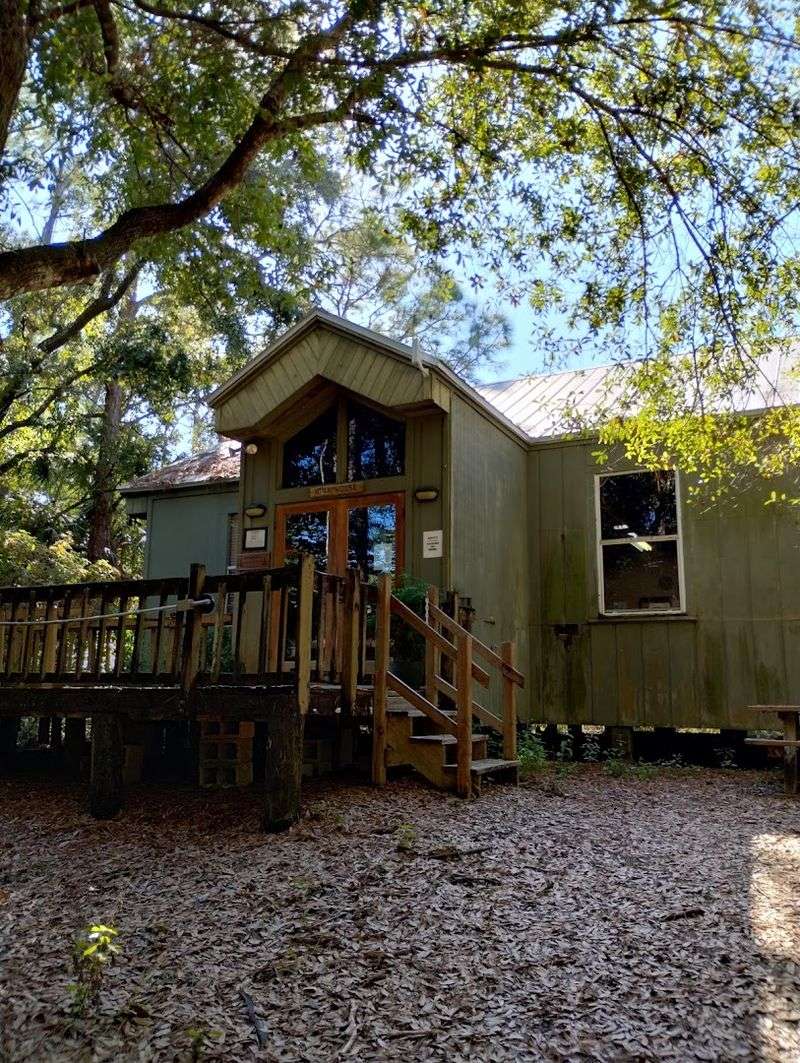
Right off Ortiz Avenue in Fort Myers, Florida, the Calusa Nature Center and Planetarium sits at 3450 Ortiz Ave, Fort Myers, and the moment you pull in, you notice the shell-covered parking lot that crunches satisfyingly underfoot.
The grounds have a rustic, lived-in feel that signals this is not a polished theme park. Ramps lead up to the main entrance, and accessible van parking is available, so getting inside is straightforward for visitors of all mobility levels.
Admission runs around $13 for adults and $7 for children, which feels like a fair deal once you realize how much is packed into those 105 acres. The center is open Tuesday through Sunday from 10 AM to 4 PM and is closed on Mondays, so plan your visit accordingly.
The Story Behind the Sanctuary
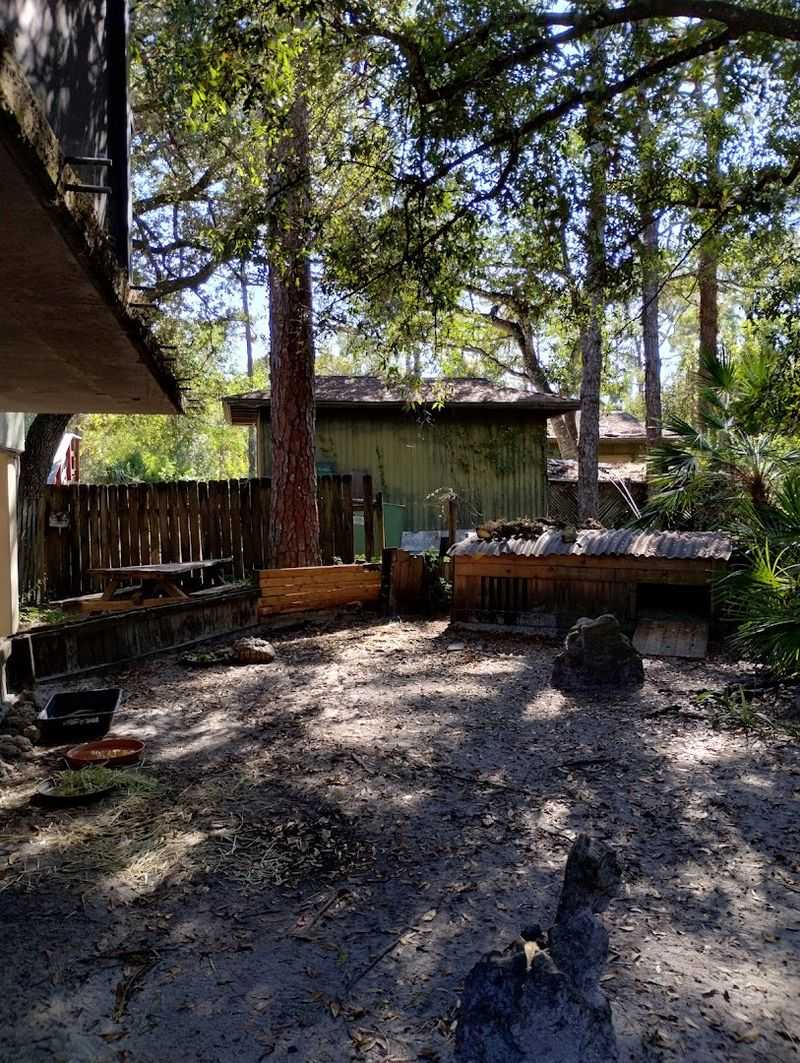
Long before this property became an educational hub, the land itself carried deep cultural significance. The center takes its name from the Calusa people, the indigenous group who inhabited Southwest Florida for thousands of years before European contact.
Inside the main building, a section dedicated to Calusa history gives visitors a glimpse into the lives of these resourceful coastal people. The exhibits could benefit from more detailed signage, but the core story of who lived here first adds meaningful context to every trail you walk afterward.
The center has operated as a nonprofit environmental education organization for decades, surviving hurricanes and funding challenges that would have shuttered less determined institutions. Hurricane damage has left some exhibit spaces still under repair, and the staff is transparent about that.
Knowing the backstory makes the whole visit feel more purposeful, like you are not just passing through but actually connecting with the land itself.
The Main Building: Live Animals and Hands-On Exhibits
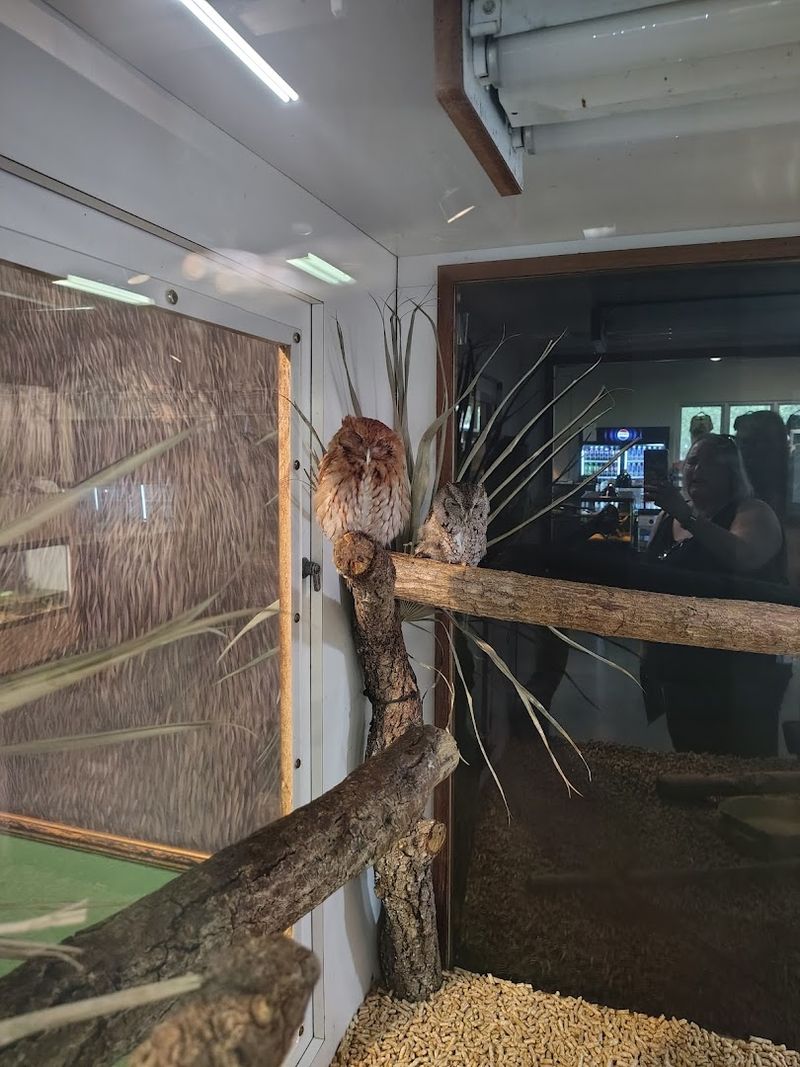
The main building is where the center really earns its reputation with families. Inside, you will find a lively mix of live animals and natural history displays, including live turtles, baby owls, and snakes that visitors can actually get close to.
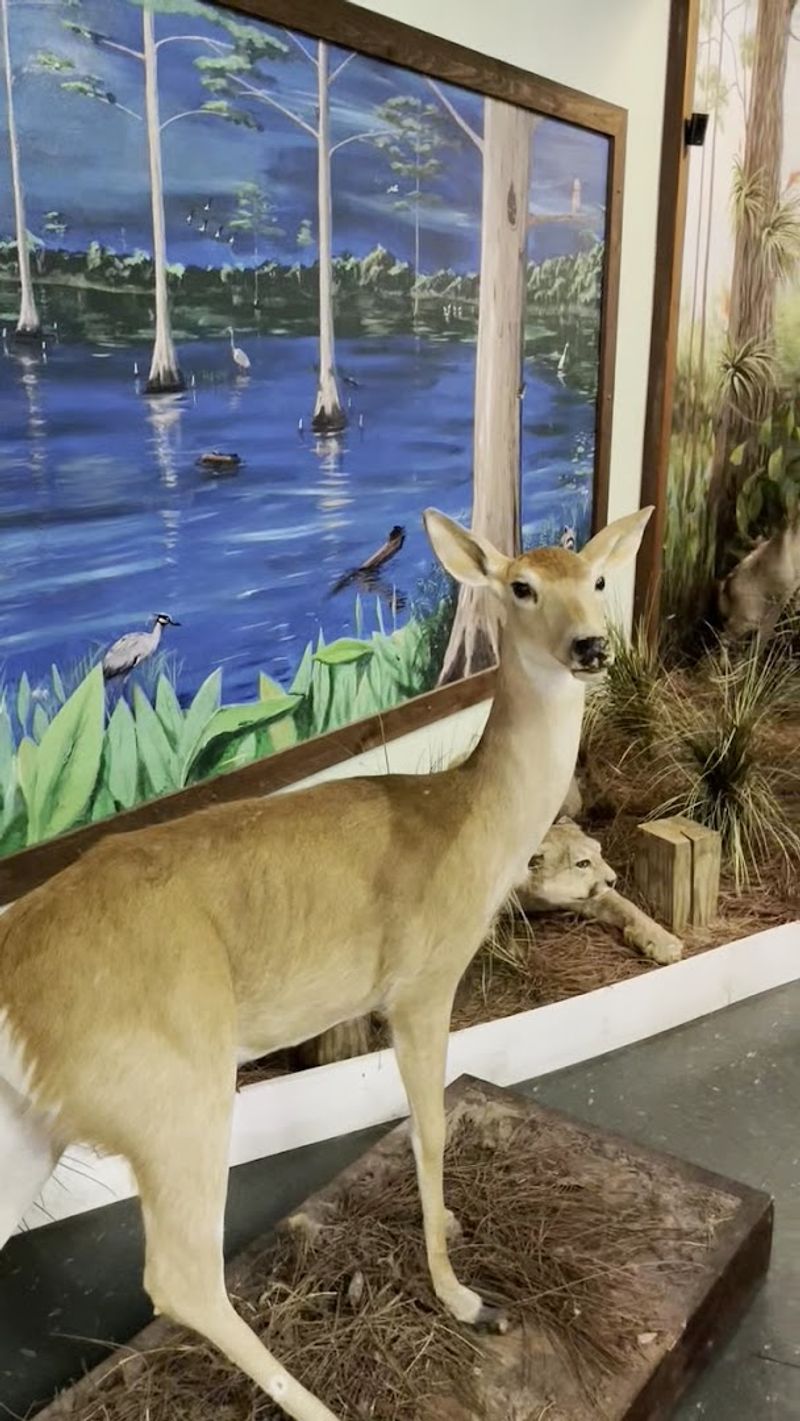
Taxidermy displays of deer and other local wildlife line the walls, offering a detailed look at Florida fauna that you rarely see this up close. Kids can touch snake skins, turtle shells, manatee teeth, and shells of various kinds, turning the visit into a tactile learning experience rather than a passive one.
Microscopes, puzzles, and hands-on toys are scattered throughout, giving younger visitors plenty to engage with between the bigger exhibits. A jumping spider terrarium has become a crowd favorite, drawing more fascination than you might expect from such a tiny creature.
The staff genuinely knows their stuff and handles even the toughest questions from curious kids with patience and enthusiasm.
The Planetarium: Stars, Shows, and Surprisingly Comfortable Seats
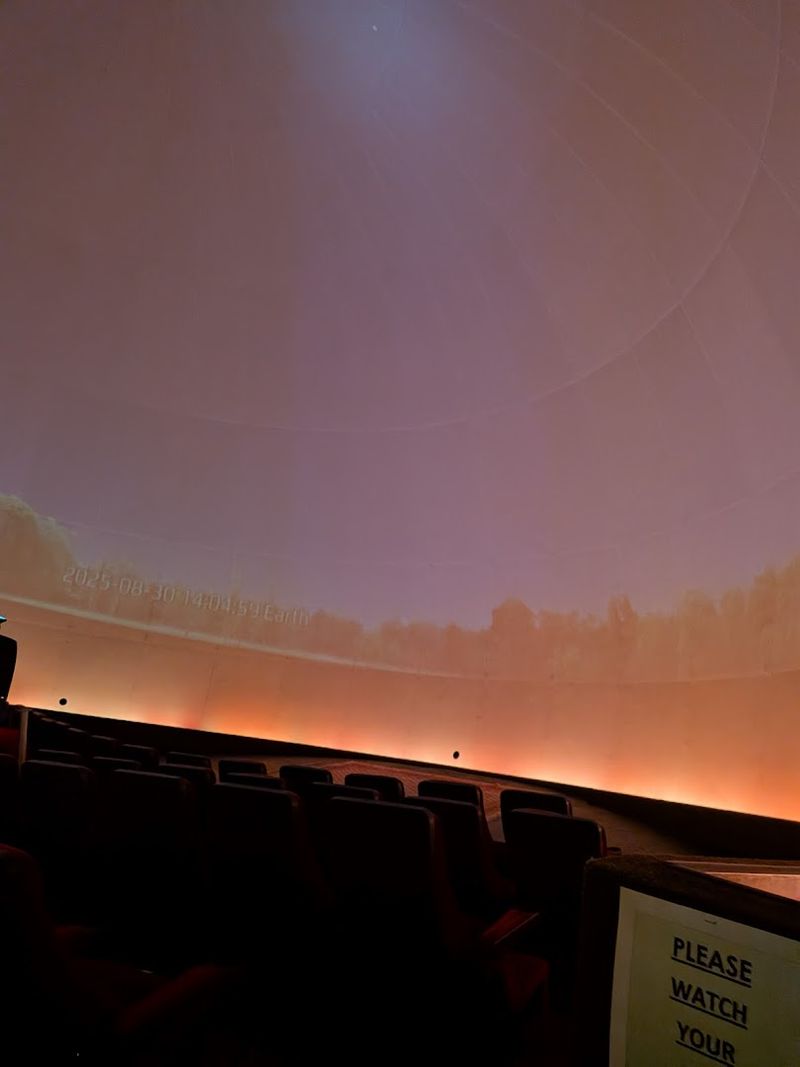
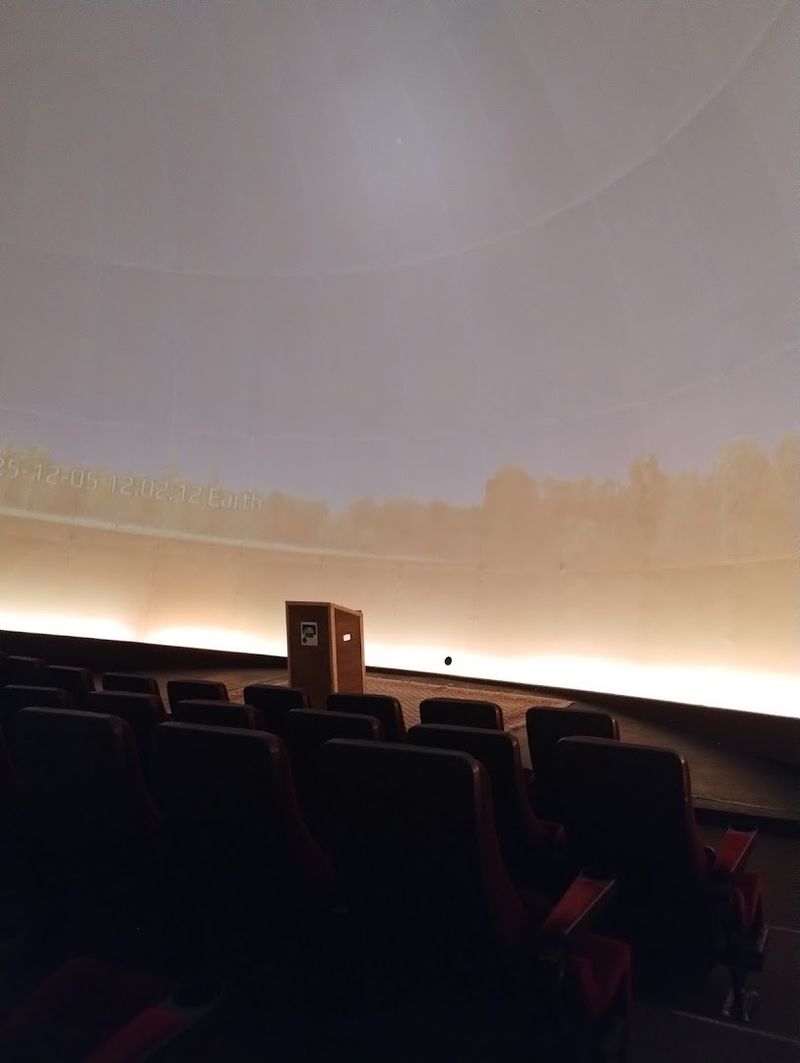
Few people expect to find a functioning planetarium in a mid-sized Florida nature center, but here it is, and the newly renovated version is genuinely impressive. The seating has been upgraded to plush, comfortable chairs that make gazing upward at the dome ceiling far more enjoyable than it sounds.
The projection system received a significant overhaul, and the results are visible the moment the lights dim. Shows cover topics ranging from the solar system to the science of the human brain, and the presenters bring real enthusiasm to each performance.
On most days, two shows run back to back, with three offered on Sundays. Arriving early is smart because the planetarium fills up quickly, especially on weekends, and there is no reservation system for the standard shows.
The staff member who walked our group through the lobby exhibits before the show started turned what could have been dead time into one of the more engaging parts of the whole visit.
Live Animal Presentations: Snakes, Gators, and Up-Close Encounters
Between planetarium shows, the center runs live animal presentations that bring the education off the walls and into your hands. The shows feature a rotating cast of residents, including turtles, snakes, and baby alligators, and the handlers make every creature feel approachable rather than intimidating.
A talk focused on snakes and alligators drew a lively crowd during my visit, with the presenter fielding rapid-fire questions from a group of elementary schoolers without missing a beat. Spark Plug the snake, a longtime resident, has earned a fan base of his own, and yes, the scales are softer than you would expect.
The baby alligators are a reliable crowd-pleaser, and the handlers are careful to explain the animals’ stories, including why they live at the center rather than in the wild. These presentations run on a posted schedule, so checking the daily lineup when you arrive helps you plan your time without missing anything good.
The Nature Trails: Two Routes Through 105 Acres of Florida Wilderness
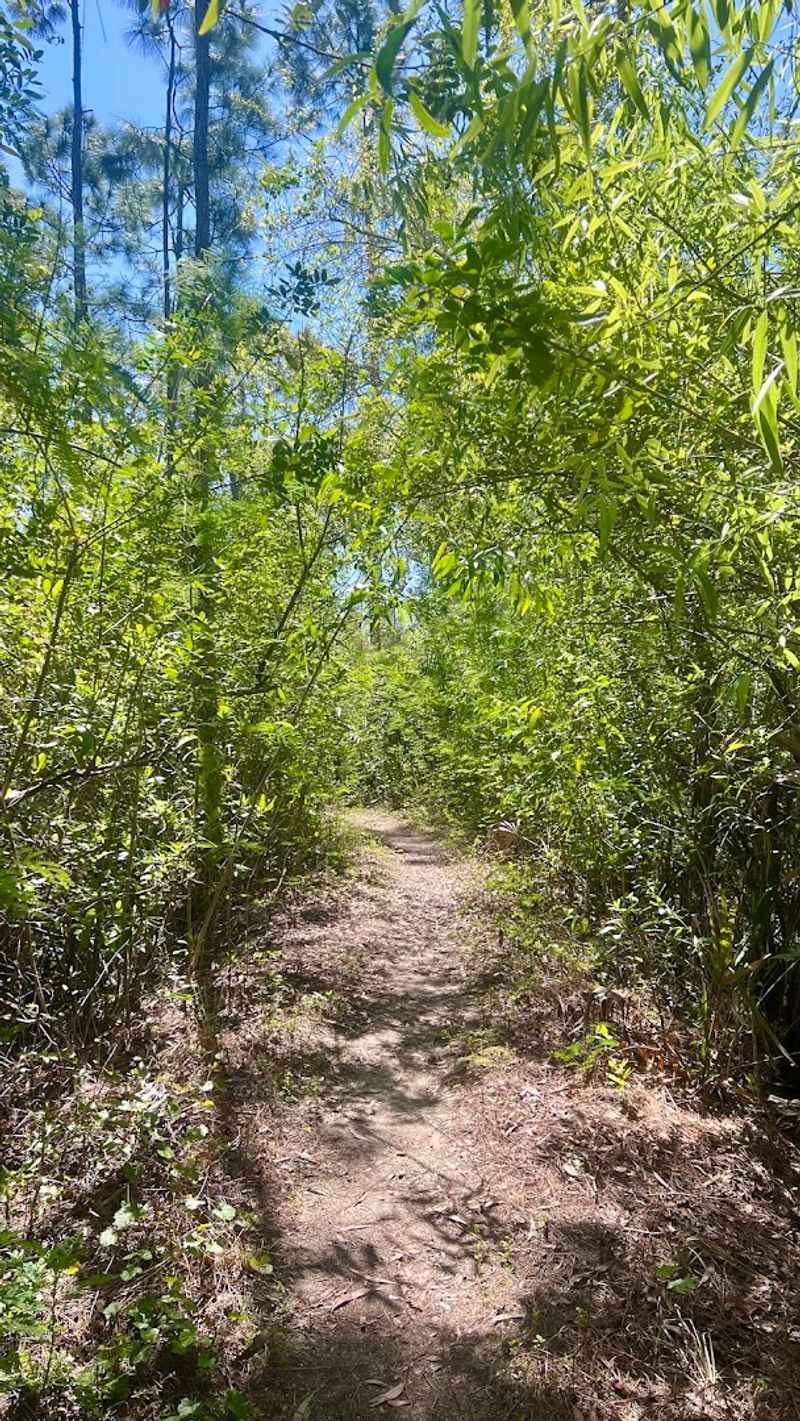
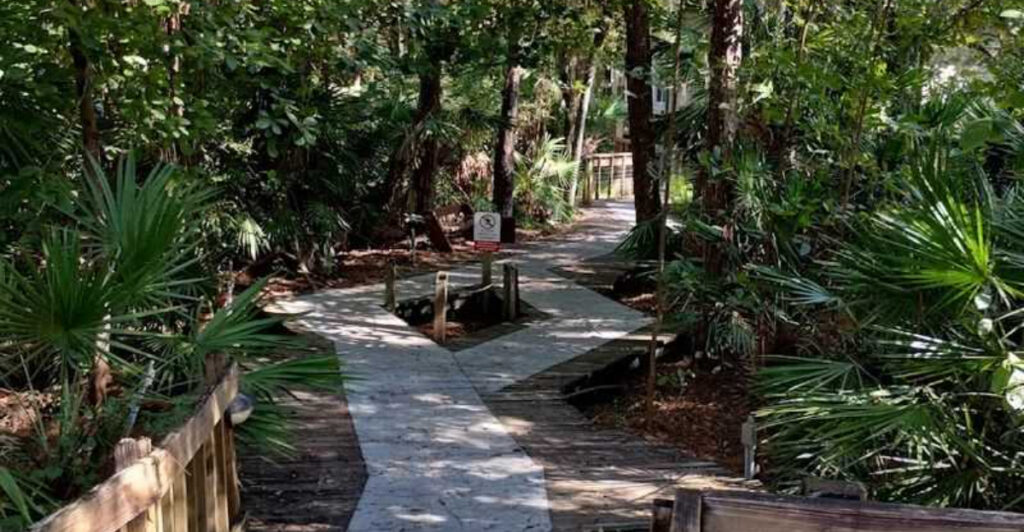
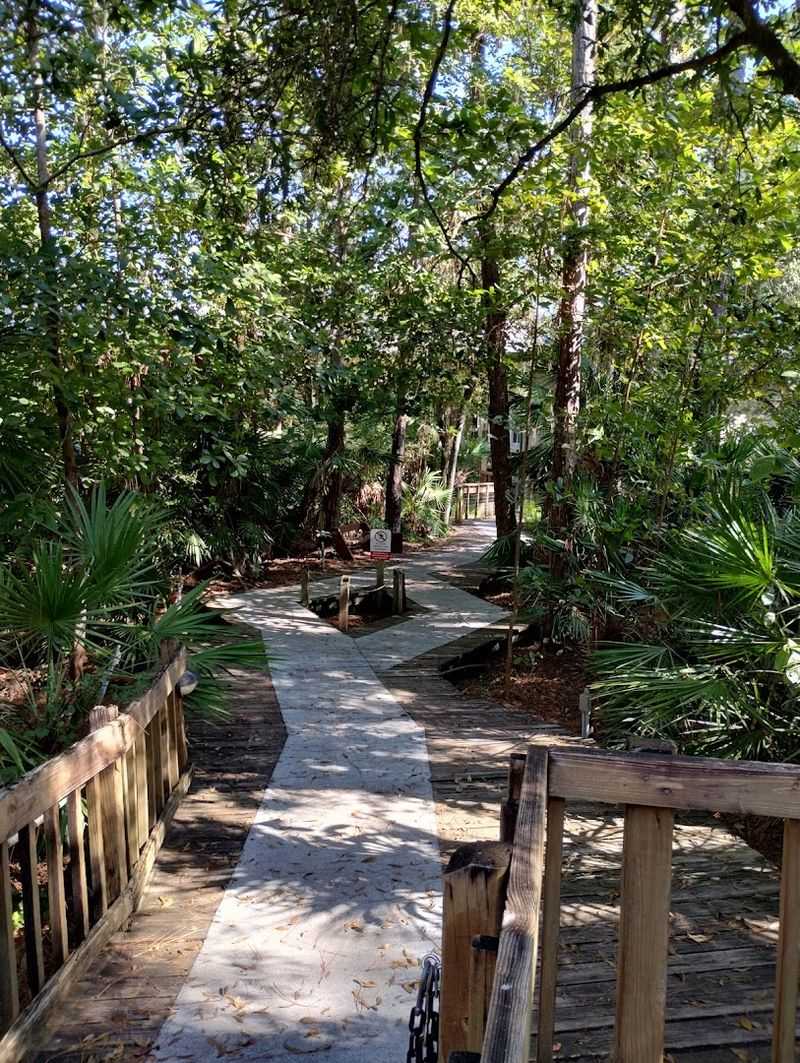
Two trails wind through the property, offering different experiences depending on how much time and energy you have. The shorter loop covers about 0.3 miles and works well for families with small children or anyone who wants a quick breath of fresh air between indoor exhibits.
The longer trail stretches just over a mile and takes you deeper into the property’s native Florida landscape, where the sounds of the city fade and the trees close in around you in the best possible way. Both trails are relatively flat, making them accessible to most visitors without any serious hiking experience required.
Hot summer days can make the longer trail feel more demanding than it looks on the map, so carrying water is a practical idea year-round. Trail closures do happen occasionally for maintenance or fire suppression practices, and the staff will let you know at the entrance if any section is off-limits during your visit.
Birds of Prey: The Aviary and Rescued Raptors
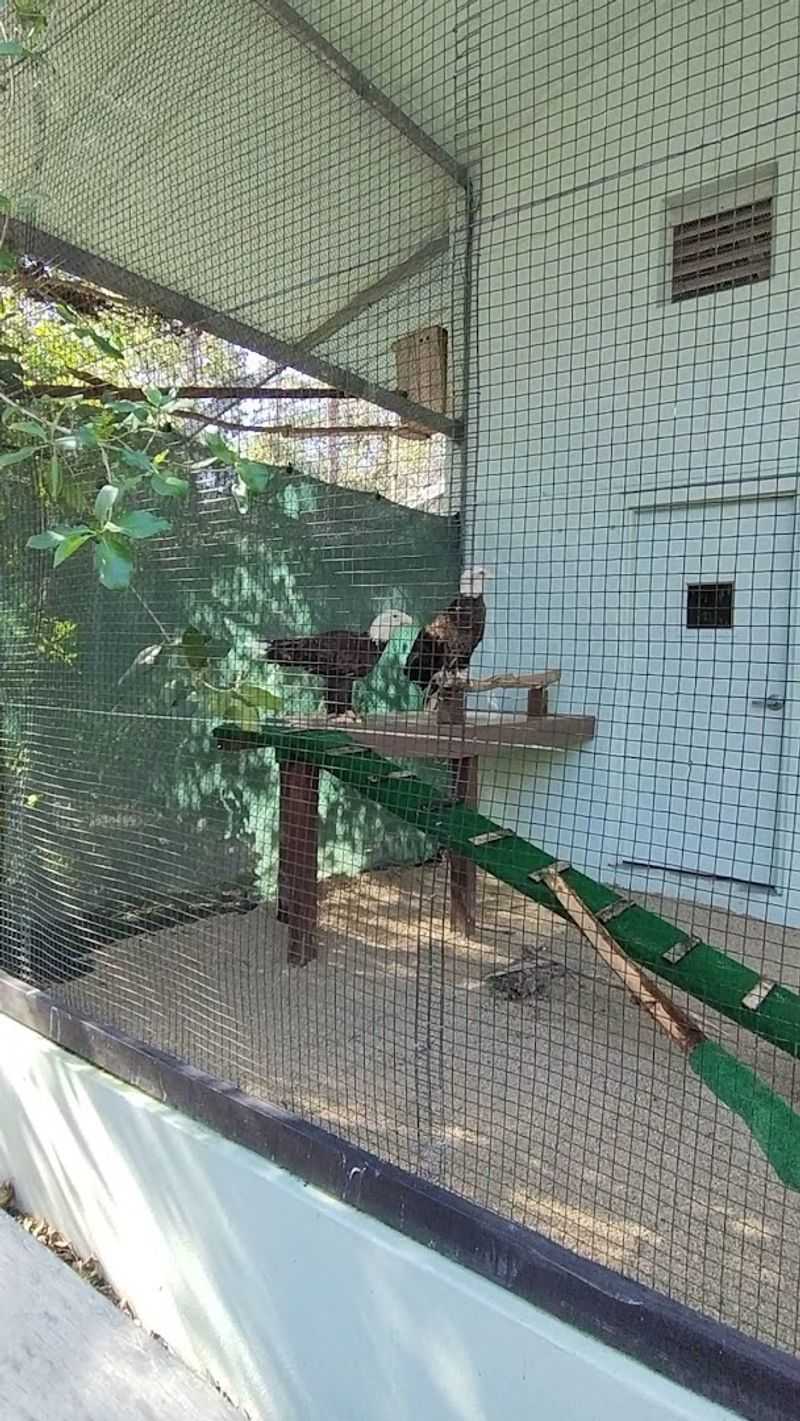
Getting within three feet of a live eagle is not something most people expect from a Tuesday afternoon outing, but the raptor aviary at this center makes exactly that possible. The birds housed here are rescues, meaning they cannot survive in the wild due to injuries or other circumstances, and the center provides them with a permanent home.
Eagles, owls, and other birds of prey are displayed in outdoor enclosures that allow close viewing without barriers that obstruct your sightline. The proximity is genuinely striking, and the sheer size of some of these birds becomes apparent in a way that photographs simply cannot capture.
More informational signage explaining each bird’s individual story and the circumstances that brought them to the center would enhance the experience, and that is an area where the staff has acknowledged room for growth. Even so, the aviary consistently ranks as one of the most memorable stops on the grounds for adult visitors.
The Butterfly Garden: Native Plants and Winged Visitors
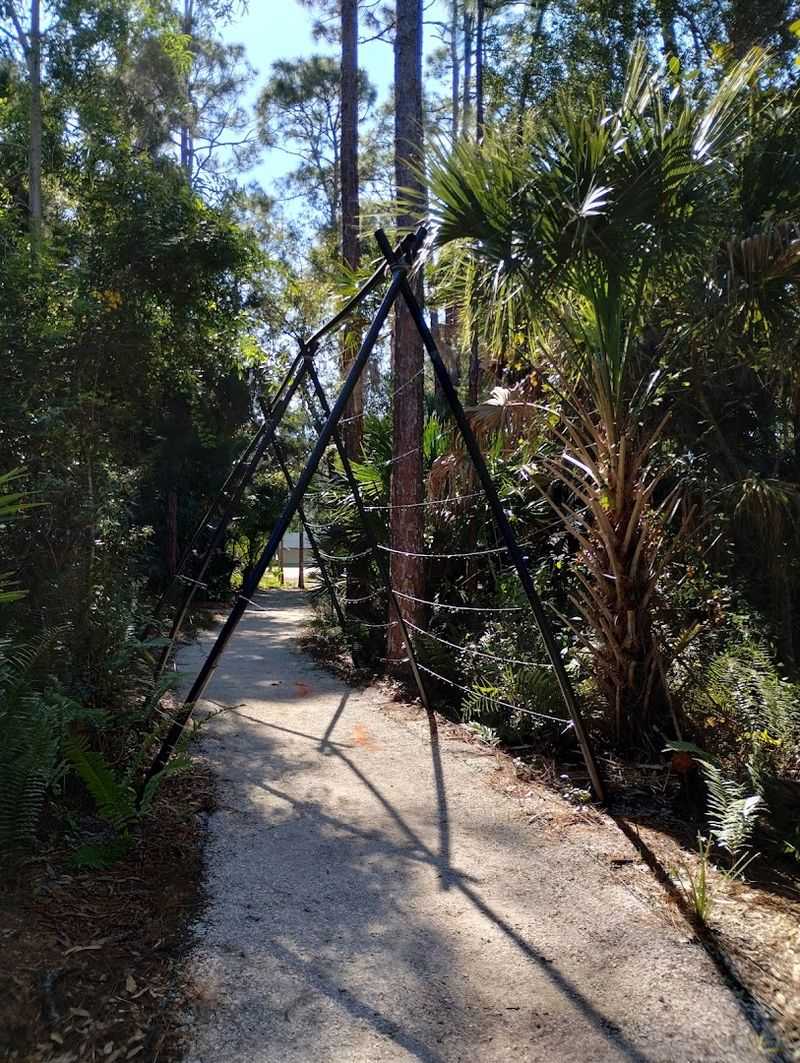
Tucked alongside the main building, the butterfly garden offers a quieter counterpoint to the livelier animal exhibits inside. Native Florida plants fill the space, attracting local butterfly species that drift through in numbers that vary by season and time of year.
The garden’s charm is real, though the experience can be hit or miss depending on when you visit. Some visitors find the space buzzing with activity, while others arrive during slower periods when only a handful of butterflies are present.
The plant selection is thoughtful, featuring species that support the full butterfly life cycle rather than just providing a pretty backdrop. Milkweed, pentas, and other native flowering plants do the quiet work of sustaining a population that shifts with the seasons.
A double-door entry system would help reduce escapees and improve the garden’s overall function, and that is a detail the center may address as ongoing restoration work continues across the property.
Outdoor Rest Areas and Picnic Spaces
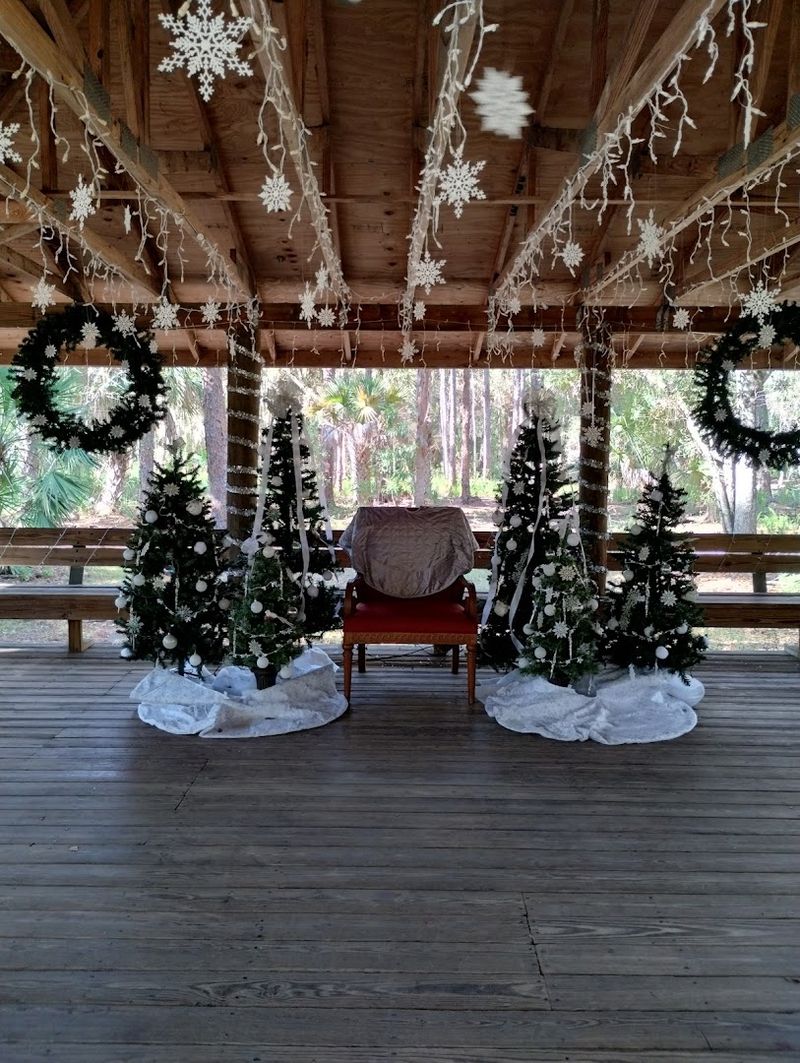
One practical detail that makes a full-day visit genuinely comfortable is the large covered outdoor area with plenty of tables and seating. The center does not have a food concession, so bringing a packed lunch or snacks is the move if you plan to stay for multiple shows and trail walks.
The covered pavilion, sometimes called the Pine Pavilion, provides shade and shelter that becomes essential during Florida’s warmer months. Families with toddlers especially appreciate having a shaded spot to regroup, refuel, and let the little ones decompress between activities.
The same pavilion doubles as a rental venue for private events. Baby showers, birthday parties, and other gatherings have taken place here, with string lights, a projector screen, and enough seating to accommodate a sizable group without anyone feeling crowded.
Having a designated rest zone built into the layout makes the pacing of a full visit feel natural rather than rushed, which is a small detail that adds up over the course of a day.
The Resident Alligator: A Scaly Surprise on the Grounds
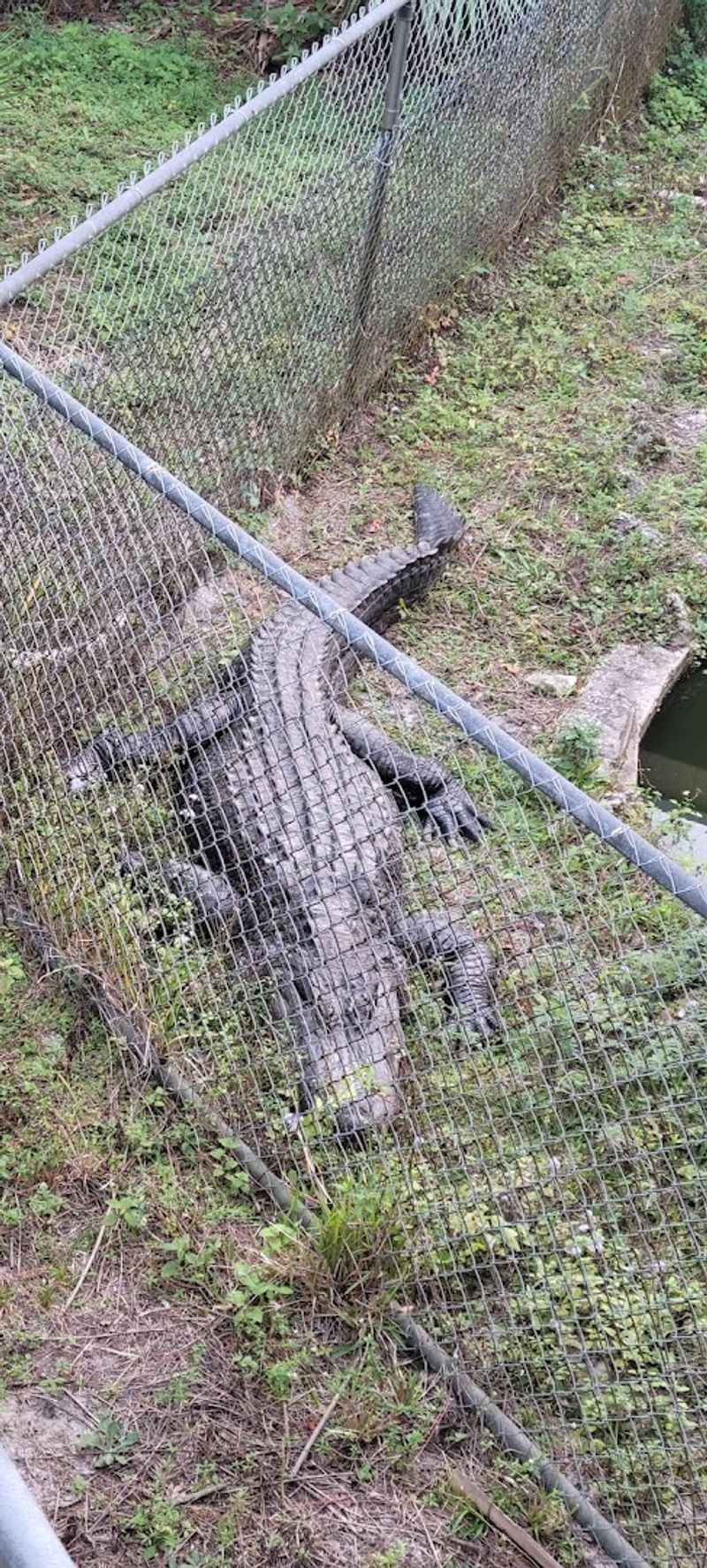
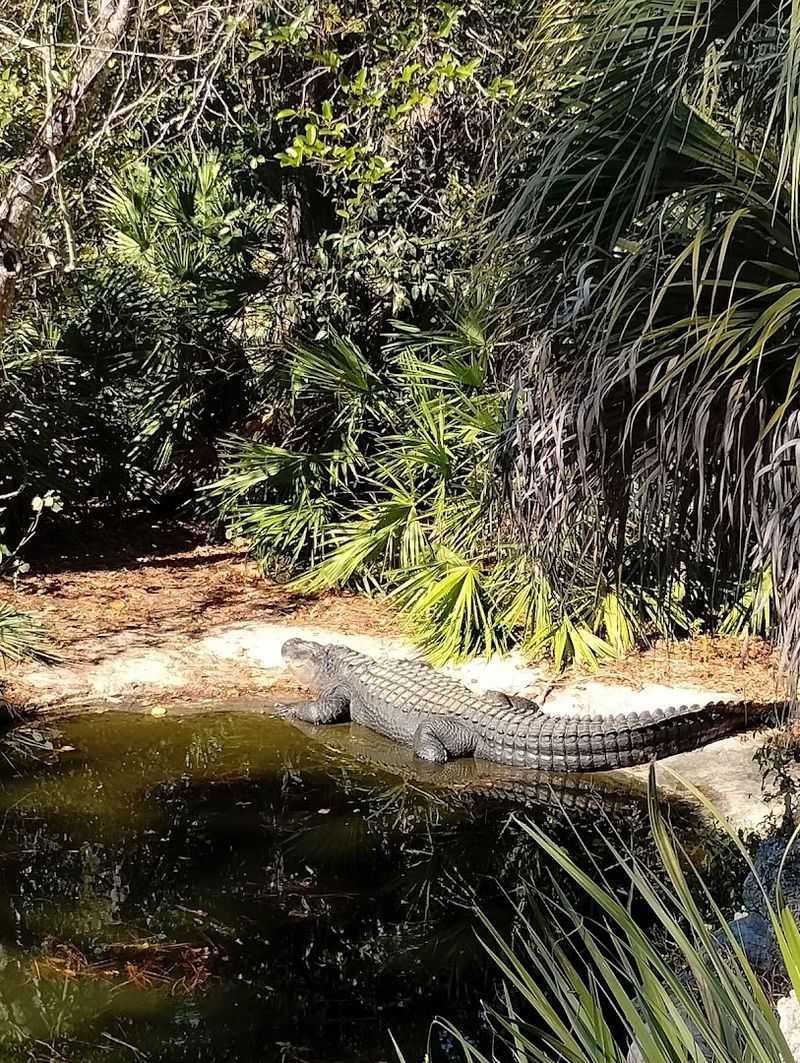
Somewhere on the grounds, a full-sized alligator lives in an outdoor enclosure, and spotting it depends partly on timing and partly on luck. The animal is a rescue, like most of the center’s wildlife residents, and its presence adds a distinctly Florida flavor to an already wildlife-rich property.
The enclosure is modest in size, which is something the center acknowledges, and the staff is attentive about the animal’s care and overall condition. During busier days, a staff member is often nearby to answer questions and provide context about the gator’s story and behavior.
Florida alligators are so common in the wild that it is easy to take them for granted, but seeing one this close, without the risk involved in a chance encounter on a golf course or riverbank, carries its own quiet thrill. Keep an eye out near the outdoor exhibits rather than the trails for the best chance of a sighting.
Holiday Events: When the Trails Light Up at Christmas
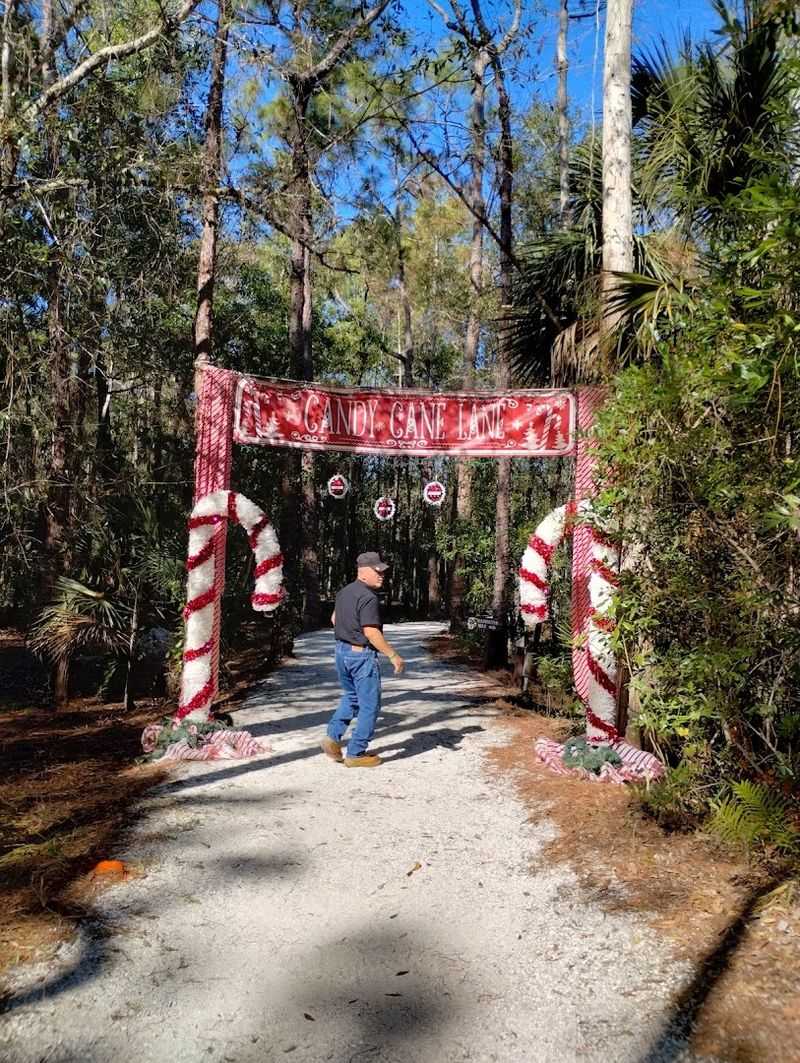
During the holiday season, the center transforms into something that feels genuinely magical. A lighted Christmas trail winds through the property, with decorations strung through the trees and along the paths that are normally used for quiet daytime nature walks.
The event includes a visit with Santa, a bonfire where guests can roast marshmallows, a musical stage for children, and a spread of crafts and games that keep families busy for a couple of hours. Admission during the holiday event has run around $10 for adults and $5 for children, making it one of the more affordable festive outings in the Fort Myers area.
The event has built a loyal following, with some families returning year after year as part of their holiday tradition. Dates and show times vary each season, so checking the center’s website or Facebook page before heading out is the best way to catch the full schedule.
Field Trips and School Groups: Education in Action
The center has built a strong reputation as a field trip destination for Southwest Florida schools, and watching a group of fifth graders work through the exhibits gives you a clear sense of why. The educators here handle classroom-sized groups with ease, keeping the energy high and the information flowing at a pace that holds young attention spans.
Interactive elements like touchable specimens, live animals, and the planetarium show give students multiple ways to absorb the same core concepts, which is exactly the kind of multi-sensory approach that makes science stick. Teachers who use the visit as a supplement to their curriculum consistently find that the kids retain more than they expected.
Parents who homeschool have also discovered the center as a reliable resource, offering hands-on science and astronomy content that is hard to replicate at home. Booking a group visit in advance is recommended, as school groups and general visitors share the same space and popular show times fill up fast.
Practical Tips for Getting the Most Out of Your Visit
A few logistical details can make the difference between a smooth visit and a frustrating one. The parking lot fills up on busy Saturdays, but the crowd tends to spread out across the grounds once inside, so the space rarely feels overcrowded even when the lot looks full.
Arriving early gives you the best shot at planetarium seating, since the venue is small and shows fill to capacity without a ticketing system for reserved spots. Coming in at opening, doing the outdoor exhibits and trails first, and then heading to the planetarium about 15 minutes before show time is the strategy that works best.
No food is sold on-site, so packing snacks or a lunch is genuinely useful rather than just a suggestion. Accessible restrooms are available in both the main building and the planetarium, and the overall layout is manageable for visitors using mobility aids.
The center’s website at calusanature.org keeps the most current schedule and event listings.
Why This Place Deserves More Attention Than It Gets
There is something quietly impressive about a place that manages to run nature trails, a wildlife rescue operation, live animal programming, and a functioning planetarium all on a nonprofit budget in a mid-sized Florida city. The Calusa Nature Center and Planetarium does not shout for attention, and that restraint is part of its appeal.
The facility has weathered hurricanes, budget constraints, and the general indifference that tends to follow smaller cultural institutions in tourist-heavy markets. Yet it keeps showing up, keeps rescuing animals, and keeps running shows for kids who might otherwise never look up at a star map.
Some exhibits need updating, more signage would help, and a few corners of the property are still recovering from storm damage. But none of that diminishes the core experience, which is spending a few hours genuinely connected to the natural world without spending a fortune to do it.
That kind of value is harder to find than it should be.
Share this story