Gothic architecture is one of the most dramatic and awe-inspiring styles ever created by human hands. From towering spires to glowing stained glass windows, these buildings have a way of making you feel incredibly small — in the best possible way.
Spread across Europe and beyond, Gothic destinations carry centuries of history, mystery, and jaw-dropping beauty. Whether you love history, art, or just really cool buildings, this list has something that will blow your mind.
Notre-Dame Cathedral – Paris, France
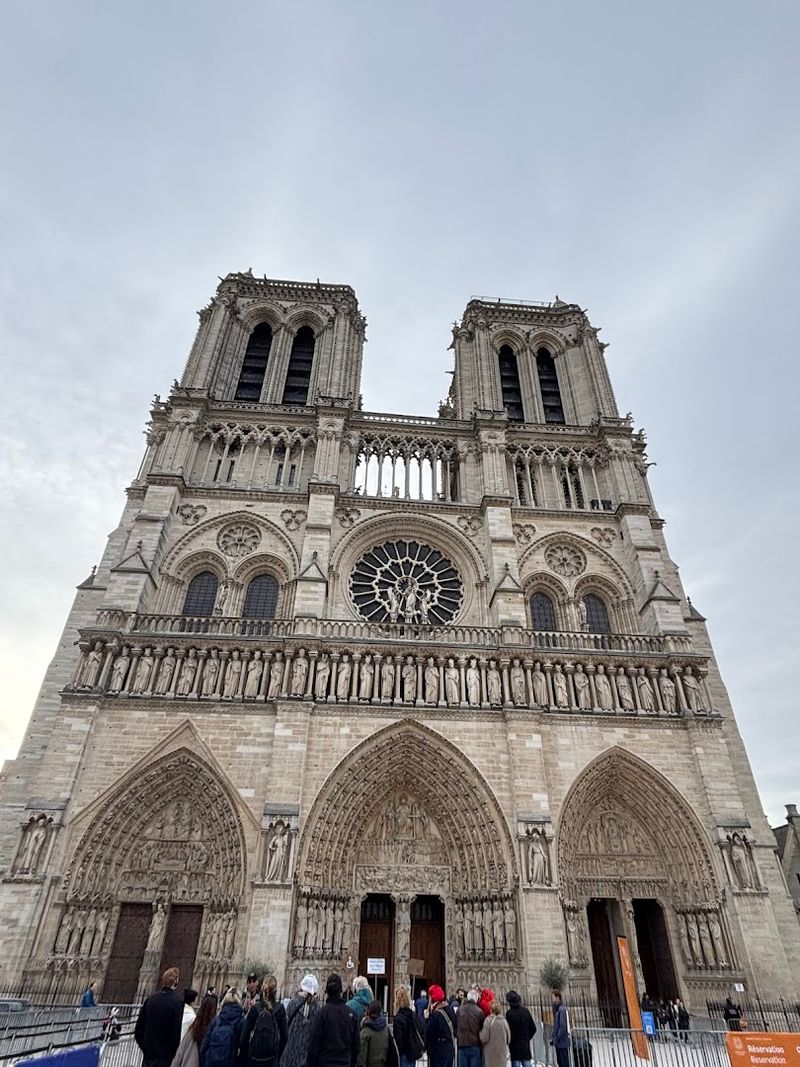
Few buildings on Earth carry as much emotional weight as Notre-Dame Cathedral in Paris. Its twin towers have watched over the city for over 850 years, surviving revolutions, wars, and even a devastating fire in 2019.
The cathedral is not just a building — it is a living piece of history that refuses to be forgotten.
Gothic architecture hit its stride in 12th-century France, and Notre-Dame is basically its poster child. Pointed arches, ribbed vaults, and those famously creepy gargoyles all work together to create something that feels almost otherworldly.
The famous rose windows filter light into colors that no Instagram filter could ever replicate.
After the 2019 fire, restoration efforts drew global attention and support, proving just how deeply people around the world care about this place. Notre-Dame is currently being restored and is expected to reopen to visitors.
Standing before it — even partially covered in scaffolding — is a reminder that some things are truly worth saving at any cost.
Cologne Cathedral – Cologne, Germany
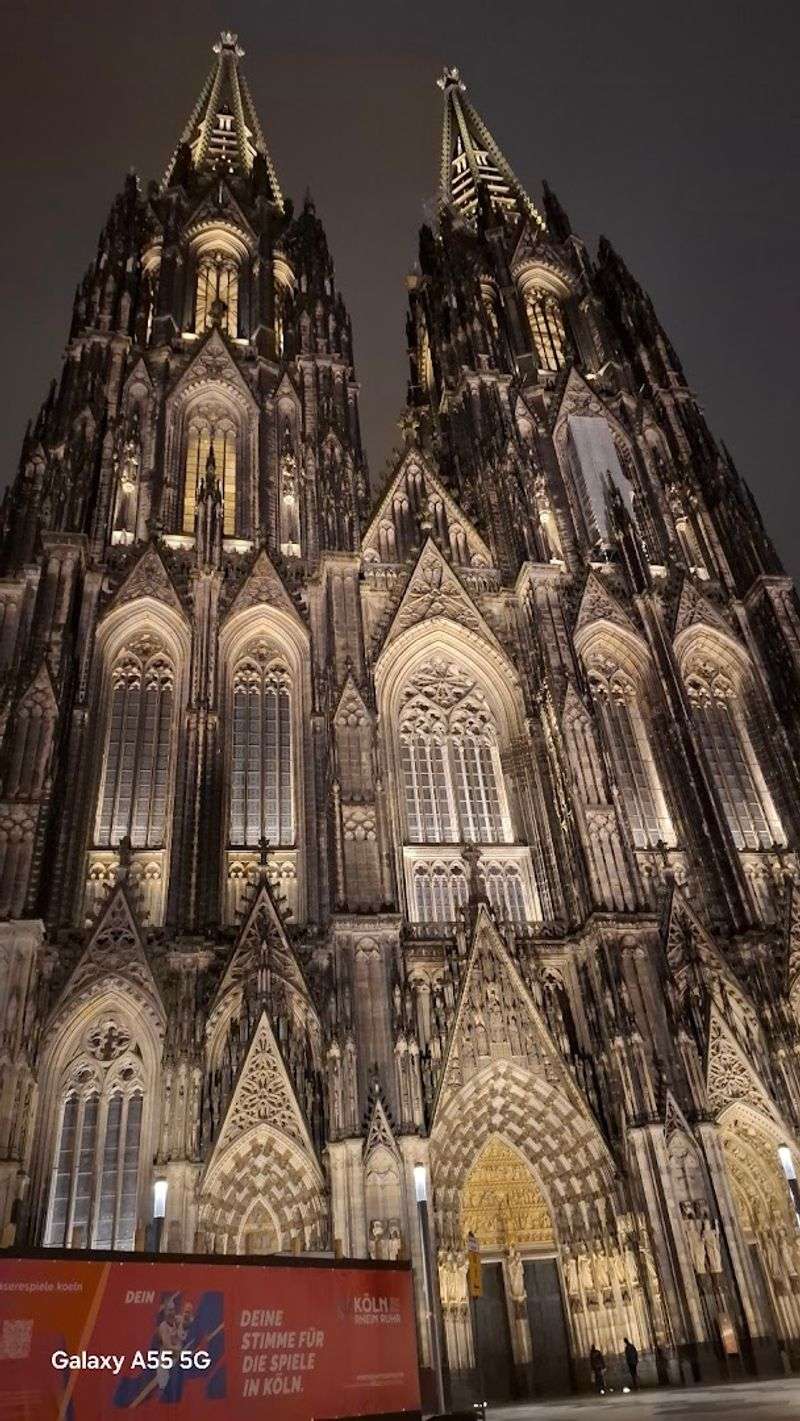
Imagine starting a construction project in 1248 and not finishing it until 1880. That is exactly what happened with Cologne Cathedral, and somehow the wait was absolutely worth it.
The result is one of the most breathtaking Gothic cathedrals in the world, with twin spires that punch more than 150 meters into the German sky.
This cathedral is not just tall — it is overwhelmingly detailed. Every surface seems to be carved with something intricate, from delicate stonework to richly colored stained glass windows that have been telling biblical stories for centuries.
Standing inside and craning your neck upward gives you a genuine sense of how ambitious Gothic builders really were.
Cologne Cathedral is a UNESCO World Heritage Site and still serves as an active place of worship today. Millions of visitors pass through its doors every year, yet it never seems to lose its sense of quiet grandeur.
One of its most treasured possessions is the Shrine of the Three Kings, a golden reliquary said to contain the remains of the Biblical Magi. History, art, and faith all collide here in spectacular fashion.
Milan Cathedral (Duomo di Milano) – Italy
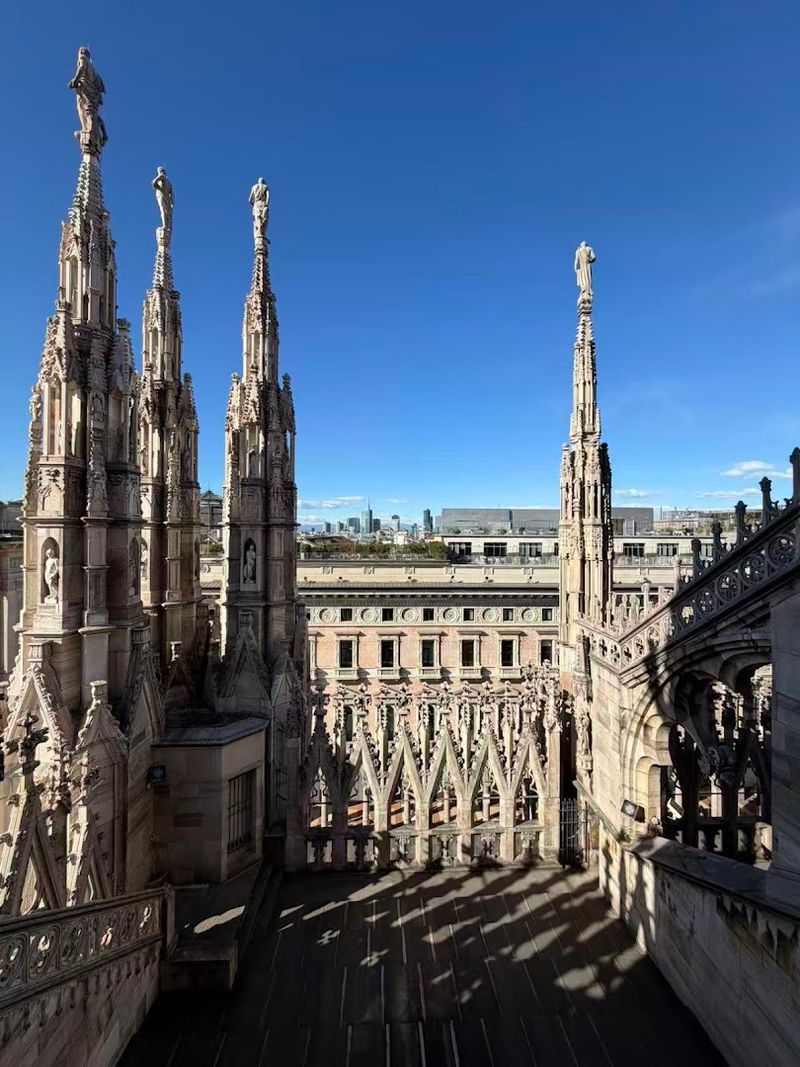
Someone once described the Duomo di Milano as a “marble hedgehog,” and honestly, that is not far off. Bristling with over 3,400 statues and 135 spires, this cathedral is one of the most elaborately decorated buildings ever constructed anywhere on the planet.
It took nearly six centuries to complete, which means generations of artists and craftsmen all left their mark on its surface.
What makes visiting the Duomo extra special is the rooftop terrace experience. You can actually walk up among those famous spires and look out over Milan from above — it is one of the most unique architectural perspectives you will ever get.
Up close, the craftsmanship is staggering, with faces and figures carved into every available inch of marble.
Inside, the cathedral is equally jaw-dropping, with the tallest nave of any Gothic church in the world. The light filtering through its stained glass windows creates a soft, golden atmosphere that feels almost dreamlike.
The Duomo sits right at the heart of Milan’s city center, making it impossible to miss and very hard to walk away from. It earns every bit of the hype it gets.
Chartres Cathedral – Chartres, France
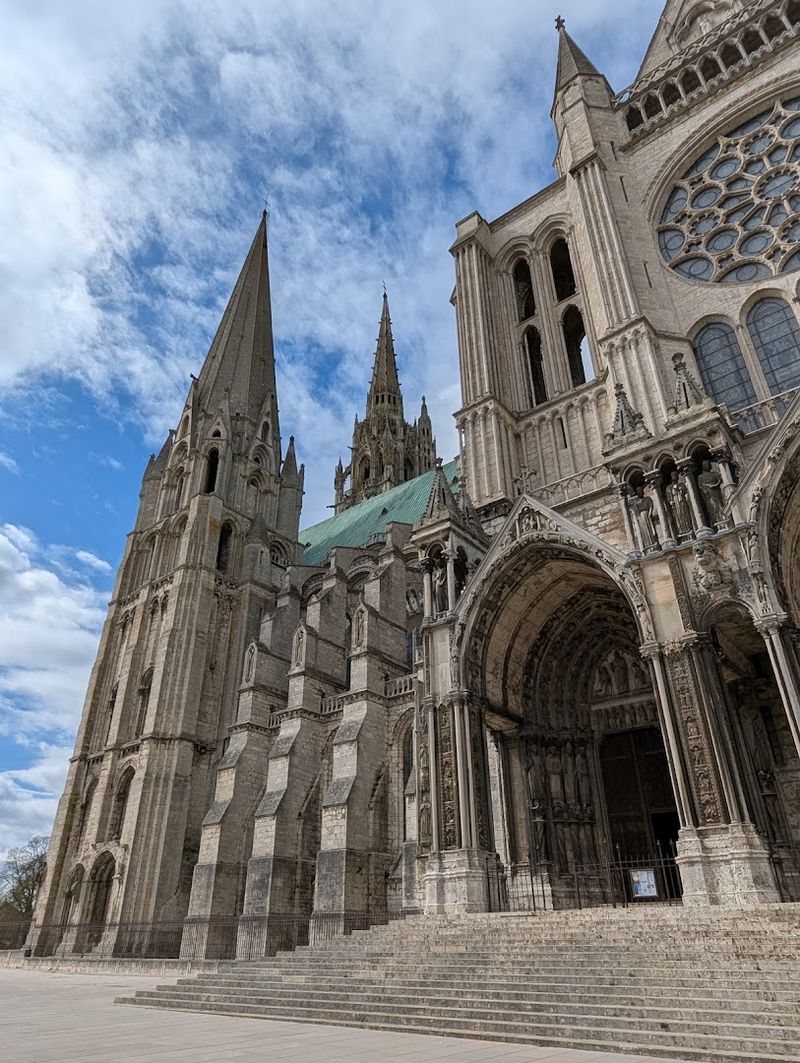
Chartres Cathedral has a quirky detail that surprises many first-time visitors — its two towers do not match. One is plain and Romanesque, the other is tall and ornately Gothic, and together they somehow look completely right.
That charming asymmetry is just one of many reasons art historians consider Chartres the crown jewel of French Gothic architecture.
The real showstopper here is the stained glass. Unlike many medieval cathedrals where original glass was lost or damaged over the centuries, Chartres has kept most of its 12th and 13th-century windows intact.
The famous “Chartres blue” — a deep, luminous shade found throughout the glass — has never been fully replicated by modern craftsmen, which makes it feel genuinely magical.
Walking through the cathedral on a sunny day, with colored light pouring across the stone floor, is an experience that stays with you long after you leave. The building also contains an ancient labyrinth set into the floor, which pilgrims have been walking for spiritual reflection since the medieval period.
Chartres sits about an hour from Paris by train, making it a very manageable and deeply rewarding day trip for anyone visiting the region.
Westminster Abbey – London, England
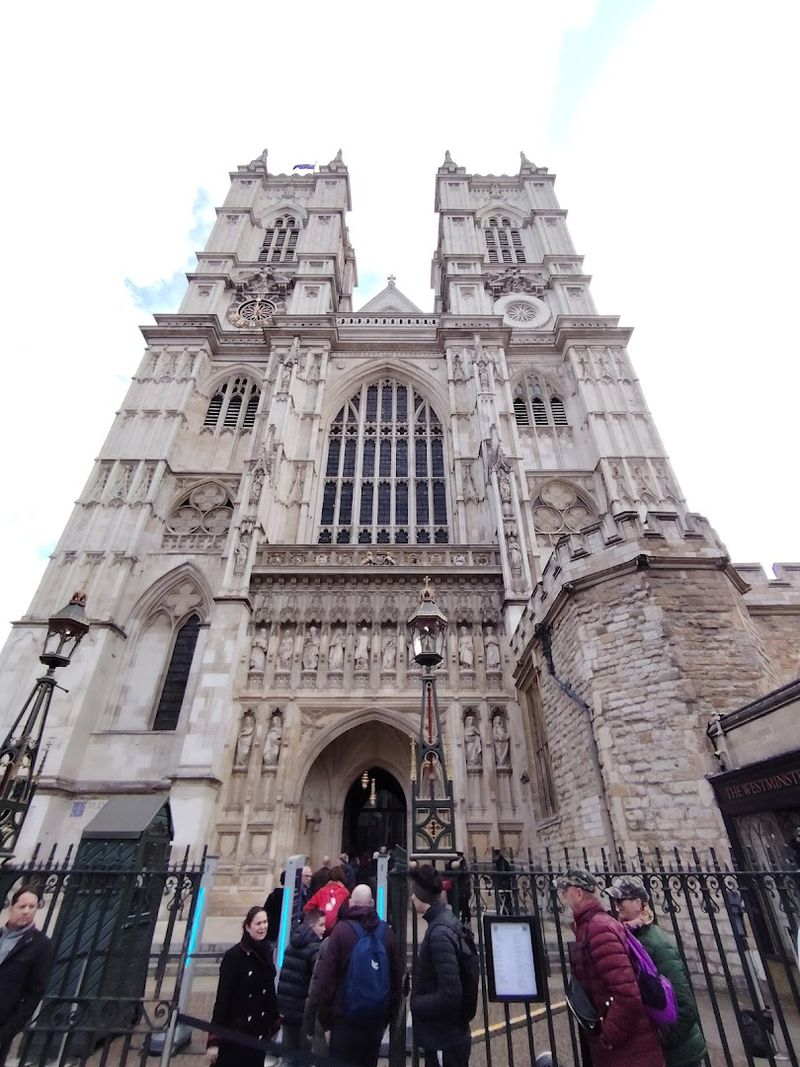
Every British monarch since 1066 has been crowned inside Westminster Abbey — that single fact tells you everything you need to know about this building’s importance. Located in the heart of London, the Abbey is not just a church; it is the ceremonial heart of an entire nation.
Gothic architecture rarely carries this much political and spiritual weight in one place.
The building itself is a masterpiece of English Gothic design, with soaring pointed arches, fan vaulting, and an interior that seems to stretch endlessly upward. Every corner holds history — from the Poets’ Corner, where writers like Charles Dickens and Geoffrey Chaucer are commemorated, to the royal tombs that line its chapels.
It is essentially a walk-through history lesson that happens to be extraordinarily beautiful.
Outside, the Abbey’s twin towers and detailed stone facade hold their own against the busy London streetscape. Unlike many Gothic cathedrals that feel tucked away, Westminster Abbey sits confidently at the center of one of the world’s most famous cities.
Tickets are required for entry, and the audio guide is genuinely worth it — the stories packed into these walls could fill several books. Book ahead to avoid the long queues.
Prague Old Town & St. Vitus Cathedral – Czech Republic
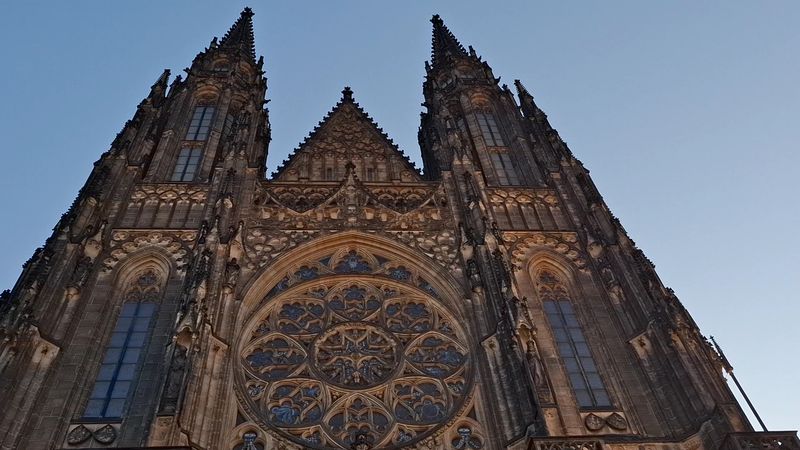
Prague has a reputation for being one of Europe’s most beautiful cities, and once you see it in person, you will understand why that reputation is completely deserved. The Old Town is a maze of cobblestone streets, medieval towers, and Gothic churches that somehow survived the destruction that flattened so many European cities in the 20th century.
Walking through it feels genuinely cinematic.
At the center of it all sits St. Vitus Cathedral, perched dramatically on a hilltop inside Prague Castle. Construction began in 1344 and continued for nearly 600 years, meaning the cathedral blends different Gothic styles across its length.
Its towering spires dominate the city’s skyline from almost every angle, and the stained glass windows inside — including one designed by artist Alphonse Mucha — are absolutely stunning.
The Old Town Square below is equally dramatic, with the famous Astronomical Clock drawing crowds every hour as its mechanical figures parade past. Gothic towers frame the square on multiple sides, giving the whole area a storybook quality that never gets old.
Prague is also very walkable and budget-friendly compared to many Western European capitals, making it one of the best Gothic destinations for travelers who want maximum impact without maximum spending.
Seville Cathedral – Spain
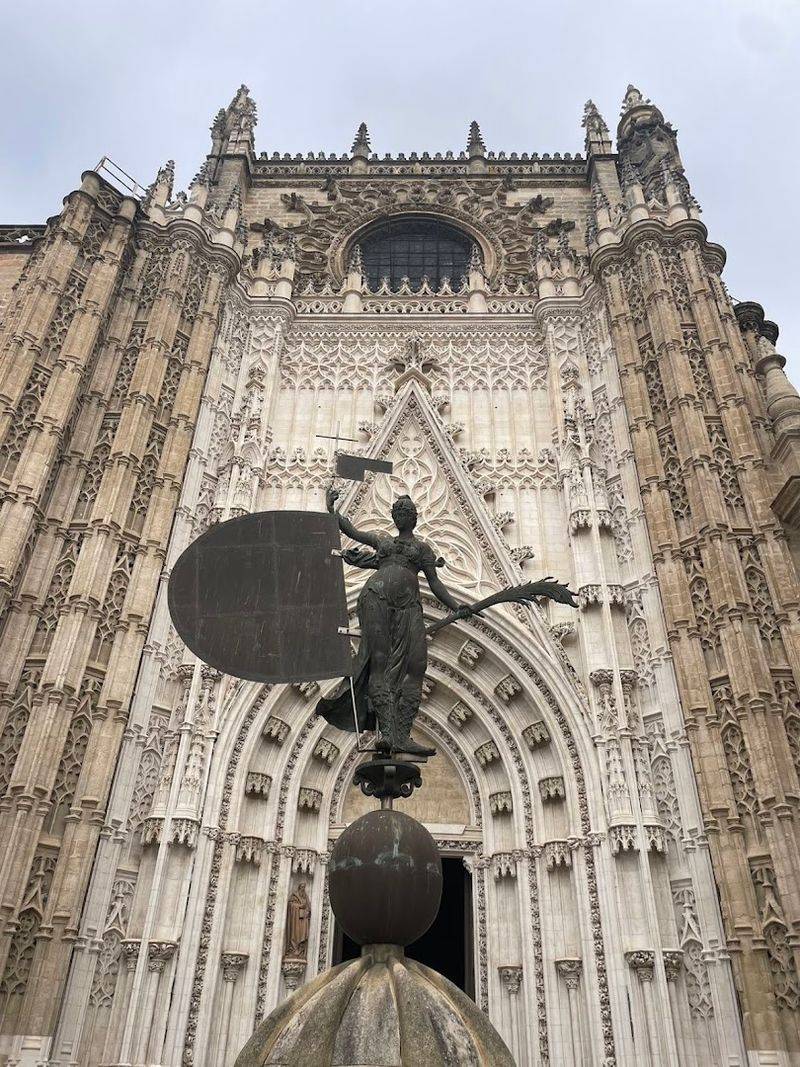
Size matters when it comes to Seville Cathedral — and this one holds the official record as the largest Gothic cathedral in the entire world. Built on the site of a former mosque after the Christian Reconquista, it was designed with a very specific goal in mind: to be so magnificent that future generations would think the builders were crazy.
Mission absolutely accomplished.
The cathedral’s interior is staggering in scale, with five enormous naves filled with artwork, gilded altarpieces, and enough decorative detail to keep your eyes busy for hours. One of its most famous residents is Christopher Columbus, whose remains are housed in an elaborate tomb carried by four royal figures near the entrance.
History does not get more dramatic than that.
The attached Giralda tower, originally built as a minaret during the Moorish period, offers panoramic views over Seville from the top — and you reach it by walking up ramps rather than stairs, which makes it accessible for most visitors. The blend of Islamic and Gothic architectural influences throughout the complex gives Seville Cathedral a character unlike any other on this list.
It is grand, layered, and endlessly fascinating to explore at your own pace.
Sainte-Chapelle – Paris, France
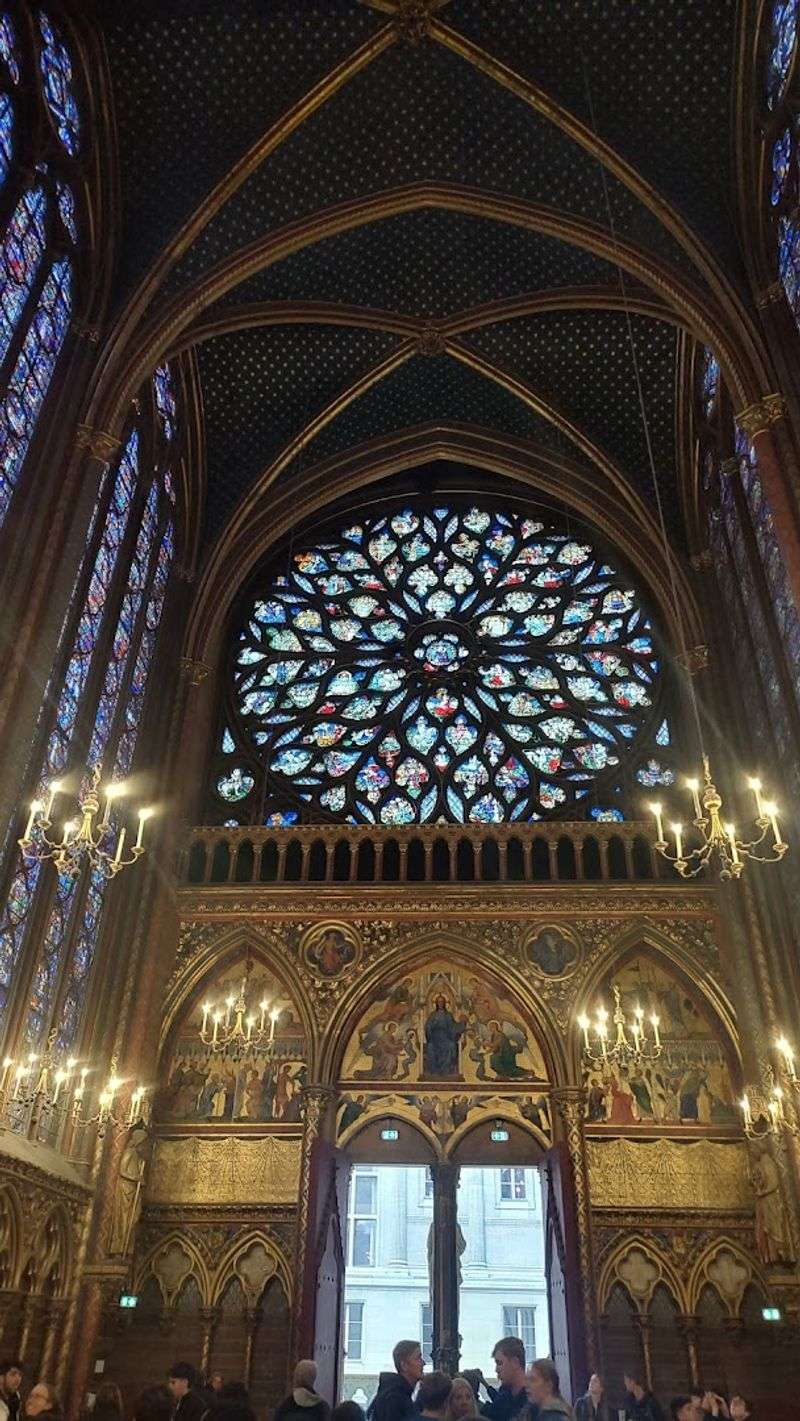
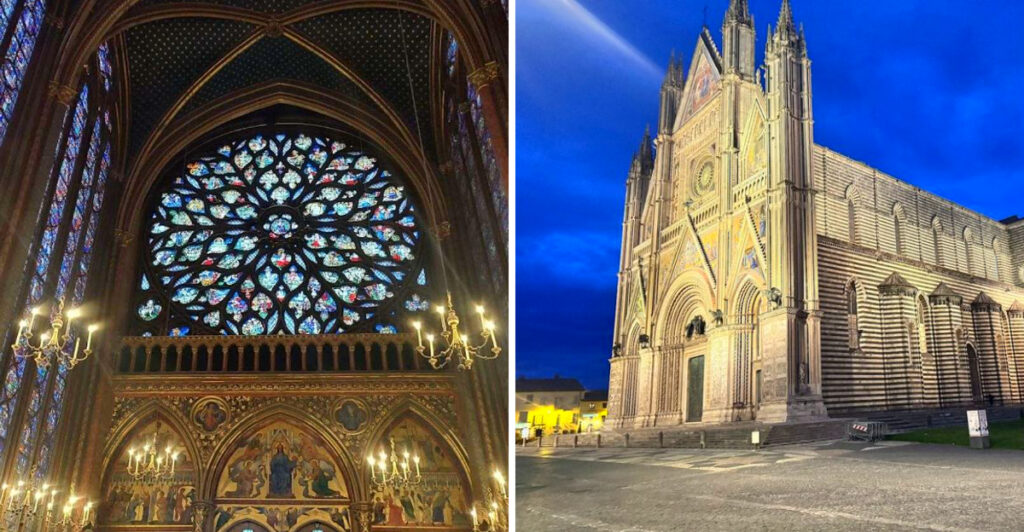
Sunlight does something almost miraculous inside Sainte-Chapelle. When it streams through the 15 floor-to-ceiling stained glass windows, the entire upper chapel transforms into a kaleidoscope of deep blue, ruby red, and golden yellow — a visual experience that stops most visitors dead in their tracks.
No photograph truly prepares you for it.
Built in the 13th century by King Louis IX of France, Sainte-Chapelle was designed to house precious Christian relics, including what was believed to be the Crown of Thorns. The engineering feat here is remarkable — the windows make up about 75 percent of the upper chapel’s walls, leaving almost no solid stone between the glass panels.
Gothic builders essentially figured out how to make walls disappear and replace them with light.
The chapel sits tucked inside the Palais de la Justice on the Ile de la Cite, just a short walk from Notre-Dame. Because it is smaller and slightly less famous than its neighbor, the crowds here are more manageable — which makes the experience feel more personal and intimate.
Visiting on a sunny morning gives you the best possible light show. It is one of the most genuinely awe-inspiring small spaces in the entire world.
St. Stephen’s Cathedral – Vienna, Austria
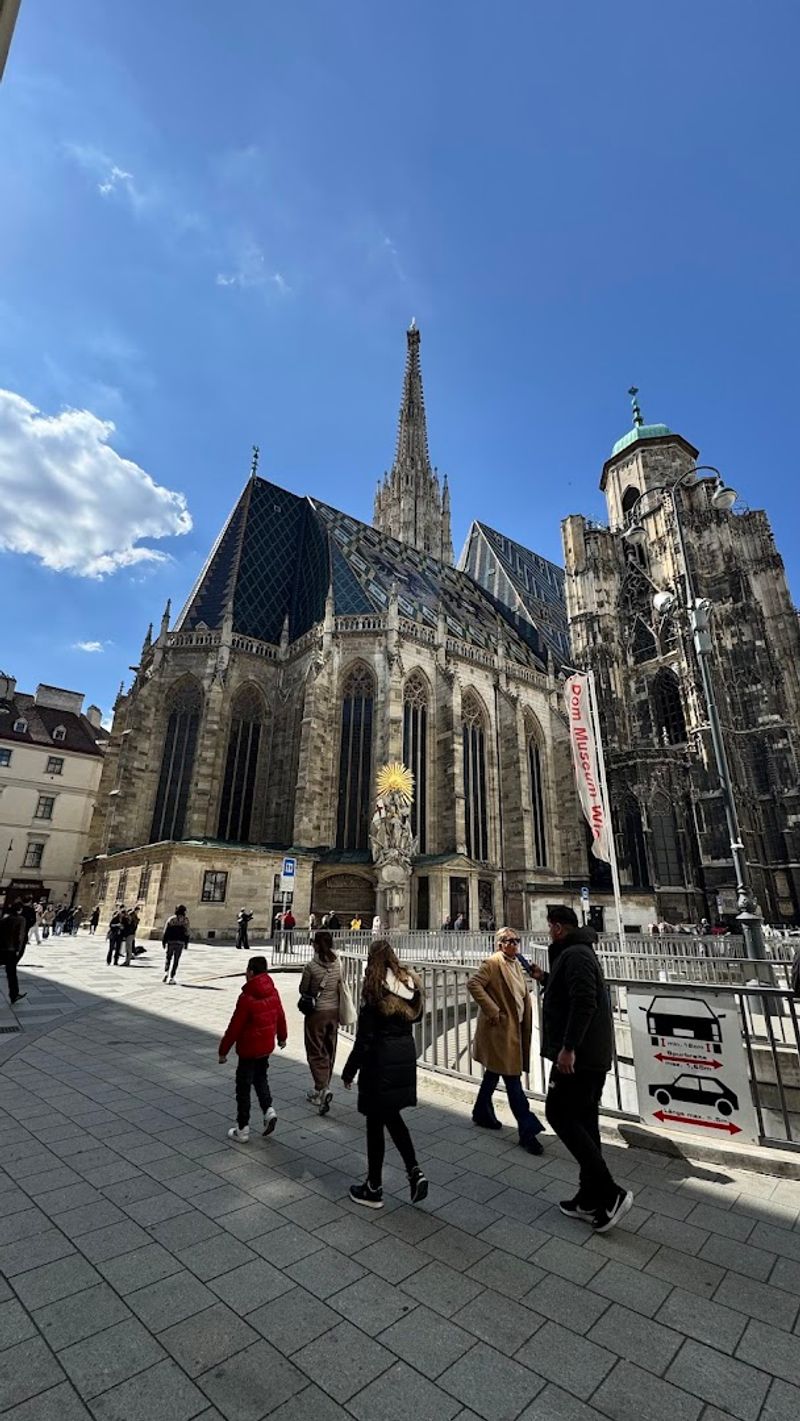
The roof of St. Stephen’s Cathedral is one of the most distinctive sights in all of Europe — a dazzling pattern of colorful tiles arranged in geometric zigzag shapes that you simply do not see anywhere else. From above, the design spells out the initials of the Austrian imperial family in a pattern that has been delighting visitors and historians for centuries.
It is Gothic architecture with a genuinely playful streak.
The cathedral’s main spire rises 136 meters above Vienna’s city center, making it a landmark visible from many parts of the city. Known locally as “Steffl” — a nickname that translates roughly as “little Stephen” — the cathedral has been at the center of Viennese life since the 12th century.
Mozart was married here, and his funeral mass was also held within these walls.
Inside, the cathedral holds an impressive collection of art, including Gothic altarpieces, carved pulpits, and the tomb of Holy Roman Emperor Frederick III. Catacombs beneath the church contain the remains of thousands of Viennese citizens, adding a suitably gothic layer to the experience.
Guided tours are available and worth taking. St. Stephen’s is free to enter the nave, though some areas require a ticket — great value for such a historically rich landmark.
Burgos Cathedral – Spain
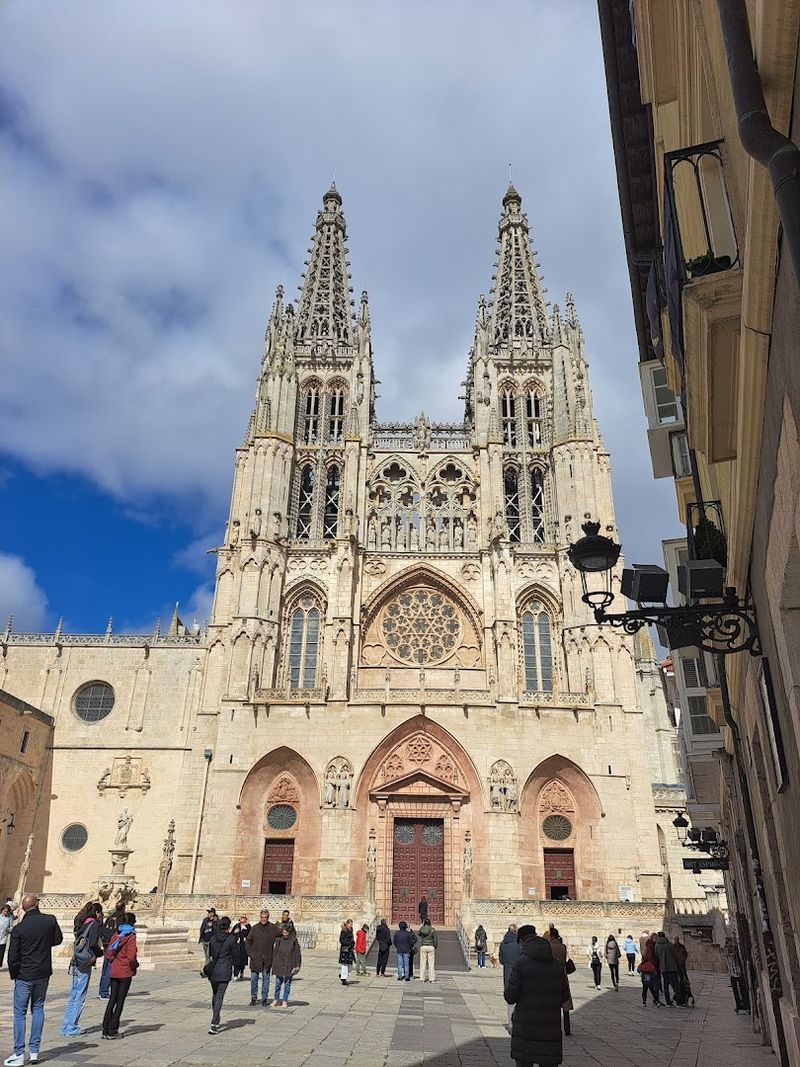
Lace made out of stone — that is honestly the best way to describe Burgos Cathedral’s twin spires. The stonework is so delicate and intricate that it looks like it should not be able to support its own weight, yet it has been standing since the 15th century without any complaints.
Spanish Gothic architecture reached one of its absolute peaks right here in northern Spain.
Construction on the cathedral began in 1221, and it was built in phases over several centuries, meaning different Gothic styles layer beautifully on top of each other throughout the building. The Golden Staircase inside, designed by Diego de Siloe, is a masterpiece of Renaissance-Gothic fusion that stops visitors mid-step.
The cathedral also holds the tomb of El Cid, Spain’s most legendary medieval warrior, which adds a serious dose of historical drama.
Burgos Cathedral earned its UNESCO World Heritage status in 1984, and it is one of the most rewarding stops on the famous Camino de Santiago pilgrimage route. The city of Burgos itself is charming and far less crowded than Madrid or Barcelona, giving the whole experience a more relaxed and authentic feel.
This is a destination that rewards slow, curious travelers who actually look up at the details.
Rouen Cathedral – France
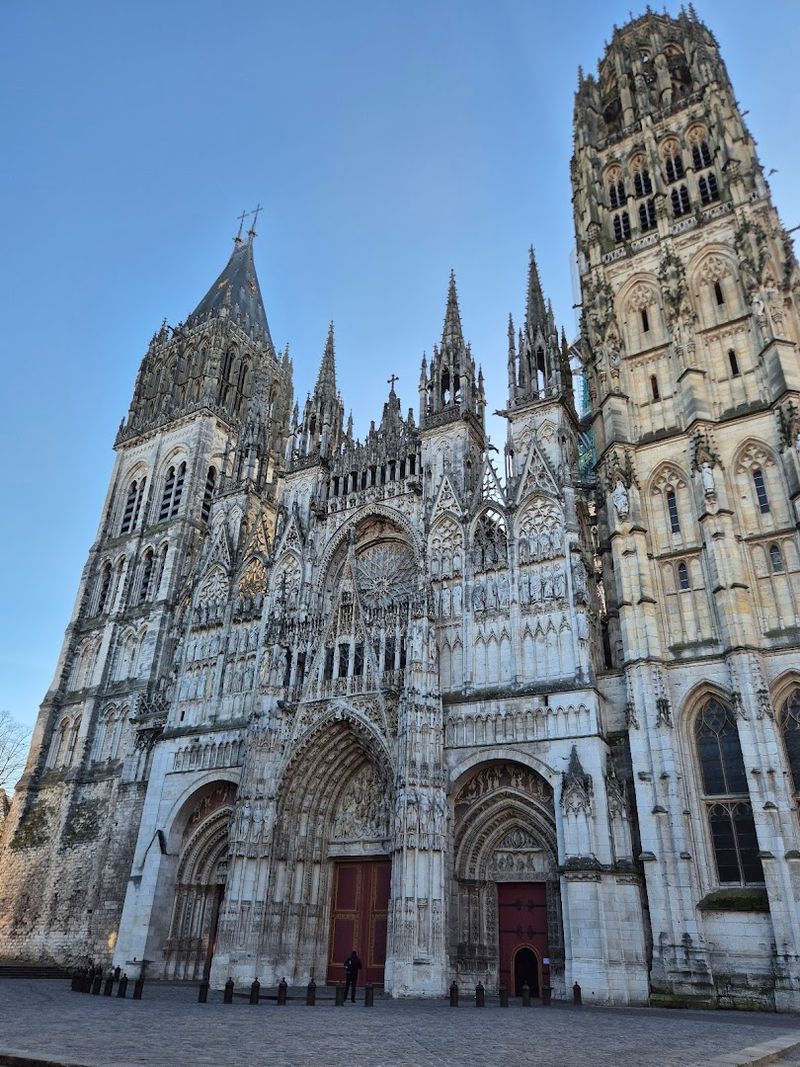
Claude Monet was so obsessed with Rouen Cathedral that he painted it more than thirty times — always the same facade, always a different light. Morning mist, afternoon glare, golden evening sun: each version captured something the others missed.
That artistic fixation tells you a lot about how visually alive this building really is, even standing completely still.
The cathedral’s west facade is one of the most densely decorated Gothic surfaces in France, packed with carved saints, biblical scenes, and architectural details that seem to multiply the longer you look at them. It was built between the 12th and 16th centuries, and the layers of construction are visible in the way different Gothic styles blend and overlap across the facade.
The central tower, added in the 19th century, briefly made it the tallest building in the world.
Rouen itself is a wonderfully atmospheric city in Normandy, filled with half-timbered medieval buildings and winding cobblestone streets that complement the cathedral perfectly. This is also the city where Joan of Arc was burned at the stake in 1431 — a fact that adds another layer of historical weight to the whole visit.
Rouen is often overlooked in favor of Paris, which honestly just means fewer crowds for the people smart enough to go.
Edinburgh Old Town – Scotland
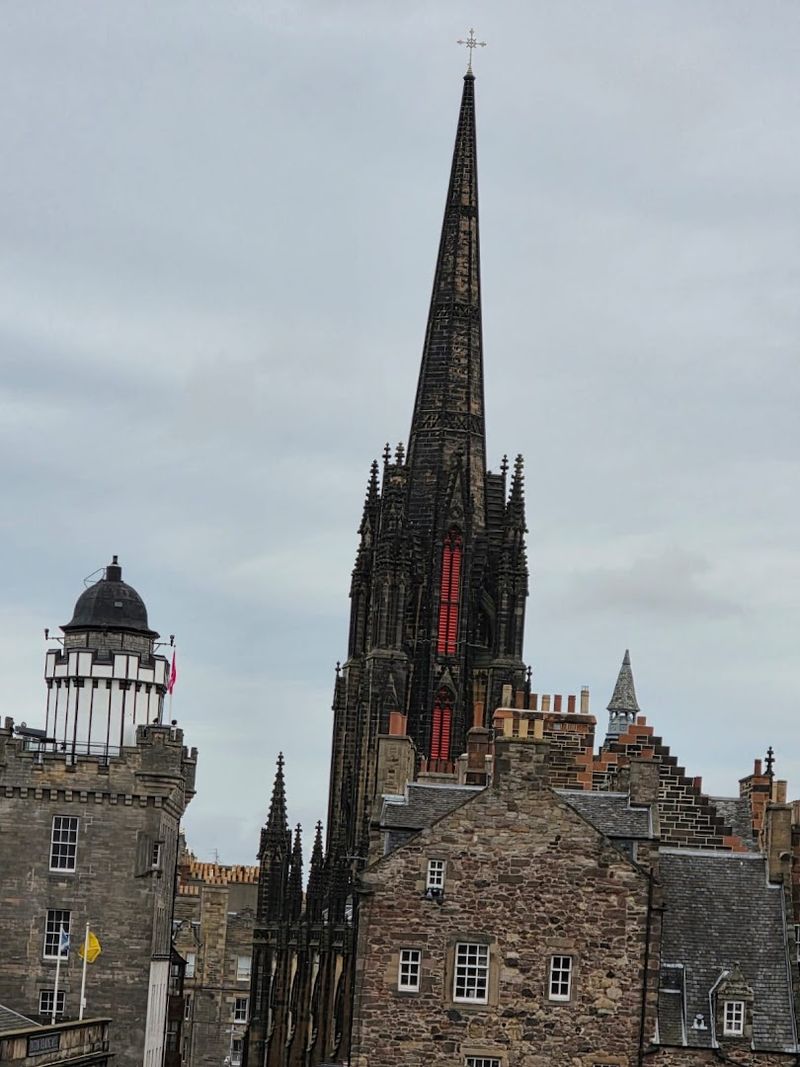
Rain-slicked cobblestones, dark volcanic stone, narrow alleyways called “closes” that plunge between towering medieval buildings — Edinburgh Old Town does not just look Gothic, it feels Gothic in the deepest possible sense. The city is built on top of itself, with layers of history literally stacked underground, and the atmosphere on a grey Scottish afternoon is something genuinely unforgettable.
St. Giles’ Cathedral sits at the heart of the Royal Mile, its distinctive crown spire cutting a sharp silhouette against the sky. The surrounding closes hide underground vaults that were once home to Edinburgh’s poorest residents — and are now famous for ghost tours that draw visitors from around the world.
Whether or not you believe in ghosts, the atmosphere in those stone tunnels is genuinely unsettling in the best possible way.
Edinburgh Castle looms over everything from its volcanic rock perch, adding a fortress-like drama to the already cinematic skyline. The whole Old Town is a UNESCO World Heritage Site and one of the most atmospheric urban environments in Europe.
Visit in August for the Edinburgh Festival and the city absolutely buzzes with energy, but even in the dead of winter, the Gothic mood here is completely unmatched. Pack layers and comfortable shoes — the hills are real.
Palace of the Popes – Avignon, France
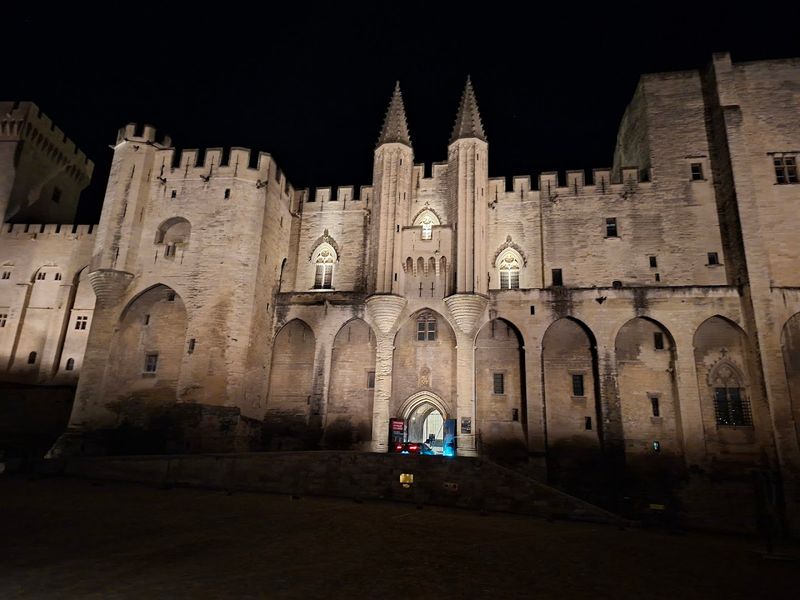
For most of the 14th century, the most powerful religious figure in the Western world did not live in Rome — he lived in Avignon, France, inside a Gothic palace so enormous it is hard to fully take in from any single viewpoint. The Palace of the Popes is the largest Gothic building in all of Europe, covering over 15,000 square meters of floor space across its two connected palaces.
That is not a typo.
Built between 1335 and 1364, the palace combines the defensive bulk of a medieval fortress with the refined detail of Gothic ecclesiastical architecture. Its walls are up to four meters thick in places, which gives the whole complex an almost impenetrable quality from the outside.
Inside, the scale is equally dramatic — vast halls, painted chapels, and interconnected towers that once housed the full machinery of papal government.
Today the palace serves as a museum and one of France’s most visited historical monuments. The interior is largely bare, since its treasures were removed or destroyed during the French Revolution, but the raw scale of the architecture speaks for itself.
Avignon itself is a beautiful walled medieval city worth exploring for a full day or two. The famous “Pont d’Avignon” bridge — yes, the one from the song — is just steps away.
St. Patrick’s Cathedral – New York City, USA
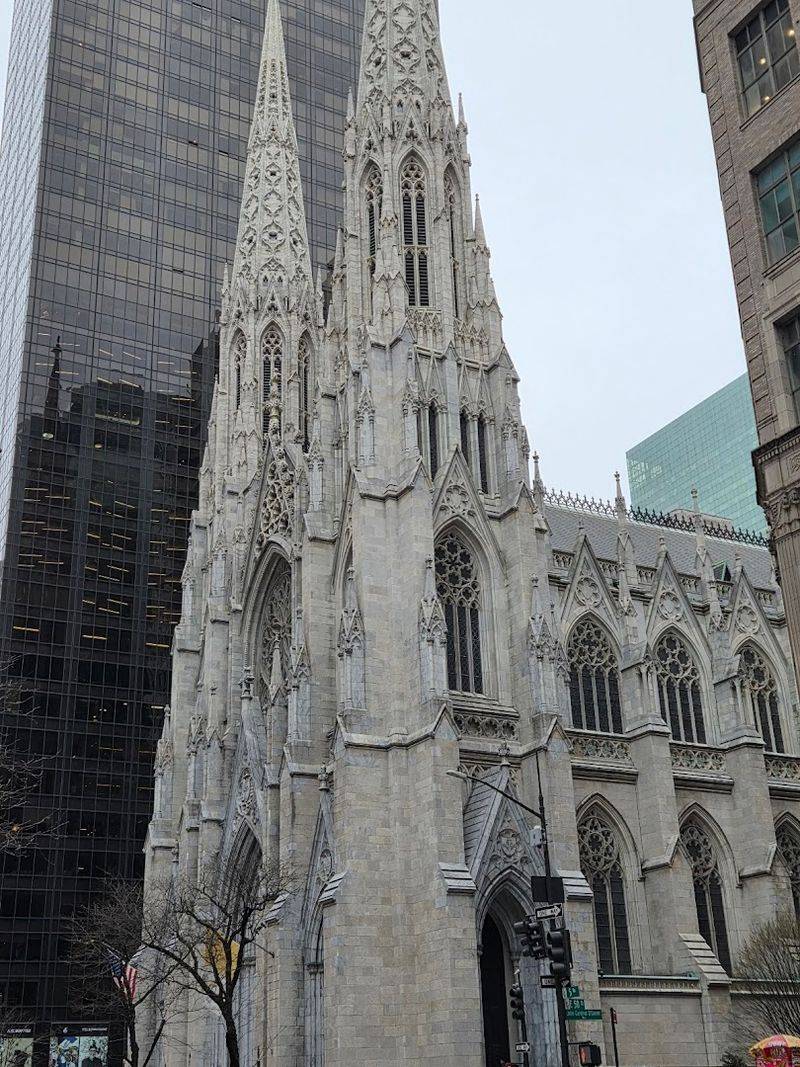
Wedged between glass skyscrapers on Fifth Avenue, St. Patrick’s Cathedral pulls off something genuinely remarkable — it makes Gothic architecture feel right at home in the middle of one of the world’s most modern cities. The contrast between its white marble spires and the surrounding towers of steel and glass is one of the most striking visual moments in all of New York.
Gothic Revival never looked so boldly out of place, or so perfectly placed.
Completed in 1878, the cathedral was designed by architect James Renwick Jr., who modeled it closely on the great Gothic cathedrals of Europe. The twin spires rise 100 meters above street level, which once made them the tallest structures in New York City.
Today they are dwarfed by their neighbors, but they have not lost a single bit of their elegance or presence as a result.
Inside, the cathedral seats around 2,400 people and features stunning stained glass windows, marble altars, and a pipe organ with over 7,000 pipes. It serves as the seat of the Roman Catholic Archdiocese of New York and hosts major events, including the funerals of prominent public figures.
Entry is free, which makes it one of the most accessible and rewarding stops on any New York City visit. It is proof that Gothic architecture belongs everywhere.
Duomo di Orvieto – Italy
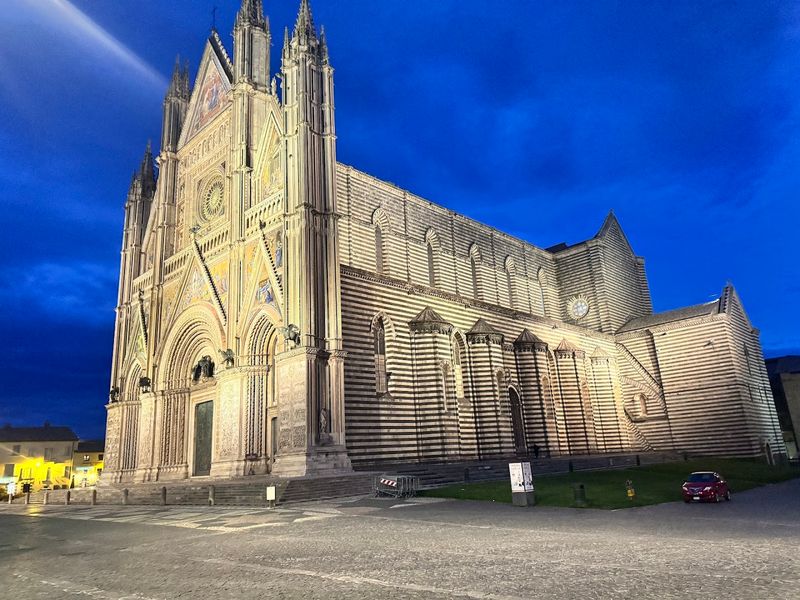
Gold mosaics shimmering in the afternoon sun, striped marble columns, and bas-relief carvings that cover nearly every surface — the Duomo di Orvieto announces itself like nothing else in Italian Gothic architecture. While most Gothic cathedrals rely on stone and shadow for their drama, Orvieto goes full color, blending Byzantine mosaic work with Gothic structure in a way that feels genuinely one of a kind.
Construction began in 1290, reportedly inspired by a miraculous event involving a bleeding host in the nearby town of Bolsena. The facade, completed over several centuries, is considered one of the finest examples of Italian Gothic decorative art in existence.
Lorenzo Maitani, one of the chief architects, designed the famous bronze bas-reliefs on the lower facade, which depict scenes from the Old and New Testament with extraordinary skill and emotion.
Inside, the cathedral feels calmer and more subdued than the flashy exterior suggests, with a beautiful striped interior of alternating white travertine and dark basalt stone. The Chapel of San Brizio holds a famous fresco cycle by Luca Signorelli that reportedly influenced Michelangelo’s Sistine Chapel ceiling.
Orvieto itself is a stunning hilltop town in Umbria that deserves at least a full day. The cathedral alone is worth the train ride from Rome.
Share this story