There is a small restaurant tucked into a restored 1920s home in the Shenandoah Valley that food lovers have been quietly telling each other about for months. The menu changes with the seasons, the ingredients come from nearby farms, and the chef clearly treats every plate like a personal statement.
Tasting menus here are not just meals; they are multi-course journeys that have left diners comparing the experience to Michelin-starred restaurants across the country and even Europe. I had heard enough about this place to make the drive, and I can tell you that the curiosity is absolutely worth feeding.
A Historic Home With a Warm Welcome
The address alone sets the tone: 1106 N Augusta St, Staunton, VA 24401. Maude and the Bear occupies a beautifully renovated Montgomery Kit home from the 1920s, and the building itself feels like a character in the story before you even sit down.
The exterior is modest and easy to miss if you are not paying attention. A reviewer who stayed overnight mentioned that the sign is brown and does not stand out, so keep your eyes open when you approach.
Once inside, the warmth hits you immediately. The space is intimate, lovingly decorated, and filled with personal touches that make it feel more like a home than a restaurant.
Paintings by a local artist, many featuring nearby landscapes, hang on the walls. Handmade pottery by the chef’s wife appears on the tables as bowls and vases, giving every surface a handcrafted quality that no chain restaurant could replicate.
The dining room is cozy rather than grand, and that is entirely the point. This is not a place trying to impress you with marble columns or towering ceilings.
It earns its reputation one carefully composed plate at a time, in a setting that feels genuinely personal.
The Chef Behind the Creative Vision
Chef Ian is the creative engine behind everything that comes out of the kitchen at Maude and the Bear. His approach to cooking is rooted in self-sourcing and seasonal thinking, which means the menu is never the same twice and always reflects what is freshest and most interesting at any given moment.
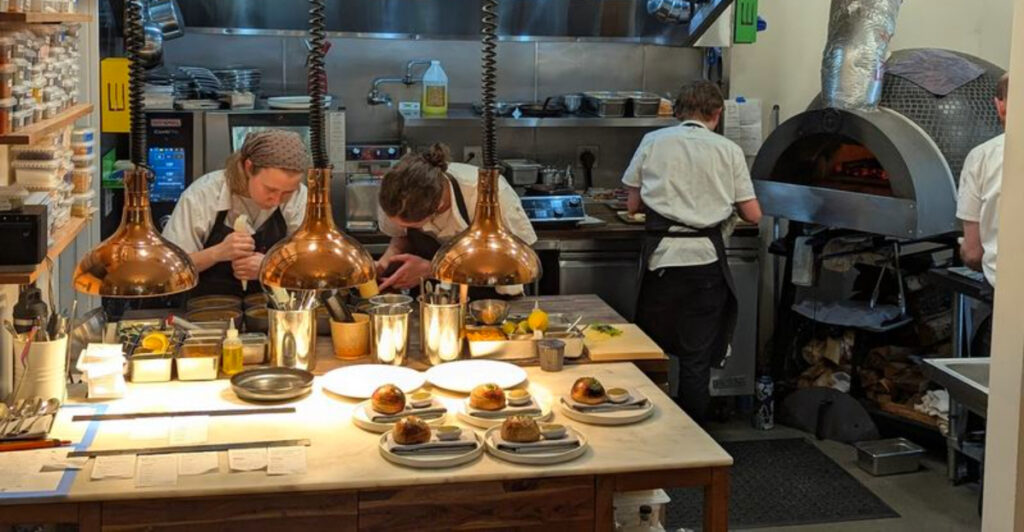
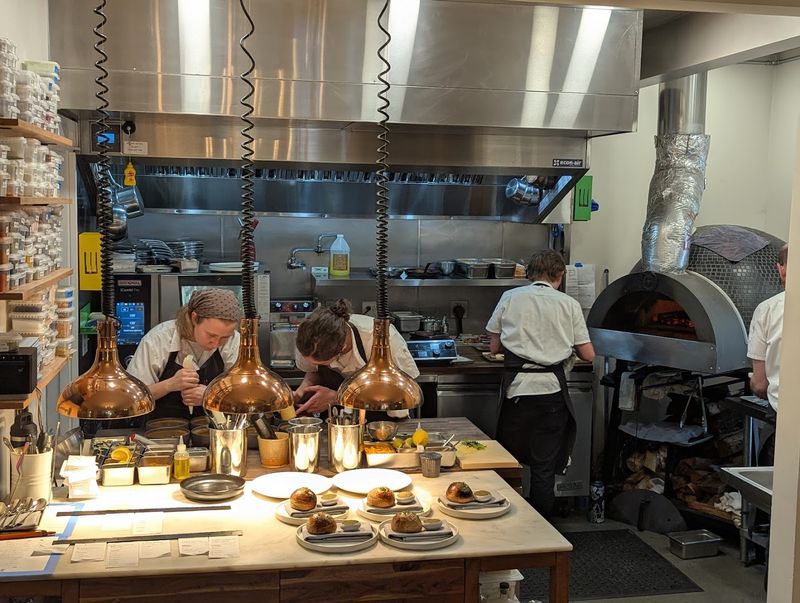
Guests who have sat at the Chef’s Table describe watching him and his team work as something close to a performance. The coordination between front and back of house has been compared to watching passionate practitioners doing exactly what they were born to do.
His wife Leslie runs the front of the house, and her warmth is something multiple diners have mentioned specifically. She has a way of making guests feel like old friends rather than customers, which sets a tone that carries through the entire evening.
The two of them have built something rare here in the Shenandoah Valley, a restaurant that feels deeply personal because it genuinely is. Ian’s commitment to creativity shows up in unexpected flavor pairings, thoughtful sourcing, and dishes that people keep thinking about long after the meal ends.
That kind of cooking does not happen by accident. It takes years of skill and a clear sense of purpose.
The Tasting Menu Experience
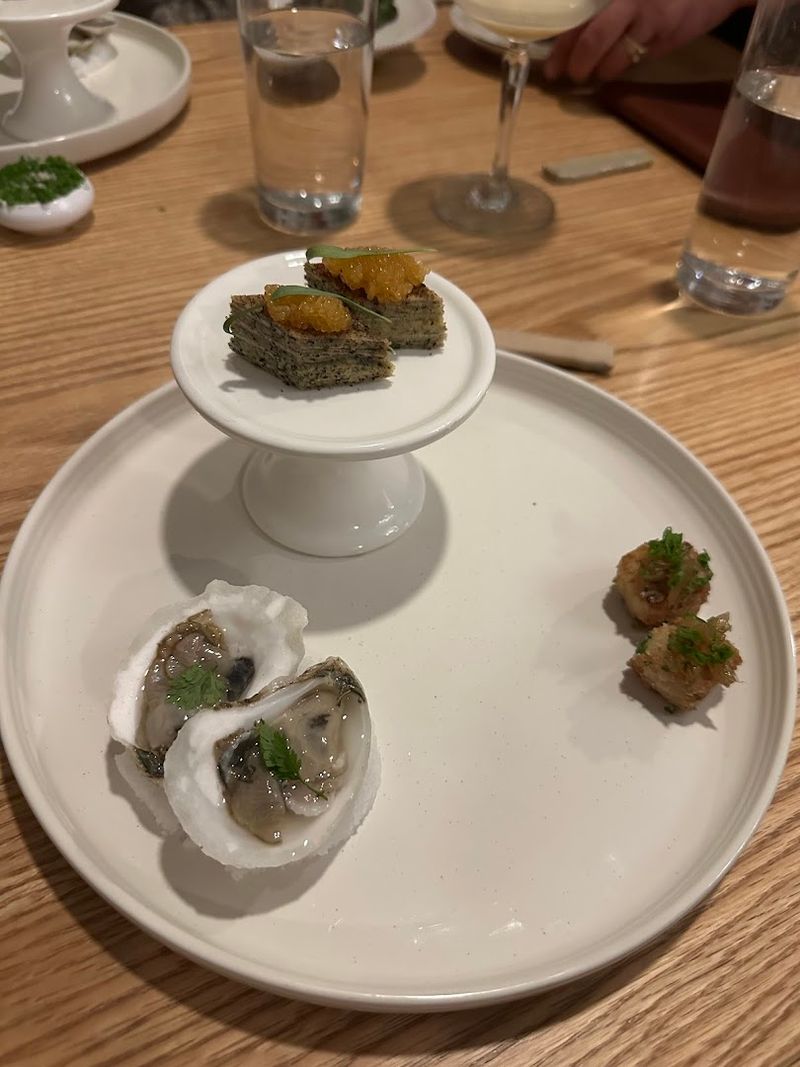
The tasting menu at Maude and the Bear is the main event, and it changes regularly based on what is available locally. Diners can choose between a four-course dinner and a longer seven-course or Chef’s Table experience, each one designed to take you through a range of flavors, textures, and techniques.
The amuse-bouches that arrive before the formal courses begin are a highlight on their own. A tiny fried cheese triangle has been described as genuinely haunting in the best possible way, the kind of single bite that makes you rethink what a small appetizer can accomplish.
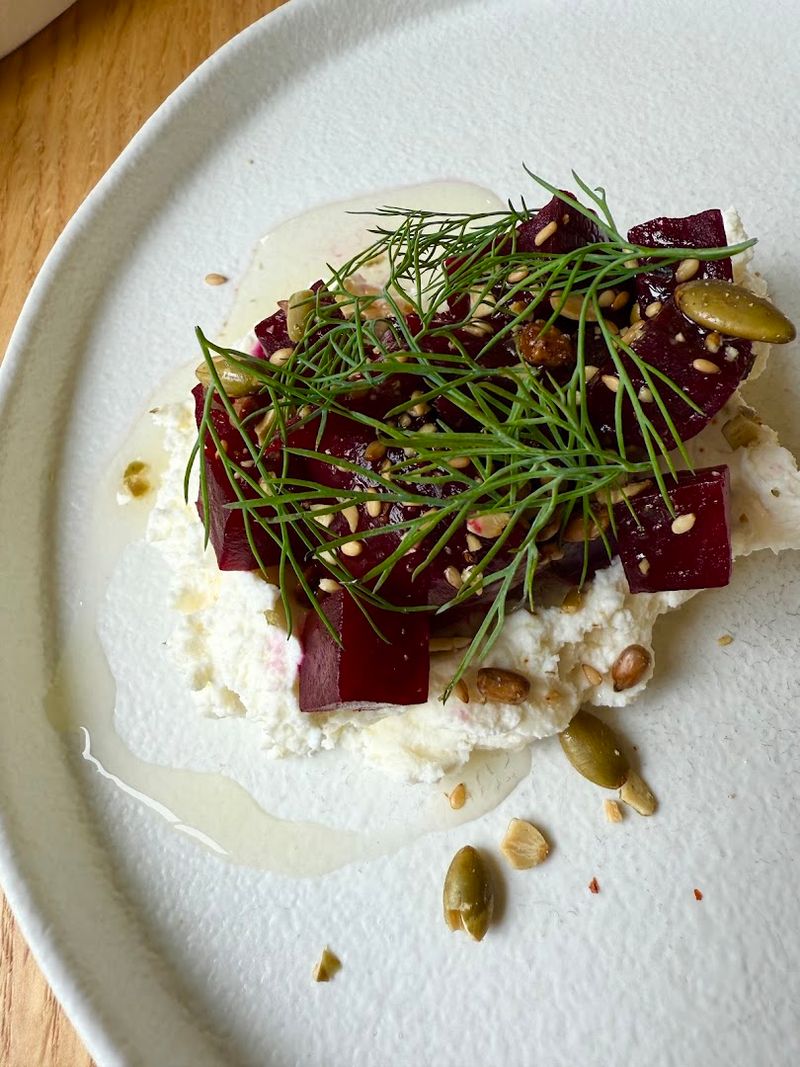
Vegetable-forward dishes make up a significant portion of the menu, which reflects both the chef’s philosophy and the quality of what local farms are producing. Dishes like whippoorwill peas and sunchoke preparations have drawn real enthusiasm from diners who came in expecting meat-heavy tasting menus and left converted.
The four-course dinner is priced at around ninety dollars per person, while the Chef’s Table experience runs higher and includes more courses with optional pairings. Add-ons like caviar on latke are available for those who want to push the experience further.
Every plate arrives with an artistic arrangement that makes you pause before picking up your fork.
The Chef’s Table Seating
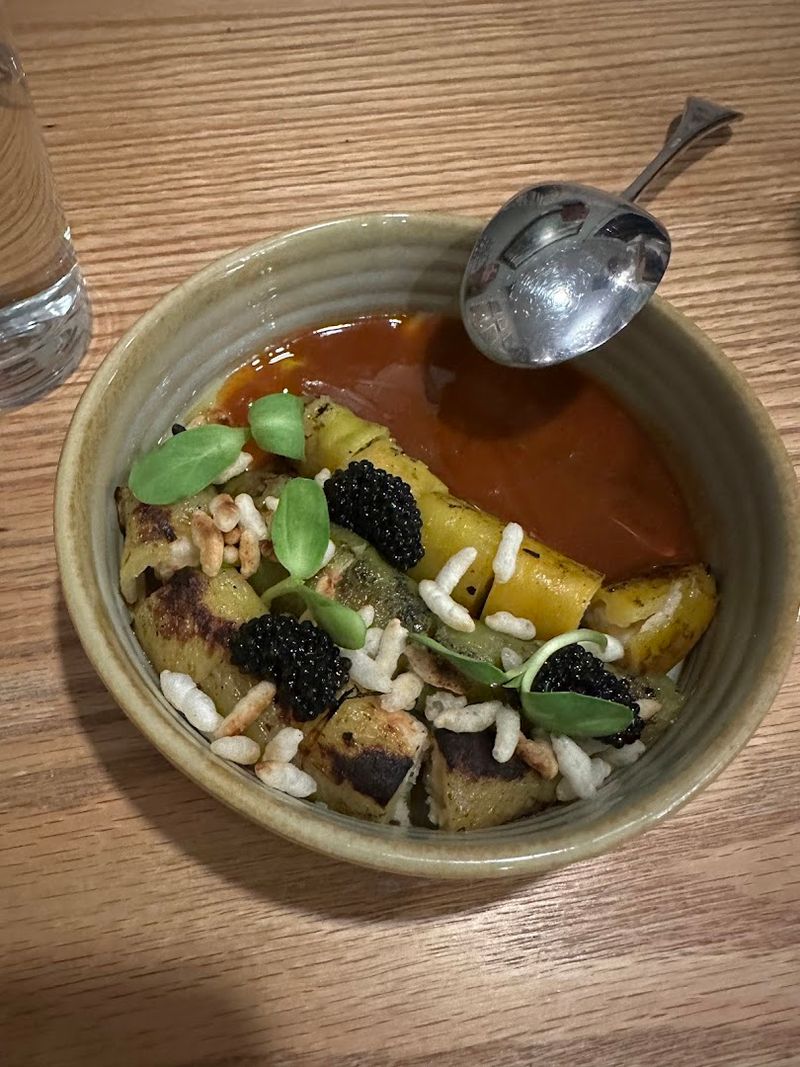
The Chef’s Table is the most immersive way to experience Maude and the Bear, and it consistently earns the strongest praise from diners who choose it. Rather than sitting in the main dining room, guests at the Chef’s Table are positioned close to the kitchen, giving them a front-row view of how each course is assembled.
One couple who celebrated their anniversary here enjoyed sixteen curated tastings and described the experience as surpassing several Michelin-starred restaurants they had visited across the United States and Europe. That is a bold claim, and yet it comes up repeatedly in the reviews of people who clearly know their way around a fine dining room.
The pacing at the Chef’s Table is deliberate, giving each course room to breathe and allowing the staff to explain what is on the plate, where the ingredients came from, and why certain flavors were paired together. That kind of storytelling turns dinner into something more than eating.
Couples celebrating anniversaries, birthdays, and engagements have chosen this seating specifically because it feels like an occasion rather than just a meal. The kitchen energy, the personal attention, and the sequence of courses all combine into an evening that is hard to replicate anywhere else in the region.
Seasonal and Local Ingredients
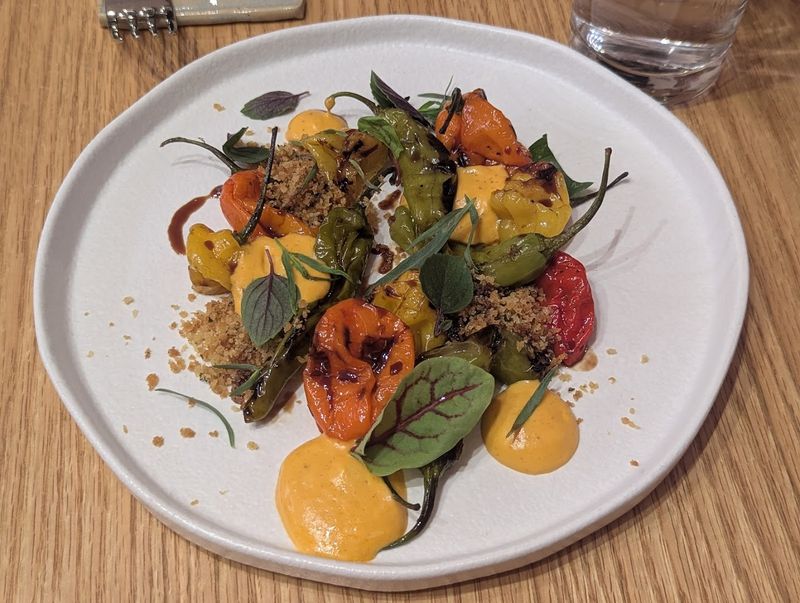
The farm-to-table commitment at Maude and the Bear is not a marketing phrase. It is the actual organizing principle of the kitchen, and it shapes every decision from menu planning to plating.
Chef Ian sources many of his ingredients directly, which means the food on your plate reflects what Virginia farms are producing right now rather than what a supplier had in a warehouse last week.
Staunton sits in a region known for strong agricultural output. The surrounding area produces chicken, turkey, pork, and grass-fed beef, and local farms supply an impressive variety of vegetables and specialty crops throughout the year.
Turner hams, a regional product, represent the kind of hyper-local sourcing that makes this area particularly well-suited to a restaurant with this philosophy.
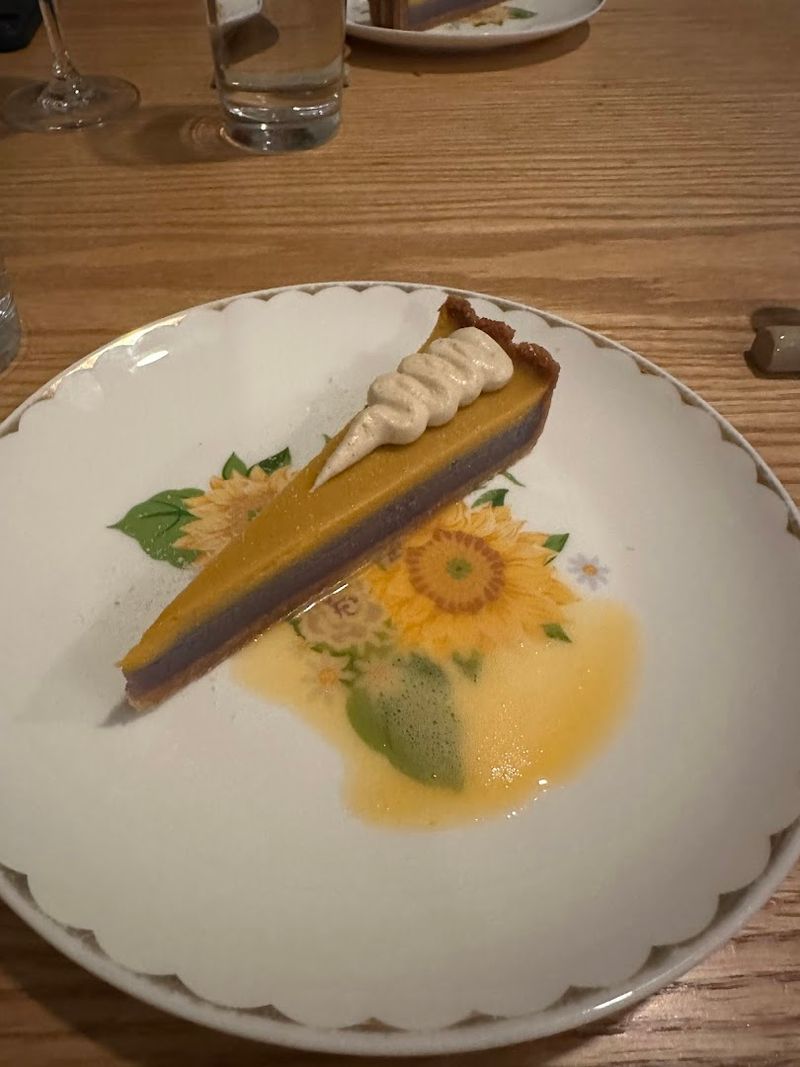
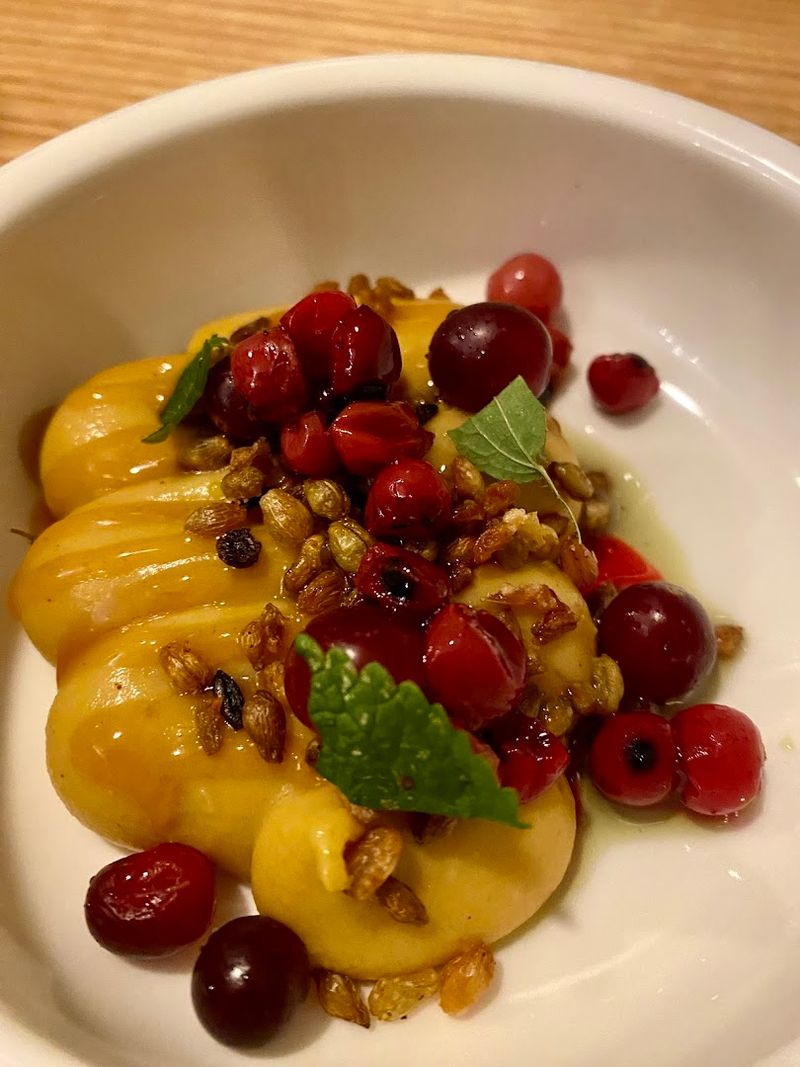
Dishes built around sunchokes, whippoorwill peas, summer squash, and sweet potatoes showcase how much flavor a skilled chef can draw from humble ingredients. One diner described a squash dessert as the best dessert they had ever eaten, which says something significant about what thoughtful preparation can achieve.
The seasonal rotation means that no two visits are identical. Returning diners know they will encounter a completely different menu, which keeps the experience feeling fresh and gives loyal guests a reason to come back throughout the year.
Brunch at the Bear
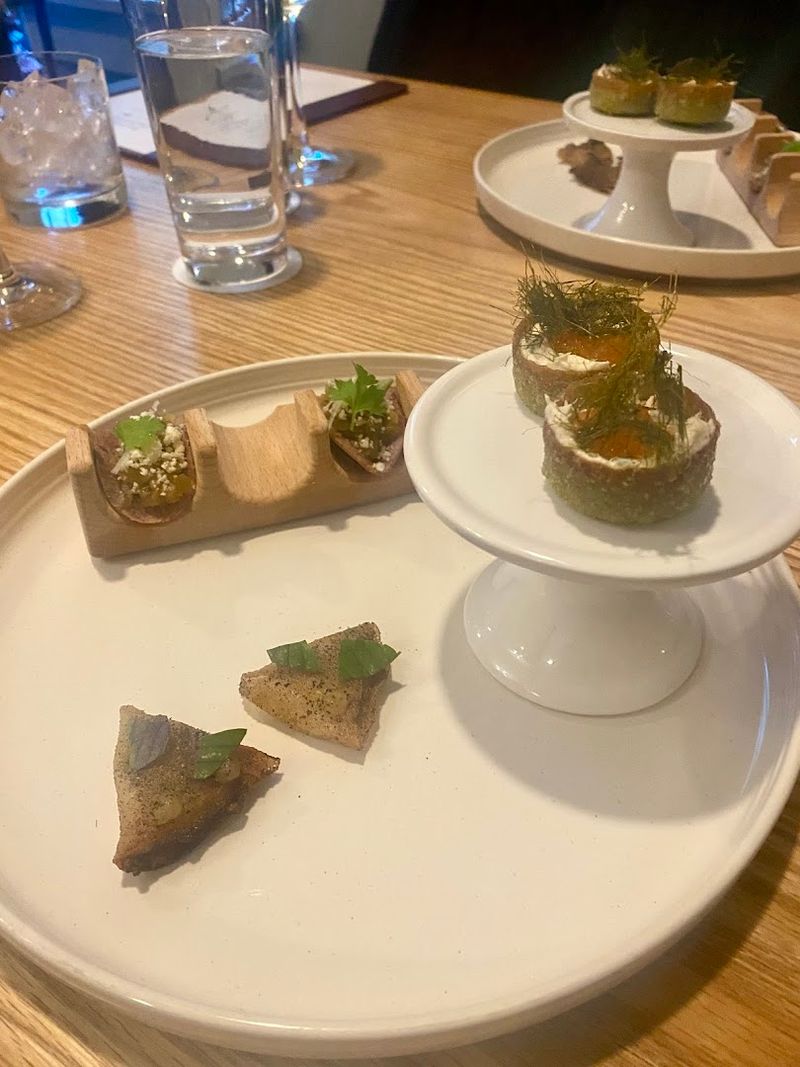
Brunch at Maude and the Bear brings the same creative energy as dinner, but with a slightly more relaxed pace that suits a weekend morning perfectly. The menu is structured and multi-course, which sets it apart immediately from the standard eggs-and-toast format you find almost everywhere else.
The grits with guinea hen and mushroom have earned consistent praise as one of the standout dishes on the brunch menu. Sweet potato donuts appear as an add-on that diners have described as a personal favorite, the kind of dish that tips a good meal into a great one.
Other brunch courses have included Spanish tortilla, oysters, and summer squash, each prepared with the same attention to flavor layering that defines the dinner service. Overnight guests at the inn receive a complimentary multi-course brunch the following morning, which adds considerable value to the stay-and-dine experience.
The dining room during brunch feels warm and unhurried. Staff members move through the room collectively, which means no single table feels neglected and the overall atmosphere stays convivial and easy.
One guest specifically noted leaving brunch feeling surprisingly full, which is a welcome contrast to the lighter portions that sometimes appear at dinner.
The music choices and overall vibe add to the pleasure of lingering over a late morning meal.
The Inn Experience
Maude and the Bear is not only a restaurant. The property also operates as a small inn, and the rooms carry the same design philosophy as the dining room: personal, thoughtful, and free of anything generic.
One guest who stayed in a room called The Crow and the Pitcher described it as a gorgeous, very clean suite with every amenity imaginable. Fresh towels, a comfortable bed, champagne on ice, and house-made cookies were all part of the experience, and the level of detail matched what you would expect from a high-end boutique property.
The renovations to the 1920s structure were described as meticulous, preserving the character of the original home while adding modern comforts. Local artwork and handmade pottery appear throughout the space, giving the rooms a warmth that standard hotel decor rarely achieves.
Guests who combine an overnight stay with the tasting menu dinner and the complimentary morning brunch get the fullest version of what this place offers. The transition from a long, leisurely dinner to a comfortable room upstairs to a multi-course breakfast the next morning creates an experience that feels genuinely restorative.
For anyone visiting Staunton from a distance, staying on-site removes the logistics of the evening and lets the experience unfold at its own natural pace without watching the clock.
Standout Dishes Worth Knowing About
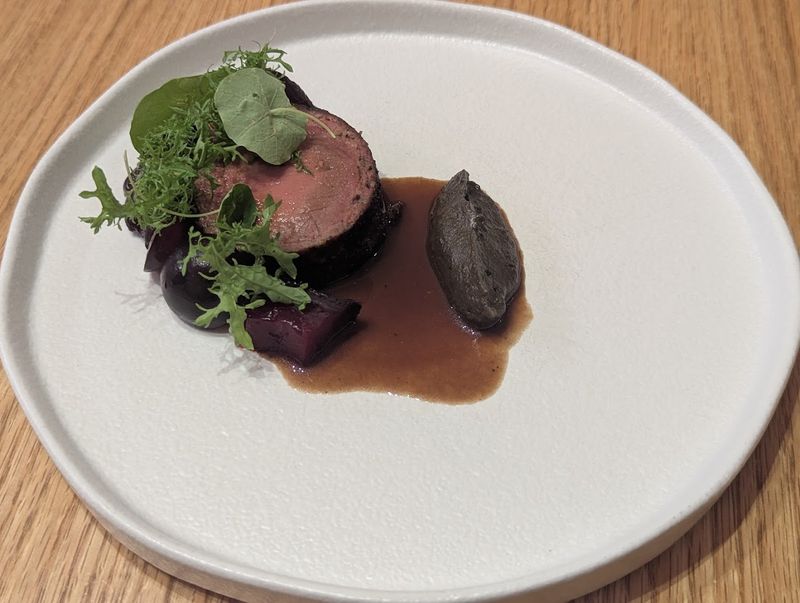
A few specific dishes have appeared repeatedly in conversations about Maude and the Bear, and they give a useful sense of what the kitchen does best. The short rib course with cabbage rolls has drawn genuine enthusiasm, described as wonderful by diners who appreciated both the flavor depth and the careful execution.
The venison sauce is another dish that has stuck in people’s memories. One group of four women described it as something they wanted to eat by the spoonful, which is about as strong an endorsement as a sauce can receive.
On the brunch side, the sweet potato donut and the grits with guinea hen stand out as the dishes most likely to make you wish you had ordered a second portion. The Spanish tortilla, topped with roe and peppers, adds an unexpected Spanish influence to a menu that otherwise leans into Virginia’s agricultural identity.
The lamb course, featured on the four-course dinner menu, has been praised for its artistic arrangement and the quality of the local sourcing. A ricotta blintz topped with small bitter orange slices appeared on the breakfast menu and left at least one overnight guest still thinking about it days later.
These are not safe, predictable dishes. They are the work of a chef who is genuinely trying to surprise you.
Presentation and Artistry on Every Plate
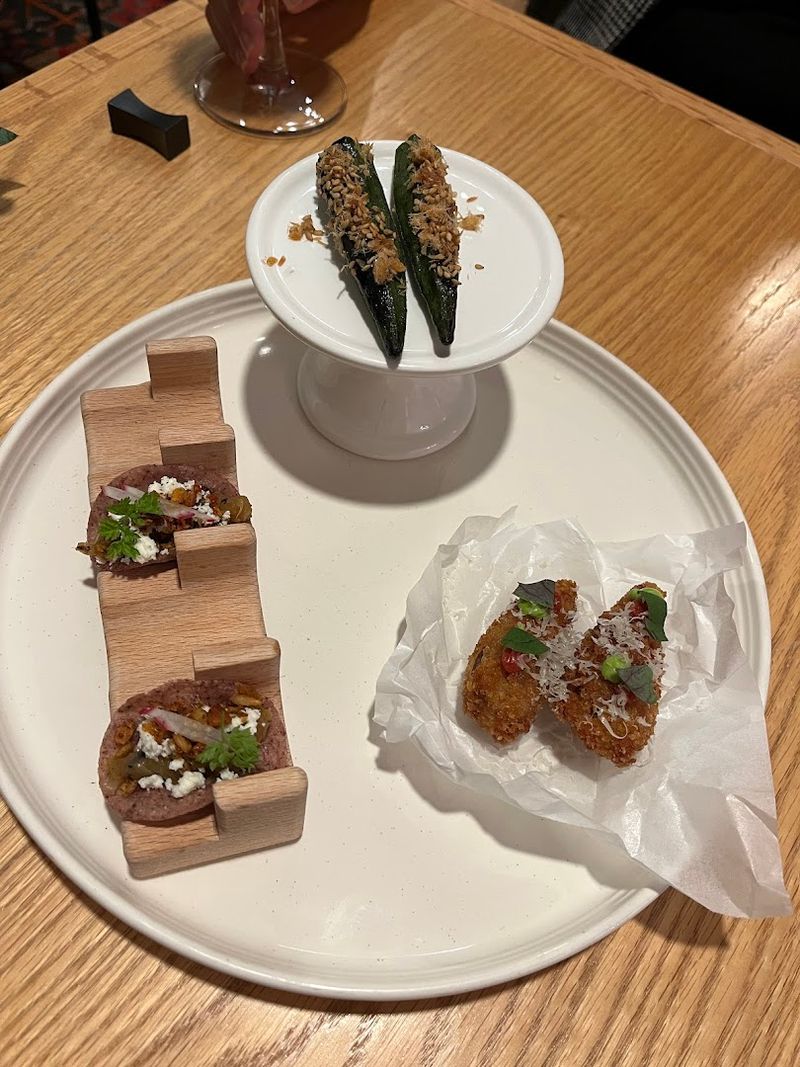
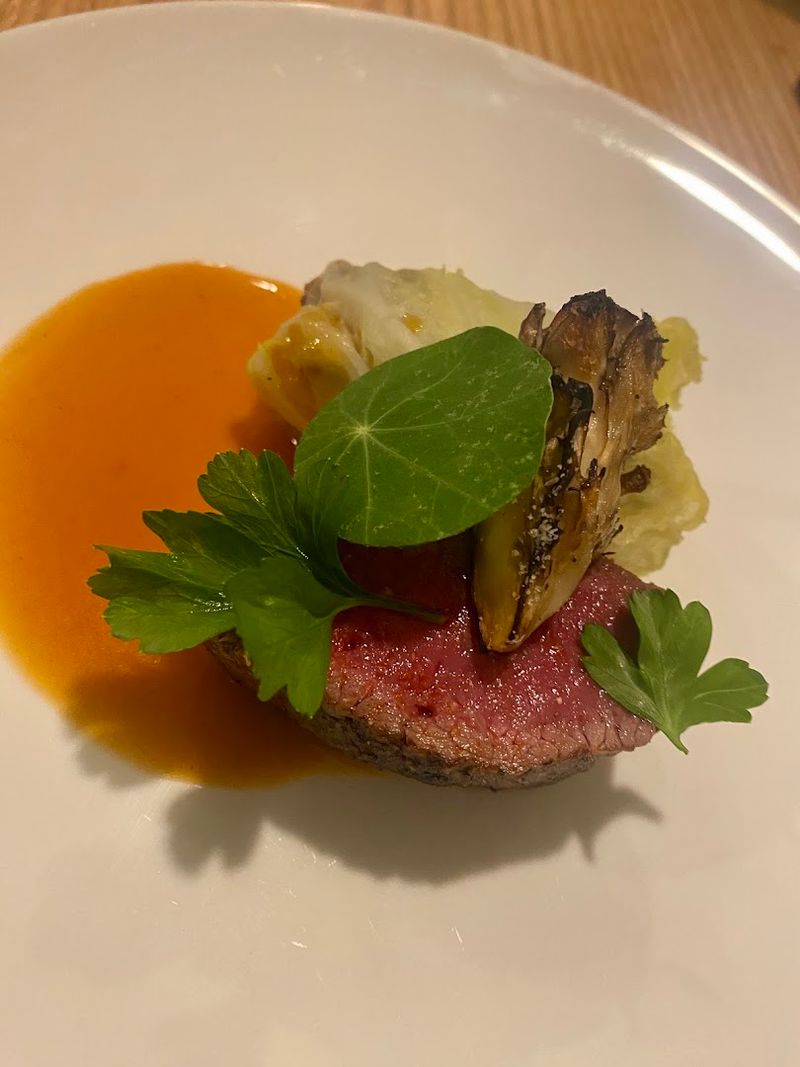
Whatever else you might think about the menu at Maude and the Bear, the visual presentation of each dish is something almost every diner agrees on. The plates arrive looking like small compositions, carefully arranged with attention to color, height, and negative space in a way that makes you want to photograph them before eating.
The handmade ceramic tableware, crafted by the chef’s wife who is a working potter, adds another layer of artistry to the experience. Eating from a hand-thrown bowl feels different from eating from a factory plate, and that difference is not subtle once you notice it.
Each course is introduced by the staff with a description of the ingredients and preparation, which helps diners understand what they are looking at before they taste it. That context makes the visual presentation more meaningful rather than just decorative.
The amuse-bouches in particular showcase the kitchen’s ability to pack a complete flavor experience into a single small bite. A tiny fried cheese triangle that arrived early in one meal was described as something that continued to occupy mental space long after the meal ended.
At a restaurant where the portions lean toward the smaller side, the artistry of each plate becomes even more important. Every detail has to earn its place, and at Maude and the Bear, most of them do.
The Atmosphere and Dining Room Feel
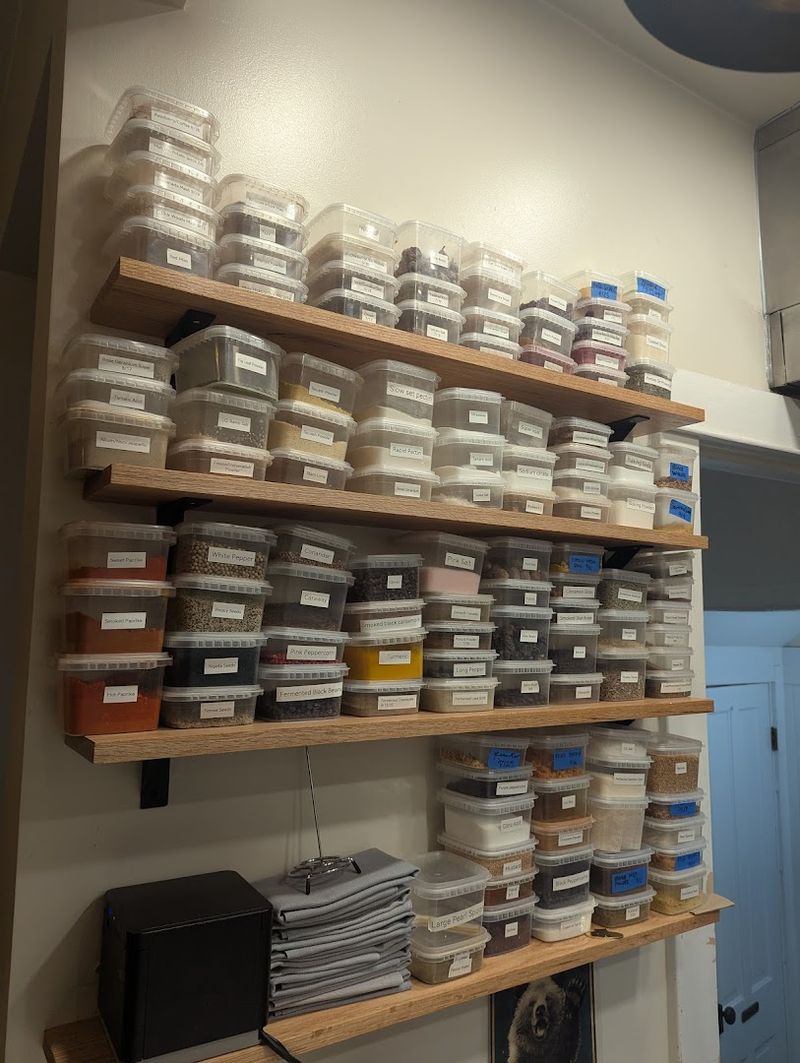
The dining room at Maude and the Bear is small by design, and that intimacy is one of its most appealing qualities. The space is warm, personally decorated, and free of the stiff formality that can make high-end restaurants feel more like a performance than a meal.
One couple described the atmosphere as feeling like being at the kitchen table in your grandmother’s house, in the best possible way. That description captures something real about the place: it is a fine dining experience that does not ask you to sit up straight and whisper.
The walls feature paintings by a local artist, and the handmade pottery on the tables reinforces the sense that every element of the room was chosen with care rather than ordered from a catalog. The overall effect is modern but warm, polished but personal.
One practical note worth mentioning: the dining room has hard surfaces that can make the room a bit loud when it fills up. This is a minor issue in a space that otherwise delivers so well on atmosphere, but it is worth knowing if you are sensitive to noise levels during dinner.
The parking situation is also worth planning around. The lot in front of the building is small, and street parking across the road requires some attention since there are no crosswalks nearby.
What Staunton Adds to the Visit
Staunton is a town that rewards slow exploration, and a meal at Maude and the Bear fits naturally into a longer visit to the area. The historic downtown stretches along a main street filled with independent shops, cafes, and buildings that carry the architectural character of a town that takes its history seriously.
The area is hilly, and the mix of Victorian and early twentieth-century buildings gives the streetscape a visual variety that makes walking around genuinely enjoyable. Several visitors who came specifically for the restaurant ended up extending their stay after discovering how much the town itself had to offer.
The Shenandoah Valley setting means that the surrounding landscape is never far from view. Fall foliage in the area is particularly dramatic, and a weekend trip that combines the scenery with a tasting menu dinner and an overnight stay at the inn covers a lot of ground in a very satisfying way.
Staunton is also within reasonable driving distance of several larger cities, making it an accessible destination for a weekend trip. Visitors have made the drive from Washington DC and described it as entirely worth the time.
The town has a character that is distinct from anything you would find in Oklahoma or other regions of the country, rooted specifically in Virginia’s Shenandoah heritage and its deep agricultural traditions that directly feed the kitchen at Maude and the Bear.
Practical Tips Before You Go
A few practical details can make the difference between a smooth evening and an avoidable frustration at Maude and the Bear. Reservations are essential, and the tasting menu format means the kitchen plans around the number of guests, so booking in advance is not optional.
The restaurant does not publish its menu online in advance, and that is intentional. The menu changes based on what is available locally and what the chef wants to explore, so the specific courses are revealed on the evening itself.
If you have dietary restrictions, contacting the restaurant ahead of time is a good idea. The kitchen has shown flexibility with restrictions like gluten sensitivity when given advance notice.
The price point is on the higher end. The four-course dinner runs around ninety dollars per person before add-ons, and the longer tasting menus and Chef’s Table experiences cost considerably more.
Budget accordingly and treat it as a special occasion rather than a casual dinner out.
Parking is limited in the front lot, so arriving a few minutes early and being prepared to use street parking across the road is smart planning. The restaurant is on a busy road, and the crosswalk situation is not ideal.
Maude and the Bear sits in a category of dining experience that is genuinely rare outside of major cities, and for food lovers willing to make the trip, it delivers something that Oklahoma and most other states simply cannot match in terms of this specific combination of place, sourcing, and craft.
Share this story