Southern Maryland does not typically top the list when people think about aviation history, but tucked away in Lexington Park is a museum that could change that opinion fast. This museum holds decades of U.S.
Navy flight testing history, from early experimental aircraft to spacecraft technology, and even a connection to the Apollo missions. This is not a dusty, forgotten collection gathering cobwebs in a corner.
The exhibits are well-maintained, the aircraft are genuinely rare, and the stories behind them are the kind that make you stop mid-step and stare. Whether you are a lifelong aviation enthusiast or someone who just wants a genuinely interesting afternoon, this place delivers far more than its modest location along Three Notch Road might suggest.
Keep reading to find out exactly what makes this museum worth the trip.
Where It All Starts: The Address and Setting
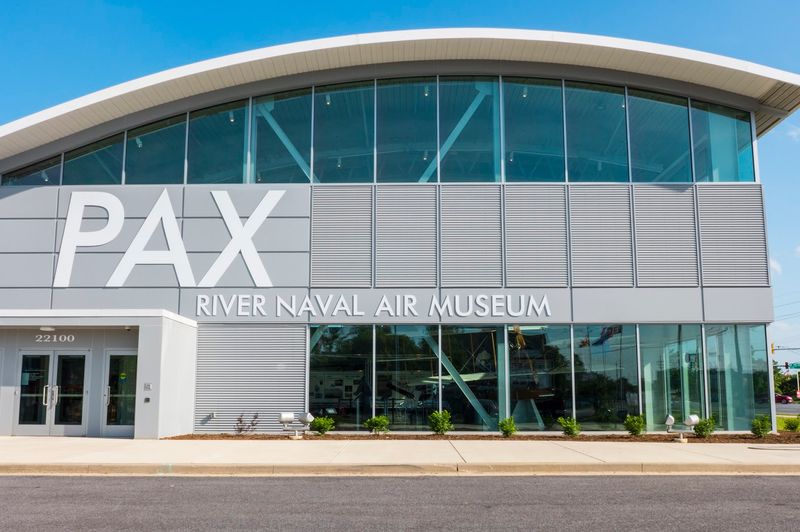
Right off Three Notch Road in Lexington Park, Maryland, the Patuxent River Naval Air Museum sits at 22156 Three Notch Rd, Lexington Park, MD 20653, just outside the gates of Naval Air Station Patuxent River.
The location is not accidental. NAS Patuxent River was commissioned in 1943 specifically to consolidate the U.S.
Navy’s aircraft testing and evaluation at one centralized facility, and the museum exists to document and celebrate that legacy.
Parking is ample and free, and the building itself is larger than it appears from the road. There is a main indoor building, an outdoor flight line, and a second building that holds additional exhibits.
The museum is open Tuesday through Saturday from 10 AM to 5 PM, Sunday from 12 to 5 PM, and is closed on Mondays. Admission is $10 for adults, making it one of the most affordable full-scale aviation museums on the East Coast.
A Base Born From Wartime Urgency
Back in 1942, the U.S. Navy purchased 6,700 acres of land in St. Mary’s County to build what would become one of the most important aviation testing facilities in American military history.
The timing was driven by World War II. The Navy needed a dedicated, centralized location to test and evaluate new aircraft designs quickly and efficiently, away from the distractions and limitations of other installations.
NAS Patuxent River was officially commissioned in 1943, and it immediately became the hub of naval aviation research and development. In 1945, the Naval Air Test Center was added, further expanding the base’s capabilities.
By 1958, the U.S. Naval Test Pilot School had opened there, producing some of the most skilled aviators in American history.
The museum captures this entire arc of history, from its wartime origins to its Cold War expansion, with exhibits that are both informative and genuinely compelling to walk through.
The Mercury Astronaut Connection You Did Not See Coming
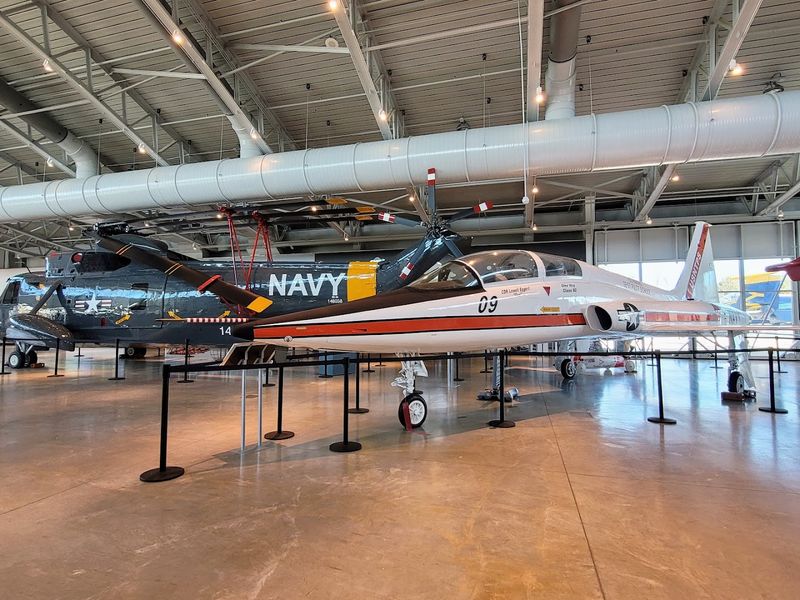
Four of the seven original Mercury astronauts graduated from the U.S. Naval Test Pilot School at Patuxent River, and that fact alone gives this museum a connection to space history that most people do not expect to find in Southern Maryland.
The school, established in 1958, trained pilots to push experimental aircraft to their absolute limits, which made it the perfect training ground for the men NASA would later choose to ride rockets into orbit.
The museum honors this connection with exhibits that trace the path from test pilot to astronaut, showing how the skills developed right here on the banks of the Patuxent River fed directly into America’s earliest space missions. A video narrated by Commander Jim Lovell, famous for commanding Apollo 13, plays in the museum’s cinema area and gives this space connection a personal and memorable dimension that ties the whole story together in a way no textbook quite manages.
Moon Dust in Maryland: The Apollo 13 Angle
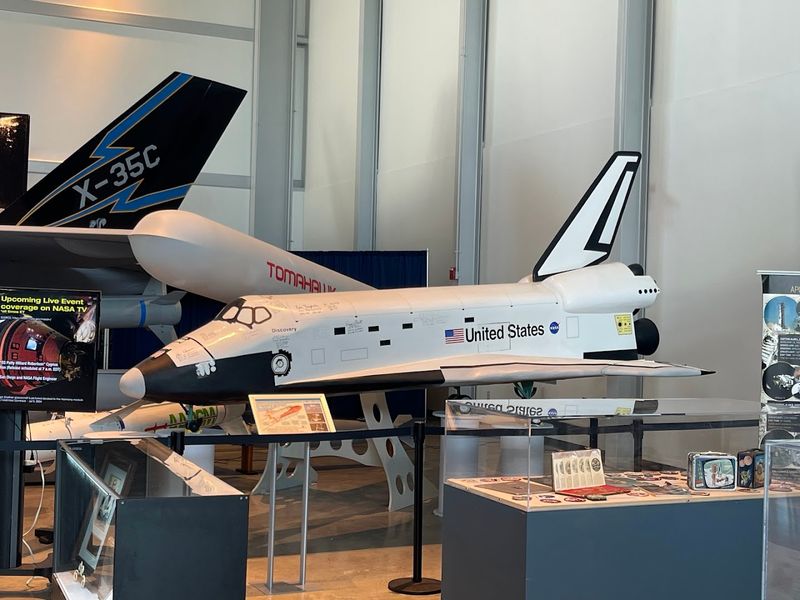
Not many people expect to find a piece of moon mission history in a small Maryland museum, but the Patuxent River Naval Air Museum delivers exactly that kind of surprise.
The cinema area inside the main building features a video narrated by Commander Jim Lovell himself, walking through the events of Apollo 13 and his personal journey from test pilot to astronaut. Lovell trained at NAS Patuxent River, which makes the connection authentic and not just decorative.
The museum does not overstate its space artifacts, but what it does present is placed in a context that makes the broader story of American aviation and space exploration feel connected and real. The leap from testing jets over the Chesapeake Bay to orbiting the Moon was not as large as it might seem, and the museum makes that argument convincingly.
This is one of those exhibits that tends to catch people off guard in the best possible way.
Rare Aircraft That Belong in a History Book
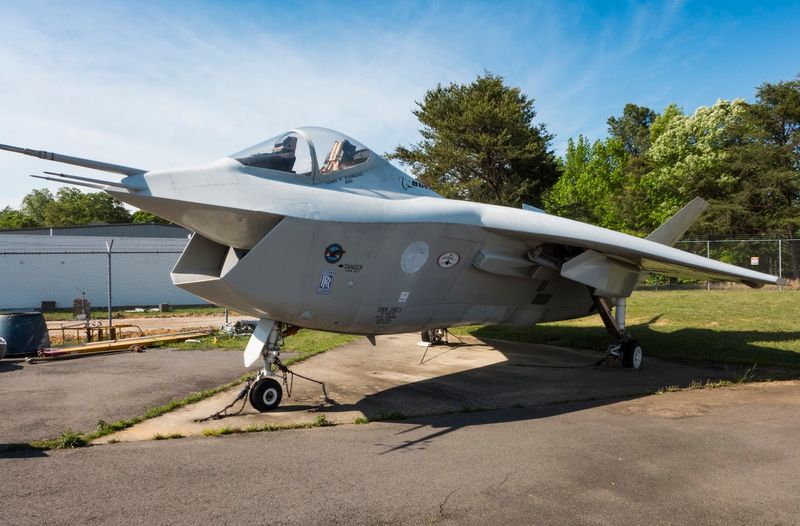
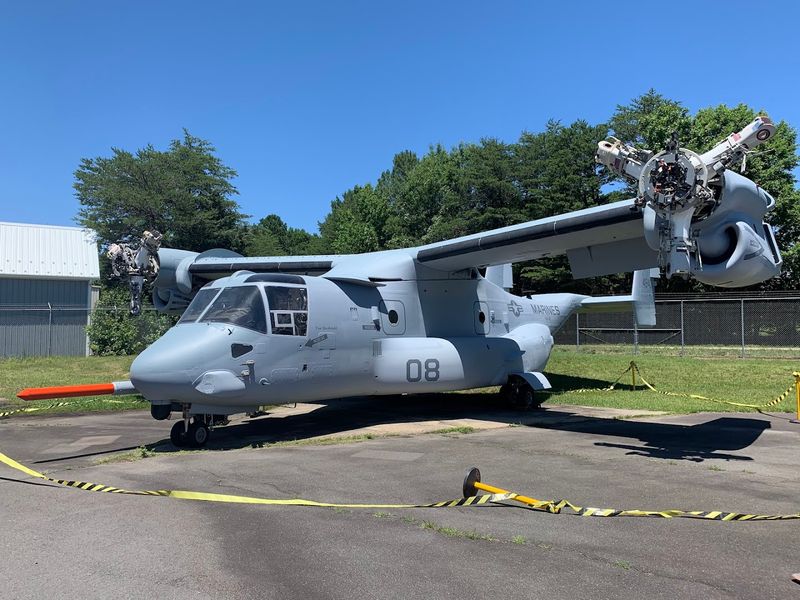
The outdoor flight line at the Patuxent River Naval Air Museum is where the collection truly stands out from other aviation museums. The aircraft on display are not just impressive, several of them are genuinely one-of-a-kind.
The Boeing X-32B is here, one of only two in existence. The North American T-39D with an F/A-18 radar nose is another rarity that aviation enthusiasts specifically travel to see.
These are not replicas or reconstructions, they are the actual experimental aircraft that were used in real test programs.
The outdoor flight line holds the majority of the planes, with roughly 24 aircraft that visitors can walk around and examine up close. Some are actively being restored, which adds an interesting behind-the-scenes quality to the experience.
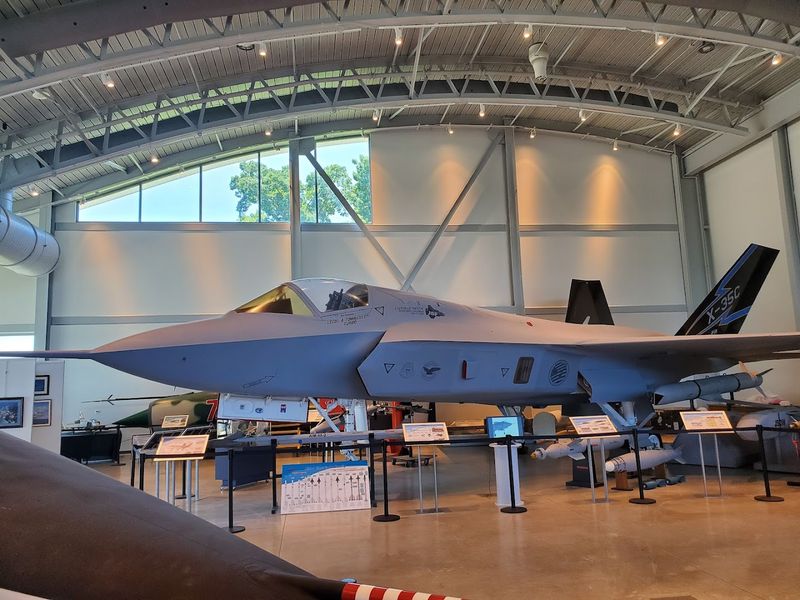
The X-35, a predecessor to the F-35 Joint Strike Fighter, is also part of the collection, and there are only two of those in the world as well. The flight line alone justifies the drive.
Inside the Main Building: More Than Just Planes
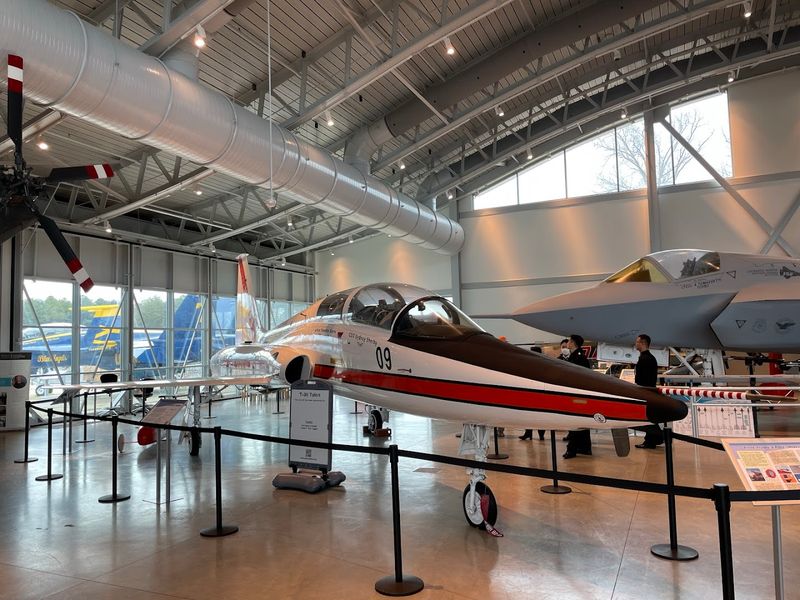
The main building at the Patuxent River Naval Air Museum is clean, well-lit, and organized in a way that makes it easy to move through without feeling overwhelmed.
Inside, there are aircraft displays alongside detailed informational panels that explain the history and significance of each piece. Targeting pods, weapons systems, ejection seats, refueling equipment, and a full MK46 torpedo are among the items on display, giving the collection a depth that goes well beyond just parking jets in a room.
A gift shop near the entrance carries aviation-themed souvenirs, books, and memorabilia for those who want something tangible to take home. Clean restrooms are also located in the main building, which is a practical detail worth knowing before a longer visit.
The building is consistently maintained in excellent condition, and the exhibits are updated regularly with new aircraft, parts, and equipment added over time. The overall setup rewards a slow, careful walk-through.
The Third Building: Drones, Engines, and Tech
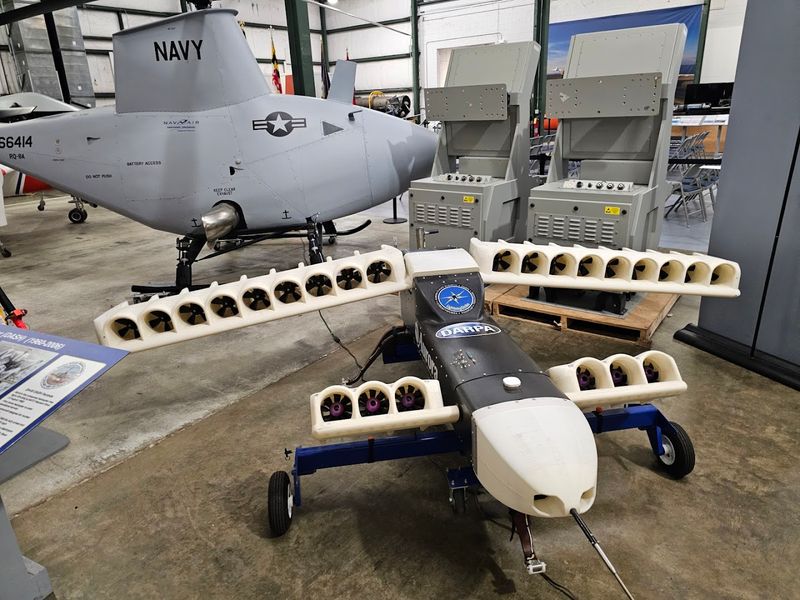
Behind the main museum building sits a second structure that houses a completely different category of exhibits, and it is the kind of place that engineers and tech enthusiasts tend to linger in longest.
Drones, airplane engines, electronic equipment, sonobuoys, and various pieces of aviation technology fill this building with a level of detail that complements the aircraft-heavy outdoor flight line. It is a more technical collection, but the displays are explained clearly enough that anyone with a passing curiosity can follow along without an engineering degree.
The flight simulators are also located in this building. During the school year, they are typically available on weekends, so it is worth checking availability before planning a visit around them specifically.
One simulator replicates a true instrument flight rules platform, and kids can use certain simulators for free. The building itself is worth the extra few minutes it takes to walk back and explore, especially for anyone with a deeper interest in aviation technology.
Flight Simulators That Actually Fly
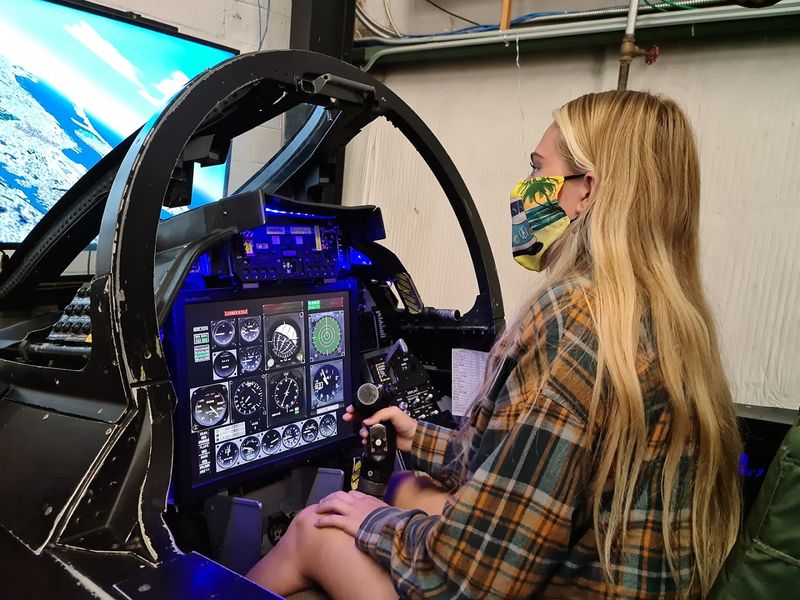
The flight simulators at the Patuxent River Naval Air Museum have gone through significant upgrades over the years, moving from wall projections to screens positioned directly in front of the pilot seat, which makes the experience considerably more engaging than older setups.
One simulator runs as a true IFR platform, meaning it replicates the instruments and conditions that real pilots use when flying without visual reference to the ground. For a licensed pilot, this is a genuinely useful and interesting piece of equipment.
For everyone else, it is still a lot of fun.
Simulator sessions run at $12 for 30 minutes for adults, and children can fly certain simulators for free. Availability can be limited, particularly during busy periods, so checking ahead is a smart move.
The simulators tend to be available primarily on weekends during the school year. Among all the interactive elements at the museum, this one consistently draws the most enthusiasm from younger visitors.
Try on the Uniform: The Interactive Side of the Museum

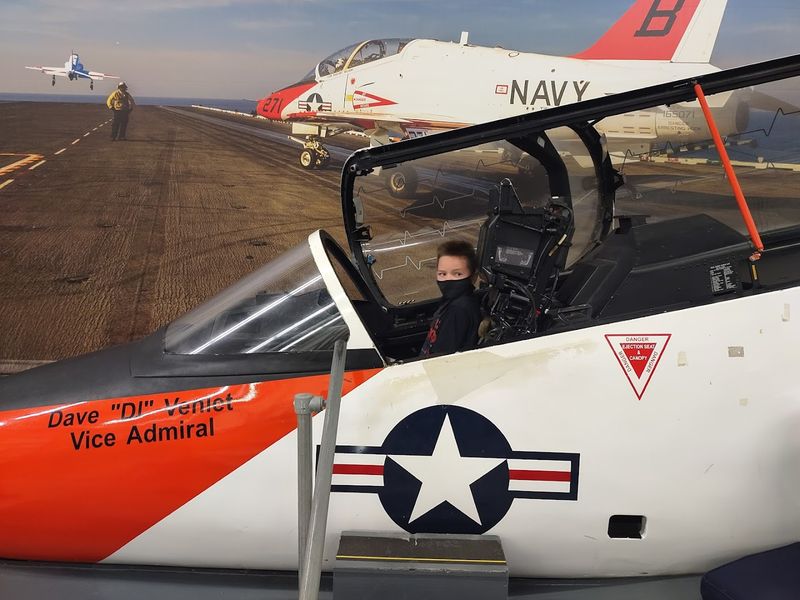
Not every museum lets you dress the part, but the Patuxent River Naval Air Museum has a section where both adults and children can try on a naval aviator uniform and take photos next to their favorite aircraft.
This feature has turned out to be a genuine crowd-pleaser, particularly for families. A child in a full flight suit standing next to an F/A-18B Hornet, the same aircraft type flown by the Blue Angels, is the kind of photo that tends to end up framed on a wall.
The interactive elements throughout the museum are thoughtfully placed and age-appropriate, which means younger visitors stay engaged without the adults feeling like they are just chaperoning a field trip. The museum has hosted groups as large as 25 high school students and handled them smoothly, with docents leading informative tours.
School groups are encouraged to contact the museum in advance to arrange visits for larger numbers of students.
Blue Angels, Hornets, and the Aircraft You Recognize
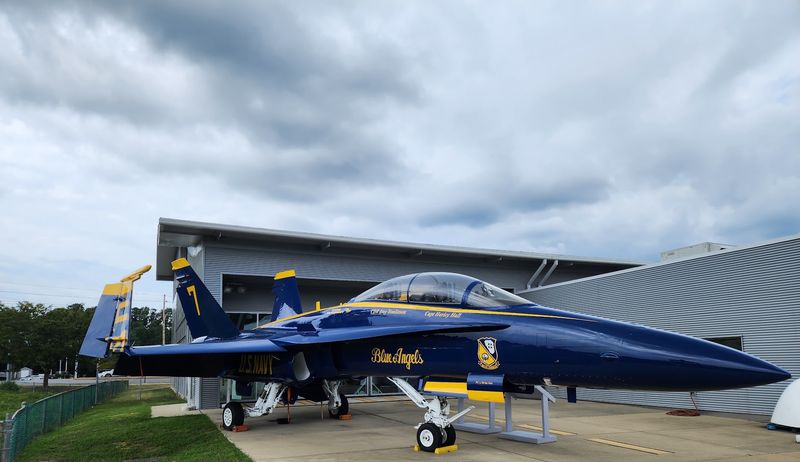
Among the aircraft on the outdoor flight line, the F/A-18B Hornet carries a particular kind of recognition factor. This is the aircraft type associated with the U.S.
Navy’s Blue Angels flight demonstration team, and seeing one up close at the museum hits differently than watching them streak across an air show sky.
The Hornet on display at the museum is a real aircraft with a real service history, not a mock-up or a model. Visitors can walk around it, read about its testing history, and get a genuine sense of the scale and engineering involved in building a supersonic naval fighter.
The museum’s collection spans fixed-wing aircraft and vertical lift craft, covering helicopters alongside jets and experimental prototypes. The range of aircraft types means that regardless of what a visitor finds most interesting, there is almost certainly something on the flight line that matches that interest.
The sheer variety is one of the collection’s strongest qualities.
Who Should Make the Trip and When to Go
The Patuxent River Naval Air Museum works well for a wide range of visitors. Aviation enthusiasts with deep technical knowledge will find rare aircraft and detailed historical exhibits to satisfy serious interest.
Families with children will find interactive elements, the uniform station, and approachable docents who keep younger visitors engaged.
Midweek visits tend to be quieter, with more space to move through exhibits at a comfortable pace. A Wednesday or Thursday visit during the school year typically means less foot traffic and easier access to the simulators.
Weekend visits draw more people but also tend to have the simulators available, which is worth factoring in.
Plan for at least two to three hours, though many people find themselves staying longer once they get into the outdoor flight line and the second building. The museum is open Tuesday through Saturday from 10 AM to 5 PM and Sunday from noon to 5 PM.
Monday is the one day to avoid.
Why This Museum Stays With You After You Leave
Most museums are easy to forget by the time you reach the parking lot. The Patuxent River Naval Air Museum tends to stick around in the mind a little longer, and the reason comes down to specificity.
The collection is not a generic overview of aviation history. It is a focused, detailed account of one specific place, one specific mission, and the remarkably accomplished people who carried it out over eight decades.
The aircraft are rare, the stories are real, and the connection to events as large as the space race gives the whole experience a weight that generic exhibits rarely achieve.
At $10 per adult, it is also one of the better-value museum experiences available anywhere in Maryland. The combination of depth, rarity, and accessibility makes it the kind of place that people recommend to others with genuine enthusiasm rather than polite obligation.
Southern Maryland has been quietly keeping this one to itself, but the word is getting out.
Share this story