There is a building in northern New Jersey that most people drive past without a second thought. Inside, two actual submarines sit alongside silk-weaving looms, Colt firearms, Native American artifacts, and enough industrial history to keep you busy for a full afternoon.
Paterson, New Jersey was once one of the most important manufacturing cities in the United States, and this museum tells that story better than any textbook ever could. The fact that admission is completely free makes it even harder to justify skipping it.
Alexander Hamilton’s Bold Industrial Experiment
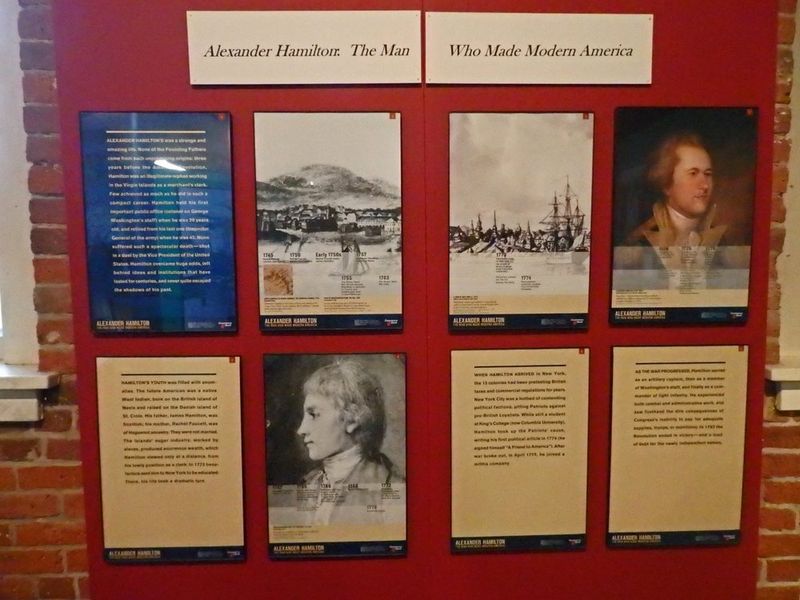
Most people know Alexander Hamilton from currency or Broadway, but fewer realize he had a direct hand in shaping Paterson, New Jersey into America’s first planned industrial city. Hamilton saw the Great Falls of the Passaic River as an enormous natural power source and proposed building a manufacturing hub around it in the 1790s.
The museum dedicates meaningful space to Hamilton’s vision and his role in founding the Society for Establishing Useful Manufactures, known as the S.U.M. This organization essentially built Paterson from the ground up as an industrial engine for the young nation.
The exhibits trace how his economic theories translated into real factories, real workers, and real products that helped define early American commerce. For anyone who thought Hamilton’s story ended with politics and finance, this section of the museum reframes him as one of the country’s most practical and forward-thinking economic architects.
The Silk City Story That Defined a Generation
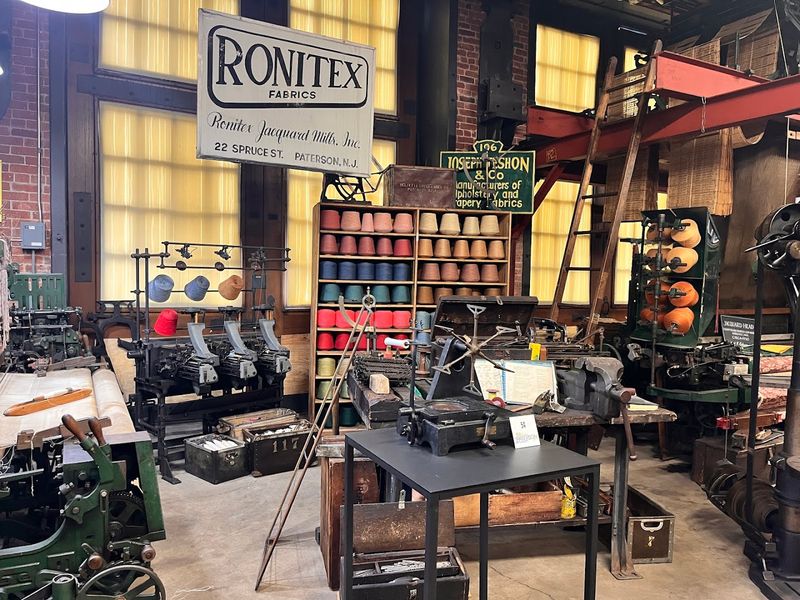
Paterson earned the nickname “Silk City” for a reason that goes far beyond marketing. By the late 1800s, the city was producing more silk fabric than anywhere else in the United States, and the museum holds some of the most impressive physical evidence of that era.
Full-size Jacquard looms dominate sections of the exhibit floor, and their scale alone is worth the visit. These machines used punched cards to control weaving patterns, making them an early and fascinating ancestor of modern computing.
The punched card system instructed each loom on exactly which threads to lift and when, creating complex patterns with mechanical precision. Seeing the actual hardware up close makes it easy to understand why historians treat the Jacquard loom as a landmark moment in technological history.
The silk industry brought thousands of immigrant workers to Paterson, and the museum honors their contribution with care and detail throughout this section.
Two Submarines That Rewrote Naval History
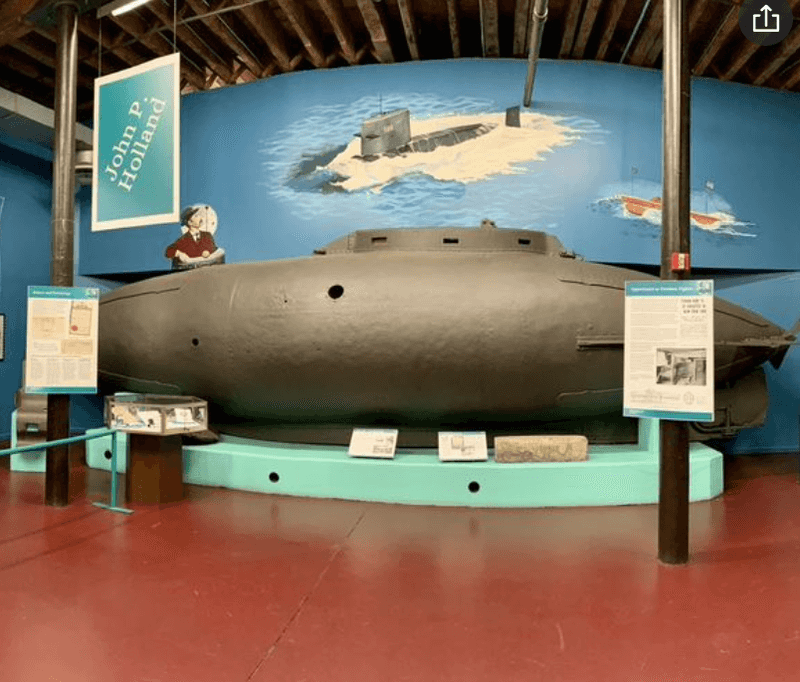
Nothing quite prepares a first-time visitor for the sight of two actual submarines sitting inside a museum. The Holland submarines on display at the Paterson Museum are not replicas, and their presence in the building is genuinely surprising even when you already know they are there.
John Philip Holland was an Irish-born inventor who worked in Paterson and developed some of the earliest functional submarines ever built. His designs were eventually adopted by the United States Navy, making his work one of the most consequential chapters in American military technology.
The two vessels on display represent different stages of Holland’s development process, and the museum provides context for how revolutionary these machines were at the time. Seeing them up close, with their compact metal hulls and hand-built construction, makes the engineering achievement feel personal rather than abstract.
This exhibit alone justifies the trip across the Hudson for anyone based in New York City.
Locomotives Built Right Here in Paterson
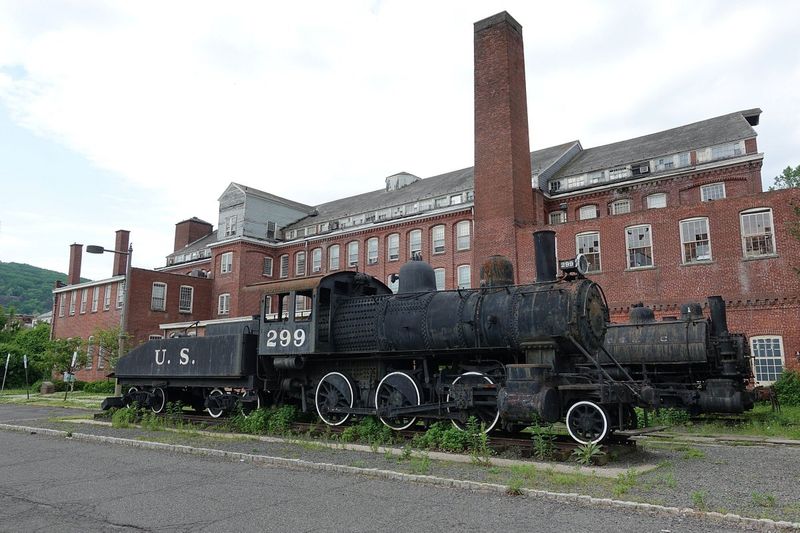
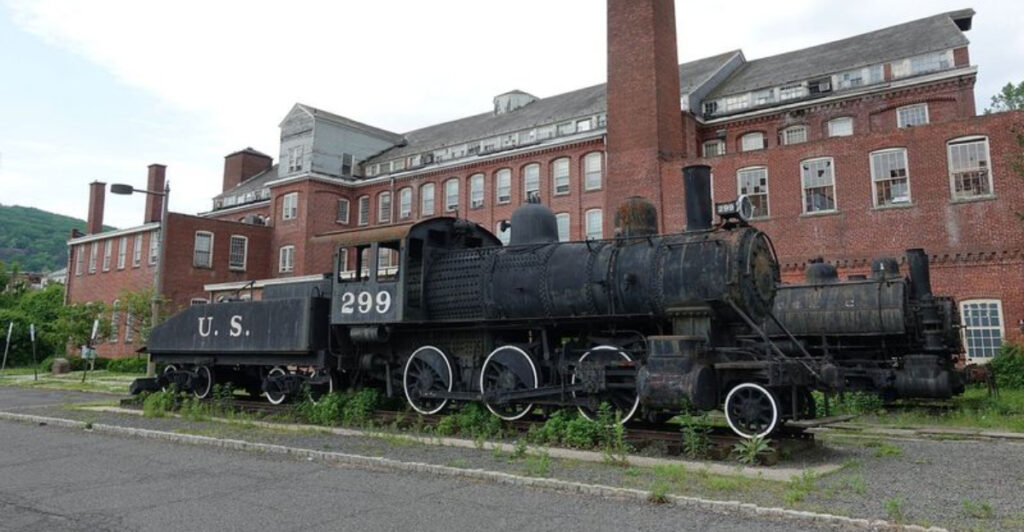
Before Paterson was known for silk, it was already building the machines that connected a continent. The Rogers Locomotive Works operated out of the very building that now houses the museum, and the exhibits make that connection feel immediate and tangible.
Paterson-built locomotives helped expand the American railroad network throughout the 1800s, carrying passengers and freight across routes that were still being mapped. The Rogers company was one of the most productive locomotive manufacturers in the country during its peak years.
The museum displays actual machinery from that era alongside photographs and documentation that trace the full arc of the industry. Standing in a space where those massive machines were once assembled and tested adds a layer of authenticity that no off-site exhibit could replicate.
Railroad history can sometimes feel dry on paper, but the physical scale of the equipment and the building itself makes this chapter of Paterson’s past feel genuinely alive.
Colt Firearms and the Industrial Arms Race
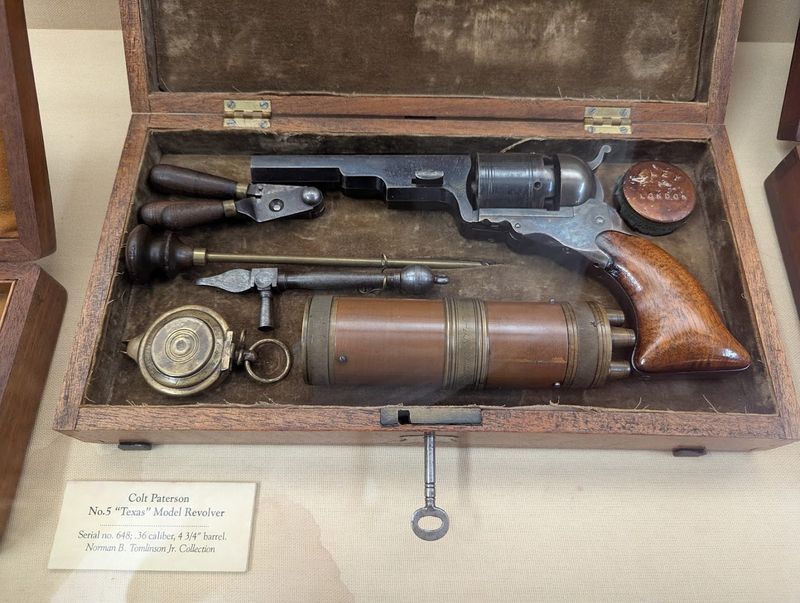
Samuel Colt developed some of his earliest and most important firearms designs while working in Paterson, New Jersey, and the museum holds a collection that reflects just how significant that chapter was. The Colt Paterson revolver, produced here in the 1830s, was among the first practical repeating firearms ever manufactured commercially.
The exhibit covers the technical development of the revolving mechanism, the manufacturing process, and the broader impact these weapons had on American history, including their use during westward expansion and military conflicts. The display cases are well-organized and the informational signage gives solid context without overwhelming the viewer.
For history enthusiasts, this section connects industrial innovation directly to national events in a way that makes the timeline of American development feel more coherent. Colt eventually moved his operations elsewhere, but Paterson’s role in launching that legacy is documented here with the kind of detail that collectors and casual history fans alike will find worthwhile.
The Wright Brothers Connection Nobody Expects
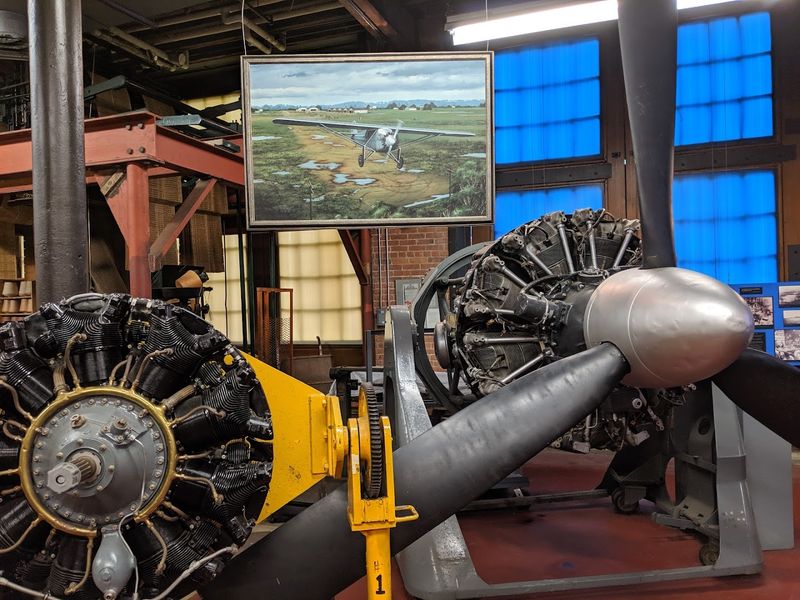
The Wright Brothers are forever linked to Kitty Hawk and Dayton, but Paterson has its own thread in the story of early aviation. The museum includes exhibits that connect the city’s manufacturing infrastructure to the development of early aircraft engines, a chapter that surprises most people who walk in without having done prior research.
Paterson’s machine shops and skilled metalworkers made the city a natural fit for producing components that the emerging aviation industry required. The precision engineering that had been refined through decades of locomotive and textile machine production translated directly into the demands of early aircraft manufacturing.
The exhibit does not overstate the connection, but it does make a credible and interesting case for Paterson’s place in aviation history. For visitors who arrive expecting only silk and submarines, discovering this additional layer of technological heritage turns a good museum trip into a genuinely educational one that keeps adding new surprises the further you explore.
Native American History Told With Respect
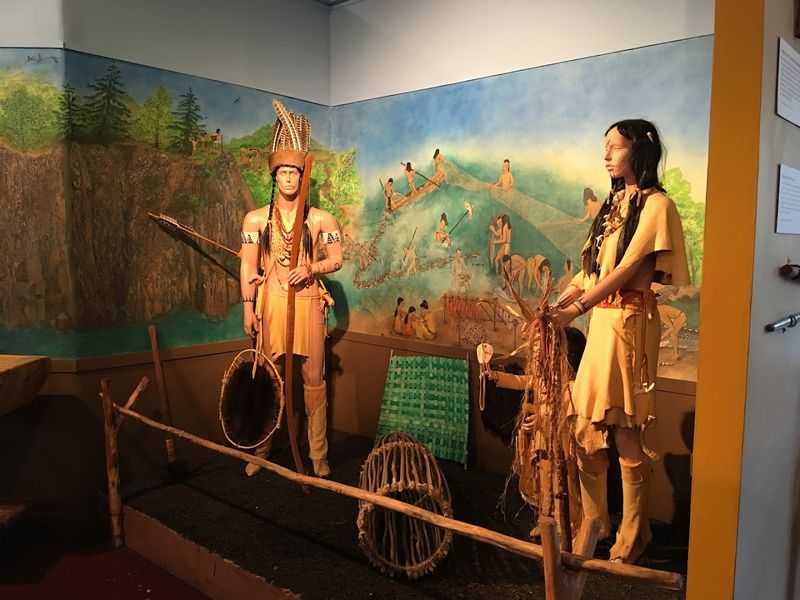
Long before Hamilton drew up plans for an industrial city, the Lenape people lived throughout the region that would become Paterson and the surrounding Passaic Valley. The museum addresses this history with a dedicated section that covers Lenape tools, housing structures, and cultural practices.
A reconstruction of the interior of a Lenape dwelling gives visitors a physical reference point that purely object-based displays cannot provide. The tools on display are well-preserved and carefully labeled, and the informational panels treat Lenape history as a full and complex story rather than a brief preface to European settlement.
This section of the museum tends to resonate strongly with younger visitors, particularly because the housing reconstruction makes the subject concrete and relatable. The Paterson Museum earns credit for including indigenous history as a genuine part of the city’s story rather than a footnote.
It grounds the entire collection in a much longer timeline than the industrial exhibits alone could cover.
Minerals, Gemstones, and Earth Science Surprises
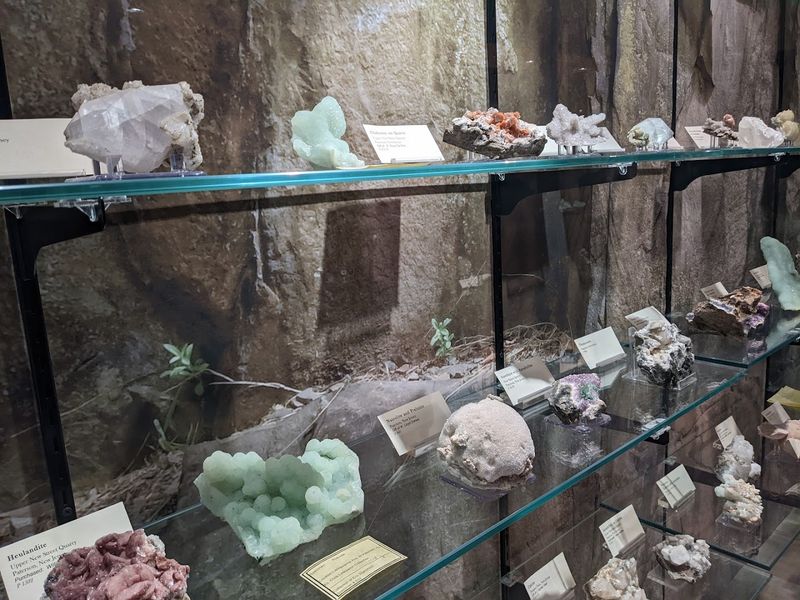
Not every exhibit at the Paterson Museum is about machines and manufacturing. The mineralogy collection is a genuinely striking section that covers the geological richness of the Passaic Valley region and beyond, featuring specimens that range from locally sourced minerals to examples from much further afield.
New Jersey has a surprisingly rich mineral heritage, and Paterson’s proximity to the Watchung basalt ridges means the region has produced notable geological finds over the centuries. The display cases are organized clearly and the specimens are well-presented, making this section accessible even to visitors with no prior background in earth science.
Children tend to gravitate toward the colorful crystals and polished stones, while adults with a background in geology or natural history will find enough depth to hold their attention. It is an unexpected corner of the museum that broadens the overall experience well beyond the industrial and historical focus of the main floor exhibits.
Lou Costello and Paterson’s Pop Culture Legacy
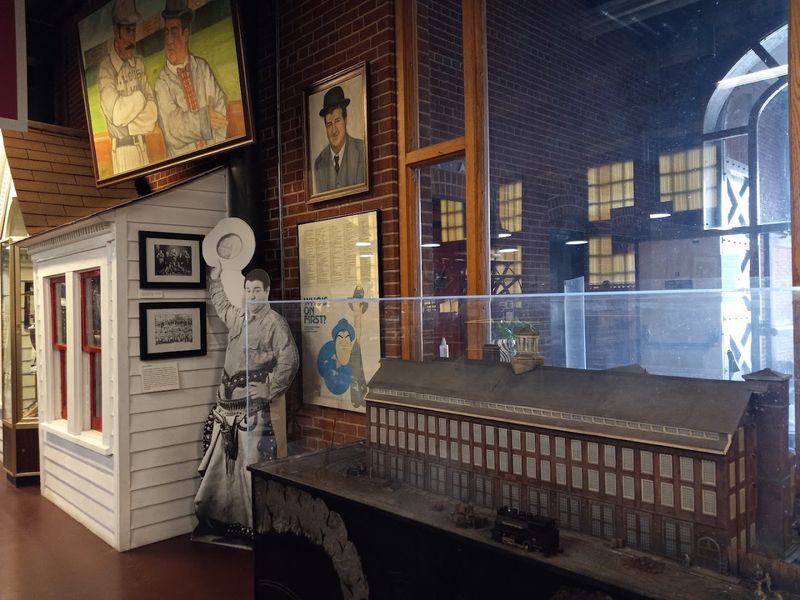
Lou Costello, the beloved comic actor best known as the shorter half of Abbott and Costello, was born and raised in Paterson, New Jersey. The museum pays tribute to him with a dedicated display that includes photographs, memorabilia, and context about his rise from a working-class Paterson neighborhood to Hollywood fame.
Abbott and Costello were among the most popular entertainers in America during the 1940s and early 1950s, and their routines, particularly “Who’s on First,” remain part of the cultural conversation decades later. Seeing Costello’s Paterson roots documented in a museum that also covers submarines and silk looms is a reminder of how layered this city’s history really is.
The display humanizes the broader story of Paterson by showing that the city produced not just industrial output but also cultural figures who shaped American entertainment. It adds warmth to a collection that might otherwise feel purely technical, and it tends to generate genuine smiles from people of all ages.
Larry Doby and the Sports Hall of Memory
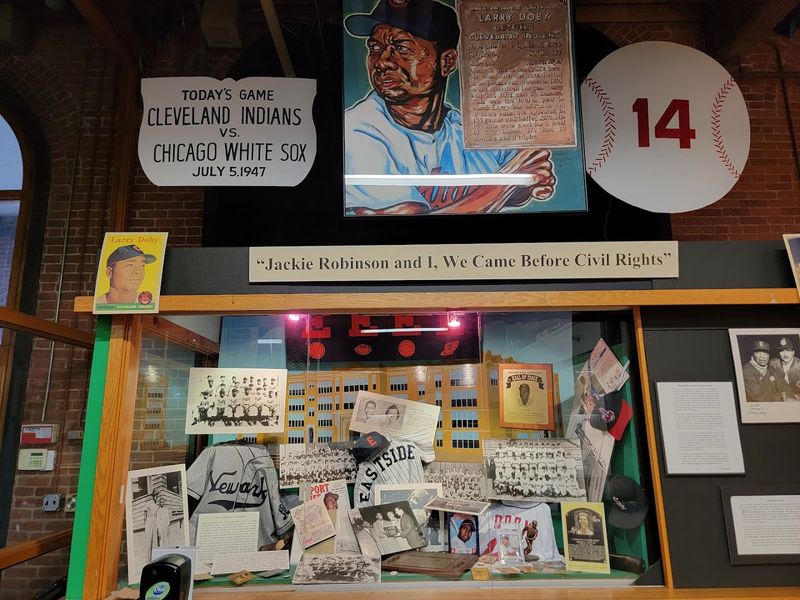
Larry Doby grew up in Paterson, New Jersey, and went on to become the first African American player in the American League, breaking that barrier just eleven weeks after Jackie Robinson integrated the National League in 1947. The museum includes a tribute to Doby that places his achievement within the broader story of civil rights and American sports history.
Doby’s career with the Cleveland Indians included a World Series championship in 1948, and he later became a manager and a Hall of Fame inductee. His Paterson roots are a point of genuine local pride, and the museum treats his story with the historical weight it deserves.
Sports exhibits can sometimes feel disconnected from the main narrative of a history museum, but the Doby display fits naturally into the Paterson Museum’s larger theme of a city that produced remarkable people alongside remarkable products. His story adds a vital social dimension to a collection that spans centuries of local achievement.
Fire, Police, and the People Who Protected the City
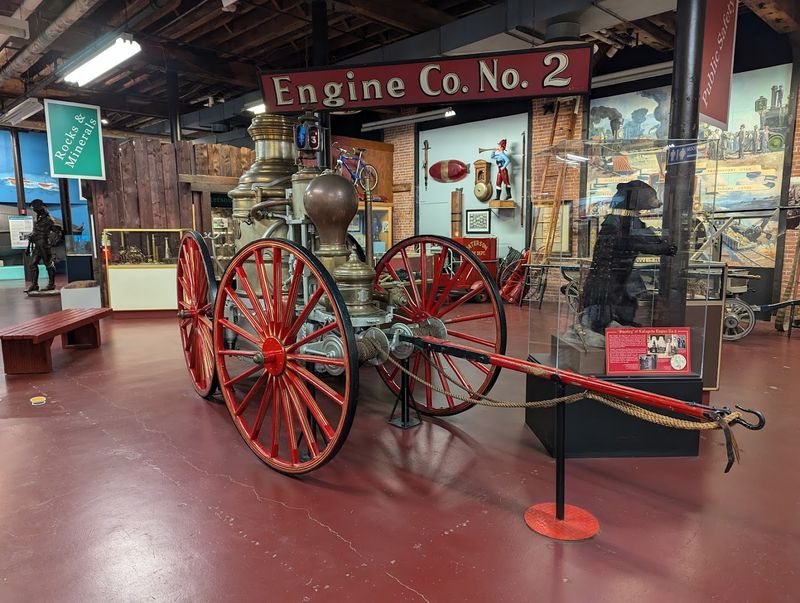
Industrial cities carry industrial risks, and Paterson’s history includes the fire and police departments that kept a dense, factory-filled city functioning through generations of growth and change. The museum dedicates exhibit space to both departments, covering equipment, uniforms, photographs, and the evolution of public safety in an urban industrial environment.
The firefighting display includes vintage equipment that reflects how dramatically the tools of the trade changed between the 1800s and the mid-20th century. The progression from horse-drawn apparatus to motorized vehicles is documented with actual hardware and archival images that make the timeline easy to follow.
The police department section covers similar ground, tracing the department’s development alongside the city’s changing demographics and industrial landscape. These exhibits remind visitors that behind every factory and every loom, there were communities of people whose daily lives required protection, organization, and civic infrastructure.
It rounds out the museum’s portrait of Paterson as a real and fully functioning city, not just an industrial showcase.
The Great Falls Are Right Around the Corner

The Paterson Museum does not exist in isolation. A short walk from the front door leads to the Great Falls of the Passaic River, a 77-foot waterfall that is now a National Historical Park and the reason Paterson became an industrial city in the first place.
Hamilton’s original vision relied entirely on the waterpower generated by those falls, and the hydroelectric infrastructure built around them eventually powered factories across the city. Visiting the museum and then walking to the falls creates a complete narrative experience that connects the natural landscape to the industrial history on display inside.
The falls are genuinely impressive on their own terms, often described as one of the most powerful waterfalls in the eastern United States. Combining both stops into a single outing makes for a full and satisfying day of exploration without requiring much logistical effort.
The two sites are close enough that most people choose to visit them together, and the pairing makes perfect historical sense.
A Free Museum That Punches Well Above Its Weight
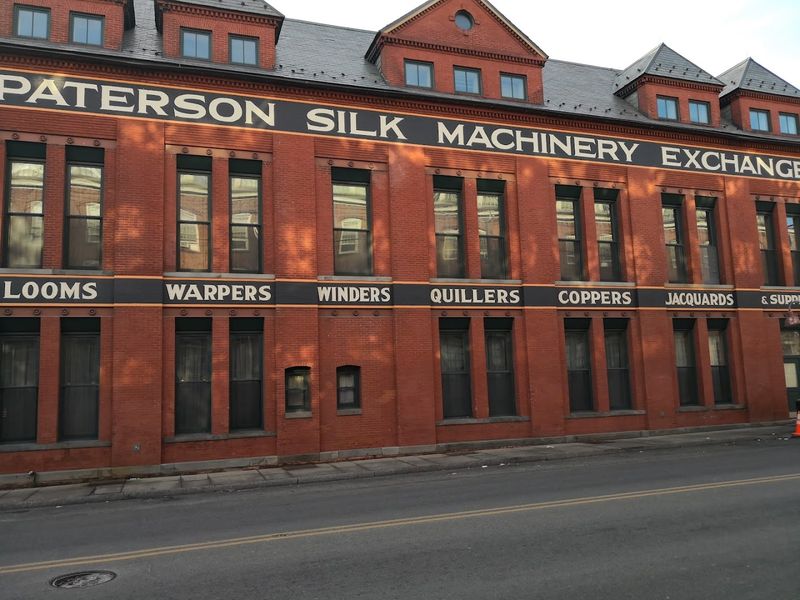
Free admission at a museum sometimes signals a modest experience, but the Paterson Museum consistently defies that expectation. The collection spans archaeology, industrial technology, military history, natural science, sports, and pop culture, all housed in a building that is itself a historical artifact.
The staff and volunteers who maintain the museum bring genuine knowledge and enthusiasm to the space. Guided explanations of exhibits are offered with the kind of depth that comes from real expertise and personal investment in the material, making the visit feel personalized rather than scripted.
Spending ninety minutes to two hours here is entirely realistic, and most people leave wishing they had allocated more time. The museum is open Tuesday through Friday and on Monday from 9:30 AM to 4:30 PM, with no admission fee and free parking on site.
For anyone within driving distance of Paterson, this is the kind of place that earns a return visit before the first one is even finished.
Where History Found a Permanent Address
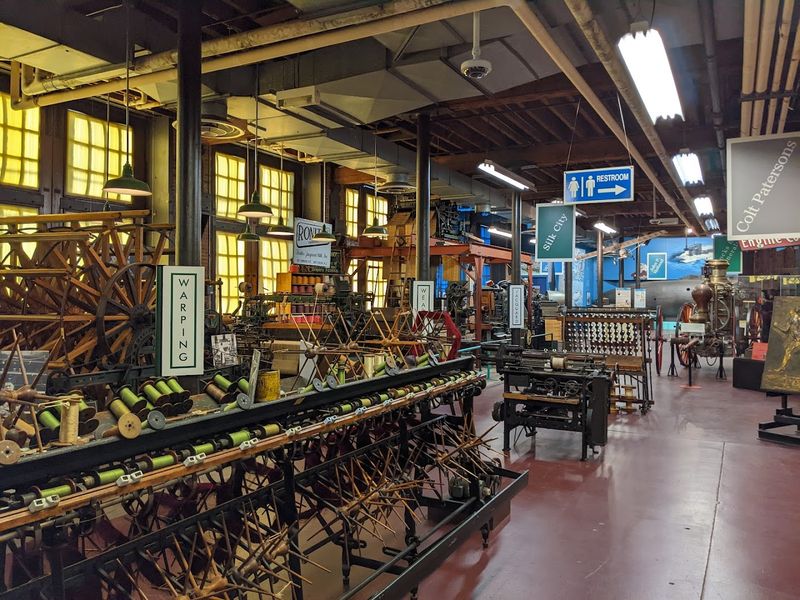
The Paterson Museum calls one of the city’s most historically significant industrial structures home. The address is 2 Market St, Paterson, NJ 07501, and the building itself is the original Rogers Locomotive Works erecting hall, a massive floor-to-ceiling preserved factory space that doubles as an exhibit before you even look at a single display case.
Paterson sits in Passaic County in northern New Jersey, and the museum is open Tuesday through Friday from 9:30 AM to 4:30 PM, as well as Monday during those same hours. Saturday and Sunday are closed, so planning ahead matters.
Parking is free on location, and there is no admission charge, though donations are welcomed and well-deserved. The building’s exterior shows its age, but the interior is a remarkably well-preserved slice of American industrial heritage that rewards every curious person willing to walk through the front door.
Share this story