Europe is filled with famous landmarks, but some of its most unforgettable places are the ones that feel almost unreal. Across the continent, you’ll find towns built under rocks, monasteries perched on cliffs, and landscapes that look like they belong on another planet.
These unusual destinations offer a completely different way to experience Europe—far from the typical tourist path. Whether shaped by nature, history, or human creativity, these places stand out for their uniqueness and intrigue.
Meteora, Greece
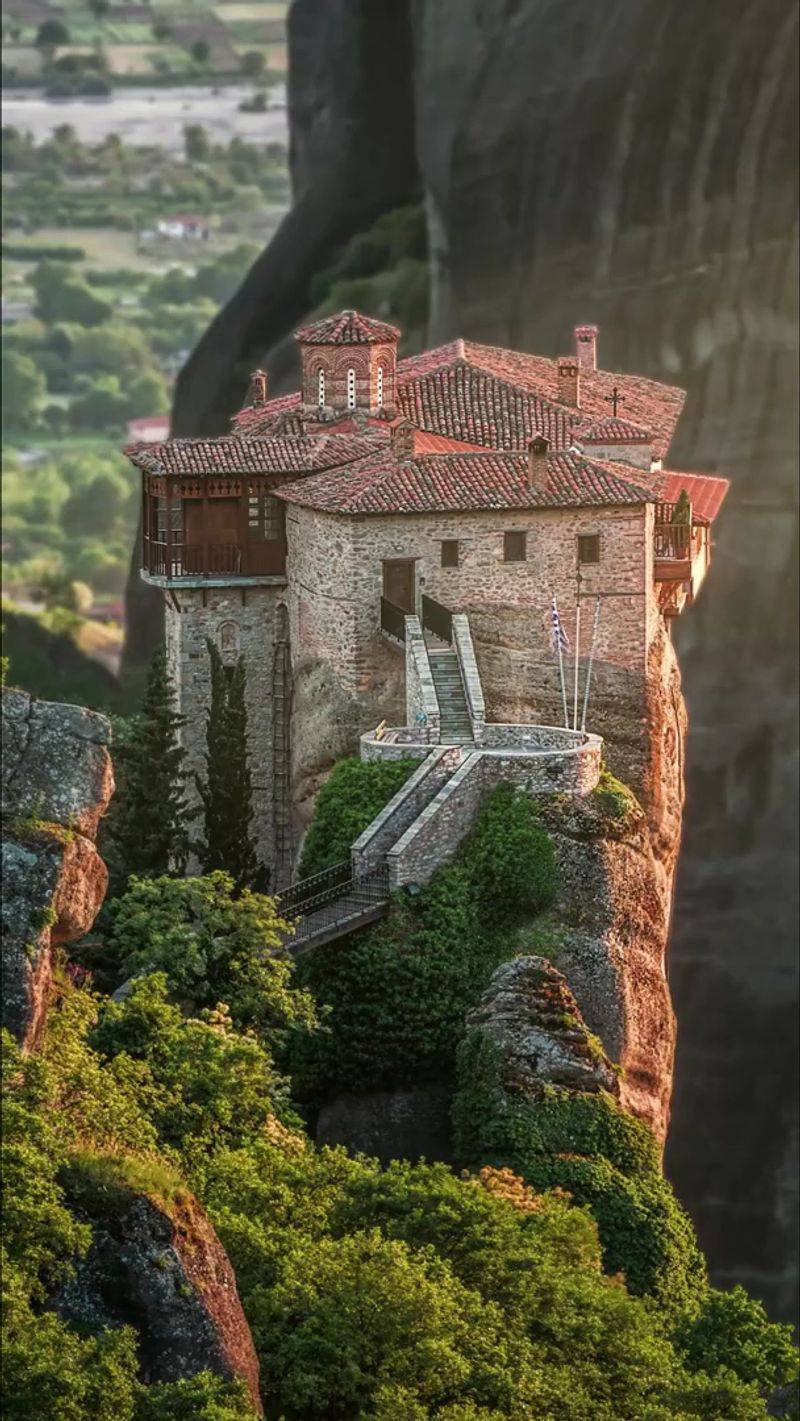
Gravity seems to have forgotten about Meteora. These ancient monasteries, built centuries ago by monks who wanted to escape the world below, sit on top of massive sandstone pillars that shoot straight up from the valley floor.
Standing at the base and looking up feels like staring at something from a dream.
Getting there used to mean climbing rope ladders—a journey not for the faint-hearted. Today, carved stone steps make the climb far more manageable, though the dramatic setting still gives visitors that heart-pounding feeling.
Six monasteries remain active, and monks still live and pray in them daily.
The views from the top are absolutely breathtaking. Rolling hills, tiny villages, and winding rivers stretch out in every direction.
Early morning visits are best—the mist that settles between the rock columns adds an almost mythical atmosphere. Meteora is a UNESCO World Heritage Site for good reason.
There is truly nothing else like it anywhere on Earth, and photos never fully capture just how extraordinary it looks in person.
Setenil de las Bodegas, Spain
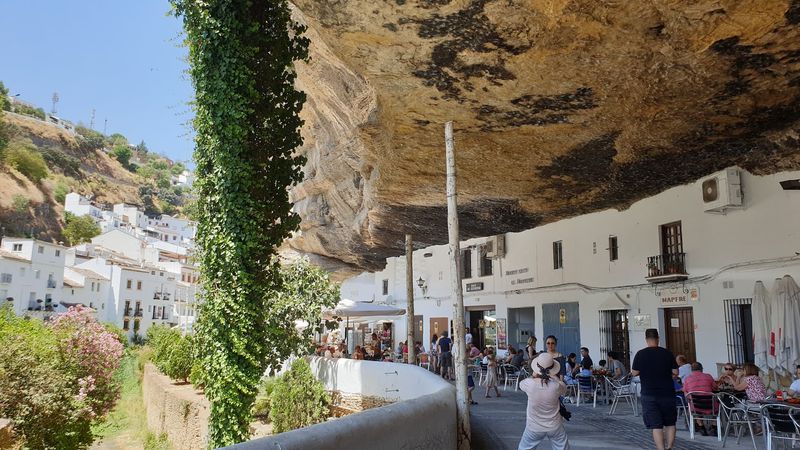
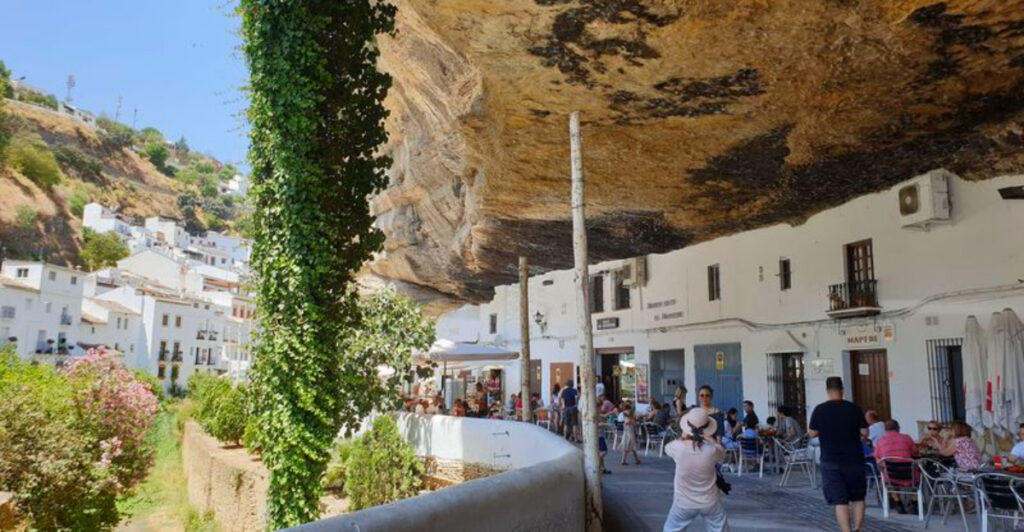
Imagine having a mountain as your ceiling. That is everyday life in Setenil de las Bodegas, a small Andalusian village where buildings are literally tucked beneath enormous rock overhangs.
Residents have been living under these natural stone roofs for thousands of years, and the setup works surprisingly well.
Walking through the main streets feels wonderfully strange. On one side, you have whitewashed walls and flower pots.
On the other, a solid rock cliff looms overhead, close enough to touch. Local bars and restaurants built right into the rock face serve up tapas and cold drinks in one of the most unusual dining settings imaginable.
The village sits in the Cadiz province and is easy to reach from nearby Ronda. Most tourists skip it entirely, which makes it feel like a genuine hidden gem.
The streets are narrow, the locals are friendly, and the atmosphere is relaxed. Visiting on a hot summer day has an extra bonus—the rock provides natural shade and keeps temperatures noticeably cooler.
It is a small town with a very big personality, and one that rewards curious travelers who wander off the well-worn path.
Lake Resia Bell Tower, Italy
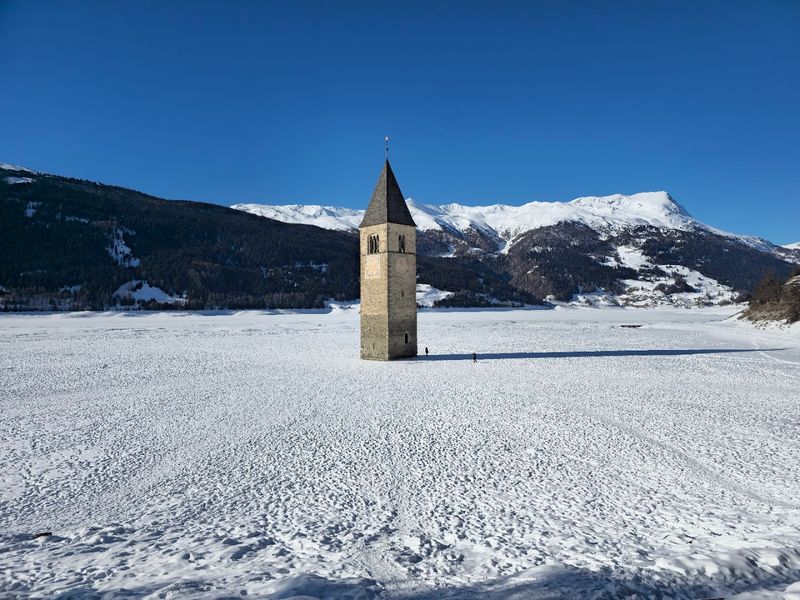
There is something quietly haunting about a church tower standing alone in the middle of a lake, with no church beneath it and no village around it. The Lake Resia Bell Tower in South Tyrol is exactly that—a 14th-century campanile poking out of the water, the last visible reminder of a town that was deliberately flooded in 1950 to create a reservoir.
Around 160 residents were relocated when the valley was submerged. The church itself was demolished, but the bell tower was left standing.
Nobody is entirely sure why, and that mystery adds to its eerie charm. Local legend says the bell could still be heard ringing beneath the surface for years afterward.
Winter transforms the site into something truly magical. When the lake freezes over, visitors can walk across the ice and stand right next to the tower.
The surrounding Alps provide a jaw-dropping backdrop, making it one of the most photographed spots in northern Italy. Summer visits offer boat tours that circle the tower up close.
Whether seen in snow, mist, or sunshine, this solitary structure carries a quiet sadness and beauty that is difficult to shake once you have seen it.
Pamukkale, Turkey
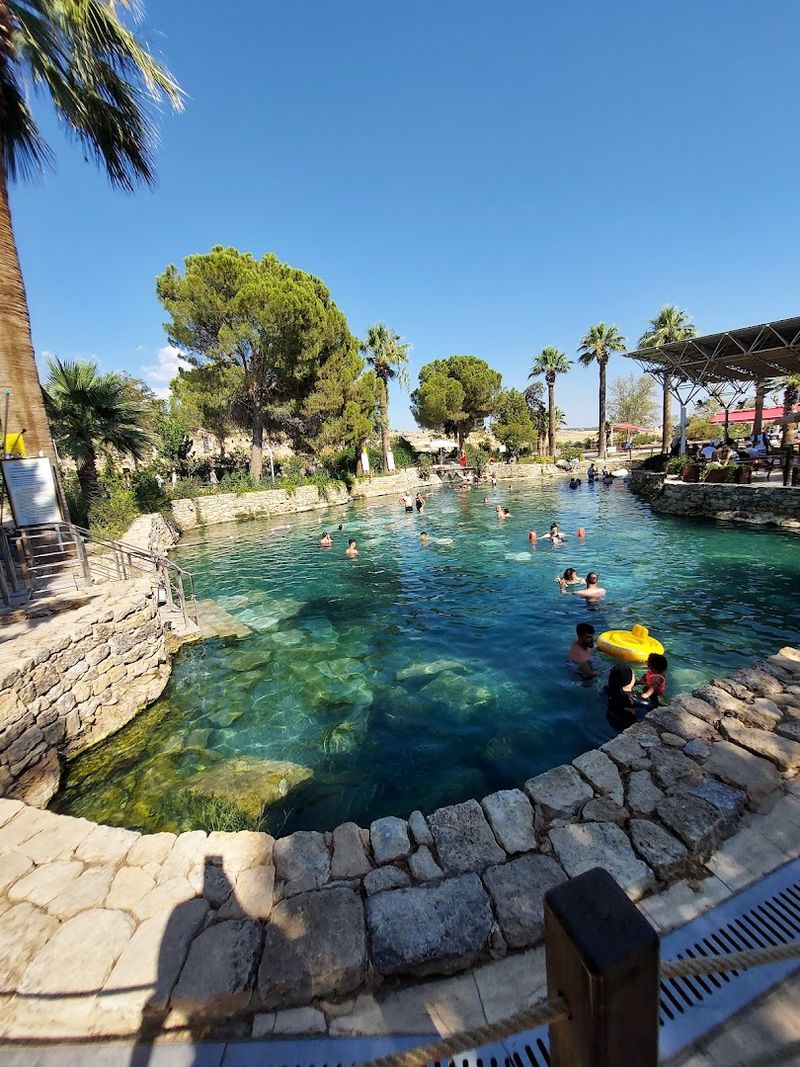
Pamukkale looks like someone spilled a giant bowl of white paint down a hillside and forgot to clean it up. These brilliant white terraces are actually formed by calcium-rich hot springs that have been flowing and depositing minerals for thousands of years.
The result is a series of shallow, warm pools cascading down the slope in a staircase-like formation.
The name Pamukkale means “cotton castle” in Turkish, and once you see it, the name makes perfect sense. Visitors are allowed to walk barefoot across the terraces and soak in the thermal pools.
The water is warm, slightly milky, and loaded with minerals said to be good for the skin. It is one of the few natural wonders where you can actually step inside the scenery.
At the top of the terraces sit the ruins of Hierapolis, an ancient Roman spa city built around the same hot springs. The combination of natural wonder and ancient history in one location makes Pamukkale genuinely hard to beat.
Sunrise and sunset visits are particularly stunning, when the white terraces glow pink and gold. Turkey sits at the edge of Europe geographically, but this site belongs on any European adventure list without question.
Devil’s Bridge, Germany
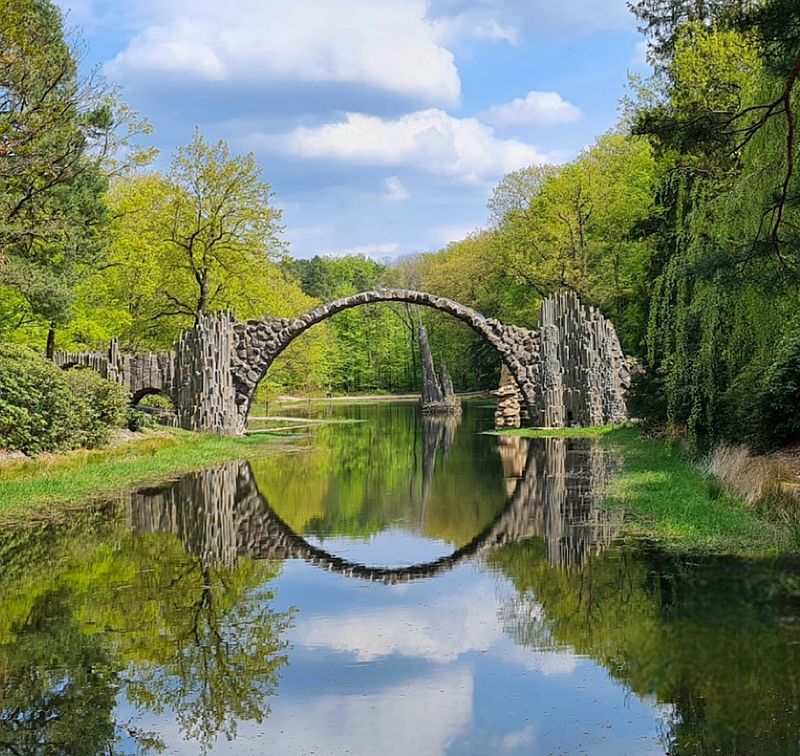
When a bridge looks like a portal to another dimension, you know something special is going on. The Rakotzbrucke in Kromlau, eastern Germany, is a narrow stone arch built so precisely that its reflection in the water below forms a perfect, unbroken circle.
On a calm day, it genuinely looks like a magical doorway sitting in the middle of a forest.
Built in the 1860s as part of a landscaped park, the bridge was designed specifically to create this optical illusion. The park around it, Rhododendron Park Kromlau, is beautiful year-round but absolutely spectacular in spring when rhododendrons bloom in every direction.
Autumn brings rich golden and red tones that make the reflection even more dramatic.
Here is the catch—you cannot walk on the bridge. It is protected due to its age and fragile condition, so visitors must admire it from the banks.
That said, the viewing spots are perfectly positioned for photographs. Early morning visits are strongly recommended, when mist hovers over the water and the light is soft.
The silence of the surrounding forest adds to the otherworldly mood. Few places in Germany feel quite as enchanted as this quiet corner of Saxony.
Monastery of Ostrog, Montenegro
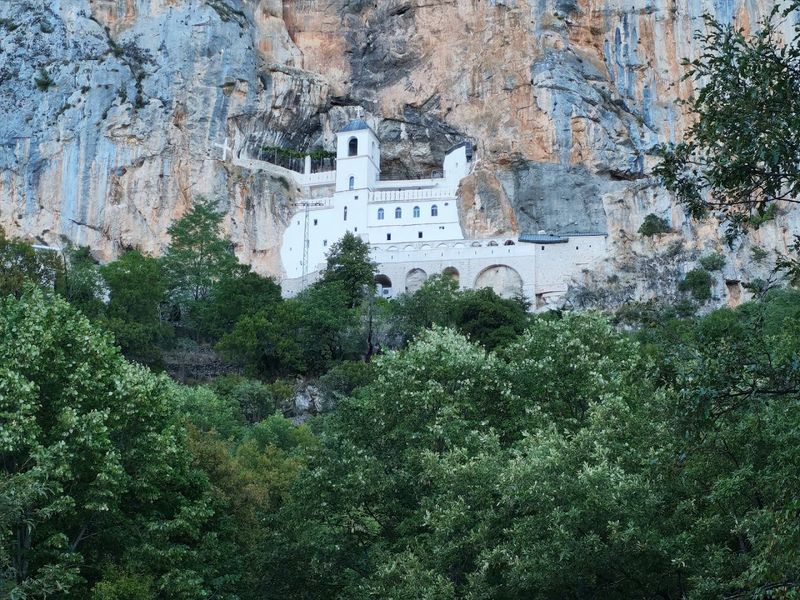
At first glance, the Monastery of Ostrog looks like someone accidentally dropped a white building onto a sheer cliff face and it just… stuck. Built directly into the rock in the 17th century by Saint Basil of Ostrog, this Serbian Orthodox monastery defies both logic and gravity in spectacular fashion.
It clings to the mountainside roughly 900 meters above the valley, and the views from up there are nothing short of extraordinary.
The monastery draws over a million visitors each year, including pilgrims from across the Orthodox Christian world who make the journey on foot as an act of devotion. The winding road up the mountain is dramatic on its own, with hairpin bends and steep drops that keep passengers firmly gripping their seats.
Two main churches are carved directly into the cave within the rock, and the walls inside are covered in centuries-old frescoes.
Accommodation is available for pilgrims who wish to stay overnight, and spending the night there is reportedly a deeply moving experience. The contrast between the brilliant white walls and the dark grey stone surrounding them creates one of the most visually striking religious sites anywhere in Europe.
Montenegro is an underrated travel destination, and this monastery alone makes the trip worthwhile.
Diamond Beach, Iceland
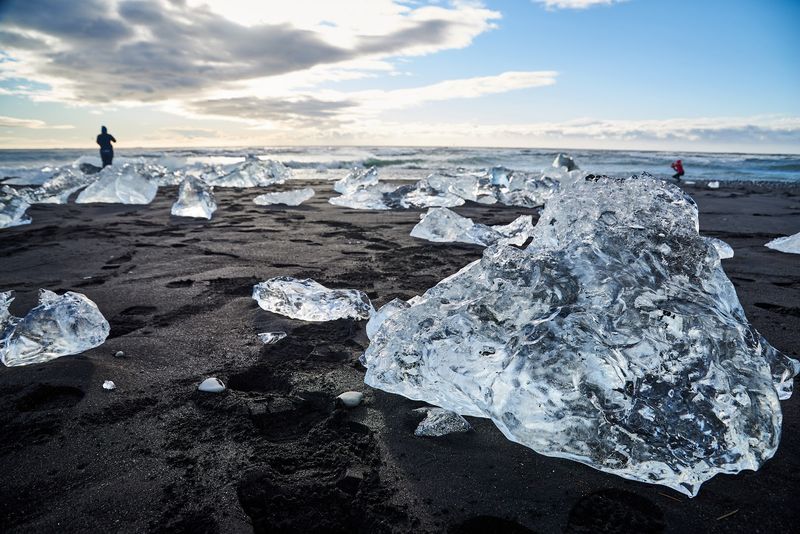
Scattered across a jet-black beach like nature’s own jewelry display, the glittering ice chunks of Diamond Beach in Iceland are one of the most visually stunning sights on the planet. These crystal-clear blocks of glacial ice break off from the nearby Jokulsarlon glacier lagoon and wash ashore, catching the light in ways that genuinely make them look like enormous diamonds.
The beach sits along Iceland’s south coast, right next to the lagoon where icebergs drift slowly before reaching the sea. Each piece of ice is completely unique—some are small and delicate, others are the size of a small car.
They melt and shift constantly, meaning the beach looks different every single day. That constant change makes every visit feel one-of-a-kind.
Seal sightings are common near the lagoon, and on clear nights the Northern Lights sometimes dance overhead, reflecting off the ice. Sunrise and sunset light turns the ice blocks amber and pink, creating scenes so beautiful they feel almost unfair.
Visitors should be cautious near the shoreline—waves here are powerful and unpredictable. Comfortable waterproof boots are a must.
Iceland has no shortage of dramatic landscapes, but Diamond Beach manages to stand apart even in such extraordinary company.
Svalbard, Norway
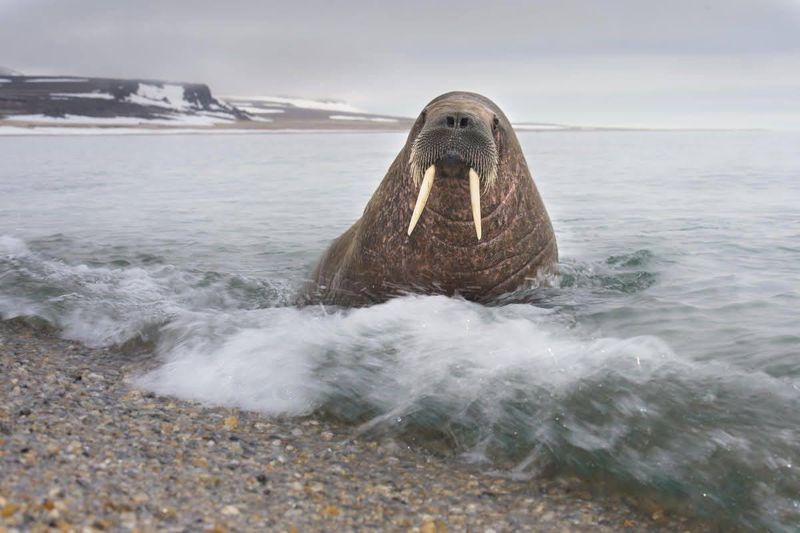
Somewhere between Norway and the North Pole, there is an archipelago where polar bears roam freely through town and residents are legally required to carry a rifle when venturing outside the settlement. Welcome to Svalbard—arguably the strangest inhabited place in all of Europe, and one of the most thrilling destinations for adventurous travelers.
During summer, the sun never sets. During winter, it never rises.
This extreme cycle of light and darkness shapes everything about life here, from sleep schedules to wildlife behavior. The main settlement, Longyearbyen, has around 2,500 residents, making it the world’s northernmost permanent community with this level of infrastructure.
It even has a university, a supermarket, and a surprisingly good restaurant scene.
Wildlife in Svalbard is extraordinary. Reindeer wander through town casually, Arctic foxes dart across the tundra, and walruses lounge on icy beaches.
The landscape itself—glaciers, fjords, frozen tundra—feels like a completely different planet. Guided snowmobile tours, dog sledding, and Northern Lights expeditions are among the most popular activities in winter.
Getting there requires a flight to Longyearbyen, and no visa is needed for most nationalities. For travelers who want something genuinely unlike anywhere else, Svalbard delivers in every possible way.
Saxon Switzerland National Park, Germany
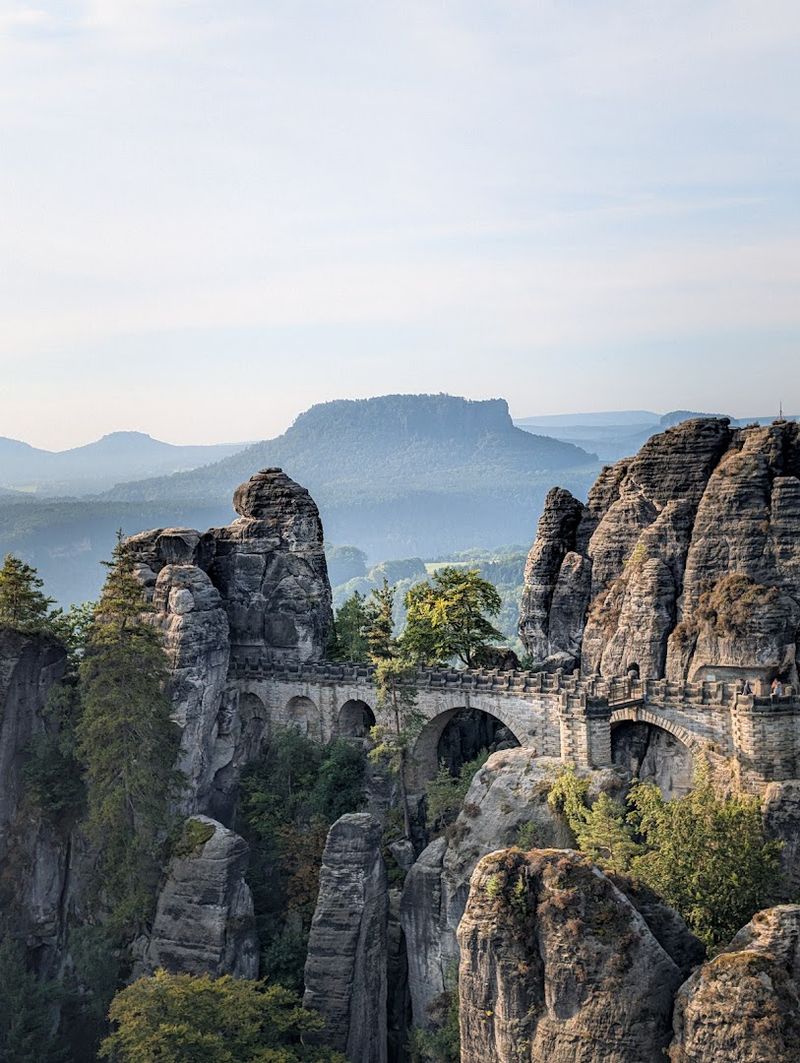
The name might say Switzerland, but this extraordinary park sits firmly in Germany—and it is every bit as dramatic as its name suggests. Saxon Switzerland National Park, located in the state of Saxony near the Czech border, is a landscape of towering sandstone pillars, deep winding gorges, and dense pine forests that stretch as far as the eye can see.
Hikers and rock climbers have been drawn here for generations. The Bastei Bridge, a stone walkway connecting several sandstone pillars high above the Elbe River, is the park’s most famous landmark and one of Germany’s most photographed spots.
The views from the bridge are dizzying in the best possible way. Narrow paths cut through the rock formations, leading to hidden viewpoints and quiet forest clearings.
The park is also home to the Festung Konigstein, a massive hilltop fortress that offers a completely different kind of adventure. Wildlife includes deer, bats, and peregrine falcons nesting in the cliff faces.
Spring and autumn are the best seasons to visit, when crowds are manageable and the colors are vivid. The park is well-connected by train from Dresden, making it an easy day trip or a longer multi-day hiking escape for those who want to go deeper into the rock.
Alberobello, Italy
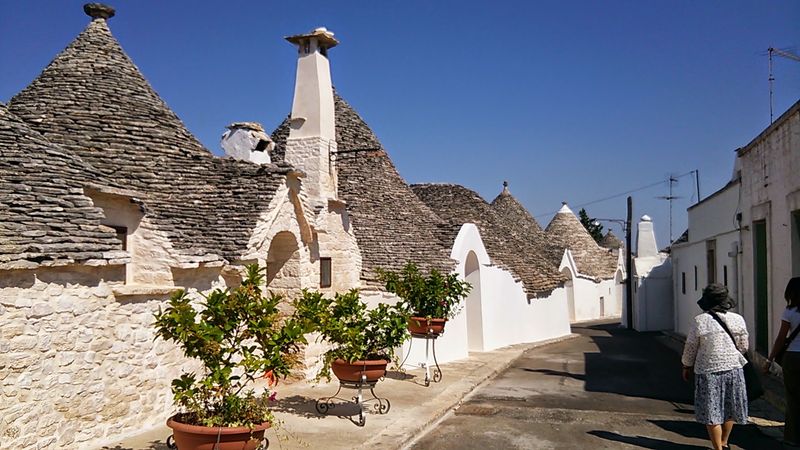
You half expect woodland creatures to peer out from the doorways. Alberobello, in the Puglia region of southern Italy, is a town made up almost entirely of trulli—small, circular stone houses topped with distinctive cone-shaped roofs that look like something lifted straight from a storybook illustration.
The effect is completely charming and slightly surreal at the same time.
Trulli were originally built without mortar so they could be quickly dismantled to avoid property taxes. Clever, right?
Today, over 1,500 of these structures are protected as a UNESCO World Heritage Site, and many have been converted into shops, restaurants, and holiday rentals. Staying overnight in a trullo is a genuinely unique experience—the thick stone walls keep things cool in summer and cozy in winter.
The Rione Monti district has the highest concentration of trulli and is the most visited part of town. Early morning walks through the streets before the tourist crowds arrive offer a much quieter and more atmospheric experience.
The surrounding Puglia region is also fantastic—olive groves, coastal towns, and excellent food make it one of Italy’s most rewarding areas to explore. Alberobello may be small, but it punches well above its weight in terms of character and visual impact.
Craco, Italy
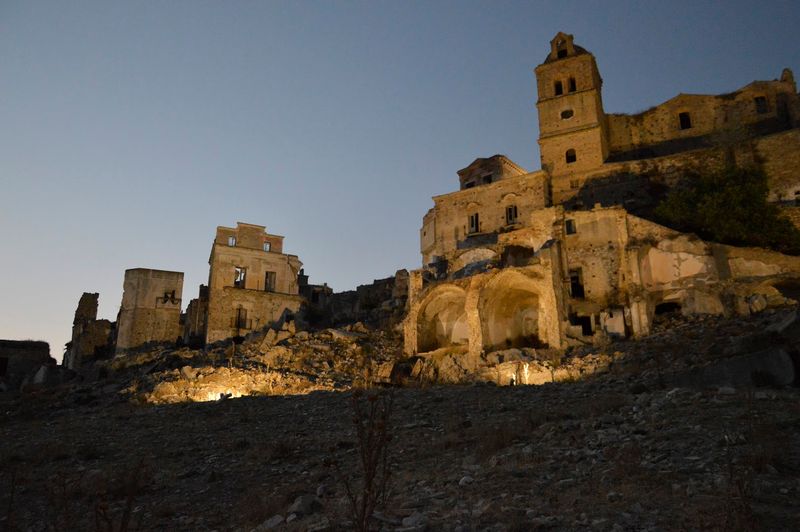
Few places in the world carry atmosphere quite like Craco. This abandoned hilltop town in the Basilicata region of southern Italy was evacuated in 1963 after a series of landslides made continued habitation too dangerous.
The residents left, and the town simply… stayed. Frozen in time, slowly crumbling, and absolutely haunting to walk through.
The empty streets still hold the bones of the town’s former life—doorways, staircases, the shell of a church. Nature has started reclaiming parts of the buildings, with weeds pushing through cracks in the stone.
The whole place has a cinematic quality, which is likely why filmmakers have used it as a location for movies including Mel Gibson’s The Passion of the Christ and several James Bond productions.
Guided tours are required to enter Craco, as some structures are unstable. The guides are knowledgeable and bring the history of the town to life in ways that make the experience far richer than simply wandering alone.
The surrounding landscape of golden hills and deep ravines adds to the dramatic setting. Visiting at sunset, when warm light washes over the crumbling stone, is something visitors consistently describe as unforgettable.
Craco is not a comfortable place to visit—it is a thought-provoking one.
The Azores, Portugal
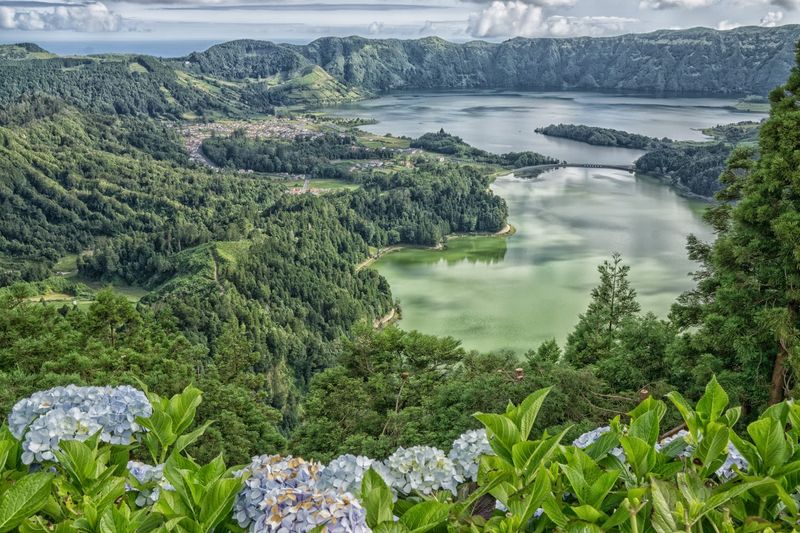
Sitting alone in the middle of the Atlantic Ocean, roughly 1,500 kilometers from mainland Portugal, the Azores feel like a secret that the rest of the world has not quite caught on to yet. These nine volcanic islands are packed with emerald crater lakes, steaming geothermal vents, black lava coastlines, and forests so green they almost hurt your eyes.
Sao Miguel, the largest island, is the most visited and offers a fantastic introduction to what makes the Azores so special. The twin crater lakes of Sete Cidades—one blue, one green—are among the most beautiful natural sights in all of Europe.
Nearby, you can cook food in the ground using volcanic heat, soak in natural hot springs, and watch whales from the coast, sometimes all in the same day.
The islands are still largely under the radar compared to other European destinations, which keeps prices reasonable and crowds manageable. Local food is exceptional—fresh seafood, aged cheese, and slow-cooked stews are staples.
The pace of life here is unhurried, and the locals are genuinely welcoming. Budget airlines now connect the Azores to several European cities, making it more accessible than ever.
For travelers seeking dramatic scenery without the crowds, these islands are an extraordinary find.
Velika Planina, Slovenia
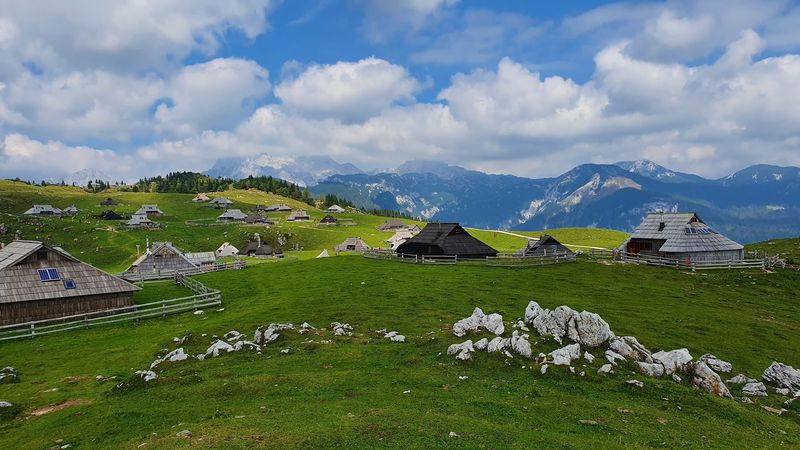
Step off the cable car at Velika Planina and you step back several centuries. This high-altitude plateau in the Kamnik-Savinja Alps of Slovenia is dotted with dozens of small, dark wooden shepherd huts that have been used by herders every summer for generations.
The landscape is open, peaceful, and almost completely free of modern intrusion.
The huts themselves are remarkable—round, low-slung structures with steeply sloped roofs that nearly touch the ground, designed to withstand heavy snow and strong alpine winds. Many were destroyed during World War II and carefully rebuilt in their original style afterward.
In summer, local herders still bring their cattle up to graze on the lush meadows, continuing a tradition that stretches back at least 500 years.
Visitors can hike the plateau’s trails, buy fresh cheese and milk directly from herders, and take in views of the surrounding Slovenian Alps that are genuinely breathtaking. A cable car and chairlift make access easy even for those who are not keen hikers.
The plateau is busiest on weekends but remains wonderfully calm on weekday mornings. Slovenia as a whole is one of Europe’s most underrated travel destinations, and Velika Planina captures everything that makes this small country so quietly extraordinary.
Share this story