Across the United States, there are places where modern life feels distant and history remains vividly present. These destinations—often small towns, preserved districts, or even ghost towns—offer a rare glimpse into earlier eras through architecture, traditions, and slower-paced living.
Many of them have carefully preserved their heritage, with original buildings, cobblestone streets, and long-standing community traditions still intact. Whether shaped by colonial history, mining booms, or deliberate preservation, these places feel like stepping into a living time capsule.
Here are 10 spots in America where time seems to stand still.
Williamsburg, Virginia
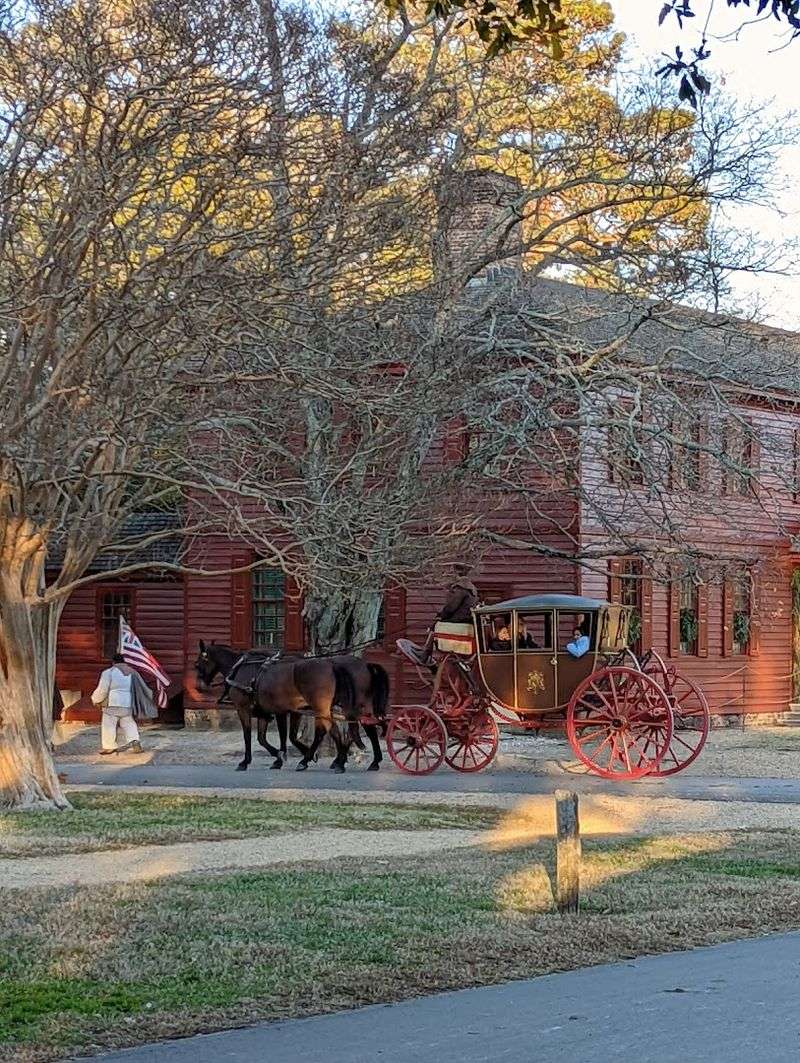
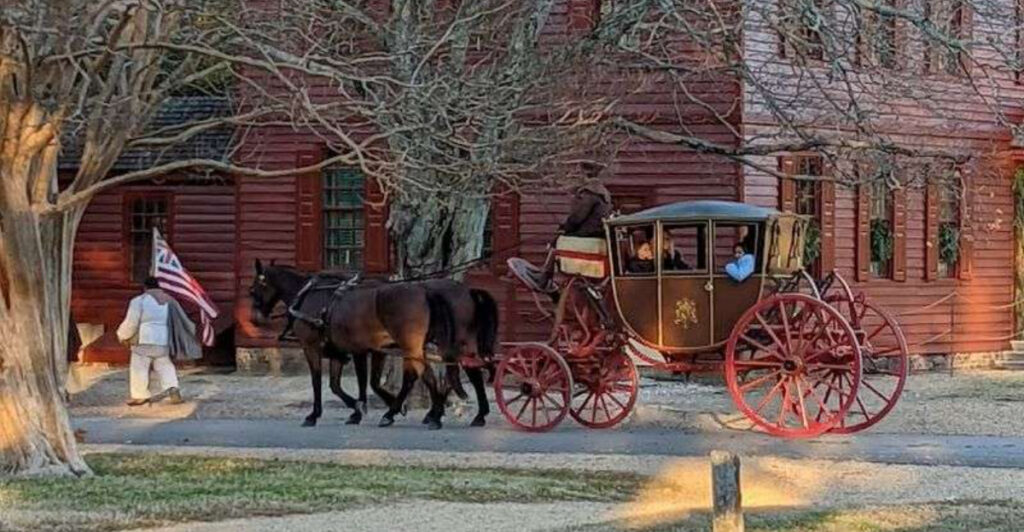
Somewhere between a history lesson and a full-blown time machine, Colonial Williamsburg stands as one of the most ambitious living-history experiences in the entire country. Costumed interpreters portray blacksmiths, merchants, printers, and storytellers, all going about their days as if the American Revolution is right around the corner.
The detail is almost unsettling in the best possible way.
Covering roughly 300 acres, Colonial Williamsburg features over 500 restored or reconstructed buildings from the 1700s. Visitors can watch candles being made by hand, sit in on mock colonial trials, and even interact with actors playing famous historical figures.
It feels less like a museum and more like a neighborhood that simply forgot to update its calendar.
Families with kids find it especially engaging because history becomes something you experience rather than just read about. The Governor’s Palace, the Capitol building, and the bustling market square are all must-sees.
Colonial Williamsburg also hosts seasonal events that bring different eras of American history into sharp, vivid focus, making every visit feel a little different from the last.
St. Augustine, Florida
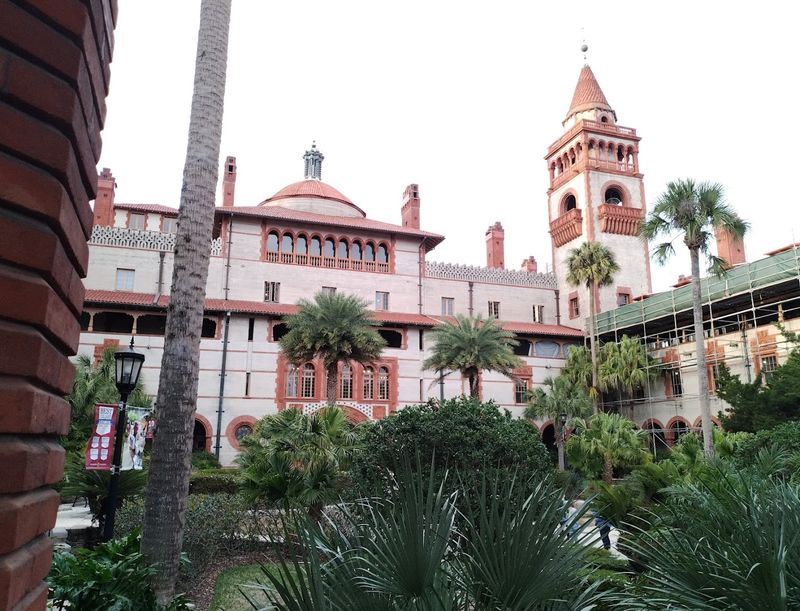
The oldest continuously inhabited European settlement in the United States has a lot of stories to tell—and its streets look the part. Founded by Spanish explorers in 1565, St. Augustine predates the Pilgrims’ arrival at Plymouth Rock by more than 50 years.
That kind of age shows up in every worn cobblestone and sun-bleached wall.
Walking through the historic district feels genuinely different from any other American city. The narrow lanes, wrought-iron balconies, and centuries-old stone buildings create an atmosphere that belongs more to the Old World than the New.
Castillo de San Marcos, a 17th-century Spanish fort still standing at the edge of the bay, is one of the most striking historic structures in the entire country.
What makes St. Augustine especially interesting is that it’s a real, functioning city—not a preserved museum. People live, work, and eat there, giving the history an everyday warmth that purely tourist destinations sometimes lack.
Ghost tours, horse-drawn carriage rides, and waterfront dining all coexist with centuries of layered history. Come for the architecture, stay for the atmosphere, and leave wondering why no one told you about this place sooner.
Mackinac Island, Michigan
No cars. Zero.
Not a single engine, honking horn, or traffic jam anywhere on Mackinac Island—and that one rule changes everything about how the place feels. Since 1898, automobiles have been banned from the island, leaving residents and visitors to travel by foot, bicycle, or horse-drawn carriage.
The result is a quiet that feels almost surreal in the 21st century.
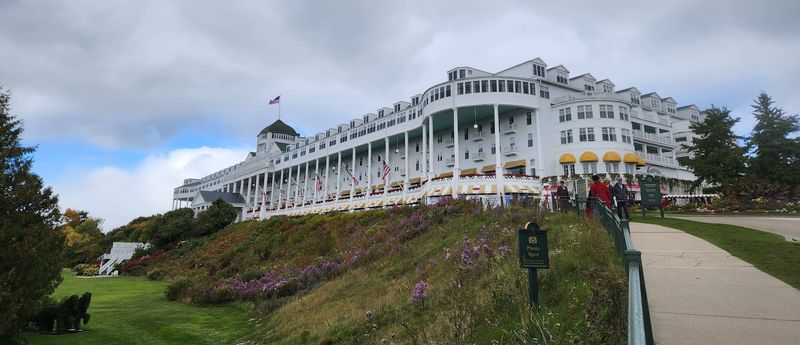
Victorian-era architecture lines the main streets, and the famous Grand Hotel—with its 660-foot front porch—looks exactly as it did when it opened in 1887. Fudge shops, flower boxes, and the soft clop of horse hooves on pavement create a sensory experience unlike anything else in the Midwest.
Even the air smells different here, carrying hints of lake water and fresh-baked sweets.
The island sits in Lake Huron between Michigan’s Upper and Lower Peninsulas, accessible only by ferry or small plane. Summer brings tourists by the thousands, yet the island still manages to feel unhurried.
Renting a bike and circling the island’s 8-mile perimeter trail is practically a rite of passage. Mackinac Island doesn’t just slow time down—it politely asks time to wait outside while everyone enjoys the view.
Bodie, California
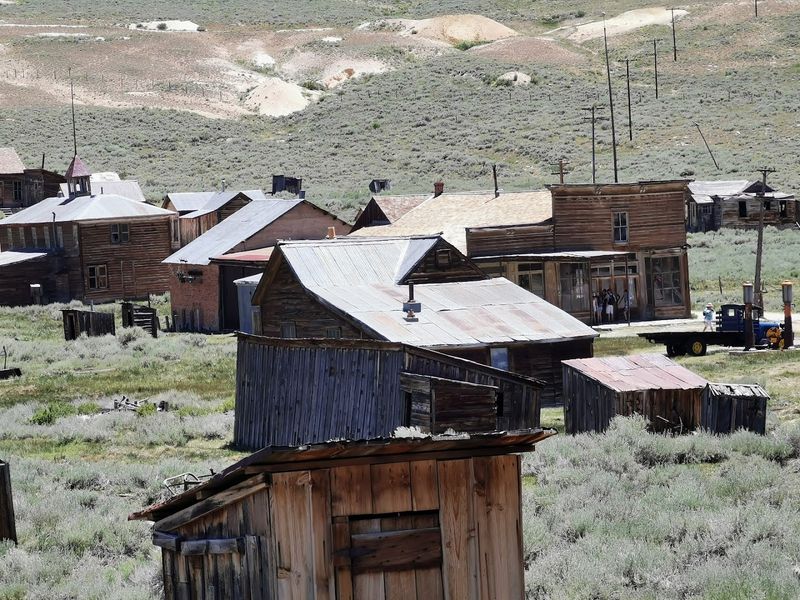
Rust, dust, and silence—Bodie delivers a kind of eerie beauty that no Hollywood set could ever replicate. Once one of California’s most raucous gold-mining towns with a population topping 10,000 in the late 1870s, Bodie was largely abandoned by the early 20th century and left almost completely untouched.
What remained became a state historic park in 1962, preserved in what officials call a state of “arrested decay.”
That phrase means nothing is restored—buildings are stabilized to prevent collapse, but peeling paint, broken windows, and weathered wood are left exactly as found. Inside some structures, you can still see dishes on tables, boots by the door, and calendars frozen on long-past dates.
It feels less like a tourist attraction and more like a town that simply walked away mid-sentence.
Getting to Bodie requires a drive on a partially unpaved road through the high desert near Bridgeport, California, which only adds to the remote, forgotten feeling. The cemetery on the hill, the old stamp mill, and the Methodist church are particularly haunting highlights.
Bodie is proof that sometimes the most powerful history lessons come from what was left behind rather than what was carefully preserved.
Galena, Illinois
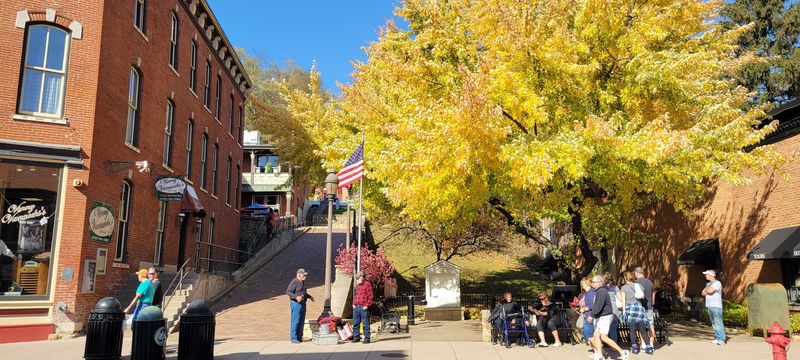
More than 80% of Galena’s buildings are listed on the National Register of Historic Places—a statistic that sounds impressive until you actually walk down Main Street and realize what that means in practice. Every storefront, every roofline, and every brick sidewalk feels like it belongs to a different century.
The whole town reads like a perfectly preserved 19th-century postcard.
Galena’s wealth came from lead mining and its position as a major port on the Galena River, making it one of the most prosperous cities in the Midwest during the mid-1800s. Ulysses S.
Grant, who would go on to command Union forces in the Civil War and later become the 18th U.S. president, called Galena home. His house still stands and is open for tours, giving visitors a personal connection to one of America’s most pivotal eras.
The town’s compact size makes it easy to explore on foot, and the mix of antique shops, local restaurants, and bed-and-breakfasts tucked into historic buildings adds a cozy, lived-in warmth. Fall is particularly spectacular when the surrounding hills turn gold and red.
Galena doesn’t shout about its history—it simply lets the architecture do all the talking, and the buildings have plenty to say.
Bisbee, Arizona
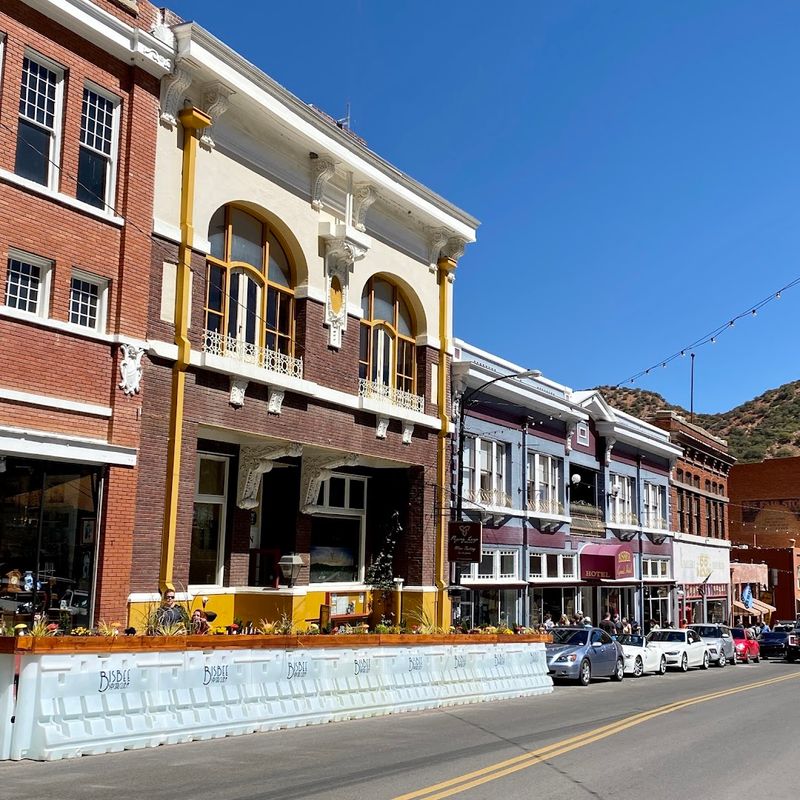
Clinging to the sides of the Mule Mountains at 5,300 feet elevation, Bisbee looks like someone stacked a European village on top of an Arizona mining camp and decided it worked. Founded in the 1880s as a copper mining hub, the town produced billions of dollars worth of ore before the mines closed in 1975.
Rather than fade away, Bisbee reinvented itself as an arts community—but kept every crumbling, colorful, gloriously quirky building intact.
Steep staircases connect different levels of the hillside town, and streets wind in directions that make absolutely no geometric sense. That disorienting layout is part of the charm.
Vintage storefronts house galleries, coffee shops, and antique dealers, while Victorian homes perch on ledges above the canyon with views that would stop anyone mid-step.
The Queen Mine Tour takes visitors underground into the actual copper mine tunnels, offering a firsthand look at what life was like for the miners who built the town. Bisbee also has a well-earned reputation as one of Arizona’s most haunted towns, with ghost tours running regularly through its winding streets.
It’s equal parts history, art, and weirdness—a combination that makes Bisbee genuinely hard to forget once you’ve visited.
Deadwood, South Dakota
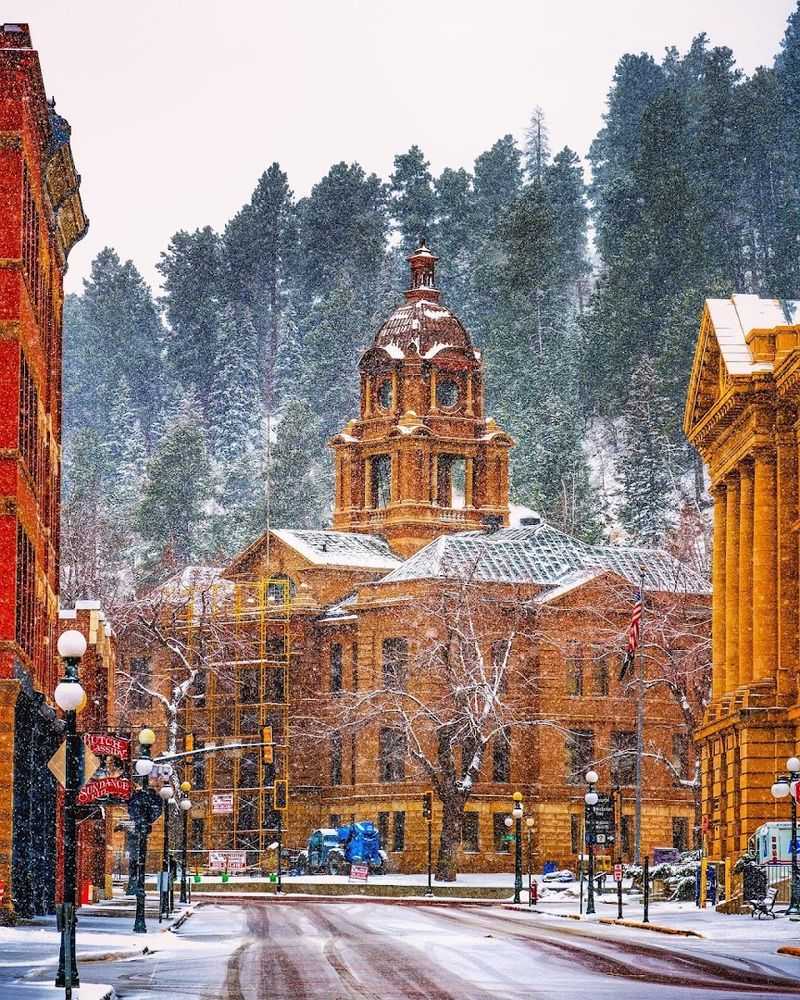
Wild Bill Hickok was shot dead here in 1876 while holding what became known as the “dead man’s hand”—aces and eights. That single story tells you almost everything you need to know about Deadwood’s personality.
This town was born rowdy, grew up legendary, and never really changed its ways. Designated a National Historic Landmark in 1961, Deadwood has preserved its frontier identity with a commitment that borders on obsessive.
Wooden boardwalks line the main street, original saloon buildings still serve drinks, and reenacted gunfights break out in the middle of the road on summer afternoons. The Mount Moriah Cemetery, where Hickok and Calamity Jane are both buried, sits on a hillside above town and draws visitors year-round.
Standing at those graves, with the Black Hills stretching out in every direction, history stops feeling abstract.
Deadwood also offers something unusual for a historic town: legal gambling. Casinos operate inside historic buildings, creating a strange but somehow fitting blend of old and new.
The town hosts events throughout the year celebrating its gold rush heritage, including Days of ’76, a rodeo and parade that has run annually since 1924. Deadwood earns its legendary reputation every single day.
Grafton, Vermont
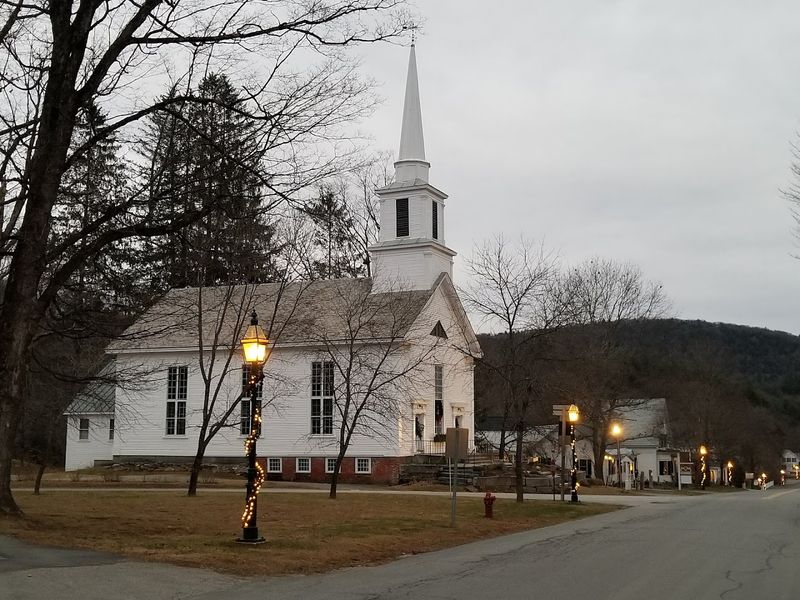
Some towns look like they were painted by someone who had never seen anything ugly. Grafton, Vermont is one of those towns.
Tucked into the rolling hills of Windham County, this tiny village of fewer than 700 residents has remained almost unchanged for over two centuries, largely thanks to the Windham Foundation, which has quietly funded preservation efforts since 1963. The result is a town that looks like a living illustration from a storybook.
A white-steepled church anchors the village green, while covered bridges, stone walls, and traditional New England homes complete the picture. The famous Grafton Village Cheese Company has been producing award-winning cheddar here since 1892, and stopping in for a sample is essentially required.
The Old Tavern at Grafton, which has welcomed guests since 1801, still operates as an inn today.
Winters here bring deep snow and total quiet, while fall turns the surrounding maple forests into something almost painfully beautiful. There are no chain restaurants, no big box stores, and no traffic lights.
Grafton operates at a pace that feels almost rebellious by modern standards. Spending even a single afternoon here has a way of recalibrating your sense of what actually matters in a day.
Virginia City, Nevada
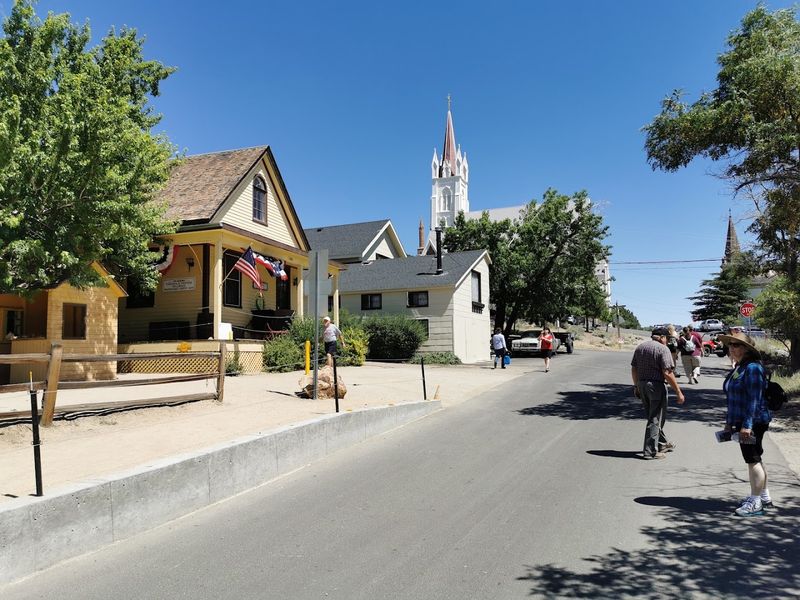
At its peak in the 1860s, Virginia City was one of the wealthiest and most famous cities in the entire American West, fueled by the Comstock Lode—the richest silver deposit ever discovered in U.S. history. Mark Twain worked as a reporter here.
The money from its mines helped finance the Union during the Civil War. Then the silver ran out, the population collapsed, and Virginia City was left standing almost exactly as it was.
That frozen-in-time quality is what makes it so remarkable today. Wooden sidewalks creak underfoot along C Street, the main drag lined with 19th-century saloons, general stores, and hotels that still look ready for business.
The Fourth Ward School, a four-story Victorian schoolhouse built in 1876, now operates as a museum and remains one of the most striking buildings in the entire state of Nevada.
Visitors can tour the actual mine shafts beneath the town, ride a historic steam train through the surrounding desert hills, and browse shops selling genuine antiques alongside tourist trinkets. Virginia City sits at 6,220 feet elevation, which gives the whole place a thin, high-desert clarity.
The views across the Nevada range are enormous and the history beneath your feet is even bigger.
Mystic, Connecticut
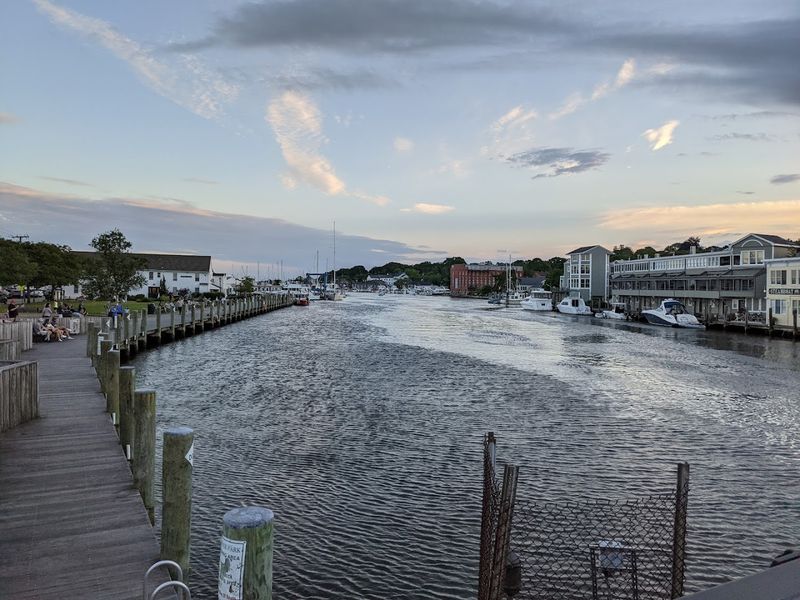
The smell of salt air and old wood hits you before you even reach the waterfront. Mystic, Connecticut carries its maritime history not as a museum exhibit but as a living, breathing part of daily life.
Nestled along the Mystic River near the Rhode Island border, this small coastal town built some of the fastest clipper ships in the world during the 19th century, and it has never quite let go of that identity.
The Mystic Seaport Museum is the centerpiece—a 19-acre living history museum featuring a recreated 19th-century seafaring village, historic vessels including the Charles W. Morgan (the last surviving wooden whaleship in the world), and hands-on exhibits about life at sea.
Watching shipwrights restore wooden boats in the working preservation shipyard is unexpectedly fascinating, even for people who have never thought much about boats.
Beyond the museum, the town itself rewards slow exploration. The Bascule drawbridge at the center of town opens for passing boats with a cheerful ceremony that draws a small crowd every time.
Local seafood restaurants, independent bookshops, and a genuinely walkable downtown make Mystic easy to love. It’s the kind of place where you plan to spend two hours and somehow end up staying all day without a single regret.
Share this story