Across Europe, some towns have preserved their medieval character so well that walking through them feels like stepping into another century. Cobblestone streets, ancient walls, and centuries-old buildings still define daily life in these places, offering a rare glimpse into the Middle Ages.
Many are UNESCO-listed and carefully protected for their historical value. From fortified hilltop villages to walled trading towns, these destinations have resisted modernization just enough to keep their original charm intact.
Rothenburg ob der Tauber, Germany
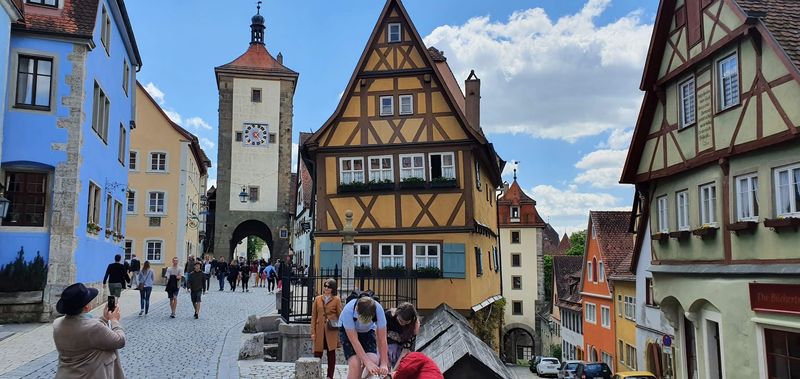
No town in Germany plays the medieval greatest hits quite like Rothenburg ob der Tauber. Encircled by fully intact city walls, this Bavarian gem has kept its half-timbered houses, winding lanes, and stone towers in near-perfect condition for centuries.
Tourists who arrive expecting a theme park quickly realize this is the real deal.
Walking the ramparts gives you sweeping views over a sea of terracotta rooftops that stretch toward the surrounding countryside. The market square buzzes with life year-round, especially during the famous Christmas market, when the medieval backdrop becomes almost impossibly magical.
Local bakers still sell Schneeball, a traditional pastry shaped into a crispy ball, just as they have for generations.
Rothenburg earned its frozen-in-time reputation partly by luck. Heavy bombing in World War II spared much of the old town, and postwar restoration efforts filled in the gaps carefully.
Today, visitors can stroll streets that have looked essentially the same since the 1400s. History enthusiasts, photographers, and curious travelers all find something to love here.
It is the kind of place that makes you genuinely forget what century you are living in.
Český Krumlov, Czech Republic
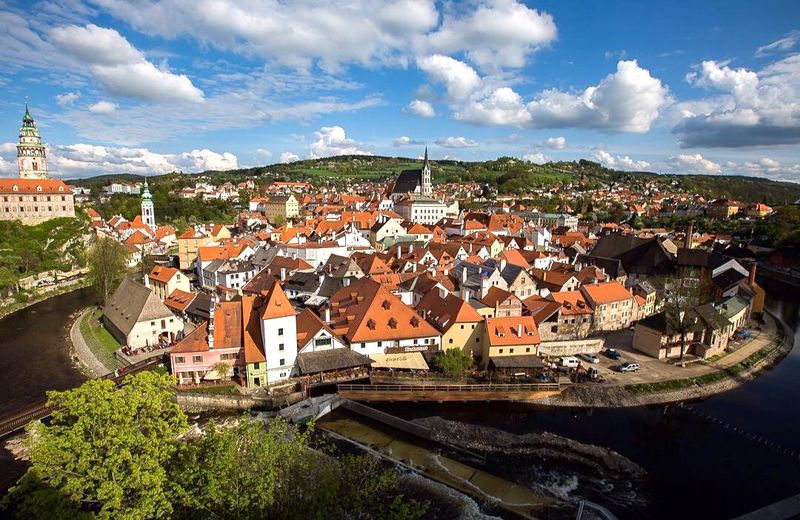
Český Krumlov wraps itself around a dramatic bend in the Vltava River like it was placed there by a storybook illustrator. The 13th-century castle looming overhead is hard to miss, but the real magic happens at street level, where the medieval layout has survived almost completely intact.
This is one of those rare towns where the map from 500 years ago still makes sense today.
Colorful baroque and Gothic facades line narrow streets that twist and turn without any logical pattern, which is exactly what makes exploring on foot so enjoyable. The UNESCO-listed historic center draws visitors from around the world, yet somehow manages to retain a genuinely local feel.
Tiny cafes, artisan workshops, and family-run guesthouses fill buildings that have stood for centuries.
The castle complex itself is the second largest in the Czech Republic, featuring a famous rotating open-air theater that still hosts performances every summer. Visitors can climb the castle tower for a bird’s-eye view of the town curled below.
The Vltava wraps so tightly around the old town that it nearly forms its own natural moat. Český Krumlov is the kind of discovery that makes travelers wonder why they did not come sooner.
Bruges, Belgium
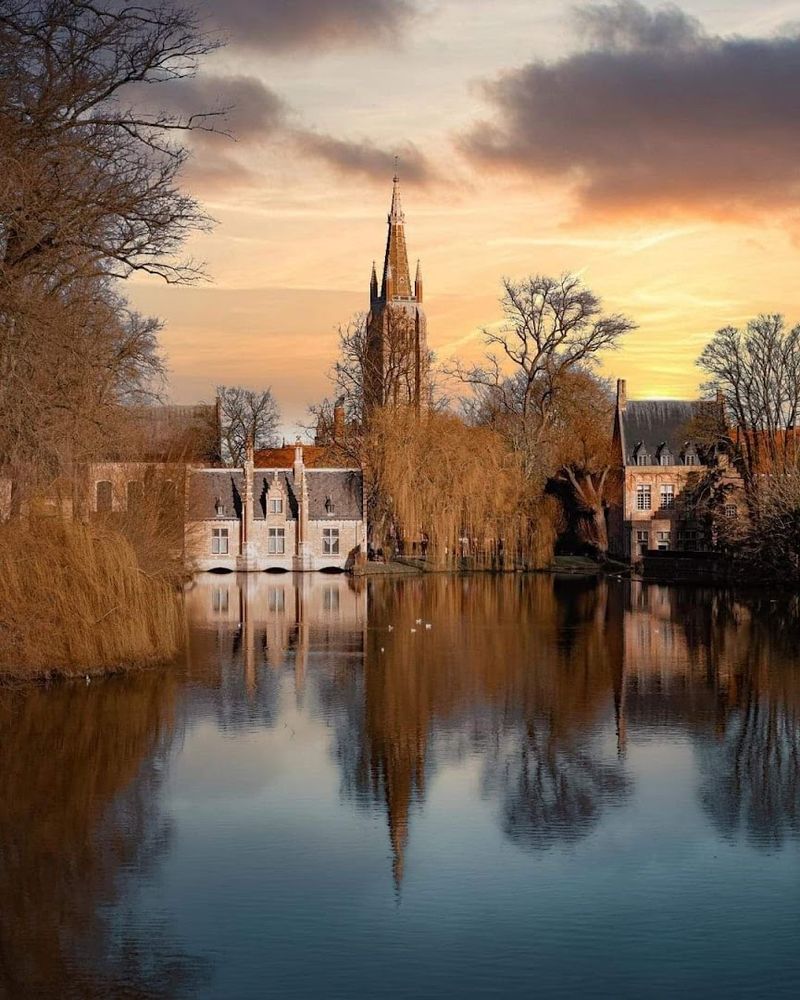
Bruges smells like chocolate and canal water, and honestly, that combination alone is reason enough to visit. But beyond the sweet shops and tourist boats, this Belgian city holds one of the most complete medieval urban landscapes in all of Europe.
Its historic center is so well preserved that UNESCO handed it World Heritage status without much debate.
Gothic churches, merchant houses, and cobbled market squares form the backbone of a city that once rivaled Venice as a trading powerhouse. The canals, nicknamed the Venice of the North, were the arteries of a booming cloth trade that made Bruges fabulously wealthy in the 13th and 14th centuries.
When trade routes shifted, the city quietly declined, which accidentally saved its architecture from modernization.
That economic slowdown turned out to be Bruges’ greatest gift to future generations. Buildings that might have been demolished or updated were simply left standing, slowly becoming the treasures visitors admire today.
The Markt square, the Belfry tower, and the Basilica of the Holy Blood are all within easy walking distance of each other. Bruges rewards slow travelers who wander without a fixed itinerary, turning corners to find yet another impossibly picturesque canal scene waiting for them.
Carcassonne, France
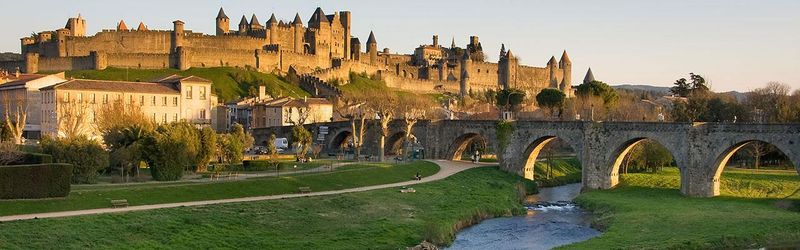
Carcassonne looks like someone accidentally built an entire city inside a fairy-tale fortress and then decided to keep it that way. Rising dramatically above the Aude River plain in southern France, this double-walled citadel is one of the largest and most complete medieval fortifications anywhere in the world.
The sheer scale of the walls and towers is genuinely jaw-dropping when you first see it from the highway.
Dating back to the Visigoths and significantly expanded in the 11th century, Carcassonne has served as a military stronghold, a royal residence, and eventually a symbol of French heritage. By the 19th century, the citadel had fallen into serious disrepair until architect Eugène Viollet-le-Duc led a major restoration project that brought it back to its medieval glory.
Some historians debate his methods, but nobody argues with the results.
Walking through the narrow lanes inside the walls feels genuinely theatrical, especially at dusk when the stone glows amber in the fading light. The castle within the citadel offers guided tours that explain centuries of sieges, politics, and daily life.
The lower town below the walls is equally charming, with its own medieval street plan and lively market. Carcassonne earns its legendary reputation every single visit.
San Gimignano, Italy
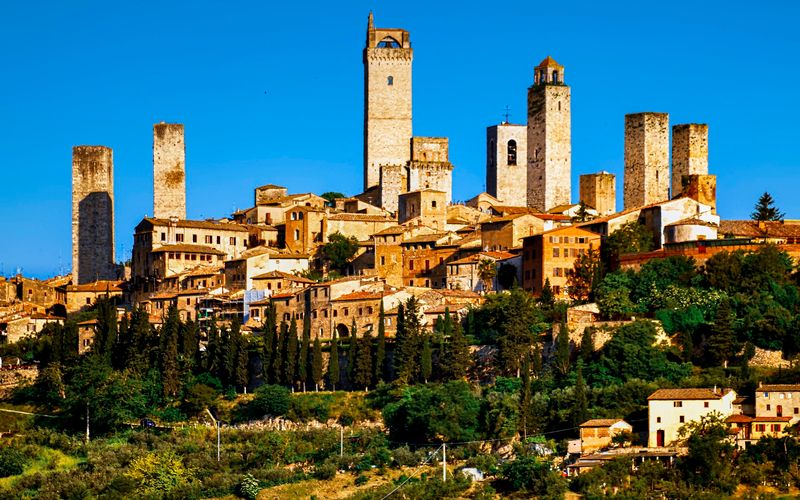
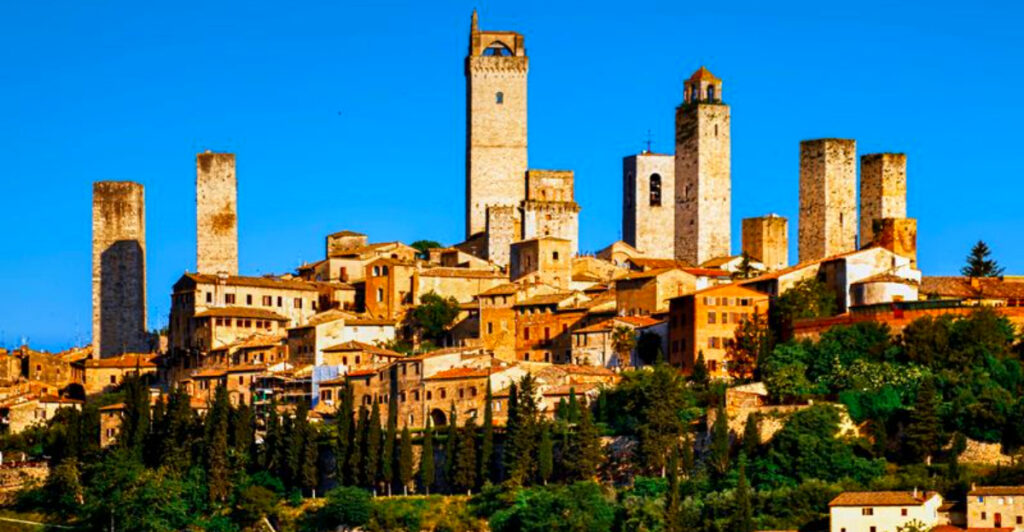
Fourteen towers still pierce the Tuscan sky above San Gimignano, each one a stone-cold flex from a wealthy medieval family trying to outshine their neighbors. At the height of the town’s prosperity, there were 72 of these towers competing for skyline dominance.
What remains today is enough to make the silhouette of San Gimignano instantly recognizable from miles away across the rolling hills.
The town sits on a ridge along the old Via Francigena pilgrimage route, which brought it considerable wealth and foot traffic during the Middle Ages. Merchants, pilgrims, and traders all passed through, filling the town’s coffers and fueling its ambitious building projects.
Today, modern pilgrims arrive with cameras instead of walking staffs, but the route still draws walkers from across Europe.
Inside the walls, the main piazzas are lined with Romanesque and Gothic buildings that have changed very little since the 13th century. Local producers sell Vernaccia wine and saffron, two products that made the town famous long before tourism existed.
The gelato here is also, by popular vote among travelers, among the best in Italy. San Gimignano manages to be both a serious history lesson and a genuinely delightful afternoon out, which is a combination not every medieval town can pull off.
Óbidos, Portugal
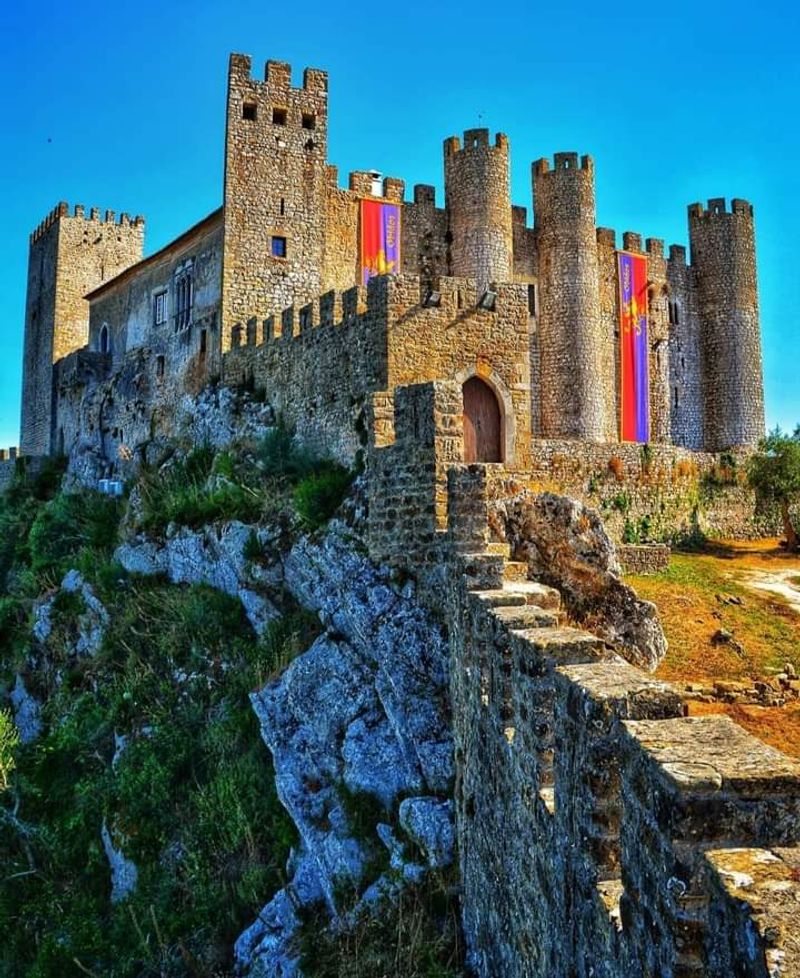
Every year, Portuguese kings used to gift Óbidos to their queens as a wedding present, which tells you everything you need to know about how special this walled hilltop town is. Perched above the plains of central Portugal, it is compact enough to explore in a morning but detailed enough to keep you busy all day.
The medieval walls surrounding the town are fully walkable, offering panoramic views in every direction.
Inside the walls, whitewashed houses dressed in splashes of blue and yellow line streets barely wide enough for two people to pass comfortably. Bougainvillea spills over stone walls, and the whole place carries a quiet, unhurried atmosphere that feels worlds away from modern city life.
The castle at the top of town now operates as a luxury pousada, meaning you can actually sleep inside a medieval fortress if the budget allows.
Óbidos hosts a famous Medieval Market each summer that transforms the already atmospheric streets into a full-on time warp, complete with jousting, costumes, and traditional crafts. The town is also celebrated for ginjinha, a cherry liqueur traditionally served in a small chocolate cup.
That combination of history, scenery, and delicious local traditions makes Óbidos one of Portugal’s most rewarding short trips. It is tiny, but it punches well above its weight.
Sighișoara, Romania
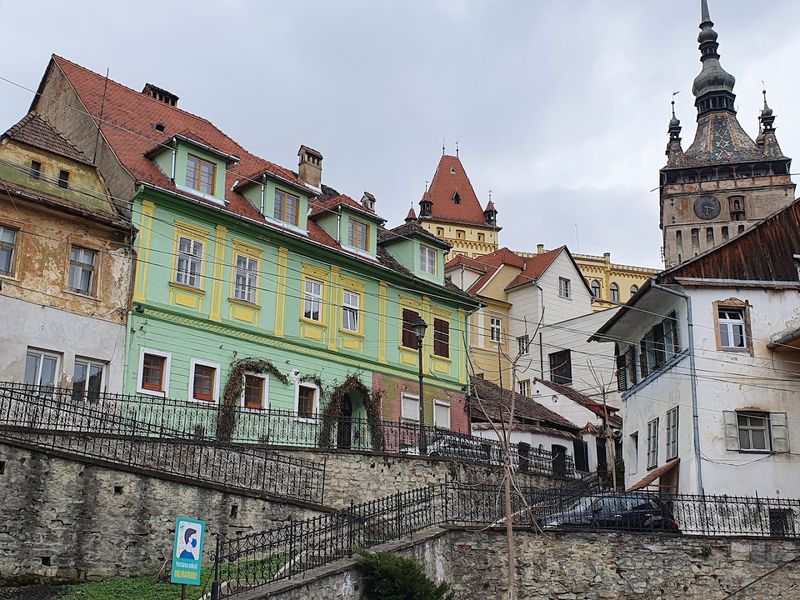
Sighișoara has the distinction of being one of the last inhabited medieval citadels in all of Europe, which is not something many towns can put on a business card. Perched on a hilltop in the heart of Transylvania, the old citadel looks like it belongs in a medieval manuscript rather than in the 21st century.
The fact that real people still live and work here adds a layer of authenticity that open-air museums simply cannot replicate.
The Clock Tower, built in the 14th century, dominates the skyline and houses a history museum that traces the town’s Saxon origins. Colorful medieval houses in shades of ochre, blue, and terracotta line the citadel’s steep cobblestone lanes.
The covered wooden staircase leading up to the hilltop church is one of those architectural details that stops visitors mid-stride.
Sighișoara is also the birthplace of Vlad the Impaler, the historical figure who inspired Bram Stoker’s Dracula, a fact the town acknowledges with a certain dry humor. A restaurant now occupies his supposed birth house, which seems like exactly the right use for the space.
Beyond the vampire tourism, Sighișoara offers genuine medieval atmosphere, thoughtful museums, and surrounding Transylvanian landscapes that are breathtaking in their own right. This is a town that rewards the curious traveler generously.
Tallinn Old Town, Estonia
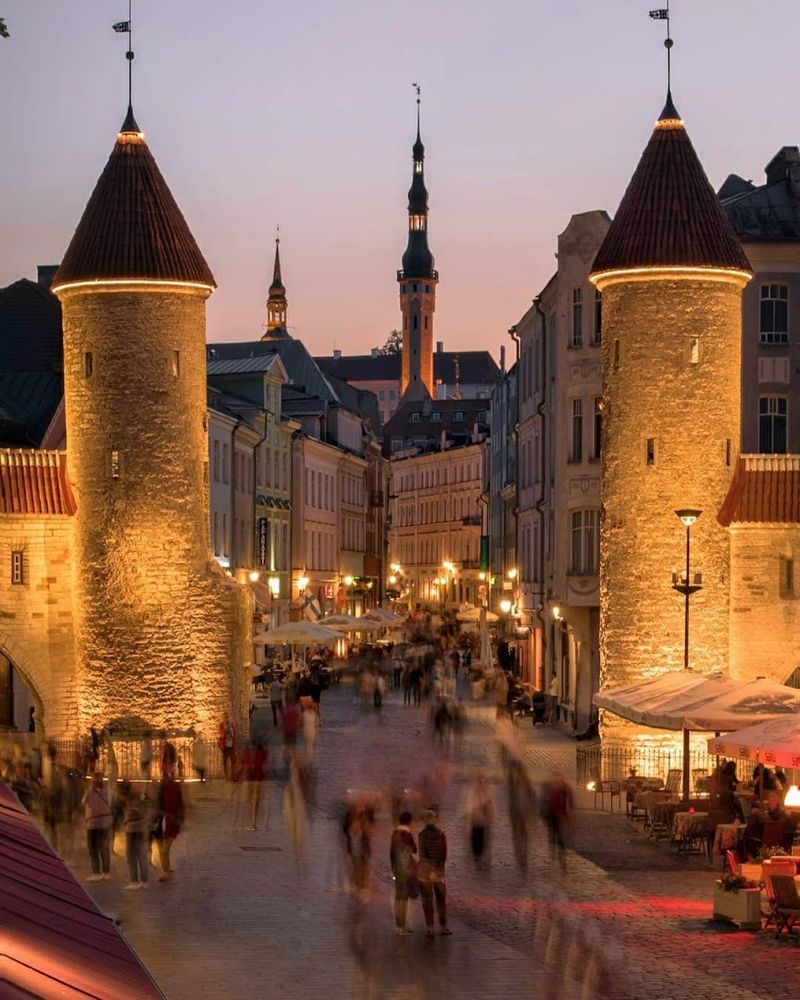
Standing on Toompea Hill in Tallinn and looking out over a skyline of Gothic spires, medieval towers, and red-tiled rooftops, it is genuinely difficult to believe you are in a capital city in the 21st century. Tallinn’s Old Town is one of the most completely preserved medieval urban centers in Northern Europe, and it wears that title with quiet confidence.
The city walls, much of which still stand to their original height, once protected one of the most important trading ports on the Baltic Sea.
The lower town is a maze of merchant houses, guild halls, and cobblestone streets that follow the same paths laid out in the 13th and 14th centuries. Town Hall Square, the heart of the old city, hosts markets and events throughout the year and is surrounded by buildings that have barely changed in 600 years.
The pharmacy on the square, operating since 1422, claims to be one of the oldest continuously running pharmacies in Europe.
What makes Tallinn particularly impressive is how the medieval core coexists with a thriving modern city growing up around it. The contrast between ancient stone walls and gleaming glass towers just outside them is striking.
Tallinn manages to honor its past without becoming a museum piece, keeping the old town alive with restaurants, bars, and local businesses that give it real energy.
Dinan, France
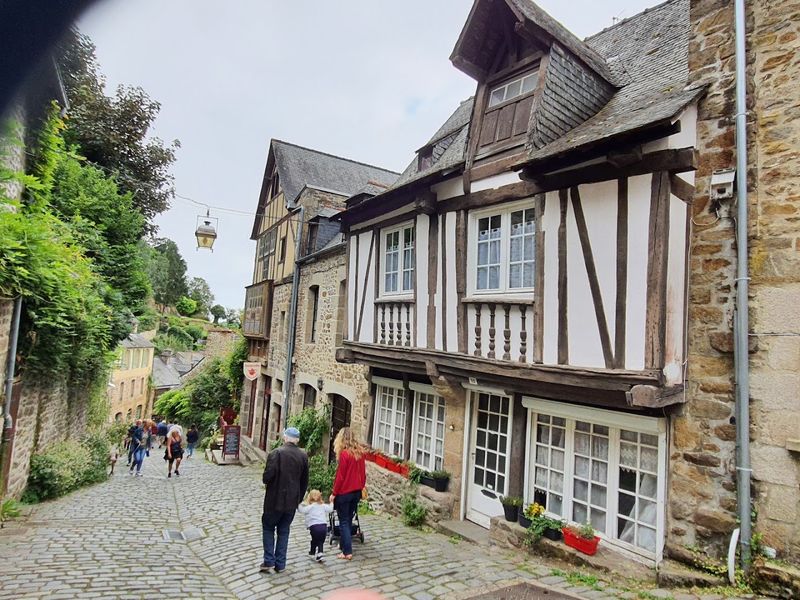
Dinan is the kind of French town that makes you want to cancel your return flight and start learning the language properly. Tucked into the Brittany region of northwestern France, it boasts some of the best-preserved medieval ramparts in the country, stretching nearly three kilometers around the old town.
Walking the full circuit of the walls gives you views over the Rance River valley that are hard to beat anywhere in the region.
The streets inside the ramparts are lined with half-timbered houses that overhang the cobblestones below, creating shaded lanes that feel pleasantly medieval even on a bright summer afternoon. Artisan workshops selling pottery, jewelry, and traditional crafts occupy many of the ground-floor spaces, keeping alive a tradition of skilled handwork that has defined Dinan for centuries.
The Place des Cordeliers and the Place des Merciers are especially photogenic spots.
The town’s steep streets lead down to the port quarter along the Rance, where old stone warehouses have been converted into restaurants and bars with waterfront terraces. Bertrand du Guesclin, the legendary Breton knight and military commander, was born near Dinan and is celebrated throughout the town with statues and street names.
That sense of local pride in a genuinely remarkable history gives Dinan a personality that goes well beyond pretty scenery.
Korčula, Croatia
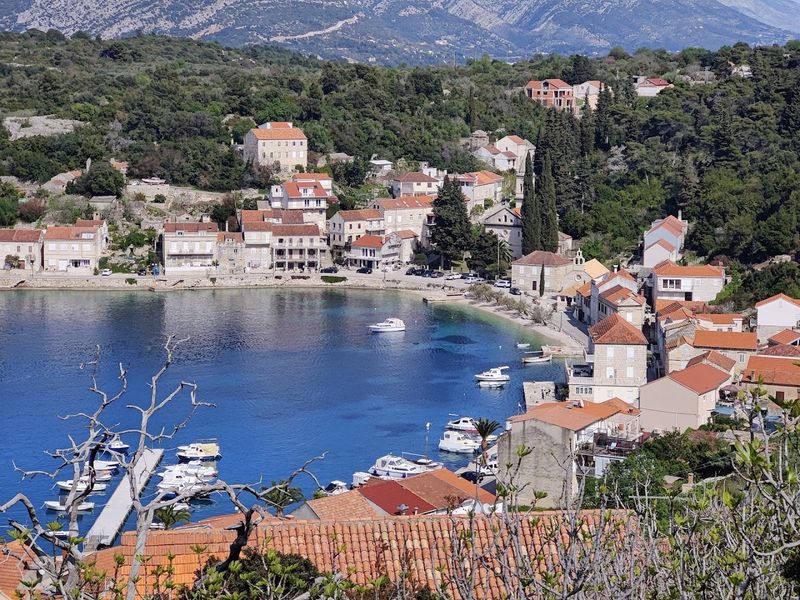
Korčula sits on a small peninsula jutting into the Adriatic like a natural fortress, its medieval walls rising straight from the sea on three sides. The old town is so compact and so complete that it functions almost like a scale model of a medieval city, except everything is full-size and genuinely old.
Venetian influence is visible in every carved doorway and Gothic window, reflecting centuries of trade and political connection with the lagoon city.
The street layout inside the walls follows a clever herringbone pattern, specifically designed to channel sea breezes while blocking harsh winds from specific directions. Medieval urban planning at its most practical, and it still works perfectly today.
Marco Polo is traditionally claimed as a native son of Korčula, a fact the town promotes enthusiastically even though historians remain politely unconvinced.
The Cathedral of St. Mark anchors the main square with an impressive facade that has been weathered by salt air for over 500 years. Surrounding the cathedral, narrow lanes branch off in both directions, leading to quiet corners, small chapels, and the occasional stunning sea view through a gap in the walls.
Korčula rewards slow exploration on foot, ideally in the early morning before the summer crowds arrive by ferry. The Adriatic light at that hour makes everything look extraordinary.
Eguisheim, France
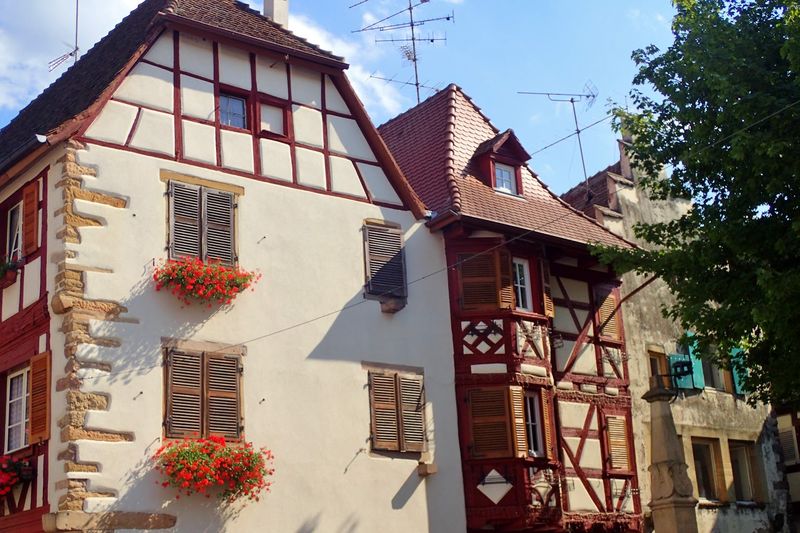
Eguisheim is arranged in perfect concentric circles around a central castle, a layout so deliberate and charming that it looks like someone drew it with a compass. Located in the Alsace wine region of eastern France, this small village packs an extraordinary amount of visual appeal into a very tight radius.
Every street curves gently, every building seems to compete for the title of most colorful half-timbered facade in the region.
The village was voted the favorite village in France by viewers of a national television program in 2013, and the local residents have clearly taken that honor seriously ever since. Window boxes overflow with geraniums, cobblestones are swept clean, and the overall effect is almost aggressively picturesque.
It is the sort of place where even the most jaded traveler finds themselves reaching for a camera every few steps.
Eguisheim also sits at the heart of the Alsace Wine Route, surrounded by vineyards that produce some of the region’s finest Riesling and Gewurztraminer. The combination of medieval architecture and excellent local wine makes for a particularly civilized afternoon.
Pope Leo IX was born here in 1002, giving the village an impressive historical footnote to go alongside its visual charm. Small in size, enormous in personality, Eguisheim consistently delights everyone who makes the detour to find it.
Rye, England
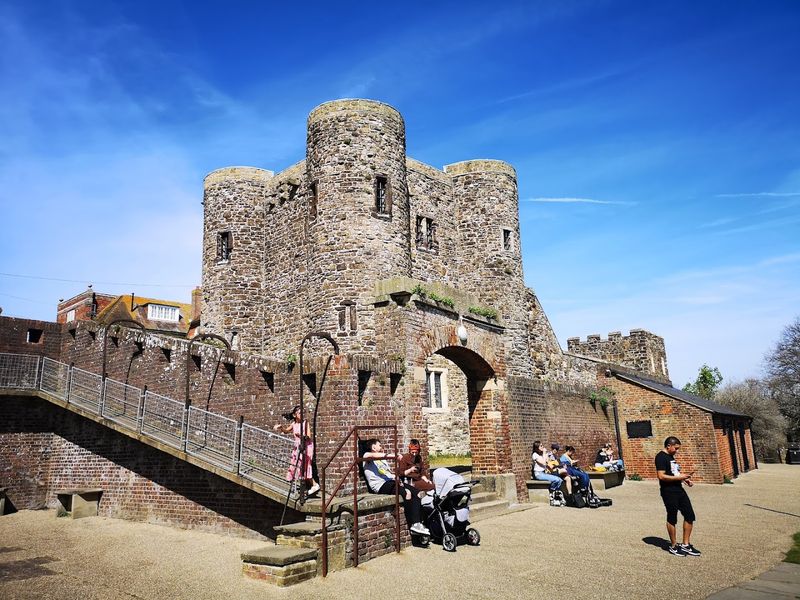
Mermaid Street in Rye is possibly the most photographed cobblestone lane in England, and standing at the top of it, you can immediately understand why. The medieval houses lean toward each other overhead, their timber frames dark with age, creating a corridor that feels like it belongs to a completely different era.
Rye sits on a hilltop in East Sussex, and its elevation once made it one of the most strategically important ports on the English Channel.
The town was a member of the Cinque Ports confederation, a medieval alliance of Channel towns that provided ships and men to the English crown in exchange for special privileges. That history shaped Rye’s layout and its architecture in ways that are still clearly visible today.
The Mermaid Inn, one of the oldest surviving inns in England, has been hosting travelers since the 15th century and reportedly comes complete with resident ghosts.
Ypres Tower, a squat stone fortification dating from 1249, still stands at the edge of town and now houses a local museum. The surrounding Romney Marsh countryside adds to the atmospheric quality of a visit, especially in autumn fog.
Artists and writers have been drawn to Rye for generations, with Henry James famously making it his home. The creative community that has always gathered here gives the town a lively, thoughtful energy beneath its ancient exterior.
Monpazier, France
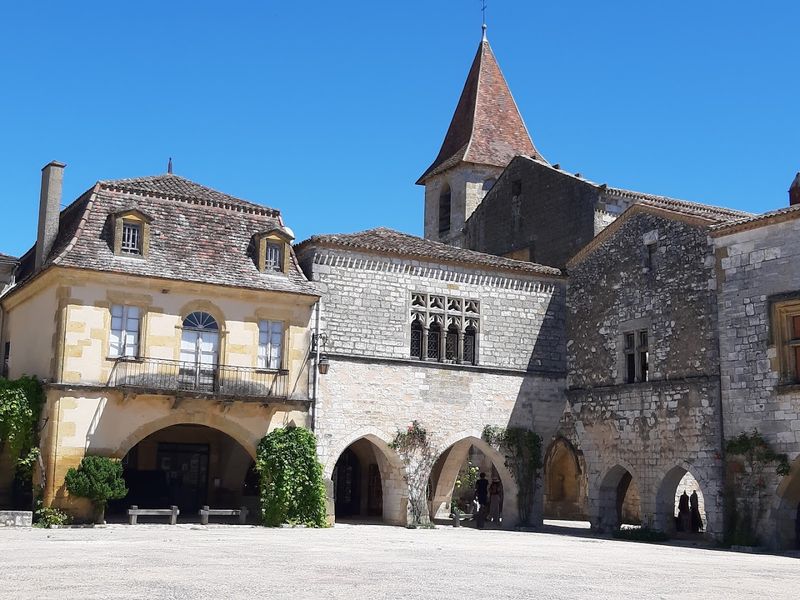
Monpazier is basically a medieval town planner’s thesis project, and it survived long enough for the rest of us to admire it. Founded in 1284 by Edward I of England during his rule over Aquitaine, it is one of the finest surviving examples of a bastide town in France.
Bastides were planned settlements built to a strict grid, with streets meeting at right angles and a central market square at the heart of everything.
The central square in Monpazier is surrounded by arcaded stone buildings that have barely changed since the 13th century. Merchants once sold goods under those same arches, and local farmers still set up a weekly market there today.
The grain measures carved into the stone at one corner of the square are an oddly moving detail, a physical record of daily commerce from 700 years ago.
Walking Monpazier’s grid of streets, it is remarkably easy to understand how the town was designed to function. Each block follows the same proportions, with houses, gardens, and passages arranged according to the original medieval plan.
The surrounding Dordogne countryside, with its limestone cliffs and river valleys, adds a spectacular natural setting to the architectural interest. Monpazier is not flashy or overcrowded, just quietly, confidently extraordinary in the way that only genuinely old places can be.
Santillana del Mar, Spain
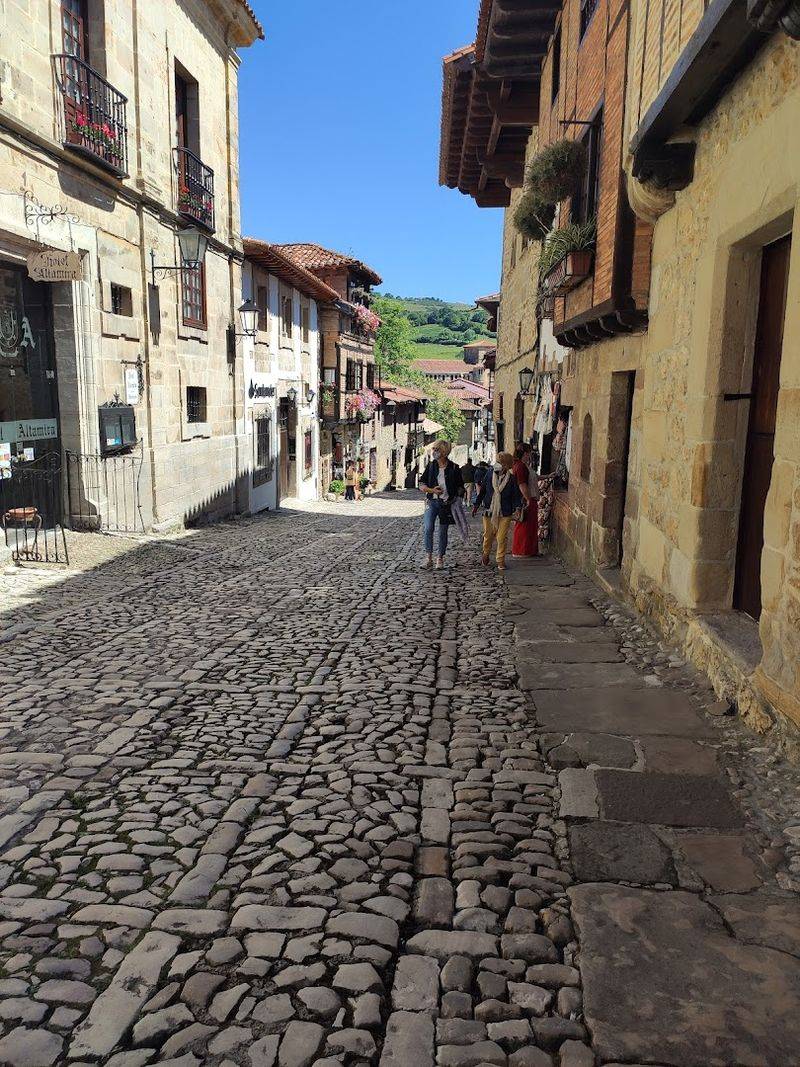
Jean-Paul Sartre once called Santillana del Mar the prettiest village in Spain, which is a bold claim from a French philosopher but one that is surprisingly hard to argue with. The town’s name is a triple lie, as locals cheerfully point out: it is not holy, it is not flat, and it is not by the sea.
What it absolutely is, however, is one of the most authentically preserved medieval towns on the Iberian Peninsula.
Stone mansions bearing the coats of arms of old Cantabrian noble families line the main street, their facades worn smooth by centuries of Cantabrian rain. The 12th-century Collegiate Church of Santa Juliana anchors one end of the town, its Romanesque cloister considered one of the finest in northern Spain.
No cars are allowed in the historic center, which makes wandering through it a genuinely peaceful experience.
Santillana del Mar sits just a few kilometers from the Altamira Caves, home to some of the most remarkable Paleolithic cave paintings in the world. The combination of prehistoric art and medieval architecture in such a small area gives the region an almost absurd concentration of cultural heritage.
Local restaurants serve hearty Cantabrian dishes like cocido montañés and fresh seafood from the nearby coast. The town is unhurried, dignified, and completely confident in its own remarkable identity.
Toruń, Poland
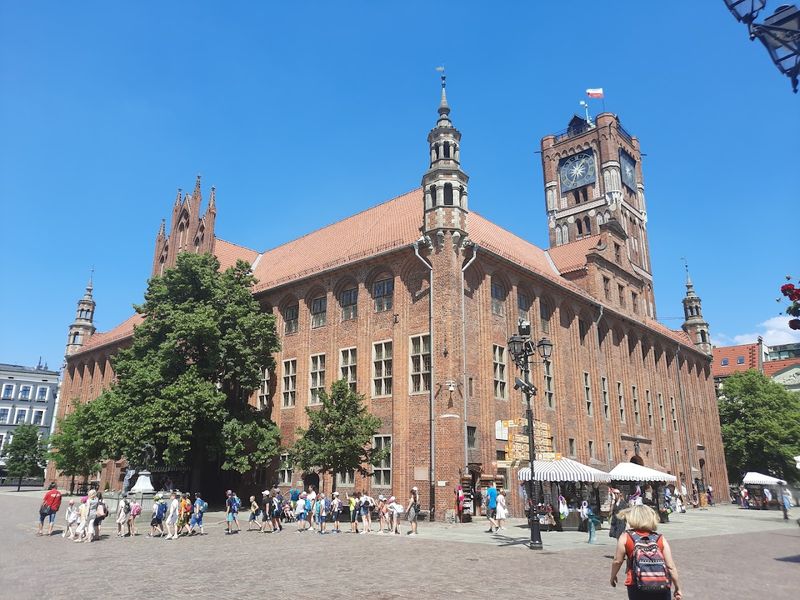
Toruń is the kind of city that historians love and tourists have not yet fully discovered, which makes it one of Europe’s best-kept medieval secrets. Founded in the 13th century by the Teutonic Knights, it developed into a major trading city on the Vistula River and has retained its medieval street plan and Gothic brick architecture in remarkable condition.
UNESCO recognized it as a World Heritage Site in 1997, cementing its place among Europe’s most significant medieval cities.
The old town is dominated by Gothic red-brick churches, merchant houses, and the atmospheric ruins of the Teutonic Knights’ castle at the river’s edge. Walking through the streets, the scale and ambition of medieval Toruń becomes clear: this was a wealthy, confident city that built to impress.
The Town Hall, one of the finest Gothic civic buildings in Central Europe, still commands the market square with considerable authority.
Toruń is also the birthplace of Nicolaus Copernicus, the astronomer who figured out that Earth orbits the Sun rather than the other way around. His birth house is now a museum, and the city celebrates his legacy with genuine pride.
Local gingerbread, made here since the Middle Ages using a recipe that remains a closely guarded secret, is the edible souvenir everyone leaves with. Toruń rewards every traveler who makes the effort to find it.
Share this story