The Fisher Building in Detroit is often described as the city’s largest art object, and it earns that title through detail alone. Built in 1928 by the Fisher family, it stands as one of the most significant Art Deco landmarks in the Midwest.
Inside, the lobby is the main draw. Hand-painted ceilings, marble from multiple countries, and carefully preserved design elements make it one of the most visually detailed public spaces in the city.
What makes it worth a visit is how accessible it is. You do not need a ticket or a tour to experience it, yet it delivers the kind of craftsmanship most people expect from a museum.
A Grand Boulevard Address With a Story Behind Every Stone
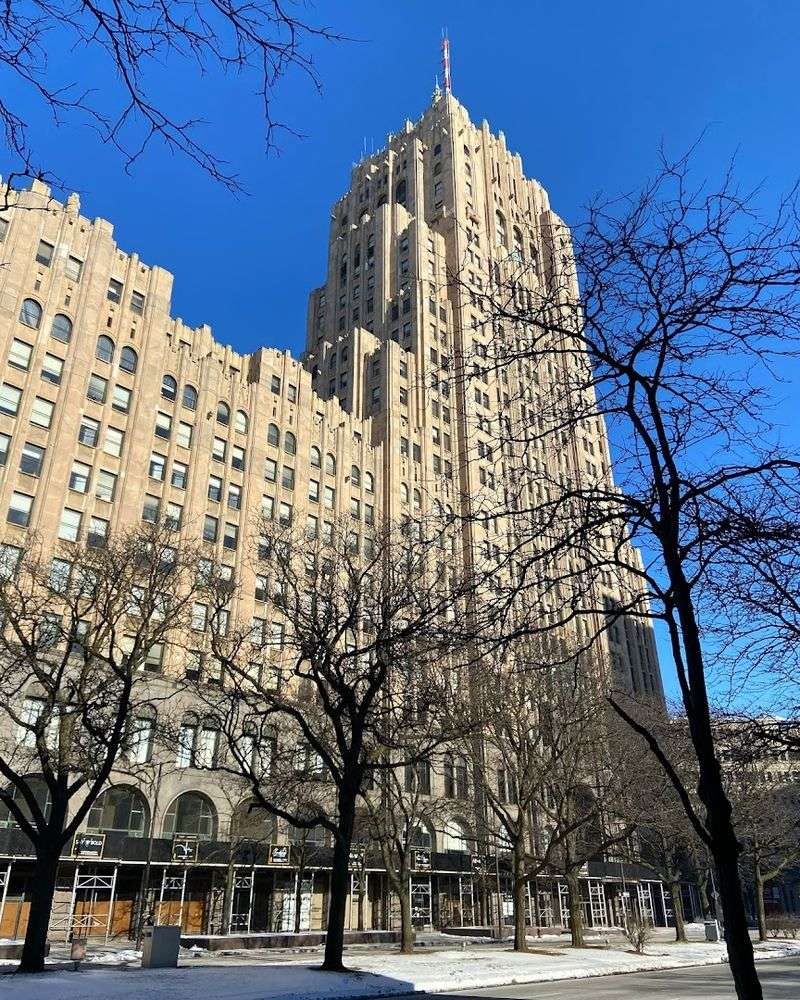
Few buildings announce themselves as boldly as the one standing at 3011 W Grand Blvd, Detroit, MI 48202, in the city’s historic New Center neighborhood. The Fisher Building rises 30 stories above the street, and its exterior is clad in limestone, granite, and polished marble that still gleams after nearly a century of Detroit winters.
Architect Albert Kahn, one of the most celebrated designers of the early 20th century, was commissioned to create something extraordinary, and he delivered without hesitation. The building’s silhouette features a distinctive tiered tower that was originally planned to be taller, but budget adjustments during construction changed the final design.
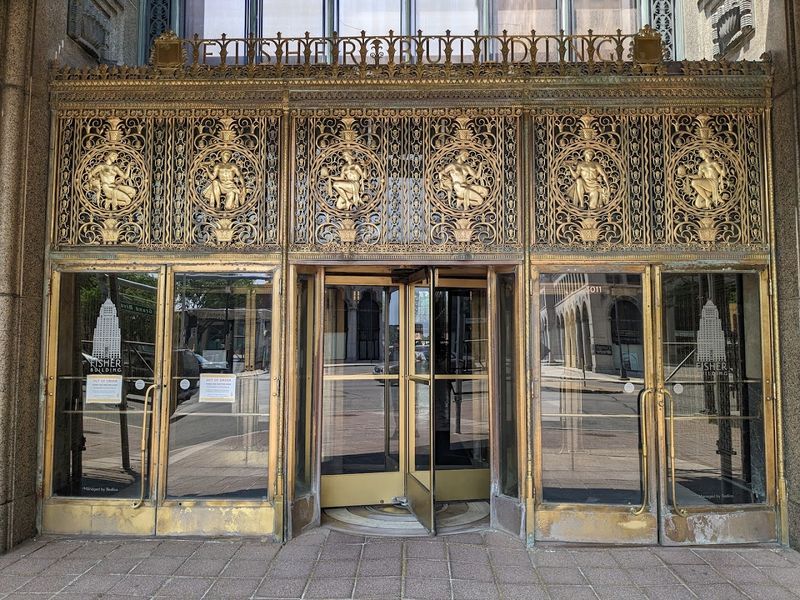
Even from across the boulevard, the sheer scale of the structure commands attention. The facade details reward anyone who takes a moment to look closely, with carved ornamentation framing every window and entrance.
This is a building that earns its nickname before you even walk through the door.
The Seven Brothers Who Built a Monument to Detroit
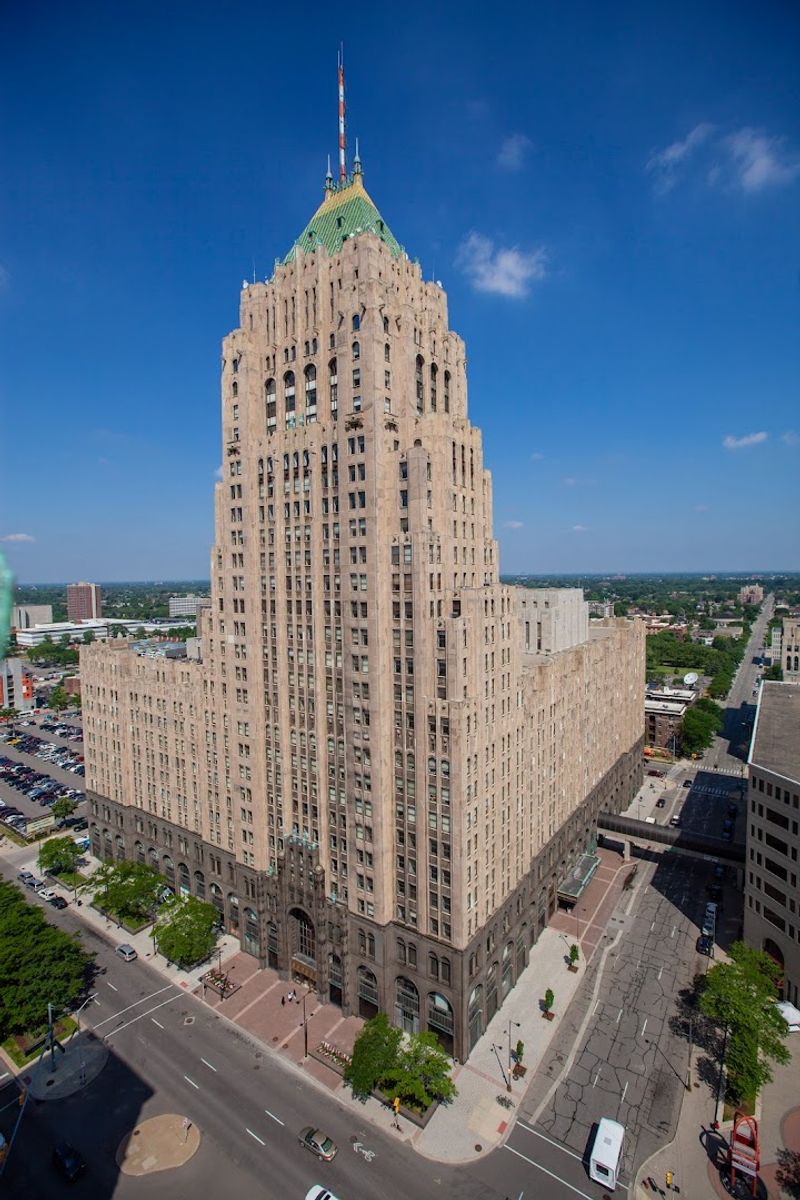
The Fisher Building exists because of seven brothers who turned a small carriage-body shop into one of the most profitable businesses in automotive history. Fred, Charles, William, Alfred, Howard, Lawrence, and Edward Fisher founded Fisher Body Company, which eventually became a key supplier to General Motors.
After selling their company for an enormous sum in the 1920s, the brothers decided to invest in Detroit itself. They commissioned the Fisher Building as a gift to the city, a permanent tribute to the craftspeople and artisans who had helped make their fortune possible.
The building was never meant to be just an office tower. The Fisher brothers wanted it to function as a cultural destination, a place where Detroiters could experience world-class art and architecture without leaving their own city.
That original vision still shapes what the building feels like today, nearly 100 years after it first opened its doors to the public.
What Happens When You Look Up at the Lobby Ceiling
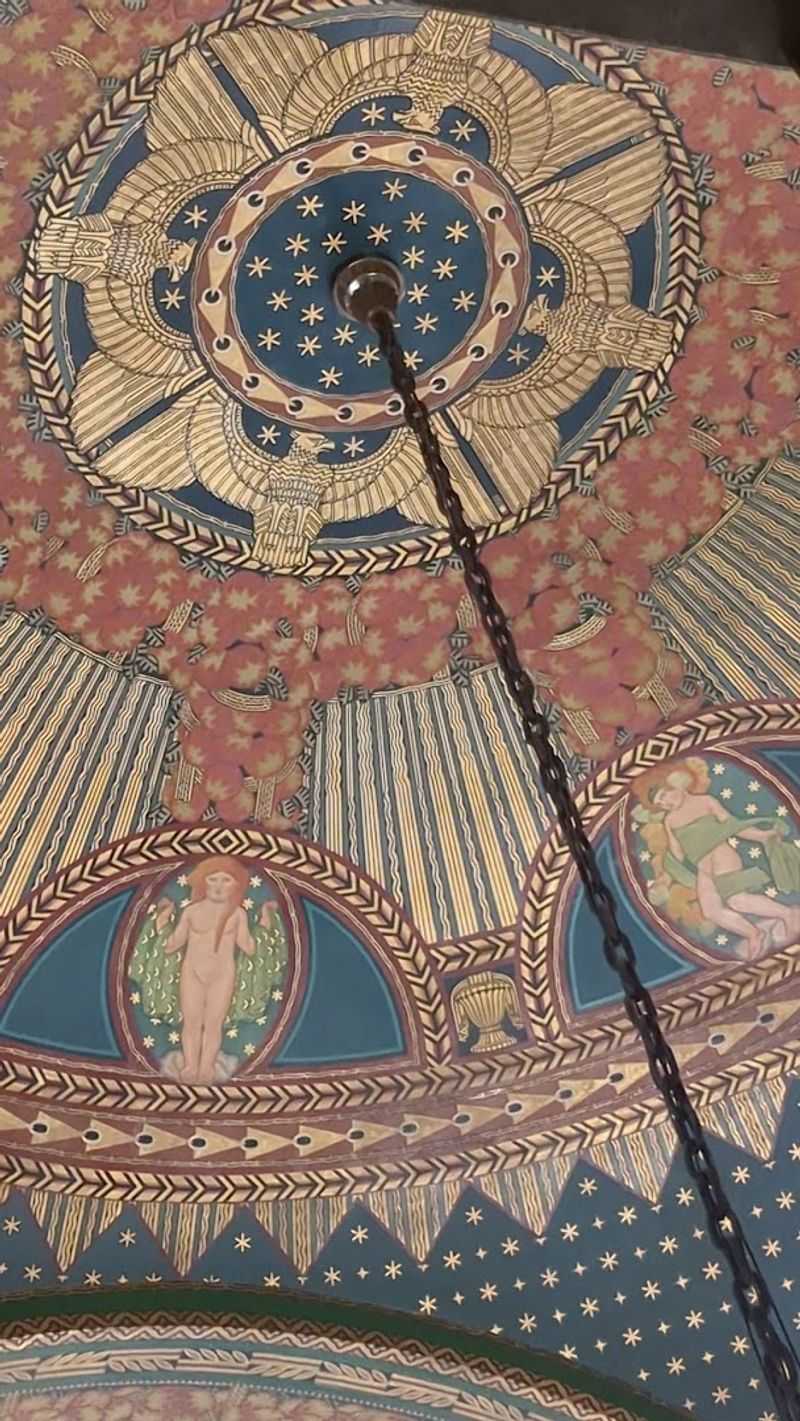
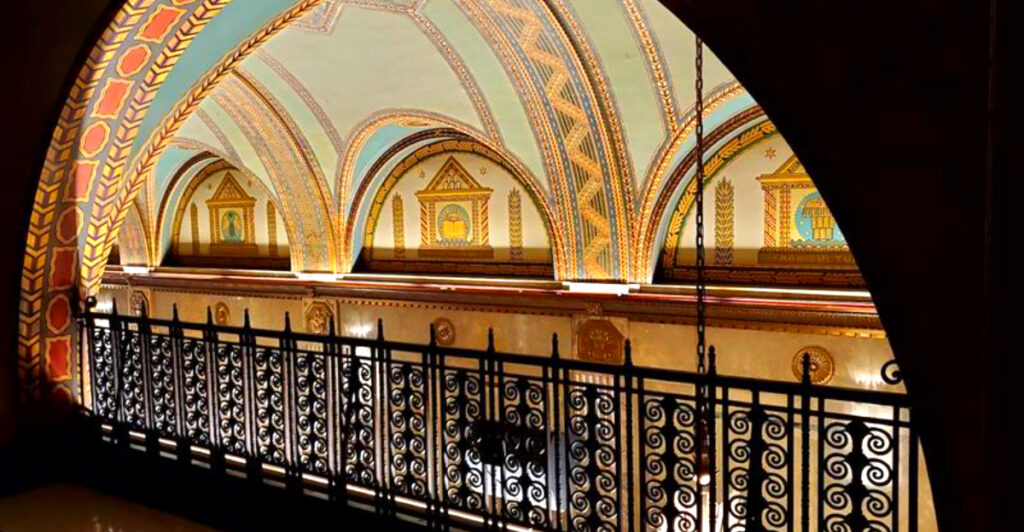
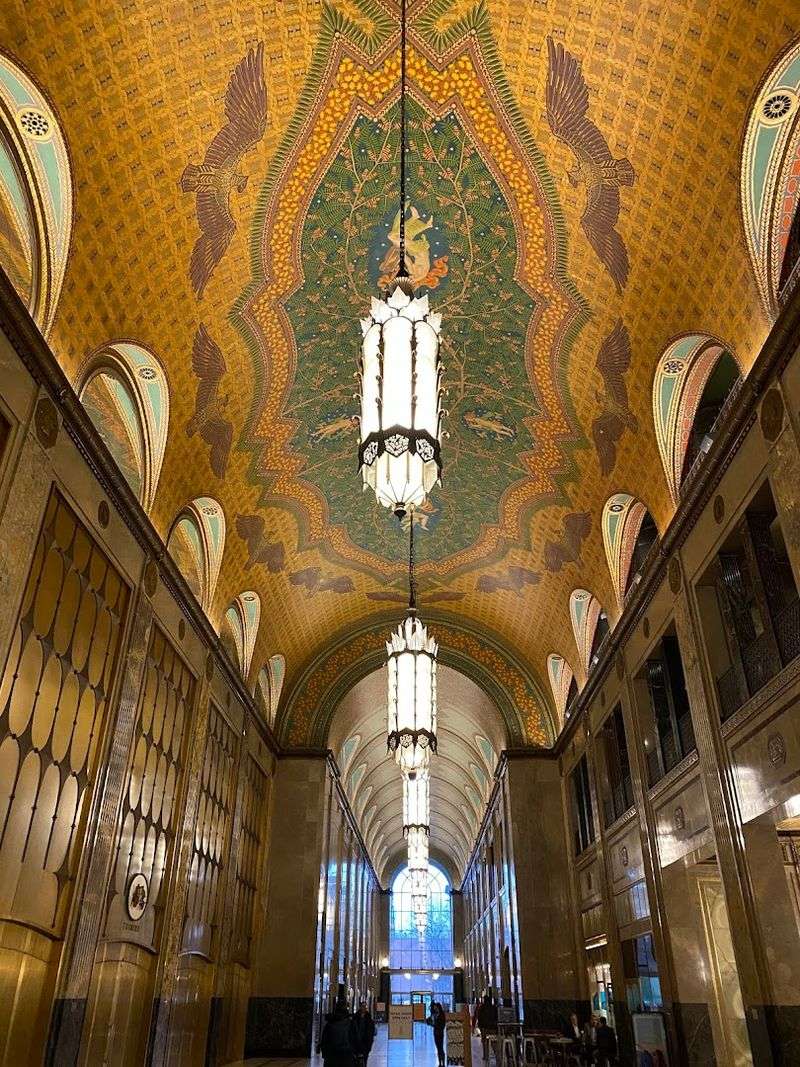
Most people walk into the Fisher Building lobby and immediately tilt their heads back, because the ceiling practically demands it. The three-story, barrel-vaulted space above the main arcade is covered in hand-painted frescoes that were meticulously restored in 2016 after decades of gradual fading.
The restoration project was a major undertaking, requiring skilled conservators to carefully clean and repaint sections that had been dulled by time and environmental wear. The result is a ceiling that now looks remarkably close to what visitors would have seen when the building first opened in 1928.
Rich golds, deep reds, and vivid blues fill the painted panels, drawing the eye from one intricate scene to the next. The craftsmanship on display up there is genuinely humbling, the kind of detail that reminds you how much time and skill went into a single square foot of this space.
And that is just the ceiling.
Marble From Around the World, Right Beneath Your Feet
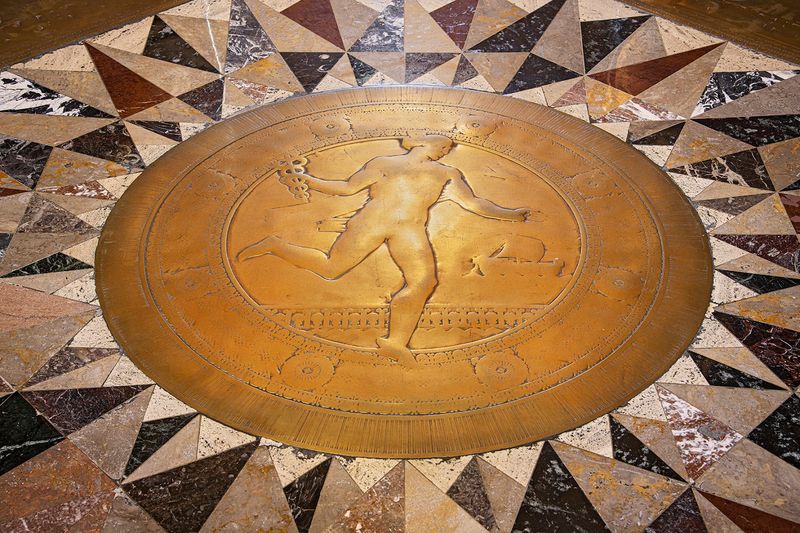
The floors of the Fisher Building are not just floors. They are a global collection of rare stone assembled in one place, with marble sourced from countries across Europe and beyond to create the intricate mosaic patterns that stretch through the arcade corridors.
Different sections of the building feature different varieties of marble, each chosen for its color, veining, and texture. Some panels showcase deep green stone from Italy, while others display warm cream-colored varieties that contrast beautifully with the darker borders framing each section.
Albert Kahn and his design team treated the floor as seriously as the walls and ceiling, understanding that a truly great interior needs to be immersive from every angle. Visitors who take the time to crouch down and examine the mosaic work up close often discover geometric patterns and inlaid details that are completely invisible from a standing position.
The floor alone could justify the entire visit.
The Art Deco Details That Most Visitors Walk Right Past
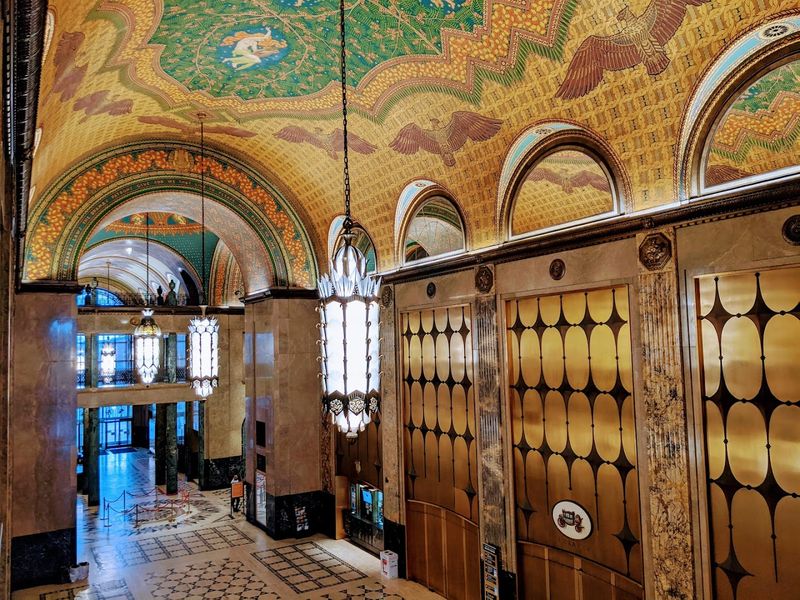
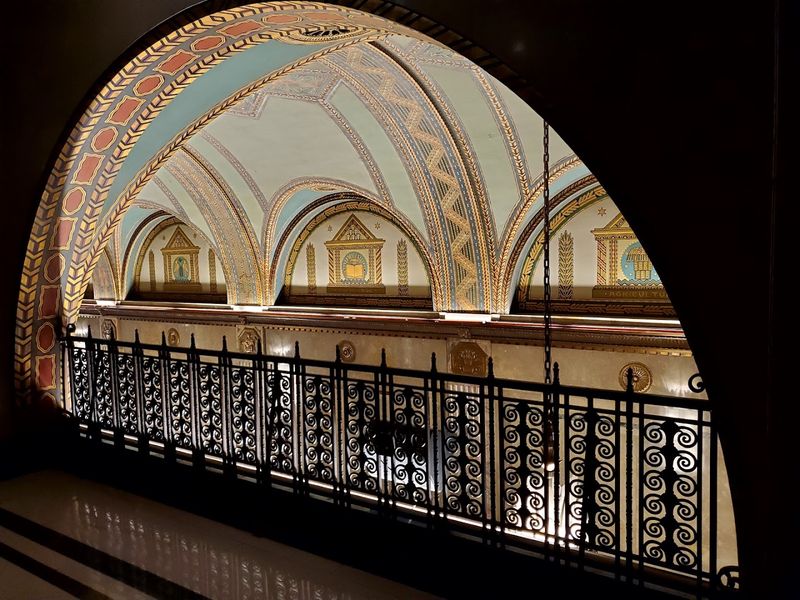
Art Deco as a style is known for bold geometry, lavish ornamentation, and a sense of forward momentum, and the Fisher Building delivers all three in ways that feel almost overwhelming at first glance. The metalwork throughout the arcade includes bronze grilles, decorative panels, and elevator doors that are works of art in their own right.
Carved stone reliefs appear at nearly every transition point in the building, framing doorways, arching over corridors, and punctuating the spaces between storefronts. Many of these carvings incorporate symbolic imagery drawn from nature, industry, and mythology, reflecting the optimistic spirit of 1920s America.
The lighting fixtures are another detail worth pausing over. Designed to complement the overall aesthetic, they cast a warm amber glow that makes the gold-toned surfaces of the lobby shimmer in a way that photographs struggle to capture accurately.
Seeing it in person, at the right time of day, feels like a completely different experience from anything a screen can show you.
A National Historic Landmark That Almost Slipped Away
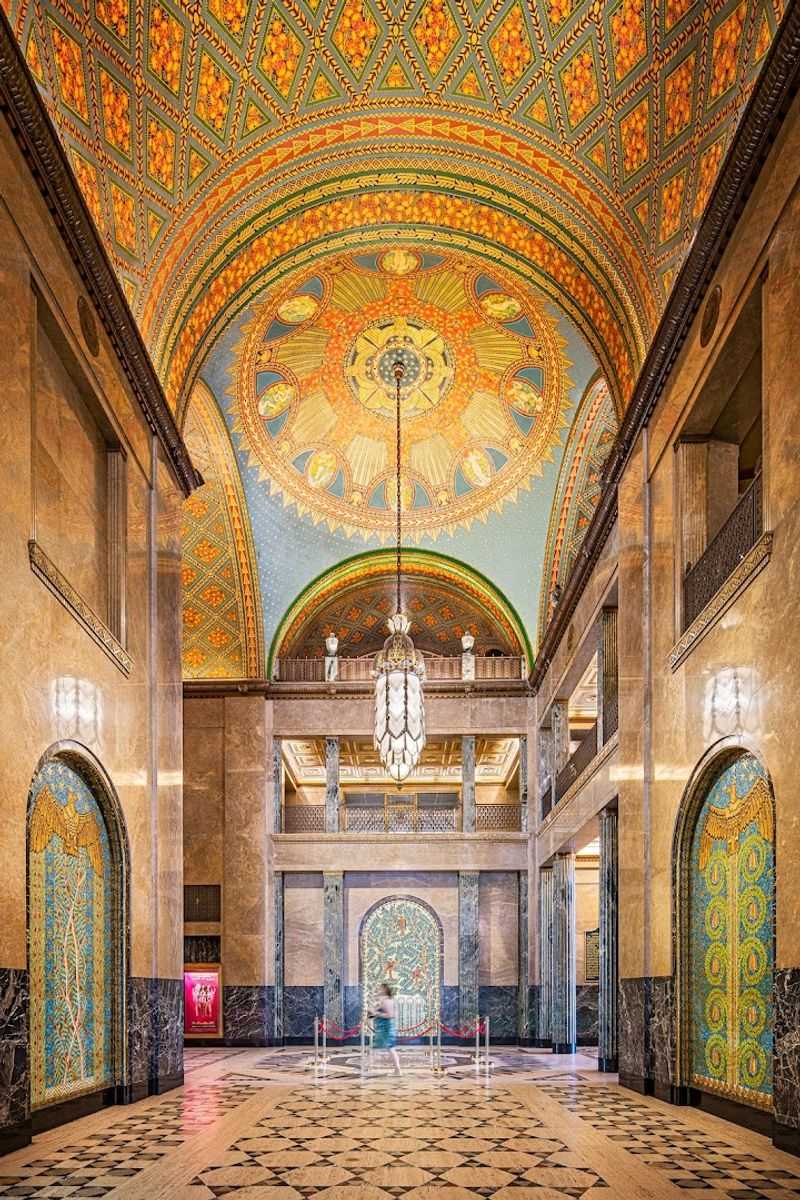
The Fisher Building earned its designation as a National Historic Landmark in 1989, a recognition that placed it in the same category as some of the most important architectural achievements in American history. That designation was not guaranteed, and the building’s journey to preservation involved decades of uncertainty.
By the late 20th century, the Fisher Building had experienced significant decline, with vacancies climbing and maintenance budgets shrinking. The kind of detailed upkeep that a building of this complexity requires is enormously expensive, and finding owners willing to commit to that level of investment proved difficult over the years.
The landmark designation helped draw attention to the building’s cultural significance and made it easier to access preservation funding. More recently, in June 2023, Michigan State University’s endowment acquired a 79% stake in the property, investing $21 million toward its future.
That commitment from a major institution signals a new chapter for the building and for the surrounding New Center neighborhood as a whole.
The Fisher Theatre and Its Surprisingly Intimate Stage
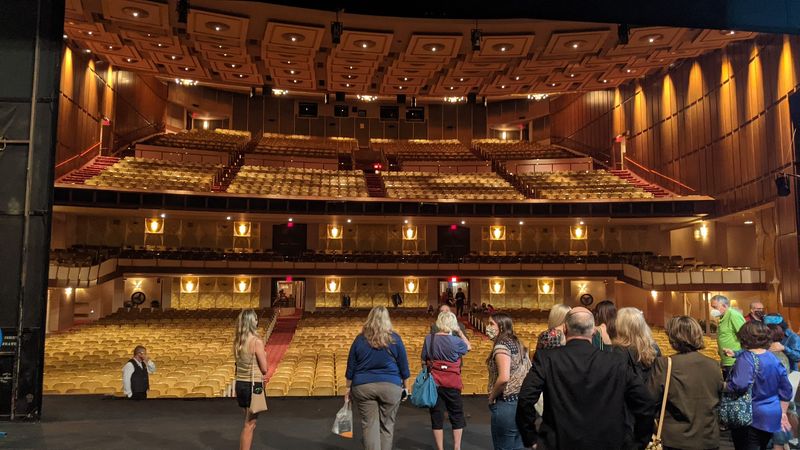
Tucked inside the Fisher Building is a fully operational theater that has been hosting major productions for decades. The Fisher Theatre has welcomed Broadway touring shows, musical performances, and live theatrical events that have drawn audiences from across metro Detroit and beyond.
The theater’s interior matches the grandeur of the rest of the building, with ornate decorative details framing the stage and elaborate ceiling work overhead. Attending a show there feels noticeably different from a modern venue, partly because the space itself has so much personality and history baked into its walls.
Seating is comfortable, parking in the area is generally accessible, and the experience of arriving at a show through that Art Deco lobby adds something special to the evening that no multiplex or arena can replicate. Recent productions have included major touring musicals, drawing consistent praise for both the performances and the venue itself.
Checking what is playing before any visit to Detroit is genuinely worth your time.
Free to Enter, Priceless to Experience
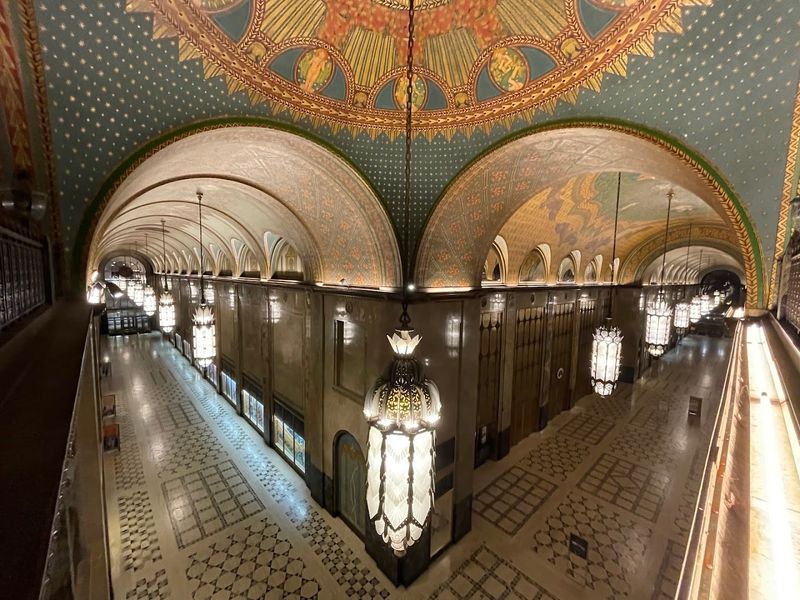
One of the most appealing things about the Fisher Building is that the main lobby and arcade are completely free to enter. There is no admission fee, no timed entry, and no reservation required to walk through one of the most spectacular interior spaces in the entire country.
The building is technically open 24 hours a day, though the most rewarding time to visit is during regular business hours when the natural and artificial lighting work together to illuminate the frescoes and marble surfaces at their best. Morning light through the upper windows creates a particularly warm effect on the golden ceiling tones.
Visitors consistently report that spending even 30 to 45 minutes exploring the corridors, looking up at the ceiling, and examining the floor mosaics feels like a genuinely enriching experience rather than a quick tourist stop. For a city that charges nothing for this level of beauty, Detroit is offering something remarkable, and most people outside Michigan have no idea it exists.
Guided Tours That Unlock the Floors You Cannot See Alone
Walking through the ground-floor arcade on your own is wonderful, but a guided tour of the Fisher Building opens up parts of the building that are simply not accessible to independent visitors. Pure Detroit, the beloved local retailer with a shop on the first floor, has offered tours that take guests to upper levels with views and details that most people never get to see.
Tour guides bring deep knowledge of the building’s construction history, the Fisher family story, and the specific artistic decisions that shaped each section of the interior. The difference between a self-guided walk and a proper tour is significant, and many visitors describe the tour as the moment the building truly came alive for them.
Saturday tours have been a popular option, typically offered for a modest fee, though availability can vary by season. Calling ahead or checking the building’s official website at fisherbuilding.city before your visit ensures you do not miss out on this deeper layer of the experience.
Shops, a Pharmacy, and a Neighborhood Feel Inside a Skyscraper
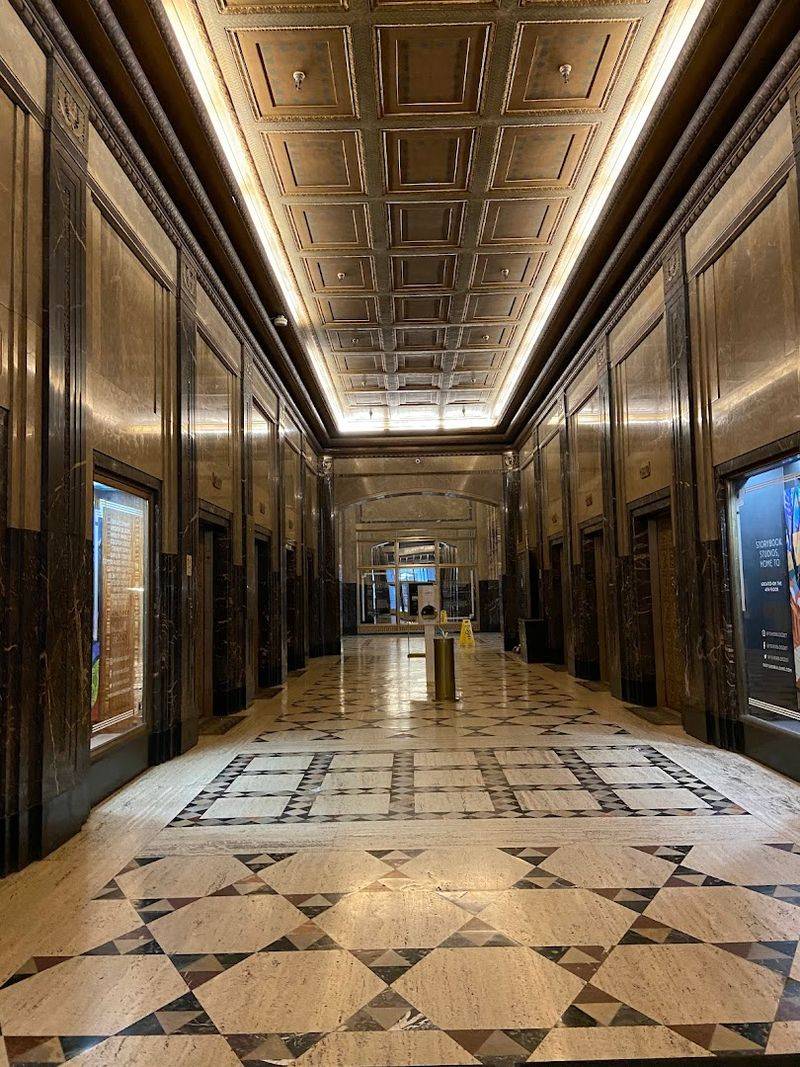
Beyond the architecture, the Fisher Building functions as a small neighborhood hub, with a rotating collection of shops and services spread through its ground-floor corridors. The mix of tenants has included clothing boutiques, a bookstore, gift shops celebrating Detroit culture, and a pharmacy that leans into the building’s vintage aesthetic in a charming way.
The Born in the D shop offers locally themed merchandise that makes for genuinely interesting souvenirs, particularly for visitors who want something more meaningful than a standard tourist trinket. Coffee is available inside the building as well, which makes it easy to slow down and spend more time absorbing the surroundings.
It is worth noting that the retail landscape inside the building has been evolving, with some spaces under renovation and new tenants gradually filling in. Prices in some shops lean toward the higher end, but browsing is always free, and the act of wandering through those corridors while examining the architecture around you is its own reward.
The building rewards curiosity at every turn.
How the New Center Neighborhood Frames the Whole Experience
The Fisher Building does not exist in isolation. It anchors Detroit’s New Center neighborhood, a district that developed in the 1920s as a commercial and cultural hub separate from downtown.
The area has its own distinct energy, with historic buildings lining the boulevard and a community character that feels different from the more tourist-heavy downtown corridor.
The Motown Museum, one of Detroit’s most visited cultural destinations, is roughly a 12 to 15 minute walk away, making it easy to combine both attractions in a single afternoon outing. The neighborhood also has restaurants and cafes worth exploring before or after a visit to the building itself.
Driving through New Center and seeing the Fisher Building rise above the surrounding streetscape for the first time is a genuine visual surprise for those who have never visited before. The scale of the structure relative to everything around it helps explain why Detroiters have always treated it as something more than just a building, it is a landmark in the truest sense of the word.
Why This Building Keeps Pulling People Back to Detroit
There is a specific kind of magic that happens when a historic building is preserved well enough that it still feels alive rather than merely maintained. The Fisher Building has that quality, and it is the reason visitors who come once tend to return, sometimes years later, sometimes with people they want to impress.
The building carries a 4.8-star rating across nearly 2,800 reviews, which is a remarkable achievement for a historic landmark that charges no admission. That near-universal approval reflects something genuine about what the building delivers, which is a sense of being inside something that was made with extraordinary care and intention.
Detroit has no shortage of compelling destinations, but the Fisher Building occupies a unique position as a place where architecture, history, art, and community all overlap in a single address. For anyone planning a trip to Michigan, adding this stop to the itinerary is not optional, it is essential, and the building will make sure you understand exactly why the moment you look up.
Share this story