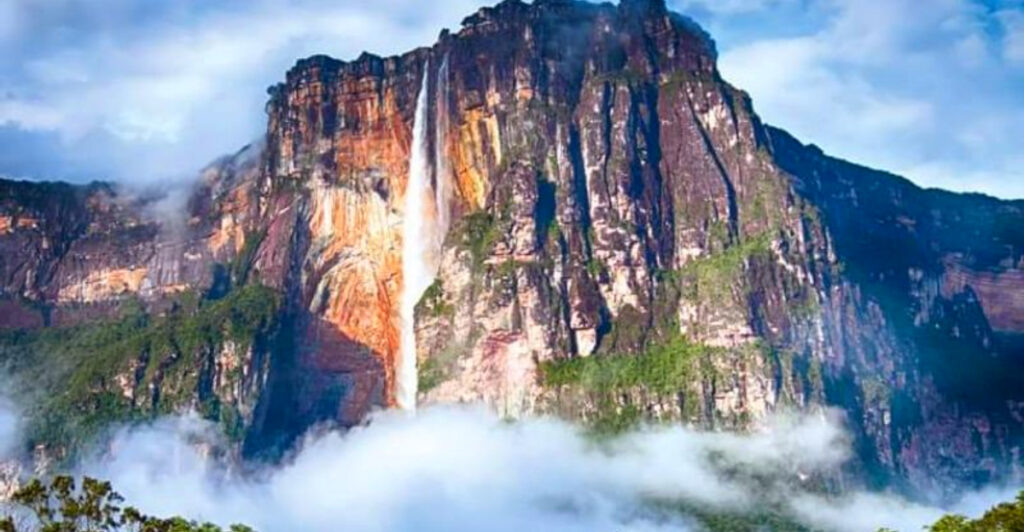
Waterfalls are among the most powerful natural spectacles on Earth, shaped by geology, climate, and time. Some are known for their record-breaking height, like Angel Falls, while others impress with sheer width or water volume, such as Victoria Falls or Iguazu Falls.
There is no single way to define the largest waterfall—some are tallest, some widest, and others most powerful—but together they showcase the incredible diversity of our planet. From remote jungles to famous national parks, here are 15 enormous waterfalls around the world that are truly worth visiting.
Angel Falls, Venezuela
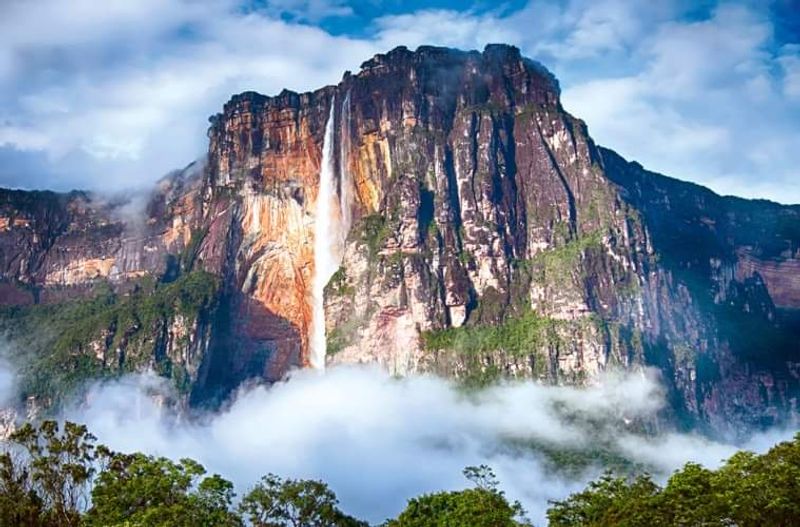
Standing nearly a kilometer tall, Angel Falls does not just fall—it practically vanishes into mist before it ever touches the ground. This Venezuelan giant drops an astonishing 979 meters from the edge of Auyán-tepui, a flat-topped mountain locals call a tepui.
The sheer height means the water breaks apart mid-air, creating a ghostly, drifting spray that hangs over the jungle like fog.
Getting here is half the adventure. There are no roads leading to the falls, so visitors must fly into the remote Canaima National Park and then travel by river through thick rainforest.
It sounds like something out of an explorer’s journal—because it basically is.
The best time to visit is during the rainy season, from June to November, when water flow is at its peak and the falls are truly thundering. In the dry season, the flow can slow to a trickle.
Named after American aviator Jimmie Angel, who spotted the falls from his plane in 1933, this waterfall is a true bucket-list destination that rewards every effort made to reach it.
Tugela Falls, South Africa
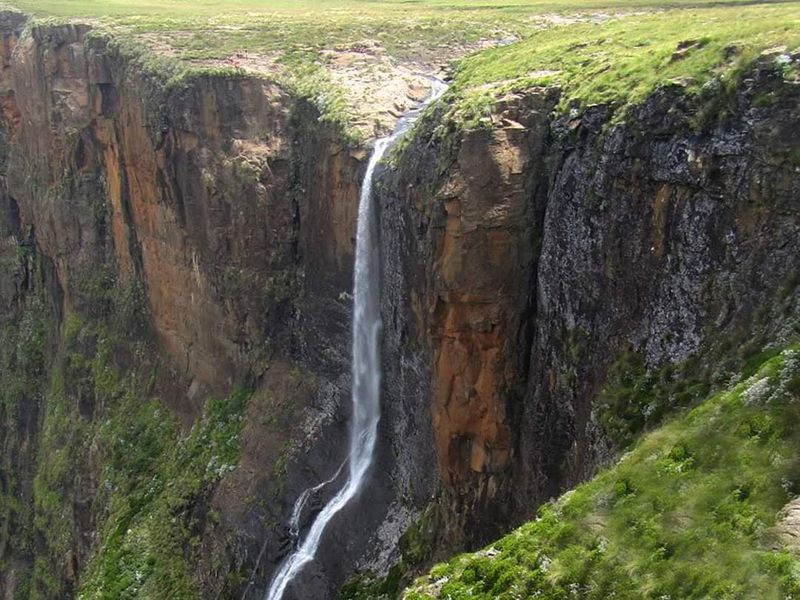
Tucked into the rugged Drakensberg Mountains, Tugela Falls is the kind of waterfall that makes your jaw drop in slow motion. Measuring around 948 meters across five separate tiers, it ranks as one of the tallest waterfalls on Earth—and it puts on a seriously dramatic show doing it.
The hike to reach the top is no joke. Trails wind through rocky terrain and even include chain ladders bolted into the cliff face.
But those who make the climb are rewarded with sweeping panoramic views of the KwaZulu-Natal landscape that stretch endlessly in every direction.
During winter months, the falls sometimes freeze partially, turning into a glittering curtain of ice—a rare and stunning sight in Africa. The Royal Natal National Park, where the falls are located, is also home to diverse wildlife and plant life, making the surrounding area worth exploring on its own.
Whether you view Tugela from the valley below or brave the hike to the summit, this multi-tiered cascade delivers one of the most awe-inspiring natural experiences the African continent has to offer adventurous travelers.
Iguazu Falls, Argentina/Brazil
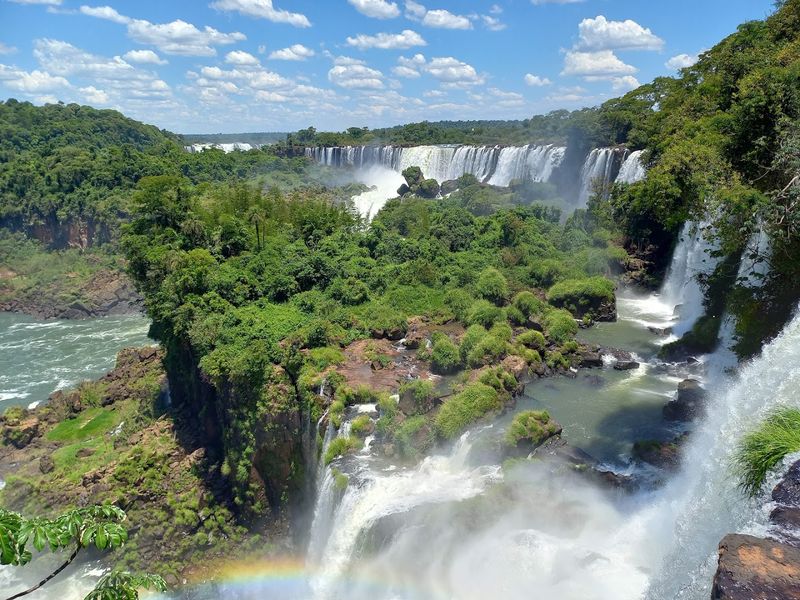
Iguazu Falls does not do anything small. Stretching up to 2.7 kilometers wide and made up of around 275 individual cascades, this waterfall system is basically nature showing off at full volume.
Straddling the border between Argentina and Brazil, it offers dramatically different views depending on which side you stand on.
From the Brazilian side, you get a sweeping panoramic perspective of the entire curtain of water. From Argentina, elevated walkways bring you so close to the falls that you will absolutely get soaked—and love every second of it.
The most famous section, called the Devil’s Throat, is a U-shaped chasm where multiple falls converge in a roaring, misty frenzy.
The surrounding rainforest buzzes with wildlife, including toucans, coatis, and butterflies in every color imaginable. Eleanor Roosevelt reportedly said upon seeing Iguazu, “Poor Niagara.” That pretty much sums it up.
Both Argentina and Brazil have national parks protecting the area, so the ecosystem remains beautifully intact. Visiting during the rainy season means maximum water flow, but even in drier months, Iguazu is a thundering, breathtaking spectacle that earns its place among the world’s greatest natural wonders.
Victoria Falls, Zambia/Zimbabwe
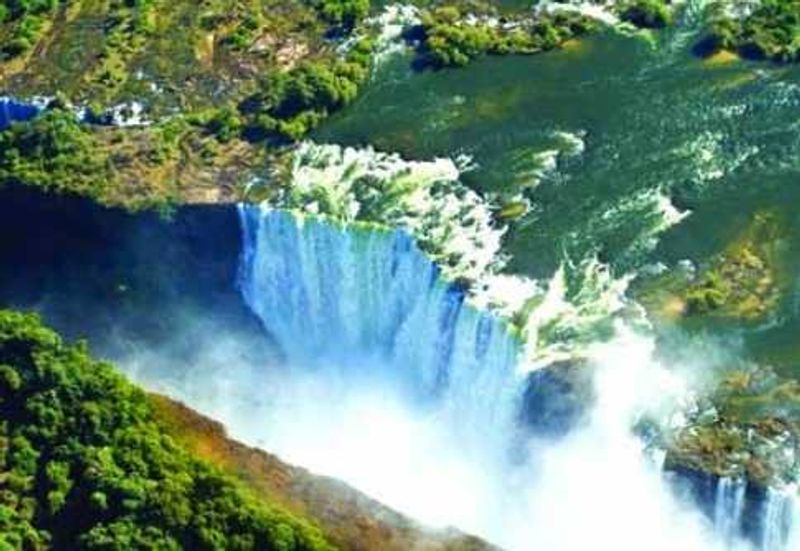
“The Smoke That Thunders” is what the local Kololo people called it long before the rest of the world ever heard of Victoria Falls—and honestly, that name nails it perfectly. This colossal waterfall spans over 1,700 meters wide and drops roughly 108 meters into the Zambezi Gorge below, sending a cloud of mist so enormous it can be seen from 50 kilometers away.
Straddling the border between Zambia and Zimbabwe, Victoria Falls offers completely different experiences on each side. The Zimbabwean side provides the most complete frontal view, while Zambia offers adventurous activities like swimming in the famous Devil’s Pool, a natural rock pool right at the edge of the falls—if you dare.
The surrounding area is packed with wildlife encounters, including elephant and hippo sightings along the Zambezi River. Sunset river cruises are incredibly popular and pair scenery with spectacular golden light.
Victoria Falls is not just a waterfall—it is a full destination experience. Recognized as both a UNESCO World Heritage Site and one of the Seven Natural Wonders of the World, it earns every bit of that reputation with sheer, overwhelming, unforgettable power.
Niagara Falls, USA/Canada
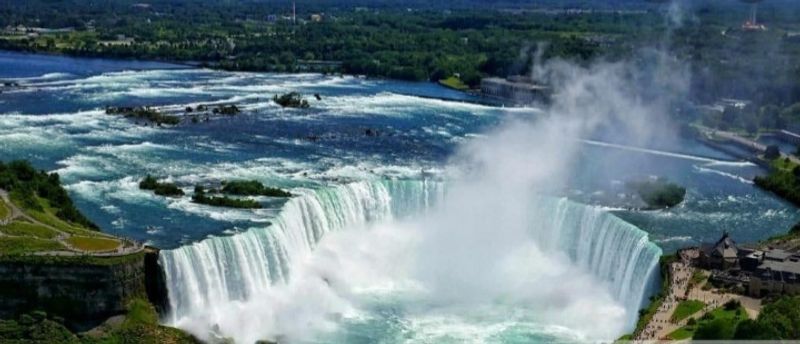
Few waterfalls on Earth come with their own skyline backdrop, but Niagara Falls is not your average waterfall. Sitting on the border between New York and Ontario, Niagara is made up of three falls—Horseshoe, American, and Bridal Veil—and together they carry more water than almost any other waterfall on Earth.
Height is not Niagara’s game. At around 57 meters, it is far from the tallest.
But what it lacks in altitude, it absolutely makes up for in volume. Over 168,000 cubic meters of water rush over the crest line every minute during peak flow.
That is an almost impossible number to picture until you are standing next to it, drenched in mist.
The Maid of the Mist boat tour has taken visitors into the heart of the spray since 1846, making it one of the oldest tourist attractions in North America. At night, colorful lights illuminate the falls for a completely different kind of show.
Winter brings a magical transformation when parts of the surrounding landscape freeze into icy formations. Accessible, dramatic, and endlessly entertaining, Niagara Falls remains one of the most visited natural attractions in the entire world for very good reason.
Kaieteur Falls, Guyana
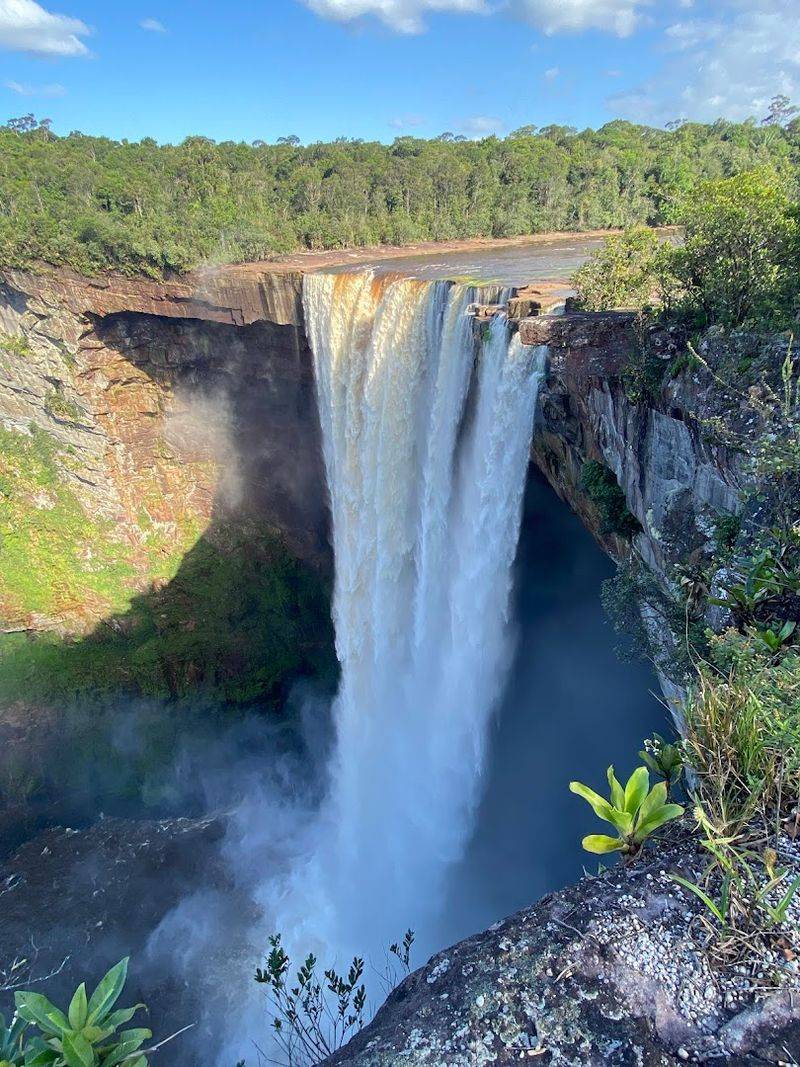
Kaieteur Falls is the waterfall that laughs at the concept of being overlooked. While better-known falls get all the tourist crowds, this Guyanese giant quietly holds the title of one of the most powerful single-drop waterfalls on the entire planet.
Dropping 226 meters in a single, uninterrupted plunge, it combines height and water volume in a way few waterfalls can match.
Located deep within the Amazon rainforest, Kaieteur is not exactly easy to reach. Most visitors arrive by small propeller plane, landing on a short airstrip cut into the jungle.
The moment you step off the plane and hear the roar ahead of you, the effort immediately feels worth it.
The surrounding Kaieteur National Park is one of the most biodiverse places on Earth. Golden poison dart frogs, giant otters, and harpy eagles all call this wilderness home.
Standing at the edge of the falls, with nothing but endless rainforest stretching to the horizon, feels genuinely otherworldly. Because so few tourists make the journey, the experience feels raw and unfiltered—no gift shops, no long queues, just you, the jungle, and one of nature’s most staggering performances playing out right in front of your eyes.
Yosemite Falls, USA
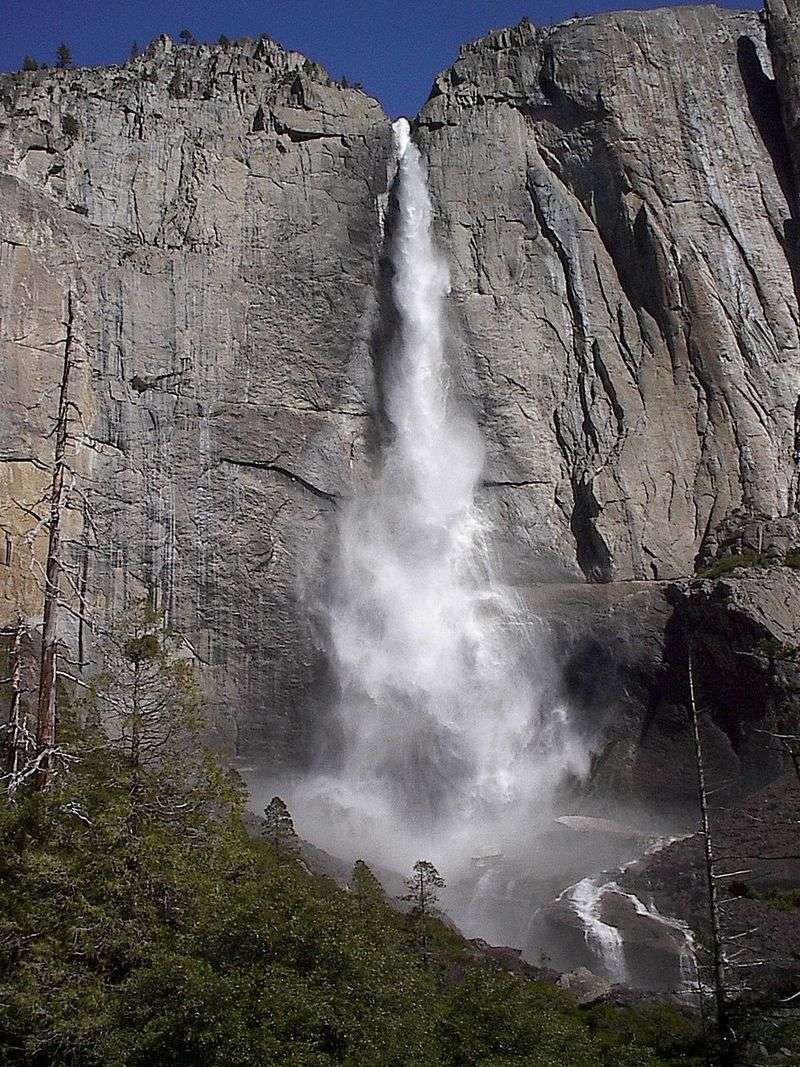
Spring in Yosemite Valley comes with a soundtrack, and that soundtrack is Yosemite Falls absolutely going off. Snowmelt from the surrounding Sierra Nevada peaks sends water rushing over the granite cliffs in a three-tiered cascade that drops a combined 739 meters—making it one of the tallest waterfalls in North America and a genuine showstopper.
The falls split into three sections: Upper Yosemite Fall, the Middle Cascades, and Lower Yosemite Fall. Each section has its own character, but together they create one of the most photographed natural scenes in the United States.
The Lower Fall trail is an easy walk suitable for most visitors, while the Upper Fall trail is a serious 7-mile round-trip hike with jaw-dropping rewards at the top.
By late summer, the falls can slow dramatically or even stop flowing entirely, so timing your visit matters. Peak season runs from April through June when the water is at full, glorious force.
The surrounding valley, with its towering granite walls and ancient sequoias, makes the backdrop almost unfairly beautiful. Whether you are a seasoned hiker or a first-time national park visitor, Yosemite Falls delivers the kind of memory that sticks around for a very long time.
Gocta Falls, Peru
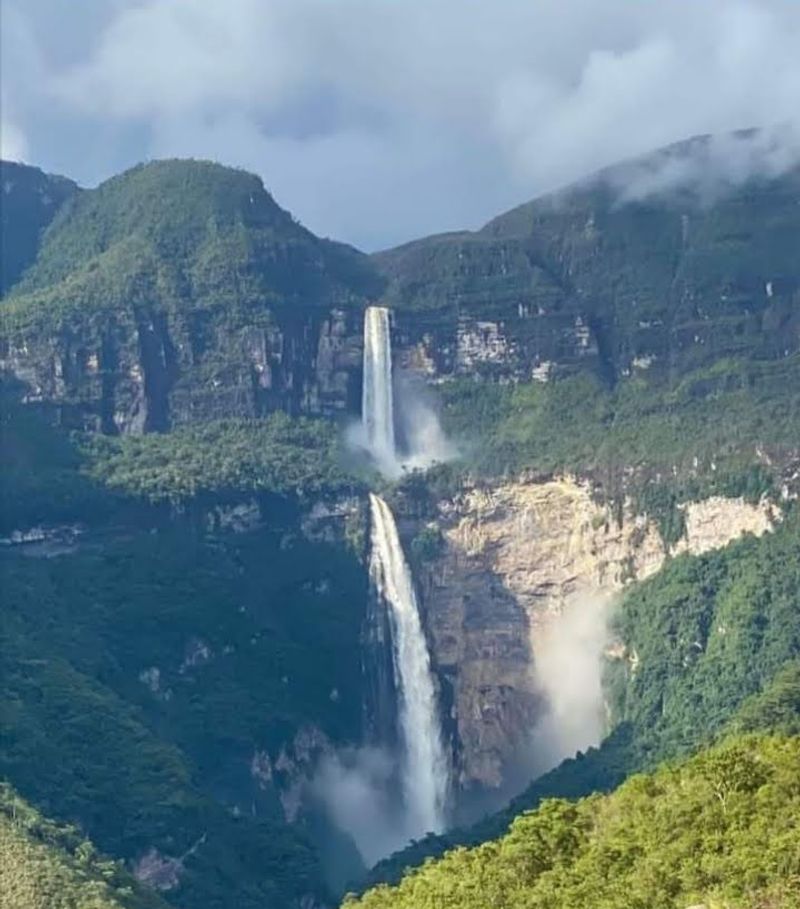
For centuries, the people of a small Peruvian village kept quiet about a waterfall hidden in their cloud forest—local legend warned that a mermaid guarded it and would bring misfortune to those who revealed its location. It was not until 2002 that a German hydrologist named Stefan Ziemendorff measured Gocta Falls and brought it to international attention.
At around 771 meters tall, it immediately entered the conversation as one of the tallest waterfalls in the world.
The hike to Gocta takes about three to four hours through lush, mist-covered jungle. Along the trail, you might spot spectacled bears, cock-of-the-rock birds, or troops of monkeys moving through the canopy above.
The cloud forest environment gives the whole journey a mysterious, almost enchanted quality that photographs simply cannot capture.
The falls drop in two main tiers, with the lower tier being the more dramatic of the two. Local guides from the nearby village of Cocachimba lead tours and add fascinating cultural context to the experience.
Visiting Gocta means stepping well off the beaten path—and that is precisely what makes it so special. The combination of natural beauty, wildlife, and legend makes this one of South America’s most underrated natural treasures.
Plitvice Waterfalls, Croatia
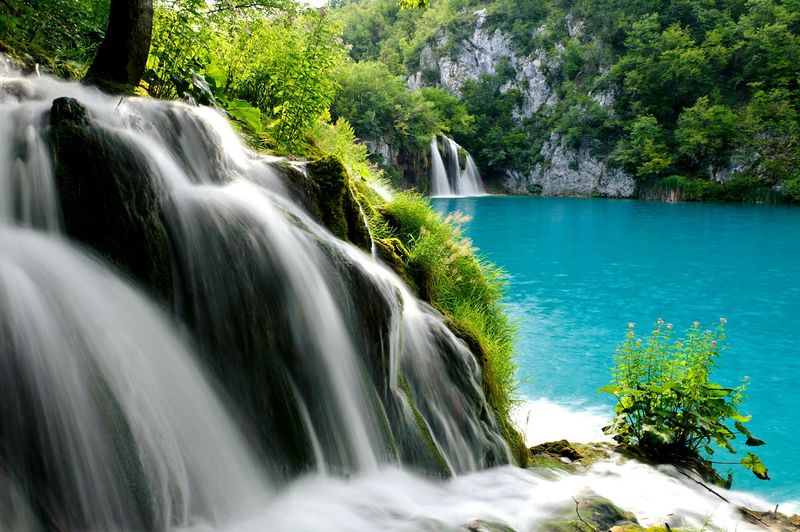
There is a moment at Plitvice Lakes when you stop walking, look around, and genuinely wonder if someone has oversaturated the entire landscape. The water here is an almost unreal shade of turquoise, colored by minerals and microorganisms that interact with the limestone rock.
Croatia’s most famous national park contains 16 terraced lakes connected by a series of cascading waterfalls that flow one into the next in a natural staircase of extraordinary beauty.
Wooden boardwalks wind directly over and alongside the water, bringing visitors within arm’s reach of the falls. The sound of rushing water is constant, layered, and oddly calming.
Unlike most waterfall destinations where you view from a distance, Plitvice puts you right in the middle of the action.
The park changes personality with every season. Summer brings lush greenery and full water flow.
Autumn wraps the surrounding forest in warm reds and golds. Winter sometimes freezes the falls into icy sculptures.
Spring floods the lakes with snowmelt, boosting the cascades to their most dramatic state. A UNESCO World Heritage Site since 1979, Plitvice is Croatia’s most visited attraction—and every single visitor leaves understanding exactly why.
Pack waterproof shoes and a fully charged camera battery.
Sutherland Falls, New Zealand
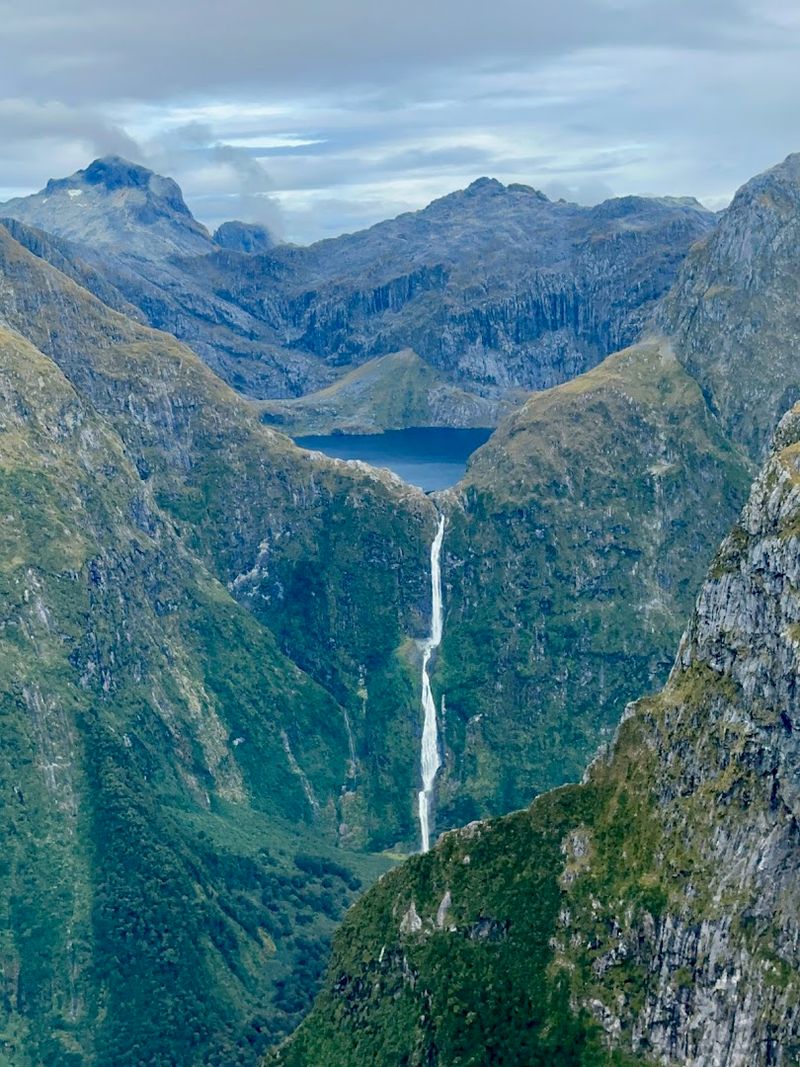
Reaching Sutherland Falls requires walking one of the most celebrated hiking trails in the world—the Milford Track—and that alone should tell you something about the caliber of experience waiting at the end. Dropping around 580 meters in three dramatic leaps, Sutherland Falls is New Zealand’s tallest waterfall and one of the finest natural rewards a hiker can earn with their boots.
The falls are fed by Lake Quill, a remote alpine lake that sits perched high above Fiordland’s ancient valleys. When rainfall is heavy—which in Fiordland is quite often—the water volume surges and the falls become a roaring, thundering spectacle.
Even on quieter days, the surrounding scenery of mossy rainforest and towering peaks creates a scene of quiet, cinematic grandeur.
The Milford Track is a four-day guided or independent walk, and the detour to view Sutherland Falls adds only about an hour to the journey. Most hikers describe the moment they first see the falls as one of the highlights of the entire trip.
New Zealand has no shortage of dramatic landscapes, but Sutherland Falls delivers a particular kind of wild, untouched beauty that feels entirely removed from the modern world—which, given how far off the grid it sits, it essentially is.
Dettifoss, Iceland
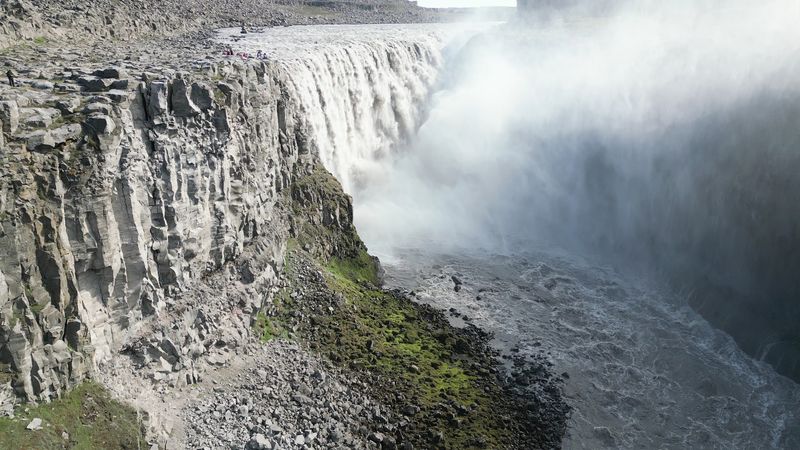
Dettifoss does not care about being pretty. While other waterfalls compete with vivid colors and tropical backdrops, this Icelandic giant goes full raw power—and wins.
Carrying glacial meltwater from the Vatnajökull ice cap, it thunders over a basalt cliff into a canyon below with a force that makes the ground vibrate beneath your feet. It holds the title of Europe’s most powerful waterfall by volume, moving up to 500 cubic meters of water per second.
The water itself is a murky grey-brown, heavy with volcanic sediment, which gives Dettifoss an almost primordial look. Standing at the edge of the canyon with spray hitting your face and the roar filling your ears, it feels less like a tourist attraction and more like witnessing something ancient and untameable.
Film fans might recognize Dettifoss from the opening scenes of Ridley Scott’s Prometheus, where it stood in for a primordial alien world—fitting, given how unearthly it looks. The surrounding Vatnajökull National Park is Iceland’s largest protected area and offers equally dramatic volcanic landscapes to explore.
Summer brings the midnight sun, allowing visits at any hour of the day. Dettifoss is not soothing or serene—it is absolutely, magnificently overwhelming.
Rhine Falls, Switzerland
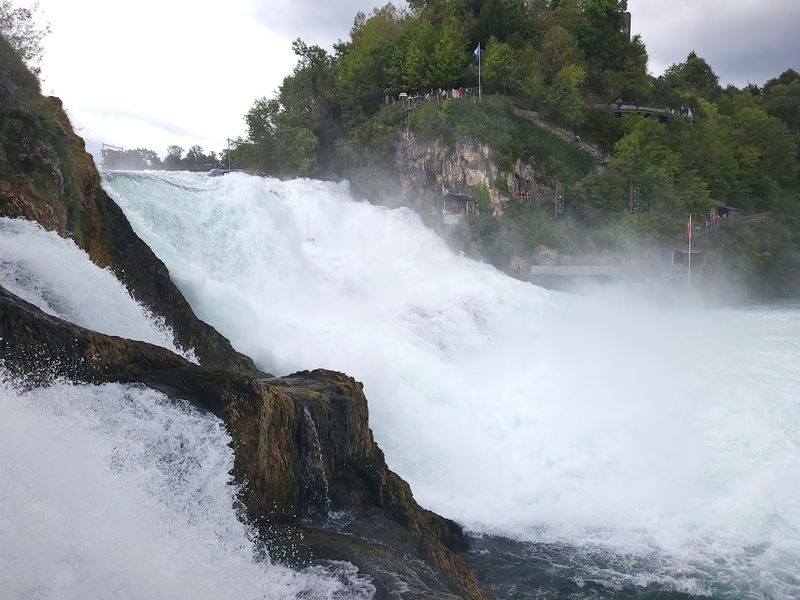
Rhine Falls proves that you do not need extreme height to make an extreme impression. At only about 23 meters tall, it would barely register on a list of the world’s tallest falls—but what it does with width and sheer water volume puts it firmly in a category of its own.
Stretching 150 meters across with a flow rate that can reach 600 cubic meters per second during summer floods, it earns its title as the largest waterfall in Europe by water flow.
Located near the town of Schaffhausen, the falls are remarkably accessible. Viewing platforms on both banks offer different angles, and boat tours ferry visitors right up to the rocky outcrops that jut dramatically from the middle of the cascade.
You can even climb onto one of those rocks for a truly immersive, spray-soaked experience.
The surrounding area has a distinctly storybook quality, with a medieval castle perched on the hillside above and charming Swiss towns nearby. Rhine Falls is at its most impressive in June and July when Alpine snowmelt swells the river to maximum capacity.
It is the kind of destination that works for families, solo travelers, and anyone who appreciates nature served with a side of Swiss efficiency and charm.
Havasu Falls, USA
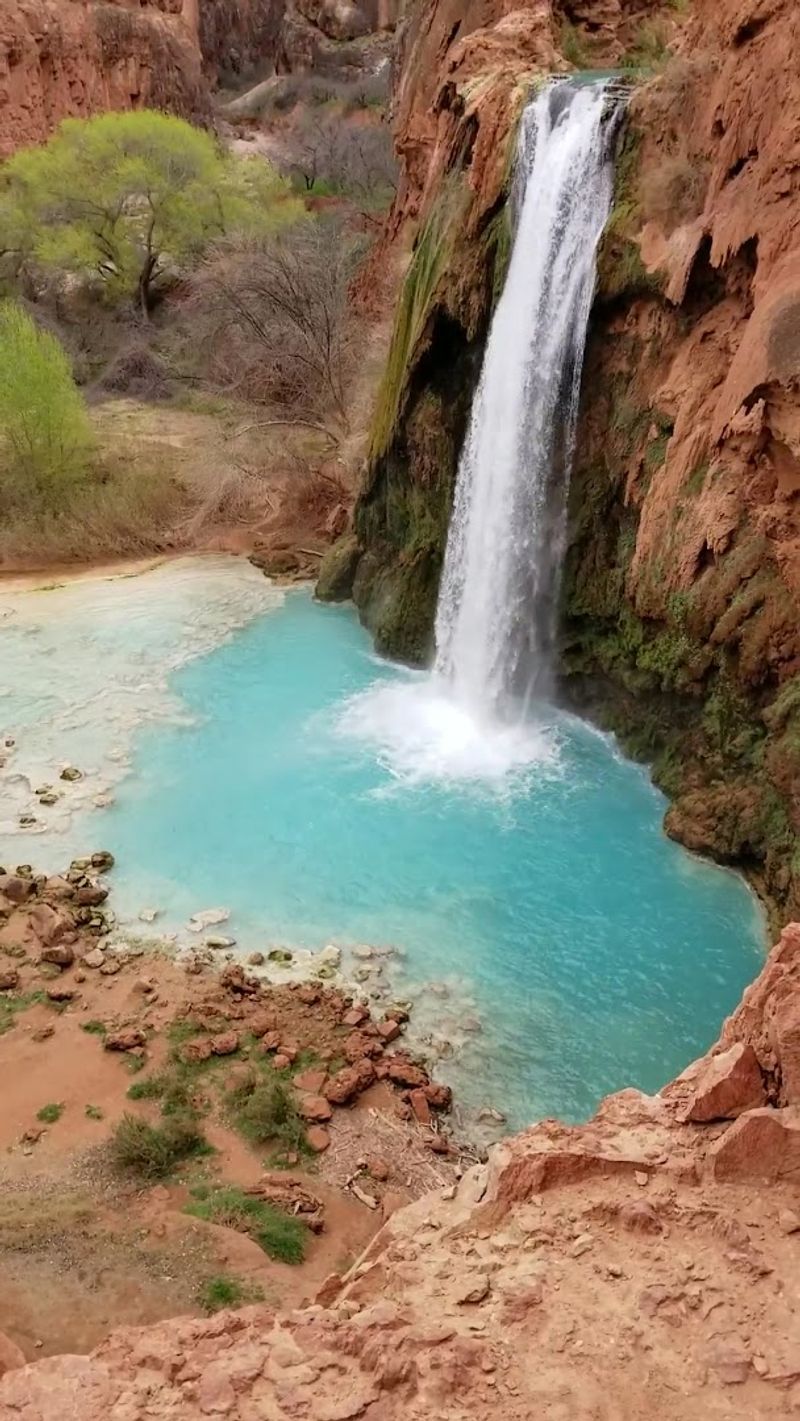
Picture a waterfall with water so blue it looks like someone dropped a Caribbean lagoon into the middle of the Arizona desert—that is Havasu Falls, and yes, it is real. The striking turquoise color comes from high concentrations of calcium carbonate and magnesium in the water, which reflect light in a way that makes the pool below look almost luminescent.
Getting there is an event in itself. Visitors must hike 16 kilometers into the Grand Canyon or arrange a helicopter ride, and a permit from the Havasupai Tribe—who have called this land home for centuries—is required to enter.
The permit system keeps crowds manageable and helps protect the fragile ecosystem around the falls.
Once you arrive, the contrast between the burnt-red canyon walls and the vivid blue-green water creates one of the most surreal and photogenic scenes in all of North America. Swimming in the pool beneath the falls is an experience that is hard to put into words—cool, refreshing, and surrounded by canyon walls that glow warm orange in the afternoon sun.
Havasu Falls rewards every bit of effort required to reach it with a natural setting so beautiful it almost feels like a reward handed out by the desert itself.
Multnomah Falls, USA
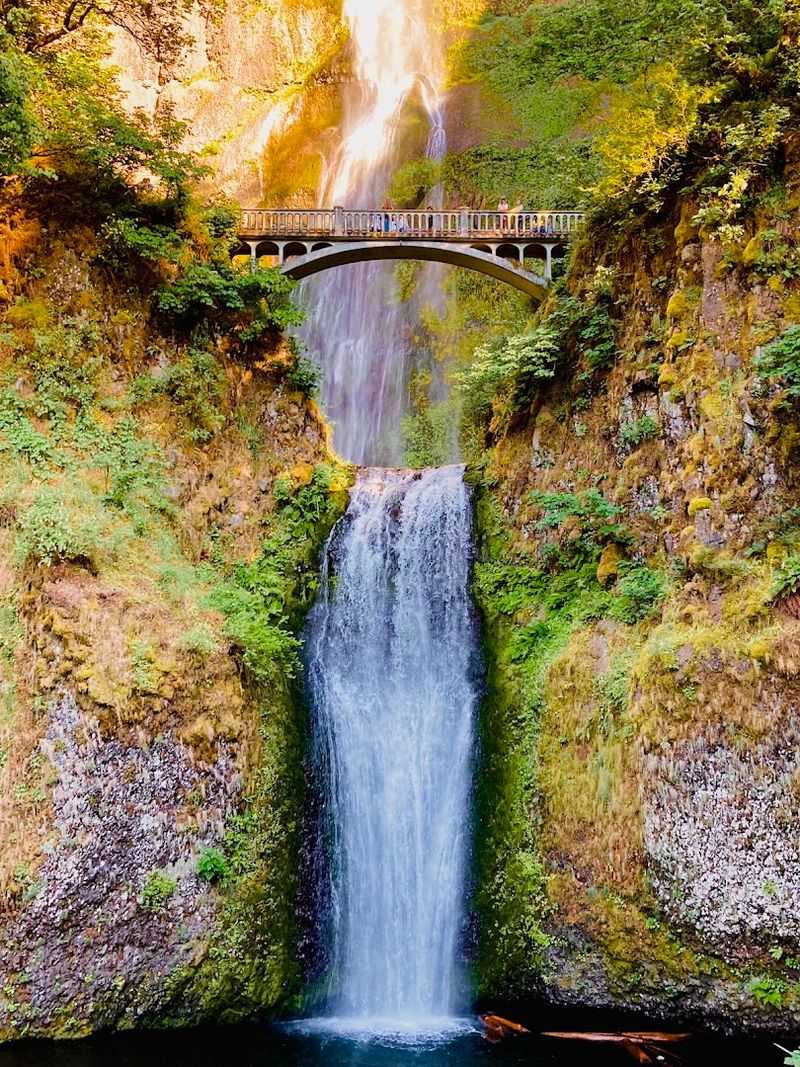
On any given weekend, Multnomah Falls draws more visitors than some national parks—and once you see it, the popularity makes complete sense. Dropping 189 meters in two elegant tiers through a mossy, fern-lined gorge in Oregon, it is the kind of waterfall that looks like it was designed specifically to be admired.
A historic stone bridge, built in 1914, arches gracefully across the falls midway down, completing a scene that feels almost too picturesque to be real.
Access is genuinely easy. The main viewing area is just a short, flat walk from the parking lot, making it accessible for visitors of all ages and fitness levels.
For those who want more, a steep trail continues up to the bridge and beyond to the top of the falls, rewarding hikers with a bird’s-eye view of the gorge and the Columbia River below.
The Columbia River Gorge itself is a stunning backdrop of basalt cliffs, dense forest, and seasonal wildflowers. Multnomah Falls flows year-round, fed by underground springs and rainfall from the Pacific Northwest’s notoriously wet climate.
Visit in winter for dramatic mist and solitude, or spring when surrounding greenery is at its most vibrant. Either way, this waterfall delivers every single time without fail.
Ban Gioc–Detian Falls, Vietnam/China
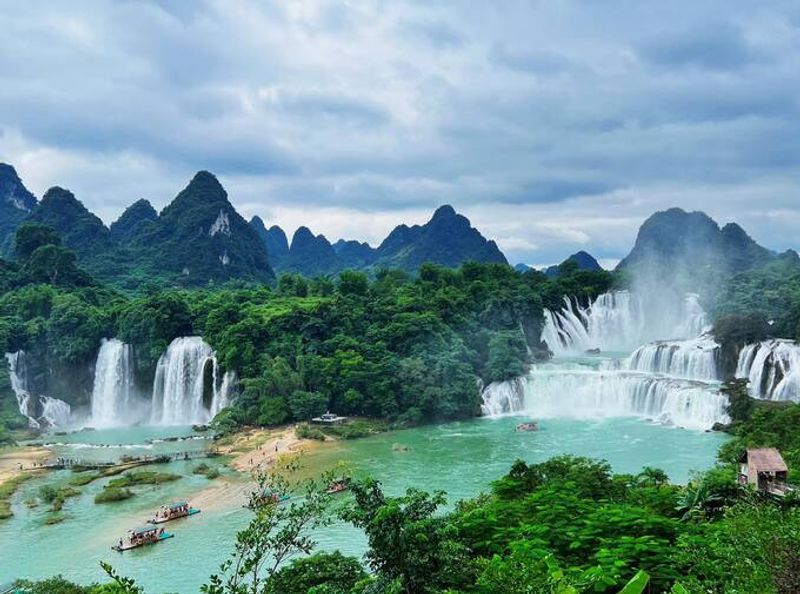
Quietly straddling the border between Vietnam and China, Ban Gioc–Detian Falls is one of those places that makes you wonder why it is not more famous. Stretching approximately 300 meters wide across multiple tiers, it ranks among the largest waterfalls in Asia and sits within one of the most visually striking landscapes on the continent—a valley of towering karst limestone peaks draped in tropical green.
On the Vietnamese side, the falls are known as Ban Gioc; on the Chinese side, they are called Detian. Both sides offer viewing areas, but the Vietnamese approach through Cao Bang Province adds a particularly scenic journey through rural farmland and winding mountain roads that feels like a destination in its own right.
Bamboo rafts ferry visitors close to the base of the falls, offering a gentle and wonderfully unhurried way to take in the scale and sound of the water. Unlike many famous waterfalls around the world, crowds here remain refreshingly manageable, giving the site a peaceful atmosphere that larger tourist destinations simply cannot match.
The best time to visit is from September to October, when the rainy season has boosted water flow to its most impressive levels and the surrounding rice terraces glow a brilliant gold.
Share this story