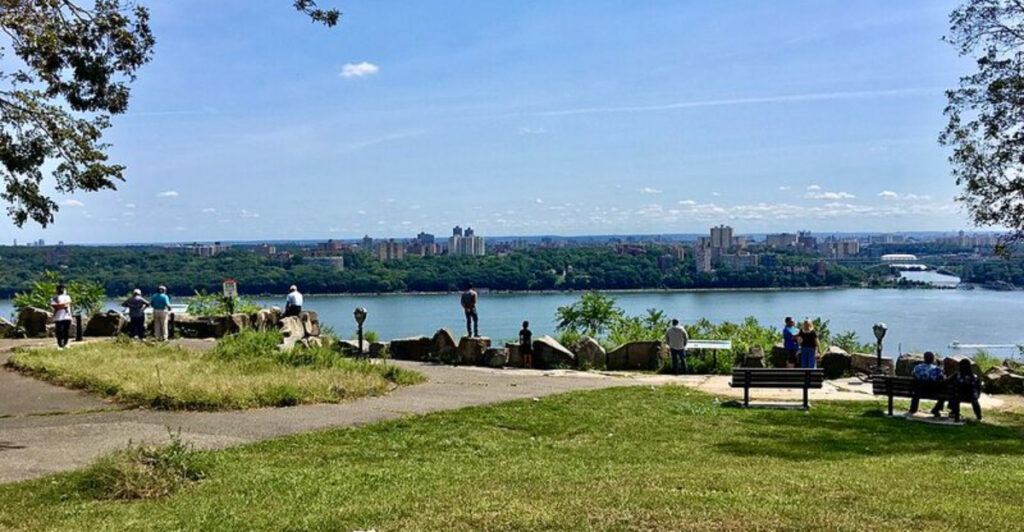
There is a stretch of the New Jersey Palisades where the land drops sharply toward the Hudson River, and from the right vantage point, you can see the George Washington Bridge, the Manhattan skyline, and the Bronx all at once. Most drivers on the Palisades Parkway pass the green scenic overlook sign without a second thought.
The ones who stop, though, tend to linger. This lookout in Englewood Cliffs sits at the edge of one of the most quietly remarkable conservation stories in the entire Northeast, and the view is only part of the reason worth stopping.
Behind the open sky and the wide river panorama is a century-long effort to protect these cliffs from development, a story involving some of the most influential names in American history. This article unpacks that story, section by section, so keep reading to find out what makes this overlook so much more than just a pretty stop off the highway.
The Cliffs That Almost Became Quarries
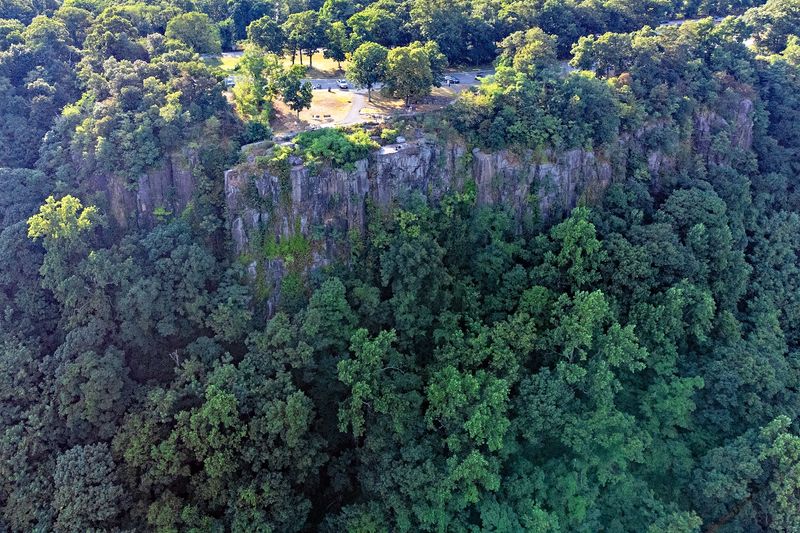
Before this overlook existed, the Palisades were under serious threat. In the late 1800s, quarrying companies had begun blasting the basalt cliffs to supply crushed stone for New York City’s rapidly expanding streets and construction projects.
Large sections of the cliffside were being destroyed at a rate that alarmed conservationists and civic leaders on both sides of the Hudson.
The quarrying operations were profitable, but the destruction they caused was visible from Manhattan, drawing public outcry. The cliffs that had defined the western horizon of the Hudson for generations were being eaten away, chunk by chunk, for road gravel.
That outcry eventually triggered one of the earliest major conservation campaigns in American history. What makes the Rockefeller Lookout story so compelling is that it sits at the center of the movement that stopped all of it.
The cliffs standing tall today are there because a group of determined people refused to let them disappear into pavement.
How the Palisades Interstate Park Was Born
The Palisades Interstate Park Commission was established in 1900, making it one of the oldest interstate park agencies in the United States. New Jersey and New York joined forces to create the commission specifically to halt the quarrying and protect the cliffs permanently.
It was a rare moment of cross-state cooperation driven entirely by the need to preserve a natural landmark.
The formation of the commission required both state legislatures to act, and funding was a challenge from the start. That is where private philanthropy stepped in at a scale that was extraordinary even by today’s standards.
Donations from wealthy families, most notably the Rockefellers, helped purchase land along the Palisades and fund the creation of trails, roads, and overlooks. The park that resulted now stretches across more than 100,000 acres in New Jersey and New York, but its origin story traces directly back to the cliffs visible from this very overlook.
The Rockefeller Connection That Names This Spot
The Rockefeller name attached to this overlook is not decorative. John D.
Rockefeller Jr. was among the most significant private donors to the preservation of the Palisades, contributing millions of dollars over several decades to purchase land and protect the cliffs from further commercial development.
His contributions helped the Palisades Interstate Park Commission acquire critical parcels that would otherwise have remained in private hands, vulnerable to development. The family’s involvement was part of a broader pattern of large-scale conservation philanthropy that also shaped places like Acadia National Park, Grand Teton, and the Hudson Valley’s Sleepy Hollow area.
Naming the overlook after the Rockefellers acknowledges that without that private funding, the view from this cliff might look very different today. The basalt ledge underfoot, the unobstructed river panorama, and the forested ridge stretching north and south are all, in part, the result of that deliberate investment in keeping this landscape intact for the public.
What the View Actually Covers
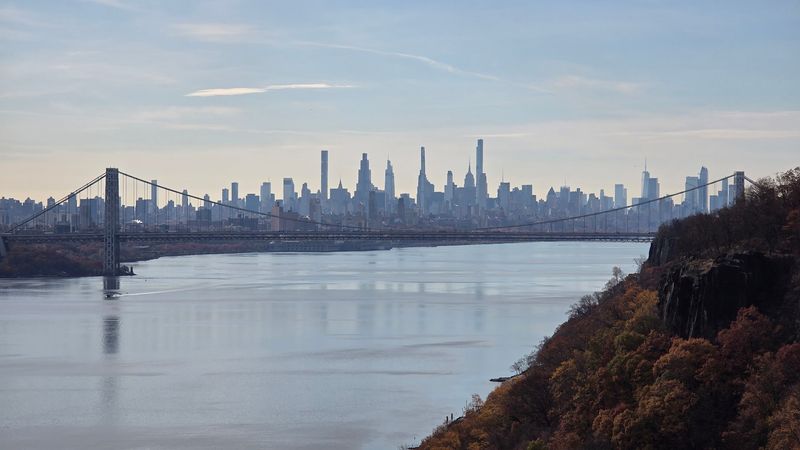
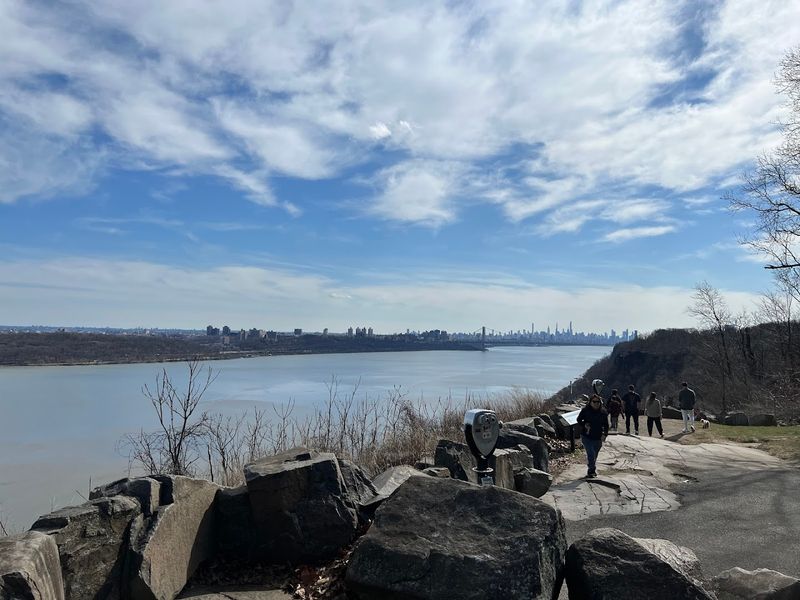
The view from Rockefeller Lookout covers a surprisingly wide arc of the greater New York metropolitan area. Directly across the Hudson, upper Manhattan and Washington Heights are visible, with the dense grid of the city stretching south.
The George Washington Bridge anchors the southern portion of the panorama, its twin towers and suspension cables clearly defined against the skyline.
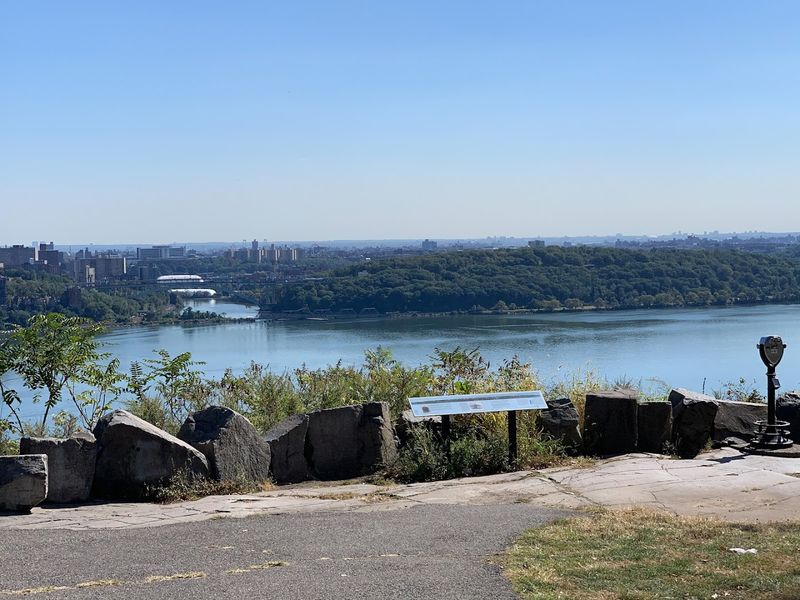
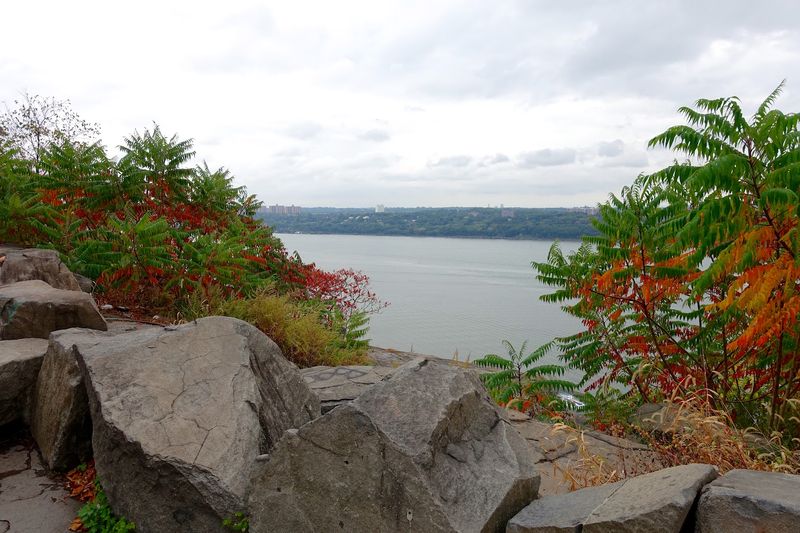
Looking north, the Bronx shoreline and the Henry Hudson Bridge come into view, and on clear days, Westchester County’s wooded hills are visible beyond. The Hudson itself is wide at this point, giving the overlook a sense of open space that feels removed from the density of the city just across the water.
The view shifts depending on the season. During foliage season in October and early November, the hillsides flanking the river turn deep red and orange.
In winter, the bare trees open up the sight lines even further, making the bridge and skyline appear sharper and closer than they do in summer.
The Green Trail That Runs Through History
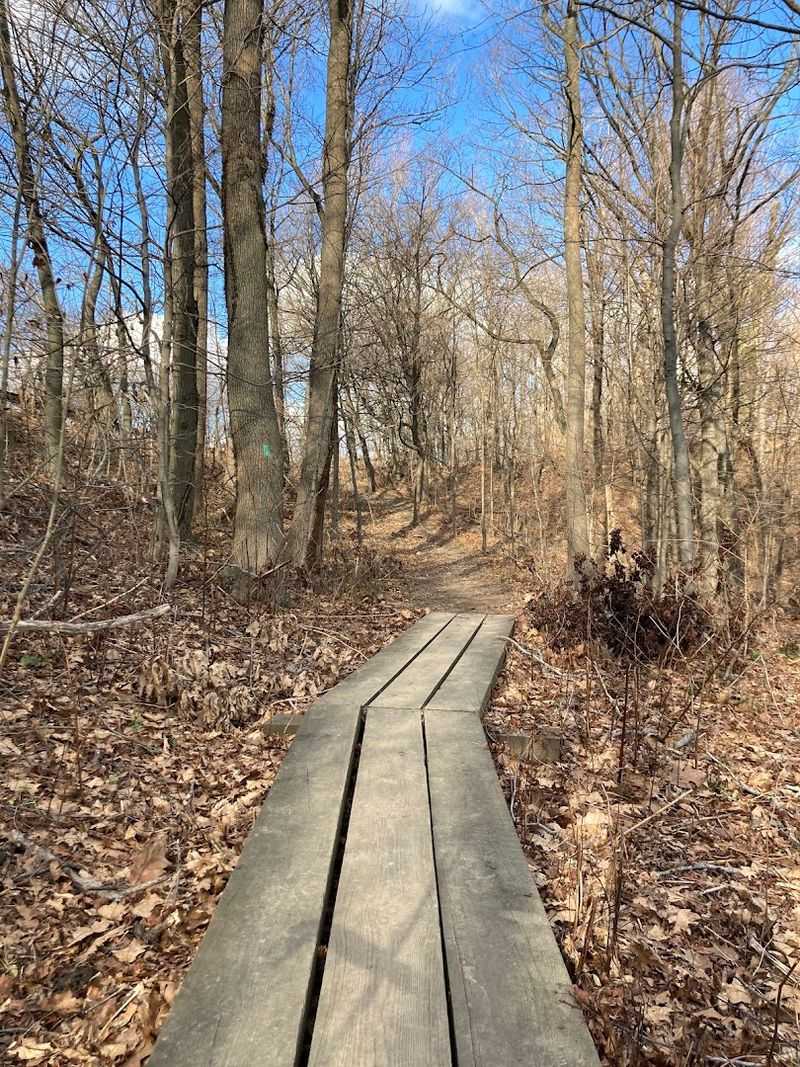
The overlook is not just a parking lot with a view. A green-blazed trail connects Rockefeller Lookout to a much larger trail network that runs the length of the Palisades ridge.
Heading north, the trail eventually connects to the State Line Lookout near the New York border. Heading south, it moves toward the area near the George Washington Bridge.
The trail runs close to Route 9W for stretches, which means road noise is part of the experience in certain sections. For hikers who prefer a quieter environment, the State Line Lookout offers a more removed setting.
That said, the trail itself passes through mature forest growing on the basalt ridge, with the same rock formations that drew conservation attention more than a century ago still defining the landscape underfoot.
The parking at the overlook is free, which makes it a convenient trailhead for people who want to extend their visit beyond the view and actually walk the preserved cliffside.
Why Basalt Makes This Place Geologically Unusual
The Palisades are not just scenic. They are geologically distinctive, formed roughly 200 million years ago when molten rock intruded into existing sedimentary layers and cooled slowly underground.
The result was a thick sill of diabase, a type of basalt, that resisted erosion far better than the surrounding rock.
Over millions of years, the softer rock around the sill wore away, leaving the hard basalt standing as a dramatic escarpment along the Hudson’s western bank. The columnar formations visible at the cliff face are a direct product of how the rock cooled, contracting into vertical columns as it solidified.
That same durability that makes the rock geologically interesting is exactly what made it commercially attractive to quarrying operations in the 1800s. Crushed basalt from the Palisades was ideal for road construction, which is why the blasting operations moved so quickly once they started.
The conservation story and the geology of this place are directly connected.
Sunrise, Sunset, and Why Timing Matters Here
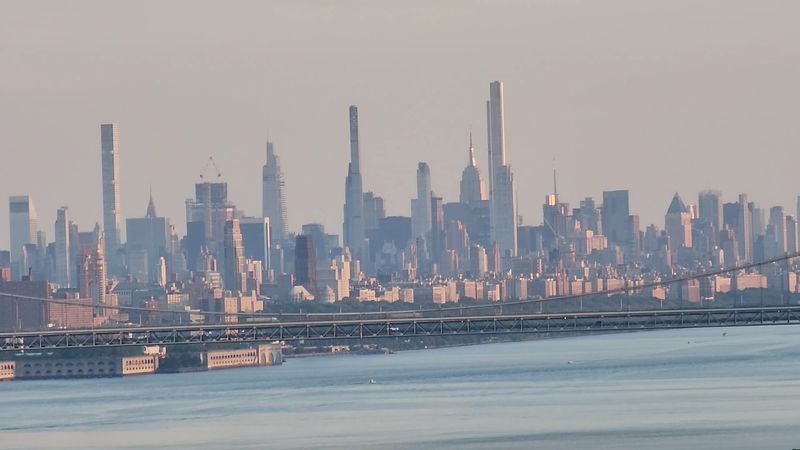
The overlook faces east, which means sunrise is the natural choice for early risers who want the light working in their favor. As the sun clears the Manhattan skyline, it catches the Hudson and the bridge cables in a way that changes by the minute.
The sky behind the city shifts through shades of orange, pink, and pale blue before settling into the flat white of mid-morning.
Sunset is a different experience entirely. With the sun dropping behind the viewer and the last light hitting the Manhattan buildings directly, the glass and steel of the city reflect the fading afternoon in a way that makes the skyline look almost illuminated from within.
The bridge towers hold their color longer than the surrounding sky.
The overlook is open 24 hours, so there is no time restriction on when to visit. Early morning on weekdays tends to be the quietest, with the parking area sometimes empty and the view completely unobstructed by other visitors.
Foliage Season on the Palisades Ridge
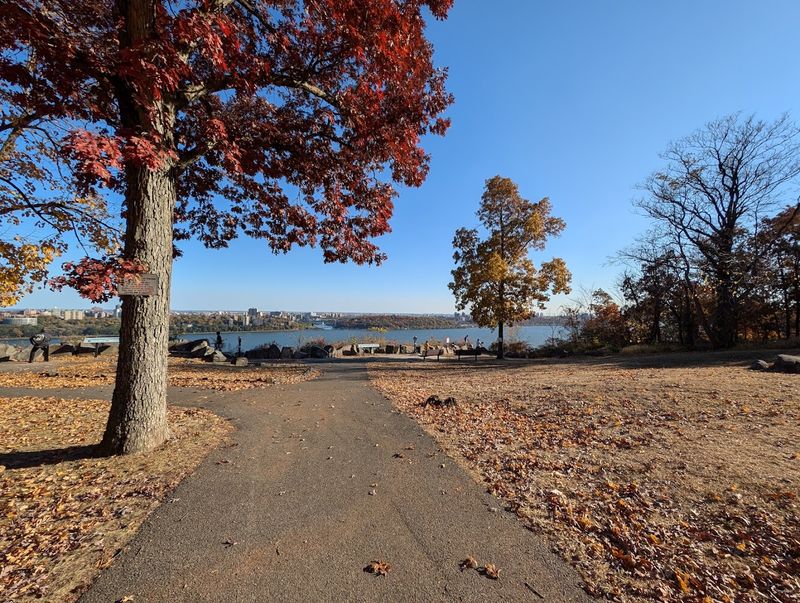
October is when the Palisades Parkway earns its reputation as one of the most visually striking drives in the Northeast. The ridge is lined with mature deciduous forest, and as temperatures drop, the canopy shifts from green to a concentrated mix of red maple, yellow birch, and orange oak that frames every view along the road.
At Rockefeller Lookout, the foliage adds a foreground layer to the river and city panorama that is not present during other seasons. The treetops at the cliff edge, just below the overlook platform, turn first, giving the view a natural frame that photographers and casual visitors both tend to appreciate.
The parkway itself draws heavy leaf-peeping traffic during peak foliage, usually the second and third weeks of October in a typical year. Arriving early in the morning on a weekday during that window gives a visitor the best chance of having the overlook largely to themselves while the colors are at their brightest.
A Preservation Model That Still Holds Up Today
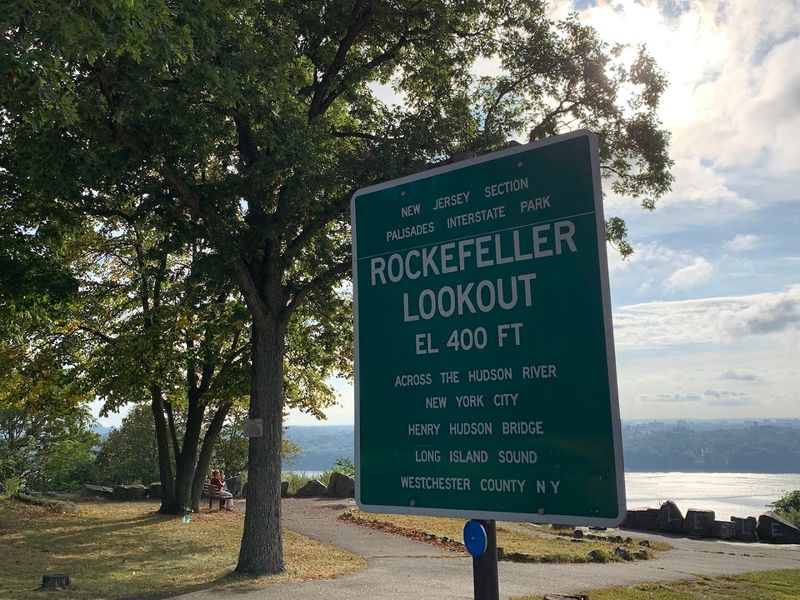
What happened along the Palisades in the early 1900s became a model for conservation efforts across the country. The combination of public legislation, interstate cooperation, and private philanthropy that saved these cliffs influenced how later preservation campaigns were organized and funded.
The Palisades Interstate Park Commission is still active today, managing the land and maintaining access points like Rockefeller Lookout.
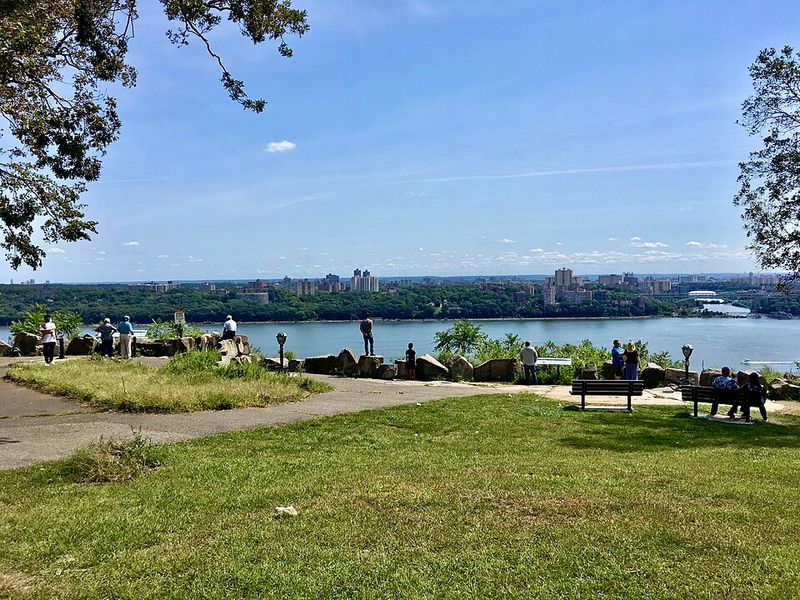
Benches at the overlook were donated over the years, and the parking area is maintained as a free public access point, consistent with the original intent of the park’s founders to keep the Palisades accessible to everyone, not just those who could afford private land access.
The overlook stands as a working example of what long-term conservation looks like in practice. The cliffs are intact, the forest is mature, the view is unobstructed, and the public can stop at any hour without paying a fee.
That outcome, more than 120 years after the quarrying stopped, is the real story behind the green sign on the Palisades Parkway.
Where Exactly This Overlook Sits
Rockefeller Lookout is located along the Palisades Parkway in Englewood Cliffs, NJ 07632, positioned just past the parkway’s first exit. A green sign marking it as a scenic overlook is easy to miss at highway speed, but the parking area is free and open around the clock, every day of the year.
The overlook sits on top of the Palisades, the dramatic basalt cliffs that line the western bank of the Hudson River for roughly 20 miles through New Jersey. At this particular point, the elevation gives a clear eastward view across the river toward upper Manhattan, with the George Washington Bridge visible to the south and the Henry Hudson Bridge and Bronx skyline stretching to the north.
The spot is accessible directly from the parkway without needing to travel into town, which makes it a natural stopping point for anyone driving through Bergen County toward New York City.
Share this story