 Unearth The Voyage
Some of the best travel memories come from places you never planned to visit. A random exit off the highway, a hand-painted sign, or a friend’s weird recommendation can lead to a story you tell for years.
The U.S. is packed with offbeat, surprising, and genuinely unforgettable stops that most road trip guides skip entirely. These 13 places prove that the detour is often the best part of the trip.
Carhenge – Alliance, Nebraska
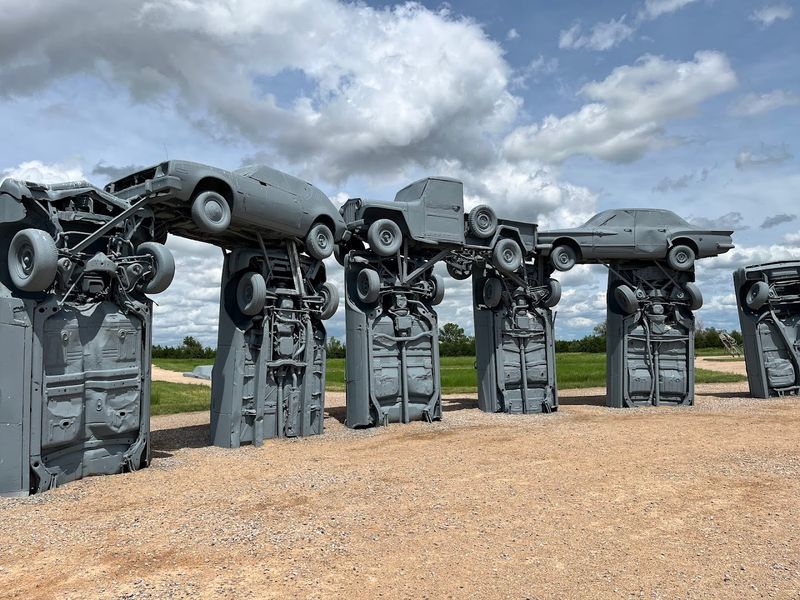
Nobody warned me that a field full of old cars stacked on top of each other would be one of my favorite stops ever, but here we are. Carhenge is a full-scale recreation of Stonehenge built entirely from vintage American automobiles, and it is completely free to visit during daylight hours.
That price tag alone makes it worth the detour.
Artist Jim Reinders built it in 1987 as a tribute to his late father, and the whole thing is painted grey to match the original Stonehenge stones. The site also includes a few bonus car sculptures scattered around the field.
You get more than just the main circle, which is a pleasant surprise.
Alliance, Nebraska is not exactly a tourist hotspot, so stumbling onto Carhenge feels like finding a secret. It is quirky, free, and genuinely creative.
Road trips need more moments like this one.
Salvation Mountain – Niland, California
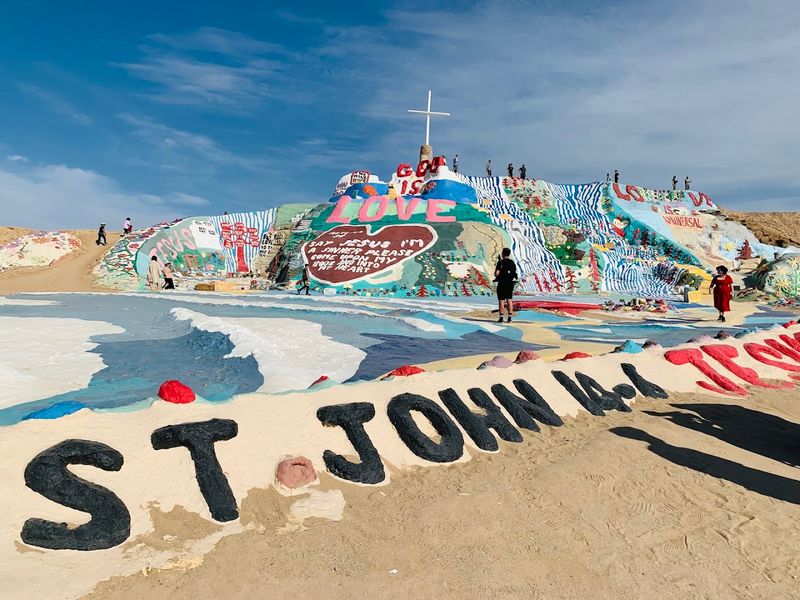
Salvation Mountain looks like someone turned a fever dream into a landmark, and honestly, that is a compliment. Folk artist Leonard Knight spent over two decades covering a natural desert hill with adobe, straw, and thousands of gallons of paint.
The result is a swirling, colorful monument that is part art project, part spiritual statement, and entirely one of a kind.
Located near Slab City, a community of off-grid residents in the California desert, the mountain sits in one of the most unusual neighborhoods in the country. The surrounding area adds even more character to an already wild stop.
You are not just seeing a painted hill; you are stepping into a whole subculture.
Getting there requires a drive through some seriously remote terrain, so top off your gas tank before heading out. The mountain is open and free to visit.
Few stops deliver this much visual impact for zero dollars.
Lucy the Elephant – Margate, New Jersey
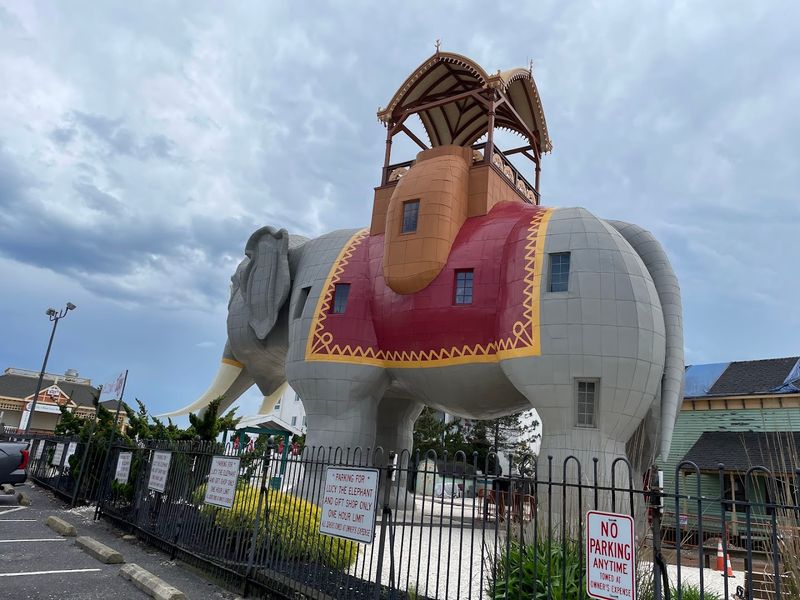
There is a six-story elephant standing on the New Jersey shore, and she has been there since 1881. Lucy the Elephant is not a quirky modern installation; she is a certified National Historic Landmark with a full museum inside her belly.
You enter through one of her legs, which is exactly as delightful as it sounds.
Built by real estate developer James Lafferty to attract buyers to the area, Lucy originally served as an office and later a tavern. She has survived storms, neglect, and over a century of salt air.
The fact that she is still standing is its own kind of miracle.
Margate is a short drive from Atlantic City, so Lucy fits neatly into a shore-day itinerary. Tours run seasonally, so checking the schedule before you go is a smart move.
She is weird, historic, and wonderfully photogenic. That combination is tough to beat.
Bonneville Salt Flats – Tooele County, Utah
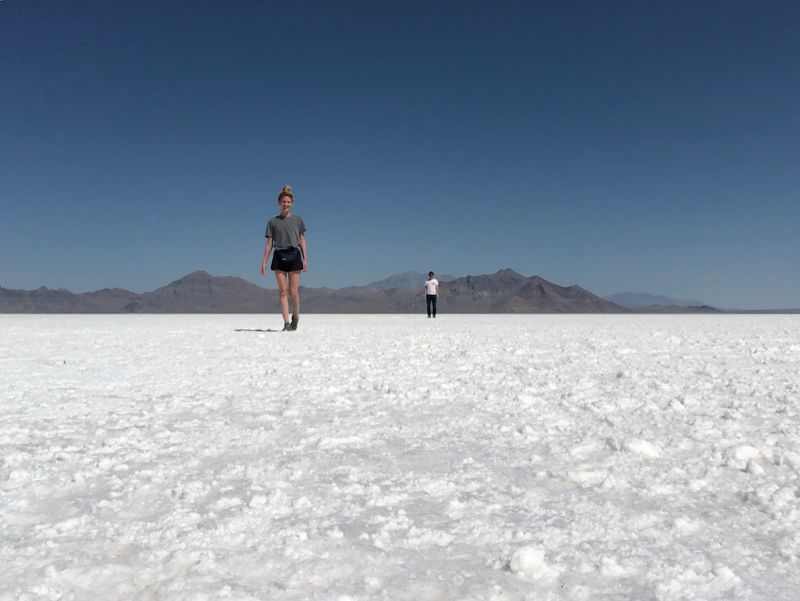
The Bonneville Salt Flats are one of those places that make you feel like you accidentally drove off the planet. Stretching across roughly 30,000 acres in northwestern Utah, the flats are a blindingly white expanse of hard salt crust left behind by an ancient lake.
Nothing else in the continental U.S. looks quite like it.
Speed record chasers have used this flat, firm surface for over a century, and the area has hosted some of the fastest land vehicles ever built. Outside of permitted racing events, the public can walk right onto the salt.
Wear sunglasses, because the glare is genuinely intense.
Access can be restricted during official racing seasons, so a quick check of Bureau of Land Management updates before your visit is worth the two minutes it takes. The flats sit just off Interstate 80, making them an easy add-on to any cross-country drive.
Pull over. You will not regret it.
House on the Rock – Spring Green, Wisconsin
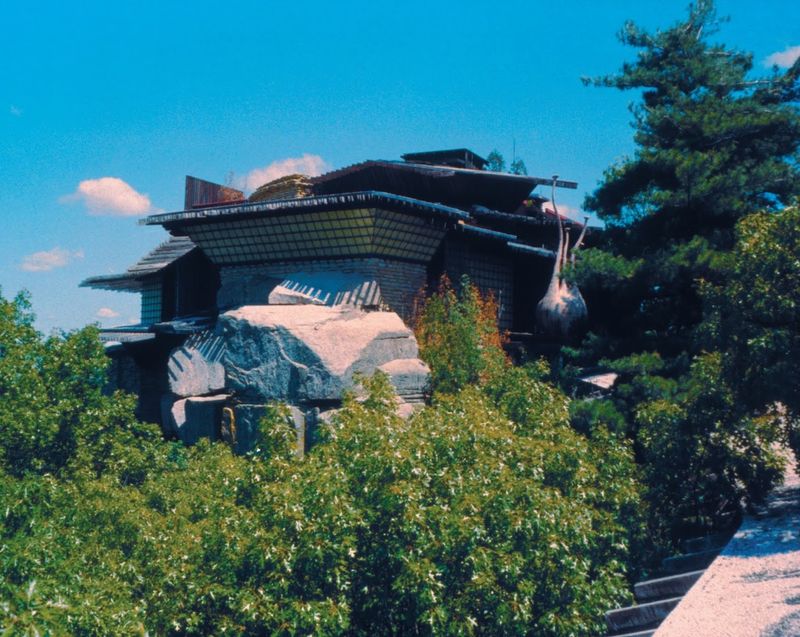
Calling House on the Rock a “house” is like calling the ocean a puddle. Built by Alex Jordan Jr. starting in the 1940s, this sprawling attraction grew from a single stone structure into a labyrinth of rooms packed with carousels, armor, dollhouses, music machines, and things that genuinely defy categorization.
It is overwhelming in the best possible way.
The Infinity Room, a narrow glass-enclosed corridor extending 218 feet over a valley, is the kind of architectural flex that sticks with you long after you leave. Some visitors find it thrilling; others find it terrifying.
Either reaction is valid.
Plan for at least three to four hours because rushing through House on the Rock is practically impossible. The attraction operates seasonally, so checking the 2026 calendar before planning your visit is essential.
Spring Green, Wisconsin is also home to Taliesin, Frank Lloyd Wright’s estate, which means one stop can easily turn into a full day of genuinely fascinating architecture.
Bishop Castle – Rye, Colorado
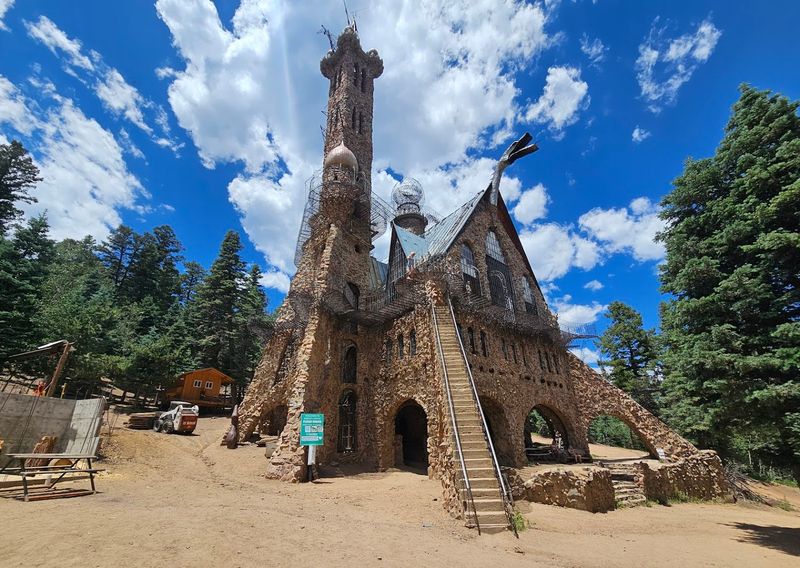
Jim Bishop started building his castle in 1969 with no formal training, no outside funding, and apparently no ceiling on ambition. What began as a small stone cottage in the San Isabel National Forest has grown into a multi-story castle with towers, bridges, and an iron dragon perched on top.
Jim still works on it regularly, and he is known to be on-site and very willing to chat.
Bishop Castle is completely free to visit during daylight hours, which makes it one of the most remarkable free attractions in the entire country. The structure is genuinely massive and genuinely handmade by one person.
That combination is almost impossible to wrap your head around until you are standing in front of it.
Southern Colorado does not get nearly enough credit as a road trip destination, and Bishop Castle is a big reason it should. The drive through the mountains to reach it is scenic on its own.
Add the castle, and you have got a seriously memorable afternoon.
Coral Castle – Homestead, Florida
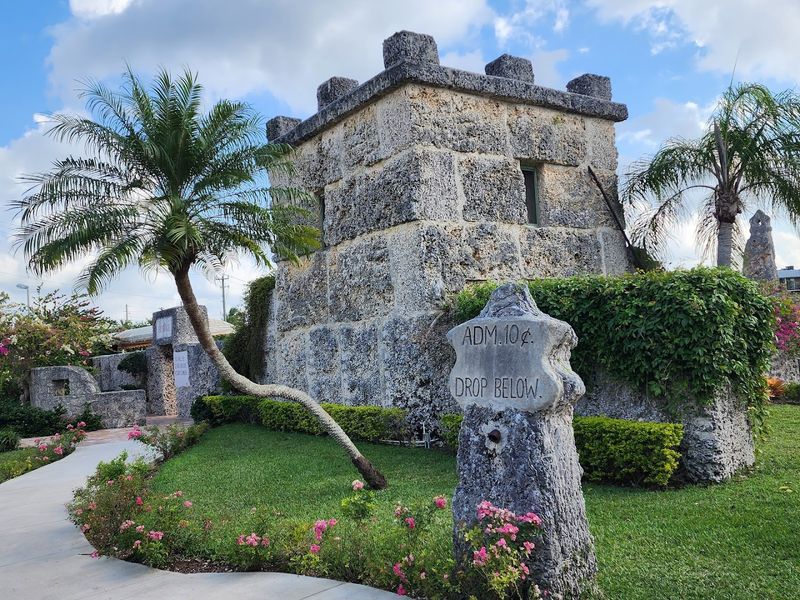
Coral Castle is surrounded by one of the best unsolved mysteries in American roadside history. Edward Leedskalnin, a Latvian immigrant standing five feet tall and weighing 100 pounds, single-handedly quarried, carved, and assembled over 1,100 tons of coral rock.
He worked mostly at night and never revealed his methods. Engineers and physicists have studied the site for decades and still cannot fully explain how he did it.
The castle includes a working sundial, a 9-ton gate so perfectly balanced a child can push it open, and a two-story tower Leedskalnin lived in. Every element was built with a precision that feels almost impossible given the tools available in the early 20th century.
The whole place has an eerie, quiet energy that is hard to shake.
Located in Homestead, just south of Miami, Coral Castle is open daily with paid admission. It fits naturally into a trip through the Florida Keys.
Few stops in the South deliver this much mystery per square foot.
Enchanted Highway – Regent, North Dakota
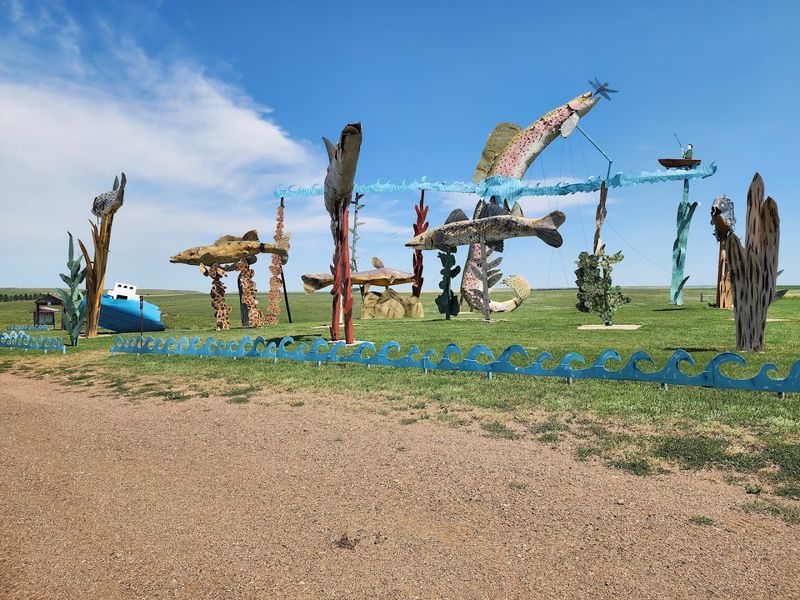
Most road trip highlights are destinations. The Enchanted Highway is the road itself.
This 32-mile stretch of highway in western North Dakota is lined with enormous metal sculptures created by local artist Gary Greff, and the scale of them is genuinely shocking when you first spot one rising out of the flat prairie.
The sculptures include “Geese in Flight,” which holds the Guinness World Record for the world’s largest scrap metal sculpture, along with “Deer Crossing,” “Pheasants on the Prairie,” and several others. Each one appears suddenly on the horizon, giving the drive a rhythm that keeps you engaged the whole way.
It is free, open year-round, and completely unlike any other stretch of highway in the country.
The highway runs between Gladstone and Regent, where a small castle-like visitor center sits at the southern end. North Dakota rarely makes road trip shortlists, which makes finding the Enchanted Highway feel like a genuine discovery.
That feeling is worth a lot.
Cabazon Dinosaurs – Cabazon, California
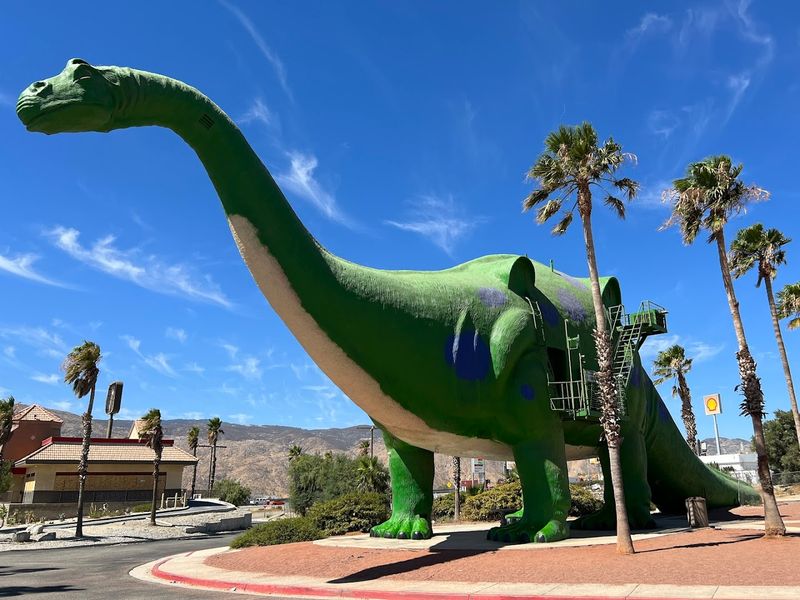
The Cabazon Dinosaurs have been stopping traffic on Interstate 10 since the 1970s, and they show absolutely no signs of slowing down. Built by sculptor Claude Bell over two decades, the two giant figures, a brontosaurus and a T. rex, have appeared in movies, music videos, and more Instagram feeds than anyone could count.
They are certified pop-culture icons at this point.
What I love about this stop is how quickly it delivers. You spot them from the highway, you pull over, you laugh, you take a photo, and suddenly your road trip has a moment.
No lengthy museum audio tour required. Just two enormous dinosaurs doing their thing in the California desert.
The site now includes a gift shop and a creationist museum inside the brontosaurus, which adds a genuinely unexpected layer to the whole experience. Check the official site for current hours before visiting.
Whether you are driving to Palm Springs or Los Angeles, this is an easy and completely worthwhile detour.
SPAM Museum – Austin, Minnesota
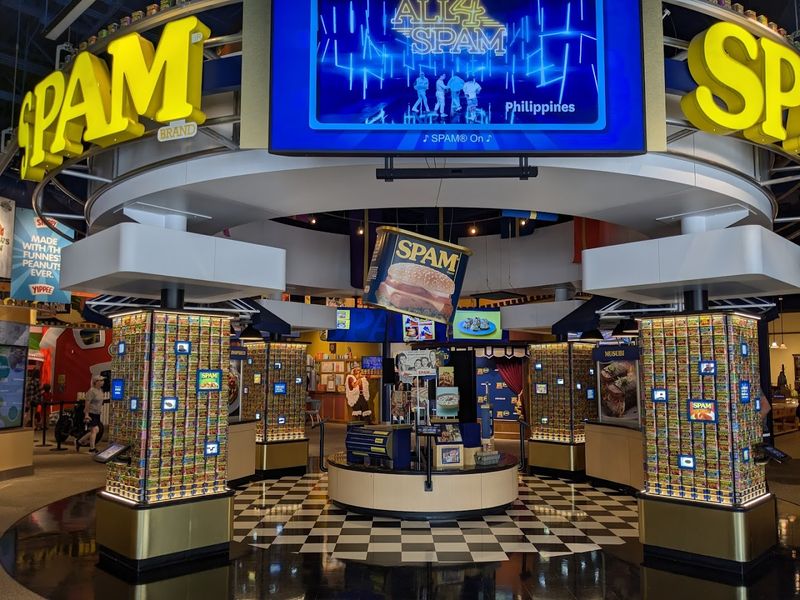
A free museum dedicated entirely to canned meat should not be this good, and yet here we are. The SPAM Museum in Austin, Minnesota is the official home of Hormel’s most famous product, and it takes its subject seriously in the most cheerful way possible.
Interactive exhibits, SPAM history timelines, and more blue and yellow branding than you have ever seen in one room make this a surprisingly engaging stop.
SPAM has been produced in Austin since 1937, and the museum covers everything from its World War II role feeding Allied troops to its cult status in Hawaii, where it is genuinely beloved. The depth of the content catches most visitors off guard.
You go in expecting a gimmick and leave having actually learned something.
Admission is free, guided tours are available, and the gift shop is exactly as chaotic as you would hope. Austin is a small town, but the SPAM Museum punches well above its weight.
Bring your appetite for both pork products and absurdist Americana.
National Mustard Museum – Middleton, Wisconsin
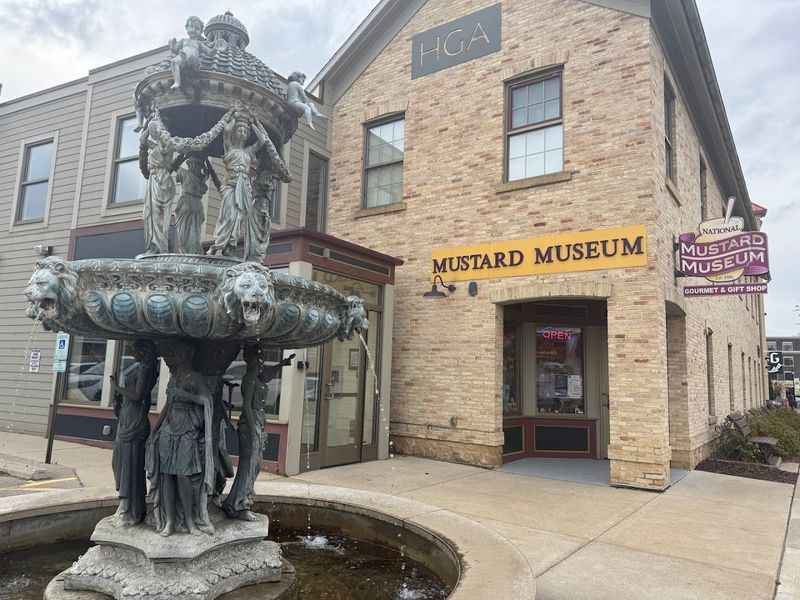
The National Mustard Museum is exactly the kind of place that sounds like a punchline until you are actually standing inside it, slightly overwhelmed by 6,000 mustards from 70 countries. Founder Barry Levenson, a former assistant attorney general for Wisconsin, opened the museum after a late-night grocery store epiphany in 1986.
That origin story alone is worth the visit.
The collection includes rare historical mustards, mustard memorabilia, vintage tins, and enough yellow to make your eyes water. The museum also hosts an annual event called Mustard Day, which has drawn crowds of mustard enthusiasts for years.
Yes, mustard enthusiasts are a real group of people, and they are passionate.
Located in Middleton, just outside Madison, the museum offers free admission and is open daily. It is small, specific, and completely committed to its subject.
That level of dedication to something so wonderfully niche is genuinely refreshing. Ketchup never had a chance.
Spiral Jetty – Rozel Point, Utah
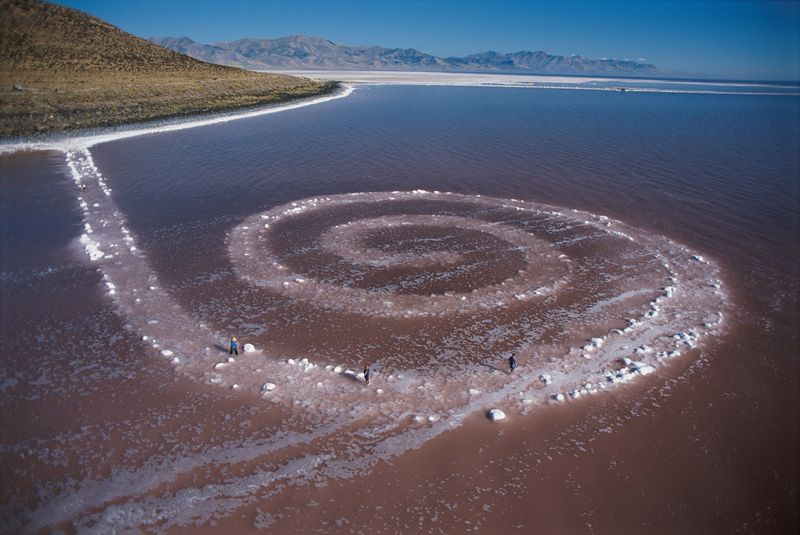
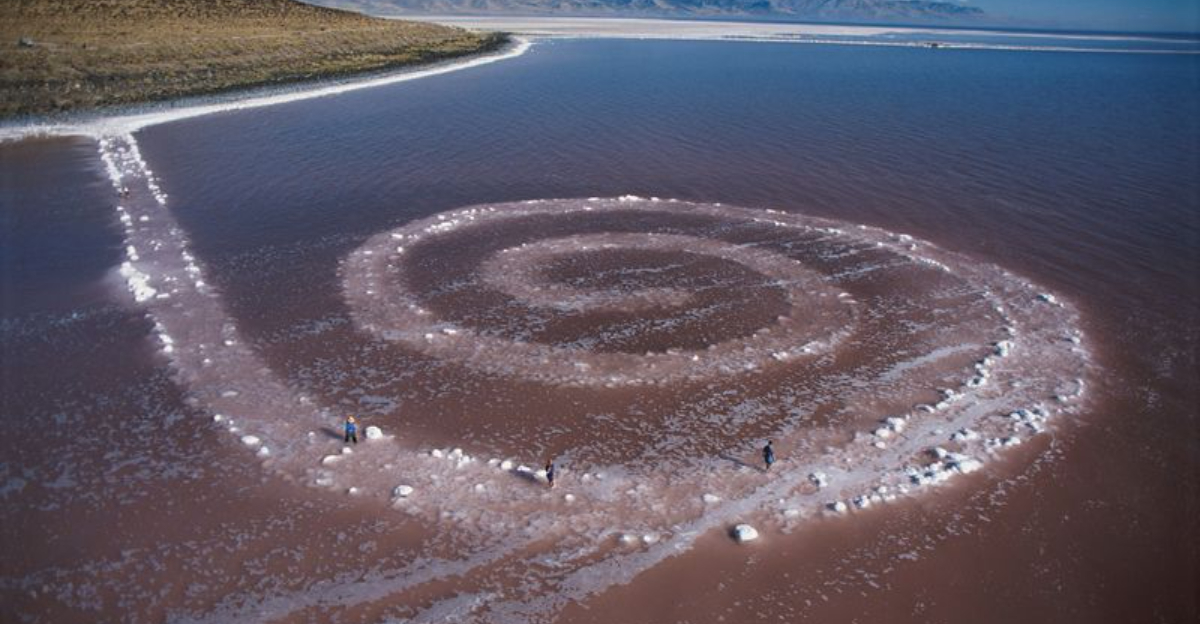
Spiral Jetty is one of the few roadside stops in this country that qualifies as both a road trip detour and a serious work of art. Robert Smithson built the 1,500-foot coil of black basalt rocks into the Great Salt Lake in 1970, and it has been shifting, disappearing, and reappearing with the water levels ever since.
The lake’s salt content turns the water pink around the jetty, which adds a surreal color contrast against the dark rocks.
Getting there is part of the experience. The drive to Rozel Point covers about 16 miles of unpaved road, so a vehicle with decent clearance is a smart choice.
There are no facilities, no ticket booth, and no crowds most days. Just the jetty, the salt lake, and a lot of sky.
Visit Utah recommends checking current water conditions before making the trek, since high water levels can partially submerge the structure. When it is fully visible, Spiral Jetty is unlike anything else in the American West.
Plan ahead and it rewards you completely.
Mystery Hole – Ansted, West Virginia
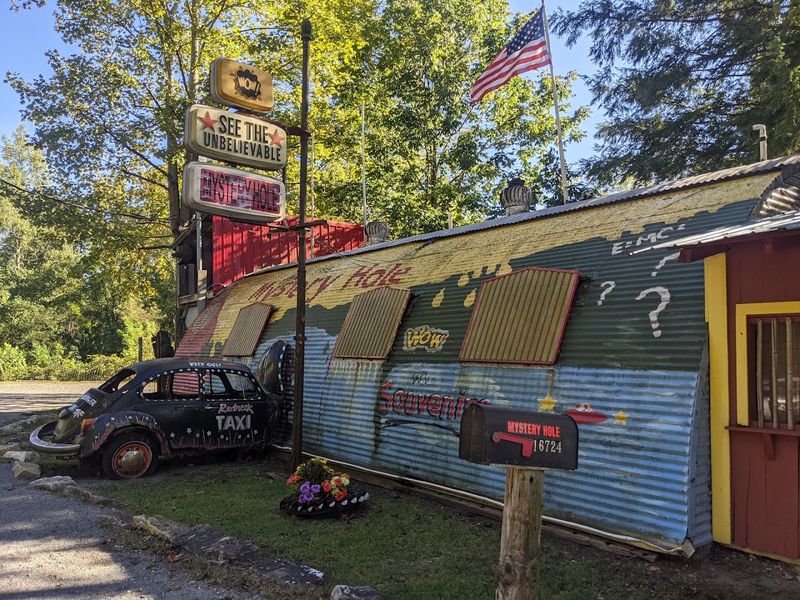
Mystery Hole is peak old-school roadside Americana, and I mean that as the highest possible compliment. Tucked beneath a small gift shop in Ansted, West Virginia, this seasonal attraction promises that gravity does not work the way it should inside its walls.
Water flows uphill. Brooms stand on their own.
People lean at impossible angles. Science has an explanation; Mystery Hole does not care.
The whole experience lasts about 20 minutes, costs just a few dollars, and is run with the kind of cheerful, low-budget enthusiasm that chain attractions lost decades ago. It is a little kitschy, a little baffling, and entirely charming.
The gift shop alone is worth a browse.
Mystery Hole operates seasonally, so confirming hours before making the drive is essential. West Virginia tourism lists it as an active attraction, and it fits naturally into a New River Gorge area itinerary.
If you have ever wanted to feel genuinely confused by a room, this is your stop.



