Most travel bucket lists include the Eiffel Tower, the Grand Canyon, or the Colosseum. Those places are great, but the world is hiding some seriously weird and wonderful spots that most tourists never find.
I stumbled across my first truly offbeat destination by accident, and it changed the way I travel forever. Get ready, because these 16 places will make your standard sightseeing plans feel like a snooze fest.
Waitomo Glowworm Caves, New Zealand
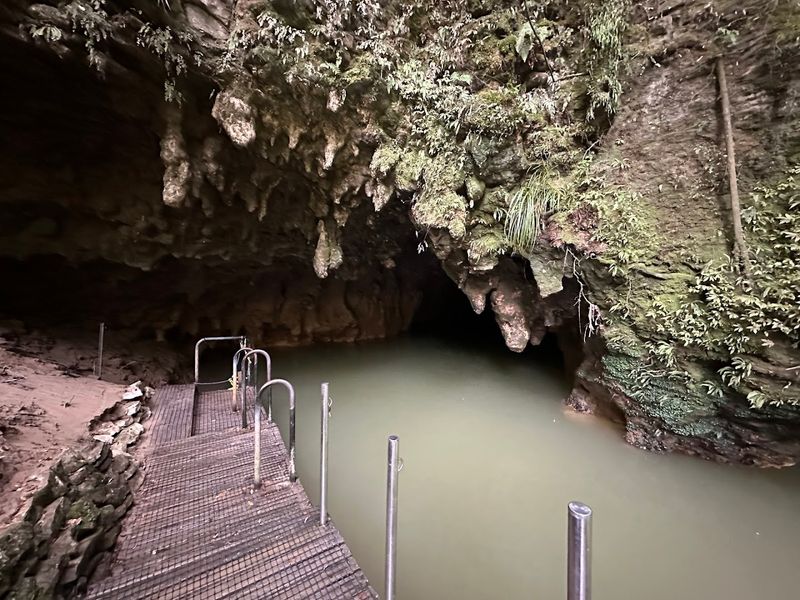
The ceiling is alive, and that is not a horror movie plot. Waitomo Glowworm Caves in New Zealand host millions of tiny glowworms called Arachnocampa luminosa, a species found nowhere else on Earth.
Their bioluminescent glow turns the cave ceiling into something that looks like the Milky Way had a baby underground.
Visitors float silently through the cave on small boats, staring upward in complete disbelief. The silence is part of the deal.
Guides ask everyone to stay quiet so the worms stay lit, which honestly makes the whole experience feel even more magical.
Tours run year-round, and booking ahead is strongly recommended because this place fills up fast. The black water rafting option takes you deeper into the cave system for a more adventurous visit.
Standard sightseeing cannot compete with floating under a living, glowing ceiling in the dark.
Rummu Quarry, Estonia
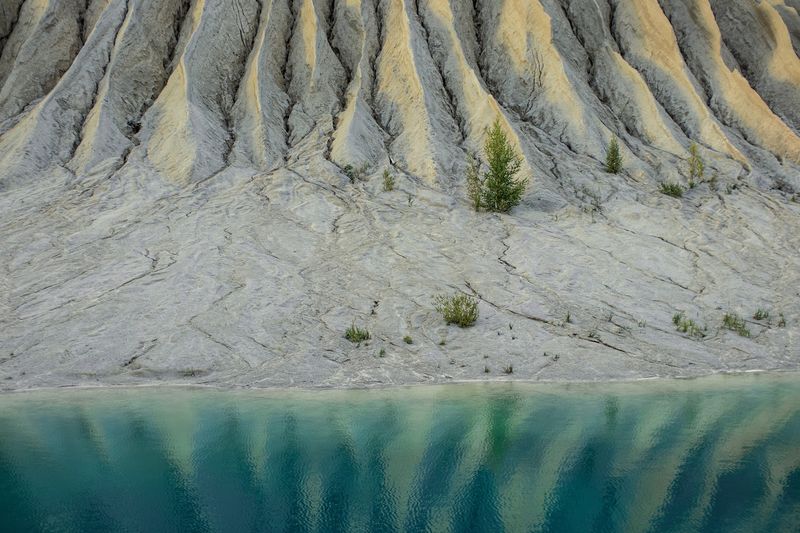
A flooded Soviet-era prison quarry sounds like the setup for a very strange vacation, but Rummu pulls it off beautifully. Located in Estonia, this abandoned limestone quarry was once worked by prisoners.
When operations stopped, groundwater slowly filled it, creating a stunning turquoise lake with submerged ruins still visible beneath the surface.
Divers love Rummu because the water is remarkably clear and the sunken structures make for eerie, fascinating exploration. Non-divers can swim, kayak, or simply sit on the white limestone cliffs and stare at the color of that water, which is almost offensively pretty.
In winter, the lake sometimes freezes and locals walk or skate across it, with the ghostly ruins visible below the ice. That is either deeply cool or deeply unsettling, depending on your personality.
Either way, Rummu is proof that Estonia is wildly underrated as a travel destination.
Coober Pedy, South Australia, Australia
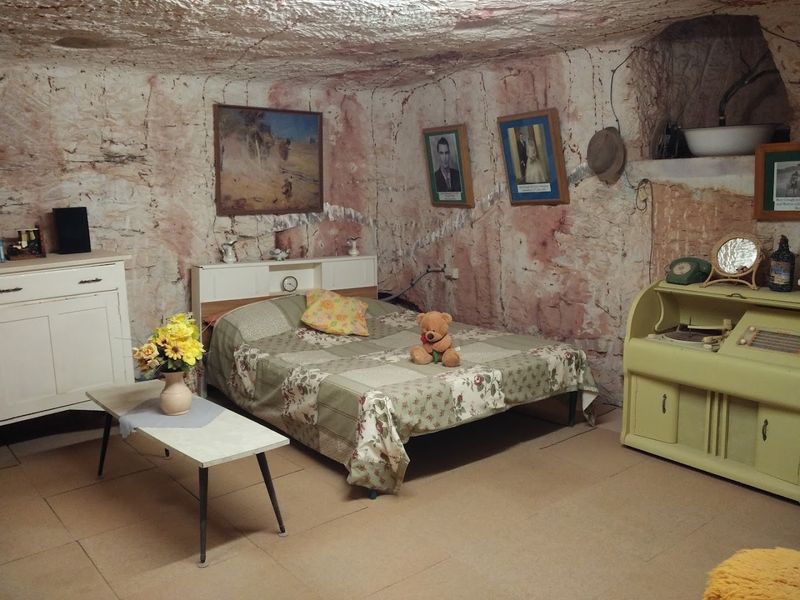
Coober Pedy is a town where people literally live underground, and not in a metaphorical way. Located in the South Australian outback, summer temperatures regularly hit over 50 degrees Celsius above ground.
So locals did what any sensible desert dweller would do: they moved into the earth.
The town produces over 70 percent of the world’s opals, which were discovered here in 1915. Miners dug tunnels looking for gems, then just kept digging and turned those tunnels into homes, hotels, churches, and even a bar.
Staying in an underground hotel here is one of the strangest and coolest sleeps you will ever have.
Above ground, the landscape looks like the moon decided to get a perm. Millions of dirt mounds from opal mining dot the desert in every direction.
If you want a town that rewrote the rules of architecture and survival simultaneously, Coober Pedy is your place.
Aogashima, Tokyo Prefecture, Japan
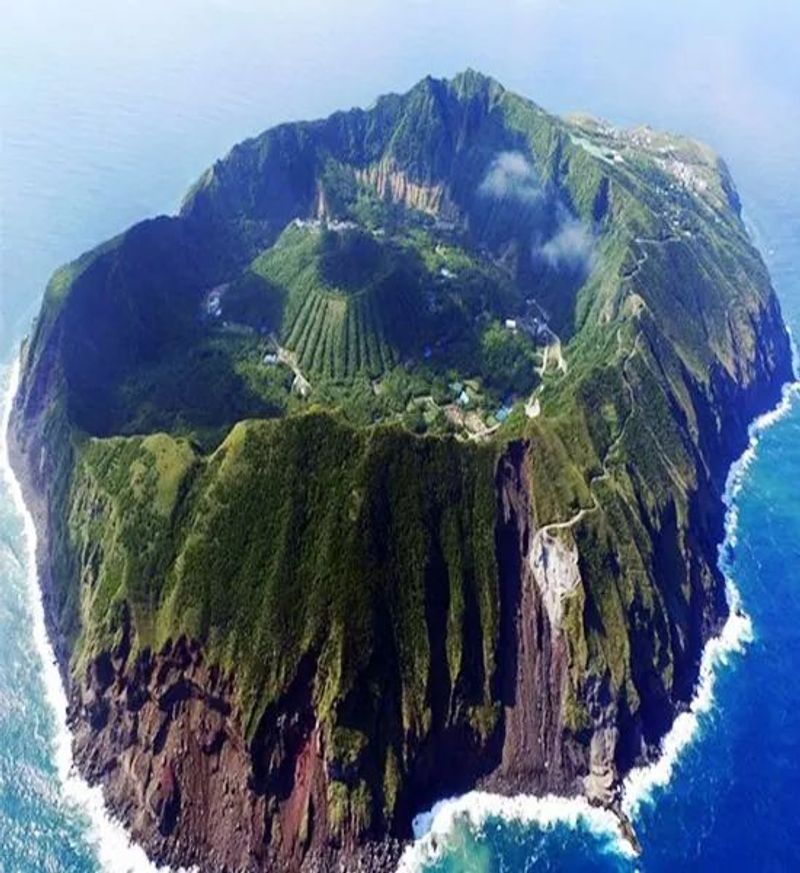
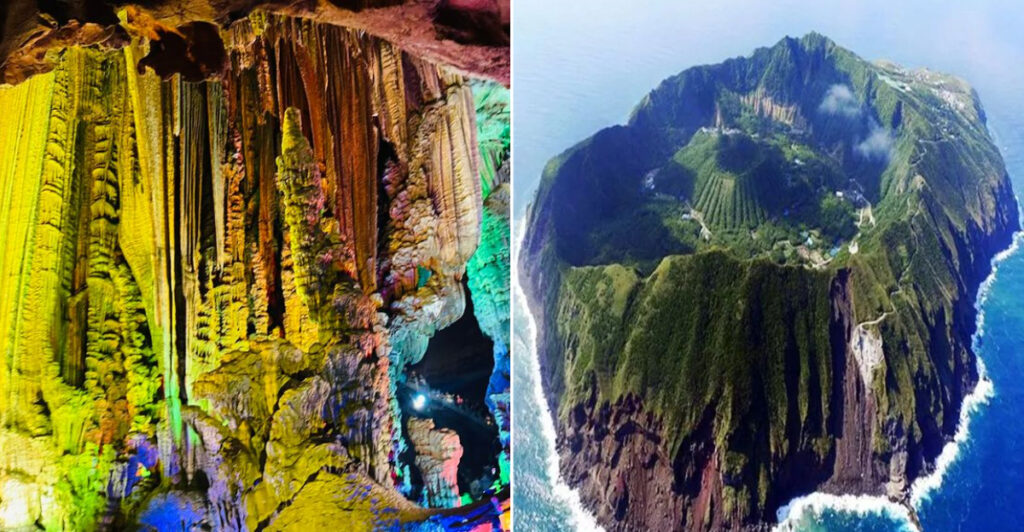
Aogashima is a tiny volcanic island that belongs to Tokyo, which is already a sentence that makes no sense until you look at a map. Located about 358 kilometers south of Tokyo, this island sits inside a giant volcanic caldera, with a smaller volcano growing inside that one.
It is a volcano inside a volcano, and yes, people live there.
Around 160 residents call Aogashima home. The island is so remote that the only ways to get there are by helicopter or by ferry, and the ferry gets cancelled constantly due to rough seas.
I tried to plan a trip there once and gave up after reading the access instructions, which felt like a riddle.
The reward for making it is extraordinary. The inner caldera has geothermal vents locals use for cooking, and the scenery is jaw-dropping.
This is probably the most remote inhabited island in Japan, and it earns every bit of that title.
Salina Turda, Turda, Romania
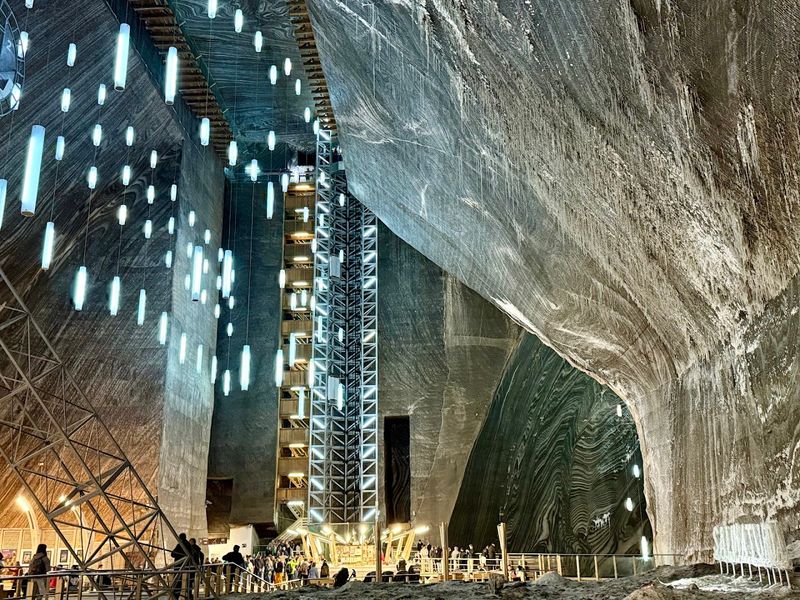
Romania took an ancient salt mine and turned it into an underground amusement park, because why not. Salina Turda in Turda has been mined since Roman times, but today it is one of the most surreal tourist attractions in Europe.
The main chamber is enormous, stretching 112 meters deep, with a Ferris wheel, mini-golf, and a lake with rowboats all operating underground.
The lighting inside shifts between moody blues and purples, giving the whole place a vibe somewhere between a disco and a sci-fi movie set. The air is incredibly salty, and some visitors come specifically for the health benefits of breathing in the salt-rich atmosphere.
Elevators take visitors down to the main level, so it is accessible for most people. Weekends get busy, so arriving early is a smart move.
Salina Turda is the rare attraction that sounds completely absurd until you see it, and then you understand why it has gone viral multiple times.
Las Pozas, Xilitla, San Luis Potosi, Mexico
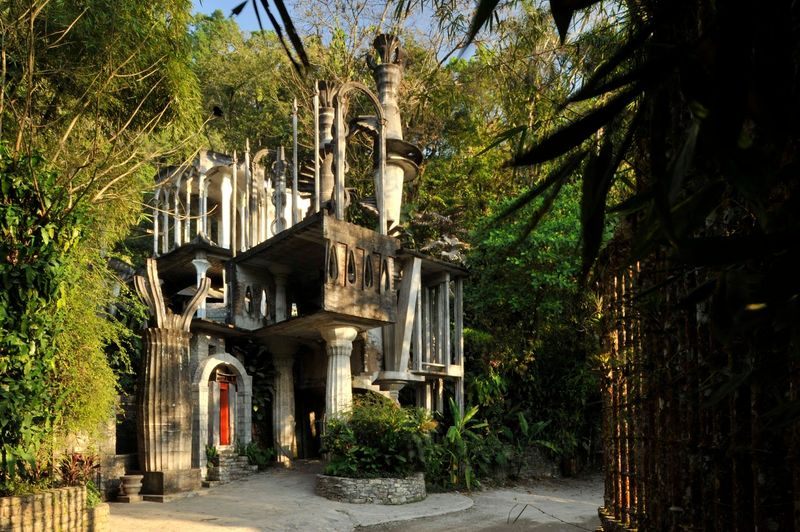
An eccentric English poet bought land in the Mexican jungle and spent decades building a surrealist concrete dreamland. That is the very real origin story of Las Pozas.
Edward James, a patron of Salvador Dali, created this wild sculpture garden in Xilitla starting in the 1940s. Staircases lead nowhere.
Flowers are made of concrete. Giant hands reach out of the jungle floor.
The natural setting makes it even stranger. Real waterfalls and swimming pools are woven between the bizarre structures, so you can swim in a crystal-clear pool while surrounded by giant concrete snails.
It is simultaneously beautiful and deeply odd.
Getting there requires some effort since Xilitla is not exactly on the main tourist trail. But that is part of the charm.
The journey through the Sierra Gorda mountains is gorgeous, and arriving at Las Pozas feels like discovering something the rest of the world forgot about. Which, for most visitors, it genuinely did.
Derinkuyu Underground City, Nevsehir Province, Türkiye
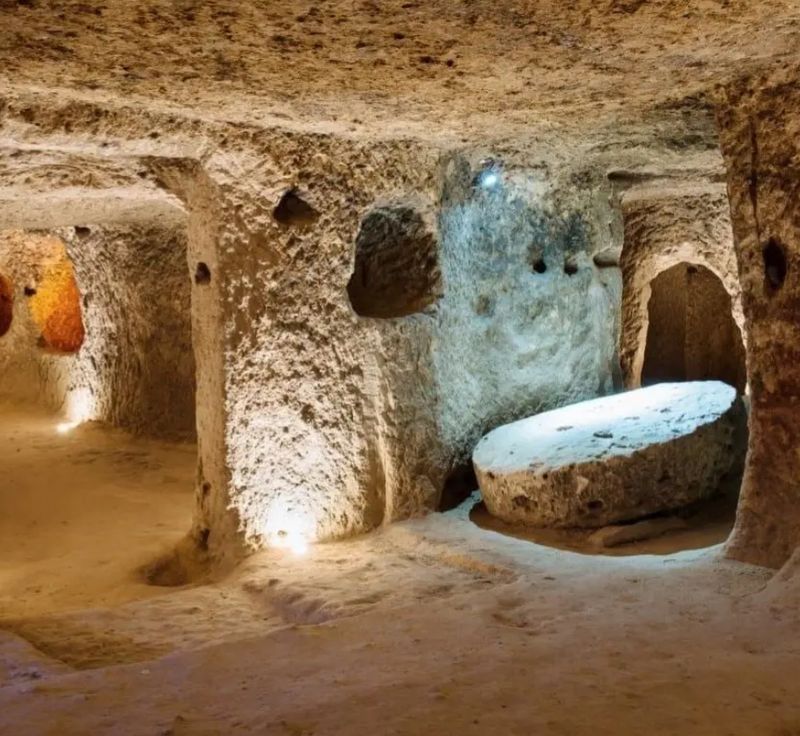
Around 85 meters below the surface of Cappadocia, an entire city was carved out of soft volcanic rock thousands of years ago. Derinkuyu Underground City is not a small cave system with a few rooms.
It had space for roughly 20,000 people, along with their livestock, food stores, wineries, churches, and schools. Ancient Cappadocians were apparently not messing around.
The tunnels are tight, low, and deliberately narrow so that invaders could only enter single file. Massive circular stone doors could be rolled shut from the inside to seal off sections.
The engineering is remarkable considering it was done without modern tools.
Visitors can explore about eight of the eighteen known levels today. Some passages require crouching, which adds to the slightly claustrophobic but genuinely thrilling experience.
If standard sightseeing involves strolling along wide boulevards, Derinkuyu is the polar opposite: hunching through ancient tunnels built for survival, not tourism.
Goblin Valley State Park, Utah, United States
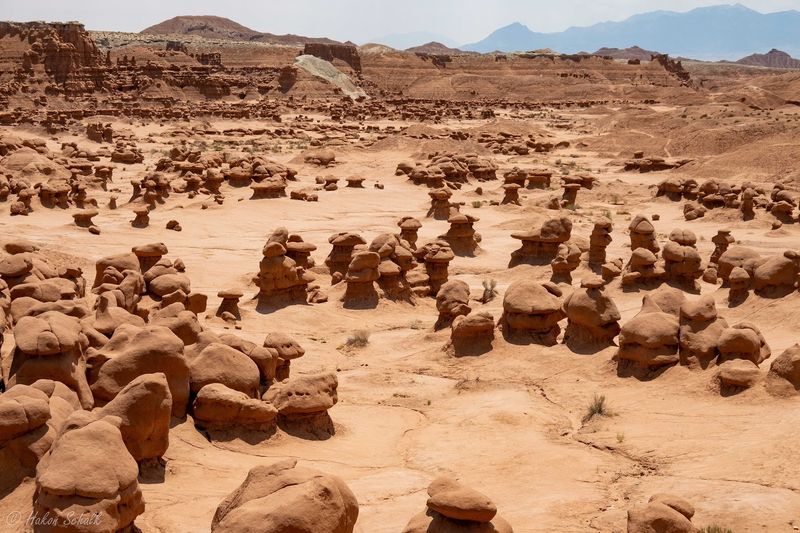
Nobody named a geological feature better than whoever called these things goblins. Goblin Valley State Park in Utah is filled with thousands of mushroom-shaped sandstone formations called hoodoos, and they genuinely look like a crowd of squat, lumpy creatures frozen mid-shuffle.
The whole valley has the energy of a very still party that went wrong.
The formations were created over millions of years as softer rock eroded away beneath harder capstone layers. Visitors are actually allowed to walk among them and even climb many of the formations, which is a level of access most national parks simply do not offer.
Sunrise and sunset light turns the rocks a deep burnt orange, and the shadows between formations create an almost alien landscape. I went expecting something quirky and left genuinely speechless.
There are campsites nearby, and spending a night under the stars surrounded by stone goblins is an experience that is hard to put into words but impossible to forget.
Salar de Uyuni, Bolivia
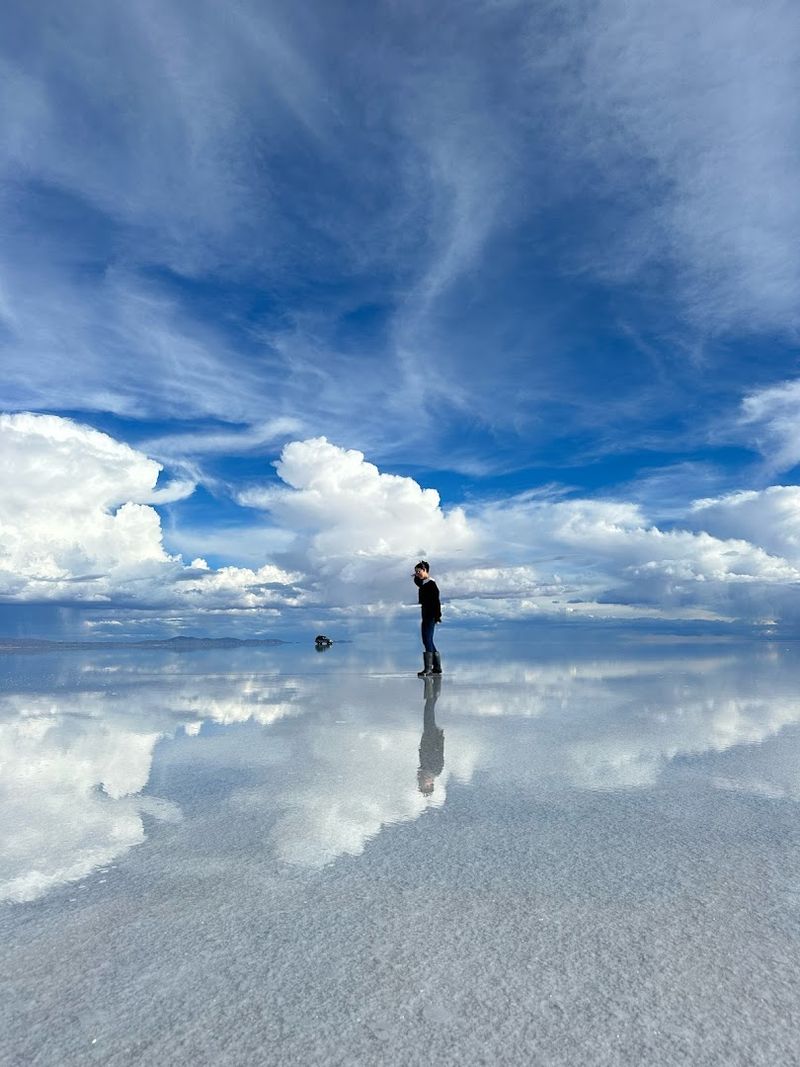
The world’s largest salt flat covers over 10,000 square kilometers in Bolivia, and during the rainy season it becomes the world’s biggest natural mirror. A thin layer of water transforms the surface into a perfect reflection of the sky, making it nearly impossible to tell where the ground ends and the sky begins.
Photographers have been losing their minds here for decades.
The salt crust is between two and ten meters thick and sits on top of the world’s largest lithium reserve. Cacti-covered islands rise dramatically from the flat white expanse, and the contrast is genuinely stunning.
Flamingos show up around the edges in the wet season, adding a surreal pink detail to the landscape.
Visiting requires planning since the area is remote and altitude sickness is a real concern at 3,656 meters above sea level. Guided tours from Uyuni town are the easiest way in.
Standard sightseeing has nothing on standing in the middle of a mirror that stretches to the horizon.
Lençóis Maranhenses National Park, Maranhão, Brazil
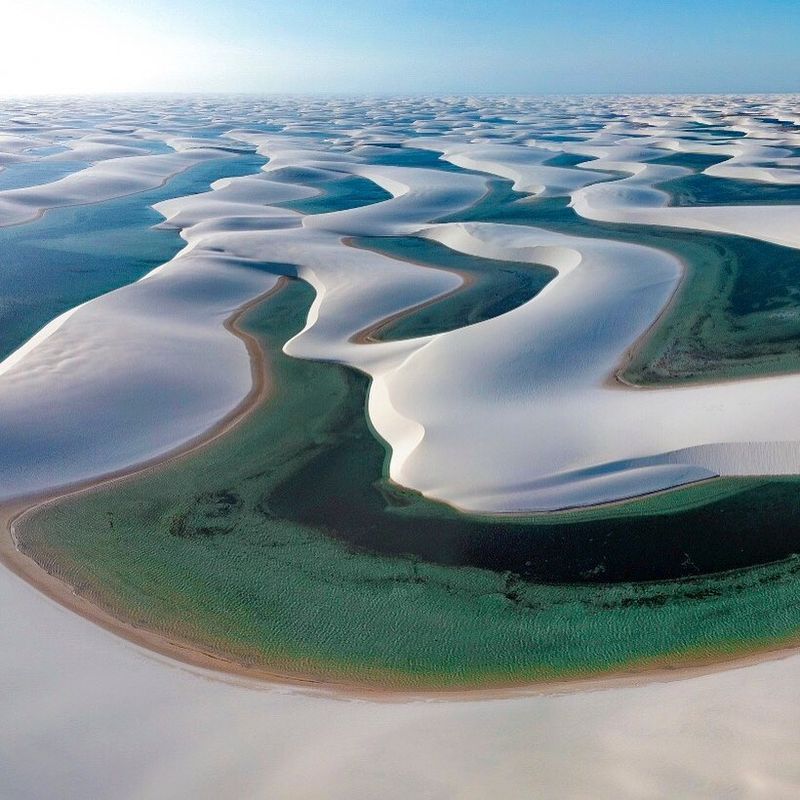
White sand dunes stretching for 1,500 square kilometers would already be impressive. But Lençóis Maranhenses in northeastern Brazil goes further by filling the valleys between those dunes with crystal-clear freshwater lagoons every rainy season.
The result is one of the most visually absurd and beautiful landscapes on Earth.
The lagoons appear between January and June when rain collects in the low points between dunes. Because the sand is so fine and compact, the water cannot drain, so it just sits there looking impossibly blue and inviting.
Fish somehow appear in these temporary lagoons each year, carried in by migratory birds. Nature is genuinely showing off here.
The park has no roads, so reaching the lagoons requires hiking or riding dune buggies with local guides. The nearest towns are Barreirinhas and Santo Amaro.
Going in April or May gives the best chance of full lagoons and manageable crowds. This is the kind of place that makes travel feel worth every bit of effort.
Kaindy Lake, Almaty Region, Kazakhstan
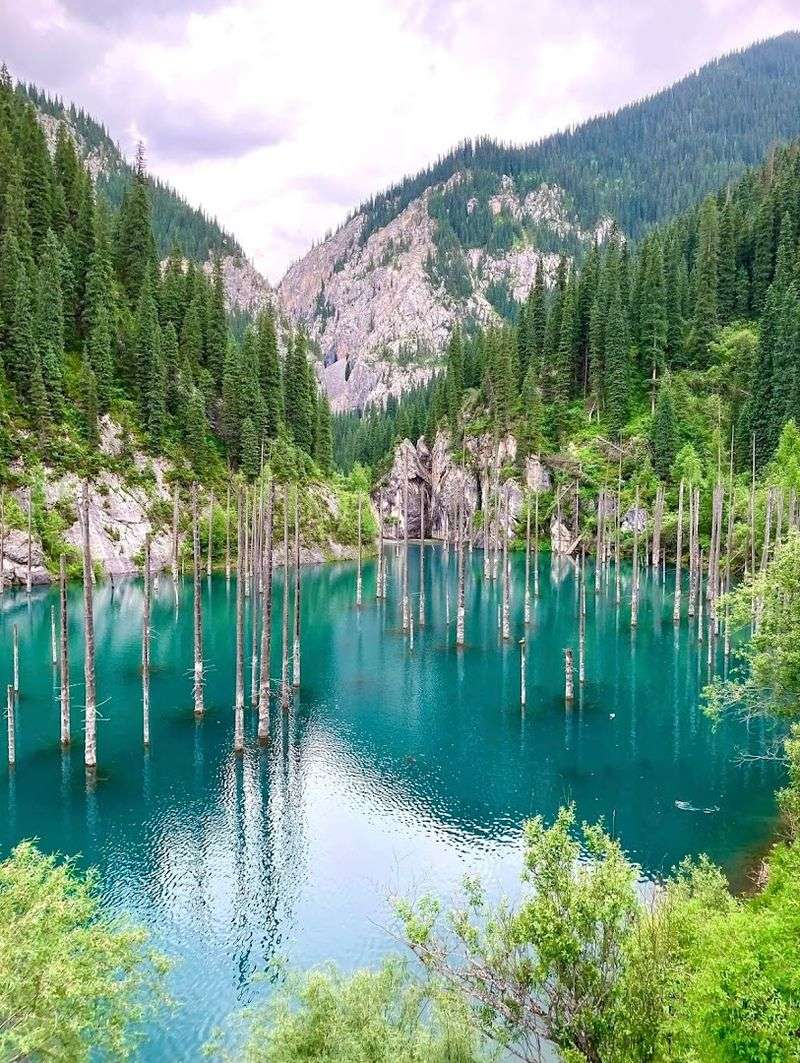
A 1911 earthquake triggered a massive landslide that dammed a river in Kazakhstan’s Tian Shan mountains, creating Kaindy Lake. The flooded forest beneath the surface left hundreds of Schrenk spruce trees standing upright in the water, their bare trunks still poking above the surface over a century later.
It looks like the trees simply refused to accept what happened.
The water is strikingly cold and clear, fed by glacial snowmelt. Divers who brave the temperature find the submerged forest remarkably well-preserved below the surface.
The trees still have branches, and the underwater visibility is excellent, making it one of Central Asia’s most unusual diving spots.
Getting to Kaindy from Almaty takes about four hours by road, with the final stretch requiring a 4×4 vehicle. The surrounding Kolsai Lakes area is worth exploring too.
Kazakhstan rarely appears on mainstream travel lists, which makes arriving at a scene this dramatic feel like finding a secret the rest of the world somehow missed.
Valle de la Luna, San Pedro de Atacama, Chile
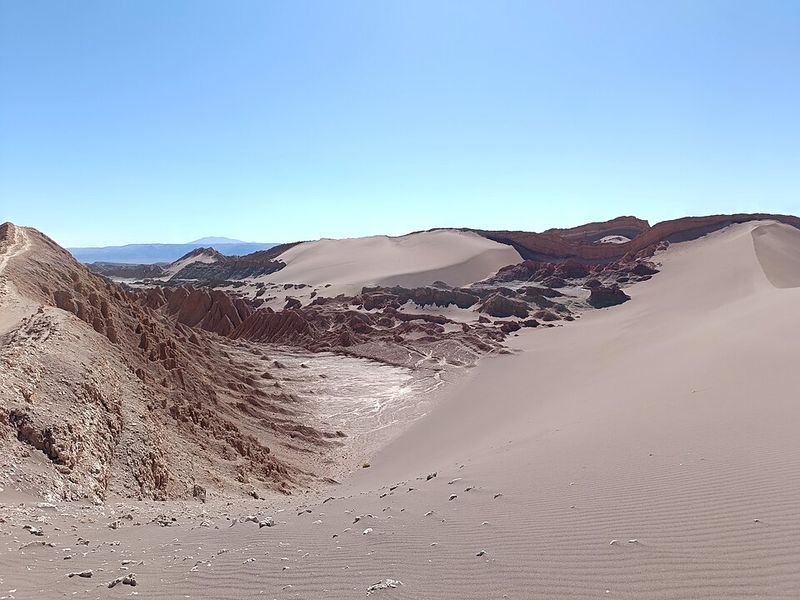
The Atacama Desert is already the driest non-polar desert on Earth, and then Valle de la Luna takes things further by looking like another planet entirely. Located near San Pedro de Atacama in Chile, this valley of salt, clay, and rock formations was shaped by millions of years of erosion.
The result is a landscape so barren and strange that NASA has used it to test Mars rovers.
The valley gets its name because early visitors thought it looked like the surface of the moon, and honestly, they were not wrong. Salt crusts crack and glitter across the ground, and enormous sand dunes sit beside jagged ridges of ancient rock.
Sunset here is a full event, with colors shifting from gold to deep red across the entire sky.
Tours from San Pedro de Atacama run daily, and sunset tours are the most popular. Stargazing afterward is exceptional because light pollution is essentially nonexistent.
If you want to feel like an astronaut without the training, this valley delivers.
Setenil de las Bodegas, Cádiz Province, Spain
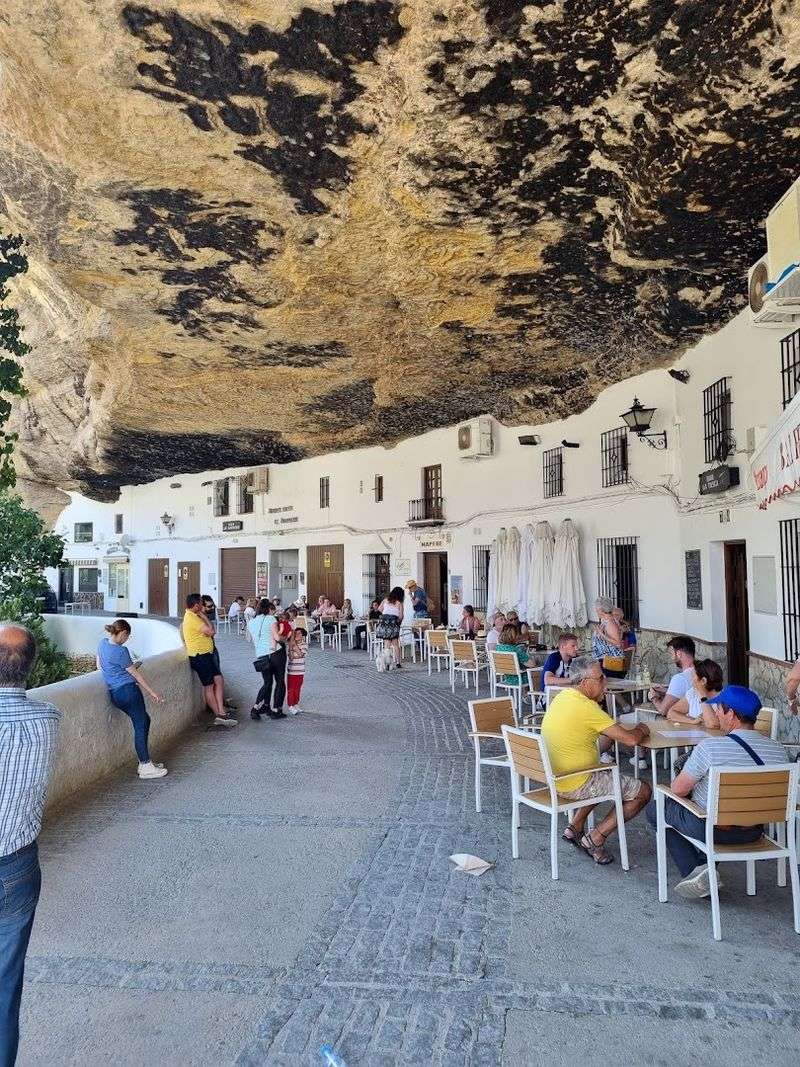
Most towns are built around geographical features. Setenil de las Bodegas decided the rock was moving in whether it wanted to or not.
This small Spanish town in Cádiz Province has homes, restaurants, and shops built directly into and under massive overhanging rock cliffs. The rock literally serves as the ceiling for entire streets.
The town sits in a narrow gorge carved by the Rio Trejo, and locals have been using the natural rock overhangs for shelter since prehistoric times. Today, those same overhangs shade tapas bars where you can eat jamón while a cliff hangs a few feet above your head.
That is a sentence I never expected to write, and yet here we are.
Setenil is part of the famous White Villages route in Andalusia, making it easy to combine with other nearby towns. It is small and walkable, and most tourists zoom past it on the way to Ronda.
That is genuinely their loss, because this place is endlessly charming and completely one-of-a-kind.
Mount Nemrut, Adıyaman Province, Türkiye
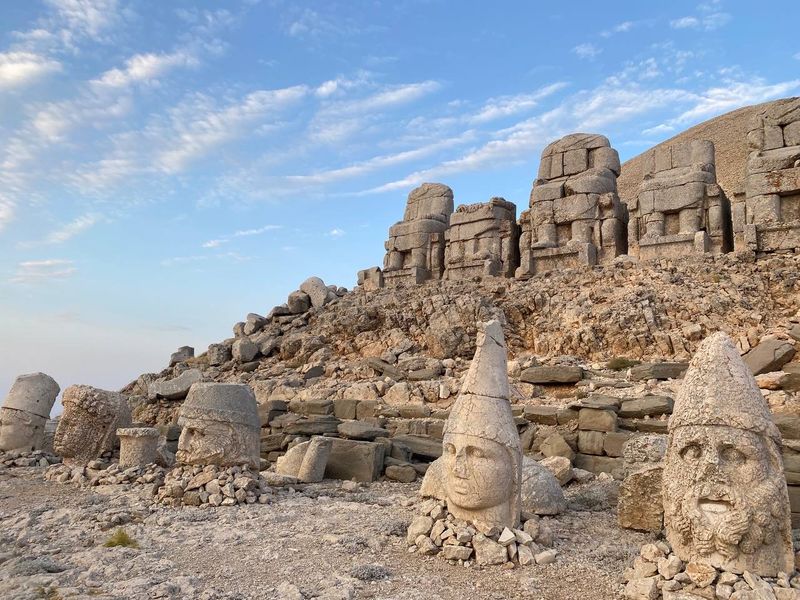
A first-century BCE king named Antiochus I decided his tomb should be on top of a 2,134-meter mountain, surrounded by enormous stone statues of himself alongside Greek and Persian gods. King Antiochus had, to put it mildly, a very healthy sense of self-importance.
The result is Mount Nemrut, one of the most dramatically strange archaeological sites in the world.
Earthquakes knocked the heads off the statues centuries ago, so today they sit scattered across the mountaintop in various states of tilt and disarray. The giant heads stare blankly into the distance while tourists wander between them looking appropriately bewildered.
Eagles circle overhead, which adds a theatrical touch nobody planned for.
Most visitors arrive before sunrise to watch the light hit the statues as dawn breaks. The mountain is in southeastern Turkey, and the nearest base town is Kahta.
The hike to the summit is manageable for most people and takes under an hour. Standard sightseeing does not have ancient gods staring at you from a mountaintop.
Socotra, Yemen
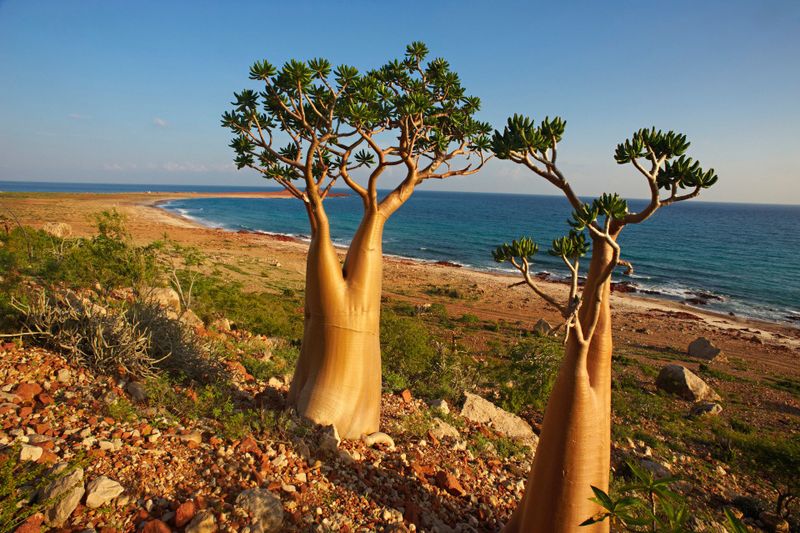
Socotra has been isolated from the rest of the world for so long that about a third of its plant species exist nowhere else on the planet. The most famous of these is the Dragon Blood Tree, which looks like someone turned an umbrella inside out and planted it in the ground.
These trees are not rare here. They grow in groves across the rocky plateau, creating a landscape that genuinely has no comparison.
The island belongs to Yemen but sits in the Arabian Sea, closer to Somalia than to mainland Yemen. Its extreme isolation preserved an ecosystem that evolved separately for millions of years.
The people, the language, and the wildlife are all distinctly Socotran.
Travel access is limited and requires careful planning given Yemen’s ongoing situation, but specialty tour operators do run trips to Socotra. The island has white sand beaches, turquoise water, and those extraordinary trees all in one place.
It is one of the few places on Earth that genuinely earns the word alien without any exaggeration.
Reed Flute Cave, Guilin, Guangxi, China
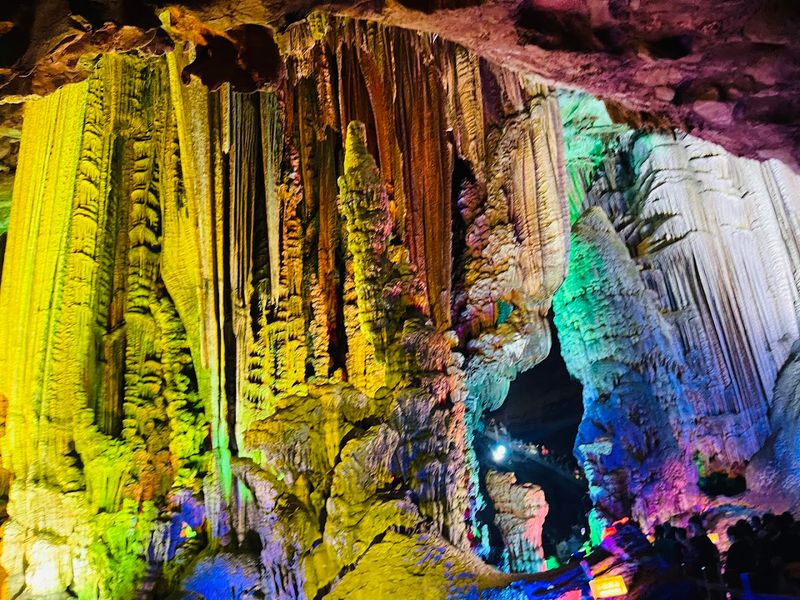
Reed Flute Cave has been wowing visitors for over 1,200 years, and it has the ancient graffiti to prove it. Located in Guilin, China, this natural limestone cave stretches 240 meters deep and is packed with stalactites, stalagmites, and rock formations in shapes that local guides have named over decades.
There is a Crystal Palace, a mushroom grove, and a lion watching over the entrance.
The cave gets its name from the reeds that grow outside, which were historically used to make flutes. Today, colorful LED lighting illuminates the formations in shifting hues of blue, green, and red.
The lighting choices are dramatic to say the least, but the cave formations are so extraordinary that even the theatrical presentation cannot overshadow them.
Reed Flute Cave is surprisingly affordable and easy to reach from Guilin city center. Tours run throughout the day.
Combine it with a Li River cruise for a full Guilin experience. This cave has been entertaining people for over a millennium, and it shows absolutely no signs of slowing down.
Share this story