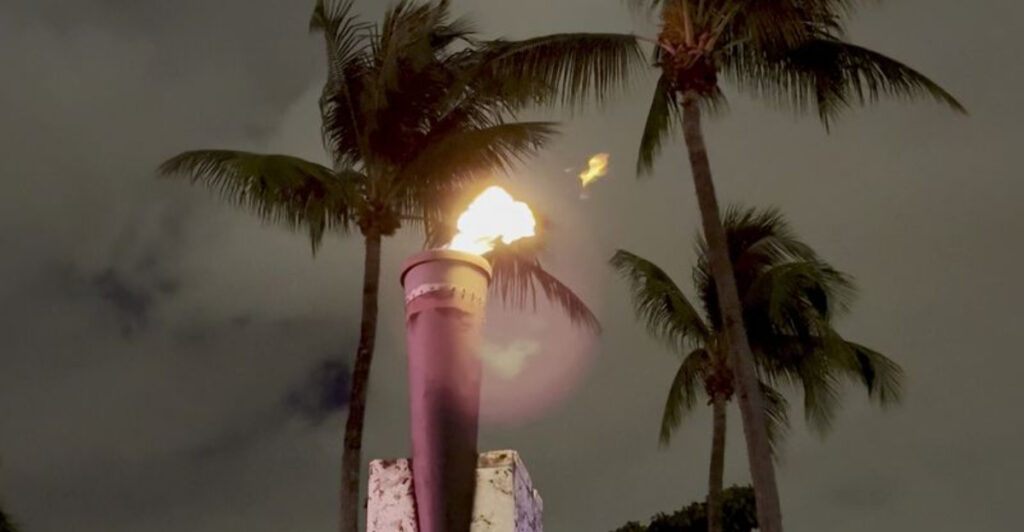
There is a spot in downtown Miami where a flame has burned for decades, quietly telling a story that most people rushing past Biscayne Boulevard never stop to hear. The Torch of Friendship is one of those monuments that rewards curiosity, because the closer you get, the more layers you discover.
Built in 1960 and later rededicated to President John F. Kennedy in 1964, this striking structure carries the weight of history, diplomacy, and human connection all in one place.
Whether you are a history lover, a first-time visitor to Miami, or simply someone who appreciates meaningful public art, this monument has something real and moving to offer. Keep reading, because there is far more to this flame than meets the eye.
Where You Will Find It: Address and Setting
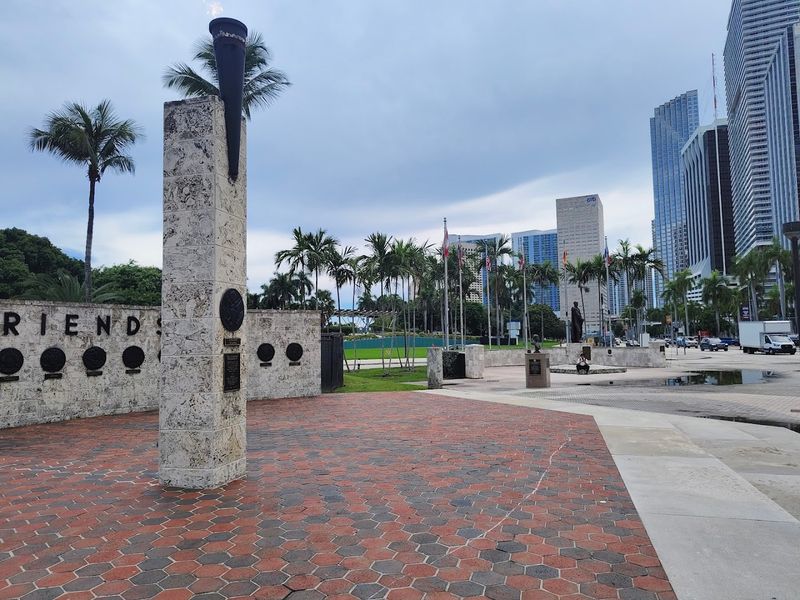
Right in the heart of downtown Miami, at 301 Biscayne Blvd, Miami, the Torch of Friendship stands in the northwest corner of Bayfront Park, one of the city’s most beloved green spaces along the water.
The setting feels almost cinematic. On one side, you have the shimmering waters of Biscayne Bay.
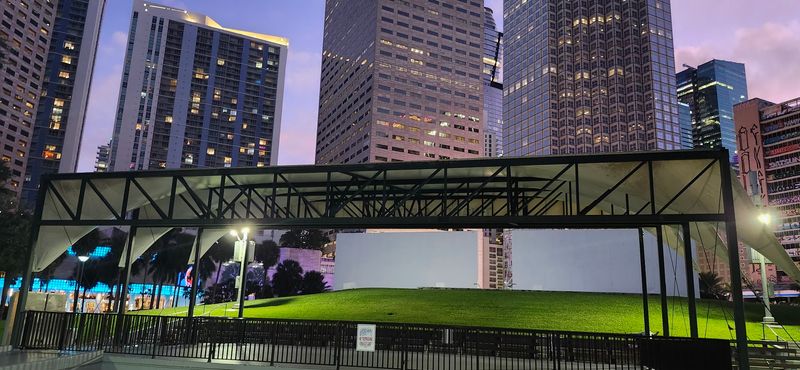
On the other, the glass towers of downtown Miami rise up like a modern backdrop to a very old story.
Getting there is easy, whether you arrive by car, Metromover, or on foot from nearby Bayside Marketplace. The monument is open 24 hours a day, every day of the week, so timing is never really an issue.
Early morning visits offer a calm, reflective atmosphere, while evening visits give the monument a dramatic glow that feels almost theatrical against the city lights.
The Origin Story: Why This Monument Was Built
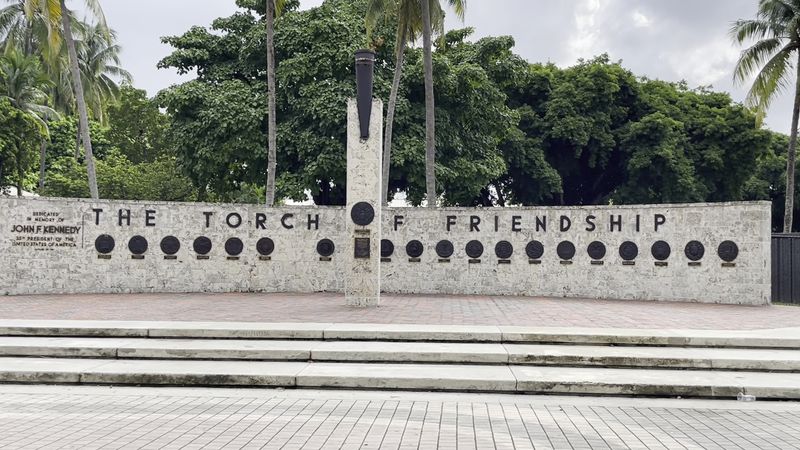
Few public monuments in Florida carry a founding story quite as deliberate and meaningful as this one. The Torch of Friendship was dedicated in 1960 by the City of Miami as a formal symbol of goodwill between the United States and the nations of Latin America and the Caribbean.
The idea behind it was straightforward but powerful. Miami had long served as a cultural and geographic bridge between North America and the rest of the Western Hemisphere, and city leaders wanted a permanent, visible reminder of that connection.
The torch shape was chosen intentionally. A raised torch represents light, hope, and forward movement, values that resonated deeply with the immigrant communities who had made Miami their home.
From day one, this monument was never just decorative. It was a civic statement, a promise written in stone and fire that said: you are welcome here, and this friendship is real.
The JFK Connection: A Rededication That Changed Everything
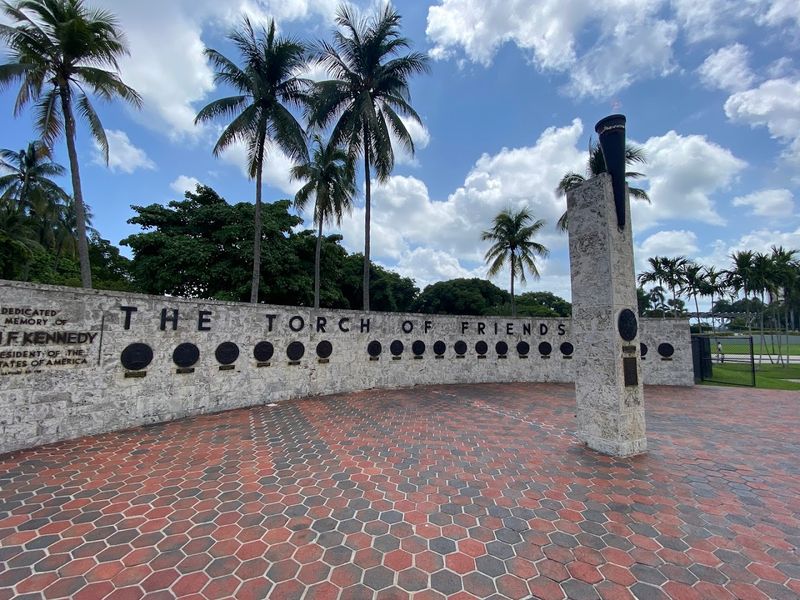
Four years after its original dedication, the Torch of Friendship took on an even deeper layer of meaning. In 1964, following the tragic passing of President John F.
Kennedy, the monument was rededicated in his memory, connecting the flame to one of the most beloved leaders in American history.
Kennedy had a strong relationship with Latin America. His Alliance for Progress program sought to strengthen economic and diplomatic ties across the hemisphere, making him a natural figure to honor at a monument already dedicated to inter-American friendship.
A plaque bearing his name and legacy now sits alongside the monument, reminding visitors of his famous words about service and civic duty. That rededication transformed the Torch of Friendship from a local civic gesture into something with genuine national and international weight.
It is one of those details that makes you pause and appreciate how much history a single flame can hold.
What the Monument Actually Looks Like Up Close
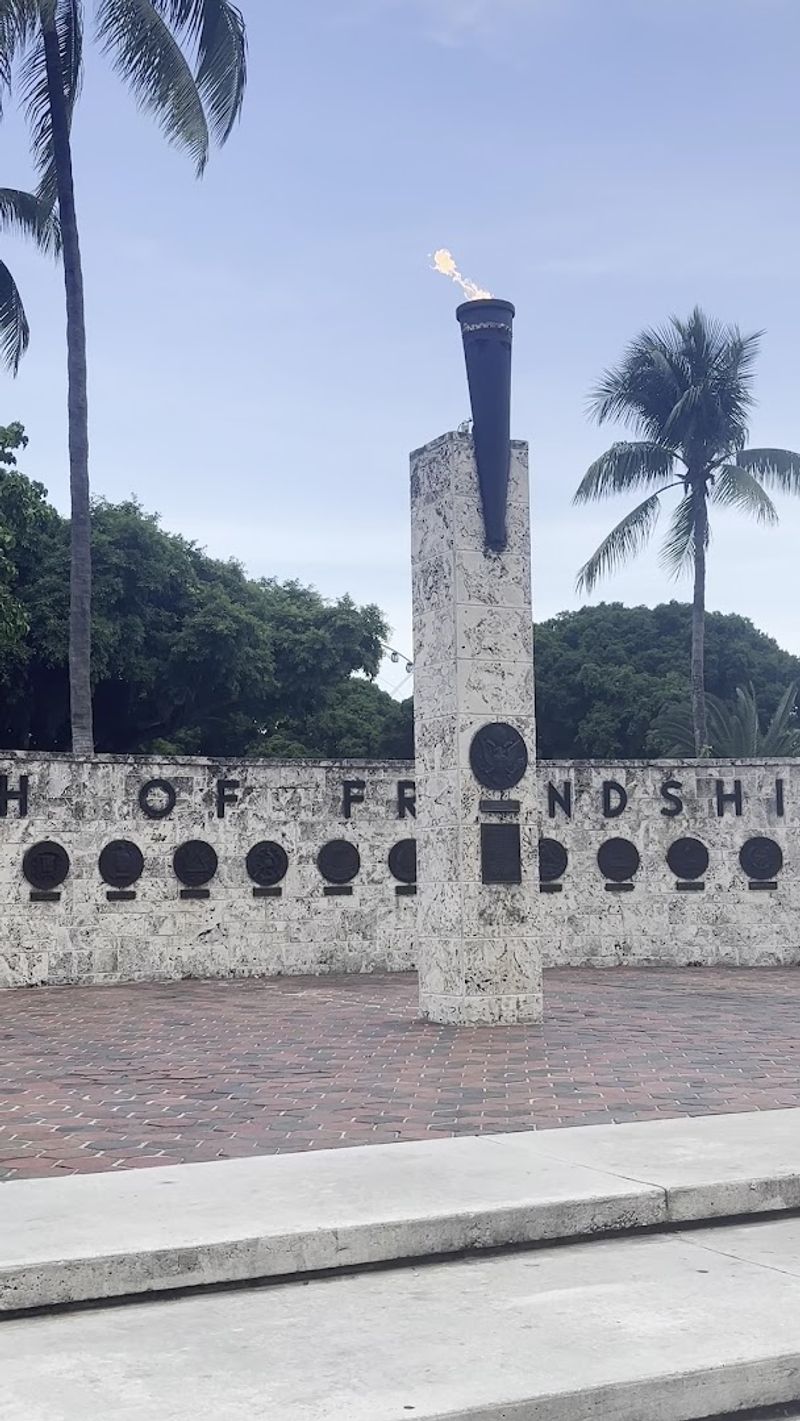
The first thing you notice when you approach the Torch of Friendship is its confident, upward-reaching shape. The monument features a tall, stylized torch form that seems to stretch toward the sky with a kind of quiet determination.
The base is solid and substantial, with inscriptions and plaques that invite you to slow down and read rather than just snap a photo and move on. The materials have a dignified, timeless quality that fits the seriousness of what the monument represents.
At certain times, an eternal flame burns at the top, making the structure feel alive in a way that cold stone alone never could. The scale is impressive without being overwhelming.
It is large enough to command attention in its surroundings but human enough to feel personal rather than distant. Standing next to it, you get a genuine sense of being in the presence of something that was built to last.
The Symbolism Behind the Flame
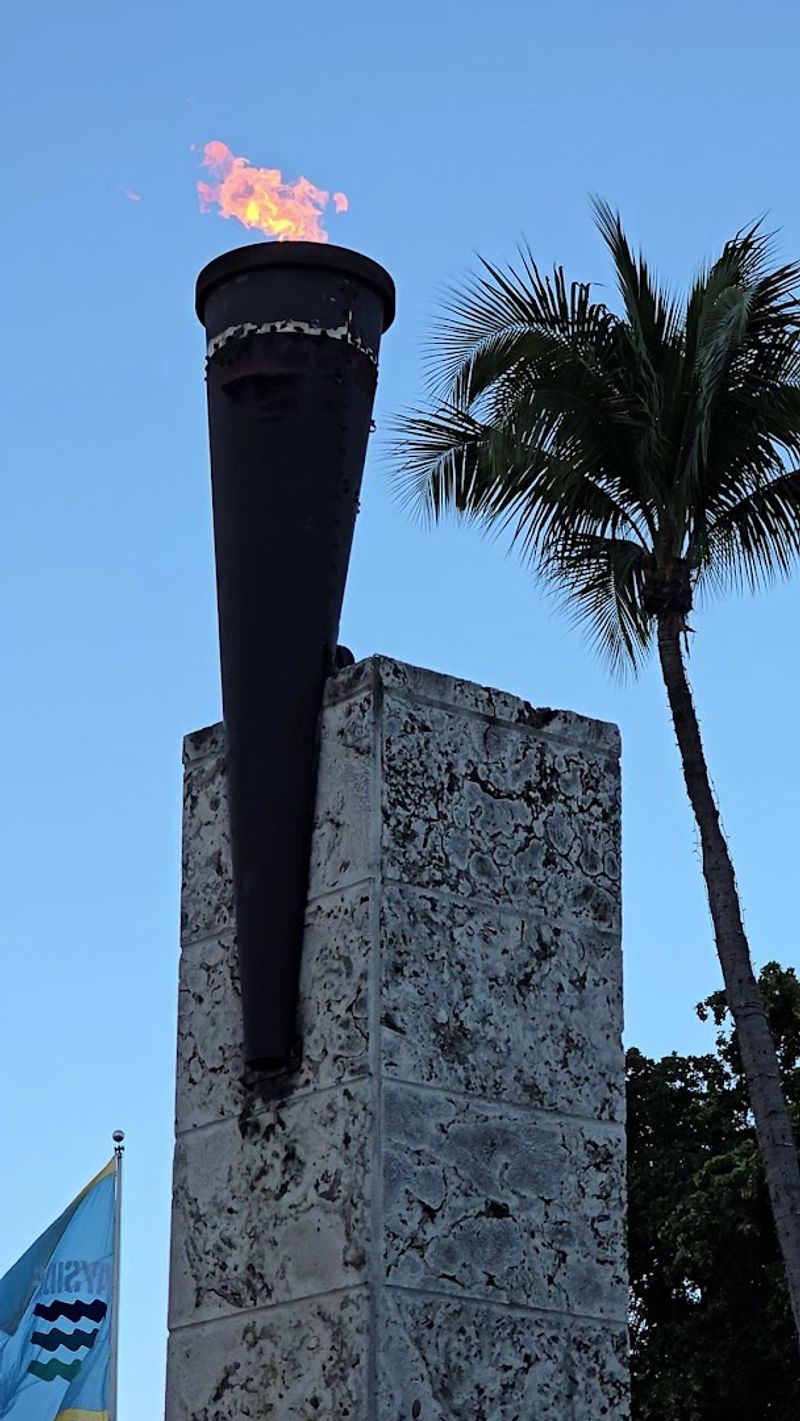
A torch is one of the oldest symbols in human culture, and the designers of this monument chose it with full awareness of that history. Fire represents warmth, guidance, and the transfer of knowledge from one generation to the next, all values that align perfectly with what this monument was meant to celebrate.
The flame at the Torch of Friendship carries a specific diplomatic meaning as well. It signals that the relationship between the United States and the nations of Latin America and the Caribbean is not just political but personal, rooted in shared humanity and mutual respect.
For many visitors, especially those with Caribbean or Latin American roots, seeing the flame burns with an emotional charge that goes beyond tourism. It is a recognition of their stories, their journeys, and their contributions to the city of Miami.
That kind of symbolism does not fade with time. If anything, it grows stronger.
Its Role in the Latin American and Caribbean Community
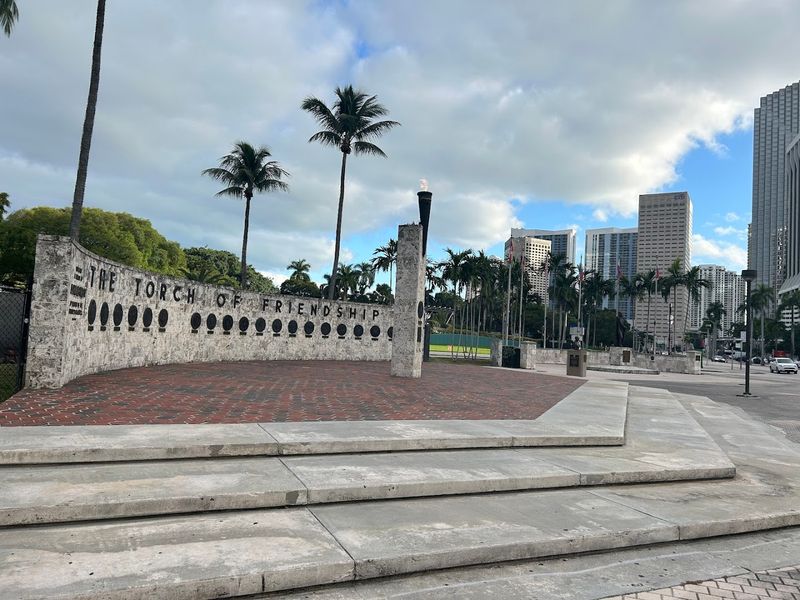
Miami is one of the most culturally diverse cities in the United States, and a huge part of that diversity comes from the Latin American and Caribbean communities that have shaped its identity for generations. The Torch of Friendship stands as a direct acknowledgment of that reality.
When the monument was first dedicated in 1960, Miami was already becoming a hub for Cuban, Puerto Rican, and other Latin American communities. The torch was a public declaration that the city saw these communities not as outsiders but as essential threads in the fabric of Miami’s story.
Today, the monument continues to hold special meaning for those communities. Families stop to take photos, individuals pause to read the inscriptions, and community groups occasionally gather near the torch for cultural events and remembrances.
It functions less like a tourist attraction and more like a neighborhood landmark with deep personal roots for thousands of Miami residents.
Bayfront Park: The Bigger Picture Around the Monument
The Torch of Friendship does not exist in isolation. It sits within Bayfront Park, a beautifully maintained green space right along the edge of Biscayne Bay, and the park itself is worth exploring before or after you visit the monument.
Bayfront Park stretches across about 32 acres and offers a mix of open lawns, shaded walking paths, public art installations, and waterfront views that are genuinely hard to beat. On a clear day, the combination of blue water, swaying palms, and the Miami skyline creates a backdrop that feels almost unreal in the best possible way.
The park also hosts major events throughout the year, from concerts to cultural festivals, which means the area around the Torch of Friendship is regularly filled with energy and community life. Even on quiet days, the park draws joggers, families, and visitors who simply want to enjoy one of downtown Miami’s most accessible and welcoming outdoor spaces.
The Plaza Simon Bolivar Connection
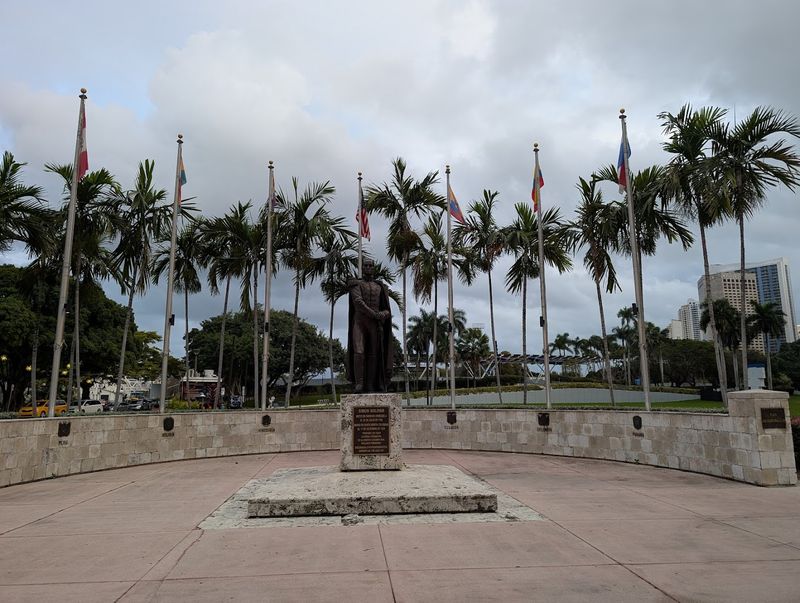
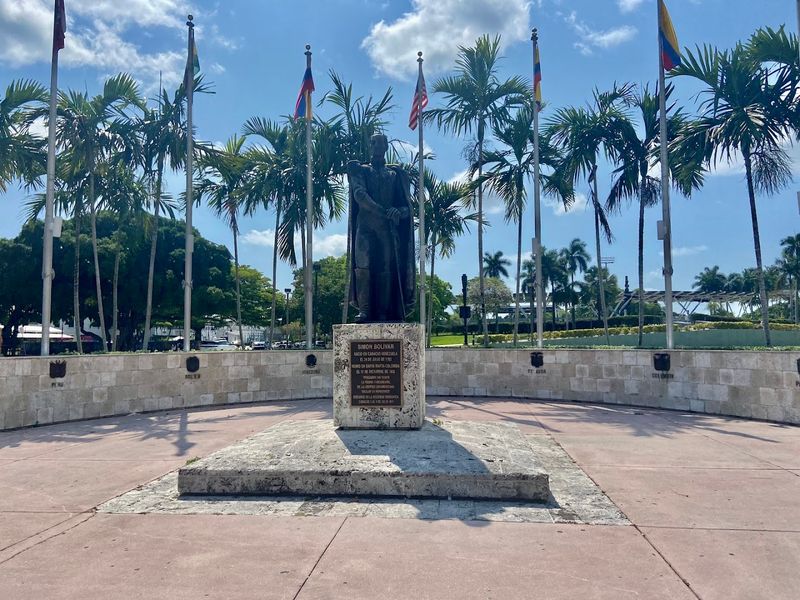
Here is a detail that many visitors overlook entirely. The area around the Torch of Friendship also carries the designation of Plaza Simon Bolivar, named after the legendary South American liberator who led independence movements across much of the continent in the early 19th century.
Simon Bolivar is a towering figure in Latin American history, celebrated in countries from Venezuela to Peru as the father of independence. Having his name attached to this plaza adds another layer of historical and cultural depth to an already meaningful site.
The dual identity of this space, as both the Torch of Friendship location and Plaza Simon Bolivar, reflects Miami’s genuine commitment to honoring the full breadth of Latin American history and heritage. It is the kind of layered detail that rewards visitors who take the time to look beyond the surface.
A little curiosity here goes a very long way toward understanding what this corner of Bayfront Park truly represents.
A Monument That Welcomes Protest and Public Gathering
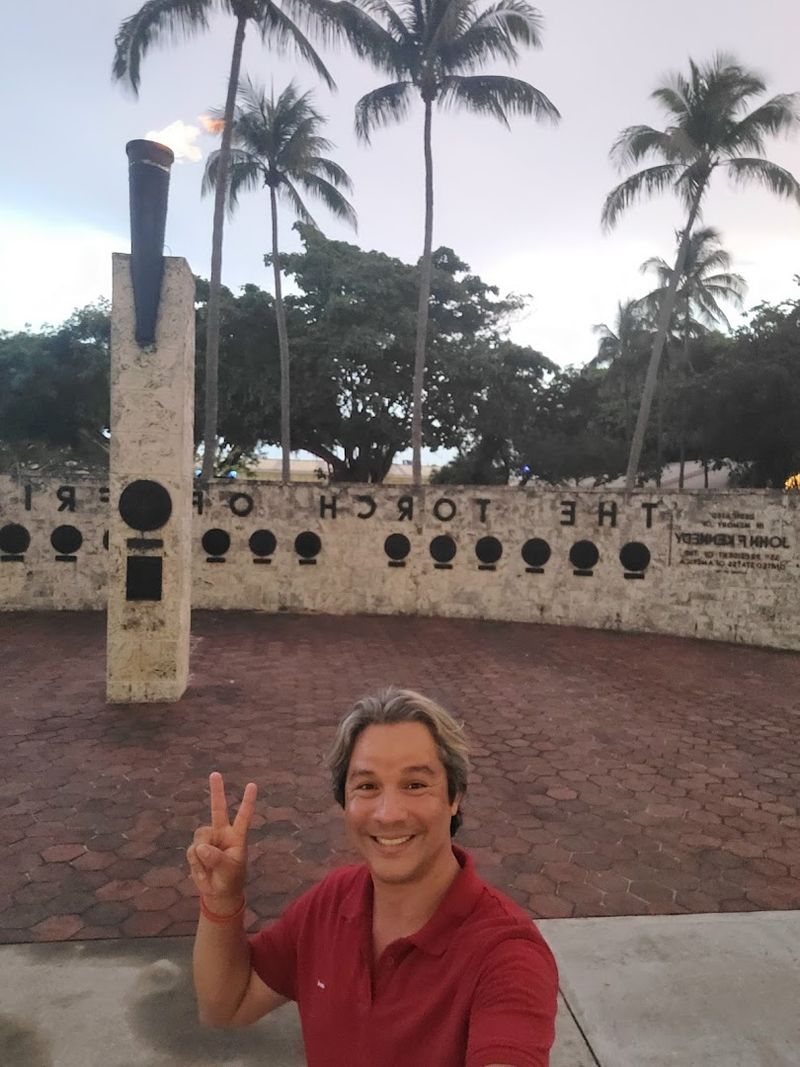
One of the things that makes the Torch of Friendship genuinely interesting is how it has continued to serve a living, breathing civic function long after its dedication. The area around the monument has become a natural gathering point for community events, demonstrations, and public expressions of solidarity.
There is something fitting about that. A monument built to celebrate friendship, unity, and the welcoming of people from across the Americas naturally draws those who want to speak up about those same values.
The torch becomes a backdrop that gives weight and context to whatever message people bring to it.
Miami has always been a city with strong opinions and a passionate civic culture, and the Torch of Friendship sits right at the center of that energy. Whether the gathering is a cultural celebration or a community demonstration, the monument lends a sense of history and purpose to the moment.
That is exactly what great public art is supposed to do.
Visiting at Night: A Completely Different Experience
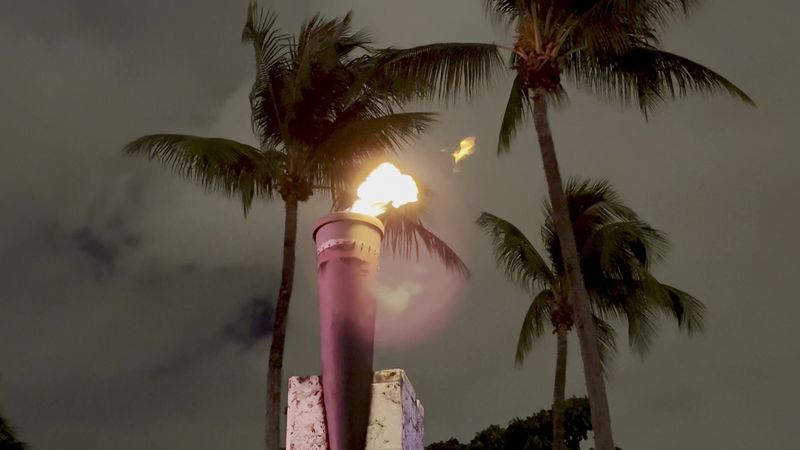
Daytime visits to the Torch of Friendship are lovely, but coming back after dark is a genuinely different experience worth planning for. The monument is open 24 hours, and the nighttime setting transforms its mood in ways that feel almost cinematic.
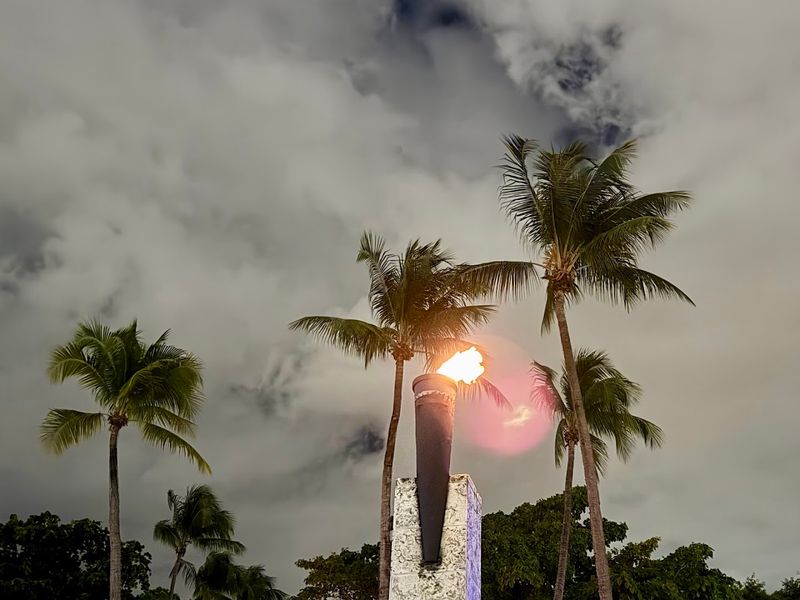
The city lights of downtown Miami reflect off the bay, casting a warm, layered glow across Bayfront Park. The torch itself, when the flame is burning, takes on an especially dramatic quality against the dark sky, making it feel less like a static monument and more like a living beacon.
The park is generally quieter at night, which gives you space to stand close to the monument without the usual foot traffic. That quiet allows the inscriptions, the history, and the symbolism to land with more personal weight.
If you are in the area for an evening event at Bayside Marketplace, adding a short walk to the Torch of Friendship is an easy and rewarding detour.
Nearby Attractions Worth Combining With Your Visit
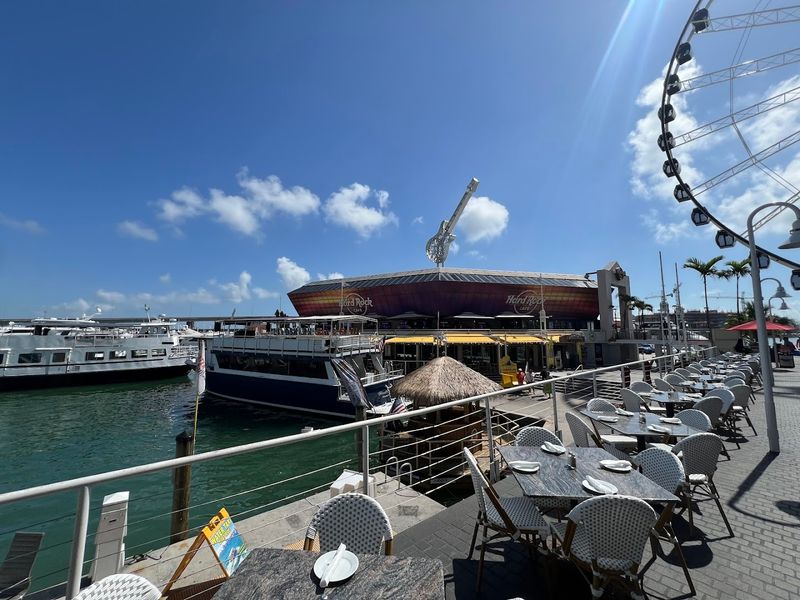
One of the practical advantages of visiting the Torch of Friendship is how well it pairs with other nearby attractions. Bayfront Park itself has plenty to explore, but the surrounding area is packed with options that make it easy to build a full day around this part of downtown Miami.
Bayside Marketplace is a short walk away and offers waterfront dining, shopping, and regular live entertainment. The American Airlines Arena, now known as Kaseya Center, is also nearby, making the Torch of Friendship a natural pre-event stop for anyone heading to a concert or game.
History buffs will also appreciate that a monument honoring Juan Ponce de Leon, the Spanish explorer credited with discovering Florida, stands close to the Torch of Friendship as well. That combination of monuments in one walkable area gives the neighborhood a surprisingly rich historical texture that most visitors do not expect to find in such a busy urban setting.
The Eternal Flame: Lit or Not, the Story Remains
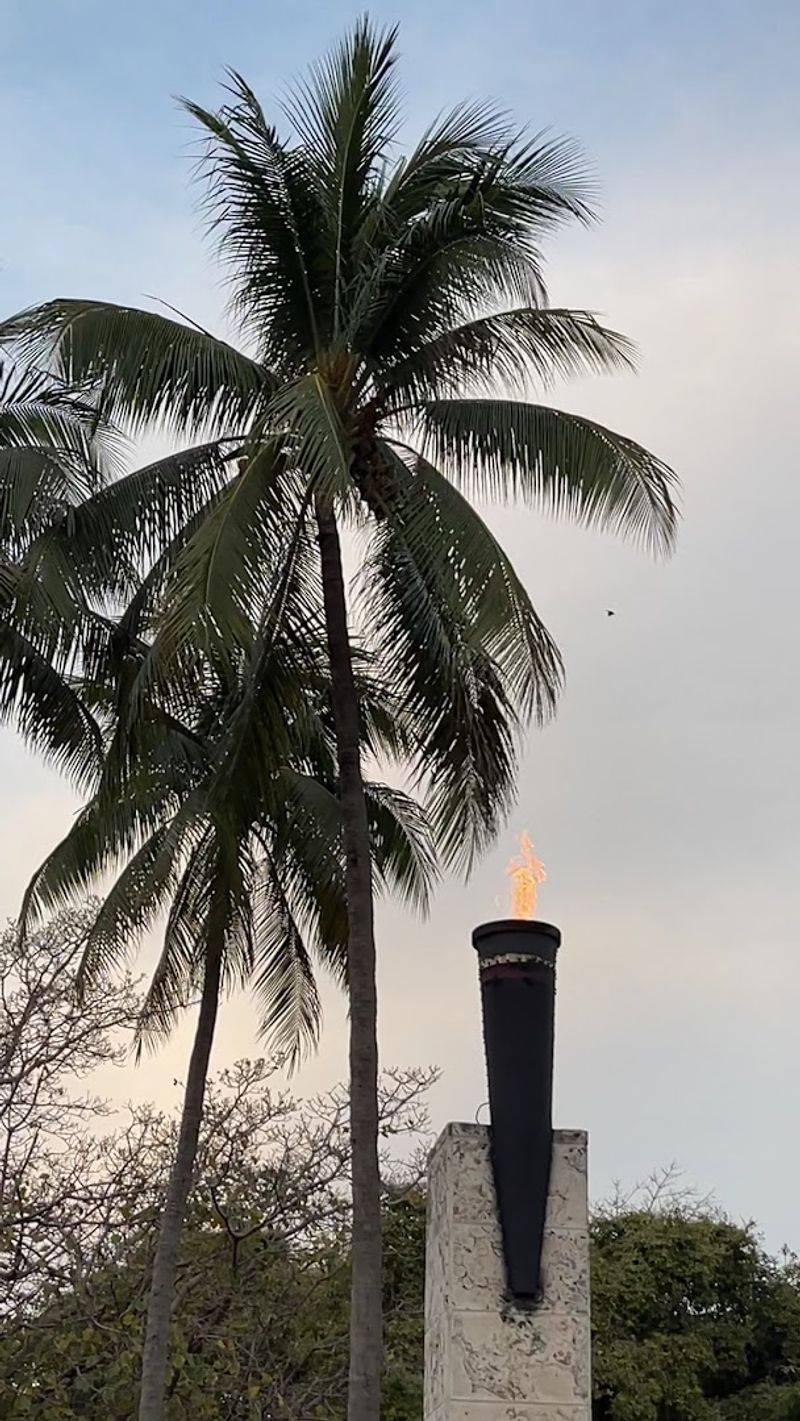
One question that comes up regularly among visitors is whether the eternal flame at the Torch of Friendship is actually burning. The honest answer is that the flame has not always been consistently lit, and there have been periods when the burner has been inactive for maintenance or other reasons.
Some visitors arrive expecting a roaring flame and find a cold torch, which can feel a little anticlimactic at first. But the monument’s power does not depend entirely on whether the flame is burning at any given moment.
The stone, the inscriptions, the history, and the setting all carry the story forward regardless.
That said, when the flame is burning, it adds an undeniable layer of drama and emotion to the experience. If seeing the flame is important to you, it is worth checking ahead or simply accepting that the visit will be worthwhile either way.
The story this monument tells is bigger than any single flame.
What Makes This Monument Feel Different From Others
Miami has no shortage of public art and historic markers, but the Torch of Friendship occupies a category of its own. Most monuments celebrate a single person or event.
This one celebrates an idea, the enduring friendship between nations and people across an entire hemisphere.
That scope gives it a universality that is genuinely rare. Whether your family roots trace back to Cuba, Colombia, Haiti, Jamaica, or anywhere else in the Caribbean and Latin America, the Torch of Friendship was built with you in mind.
That kind of intentional inclusivity is not something you encounter every day in a public monument.
There is also something refreshing about a monument that does not require expert knowledge to appreciate. The symbolism is clear, the history is accessible, and the setting is beautiful.
You do not need to be a historian to feel the weight of what this torch represents. A few minutes of honest attention is all it takes.
A Living Landmark Worth Your Time
After spending time at the Torch of Friendship, the thing that sticks with you most is not any single detail but the overall feeling of the place. It is a monument that manages to feel both historically significant and personally relevant at the same time, which is a harder balance to strike than it sounds.
Miami is a city that has always been defined by movement, migration, and the meeting of cultures, and the Torch of Friendship captures all of that in one spot. It is a place that asks you to think about where people come from and what it means to welcome them.
Whether you spend five minutes or an hour at the monument, you leave with something real. The flame, the inscriptions, the bay views, and the history all add up to an experience that is quietly unforgettable.
Some landmarks mark a place on a map. This one marks something in you.
Share this story