Europe is home to some of the world’s most diverse and stunning coastlines, from the turquoise waters of the Mediterranean to rugged Atlantic shores and hidden island coves. Travel experts consistently rank destinations in Greece, Spain, Italy, and Portugal among the best for sun seekers thanks to their clear waters, scenic beauty, and long summer seasons.
Whether you’re after lively beach scenes, secluded escapes, or dramatic natural backdrops, Europe offers something for every kind of traveler. Here are 19 must-visit beach destinations that truly stand out.
Algarve, Portugal
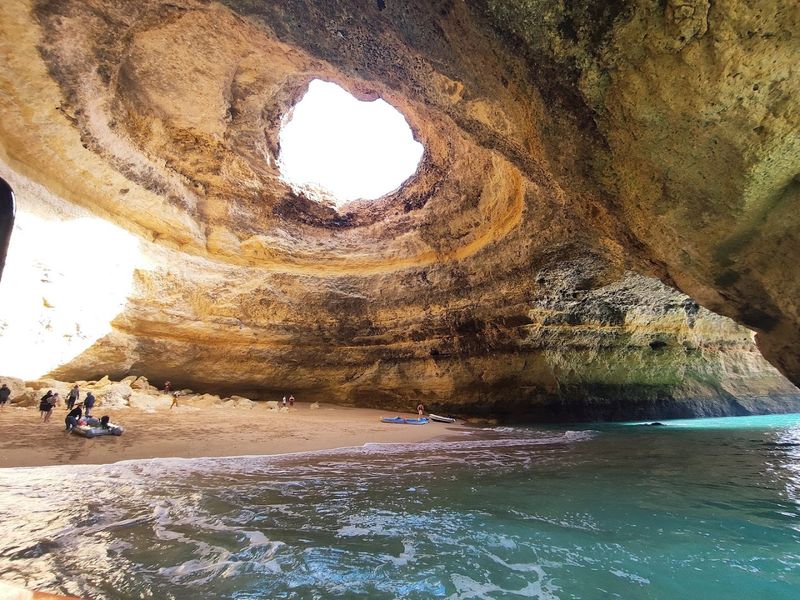
Golden cliffs carved by centuries of Atlantic waves make the Algarve one of the most jaw-dropping coastal regions on the planet. Stretching across southern Portugal, this sun-soaked strip of coastline packs in dramatic rock arches, hidden grottos, and powdery beaches that photographers absolutely lose their minds over.
Praia da Marinha is the crowd favorite, and honestly, the hype is well deserved. The water here is a ridiculous shade of blue-green, and the surrounding limestone formations feel almost too perfect to be real.
Snorkeling in the shallow coves reveals colorful marine life just beneath the surface.
Summer temperatures hover comfortably in the high 20s Celsius, making beach days genuinely enjoyable rather than unbearable. The Algarve also offers excellent seafood restaurants, boat tours through sea caves, and charming villages just a short drive inland.
Budget travelers will appreciate that Portugal remains one of Western Europe’s more affordable destinations, meaning your money stretches further here than almost anywhere else on this list.
Santorini, Greece
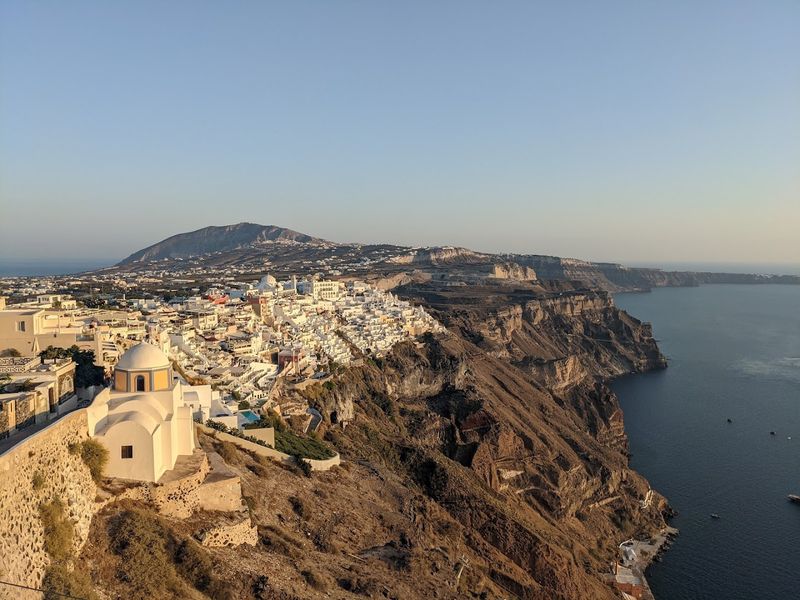
Nowhere else on Earth looks quite like Santorini — and that’s not an exaggeration. This crescent-shaped volcanic island sits in the southern Aegean, offering beaches that come in shades of black, red, and white depending on which ancient lava flow shaped them.
Kamari and Perissa are the most popular black sand beaches, lined with sunbeds, beach bars, and tavernas serving fresh grilled fish. Meanwhile, the red cliffs of Red Beach create a surreal, almost Mars-like backdrop that makes every photo look professionally edited.
The water stays warm and swimmable from May through October.
Beyond the beaches, the hilltop villages of Oia and Fira offer some of the most celebrated sunset views in the world. Many visitors combine a beach morning with an afternoon caldera cruise, stopping at hot springs warmed by underwater volcanic activity.
Santorini is undeniably popular, so booking accommodation and restaurants well in advance is strongly recommended. The island rewards early planners with experiences that feel genuinely magical rather than overcrowded — though arriving in shoulder season makes everything significantly more relaxed and affordable.
Mallorca, Spain
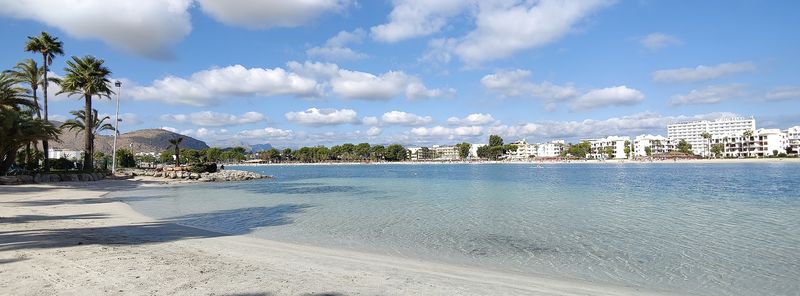
Spain’s largest Balearic island has a personality split that somehow works perfectly — loud and lively on one side, serenely hidden on the other. Mallorca serves up everything from packed resort beaches in Magaluf to completely secluded coves that feel like personal discoveries even in peak summer.
Cala Varques and Cala Mesquida are among the island’s best-kept secrets, requiring short hikes through pine forests before rewarding you with turquoise water and almost zero crowds. Es Trenc, a long natural beach in the south, feels genuinely wild and undeveloped compared to the typical Mediterranean resort strip.
The Serra de Tramuntana mountains running along the northwest coast add serious drama to the landscape, with coastal roads offering heart-stopping views at every bend. Mallorca’s food scene has quietly become one of the best in Spain, with markets, tapas bars, and upscale restaurants all worth exploring.
Palma, the island’s capital, mixes Gothic architecture with a buzzing nightlife scene. Whether you rent a car and chase hidden coves or simply park yourself on a sunbed with a cold drink, Mallorca consistently delivers exactly what beach holidays are supposed to feel like.
Sardinia, Italy
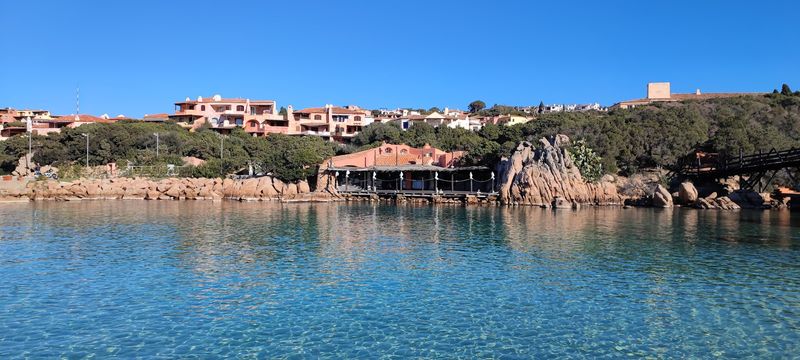
Travel writers keep comparing Sardinia to the Caribbean, and after one look at Cala Goloritzé, it’s genuinely hard to argue otherwise. The water clarity here is borderline absurd — you can see the sandy bottom from several meters down, with colors shifting from pale jade near the shore to deep sapphire further out.
Getting to some of Sardinia’s best beaches requires a bit of effort, which is precisely why they stay beautiful. Cala Goloritzé is accessible only by boat or a two-hour hike, and that walk through Mediterranean scrubland is absolutely worth every step.
La Pelosa in the north offers equally stunning water with the bonus of a medieval watchtower standing guard nearby.
Sardinia’s beaches are backed by a culture that takes food extremely seriously. Porceddu (roasted suckling pig), fresh pasta, and local Cannonau wine make beach days here feel genuinely celebratory.
The island also hosts some of Europe’s most important archaeological sites, including ancient Nuraghe stone towers scattered across the interior. Summer is peak season, but May and September offer warm weather with noticeably thinner crowds and better accommodation prices — a smart trade-off for flexible travelers.
Mykonos, Greece
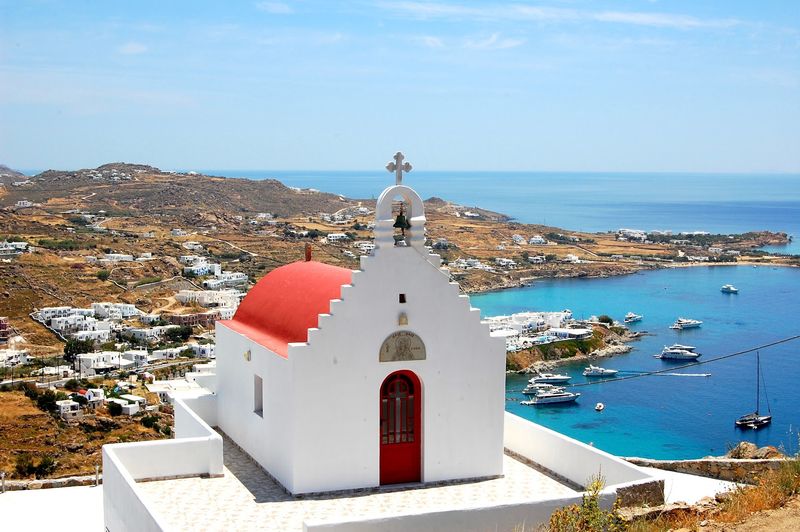
Few islands on Earth pack as much energy per square kilometer as Mykonos — this small Cycladic gem runs entirely on sunshine, sea breezes, and an enthusiastic party spirit that somehow never feels exhausting. Super Paradise and Paradise Beach are legendary for their beach club atmosphere, where music thumps from midday well into the evening.
Psarou Beach offers a calmer, more upscale vibe, attracting a crowd that prefers champagne to cocktails and people-watching to dancing. Agios Ioannis is quieter still, with a lovely view toward the island of Delos — an important ancient Greek archaeological site you can visit on a short boat trip.
The main town, Mykonos Town (also called Chora), is genuinely one of the prettiest in the Aegean, with narrow whitewashed lanes, bougainvillea spilling over doorways, and the famous row of windmills overlooking the sea. Pelicans wander the harbor streets like locals, completely unbothered by tourists.
Mykonos isn’t cheap — accommodation and dining costs sit firmly at the premium end — but the combination of beautiful beaches, excellent food, and an electric social atmosphere makes it one of those places that earns its reputation every single season.
Amalfi Coast, Italy
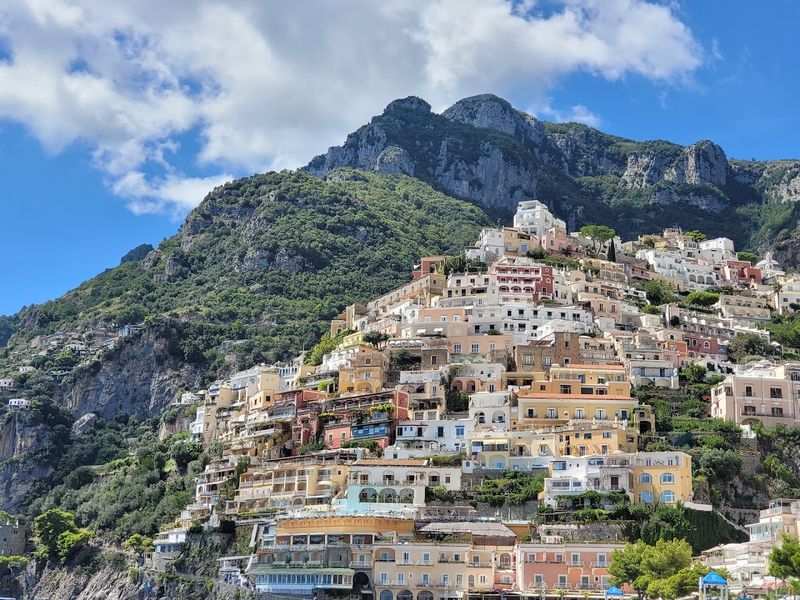
Clinging to cliffs above the Tyrrhenian Sea, the Amalfi Coast operates on the principle that beauty and inconvenience can absolutely coexist. The narrow, winding coastal road connecting villages like Positano, Ravello, and Amalfi itself is both terrifying and unforgettable — particularly when a tour bus squeezes past your rental car with centimeters to spare.
Positano’s small pebble beach is one of the most photographed in Italy, framed by pastel-colored buildings stacked dramatically up the hillside. The water is clean and swimmable, though serious swimmers tend to take boat trips to quieter coves around the headlands.
Ravello, perched high above the sea, offers garden views that have inspired writers and composers for centuries.
Lemon groves terraced into the cliffsides produce the famous Sfusato Amalfitano lemons used in limoncello, and you’ll find this bright yellow liqueur offered everywhere from restaurants to tiny roadside stalls. Boat rentals are a brilliant way to explore hidden sea caves and swimming spots inaccessible by road.
Visiting in June or September sidesteps the worst of the summer crowds while still guaranteeing warm water and reliable sunshine. The Amalfi Coast rewards those who slow down and soak it all in properly.
Ibiza, Spain
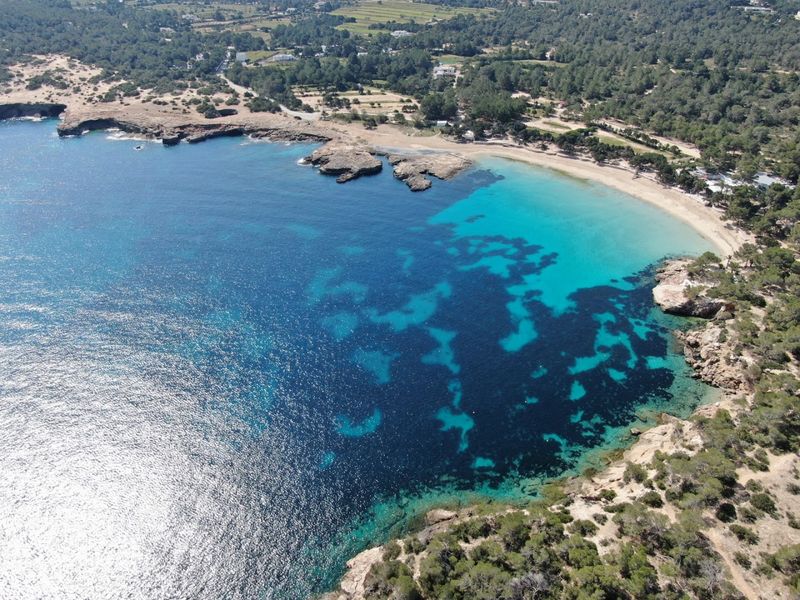
Ibiza has a reputation that precedes it by about 30 years of club music and celebrity sightings — but the island’s beaches tell a quieter, more beautiful story that often gets overlooked. Cala Conta, on the western coast, serves up one of the most spectacular sunsets in the Mediterranean, with flat rocks perfect for sitting and watching the sky turn orange and pink.
Cala d’Hort offers something genuinely dramatic: clear water with a direct view of Es Vedrà, a mysterious rocky islet rising sharply from the sea that locals have surrounded with legends for centuries. For those who do want the full Ibiza experience, Playa d’en Bossa is the longest beach on the island and sits at the heart of the club scene, lined with beach bars and DJ stages.
The old walled town of Dalt Vila, a UNESCO World Heritage Site, is worth a half-day of exploration regardless of your interest in nightlife. Ibiza’s food scene has matured considerably, with excellent restaurants serving fresh fish, local produce, and creative Mediterranean cuisine.
Families visiting in June or early September will find the island surprisingly manageable, with warm water, good beaches, and far fewer late-night crowds than peak July and August.
French Riviera, France
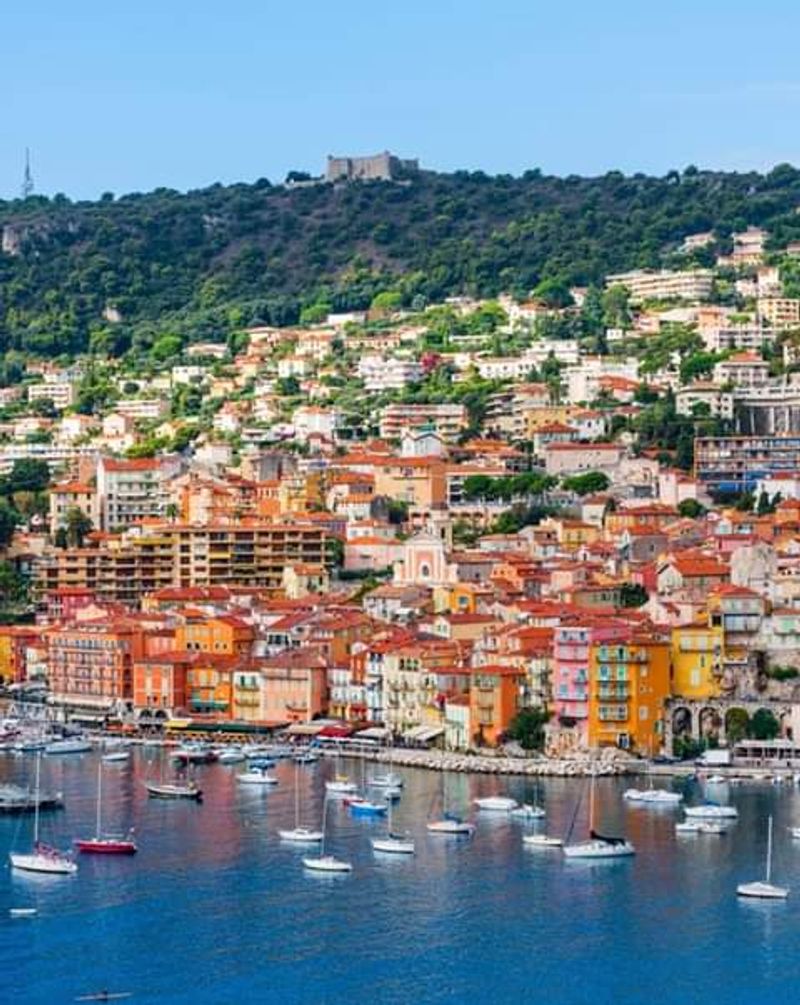
There’s a reason the French Riviera has been the playground of artists, royalty, and film stars for over a century — the light here is genuinely different, warmer and more golden than almost anywhere else in Europe. Nice, Cannes, and Antibes form the golden triangle of the Côte d’Azur, each offering its own distinct flavor of Mediterranean glamour.
Nice’s Promenade des Anglais stretches for seven kilometers along a pebble beach backed by grand Belle Époque hotels and buzzing cafés. The water is a deep, vivid blue that makes the surrounding white buildings glow.
Cannes is best known for its film festival, but outside of May, the Croisette promenade and sandy beaches are genuinely relaxing.
Cap d’Antibes hides some of the most exclusive and beautiful small beaches on the coast, accessible on foot along the coastal path that circles the cape. Juan-les-Pins has a lovely sandy beach and a jazz festival in July that draws music lovers from across Europe.
The French Riviera isn’t budget-friendly — a coffee on the Croisette costs what lunch costs elsewhere — but free public beach sections exist in most towns, making it accessible even without a designer budget. The scenery alone is worth every cent.
Dubrovnik Coast, Croatia
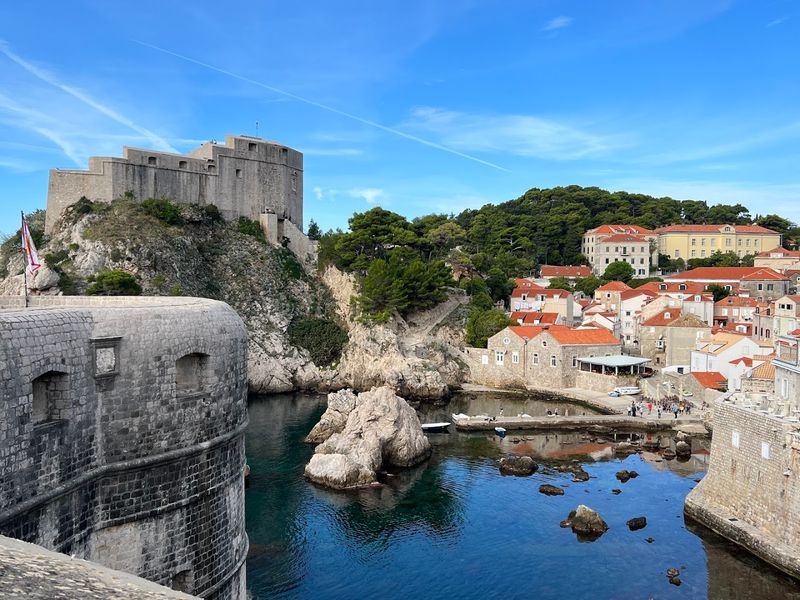
Banje Beach just outside Dubrovnik’s ancient city walls offers one of the most surreal beach experiences in Europe — you’re swimming in the Adriatic while staring up at a perfectly preserved medieval fortress that’s been standing for over 700 years. The combination of history and clear water makes this stretch of Croatian coastline genuinely unlike anywhere else.
The Elaphiti Islands, reachable by ferry from Dubrovnik’s port, offer a quieter escape with small villages, vineyards, and pebble beaches that feel miles away from the city’s tourist crowds. Lokrum Island, just a 15-minute boat ride from the old port, has a saltwater lake, botanical gardens, and a rocky swimming area popular with locals.
Croatia’s Adriatic water is famously transparent, with visibility reaching several meters in calm conditions — excellent news for snorkelers and kayakers exploring the coastline. The Dubrovnik coast is best visited in May, early June, or September, when the city is less overwhelmed and accommodation prices drop noticeably.
Game of Thrones fans will recognize many locations from the show, adding an extra layer of excitement for visitors who grew up watching Westeros. The old town itself is a UNESCO World Heritage Site and genuinely one of the most beautiful historic centers in Europe.
Comino, Malta
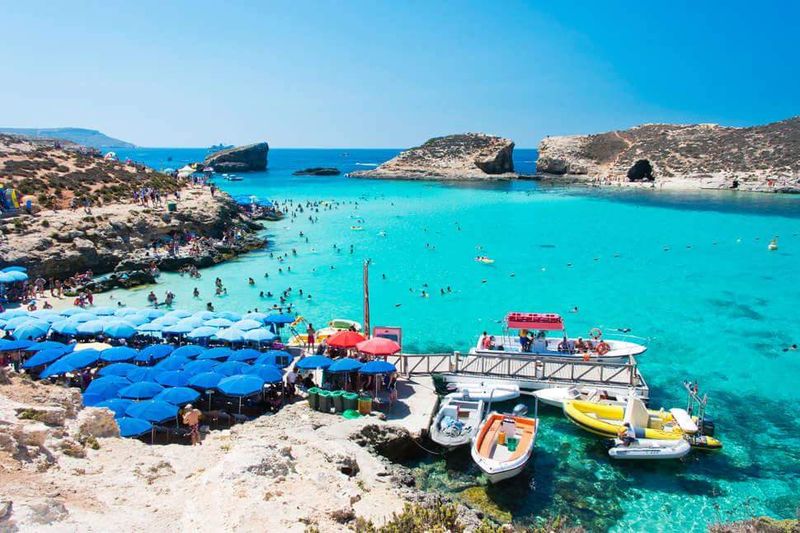
Comino is barely three square kilometers in size, has almost no permanent residents, and contains possibly the most outrageously colored water in the entire Mediterranean. The Blue Lagoon’s famous turquoise hue comes from a combination of shallow sandy seabed and the particular angle of southern Mediterranean sunlight — the result looks digitally enhanced even when you’re standing right in it.
The lagoon sits between Comino and the tiny uninhabited islet of Cominotto, creating a sheltered, shallow swimming area that’s warm, calm, and completely irresistible. Snorkeling here reveals sea urchins, small fish, and patches of vivid seagrass beneath the crystal surface.
Day trippers arrive by ferry from Malta and Gozo, which means mornings are quieter and afternoons get busy.
Arriving early — ideally before 10am — secures a good spot before the boats start crowding the lagoon. Comino has no cars, no shops, and no nightlife, which is exactly the point.
There’s one small hotel on the island if you want to stay overnight and experience the lagoon at dawn, when the water turns a soft, glowing jade before the crowds arrive. Malta itself is a fascinating destination with ancient temples, baroque architecture, and excellent food worth exploring around your beach days.
Canary Islands, Spain
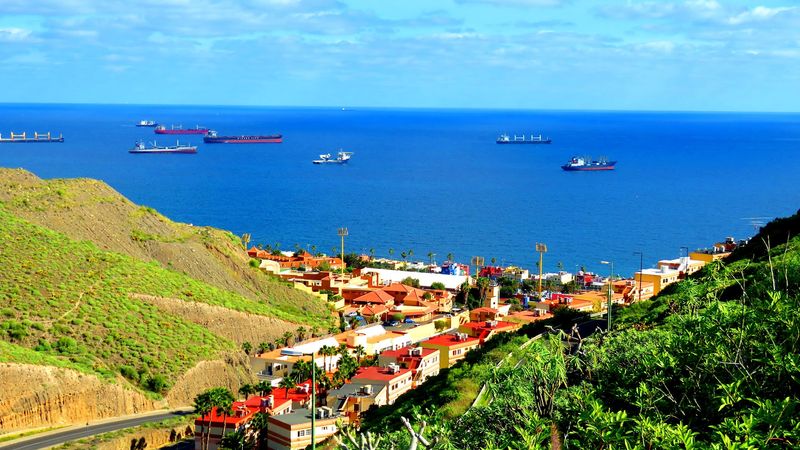
While most of Europe is shivering through January, the Canary Islands are sitting at a perfectly pleasant 20 degrees Celsius — which explains why these Spanish islands off the northwest coast of Africa are consistently among the continent’s most visited destinations year-round. Seven main islands make up the archipelago, each with a distinct landscape and personality.
Tenerife has the iconic Playa de las Teresitas, a golden beach artificially created using sand imported from the Sahara Desert — a fact that sounds absurd until you’re lying on it. Fuerteventura is the archipelago’s beach specialist, with over 150 kilometers of coastline including the spectacular Corralejo Dunes Natural Park.
Gran Canaria offers dramatic contrasts between resort beaches in the south and rugged mountain landscapes inland.
Lanzarote stands apart for its volcanic terrain, where black lava fields meet turquoise coves in combinations that feel genuinely otherworldly. El Hierro and La Palma attract divers and hikers seeking something far removed from resort tourism.
The Canary Islands’ consistent sunshine, affordable accommodation options, and direct flights from across Europe make them the go-to winter sun destination for millions of travelers every year. Pack light — you won’t need much more than sunscreen and swimwear for most of the trip.
Balos Lagoon, Crete, Greece
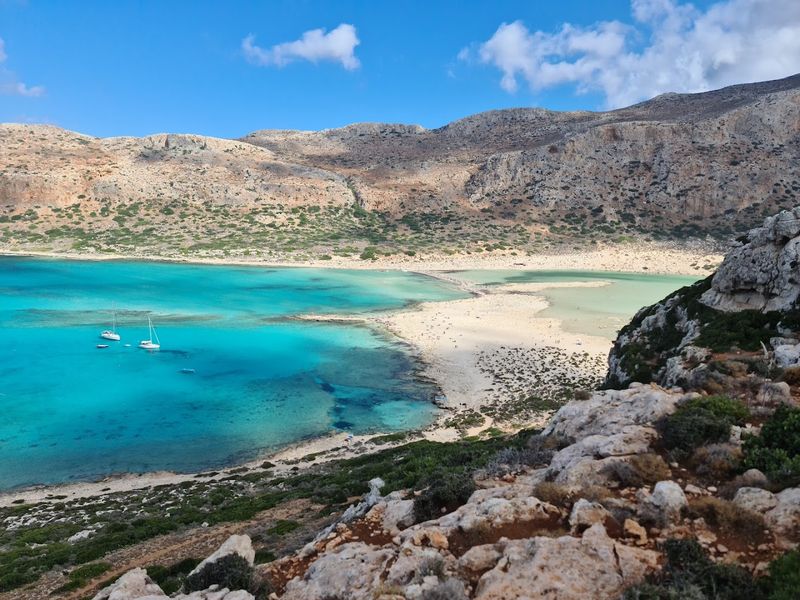
Some beaches look best in photos. Balos Lagoon looks better in person — which is saying something, because the photos are already extraordinary.
Located at the northwestern tip of Crete, this shallow lagoon is separated from the open sea by a narrow white sandbar, creating a natural swimming pool of pale turquoise water that barely reaches waist height.
Getting there is part of the adventure. Most visitors take a ferry from Kissamos, approaching by sea and watching the lagoon gradually reveal itself around the headland — a moment that reliably produces gasps from first-time visitors.
The alternative is a bumpy drive on a dirt road followed by a 20-minute downhill walk, rewarded by the same stunning view from above.
The water temperature in Balos is noticeably warmer than the surrounding sea due to the lagoon’s shallow depth, making it ideal for wading and snorkeling. Pink flamingos occasionally visit during migration seasons, adding an unexpected touch of the exotic to an already remarkable landscape.
The nearby Gramvousa Island, with its Venetian fortress ruins perched above the sea, makes an excellent half-day addition to the trip. Arriving early in the morning is strongly recommended — by midday, the lagoon draws considerable crowds and the sandbar fills quickly.
Porto Katsiki, Greece
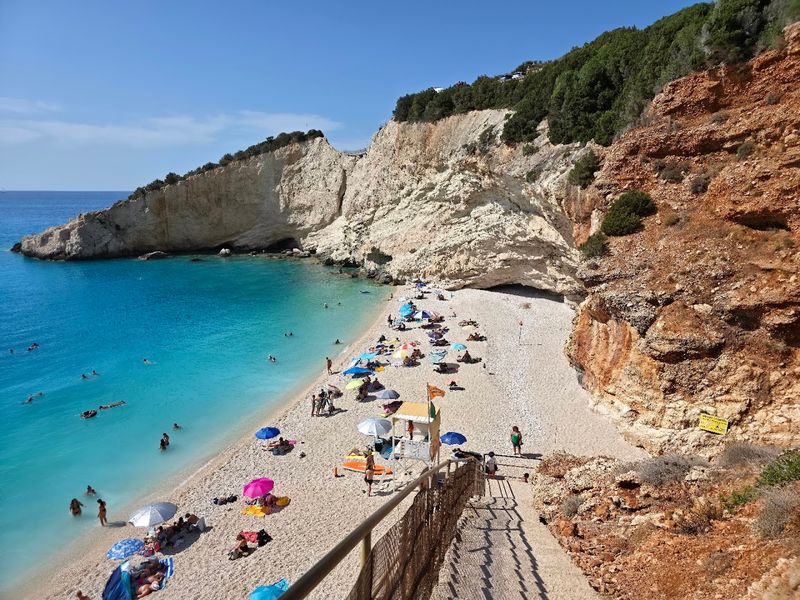
Standing at the top of the staircase leading down to Porto Katsiki and looking out over the Ionian Sea is one of those travel moments that genuinely stops you mid-breath. The cliffs here are white and nearly vertical, dropping straight to a pebble beach where the water glows an almost electric blue-green that seems too vivid to be natural.
Lefkada is one of the few Greek islands accessible by road — a causeway connects it to the mainland, which makes reaching Porto Katsiki refreshingly straightforward compared to island-hopping adventures. The beach itself is relatively small, and the steep stairs down (and back up) provide a workout that justifies the post-swim snack.
Sunbeds and a small refreshment stand operate during peak season.
The water’s remarkable color comes from the combination of white limestone seabed and the particular depth of the Ionian Sea, which is notably clearer and calmer than the Aegean. Windsurfers and kitesurfers flock to Vassiliki Bay on Lefkada’s southern coast, making the island a solid choice for active travelers who want more than just sunbathing.
Visiting in late May or early September hits the sweet spot of good weather, manageable crowds, and prices that haven’t hit their July-August peak. Porto Katsiki is the kind of place that converts skeptics into devoted Greece enthusiasts on sight.
La Concha Beach, Spain
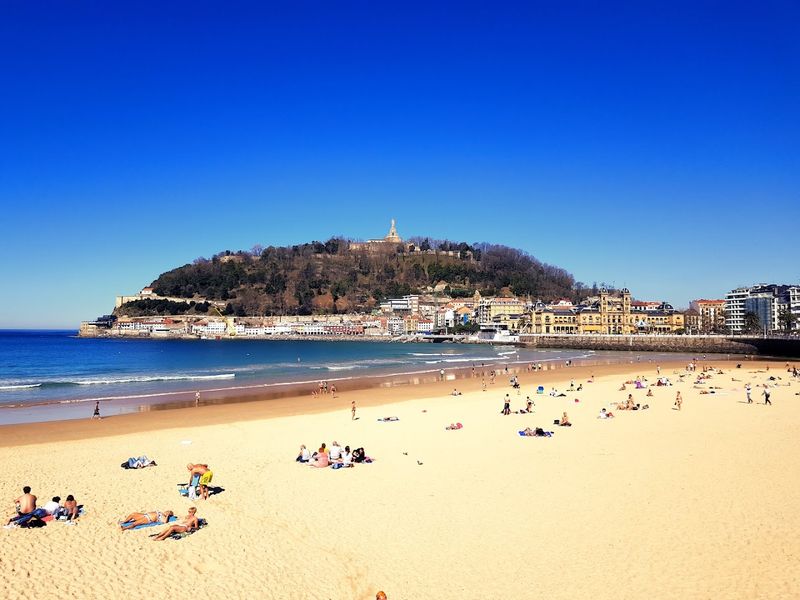
Voted Europe’s best urban beach so many times it’s practically retired the trophy, La Concha in San Sebastián pulls off a trick most city beaches can only dream of — it’s beautiful, clean, convenient, and genuinely fun to swim in. The bay curves in a near-perfect crescent around calm, sheltered water that stays swimmable throughout the long Basque summer.
The elegant promenade running along the beachfront is lined with ornate iron railings and backed by grand 19th-century hotels, giving the whole scene a refined, almost old-fashioned elegance that feels refreshingly unhurried. Families, couples, surfers, and elderly locals all share the beach with remarkable harmony — a testament to how well the city manages its greatest natural asset.
San Sebastián is also, by most serious accounts, one of the best food cities in the world. The old town (Parte Vieja) sits just minutes from the beach and contains more Michelin-starred restaurants per square kilometer than almost anywhere on Earth.
Pintxos bars line every street, offering bite-sized Basque snacks that pair brilliantly with local txakoli wine. The combination of a world-class beach and a world-class food scene in one compact, walkable city makes San Sebastián one of Europe’s most complete destinations for travelers who refuse to compromise on either swimming or eating well.
Navagio Beach, Greece
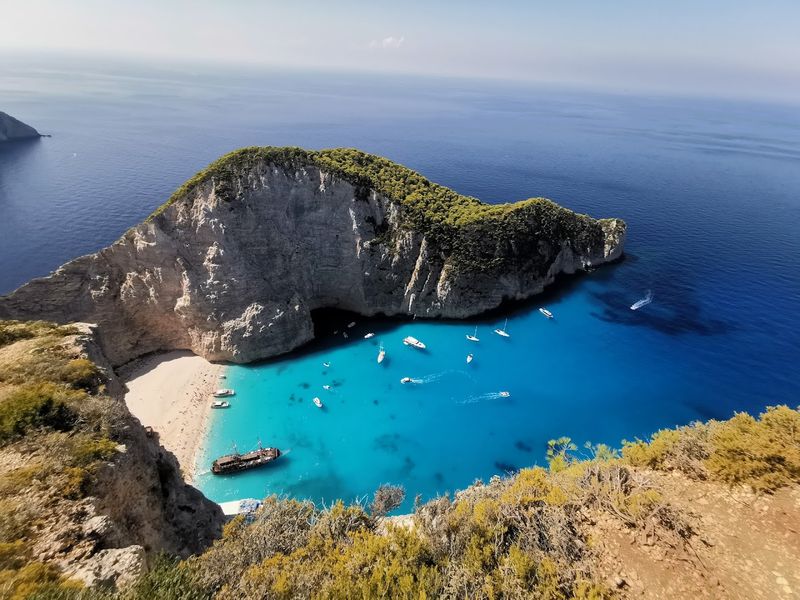
A rusted shipwreck sitting on brilliant white sand, surrounded by towering white limestone cliffs and water so blue it looks painted — Navagio Beach on the island of Zakynthos is the kind of place that makes people wonder if they’ve accidentally walked into a screensaver. The MV Panagiotis ran aground here in 1980, allegedly carrying contraband cigarettes, and has been slowly rusting into an icon ever since.
The beach is completely enclosed by cliffs and has no road access — the only way in is by boat, which actually works in its favor. Tour boats depart regularly from Zakynthos Town and Porto Vromi, and the approach by sea, rounding the headland to suddenly see the full panorama, is one of the great arrival moments in European travel.
Swimming here feels dramatic in the best possible way.
The clifftop viewpoint above Navagio is accessible by car and offers a breathtaking top-down perspective of the entire scene — popular for photographs at golden hour when the light turns the cliffs amber and the water deepens to indigo. Zakynthos also hosts the endangered loggerhead sea turtle (Caretta caretta), which nests on beaches in the south of the island.
Visiting between June and September gives the best weather, though July and August bring the largest crowds to what is, ultimately, a very small beach.
Praia da Marinha, Portugal
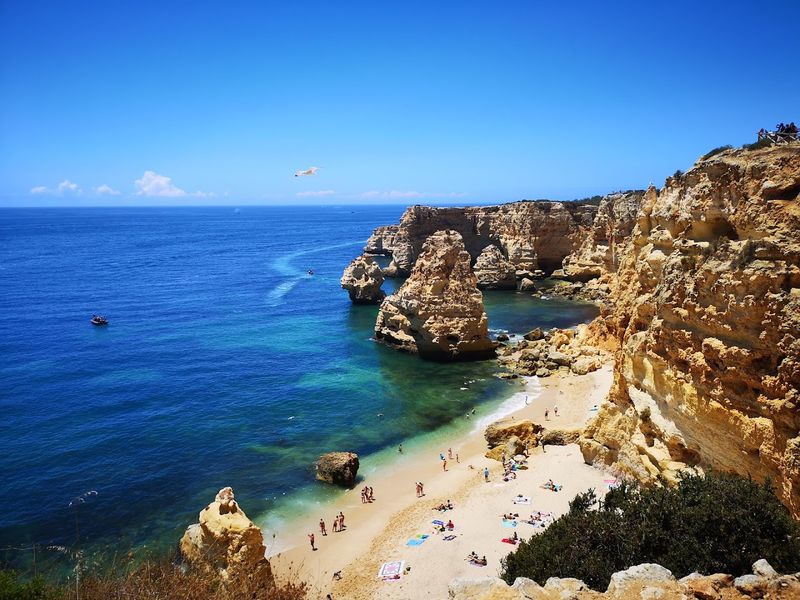
Praia da Marinha has appeared on so many “most beautiful beaches in Europe” lists that it’s essentially become the standard other beaches are measured against. Tucked into the Algarve coastline about 20 kilometers east of Lagoa, it’s framed by extraordinary golden limestone formations — arches, stacks, and sea caves that erosion has spent millennia sculpting into natural art.
The beach itself is relatively small and the path down from the clifftop car park is steep, which naturally filters out anyone unwilling to make a minor effort. The reward is water so clear you can count the rocks on the seabed from the surface, and snorkeling conditions that regularly draw enthusiasts from across Europe.
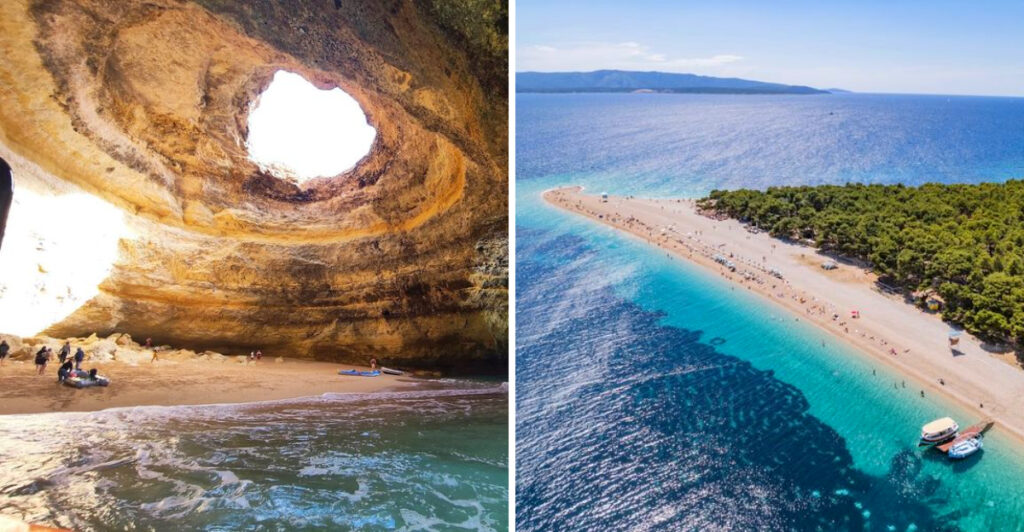
Kayak tours departing from nearby Benagil are an excellent way to explore the sea caves, including the famous Benagil Cave with its domed ceiling open to the sky.
Praia da Marinha sits within a protected marine reserve, which helps explain why the water quality and marine life here remain exceptional. Octopus, moray eels, and colorful reef fish are commonly spotted by snorkelers.
Morning visits avoid the worst of the midday crowds and offer the best light for photographs. The Algarve’s reliable sunshine and mild sea temperatures from May through October make this one of Europe’s longest viable beach seasons — a significant advantage over northern European alternatives.
Zlatni Rat, Croatia
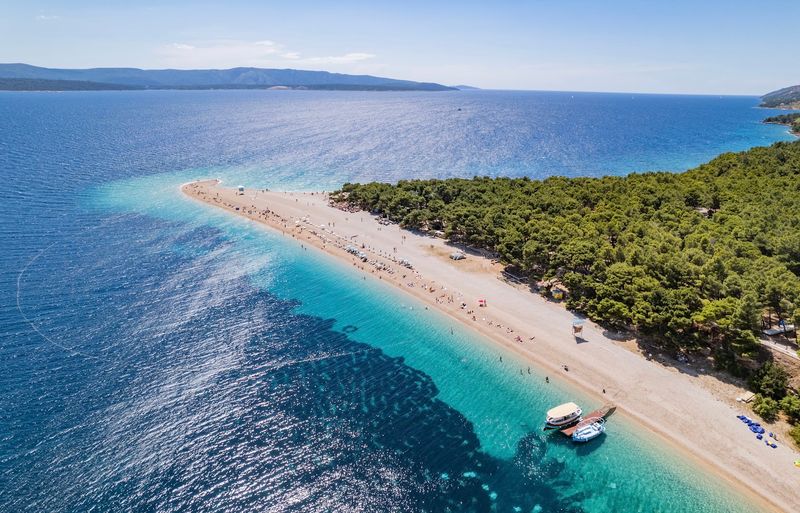
Zlatni Rat is one of those geographical curiosities that makes you do a double take — a narrow white pebble cape that extends 634 meters into the Adriatic Sea, shifting its shape and direction depending on wind and tidal currents. It’s essentially a beach that can’t make up its mind, and that restless quality makes it one of Croatia’s most fascinating natural features.
Located on the island of Brač, just a short ferry ride from Split, Zlatni Rat attracts windsurfers and kitesurfers who take full advantage of the reliable Maestral wind that blows across the cape most afternoons. The pebble surface is smooth and comfortable underfoot, and the surrounding pine forest provides welcome shade during the hottest parts of the day.
The nearby town of Bol is charming and walkable, with good restaurants, an old Dominican monastery overlooking the sea, and a relaxed pace that feels genuinely Croatian rather than manufactured for tourism. Brač is also famous for its high-quality white limestone, which was used to build Diocletian’s Palace in Split and, allegedly, the White House in Washington D.C. — a fact locals mention with considerable pride.
Visiting Zlatni Rat in late June or early September combines ideal beach conditions with the kind of crowd levels that actually allow you to find a decent spot on the pebbles.
Palombaggia, Corsica, France
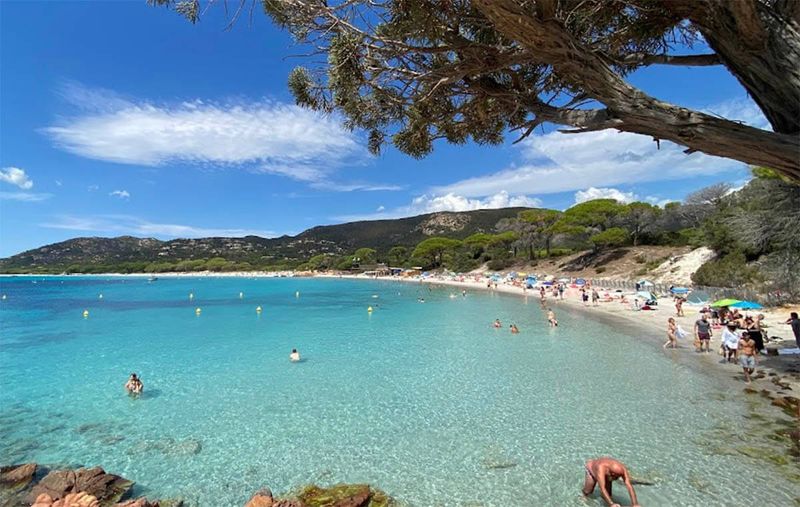
Corsica is the kind of island that makes other Mediterranean islands quietly nervous about the competition, and Palombaggia is exhibit A in the case for why. Located near Porto-Vecchio in the south of the island, this beach combines white sand, turquoise water, red granite boulders, and a fringe of umbrella pines into a combination that seems almost deliberately designed to be perfect.
The water here is shallow near the shore and deepens gradually, making it excellent for families with younger children. The red granite rocks scattered along the beach create natural windbreaks and interesting swimming channels, while the pine forest behind the beach provides shade for those who’ve had enough direct sun.
Beach bars and restaurants operate seasonally, serving Corsican charcuterie, fresh fish, and local rosé wine.
Corsica itself is a fascinating blend of French and Italian influences, with a fiercely independent local culture and cuisine that reflects centuries of distinct history. The interior of the island is surprisingly wild — full of mountain gorges, ancient villages, and long-distance hiking trails like the famous GR20.
Porto-Vecchio town, just a short drive from Palombaggia, has excellent restaurants and a lively evening atmosphere. Visiting in June or early September avoids the peak August crowds when the beach and its access roads become genuinely congested.
Corsica rewards those who plan slightly ahead.
Nissi Beach, Cyprus
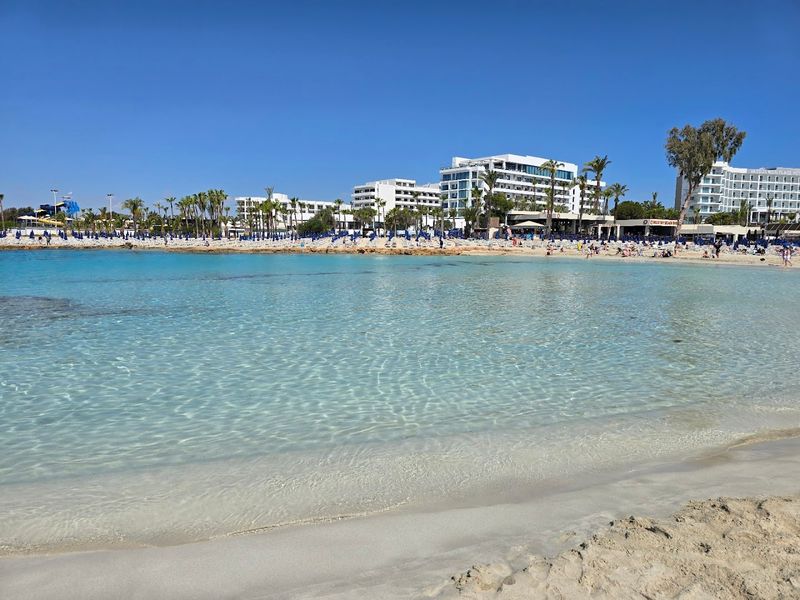
Connected to a small rocky islet by a narrow sandbar you can actually walk across at low tide, Nissi Beach near Ayia Napa has a layout that feels engineered for maximum fun — which, given Cyprus’s tourism industry, it essentially has been. The water is warm, shallow, and remarkably clear for a beach this popular, staying calm enough for young swimmers while offering enough space for jet skis and banana boats further out.
The beach runs about 500 meters and is backed by beach clubs, bars, and water sports operators that keep things lively from morning well into the evening. Nissi has a reputation as a party beach, and that reputation is accurate — but the first two hours of the morning, before the DJs start and the crowds arrive, it’s actually quite peaceful and beautiful.
Cyprus enjoys more sunshine hours annually than almost any other European Union country — around 340 days per year — which means the beach season here stretches from April through November, long after most Mediterranean destinations have packed up for winter. The surrounding Ayia Napa area has improved its food and cultural offerings significantly in recent years, with a new sculpture park and marina adding interest beyond the nightlife.
Water temperatures in July and August reach a genuinely bath-like 28 degrees Celsius, making evening swims as appealing as morning ones.
Share this story