Public statues were never just decoration. They were civic choices, often installed decades after the events they commemorated, and they reveal as much about the era that raised them as the figures they portrayed.
Across the United States, cities, campuses, museums, and parks have spent the last several years rethinking who belongs in shared spaces, especially as debates over slavery, colonization, race, and public memory moved from academic circles into city council meetings and neighborhood conversations. What follows is not a tour of rubble or outrage, but a grounded look at how 18 well-known monuments rose, lingered, and ultimately came down, often after years of petitions, lawsuits, and public argument.
If you want the bigger story behind the headlines, these removals show how Americans keep renegotiating history in plain view.
1. Robert E. Lee (Richmond, Virginia)
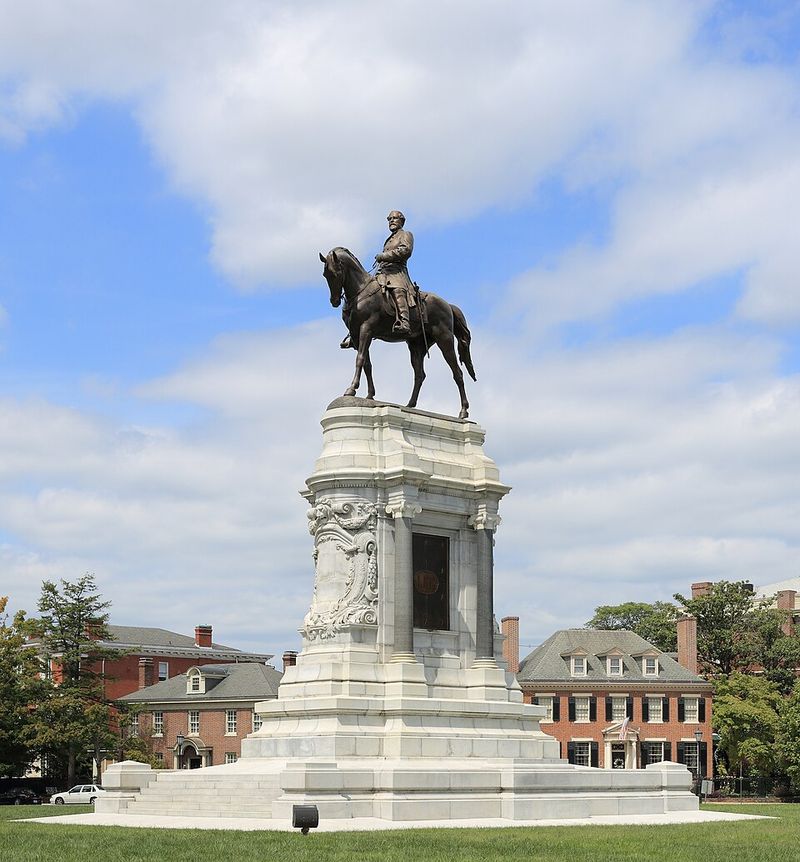
For years, this monument functioned like the headline of Monument Avenue. Unveiled in 1890, Richmond’s enormous Robert E.
Lee statue was installed during the rise of Lost Cause memory, when former Confederate leaders were recast as noble symbols rather than political defenders of slavery.
The bronze figure sat on a massive pedestal and became one of the city’s most recognizable landmarks. Supporters called it heritage, but critics pointed out that its timing mattered: the statue arrived alongside segregationist power, public mythmaking, and a deliberate shaping of civic memory that favored white Southern elites.
Debate over removal stretched for years, then accelerated in 2020 as protests transformed the monument’s meaning in real time. The pedestal became covered with art and messages, court fights followed, and Virginia officials argued the state should no longer maintain a monument that many residents saw as exclusionary.
In September 2021, the statue was finally removed by the state after a lengthy legal battle. The pedestal remained for a period, but the bronze rider was gone, ending the reign of a monument that once seemed untouchable and proving that public memory can change even when stone and bronze look permanent.
2. Jefferson Davis (New Orleans, Louisiana)
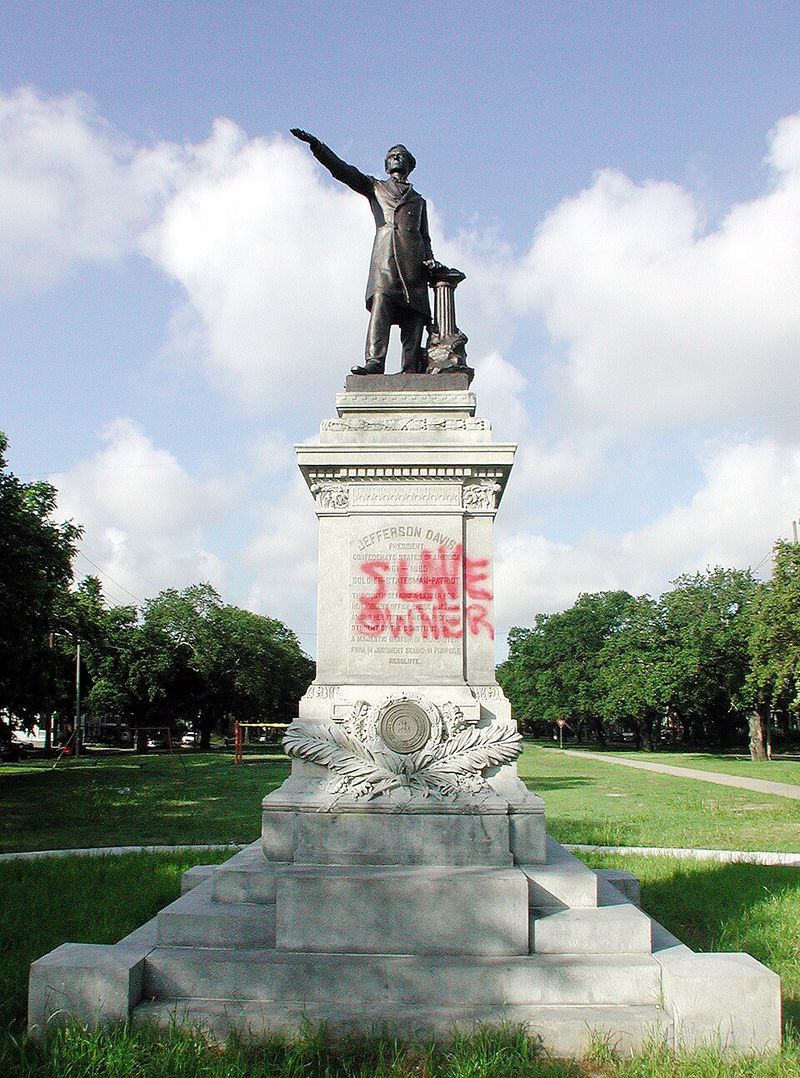
Some monuments stay up so long that people mistake endurance for consensus. New Orleans installed its Jefferson Davis monument in 1911, honoring the president of the Confederacy during a period when white civic leaders across the South used statues to reinforce a selective reading of the Civil War.
Davis was not simply a regional politician with a complicated biography. He led a government built to preserve slavery, and that fact increasingly shaped public opinion as historians, residents, and activists pushed the city to reconsider whether such an honor belonged in a modern public space.
Mayor Mitch Landrieu’s administration made the monument part of a larger removal effort that also targeted other Confederate memorials. The process was anything but simple, involving lawsuits, heated meetings, private contractors, and security concerns, all of which turned one statue into a national conversation about who public monuments are really for.
In May 2017, the Jefferson Davis statue came down after more than a century in place. Its removal did not erase the history behind it, but it did end the city’s official tribute to a Confederate leader and marked a major turning point in the broader American debate over commemorative landscapes.
3. Stonewall Jackson (Richmond, Virginia)
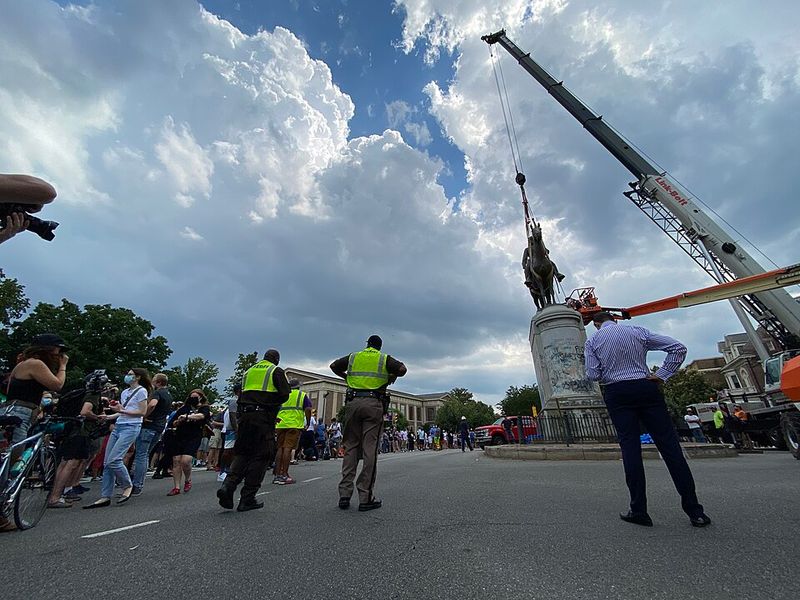
If Monument Avenue once read like a marble and bronze syllabus, Stonewall Jackson had a featured chapter. His equestrian statue, dedicated in 1919, joined Richmond’s growing pantheon of Confederate icons at a time when public memory in the city was being carefully curated through monumental scale and selective storytelling.
Jackson’s reputation as a military commander helped keep his image prominent for generations. Yet the monument never stood apart from the politics of its era, and critics argued that honoring Confederate leaders in prestigious public spaces normalized a distorted version of history while sidelining the people most harmed by the cause they served.
Momentum for removal intensified in 2020 after nationwide demonstrations sparked renewed scrutiny of public monuments. Richmond, long associated with Confederate memorial culture, began moving faster than many expected, and city leaders framed the statue’s future as part of a wider reassessment of what kind of civic message the capital should project.
The statue was removed in July 2020, years before some observers thought Richmond would seriously act. Its departure signaled that Monument Avenue was no longer a fixed museum of Confederate remembrance, but a contested public space where older commemorative decisions could be reviewed, revised, and, when necessary, reversed.
4. Confederate Soldiers and Sailors Monument (Indianapolis, Indiana)
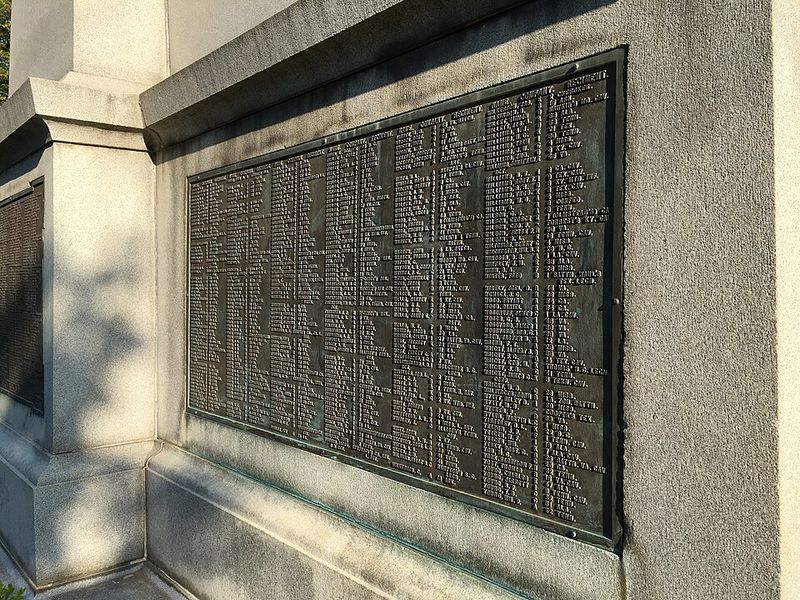
Not every monument debate centers on a single famous name. Indianapolis’s Confederate Soldiers and Sailors Monument, originally transferred from a Confederate burial site and later placed in Garfield Park, reflected an older commemorative habit in which memorial language softened the politics behind the Confederacy and presented remembrance as neutral.
That framing became harder to sustain over time. Residents and local activists questioned why a Northern city should continue prominently displaying a monument tied to the Confederate cause, especially when public interpretation often failed to explain the larger context of slavery, reconciliation politics, and selective memorial practices.
In 2020, city officials responded to growing pressure by removing the monument from Garfield Park. The decision came during a period of rapid reassessment nationwide, but Indianapolis had its own local reasoning too: public space was being reevaluated not simply for historical age, but for the values a city wanted to elevate in plain sight.
The monument’s removal showed how even lesser-known memorials can become flashpoints once people start asking who commissioned them, why they were placed where they were, and what message they still send. It was a reminder that public honor is an active choice, not an automatic lifetime appointment.
5. Albert Pike (Washington, D.C.)
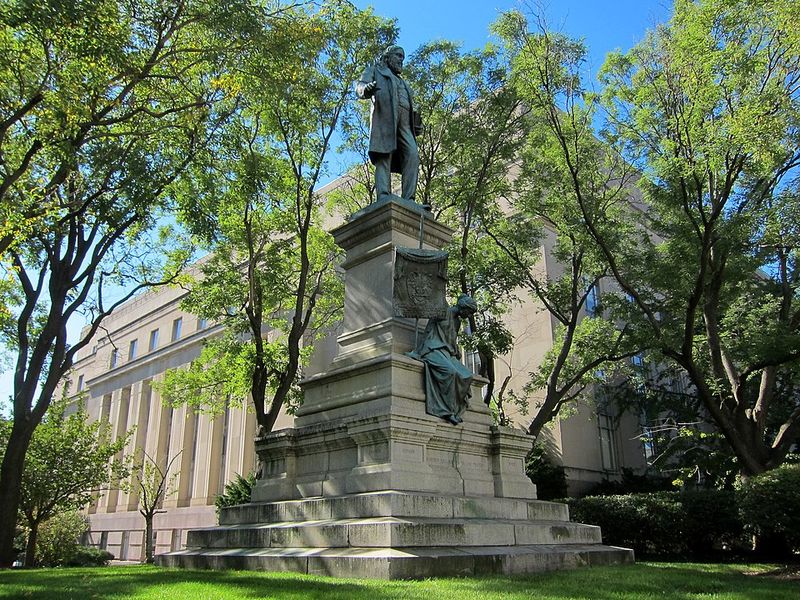
Washington had only one outdoor Confederate statue on federal land, which gave Albert Pike a strange kind of distinction. Installed in 1901 near Judiciary Square, the monument honored a Confederate brigadier general who was also known for his role in Freemasonry, an unusual blend that puzzled many people even before its history drew closer scrutiny.
Pike was hardly a household name compared with Lee or Davis, but the monument’s symbolism became more glaring as public awareness grew. Critics noted the contradiction of the nation’s capital maintaining a Confederate memorial, particularly in a city whose residents had long debated representation, democracy, and the meaning of federal public space.
During protests in June 2020, the statue was pulled down by demonstrators and later removed by authorities. That sequence made headlines because it collapsed years of slow-moving debate into a single dramatic moment, forcing officials to address a monument that many had previously ignored or barely noticed.
The statue’s disappearance closed the chapter on the capital’s last Confederate outdoor monument. More than that, it highlighted how obscure memorials can suddenly matter once people examine what they commemorate, who sponsored them, and why bronze tributes in prominent places are never as neutral as they first appear.
6. Christopher Columbus (Los Angeles, California)
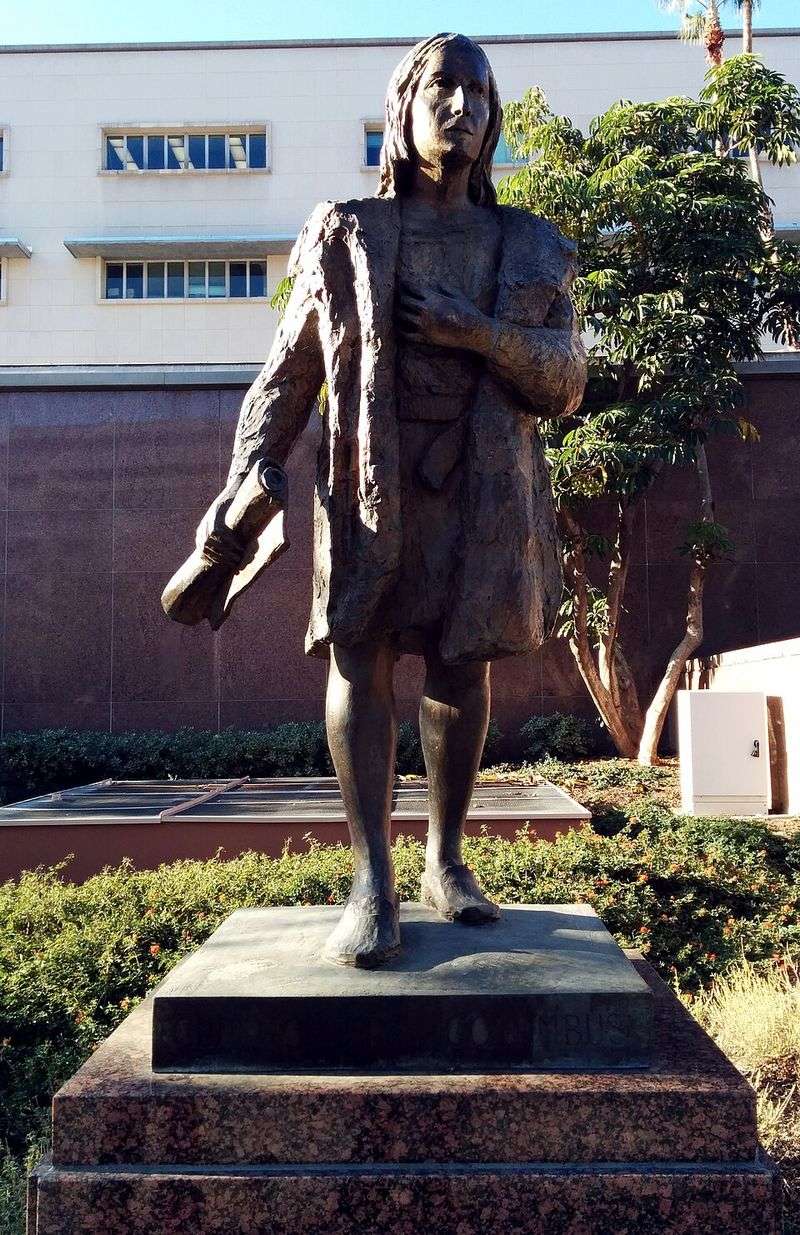
Few historical figures have had a public-image swing quite like Christopher Columbus. In Los Angeles, his statue in Grand Park was installed in 1973, a period when Columbus monuments often served as broad symbols of exploration and ethnic pride, especially for Italian American communities seeking civic recognition.
By the twenty-first century, that older framing faced deeper criticism. Scholars, Indigenous activists, and many residents argued that honoring Columbus ignored the devastating consequences of European colonization and kept outdated heroic narratives in prime public locations without sufficient context or acknowledgment of those affected.
Los Angeles officials voted in 2018 to remove the statue and simultaneously replace Columbus Day with Indigenous Peoples Day. That pairing mattered because it showed the city was not simply subtracting one symbol, but also redefining which histories deserved public emphasis in parks, calendars, and civic language.
The statue came down later that year, marking a clear shift in Southern California’s commemorative landscape. What had once seemed like a standard civic monument now looked out of step with the city’s evolving values, demographic realities, and growing willingness to revisit monuments installed during an earlier, less-questioned historical script.
7. Christopher Columbus (St. Paul, Minnesota)
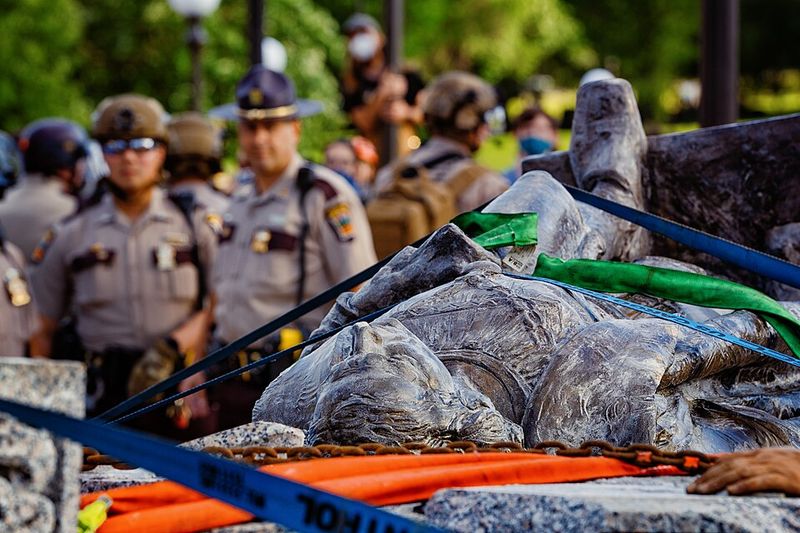
A monument can stand for decades and still become newly controversial almost overnight. The Christopher Columbus statue on the Minnesota State Capitol grounds in St. Paul had been dedicated in 1931, reflecting a familiar era when Columbus was widely presented in textbooks and public art as an uncomplicated national hero.
That consensus had been weakening for years before 2020. Indigenous organizers in Minnesota repeatedly challenged the monument, arguing that its location on state capitol grounds gave official approval to a celebratory version of colonization that ignored Native history and the continuing political life of Dakota and Ojibwe communities.
In June 2020, protesters pulled the statue down during demonstrations that pushed monument debates into urgent public view. The action drew major attention, but it also followed long-standing local activism, making clear that the toppling was not a spontaneous historical discovery but part of a larger, sustained challenge.
State officials later moved to preserve the statue for possible future placement elsewhere rather than restore it to its original spot. That decision captured a broader pattern in monument debates: communities were not just arguing about bronze, but about whether government grounds should continue displaying symbols rooted in older, narrower definitions of American achievement.
8. Theodore Roosevelt (New York City, New York)
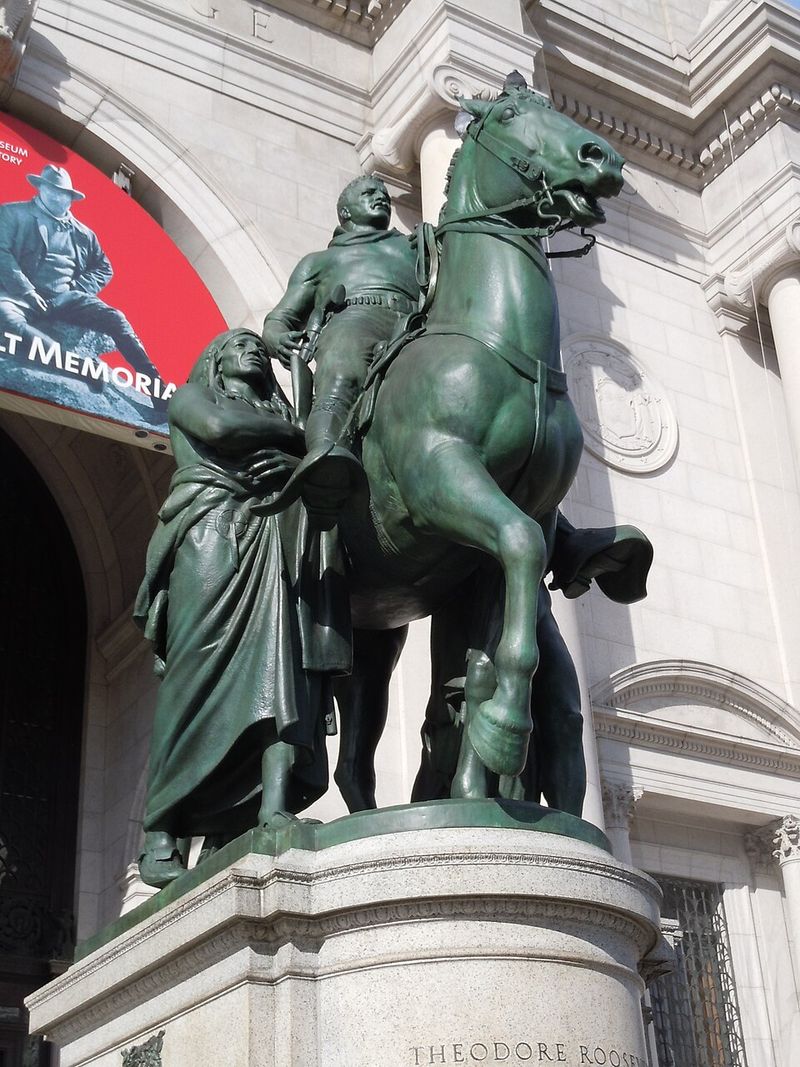
Sometimes the controversy is less about the famous person than the way a monument stages power. The Theodore Roosevelt equestrian statue outside the American Museum of Natural History, installed in 1940, depicted Roosevelt on horseback flanked by an Indigenous man and an African man on foot, a composition many critics saw as visually encoding hierarchy.
Roosevelt’s own legacy is broad and contradictory, spanning conservation, imperial policy, reform politics, and muscular national image-making. Yet the statue’s problem for many observers was immediate and specific: whatever its intended symbolism, the arrangement suggested unequal status and turned the museum entrance into an argument rendered in bronze.
After years of criticism, the museum requested the statue’s removal in 2020, and city authorities agreed. The process moved through official channels rather than sudden protest alone, reflecting an institutional willingness to distinguish between studying Roosevelt’s history and maintaining a public artwork whose message had become increasingly difficult to defend.
The monument was removed in 2022 and sent on loan to a presidential library project in North Dakota. That outcome underlined an important shift: rather than disappear entirely, some statues now move from celebratory public plazas to settings where context, interpretation, and debate can accompany them more directly.
9. Junípero Serra (San Francisco, California)
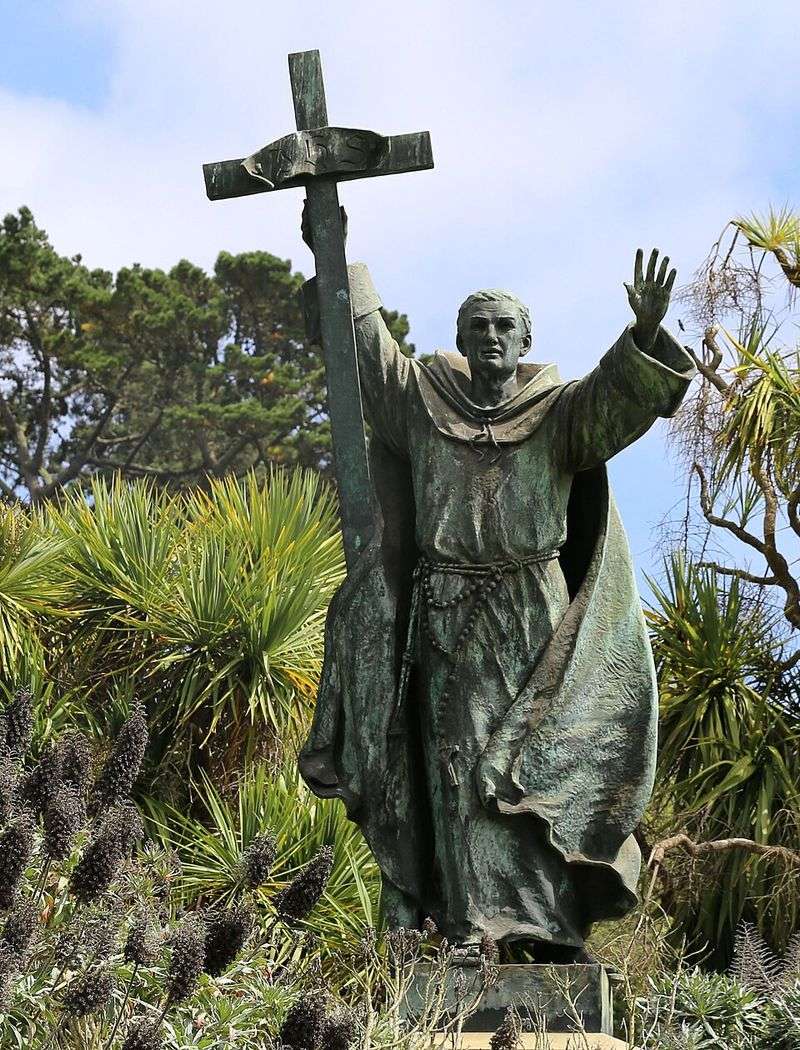
California’s monument debates took a sharp turn when mission history moved to the center of public discussion. In San Francisco, the statue of Junipero Serra in Golden Gate Park honored the eighteenth-century Franciscan priest associated with the mission system, long presented in many civic narratives as a founder figure.
That image had been challenged for decades by Native activists, historians, and educators who emphasized the coercive effects of the mission system on Indigenous communities. Serra’s canonization in 2015 had already intensified argument, making his statues focal points in a wider reassessment of how California tells its early colonial history.
In June 2020, protesters pulled down the statue as demonstrations spread across the country. The act placed Serra alongside other contested historical figures, but the California context was distinctive because the debate centered not only on race and public memory broadly, but also on the specific legacy of Spanish colonization and mission governance.
The statue was not restored to its previous place, and its removal signaled a major symbolic shift in a state where mission imagery had long shaped school lessons, tourism, and local identity. Suddenly, a once-standard civic tribute looked less like heritage and more like a public history argument overdue for revision.
10. Junípero Serra (Los Angeles, California)
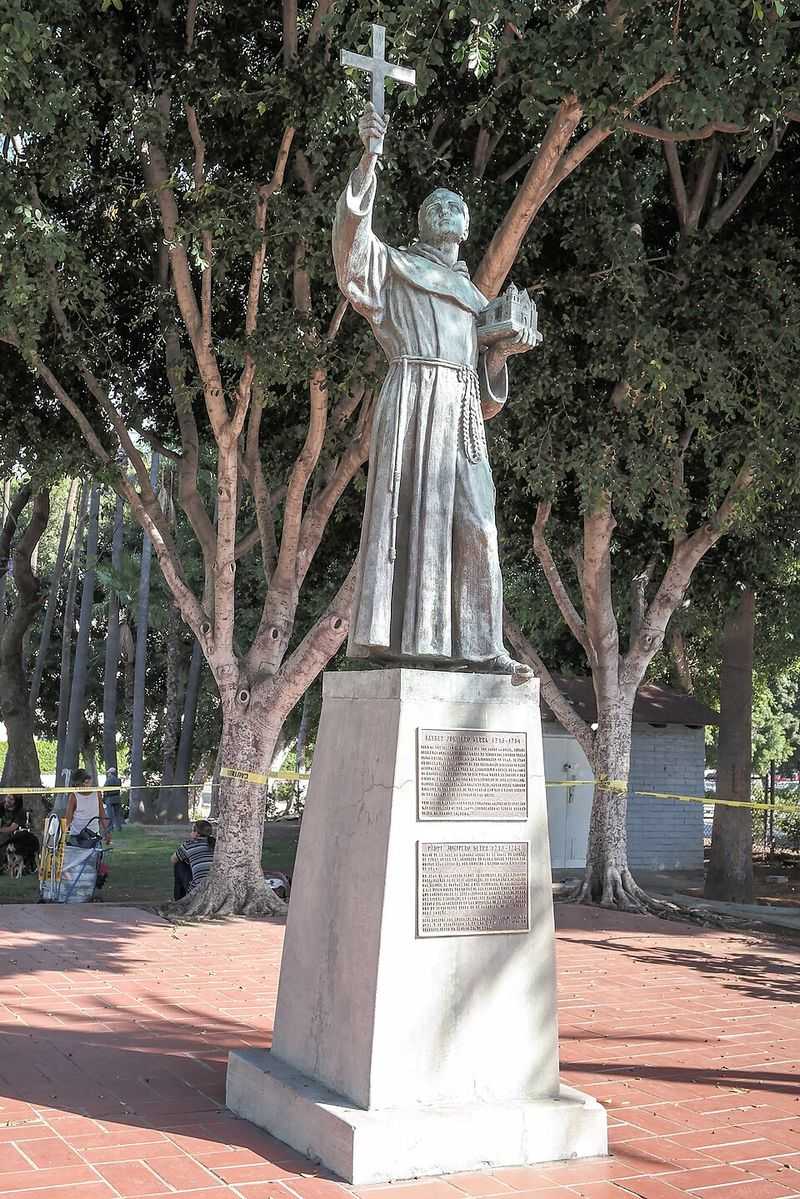
One state’s reassessment can unfold city by city, with each removal adding new pressure to the next. Los Angeles removed a Junipero Serra statue in 2020 after local leaders and community advocates argued that a public monument honoring Serra no longer matched the city’s understanding of Indigenous history and colonial power.
For generations, Serra had been elevated in California iconography as a missionary pioneer tied to the state’s early development. That narrative increasingly collided with scholarship and Indigenous testimony describing forced labor, cultural disruption, punishment systems, and the broader role of missions in reshaping Native life under Spanish rule.
The decision in Los Angeles reflected more than a sudden wave of protest. It also emerged from years of changing educational conversations, broader visibility for Native activism, and growing public skepticism toward older commemorative habits that rewarded colonizing figures with bronze permanence while minimizing those who lived under the systems they advanced.
When the statue came down, it became part of a statewide pattern rather than an isolated local gesture. California was quietly rewriting its public landscape, and Serra’s removal showed how quickly a once-celebrated founder figure could shift into a subject better suited for museums, classrooms, and debate than for unquestioned civic honor.
11. Francis Scott Key (San Francisco, California)
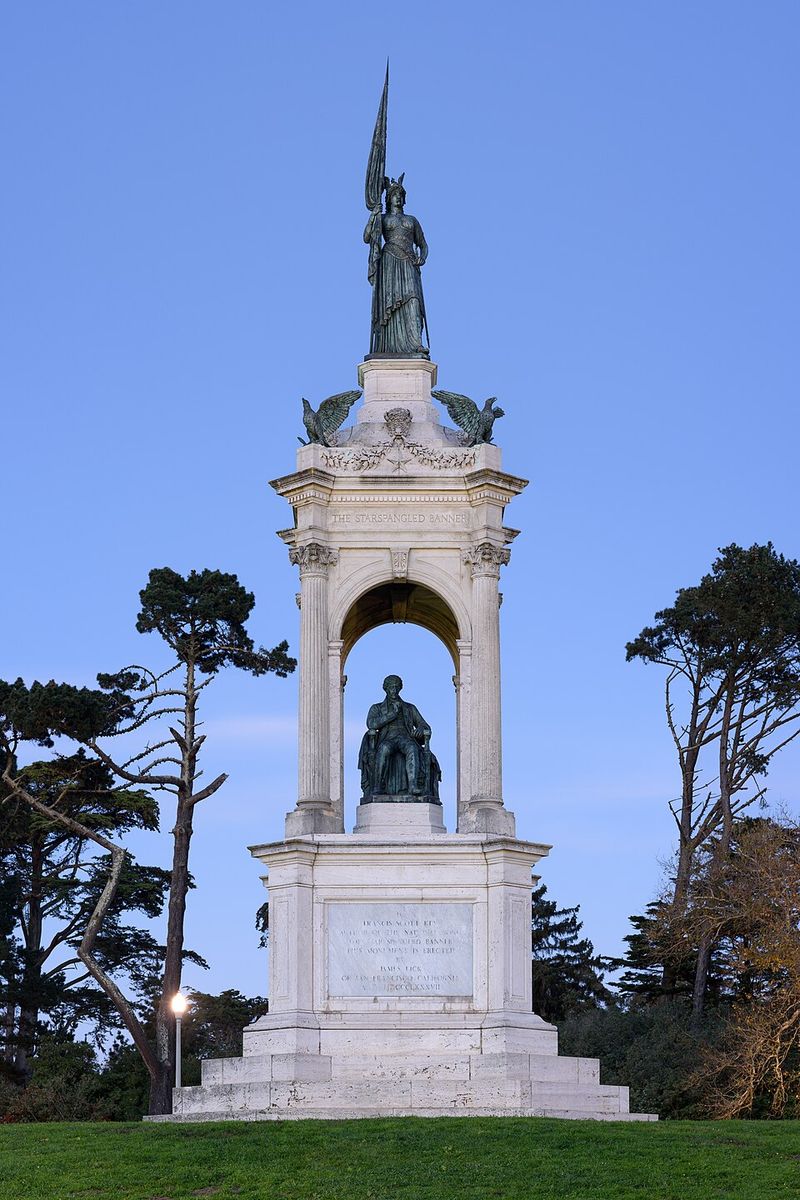
Not every toppled statue leaves the public saying, wait, that one too. Francis Scott Key, best known for writing the poem that became the national anthem, had a monument in San Francisco’s Golden Gate Park that stood for more than a century before protesters pulled it down in 2020.
To many Americans, Key had long occupied a patriotic category that seemed insulated from monument controversy. Yet historians and activists pointed to his slaveholding and anti-abolition positions, arguing that public memory had reduced him to a neat anthem footnote while overlooking the larger political commitments embedded in his life and career.
The statue’s fall surprised people who had not followed the broader reassessment of commemorative figures. That surprise itself was revealing, because it showed how public monuments often preserve a simplified version of history, rewarding a single achievement while leaving inconvenient context in smaller print or outside the frame altogether.
San Francisco did not reinstall the monument, and the event widened the national conversation beyond Confederate leaders alone. Once cities began asking what public honor actually means, even figures tied to familiar patriotic symbols came under closer review, proving that the monument debate was about civic values, not just obvious historical villains.
12. Ulysses S. Grant (San Francisco, California)
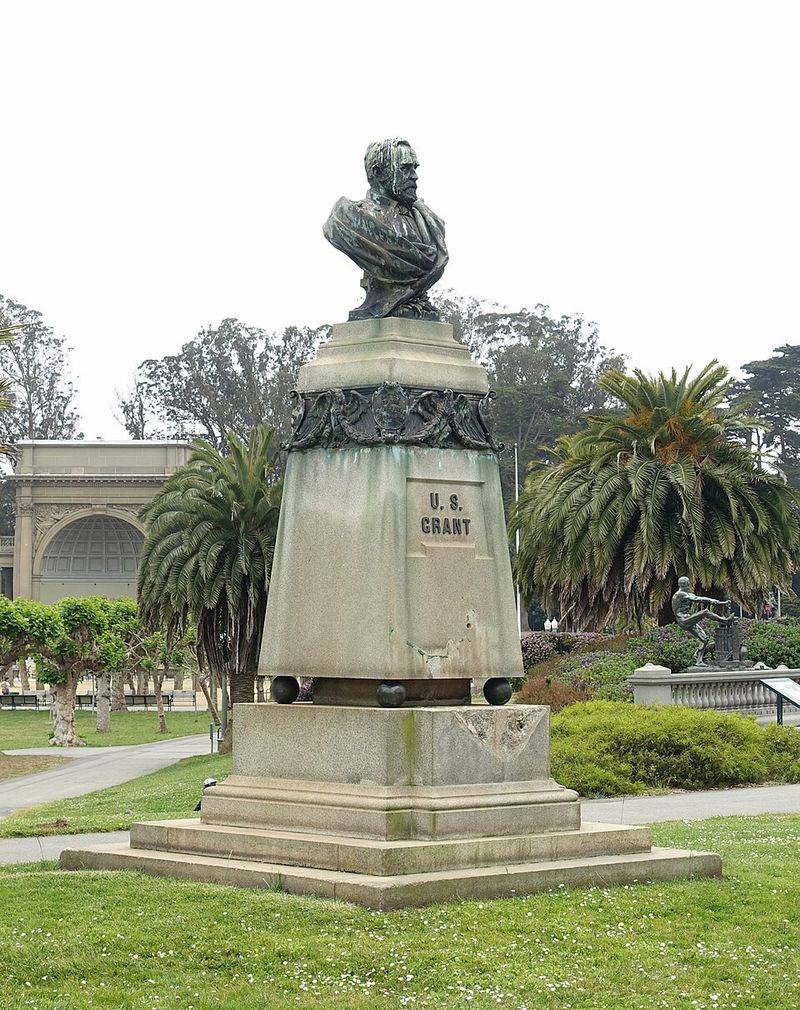
Here is where monument debates stopped following an easy script. Ulysses S.
Grant, Union general and former president, was not a Confederate icon at all, yet his San Francisco statue was pulled down in 2020, leaving many observers confused and prompting immediate arguments about historical nuance.
Grant had led the Union Army to victory and later supported Reconstruction measures, including efforts against the Ku Klux Klan. He also owned one enslaved man briefly before the Civil War and is linked, in some activist critiques, to federal policies that affected Native communities during westward expansion and the broader expansion of U.S. power.
The statue’s removal exposed the speed and unpredictability of that summer’s public reckonings. It also revealed how different groups were using monuments to raise different historical concerns, sometimes compressing complicated biographies into simplified judgments that did not fit neatly into the older Union good, Confederacy bad framework.
San Francisco did not restore the monument, and the episode remains one of the more debated removals of 2020. If nothing else, it forced a more demanding question onto the public: when cities honor historical figures, are they celebrating one chapter, a full record, or a selective version built for convenient display?
13. Confederate Monument (Chapel Hill, North Carolina – “Silent Sam”)
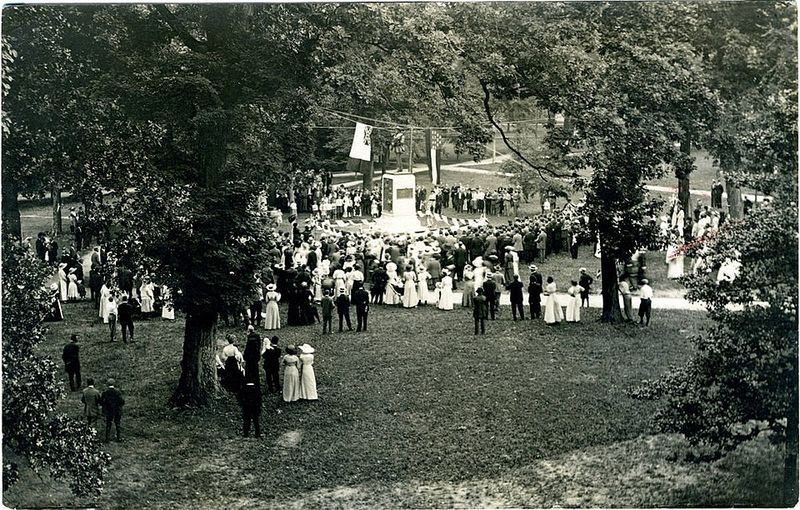
College campuses like to imagine themselves as places of debate, but some arguments take a century to reach the center. Silent Sam, the Confederate monument at the University of North Carolina at Chapel Hill, had stood since 1913 and was erected during a period when white supremacy was being publicly celebrated, not hidden.
Its dedication ceremony made that context unmistakable. Speakers praised the Confederate cause in openly racist terms, and critics later used those remarks to challenge the idea that Silent Sam was merely a neutral memorial to fallen soldiers rather than a political statement planted on a flagship public university campus.
Students, faculty, alumni, and community members spent years pressing for action, while administrators moved cautiously and often frustratingly. In August 2018, protesters pulled the statue down, ending a long stalemate and triggering another round of legal, institutional, and public disputes over ownership, relocation, and campus governance.
The empty site became almost as symbolically charged as the monument had been. Silent Sam’s removal mattered not only because a statue fell, but because it exposed how universities preserve older power structures in their landscapes, even while presenting themselves as forward-looking places built on inquiry and inclusion.
14. Roger B. Taney (Baltimore, Maryland)
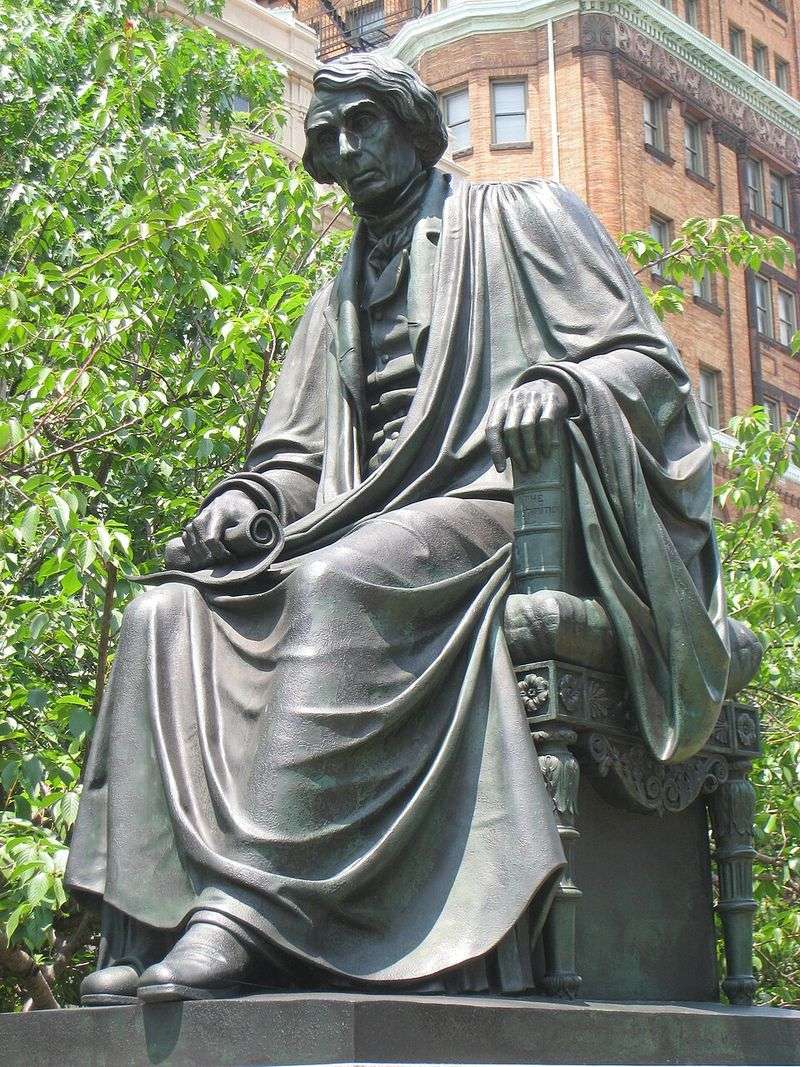
Some public honors become difficult to justify once people revisit the actual record attached to the name. Roger B.
Taney, the Supreme Court chief justice behind the 1857 Dred Scott decision, had a statue in Baltimore for decades despite his central role in one of the most notorious rulings in American legal history.
Dred Scott declared that Black Americans could not be citizens and deepened sectional tensions before the Civil War. Keeping Taney in bronze in a prominent city setting increasingly looked like an odd civic choice, especially as Baltimore and Maryland more broadly were reexamining monuments tied to slavery and racial exclusion.
In 2017, Baltimore officials removed the statue overnight along with several Confederate monuments after intense public debate and renewed attention following white nationalist demonstrations in Charlottesville. The speed of the operation reflected a political calculation that delay would only intensify conflict around memorials whose meanings had already shifted sharply for many residents.
Taney’s removal carried a particular legal irony. A figure once placed on a pedestal for judicial stature was now being judged by a broader public standard that asked whether legal power alone deserved honor when its most famous use helped deny basic rights to an entire class of people.
15. John C. Calhoun (Charleston, South Carolina)
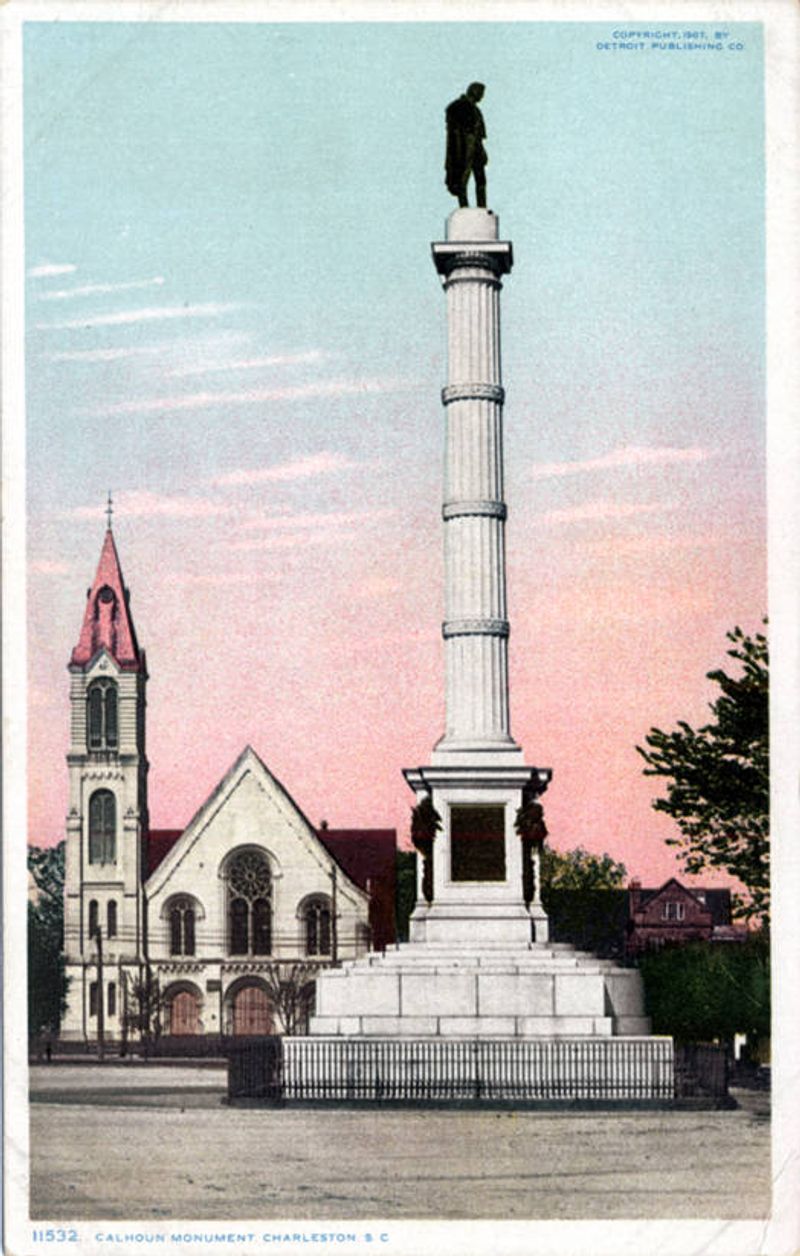
Charleston kept John C. Calhoun towering over Marion Square for generations, but height could not protect him forever.
The South Carolina statesman and vice president had long been honored as a major political thinker, yet his fierce defense of slavery made the monument increasingly controversial in a city deeply shaped by that history.
Calhoun did not speak in coded language about slavery. He called it a positive good, and that explicit record made it harder for defenders to reframe the statue as a vague heritage marker or a harmless nod to nineteenth-century statesmanship separated from the institution he championed so aggressively.
Local activists had challenged the monument for years, noting both its symbolism and the long tradition of placing Confederate and pro-slavery figures high above street level to discourage direct engagement. In June 2020, Charleston City Council voted unanimously to remove the statue after renewed public pressure and sustained organizing.
Its departure marked a notable shift for a city where historical tourism and civic identity often intersect in complicated ways. Removing Calhoun did not simplify Charleston’s past, but it did show that public honor can be withdrawn when a community decides the values represented in bronze no longer belong at the center of common space.
16. Confederate Memorial (Arlington National Cemetery, Virginia)
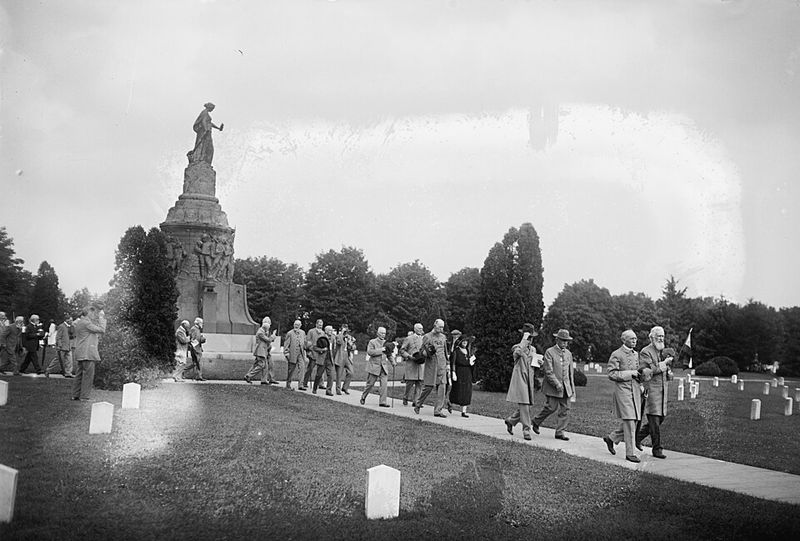
Even the nation’s most formal commemorative spaces are not immune to revision. The Confederate Memorial at Arlington National Cemetery, dedicated in 1914 and designed by Moses Jacob Ezekiel, occupied a uniquely sensitive setting because Arlington is both a burial ground and a national symbol of military remembrance.
The monument included allegorical figures and inscriptions that reflected Lost Cause themes, presenting the Confederacy through softened language and sentimental framing. Critics argued that such imagery did not merely remember the past, but actively reshaped it, placing a romantic gloss on a rebellion fought to preserve slavery.
Federal review of military naming and commemorative practices eventually brought the memorial under closer scrutiny. In recent years, it was approved for removal as part of a broader effort to reconsider honors linked to the Confederacy on federal property, signaling that even long-established national sites were subject to changing standards.
The decision carried extra weight because Arlington is not a typical city square where monuments come and go with mayoral votes. When a memorial there is judged inappropriate for continued prominence, it suggests a significant shift in official national memory, not just a local change in taste or politics.
17. Thomas Jefferson Statue (New York City Hall)
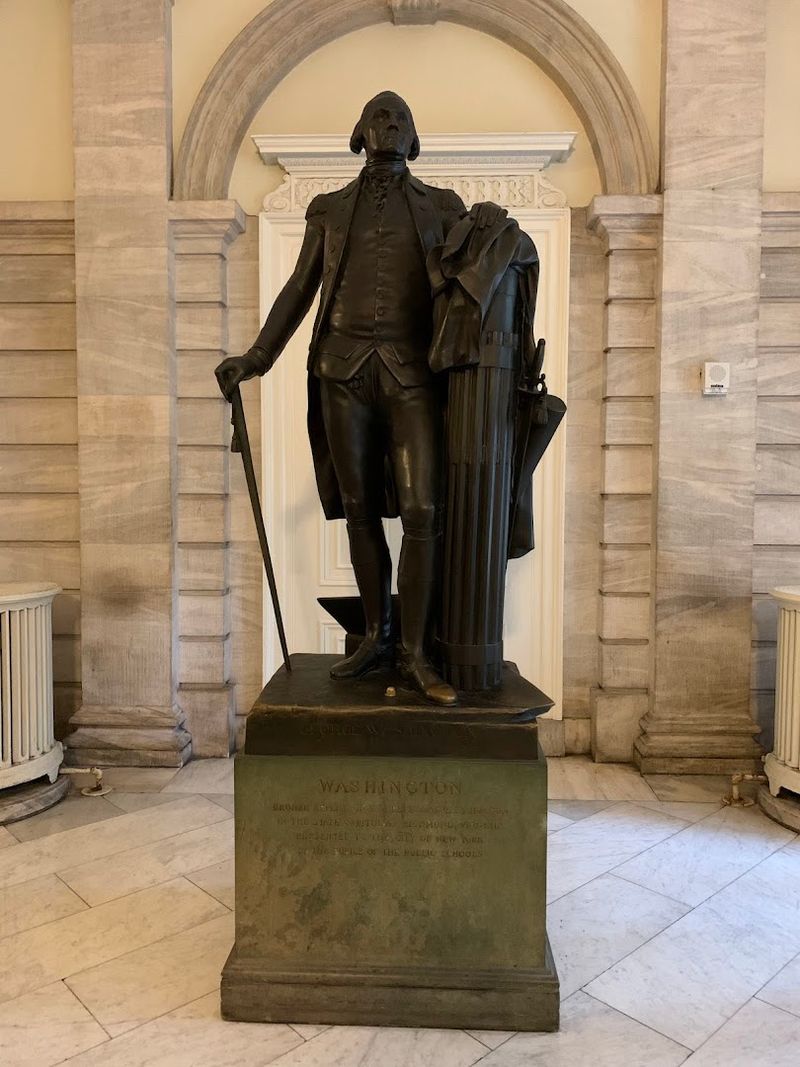
Sometimes a statue leaves the room rather than the headlines. The Thomas Jefferson statue inside New York City Hall had stood there for more than a century, a familiar civic fixture honoring a founding father whose role in drafting the Declaration of Independence long guaranteed prime symbolic real estate.
Yet Jefferson’s legacy has always come with a large asterisk. His writings on liberty exist alongside his slaveholding, and city officials ultimately confronted the tension between celebrating democratic ideals and displaying, in a central government chamber, a man whose life embodied those ideals unevenly and selectively.
In 2021, New York City’s Public Design Commission voted to remove the statue from the council chamber after objections from members who found its placement inappropriate. The plan called for relocating it to the New York Historical Society, where it could be interpreted with more context rather than simply presiding over public business.
The move mattered because it illustrated a middle path in monument debates. Jefferson was not being erased from history or even from public view, but shifted from a place of straightforward civic honor to one of historical examination, where the contradictions of his legacy could be discussed rather than silently assumed away.
18. Andrew Jackson (Various Proposed Removals)
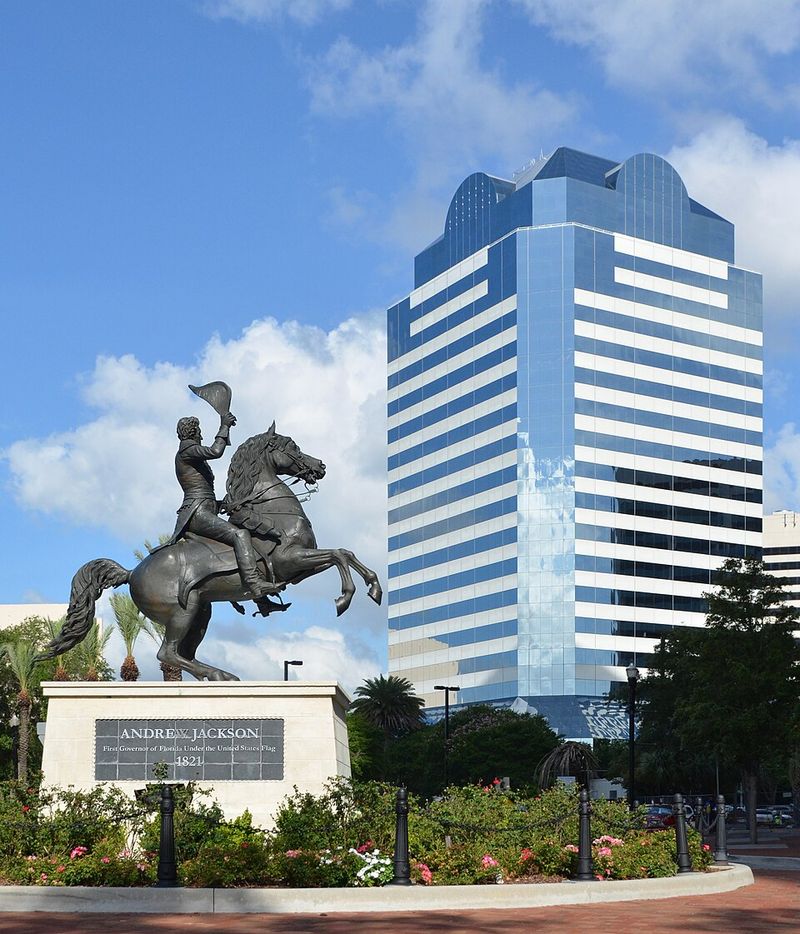
No president seems to trigger monument arguments quite like Andrew Jackson. Best known for his populist image, fierce executive style, and place on the twenty-dollar bill, Jackson also remains deeply controversial because of his policies toward Native Americans, especially the Indian Removal Act and its consequences.
Unlike some entries on this list, Jackson statues have not vanished from every prominent site, and that is part of the story. Several monuments have been removed, targeted, or formally reconsidered in different cities, showing how public opinion can shift unevenly when a historical figure still occupies a large place in national mythology.
Supporters often frame Jackson as a rough-edged democrat who reshaped the presidency, while critics argue that such praise minimizes the human cost of his policies and the exclusion built into his version of popular politics. That tension has made each local debate a kind of referendum on what qualities Americans still reward with bronze permanence.
The broader pattern matters more than any single pedestal. Jackson’s statues reveal that removal is not always a clean before-and-after event, but sometimes an ongoing series of proposals, protests, votes, and reinterpretations that gradually change how a nation decides which leaders deserve admiration in its most visible public places.
Share this story