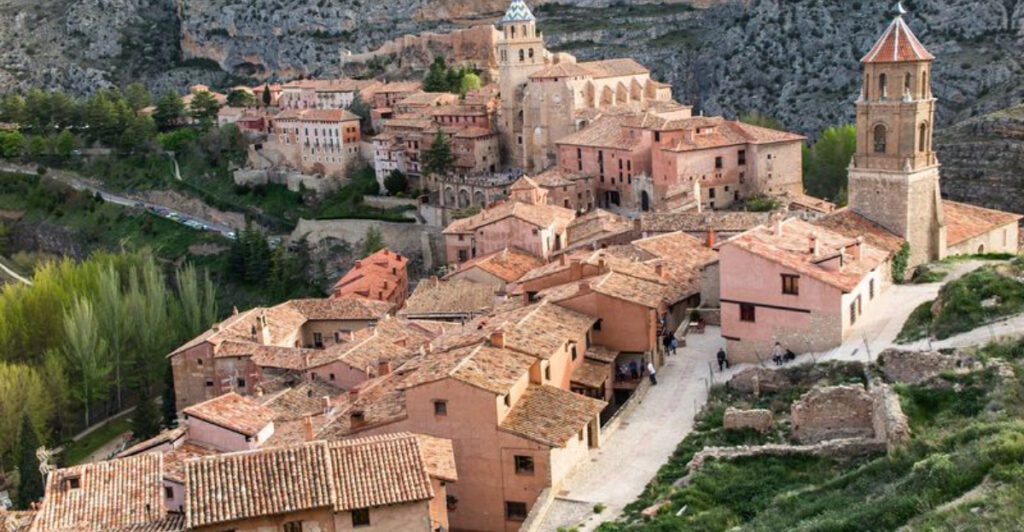
Spain is filled with charming villages that offer a completely different experience from its famous cities. These small towns—often referred to as pueblos—are known for their cobblestone streets, historic architecture, and stunning natural settings, from mountains to coastlines.
Many of them are part of official “Most Beautiful Villages in Spain” lists, showcasing preserved traditions, medieval layouts, and local culture that feels untouched by time. Whether perched on cliffs or nestled in valleys, these villages offer some of the most authentic and scenic experiences in Europe.
Ronda (Andalusia)
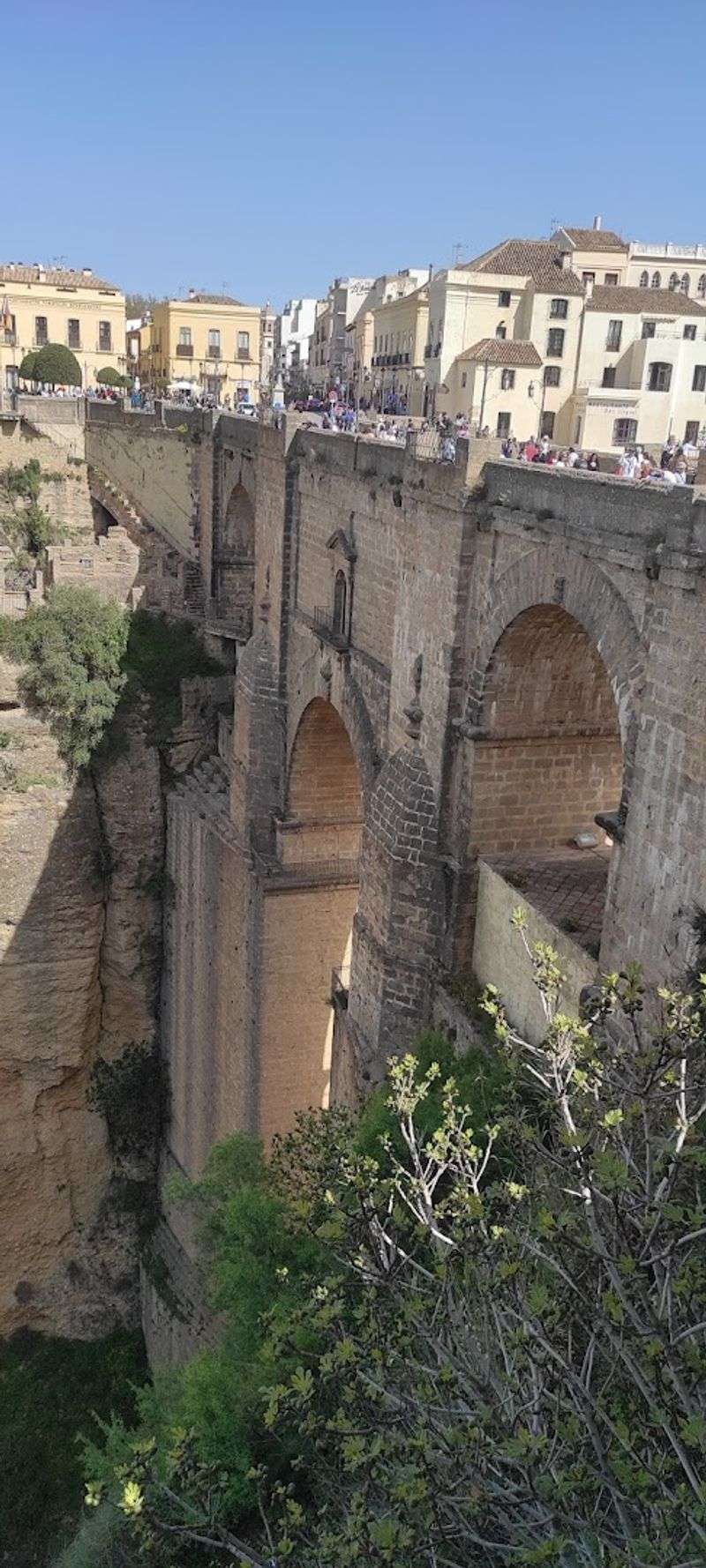
Few villages in Spain announce themselves quite as boldly as Ronda. Built on the edge of a sheer 120-meter gorge, the town literally hangs over thin air—and the views from the clifftop are enough to make your knees feel a little wobbly.
The famous Puente Nuevo bridge, completed in 1793, connects the two halves of the city across that jaw-dropping drop.
Ronda is one of Andalusia’s oldest towns, with roots stretching back to Celtic and Roman times. Its historic bullring, built in 1784, is one of the oldest and most beautiful in Spain and well worth a visit even for non-bullfighting fans.
The old Moorish quarter, called La Ciudad, is packed with narrow lanes and atmospheric plazas.
The town is large enough to have good restaurants and hotels, making it a comfortable base for exploring the surrounding countryside. Local cuisine leans heavily on hearty Andalusian flavors—slow-cooked stews, local cheeses, and excellent wines from the nearby Serranía de Ronda region.
Sunset from the clifftop walkway is one of those travel moments that stays with you for years afterward.
Cudillero (Asturias)
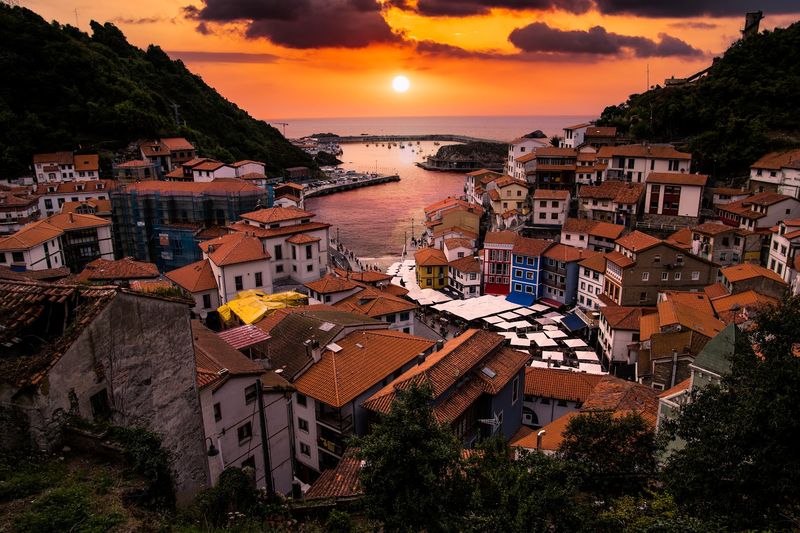
Cudillero looks like someone stacked a rainbow on a hillside and then added a harbor at the bottom—and honestly, that description is not far off. This tiny fishing village in Asturias tumbles down steep green cliffs in an amphitheater shape, with brightly painted houses in yellow, blue, pink, and white clinging to every available surface.
The effect is absolutely charming.
The harbor at the base is still a working fishing port, which means the seafood here is as fresh as it gets. Local restaurants serve up fabada asturiana—a rich bean stew—alongside grilled fish caught that same morning.
Eating by the water with a glass of local cider is practically a requirement when visiting.
The village is best explored by wandering upward through its steep, narrow lanes and staircases. Each level offers a slightly different view back down to the harbor and out to the Cantabrian Sea.
Cudillero is not overrun with tourists the way many Spanish villages can be, which gives it a wonderfully genuine, lived-in atmosphere. Visit in the morning when the fishing boats are active and the whole place hums with quiet, purposeful energy.
Frigiliana (Andalusia)
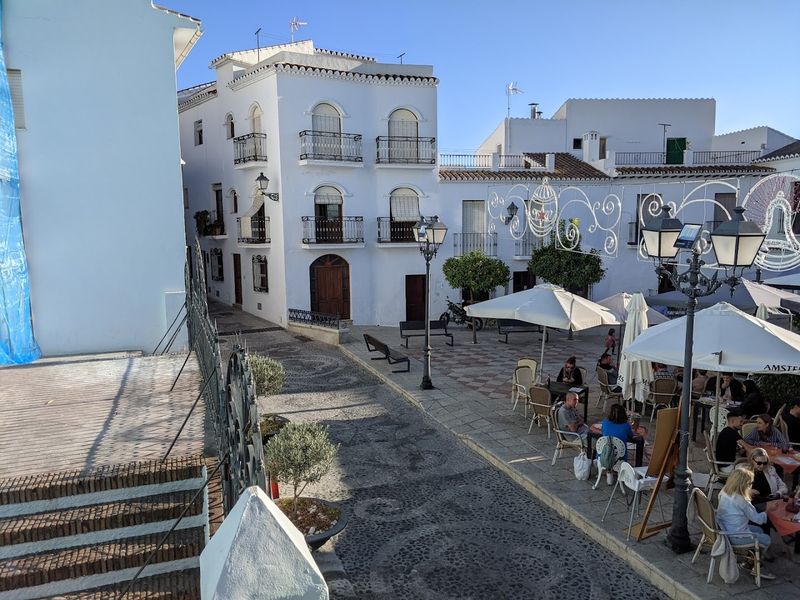
Frigiliana earned its reputation as one of Andalusia’s most beautiful villages the hard way—by simply being gorgeous at every turn. Gleaming white houses stacked up a hillside, draped in bougainvillea and geraniums, create a scene so photogenic that visitors often forget to stop taking pictures and just enjoy standing there.
The village sits above the Costa del Sol, offering sweeping views down to the Mediterranean on clear days.
The upper barrio, called El Barribarto, is the oldest part of town and retains its original Moorish street layout from before the 16th century. Ceramic tiles set into the walls along the main path tell the story of the Moorish rebellion of 1569—an unexpectedly moving history lesson tucked between flower pots.
The craftsmanship in the tile work alone is worth the visit.
Frigiliana produces a sweet wine called mistela and a traditional molasses syrup called miel de caña, both of which you can buy directly from local producers. The village is small enough to walk in an hour but rich enough in detail to keep you occupied all day.
It pairs perfectly with a trip to nearby Nerja and its famous caves, making for a full and rewarding day out.
Besalú (Catalonia)
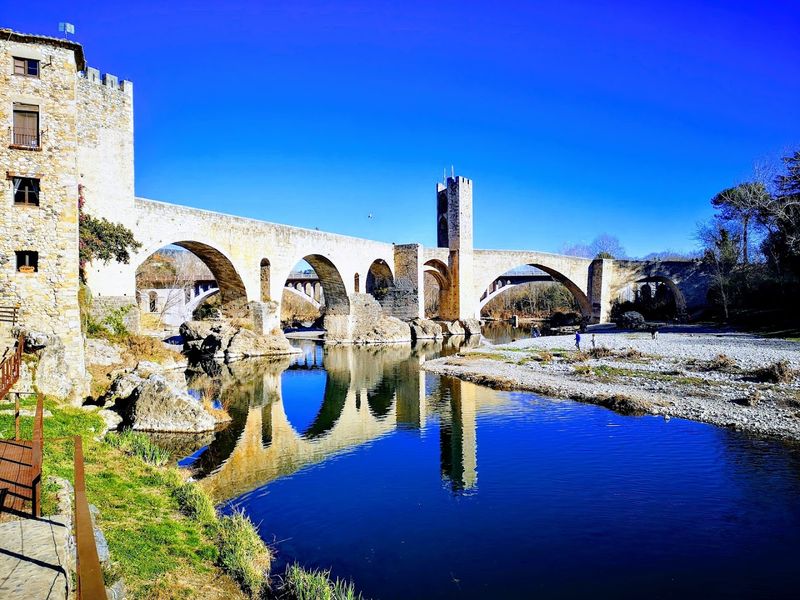
Walking across Besalú’s 12th-century fortified bridge feels like crossing a threshold into another century entirely. The bridge, with its distinctive zigzag shape and stone towers, is one of the most photographed medieval structures in all of Catalonia—and once you see it, you will immediately understand why.
It sets the tone for everything that follows inside the village walls.
Besalú was the capital of an independent county from the 9th to the 12th century, and that rich history is still visible everywhere. The Romanesque church of Sant Pere, the Jewish mikveh (a rare surviving ritual bath from the medieval Jewish community), and the town’s ancient arcaded streets all tell the story of a place that once wielded real political power.
History nerds will be in absolute heaven here.
The village is compact and best explored on foot over a few relaxed hours. Local restaurants tucked under stone arches serve traditional Catalan dishes like botifarra sausage with white beans and crema catalana for dessert.
Besalú is located just 30 minutes from Girona, making it an easy and very rewarding day trip. Visiting on a weekday morning means fewer crowds and a much more peaceful atmosphere throughout.
Albarracín (Aragon)
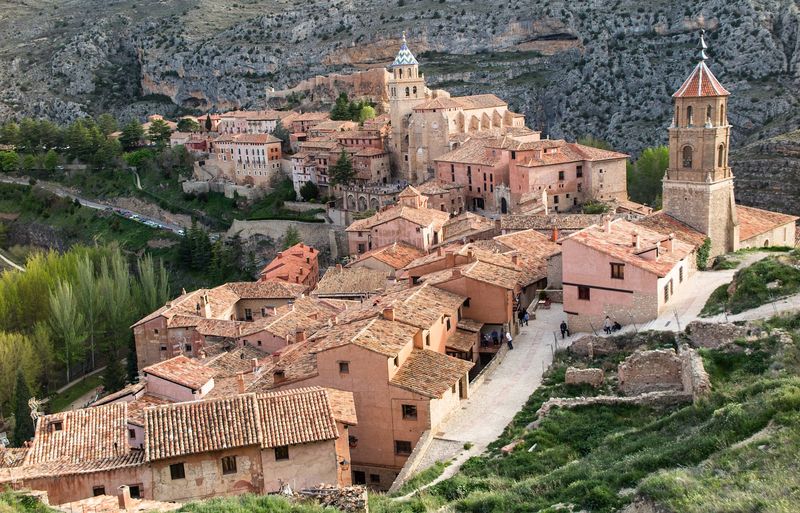
Step back in time the moment you arrive in Albarracín—a village so well preserved it genuinely feels like the Middle Ages never left. Perched high in the mountains of Aragon, its buildings glow with a warm pink-terracotta hue that looks almost painted on.
The color comes from the local stone, giving Albarracín a look found nowhere else in Spain.
Its medieval walls stretch dramatically across the hillsides, and the narrow winding streets are tailor-made for getting pleasantly lost. Around every corner, you will find archways, old towers, and tiny plazas that invite you to slow down completely.
The town is incredibly walkable and easy to explore on foot in a single afternoon.
Albarracín sits above the Guadalaviar River, adding a scenic backdrop to an already stunning setting. The surrounding landscape is perfect for short hikes with rewarding views.
Visiting in the golden hour of late afternoon, when the buildings seem to glow, is an experience most travelers describe as genuinely unforgettable. Pack comfortable shoes and bring your camera—you will use it constantly here.
Cadaqués (Catalonia)
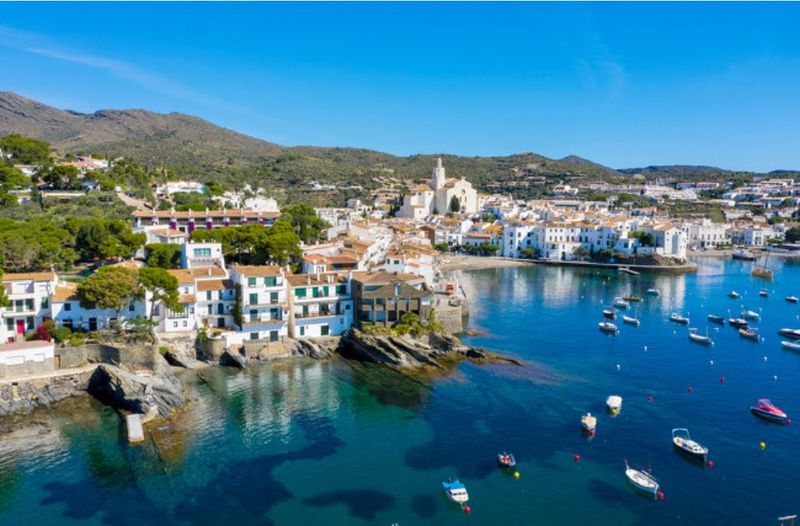
Salvador Dalí called Cadaqués home for much of his life, and once you arrive, it becomes obvious why a surrealist would choose this place. There is something slightly dreamlike about the way its white houses spill down to the rocky Costa Brava shoreline, with the blue dome of the Santa Maria church floating above it all like a crown.
The light here has a clarity that painters and photographers chase from all over the world.
The village is accessible only by a winding mountain road, which has helped preserve its unhurried, artistic character over the decades. No large resort hotels have taken over—just narrow lanes, independent galleries, and small seafood restaurants with tables practically dipping into the sea.
The Dalí House-Museum at nearby Port Lligat is one of the most fascinating and bizarre artist homes you will ever tour.
Cadaqués is best visited outside of peak summer months when the population swells with tourists. Spring and early autumn offer the same stunning scenery with far more breathing room.
The local anchovies from the nearby town of L’Escala are a regional specialty worth seeking out during any meal. Renting a kayak and exploring the rocky coastline from the water gives you a perspective of the village that no land-based photo can match.
Santillana del Mar (Cantabria)
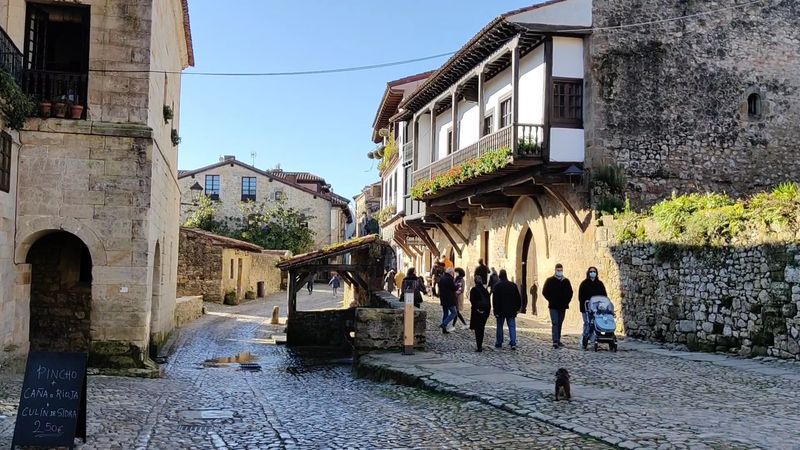
Jean-Paul Sartre once called Santillana del Mar “the prettiest village in Spain,” and while that is a bold claim, it is genuinely hard to argue with him after spending an afternoon here. Every building in the historic center is made from warm golden stone, and the streets are so beautifully preserved that no cars are allowed—just cobblestones, flower balconies, and the occasional cow wandering past (Cantabria is serious dairy country).
The name is slightly misleading—Santillana del Mar is not actually on the sea. It sits a few kilometers inland, though the Cantabrian coast is just a short drive away.
The Romanesque Collegiate Church of Santa Juliana, dating back to the 12th century, anchors the village and is one of the finest examples of Romanesque architecture in northern Spain.
Just two kilometers from the village, the Altamira Caves contain some of the world’s most famous prehistoric paintings, dating back over 35,000 years. The original cave is closed to protect the art, but the replica museum is genuinely impressive and educational.
Plan to spend a full day here—between the village, the church, and Altamira, there is more than enough to keep you happily occupied from morning until evening.
Morella (Valencia Region)
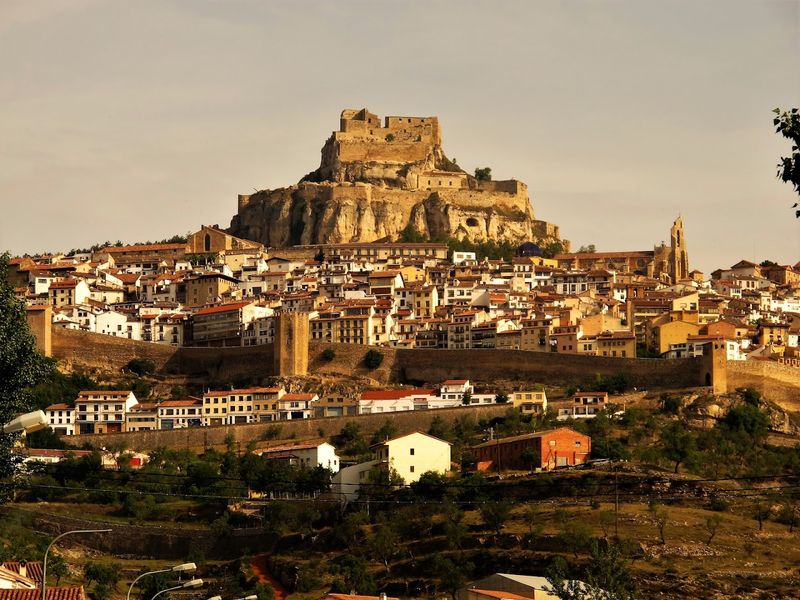
Morella is the kind of village that makes you stop the car and stare before you have even parked. Rising dramatically from a rocky hilltop, it is ringed by two kilometers of perfectly intact medieval walls and topped by a castle that looks like it was designed specifically for a fantasy novel.
The silhouette alone is worth the drive into the interior of the Valencia Region.
The town sits at over 1,000 meters above sea level, which means the air is noticeably cooler and crisper than the coastal areas nearby. Inside the walls, a maze of stone streets and Gothic arcades leads you past the impressive Basilica of Santa María la Mayor, whose twin spiral staircases inside the entrance are an architectural marvel that surprises almost every first-time visitor.
Morella is famous throughout Spain for its black truffle and its distinctive local sausage called longaniza de Morella. The weekly market and the twice-yearly medieval festivals transform the already atmospheric streets into something genuinely spectacular.
The castle at the top is accessible via a steep climb, but the panoramic views across the surrounding mountains and plains make every step absolutely worth the effort. Morella rewards slow, curious exploration above everything else.
Peñíscola (Valencia Region)
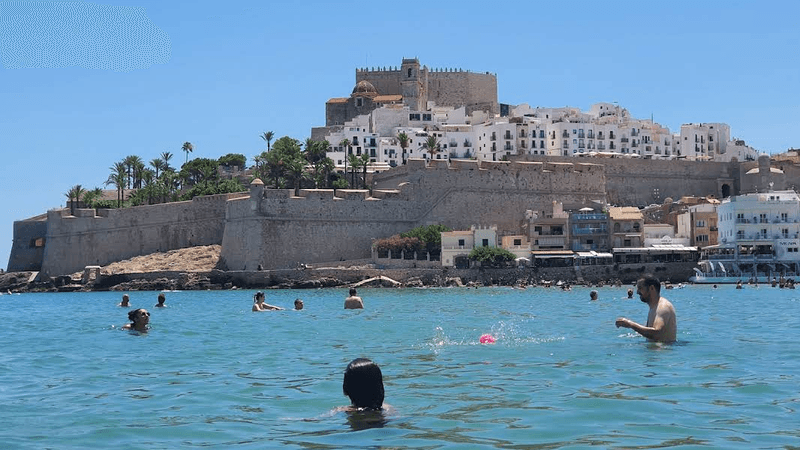
Peñíscola juts out into the Mediterranean on a rocky peninsula like a natural fortress, and that is essentially what it has been for most of its history. The imposing castle at its peak was built by the Knights Templar in the 14th century and later became the residence of the controversial Pope Benedict XIII—locally nicknamed Papa Luna—who refused to recognize his own removal from office and ruled from here until his death.
It is a genuinely wild piece of history attached to a very pretty village.
The old town inside the castle walls is a compact tangle of whitewashed streets, souvenir shops, and seafood restaurants with terraces overlooking the water. Below the promontory, long sandy beaches stretch out in both directions, making Peñíscola equally appealing to history seekers and beach lovers.
The contrast between the medieval upper town and the modern beach resort below is striking and oddly charming.
Game of Thrones fans may recognize Peñíscola—it doubled as the city of Meereen in several scenes. The castle interior is open to visitors and offers excellent views across the bay.
Arriving early in the morning before the day-trippers arrive lets you experience the old town in peaceful, golden-lit quiet that is hard to beat anywhere on the Spanish coast.
Aínsa (Aragon)
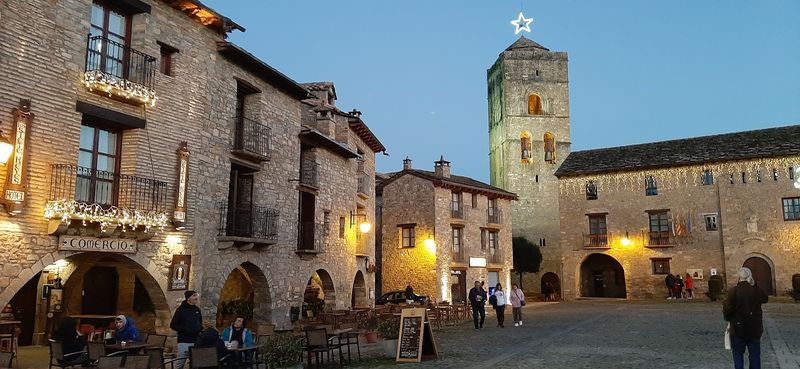
Aínsa sits at the confluence of two rivers with the Pyrenees rising dramatically behind it, and the combination of medieval village plus mountain backdrop is almost unfairly photogenic. The upper old town—declared a Historic-Artistic Monument—is built almost entirely from honey-colored stone, giving it a warm, unified appearance that looks gorgeous in any light, especially at golden hour.
The main plaza, or Plaza Mayor, is one of the finest Romanesque squares in Spain. Lined with stone arcades and anchored by a 12th-century church with a distinctive tower, it is the kind of square where you sit down for a coffee and then somehow forget to leave for two hours.
The surrounding streets are quiet, clean, and full of small craft shops and local restaurants.
Aínsa is a perfect base for exploring the Ordesa and Monte Perdido National Park, one of Spain’s most spectacular and underrated natural areas. Hiking, canyoning, and wildlife watching are all popular activities in the surrounding Sobrarbe region.
The village itself hosts a medieval market each August that fills the old town with costumed performers, artisans, and food stalls. Even outside festival season, Aínsa has a calm, grounded energy that makes it incredibly easy to love.
Mojácar (Andalusia)
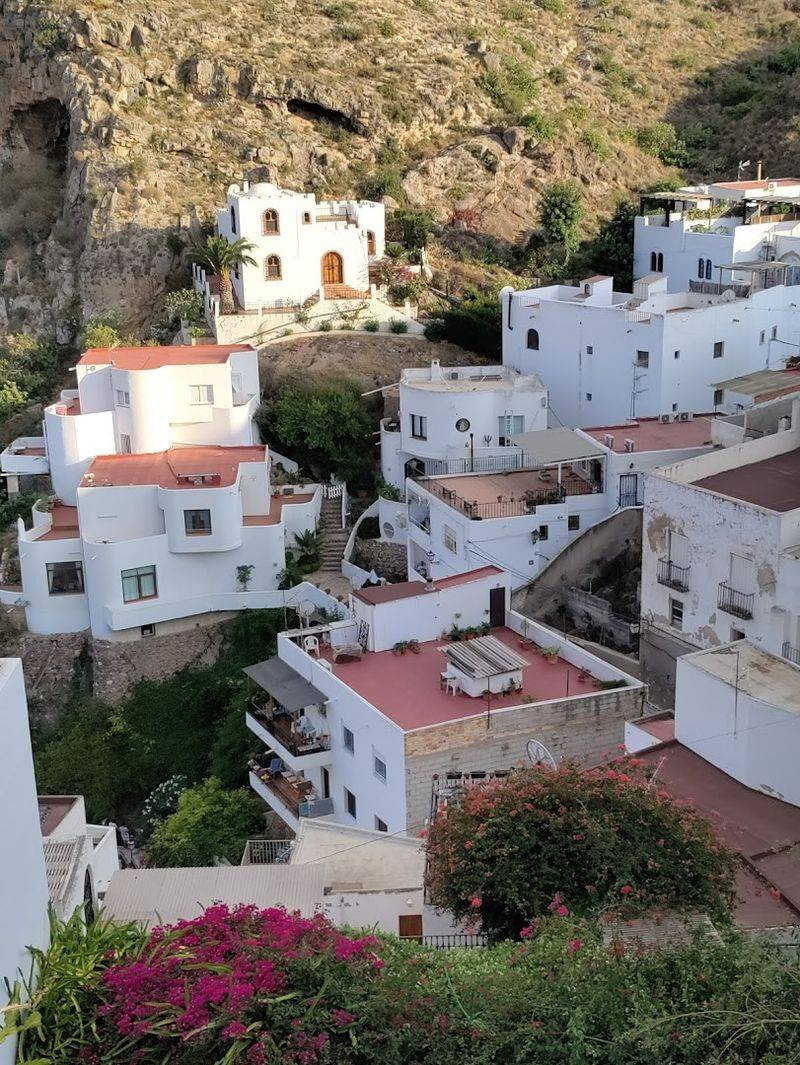
Mojácar is two villages in one, and that duality is a big part of its appeal. The hilltop pueblo blanco—a cluster of dazzling white cube-shaped houses stacked up a rocky hill—looks almost North African in style, a reminder of the deep Moorish influence on this corner of Andalusia.
Down below, Mojácar Playa is a lively beach resort with a very different, more modern energy. Both halves are worth your time.
The hilltop village is best explored in the early morning or late evening when the light is soft and the day-trippers have not yet arrived or have already left. The views from the top stretch across the Mediterranean toward the horizon, with terracotta rooftops and bougainvillea-draped walls filling the foreground.
It is the kind of scene that makes you genuinely grateful you made the effort to come.
Local legend claims Walt Disney had family roots in Mojácar, though historians remain unconvinced. True or not, the story adds a fun layer of intrigue to an already interesting place.
The village has a small but lively arts community, with several galleries and studios tucked into the white lanes. Mojácar’s annual Moors and Christians festival each June is a vivid, noisy, and spectacular celebration of the town’s complex history.
Potes (Cantabria)
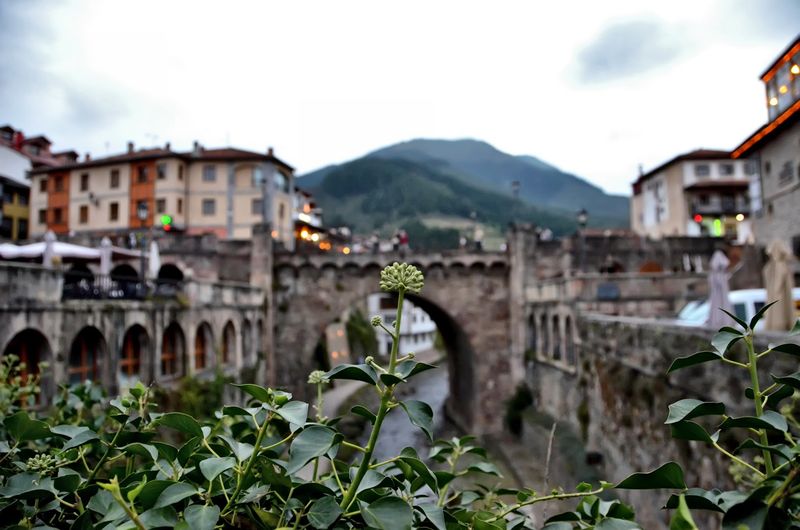
Tucked into a valley where four rivers meet, Potes is the kind of mountain village that feels like a reward for making the journey to find it. The Picos de Europa loom dramatically overhead, their jagged limestone peaks providing a backdrop that makes even a simple stroll through town feel like something out of a nature documentary.
The village itself is small, stone-built, and genuinely lovely.
The Torre del Infantado, a 15th-century defensive tower that now houses a local museum, dominates the village skyline and is worth a quick visit for context on the region’s history. The medieval bridge over the Deva River is another highlight—cross it slowly and take in the mountain reflections in the clear water below.
Potes has a compact old quarter that rewards unhurried wandering.
The area is famous for its local products, particularly orujo—a fiery pomace brandy—and a rich blue cheese called Picón Bejes-Tresviso, produced in nearby mountain villages. Every October, Potes holds a dedicated Orujo Festival that draws visitors from across Spain for tastings, music, and general merriment.
The village is also the main gateway to the Fuente Dé cable car, which lifts you 800 meters straight up into the heart of the Picos de Europa for extraordinary panoramic views.
Alquézar (Aragon)
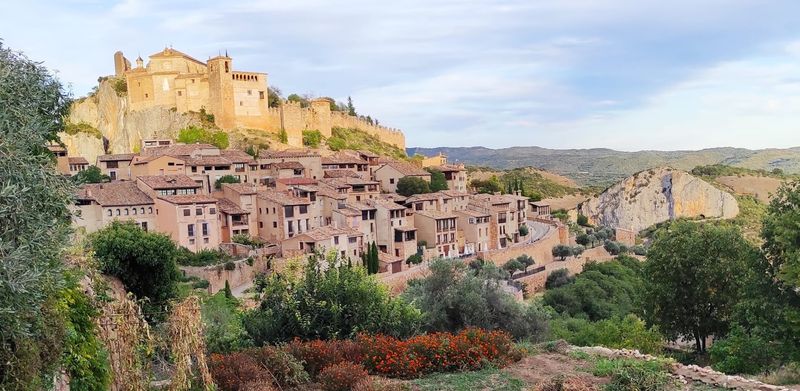
Alquézar looks like it was designed by someone who wanted to combine a medieval village, a fortress church, and a dramatic river canyon into a single location—and somehow pulled it off perfectly. The village clings to a rocky outcrop above the Rio Vero canyon in the pre-Pyrenees of Aragon, and the views from the top, looking down into the turquoise-tinged water far below, are genuinely breathtaking.
The Colegiata de Santa María la Mayor, a collegiate church built on the remains of a Moorish fortress, sits at the village’s highest point and dates back to the 10th century. Inside, a remarkable Romanesque cloister features carved capitals that tell biblical stories with surprising expressiveness.
The church and its surrounding lanes make up one of the most atmospheric historic centers in all of Aragon.
The real adventure begins when you head down into the canyon itself. The Vero River Natural Monument offers marked trails through the gorge, where you can swim in natural pools, spot vultures overhead, and explore ancient rock art sites along the canyon walls.
Alquézar is popular with climbers, hikers, and canyoning enthusiasts who use it as a base for days in the surrounding landscape. Book accommodation early in summer—this hidden gem fills up fast once the season starts.
Comillas (Cantabria)
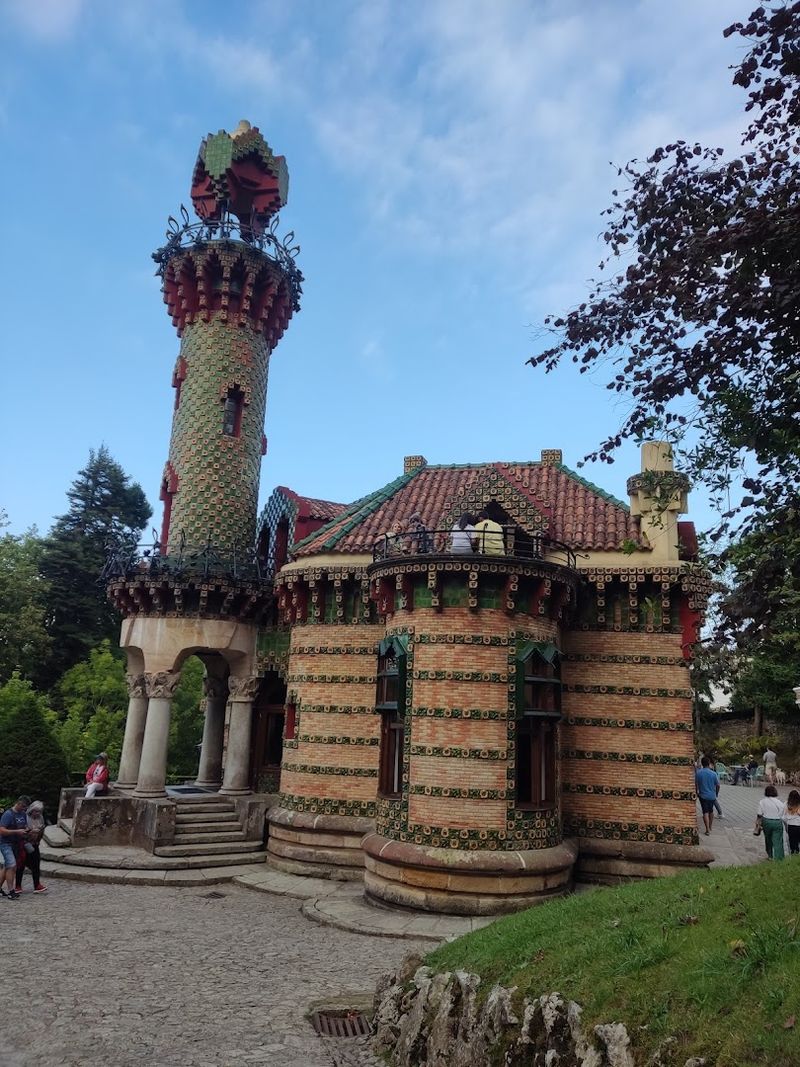
Comillas has a secret weapon that most small Spanish villages simply cannot compete with: a genuine Antoni Gaudí building sitting right in the middle of town. El Capricho, built between 1883 and 1885, is a riot of sunflower-tiled columns, Moorish-inspired arches, and playful architectural details that make it look like the building itself is having a wonderful time.
It is one of only a handful of Gaudí works outside Catalonia.
Beyond the architectural showstopper, Comillas is a genuinely beautiful coastal town with a relaxed, slightly aristocratic character. The Marquis of Comillas—a 19th-century shipping magnate—essentially turned this small fishing village into a fashionable retreat, which explains the unusually grand architecture scattered throughout town.
The Pontifical University building and the Sobrellano Palace add further grandeur to the mix.
The surrounding Cantabrian countryside is lush, green, and dramatically beautiful, with rolling hills meeting rocky cliffs above the sea. The local beach, Playa de Comillas, is a pleasant sandy bay backed by green hills—a very different vibe from the Mediterranean beaches further south.
Comillas sits on the Senda Costera, a coastal walking path that connects several charming towns along the Cantabrian coast, making it an excellent stop on a longer northern Spain road trip.
Ujué (Navarre)
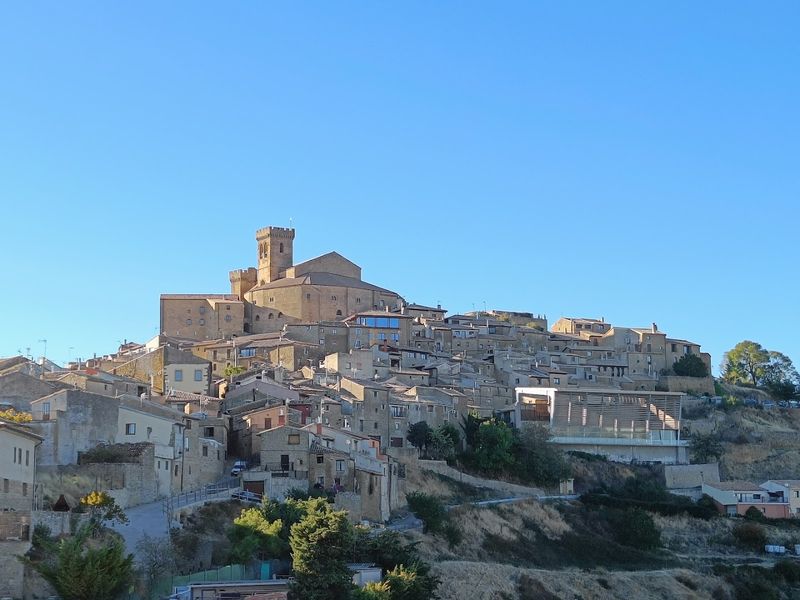
Ujué is the kind of place that makes you wonder how it managed to stay this quiet and this beautiful while the rest of the world was busy being discovered. Perched on a solitary hilltop in Navarre, it feels genuinely remote—and that remoteness is its greatest charm.
The views from the top stretch across the Navarrese plains all the way to the Pyrenees on clear days, a panorama so vast it almost feels unreal.
The fortified church of Santa María, which doubles as a defensive tower, dominates the hilltop and dates back to the 12th century. Inside, a revered statue of the Black Madonna of Ujué has been drawing pilgrims for centuries.
Every year on the Sunday after Saint Mark’s Day in late April, thousands of pilgrims walk to Ujué in a candlelit procession—a deeply moving tradition that connects modern Navarre to its medieval past.
The village itself is tiny, with just a handful of stone streets and a small permanent population. A local restaurant near the church serves the traditional Navarrese dish of migas con chorizo—fried breadcrumbs with sausage—along with local wine from the Navarre appellation.
Ujué rewards visitors who seek out places that feel genuinely off the beaten path. It is not flashy or crowded, but it offers something increasingly rare in modern travel: true, unfiltered authenticity.
Share this story