Greece is one of Europe’s most captivating destinations, offering a blend of ancient history, island beauty, and breathtaking natural landscapes. With more than 6,000 islands and islets, plus a mainland rich in archaeological wonders, the country delivers an incredible variety of travel experiences.
From world-famous landmarks like the Acropolis to hidden coastal gems and dramatic mountain scenery, Greece continues to rank among the most unforgettable destinations in the world. Here are 15 stunning places across Greece you simply can’t miss.
Athens
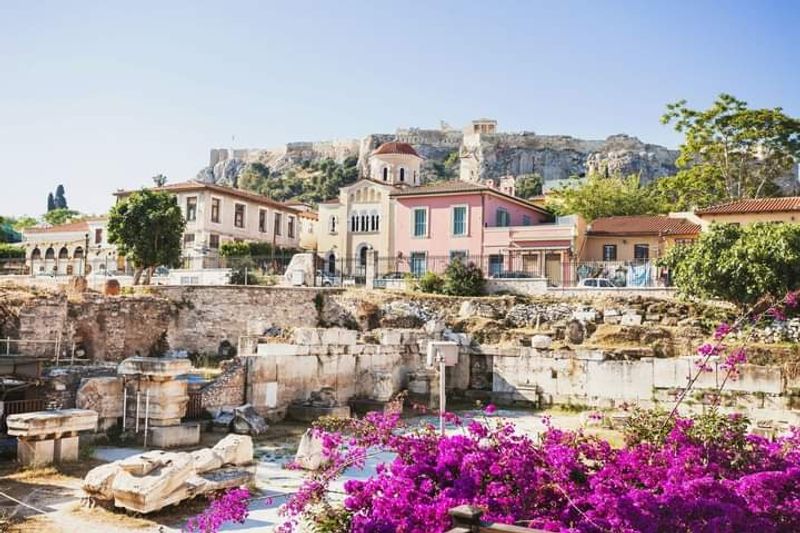
Few cities on Earth can claim they shaped the entire course of human civilization — Athens can. As the birthplace of democracy, philosophy, and the Olympic Games, this ancient capital carries a weight of history that feels almost electric when you walk its streets.
The Acropolis looms over everything, a 2,500-year-old monument that somehow manages to look more impressive in person than in any photo.
Beyond the ruins, Athens is a surprisingly lively modern city. The Monastiraki flea market buzzes with energy, the Plaka neighborhood is lined with charming cafes, and rooftop bars offer jaw-dropping views of the Parthenon lit up at night.
It’s the kind of place where you turn a corner and stumble upon a 2,000-year-old temple sandwiched between a coffee shop and a souvenir store.
The National Archaeological Museum is a must-visit, housing one of the world’s finest collections of ancient Greek artifacts. Budget at least three days to scratch the surface.
Athens rewards slow travelers who wander without a strict itinerary — every alley has a story, and every hill has a view worth climbing for.
Santorini
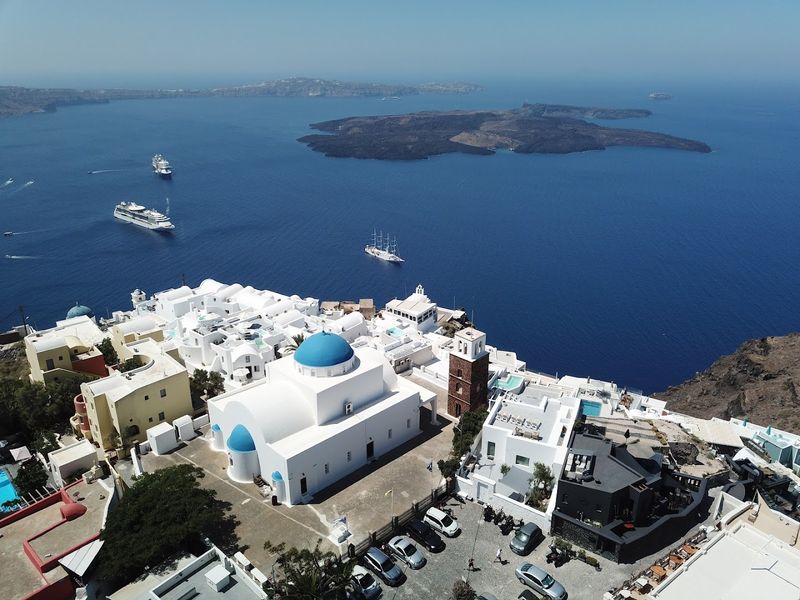
Santorini has one of the most recognizable skylines on the planet, and the real thing somehow exceeds every expectation. Formed by a massive volcanic eruption thousands of years ago, the island’s crescent shape hugs a deep caldera filled with some of the most brilliantly colored water you will ever see.
The famous blue-domed churches of Oia perched above those dramatic cliffs are as stunning as every postcard promises.
Sunsets here are practically a competitive sport. Visitors gather along the clifftops of Oia each evening, cameras ready, jostling for the perfect angle.
Arriving early is genuinely good advice — the crowds are real, but the view is absolutely worth it. The warm orange and pink hues that wash over the white buildings create a scene that feels almost unreal.
Beyond the views, Santorini has excellent local wine made from grapes grown in volcanic soil, giving it a distinct earthy flavor unlike wines found anywhere else. The island also has fascinating archaeological sites, including the ancient city of Akrotiri, preserved under volcanic ash like a Greek version of Pompeii.
Stay at least two nights to truly soak it all in.
Mykonos
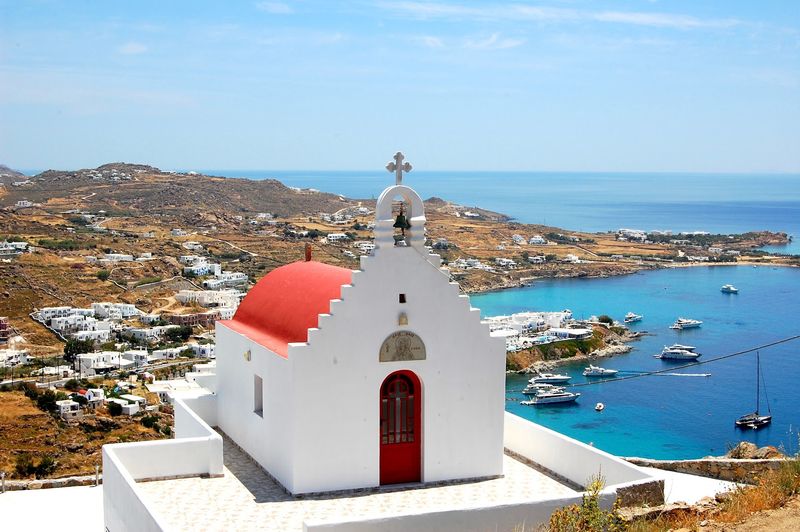
Mykonos has a reputation as Greece’s ultimate party island, but writing it off as just a nightlife destination would be a serious mistake. Yes, the beach clubs are legendary and the DJ sets go until sunrise, but the island also has a genuinely charming old town that rewards early morning strolls before the crowds arrive.
Little Venice, where colorful balconies hang directly over the sea, is one of the most photogenic spots in all of Greece.
The iconic windmills standing on the hill above the harbor are a symbol of Mykonos and among the most photographed landmarks in the Aegean. Built by the Venetians in the 16th century, they were once used to mill grain from passing ships.
Today they stand as a reminder that this island has been a busy crossroads for centuries.
Families and culture seekers will find plenty to love too. The nearby island of Delos — a short boat ride away — is one of the most significant archaeological sites in the entire Mediterranean.
As the mythological birthplace of Apollo and Artemis, it’s an open-air museum unlike any other. Mykonos is best enjoyed with a mix of beach time, exploration, and at least one unforgettable night out.
Meteora
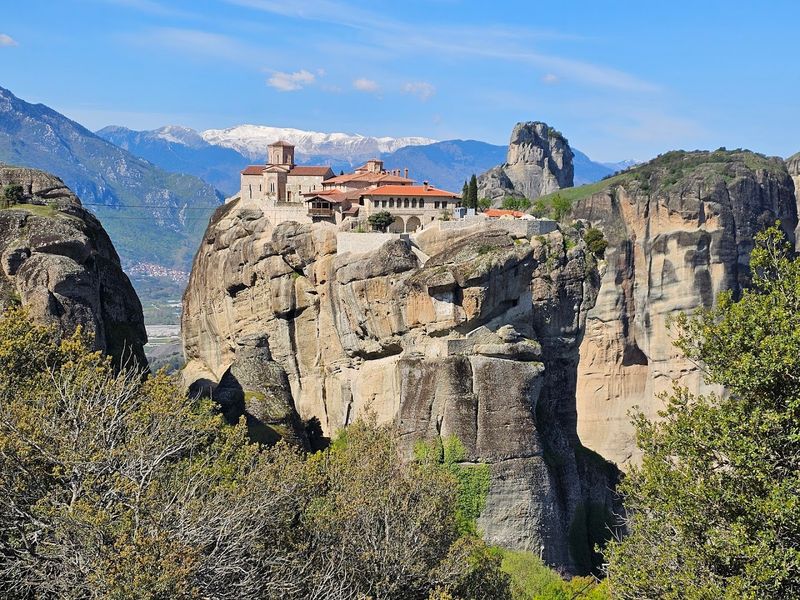
Imagine waking up inside a monastery balanced on top of a 400-meter rock pillar with nothing but sky and mist around you — that is the reality of Meteora, and it is as surreal as it sounds. Located in central Greece near the town of Kalambaka, this UNESCO World Heritage Site features six active monasteries built on towering sandstone formations that shoot straight up from the valley floor like giant stone fingers.
Monks began settling here in the 14th century, choosing these impossible heights as a way to escape invasions and political turmoil. Originally, the only way to reach the monasteries was by rope ladders or nets hauled up by hand.
Today, carved stone steps make the climb accessible, though the sense of wonder remains completely intact.
The best time to visit is early morning, when low clouds swirl around the rock pillars and the light turns everything golden. Visiting at sunrise feels genuinely otherworldly.
Four of the six monasteries are open to visitors, and each has its own frescoes, history, and sweeping views. Meteora also offers excellent hiking trails through the valley below, giving you a chance to appreciate the full scale of these extraordinary formations from ground level.
Crete
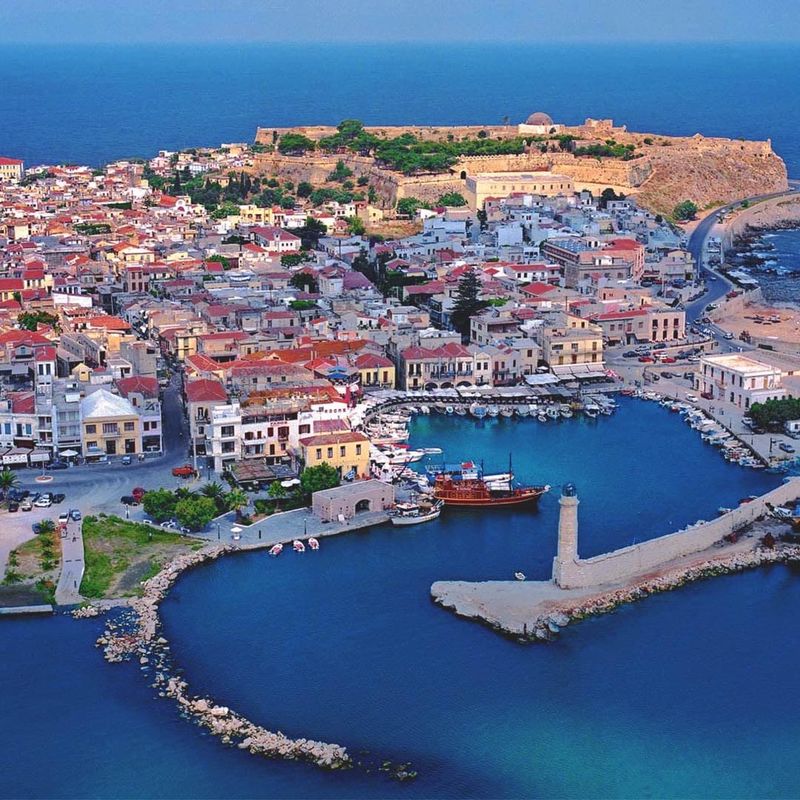
Crete is not just Greece’s largest island — it’s practically a country within a country. Stretching nearly 260 kilometers from west to east, it has its own dialect, its own cuisine, its own music, and a fiercely proud culture that sets it apart from every other Greek island.
Visitors often plan a week here and end up wishing they had booked two.
History lovers will want to head straight to the Palace of Knossos near Heraklion, the legendary home of King Minos and the mythical Minotaur. Dating back to around 2000 BCE, it is one of Europe’s oldest and most elaborate archaeological sites.
The colorful frescoes and complex layout give a real sense of just how sophisticated Minoan civilization truly was.
Crete’s natural beauty is equally impressive. The Samaria Gorge, one of Europe’s longest gorges, cuts dramatically through the White Mountains and rewards hikers with stunning scenery over a 16-kilometer trail.
Elafonisi Beach in the southwest dazzles with its pink-tinged sand and shallow turquoise water. The island’s food scene is outstanding too — Cretan cuisine uses fresh olive oil, local herbs, and slow-cooked meats in ways that will completely ruin supermarket food for you afterward.
Zakynthos (Navagio Beach)
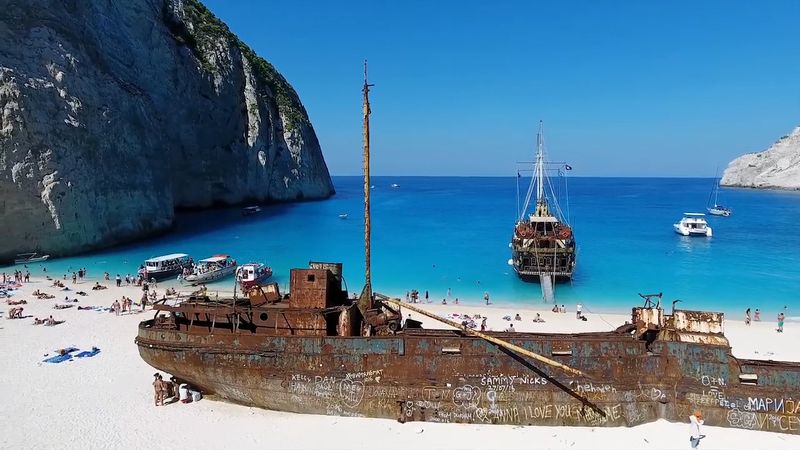
There is a rusting shipwreck sitting on one of the most beautiful beaches in the world, and somehow that only makes it more spectacular. Navagio Beach — also called Shipwreck Beach — on the island of Zakynthos is accessible only by boat, tucked inside a cove of sheer white limestone cliffs that rise hundreds of meters straight out of the Ionian Sea.
The contrast between the turquoise water, white sand, and the rusting hull of the MV Panagiotis is genuinely breathtaking.
The ship ran aground in 1980, reportedly smuggling contraband cigarettes, and has been slowly rusting there ever since. Boat tours from the port of Porto Vromi take visitors directly into the cove, and the experience of floating in that impossibly clear water with cliffs towering on all sides is something people describe years later with the same level of excitement as the day it happened.
Zakynthos offers far more than just Navagio Beach. The island is a nesting site for endangered loggerhead sea turtles, and the protected marine area around Laganas Bay gives visitors a rare chance to spot them in the wild.
The Blue Caves along the northern coastline are another highlight, where sunlight refracts through the water and turns the sea into shades of electric blue and emerald green.
Rhodes Old Town
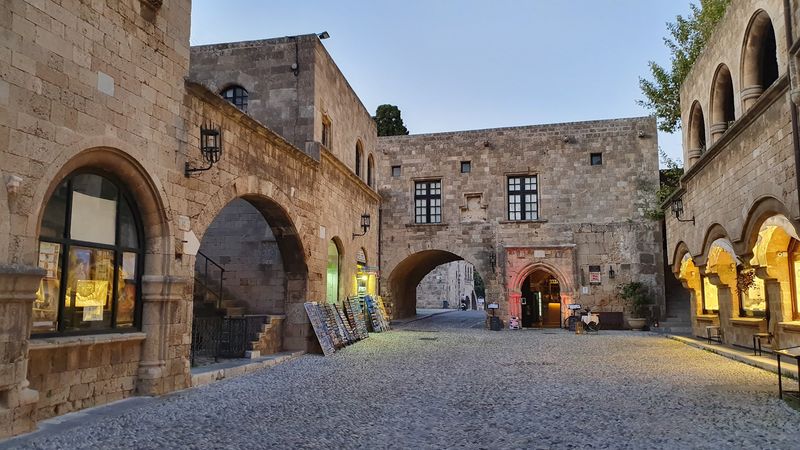
Walking through the gates of Rhodes Old Town feels less like sightseeing and more like stepping through a time machine set to the 14th century. Enclosed within massive stone walls built by the Knights of St. John, this UNESCO-listed medieval city is one of the best-preserved in all of Europe.
The Street of the Knights — a long, straight road lined with the old inns of the crusading orders — is so perfectly intact it barely looks real.
Rhodes has been ruled by an extraordinary roll call of civilizations over the centuries: ancient Greeks, Romans, Byzantines, crusading knights, Ottomans, and Italians all left their mark. The result is a layered, fascinating townscape where a Gothic church sits next to a Turkish mosque, and a Roman column stands in the middle of a square.
Exploring it without a plan is genuinely one of the best ways to spend an afternoon.
Beyond the Old Town, Rhodes has excellent beaches and a lively modern town just outside the ancient walls. The Acropolis of Lindos, perched on a dramatic clifftop on the eastern coast, is another highlight well worth the drive.
Rhodes enjoys more sunshine than almost anywhere else in Europe, making it a reliable destination for warm weather well into November.
Corfu
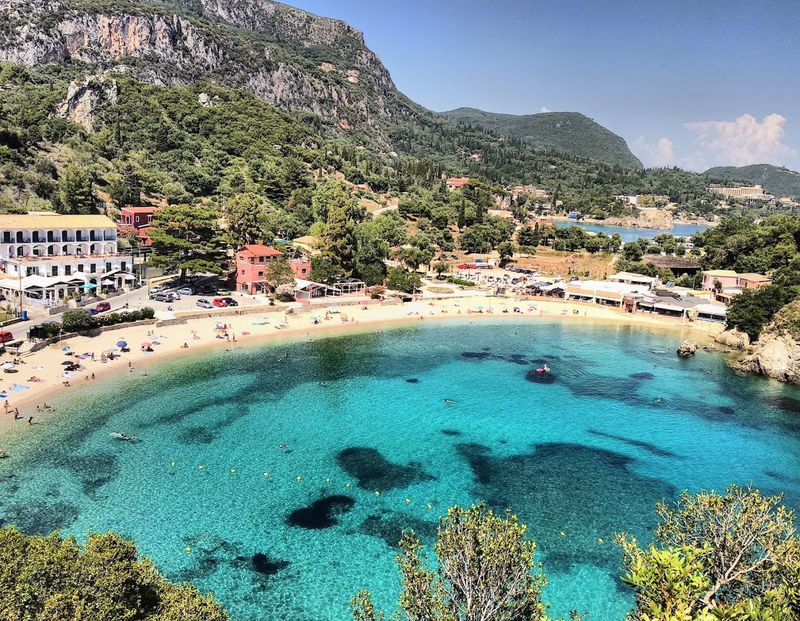
Corfu smells like orange blossom and olive trees, and that alone should be enough to put it on your list. Located in the northwestern corner of Greece, closer to Italy and Albania than to Athens, this lush green island carries a unique cultural fingerprint shaped by centuries of Venetian rule.
The Old Town of Corfu, a UNESCO World Heritage Site, is a beautifully preserved maze of narrow alleyways, arcaded streets, and pastel-painted buildings that feel distinctly un-Greek in the best possible way.
The island has been occupied by Venetians, French, and British over the centuries, and each left behind something lasting. The British introduced ginger beer and cricket — yes, cricket — and locals still play matches on the Esplanade in the heart of the old town.
It is one of the more delightfully unexpected things you will witness anywhere in the Mediterranean.
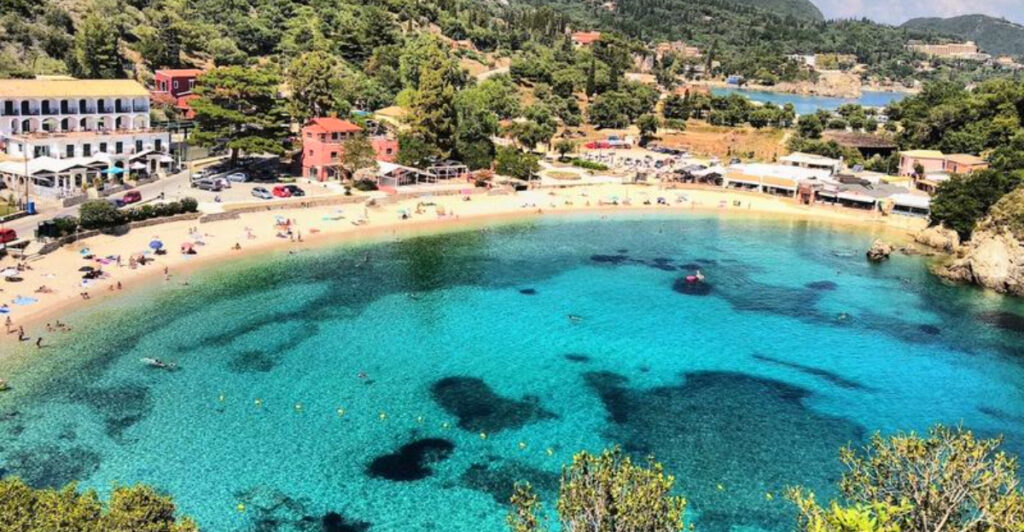
Corfu’s beaches range from busy resort strips to secluded coves accessible only by boat. Paleokastritsa, with its monastery perched on a rocky headland above a series of blue lagoons, is widely considered one of the most beautiful spots on the island.
The interior is equally rewarding — rolling olive groves, hilltop villages, and winding roads that lead to panoramic views across the Ionian Sea.
Delphi
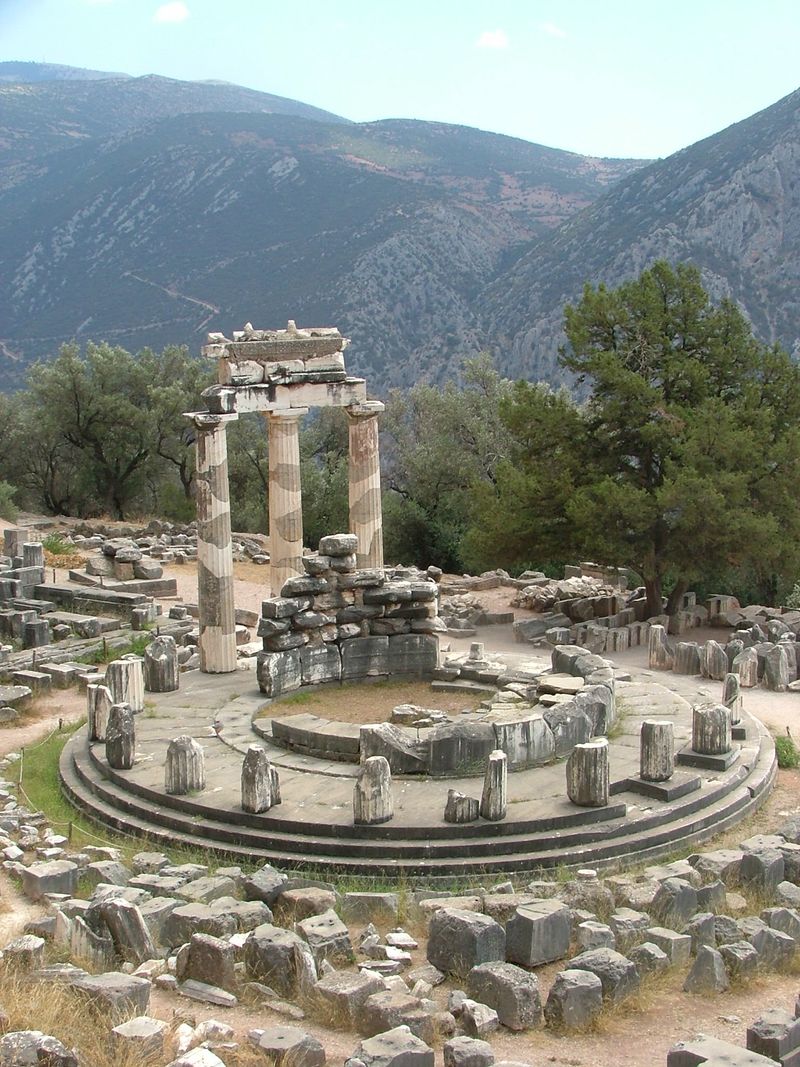
For centuries, ancient Greeks believed Delphi was the literal center of the universe — the navel of the world, marked by a sacred stone called the Omphalos. Kings, generals, and ordinary citizens traveled from across the ancient world to consult the Oracle here, seeking prophecies before making any major decision.
Standing among the ruins today, with the steep slopes of Mount Parnassus rising behind you and a valley of silver olive trees stretching below, it is remarkably easy to understand why this place felt divine.
The archaeological site is one of the most dramatically situated in all of Greece. The Temple of Apollo, the Treasury of the Athenians, and the ancient theater are all arranged along a Sacred Way that climbs steeply up the hillside.
The views from the top tier are extraordinary, stretching all the way to the Gulf of Corinth on clear days.
The on-site Delphi Archaeological Museum is outstanding and should not be skipped. Its star exhibit is the bronze Charioteer of Delphi, one of the finest surviving examples of ancient Greek sculpture.
Delphi is an easy day trip from Athens — about two and a half hours by car — and combining it with a stop at the nearby town of Arachova makes for a perfect full-day excursion.
Milos
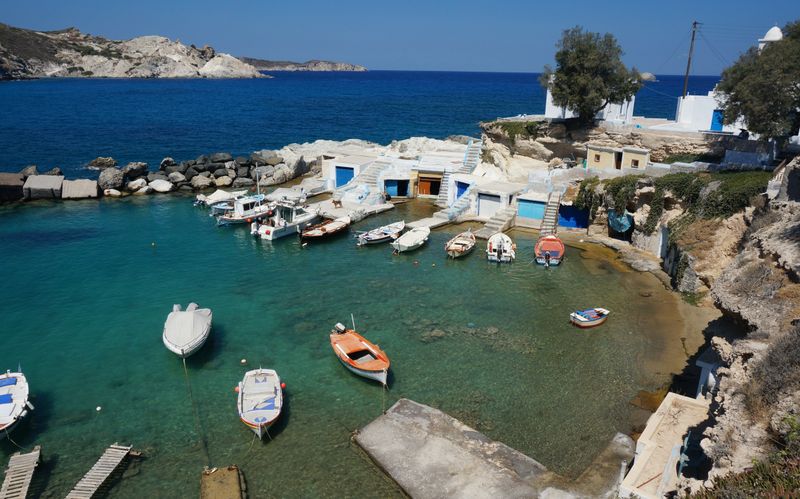
Milos looks like someone accidentally dropped a piece of the moon into the middle of the Aegean Sea. Its most famous beach, Sarakiniko, is covered in smooth white volcanic rock sculpted by centuries of wind and waves into curves and hollows that glow bright white against the deep blue water.
There is no sand, no palm trees, no typical beach setup — just these extraordinary formations that beg to be climbed, explored, and photographed from every possible angle.
The island has more beach variety per square kilometer than almost anywhere else in Greece. Tsigrado requires squeezing through a narrow rock crevice to reach it, which makes arriving feel like an achievement.
Firiplaka offers more traditional golden sand. Kleftiko, accessible only by boat, features sea caves and crystal-clear water so transparent you can see the bottom from the surface.
Milos also has a fascinating history — it is where the famous Venus de Milo statue was discovered in 1820, now on display at the Louvre in Paris. The island’s colorful fishing village of Klima, with its boathouses painted in vivid hues built directly into the base of the cliffs, is another scene straight out of a painting.
Milos is quieter than Santorini and Mykonos, which makes it feel like a genuine discovery.
Thessaloniki
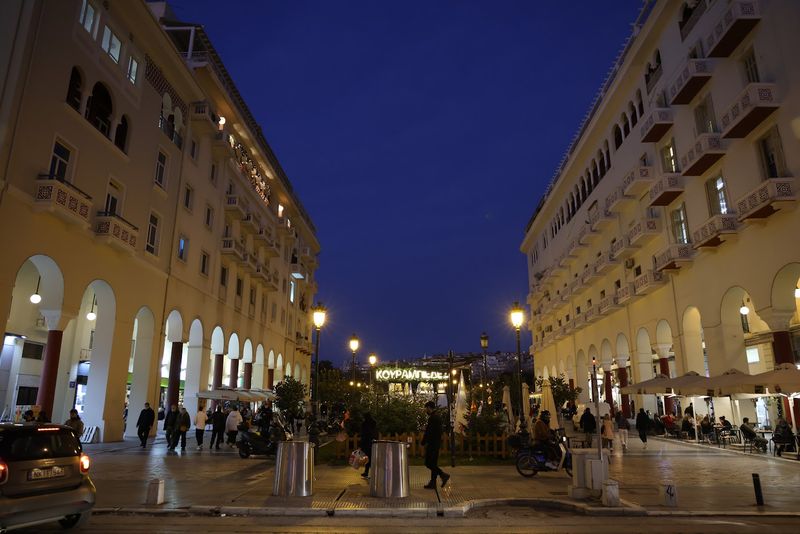
Greece’s second city plays second fiddle to Athens in name only — in almost every other way, Thessaloniki holds its own and then some. Greeks will openly tell you the food here is better than Athens, and after one visit to the city’s central market or a meal in the Ladadika district, it becomes very hard to argue with them.
Thessaloniki has a bold, proud food culture that includes dishes you simply won’t find anywhere else in Greece.
The city’s history is layered and complex in the most fascinating way. Byzantine churches, Roman ruins, Ottoman mosques, and Jewish heritage sites sit side by side, reflecting thousands of years of overlapping civilizations.
The Rotunda, built by Emperor Galerius around 306 CE, has served as a Roman mausoleum, a church, and a mosque at different points in its history. The White Tower along the waterfront is the city’s most recognizable landmark and houses an excellent museum inside.
Thessaloniki has a young, energetic population — home to one of Greece’s largest universities — and the nightlife, arts, and music scenes reflect that energy. The Ano Poli neighborhood, the old upper town, offers cobblestone streets and traditional wooden houses with sweeping views over the city and the Thermaic Gulf below.
A weekend here never feels like enough.
Naxos
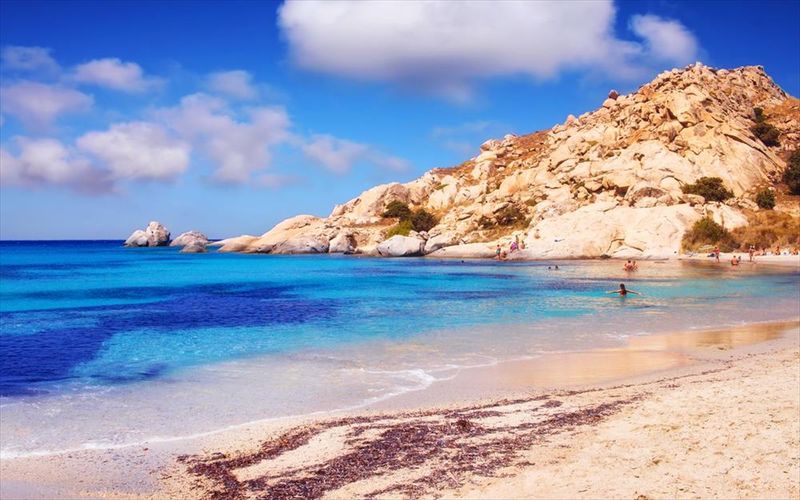
Naxos has a secret weapon that most visitors don’t expect: it is enormous. Compared to neighboring Paros or Mykonos, Naxos feels almost continental, with a mountainous interior full of Byzantine churches, medieval Venetian towers, and villages where traditional life continues largely unchanged.
The beaches on the western coast — Agios Prokopios and Agia Anna — consistently rank among the best in the Cyclades, with long stretches of fine golden sand and shallow turquoise water perfect for families.
The Portara is the island’s most iconic image — a massive marble doorway standing alone on a small rocky islet at the entrance to the harbor. It is all that remains of an unfinished Temple of Apollo from around 530 BCE, and watching the sun set through its frame while sitting on the causeway below is one of those simple travel moments that stays with you for a long time.
Naxos is one of the most self-sufficient islands in Greece, producing its own potatoes, cheese, marble, and emery stone. The local graviera cheese and kitron liqueur — made from citron fruit grown only here — are genuine highlights for food lovers.
The island’s relaxed pace and relative affordability compared to more famous Cycladic neighbors make it an easy choice for travelers who want beauty without the chaos.
Peloponnese (Ancient Olympia)
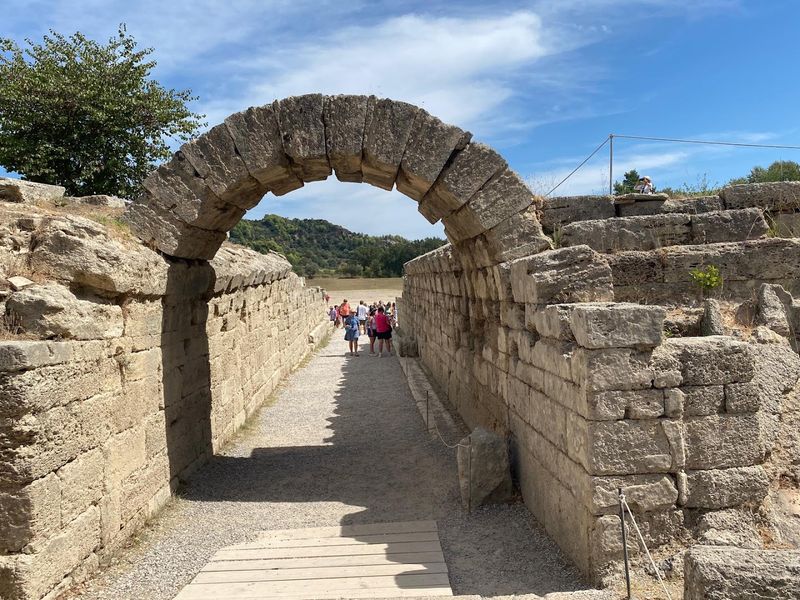
Every four years, the world watches the Olympic flame get lit in a ceremony held at the ruins of Ancient Olympia — and there is something genuinely moving about standing in that same spot and knowing athletes competed here over 2,700 years ago. The starting line of the ancient stadium is still visible in the ground, worn smooth by the feet of competitors long gone.
Running a few steps down that track is something most visitors cannot resist, and honestly, who could blame them.
The Peloponnese peninsula surrounding Olympia is packed with other extraordinary destinations. The medieval fortress city of Mystras, a ghost town of Byzantine palaces and churches draped in wild vegetation, feels like something from a fantasy novel.
The ancient theater of Epidaurus has acoustics so perfect that a coin dropped on the stage can be heard from the top row — a fact that tour guides love to demonstrate.
The coastal town of Nafplio, often considered one of Greece’s most beautiful towns, served as the country’s first capital after independence and retains an elegant, unhurried charm. The Peloponnese rewards road trips more than almost anywhere else in Greece, with each turn in the road revealing a new ruin, a new beach, or a new hilltop village that feels completely off the tourist map.
Mount Olympus
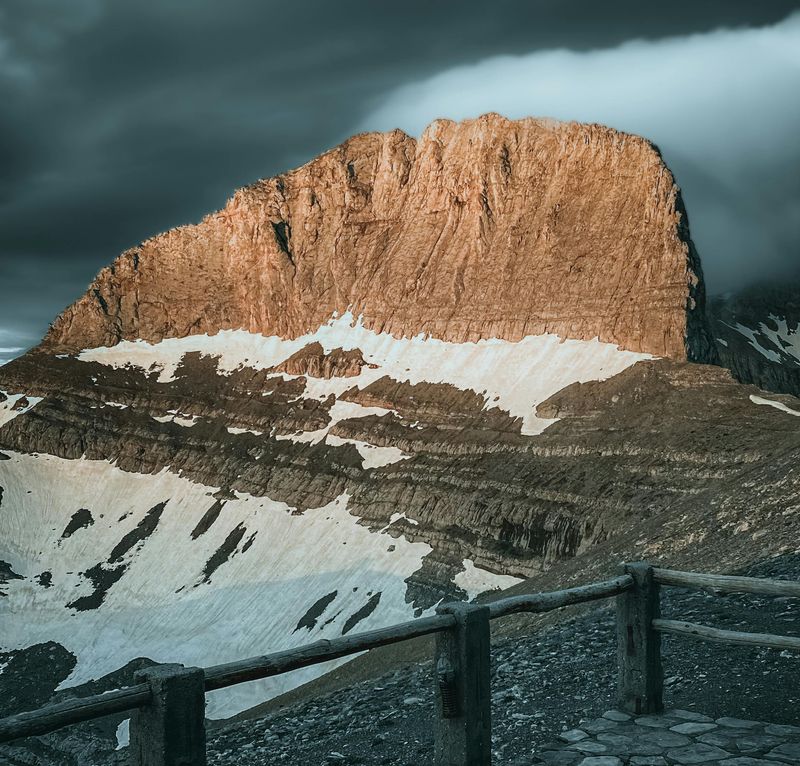
Ancient Greeks chose their gods’ home address wisely — Mount Olympus is genuinely awe-inspiring. Rising to 2,917 meters, it is Greece’s highest mountain and a National Park teeming with rare wildlife, wildflowers, and dense forests that give way to bare rocky peaks shrouded in cloud.
The mountain has been a place of pilgrimage, wonder, and adventure for thousands of years, and modern hikers are simply the latest in a very long line of people drawn to its slopes.
The summit, called Mytikas, is reachable by fit hikers without technical climbing equipment, though the final scramble requires some confidence on steep rocky terrain. Most people spread the ascent over two days, spending a night at one of the mountain refuges where the atmosphere is warm, the food is surprisingly good, and the stargazing is extraordinary.
Waking before dawn to watch the sun rise above the clouds from near the top of Greece is an experience that genuinely earns the word epic.
The town of Litochoro at the base of the mountain serves as the main gateway and is a pleasant, lively base for exploring. Even for non-hikers, the Enipeas Gorge trail offers a beautiful walk through dramatic scenery without requiring any serious climbing.
Mount Olympus is one of those places that reminds you why Greece is so much more than just beaches and islands.
Paros
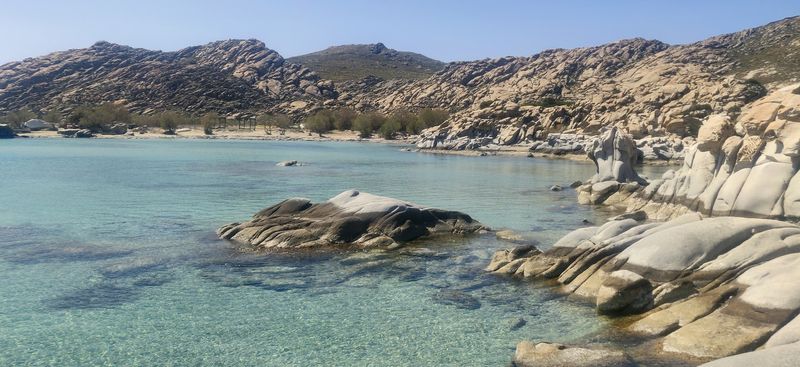
Paros is what Santorini and Mykonos might have been before the world discovered them — genuinely beautiful, relaxed, and still grounded in everyday Greek island life. The fishing village of Naoussa in the north of the island has been quietly winning over travelers for years, with its whitewashed alleys, excellent seafood restaurants, and a small harbor where colorful boats bob beside converted windmills.
It manages to be charming without feeling like a theme park version of itself.
The beaches here are consistently excellent. Golden Beach on the eastern coast is a favorite with windsurfers thanks to its reliable Meltemi winds, while Kolymbithres in the north features smooth rounded granite boulders that create a series of natural pools and sheltered coves.
Santa Maria beach is a go-to for families seeking calm, shallow water. Paros has enough variety to keep beach lovers happy for an entire week without repeating a spot.
The village of Lefkes in the island’s interior is a hidden gem — a hillside settlement of marble-paved streets and traditional Cycladic architecture that sees far fewer visitors than the coastal areas. Paros also produces some of the finest marble in the world, used in ancient times for masterpieces including the Venus de Milo.
The island strikes a balance between accessibility and authenticity that is increasingly rare and genuinely worth seeking out.
Share this story