Tucked away in the woods of northwestern New Jersey, there is a Boy Scout camp that has been shaping young people for over a century. Most people who pass through Warren County have no idea that one of the most recognized filming locations in horror movie history sits just off a quiet country road.
This camp in Hardwick Township pulls double duty as a working Scout camp and the real-life setting of the original Friday the 13th film from 1980. That combination of outdoor tradition and pop culture history makes this place genuinely unlike anything else in the region.
Whether you are a Scout leader planning a troop trip, a horror fan tracking down filming locations, or just someone curious about what makes a place legendary, this camp has more to offer than most people expect.
Where the Camp Actually Sits
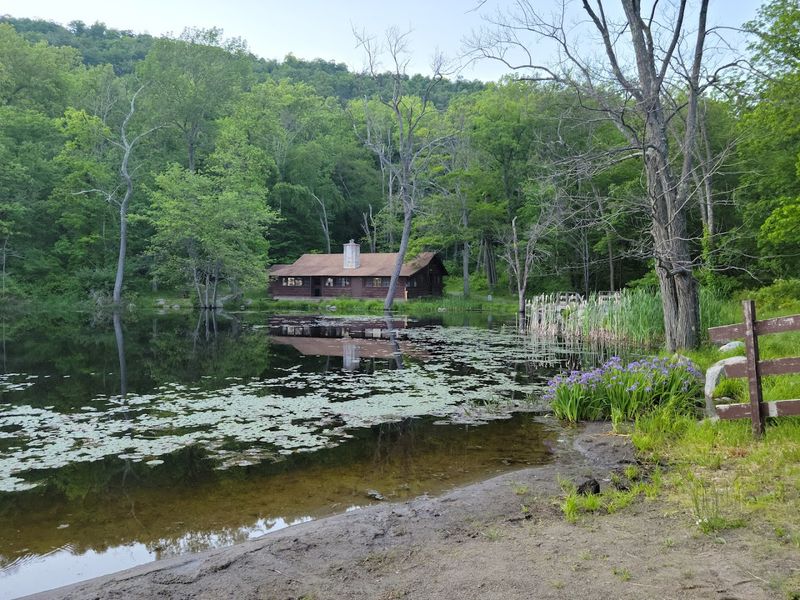
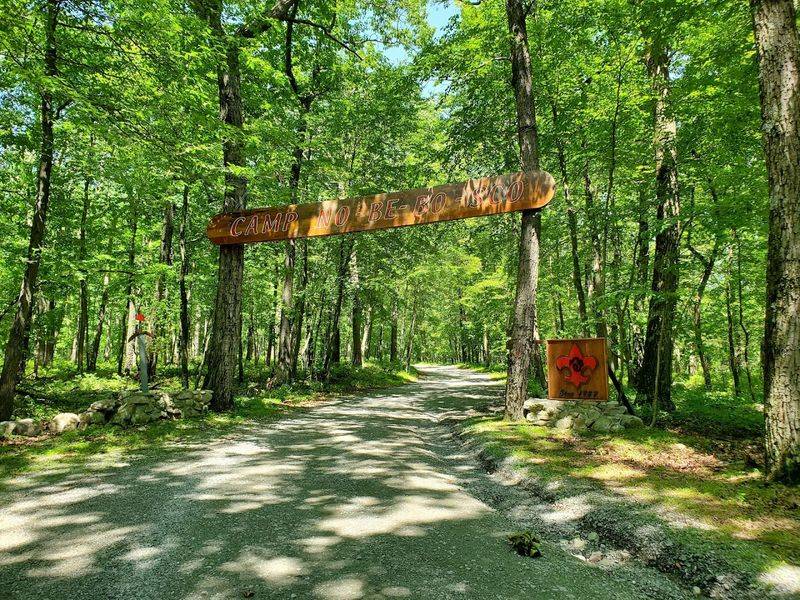
Camp No-Be-Bo-Sco sits at 11 Sand Pond Rd, Hardwick Township, NJ 07825, deep in the forested hills of Warren County. The camp is operated by the Patriots’ Path Council of the Boy Scouts of America and has been welcoming troops to this wooded corner of New Jersey for more than 100 years.
Getting there requires a drive through winding rural roads, which only adds to the feeling that you are leaving the everyday world behind. The surrounding landscape includes mountain ridges, thick tree cover, and the kind of quiet that is hard to find anywhere near a major metro area.
Despite its remote character, the camp is only about an hour and a half from New York City, making it surprisingly accessible for families and troops across the tri-state area. The large parking area on site means arrival is straightforward, even for groups arriving with trailers full of gear.
A Century of Scouting History
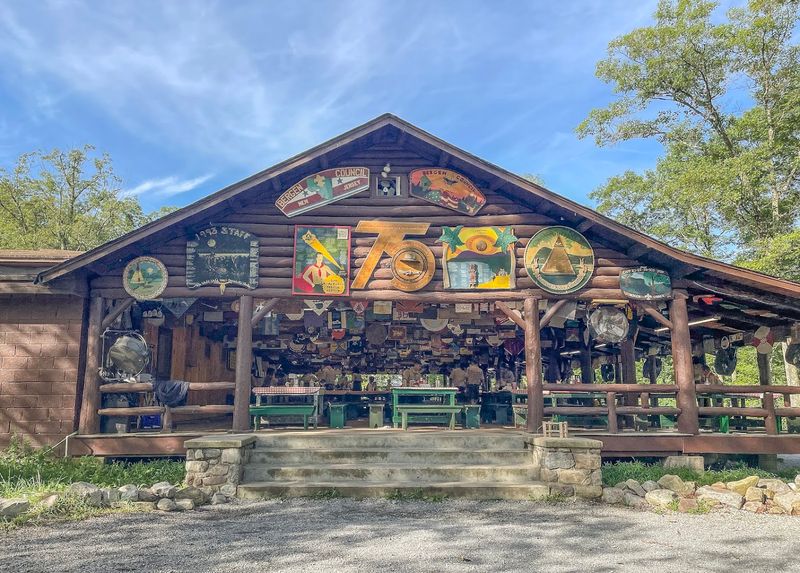
One hundred years of history is not something most camps can claim. Camp No-Be-Bo-Sco has been building character, teaching outdoor skills, and advancing Scout ranks since the early 1900s, making it one of the most enduring youth programs in the entire New York and New Jersey region.
The camp’s longevity speaks to something real. Generations of Scouts have passed through its trails, earned merit badges at its program areas, and returned home with skills they did not have before.
That kind of track record does not happen by accident.
The Patriots’ Path Council has invested in keeping the camp functional and welcoming across all those decades. Infrastructure has been maintained, traditions have been preserved, and the camp continues to serve as a foundation for youth development in the region.
For many families, sending a child to No-Be-Bo-Sco is something that has been passed down from one generation to the next, almost like a rite of passage.
The Friday the 13th Connection That Surprises Everyone
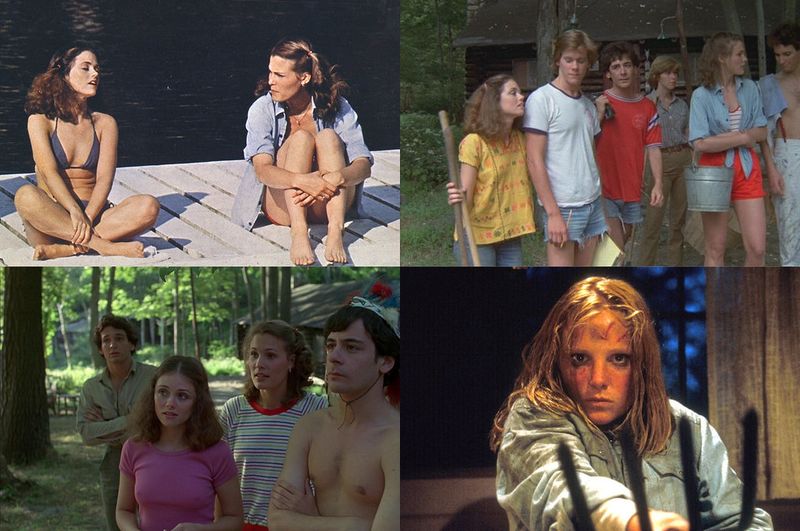
Back in 1979, a film crew from a low-budget horror production scouted locations across New Jersey looking for the right camp setting. They found exactly what they needed at No-Be-Bo-Sco.
The original Friday the 13th, released in 1980, used the camp as its primary filming location, turning the real camp into the fictional Camp Crystal Lake.
The film went on to become one of the most influential horror movies ever made, launching a franchise that spanned decades. And through all of it, the actual camp where it was shot kept right on operating as a working Boy Scout facility.
That contrast is part of what makes the place so compelling. On any given summer week, a troop of Scouts might be earning their Cooking or Wilderness Survival merit badge on the same trails where iconic horror scenes were captured more than four decades ago.
Not many places carry that kind of layered identity.
The Camp Crystal Lake Tour Experience
The camp opens its gates to horror fans through organized Camp Crystal Lake tours, which have become a major draw for people who grew up watching the Friday the 13th series. These are not casual walks through the woods.
The tours are structured, guided experiences led by staff members who know the film and the property in serious detail.
Tour guides walk guests through actual filming locations on the property, pointing out where specific scenes were shot and sharing behind-the-scenes details that even dedicated fans often have not heard before. Original props from the film are on display on site, giving the tour a tangible connection to the production that photographs simply cannot replicate.
The hike covers meaningful ground, so comfortable footwear and bug spray are practical necessities. The tours run on select dates, including, naturally, on actual Friday the 13th calendar dates, which adds a layer of atmosphere that organizers clearly lean into with full enthusiasm.
Original Props Still on the Property
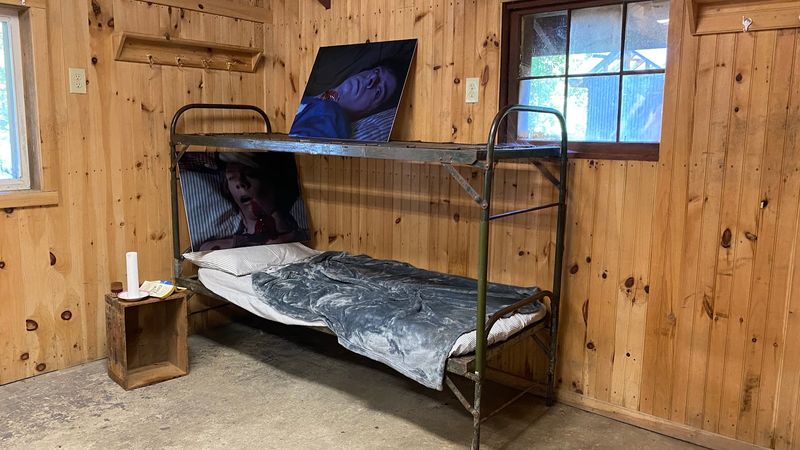
One of the most talked-about aspects of the Camp Crystal Lake tour is the fact that original props from the 1980 film are still physically present at the camp. These are not reproductions or themed decorations.
These are actual items from the production, preserved and displayed for guests who make the trip out to Hardwick Township.
For collectors and horror enthusiasts, that kind of access to authentic film history is genuinely rare. Most movie props end up in private collections or studio archives.
Having them remain at the actual filming location adds a layer of authenticity that is hard to overstate.
The gift shop on site also gives fans a chance to take something home, whether that is a piece of branded merchandise or a memento from the tour itself. The combination of walking the real locations and seeing the real props creates a complete experience that keeps people coming back for second and third visits, which happens more often than you might expect.
Summer Camp Programming for Scouts
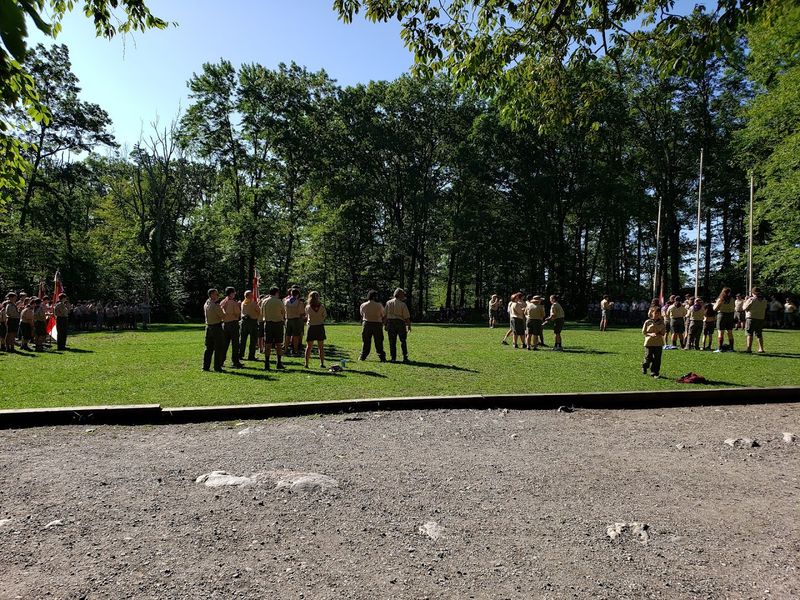
At its core, No-Be-Bo-Sco is a functioning Boy Scout camp, and its summer programming reflects that fully. Week-long sessions run from early July through mid-August, offering registered BSA members access to a wide range of structured activities designed to advance rank and earn merit badges.
The camp covers an impressive variety of program areas. Scouts can work toward merit badges in subjects ranging from aquatics and archery to cooking, nature, and first aid.
The breadth of what is available in a single week makes the camp particularly efficient for troops trying to help their members advance.
Individual Scouts who are not attending with their home troop can join a Provisional troop if that option is offered in a given season, which makes the camp accessible beyond just organized group trips. The staff running these programs are experienced and focused on making each week count for every Scout who attends.
Summer at No-Be-Bo-Sco has a well-earned reputation for being genuinely productive.
Year-Round Access for Troops
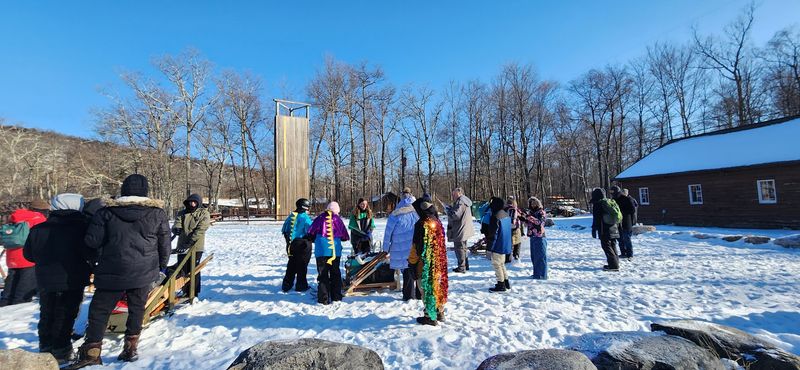
Summer gets most of the attention, but No-Be-Bo-Sco operates year-round, and the off-season visits have developed their own loyal following among Scout leaders. Cold weather camping at the facility gives troops a chance to work on skills that simply cannot be practiced the same way in warmer months.
Cabins on the property are equipped for chilly overnight stays. Two well-known cabins sit directly across the trail from year-round bathrooms, which include heated facilities, a detail that matters quite a bit when temperatures drop.
Backporch cooking setups allow troops to prepare their own meals without a full kitchen, which turns meal prep itself into a practical outdoor skill exercise.
The campmaster on site during these visits is a seasoned Scout who brings decades of knowledge to every group that comes through. Troops that take the time to listen and follow guidance tend to get far more out of their stay.
A winter weekend at No-Be-Bo-Sco builds the kind of resilience that a summer week in mild weather simply cannot match.
The NoBe Trail and Mountain Hike
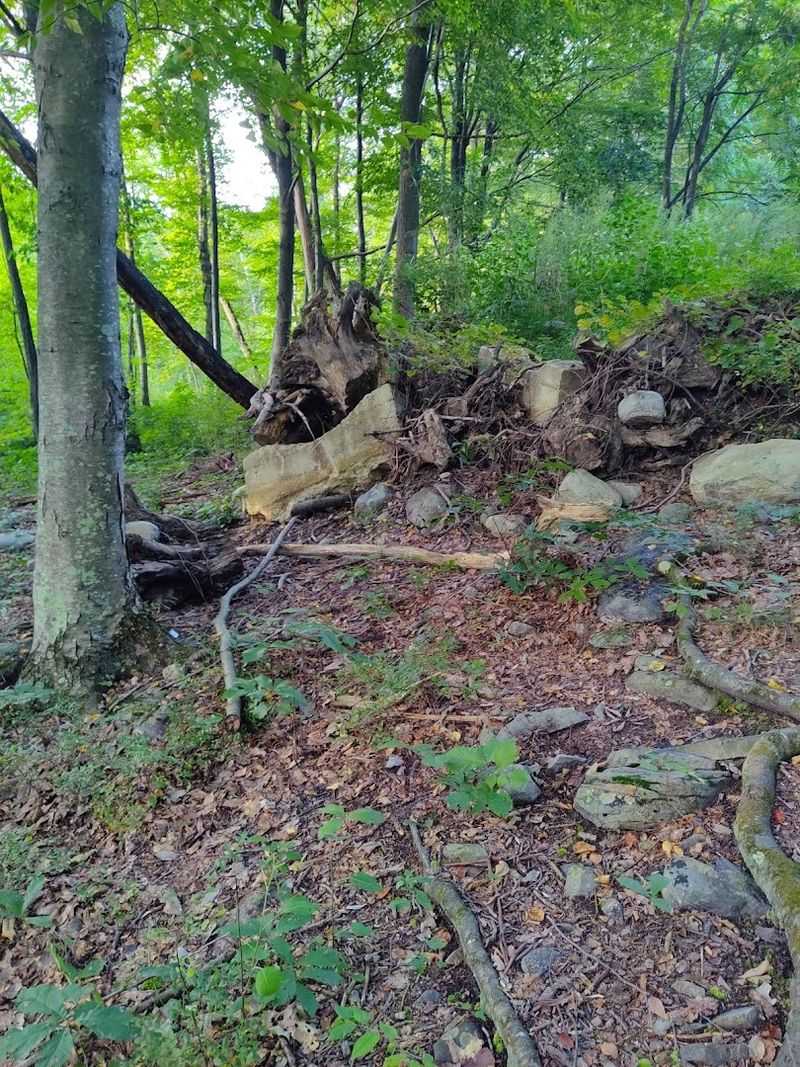
For troops looking for a physical challenge, the NoBe Trail delivers one of the more demanding hikes available at any Scout camp in the region. The route begins at the waterfront, loops around Price Lodge, and continues to the end of the gravel road before picking up the blue trail markers that lead up the mountain.
The climb gains roughly 500 feet in elevation, with sections of steep rock scrambling that require real effort and solid footwear. The views from the top are a clear reward for the work it takes to get there.
On a clear day, the ridge perspective over the surrounding forest is hard to beat.
The descent follows Appalachian Trail markers along power line cuts before dropping back into the woods toward Beaver Pond. A left turn before the small bridge brings hikers on a gentler path back to camp.
Leaders are advised to skip this route in wet, icy, or snowy conditions, as the rock sections become genuinely hazardous when slick. Plan accordingly.
The Setting That Made It Perfect for Film
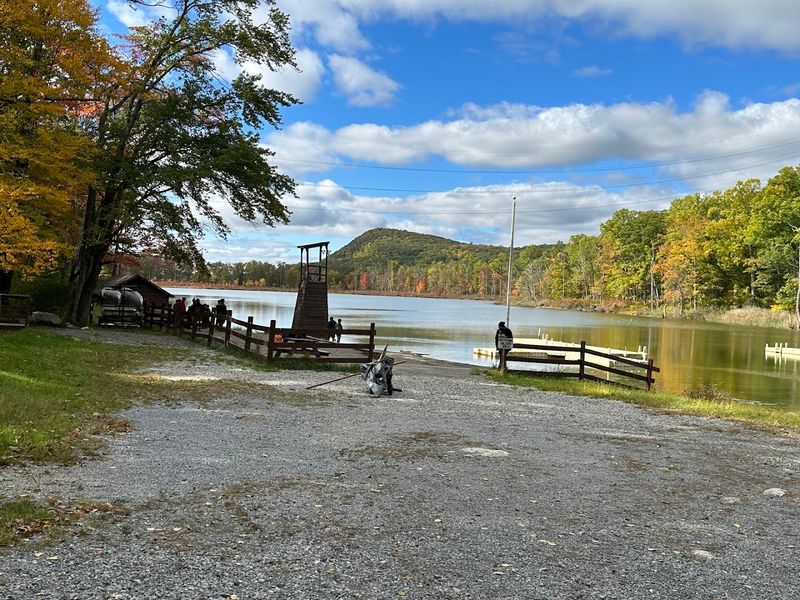
It takes one look at the property to understand why a film crew chose it as their shooting location. The combination of dense woodland, a natural lake, rustic camp architecture, and geographic isolation creates a backdrop that is hard to manufacture on a set.
The landscape does the heavy lifting on its own.
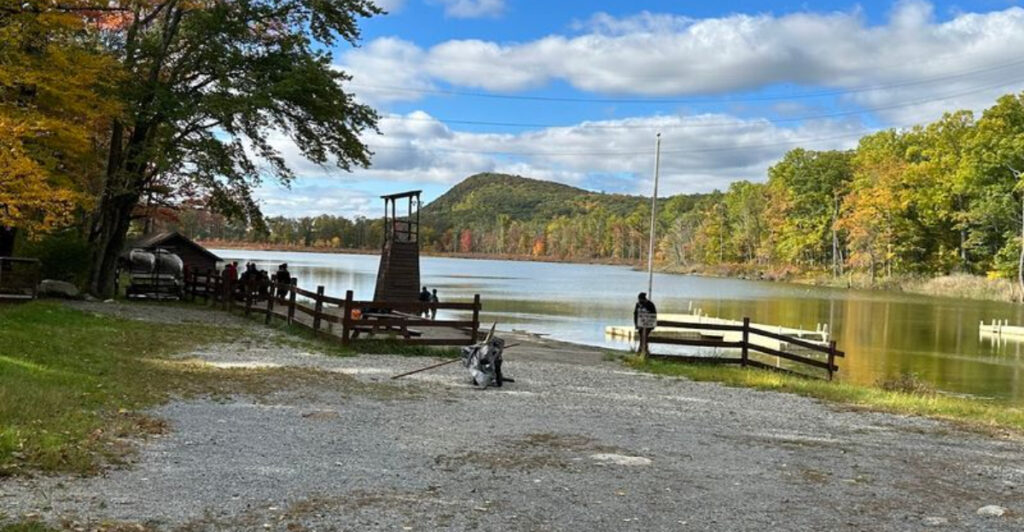
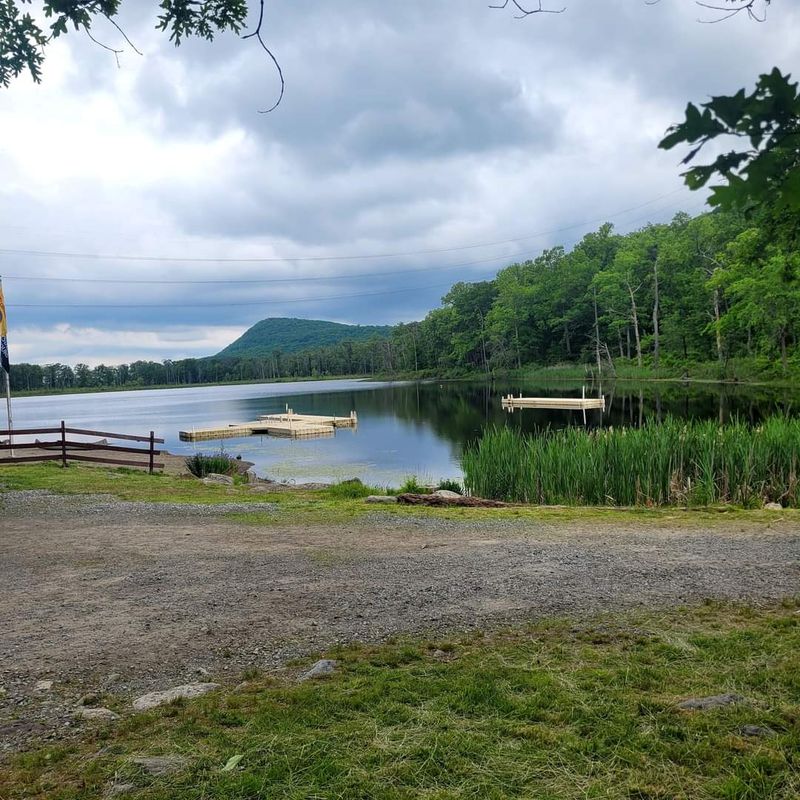
Sand Pond, the lake at the heart of the property, has a stillness to it that photographs well and reads powerfully on screen. The surrounding mountain ridges and tree canopy create a contained, enclosed atmosphere that the original film used to full effect.
Even without any knowledge of the movie, the property has a distinct character. The cabins, the trails, the waterfront, and the open camp areas all fit together in a way that feels both functional and cinematic.
That dual quality is rare. Most places are one or the other.
No-Be-Bo-Sco manages to be both, which is part of why people who visit for entirely different reasons tend to leave equally impressed.
Friday the 13th Reunions and Special Events
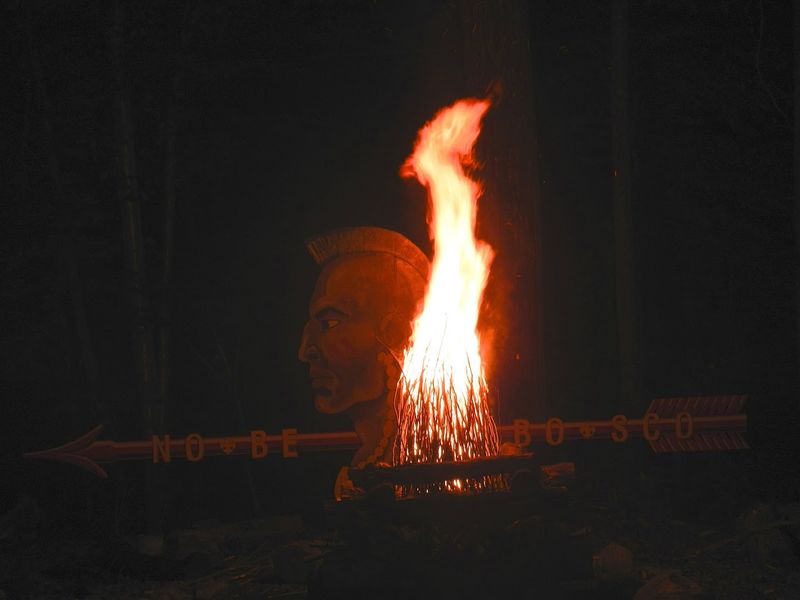
Beyond the regular tour schedule, the camp has hosted Friday the 13th reunion events that bring together fans, cast members, and crew from the original production. These gatherings go further than a standard tour, offering direct interaction with people who were part of making the film.
Events like these are relatively rare in the horror fan community. Most film anniversaries are celebrated at conventions held in hotel ballrooms, far removed from any actual connection to the movies being honored.
No-Be-Bo-Sco offers something different by holding those celebrations on the original ground where the filming took place.
Attendees at past reunions have consistently described the experience as something that cannot be replicated at a traditional fan convention. The combination of the outdoor setting, the walking tour of filming locations, and the presence of people connected to the original production creates a layered event that works on multiple levels at once.
Dates for these events are announced through the camp’s official channels and tend to fill up quickly.
Practical Tips Before You Go
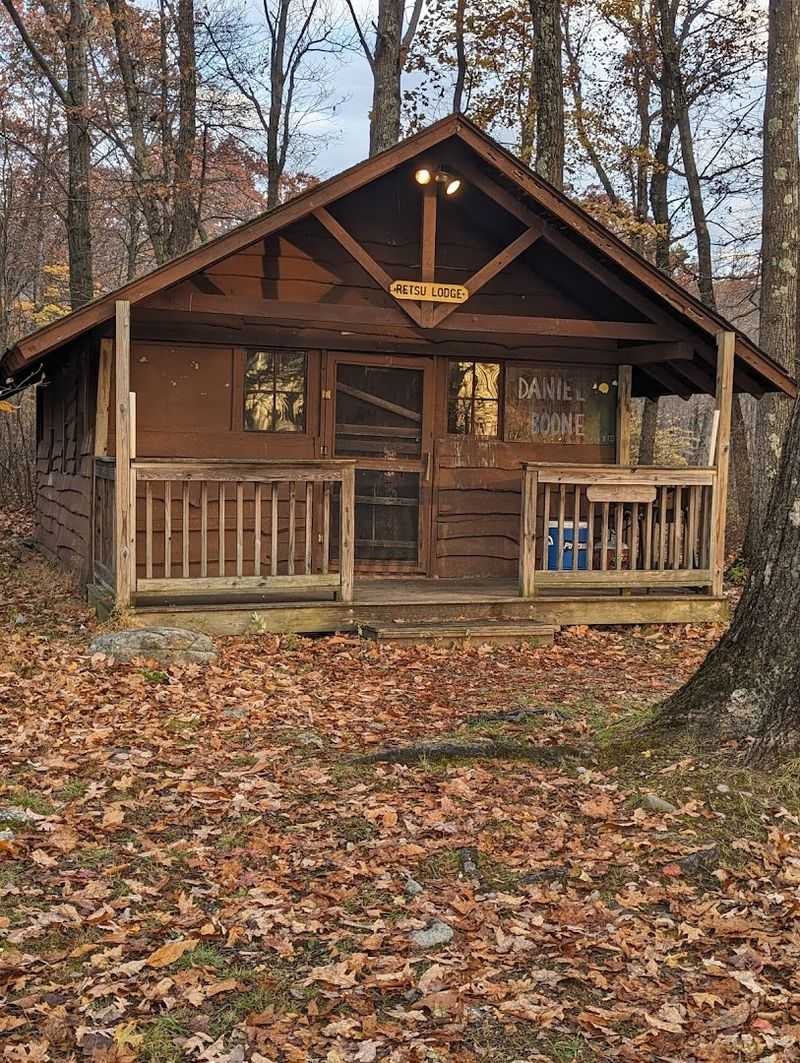
A visit to No-Be-Bo-Sco requires a bit of preparation, and a few practical details can make the difference between a smooth trip and an uncomfortable one. The parking area is large, which is a genuine convenience for groups arriving in multiple vehicles or with trailers.
Drinkable water is available outside the building that houses the bathrooms and showers, located near the main parking area. There is no food service on site for tour guests, so arriving with snacks or eating before the drive out is the practical move.
The hike through the filming locations covers significant ground, making sturdy boots a real necessity rather than just a suggestion.
Bug spray is equally important, especially during warmer months when the trail conditions bring guests into dense vegetation. Tall electricity poles run through the parking area and produce a faint buzzing sound, so light sleepers camping overnight may want to bring something to block ambient noise.
A little planning up front makes the whole experience considerably more enjoyable.
What the Tour Revenue Actually Supports
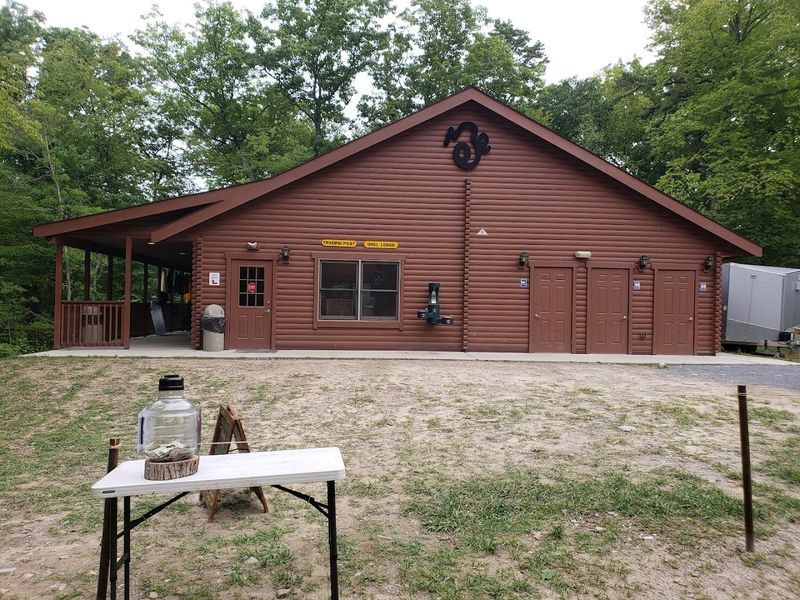
There is a meaningful backstory to the Crystal Lake tours that goes beyond horror fandom. The revenue generated by these tours flows directly back into the camp’s operations, helping fund the maintenance and upkeep of a facility that serves active Boy Scout troops throughout the year.
Running a camp of this size across all four seasons is not inexpensive. Facilities need maintenance, trails need clearing, cabins need upkeep, and program equipment needs replacing over time.
The tours provide a funding stream that supports all of that without drawing solely on Scout membership fees or council budgets.
That financial relationship between the horror film tourism and the Scouting program is one of the more unusual arrangements in the outdoor recreation world. Horror fans paying to walk the trails of Camp Crystal Lake are, in a very direct way, helping keep a century-old Scout camp functional for future generations of young people.
That is a connection worth appreciating, and it gives the tour experience an added layer of purpose beyond entertainment.
The Waterfront and Aquatics Area
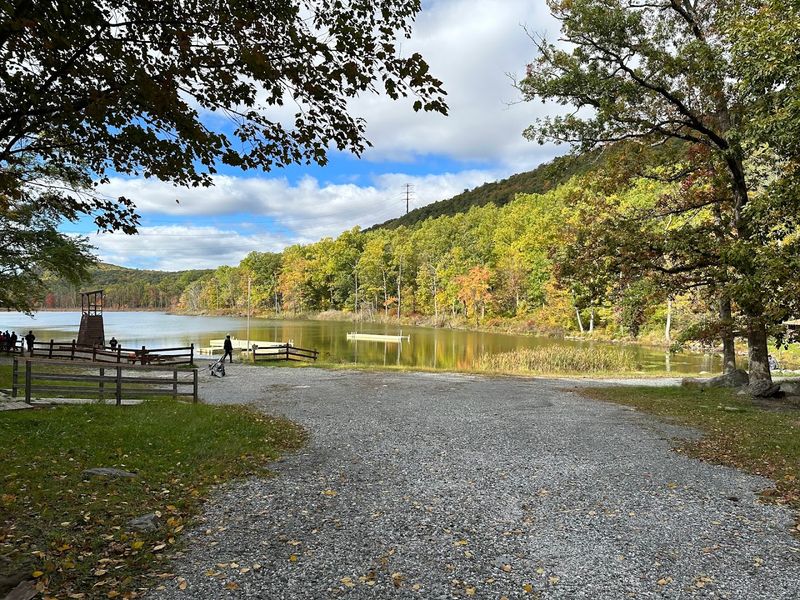
Sand Pond anchors the camp’s waterfront program and serves as one of the most visually striking parts of the property. The lake is central to the summer Scout program, supporting aquatics merit badges and open swim periods that give Scouts a break from land-based activities during hot July and August weeks.
The waterfront area is also a key stop on the Crystal Lake tour route, since the lake itself featured prominently in the original film. Walking down to the water’s edge with that context in mind gives the location a different kind of weight for film fans than it carries for Scout campers, even though the physical space is exactly the same.
The trail from the main camp area down to the waterfront is one of the more heavily used paths on the property, connecting the program buildings and cabins to the lake in a straightforward route that even younger Scouts can handle without difficulty. The surrounding mountain views from the waterfront area are consistently noted as one of the property’s strongest natural assets.
Cabin Accommodations and Camping Options
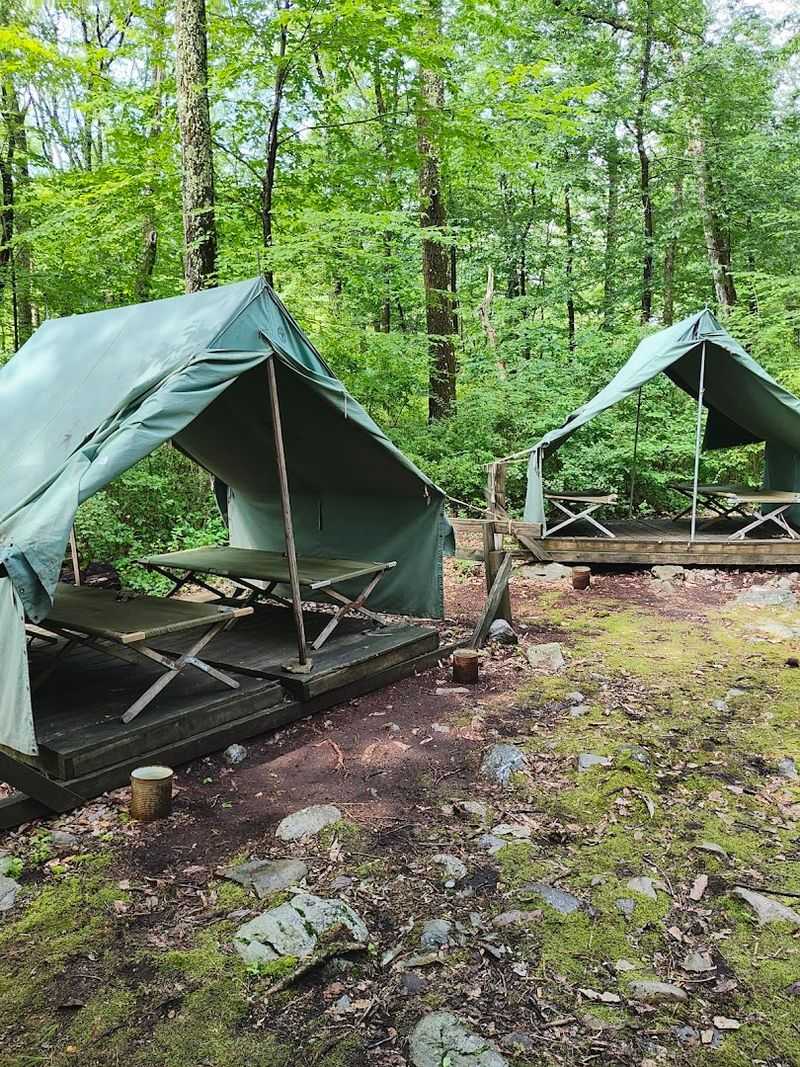
Accommodation options at No-Be-Bo-Sco cover a range of preferences and experience levels. Beyond the well-equipped cabins suited for cold-weather stays, the camp also offers lean-to shelters and tent platforms for troops that prefer a more traditional camping setup.
The tent platforms are maintained in good condition and provide a stable base for setting up camp, which matters particularly during rainy weather when ground conditions can become challenging. Three wooden picnic tables at the main camping areas give troops a functional outdoor workspace for meals and program activities.
One practical note for anyone planning a trip during wetter seasons: bringing tarps and rope is a smart call, since on-site firewood can absorb moisture and become difficult to use after prolonged rain. Sourcing dry firewood locally before arriving at camp is a reliable backup plan.
The variety of accommodation types means No-Be-Bo-Sco can comfortably host everything from first-time campers on a mild spring weekend to experienced troops tackling a full winter overnight challenge.
Why This Place Keeps Drawing People Back
Few places manage to hold genuine appeal for two completely different audiences at the same time. No-Be-Bo-Sco does it without any apparent contradiction.
Scout families return year after year because the programming is solid, the setting is exceptional, and the camp has a track record that spans generations.
Horror fans return because the tour keeps revealing new details, because the on-site props and locations hold up across multiple visits, and because the guides consistently bring fresh knowledge and personal stories to each group. Several people have noted doing the tour two or three times and still coming away with something new.
That kind of repeat appeal is built on authenticity. The camp is not a theme park version of itself.
It is a real, working Scout facility that also happens to occupy a unique place in film history. That combination does not happen by design.
It happened because a film crew showed up in 1979 and chose well. More than four decades later, both legacies are still very much alive on Sand Pond Road.
Share this story