Some hotels are just a place to sleep. Others are the whole reason you booked the flight.
Europe is packed with legendary properties that have hosted royalty, survived revolutions, and somehow still manage to offer turndown service with a smile. These 15 historic hotels are so extraordinary that the destination almost becomes secondary.
Hôtel de Crillon, Paris, France
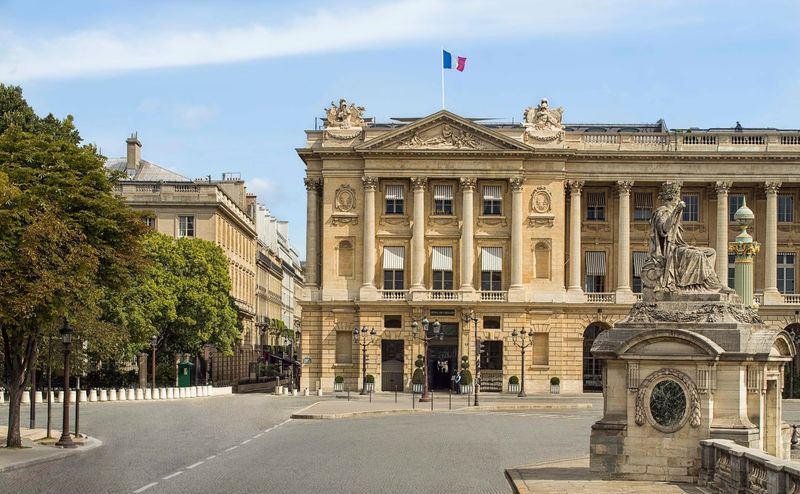
Built in 1758 on the orders of King Louis XV, the Hôtel de Crillon has been staring down the Place de la Concorde for longer than the United States has existed. That alone deserves a slow clap.
The hotel reopened in 2017 after a four-year renovation, and it came back looking like it had never aged a day.
The rooms are a love letter to French craftsmanship, with hand-embroidered fabrics and marble bathrooms that make you want to cancel your return flight. Karl Lagerfeld personally designed two of the suites, so you know the aesthetic bar was set somewhere near the stratosphere.
The Les Ambassadeurs bar is worth a visit even if you are not a guest. Order a cocktail, sit back, and pretend you are a diplomat.
Nobody will correct you. Crillon is not just a hotel stay; it is a full-on Parisian power move.
Hotel Imperial, Vienna, Austria
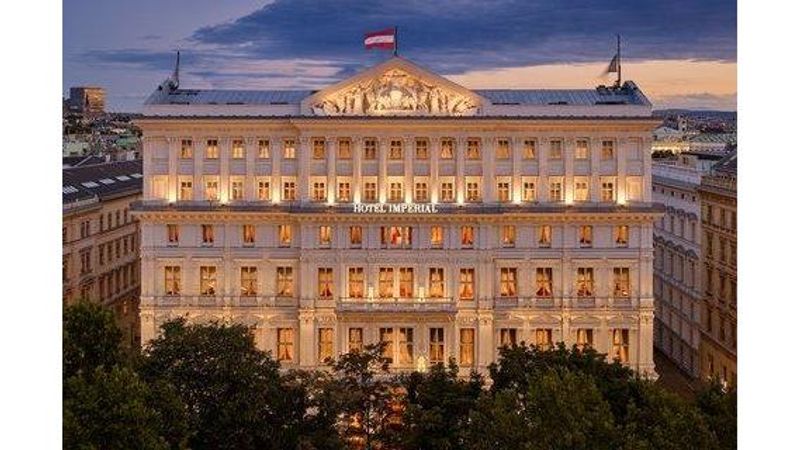
When Emperor Franz Joseph I needed somewhere suitably grand for visiting royalty, Hotel Imperial was the answer. Opened in 1873, this Vienna landmark has hosted everyone from Queen Elizabeth II to Richard Wagner, who reportedly complained about the pillows.
Some guests are never satisfied.
The building started life as the Duke of Württemberg’s private palace before being converted into a hotel for the World Exhibition. Walking through the front door still feels like crashing a very fancy 19th-century party.
The Imperial Torte, a chocolate marzipan cake invented here, is sold in the lobby and is genuinely worth the calories.
Every suite is decorated with original antiques, and the staff treat you with a formality that borders on theatrical. I once watched a bellboy carry a single hat box with the solemnity of a state funeral.
That level of commitment to service is hard to find anywhere else.
Hotel Sacher, Vienna, Austria
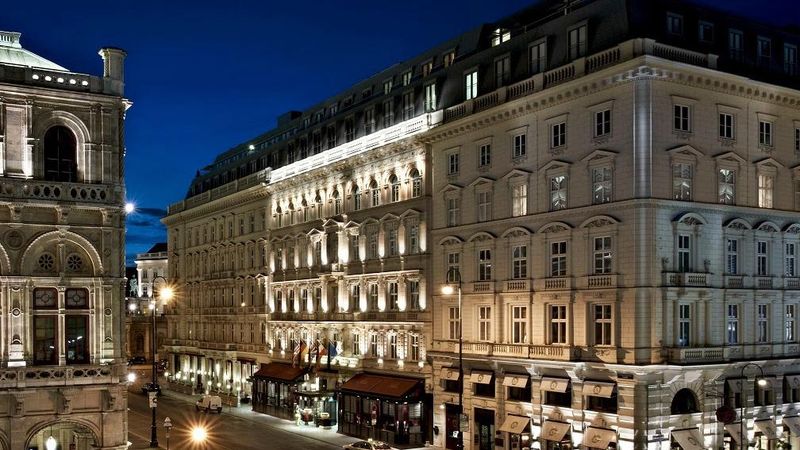
The Hotel Sacher and the Hôtel de Crillon are both in Vienna, which means Vienna is basically showing off. Sacher opened in 1876, and its founder Franz Sacher also invented the Sachertorte, arguably the most famous chocolate cake on the planet.
The man was an overachiever.
The hotel sits right behind the Vienna State Opera, which makes pre-show dinners dangerously convenient. The Red Bar is a local institution, all dark wood paneling and velvet seating, with a cocktail list that takes its job seriously.
Sacher has been family-owned for generations, which gives it a warmth that big luxury chains rarely manage. The rooms are traditional Viennese in style: heavy drapes, oil paintings, and furniture that looks like it has a personal history.
There is a genuine sense that the building remembers its past guests. Staying here feels less like checking in and more like being welcomed home by a very elegant family.
The Shelbourne, Dublin, Ireland
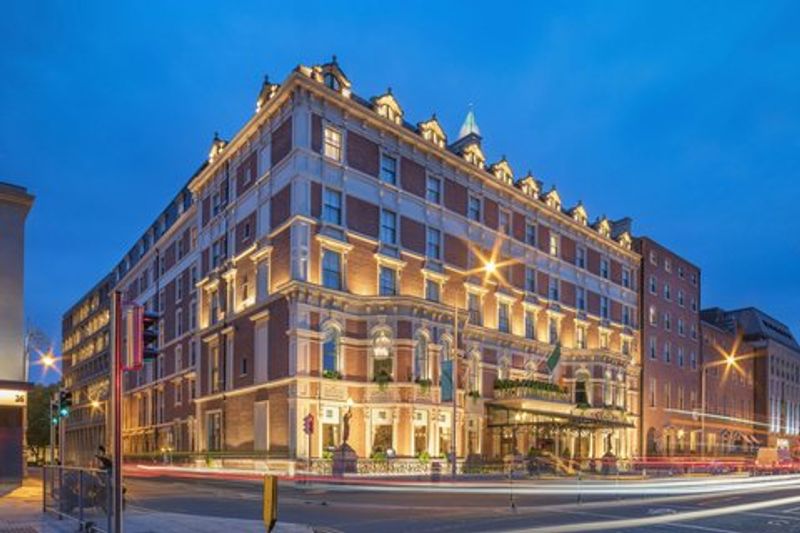
The Shelbourne has been the social heartbeat of Dublin since 1824. The Irish Constitution was actually drafted in Room 112 in 1922, making this hotel arguably the most politically significant address in the country.
Not bad for a place that also does an excellent afternoon tea.
St. Stephen’s Green stretches out right in front of the hotel, and watching Dublin life drift past from the Lord Mayor’s Lounge is one of the city’s great free pleasures. The Horseshoe Bar is the kind of place where journalists, politicians, and characters of uncertain profession all end up on the same barstool.
The rooms have been updated without losing their Georgian soul, which is a tricky balance that Shelbourne pulls off effortlessly. The staff have a particular brand of Irish warmth that feels completely unrehearsed.
Ask anyone in Dublin where to stay and you will get the same answer, usually delivered with a knowing nod and zero hesitation.
Parador de Santiago de Compostela, Santiago de Compostela, Spain
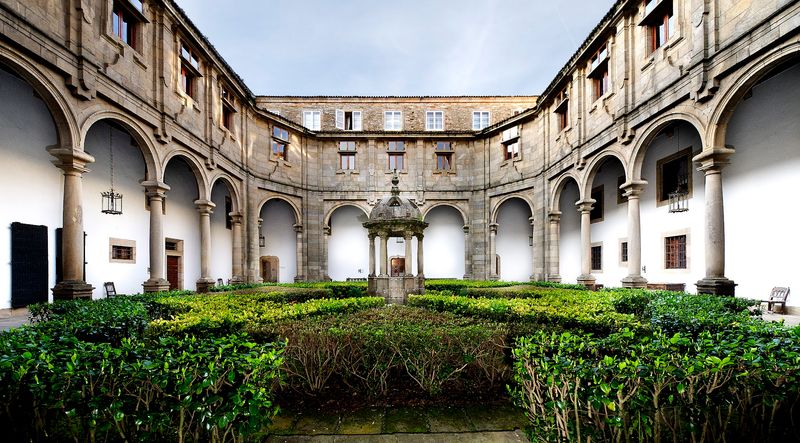
Officially known as the Hostal dos Reis Católicos, this parador was built in 1499 by order of the Catholic Monarchs as a royal hospital for pilgrims arriving on the Camino de Santiago. It may be the oldest hotel in the world still operating.
History does not get more layered than this.
The building wraps around four stunning courtyards and sits directly on the Plaza del Obradoiro, sharing the square with the Santiago de Compostela Cathedral. Waking up and stepping outside to that view is the kind of thing that makes you question every hotel decision you have ever made.
The restaurant serves Galician cuisine in a vaulted stone dining room that looks like it belongs in a medieval fantasy novel. Parador properties across Spain are known for blending heritage with genuine hospitality, and this one sets the gold standard for the whole chain.
Pilgrims once received free meals here for three days. The current menu is excellent but considerably less free.
The Gritti Palace, Venice, Italy
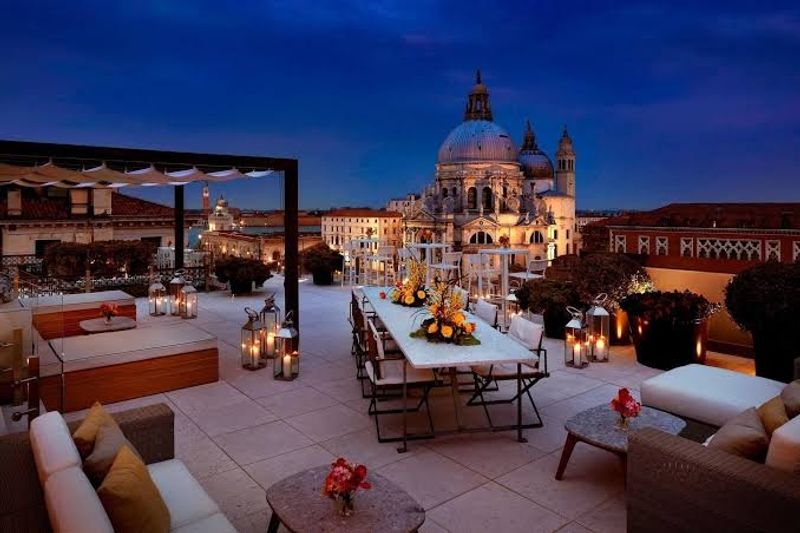
The Gritti Palace sits right on the Grand Canal in Venice, which means your view from the terrace is one of the most painted, photographed, and gasped-at in the world. The building dates back to 1475 when it was the private residence of Doge Andrea Gritti.
He had excellent taste in real estate.
Ernest Hemingway was a devoted regular and set parts of his novel Across the River and Into the Trees here. W.
Somerset Maugham and Winston Churchill also checked in at various points, presumably not at the same time. The guest book reads like a literary hall of fame.
The rooms facing the canal are genuinely worth the splurge. Breakfast on the terrace with gondolas drifting past is an experience that no amount of travel writing can fully prepare you for.
The Club del Doge restaurant is one of Venice’s finest, and the bar menu at sunset is something you will mention for years afterward.
Castello di Casole, Tuscany, Italy
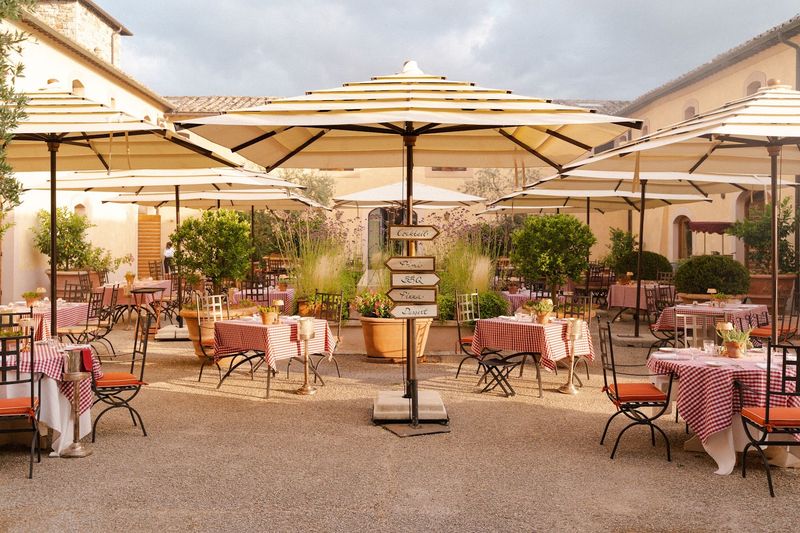
Perched on a hilltop in the middle of a 4,200-acre private estate in Tuscany, Castello di Casole is the kind of place that makes you wonder why you ever lived in a city. The castle itself dates back to the 10th century, and the estate has been producing wine and olive oil for centuries.
That is what you call a productive property.
The hotel has just 39 rooms and suites, spread between the main castle and surrounding farmhouses. Each one is decorated with antiques and local art, and several have private terraces looking out over vineyards.
Spending a morning doing absolutely nothing on one of those terraces is a legitimate life goal.
Cooking classes, truffle hunting, and horseback riding through the estate are all on offer, though the pool overlooking the valley tends to win most scheduling arguments. The spa uses locally sourced ingredients, which in Tuscany means olive oil, honey, and herbs.
It is all very indulgent, and not even slightly apologetic about it.
Villa d’Este, Lake Como, Italy
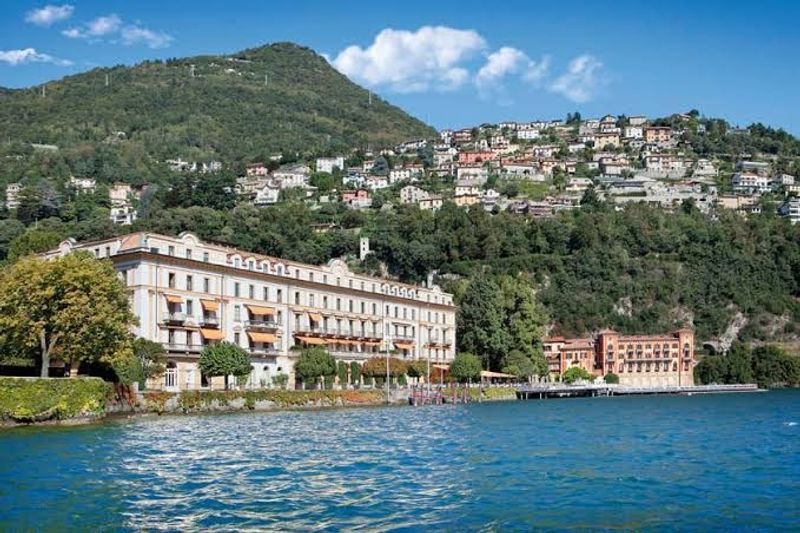
Villa d’Este has been hosting guests since 1873, but the villa itself was built in 1568 for Cardinal Tolomeo Gallio. It later became home to Caroline of Brunswick, the estranged wife of King George IV, who threw legendary parties here and apparently did not care what London thought about it.
Relatable energy.
The floating swimming pool on Lake Como is one of the most iconic hotel features in Europe. It sits on a pontoon on the lake and has been photographed so many times it practically has its own agent.
Getting a lane in summer requires strategic planning and an early alarm.
The gardens are immaculate and run right down to the lake’s edge, filled with centuries-old trees and fountains that still work perfectly. The hotel has 152 rooms across two villas, each decorated in classic Italian style with frescoed ceilings and antique furniture.
Villa d’Este is the kind of place where elegance is not performed; it is simply the default setting.
Grand Hotel Tremezzo, Lake Como, Italy
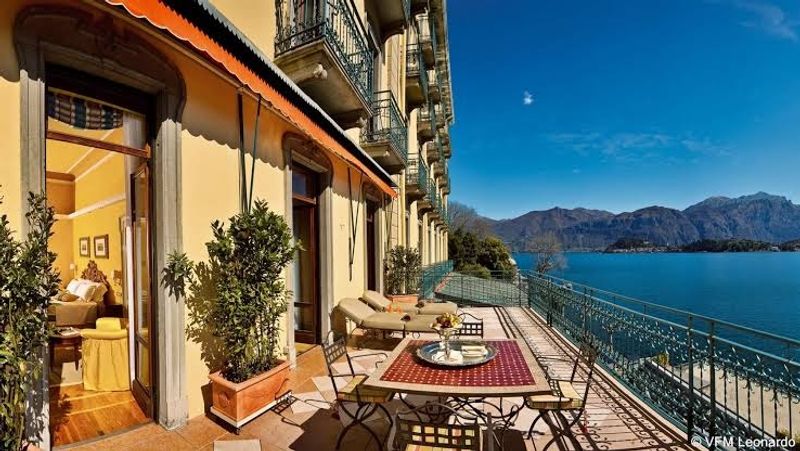
Two Lake Como hotels in one list might seem excessive, but Lake Como is not a place that rewards restraint. Grand Hotel Tremezzo opened in 1910 and has been dazzling guests with its Liberty-style architecture and front-row lake views ever since.
The pink and white facade is so photogenic it borders on unfair.
The hotel has its own floating pool on the lake, its own private beach, and a boat service that runs to nearby villages. Getting around by hotel boat is the kind of travel upgrade that ruins all future public transport forever.
The T restaurant earned a Michelin star, which means the food matches the view.
Tremezzo sits directly across the lake from Bellagio, and the light in the late afternoon turns everything golden. The Belle Époque interiors have been carefully preserved, right down to the original mosaic floors.
Staying here is not just a hotel experience; it is a full immersion in a specific kind of early 20th-century optimism that felt the world was beautiful and proved it.
Reid’s Palace, Madeira, Portugal
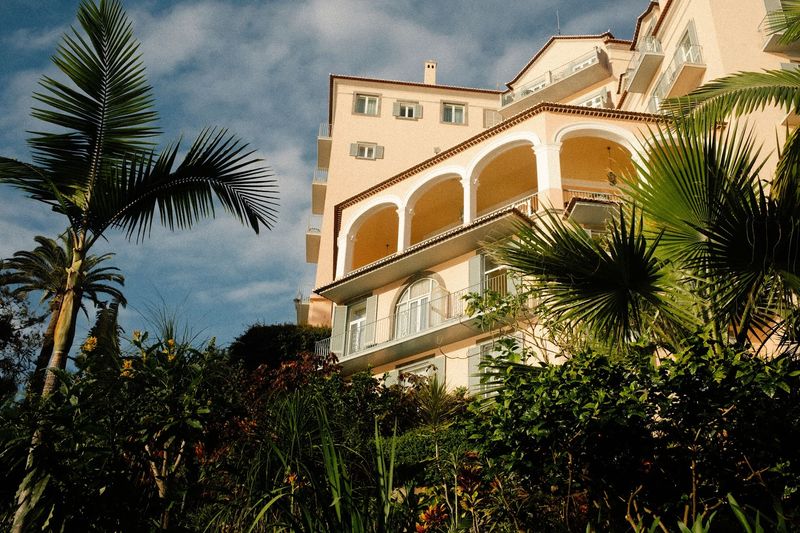
Reid’s Palace opened in 1891 on a clifftop above Funchal, and it immediately became the place where British aristocrats went to recover their health and their composure. Winston Churchill painted watercolors here.
George Bernard Shaw took dancing lessons here. The guest list alone could fill a history book.
The hotel is managed by Belmond now, but the original colonial grandeur has been carefully preserved. The afternoon tea ritual, served on the terrace overlooking the Atlantic, is one of the most civilized 90 minutes you can spend anywhere in Europe.
The scones are serious business.
Three seawater pools are carved into the clifftop, and the lowest one sits just above the ocean. Madeira’s volcanic coastline stretches in both directions, and on a clear day the view seems to go on forever.
The gardens are subtropical and lush, filled with exotic plants that thrive in Madeira’s mild climate. Reid’s is not flashy.
It is simply, quietly, one of the best hotels in the world.
Ashford Castle, County Mayo, Ireland
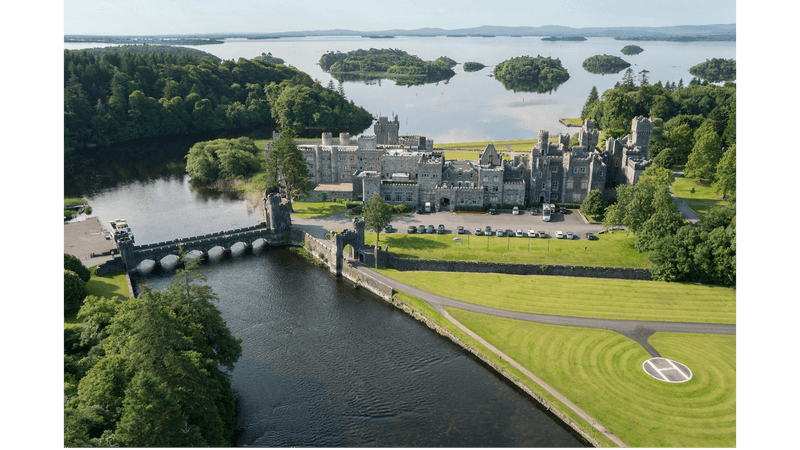
Ashford Castle sits on the shores of Lough Corrib in County Mayo, and it looks exactly like the castle a child would draw when asked to draw a castle. Turrets, battlements, a lake, and a forest.
The only thing missing is a dragon, and honestly, the falconry school on the grounds is close enough.
The castle dates back to 1228 and has been expanded and reinvented many times since. John Wayne and Maureen O’Hara filmed The Quiet Man nearby in 1951, and the cast stayed at Ashford.
The hotel’s connection to film history gives it an extra layer of glamour.
Activities on the 350-acre estate include archery, clay pigeon shooting, fishing on the lake, and the aforementioned falconry, which is absolutely as cool as it sounds. The rooms are decorated in rich, warm tones with antique furniture and open fireplaces.
Ashford Castle is one of those places where you arrive as a guest and leave feeling, inexplicably, like minor royalty.
Parador de Santo Estevo, Galicia, Spain
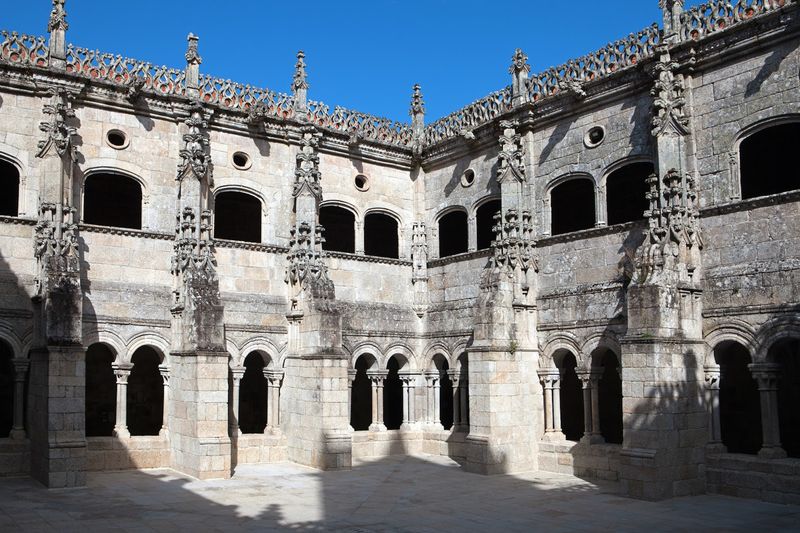
Not every monastery becomes a luxury hotel, but when they do, the results are spectacular. The Parador de Santo Estevo occupies a former Benedictine monastery in the Sil River Canyon in Galicia, with parts of the building dating back to the 6th century.
Monks lived here for over 1,400 years before the parador took over. That is some serious institutional history.
Three Romanesque cloisters survive intact, and walking through them in the early morning, when the light falls at just the right angle, is genuinely moving. The canyon views from the hotel are dramatic, and the surrounding landscape is green and wild in the way that only Galicia manages.
The rooms are simple and elegant, built into the old monastic cells with stone walls and wooden beams. The restaurant serves traditional Galician dishes, including the local empanada and fresh river fish.
Santo Estevo is quieter and less famous than Compostela, which is precisely its charm. Peace and quiet have never looked this architecturally impressive.
Anantara Convento di Amalfi Grand Hotel, Amalfi, Italy
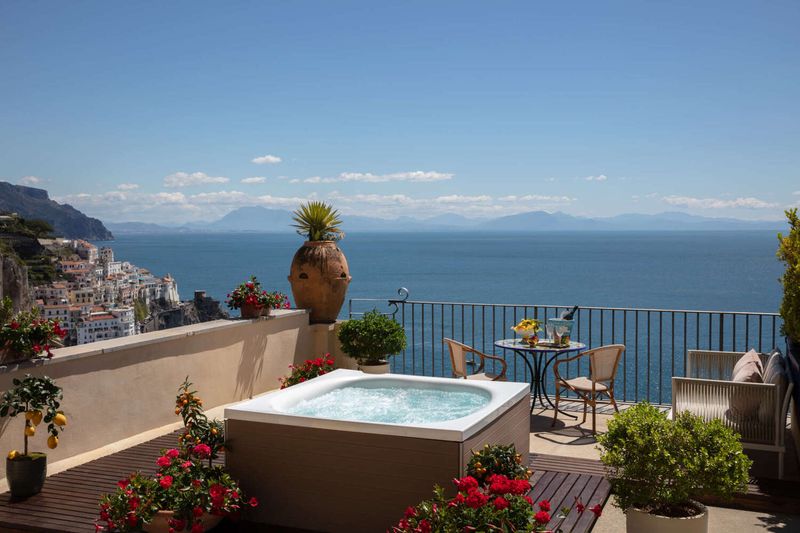
Built as a Capuchin monastery in the 13th century, the Convento di Amalfi clings to a cliff above the town with the kind of confidence that only centuries of prayer can produce. The Anantara group took it over and turned it into one of the most dramatically located hotels on the Amalfi Coast.
The monks had excellent taste in views.
The original cloister has been preserved and is now used for outdoor dining. Eating dinner in a medieval cloister with the sea visible through the arches is not something you forget quickly.
The hotel has its own private beach, reached by elevator through the cliff face, which is exactly as theatrical as it sounds.
Guest rooms are carved into the old monastery walls, with arched windows and stone details that no interior designer could replicate from scratch. The rooftop pool looks straight out over the Tyrrhenian Sea.
Amalfi itself is a short walk downhill, though the walk back up is a solid reminder that medieval monks were probably very fit people.
Badrutt’s Palace, St. Moritz, Switzerland
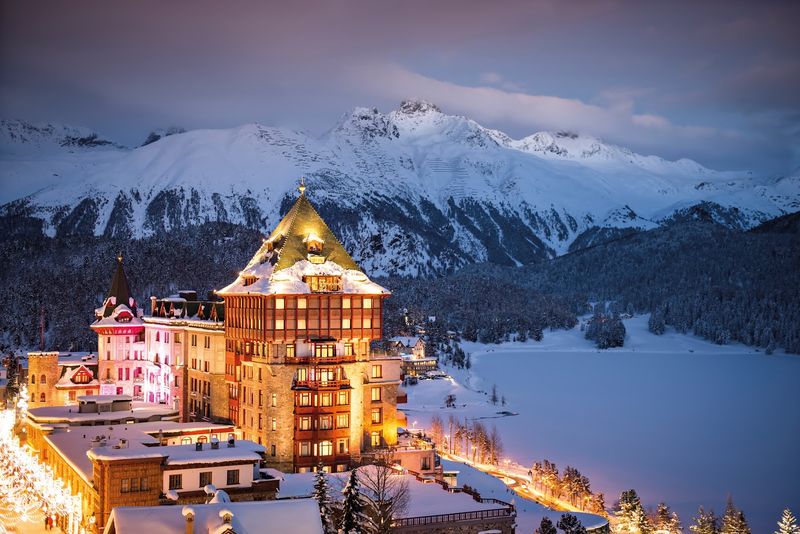
Johannes Badrutt invented winter tourism. That is not an exaggeration.
In 1864, he bet a group of British summer guests that they would enjoy St. Moritz in winter and offered to pay their travel costs if they did not. They came, they loved it, and winter Alpine holidays were born.
His hotel, Badrutt’s Palace, opened in 1896 and has been the center of St. Moritz social life ever since.
The Palace tower is the most recognizable building in the Alps, which is saying something given the competition. The hotel has hosted royalty, film stars, and billionaires for well over a century, and the level of discretion is legendary.
What happens at Badrutt’s stays at Badrutt’s.
The King’s Club nightclub in the basement has been the après-ski venue of choice for decades. The spa, restaurants, and ski concierge service are all world-class.
In summer, the hotel reinvents itself around hiking and sailing on the lake. Badrutt’s Palace is not just a St. Moritz institution; it is practically the reason St. Moritz exists.
Rosewood Schloss Fuschl, Salzburg Lake District, Austria
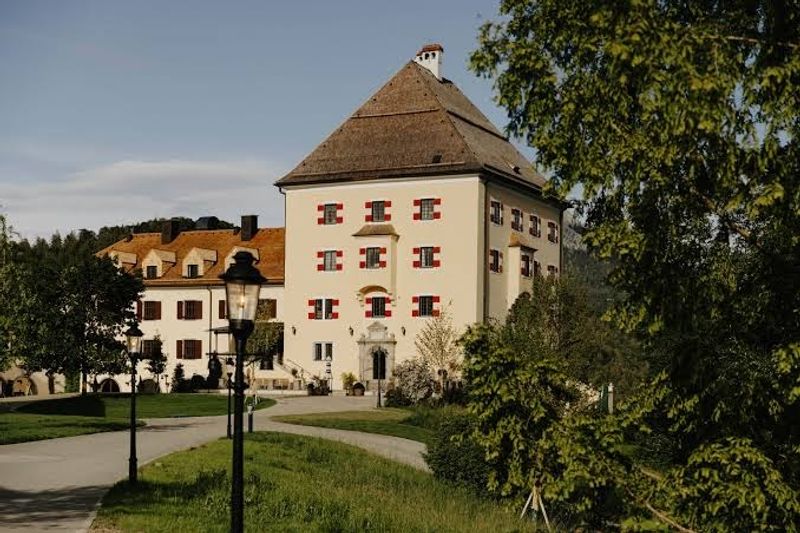
A 15th-century hunting castle on the shores of a pristine Alpine lake sounds like something a novelist made up on a good day. Rosewood Schloss Fuschl is entirely real, sitting on a private peninsula on the Fuschlsee lake, about 20 minutes from Salzburg.
The Sound of Music was filmed nearby, which gives the surrounding landscape a very specific kind of cinematic baggage.
The castle tower dates to 1450 and once served as a retreat for the Archbishop of Salzburg. The Rosewood group has transformed it into a hotel of exceptional elegance, with rooms that blend Alpine tradition with genuine modern comfort.
The lakeside suites have private terraces where the view is all water, forest, and mountain.
Fishing, kayaking, and cycling are all available on the estate. The spa is housed in a separate lakeside building and uses local alpine botanicals in its treatments.
Salzburg is close enough for a day of Mozart and Mozartkugeln, but Schloss Fuschl is so beautiful that leaving the property feels like a personal failure every single time.
Share this story