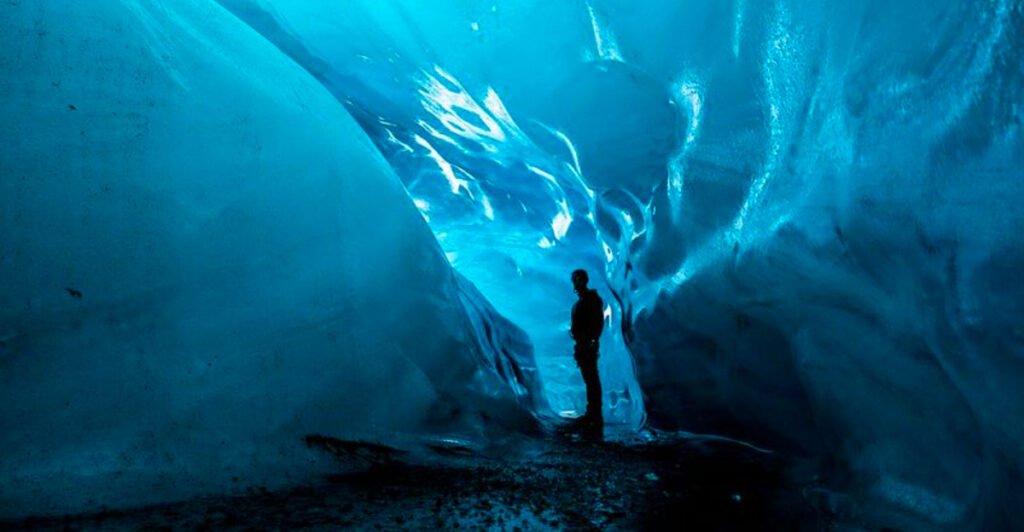
Some places on Earth look like they skipped geography class and enrolled in science fiction instead. Ice caves are excellent at that trick, with blue corridors, glassy chambers, and strange shapes built by glaciers, meltwater, and geothermal heat working behind the scenes.
In this list, you will get the names worth knowing, what makes each one look so wildly unearthly, and a few practical details that keep the wonder grounded in reality. Keep reading, because these frozen hideouts are beautiful, temporary, and just dramatic enough to make an ordinary cave seem like it needs better publicity.
1. Eisriesenwelt Ice Cave (Austria)
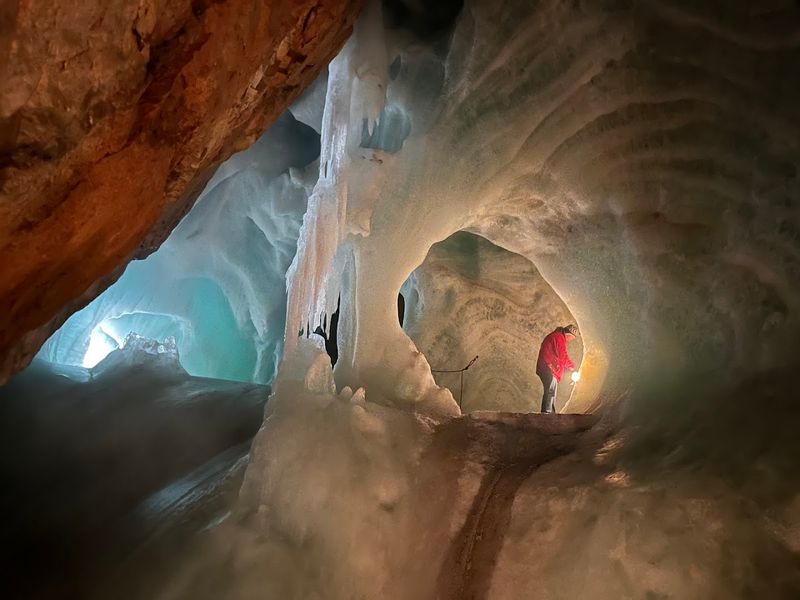
Size steals the spotlight at Eisriesenwelt before the cave even gets to its ice sculptures. Stretching more than 40 kilometers into the mountain near Werfen, it is widely known as the world’s largest ice cave system, which is a strong opening argument.
Visitors do not wander the whole thing, of course, but the accessible sections are impressive enough without exaggeration. Frozen walls, thick formations, and large chambers create an underground landscape that feels organized on a scale most caves never attempt.
Part of the appeal is the contrast between its mountain setting and the formal look of the interior. Instead of random patches of ice, you get spaces that resemble halls, towers, and passages with enough structure to make your brain start filing them under palace.
It has drawn visitors for generations, and for good reason. When a cave gets nicknamed the World of the Ice Giants, it could sound theatrical, but here the title feels less like marketing and more like simple administrative accuracy.
2. Mendenhall Ice Caves (Alaska, USA)
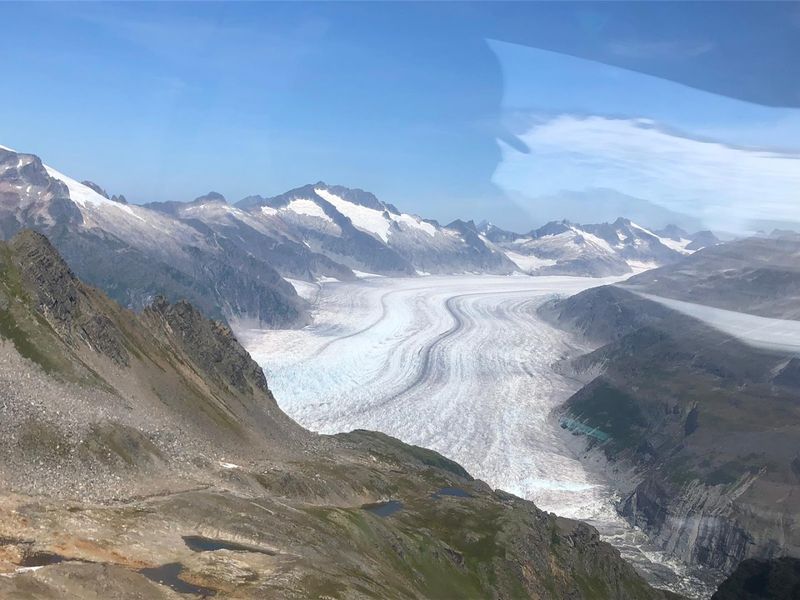
This cave system has the kind of reputation that makes adventure lovers lean forward and safety experts clear their throats. Beneath the Mendenhall Glacier near Juneau, shifting tunnels and rounded chambers have become famous for dramatic blue ceilings and wave-like ice patterns.
The catch is simple: conditions change fast, and routes that looked manageable one season may be completely different the next. Independent access has never been the clever move here, because glacier caves can alter shape quickly as melting and internal water movement keep rewriting the map.
That constant change is also why the place looks so unusual. The ice often forms sweeping curves and compressed lines that seem less like a cave and more like a frozen engineering experiment with no interest in straight edges.
If you are drawn to raw glacial scenery, this one earns its fame honestly. Just treat it as a serious environment, not a casual photo stop, because Mendenhall rewards respect far better than overconfidence.
3. Skaftafell Ice Cave (Iceland)
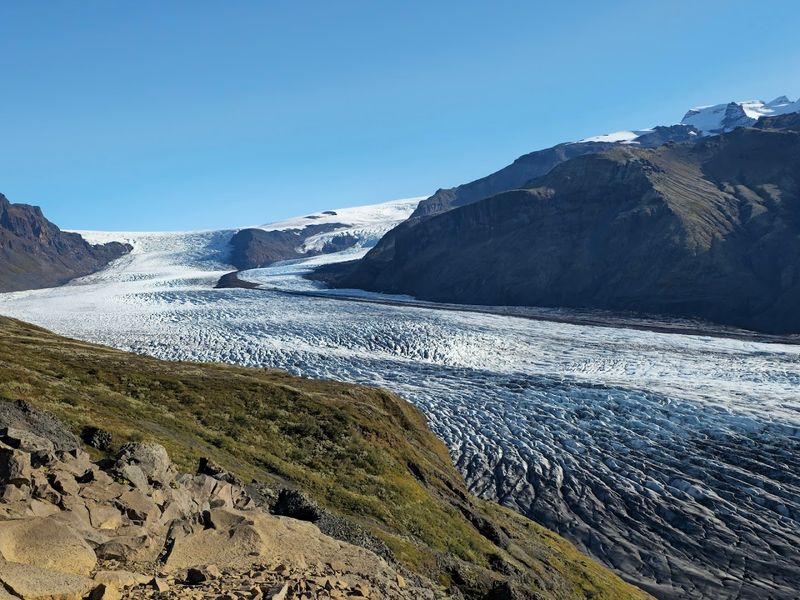
Sapphire is the main event here, and Skaftafell knows it. This Icelandic cave became famous for intensely blue ice, smooth sculpted walls, and the neat illusion that a section of ocean was frozen halfway through a dramatic motion.
Its popularity comes with a useful lesson: these caves are seasonal, and the exact chamber you see depends on conditions that year. Guides monitor weather, temperature, and glacier stability closely, so the experience is shaped as much by timing as by location.
What sets Skaftafell apart is its clean visual structure. The walls can appear more refined than chaotic, with curved surfaces and compressed layers that make the cave look less like a rough natural hollow and more like an enormous carved interior.
You do not need a geology degree to appreciate it, though the science helps. Water, pressure, and movement do the design work here, and they do it with enough confidence to make ordinary rock caves seem slightly underdressed by comparison.
4. Vatnajökull Ice Caves (Iceland)
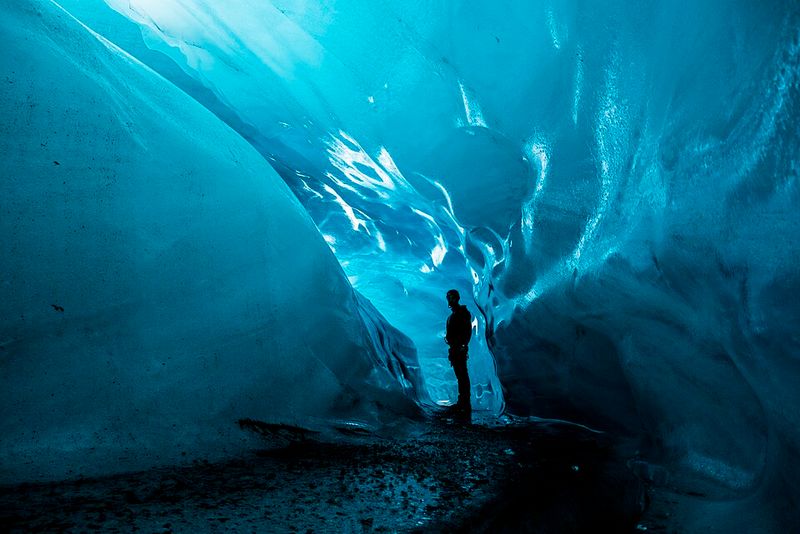
Blue takes over the conversation immediately inside Vatnajokull’s winter caves, and it does so with zero modesty. Beneath Europe’s largest glacier, seasonal chambers appear as meltwater and pressure reshape the ice into arches, corridors, and clear layered walls.
No two years produce the same route, which is part of the appeal and part of the warning. You usually visit with a guide from late autumn through winter, when colder conditions make access more dependable and the cave structure easier to assess.
What makes this place feel so strange is not fantasy language, but the sheer geometry of it. The ice can look polished, banded, and almost architectural, giving you the odd sense that nature hired a very ambitious designer and then refused to reveal the blueprint.
Photographers love the deep blue sections, but even if you never lift a camera, the cave delivers. It is one of those destinations where the planet quietly shows off and expects you to keep up.
5. Apostle Islands Ice Caves (Wisconsin, USA)
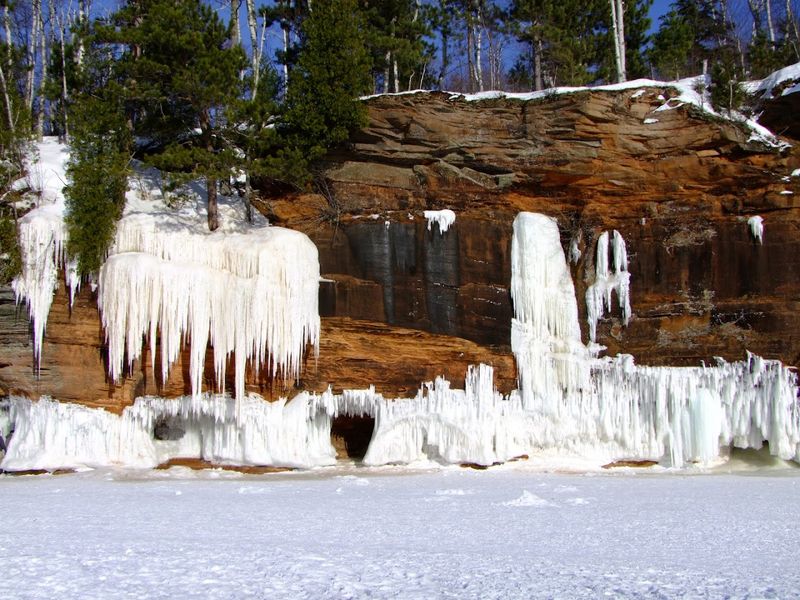
Lake Superior turns this shoreline into a winter theater piece, and the caves get the starring role. When conditions are cold enough, the Apostle Islands sea caves become accessible as frozen corridors lined with thick icicles, ice columns, and curving walls.
Unlike glacier caves, these formations depend heavily on lake ice and seasonal weather patterns, so timing matters enormously. Some years access is limited or impossible, while in favorable winters visitors can walk out and explore a network that feels unusually elaborate for a shoreline feature.
The otherworldly effect comes from the meeting of water, cliff, and cold rather than from altitude or remote ice caps. Sandstone caves already have dramatic shapes, and winter adds layers, curtains, and suspended forms that make the whole coastline look unexpectedly theatrical.
This is also one of the easier entries to imagine yourself visiting, which gives it extra appeal. You are not trekking deep into polar wilderness here, yet the result still looks like Earth decided to experiment with a very ambitious freezer setting.
6. Langjökull Ice Tunnel (Iceland)
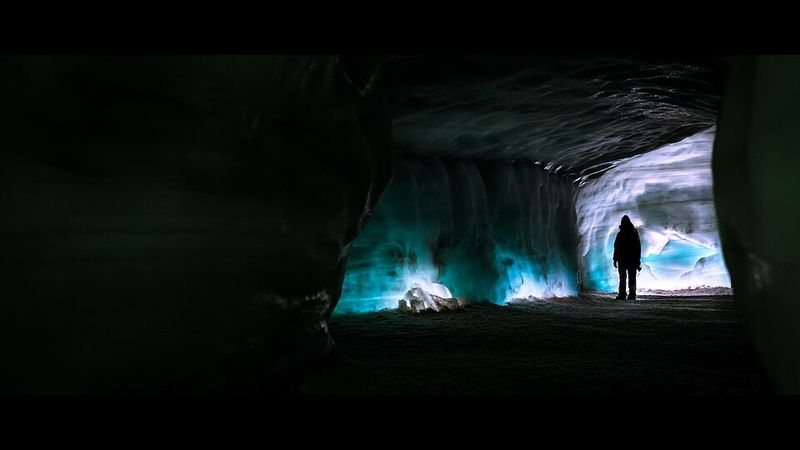
Humans helped carve this one, but Langjokull still feels wonderfully unearthly. The tunnel runs into Iceland’s second largest glacier, giving visitors a rare chance to move through the interior of a massive ice body without needing mountaineering skills or heroic logistics.
Because it is a managed experience, you get something many natural caves cannot promise: a more structured look at glacial layers, internal passageways, and the scale of the ice itself. That controlled access also makes it a strong option for travelers who want the surreal visuals without the same level of uncertainty.
The strangeness here comes from context as much as color. Most people see glaciers from the outside, where they read as landscape, but inside the tunnel they become architecture, geology lesson, and travel brag all at once.
There is also a quiet novelty in knowing you are inside a glacier on purpose. It sounds like the setup to a questionable decision, yet Langjokull turns it into one of Iceland’s smartest and most accessible ice experiences.
7. Perito Moreno Ice Caves (Argentina)
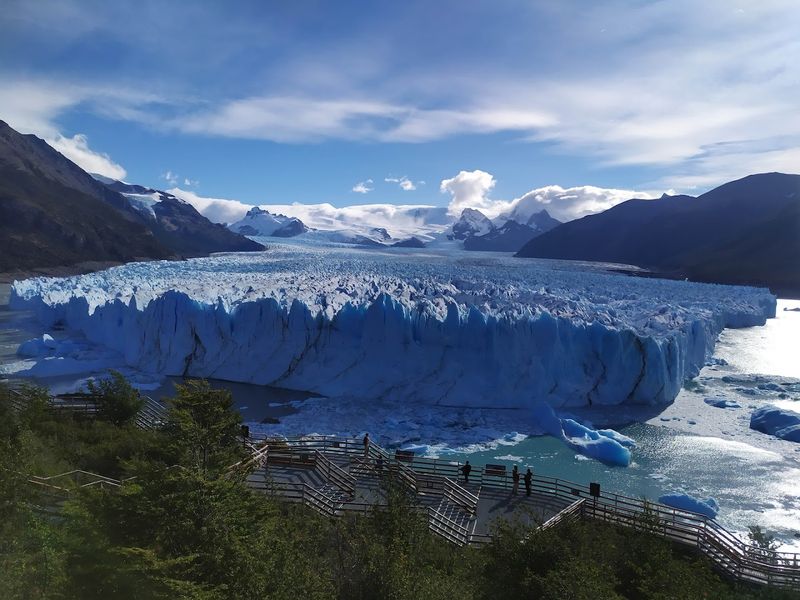
Patagonia rarely does subtle, and Perito Moreno is entirely on brand. Associated with one of the world’s few advancing glaciers, these ice caves and arches form within a system already famous for its size, movement, and constantly changing front.
That active behavior is part of what makes the area so compelling to watch and so tricky to predict. Shapes develop, shift, and disappear as the glacier pushes forward and internal meltwater keeps modifying tunnels, openings, and delicate ice features.
The alien quality comes from scale first. Massive walls of compressed blue and white ice can make nearby people, boats, and viewing platforms look comically tiny, which is always a reliable way to remind you that nature did not design this place around human convenience.
Perito Moreno also stands out because it combines accessibility with genuine wildness. You can appreciate it through guided excursions and viewpoints, but it never stops looking like a place that would be equally believable on another planet with a very cold planning department.
8. Big Four Ice Caves (Washington, USA)
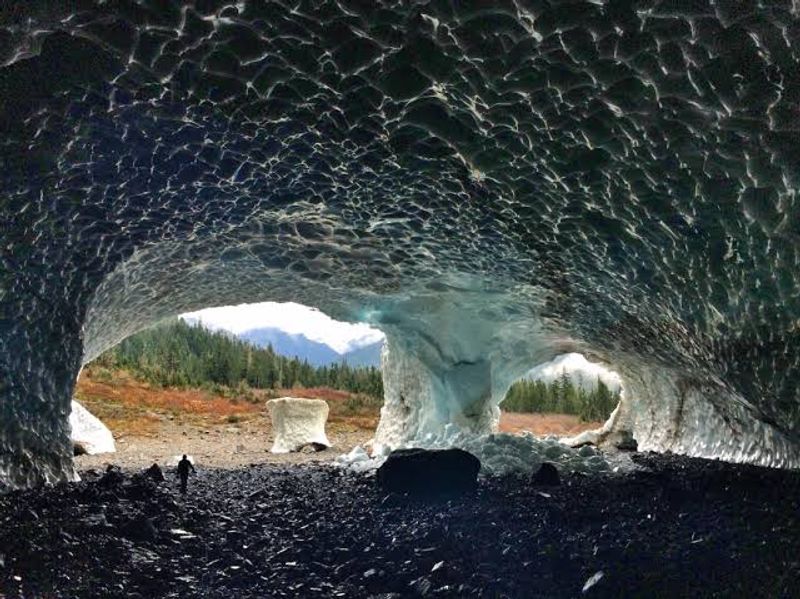
The entrance alone does a lot of heavy lifting at Big Four. Beneath a persistent snowfield in Washington’s Cascade Mountains, these cave mouths can appear huge, dark at the opening, and unexpectedly blue farther inside, which creates a striking visual contrast.
They are famous, photographed often, and also a place where caution is essential. Conditions can change as snow bridges weaken and seasonal melting reshapes the cavities, so local guidance matters more than bravado, no matter how inviting the view might look from the trail.
What makes them feel so unusual is the combination of familiar mountain scenery and cave forms that seem dropped in from a different setting entirely. You get snowfield above, cavern openings below, and ice interiors that look far more complex than many first-time visitors expect.
Big Four is a strong reminder that surreal places do not always hide at the ends of the Earth. Sometimes they sit at the edge of a popular hiking area, waiting to show you that Washington has a very convincing science-fiction side project.
9. Dobšinská Ice Cave (Slovakia)
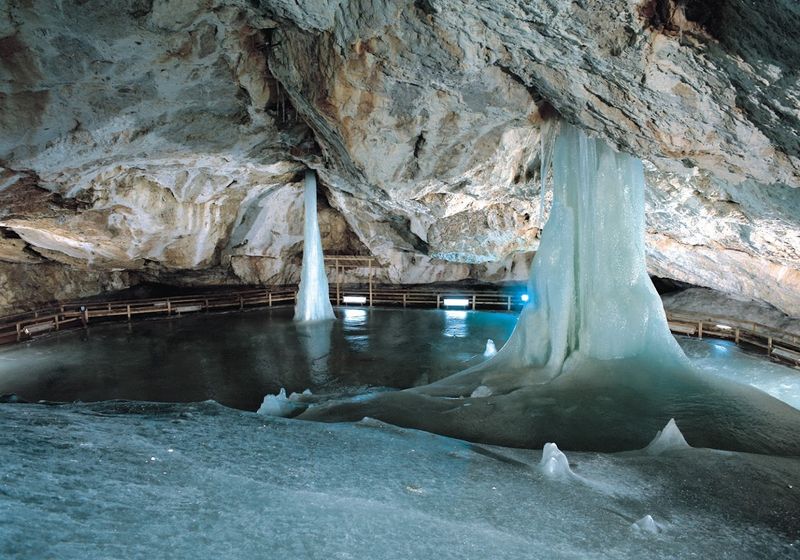
Glossy floors are not usually a cave’s signature move, yet Dobšinská manages it beautifully. This Slovakian cave, recognized by UNESCO, is known for substantial ice deposits, broad frozen surfaces, and chambers where the ice can look remarkably smooth and orderly.
Its scientific value adds another layer to the visit. Researchers have long paid attention to the cave’s ice mass, temperature patterns, and preservation, while travelers get the simpler pleasure of seeing an underground space that appears unusually formal and composed.
The reason it feels otherworldly is partly that polish. Many caves are all rough edges and irregular walls, but Dobšinská offers a cleaner visual language, with broad icy areas that seem more designed than accidental, even though natural processes did all the work.
It also has staying power as a destination, not just a social media moment. When a cave combines historical recognition, substantial ice, and a layout that looks like nature briefly got interested in precision, you end up with a stop that earns its quiet reputation.
10. Glacier Cave of Mount Rainier (Washington, USA)
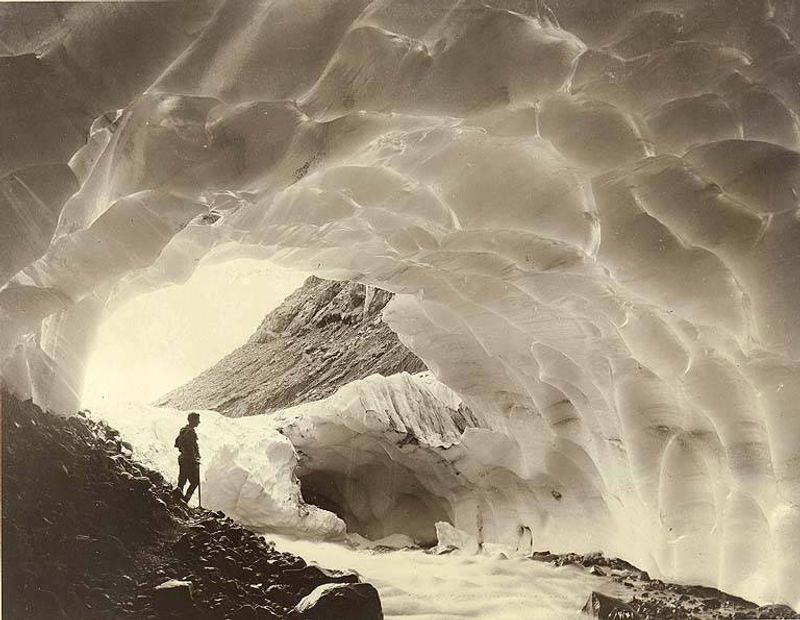
Volcanic heat and glacier ice make a surprisingly strange team at Mount Rainier. In certain areas, warm volcanic vents can create hollow chambers within the mountain’s ice, producing glacier caves that feel unusual before you even start describing their appearance.
That contrast is the headline. Instead of a cave shaped only by meltwater or seasonal freezing, you get a space influenced by geothermal activity, which gives the site a scientific plot twist and a setting that seems determined to ignore category labels.
The result feels alien because the usual rules appear mixed up. Ice belongs with cold, vents belong with heat, and Rainier casually places both in the same system like this should be perfectly ordinary and everyone else is being dramatic about it.
These caves are not static attractions and should never be treated casually, but they remain fascinating examples of how active mountains reshape their own frozen features. If you like landscapes that refuse to pick one personality, Mount Rainier offers an especially memorable case study.
11. Scărișoara Ice Cave (Romania)
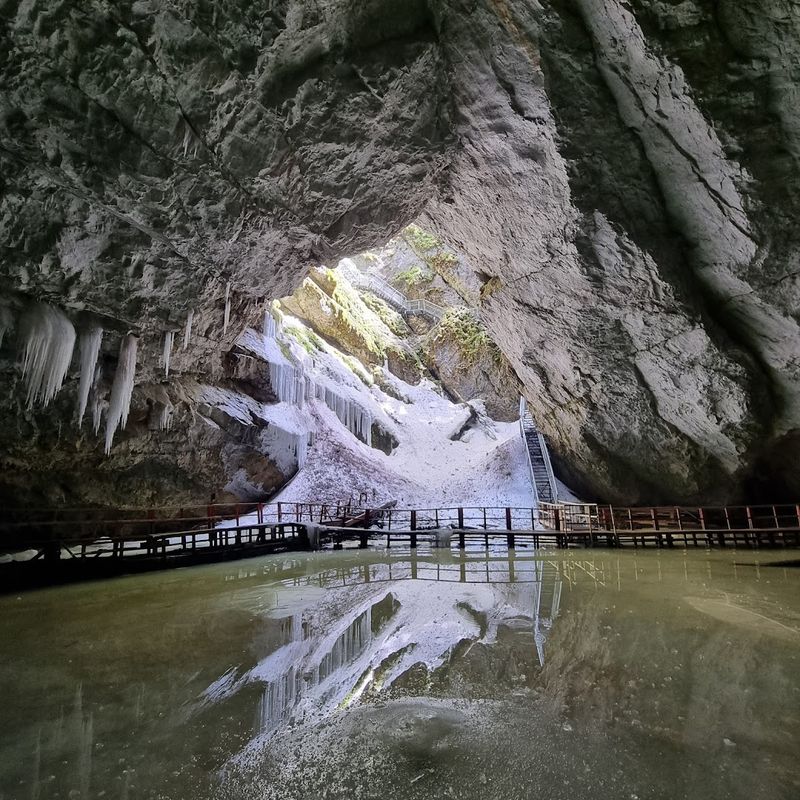
Age is the party trick at Scărișoara, and it is a very good one. Hidden in Romania’s Apuseni Mountains, this cave shelters one of the oldest underground glaciers on Earth, giving visitors a chance to see ice that has been around for far longer than any travel trend.
Its appeal is not about flashy scale alone. The cave combines a large chamber, substantial ice formations, and genuine scientific importance, because those ancient layers preserve valuable records about past climate conditions and long-term environmental shifts.
That history makes the cave feel almost improbable. You are not just looking at frozen shapes; you are looking at a durable archive stored underground, in a setting that seems to have stepped outside normal calendars and decided patience was a competitive sport.
Scărișoara also stands out for how grounded it remains despite that extraordinary age. It is not trying to be dramatic, which somehow makes it more impressive, because very old ice sitting quietly in a Romanian cave is already a strong enough plot twist on its own.
12. Kverkfjöll Ice Caves (Iceland)
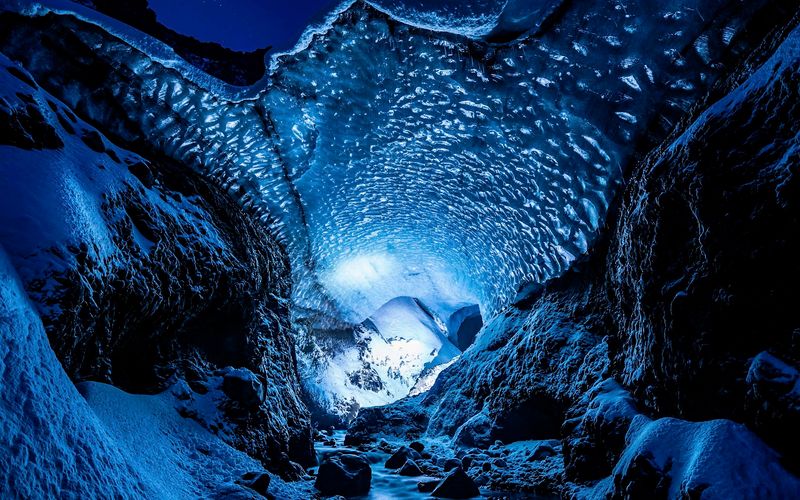
Some caves pick a lane, but Kverkfjöll prefers creative chaos. In Iceland’s highlands, geothermal heat interacts with glacial ice to form caves and passages that combine volcanic energy with frozen structure in a way that sounds made up until you see the photos.
This is one of those rare landscapes where geology seems to be multitasking. Heat from below modifies the ice overhead, creating spaces that can change quickly and display unusual forms, reminding you that Iceland likes to run several dramatic natural processes at once.
The alien impression comes from that contradiction. Blue ice in a volcanic environment looks like the planet merged two unrelated projects, then decided the final draft was strong enough to keep without editing for realism.
Because conditions are complex and remote, Kverkfjöll is best approached with planning and local expertise. Still, for travelers who want the version of Earth that behaves like a rule breaker, this place absolutely delivers, with glaciers and geothermal activity sharing the same very strange address.
13. Mutnovsky Ice Caves (Russia)
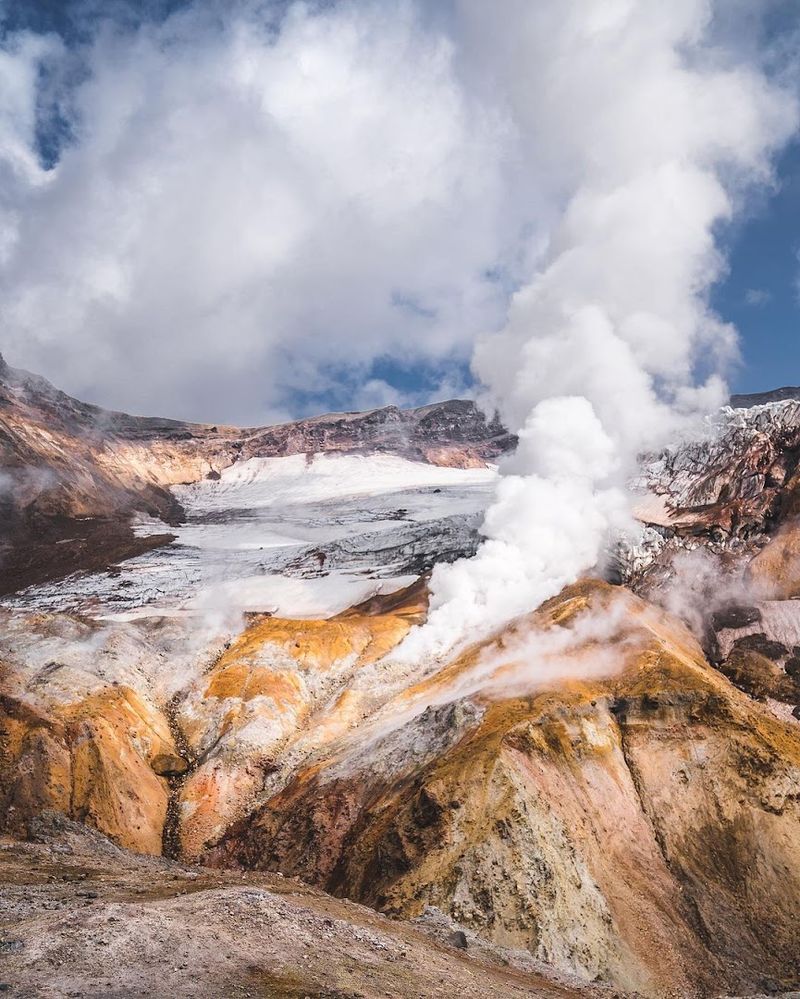
Color steals the show at Mutnovsky, and blue is only part of the cast. On Russia’s Kamchatka Peninsula, volcanic heat interacting with glacier ice has created caves famous for unusual tones, including orange, red, and blue spread across translucent ceilings and walls.
That palette gives the site an identity few ice caves can match. Instead of a single-color frozen interior, you get a place where minerals, light transmission, and volcanic context combine to create patterns that look startlingly graphic and almost too deliberate for nature.
The cave’s setting helps push it into another category entirely. Kamchatka already feels remote and geologically restless, so adding a vividly colored ice cave to the itinerary is less a bonus feature and more a reminder that this region does not care for understatement.
Mutnovsky is especially memorable because it breaks the mental template most people have for ice caves. If you arrive expecting standard blue corridors, this place politely responds with a far broader color chart and a strong case for being one of the strangest frozen spaces on the planet.
14. Crystal Ice Cave (Iceland)
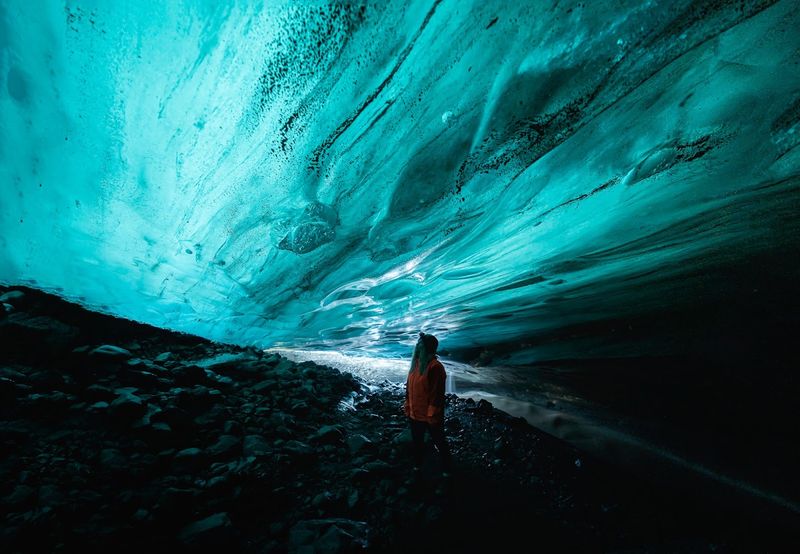
Transparency is the magic trick at Crystal Ice Cave, and it remains wildly effective. Often described as one of Iceland’s most photogenic ice caves, it is known for exceptionally clear ice that can make the passage look more like carved glass than compacted snow.
That clarity changes the way you read the space. Instead of just noticing blue color and tunnel shape, you start seeing internal layers, trapped bubbles, and subtle structural lines, which gives the cave a cleaner, more intricate look than many rougher glacial chambers.
The result feels alien for a very simple reason: it looks too precise. Nature usually leaves obvious fingerprints on a place, but Crystal Ice Cave can appear so refined that your brain briefly suspects a hidden design team, then remembers glaciers are simply overachievers.
It is also a strong closer for any ice-cave list because it captures the category at its most elegant. Beautiful, temporary, and slightly unreal, this cave is exactly the kind of place that makes Earth seem fully capable of producing its own science fiction set.
Share this story