Whether you grew up reading the books under your covers with a flashlight or spent weekends rewatching the movies, Harry Potter has a way of making the world feel a little more magical. The good news?
You don’t have to wait for an owl to deliver your Hogwarts letter to experience that magic firsthand. From the cobbled streets of Edinburgh to the grand halls of Oxford, real-world places inspired — and even starred in — the beloved series.
Pack your wand and your sense of wonder, because these 13 destinations are calling your name.
Warner Bros. Studio Tour — London, England
Step through those enormous studio doors and prepare to have your mind completely blown. The Warner Bros.
Studio Tour in Leavesden is the closest most of us will ever get to actually attending Hogwarts — and honestly, it delivers on every single promise.
You’ll walk through the actual Great Hall, browse shelves of real props, and stroll down a full-scale Diagon Alley. The level of detail is staggering.
Every potion bottle, every Weasley family portrait, every enchanted ceiling tile is right there for you to examine up close.
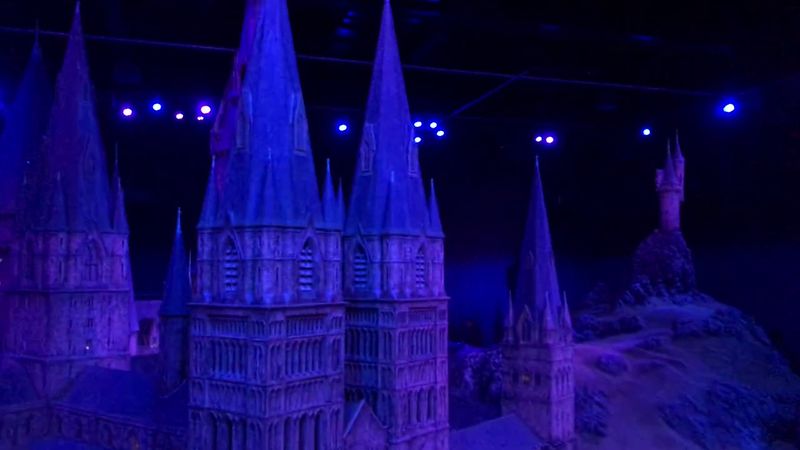
One of the biggest crowd-pleasers is the massive scale model of Hogwarts Castle, which looks jaw-dropping under shifting light effects. Butterbeer is available on-site, and yes, it tastes exactly as good as you imagined.
Booking tickets in advance is essential — slots sell out weeks ahead, especially during school holidays. Plan to spend at least four hours here, because rushing through this place would be an actual crime against wizardkind.
The Wizarding World of Harry Potter — Orlando, Florida (and other locations)
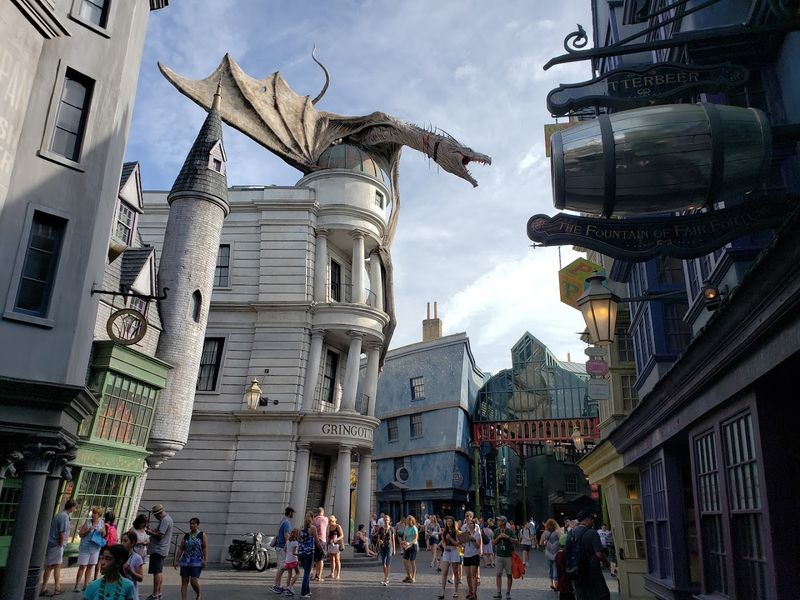
Hearing the Hogwarts theme play as you round the corner and see that castle looming above you is a moment that hits differently than any movie scene ever could. The Wizarding World of Harry Potter at Universal Orlando Resort is a full-on sensory experience that makes the fictional feel completely real.
Hogsmeade is packed with storefronts that smell like fresh pumpkin juice and warm butterbeer. Ollivanders wand shop runs live shows where wands choose their owners — and yes, kids in the audience actually get selected.
Diagon Alley, located in Universal Studios Florida, adds another enormous chapter to explore, complete with Gringotts Bank and a fire-breathing dragon perched on top.
The Hogwarts Express connects the two areas and counts as a ride itself — complete with in-carriage scenes featuring Harry, Ron, and Hermione. Locations also exist in Hollywood and Japan for international fans.
Arriving early beats the longest queues. Comfortable shoes are non-negotiable, because you will walk miles without even noticing.
This place earns every bit of its legendary reputation.
Alnwick Castle — Northumberland, England
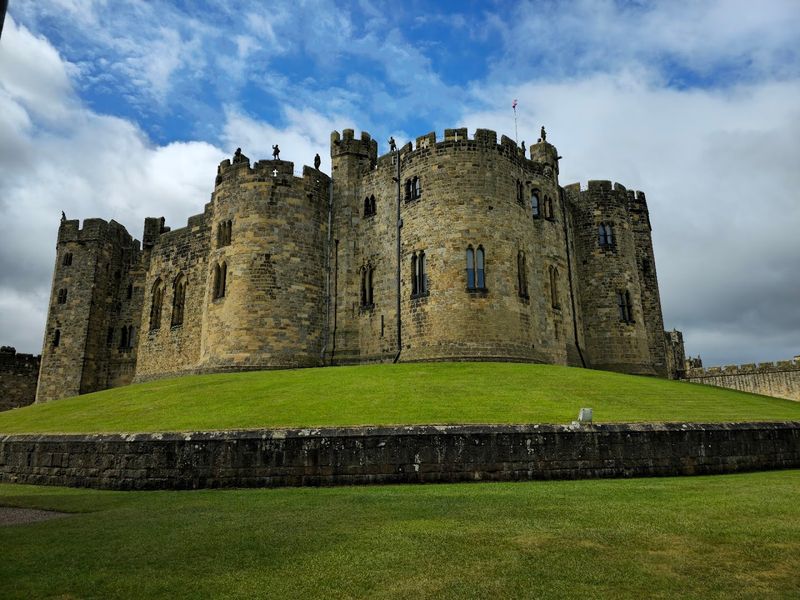
Long before Harry Potter ever mounted a broomstick on screen, Alnwick Castle had already spent centuries being impressively dramatic. This medieval fortress in Northumberland doubled as Hogwarts in the first two films, and the courtyard where Harry’s flying lesson took place is still there, looking every bit as cinematic as you remember.
The castle is actually a lived-in home — the Duke of Northumberland’s family still resides here — which makes exploring its grand rooms feel oddly personal. Visitors can tour state rooms filled with priceless art, armor, and furniture that dates back hundreds of years.
The gardens are equally spectacular, featuring a poison garden that contains plants genuinely dangerous enough to require locked gates.
Broomstick training sessions are offered for younger visitors, and the staff lean fully into the Harry Potter connection. Beyond the wizarding angle, Alnwick is a genuinely world-class historic attraction.
It has appeared in other films too, including Robin Hood: Prince of Thieves. The surrounding Northumberland countryside is breathtaking, making it worth combining with a wider regional road trip.
Arrive early to beat tour groups during peak summer months.
King’s Cross Station (Platform 9¾) — London, England
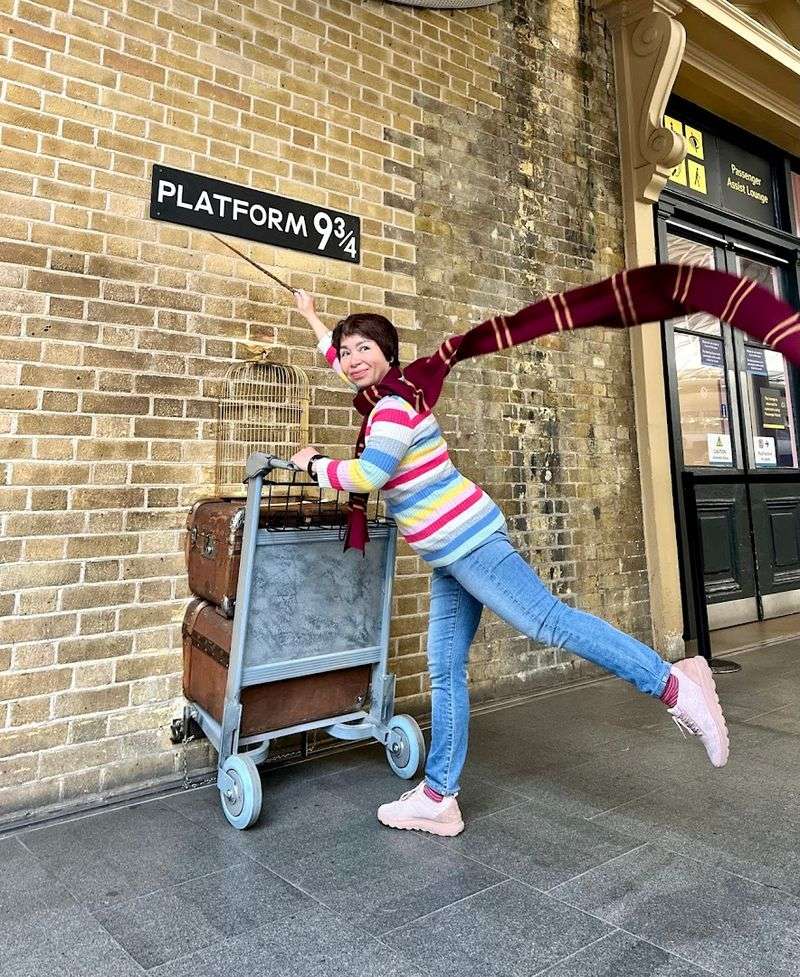
There is something quietly thrilling about standing inside a real, working train station and pretending to run headfirst into a brick wall. Platform 9¾ at King’s Cross is one of London’s most beloved tourist spots, and the queue of fans waiting to pose with the luggage trolley installation is almost always cheerfully long.
The setup is perfect for photos — a trolley appears to vanish into the wall, and a helpful staff member will toss a scarf dramatically into the air as you pose. A Harry Potter gift shop sits right beside it, stocked with everything from house robes to chocolate frogs.
It is small but genuinely well-curated.
King’s Cross itself is a beautiful Victorian station worth exploring beyond the photo opportunity. The real platforms used for filming were actually at nearby St. Pancras International, whose stunning Gothic facade is equally worth admiring.
Both stations sit side by side, making it easy to tick off two iconic spots in one visit. Getting here by London Underground is straightforward — the King’s Cross St. Pancras stop serves multiple lines.
Arrive on a weekday morning for the shortest wait times at the trolley installation.
Glenfinnan Viaduct — Scottish Highlands, Scotland

Few sights in Britain are as genuinely breathtaking as watching a steam train curve across the Glenfinnan Viaduct against a backdrop of Highland mountains and moody Scottish sky. This 21-arch stone bridge has appeared in multiple Harry Potter films, most memorably when the Hogwarts Express crosses it in a sweeping aerial shot that makes audiences audibly gasp.
The viaduct was built between 1897 and 1901, meaning it was already a century old before it ever appeared on a movie screen. The Glenfinnan Monument and Visitor Centre nearby tells the story of Bonnie Prince Charlie and the Jacobite uprising — a fascinating historical layer that adds depth to the visit.
The best viewing spot is a short uphill walk from the car park. Timed arrival is key if you want to catch the Jacobite Steam Train crossing the viaduct — schedules are posted online and the moment is absolutely worth planning around.
Drone photography is restricted in the area, but camera shots from the hillside are spectacular. The surrounding loch and valley make the whole scene feel unreal.
This is the Scottish Highlands at its most cinematic, full stop.
Jacobite Steam Train — Scotland

Climbing aboard the Jacobite Steam Train and watching the Scottish Highlands roll past your window is one of those travel experiences that feels lifted directly from a dream. Running between Fort William and Mallaig, this historic steam service doubles as the real-life Hogwarts Express — and the 84-mile round trip is widely considered one of the most scenic rail journeys on Earth.
The train passes through some of Scotland’s most dramatic landscapes, including Ben Nevis, Loch Eil, and of course, the Glenfinnan Viaduct. Crossing that viaduct while seated inside a vintage steam carriage, watching mist drift across the mountains, is genuinely goosebump-inducing.
No CGI required.
The journey takes roughly two hours each way, with a short stop in Mallaig before returning. Booking well in advance is strongly recommended — this train sells out fast, especially in summer.
First-class carriages offer a more comfortable experience with table seating. Bring snacks and a camera with a fully charged battery, because photo opportunities come at you constantly.
The return journey offers different light and angles, making both legs worth paying attention to. This is bucket-list travel at its most accessible and genuinely magical.
Edinburgh — Scotland
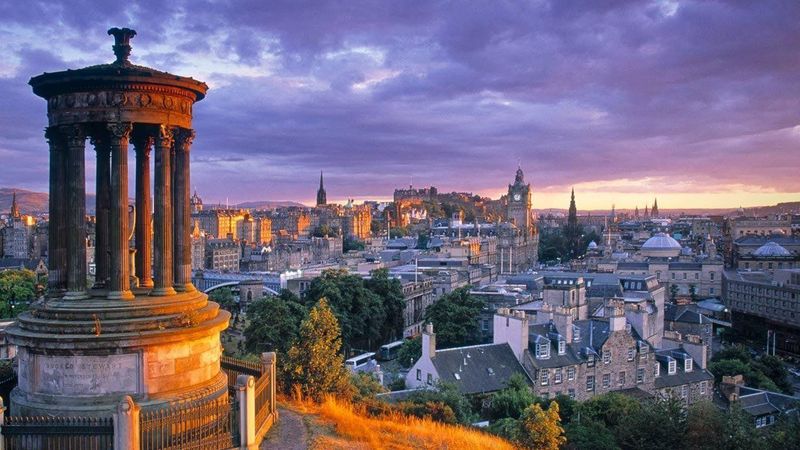
J.K. Rowling once sat in a Edinburgh cafe, sipping coffee and scribbling notes about a young wizard named Harry, and the city she was surrounded by practically wrote itself into the pages.
Edinburgh’s gothic spires, brooding closes, and ancient castle perched on volcanic rock feel less like a city and more like a film set that someone forgot to dismantle.
Greyfriars Kirkyard, a historic cemetery near the Old Town, contains a gravestone bearing the name Thomas Riddell — a detail that fans find delightfully unsettling. Victoria Street, with its curved row of colorful shops, is widely believed to have inspired Diagon Alley.
The National Museum of Scotland and the Royal Mile offer hours of exploration beyond the Potter trail.
The Edinburgh Literary Pub Tour is a fun evening option that covers Rowling’s connection to the city alongside other famous writers. The Elephant House cafe, where she famously wrote early chapters, is a popular stop — though it has since changed ownership and suffered a fire, the legacy remains strong.
Edinburgh is best explored on foot, wearing sturdy shoes. The city rewards slow wandering far more than rushed sightseeing.
Visit in August for the legendary Edinburgh Festival Fringe.
Christ Church College — Oxford, England
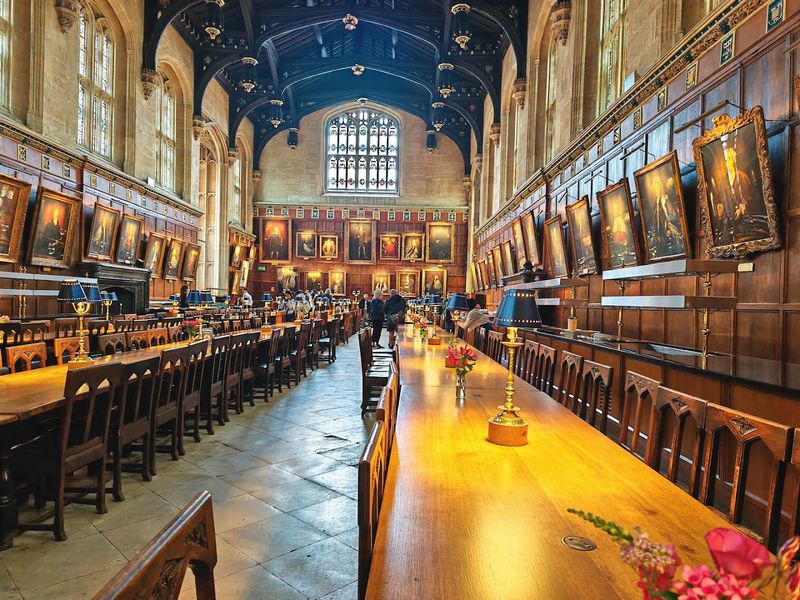
Oxford’s Christ Church College has a dining hall so grand and so unmistakably Hogwarts-like that first-time visitors often stop in the doorway and just stare. The hall’s long wooden tables, oil-painted portraits lining the walls, and high vaulted ceiling provided direct visual inspiration for Hogwarts’ Great Hall — and the staircase leading up to it appeared in the first film.
Christ Church is one of Oxford’s most prestigious and historically significant colleges, counting thirteen British Prime Ministers among its alumni. Visiting feels like stepping into centuries of academic tradition, with architecture that ranges from medieval to baroque.
The college’s cathedral is one of the smallest in England and one of the most beautiful.
Entry requires a timed ticket purchased in advance, and visitor numbers are managed carefully to protect the college’s working environment. The surrounding streets of Oxford are equally worth exploring — Bodleian Library, Radcliffe Camera, and the covered market all sit within easy walking distance.
Oxford as a whole contributed several locations to the Harry Potter films, making it a worthy full-day destination rather than just a quick stop. Guided Harry Potter walking tours of the city depart regularly and cover multiple filming spots efficiently.
Gloucester Cathedral — Gloucester, England
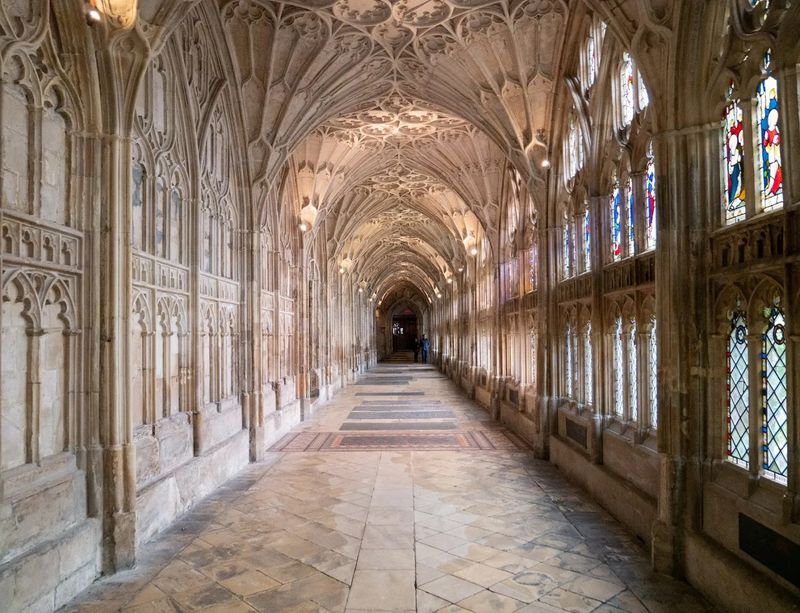
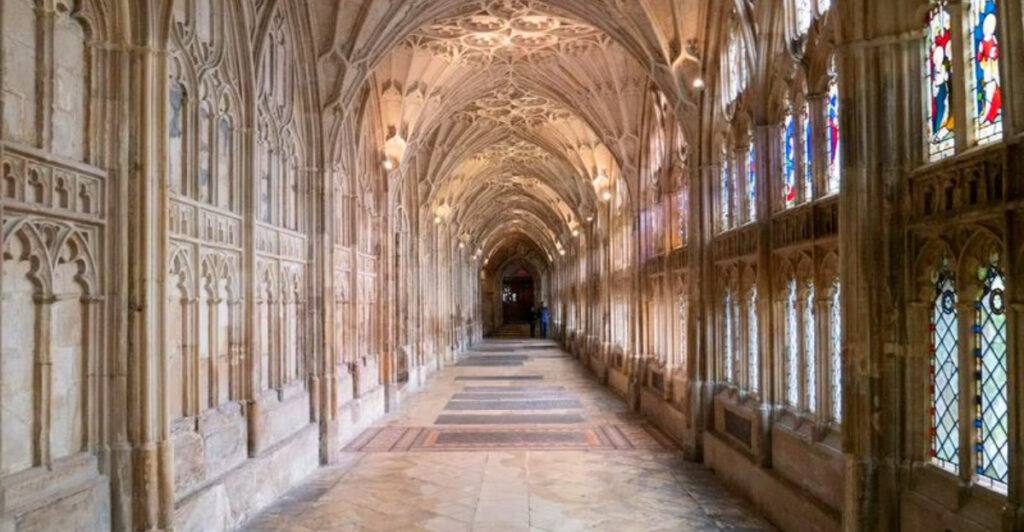
Walking through Gloucester Cathedral’s cloisters feels uncannily like wandering the corridors of Hogwarts — because for several Harry Potter films, that is exactly what they were. The cathedral’s extraordinary fan-vaulted cloisters, built in the 14th century, served as the school’s hallways in the first, second, and fifth films, among others.
The detail in the stonework is extraordinary up close. Those intricate ceiling fans spreading overhead were carved entirely by hand, centuries before anyone imagined they would one day be associated with a boy wizard.
The cathedral also features in scenes involving the Chamber of Secrets, with the corridor outside the girls’ bathroom among the most recognizable moments.
Gloucester Cathedral is a fully active place of worship, which means visitor access is managed respectfully — certain areas may be closed during services. Admission is free, though donations are warmly encouraged.
The city of Gloucester itself is often overlooked in favor of nearby Cotswolds villages, but the cathedral alone makes it worth a detour. A dedicated Harry Potter trail through the building is available, highlighting exact filming locations with helpful context.
Allow at least 90 minutes to properly appreciate both the wizarding history and the remarkable medieval architecture surrounding you.
Leadenhall Market — London, England
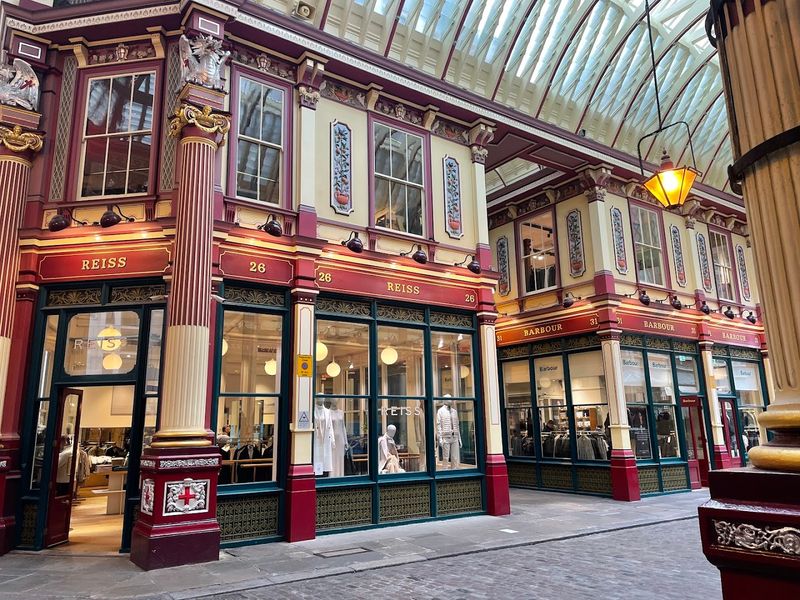
Hidden inside the City of London’s financial district sits one of the most gorgeous Victorian covered markets in the world — and most people walk right past it. Leadenhall Market, with its painted ironwork ceiling in cream and maroon, its cobblestone floor, and its elaborate archways, served as the entrance to Diagon Alley in Harry Potter and the Philosopher’s Stone.
The optician’s shop used as the entrance to the Leaky Cauldron still exists on the market’s exterior, though the interior has changed considerably since filming. Even without the Harry Potter connection, Leadenhall is a stunning place to visit.
The market dates to the 14th century, making it one of London’s oldest trading spots — a fact that somehow feels very on-brand for a place associated with a wizarding world.
Today the market is surrounded by some of London’s most striking modern skyscrapers, creating an architectural contrast that is genuinely fascinating. Weekday lunchtimes bring office workers flooding in for food and coffee.
Weekends are quieter and better for photography. Getting here is easy via Bank or Monument Underground stations.
Combine it with a walk along the Thames and a visit to Borough Market for a full day of London exploration with a magical twist.
Lacock Abbey — Wiltshire, England
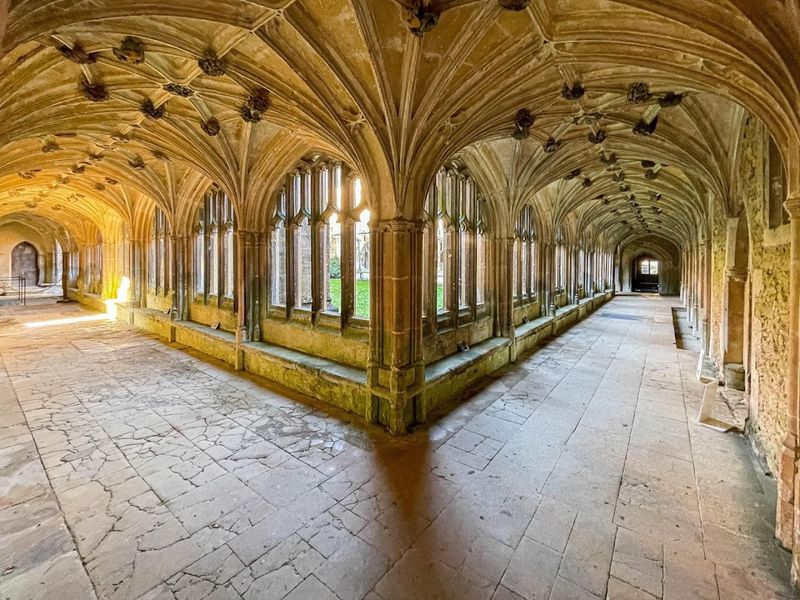
Tucked into the gentle Wiltshire countryside, Lacock Abbey carries an almost eerie sense of timelessness — the kind of place where you half-expect a professor in robes to sweep around the corner with a stack of parchment. The abbey’s medieval cloisters and stone rooms appeared in the Harry Potter films as Hogwarts classrooms and corridors, most notably in the first and second films.
Professor Quirrell’s classroom, where Harry first encounters the Mirror of Erised, was filmed here. The vaulted rooms, narrow windows, and worn stone floors make the connection to Hogwarts feel completely natural — no creative stretch required.
Lacock is managed by the National Trust, meaning entry is free for members and reasonably priced for everyone else.
The surrounding village of Lacock is equally enchanting. It appears so frequently in period dramas and films that the National Trust owns most of the buildings to preserve their historic appearance.
Walking through it feels like flipping through a history book. Combine your visit with the abbey’s excellent tearoom and a stroll through the Fox Talbot Museum, dedicated to the pioneer of photography who once lived here.
Spring visits are particularly lovely when the abbey grounds are filled with wildflowers and soft light.
Livraria Lello — Porto, Portugal
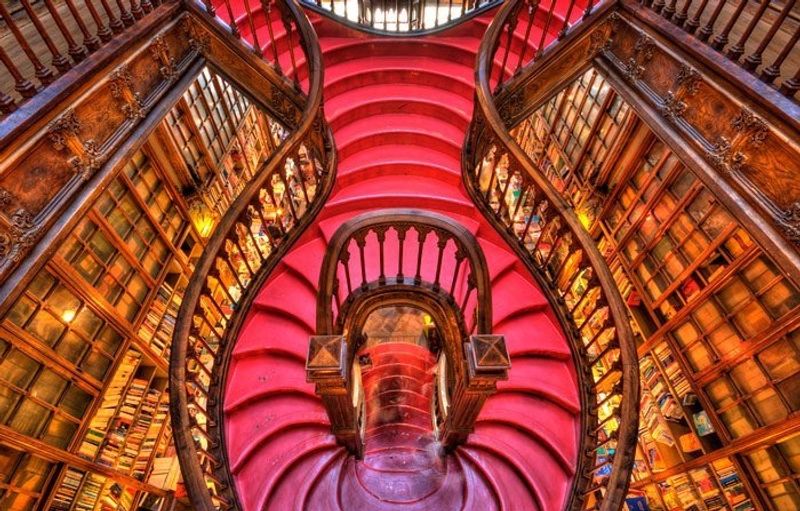
Described by some as the most beautiful bookstore in the world, Livraria Lello in Porto is a place that makes you want to slow down, look up, and quietly fall in love with books all over again. Its famous red wooden staircase, stained glass ceiling, and elaborately carved shelves are breathtaking — and many believe they inspired the look of Hogwarts’ interior spaces.
J.K. Rowling lived in Porto during the early 1990s while teaching English, and the connection between this extraordinary bookstore and her imagination seems hard to dismiss.
The store opened in 1906 and has operated continuously ever since, surviving wars, economic crises, and changing tastes in reading with remarkable dignity.
Entry now requires a small ticket fee to manage the enormous crowds the Harry Potter connection has brought — the shop became so overwhelmed with visitors that browsing became nearly impossible. The fee is redeemable against any book purchase, which feels like a fair trade.
Arrive early in the morning for the best light and thinnest crowds. Porto itself is a spectacular city, famous for its azulejo tile buildings, port wine cellars, and the Douro River.
Livraria Lello fits perfectly into a longer Portuguese adventure that any book lover would treasure.
Gandy Street — Exeter, England
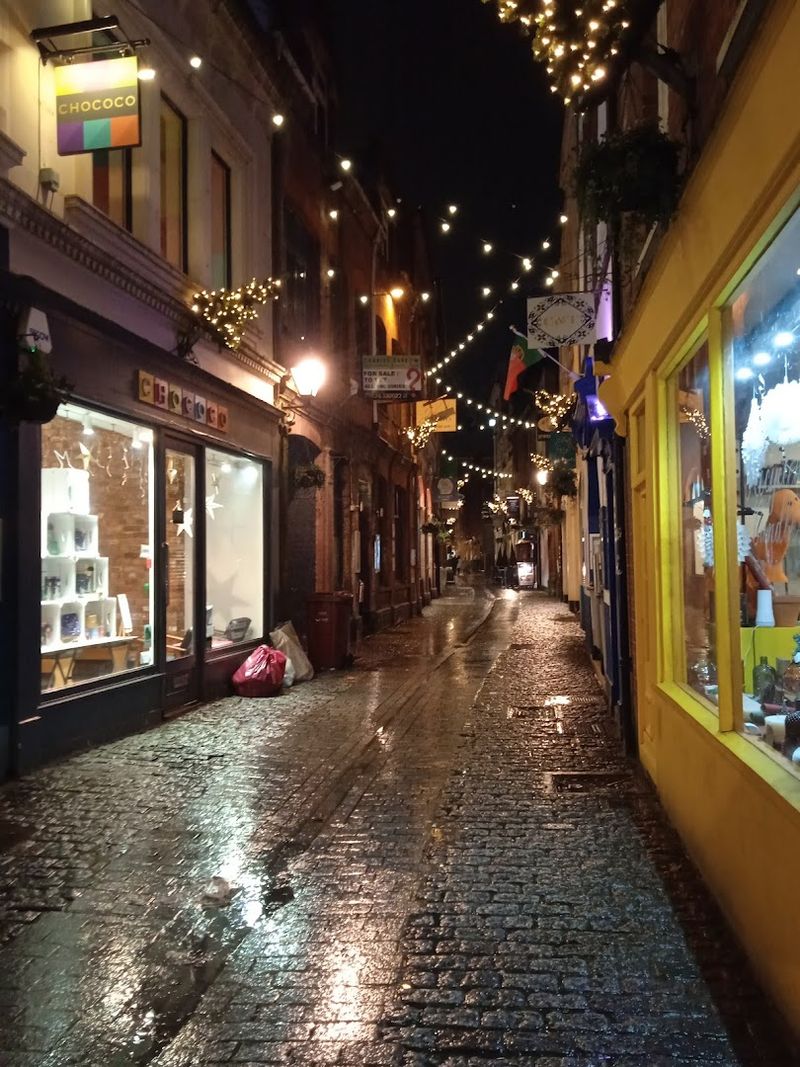
Gandy Street does not advertise itself loudly — it simply exists, tucked quietly off Exeter’s main high street, waiting for curious visitors to stumble upon it and immediately reach for their camera. This narrow, cobbled pedestrian lane lined with independent shops, quirky boutiques, and character-filled storefronts draws inevitable comparisons to Diagon Alley, and honestly, the resemblance is striking.
J.K. Rowling grew up nearby in Devon, and Exeter was the city she knew well during her formative years.
Whether Gandy Street directly inspired Diagon Alley is debated, but the visual similarity is undeniable and the local connection to Rowling makes it a meaningful stop for dedicated fans. The street has a wonderfully unhurried atmosphere that feels rare in modern city centers.
The shops along Gandy Street lean independent and eclectic — vintage clothing, artisan coffee, specialty books, and handmade goods rather than the chain stores dominating nearby streets. Exeter itself is a rewarding city with a magnificent Norman cathedral, Roman walls, and an underground passages network that is open for guided tours.
The city is easily reached by train from London Paddington in around two hours. Gandy Street is short enough to walk in minutes but interesting enough to linger in for much longer than you plan.
Share this story