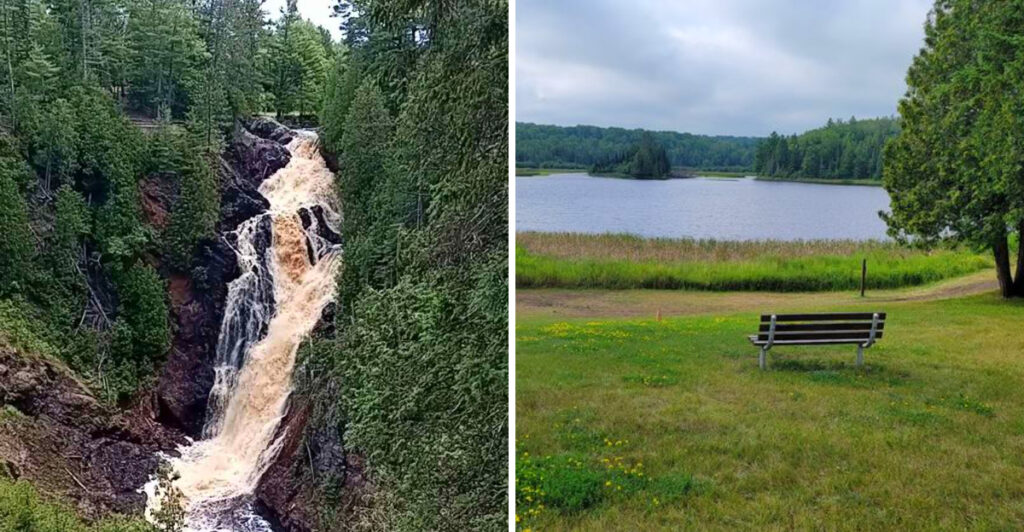
Wisconsin is home to a waterfall so tall and powerful that it ranks fourth highest east of the Rocky Mountains, and most people have never heard of it. At 165 feet, this roaring cascade drops into a steep, wooded gorge with a force that you can hear before you ever see it.
The trails are paved, the viewpoints are well-maintained, and the whole experience takes less than half a day. I made the trip up to northern Wisconsin recently, and I have to say, this place genuinely surprised me in the best way possible.
Whether you are a seasoned hiker or someone who just wants a short walk to something spectacular, this waterfall delivers every single time.
Where It All Begins: Location and Getting There
Big Manitou Falls sits inside Pattison State Park, located at 6294 State Road 35, Superior, WI 54880, right in the northwestern corner of Wisconsin near the Minnesota border. The drive up along State Road 35 is genuinely pretty, with dense forest on both sides and the occasional glimpse of the Black River winding through the trees.
From the city of Superior, the park is only about 13 miles south, which makes it a surprisingly quick escape from town. I pulled into the main parking lot and was immediately struck by how well-organized everything was.
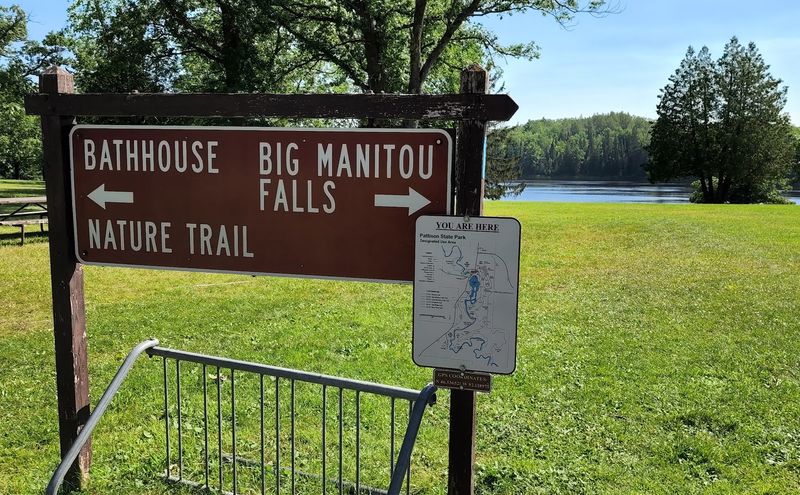
Clear signs point you toward the falls, the picnic area, and the accessible viewing path, so there is no guessing involved.
The park requires a vehicle admission sticker, so out-of-state visitors should be prepared for a slightly higher fee at the entrance booth. That said, the value you get for the price is hard to argue with.
A short walk from the parking lot leads you straight to one of the most impressive natural sights in the entire Midwest.
The Falls Themselves: 165 Feet of Raw Power
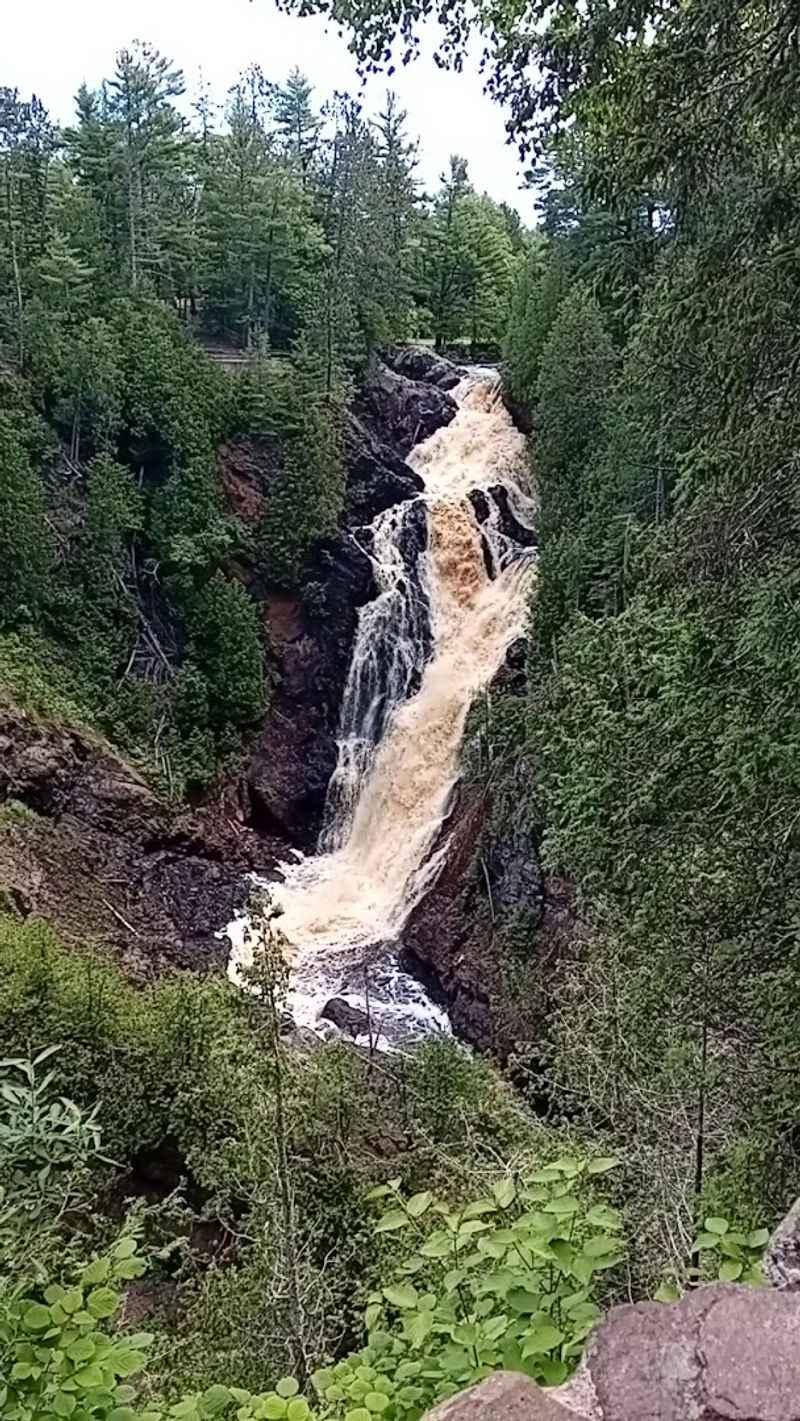
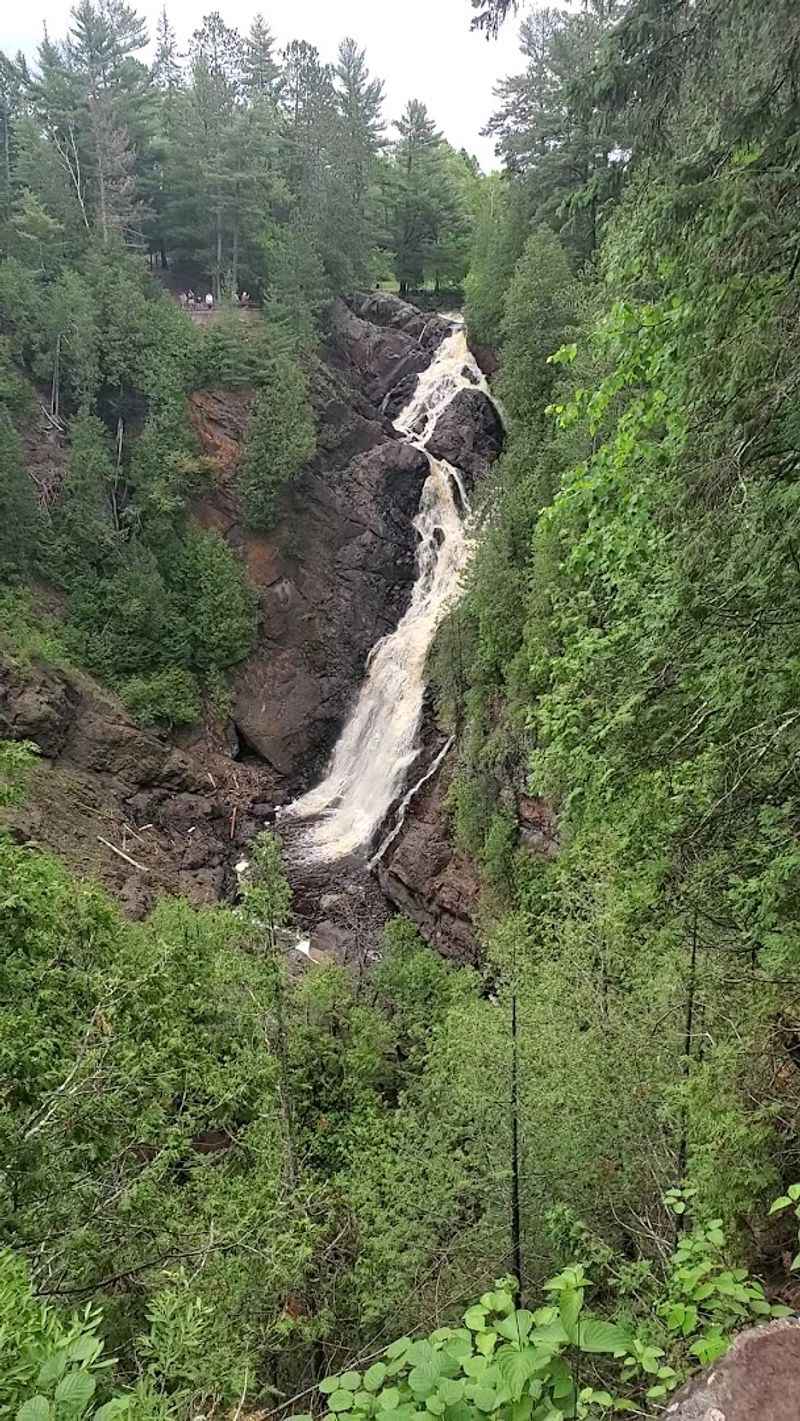
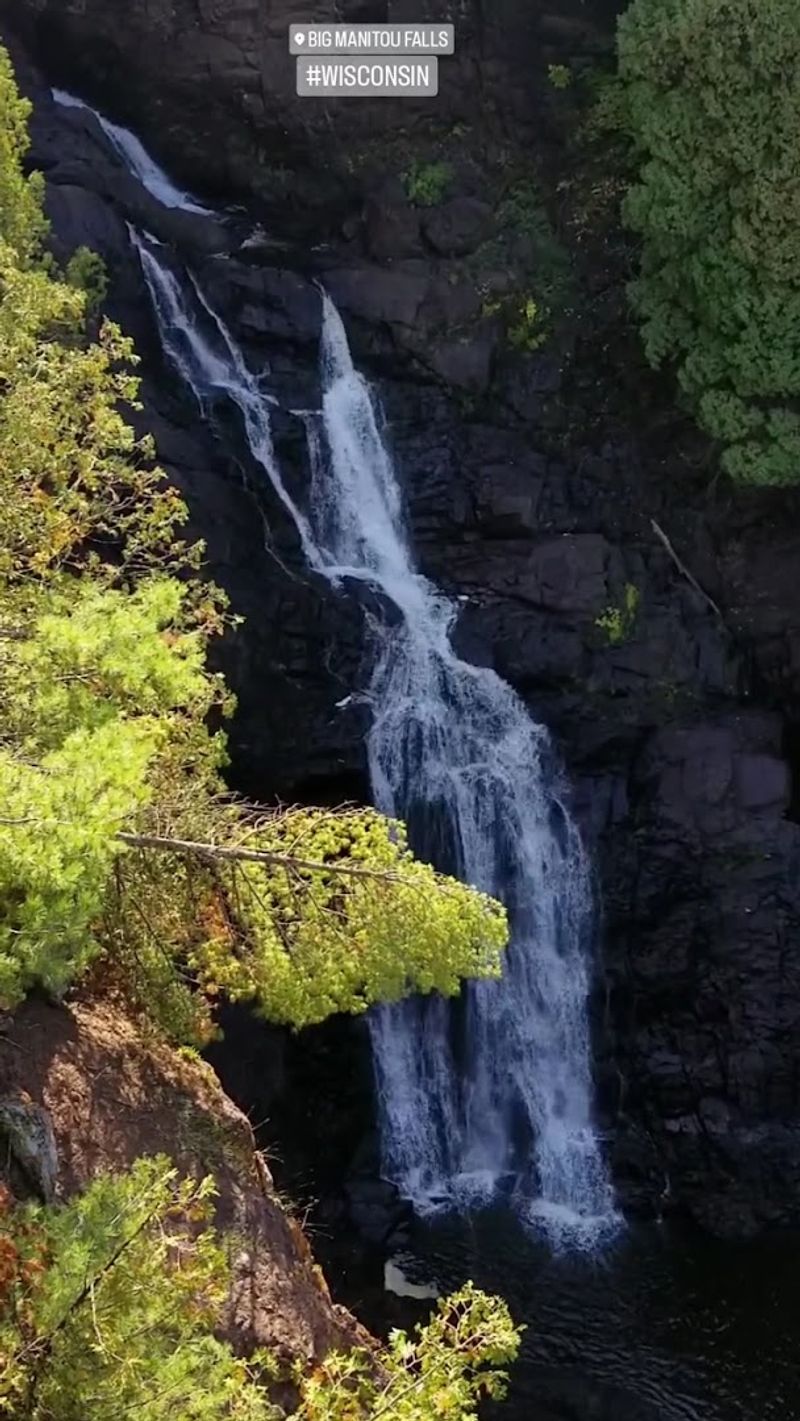
Nothing quite prepares you for the first real look at Big Manitou Falls. The Black River drops a full 165 feet over a hard basalt ledge, sending up a constant mist that keeps the surrounding rocks and ferns a vivid, almost electric shade of green.
The sound alone is remarkable, a deep, steady roar that fills the gorge and drowns out everything else.
As Wisconsin’s tallest waterfall and the fourth highest east of the Rockies, Big Manitou Falls carries real bragging rights. Spring is when the falls are at their most dramatic, with snowmelt pushing the Black River to high volume and the water thundering down in full force.
Autumn visits offer a different kind of beauty, with lower water levels revealing more of the basalt rock face beneath.
The viewing platforms on both sides of the gorge frame the falls from different angles, and neither perspective disappoints. The south side, near the picnic area, tends to offer the most dramatic head-on view.
I stood there for a good ten minutes just watching the water fall, which is honestly longer than I usually spend at any single viewpoint.
The Trail Experience: More Walk Than Hike
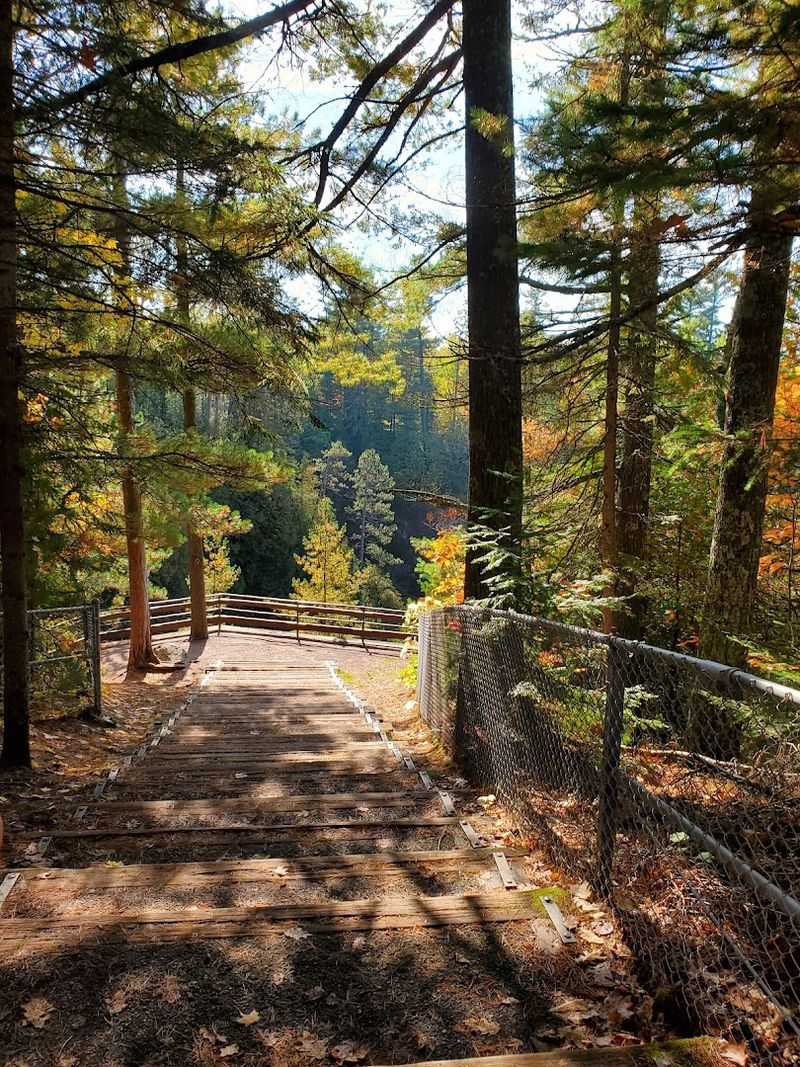
One of the best things about visiting Big Manitou Falls is that the trail does not demand much from you physically. The path from the main parking lot to the primary viewing area is mostly paved, well-maintained, and short enough that most people complete the round trip in under 30 minutes without breaking a sweat.
That said, the trail does include some steep sections with steps, particularly as you descend toward the gorge. There are landing spots built into the path where you can pause, catch your breath, and take in partial views of the falls before reaching the main platform.
I found those rest spots genuinely useful on the way back up.
For those who want a bit more of a workout, the trail continues beyond the falls into the Black River gorge, where the sandstone and clay cliff walls are worth the extra effort. The geology on display down there tells a story going back millions of years, and the contrast between the dark basalt near the falls and the warmer tones of the gorge walls is striking.
Just pace yourself on the return climb.
Accessibility for Every Visitor
Not every waterfall destination thinks carefully about accessibility, but Pattison State Park does. A wheelchair-accessible path runs off a side road near the falls, giving visitors with mobility limitations a genuine opportunity to experience Big Manitou Falls without tackling the steeper main trail.
That kind of thoughtful design makes a real difference.
The picnic area near the south entrance also sits at a relatively flat elevation, making it a comfortable starting point for families with strollers, older visitors, or anyone who prefers a gentler approach. Restrooms are available at multiple points throughout the park, which is another small but important detail that adds to the overall experience.
The park staff I encountered were genuinely helpful and clearly proud of what they maintain. The trails and viewing areas are kept in excellent condition, which tells you that the people running this place take their jobs seriously.
For a destination that draws visitors from across the Midwest and beyond, that level of care matters. Big Manitou Falls should be on the list of any traveler who wants natural beauty without the barrier of a difficult or exclusive trail system.
Best Times to Visit and What to Expect Each Season
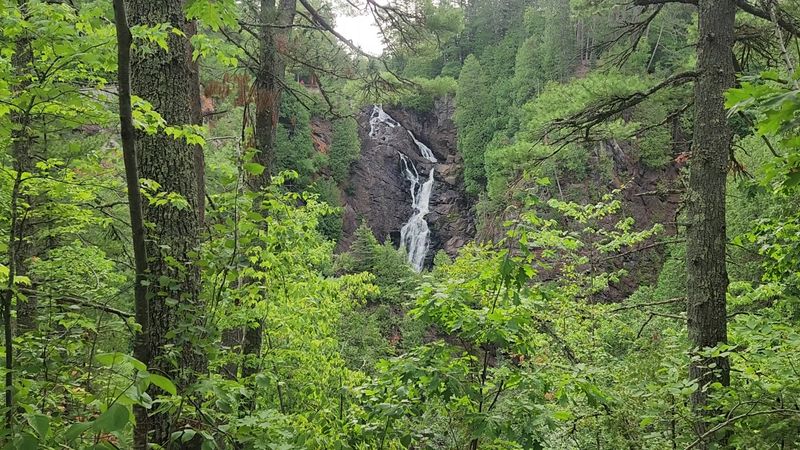
Spring is widely considered the peak season for Big Manitou Falls, and for good reason. Snowmelt from Wisconsin’s long winters pushes the Black River to its highest flow, and the falls respond with thundering volume and impressive spray.
The surrounding forest is a vivid green by late April and May, adding to the visual drama.
Summer brings warmer temperatures and longer days, making it ideal for families and casual visitors who want to combine a waterfall visit with a picnic. The trails are at their most comfortable in July and August, though the falls carry slightly less water than in spring.
Insect repellent is a genuine necessity during summer months, so pack it without question.
Autumn transforms the gorge into something almost painterly, with golden and red foliage framing the falls against a backdrop of deep blue sky. Winter visits are possible and surprisingly rewarding, with ice formations building up along the cliff walls and the falls partially frozen in particularly cold years.
Each season offers a completely different experience at the same spot, which is a rare quality in any natural destination.
The Black River Gorge: Beyond the Falls
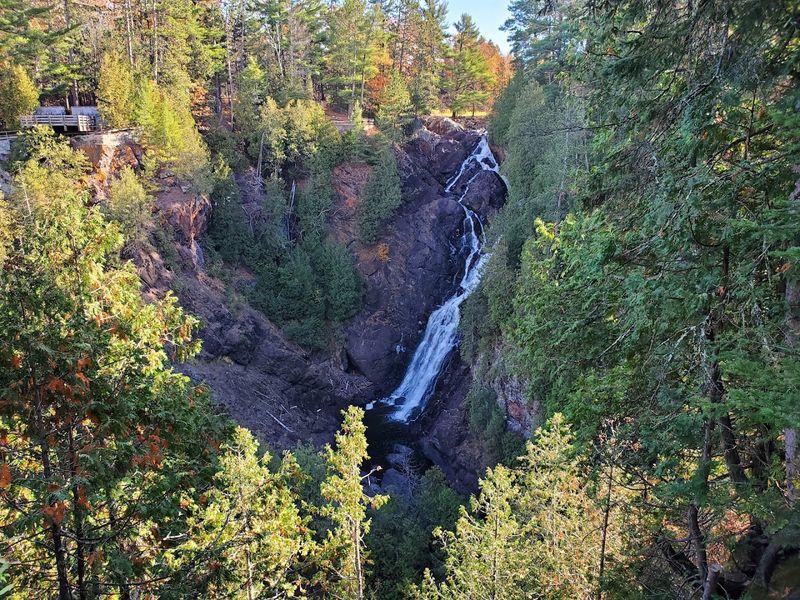
The falls get most of the attention, but the Black River gorge stretching below them is worth exploring on its own terms. Once you pass the main viewing platform and continue down the trail, the gorge opens up into a narrow canyon with walls of layered sandstone and clay that shift in color from deep rust to pale cream depending on the light.
The geology here is genuinely fascinating. The basalt that forms the lip of Big Manitou Falls is among the oldest exposed rock in Wisconsin, formed from ancient lava flows.
As the trail descends further, you pass through progressively younger rock layers, almost like reading a timeline carved into the earth itself.
The river at the bottom moves quickly and the sound echoes off the canyon walls in a way that feels completely removed from the modern world. I found myself lingering far longer than I had planned, partly because the scenery kept changing with every bend in the trail.
The gorge walk is a natural extension of the waterfall visit, and skipping it would mean leaving the best chapter of the story unread.
Little Manitou Falls: The Smaller Sibling Worth Seeing
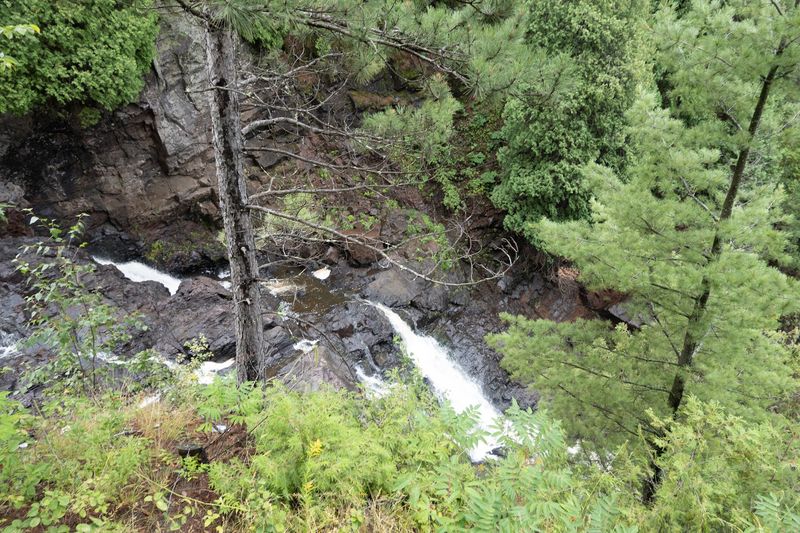
Big Manitou Falls may be the headliner, but its smaller companion just downstream deserves a mention. Little Manitou Falls drops about 31 feet over a similar basalt ledge, and while it cannot compete with its towering neighbor in sheer scale, it has its own quiet charm that many visitors appreciate.
The trail connecting the two falls runs along the Black River and takes roughly 20 to 30 minutes to walk one way. It passes through mature forest with occasional river views, and the contrast between the two waterfalls gives the whole experience a satisfying sense of completeness.
Seeing both in a single visit feels like getting two destinations for the price of one park sticker.
Little Manitou Falls also tends to be less crowded, which gives it a more peaceful atmosphere. On the day I visited, I had the lower falls almost entirely to myself for a stretch, which was a welcome contrast to the busier main viewing area upstream.
For anyone who enjoys the feeling of discovering something slightly off the beaten path, the walk to Little Manitou is a rewarding bonus that rounds out the day nicely.
Photography Tips for Capturing the Falls
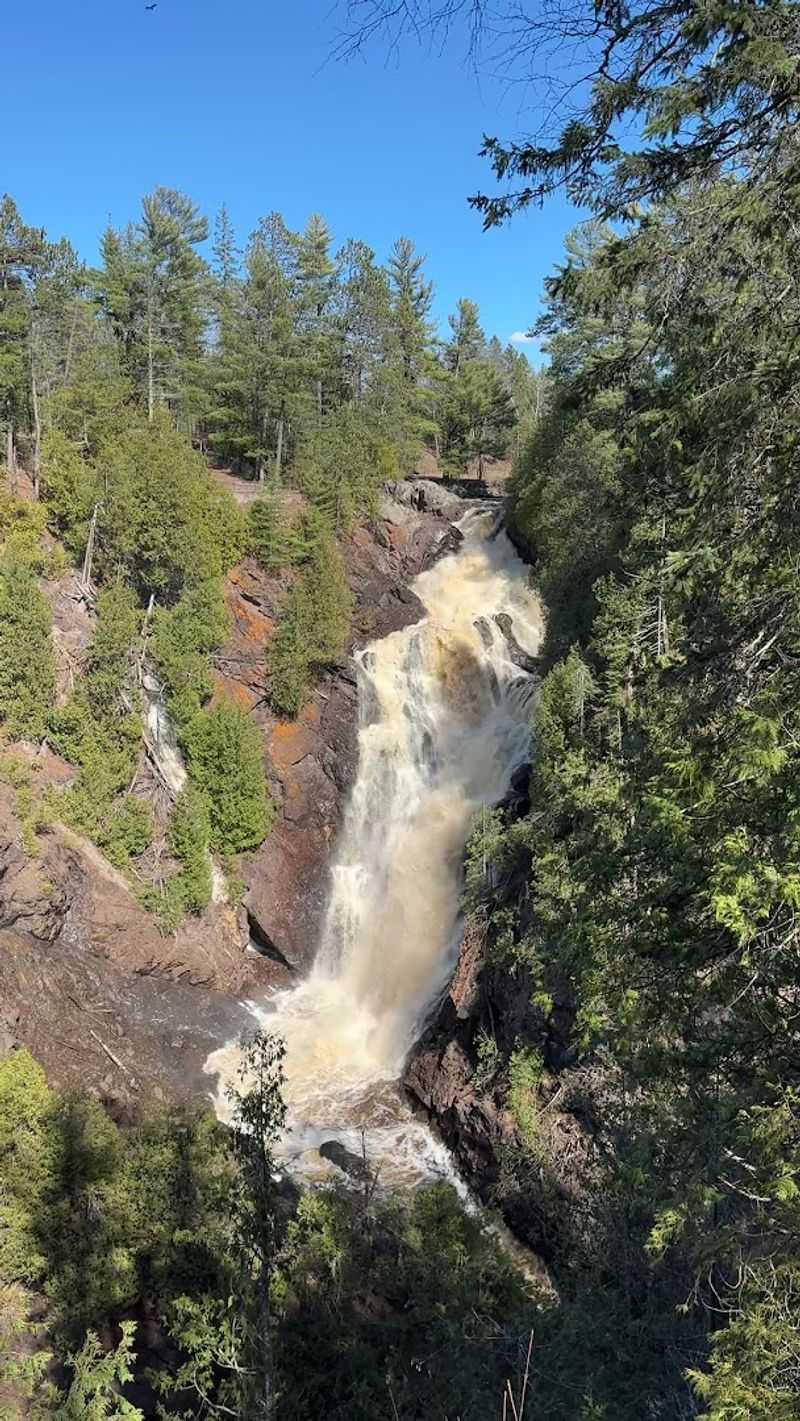
Big Manitou Falls is one of those places that photographs well from almost any angle, but a few specific spots consistently produce the most striking results. The bridge just above the falls offers a dramatic upstream perspective, with the rushing Black River framed by overhanging trees and leading the eye toward the drop.
Early morning light hits this spot particularly well.
The south-side viewing platform gives you the most direct face-on view of the full 165-foot drop. A wide-angle lens helps capture the full height of the falls along with the gorge walls on either side.
Using a slower shutter speed smooths out the water into silky streaks, which adds a sense of motion and energy to the image.
Overcast days are actually ideal for waterfall photography because the soft, even light eliminates harsh shadows and brings out the rich greens of the surrounding moss and ferns. I shot most of my best frames on a partly cloudy morning when the light kept shifting in interesting ways.
A polarizing filter cuts through the mist and reduces glare on the wet rocks, which makes a noticeable difference in the final result.
Picnic Areas and Park Amenities
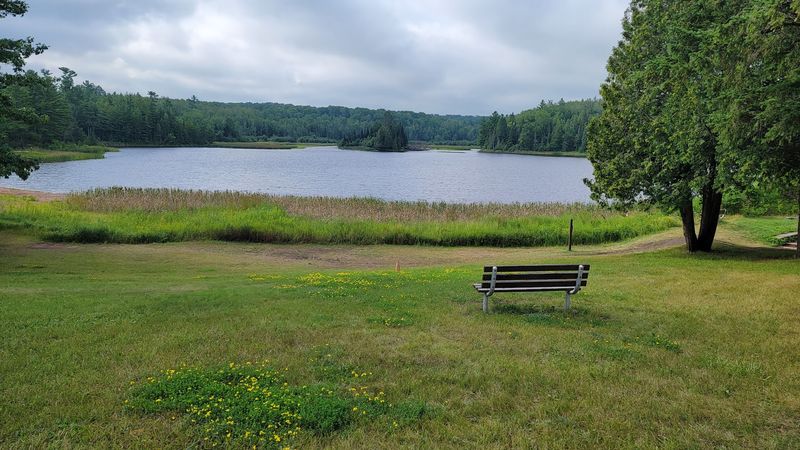
The picnic area near the south entrance of the falls is one of the nicest spots in the park for a midday break. Wooden tables are scattered among tall trees that provide generous shade even on warm summer days, and the proximity to the viewing area means you can hear the distant roar of the falls while you eat.
That kind of backdrop is hard to beat.
Restrooms are available at multiple locations throughout the park, including near the picnic area and along the main trail. Trash receptacles are well-placed and clearly used by visitors who respect the space, because the grounds were remarkably clean on the day I visited.
The park staff maintains everything to a high standard.
There is also a campground within Pattison State Park for those who want to extend their stay beyond a single day trip. Camping near a 165-foot waterfall in northern Wisconsin is a genuinely appealing option, especially in late summer when the evenings cool down quickly and the forest sounds take over after dark.
The combination of good facilities and natural beauty makes this park easy to recommend for a full weekend getaway rather than just a quick stop.
Why Big Manitou Falls Deserves a Spot on Your Travel List
There are waterfalls scattered across the Upper Midwest that draw crowds every summer, but Big Manitou Falls stands apart for a combination of reasons that are hard to replicate elsewhere. The sheer height of the drop, the accessibility of the trails, and the quality of the park infrastructure all add up to an experience that feels both effortless and genuinely memorable.
Visitors come from across Wisconsin, Minnesota, and even as far as Oklahoma to see this waterfall, and the consistent five-star ratings it earns are a reflection of how reliably it delivers. The falls look stunning in photographs, but the sound and the mist and the scale of the gorge are things that only make sense when you are standing right there in front of them.
Big Manitou Falls is the kind of place that earns a second visit almost automatically. I found myself mentally planning a return trip before I had even made it back to the parking lot.
For anyone in the northern Wisconsin area, or anyone willing to make the drive, this waterfall is not a detour worth considering. It is the main event, full stop, and it earns every bit of that reputation.
Share this story