Italy’s coastline stretches for thousands of kilometers, offering everything from dramatic cliffside villages and pastel fishing towns to long sandy beaches and hidden coves. Travel experts consistently highlight regions like the Amalfi Coast, Liguria, Puglia, and Sicily for their beauty, culture, and variety.
What makes Italian beach towns stand out is their ability to combine historic charm, incredible food, and stunning sea views into one unforgettable experience. Here are 13 Italian beach towns experts recommend for your next trip.
Positano (Amalfi Coast)
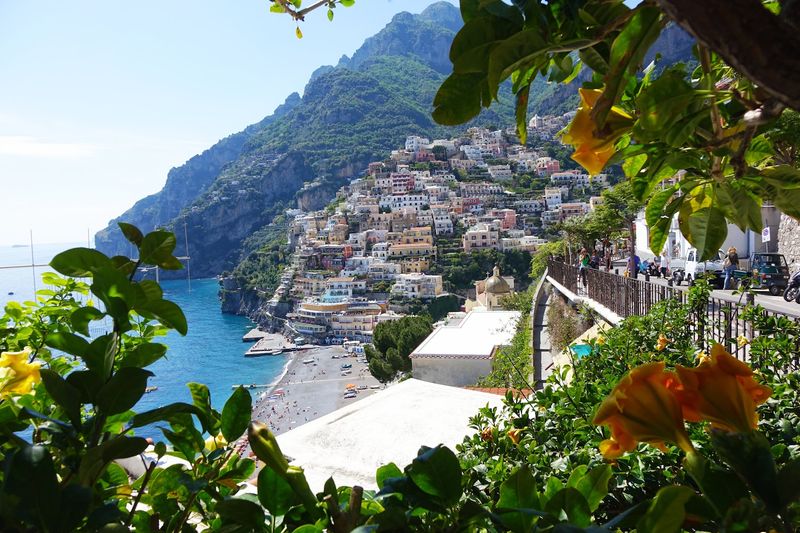
Few places on Earth can stop you mid-sentence quite like Positano. This cliffside gem on the Amalfi Coast has been stealing hearts since the days when John Steinbeck wrote about it in 1953, calling it a dream place that isn’t quite real.
Perched dramatically above the Tyrrhenian Sea, its stacked pastel houses look like something painted by hand.
Getting around Positano means lots of steps — and we mean lots. The town is essentially built on a vertical slope, so comfortable shoes are your best travel companion here.
That said, every staircase leads to something worth seeing: a tucked-away cafe, a ceramic shop, or a jaw-dropping sea view.
Spiaggia Grande is the main beach and gets busy in summer, but smaller coves like Fornillo offer a quieter escape. Boutique hotels here range from charming to absolutely luxurious, so there’s something for every budget.
Book well ahead for summer visits, as rooms fill up fast. Local restaurants serve fresh seafood pasta that tastes better with every bite.
Positano earns its fame honestly — it really is that beautiful.
Cinque Terre (Liguria)
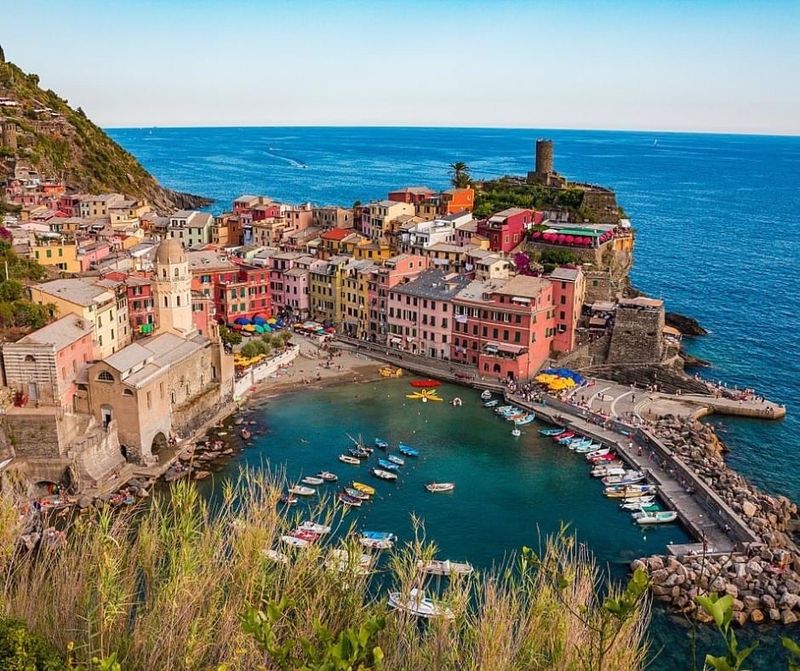
Cinque Terre literally means “Five Lands,” and every single one of those five villages has its own personality. Monterosso, Vernazza, Corniglia, Manarola, and Riomaggiore line up along the Ligurian coast like a row of painted postcards come to life.
UNESCO designated the whole area a World Heritage Site, and honestly, it’s easy to see why.
Hiking between the villages is the most popular activity, and the trails offer views that will make your camera work overtime. The famous Sentiero Azzurro trail connects several villages, though some sections may be closed depending on the season, so check conditions before you go.
Ferries also run between the towns if your legs need a break.
Each village has its own food specialty worth trying. Vernazza is known for fresh anchovies, while Monterosso produces excellent limoncino liqueur from locally grown lemons.
The seafood here is incredibly fresh, and the pesto — made the traditional Ligurian way — is outstanding. Summer crowds can be intense, so visiting in May or September gives you the beauty without the shoulder-to-shoulder experience.
Cinque Terre rewards those who take their time exploring it slowly.
Polignano a Mare (Puglia)
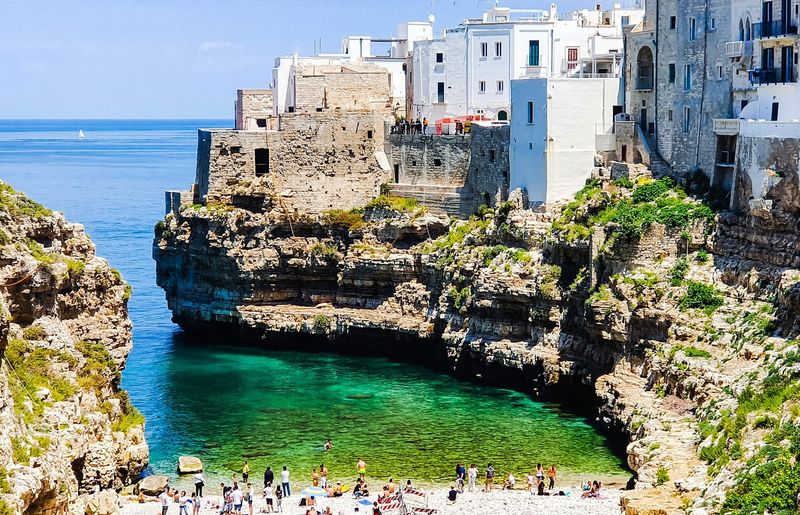
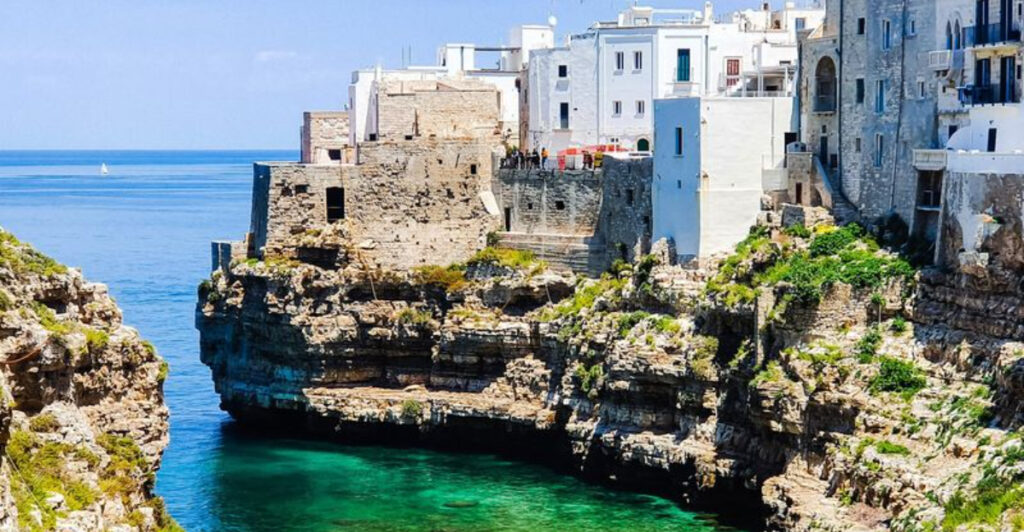
Carved right into the edge of limestone cliffs, Polignano a Mare looks like it was designed by someone who wanted to make the rest of the world feel a little ordinary. The Adriatic Sea below is an almost unreal shade of turquoise, and the whitewashed old town above it glows brilliantly in the southern Italian sun.
This is Puglia at its most dramatic.
The main beach, Lama Monachile, sits in a narrow cove between two cliff walls and is one of the most photographed spots in southern Italy. It gets crowded in peak season, but arriving early in the morning gives you that magic hour of golden light and relative quiet.
Several sea caves around the cliffs are accessible by boat tour, and the views from inside them looking out to the sea are genuinely spectacular.
The old town’s narrow alleys are full of excellent restaurants, gelaterias, and small shops. Polignano is also the birthplace of legendary Italian singer Domenico Modugno, who wrote “Volare” — there’s even a statue of him near the clifftop.
Fresh seafood here is exceptional, particularly the raw sea urchin served simply with lemon. Plan at least two nights to truly appreciate everything this town offers.
Tropea (Calabria)
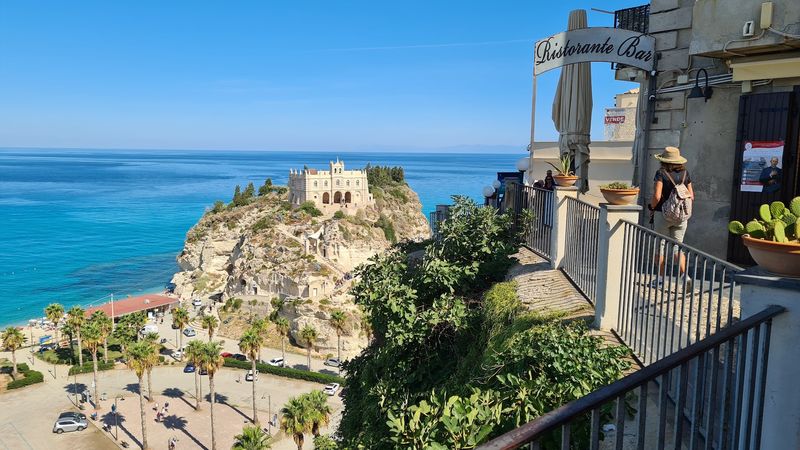
Tropea has a beach so gorgeous it almost feels unfair to the rest of Calabria. The water here is the kind of electric blue-green that makes people question whether the photos have been edited — they haven’t.
Perched on sandstone cliffs above wide white sandy shores, this town consistently tops lists of Italy’s most beautiful beach destinations for very good reason.
The famous Santa Maria dell’Isola church sits on a rocky outcrop just offshore and is one of the most photographed landmarks in all of southern Italy. Watching the sunset from the clifftop promenade while that little church glows in warm light is an experience that stays with you for a long time.
The old town itself is full of baroque architecture, charming piazzas, and excellent local restaurants.
Tropea is also famous for its red onions — seriously, they’re celebrated enough to have their own festival. These sweet, mild onions appear in everything from sauces to jams and are sold throughout the town’s markets.
The beaches below the cliffs are accessible via steps cut into the rock. July and August are peak months, so visiting in June or September means fewer crowds and slightly cooler temperatures.
Tropea is southern Italy’s coastal crown jewel.
Amalfi (Amalfi Coast)
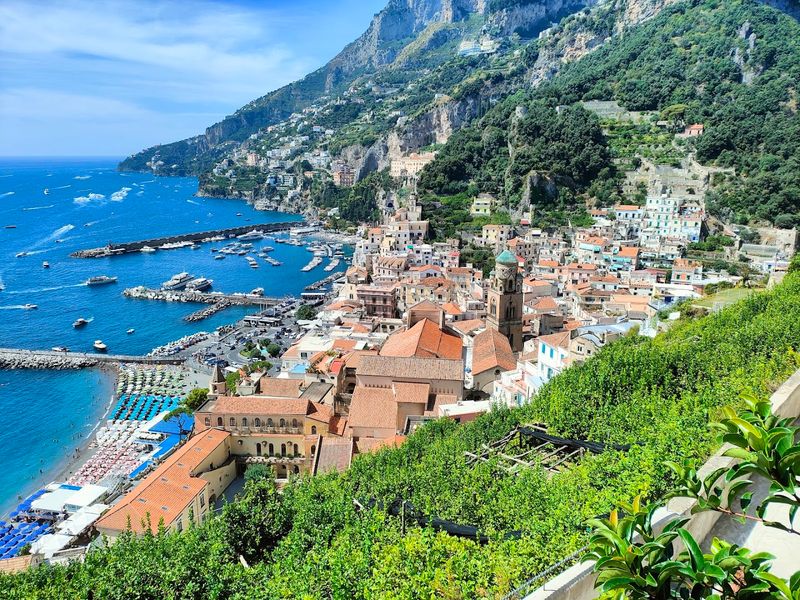
Once upon a time, Amalfi was one of the most powerful maritime republics in the Mediterranean — a serious naval force that rivaled Venice and Genoa. That glorious past is still visible today in the grand Cathedral of Sant’Andrea, whose Arabic-Norman facade towers over the main piazza with undeniable confidence.
History buffs and architecture lovers will find plenty to appreciate here.
The town sits at the mouth of a deep valley where the mountains meet the sea, creating a setting that feels almost theatrical. Lemon groves cling to the terraced hillsides above town, and the famous limoncello liqueur made from these lemons is sold everywhere — and it’s worth every sip.
The harbor area is lively and makes a great starting point for boat trips along the coast.
Amalfi’s beach is a pebbly stretch right in the heart of town, convenient but busy in summer. Day trips to nearby Atrani — a tiny, quieter village just around the headland — are highly recommended for a more peaceful experience.
The town’s paper museum is a surprisingly fascinating stop, celebrating Amalfi’s historic paper-making industry. Ferries connect Amalfi to Positano, Ravello, and Salerno, making it an ideal base for exploring the entire coast.
Camogli (Liguria)
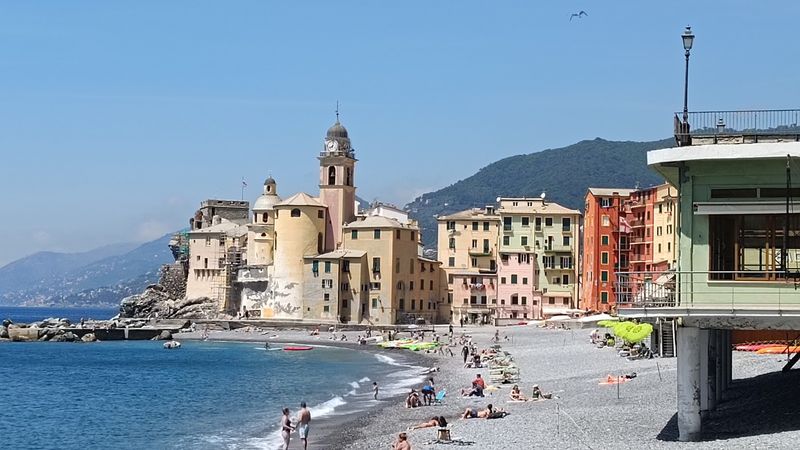
Camogli is what happens when a Ligurian fishing village decides it doesn’t need to be famous to be wonderful. The name reportedly comes from “casa delle mogli” — house of the wives — a nod to the women who kept the town running while fishermen were out at sea.
That quietly resilient spirit still seems to hang in the salty air today.
The waterfront is lined with impossibly tall, narrow buildings painted in warm terracotta, peach, and amber tones. These aren’t just pretty — the trompe-l’oeil painted windows and details on many facades were originally designed to fool sailors into thinking home looked bigger and grander from the sea.
It’s one of Liguria’s most charming quirks and makes for incredible photography.
The pebble beach is clean and far less crowded than nearby Portofino or Santa Margherita Ligure, which is exactly why experts love recommending it. The local fish festival held every May involves frying freshly caught fish in an enormous pan — reportedly one of the world’s largest.
Getting here by train from Genoa takes about 30 minutes and costs very little. Camogli is proof that the best Italian coastal experiences often come without the big price tag or the big crowds.
Cefalù (Sicily)
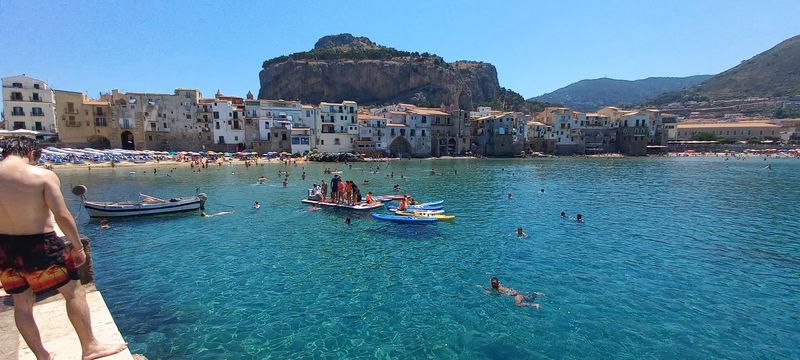
Cefalù pulls off a rare trick: it’s simultaneously a beach resort and a genuinely historic medieval town, and it does both remarkably well. The massive Norman cathedral built by King Roger II in the 12th century dominates the skyline with two square towers that look like they belong in a fairy tale.
Inside, Byzantine gold mosaics shimmer in the dim light, and the Christ Pantocrator in the apse is considered one of the finest examples of mosaic art in all of Europe.
The beach stretching in front of the old town is one of Sicily’s best — wide, sandy, and framed by clear Tyrrhenian water that ranges from pale aquamarine near the shore to deep cobalt further out. It gets lively in summer but remains manageable compared to more famous Sicilian resorts.
The old town’s narrow lanes behind the beach are packed with trattorias, wine bars, and artisan shops.
Climbing La Rocca, the enormous crag rising behind Cefalù, rewards hikers with sweeping views across the coast and inland to the Sicilian mountains. The ancient ruins at the summit add an extra layer of intrigue to the climb.
Cefalù is roughly 70 kilometers from Palermo, making it an easy day trip or a perfect overnight stop on a Sicilian road trip.
Sperlonga (Lazio)
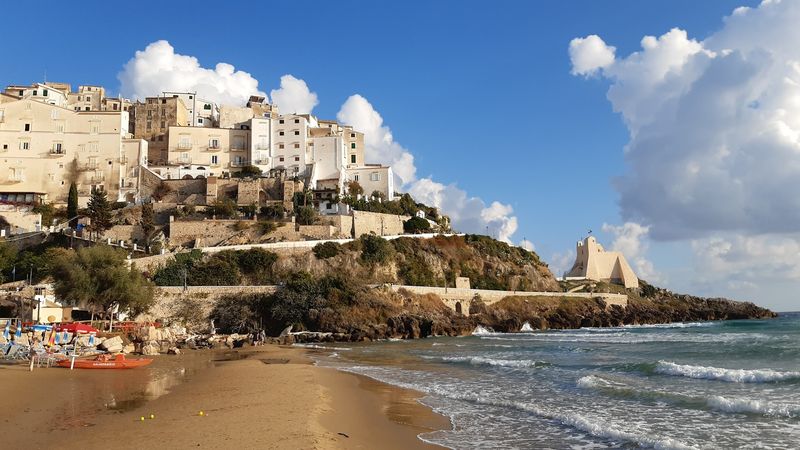
Sperlonga looks like someone took a Greek island and quietly relocated it to the Lazio coast, and nobody told the tourists. Perched on a rocky headland between Rome and Naples, this dazzling whitewashed village is one of central Italy’s best-kept coastal secrets — though locals from Rome have known about it for decades.
The contrast of brilliant white walls against bright blue sea is genuinely striking.
The town’s medieval layout is a maze of arched alleyways, tiny piazzas, and flower-draped staircases that beg to be explored without a map. Getting lost here is actually the point.
Geraniums spill from window boxes, cats lounge on sun-warmed stone steps, and the smell of freshly cooked seafood drifts from restaurant doorways at almost every turn.
Two long sandy beaches flank the headland on either side, offering calm, clear water that’s perfect for swimming. The southern beach near the old town is particularly beautiful.
Just outside Sperlonga, the Tiberio Grotto is an ancient cave where Emperor Tiberius reportedly held lavish banquets — a fascinating archaeological site with a small museum attached. Trains from Rome reach Fondi-Sperlonga station in about 90 minutes, making this an excellent weekend escape from the capital.
Summer weekends can be busy, but weekday visits feel wonderfully peaceful.
Vieste (Puglia)
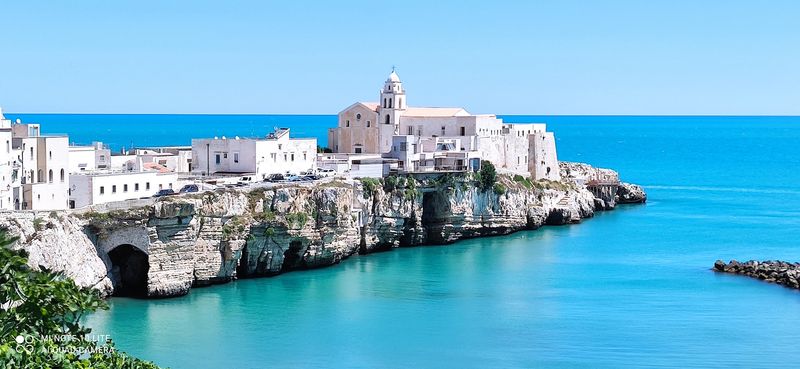
Standing at the tip of the Gargano Peninsula like a ship’s prow cutting into the Adriatic, Vieste is one of Puglia’s most visually dramatic towns. The whitewashed old town rises on a rocky cliff between two beautiful bays, and the surrounding coastline is dotted with towering limestone sea stacks called faraglioni that shoot straight up from the turquoise water.
It’s the kind of scenery that makes you want to cancel your return flight.
The beaches here are genuinely spectacular. Pizzomunno beach sits right beneath the old town and is named after the famous 25-meter-tall white monolith rising from the water — a local landmark with its own romantic legend attached.
Further along the coast, the beaches of Pugnochiuso and Vignanotica are considered among the most beautiful in all of Italy, with crystalline water and dramatic cliff backdrops.
The old town itself is a compact network of whitewashed lanes and small piazzas full of character. A boat tour along the coastline is highly recommended for exploring the sea caves and hidden coves that are inaccessible on foot.
The Gargano National Park surrounds the town, offering hiking and cycling through ancient forests. Vieste is slightly off the main tourist circuit, which keeps it feeling authentic and relaxed even in peak season.
Ravello (Amalfi Coast)
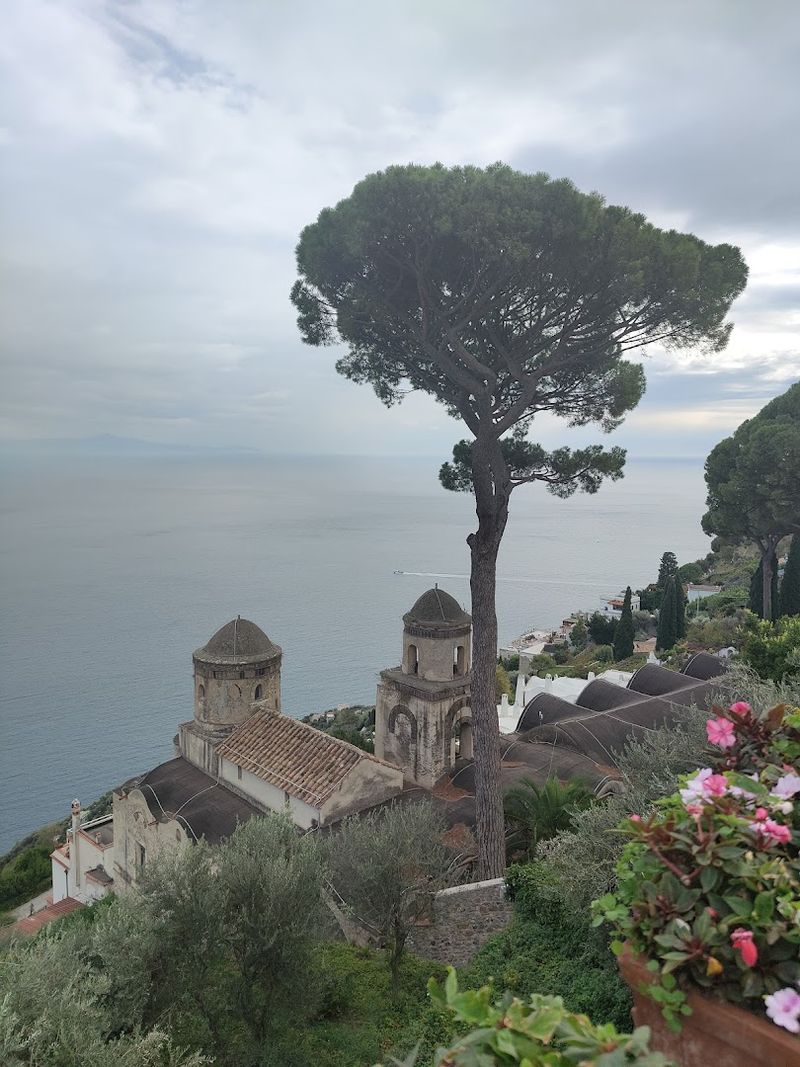
Sitting about 350 meters above the Amalfi Coast, Ravello offers views so expansive they feel more like a painting than a real place. Richard Wagner was so moved by the gardens of Villa Rufolo during a visit in 1880 that he used them as inspiration for the magical garden in his opera Parsifal.
That’s the kind of effect Ravello tends to have on creative people.
Unlike the beach towns lower on the coast, Ravello is all about gardens, villas, and elevated calm. Villa Rufolo and Villa Cimbrone are the two main garden estates, and both are extraordinary.
Villa Cimbrone’s Terrace of Infinity — a belvedere lined with classical busts overlooking the sea — is arguably the single most spectacular viewpoint on the entire Amalfi Coast.
The Ravello Festival, held annually in summer, transforms Villa Rufolo’s garden terrace into an outdoor concert venue with the sea as a backdrop. Classical music performed in that setting is an experience unlike anything else.
The town itself is small and quiet, with excellent restaurants serving refined local cuisine. Getting here requires a winding bus ride or a steep uphill walk from Amalfi, but the effort is absolutely worth it.
Ravello feels like the coast’s best-kept elevated secret.
Bosa (Sardinia)
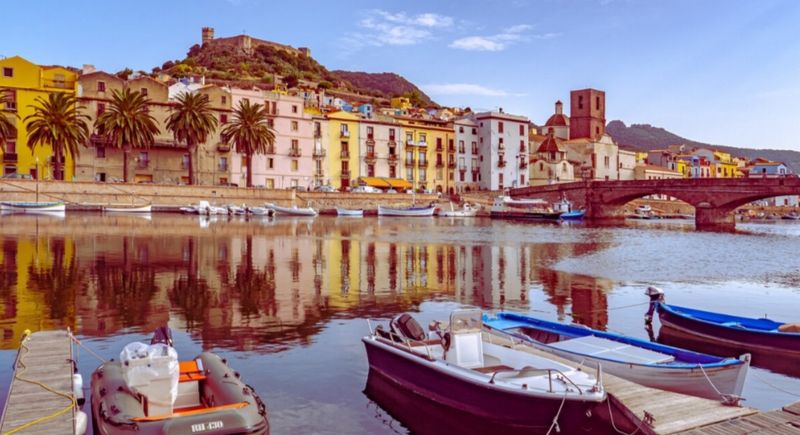
Bosa is the town that Sardinia forgot to tell everyone about — and its residents are probably not complaining. Tucked along the banks of the Temo River just a short distance from the western Sardinian coast, this little town is one of the most colorful and photogenic places on the entire island.
Bright pink, orange, yellow, and sky-blue houses stack up the hillside beneath a medieval castle, creating a scene that looks almost too vibrant to be real.
The Temo is Sardinia’s only navigable river, and a gentle boat ride or kayak trip along it offers a completely different perspective on the town. The riverbanks are lined with old tannery buildings that have been converted into workshops and studios.
The beach at Bosa Marina, about three kilometers away, is a long, sandy stretch with some of the clearest water in Sardinia.
The old town quarter called Sa Costa climbs steeply up toward the Malaspina Castle, and exploring it on foot reveals hidden churches, tiny artisan workshops, and wonderful views. Bosa is also known for its local Malvasia wine — a rich, amber-colored dessert wine that pairs beautifully with local pastries.
International tourists are still relatively rare here, which means prices are lower and the atmosphere feels genuinely local and unhurried.
Maratea (Basilicata)
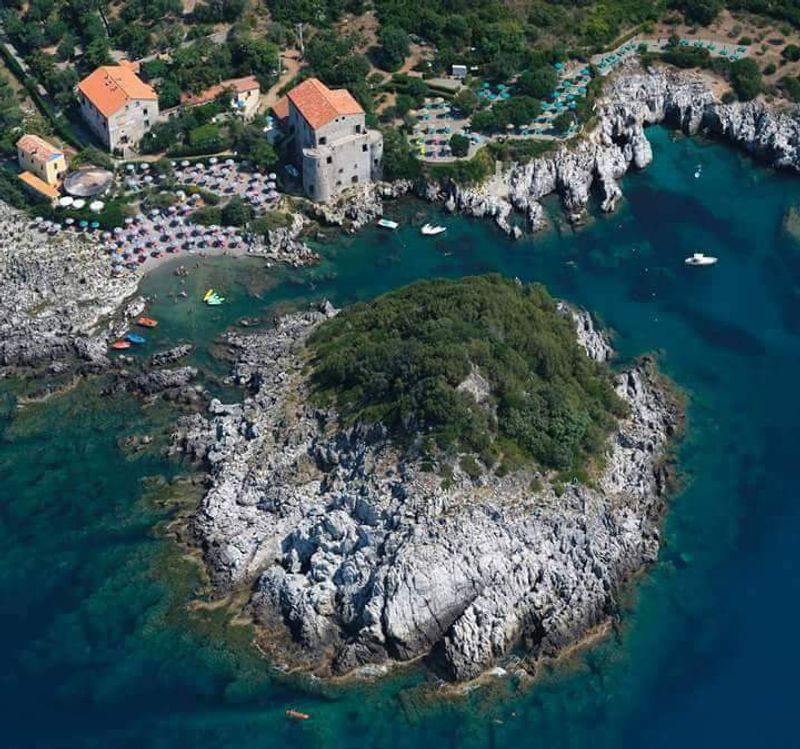
Maratea is the kind of place that makes you wonder why you’ve never heard of it before. Basilicata’s only stretch of coastline — just 32 kilometers long — packs in more dramatic scenery per kilometer than almost anywhere else in Italy.
Jagged cliffs drop into impossibly clear water, hidden coves appear around every bend, and a giant white Christ statue watches over everything from a mountaintop above. It’s theatrical and serene at the same time.
The coastline here is largely protected and undeveloped, which is precisely what makes it so special. There are no massive hotel complexes blocking the views or beach clubs squeezed shoulder to shoulder along the shore.
Instead, you’ll find small rocky beaches and sandy coves accessible by boat or narrow cliff paths, each one feeling like a private discovery.
The town of Maratea itself is actually a collection of small villages spread across the hillside, with the ancient upper village offering beautiful views and a lovely medieval atmosphere. Seafood restaurants here serve dishes rooted in Lucanian tradition — simple, fresh, and deeply satisfying.
Getting to Maratea requires a bit of effort, either by train on the scenic coastal railway or by car, but that slight inconvenience is exactly why it remains wonderfully uncrowded. Experts call it Italy’s secret Riviera, and that description fits perfectly.
Vietri sul Mare (Amalfi Coast)
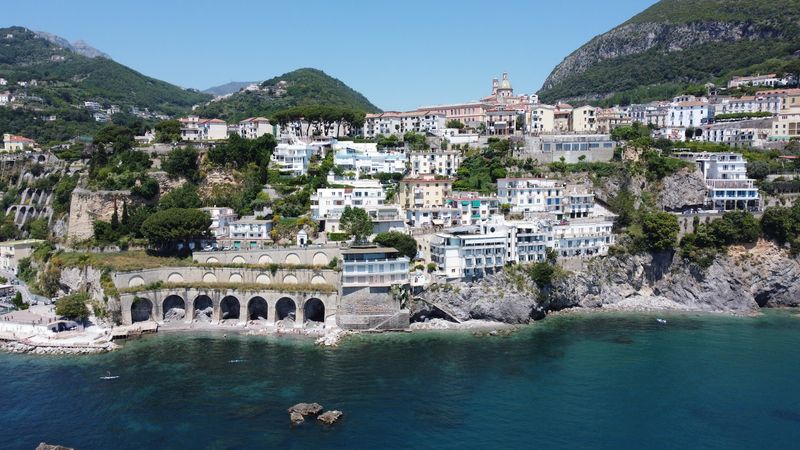
Every great road trip needs a strong opening act, and Vietri sul Mare plays that role perfectly for the Amalfi Coast. Sitting at the northern gateway to one of the world’s most famous coastal drives, this town greets visitors with something entirely its own: an explosion of hand-painted ceramics in every shop window, doorway, and market stall.
The craft has been practiced here since the 16th century, and the quality and creativity on display are genuinely impressive.
The town’s signature majolica ceramics — bold, colorful designs featuring fish, lemons, and geometric patterns — are sold throughout the Amalfi Coast, but buying directly in Vietri means better prices and the chance to visit working studios. The ceramic-tiled dome of the church of San Giovanni Battista is itself a work of art worth seeking out.
Wandering the upper village reveals quiet lanes and lovely views over the Gulf of Salerno.
The beaches below town are sandy and pleasant, and the water is clear and inviting. Because Vietri doesn’t carry the same international fame as Positano or Ravello, accommodation here costs noticeably less while offering the same coastal scenery.
It’s also well connected by bus to Salerno, making it an easy and affordable base for exploring the coast. Vietri is the Amalfi Coast’s most underrated starting point.
Share this story