Tucked away in the hills of northwestern New Jersey, there is a place where the 19th century never quite let go. A cluster of historic buildings, a slow-moving canal, and the quiet banks of the Musconetcong River tell the story of a community that once kept the entire Morris Canal system running.
Canal travelers passing through this stretch of Sussex County depended on this village for rest, supplies, and shelter. What remains today is a remarkably preserved slice of American history that most people drive right past without knowing it exists.
The village sat at the heart of one of the most ambitious engineering projects in early American history, and its story is far more compelling than its modest road sign suggests. Whether you are a history enthusiast, a casual hiker, or simply someone who appreciates a good story, this forgotten corner of New Jersey has plenty to offer.
The Morris Canal and Why It Changed Everything
Before railroads dominated the American landscape, canals were the highways of commerce. The Morris Canal was one of the most ambitious waterway projects ever attempted in the United States, stretching 107 miles across New Jersey from Phillipsburg on the Delaware River all the way to Jersey City on the Hudson.
Conceived in 1824 and officially closed in 1924, the canal operated for exactly one century. It was engineered to solve a serious problem: how to move heavy loads of coal and iron ore across the rugged terrain of northern New Jersey, which was riddled with hills that would have defeated a conventional flat canal.
The solution was a system of inclined planes, essentially water-powered ramps that lifted and lowered canal boats over hills rather than requiring dozens of additional locks. Waterloo Village sat directly along this route, which made it an essential stop for boatmen, mule drivers, and cargo handlers moving goods across the state.
How the Village Kept Canal Workers Fed and Sheltered
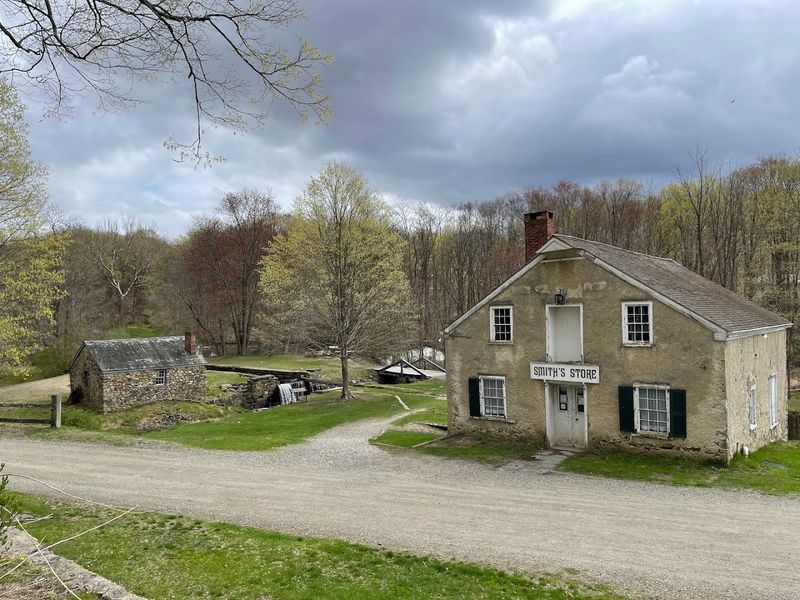
Canal life was not glamorous. Boatmen worked long days guiding heavy barges through locks and over inclined planes, and by the time they reached Waterloo, they needed a place to rest and resupply.
The village grew up to meet exactly that need.
At its peak, Waterloo functioned as a self-contained community with everything a working canal town required. There was a general store, a tavern, a blacksmith shop, a grist mill, a saw mill, and housing for both workers and business owners.
The canal brought a steady stream of people through the village, and local businesses thrived on that traffic.
The Smith family, who were central figures in the village’s development, built much of the infrastructure that still stands today. Their properties, including a farmhouse cabin constructed in 1825, remain visible on the grounds and give a clear picture of how 19th-century canal commerce shaped everyday domestic life in rural New Jersey.
The Smith Family Legacy That Built a Town
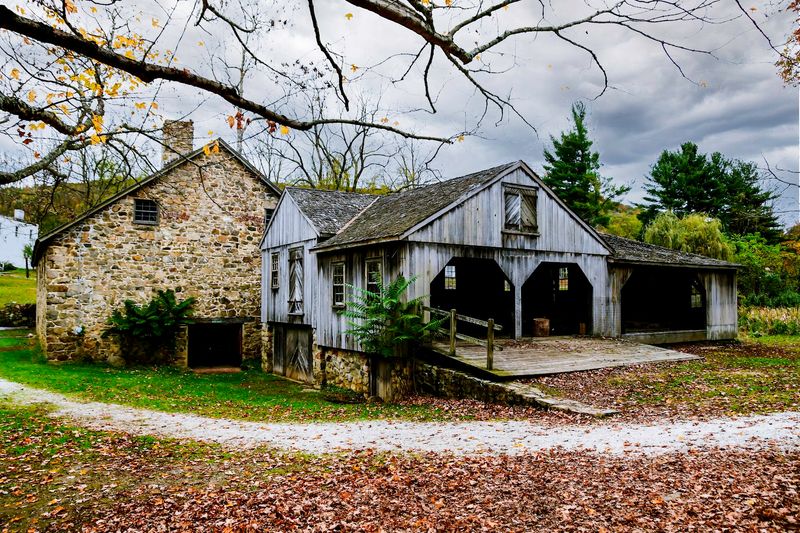
Behind every historic village, there is usually a family whose ambition and resources shaped the place. At Waterloo, that family was the Smiths.
They recognized the commercial potential of the canal route early and invested in building the infrastructure that would serve travelers and workers passing through the region.
The Smiths constructed several of the buildings that still stand on the property today, including residential structures and commercial facilities that supported both their own household and the broader village economy. The farmsite cabin, built in 1825, is one of the oldest surviving structures on the grounds and offers a tangible connection to the early 19th century.
Their story is not just about one family’s fortune. It reflects a broader pattern across early American history, where entrepreneurial families positioned themselves along critical transportation corridors and built communities around the economic activity those routes generated.
Waterloo would not exist in its current form without the Smiths’ early and sustained investment in the place.
The Canal Museum: A Rare Surviving Record
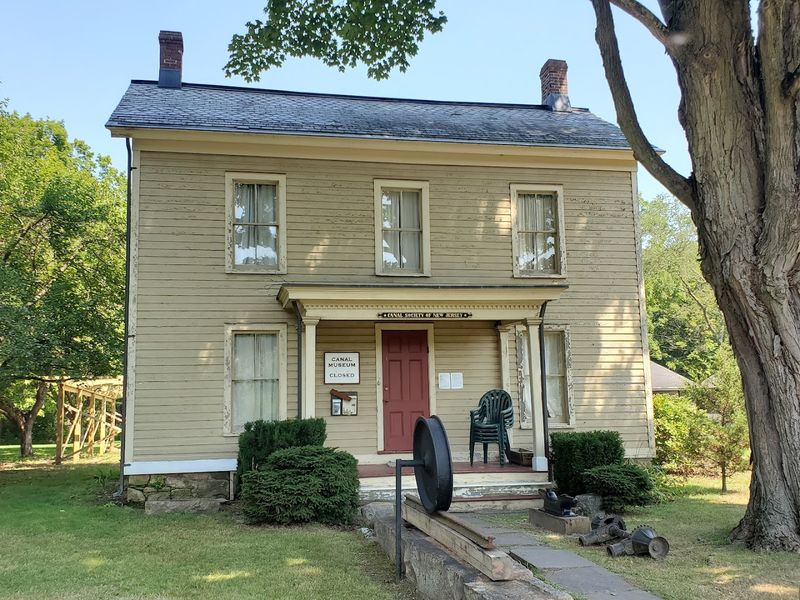
The Canal Museum at Waterloo Village is a compact but genuinely fascinating space that documents the full history of the Morris Canal. It holds exhibits that explain how the canal was built, how it operated, and why it eventually became obsolete once the railroad network expanded across New Jersey.
Among the highlights is a detailed scale model of Incline Plane 9 West, one of the mechanical ramps that allowed canal boats to travel up and over the hills that would have otherwise blocked their path. Historic photographs line the walls, showing the canal in active operation during its working years.
The museum also houses what is described as the only remaining original canal boat, a physical artifact that connects modern visitors directly to the working waterway that once carried iron ore, coal, and agricultural products across the state. For anyone with even a passing interest in American industrial history, the Canal Museum is the single most informative stop on the entire site.
The Grist Mill: Where Grain Became a Village Resource
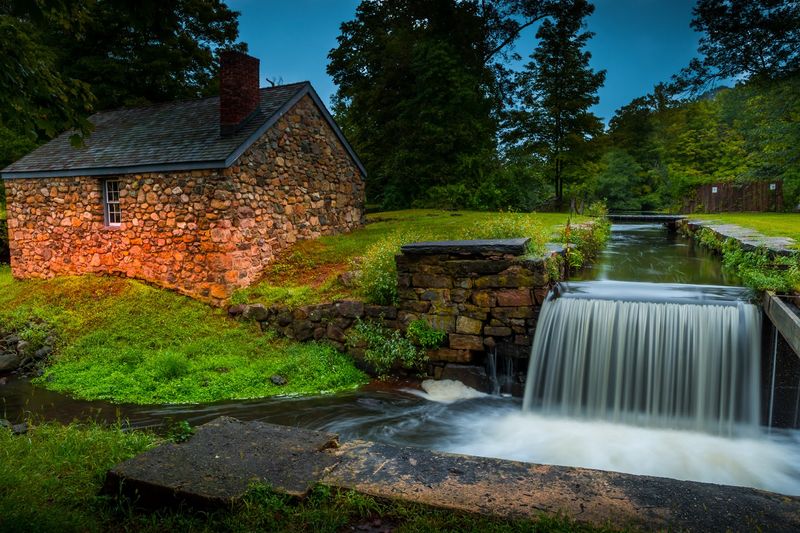
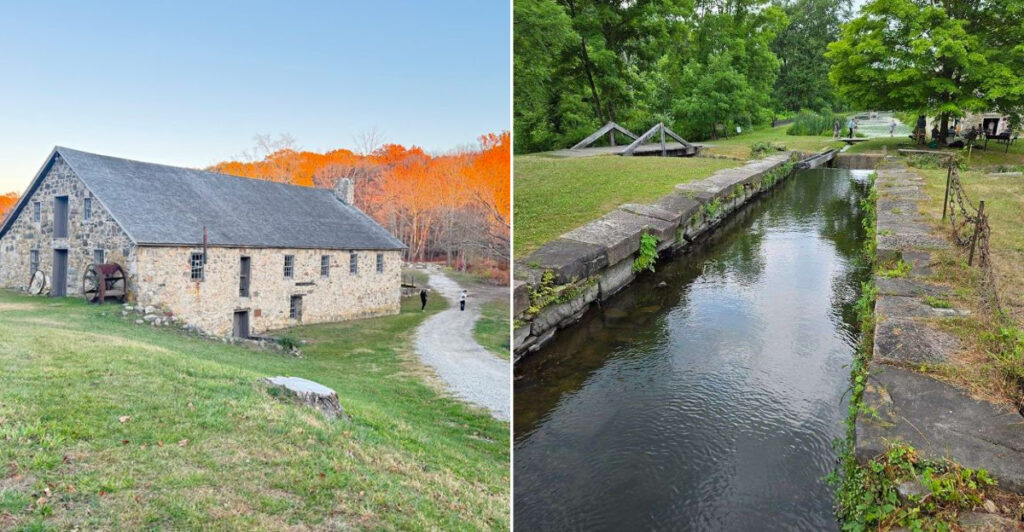
The grist mill at Waterloo Village is one of those structures that immediately communicates how self-sufficient 19th-century communities had to be. Farmers from the surrounding region brought their grain here to be ground into flour and meal, and the mill sat at the center of the local agricultural economy.
Water from the Musconetcong River powered the mill’s grinding stones, making it a practical and efficient operation for its time. The mill’s location along the river was no accident.
Communities that built along waterways could harness water power for both transportation and industrial production simultaneously.
The Gristmill at Waterloo has been described as fabulous by those who have taken the time to examine it closely. Its machinery and structure give visitors a concrete understanding of how pre-industrial communities processed raw agricultural goods before the era of mechanized factories.
It stands as one of the more visually compelling buildings on the site, and its connection to the river makes it a natural focal point during any visit.
The Blacksmith Shop and the Trades That Kept Things Moving
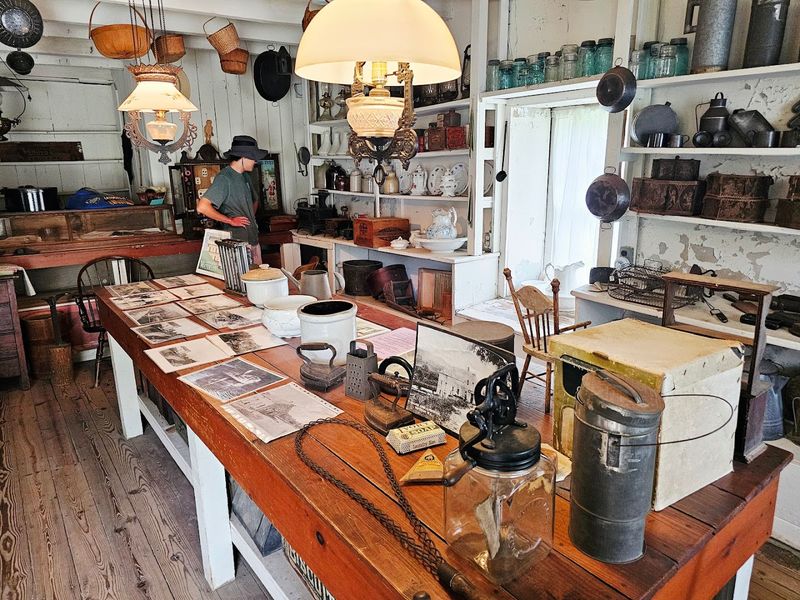
A canal village without a blacksmith was a canal village in trouble. Horses, mules, boats, and machinery all required constant maintenance, and the blacksmith was the person who kept everything functional.
At Waterloo, the blacksmith shop is one of the preserved structures that visitors can observe and learn about.
The craft of blacksmithing in the 19th century covered a wide range of tasks, from shoeing the mules that pulled canal boats along the towpath to forging iron fittings for the locks and gates that controlled water flow through the canal system. A skilled blacksmith was not just useful but essential to daily operations.
Seeing the shop today, with its forge and tools in place, makes the village feel less like a museum display and more like a place where real work once happened. Trades like blacksmithing were the backbone of canal-era infrastructure, and Waterloo’s preserved shop keeps that history tangible rather than simply theoretical for modern visitors.
A Church Still Holding Services After All These Years
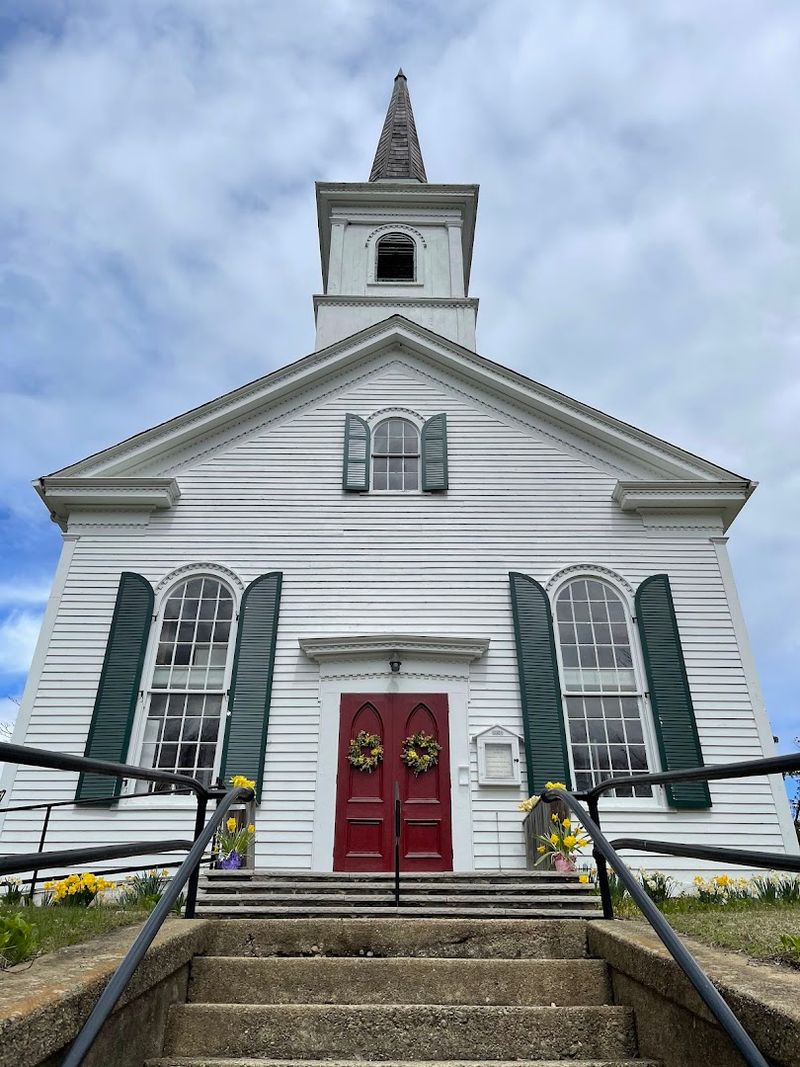
Not everything at Waterloo Village is frozen in museum mode. The historic church on the grounds is still an active place of worship, which makes it one of the more unexpected details about the site.
Sunday services are held at 10 AM, and the congregation welcomes anyone who wants to attend.
The church’s continued operation gives Waterloo a living quality that many historic sites lack. Rather than being a building that people walk past and photograph from the outside, it remains a functioning part of community life in the area.
That continuity across generations is its own kind of historical statement.
For visitors who come on a Sunday morning, there is a chance to see the church in its intended role rather than simply as an architectural artifact. The building itself is a straightforward example of 19th-century rural church architecture, modest in scale but well-maintained.
Its presence on the grounds adds a layer of authenticity to the village that no amount of interpretive signage could fully replicate.
The Inclined Planes: Engineering That Defied the Hills
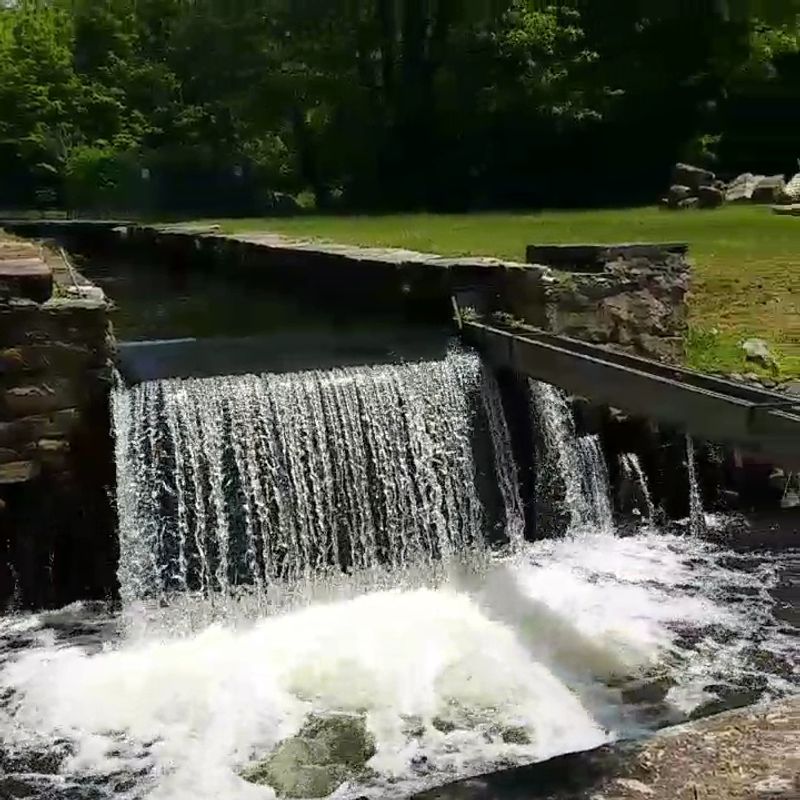
The Morris Canal’s most celebrated engineering feature was its system of inclined planes, and understanding them is key to appreciating why Waterloo Village existed in the first place. Standard canals relied on locks to raise and lower boats between different water levels, but the rugged New Jersey terrain made that approach impractical across much of the route.
The inclined plane system used water-powered turbines to drive a cable mechanism that pulled canal boats up ramps on wheeled cradles. At the top, the boat was floated off the cradle and back into the upper canal level.
The system allowed the Morris Canal to climb over 900 feet in elevation across its full length, a feat that was considered remarkable for its era.
Waterloo Village’s Canal Museum preserves a scale model of Incline Plane 9 West, one of the most studied examples of this technology. For visitors who want to understand how 19th-century engineers tackled geographic obstacles without modern machinery, this exhibit offers a clear and detailed explanation.
Trails, Wildlife, and What Waits Beyond the Buildings
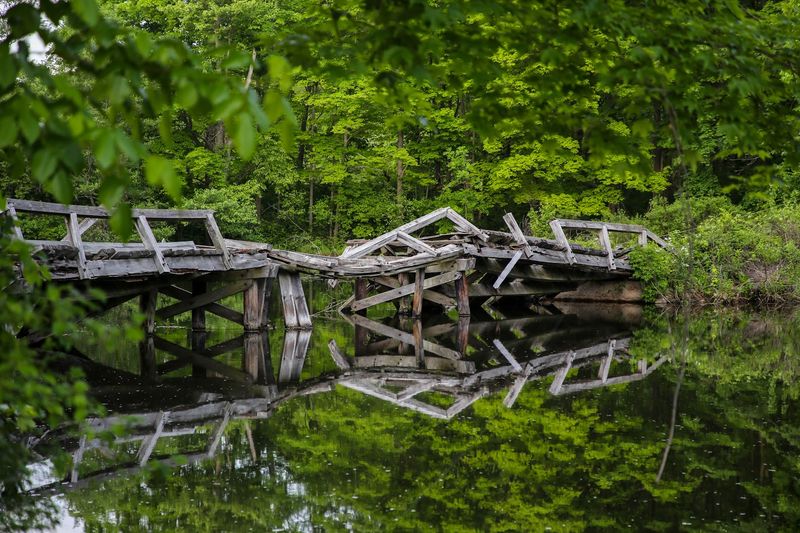
Beyond the historic structures, Waterloo Village opens up into a network of trails that wind through the surrounding landscape. The grounds border the Musconetcong River and connect to the wider trail system associated with Allamuchy Mountain State Park, giving hikers access to a range of terrain without leaving the area.
Wildlife sightings are common throughout the property. Deer are frequently spotted during summer months, and smaller animals appear regularly along the trails.
The site sits within a well-preserved natural corridor in Sussex County, which means the wildlife population is genuinely active rather than incidental.
The trails themselves are unpaved, and the terrain can be uneven in places, so sturdy footwear is a practical choice before heading out. Benches and shaded areas are scattered throughout the grounds, making the site comfortable for visitors who want to take their time rather than rush through.
Dogs on leashes are welcome, and the trails see a steady stream of local residents using the space for regular walks.
Alpacas, Birds, and a Small Farm on the Grounds

One of the more unexpected features at Waterloo Village is the small farm that operates on the property. The site raises alpacas and birds, which adds a distinctly lively element to what might otherwise be a purely static historic landscape.
The alpacas in particular tend to draw attention from younger visitors and families, offering an interactive element that goes beyond reading information boards and looking through windows. It is the kind of detail that makes a historic site feel like a destination rather than an obligation.
The farm animals fit naturally into the agricultural character of the village, which was always a working community rather than a purely commercial one. Seeing animals on the grounds reinforces the idea that Waterloo was once a place where people lived, worked, and kept livestock alongside their canal commerce.
For families with children, the farm section of the site often becomes a highlight of the visit, adding energy and variety to the historical narrative.
Free Admission and What the Visitor Center Offers
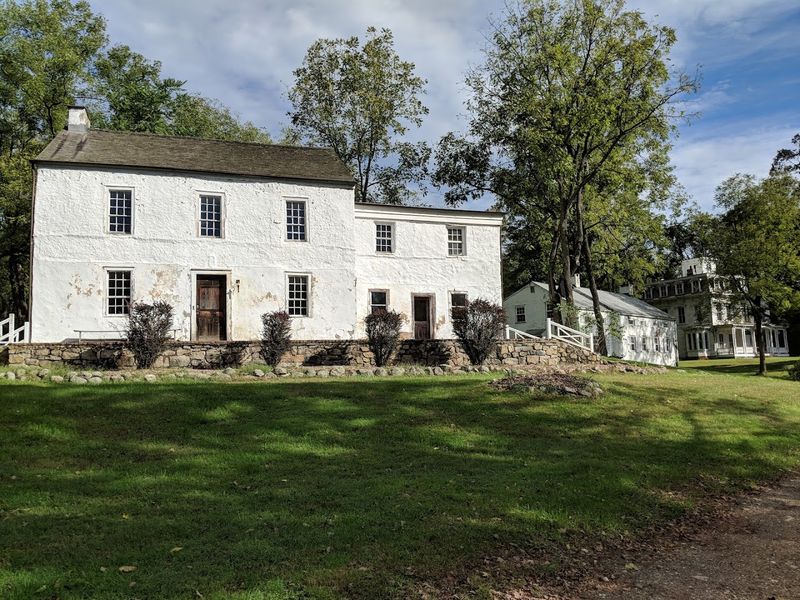
Waterloo Village is free to enter, which is one of the more pleasant surprises for anyone pulling up to the parking area for the first time. There is no admission fee to walk the grounds, explore the trails, or observe the historic buildings from the outside.
The visitor center near the entrance is the best first stop for anyone new to the site. Free maps are available there, along with background information on the village’s history and layout.
Coffee and water are also available at no cost, which is a small but genuine hospitality detail that sets a welcoming tone from the start.
Free tours are offered by staff who are knowledgeable about the site’s history and generally happy to answer questions. Not all buildings are open for interior access on every visit, but windows allow views into several structures.
Bathrooms on site are maintained and accessible, and the parking area is large enough to handle groups without difficulty.
A Wedding Venue Hidden Inside a Historic Park
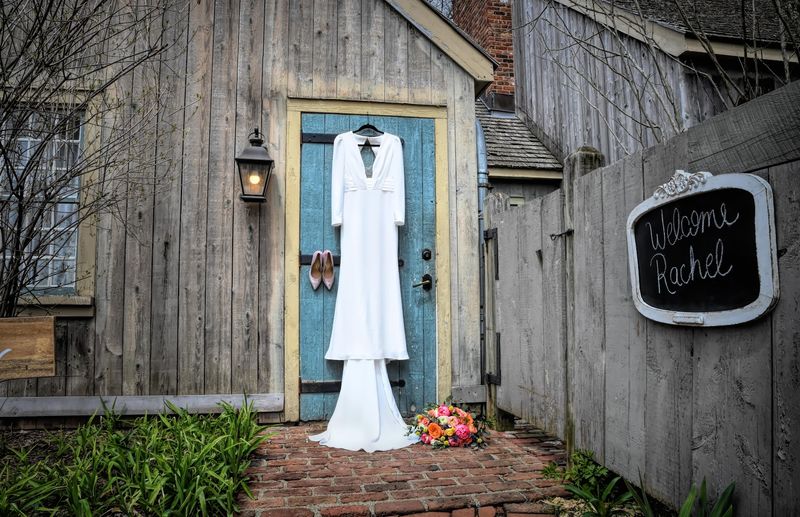
Few people expect to find an active wedding venue inside a state historic site, but Waterloo Village has one. The venue operates within the park and draws couples who want a setting that is genuinely distinctive rather than a generic ballroom or garden space.
The combination of historic architecture, river views, and mature trees creates a backdrop that is difficult to replicate elsewhere in the region. Weddings have been held here during multiple seasons, with autumn particularly popular given the color the surrounding woodland provides during that time of year.
The venue is generally welcoming to the public even during events, and casual visitors who arrive while a wedding is in progress are typically able to continue exploring the rest of the grounds without disruption. The coexistence of a working event venue and a public historic site is an unusual arrangement, but it seems to work smoothly at Waterloo, adding a festive quality to certain weekend visits that enhances rather than detracts from the overall experience.
Fall at Waterloo: When the Grounds Reach Peak Appeal
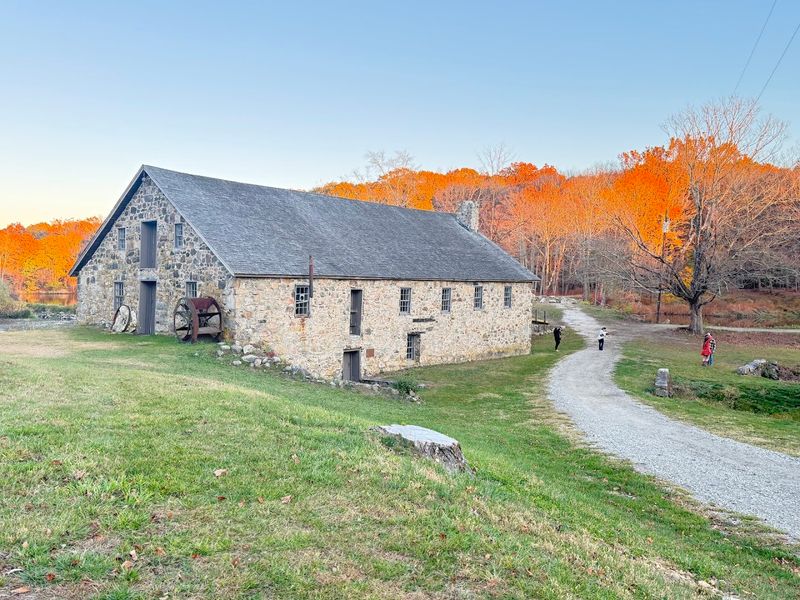
Waterloo Village has appeal across every season, but autumn tends to bring out the best in the site. The combination of historic structures and the surrounding woodland creates a setting that shifts dramatically when the leaves change color, turning the grounds into something that looks like it was staged for a period film.
The canal and river are particularly striking during fall, when the water reflects the colors of the trees overhead. Trails through the grounds become popular with photographers and families looking for a weekend outing that does not require a long drive or a significant budget.
The cooler temperatures of autumn also make the walking trails more comfortable for extended exploration. The site is rarely crowded even during peak fall weekends, which means visitors can move through the historic buildings, trails, and farm areas at their own pace without the congestion that affects more prominent tourist destinations in the region.
Early afternoon visits tend to offer the best light for photographing the buildings and canal sections.
Why This Village Deserves More Attention Than It Gets
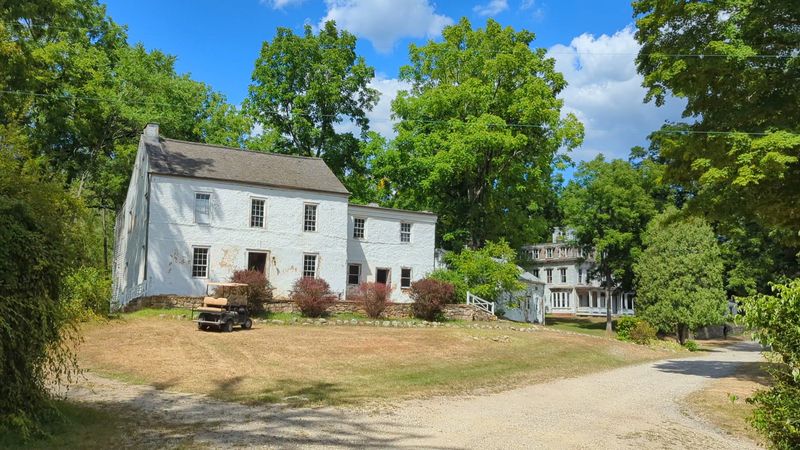
Waterloo Village sits quietly off a rural road in Stanhope while far less historically significant places attract larger crowds and bigger budgets. That imbalance is worth pointing out, because what survives at Waterloo is genuinely rare.
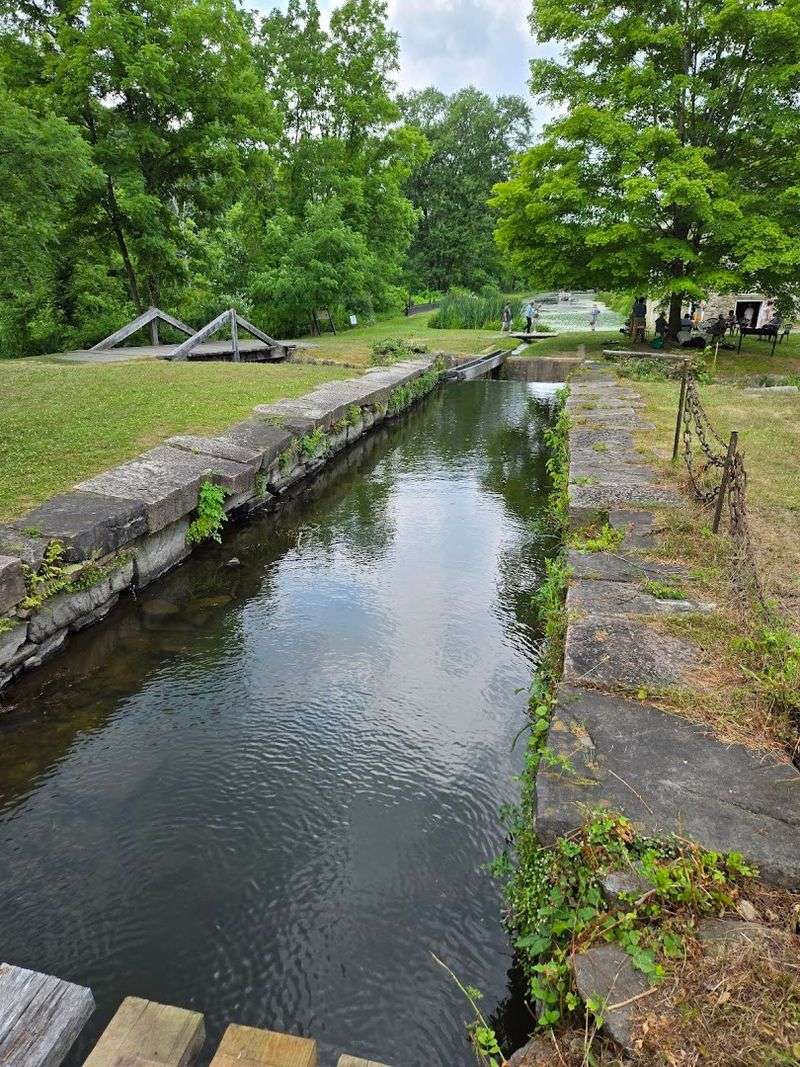
A functioning canal lock, an original canal boat, restored 19th-century commercial and residential buildings, and an active church all in one location is not something that exists in many places along the entire former Morris Canal route.
The site does show signs of ongoing maintenance needs, and some buildings require more restoration work than they have currently received. Information boards throughout the grounds are aging and could use updating.
But these are challenges, not disqualifiers, and the core historic fabric of the village remains intact and worth protecting.
For New Jersey residents especially, Waterloo represents a chapter of state history that rarely appears in school curricula or popular travel guides. The canal era shaped the economy, geography, and communities of northern New Jersey in ways that still echo today, and Waterloo is the clearest surviving evidence of that story.
Where Exactly This Historic Village Stands
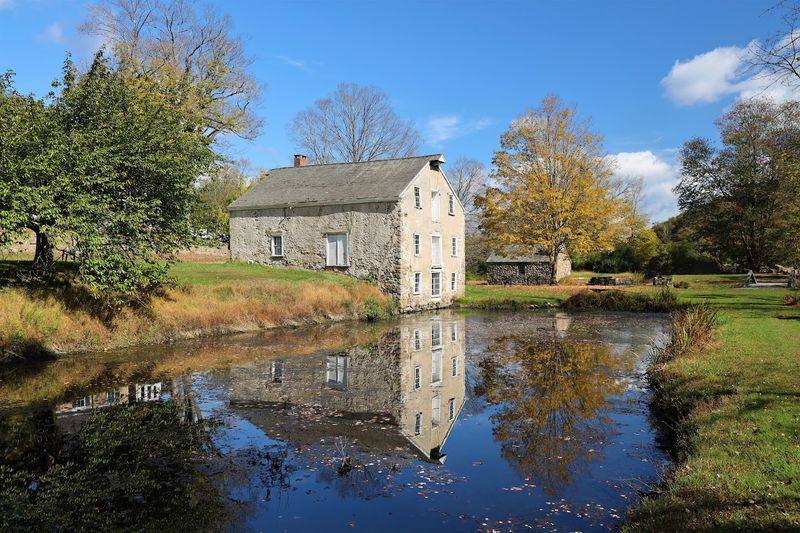
Waterloo Village Historic Site sits at 526 Waterloo Road in Stanhope, New Jersey 07874, right along the banks of the Musconetcong River in Sussex County. The site is part of the New Jersey State Park system and is managed by the Division of Parks and Forestry.
Getting there is straightforward from most parts of northern New Jersey, and the site is accessible from Interstate 80, making it a practical stop for travelers crossing the state. There is ample free parking on site, which is a genuine convenience for a state historic landmark.
The grounds are open every day of the week from 6 AM to 6 PM, giving visitors a solid window of time to explore at a relaxed pace. A visitor center greets guests near the entrance, where free maps and background information on the village help orient anyone who walks through the door for the first time.
Share this story