Along the Atlantic City boardwalk in New Jersey, there is a stretch of shoreline that carries more history than most people realize. During the era of racial segregation, Black Americans were restricted to a specific section of the beach, and that spot became far more than just a place to swim.
It transformed into a gathering ground for community, creativity, and cultural pride. Famous figures like Sammy Davis Jr. and Martin Luther King Jr. once spent time here, and the legacy of those who came before continues to shape what this beach represents today.
What started as a painful symbol of exclusion became a powerful statement of resilience. The story behind this shoreline is one of the most compelling chapters in Atlantic City history, and it deserves to be told in full.
Where History Meets the Shoreline
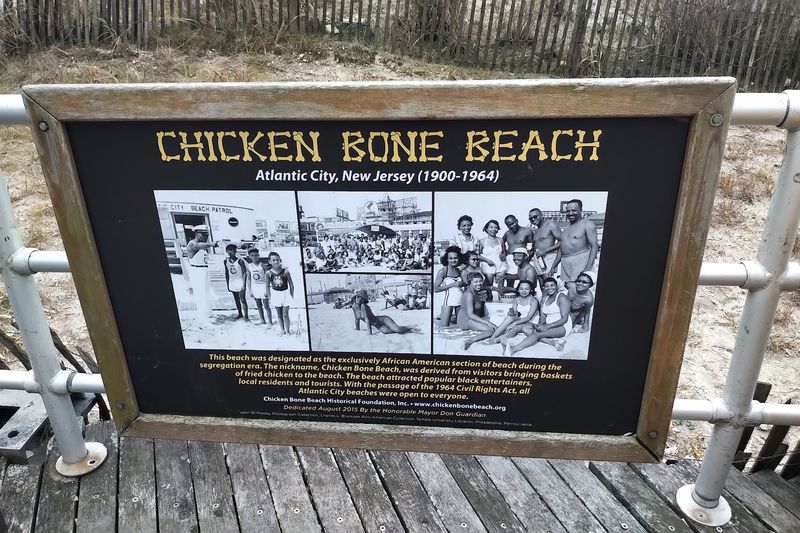
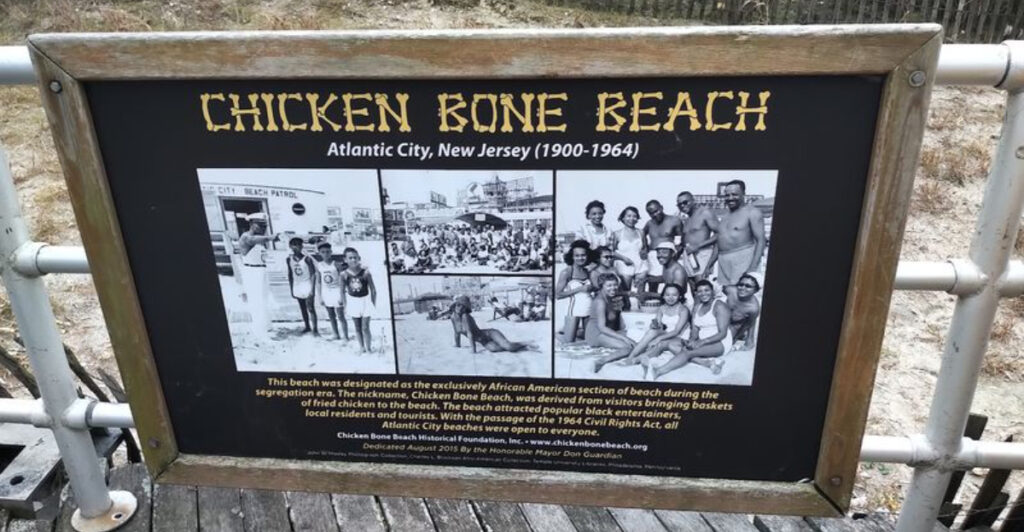
The beach officially known as Chicken Bone Beach sits along the Boardwalk in Atlantic City, New Jersey 08401, near the Missouri Avenue entrance to the boardwalk. It occupies a stretch of shoreline that was, for decades, one of the few public beach spaces where Black Americans could legally gather during the segregation era in Atlantic City.
The name itself has a complicated origin. Some say it was a term used mockingly by others to describe the Black beachgoers who brought their own food, including fried chicken, since they were barred from most nearby restaurants and facilities.
Over time, the community reclaimed that name with pride.
Today, a historical marker stands near the Rainforest Cafe along the boardwalk, acknowledging the site’s significance. The beach is open to everyone now, and its location near the Atlantic City Convention Center makes it one of the more accessible spots along the entire Jersey Shore.
The Segregation Era That Shaped This Beach
During the early to mid-20th century, racial segregation was not limited to the American South. Atlantic City, despite being a popular resort destination, enforced strict informal and formal segregation policies that determined where Black residents and tourists could spend their time.
Black beachgoers were directed to a specific section of the shoreline, away from the areas designated for white visitors. Hotels, restaurants, and many public facilities along the boardwalk were off-limits.
Yet rather than accepting marginalization quietly, the Black community turned their designated beach into something extraordinary.
Families gathered, musicians performed, and community bonds grew stronger with every passing summer. The restrictions that were meant to diminish a community instead forged a space of genuine cultural richness.
That contradiction, oppression producing pride, is at the core of what makes this beach unlike any other along the East Coast. The history embedded in this sand runs far deeper than the tide ever could.
Famous Faces Who Walked This Shore
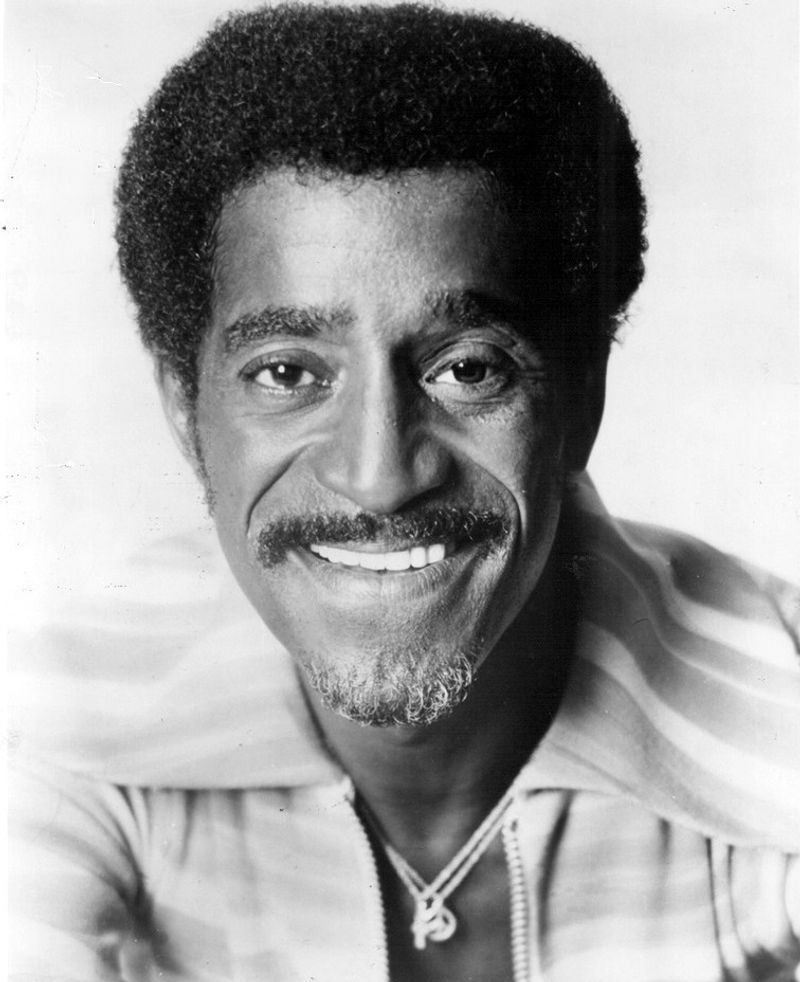
Not every beach can claim that civil rights icons and entertainment legends once relaxed on its sand. Chicken Bone Beach attracted some of the most notable Black Americans of the 20th century, partly because Atlantic City was one of the few resort destinations where Black performers could find accommodations and community during the segregation era.
Sammy Davis Jr. was among those who spent time in the area, and Martin Luther King Jr. also visited Atlantic City, a city that hosted the 1964 Democratic National Convention, a landmark moment in civil rights history. Black entertainers who performed at Atlantic City venues but were turned away from white-owned hotels often stayed in the Black community’s establishments nearby.
The beach became a natural gathering place for these figures alongside everyday families. That mix of the famous and the ordinary, all sharing the same strip of sand, gave the beach a uniquely democratic and culturally vibrant character that set it apart from anywhere else.
How the Name Was Reclaimed
Few place names in American history carry the kind of layered meaning that Chicken Bone Beach does. The label was originally applied as a derogatory term, a way of mocking Black beachgoers who brought their own food because they were excluded from boardwalk dining establishments.
Rather than abandoning the name, the Black community in Atlantic City embraced it. That act of reclamation turned a slur into a source of identity and collective memory.
It became a way of saying that the exclusion did not define them, but the community they built in spite of it did.
This kind of cultural reclamation has parallels across American history, but the Chicken Bone Beach story is particularly sharp because the original insult was so directly tied to survival, specifically, people bringing their own food because they had no other choice. That detail, small as it seems, captures the larger injustice of the era with remarkable clarity.
The Heritage Society Keeping the Story Alive
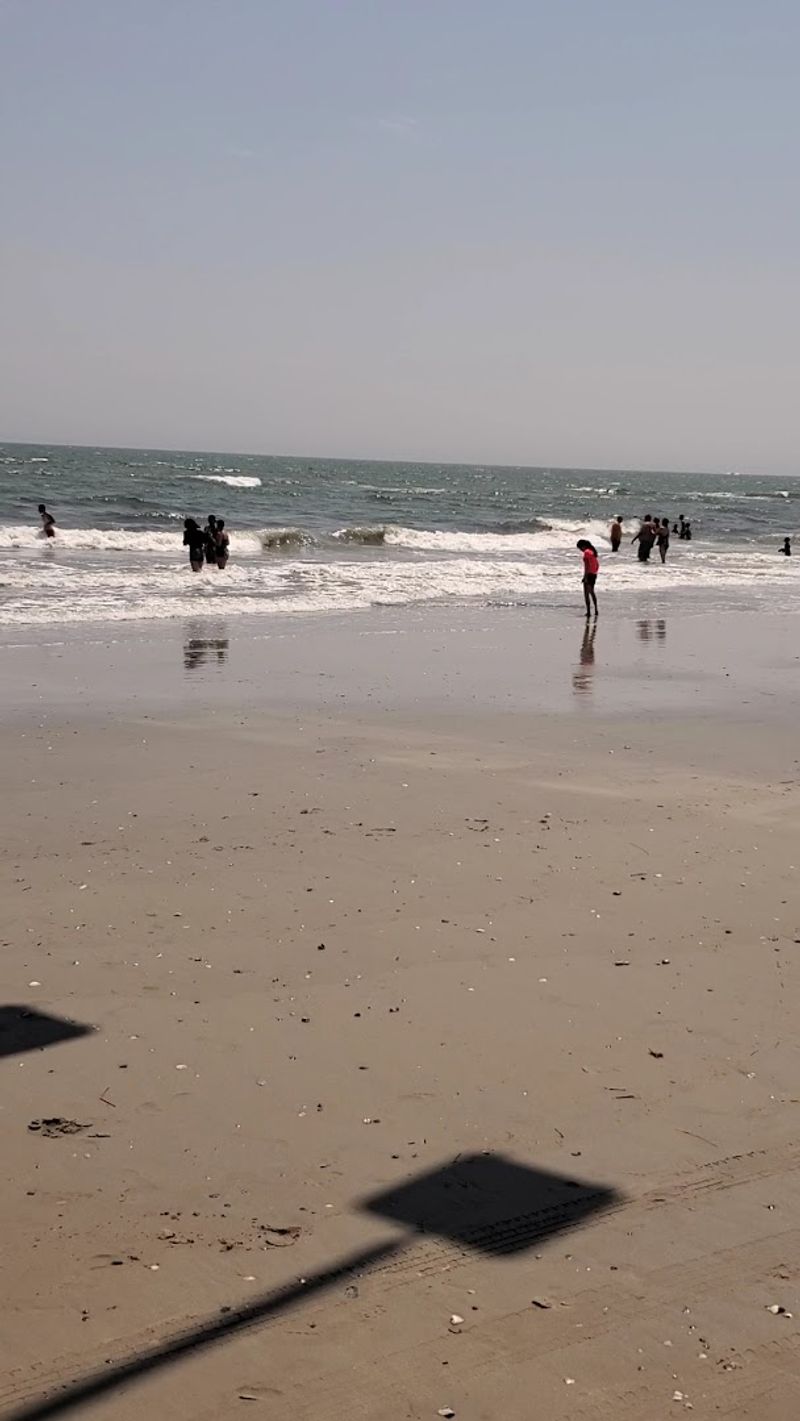
History does not preserve itself, and the people behind the Chicken Bone Beach Heritage Society understand that better than most. The organization was established specifically to honor the legacy of the beach and to ensure that the stories of those who gathered here are not lost to time.
The Heritage Society promotes Black culture and community unity in the Atlantic City area through events, educational outreach, and public programming. Their work keeps the beach from being just a historical footnote and instead positions it as a living, active part of the city’s cultural identity.
Annual events and gatherings at the beach draw people from across the region who come to celebrate, connect, and remember. The presence of the Heritage Society also means there is ongoing advocacy for the site’s recognition and preservation at a civic level.
Without that organized effort, a place this significant could easily be overlooked by the broader narrative of American beach history.
Over 100 Years of Black Vacation Culture
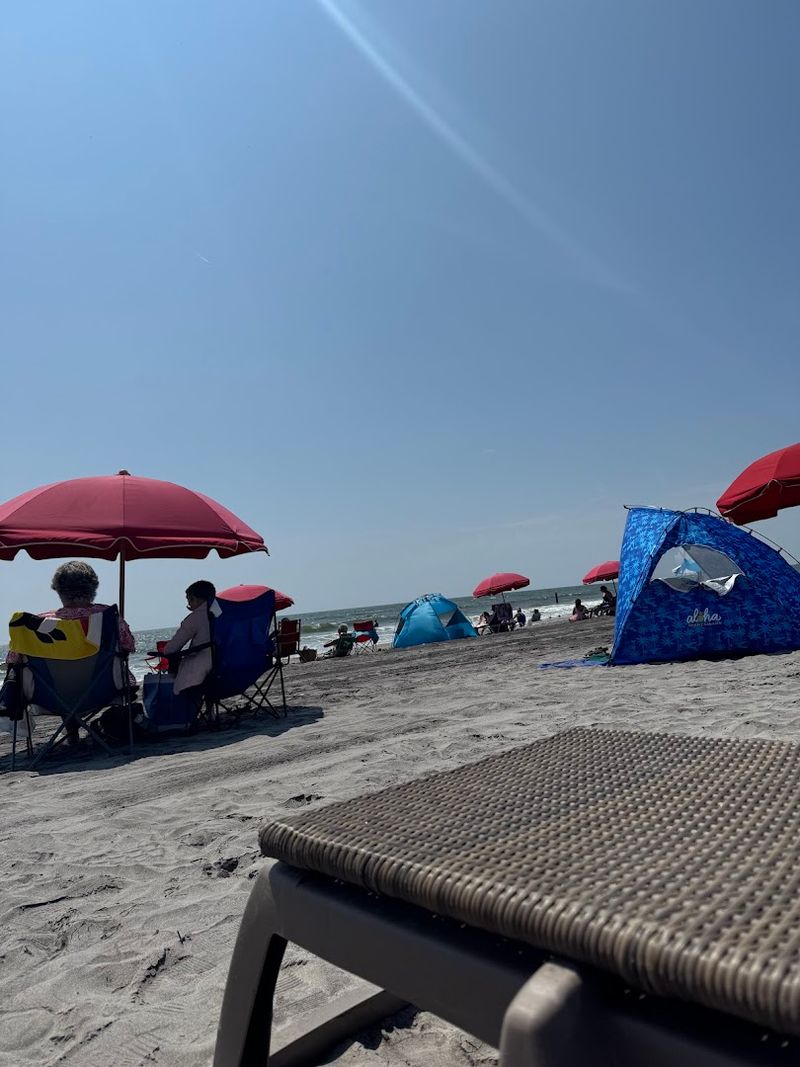
Black Americans have been vacationing in Atlantic City for well over a century. That is not a minor detail.
At a time when travel for Black families was filled with uncertainty and danger, Atlantic City offered a destination with an established Black community, Black-owned businesses, and a stretch of shoreline they could call their own.
The history of Black leisure and vacation culture in America is often overlooked in broader tourism narratives, but Atlantic City stands as one of the earliest and most consistent examples of a resort destination that served Black travelers even during the most restrictive periods of American history.
Chicken Bone Beach was central to that experience. Generations of families returned summer after summer, building traditions that were passed down through the decades.
That continuity, more than 100 years of people coming back to the same shoreline, is a form of cultural endurance that deserves far more recognition than it typically receives in mainstream travel writing.
The Boardwalk Connection
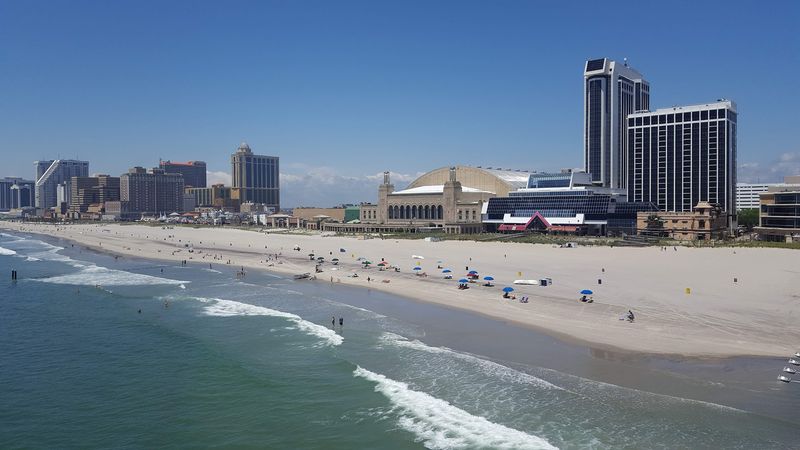
Atlantic City’s boardwalk is one of the most iconic stretches of public space in the entire country, and Chicken Bone Beach sits right alongside it. That placement matters, because the boardwalk was historically a space of both promise and exclusion for Black Americans visiting the city.
While the boardwalk itself was technically open, the businesses lining it, the restaurants, hotels, and entertainment venues, were largely segregated. Black visitors could walk the boards but could not always enter the establishments along them.
The beach, then, became the one space that truly belonged to the community without condition.
Today, the boardwalk connection makes the beach highly accessible. The Missouri Avenue entrance is a well-known landmark, and the proximity to major attractions like the Atlantic City Convention Center and the former Trump Tower building means the area sees consistent foot traffic year-round.
The contrast between the beach’s history and its current surroundings is striking and worth reflecting on.
What the Beach Looks Like Today
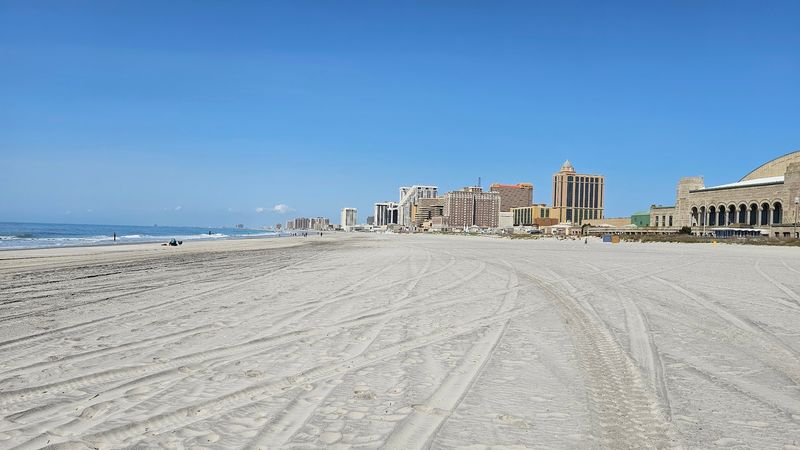
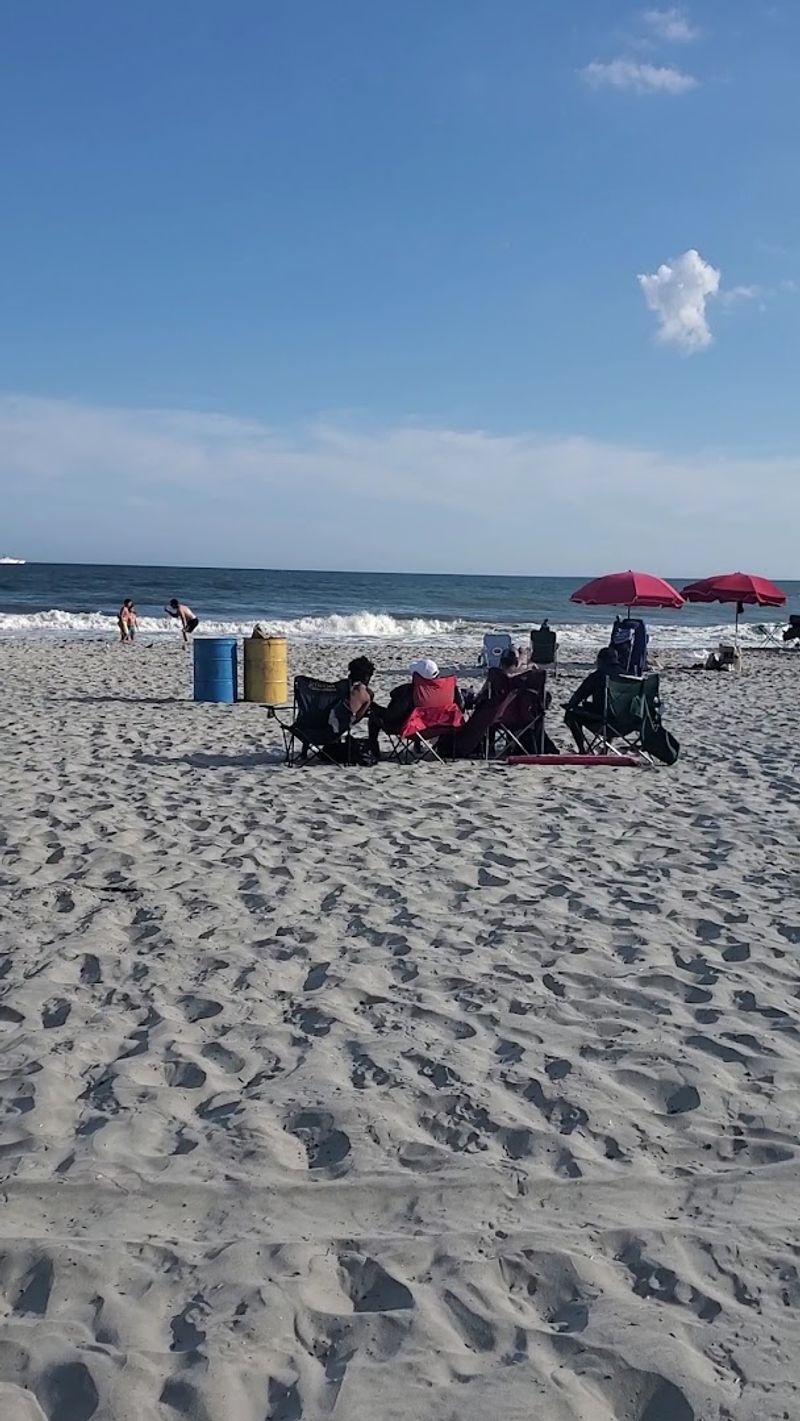
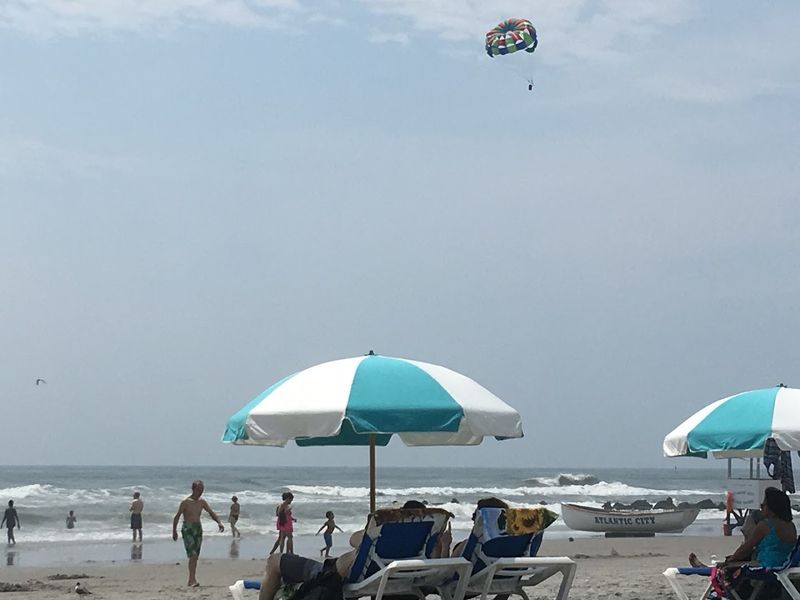
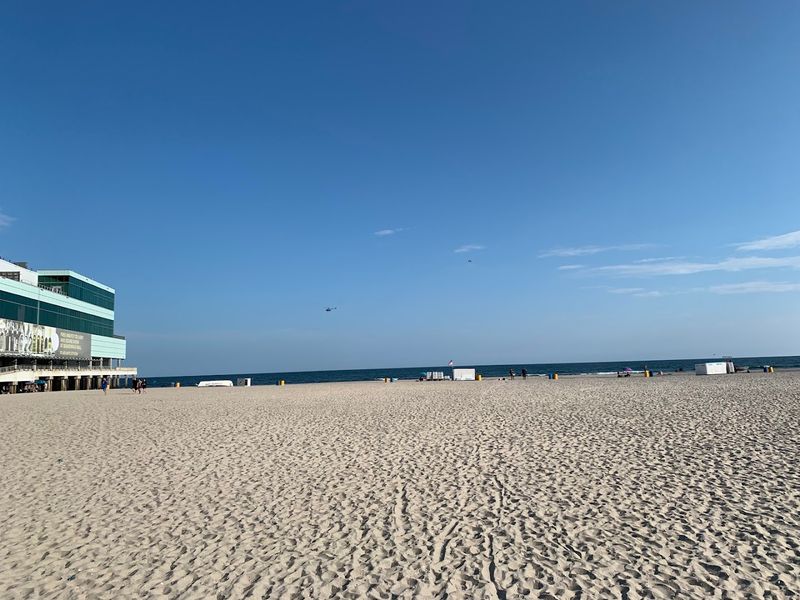
Chicken Bone Beach today is a wide, open stretch of sand that sits alongside the Atlantic City boardwalk. It is one of the larger beach sections in the city, offering plenty of room for families and groups to spread out without feeling crowded.
Chair rentals are available for those who want to set up for the day without hauling their own gear.
The beach is clean and well-maintained, with easy access directly from the boardwalk. A pier nearby provides an interesting structural backdrop, and it is possible to walk underneath the pier where waves roll in, which adds a bit of character to the shoreline experience.
Fishing is also permitted in that area.
The Atlantic City Convention Center sits close by, making the beach a convenient stop for those in the area for events or conferences. The overall layout is open and relaxed, without the packed, high-energy atmosphere that some other sections of the New Jersey Shore can carry during peak summer months.
The Historical Marker and Its Meaning
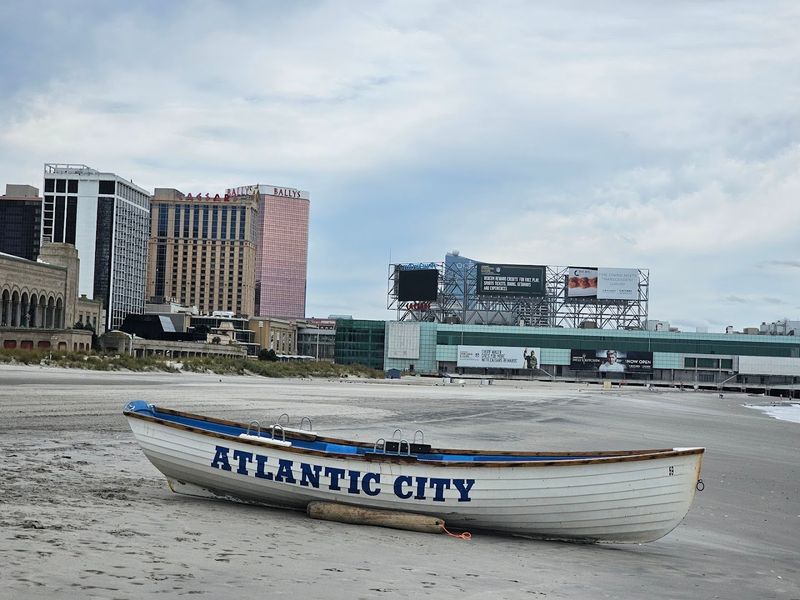
A historical marker near the Rainforest Cafe along the Atlantic City boardwalk officially acknowledges Chicken Bone Beach as a site of cultural and historical significance. For many people, especially those whose families have deep roots in Atlantic City’s Black community, that marker represents long-overdue recognition.
Historical markers do more than identify a location. They signal to the broader public that something meaningful happened here and that it is worth pausing to understand.
In a city as commercially driven as Atlantic City, where casinos and entertainment venues dominate the landscape, a marker like this cuts through the noise and demands a moment of reflection.
The placement of the marker near a major commercial landmark also means it is seen by a large number of people who might otherwise have no awareness of the beach’s history. That visibility is important.
Public history only works when it is actually encountered by the public, and the boardwalk location ensures this story reaches a wide audience.
Resistance Through Community Building
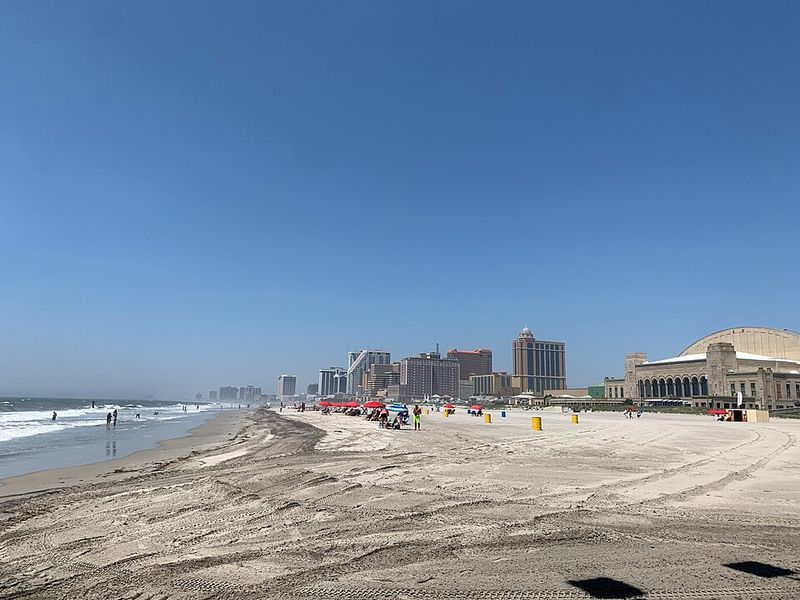
There is a particular kind of resistance that does not involve protests or confrontations but instead involves building something beautiful in the middle of hostile circumstances. That is exactly what happened at Chicken Bone Beach during the segregation era.
Denied access to most of the city’s public and commercial spaces, the Black community created their own world on that strip of sand.
Musicians performed, families gathered, and social networks were strengthened through shared summers on the same shoreline. The beach became a site of cultural production, not just recreation.
It was where community identity was reinforced and where the next generation learned what it meant to belong to something larger than themselves.
That kind of community-building under pressure is one of the most consistent and powerful themes in African American history. Chicken Bone Beach is a physical, mappable example of it.
The sand itself holds the memory of what people built when the doors around them were closed, and that memory has not faded.
Atlantic City’s Broader Civil Rights History
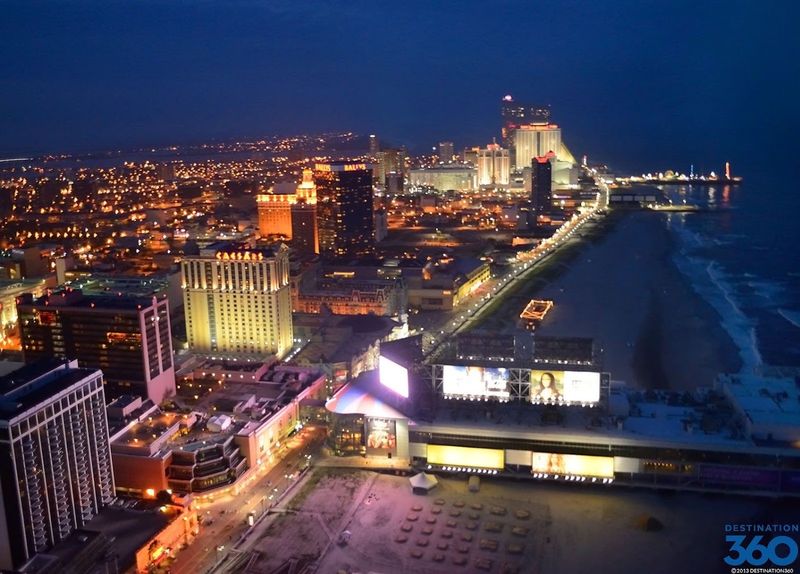
Atlantic City occupies a specific and important place in American civil rights history that goes beyond the beach. The city hosted the 1964 Democratic National Convention, where the Mississippi Freedom Democratic Party challenged the all-white Mississippi delegation in a moment that drew national attention to the ongoing struggle for voting rights and political representation.
That political history intersects with the social history of Chicken Bone Beach in meaningful ways. The city was simultaneously a place of leisure and a battleground for equality, a contradiction that shaped the experience of Black residents and visitors for decades.
Understanding the beach requires understanding that broader context.
Atlantic City’s Black community was not passive during the civil rights era. They organized, advocated, and built institutions that supported both local needs and larger national movements.
The beach was part of that ecosystem, a gathering place where community solidarity was not just expressed but actively cultivated. The city’s civil rights story and the beach’s story are inseparable.
Practical Tips for Visiting Today
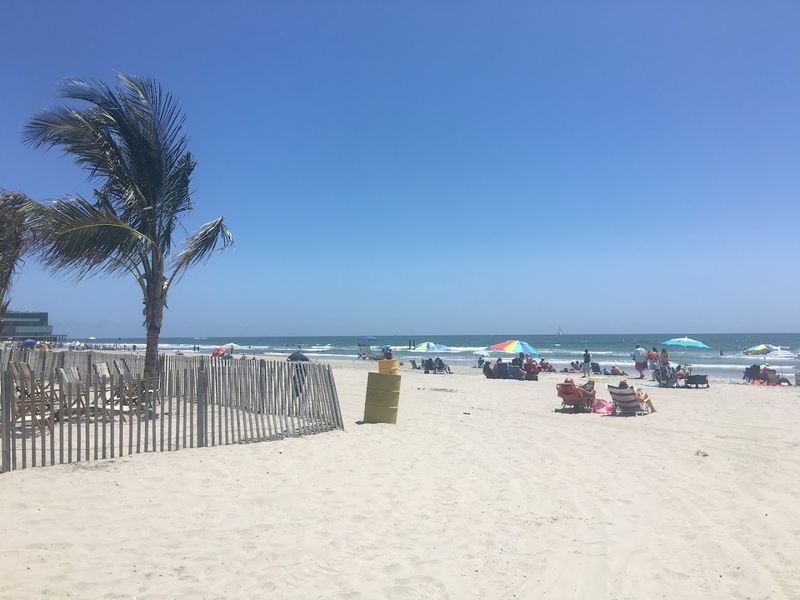
Getting to Chicken Bone Beach is straightforward. The beach is accessible from the boardwalk near the Missouri Avenue entrance in Atlantic City, and the historical marker near the Rainforest Cafe serves as a useful landmark for first-time visitors.
Parking is available in the surrounding area, and the beach itself is free to access.
Chair and umbrella rentals are available on-site, making it easy to settle in for a full day without hauling equipment. The beach is wide and open, so even on busier days there is generally enough space to find a comfortable spot.
Fishing is permitted near the pier area for those who want to make use of that option.
The proximity to the Atlantic City Convention Center, boardwalk shops, and nearby attractions means there is plenty to do before and after a beach visit. Arriving in the morning on a weekday tends to mean fewer crowds.
Checking the Heritage Society’s calendar before visiting can also help visitors time their trip to coincide with one of the beach’s cultural events.
Why This Beach Still Matters Now
Some historical sites feel distant, like they belong to another era with little connection to the present. Chicken Bone Beach is not one of those places.
The conversations it sparks about segregation, public space, community resilience, and cultural identity are as relevant now as they were when the beach was first designated as a Black-only zone.
The beach serves as a concrete, physical reminder that systemic exclusion was not abstract. It happened at specific addresses, on specific stretches of shoreline, to specific communities.
Having a place where that history is marked and remembered gives those abstract conversations a real-world anchor.
At the same time, the beach is a testament to what communities can build when they refuse to let exclusion have the final word. The cultural richness that developed on that shoreline during the segregation era did not disappear when the restrictions were lifted.
It became a legacy, and that legacy is still being honored, celebrated, and passed forward today.
A Shoreline That Refuses to Be Forgotten
Few places along the American coastline carry the kind of layered, complicated, and ultimately triumphant history that Chicken Bone Beach holds. What began as a space of forced exclusion became a space of chosen community, and that transformation is one of the more quietly remarkable stories in the history of American public spaces.
The beach today sits in plain sight, accessible to anyone who walks the Atlantic City boardwalk. The historical marker, the Heritage Society’s ongoing work, and the cultural events held on the sand all ensure that the story does not get buried under the noise of casinos and tourist attractions nearby.
For anyone curious about where American history gets personal, where policy becomes lived experience and where community becomes the most powerful form of response, this stretch of shoreline near Missouri Avenue offers something no museum exhibit can fully replicate. The history here is not behind glass.
It is underfoot, in the sand, and it is still very much alive.
Share this story