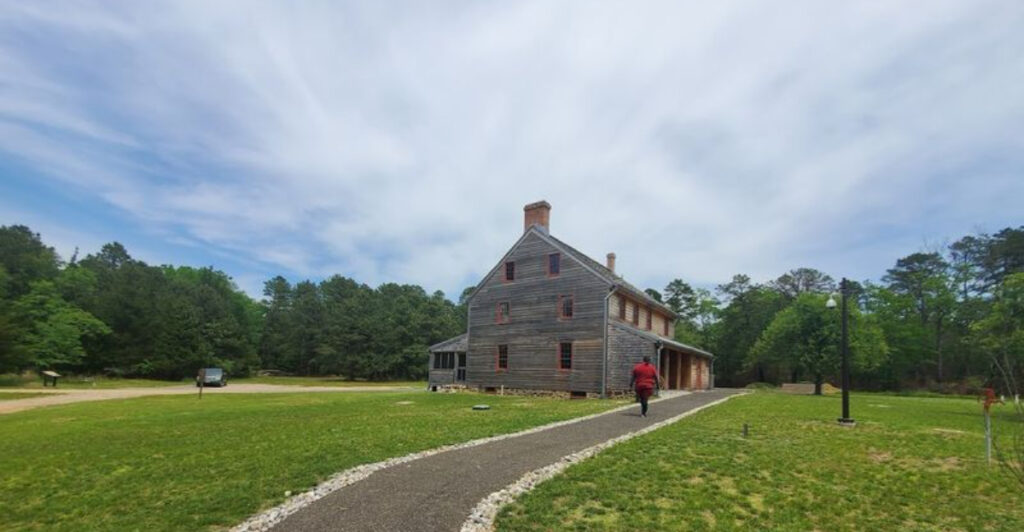
Tucked deep in the Pine Barrens of Ocean County, New Jersey, there is a place that most people drive right past without ever knowing it exists. A narrow, unpaved road cuts through dense woodland, and at the end of it stands a structure that has outlasted wars, storms, and centuries of change.
This is not a reconstructed replica or a movie set. This place is widely recognized as the oldest intact tavern still standing in New Jersey, and some historians argue it holds that title for the entire country.
Beyond its remarkable age, the site sits at the crossroads of a dramatic chapter in American history, connected to the final land skirmish of the Revolutionary War. For anyone curious about what New Jersey looked like before the highways and housing developments, this quiet corner of Barnegat Township offers a rare and genuinely surprising window into the past.
A Building That Has Stood for Over Three Centuries
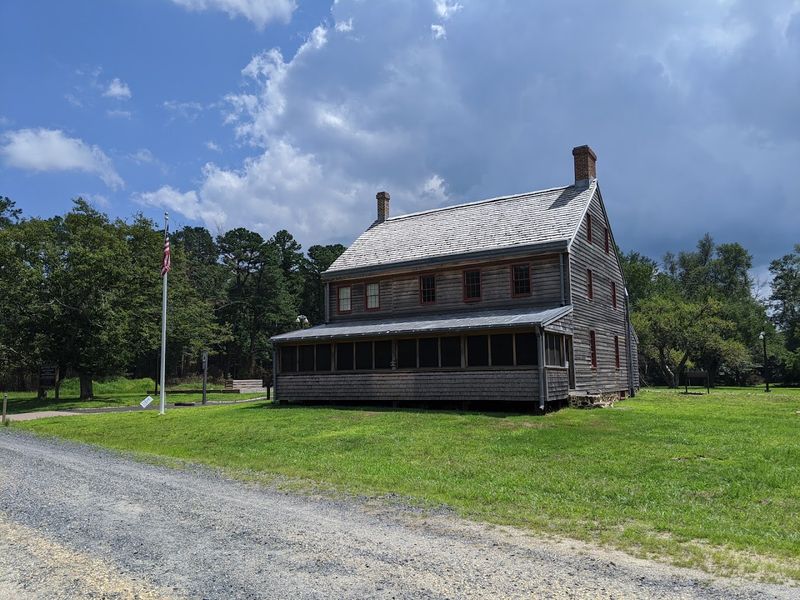
The Cedar Bridge Tavern is believed to have been built around the early 1700s, which places its origins well before the founding of the United States. That kind of age is almost hard to process when you are standing in front of it.
The structure is still largely intact, which is what makes it so unusual and so significant.
Most buildings from that era have long since collapsed, burned, or been torn down to make way for newer construction. The fact that this one survived is credited to a combination of its remote location, the protective nature of the surrounding Pine Barrens, and ongoing preservation efforts by Ocean County.
The tavern is listed on the National Register of Historic Places, a designation that reflects its authenticity and historical value. Ocean County has invested considerable effort in restoring the building carefully, ensuring that what visitors see today is as close to the original structure as possible.
The Last Land Battle of the Revolutionary War
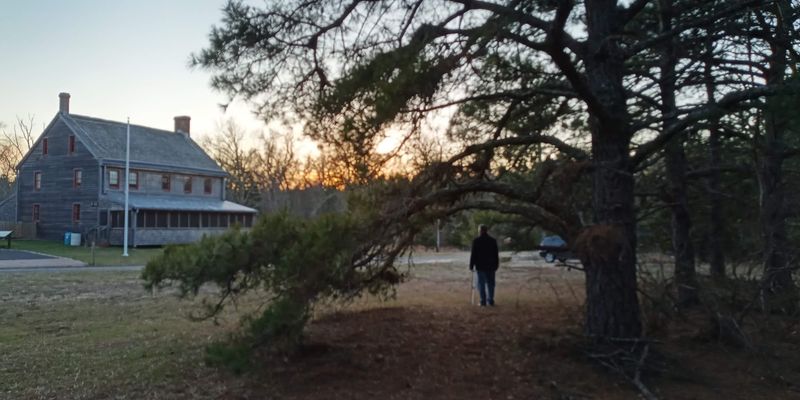
The Cedar Bridge Tavern is not just old. It is connected to one of the most overlooked footnotes in American history.
The site is widely identified as the location of the last land skirmish of the American Revolutionary War, a brief but violent confrontation that took place in October 1782.
By that point, the formal fighting between the Continental Army and British forces had effectively ended with the surrender at Yorktown in 1781. However, Loyalist raiders and Patriot militiamen continued clashing in the Pine Barrens long after the main conflict wound down.
The skirmish at Cedar Bridge was part of that lingering, local tension.
A small group of Loyalists attacked a Patriot militia unit near the tavern, resulting in casualties on both sides before the raiders retreated. The event is sometimes described as the last gasp of the Revolution on American soil, which gives the site an almost haunting historical weight that few landmarks can match.
What the Museum Inside Actually Shows You
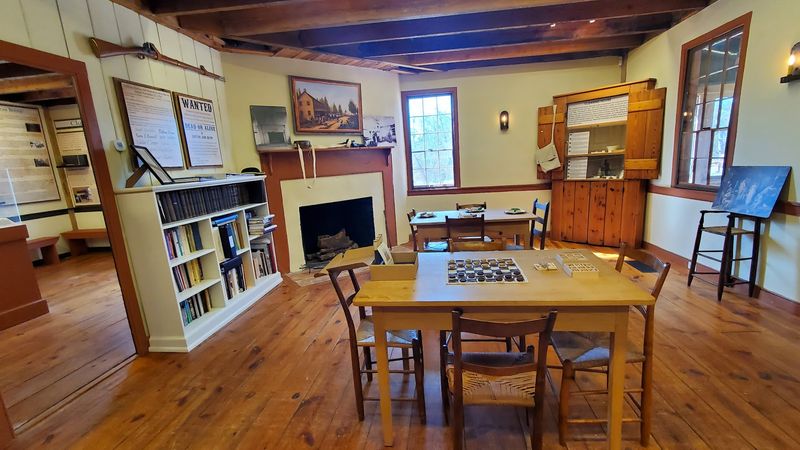
Once inside the restored tavern, the layout functions as a well-organized museum. The displays include artifacts recovered during extensive archaeological investigations of the property, giving the collection a grounded, site-specific quality that sets it apart from generic history exhibits.
The bar itself is the centerpiece, and it carries the distinction of being one of the oldest surviving bars in New Jersey. Standing next to it, knowing its age and the number of people who passed through this room over the centuries, is a genuinely striking experience without needing any dramatic staging.
Historical panels explain the tavern’s role in colonial society, its connection to the Revolutionary War skirmish, and the broader history of the Pine Barrens region. The information is organized clearly enough that both casual visitors and dedicated history enthusiasts will find it worthwhile.
A knowledgeable docent is typically on site and available to answer questions and add context to what the displays present.
The Pine Barrens Setting That Makes This Place Unique
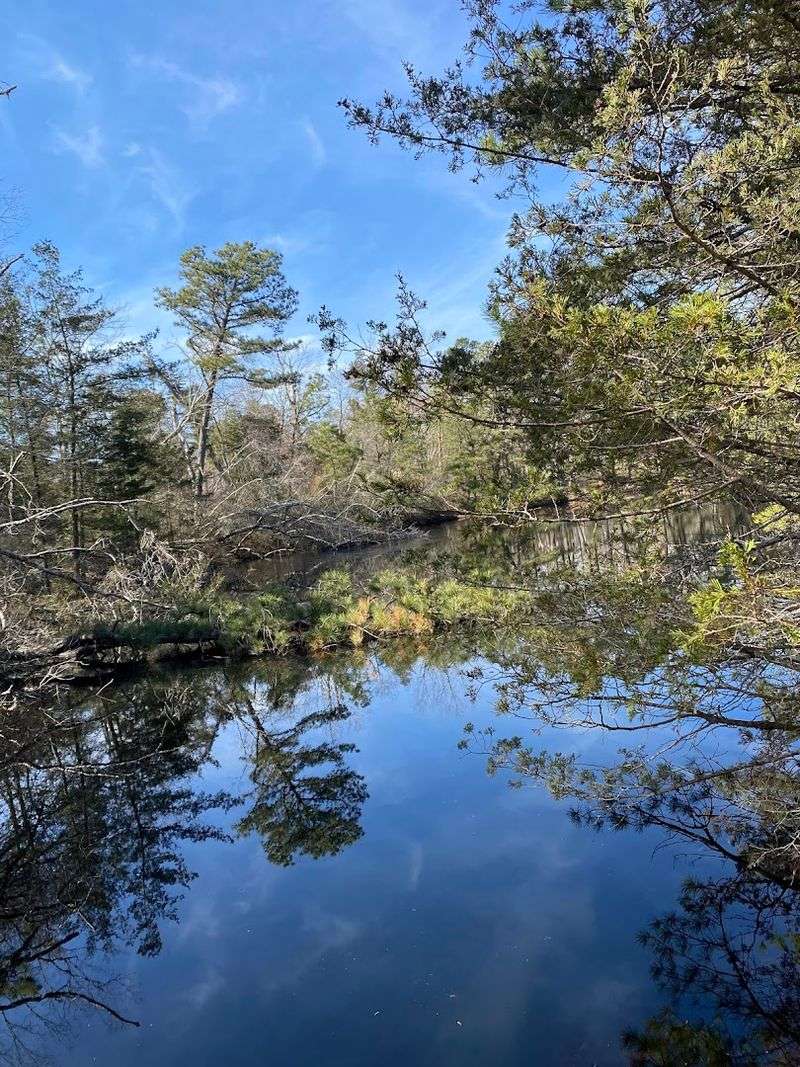
The Cedar Bridge Tavern does not sit in a manicured park or a developed historic district. It sits deep inside the New Jersey Pine Barrens, one of the largest and most ecologically significant stretches of open land on the East Coast of the United States.
That setting is a major part of what makes the site feel so different from other historic landmarks.
The forest around the tavern is dense with native species, including pitch pine, Atlantic white cedar, and scrub oak. A small creek runs nearby, and the overall environment is quiet in a way that feels genuinely removed from the surrounding region’s development.
The Pine Barrens themselves are a federally designated National Reserve, covering over one million acres across southern New Jersey. Visiting the tavern means entering that protected landscape, which adds a layer of ecological significance to what is already a historically rich destination.
The two elements together make for an unusually layered visit.
Hiking Trails Through Untouched Forest
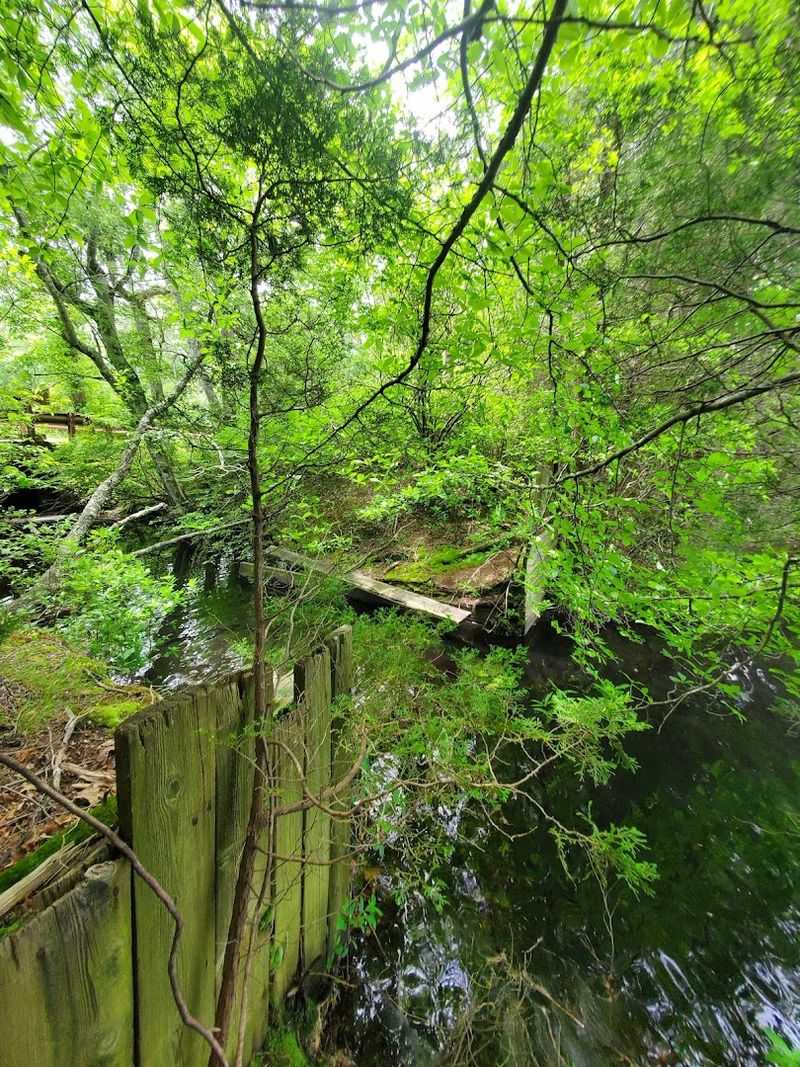
The Cedar Bridge Tavern site includes a trail system that extends approximately three and a half miles through the surrounding Pine Barrens. The trails are well-marked and accessible to most fitness levels, though some sections can be soft or slightly swampy depending on recent rainfall, so wearing appropriate footwear is a practical decision.
Part of the trail surface is constructed from recycled tire material, which is an environmentally thoughtful choice that also makes the path more durable and consistent underfoot. The trails wind through areas that were heavily affected by a tornado that passed through the region a few years ago, and the aftermath is still visible in places where hundreds of trees were knocked down.
That storm damage, while initially devastating, has created a visually striking section of trail where the scale of natural force becomes clear. New growth is already reclaiming much of the affected area, and the trail itself was blazed partly through that cleared zone.
The loop north of the main road is about a mile and a half on its own.
The Lawrence Line and a Boundary Hidden in Plain Sight
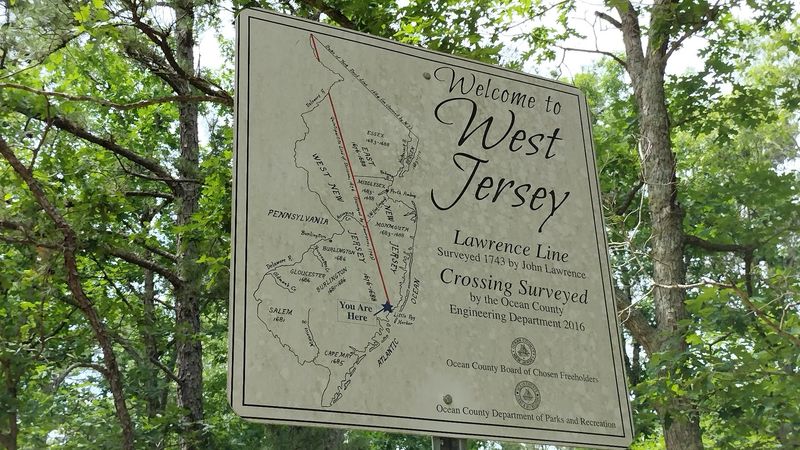
One of the more unexpected discoveries on the approach road to Cedar Bridge Tavern is a sign marking the Lawrence Line. This boundary, established in the late 1600s, was the official division between East Jersey and West Jersey, the two separate colonial provinces that together made up what is now the state of New Jersey.
The line was drawn by the surveyor John Lawrence in 1743 and runs diagonally across the state. The fact that the road leading to the tavern crosses this boundary is historically significant, and the signage along the route acknowledges it clearly.
Most people traveling through this part of the state have no idea they are crossing a boundary that once divided two separate governments.
For history enthusiasts, this detail adds an unexpected dimension to a visit that already covers Revolutionary War history and colonial-era architecture. It is the kind of layered discovery that rewards curious travelers who take the time to read the signs posted along the way rather than rushing straight to the main attraction.
Revolutionary War Reenactments at the Site
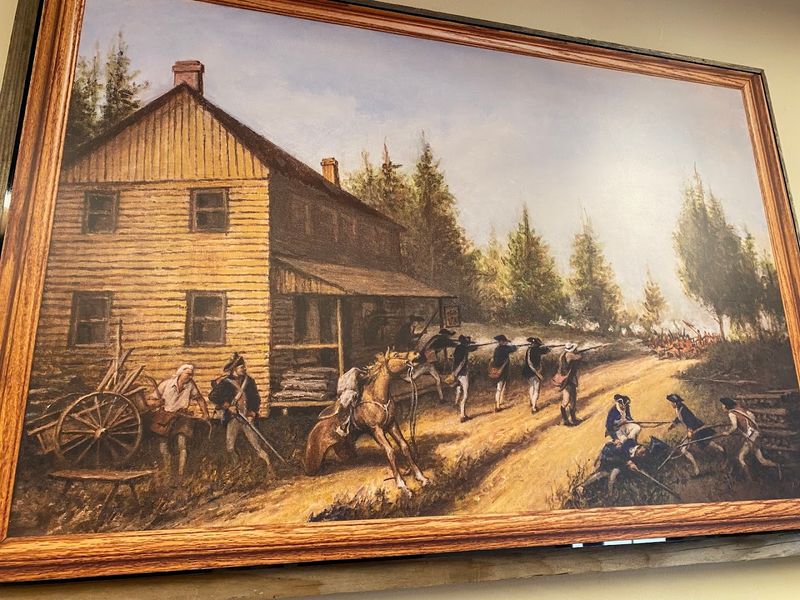
Once a year, the Cedar Bridge Tavern site hosts a Revolutionary War reenactment that brings the 1782 skirmish back to life. The event draws participants in period-accurate clothing, including militia uniforms and Loyalist attire, and typically includes musket demonstrations and historical narration.
The reenactment is a popular event, and it has drawn enough interest that transportation logistics have become part of the planning. Shuttles are used to move attendees from a staging area to the site itself, and the schedule is structured around specific start times.
Arriving early and checking the official event calendar in advance is strongly recommended to avoid missing any part of the program.
Ocean County Parks manages the event, and details are posted on the official parks website. The reenactment is one of the few opportunities to see the historical significance of the site portrayed in a dynamic, participatory format rather than through static displays alone.
For families with school-age children, it offers a vivid and engaging introduction to this chapter of American history.
A Cemetery, a Creek, and an Island-Like Clearing
The Cedar Bridge Tavern property holds more than just the main building. There is also a historic cemetery on the grounds, with markers that reflect the age and character of the site.
The graves offer a quiet reminder of how long people have been connected to this particular stretch of the Pine Barrens.
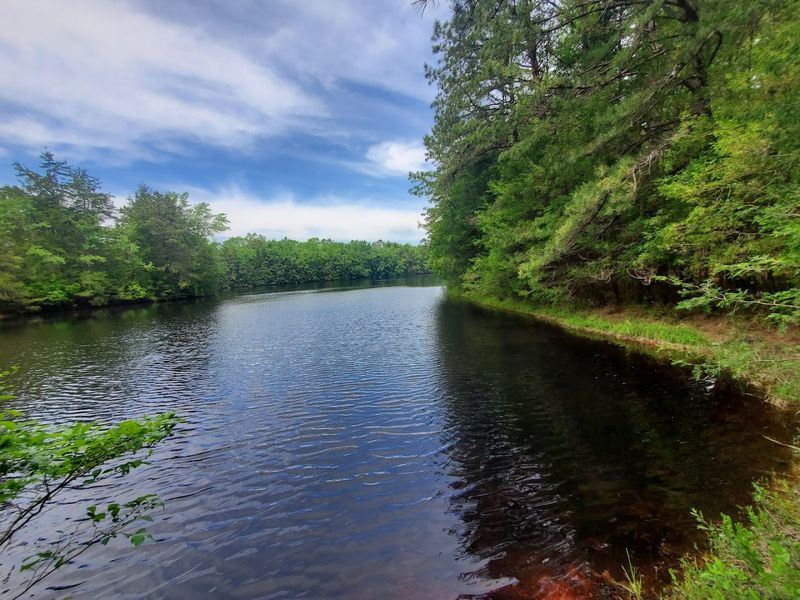
Cedar Creek runs through the property as well, and crossing the small bridge over it leads to an area that is partially surrounded by water on three sides. The result is a clearing that feels almost like a natural island, set apart from the surrounding forest by the creek’s path.
That spot has a calm and isolated quality that makes it one of the more memorable parts of the property for visitors who take the time to explore beyond the main tavern building. The combination of the creek, the tree line, and the open sky above creates a setting that is genuinely distinct from anything else in the immediate area of Ocean County.
Practical Tips for Planning Your Visit
A few practical details can make the difference between a smooth visit and a frustrating one. The site closes at 4 PM on all open days, and the on-site staff takes that closing time seriously.
Arriving at least an hour before closing allows enough time to tour the interior museum and walk a portion of the trail without feeling rushed.
The road leading to the tavern is unpaved and narrow. Standard passenger vehicles handle it without trouble, but the road does require careful driving, particularly if another vehicle is approaching from the opposite direction.
Pulling slightly off the road edge to pass is a normal part of the approach.
Tick prevention is worth considering before heading onto the trails, especially during warmer months. Long pants and appropriate footwear are practical choices given the terrain.
There are no metal detectors at the site, and the grounds include clean restroom facilities and ample parking. The tavern does not charge admission, making it one of the more accessible historic sites in all of Ocean County.
Where to Find This Remarkable Piece of History
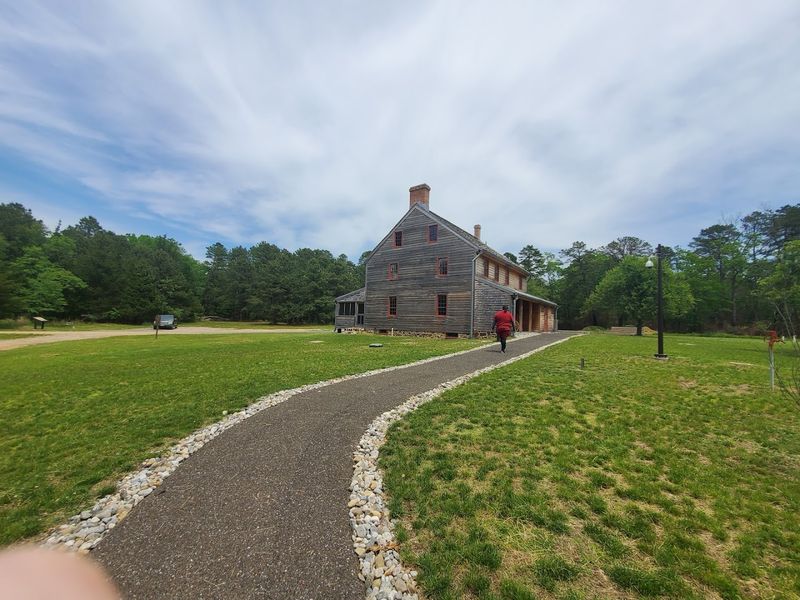
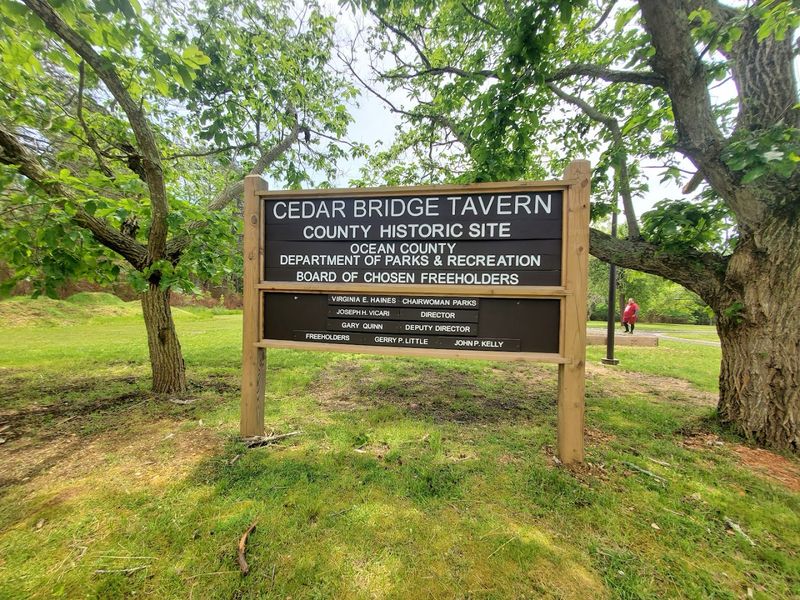
The Cedar Bridge Tavern County Historic Site sits at 200 Old Halfway Road in Barnegat, New Jersey 08005, managed by Ocean County Parks. Getting there is part of the experience.
The final stretch of road is unpaved, roughly two miles of packed sand and gravel that winds through the thick native forest of the Pine Barrens.
The road is narrow enough that if another car approaches from the opposite direction, one of you will need to ease onto the shoulder to pass. That slight inconvenience sets the tone perfectly.
By the time the tavern comes into view, the modern world already feels far away.
The site is open Monday, Thursday, and Friday from 9 AM to 4 PM, and on Saturday and Sunday from 10 AM to 4 PM. Tuesday and Wednesday the park is closed.
There is no charge to visit, and parking is available on the grounds.
Share this story