Madrid has been named one of Europe’s top destinations for 2026, thanks to its blend of world-class art, vibrant food culture, and energetic nightlife. What sets the Spanish capital apart is its rhythm—late dinners, lively plazas, and a culture that thrives well into the night.
From iconic landmarks to local experiences, Madrid offers something for every traveler. Whether it’s your first visit or a return trip, these 14 must-do experiences will help you make the most of Madrid in 2026.
Explore the Prado Museum
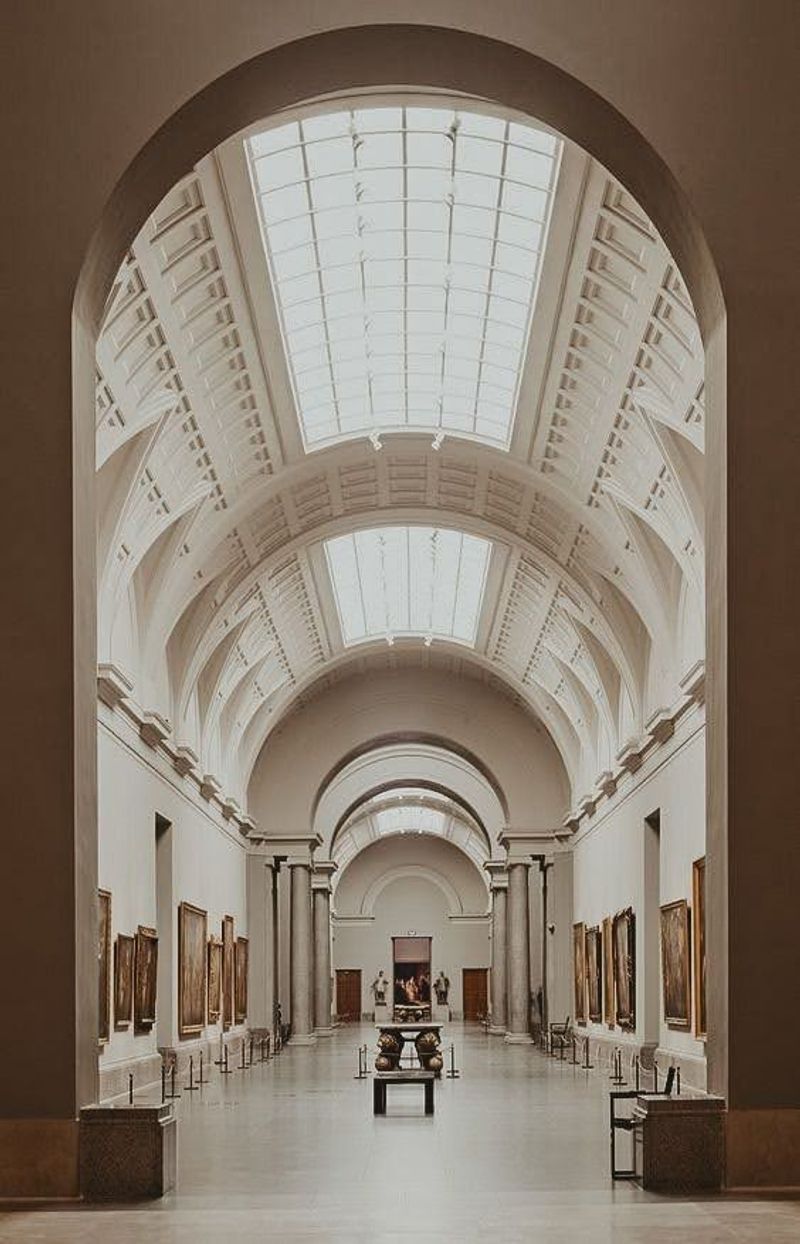
Few museums on earth carry the same quiet weight as the Prado—walk through its doors and you are surrounded by centuries of human history painted in oil and gold. Home to over 8,000 works, it holds masterpieces by Velazquez, Goya, and El Greco that you simply cannot see anywhere else in the world.
The Prado forms one corner of Madrid’s famous Golden Triangle of Art, alongside the Reina Sofia and the Thyssen-Bornemisza.
Goya’s haunting Black Paintings and Velazquez’s Las Meninas are absolute must-sees. Arrive early on a weekday to avoid the biggest crowds and give yourself at least three hours to explore properly.
Guided tours are available in English and are worth every cent for the backstory alone.
Tickets can be purchased online in advance, which saves time at the door. Free entry is offered during the last two hours before closing on weekdays and all day Sunday.
Even if you are not a huge art fan, the Prado has a way of pulling you in and keeping you there far longer than you planned.
Visit the Royal Palace
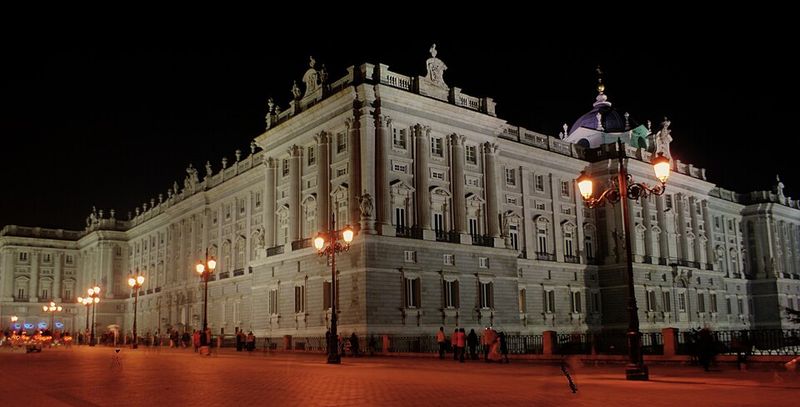
Standing at the edge of the Almudena Cathedral and staring up at the Royal Palace for the first time is genuinely jaw-dropping. With over 3,400 rooms, it holds the title of the largest functioning royal palace in all of Western Europe—though the Spanish royal family actually lives elsewhere today.
The building was constructed in the 18th century and took decades to complete, and every room tells a different story.
Inside, you will find lavish state rooms decorated with crystal chandeliers, royal armor collections, and some of the finest Flemish tapestries in existence. The Throne Room is especially stunning, with its crimson velvet walls and ceiling fresco painted by Giovanni Battista Tiepolo.
Budget at least two hours for the interior tour.
The palace gardens, known as the Sabatini Gardens, are free to enter and offer lovely views of the western facade. On certain days, you can also catch the Changing of the Guard ceremony in the main courtyard—a colorful and photogenic spectacle.
Booking tickets online ahead of your visit is strongly recommended, especially during peak tourist season in summer.
Relax in El Retiro Park
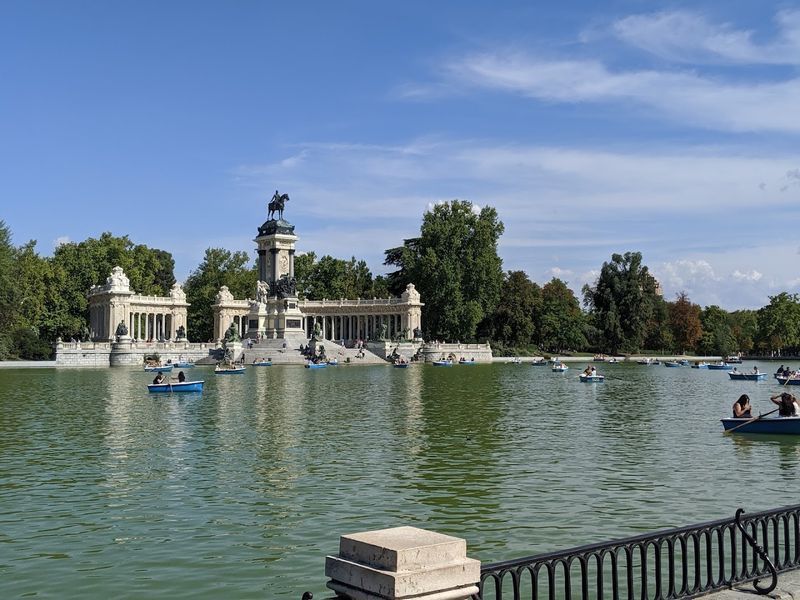
On a sunny Saturday morning in Madrid, half the city seems to end up in El Retiro—and honestly, you should too. Spanning over 350 acres right in the city center, this UNESCO World Heritage-listed park is equal parts green sanctuary and open-air social hub.
Locals jog its paths, families picnic on the grass, and street musicians set up near the rose garden.
The park’s centerpiece is the Estanque Grande, a large rectangular lake where you can rent rowboats by the hour. It is one of those simple pleasures that never gets old, especially with the grand Alfonso XII monument watching over the water.
The Crystal Palace, a stunning 19th-century glass pavilion hidden deeper in the park, hosts rotating free art exhibitions throughout the year.
El Retiro is also home to the Palacio de Velazquez and several beautifully manicured themed gardens. Entry to the park itself is completely free, making it one of the best no-cost experiences in the city.
Pack a snack, bring a book, and carve out a full morning here—you will leave feeling like a true Madrileno.
Experience Flamenco Live

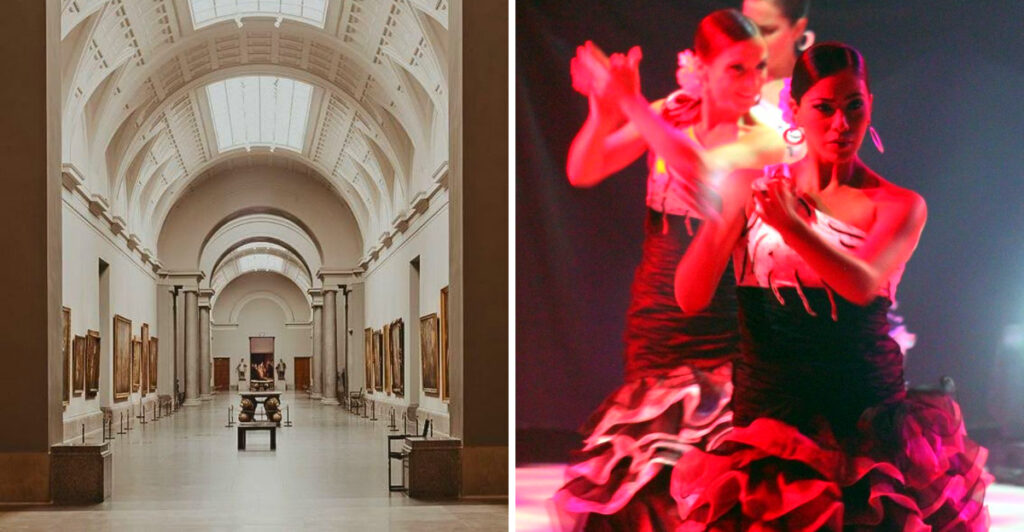
Clapping hands, stomping feet, and a single voice cutting through the silence—flamenco live is nothing like watching it on a screen. This art form, rooted in Andalusian culture and recognized by UNESCO as an Intangible Cultural Heritage, hits differently when you are sitting just meters from the performers.
Madrid has some of Spain’s finest tablaos, or flamenco venues, where both traditional and contemporary styles are performed nightly.
Casa Patas and Corral de la Moreria are two of the most respected venues in the city, known for hosting serious professional artists rather than tourist-only shows. Performances typically include a guitarist, a singer, and one or more dancers whose footwork and emotion are absolutely electric.
Most shows run between 60 and 90 minutes.
Many venues offer dinner-and-show packages, which pair a Spanish meal with the performance—a great way to experience both the food and culture in one evening. Book tickets at least a few days in advance, as popular shows sell out quickly.
If you want a more authentic atmosphere, opt for a late-night show starting around 10 PM, when the energy in the room is at its absolute peak.
Walk Through Plaza Mayor
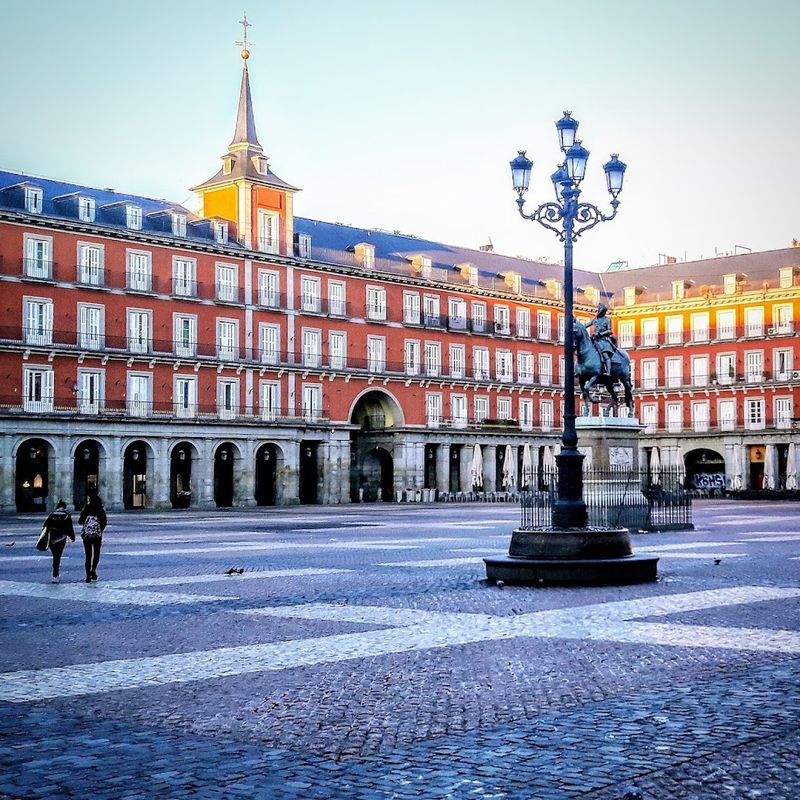
There is something timeless about stepping through one of the nine archways into Plaza Mayor and suddenly finding yourself in the heart of old Madrid. Built in the early 17th century under King Philip III, whose equestrian statue still stands at the center, this grand square has been a marketplace, a bullfighting arena, and a public gathering place all in one lifetime.
Today it buzzes with a different kind of energy—tourists, street performers, and locals sharing coffees under the arcades.
The surrounding buildings are painted in a warm terracotta red with uniform balconies that give the whole square a beautifully symmetrical look. Restaurants and cafes line the ground floor, and while some are pricey, grabbing a coffee and sitting outside to people-watch is a perfectly acceptable way to spend an hour.
Look for the painted Casa de la Panaderia on the north side—its colorful murals are a favorite photo stop.
During Christmas, Plaza Mayor transforms into one of Madrid’s most beloved holiday markets, packed with ornament stalls and festive crowds. Year-round, it serves as a natural meeting point and a launching pad for exploring the surrounding streets of the old city center.
Taste Tapas in La Latina
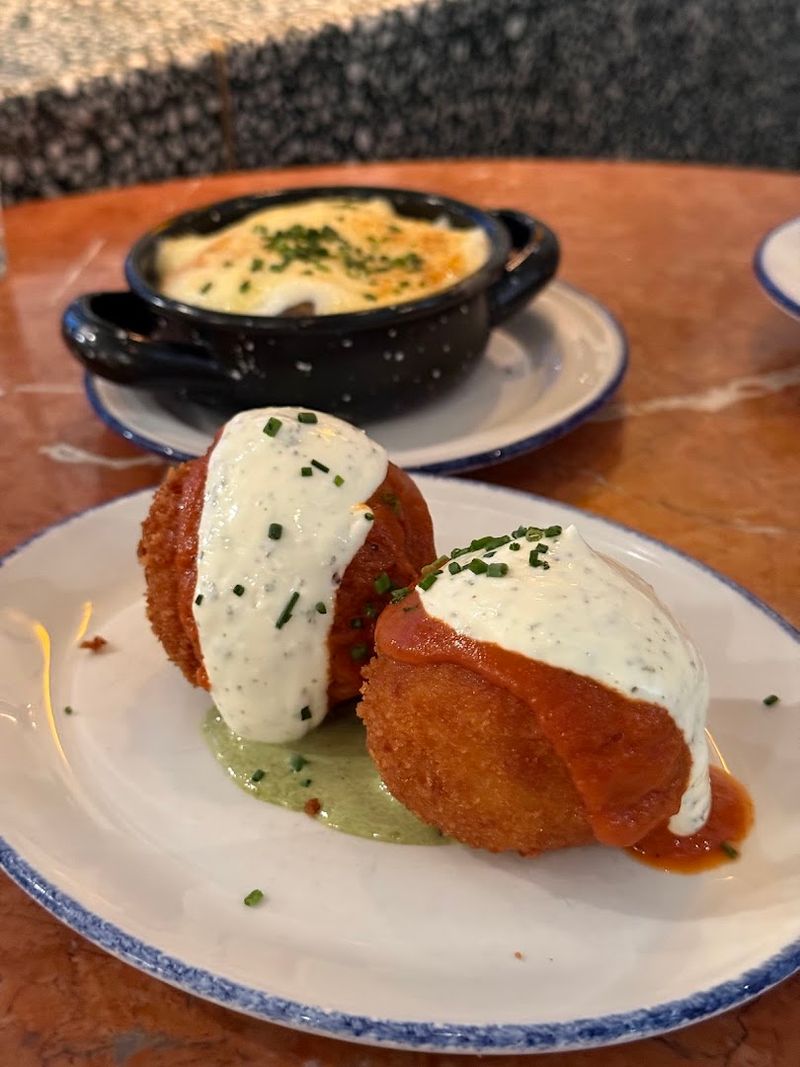
Hungry travelers, take note: La Latina is Madrid’s answer to the question of where to eat everything at once. This compact neighborhood in the old city is famous for its dense concentration of tapas bars, and on a weekend afternoon the streets are so packed with people hopping between venues that it becomes a full-on street party.
The tradition of tapas—small shared plates—is not just about food here; it is a social ritual.
Classic dishes to try include patatas bravas, crispy potatoes with a spicy tomato sauce, jamón iberico, and croquetas de jamón, which are creamy ham croquettes with a golden crust. Calle Cava Baja is the neighborhood’s main artery and lined with some of the best spots in the city.
Many bars still offer a free tapa with every drink ordered, a tradition that is alive and well in this part of Madrid.
Saturday lunch is the prime time to experience La Latina at its most vibrant, when locals and visitors alike fill every available table and spill onto the street. Wear comfortable shoes, bring your appetite, and plan to spend at least two or three hours grazing your way through the neighborhood.
No reservations needed—just follow the crowd.
Visit the Reina Sofía Museum
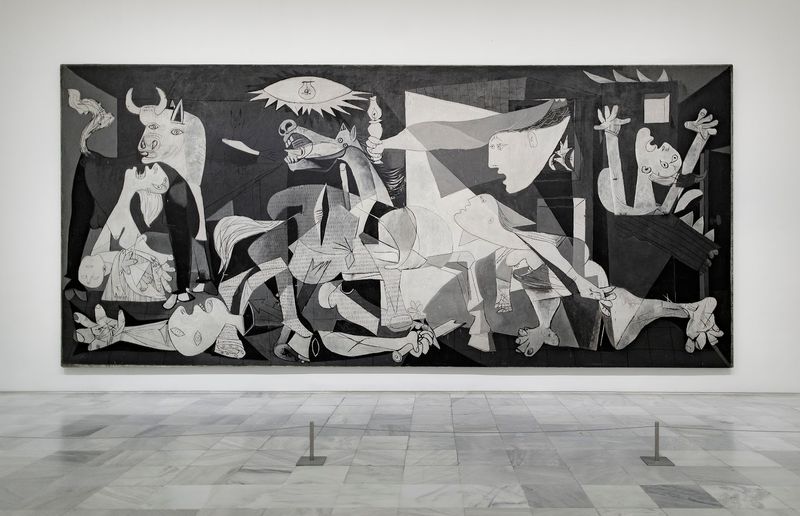
Picasso painted Guernica in 1937 as a direct response to the bombing of a Basque town during the Spanish Civil War, and standing in front of it today still stops people cold. At nearly 11 feet tall and 25 feet wide, the black-and-white canvas is overwhelming in the best possible way.
The Reina Sofia Museum was built specifically to house this masterpiece, and it alone is worth the price of admission.
Beyond Guernica, the museum holds an exceptional collection of 20th-century Spanish art, including major works by Salvador Dali and Joan Miro. The building itself is a converted 18th-century hospital, and its mix of historic architecture and modern glass additions makes it one of Madrid’s most visually interesting structures.
The rooftop terrace offers great views of the surrounding neighborhood.
The museum is free to enter on Monday, Wednesday, Thursday, and Friday evenings from 7 PM to 9 PM, as well as Sunday afternoons. Even during paid hours, the entrance fee is quite reasonable compared to similar museums in other European capitals.
Plan to spend at least two hours here, and pick up an audio guide to get the full story behind the collection’s most significant pieces.
Stroll Gran Vía
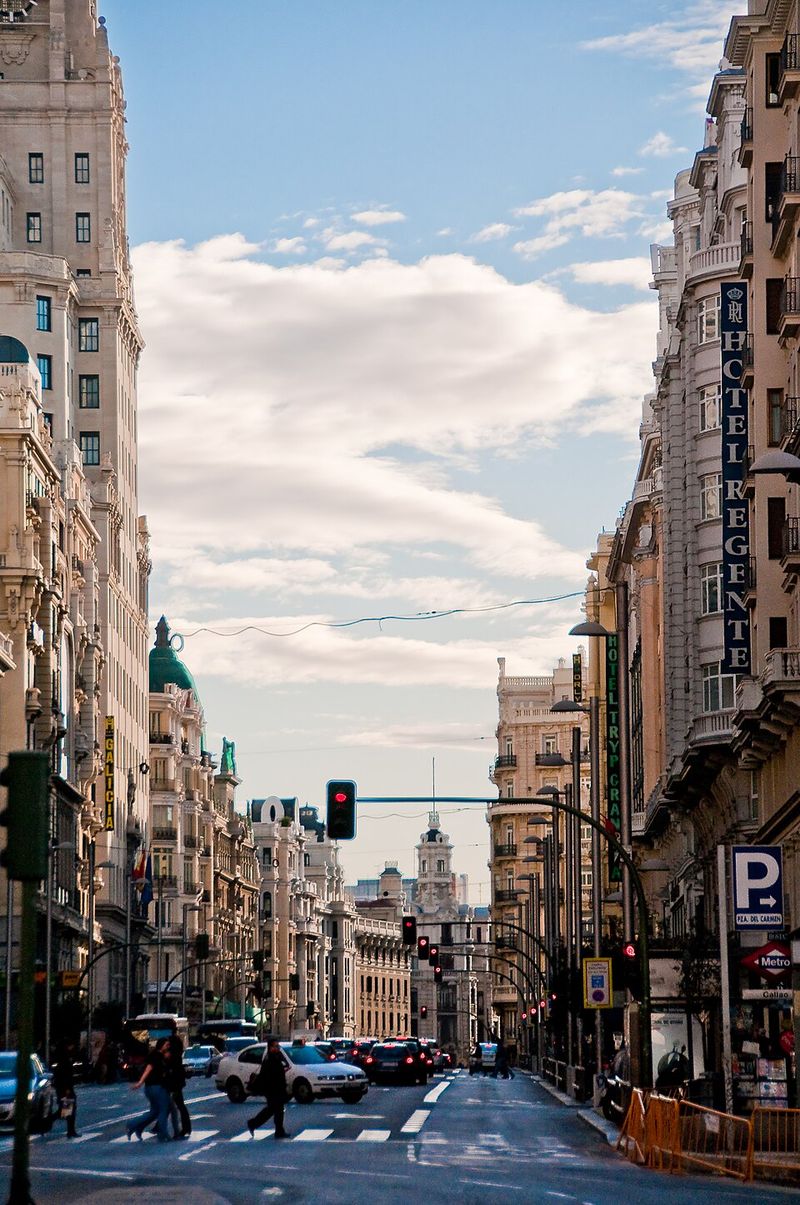
Madrid’s Gran Via is the kind of street that makes you walk a little taller just by being on it. Stretching nearly a mile through the heart of the city, this grand boulevard was carved out of older neighborhoods between 1910 and 1931 and lined with some of the most architecturally impressive buildings of the era.
Think ornate facades, rooftop sculptures, and corner towers that look like they belong in a different century.
Today the avenue is packed with flagship stores, international brands, theaters showing Spanish-language musicals, and some excellent rooftop bars with sweeping city views. The Metropolis Building at the eastern end is one of the most photographed structures in Madrid, especially at night when it is lit up against the dark sky.
Street performers and vendors add to the constant movement and noise.
Gran Via is best experienced on foot, ideally starting from the Cibeles Fountain end and walking west toward Plaza de Espana. Early mornings offer a quieter stroll before the shops open, while evenings bring the theater crowds and restaurant buzz.
It is not just a shopping street—it is a living timeline of Madrid’s architectural ambition and cultural energy, best absorbed slowly and without a fixed agenda.
Watch a Match at Santiago Bernabéu
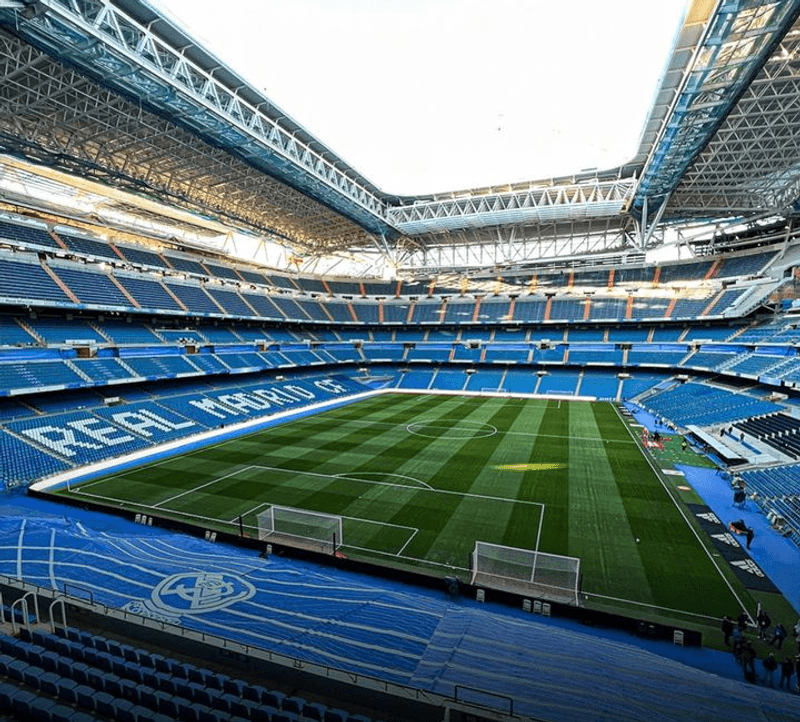
Real Madrid’s home ground is not just a football stadium—it is practically a cathedral for the sport, and the atmosphere on match night is unlike anything else in Europe. The newly renovated Santiago Bernabeu reopened in 2023 with a retractable roof, a 360-degree LED display inside, and a transformed exterior that makes the building look like something from the future.
Capacity sits at around 81,000 fans, and when it is full, the roar is physical.
If attending a live La Liga or Champions League match is not possible during your visit, the stadium tour is an excellent alternative. You can walk through the dressing rooms, stand in the tunnel where players enter the pitch, and explore the museum packed with trophies, jerseys, and decades of club history.
The tour takes roughly 90 minutes and is available most days of the year.
Tickets for live matches should be booked as far in advance as possible, as popular games sell out within hours of going on sale. The stadium is located in the upscale Chamartín district and is easily reached by metro.
Even non-football fans tend to leave impressed—the sheer scale and energy of the place are hard to ignore.
Discover Mercado de San Miguel
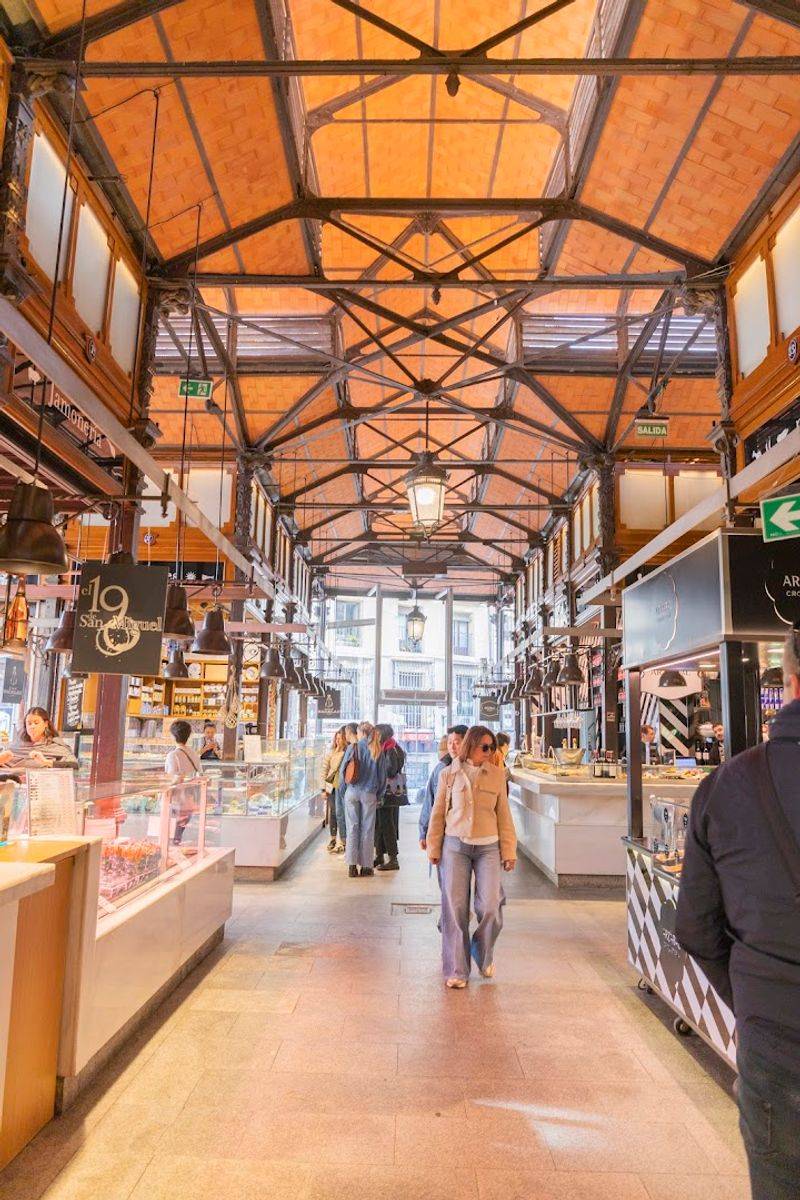
Built in 1916 with cast iron columns and glass walls, Mercado de San Miguel is the most elegant food market in Madrid—and one of the tastiest places to spend an hour in the entire city. Unlike a traditional grocery market, this one is designed specifically for eating and tasting on the spot, with vendors offering everything from fresh oysters and anchovies to artisan cheeses, craft beers, and churros dipped in chocolate.
Located just steps from Plaza Mayor, the market makes an ideal stop before or after exploring the old city. Each stall is its own little specialty shop, and the standard of quality is consistently high.
Weekend lunchtimes are the busiest, so if you prefer a more relaxed visit, aim for a weekday morning when the crowds are thinner and the produce is freshest.
Prices are a step above what you would pay at a regular tapas bar, but the convenience of sampling so many different Spanish flavors under one beautiful roof makes it worthwhile. Grab a glass of vermouth, work your way around the stalls, and treat the whole experience as a moveable feast rather than a sit-down meal.
Few food experiences in Madrid pack this much variety into such a small, gorgeous space.
Explore Malasaña’s Creative Scene
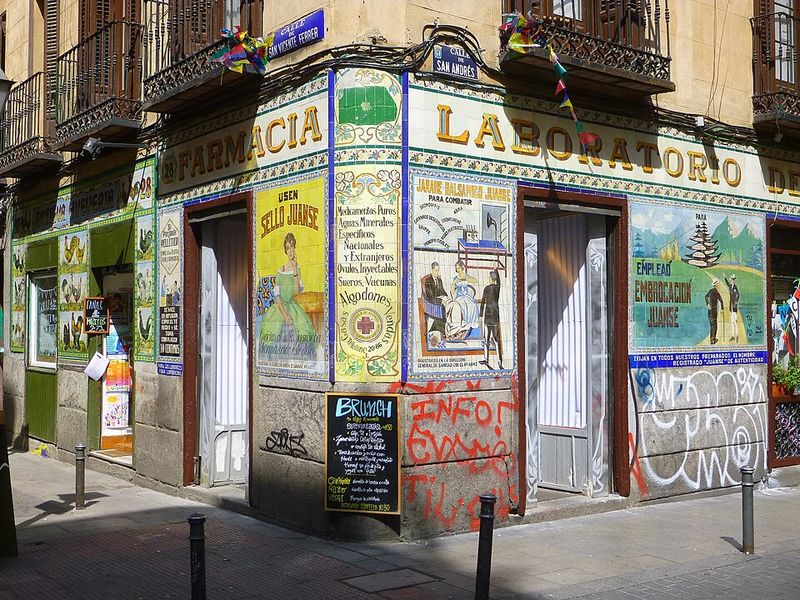
If Madrid had a cooler younger sibling, it would be Malasana. This neighborhood north of Gran Via earned its rebellious reputation during the Movida Madrileña—a wild cultural explosion that swept through Spain in the late 1970s and 1980s after the end of Franco’s dictatorship.
That free-spirited energy never really left, and today Malasana is the city’s most creatively charged neighborhood by a significant margin.
Streets here are layered with murals painted by both local and international artists, and the mix of independent record shops, vintage clothing stores, and specialty coffee spots makes every block worth exploring on foot. Plaza del Dos de Mayo at the neighborhood’s heart is the social center, ringed with bar terraces that fill up from mid-afternoon onward.
On weekends, it feels like one big extended outdoor living room.
Food in Malasana ranges from hole-in-the-wall bocadillo joints to trendy natural wine bars and modern Spanish bistros. The neighborhood is also a great spot for nightlife, with smaller music venues and late-night bars that attract a creative, mixed-age crowd.
Skip the tourist trails for an afternoon and just wander here—getting slightly lost in Malasana is, genuinely, part of the fun.
Catch Sunset at Temple of Debod
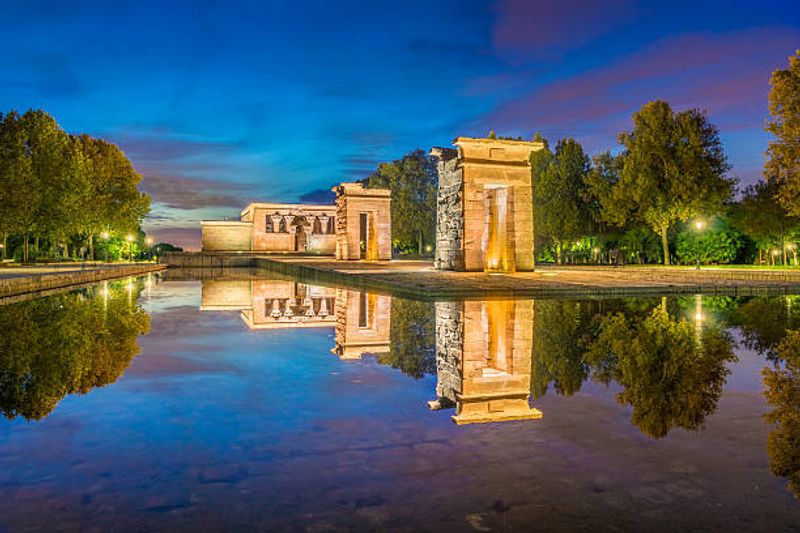
An ancient Egyptian temple sitting on a hilltop in the middle of Madrid sounds like something out of a fever dream, but here it is—completely real and completely stunning at sunset. The Temple of Debod was gifted to Spain by Egypt in 1968 as a thank-you for helping to relocate monuments threatened by the construction of the Aswan High Dam.
It was dismantled stone by stone and reconstructed here in the Parque del Oeste, just west of the Royal Palace.
The temple itself dates back to the 2nd century BC and is one of the few authentic Egyptian structures you can see outside of Egypt. Its reflection in the surrounding water pools at golden hour creates one of the most photographed scenes in all of Madrid.
Arrive around 30 to 45 minutes before sunset to secure a good spot, as this viewpoint draws a crowd on clear evenings.
Entry to the interior of the temple is free but requires advance reservation through the Madrid city website, as capacity is strictly limited. Even without going inside, the outdoor setting and panoramic views over the Casa de Campo park and the mountains beyond are worth every minute of the walk up.
Bring a camera and something to sit on.
Take a Day Trip to Toledo
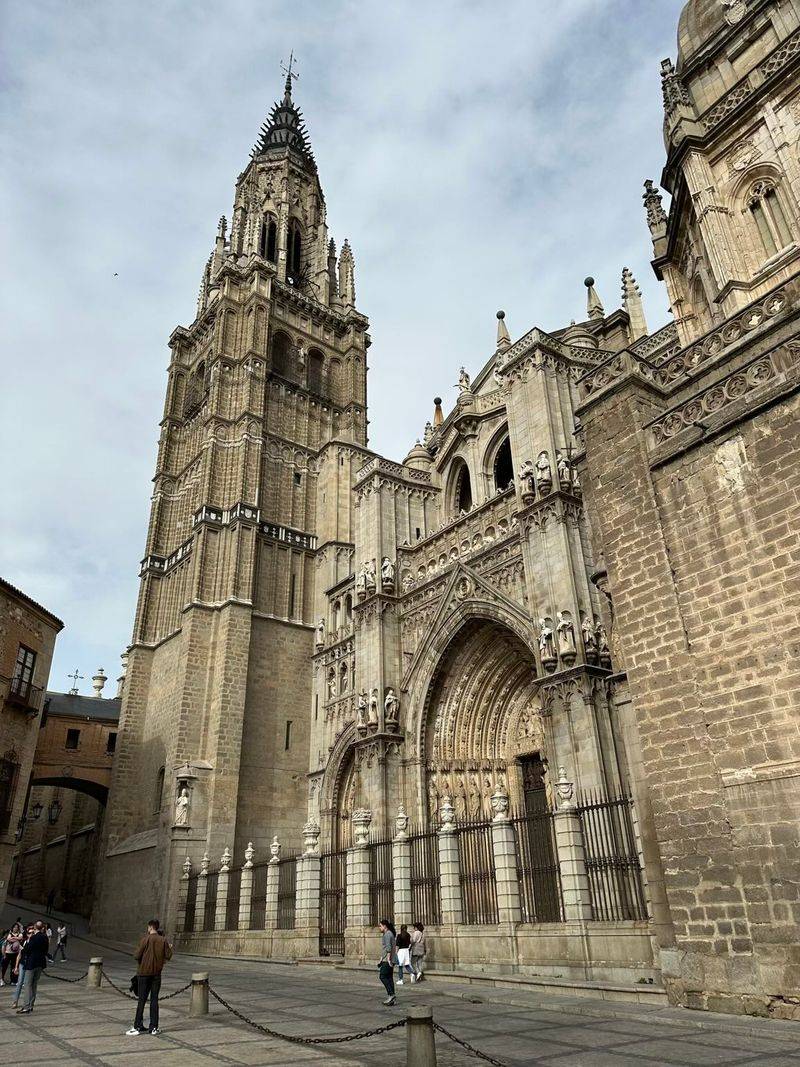
Less than an hour south of Madrid by high-speed train, Toledo packs more history into its streets than most cities manage in an entire region. Known as the City of Three Cultures, it was historically home to Christian, Muslim, and Jewish communities living side by side, and the architectural evidence of that layered past is visible at every turn.
The entire old city is a UNESCO World Heritage Site, and it earns that designation completely.
The Toledo Cathedral is one of the finest Gothic churches in Spain, with an interior so richly decorated it takes the breath away. The Alcazar fortress on the hilltop offers commanding views over the city and the surrounding Castilian plains.
Winding alleyways connect these landmarks with smaller gems like the Synagogue of Santa Maria la Blanca and the Church of Santo Tome, which houses El Greco’s masterpiece The Burial of the Count of Orgaz.
Trains from Madrid’s Atocha station run frequently and take about 33 minutes, making this one of the easiest day trips imaginable. Toledo is also famous for its marzipan sweets and hand-crafted damascene metalwork, so leave room in your bag for souvenirs.
Start early to beat the tour groups and finish the day with dinner back in Madrid—the best of both worlds.
Enjoy Madrid’s Nightlife

Madrid does not sleep—and that is not just a saying, it is a documented lifestyle choice. Dinner here rarely starts before 9 PM, cocktail bars fill up around midnight, and clubs hit their peak somewhere between 2 and 4 AM.
For visitors coming from cities where everything closes by 11 PM, the pace of Madrid’s nightlife can feel genuinely liberating.
The Malasana and Chueca neighborhoods are popular starting points for a night out, offering a wide range of bars from low-key craft beer spots to flashy cocktail lounges. For serious clubbing, the Huertas and Lavapies areas have long-running venues with strong music programming.
Kapital, a seven-floor club housed in a converted theater near Atocha, is one of the most famous nightlife destinations in the city and worth experiencing at least once.
Bar hopping is genuinely the best strategy in Madrid—moving between two or three spots over the course of an evening rather than planting yourself in one place. Many bars offer free tapas with drinks during early evening hours, which takes care of dinner while you warm up for the night ahead.
Embrace the late schedule, pace yourself sensibly, and you will understand very quickly why Madrilenos are so fiercely proud of their city after dark.
Share this story