Iowa has a way of surprising people—it’s not just farmland and quiet highways. Tucked across the state are unforgettable places filled with history, strange beauty, and experiences you don’t expect until you see them for yourself.
Whether you’re a nature lover, a history buff, or just someone chasing something new, Iowa delivers. Pack your curiosity and get ready, because these spots are anything but ordinary.
Maquoketa Caves State Park — Maquoketa
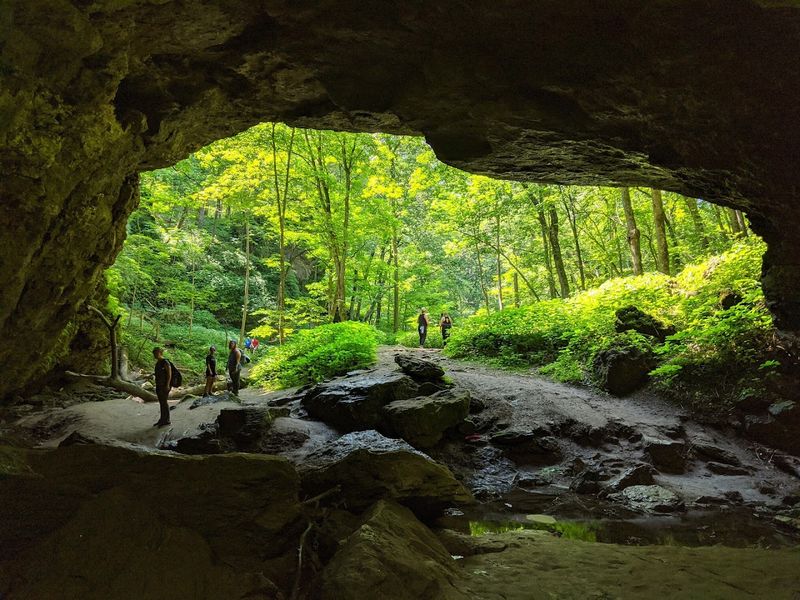
Crawling through a dark, narrow cave tunnel with only a flashlight and your own nerve—that’s the kind of adventure Maquoketa Caves State Park hands you without hesitation. Located in eastern Iowa, this park is home to more than a dozen caves ranging from easy walk-throughs to tight, flashlight-required crawls.
It’s one of the most genuinely wild outdoor experiences the state offers.
The park covers over 270 acres, and the caves are just one part of the story. Trails wind through rocky bluffs, wooded hillsides, and past striking natural formations.
Even if caving isn’t your thing, the scenery alone makes the trip worthwhile.
Wear clothes you don’t mind getting dirty and bring a reliable light source for the tighter caves. Some passages require you to crouch or squeeze through narrow gaps, which adds to the excitement rather than taking away from it.
Kids absolutely love it here, and so do adults who haven’t lost their sense of adventure. Maquoketa Caves is the kind of park that makes you forget you’re in Iowa—in the best possible way.
Plan for at least half a day to explore it properly.
Grotto of the Redemption — West Bend
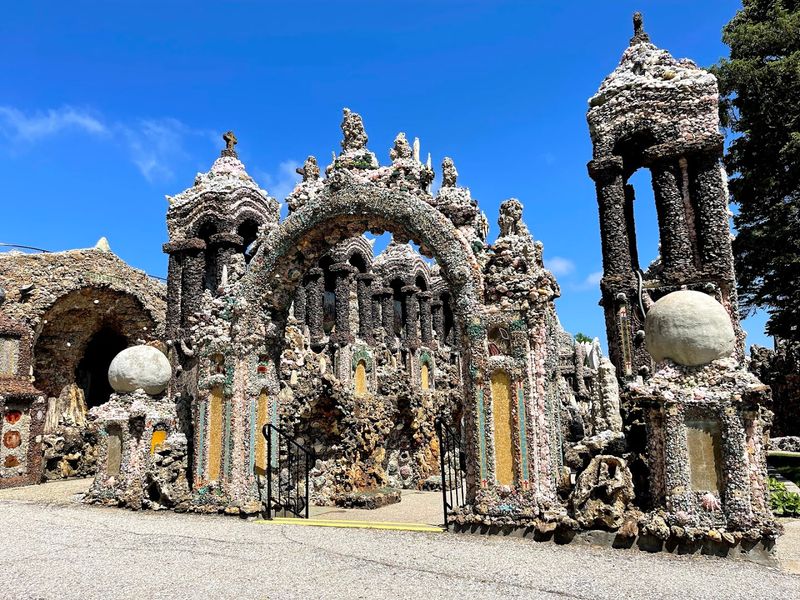
Somewhere in small-town West Bend, Iowa, sits a structure so detailed and so unexpected that first-time visitors often stop mid-step just to stare. The Grotto of the Redemption is considered the largest man-made grotto in the world, built over several decades by Father Paul Dobberstein starting in 1912.
Every surface is covered in minerals, gemstones, fossils, and shells sourced from around the globe.
Walking through the nine interconnected grottos feels genuinely surreal. Each one depicts a different scene from the life of Christ, and the craftsmanship in every corner is extraordinary.
The mineral collection embedded in the walls alone is estimated to be worth millions.
Whether you’re religious or not, the sheer artistry of this place commands respect. It’s peaceful, detailed, and deeply personal—you can feel the decades of devotion poured into every stone.
The site also includes a museum, a gift shop, and a small dining area, making it easy to spend a few hours here. Admission is free, though donations are welcome.
If you pass through northwest Iowa and skip this, you’ll genuinely regret it. It’s the kind of place that changes what you think Iowa is capable of.
High Trestle Trail Bridge — Madrid
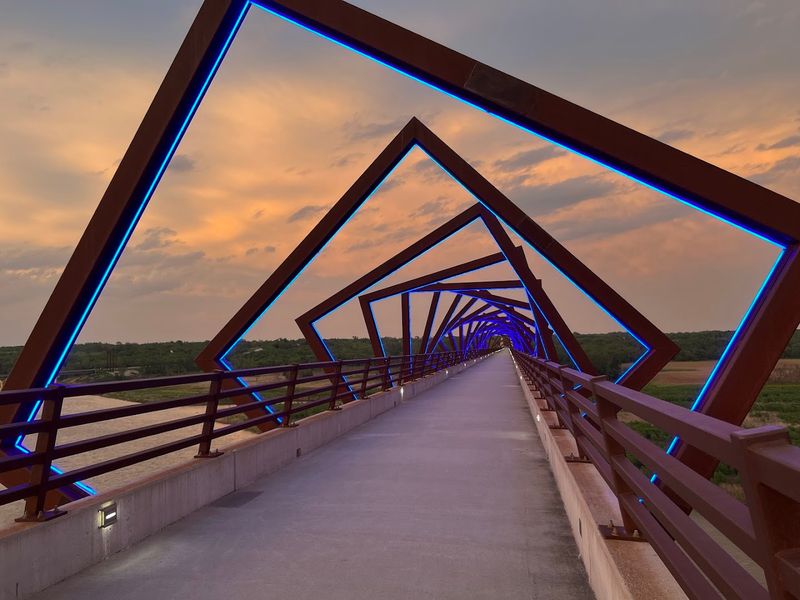
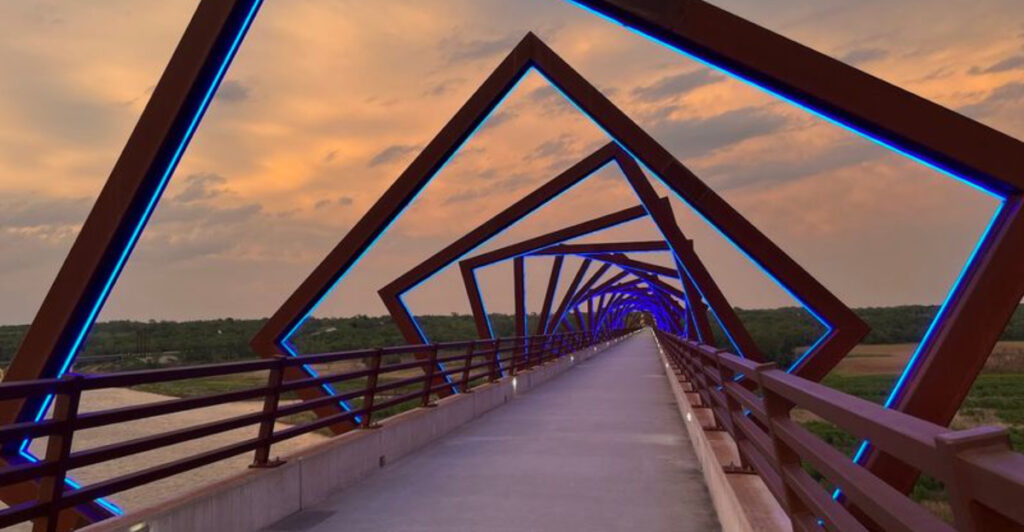
Nothing quite prepares you for the moment this glowing bridge appears out of the dark. Stretching half a mile across the Des Moines River Valley, the High Trestle Trail Bridge is one of the most visually jaw-dropping structures in the entire Midwest.
At night, its steel frames light up in electric blue, creating a tunnel-like effect that feels more like a sci-fi set than a trail.
The bridge was designed to honor the region’s coal mining history, with the angled frames representing the cross-section of a coal mine shaft. That detail alone makes it worth a second look.
Walking or biking across it gives you a completely different feeling than just viewing it from below.
Cyclists on the High Trestle Trail use it as a centerpiece of their ride, but you don’t need to be an avid biker to enjoy it. Casual walkers come just to soak in the views and the atmosphere.
Bring a camera, wear comfortable shoes, and if possible, visit at dusk when the lights are just starting to glow. It’s the kind of experience that earns a permanent spot in your memory.
American Gothic House — Eldon
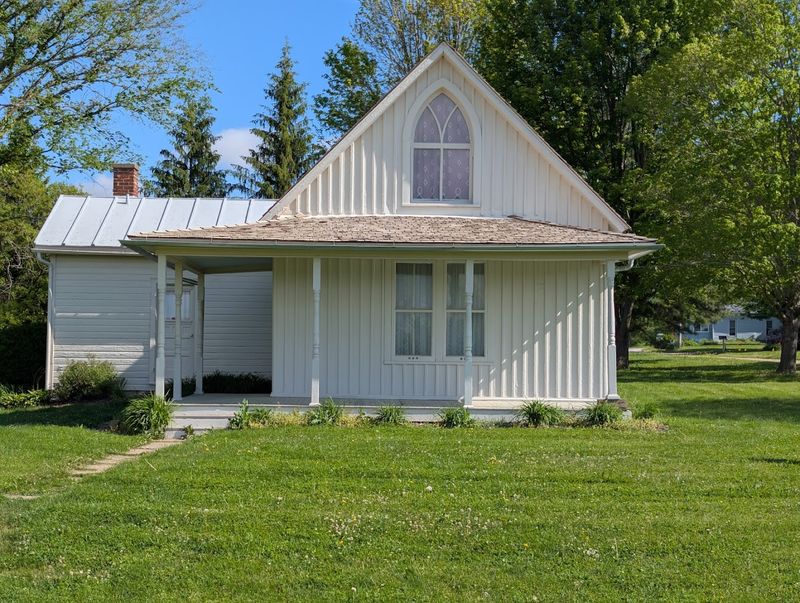
Grant Wood painted it in 1930, and ever since, people have been making the pilgrimage to this modest little farmhouse in Eldon just to see it in person. The American Gothic House is surprisingly small—but that almost makes it more charming.
Standing in front of it, you suddenly understand exactly what Wood saw when he decided to put it in one of the most famous American paintings ever made.
The visitor center next door is a great starting point. It tells the full story of the painting, the artist, and the couple who became its accidental icons.
You can even borrow props—a pitchfork and period-style costumes—to recreate the iconic pose yourself.
Fun fact: the woman in the painting wasn’t Wood’s wife. She was his sister, and the man beside her was his dentist.
That small detail tends to get a laugh from visitors who didn’t know. The house itself is privately owned but maintained as a landmark.
The grounds are open year-round, and the visit is free. It’s a quick stop, but it’s one of those moments that connects you to American art history in a surprisingly personal way.
Totally worth the detour.
Pikes Peak State Park — McGregor
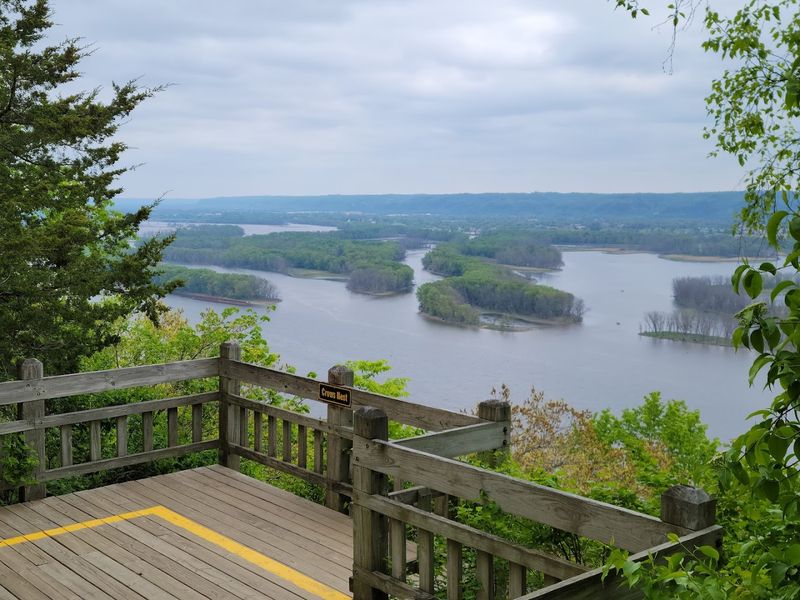
Before you assume this is the famous Colorado peak, let’s clear that up—Iowa’s Pikes Peak is a completely different experience, and honestly, it holds its own. Perched high above the Mississippi River near McGregor, this state park offers some of the most dramatic overlooks in the Midwest.
The cliffs rise nearly 500 feet above the river, giving you views that stretch for miles on a clear day.
Trails here wind through dense forest, past waterfalls, and along ridgelines with stunning drop-offs. In the fall, the colors are absolutely electric—reds, oranges, and golds layered across the bluffs and reflected in the river below.
Even in other seasons, the landscape feels lush and cinematic.
Wildlife sightings are common, including eagles soaring along the river corridor. The park is well-maintained, with picnic areas and accessible overlooks for those who want the view without a strenuous hike.
Photographers love this spot, and it’s easy to see why—every angle seems to beg for a photo. If you’re road-tripping along the Great River Road, Pikes Peak State Park is a non-negotiable stop.
The views alone are worth every mile it takes to get there.
Spook Cave — McGregor
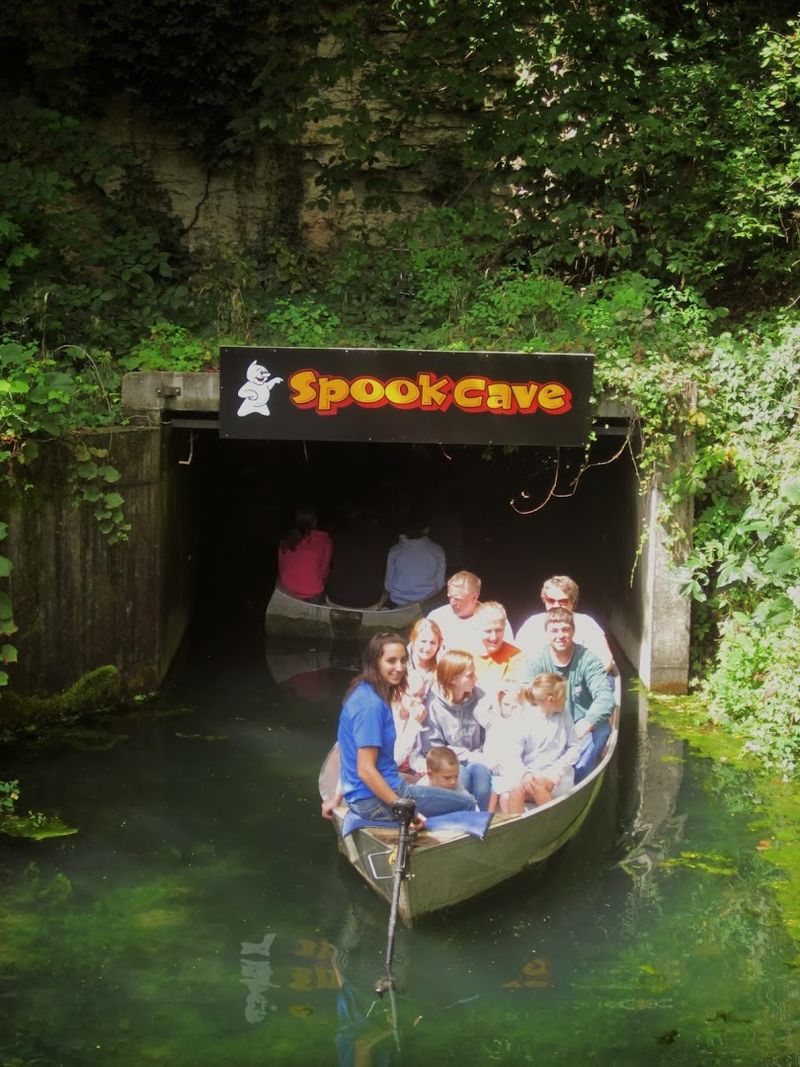
You’ve probably explored caves on foot before—but have you ever explored one by boat? Spook Cave near McGregor offers guided tours through a flooded underground cavern, and the whole experience is just eerie enough to be absolutely thrilling.
The cave was discovered in 1953 when a farmer noticed cold air seeping from a hillside, and it’s been drawing curious visitors ever since.
The tours run on flat-bottomed boats that glide through narrow passages barely wide enough to fit. Low ceilings, strange rock formations, and the quiet echo of dripping water set a mood that’s hard to describe.
The guides are knowledgeable and add just enough spooky atmosphere to keep things interesting.
The temperature inside stays around 47 degrees Fahrenheit year-round, so bring a light jacket even in summer. Kids find this place absolutely captivating, and adults tend to feel like kids again once they’re inside.
Above ground, there’s a campground, a stream for fishing, and picnic areas. It’s a full little destination packed into a surprisingly small footprint.
Spook Cave is exactly the kind of place Iowa hides in plain sight—weird, wonderful, and completely one of a kind. First-timers are always glad they stopped.
Decorah Ice Cave — Decorah
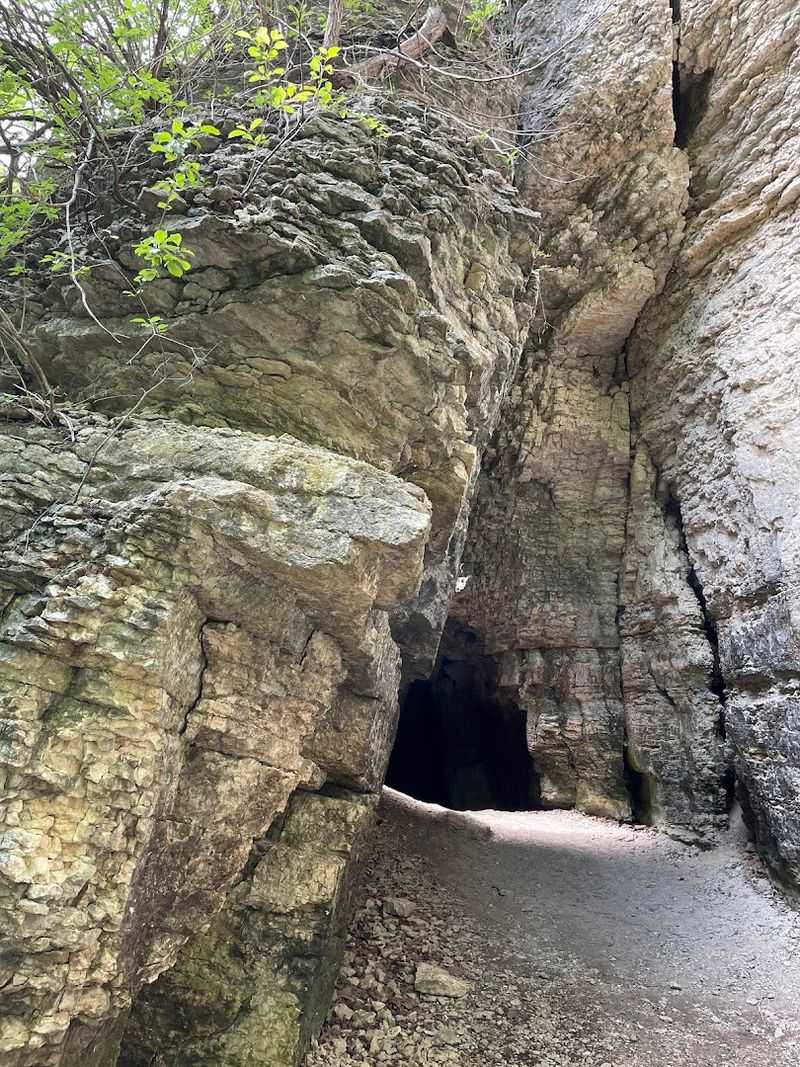
Ice that forms underground and lingers well into summer sounds like a trick—but the Decorah Ice Cave is completely real, and it’s one of Iowa’s most quietly fascinating natural wonders. Located near the city of Decorah in the northeastern corner of the state, this cave stays cold enough year-round to produce ice formations that survive long after the snow outside has melted away.
The science behind it involves cold air getting trapped in the cave during winter and slowly releasing throughout the warmer months. The result is a natural refrigerator tucked into a hillside.
Visitors who show up expecting just a rocky hole in the ground are usually caught off guard by the actual ice inside.
The cave is small and the visit is short, but it’s the kind of stop that sparks genuine curiosity. Decorah itself is a charming town worth exploring—it has a strong Norwegian heritage, excellent local restaurants, and the Vesterheim Norwegian-American Museum nearby.
The ice cave fits perfectly into a broader day trip through the area. Wear layers, because the temperature drop as you get close to the cave entrance is surprisingly noticeable.
It’s a cool detour in every sense of the word.
Reiman Gardens — Ames
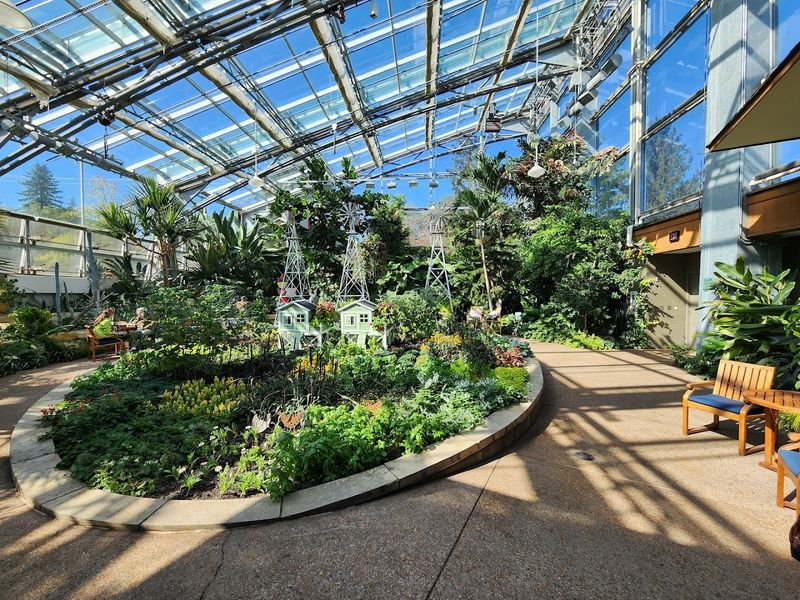
Seventeen acres of carefully designed gardens, a living butterfly wing, and seasonal displays that change with every visit—Reiman Gardens in Ames is the kind of place that rewards slow walkers. Located on the Iowa State University campus, these gardens are far more immersive than a typical park stroll.
Every section has its own personality, from the rose garden to the children’s garden to the dramatic Christina Reiman Butterfly Wing.
The butterfly wing is a real highlight. Step inside and you’re suddenly surrounded by hundreds of live tropical butterflies fluttering freely around you.
It’s colorful, warm, and just a little magical. Children are fascinated, but honestly, so are most adults.
The outdoor gardens shift with the seasons, so spring tulips give way to summer perennials, and fall brings its own warm palette of color. Even winter visits have their charm, especially during holiday light events.
Plan to spend at least two hours here—it’s not the kind of place you rush through. Photography enthusiasts will find endless shots around every corner.
Admission is affordable, and the peaceful atmosphere makes it a welcome break from the usual tourist rush. Reiman Gardens is proof that Iowa’s beauty sometimes grows in the most cultivated places.
The Big Treehouse — Marshalltown
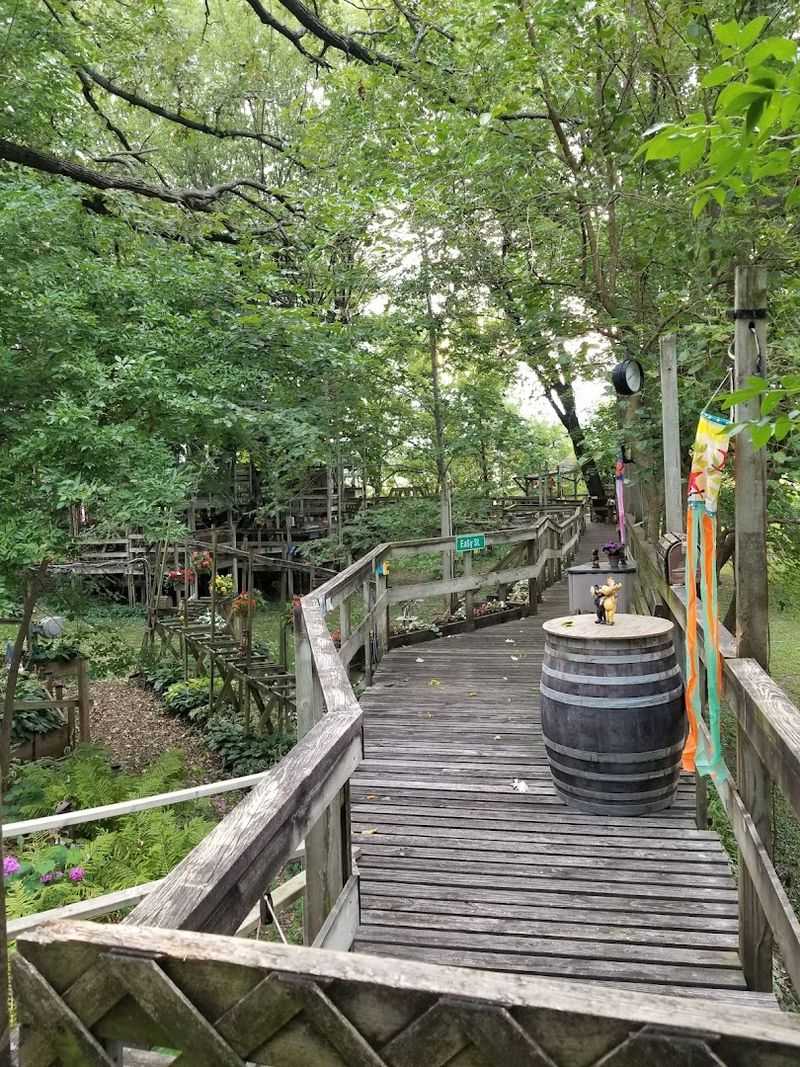
Somewhere between folk art and sheer determination, the Big Treehouse at Shady Oaks Campground in Marshalltown stands as one of Iowa’s most wonderfully odd attractions. Built by hand over many years, this towering structure wraps around a single tree and climbs multiple stories into the air.
It’s wobbly, wonderful, and completely unlike anything you’ll find at a typical tourist stop.
Climbing through its levels feels like exploring a handmade world—each floor has its own quirky character, and the views from the top are surprisingly satisfying. The whole thing has a homemade charm that’s impossible to replicate.
You can tell it was built with genuine enthusiasm rather than a blueprint.
The campground surrounding it is family-friendly and relaxed, making this a fun stop for road trips with kids. Adults tend to appreciate the creativity behind it just as much as the little ones do.
It’s not a polished attraction with gift shops and ticket lines—it’s just a genuinely unique piece of Iowa character sitting in a campground off the beaten path. That honesty is exactly what makes it worth visiting.
If you pass through Marshalltown and skip the Big Treehouse, you’ll spend the rest of the trip wondering what you missed.
Loess Hills Scenic Byway — Western Iowa
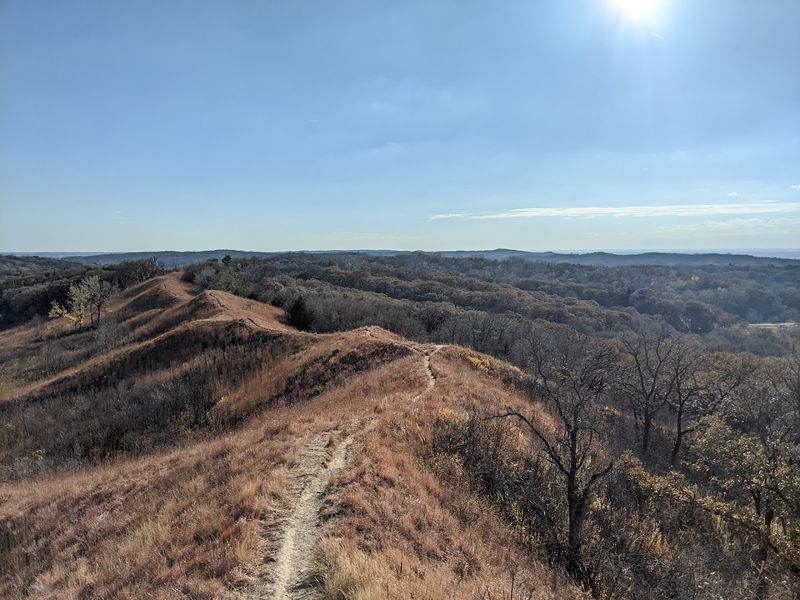
Wind built these hills over thousands of years, depositing fine silt called loess into ridges that rise sharply from the Missouri River valley. The Loess Hills of western Iowa are found in only two places on Earth at this scale—here and in China.
That fact alone makes driving this scenic byway feel surprisingly significant for a road trip through the American heartland.
The landscape is genuinely unlike anything else in Iowa. The hills roll and ridge in dramatic, angular shapes covered in native grasses and wildflowers.
Driving through them at golden hour is one of those quiet, cinematic moments that stays with you long after you’ve left.
Small towns dot the route, offering local diners, overlooks, and a slower pace that’s hard to find elsewhere. The Loess Hills State Forest and Preparation Canyon State Park are worth stopping at along the way.
Spring and fall are the most popular seasons, but even summer has its appeal when the prairie grasses are tall and swaying. No admission fees, no crowds—just open road and remarkable geology.
Bring a good playlist and take your time. The Loess Hills byway is the kind of drive that reminds you why road trips exist in the first place.
Effigy Mounds National Monument — Harpers Ferry
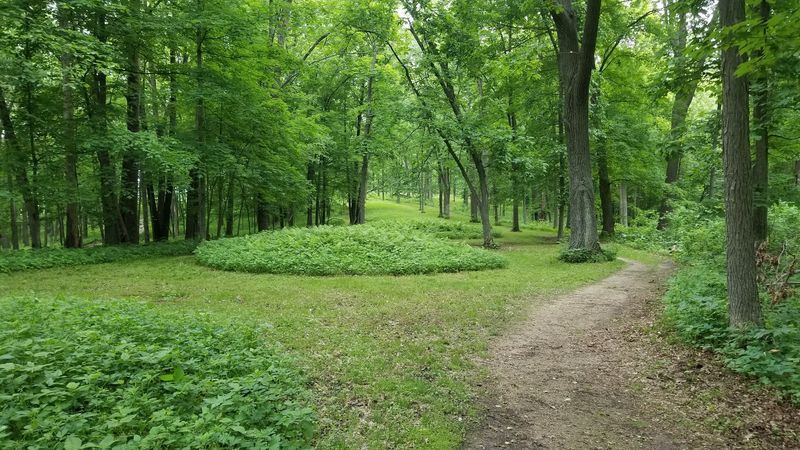
More than 2,000 years ago, Indigenous people shaped the earth into the forms of bears, birds, and other animals along the bluffs above the Mississippi River. Effigy Mounds National Monument in Harpers Ferry preserves over 200 of these ancient earthworks, and walking among them is one of the most quietly powerful experiences Iowa has to offer.
The connection to history here isn’t something you read about—you feel it.
The monument covers about 2,526 acres of forested bluffs and river scenery. Several trails wind through the area, ranging from easy walks to longer hikes with sweeping river views.
The visitor center provides excellent context about the cultures that created these mounds and what they represent.
The Great Bear Mound, stretching 137 feet long and over 3 feet high, is among the largest effigy mounds in existence. Standing beside it gives you a real sense of the scale and intention behind the work.
This is sacred land, and the park asks visitors to treat it with respect—no climbing on the mounds. Photography is welcome along the trails.
Effigy Mounds is one of those places that makes history feel tangible and close, not distant or abstract. It’s a genuinely moving stop on any Iowa itinerary.
Snake Alley — Burlington
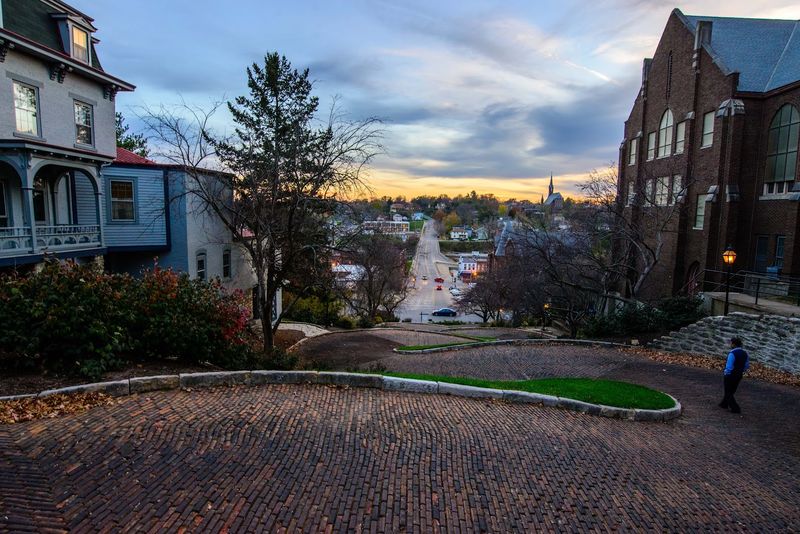
Ripley’s Believe It or Not once called it the most crooked street in the world—and after one look at Snake Alley in Burlington, it’s easy to see why the title stuck. This steep, winding brick road drops sharply down a hillside through five half-curves and two quarter-curves in less than 300 feet.
It was built in 1894 and still turns heads more than a century later.
Walking down it is entertaining enough, but watching cars attempt the descent is its own kind of spectacle. The tight curves require slow, deliberate steering, and the historic brick surface gives the whole thing a wonderfully old-fashioned feel.
It’s quirky, photogenic, and completely free to visit.
Burlington itself is a charming Mississippi River town worth exploring beyond the alley. The surrounding Heritage Hill neighborhood features Victorian-era architecture that sets a great backdrop for a walk.
The annual Snake Alley Criterium bicycle race draws cyclists who tackle the curves at speed—which sounds both impressive and mildly terrifying. If you’re already road-tripping through eastern Iowa, Snake Alley is a quick stop that punches well above its size.
It’s short, surprising, and the kind of thing you immediately want to tell someone about.
Field of Dreams Movie Site — Dyersville
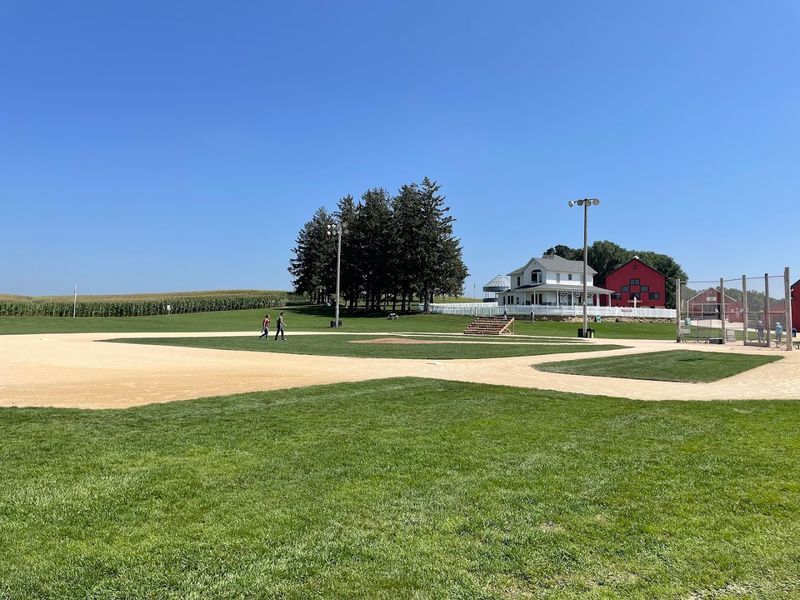
“If you build it, they will come”—and they absolutely do. The Field of Dreams Movie Site in Dyersville is one of those rare places where a film location takes on a life of its own, long after the cameras stopped rolling.
The baseball diamond, the white farmhouse, and the wall of cornfields behind the outfield look almost exactly as they did in the 1989 Kevin Costner film.
Visitors can walk the bases, toss a ball around, or simply stand in the outfield and stare into the corn. There’s something quietly emotional about the place, even if you haven’t seen the movie in years.
It taps into something nostalgic that’s hard to put into words.
In 2021, Major League Baseball hosted an actual regular-season game here between the Chicago White Sox and New York Yankees, turning the site into a nationally recognized landmark. The temporary stadium is gone, but the magic of the original field remains.
A gift shop and visitor facilities are on-site. Admission is free, and the site is open seasonally.
Whether you’re a baseball fan or not, this place has a sincerity and stillness that makes it genuinely moving. It’s one of Iowa’s most unexpected emotional experiences.
Clear Lake — Clear Lake

Few small Iowa towns pack as much personality into a single shoreline as Clear Lake does. Sitting along the edge of a natural glacial lake in north-central Iowa, this town balances laid-back charm with genuine energy.
Summer weekends bring boaters, swimmers, and families filling the waterfront, but it never feels overwhelming—there’s always a quiet corner to find if you want one.
The sunsets here are legitimately stunning. When the sky turns orange and pink over the open water, it’s the kind of view that makes you put your phone down and just watch.
Lakeside dining options range from casual fish fry spots to sit-down restaurants with water views.
Clear Lake also carries a piece of music history—Surf Ballroom, just a few blocks from the lake, was the last venue where Buddy Holly, Ritchie Valens, and The Big Bopper performed before the tragic 1959 plane crash known as “The Day the Music Died.” The ballroom still hosts concerts and museum exhibits honoring their legacy. That combination of natural beauty and cultural history gives Clear Lake a depth that surprises most visitors.
It’s the kind of town that earns a return trip without even trying. Budget a full day here—you’ll use every minute of it.
Villisca Axe Murder House — Villisca
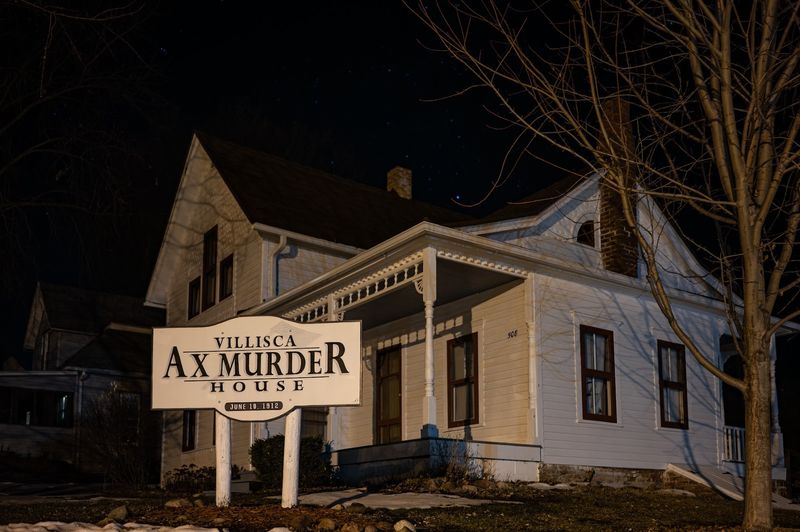
On the night of June 9, 1912, eight people were killed inside a quiet farmhouse in Villisca, Iowa. The crime was never officially solved, and the house has stood ever since as one of the most haunting unsolved mysteries in American history.
Today, the Villisca Axe Murder House is open to visitors—and for those who dare, overnight stays are available too.
Daytime tours walk you through the preserved rooms with a guide who shares the full history of the crime, the investigation, and the suspects who were never convicted. The house is kept in period-accurate condition, which makes the whole experience feel uncomfortably real.
It’s chilling in the best and worst ways simultaneously.
Overnight guests report unexplained sounds, moving objects, and general unease—whether that’s genuine paranormal activity or just the power of suggestion in a very old, very quiet house is up to you to decide. The town of Villisca is small and quiet, which somehow makes the whole experience feel more isolated and intense.
This stop is absolutely not for everyone, and that’s completely fine. But for those drawn to true crime history and unexplained mysteries, the Villisca Axe Murder House delivers an experience that’s impossible to shake.
You will not forget it.
Share this story