Most visitors to Sleeping Bear Dunes head straight to the Dune Climb, but the better way to see the area is a 22-mile paved trail that runs right past it. The Sleeping Bear Heritage Trail near Empire gives you direct access to Lake Michigan views, forest stretches, and key landmarks without the crowds.
The route is built for bikes, walking, and jogging, with clear sections that connect dunes, historic farm sites, and shoreline overlooks. You can cover as much or as little as you want, with multiple entry points along the way.
What sets this trail apart is how much it packs into one route. Instead of a single stop, you get a continuous stretch of some of the most varied scenery in the Midwest, plus a few lesser-known spots that most visitors miss entirely.
Where the Trail Begins: The Empire Trailhead
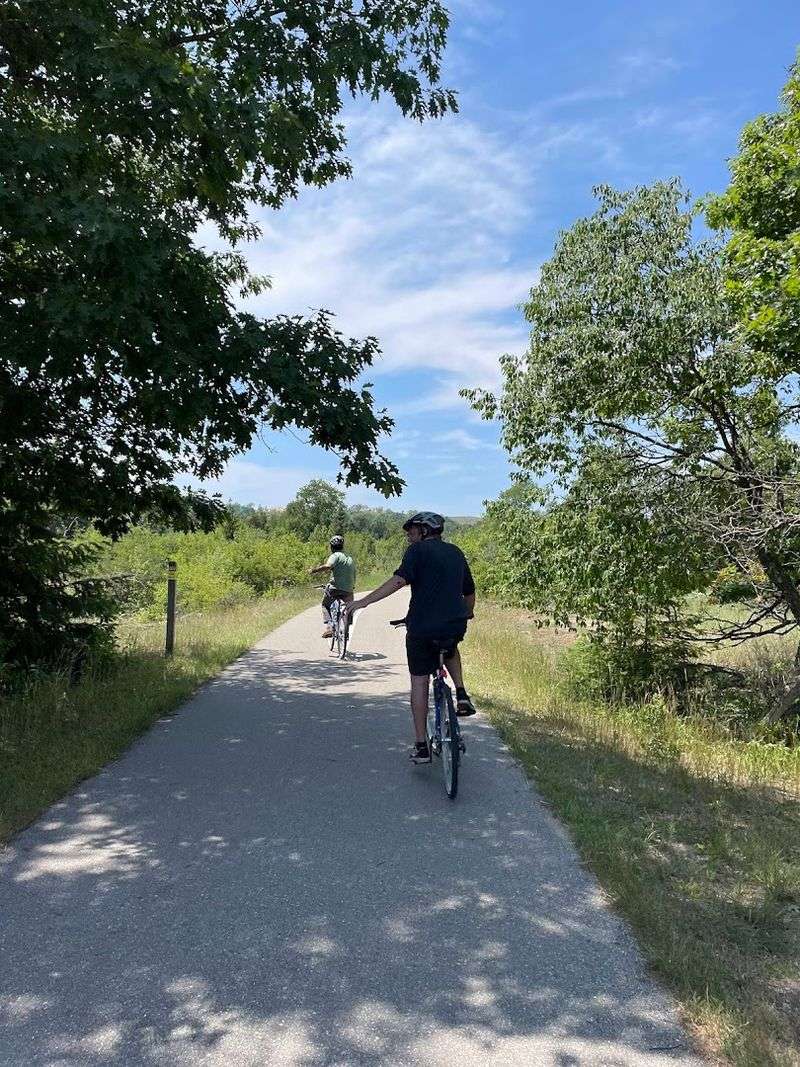
The Empire trailhead sits off Bar Lake Road in Empire, Michigan, a small lakeside village at the southern edge of Sleeping Bear Dunes National Lakeshore. This is the starting point for anyone approaching the trail from the south, and it comes with a convenient parking area that rarely fills up the way the Dune Climb lot does.
Empire itself has a population of just a few hundred people, which means the pace here is refreshingly unhurried. A short walk from the trailhead puts you near local shops and a great view of South Bar Lake before you even clip into your pedals.
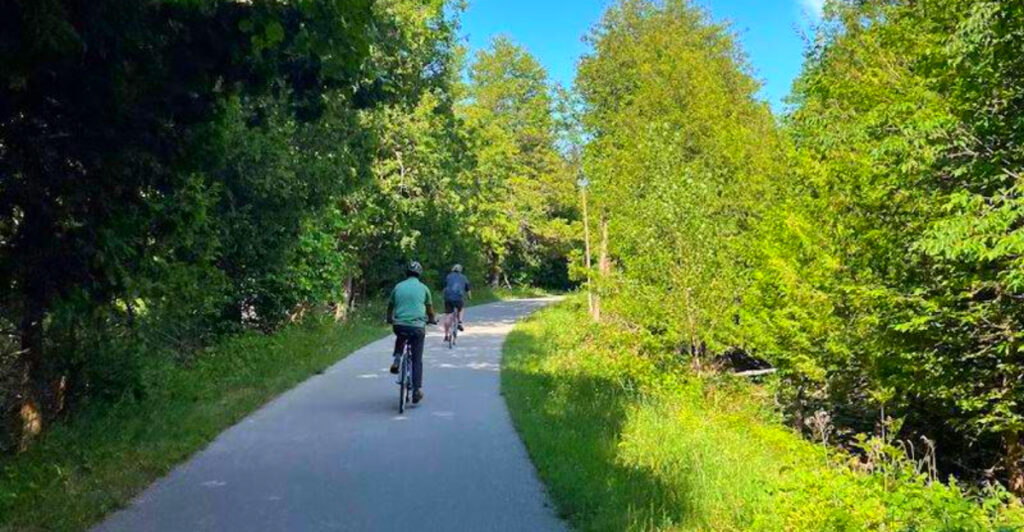
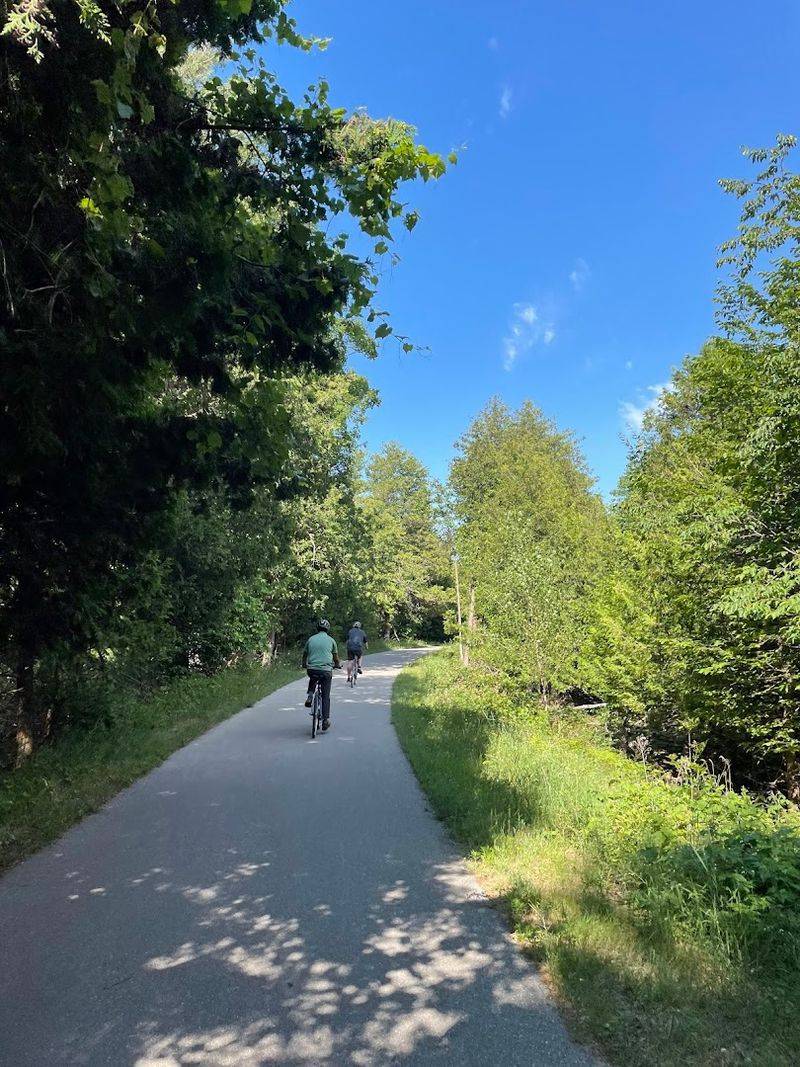
The trail surface here is smooth, well-maintained asphalt that handles both road bikes and hybrid bikes without trouble. First-time visitors are often surprised by how quickly the scenery shifts from small-town Michigan to full-on national lakeshore splendor once you start moving north along the path.
The 22-Mile Paved Route That Connects Two Communities
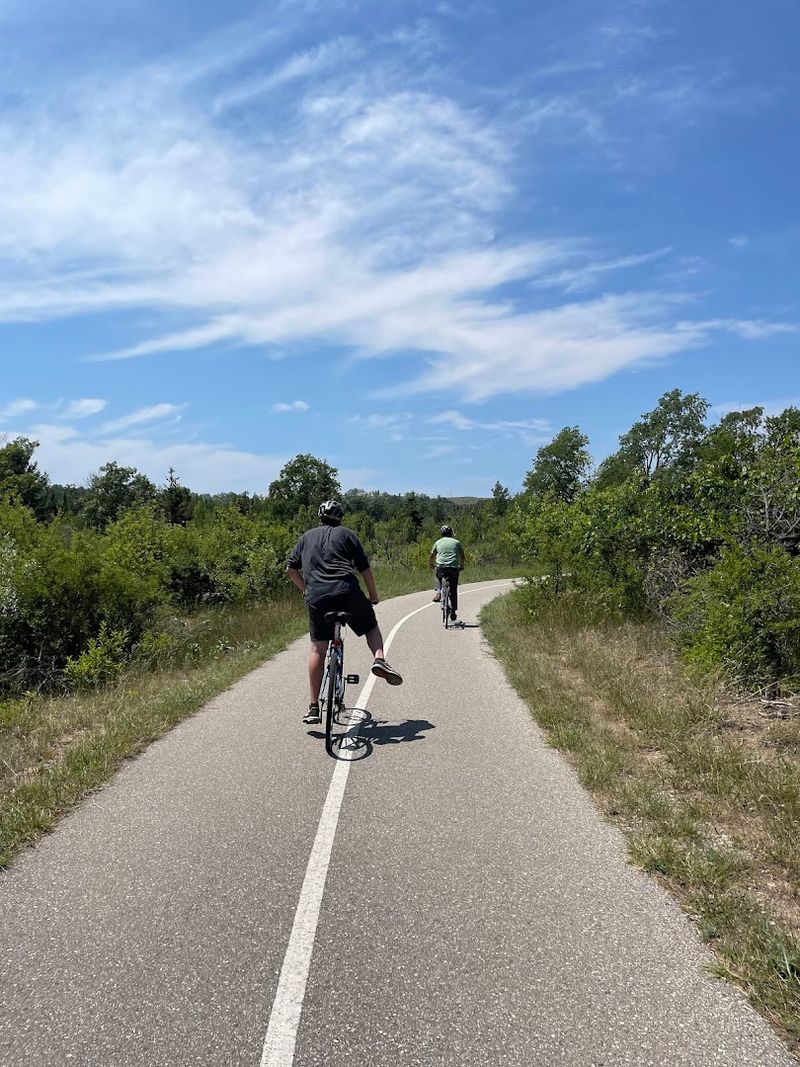
A 22-mile stretch of pavement connects the town of Empire in the south to Glen Arbor in the north, passing through the heart of Sleeping Bear Dunes National Lakeshore. The trail does not loop back on itself, so most people choose a section to explore rather than tackling the full out-and-back distance in one go.
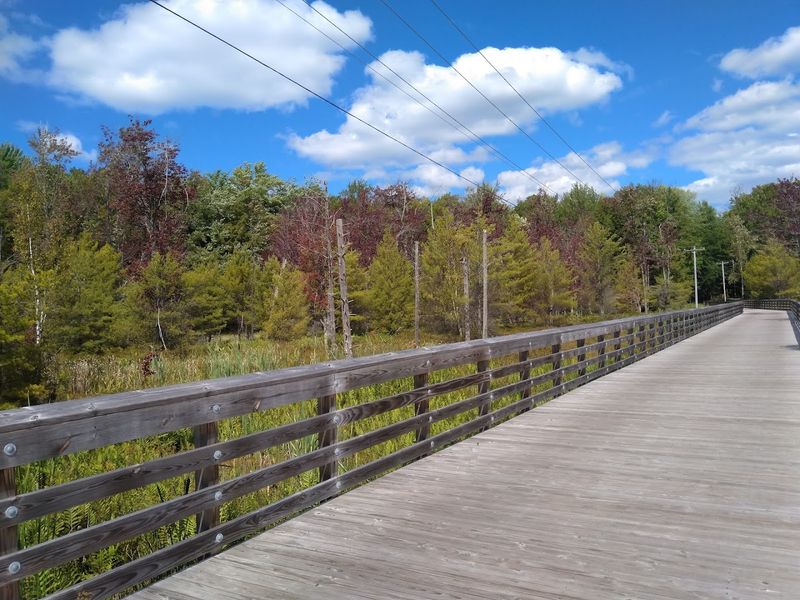
The route follows a logical corridor through the lakeshore, weaving between forest stretches, open meadow sections, and elevated terrain that gives riders and walkers occasional elevated glimpses of Lake Michigan. Trail markers appear at regular intervals, making navigation straightforward even without a phone signal.
One of the smartest ways to experience the full length is to arrange a shuttle between Empire and Glen Arbor, then ride or walk the trail one way. That approach eliminates the need to retrace your steps and lets you experience the full variety of terrain the trail has to offer from start to finish.
Lake Michigan Views That Stop You Mid-Stride
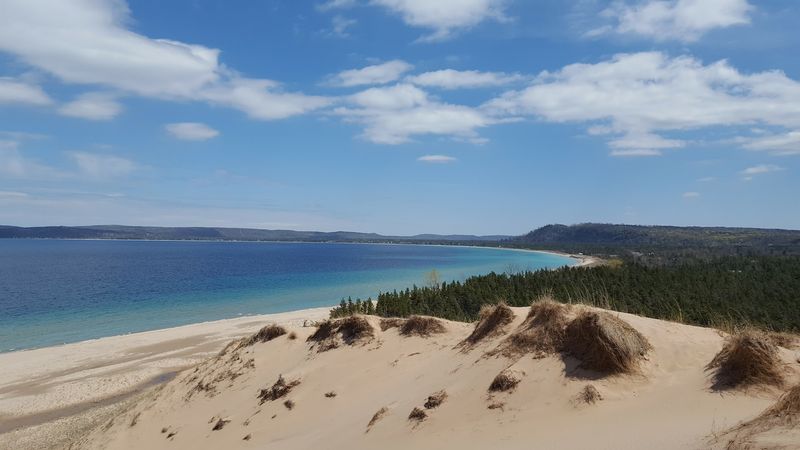
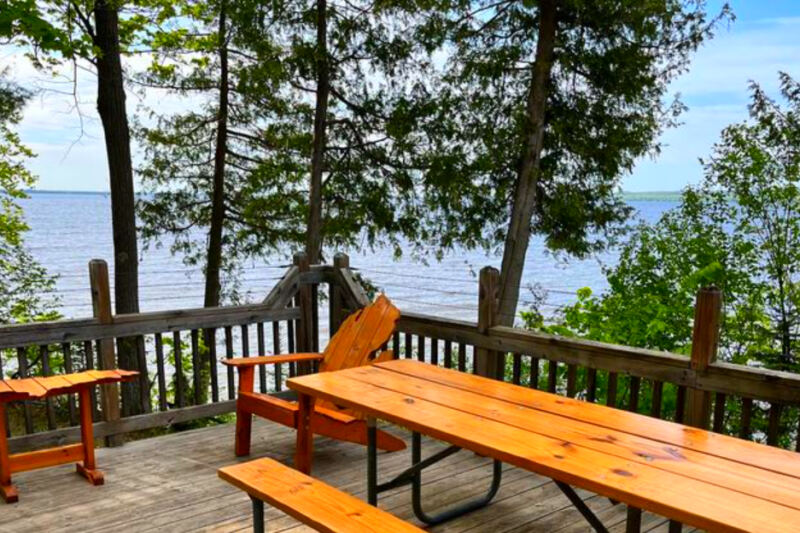
There are moments on this trail where the tree line breaks and Lake Michigan appears without warning, stretching wide and impossibly blue to the horizon. The color of the water on a clear day shifts from pale aqua near the shore to deep cobalt farther out, and on calm mornings the surface looks almost polished.
These viewpoints are not marked with grand overlook signs or crowded observation platforms. They simply appear as natural openings in the landscape, which somehow makes them feel even more rewarding when you reach them.
The trail runs close enough to the dunes in several spots that you can see the massive sand formations rising above the tree line, giving the views a layered quality that combines forest, dune, and open water in a single glance. Photographers tend to linger at these natural breaks longer than planned, and honestly, that is completely understandable given what the landscape puts on display.
Forests, Dunes, and Cedar Groves Along the Path
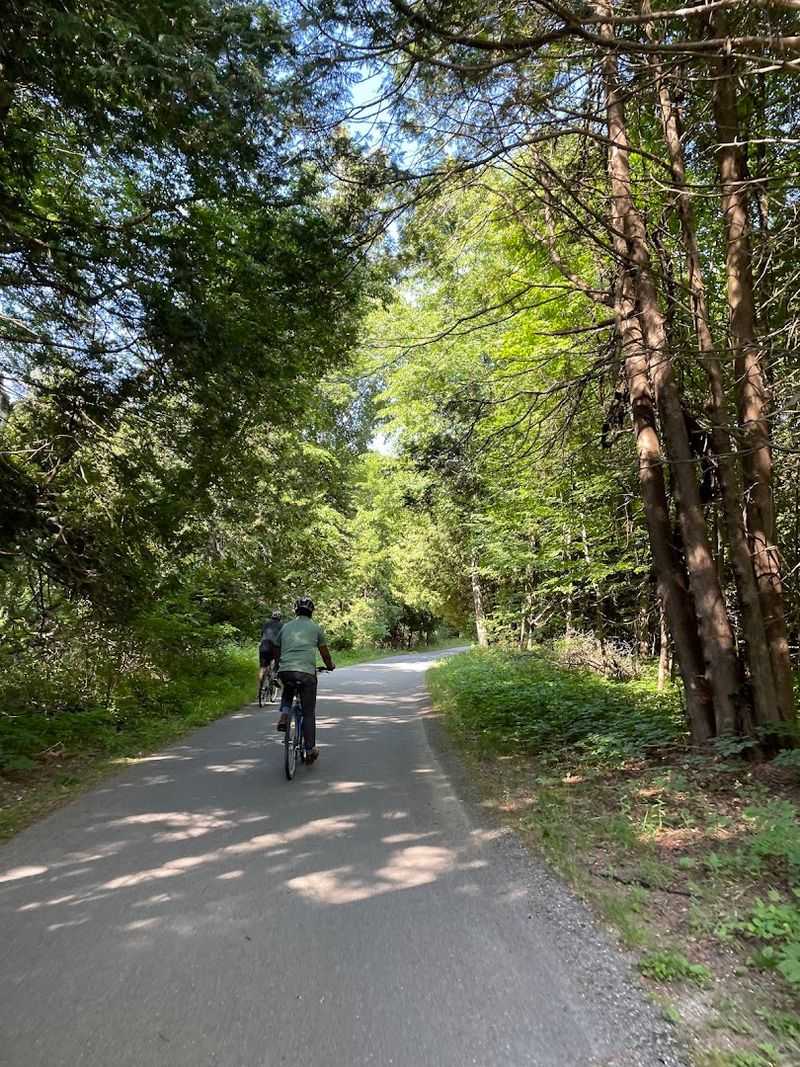
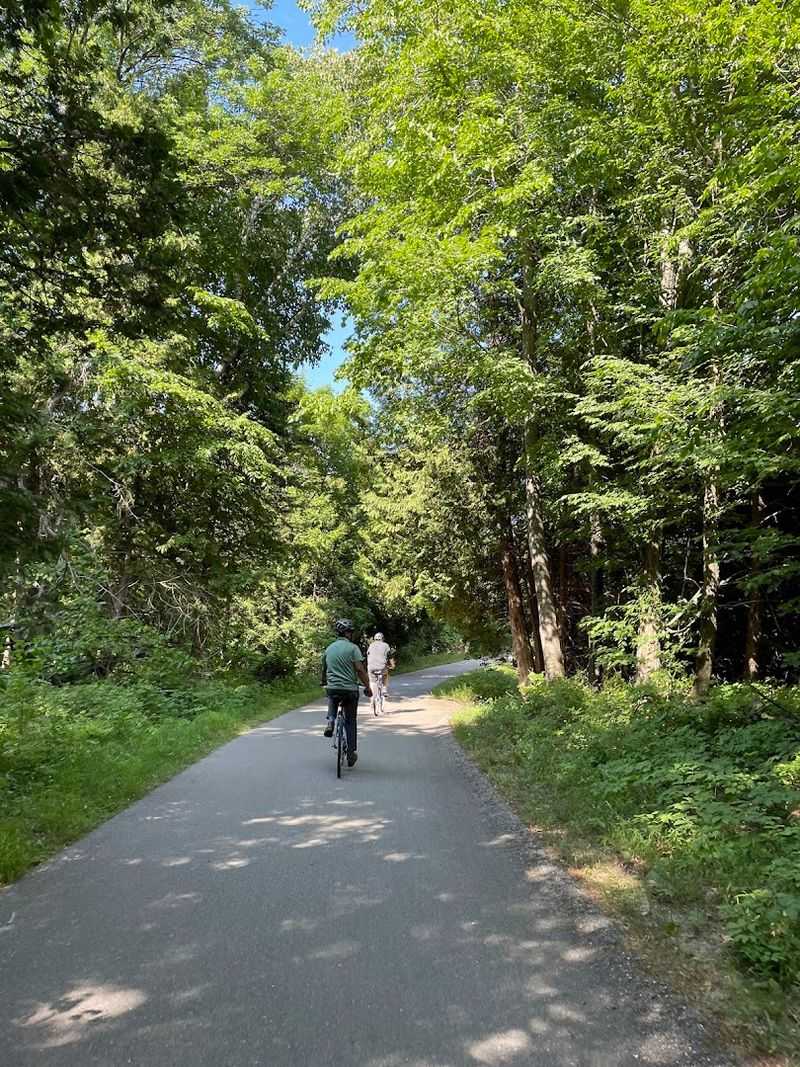
The trail does not stay in any one kind of landscape for long, and that variety is a big part of what makes it so engaging. Within a single mile, the surface can take you from an open meadow into a cool cedar grove, then back out along a sandy ridge with dunes rising on one side and forest pressing in on the other.
Cedar trees are a defining feature of the northern Michigan landscape, and the heritage trail passes through several stretches where their fragrant canopy creates a natural tunnel effect overhead. The scent alone is worth the visit on a warm day.
Dune formations appear throughout the route, some close enough to touch and others visible as distant ridgelines above the treetops. The contrast between the soft, shifting sand and the hard, smooth pavement underfoot creates a strange and wonderful reminder that this paved path runs straight through one of the most dynamic landscapes in the Great Lakes region.
The Port Oneida Rural Historic District Section
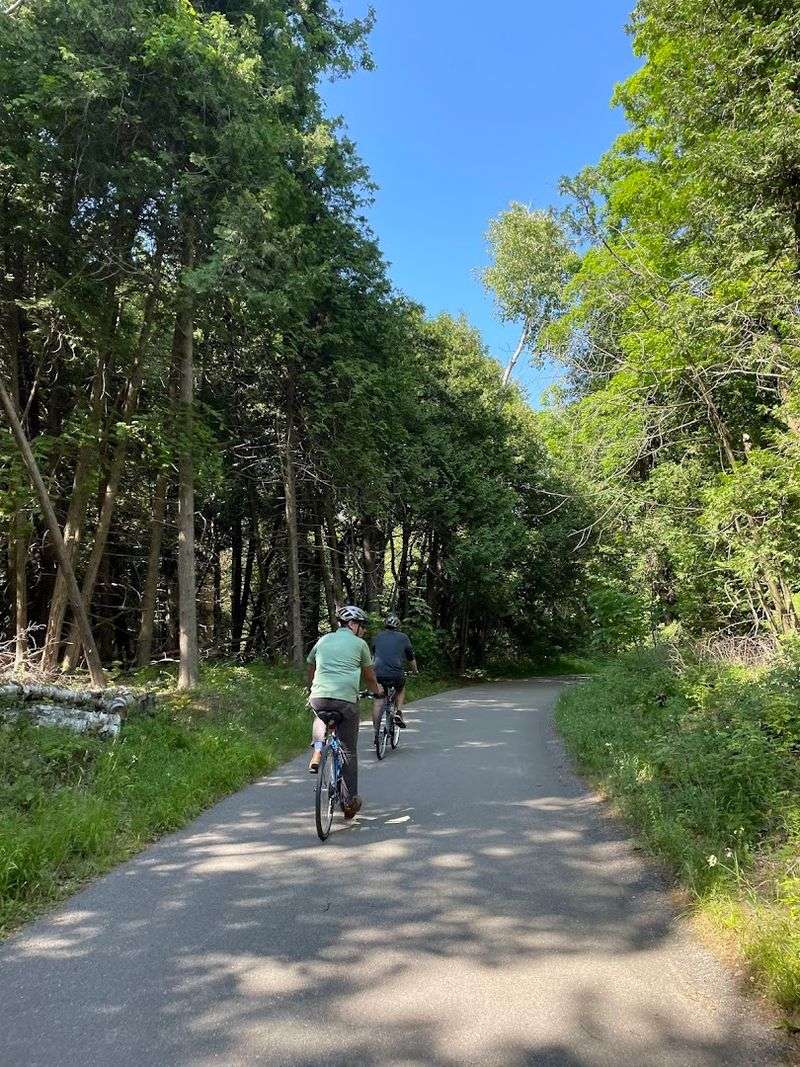
One of the most unexpected stretches of the trail passes through the Port Oneida Rural Historic District, a collection of 19th-century farmsteads preserved within the national lakeshore. This section swaps the smooth asphalt for about three miles of compacted crushed stone, which changes the feel of the ride but adds a lot of character.
The farmsteads here were established by European immigrant families, mostly of Polish and Bohemian descent, who farmed this land in the late 1800s and early 1900s. Several of the original structures, including barns, farmhouses, and outbuildings, still stand in various states of preservation along the route.
Riding or walking through Port Oneida feels genuinely different from the rest of the trail. The open fields, the weathered wooden structures, and the quiet that settles over the landscape here create an atmosphere that is more reflective than scenic.
It is one of those rare places where history and natural beauty overlap without either one overshadowing the other.
Who Uses This Trail and Why It Works for Everyone
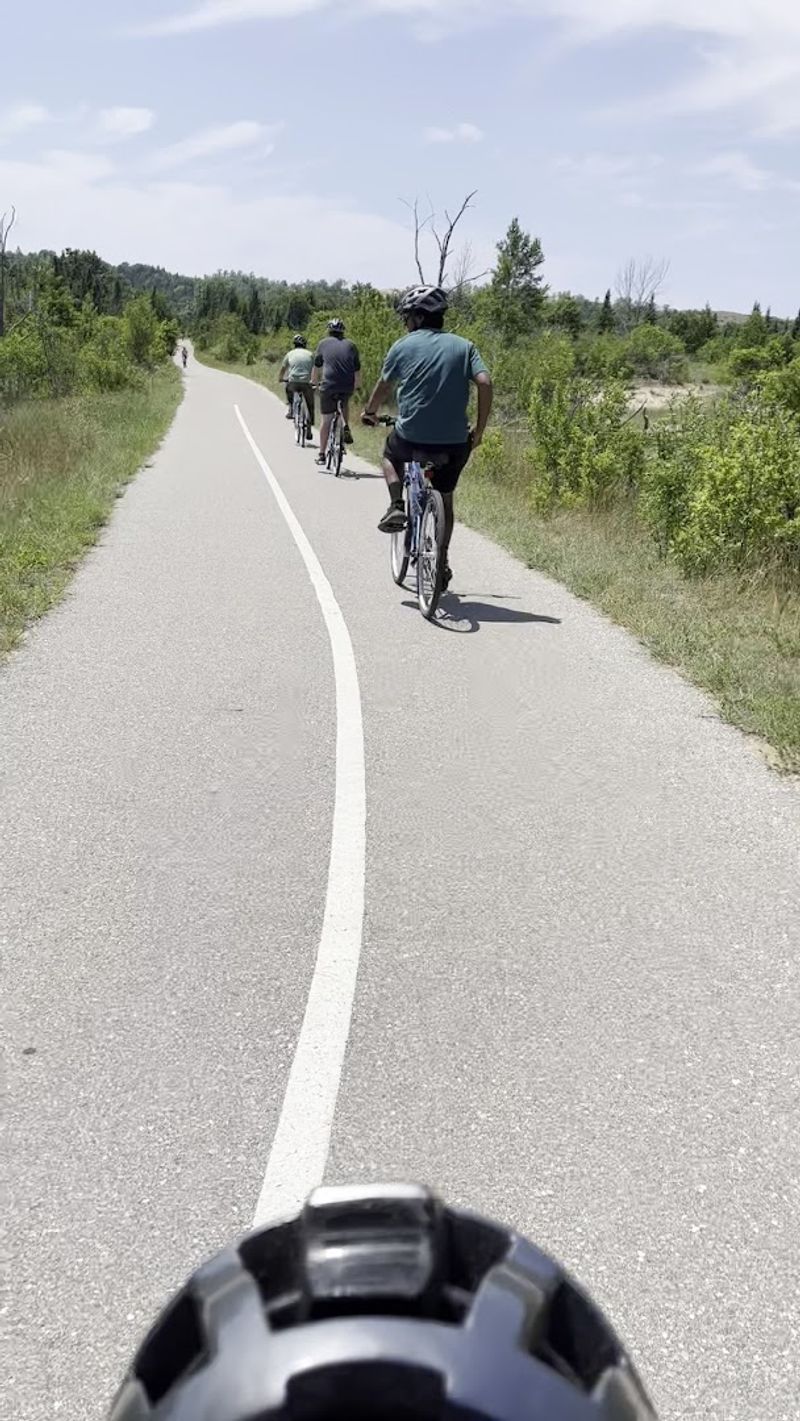
The trail draws a surprisingly broad mix of users, and that is largely by design. The surface is paved and relatively smooth, the grades are gentle rolling hills rather than steep climbs, and the width is generous enough for two cyclists to pass each other comfortably without anyone veering into the grass.
Families with young children on tag-along bikes, solo runners logging morning miles, older adults on e-bikes, and serious cyclists in full kit all share the path without much friction. The trail accommodates all of them because it was built with accessibility in mind from the beginning.
Cross-country skiers take over the route in winter when snow covers the pavement, giving the trail a second life during the colder months. Dogs are welcome on the trail from April through November, though they are restricted during the December through March window to protect winter trail conditions.
Something about this trail seems to bring out the best in every kind of outdoor enthusiast.
The Quiet Advantage: Why the Crowds Stay Away
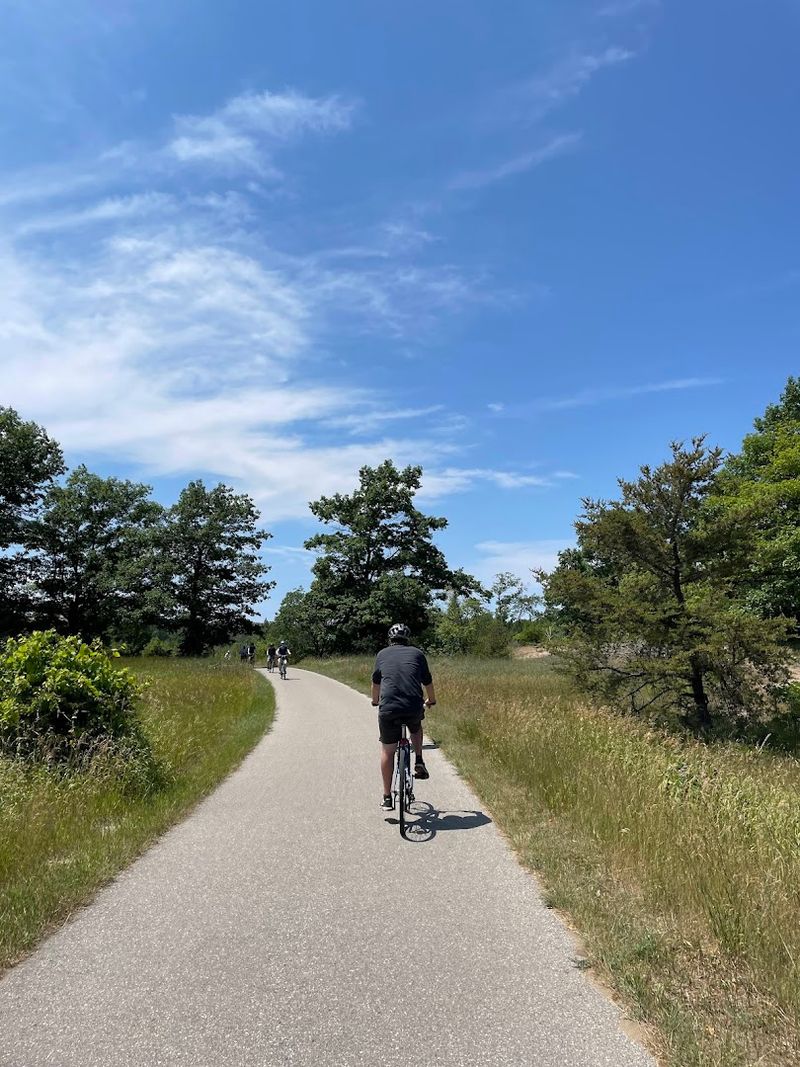
The Dune Climb at Sleeping Bear Dunes National Lakeshore attracts hundreds of thousands of visitors each year, and on a summer weekend the parking lots and sandy slopes can feel genuinely packed. The heritage trail, running just a short distance away, tends to feel like a completely different world.
Part of the reason is access. The trail does not have a single dramatic focal point the way the Dune Climb does, so it never becomes the target of tour buses or large group visits.
People who find it are usually looking for it, which self-selects for a quieter, more intentional crowd.
Early mornings on the Empire end of the trail are especially peaceful. The parking area is often nearly empty before 9 a.m., and the first few miles of the route can feel almost private.
If avoiding the summer chaos of a popular national park attraction sounds appealing, this trail offers a genuinely effective solution without sacrificing any of the scenery.
Best Times of Year to Experience the Trail
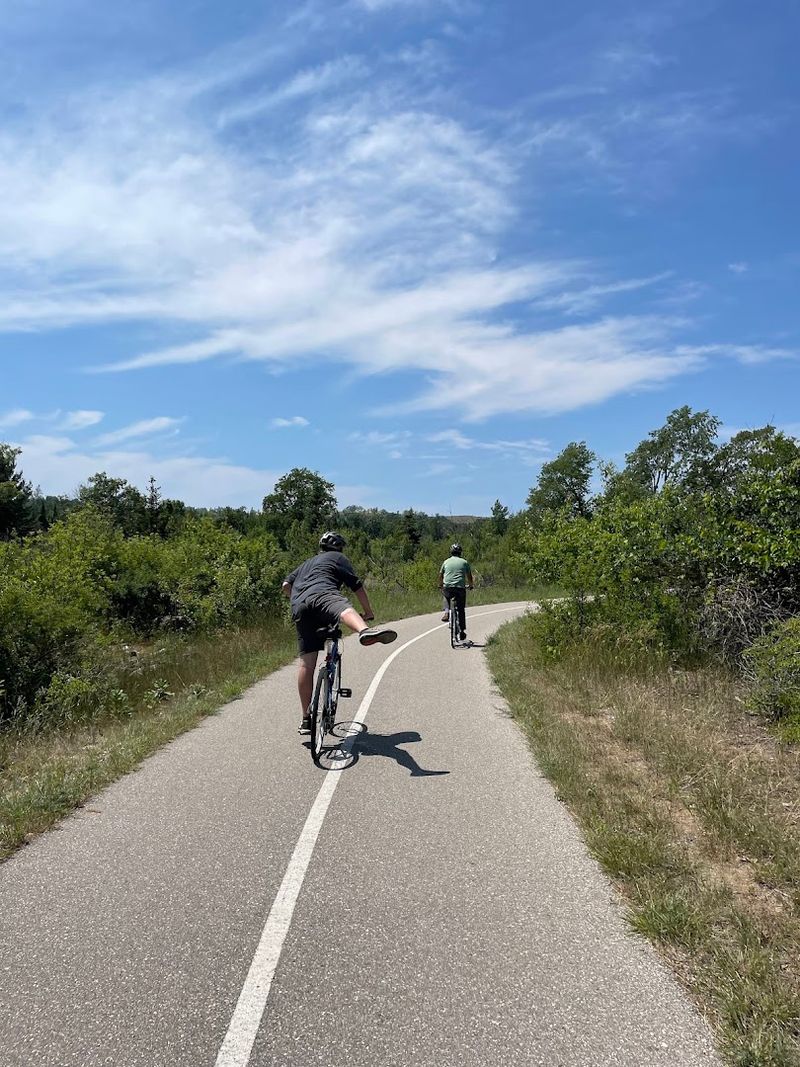
Summer gets the most visitors, but fall might actually be the best season to experience this trail. From late September through mid-October, the hardwood trees along the route turn brilliant shades of orange, red, and gold, and the cooler temperatures make long rides or walks far more comfortable than the humid peak of August.
Spring brings a different kind of reward. Wildflowers appear along the trail edges, migratory birds move through the lakeshore area in large numbers, and the landscape feels fresh and newly green after winter.
The trail surface is usually clear of snow by April, though conditions can vary year to year.
Winter use is possible but requires a different mindset. The trail is not plowed, so snow-covered sections become cross-country ski terrain.
Summer remains popular for good reason, particularly in July when Lake Michigan water temperatures are warmest and the trail can be combined with a beach visit at nearby Empire Beach just a short detour away.
Practical Tips for Planning Your Visit
A few practical details can make a big difference in how smoothly a visit to the trail goes. Parking at the Empire trailhead on Bar Lake Road is free and does not require a national park pass, though some other access points within the lakeshore do require the standard national park entrance fee.
Water and restrooms are available at some trailheads but not all, so carrying enough water for your planned distance is a smart move, especially in summer. There are no vending machines or concession stands along the trail itself, so pack snacks if you plan to be out for more than an hour or two.
Cell service can be inconsistent in parts of the lakeshore, which makes downloading an offline map before you go a worthwhile step. The Friends of Sleeping Bear Dunes website maintains updated trail condition reports and a downloadable PDF map that is clear and easy to read.
Knowing the current condition of the Port Oneida crushed stone section before you arrive is especially useful if you are riding a road bike with narrow tires.
What to Bring for a Day on the Trail
The right gear can turn a good trail day into a great one. A well-fitted helmet is essential for cyclists, and a simple daypack makes it easy to carry water, snacks, sunscreen, and a light jacket without weighing you down.
Sunscreen matters more than most people expect here because several stretches of the trail run through open terrain with no shade cover.
Footwear depends on how you plan to use the trail. Road cycling shoes work well on the paved sections, but if you plan to walk through the Port Oneida crushed stone area, a sturdy athletic shoe or trail runner is more comfortable.
Hikers will feel at home in standard hiking footwear throughout the full route.
Bringing a small pair of binoculars is a tip that sounds unnecessary until you are standing at one of the Lake Michigan overlooks and wishing you could see the Manitou Islands more clearly. Those islands sit just offshore and are visible from several points along the trail on a clear day.
The Manitou Islands View: A Detail Most Visitors Miss
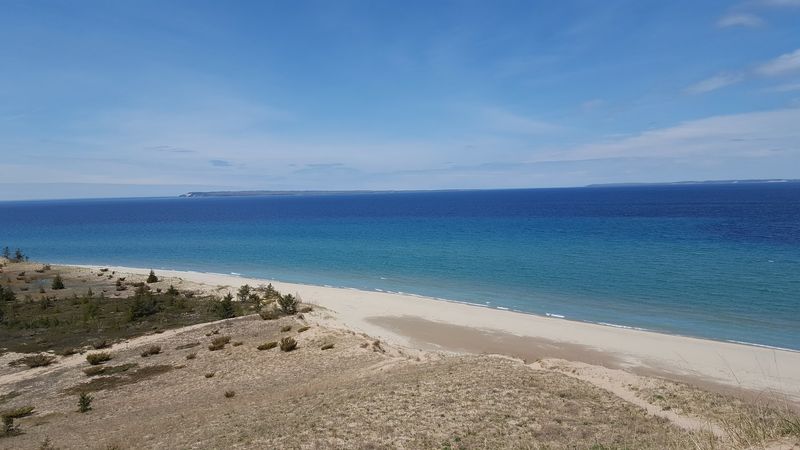
North and South Manitou Islands are visible from the shoreline sections of the Sleeping Bear Heritage Trail, rising out of Lake Michigan like low green ridgelines on the horizon. Most visitors to the lakeshore focus on the dunes themselves and never think to look west across the water, which means this view goes unappreciated more often than it should.
The islands are part of Sleeping Bear Dunes National Lakeshore and are accessible by ferry from Leland, about 20 miles north of Empire. From the trail, they appear as quiet, distant shapes that add depth and scale to the already impressive lake views.
On particularly clear days, the islands seem close enough to swim to, though they sit several miles offshore. Early morning tends to produce the clearest sightlines before afternoon haze builds over the water.
Spotting the islands from the trail is one of those small, satisfying details that rewards people who slow down and actually look at what surrounds them rather than just moving through it.
Why This Trail Deserves a Spot on Your Michigan Bucket List
There is no shortage of trails in Michigan, but the Sleeping Bear Heritage Trail occupies a category of its own because of what surrounds it. A national lakeshore, a Great Lakes shoreline, a preserved rural historic district, and one of the largest freshwater dune systems in the world all exist within a short distance of the pavement beneath your feet.
The trail is free to access from the Empire trailhead, well-maintained year-round, and genuinely accessible to people of different ages and fitness levels. That combination is rarer than it sounds when you are talking about a trail that runs through a nationally recognized natural area.
What stays with you after a day on this trail is not just the views, as impressive as they are, but the overall feeling of having experienced a place on its own terms rather than through a crowded lookout or a tour route. The Sleeping Bear Heritage Trail near Empire, Michigan earns its reputation quietly and completely, and that might be the best thing about it.
Share this story