American history has a habit of refusing to sit quietly behind velvet ropes. In cities, villages, and old colonial streets, some of the nation’s earliest public buildings are still working for a living, welcoming visitors, congregations, and curious locals centuries after their first busy day.
That means this list is not just about old walls and dates on plaques – it is about places where public life never really packed up and left. Keep reading, and you will meet churches, halls, courthouses, and civic landmarks that have survived repairs, reinventions, and a truly unreasonable number of calendars while still showing up for the public.
1. San Miguel Mission (Santa Fe, New Mexico)
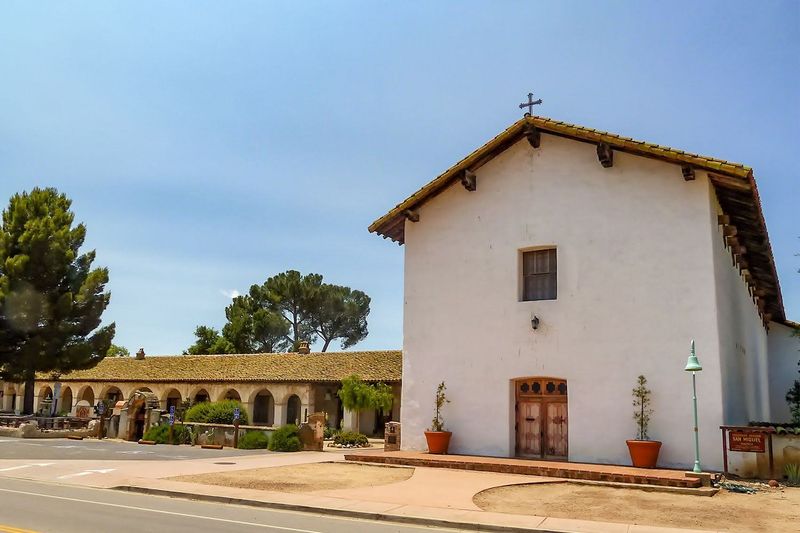
Here is a building that makes most addresses look embarrassingly new. San Miguel Mission in Santa Fe is widely cited as the oldest church in the United States, with origins around 1610 and a long history of rebuilding that never erased its core identity.
The adobe structure still serves as an active Catholic parish, so this is not a frozen artifact with a rope across the doorway. You can step inside and find thick walls, wooden beams, a modest nave, and a famous reredos that reflects Spanish colonial craftsmanship without turning the place into architectural theater.
Its story includes repairs after conflict, ongoing preservation, and the practical challenge of keeping an early adobe church functional in a modern city. That balance is what makes it memorable: San Miguel Mission is old, certainly, but it is also useful, visited, and very much part of daily Santa Fe life rather than a relic politely waiting for applause.
2. Jamestown Church (Jamestown, Virginia)
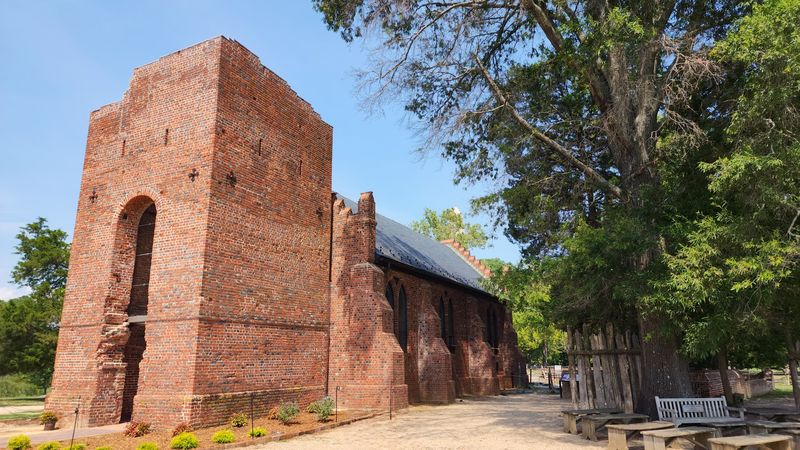
A stubborn brick tower steals the show at Jamestown, and it has earned the attention. The surviving tower from 1639 is one of the oldest standing church elements in English America, tied to the first permanent English settlement and a site that still hosts worship and public gatherings.
Jamestown Church is not preserved as a neat single moment in time, which is part of its appeal. The original church went through several versions, and today the Historic Jamestowne site blends archaeology, interpretation, and active religious use in a way that makes the place feel like a conversation across centuries.
Visitors come for the settlement story, then quickly realize the church remains central to it. Services and commemorative events still take place here, proving the site is not just about foundations in the ground or dramatic textbook footnotes.
Jamestown Church continues to function as a public and spiritual landmark where early colonial history is still doing its regular rounds.
3. Old Ship Church (Hingham, Massachusetts)
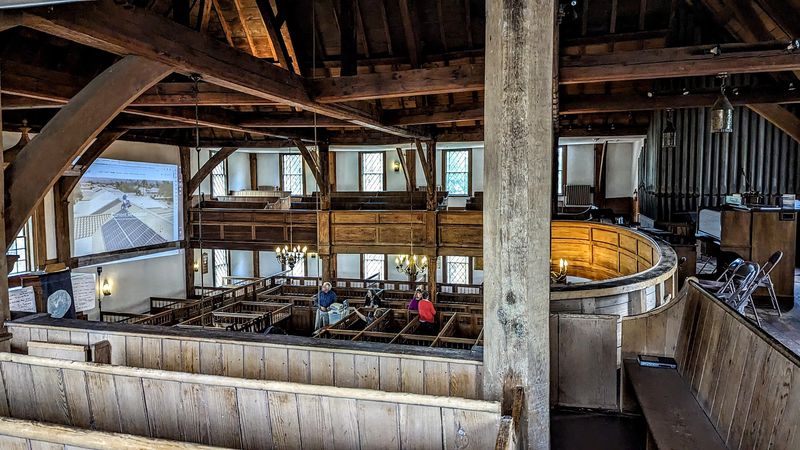
The ceiling alone deserves its own fan club. Old Ship Church in Hingham, Massachusetts, built in 1681, is the oldest church in continuous use in the United States, and its exposed timber roof famously resembles the upside down hull of a ship.
That visual detail tends to grab people first, but the building’s real achievement is continuity. It began as a Puritan meetinghouse and still hosts weekly Unitarian Universalist services, which means the structure has remained tied to public gathering, shared ritual, and community debate for well over three centuries.
The design is plain in the best possible way, with wooden framing, simple lines, and a layout that reflects early New England priorities more clearly than many larger landmarks. There is no need for ornate distractions when the building itself is the headline.
Old Ship Church survives because it has kept doing its job, and that quiet consistency gives it a charm that feels steadier than almost anything fashionable today.
4. Middleburg Meeting House (Middleburg, Virginia)
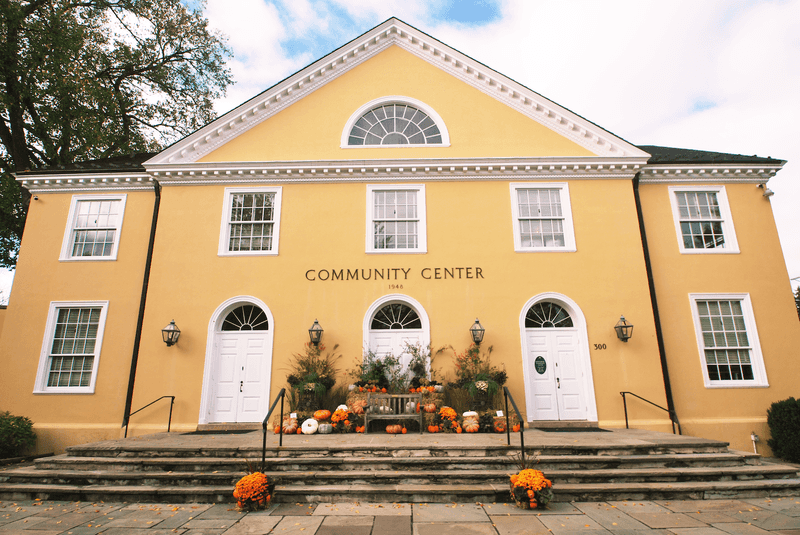
Plainness is the point, and Middleburg Meeting House wears it well. Built in 1729 in Middleburg, Virginia, this Quaker meeting house still serves worshippers today, proving that a building does not need grand ornament to hold public importance for nearly three hundred years.
Quaker architecture favored restraint, and that simplicity remains one of the site’s strongest features. The modest brick structure reflects a religious tradition centered on contemplation, equality, and gathering rather than spectacle, so the building’s continued use feels especially faithful to its original purpose.
Visitors often notice how little the place seems interested in showing off, which is refreshing in an age of highly curated heritage experiences. Its value comes from continuity, clear design, and the fact that it still functions as a meeting space rather than a decorative shell.
Middleburg Meeting House offers a quieter chapter in the national story, but it is a sturdy one, and sometimes understated buildings end up making the strongest argument for endurance.
5. Old Dutch Church (Sleepy Hollow, New York)
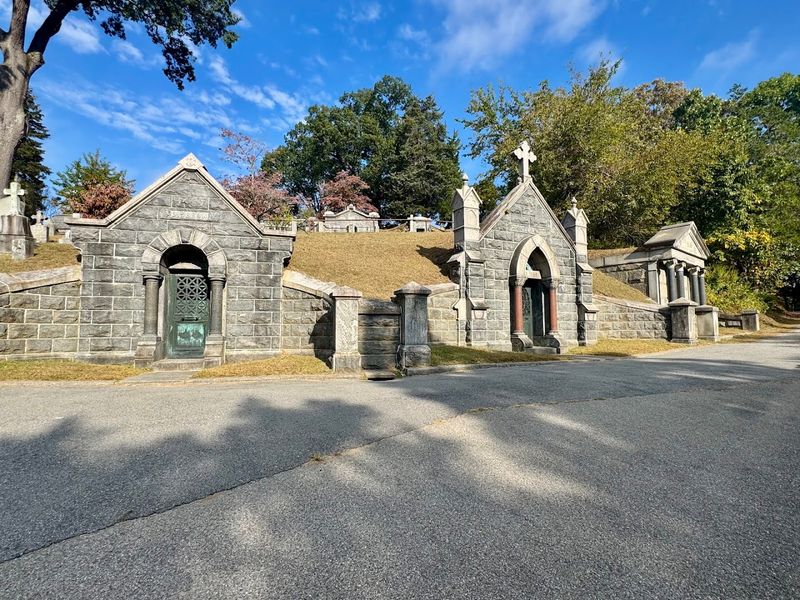
Literature gave this church extra fame, but age and function did the real work first. The Old Dutch Church in Sleepy Hollow, New York, dates to 1685 and remains an active place of worship, linking colonial religious history with one of America’s most famous storytelling landscapes.
The stone walls and compact profile speak clearly to Dutch colonial design, and the building still looks purpose built rather than ornamental. Washington Irving later helped make the surrounding area legendary, yet the church’s appeal goes beyond literary association because it continues to operate as a parish and a local landmark.
That active role keeps the site from feeling like a chapter title preserved in masonry. Visitors come for history, architecture, and Irving connections, then discover a church that still serves an actual congregation and still anchors community life.
Old Dutch Church has the rare advantage of being both culturally famous and genuinely useful, which is a neat trick for a structure that first opened when the colonies were still sorting themselves out.
6. Fairbanks House (Dedham, Massachusetts)
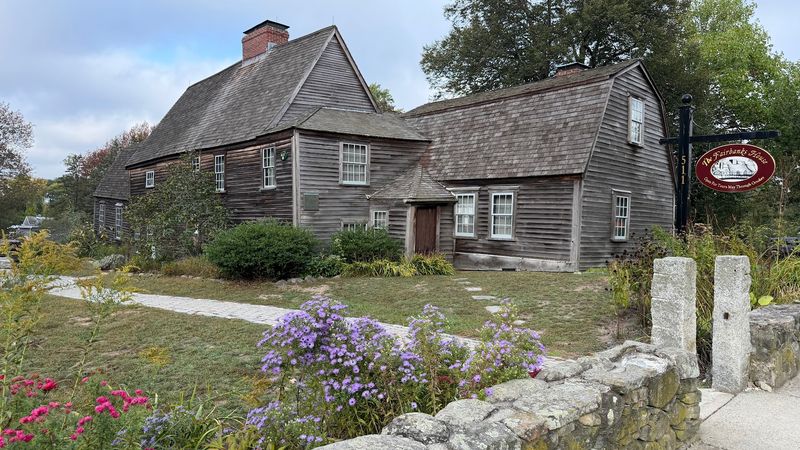
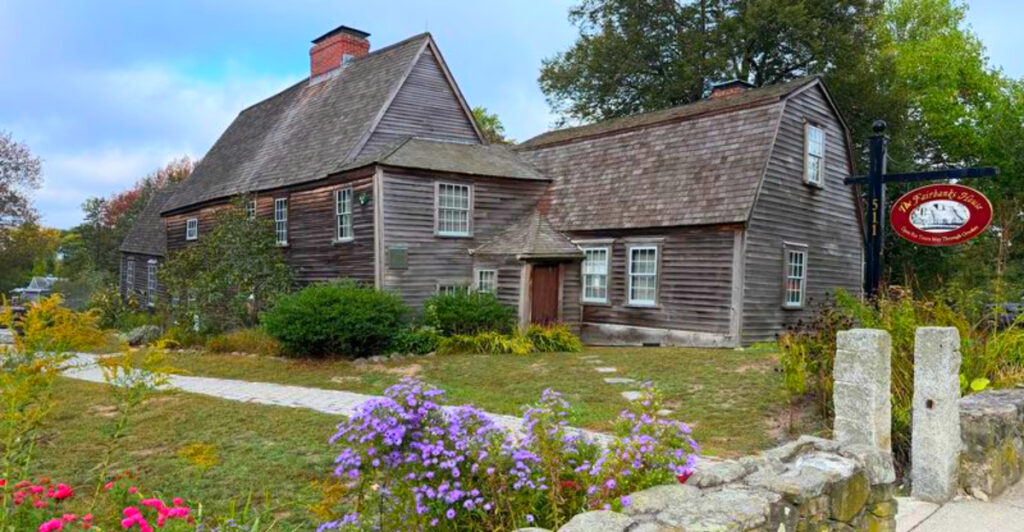
This house has been standing so long that newer centuries seem like recent upgrades. Built around 1637 in Dedham, Massachusetts, the Fairbanks House is considered one of the oldest surviving timber frame houses in North America and remains open to the public as a museum.
Its importance starts with the construction itself. The frame, central chimney arrangement, and successive additions reveal how early New England families adapted a home over generations, and the result is less polished mansion, more practical survival manual written in wood.
That practicality is exactly why the place feels interesting instead of distant. Tours focus on architecture, family history, furnishings, and the day to day mechanics of colonial life, giving visitors something more useful than vague nostalgia.
The Fairbanks House is technically a residence turned museum, but it still serves the public through education, interpretation, and the simple thrill of seeing a wooden structure that has outlasted almost everything built around it.
7. Bruton Parish Church (Williamsburg, Virginia)
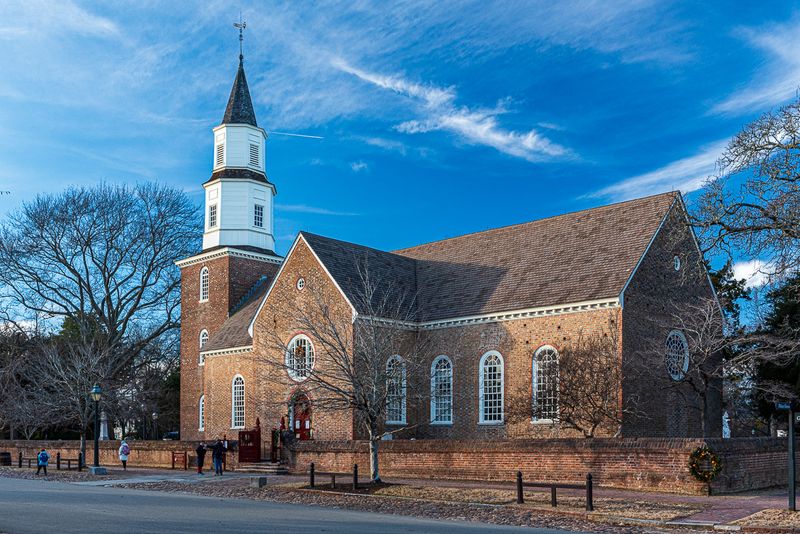
Some buildings quietly collect famous attendees like they were saving receipts. Bruton Parish Church in Williamsburg, Virginia, completed in 1715, is still an active Episcopal church and remains one of the most recognizable religious buildings from colonial America.
Its brick Georgian exterior and orderly interior fit perfectly within the historic fabric of Williamsburg, yet the church is far more than a photogenic stop between museum tickets. Worship continues here, and the long roster of associated figures, including George Washington, gives the site political and civic resonance without overshadowing its spiritual function.
The building also benefits from context. Surrounded by restored colonial streets, it can feel almost too neat, but Bruton Parish avoids becoming stage scenery because it still serves parishioners in the present tense.
That matters. A church with centuries of history is impressive, but a church with centuries of uninterrupted purpose is much more compelling.
Bruton Parish Church remains one of those rare places where historical reputation and everyday use still share the same pews.
8. Old State House (Boston, Massachusetts)
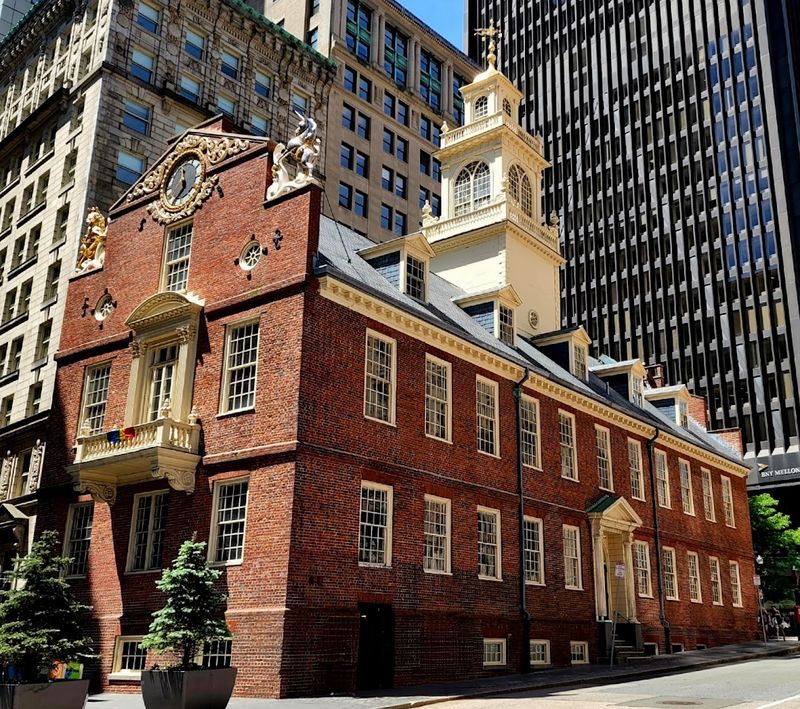
Boston has plenty of historic heavyweights, yet this one still carries itself like the original department head. The Old State House, built in 1713, is among the oldest surviving public buildings in the country and once served as the center of colonial government in Massachusetts.
Today it operates as a museum, but the building’s civic identity remains unmistakable. Its brick exterior, central balcony, and place on the Freedom Trail make it a familiar landmark, while exhibits inside explain how politics, protest, and daily administration once played out within those rooms.
The beauty of the Old State House is that it does not need exaggeration. Important debates happened here, public announcements were made here, and the structure still welcomes people in a public educational role that fits its original purpose remarkably well.
In a city crowded with stories, this building still holds attention because it represents government in plain view. Centuries later, it remains open, relevant, and entirely unwilling to retire from the conversation.
9. Faneuil Hall (Boston, Massachusetts)
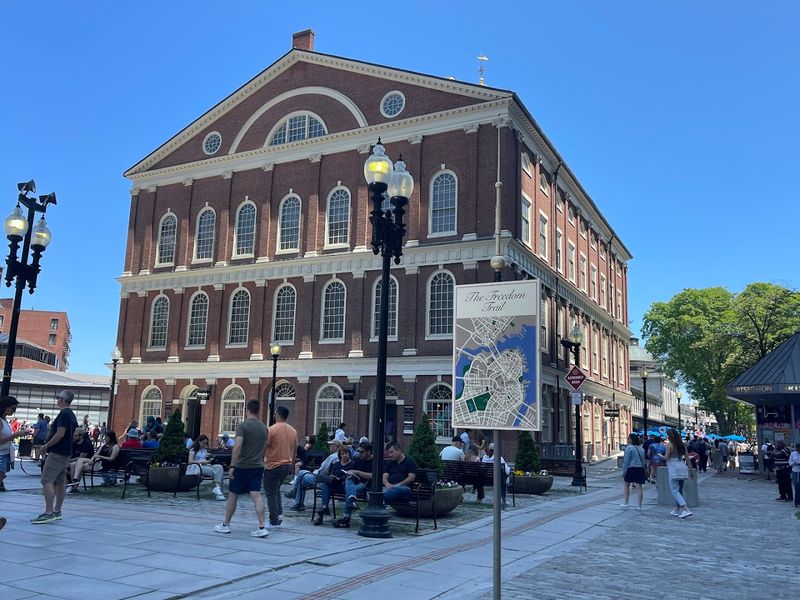
Few old buildings have managed to stay this busy without becoming cranky about it. Boston’s Faneuil Hall, first built in 1742, began as a marketplace and meeting hall, and it still thrives as a public destination packed with shops, food counters, events, and steady foot traffic.
The nickname “Cradle of Liberty” gives away part of its significance. Public speeches and political debate helped shape its reputation, but the building’s commercial side matters too, because Faneuil Hall was designed for civic life and everyday exchange, not just grand statements for history books.
That mix is still the secret sauce, if a building may borrow food court vocabulary for a moment. Visitors can browse, eat, listen, and wander through a space that has remained public facing for nearly three centuries.
It is not preserved in silence, and that feels exactly right. Faneuil Hall continues doing what it always did best: bringing people together for commerce, conversation, and the occasional reminder that old buildings can still handle a crowd.
10. Independence Hall (Philadelphia, Pennsylvania)
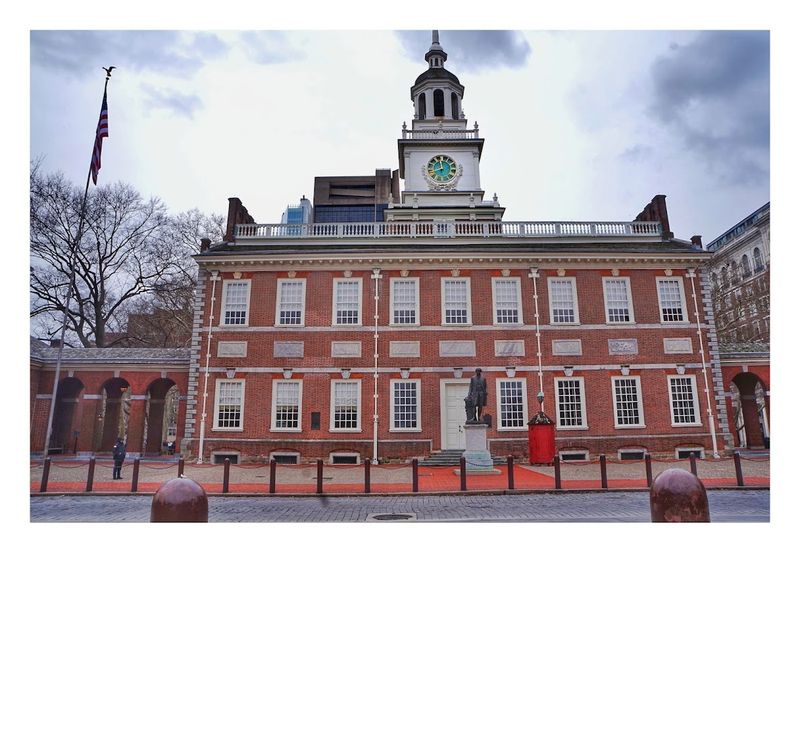
Some buildings get famous for being old, and some get famous for rewriting the national paperwork. Independence Hall in Philadelphia, completed in 1753, belongs firmly in the second category, since it was the site where the Declaration of Independence and the Constitution were debated and adopted.
Despite that towering reputation, the building is still fundamentally a public place. Operated as part of Independence National Historical Park, it remains open to visitors who can tour the assembly rooms and see a remarkably intact setting for some of the country’s defining civic arguments.
Its Georgian design, red brick exterior, and central tower are instantly recognizable, but the real draw is how understandable the space feels in person. These rooms are not impossibly huge, which makes the human scale of those debates more striking.
Independence Hall still serves through education, interpretation, and public access, and that ongoing role matters. History happened here, certainly, but the building’s current job is just as important: helping people see that the nation’s big ideas were argued inside actual rooms by actual people.
11. Touro Synagogue (Newport, Rhode Island)
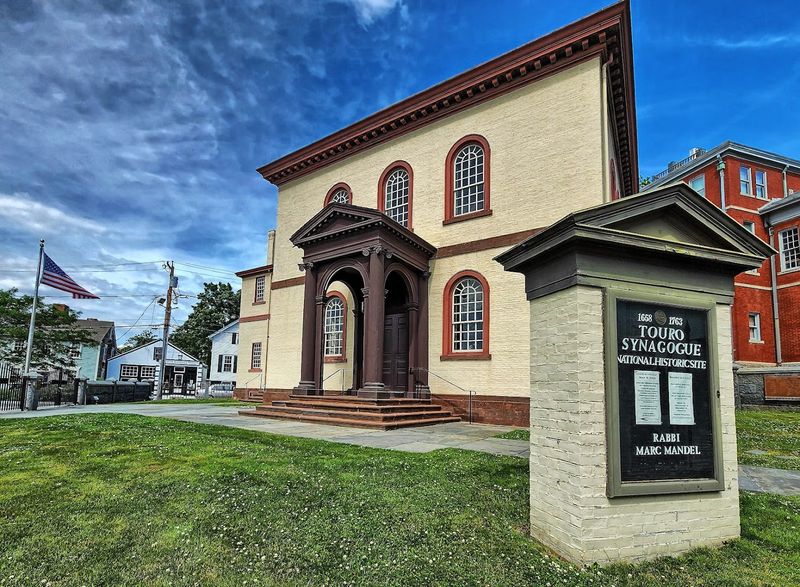
Age matters here, but meaning matters even more. Touro Synagogue in Newport, Rhode Island, dedicated in 1763, is the oldest synagogue in the United States and continues to serve an active congregation while standing as a major symbol of religious liberty.
The building was designed by Peter Harrison, and its restrained elegance gives it a dignified clarity that still reads well today. Inside, the layout reflects Sephardic worship traditions, and the site’s history is closely tied to the early American conversation about freedom of conscience and public inclusion.
That larger significance has not pushed aside its living role. Touro is not merely a preserved statement about tolerance; it remains a functioning house of worship with ongoing religious and educational importance.
Visitors often arrive expecting a landmark and leave having encountered a place with both national meaning and local continuity. In a country that likes to debate its founding principles, Touro Synagogue offers a rare chance to stand inside one that has been practiced, defended, and maintained for generations.
12. St. Paul’s Chapel (New York City, New York)
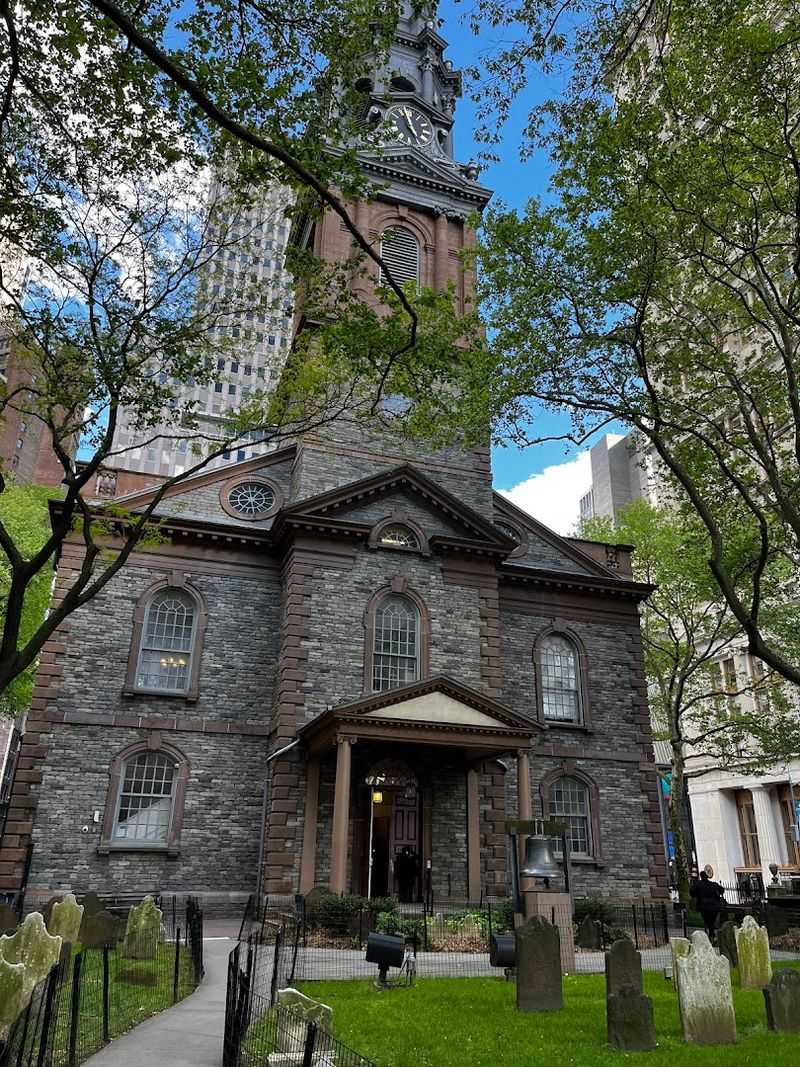
Lower Manhattan changes outfits constantly, yet St. Paul’s Chapel keeps wearing 1766 with confidence. It is the oldest surviving church building in Manhattan, and it still hosts services while offering one of the clearest reminders that colonial New York never fully disappeared.
The chapel’s Georgian design looks composed rather than flashy, which helps explain its staying power. It also carries a layered public history: George Washington worshipped here after his inauguration, and the site later served as a place of rest and support for recovery workers during the aftermath of September 11.
That combination of early national history and modern civic service gives St. Paul’s unusual depth. It is not just preserved because it is old or because it escaped redevelopment.
It remains relevant because people continue to use it in moments that matter, both ceremonial and practical. Surrounded by financial towers and relentless city motion, St. Paul’s Chapel still functions as a public spiritual space with an impressive gift for remaining useful when history suddenly becomes very current.
13. Old Courthouse (St. Louis, Missouri)
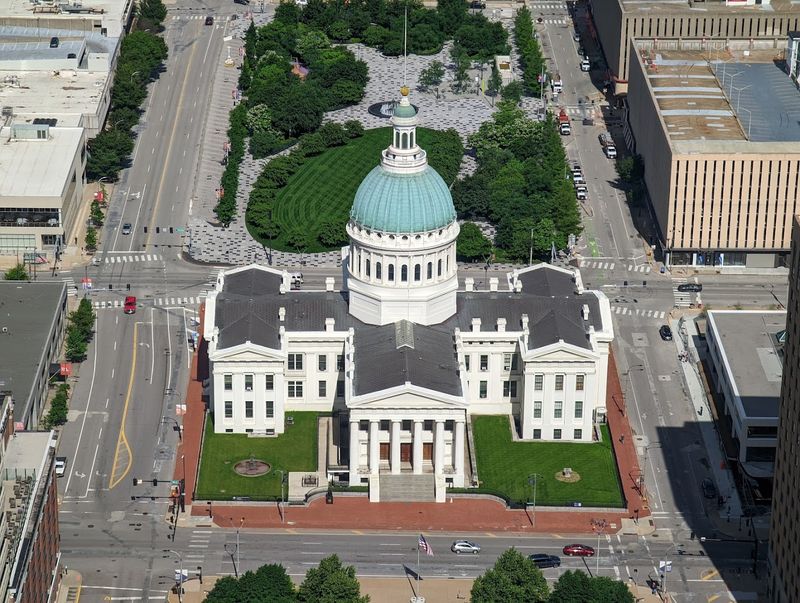
A domed courthouse in St. Louis proves that “still in use” can include teaching the public with serious style. The Old Courthouse, completed in 1828 and expanded later, now operates as part of Gateway Arch National Park, remaining open for tours, exhibits, and public interpretation.
Its architecture is grand, with a prominent dome and classical detailing, but the building’s significance goes well beyond looks. It is closely associated with major legal history, including the Dred Scott case, making it a place where visitors confront the machinery of American law in a direct setting.
Because it functions as an educational site rather than a sealed monument, the courthouse keeps serving the public in a way that suits its original civic role. People enter, learn, ask questions, and move through rooms where legal decisions once carried enormous national consequences.
The Old Courthouse does not ask for decorative admiration alone. It asks for attention, context, and a little patience with the past, which is a fair request from a building that has spent generations in public service.
14. Cabildo (New Orleans, Louisiana)
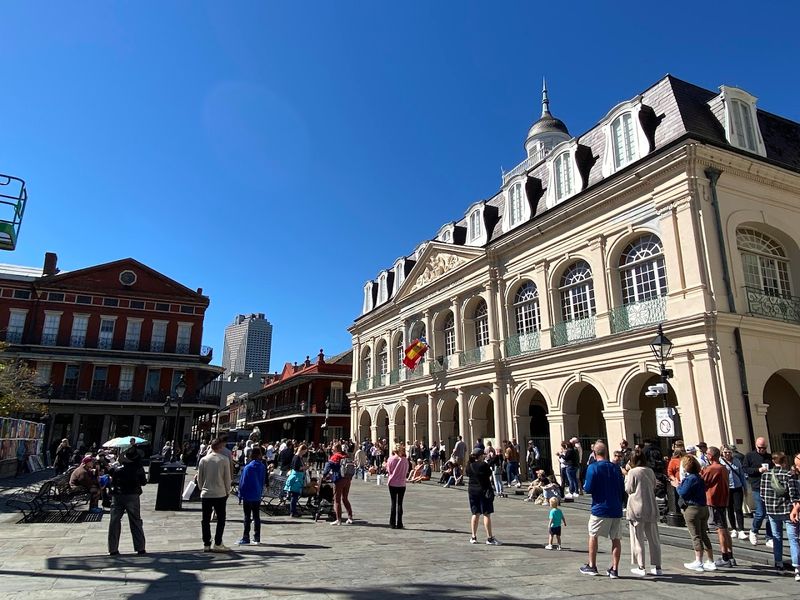
New Orleans never struggles for personality, and the Cabildo keeps up nicely. Built in 1799 beside Jackson Square, this former seat of Spanish colonial government now operates as a museum, continuing its public role in one of the country’s most historically layered city centers.
The building’s arcaded facade and elegant Spanish colonial style make it a visual anchor in the French Quarter, but the real appeal is what happened inside. It served as the site of the Louisiana Purchase transfer ceremonies, giving it a front row seat in a major shift of American geography and governance.
Today, exhibits on Louisiana history keep the place active, educational, and easy to justify on any itinerary. The Cabildo does not survive merely because it looks handsome in travel photos, though it certainly helps.
It survives because it remains useful as a public institution and because its story connects empire, statehood, law, and urban identity in one compact building. That is a lot of history per square foot, and the Cabildo still carries it lightly.
15. St. Augustine Cathedral (St. Augustine, Florida)
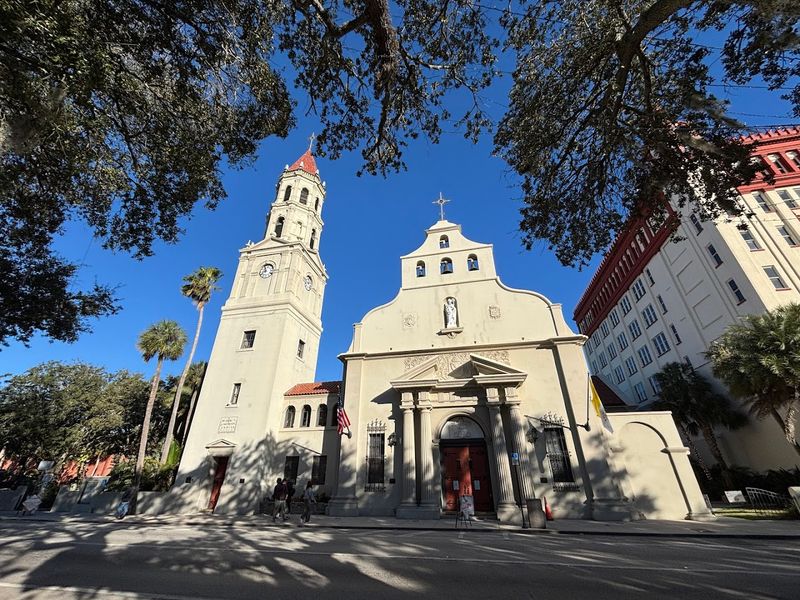
America’s oldest city would be incomplete without a church that can keep pace. St. Augustine Cathedral, with parish origins dating to 1565 and the current structure largely from 1797, remains an active Catholic cathedral and one of Florida’s most important historic religious buildings.
Its long history reflects repeated rebuilding, which is common in very old sites and does not lessen the place’s significance. Instead, the cathedral shows how a public religious institution can adapt across centuries while preserving Spanish colonial influence in its design, presence, and civic importance.
The location in the heart of St. Augustine gives it constant visibility, but this is more than a scenic stop on a crowded walking route. Services continue, visitors are welcome, and the building still functions as a center of worship in a city where history appears on nearly every block.
St. Augustine Cathedral earns attention because it is both ancient by American standards and entirely current in purpose. That combination is not rare by accident; it takes persistence, care, and a community that keeps returning.
Share this story