Slovenia is one of those countries that keeps surprising you no matter how much you think you know about it. Tucked between Italy, Austria, Croatia, and Hungary, this small country packs in an almost unfair amount of natural beauty, medieval villages, and underground wonders.
I visited Slovenia expecting pretty lakes and left with a jaw that barely recovered. Get ready, because these 15 spots are about to make your travel bucket list very, very long.
Zelenci, Kranjska Gora
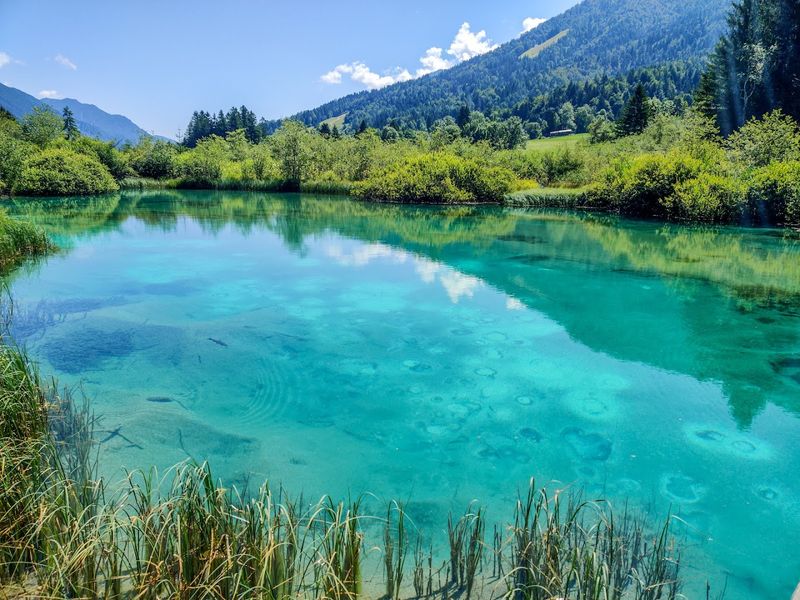
Zelenci’s water is so green it looks like someone spilled a giant bottle of food coloring into the ground. Located just outside Kranjska Gora, this protected nature reserve is one of Slovenia’s best-kept open secrets.
A wooden boardwalk winds through the reserve, making it easy to explore without sinking into the marshy ground.
The vivid color comes from the springs bubbling up from the riverbed, which keep the water clear and brilliantly lit. It is part of Triglav National Park, so the area is well protected and refreshingly free of overdevelopment.
I wandered here on a quiet morning and had the whole boardwalk almost to myself.
Bring good walking shoes because the surrounding paths can get muddy after rain. The reserve is small enough to explore in under an hour, making it a perfect stop on a Kranjska Gora road trip.
Few places earn the word “surreal” so honestly.
Velika Planina, Kamnik
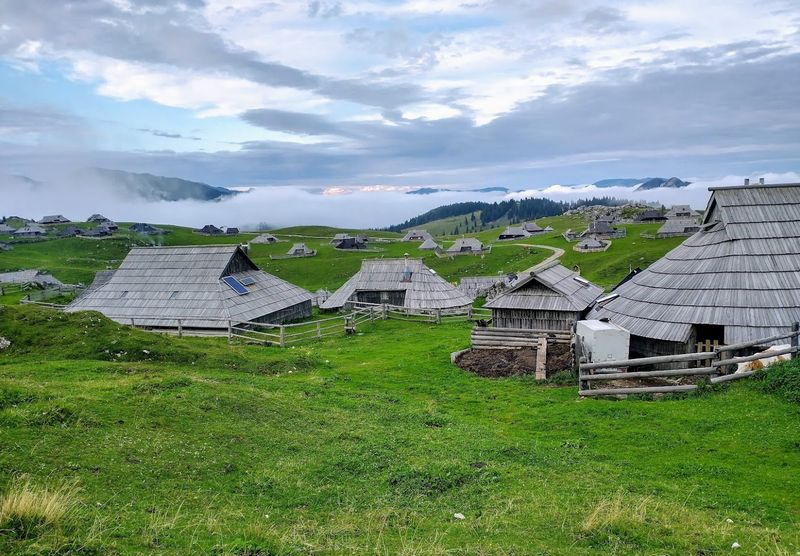
At 1,666 meters above sea level, Velika Planina is home to one of the oldest shepherd settlements in Europe, and the huts look like something straight out of a fairy tale. The rounded wooden structures with their distinctive shingle roofs have been here for centuries, and the whole plateau feels frozen in the best possible way.
A cable car from Kamnik whisks you up in minutes, which is honestly a miracle when your legs have other plans.
The sweeping alpine views are the kind that make you stop mid-sentence and just stare. On a clear day, you can see peaks stretching across the horizon in every direction.
In summer, the meadows fill with wildflowers and grazing cows wearing bells, which adds an almost theatrical charm to the whole scene.
Visit on a weekday if possible to avoid the weekend crowds. The plateau has a small restaurant serving traditional food, so you can refuel with warm soup while the mountains do their thing.
Rakov Škocjan, Cerknica
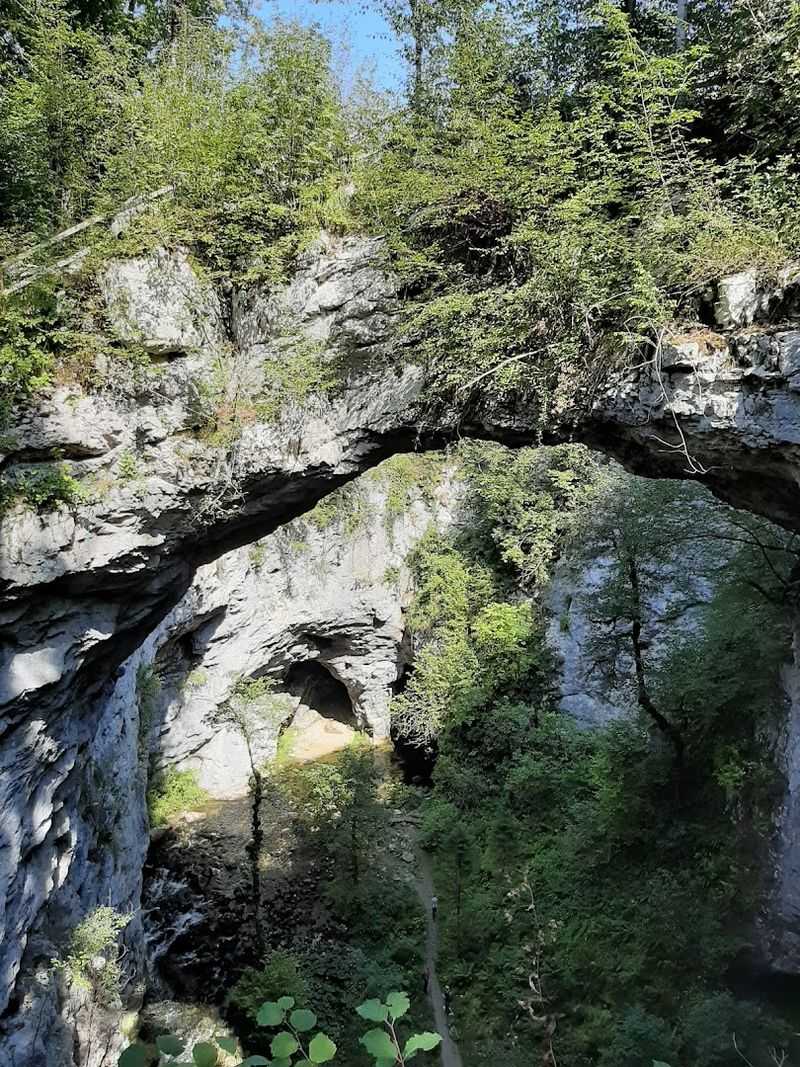
Rakov Škocjan is the kind of place geologists probably dream about. This dramatic karst valley near Cerknica features two massive natural stone bridges, carved out by the Rak River over millions of years.
The Big Natural Bridge spans an impressive 34 meters and stands as one of the most striking geological formations in Slovenia.
Forest trails run through the valley, making it a genuinely rewarding walk rather than just a photo stop. The landscape shifts between open meadows, dense woodland, and dramatic rocky outcrops, keeping the scenery interesting at every turn.
Notranjski Park manages the area and maintains the trails well, so you are in good hands.
The valley is part of a larger karst system that includes the famous Cerknica Lake nearby, so combining both in one day trip makes total sense. Admission is free, which makes it even harder to understand why more people are not talking about this place.
Seriously, tell your friends.
Šmartno, Goriška Brda
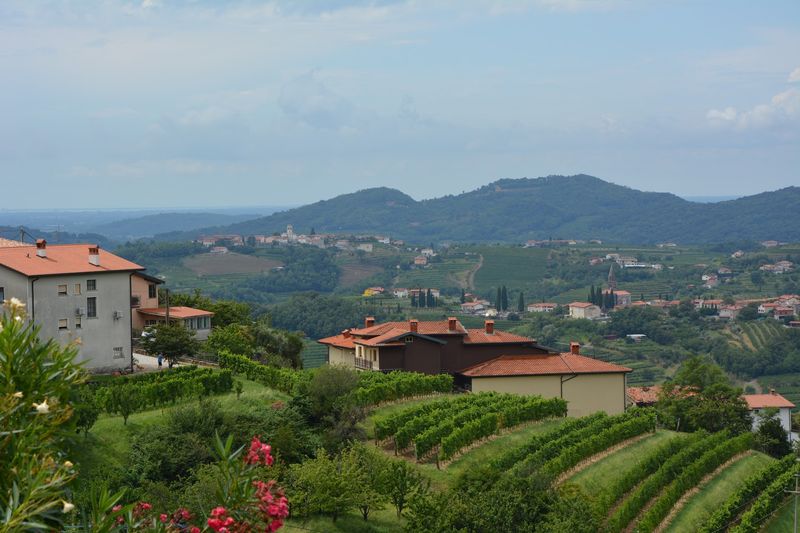
Šmartno is what happens when a medieval village decides to stay absolutely perfect for several hundred years. Perched on a gentle hill in the Brda wine region, this fortified settlement has kept five of its original towers standing, which is the kind of architectural commitment most modern buildings cannot match.
The stone lanes are narrow, winding, and completely car-free inside the walls.
Brda is Slovenia’s answer to Tuscany, and Šmartno is its crown jewel. The surrounding hills are covered in vineyards producing some of the country’s best white wines, and several local producers offer tastings just outside the village gates.
I spent an afternoon here eating local cheese, sipping Rebula wine, and feeling extremely smug about my travel choices.
The village is small enough to explore in an hour but charming enough to keep you lingering much longer. Combine it with a winery visit in the surrounding hills for a genuinely spectacular half-day.
Pack light and wear comfortable shoes because the cobblestones are enthusiastic.
Jeruzalem, Ormož
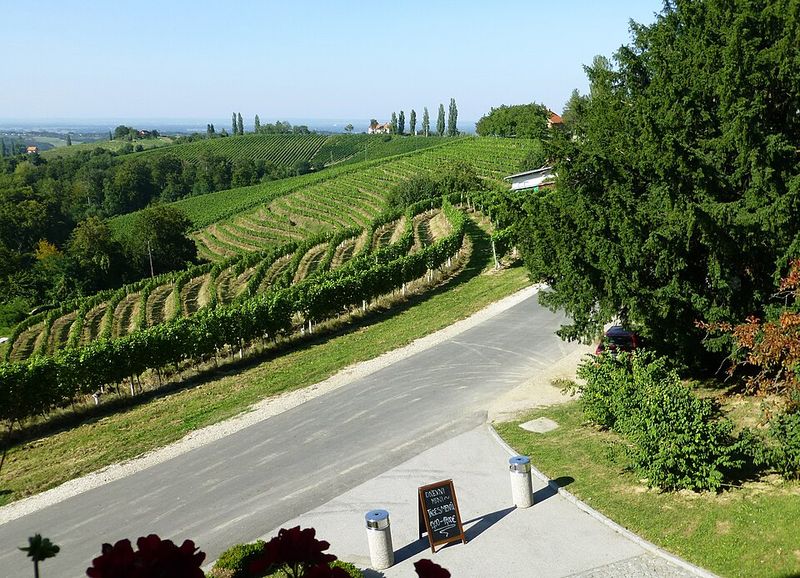
Nobody really knows for certain why a Slovenian wine village ended up named Jerusalem, but the most popular theory involves medieval crusaders who liked the hills so much they decided to stay. Honestly, fair enough.
Jeruzalem sits in the Ormož area of northeastern Slovenia, and its rolling vineyard hills are so perfectly arranged they look almost deliberately designed.
The area is famous for its white wines, particularly Šipon, a grape variety you will not find easily outside this region. Scenic cycling and walking routes wind through the vineyards, connecting small farms and wine cellars along the way.
The panoramic views from the hilltops are genuinely spectacular, especially in autumn when the vines turn gold and copper.
This corner of Slovenia gets far fewer international visitors than the west of the country, which means you get a more authentic, unhurried experience. Most wine producers welcome drop-in visitors, so spontaneity is fully encouraged here.
Bring an extra bag for bottles.
Logar Valley, Solčava
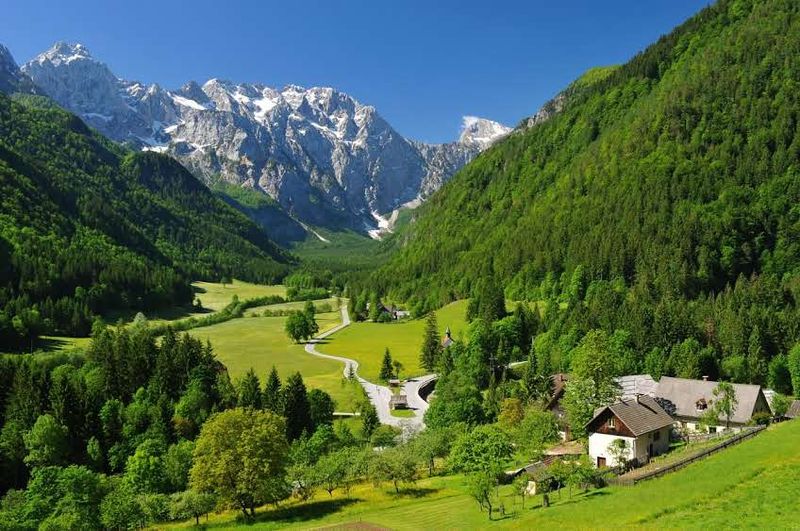
Logar Valley has the kind of scenery that makes landscape photographers weep with joy. This glacial valley near Solčava is framed on all sides by the Kamnik Savinja Alps, creating a natural amphitheater of peaks, meadows, and old farmhouses that looks almost too composed to be real.
The valley floor is flat and green, which makes the surrounding mountains look even more dramatic by contrast.
A circular road runs through the valley, making it easy to drive or cycle at a leisurely pace while stopping at viewpoints, waterfalls, and farms along the way. The Rinka Waterfall at the far end of the valley is a highlight that rewards the short walk from the car park.
Several traditional farms operate as guesthouses, offering local food and a genuinely peaceful overnight stay.
Spring and early summer are the best times to visit when snowmelt keeps everything brilliantly green. The valley can get busy on summer weekends, so arriving early pays off.
This is one of those places that earns every superlative thrown at it.
Solčava Panoramic Road, Solčava
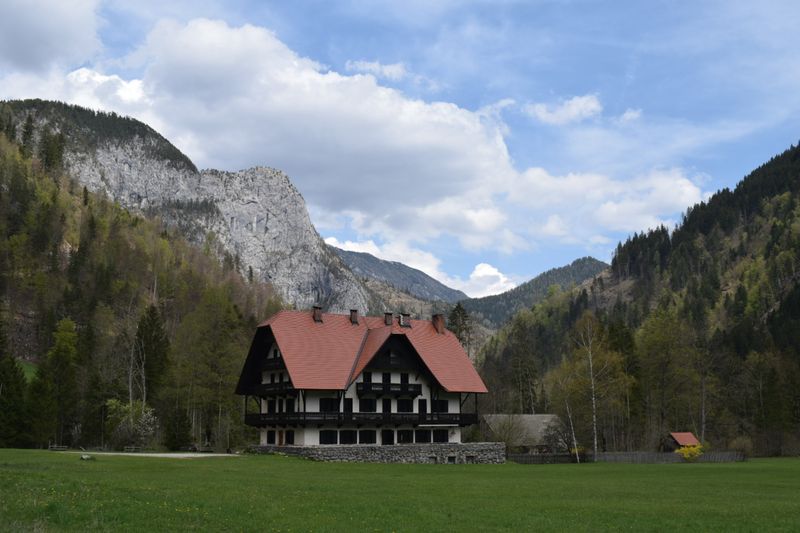
The Solčava Panoramic Road is not just a way to get somewhere. It is the destination itself.
This scenic route through the hills above Solčava delivers non-stop views over the Kamnik Savinja Alps and Logar Valley, with lookout points, old farms, and mountain chapels appearing at satisfying intervals along the way.
The road is narrow in places, so driving slowly is both necessary and completely justified because you will want to stop constantly anyway. Local farms along the route sell honey, cheese, schnapps, and homemade jams, making it one of the tastiest drives in the country.
Regional tourism pages list it among the most scenic routes in Slovenia, and for once, the marketing actually delivers.
Autumn is spectacular here when the forested slopes turn every shade of orange and red. Cycling the route is also popular, though the hills will test your legs.
Either way, the reward at every bend is a view that makes the effort feel very, very worth it.
Šunik Water Grove, Lepena Valley
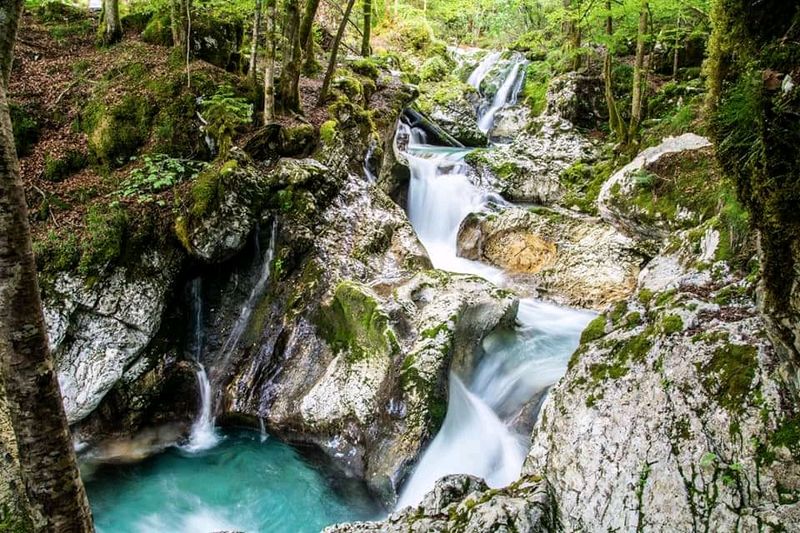
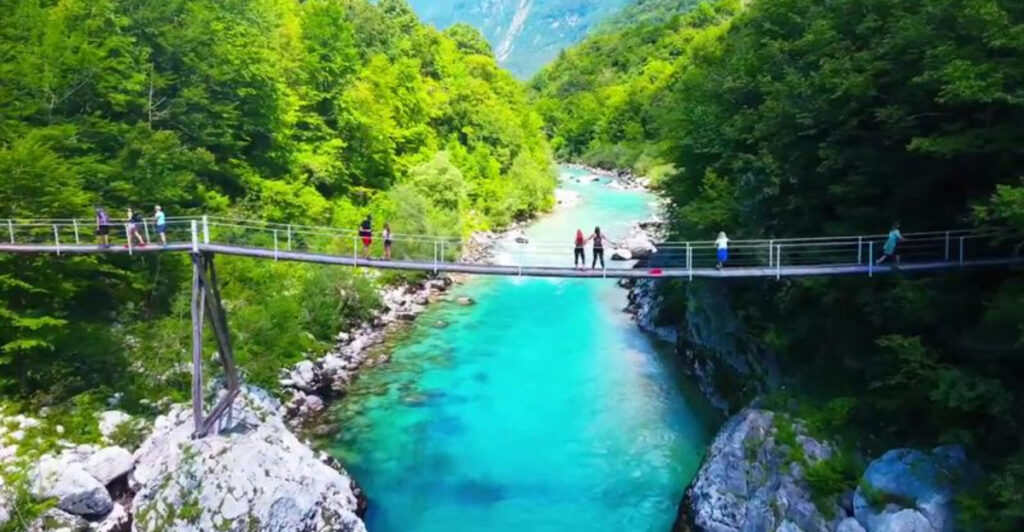
Šunik Water Grove sounds like a place invented for a fantasy novel, and then you arrive and realize reality just decided to show off. Located in the Lepena Valley within Triglav National Park, this short walking trail leads through a landscape of turquoise pools, small rapids, and waterfalls tumbling over moss-covered rocks.
The water is clear enough to count the pebbles at the bottom.
The grove is a marked visitor spot, so it is not completely unknown, but it still manages to feel like a secret. The trail is well maintained and takes about 30 to 45 minutes to complete at a relaxed pace.
Most visitors to the Soča Valley skip it in favor of the main river, which is their loss and your gain.
The best light for photos hits the grove in the morning before midday shade takes over. Wear shoes with grip because the rocks near the water can be slippery.
Pack a picnic and claim one of the flat rocks near the pools for lunch.
Most na Soči, Soča Valley
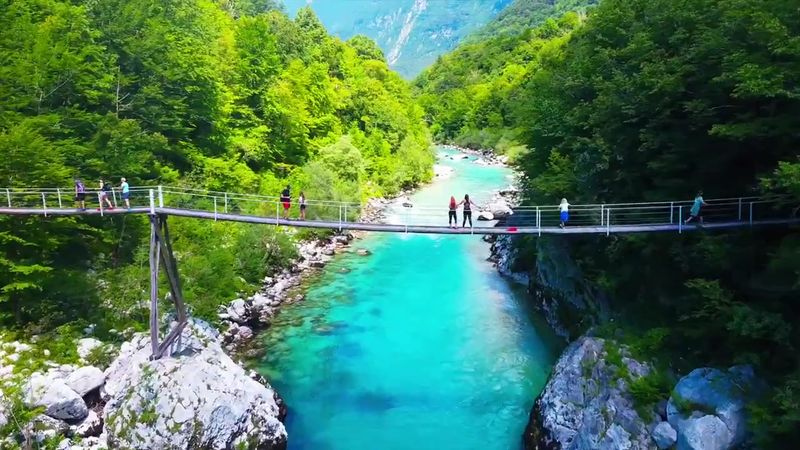
Most na Soči sits on a natural rocky promontory above the point where the Idrijca River flows into the Soča, and the view from above is genuinely dramatic. The turquoise water of the Soča meeting the darker Idrijca creates a striking contrast that makes the confluence easy to spot from the hillside lookouts.
Local tourism calls it the pearl of Upper Soča, which is a bold claim that the scenery mostly backs up.
The village itself is small and quiet, with a relaxed pace that feels refreshingly unhurried compared to the busier Soča Valley stops. A reservoir stretches below the village, reflecting the surrounding forested hills and adding an extra layer of visual drama to the whole setting.
Kayaking and fishing are popular on the calm reservoir waters.
Getting here requires a short detour from the main Soča Valley route, which is exactly why most tourists skip it. That detour is one of the best decisions you can make on a Soča road trip.
Bring a camera and take your time.
Križna Jama, Bloška Polica
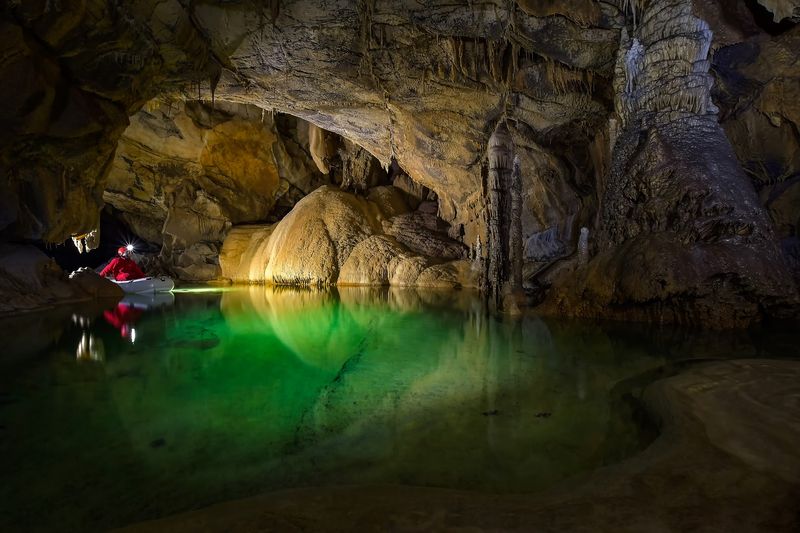
Križna Jama is not just a cave. It is a cave with underground lakes, and you explore parts of it by boat, which is the kind of sentence that should appear on every travel bucket list.
Located near Bloška Polica in central Slovenia, this extraordinary cave system contains over 45 underground lakes connected by passages filled with cave bear fossils and dramatic formations.
Guided tours run through the cave and include a boat ride on the dark, mirror-still water, which is as atmospheric as it sounds. The cave bear remains scattered throughout the passages date back thousands of years and add a genuinely prehistoric edge to the experience.
It is one of the most unusual visitor experiences in the entire country.
Tours must be booked in advance through the official site, and group sizes are kept small, which helps preserve the cave and the experience. Wear warm layers because the temperature inside stays around 8 degrees Celsius year-round.
Worth every shiver, guaranteed.
Planina Cave, Planina
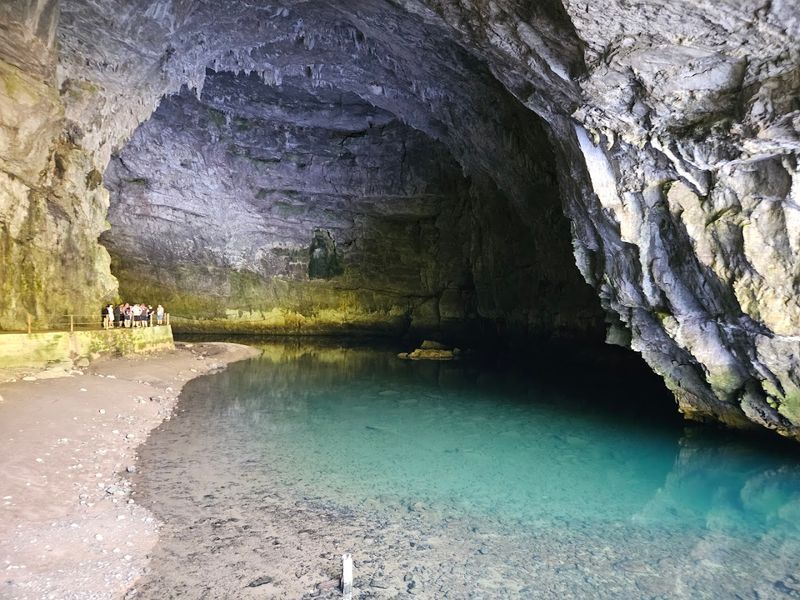
Planina Cave holds a record that most people have never heard of: it contains the largest water cave system in Slovenia. Two underground rivers, the Pivka and the Rak, merge inside the cave in a confluence that is completely invisible from the surface above.
That detail alone makes it one of the more mind-bending geological facts in the country.
The cave is typically visited as part of a guided tour, with seasonal options available through Visit Postojna. The interior is large enough to feel genuinely epic, with wide chambers and a river flowing visibly through the passages.
Unlike the heavily commercialized Postojna Cave nearby, Planina feels quieter and more raw.
Most travelers heading to the Postojna area focus entirely on the famous cave and miss Planina completely, which is a shame because it offers something distinctly different. The underground river adds movement and sound to the experience that static formations simply cannot replicate.
Book ahead in peak season as tour spots fill up quickly.
Štanjel, Kras
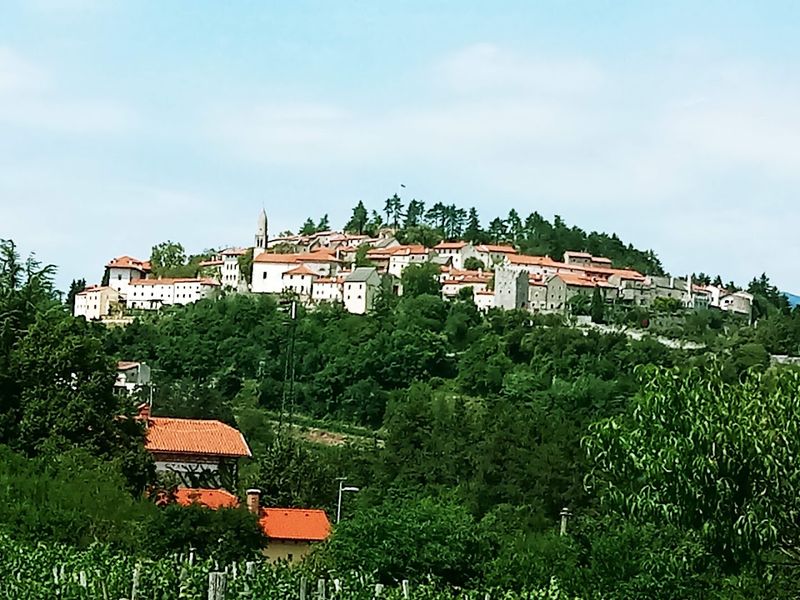
Štanjel is one of those villages where time seems to have taken a long lunch break and never quite came back. Perched on a rocky hill in the Kras region, this stone settlement is a masterclass in Karst architecture, with every building constructed from the same pale limestone that defines the entire landscape.
The narrow lanes are made for wandering slowly with no particular plan.
The Ferrari Garden, named after the architect Maks Fabiani who designed it, is one of the village’s most unexpected highlights. A formal garden with terraces and a small castle, it offers views over the surrounding Karst plateau that are well worth the short climb.
Official tourism pages list Štanjel as one of the landmark settlements in the region, and the title is fully deserved.
The village is small enough to explore in a morning, making it a natural add-on to a Kras region day trip that includes wine and prosciutto tasting nearby. Teran wine and Kras prosciutto are local specialties that pair excellently with the view.
Do not skip either.
Kostanjevica na Krki, Lower Carniola
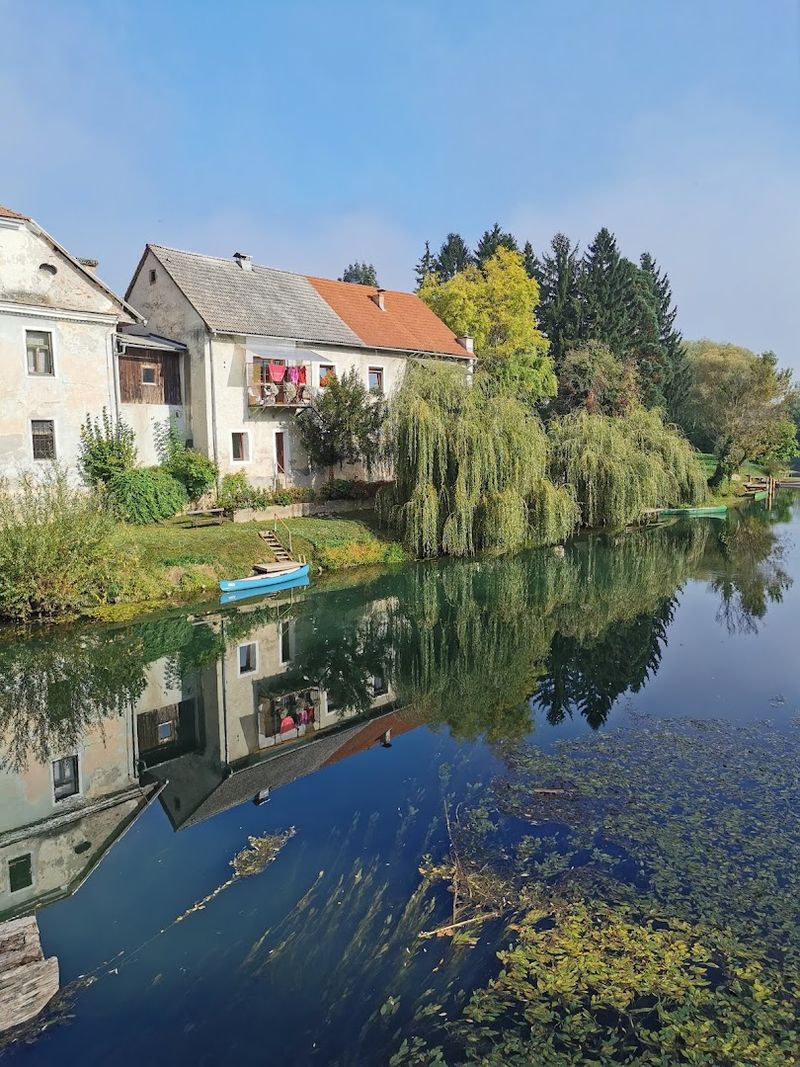
Kostanjevica na Krki holds a title that no other town in Slovenia can claim: it is the country’s only inhabited island town. The entire historic center sits on a small oval island in the Krka River, surrounded by water on all sides, which gives the town a soft, almost storybook quality that photographs cannot fully capture.
It is also officially Slovenia’s smallest town, which somehow makes it even more charming.
The town has a medieval core with a Cistercian monastery that now houses an impressive art gallery. Walking across one of the bridges onto the island feels like stepping into a quieter, slower version of the world.
The surrounding riverside area is popular for fishing, cycling, and picnicking.
Kostanjevica na Krki is located in Lower Carniola and is easy to reach by car from Ljubljana in about an hour. Most visitors to the region head straight to Novo Mesto and skip the island town entirely.
Their loss is genuinely your gain here.
Škocjan Caves, Karst Region
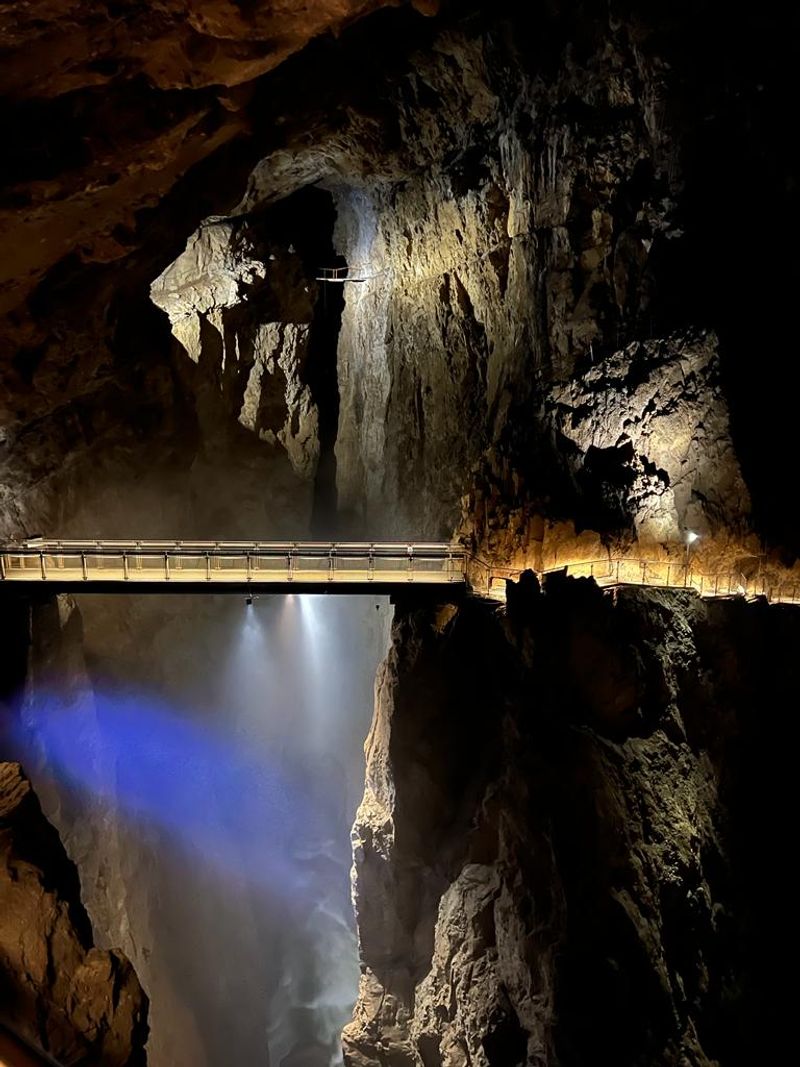
Škocjan Caves are one of the few places on earth where the interior of the planet genuinely competes with anything the surface has to offer. This UNESCO World Heritage Site in the Karst region contains a collapsed underground canyon so vast that a full-size cathedral could fit inside it with room to spare.
The scale is the kind that makes your brain briefly refuse to process what it is seeing.
The Reka River runs through the cave system, carving the passages over millions of years and creating one of the most dramatic underground landscapes in Europe. Guided tours follow a route through the cave that includes crossing a bridge over the underground gorge, which is as thrilling as it sounds.
The cave system is genuinely enormous, with passages stretching for kilometers.
Škocjan is less visited than Postojna Cave despite being arguably more impressive, which makes no logical sense but works out well for anyone who goes. Book tickets in advance during summer.
Wear sturdy shoes because the paths inside involve stairs and uneven surfaces.
Tunnels Under the Old Town, Kranj
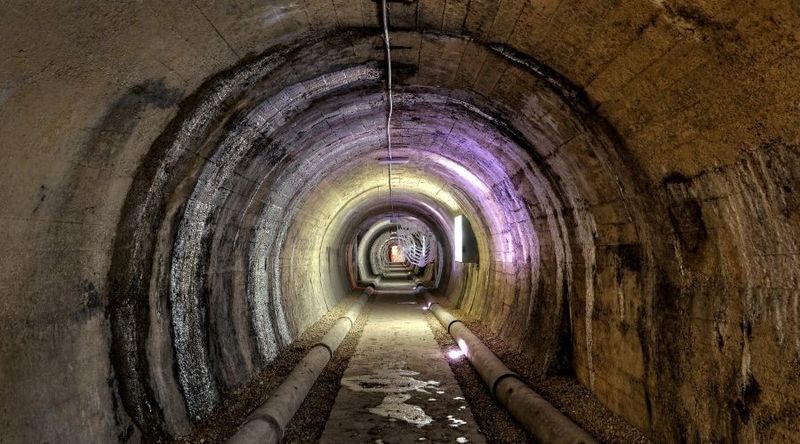
Kranj is Slovenia’s fourth-largest city and tends to get bypassed by travelers heading straight for the mountains nearby. That is a mistake, specifically because underneath the old town lies a network of tunnels that most visitors never find out about.
The tunnels were built during World War II as air-raid shelters and run beneath the medieval streets of the city center.
Guided tours take small groups through the passages, explaining the history of the tunnels and the city above. The experience is genuinely atmospheric, with original wartime features still visible in parts of the system.
It is one of those attractions that sneaks up on you and ends up being a highlight of the trip.
Tours are run through the official Kranj tourism office and should be booked in advance, especially in summer. The old town above ground is also worth exploring, with a lovely main square and the Church of St. Cantianus nearby.
Underground history and mountain views in one stop is hard to beat.
Share this story