New Jersey is not exactly the first place that comes to mind when you think of wild, untouched landscapes. Yet tucked beneath one of the most densely populated states in the country lies a secret so big it almost defies belief.
Under a sprawling stretch of pine forest and cranberry bogs, there is a freshwater aquifer holding roughly 17 trillion gallons of water, one of the purest natural water sources in the entire United States. Covering over one million acres, this is a place where ancient geology meets living wilderness.
From rare plant species to mysterious folklore, this reserve has layers that most people never get to explore. This article breaks down what makes this hidden giant so remarkable, and why it deserves far more attention than it gets.
Most people drive past the Pinelands without realizing what they are missing. The New Jersey Pinelands National Reserve is headquartered near Shamong, New Jersey, with the Atsion Ranger Station located on Route 206 at the Atsion Road junction, right alongside an abandoned historic mansion.
The official address associated with the reserve is 853 Atsion Rd, Shamong, NJ 08088.
The reserve stretches across seven counties in southern New Jersey, covering more than one million acres of protected forest, wetlands, rivers, and cranberry bogs. To put that in perspective, it is larger than the entire state of Rhode Island.
Established in 1978, the Pinelands became the first National Reserve in the United States. It was also designated an International Biosphere Reserve by UNESCO, placing it alongside some of the most ecologically significant landscapes on the planet.
Getting there from Philadelphia or New York takes less than two hours by car.
Beneath the sandy, acidic soil of the Pinelands lies one of the most extraordinary geological features in North America. The Kirkwood-Cohansey aquifer system holds an estimated 17 trillion gallons of freshwater, sitting just a few feet below the surface in some areas.
This aquifer is not a single underground lake but rather a vast network of water-saturated sand and gravel layers that accumulated over millions of years. Because the Pine Barrens soil is so porous, rainwater filters down quickly and replenishes the aquifer at a remarkable rate.
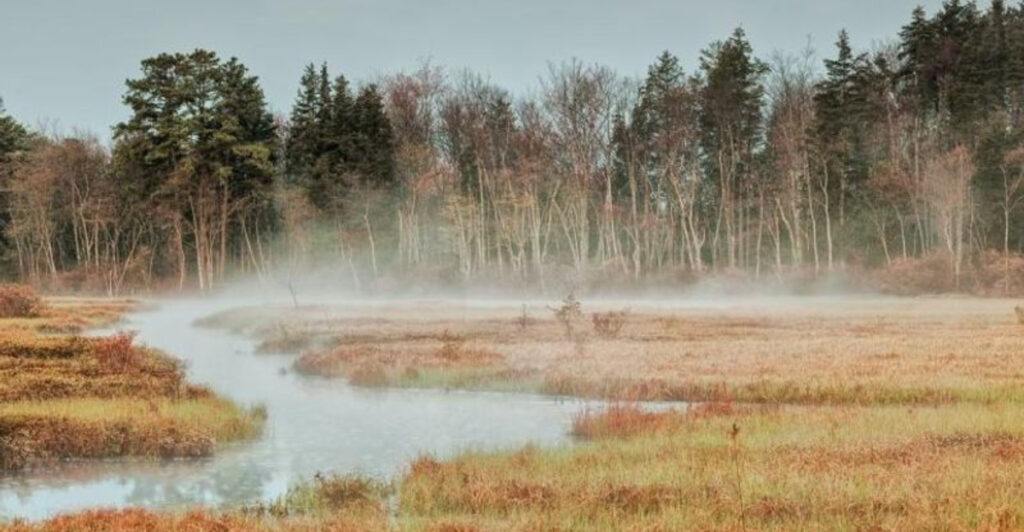
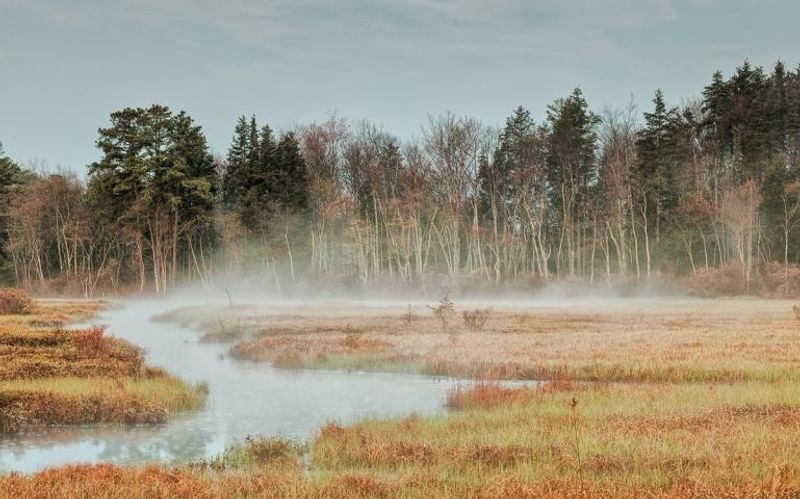
The water quality is considered exceptionally pure, though its natural chemistry gives it a slightly acidic, tea-colored appearance due to tannins from decaying plant matter. This coloring is completely natural and not a sign of contamination.
Scientists and conservationists have long argued that protecting the Pinelands is really about protecting this underground water supply, which serves as a critical resource for millions of people across the region.
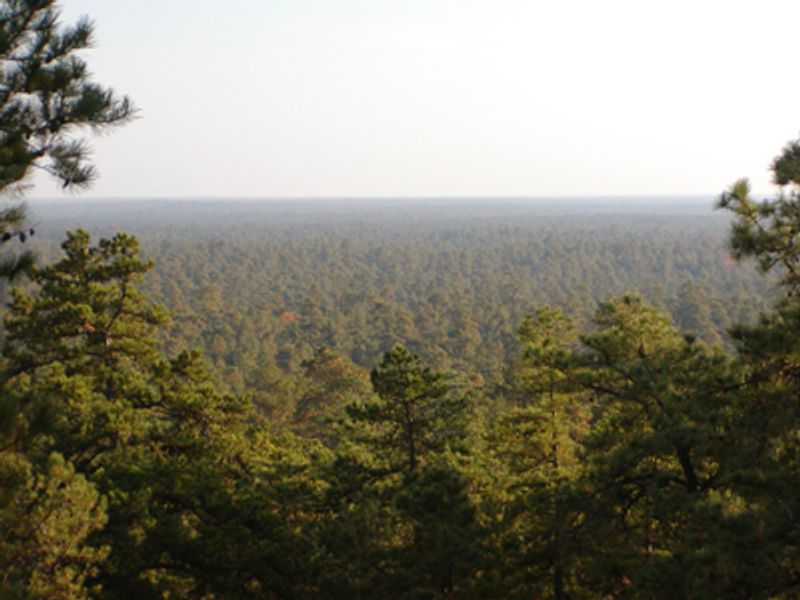
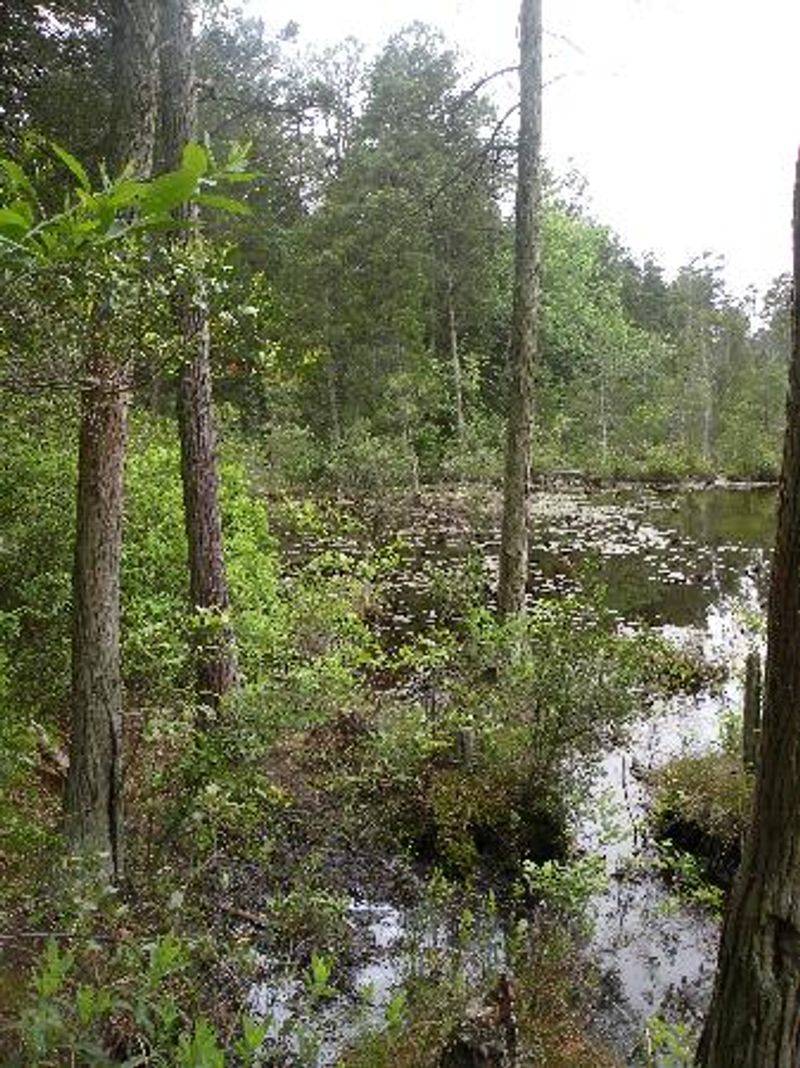
On paper, the soil conditions in the Pinelands should not support a thriving forest. The ground is sandy, nutrient-poor, and highly acidic, the kind of environment most plants struggle to survive in.
Yet pitch pine and scrub oak have not just survived here, they have dominated the landscape for thousands of years.
These trees have adapted in ways that make them almost uniquely suited to this environment. Pitch pine, for example, is fire-resistant and can actually regenerate after a wildfire by sprouting new growth directly from its trunk and root system.
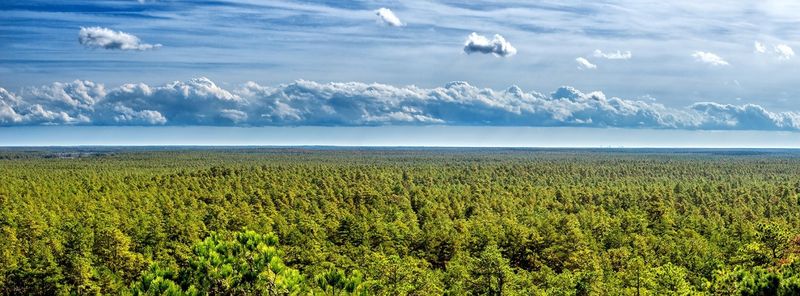
The forest itself has a distinctive, low-canopy character that gives the landscape an open, almost otherworldly quality. Driving through the Pinelands Byway, the road cuts through miles of pine trees that seem to stretch endlessly in every direction.
This resilient ecosystem has remained largely unchanged for centuries, making it one of the most authentic examples of pre-colonial eastern forest in the entire country.
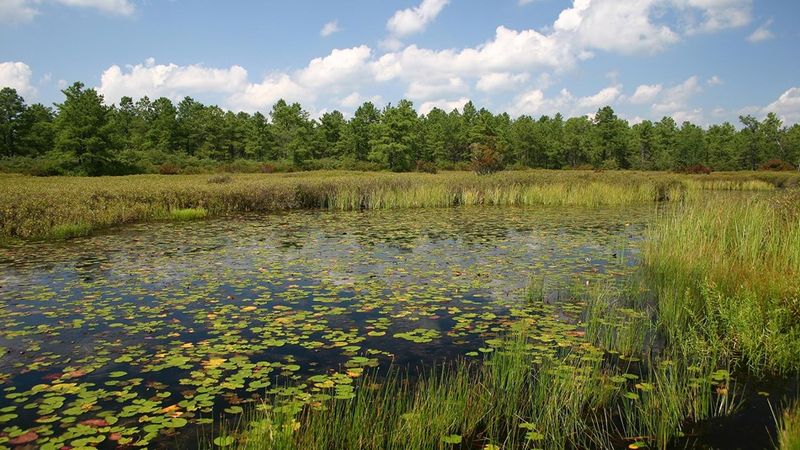
Few agricultural traditions in New Jersey are as visually striking as the cranberry harvest in the Pinelands. The region has been producing cranberries commercially since the early 19th century, and many of those same bogs are still in active use today.
New Jersey is consistently ranked among the top cranberry-producing states in the country, and a significant portion of that production comes directly from the Pinelands region. The bogs are carefully managed ecosystems that rely on the same pure aquifer water that flows beneath the forest.
During the fall harvest, the bogs are flooded and the berries float to the surface, creating a vivid red carpet across the water that has become one of the most photographed scenes in southern New Jersey.
Beyond the harvest season, the bogs serve as important wildlife habitats, supporting migratory birds, amphibians, and native plant communities that depend on the wetland environment the bogs help maintain throughout the year.
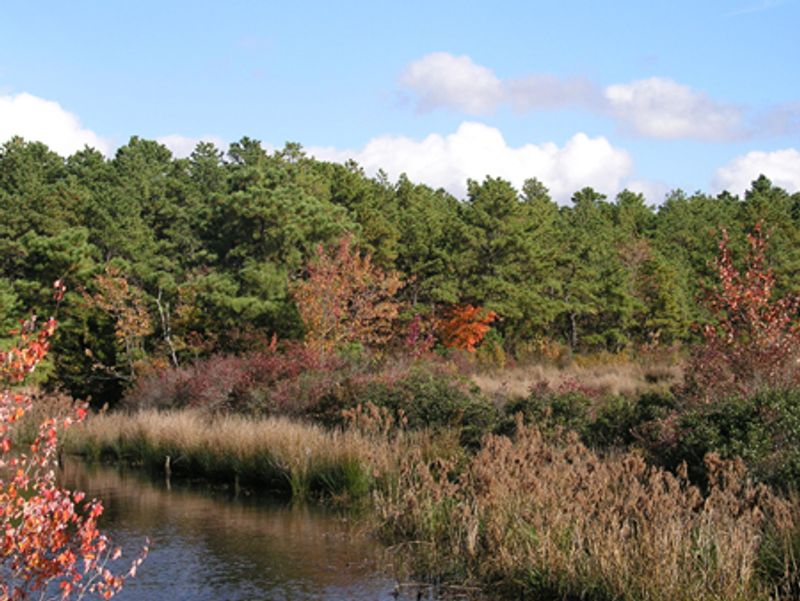
The Pinelands National Reserve is home to an astonishing variety of wildlife, much of it found nowhere else on Earth. The reserve supports over 850 plant species, 350 bird species, and dozens of reptile and amphibian species, including several that are considered rare or threatened.
The Pine Barrens tree frog is perhaps the most famous resident, a small, bright green amphibian that has become something of a symbol for the preserve. Its survival is directly tied to the clean, acidic wetlands that the aquifer helps maintain.
Migratory birds use the reserve as a critical stopover point along the Atlantic Flyway, making it a popular destination for birdwatchers during spring and fall migrations. Bald eagles, ospreys, and various warblers are regularly spotted throughout the reserve.
White-tailed deer, red foxes, river otters, and the elusive northern pine snake also make their homes here, giving wildlife enthusiasts plenty of reasons to spend extended time exploring the reserve’s trails and waterways.
No article about the Pinelands would be complete without mentioning the Jersey Devil, the most enduring piece of folklore attached to this forest. According to legend, the creature was born in the 1700s to a local woman known as Mother Leeds and has haunted the Pine Barrens ever since.
Described variously as a winged, hoofed, horse-headed creature, the Jersey Devil has been reported by thousands of people over the past three centuries, including local residents, law enforcement officers, and even a former mayor of the area.
Skeptics explain the sightings as misidentified animals, stress responses to an isolated environment, or simple storytelling passed down through generations. Believers, however, point to the sheer consistency of the descriptions across hundreds of years as evidence that something unusual exists in these woods.
Whether or not the Jersey Devil is real, the legend adds a layer of cultural depth to the Pinelands that makes it one of the most mythologically rich landscapes in the entire northeastern United States.
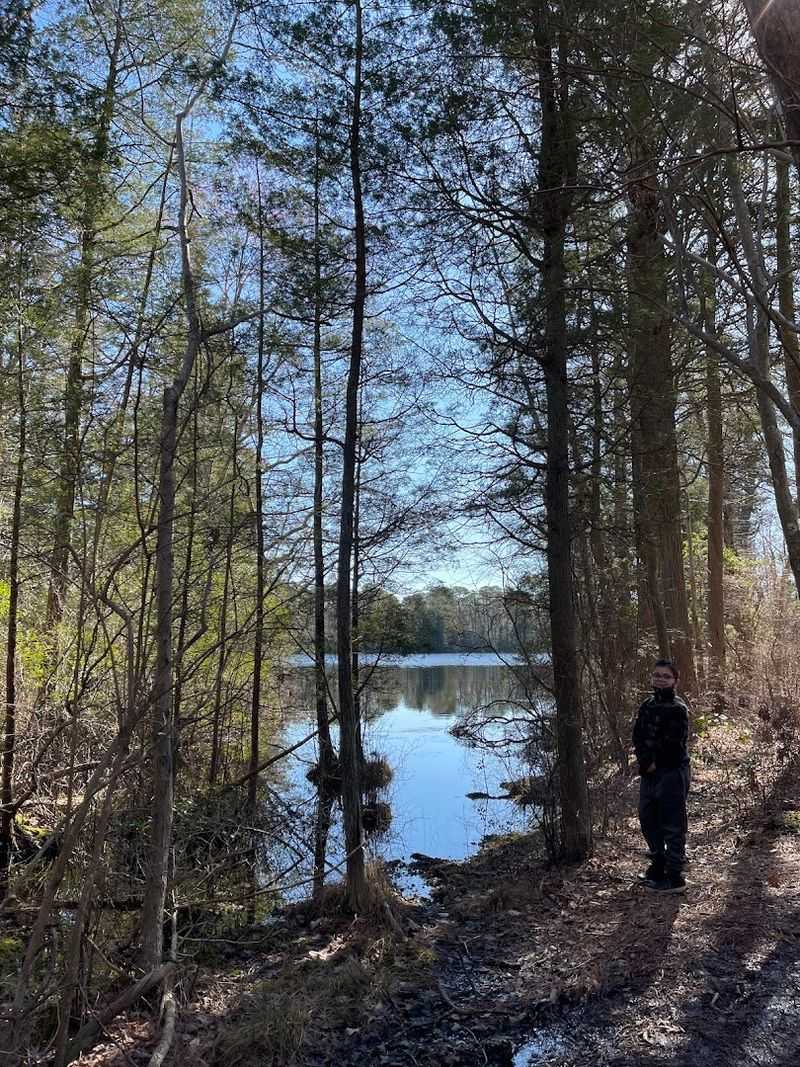
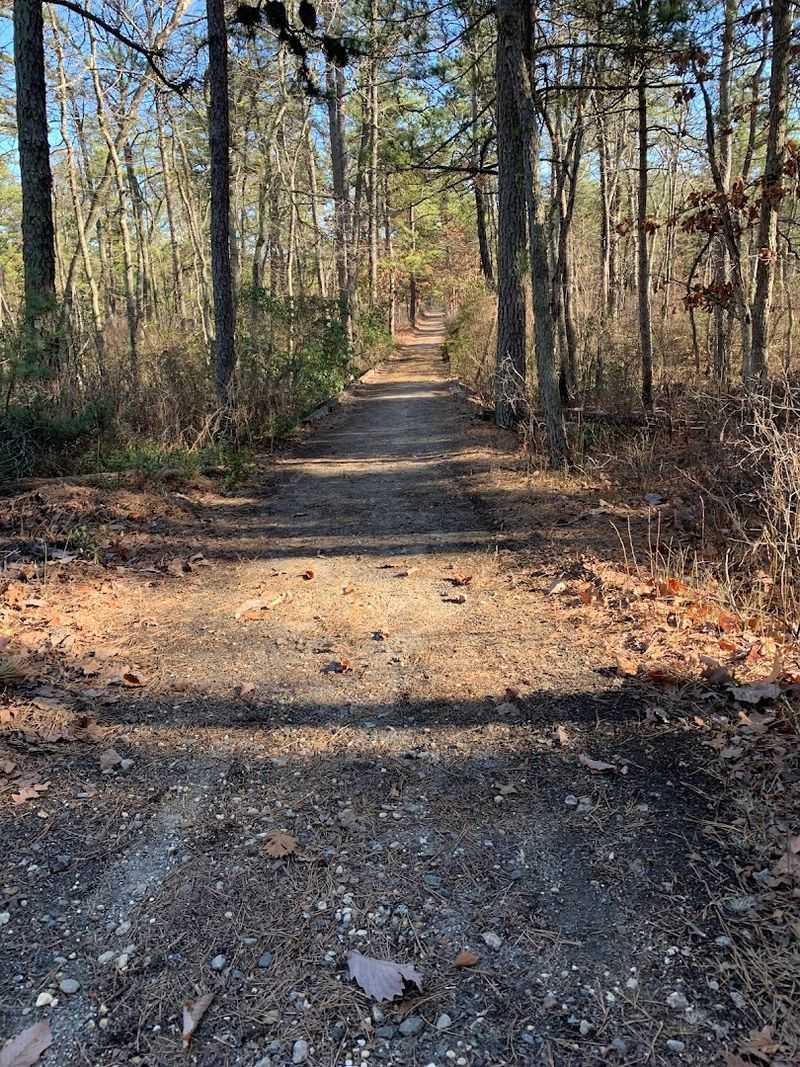
The Pinelands offer hundreds of miles of hiking trails ranging from easy, flat walks to longer backcountry routes that require more preparation. The sandy soil and relatively flat terrain make most trails accessible even to casual hikers, though the sun exposure can be intense during summer months.
The Batona Trail is the crown jewel of Pinelands hiking, stretching approximately 53 miles through the heart of the reserve. It connects several state forests and passes through some of the most ecologically diverse sections of the Pinelands, including cedar swamps, open bogs, and dense pine stands.
Shorter loops around Atsion Lake offer a more manageable option for families or those looking for a day outing without committing to a multi-day trek. The lake itself provides a natural rest point with access to water and open views of the surrounding forest.
Hikers are consistently rewarded with close encounters with native plants and birds that simply do not exist in the suburban landscapes just miles away from the reserve’s boundaries.
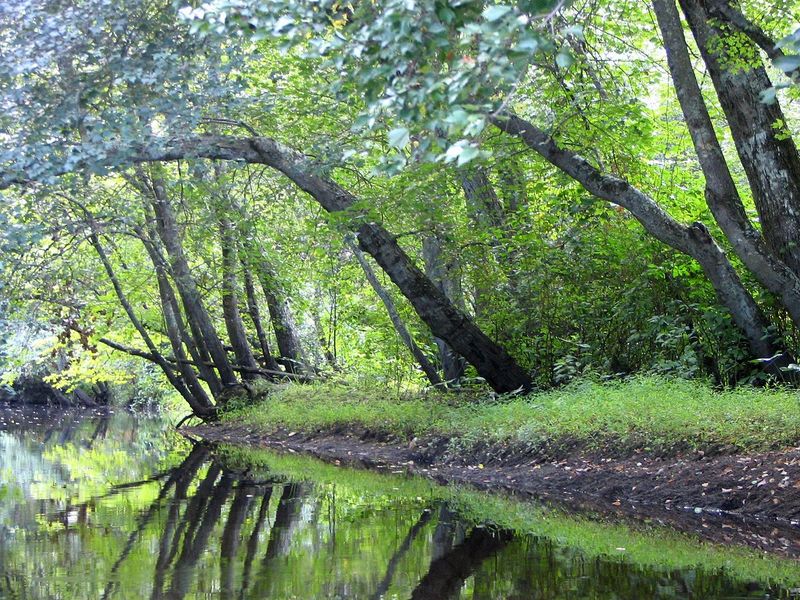
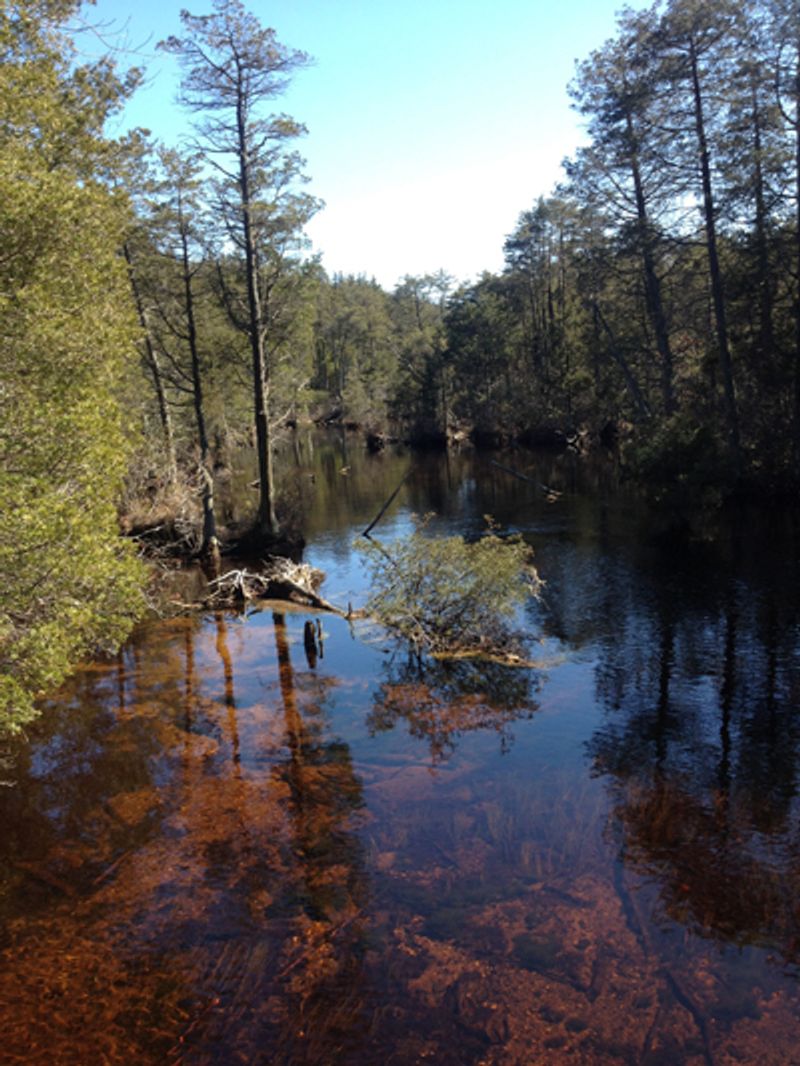
The rivers and streams of the Pinelands are among the most unique waterways in the eastern United States. Fed directly by the Kirkwood-Cohansey aquifer, they run cold and clear year-round, with that characteristic tea-brown color caused by natural tannins leaching from cedar roots and fallen leaves.
The Mullica River, Batsto River, and Wading River are the most popular paddling routes, offering everything from calm flatwater stretches to slightly more technical sections through narrow cedar tunnels. Canoe and kayak rentals are available near the reserve, making it easy for first-timers to get on the water.
The rivers wind through landscapes that feel completely removed from the modern world. Cedar swamps line the banks, and the canopy closes in overhead in certain stretches, creating a quiet, enclosed channel that feels more like the deep South than central New Jersey.
Wildlife sightings along the water are common, with herons, kingfishers, and turtles regularly spotted from a paddle board or kayak throughout the warmer months.
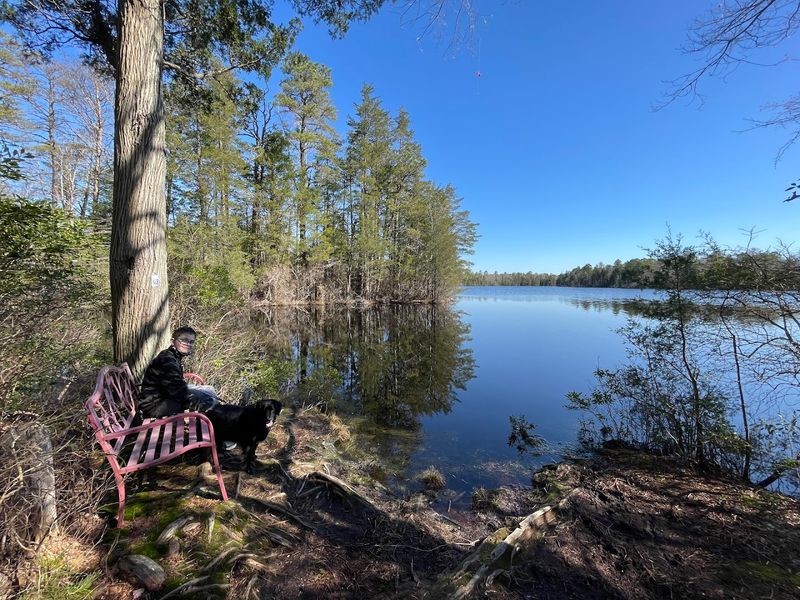
The Pinelands is one of the few places in the northeastern United States where light pollution is low enough to allow genuine stargazing. The reserve’s vast, undeveloped interior creates dark sky conditions that are increasingly rare along the densely populated East Coast corridor.
Atsion Campground is one of the primary camping areas within the reserve, offering tent sites and basic facilities near Atsion Lake. It is worth noting that some sites sit close to Route 206, which does generate road noise, so choosing a site further from the highway makes for a quieter stay.
Backcountry camping along the Batona Trail is also permitted in designated areas, giving more adventurous campers the chance to spend nights deep within the forest with minimal infrastructure around them.
Boy Scout troops, hiking clubs, and outdoor education programs have long used the Pinelands as a training ground, recognizing that the combination of accessible terrain and genuine wilderness creates an ideal environment for building outdoor skills and confidence.
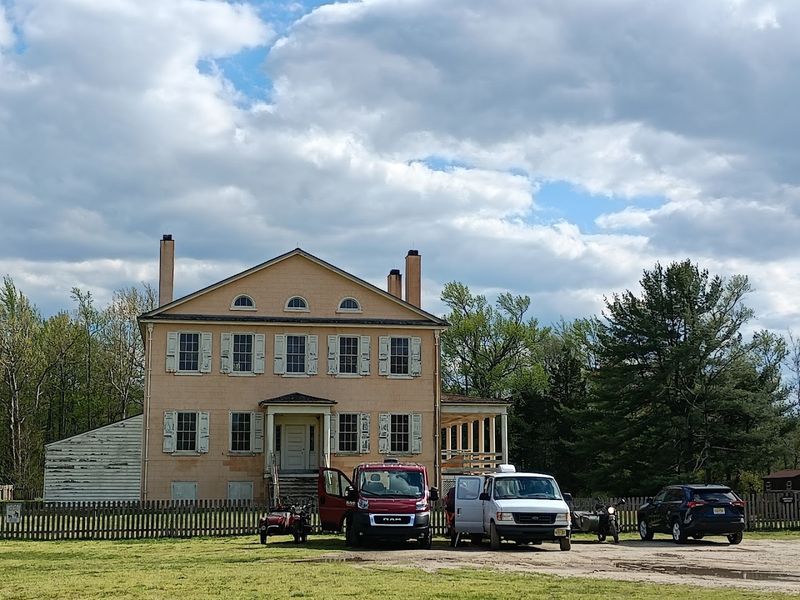
Right at the entrance to the Atsion area of the Pinelands, an abandoned mansion sits quietly alongside the road, drawing the attention of every passing driver. The Atsion Mansion is a Federal-style brick building that dates back to the early 19th century, constructed around 1826 by Samuel Richards as part of the Atsion iron and cotton manufacturing complex.
At its peak, Atsion was a thriving industrial village with a furnace, cotton mill, workers’ housing, and a church. The entire operation was powered by the same waterways that now attract kayakers and hikers to the area.
When the iron industry declined in the mid-1800s, the village was largely abandoned, and the forest slowly reclaimed much of what had been built. The mansion and a few other structures survived and are now managed as part of the historic resources within the Pinelands.
The State Forest Ranger Station operates nearby, and the mansion serves as a tangible reminder that this wilderness was once a center of early American industrial activity.
The Pinelands National Reserve has been a subject of scientific study for over a century, and researchers from universities, government agencies, and conservation organizations continue to use it as a living laboratory. The combination of rare ecosystems, pristine water sources, and long-term ecological data makes it genuinely valuable to multiple scientific disciplines.
Climate scientists monitor the aquifer and wetlands to track changes in water table levels and precipitation patterns over time. Botanists study the unique plant adaptations that allow species to thrive in the nutrient-poor, acidic soil conditions found nowhere else in the region.
The Pinelands Preservation Alliance and the New Jersey Pinelands Commission both play active roles in coordinating research efforts and ensuring that development pressures do not compromise the ecological integrity of the reserve.
Long-term studies on fire ecology have also yielded important findings, since the Pinelands fire cycle is a natural and necessary part of maintaining the health of the pitch pine ecosystem that defines this remarkable landscape.
The best times to visit the Pinelands are spring and fall, when temperatures are moderate and the landscape is at its most active. Spring brings blooming native plants and migrating birds, while fall delivers the cranberry harvest and cooler conditions ideal for longer hikes.
Summer visits are entirely manageable but require sun protection and adequate water, since the open pine canopy provides less shade than a typical deciduous forest. Insects, particularly mosquitoes and ticks, are more active from late spring through early fall, so appropriate clothing and repellent are practical necessities.
The NPS website at nps.gov/pine provides trail maps, camping permit information, and updates on road and trail conditions throughout the year. The Atsion Recreation Area off Route 206 in Shamong serves as a convenient and well-known entry point for first-time visitors.
No entrance fee is required to access most of the reserve, which makes the Pinelands one of the most accessible large wilderness areas anywhere on the East Coast.
Share this story