Massachusetts may be small, but it punches way above its weight when it comes to jaw-dropping scenery. From windswept coastlines and colorful island cliffs to hidden waterfalls and flower-covered bridges, the Bay State is full of places that feel almost too stunning to be real.
Whether you grew up here or are planning your first visit, these spots will make you see New England in a whole new light. Get ready to add some serious destinations to your travel list.
Cape Cod National Seashore
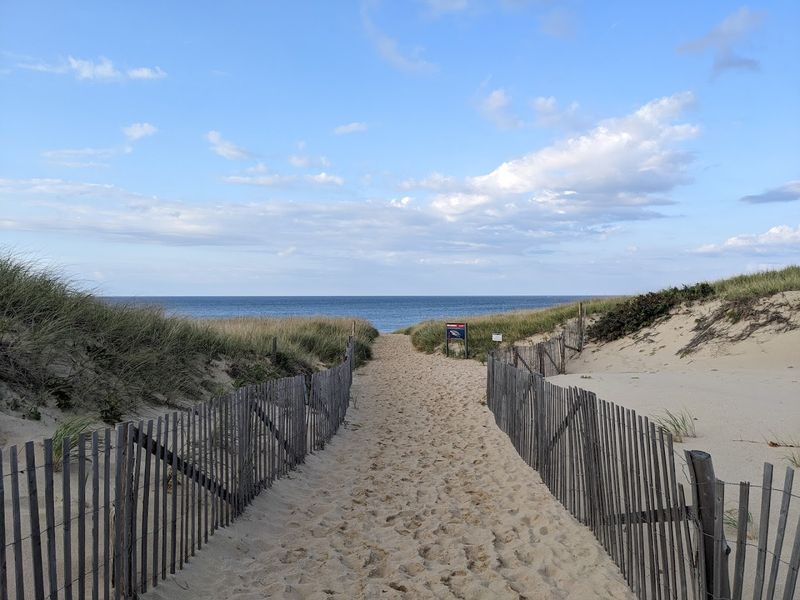
Stretching nearly 40 miles along the outer arm of Cape Cod, this protected coastline is one of the most stunning stretches of shoreline anywhere in the country. President John F.
Kennedy signed the legislation that created it back in 1961, saving it from overdevelopment before it was too late. Today, visitors get to enjoy beaches that look almost exactly as they did hundreds of years ago.
The dunes here are massive, some reaching heights of over 100 feet. Walking through them feels like exploring a landscape from another era entirely.
Grassy paths wind between the dunes and lead you to the ocean in the most dramatic way possible.
Families love the lifeguarded beaches like Coast Guard Beach, while hikers enjoy the miles of trails through heath and forest. Sunset at Nauset Light Beach is a moment you will not forget quickly.
Pack a picnic, bring a camera, and plan to stay longer than you originally intended because this place has a way of holding you there.
Martha’s Vineyard (Aquinnah Cliffs)
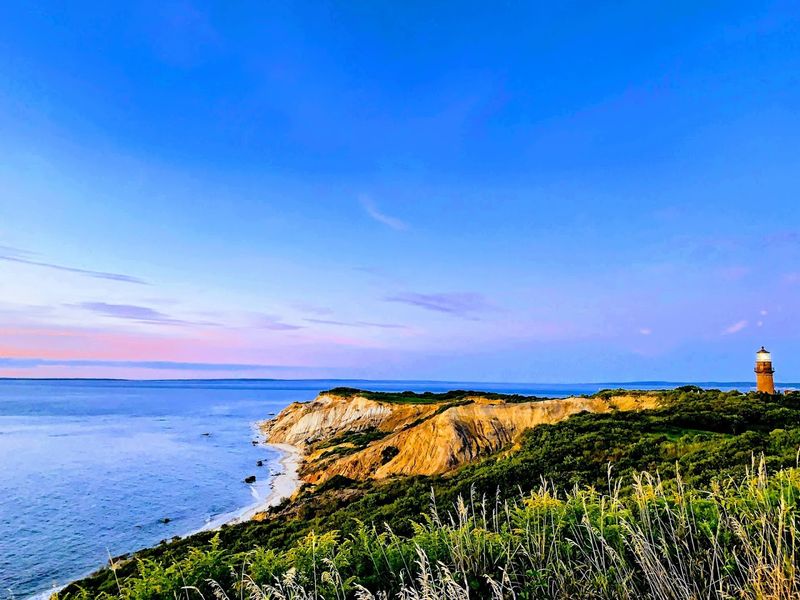
Standing at the edge of the Aquinnah Cliffs feels like the earth itself decided to show off. These ancient clay cliffs rise dramatically above the Atlantic Ocean, displaying vivid bands of red, orange, gold, and cream that shift in color depending on the time of day.
Geologists say the layers represent millions of years of Earth history stacked right before your eyes.
The cliffs are sacred to the Wampanoag Tribe, the Indigenous people who have called this land home for thousands of years. Their cultural connection to Aquinnah runs deep, and visitors are asked to respect the area by not climbing on or removing clay from the cliffs.
That history adds a layer of meaning to an already extraordinary landscape.
Getting to Aquinnah requires a ferry ride to the island, which is honestly half the fun. Martha’s Vineyard as a whole is gorgeous, but the cliffs are the undisputed showstopper.
Visit around golden hour when the light hits the clay at just the right angle and the whole cliff face seems to glow. It is one of those rare moments that no photo can fully capture.
Nantucket
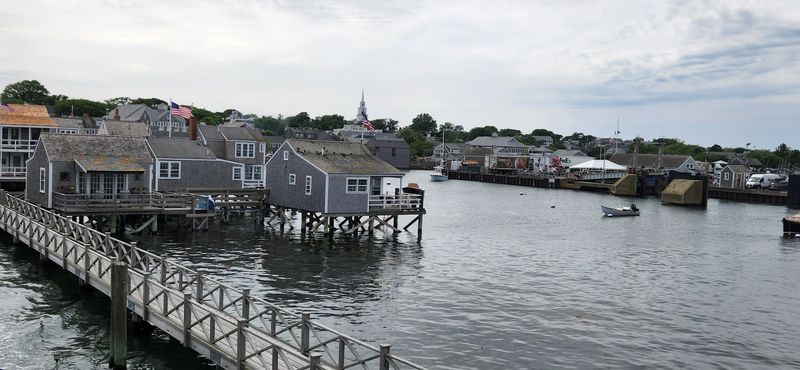
Nantucket smells like salt air, roses, and history all at once. This small island sits about 30 miles off the coast of Cape Cod, and reaching it by ferry already feels like an adventure.
Once you arrive, the cobblestone streets and gray-shingled cottages draped in climbing roses make you wonder if you accidentally stepped into a storybook.
The island made its fortune during the 19th century whaling era, and that prosperous past left behind a remarkably well-preserved historic downtown. Walking through it feels like time travel in the best possible way.
The Nantucket Historical Association maintains museums and historic sites that bring those seafaring days back to life.
Beyond the town center, the island offers beautiful beaches, rolling moors, and cranberry bogs that blaze with color in the fall. Surfside Beach draws swimmers and surfers, while Madaket Beach on the western end is famous for its spectacular sunsets.
Biking is one of the best ways to explore because the island has a great network of paved paths. Nantucket is not a budget destination, but the experience of being there is genuinely unlike anywhere else on the East Coast.
The Berkshires
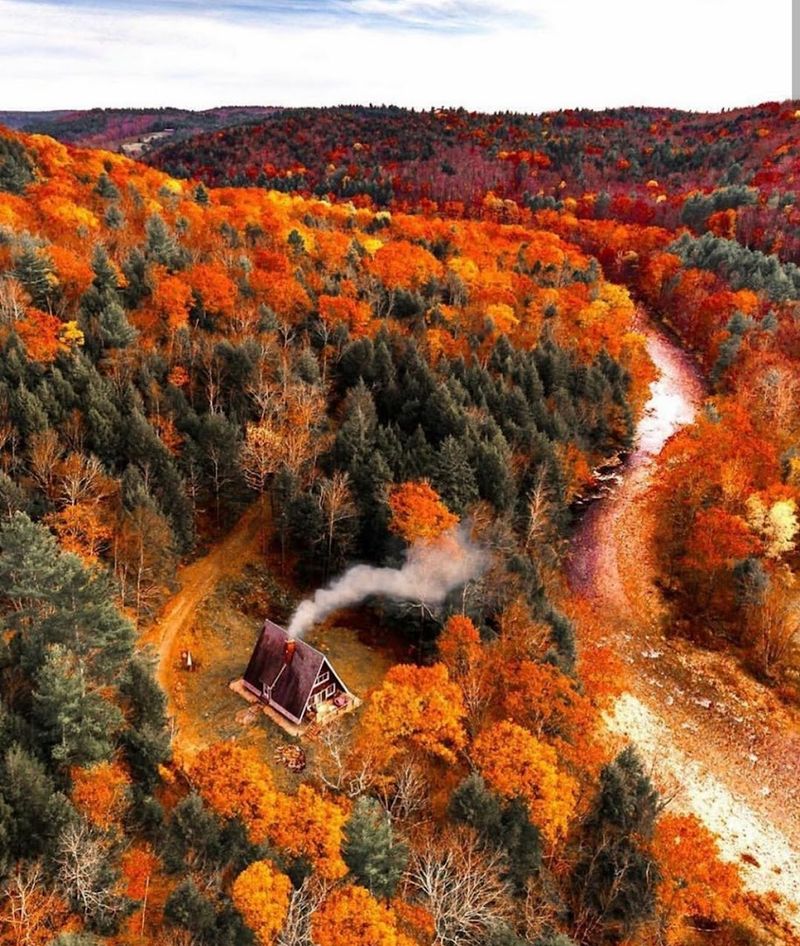
Out in western Massachusetts, far from the crowded coastline, the Berkshires quietly steal hearts every single season. This region of rolling hills, dense forests, and small artsy towns is the kind of place where city stress melts away within minutes of arriving.
Writers, musicians, and artists have been escaping here for over a century, and it is not hard to understand why.
In summer, Tanglewood hosts the Boston Symphony Orchestra under the open sky, and picnicking on the lawn while listening to live classical music is a bucket-list moment. Fall brings an explosion of foliage so vivid it almost looks painted on.
Winter turns the hills into a ski destination, and spring fills the valleys with wildflowers and rushing streams.
Towns like Lenox, Stockbridge, and Great Barrington offer excellent dining, charming bookshops, and independent galleries. The Norman Rockwell Museum in Stockbridge displays the beloved illustrator’s original works in a setting that feels perfectly suited to his wholesome, warm style.
Whether you come for culture, nature, or just a long peaceful drive through the hills, the Berkshires deliver something rare: a place that feels genuinely good for the soul.
Mount Greylock
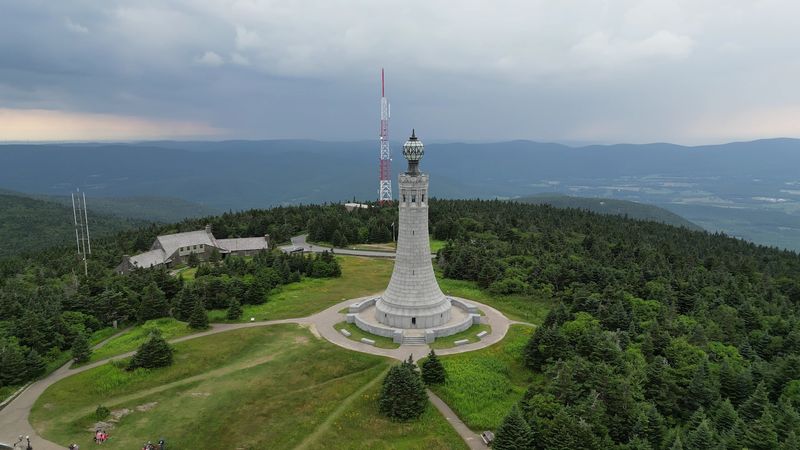
At 3,491 feet, Mount Greylock is the highest point in Massachusetts, and reaching the summit rewards you with one of the most expansive views in all of New England. On a clear day, you can see into five states: Massachusetts, Vermont, New York, Connecticut, and New Hampshire.
That kind of payoff makes every step of the hike worth it.
The Appalachian Trail crosses directly over the summit, which means serious long-distance hikers pass through regularly. But you do not need to be a hardcore hiker to enjoy Greylock.
A paved road leads all the way to the top, making the summit accessible to families and visitors of all fitness levels. The stone Veterans War Memorial Tower at the summit is striking against the sky.
Bascom Lodge, a historic stone building near the summit, offers meals and overnight stays for those who want to catch the sunrise from the top. Herman Melville reportedly drew inspiration for Moby-Dick while gazing at the mountain from his home nearby.
Autumn is peak season here, when the forested slopes turn gold, orange, and red in every direction. Spring and summer bring wildflowers and songbirds that make the trails feel alive.
Bash Bish Falls
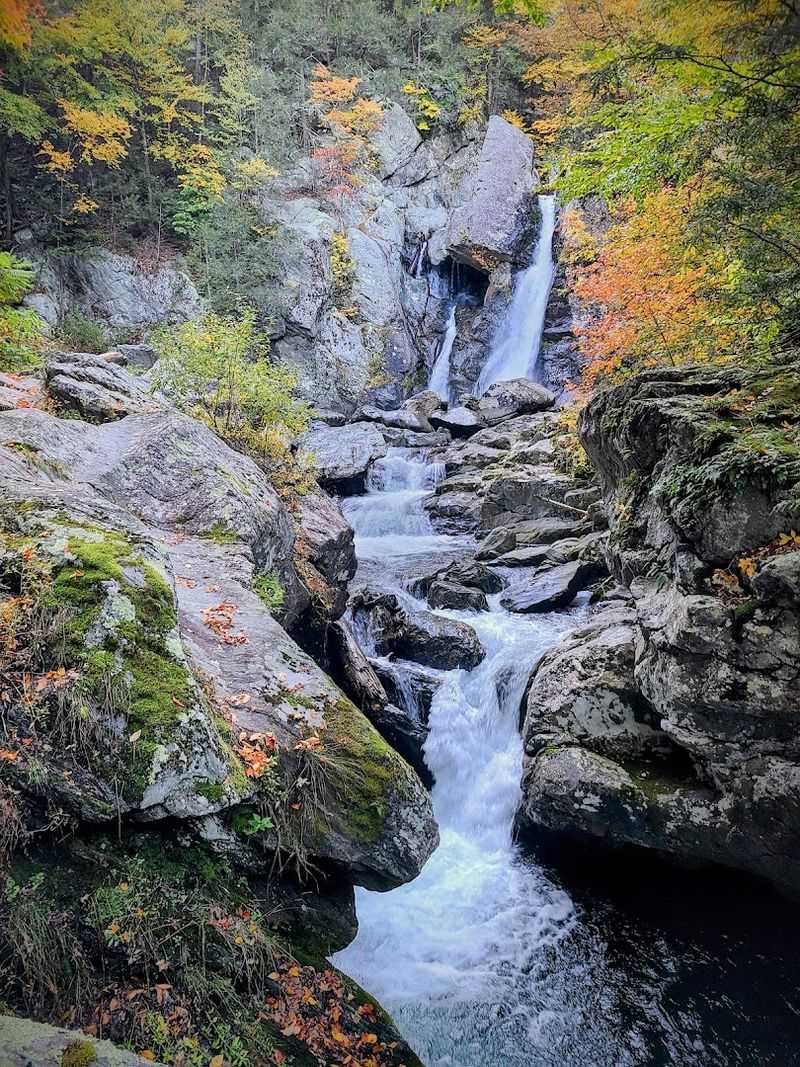
Tucked into a steep gorge along the Massachusetts-New York border, Bash Bish Falls is the kind of place that makes you stop mid-sentence and just stare. Water splits around a central boulder and fans out into twin curtains before crashing into a cold, clear pool below.
At 80 feet, it is the tallest single-drop waterfall in the state, and it earns that title with serious drama.
Getting there requires a hike, but the trail is well-marked and not overly difficult. The reward at the end more than makes up for the effort.
The gorge around the falls is lined with hemlocks and hardwoods that keep the air cool even on warm summer days.
Swimming in the pool below the falls is technically prohibited, but the view from the rocky banks is more than satisfying. The sound of the rushing water echoes off the canyon walls and creates a natural soundtrack that feels almost cinematic.
A local legend involving a young woman named Bash Bish adds a layer of mystery to the place. Visit in spring when snowmelt sends the water rushing at full power, or in fall when the surrounding foliage frames the falls in brilliant color.
Either way, you will not regret the trip.
Halibut Point State Park
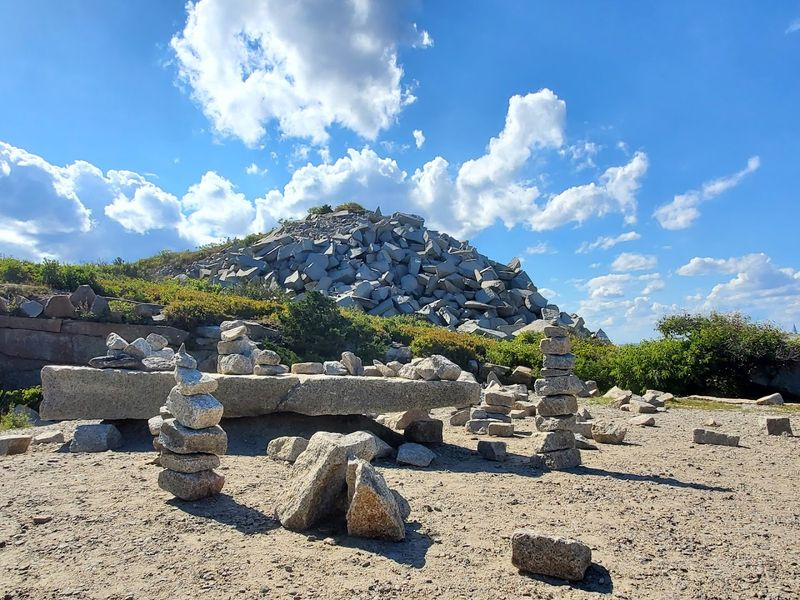
There is something almost prehistoric about standing on the granite ledges at Halibut Point State Park. The rocks here are ancient, formed hundreds of millions of years ago, and they stretch out into the ocean in great gray slabs that look like the earth is showing you its bones.
The contrast between the rough, pinkish granite and the deep blue Atlantic is genuinely striking.
The park sits on the northern tip of Cape Ann in Rockport and was once home to an active granite quarry. The quarry pond that remains is now a peaceful spot for birdwatching and reflection.
Interpretive signs throughout the park explain the quarrying history, giving visitors a sense of the industrial past hidden beneath the natural beauty.
Tidepools along the shoreline are full of life: snails, barnacles, sea urchins, and small crabs make their homes in the rocky crevices. Low tide is the best time to explore them.
The park also has a World War II observation tower that offers elevated views of the coastline on clear days. Sunset here is a favorite among photographers because the light bouncing off the wet granite creates colors that seem almost too good to be real.
Pack sturdy shoes for the uneven terrain.
Rockport & Bearskin Neck
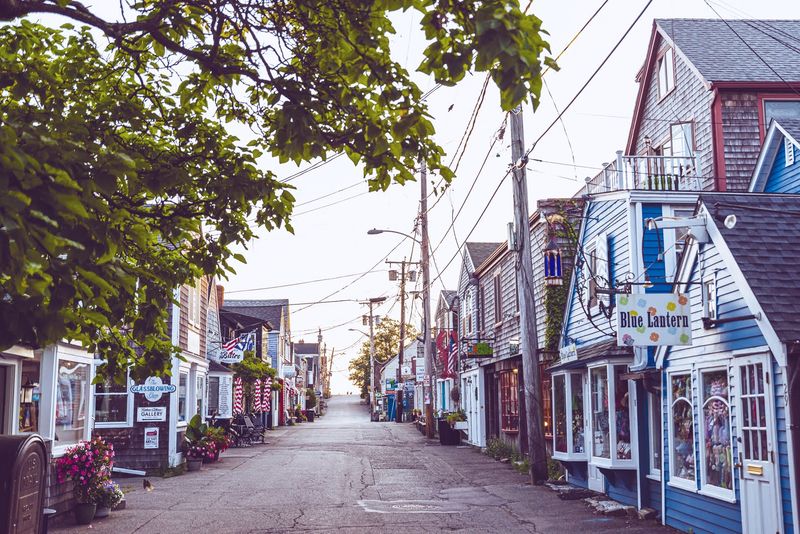
Rockport is the kind of seaside town that makes you want to slow down, buy a watercolor painting, and eat lobster while sitting on a dock. Located on Cape Ann’s northeastern tip, this charming village has been attracting artists since the 1800s, and it is easy to see why every corner looks like it was composed for a painting.
Bearskin Neck is the town’s most famous strip, a narrow peninsula lined with colorful fishing shacks, boutique shops, and seafood restaurants that jut out into the harbor. Motif Number 1, a red fishing shack at the end of the neck, is said to be the most painted building in America.
That title is entirely believable once you see it in person.
The harbor itself is full of lobster boats and sailboats that bob gently in the water, creating a scene so picturesque it almost feels staged. Rockport is also a dry town, meaning no alcohol is sold within its limits, a quirky distinction that has been in place since the 1850s.
The town is walkable, relaxed, and refreshingly free of the crowds that overwhelm more famous destinations. It is one of those places where a simple afternoon stroll turns into an unexpectedly perfect day.
Boston Harbor Islands
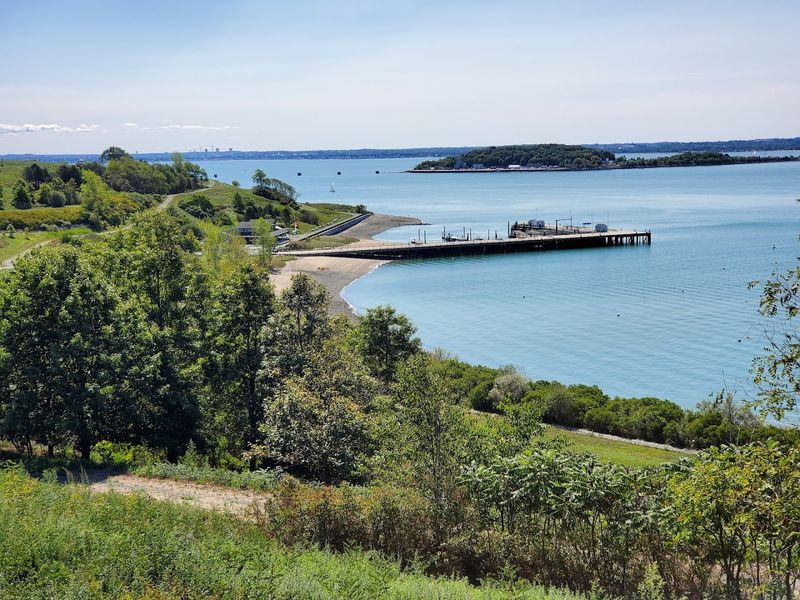
Most people visit Boston for the Freedom Trail, the Red Sox, or the clam chowder. Far fewer realize that a short ferry ride from Long Wharf leads to a hidden archipelago of 34 islands scattered across the harbor.
The Boston Harbor Islands State and National Recreation Area is one of the most underrated outdoor escapes on the entire East Coast.
Georges Island is the most popular stop and home to Fort Warren, a Civil War-era fort with dark tunnels, massive stone walls, and a ghost story involving a woman in black who supposedly still haunts the grounds. Spectacle Island offers panoramic views of the city skyline from its grassy hills, making for one of the most unusual urban vistas you will ever experience.
Camping is available on several islands, which means you can literally sleep under the stars with the Boston skyline glowing on the horizon. Little Brewster Island is home to Boston Light, the oldest lighthouse site in the country, dating back to 1716.
The islands are only accessible by ferry from May through October, so plan accordingly. Bring a picnic, comfortable walking shoes, and a sense of adventure because each island has its own distinct personality waiting to be discovered.
Bridge of Flowers (Shelburne Falls)
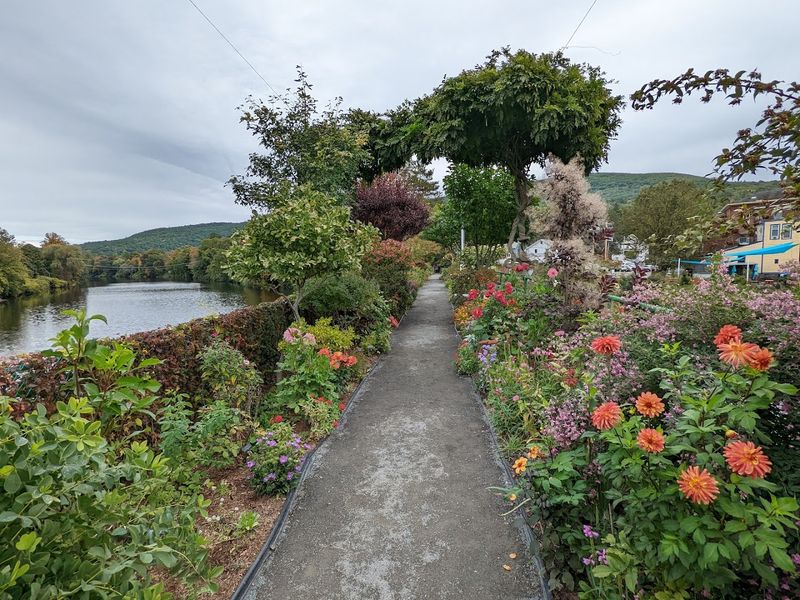
Once upon a time, this bridge carried electric trolleys across the Deerfield River. When the trolleys stopped running in 1928, the concrete structure sat unused until a local garden club had a brilliant idea: fill it with flowers.
Nearly 100 years later, the Bridge of Flowers in Shelburne Falls is one of the most whimsical and beloved landmarks in all of Massachusetts.
The 400-foot span bursts with color from April through October, planted with hundreds of varieties of annuals, perennials, and flowering vines. Walking across it feels like strolling through a floating garden suspended above a river.
Each season brings different blooms, so repeat visitors always find something new to admire.
Shelburne Falls itself is a tiny, artsy village in the Pioneer Valley that deserves more attention than it gets. The town also features the Glacial Potholes, a series of smooth circular pools carved into the riverbed by ancient glaciers, located just downstream from the bridge.
Local shops and cafes line the main street, and the pace of life here is refreshingly slow. The bridge is free to walk across and open to the public throughout the growing season.
It is proof that sometimes the most magical things start with a simple, creative idea.
Purgatory Chasm
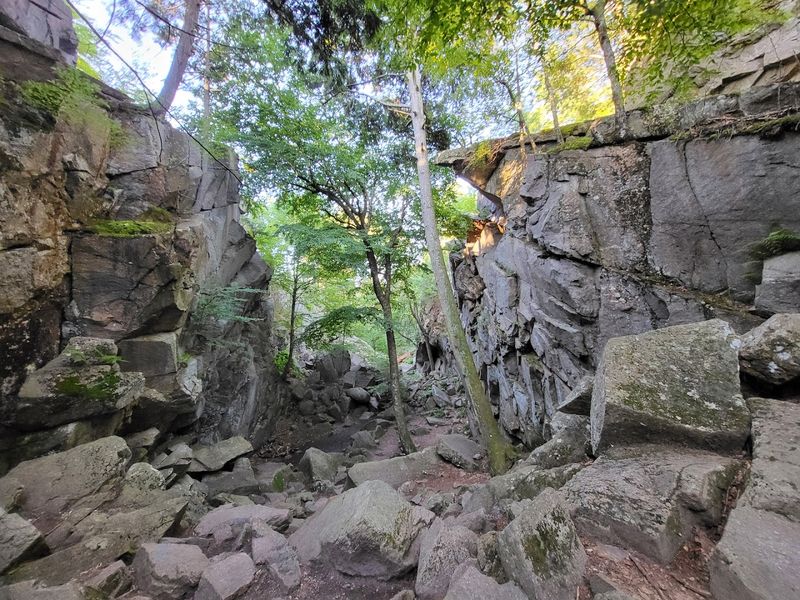
The name alone should tell you this place is not your average nature walk. Purgatory Chasm State Reservation in Sutton, Massachusetts, features a half-mile long gorge of massive granite boulders, narrow crevices, and towering rock walls that were carved out by glacial forces roughly 14,000 years ago.
The result is a landscape that looks more like something from a fantasy novel than central Massachusetts.
Scrambling through the chasm requires some agility and a good pair of shoes. There are tight squeezes, steep climbs, and spots where you have to navigate between boulders that are stacked like giant building blocks.
Kids absolutely love it, and adults find themselves grinning like kids as well. The whole loop takes about an hour, but most people spend longer exploring the nooks and crannies.
Individual rock formations have been given names like Lover’s Leap, the Corn Crib, and the Devil’s Coffin, which adds a theatrical flair to the whole experience. The surrounding state forest has additional hiking trails for those who want more after finishing the gorge.
Purgatory Chasm is free to enter and open year-round, though it is most spectacular in late spring and early fall when the foliage frames the dramatic rock walls beautifully. Do not skip this one.
Chesterfield Gorge
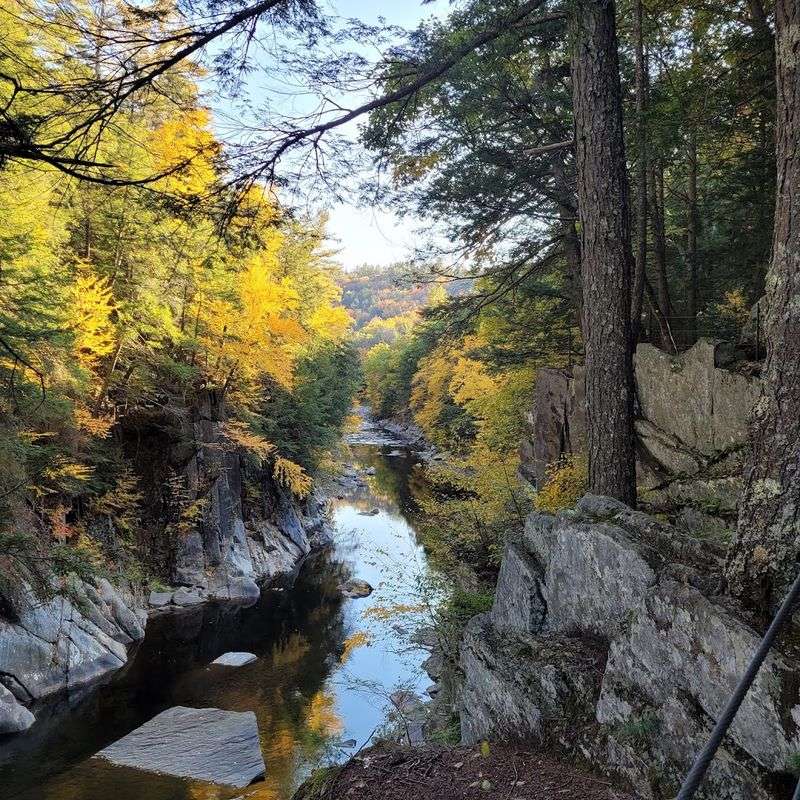
Calling Chesterfield Gorge the Grand Canyon of Massachusetts might sound like an exaggeration until you actually stand at its edge. The Westfield River has spent thousands of years carving a dramatic chasm through ancient granite here, creating sheer walls that plunge nearly 40 feet down to the rushing water below.
For a state that most people associate with beaches and cities, this gorge is a genuine geological surprise.
The Trustees of Reservations manages the site, and a short, easy trail follows the rim of the gorge to give visitors the best views. The sound of the river echoing up from below adds to the dramatic atmosphere.
Spring is particularly spectacular when snowmelt swells the river and sends water churning through the canyon at full force.
A historic bridge crosses the gorge, and the old King’s Highway once passed through this area during colonial times. That layering of natural drama and human history makes Chesterfield Gorge feel richer than a typical nature spot.
The surrounding hills are part of the rural Hampshire County landscape, which is gentle and pastoral in contrast to the fierce energy of the gorge itself. Admission is free for Trustees members, and the site is generally uncrowded, making it a true hidden gem worth seeking out.
Salem
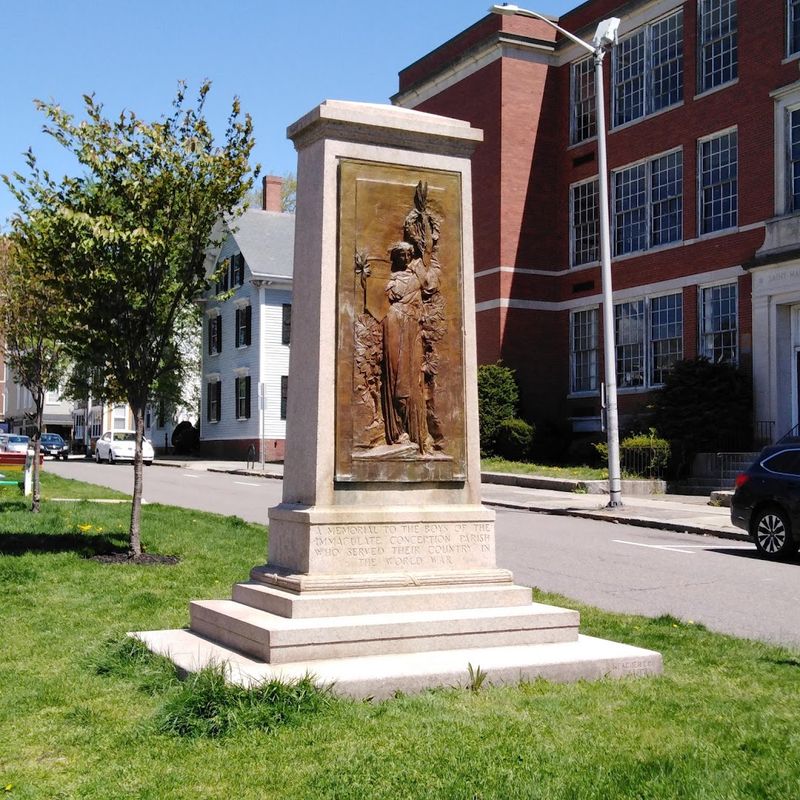
Salem is the rare place where history, mystery, and genuine beauty exist in the same zip code. Most people know Salem for the witch trials of 1692, and yes, that dark chapter of American history is very much present here in museums, memorials, and walking tours.
But Salem is far more than its most infamous moment, and discovering that fuller picture is what makes visiting so rewarding.
The Peabody Essex Museum is one of the finest art and culture museums in New England, housing a remarkable collection of maritime art, world cultures, and a fully reconstructed Chinese house. The waterfront itself is gorgeous, lined with historic wharves and tall ships that recall Salem’s days as one of the most important seaports in the young United States.
Derby Street, Charter Street Cemetery, and the Witch Trials Memorial are all within easy walking distance of each other, making Salem one of the most walkable small cities in Massachusetts. October is when the whole city leans into its spooky reputation with festivals, haunted happenings, and elaborate decorations that draw visitors from around the world.
But honestly, Salem in June or September, when the crowds thin out and the light is golden, might be even more magical. The atmosphere here is genuinely unlike anywhere else.
Provincetown Dunes
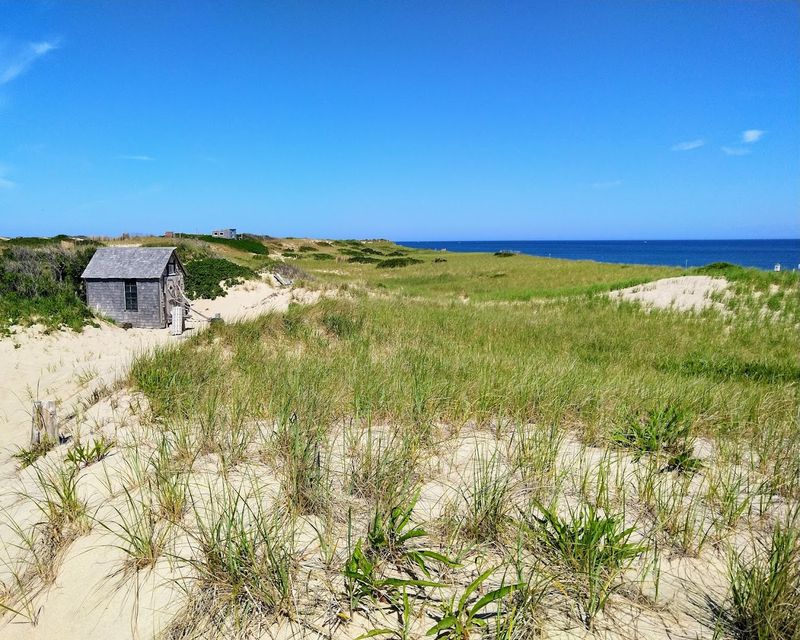
At the very tip of Cape Cod, where the land curls around like a bent finger pointing back toward the mainland, you will find one of the most unexpected landscapes in New England. The Provincetown dunes are vast, rolling, and almost surreal in their scale.
Standing among them, with nothing but sand, sky, and the distant shimmer of ocean in every direction, the world feels enormous and quiet at the same time.
These dunes are part of the Cape Cod National Seashore and have been home to a unique community of dune shacks since the early 20th century. Writers and artists including Eugene O’Neill and Jack Kerouac spent time in these rustic retreats, drawing creative energy from the raw, windswept landscape.
The shacks are still there today, some available for artist residencies through a nonprofit organization.
Guided dune tours in open-air vehicles are available and offer a fun way to explore the area without getting lost in the shifting sands. Sunrise and sunset from the dunes are extraordinary, with colors spreading across the sky in ways that feel almost theatrical.
Provincetown town itself is a vibrant, welcoming community known for its arts scene and lively summer culture. The dunes offer a peaceful counterpoint to all that energy, just a few minutes away.
Parker River National Wildlife Refuge
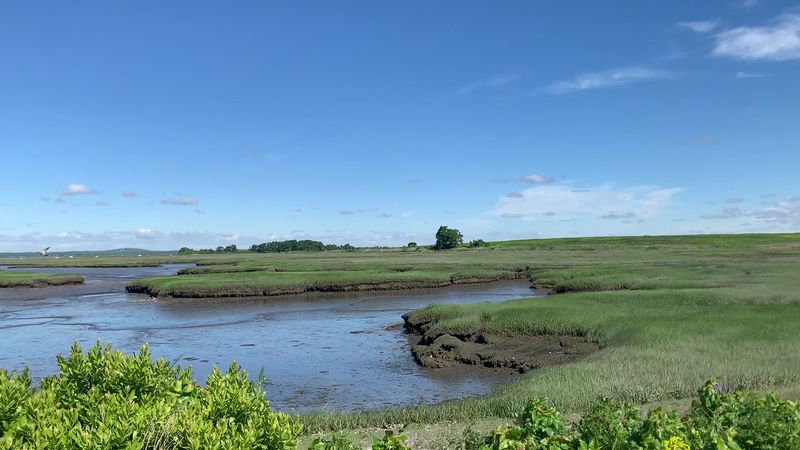
Plum Island does not get the same fame as Nantucket or the Vineyard, but birders and nature lovers know it as one of the most rewarding coastal destinations in all of New England. Parker River National Wildlife Refuge occupies most of the island and protects over 4,700 acres of barrier beach, dune, bog, and salt marsh habitat.
It is a place that rewards patience and quiet observation.
More than 300 species of birds have been recorded here, including snowy owls in winter, piping plovers in spring, and massive hawk migrations in fall. The refuge is a critical stop along the Atlantic Flyway, meaning millions of migratory birds pass through each year.
Binoculars are essential, and a field guide does not hurt either.
Beyond the birdwatching, the refuge has beautiful beaches open to swimming and sunbathing in summer, though sections close seasonally to protect nesting plovers. The marsh views from the boardwalks are genuinely stunning, especially in golden-hour light when the grasses turn amber and the water reflects the sky like a mirror.
The entrance fee is modest and the crowds are far lighter than at more popular Massachusetts beaches. Parker River is the kind of place that feels like a well-kept secret, and visiting it feels like you have been let in on something special.
Share this story