We all sat through those school lessons, scribbling notes and trusting every word like it came straight from the universe itself. Turns out, some of those “facts” were more like well-dressed guesses.
From Pluto’s planetary status to the color of your blood, plenty of things we memorized as kids have since been corrected, updated, or flat-out debunked. Get ready to question everything your teacher told you.
Pluto Is Not Classified as a Full Planet Anymore

Poor Pluto. For decades, it sat proudly at the end of our solar system as the ninth planet, featured on every classroom poster and science project.
Then 2006 came along and ruined everything. The International Astronomical Union dropped the hammer and reclassified Pluto as a dwarf planet.
The reason? Pluto has not “cleared the neighbourhood” around its orbit, which is one of the three official requirements for full planetary status.
It shares its orbital zone with other Kuiper Belt objects, which basically cost it its seat at the big-kids table.
Scientists still love Pluto. NASA’s New Horizons mission gave us stunning close-up images in 2015, revealing mountains and a heart-shaped nitrogen plain.
Pluto is genuinely fascinating. It just does not meet the current definition of a planet.
Our solar system officially has eight planets now, whether we like it or not.
There Are More Than Three States of Matter
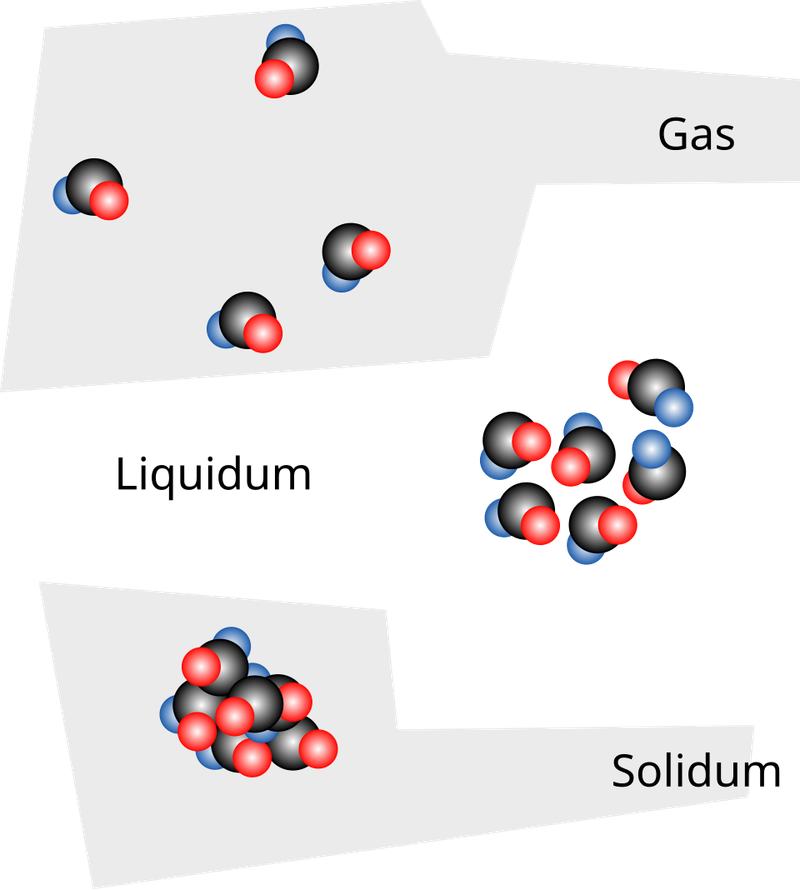
Solid, liquid, gas. We learned those three like a mantra and moved on.
But matter had more to say, and school just did not stick around for the full conversation. The truth is there are more states of matter beyond the classic trio.
Plasma is actually the most abundant state of matter in the visible universe. It exists inside stars, lightning bolts, and even neon signs.
That glowing tube hanging in a diner window? That is plasma doing its thing.
Then there is the Bose-Einstein condensate, a state that forms when certain atoms are cooled to nearly absolute zero. At that point, particles start behaving as one quantum blob.
Scientists created the first one in 1995 and won a Nobel Prize for it. The “three states” lesson was a helpful starting point, but the universe has way more tricks up its sleeve than school let on.
Humans Have More Than Five Senses
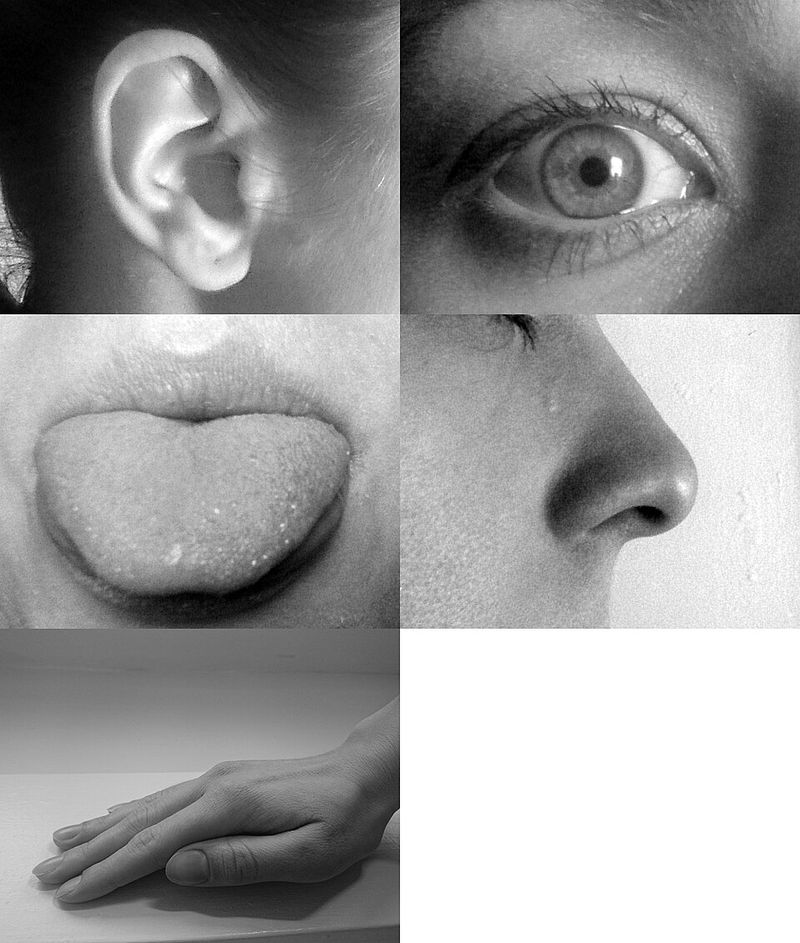
Sight, hearing, smell, taste, touch. We recited those five like a grocery list and called it a day.
But the human body is running a much bigger operation than that. Scientists have identified several additional senses that most people never learned about in class.
Proprioception is the sense that tells your body where your limbs are without looking at them. That is why you can walk in the dark without constantly checking your feet.
There is also thermoception for temperature, nociception for pain, and vestibular sense for balance.
Debate continues among researchers about the exact number, with some arguing humans have anywhere from 9 to over 20 distinct senses. The original five-sense model dates back to Aristotle, which means it is over 2,000 years old.
Not bad for ancient philosophy, but neuroscience has come a long way since then. The human body is honestly a lot more impressive than fifth grade gave it credit for.
Dinosaurs Were Not All Slow, Cold-Blooded Reptiles
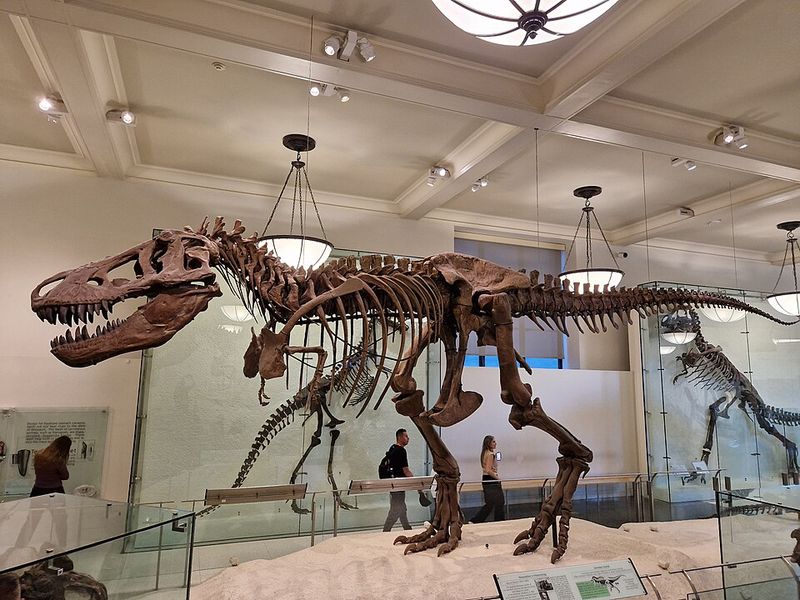
The classic dinosaur movie scene shows a lumbering, slow beast dragging its tail across the mud. That image was wrong on several levels.
Modern paleontology has completely transformed how we understand these animals, and the old cold-blooded reptile model has not aged well.
Evidence from bone structure, growth rates, and isotope analysis suggests many dinosaurs had metabolic rates more similar to modern birds and mammals than to lizards. Some species were likely warm-blooded, capable of sustained activity rather than lazy sunbathing.
We also know now that many dinosaurs had feathers.
Birds are actually living dinosaurs, technically speaking. The evolutionary link between theropod dinosaurs and modern birds is well established.
So the next time a pigeon steals your lunch, remember you just got mugged by a dinosaur. The sluggish, cold-blooded reptile image belongs in the trash heap of outdated science, right next to the tail-dragging posture we now know was also incorrect.
Pure Water Is a Poor Conductor of Electricity

“Water and electricity don’t mix” was the safety rule, and the logic seemed obvious. Water conducts electricity, so stay out of the bathtub during a storm.
Except the science behind that warning is slightly more complicated than the simple version we were taught.
Pure, distilled water is actually a very poor electrical conductor. Water molecules on their own do not carry electrical charge effectively.
What makes everyday water dangerous is everything dissolved in it: minerals, salts, and ions that allow electricity to travel through the liquid.
Tap water, lake water, ocean water, and even sweat-covered skin all contain enough dissolved substances to conduct electricity well. So the safety advice is still completely valid.
Electricity and water are a dangerous combination in real life. The nuance is just that it is the impurities doing the conducting, not the water itself.
Pure H2O is basically an electrical disappointment, which is not something school ever bothered to mention.
Christopher Columbus Did Not Discover America

Columbus sailed the ocean blue in 1492. That rhyme is burned into the memory of pretty much every kid who went through elementary school.
But calling that voyage a “discovery” glosses over some enormous historical facts that deserve a lot more classroom time.
When Columbus arrived in the Caribbean, tens of millions of Indigenous people were already living across North and South America. They had been there for thousands of years, with complex societies, languages, agriculture, and trade networks.
Columbus did not find an empty land.
Norse explorer Leif Erikson also reached North America around 1000 AD, nearly 500 years before Columbus set sail. The archaeological site at L’Anse aux Meadows in Newfoundland confirms this.
What Columbus’s voyage did do was open sustained contact between Europe and the Americas, which had massive historical consequences. That is significant, but it is very different from discovering a place where millions of people already lived.
Humans Did Not Evolve From Modern Apes

“If humans evolved from monkeys, why are there still monkeys?” Someone asks this at every family gathering, and the answer reveals a classic school misconception. Humans did not evolve from modern apes.
That is not how evolution works, and the difference matters quite a bit.
Humans and modern apes like chimpanzees and gorillas share common ancestors that lived millions of years ago. Different evolutionary branches split off from those ancestors over time.
Chimps did not turn into humans. Both chimps and humans developed along separate paths from a shared starting point.
Think of it less like a straight ladder and more like a branching tree. The last common ancestor of humans and chimpanzees lived roughly 6 to 7 million years ago.
That ancestor no longer exists. Over millions of years, different lineages developed in different directions.
Humans are technically great apes, which makes us part of the same family, just on a very different branch of it.
The Great Wall of China Is Not Clearly Visible From Space

The Great Wall of China is visible from space. That fact showed up in textbooks, trivia games, and countless school reports.
It sounds amazing. It also happens to be false, which makes it one of the most widespread geographic myths in modern education.
NASA has addressed this directly. The Great Wall is incredibly long, stretching thousands of miles, but it is quite narrow, averaging only about 15 to 30 feet wide.
From low Earth orbit, that width is simply too small for the naked eye to pick out against the surrounding terrain.
Astronaut Chris Hadfield confirmed he could not see it from the International Space Station without optical aid. Even Chinese astronaut Yang Liwei looked specifically for it during his 2003 mission and could not find it.
The wall is an extraordinary feat of human engineering and history. It just does not have a space-visible superpower.
Some myths are more fun than the truth, but the truth is still worth knowing.
Lightning Can Strike the Same Place Twice
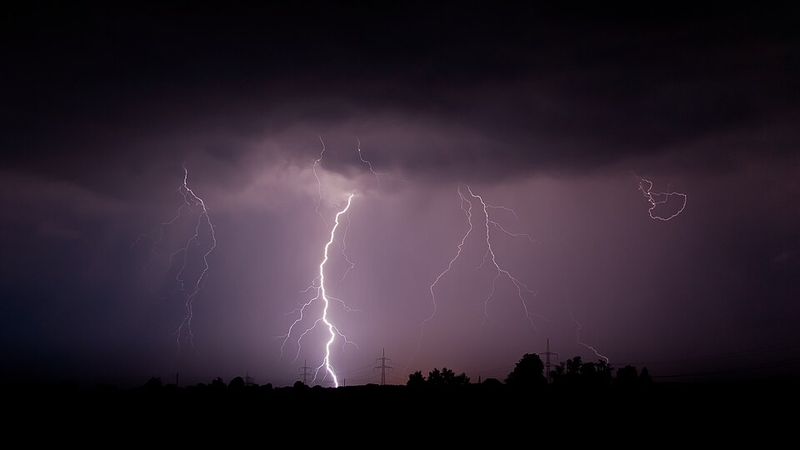
“Lightning never strikes the same place twice.” People say this to mean that bad luck will not repeat itself, which is a nice sentiment. But as actual meteorology, it is completely wrong, and the Empire State Building has the receipts to prove it.
The National Weather Service reports that the Empire State Building gets struck by lightning an average of 23 times per year. Some storms hit it multiple times in a single hour.
Tall, isolated, conductive structures are practically magnets for lightning strikes, and repeated hits are entirely normal.
Lightning follows the path of least resistance from storm clouds to the ground. If a structure provides that path repeatedly, nature will use it repeatedly.
Lightning rods exist specifically because engineers understood this. The myth probably started as a comforting phrase and never got corrected.
Next time someone quotes it as weather wisdom, you now have 23 annual lightning strikes of evidence to politely disagree with them.
People Are Not Simply Left-Brained or Right-Brained
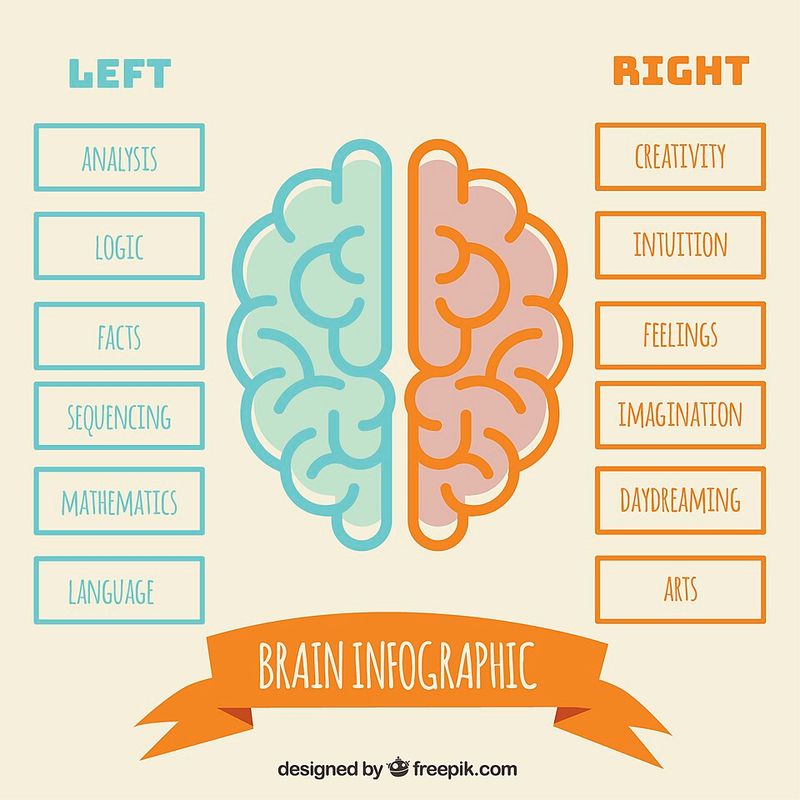
“You’re so right-brained” is the kind of thing people say to artistic friends, nodding knowingly. It sounds scientific.
It has that satisfying ring of a personality label. Neuroscience, however, has largely moved past this tidy little story.
The idea that logical people use their left hemisphere and creative people rely on their right is an oversimplification. The brain does have specialized regions; language processing leans left for most people, and certain spatial tasks favor the right.
But complex thinking, creativity, and logic all use networks spread across both hemispheres simultaneously.
A large 2013 study from the University of Utah scanned over 1,000 brains and found no evidence that individuals consistently favor one side. People are not running on one half of their brain based on personality type.
The left-brain/right-brain split makes for a great personality quiz, but it does not reflect how brains actually work. We are all whole-brained, for better or worse.
Bats Are Not Blind
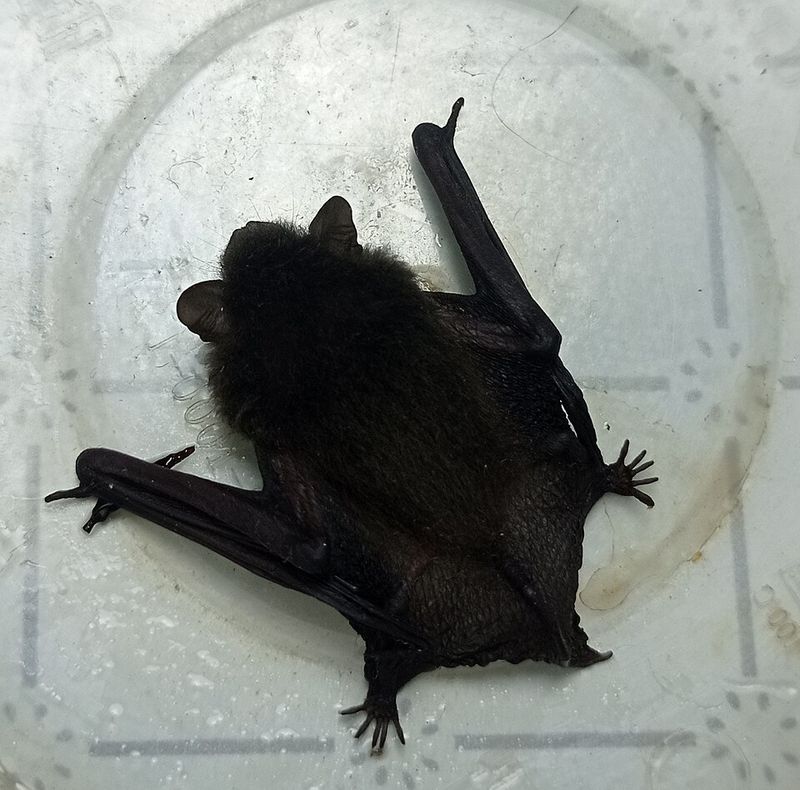
“Blind as a bat” is one of those phrases that has been repeated so often, most people accept it without question. Bats are mysterious, nocturnal, and associated with darkness, so blindness seemed to fit the brand.
The problem is that bats can actually see just fine.
All bat species have functional eyes. Many can see quite well, and some fruit bats have excellent vision, including the ability to detect ultraviolet light.
Echolocation, the sonar system bats use to navigate in the dark, is an additional tool, not a replacement for eyes they do not have.
Echolocation is genuinely remarkable. Bats emit high-frequency sound pulses and use the returning echoes to map their surroundings with impressive precision.
But using sonar does not mean being blind, just like using GPS does not mean you cannot look out the window. Bats have both vision and echolocation.
They are basically the overachievers of the animal kingdom, and they have been unfairly slandered for centuries.
We Do Not Use Only 10% of Our Brains
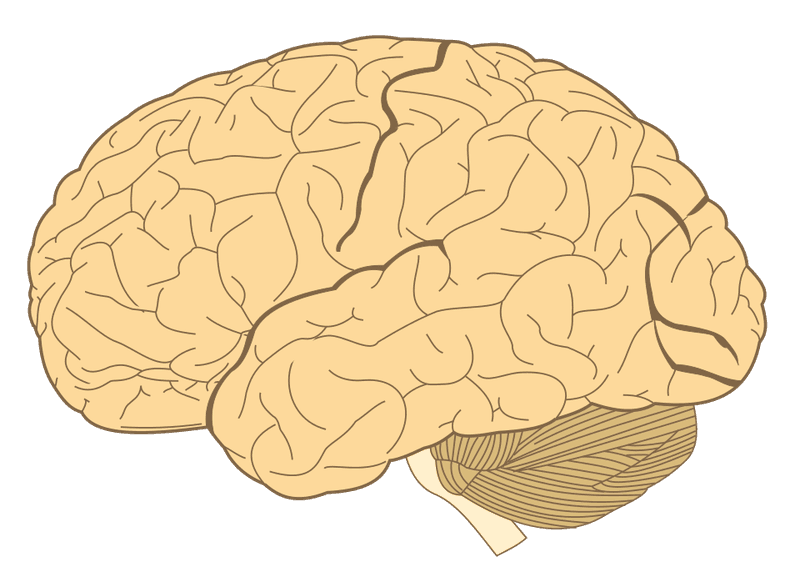
The 10% brain myth is one of the most durable pieces of scientific misinformation in history. It has inspired self-help books, motivational posters, and at least one Hollywood film.
It is also completely unsupported by neuroscience, and researchers have been trying to kill this myth for decades.
Brain imaging technology like fMRI shows that we use virtually all brain regions, and most of the brain is active almost all the time. Even during sleep, significant brain activity continues.
There is no dormant 90% waiting to be unlocked by a supplement, a seminar, or a dramatic life event.
The myth may have originated from misquoted statements by early psychologists or misunderstood research. It spread because it is a hopeful idea: the notion that untapped potential is sitting right inside your skull.
The reality is both more grounding and more interesting. Your brain is already working hard.
The better goal is using it well, not unlocking a fictional reserve.
Vikings Did Not Wear Horned Helmets

Horned helmets are basically the official Viking merchandise. They are on Halloween costumes, sports team logos, and cartoon characters.
The only problem is that actual Viking warriors did not wear them into battle, and the historical record makes this pretty clear.
The only fully preserved Viking Age helmet ever found, discovered in Norway in 1943, is a simple iron cap with no horns. Horned helmets did exist in Scandinavia, but they date back to the Bronze Age, roughly 1000 BC, and were likely used for ceremonial purposes rather than combat.
The horned Viking image was largely popularized in the 19th century through theatrical costumes and Romantic-era paintings. Once it caught on culturally, it became impossible to shake.
The National Museum of Denmark has worked to correct this misconception, but pop culture is stubborn. Real Viking helmets were practical, functional, and completely horn-free.
Horns on a battle helmet would actually be a liability, giving opponents something to grab during a fight.
Camels Do Not Store Water in Their Humps

The camel hump water storage story seems perfectly logical. Desert animal, long journeys, no water source, must be carrying a supply.
It is the kind of fact that makes complete intuitive sense, which is exactly why it stuck around in school lessons for so long. It is also wrong.
Camel humps are made of fat, not water. That fat serves as an energy reserve when food is scarce, allowing camels to go extended periods without eating.
As the fat is metabolized, it also produces some water as a byproduct, but the hump itself is not a canteen.
Camels do have impressive water-management abilities, but those come from their physiology rather than their humps. They can drink enormous amounts of water quickly and their bodies are efficient at conserving it.
Red blood cells that can expand without bursting help them rehydrate fast. A camel with a drooping, floppy hump is actually showing signs of fat depletion, not dehydration.
The hump is basically a lunch box, not a water bottle.
Chameleons Do Not Change Color Only to Match Their Surroundings

Chameleons changing color to blend into their background is one of nature’s most famous party tricks. The idea is so well established that “chameleon” became a metaphor for adaptability.
But color-matching camouflage is only one part of what chameleons are actually doing with those remarkable skin cells.
Research published in Nature Communications revealed that chameleons change color primarily through social communication. Males shift to brighter, more dramatic colors when competing with rivals or trying to attract mates.
Stress, temperature changes, and light conditions also trigger color shifts that have nothing to do with hiding from predators.
The color-change mechanism itself is fascinating. Chameleons have layers of specialized cells called iridophores that contain tiny crystals.
By adjusting the spacing of those crystals, they can reflect different wavelengths of light, producing different colors. It is structural color, not pigment.
So chameleons are not just hiding; they are communicating, regulating, and showing off. They are basically the social media influencers of the reptile world.
Goldfish Do Not Have Three-Second Memories

The three-second goldfish memory joke has been the punchline of countless cartoons and classroom quips. It paints goldfish as the most tragically forgetful creatures on the planet, endlessly surprised by their own bowl.
Fortunately for goldfish dignity, this myth is not backed by science.
Research has shown that goldfish can learn tasks, recognize patterns, and retain information for months. Scientists have trained goldfish to press levers for food at specific times of day, demonstrating time-based memory.
They can also navigate mazes and remember the layout over multiple sessions.
Animal cognition researchers have consistently found that fish, including goldfish, are more cognitively capable than popular culture suggests. The three-second myth likely spread because goldfish seemed simple and the joke was too good to fact-check.
In reality, a goldfish remembering its tank layout for weeks is not that exciting a headline. But it is the truth, and goldfish deserve better than being the punchline of a memory joke they definitely remember hearing.
Mount Everest Is Not the Tallest Mountain by Every Measurement

Mount Everest is the highest point on Earth above sea level, and nobody is taking that title away. But “highest above sea level” and “tallest mountain” are not always the same thing, and that distinction opens up a surprisingly compelling geographical debate.
Mauna Kea in Hawaii rises about 13,796 feet above the ocean surface. Modest by Everest standards.
But Mauna Kea sits on the ocean floor, and its total height from base to peak is over 33,500 feet according to NOAA. That makes it taller than Everest by more than 4,000 feet when measured completely.
There is also Mount Chimborazo in Ecuador, which sits near the equatorial bulge of the Earth. Its peak is actually the point farthest from the Earth’s center, beating Everest in that particular measurement.
So which mountain is tallest depends entirely on how you define tallest. Everest wins the sea-level competition, but the full picture of mountain height is more complicated than any school map suggested.
Blood in Your Veins Is Not Blue

Look at your wrist right now. Those veins probably look blue or green through the skin.
It seems obvious: veins carry blue blood, arteries carry red blood. Science class often did not correct this, which is why so many people carry this misconception well into adulthood.
Human blood is always red. Oxygenated blood, fresh from the lungs, is a bright cherry red.
Deoxygenated blood returning through the veins is a darker, deeper red, sometimes described as maroon. At no point does it turn blue.
The blue appearance of veins through skin is an optical effect caused by how different wavelengths of light penetrate and reflect through skin tissue.
Blue light reflects off the skin surface while red light penetrates deeper, making veins near the surface appear bluish to the eye even though the blood inside is dark red. Medical professionals see this clearly whenever they draw blood; it is always unmistakably red.
The blue vein story is one of the most visually convincing myths out there, which is exactly why it has lasted so long.
Share this story