There is a country in southeastern Europe that has been quietly waiting for the world to catch up with it, and according to Tripscout, 2026 is the year travelers finally will. Bosnia and Herzegovina sits on the Balkan Peninsula, tucked between mountains, rivers, and centuries of layered history that most tourists have barely scratched the surface of.
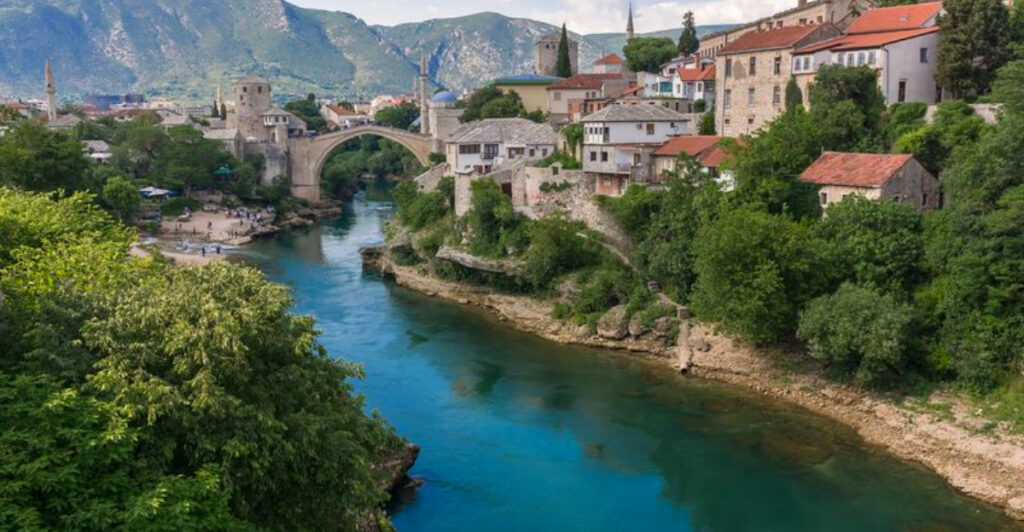
The old bazaars smell like roasted coffee and fresh bread, the rivers run a color of blue-green that seems almost too vivid to be real, and the medieval architecture tells stories that textbooks often skip. From the cobblestone streets of Sarajevo to the waterfalls of Kravice and the iconic bridge in Mostar, this country packs an extraordinary amount of character into every square mile.
If your travel list for 2026 still has room, Bosnia and Herzegovina deserves a serious look.
Sarajevo: A Capital City Unlike Any Other
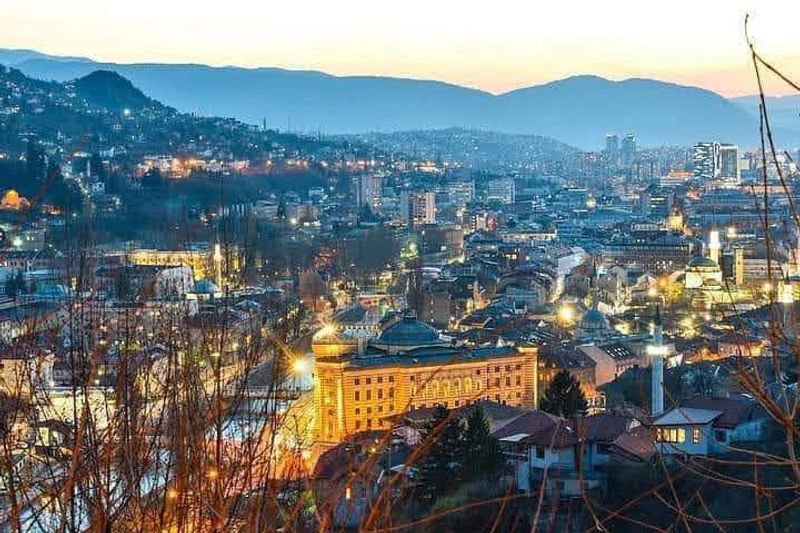
Few capital cities in the world carry as much history per square foot as Sarajevo, the heart of Bosnia and Herzegovina. The city sits in a valley surrounded by hills, and its skyline is a fascinating mix of Ottoman domes, Austro-Hungarian facades, and modern buildings standing side by side.
The old quarter, known as Baščaršija, is where most visitors lose track of time. Narrow lanes open up into small squares filled with copper craftsmen, tea houses, and the scent of cevapi grilling over open flames.
The 16th-century Gazi Husrev-bey Mosque anchors the neighborhood with quiet authority, its courtyard offering a calm retreat from the bustle outside.
Sarajevo sits at the crossroads of Eastern and Western culture in a way that feels completely natural rather than forced. You can walk from a mosque to a cathedral to a synagogue in under ten minutes, which locals call the “Jerusalem of Europe.” The city hosted the 1984 Winter Olympics, and remnants of that era still dot the hillsides.
Sarajevo rewards slow travelers who are willing to wander without a strict agenda.
The Latin Bridge and the Spark of World War I
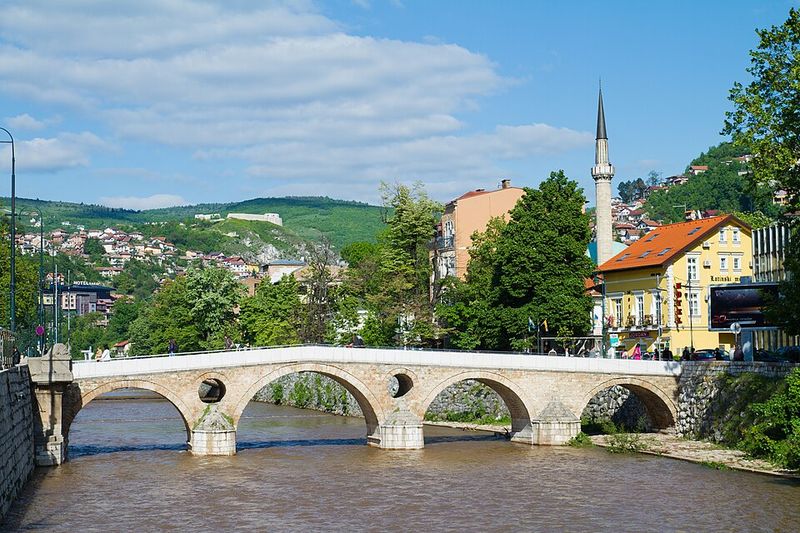
Some bridges carry foot traffic. The Latin Bridge in Sarajevo carries the weight of modern world history.
Built during the Ottoman period over the Miljacka River, this modest stone bridge became the site of one of the most consequential moments of the 20th century.
On June 28, 1914, Archduke Franz Ferdinand of Austria was shot near this bridge, an event that triggered a chain reaction leading directly to World War I. Standing on the bridge today, it is almost surreal to think that such a small, unassuming structure changed the course of history for hundreds of millions of people.
A museum now stands at the corner adjacent to the bridge, housing photographs, documents, and artifacts that tell the full story of that fateful day. The exhibits are well organized and genuinely informative, even for visitors who are not history enthusiasts.
The bridge itself is free to visit at any hour, and the surrounding area along the riverbank is pleasant for a slow afternoon walk. History rarely feels this close and tangible anywhere else in the world.
Mostar and the Legendary Stari Most Bridge
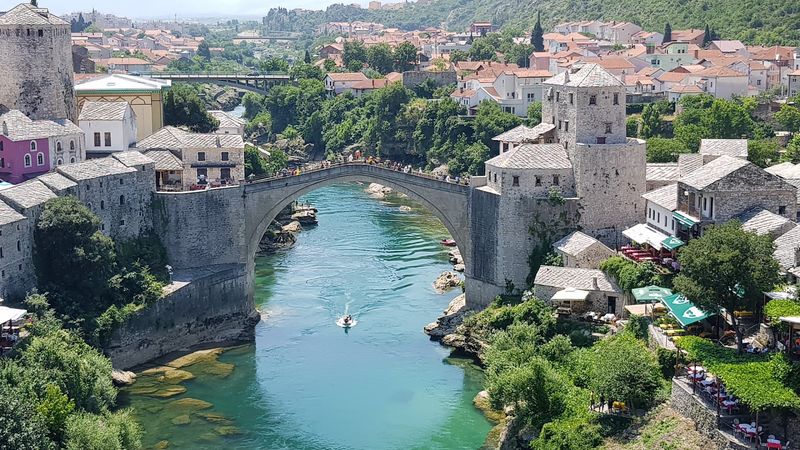
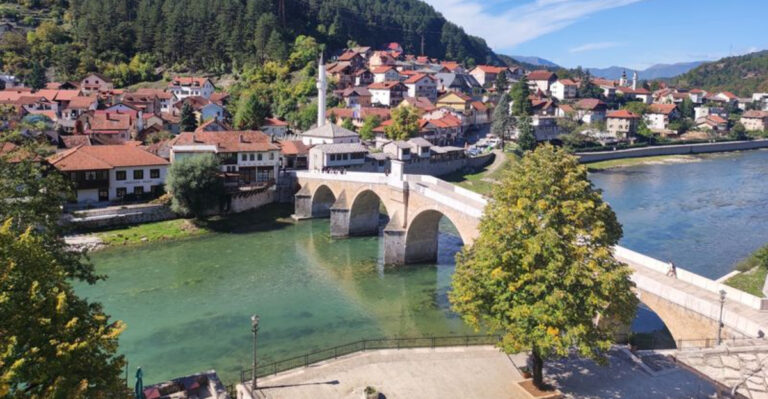
Mostar might be the most photographed city in Bosnia and Herzegovina, and the Stari Most bridge is the reason why. The name literally translates to “Old Bridge,” and this graceful Ottoman-era arch spanning the emerald Neretva River has become the defining symbol of the entire country.
The original bridge was built in 1566 and stood for over four centuries before being destroyed during the conflict of the 1990s. It was painstakingly rebuilt using the same limestone and traditional techniques, reopening in 2004 as both a functional crossing and a powerful symbol of renewal.
UNESCO added it to the World Heritage List shortly after.
Every summer, trained divers leap from the top of the bridge as part of a tradition that dates back centuries, drawing crowds of amazed onlookers below. The old town surrounding the bridge is packed with artisan shops, rooftop restaurants, and viewpoints that frame the arch perfectly at golden hour.
Mostar is compact enough to explore in a day but rich enough that many travelers end up staying for several. The Neretva below the bridge has a color that photographs simply cannot do full justice.
Kravice Waterfalls: Nature at Its Most Dramatic
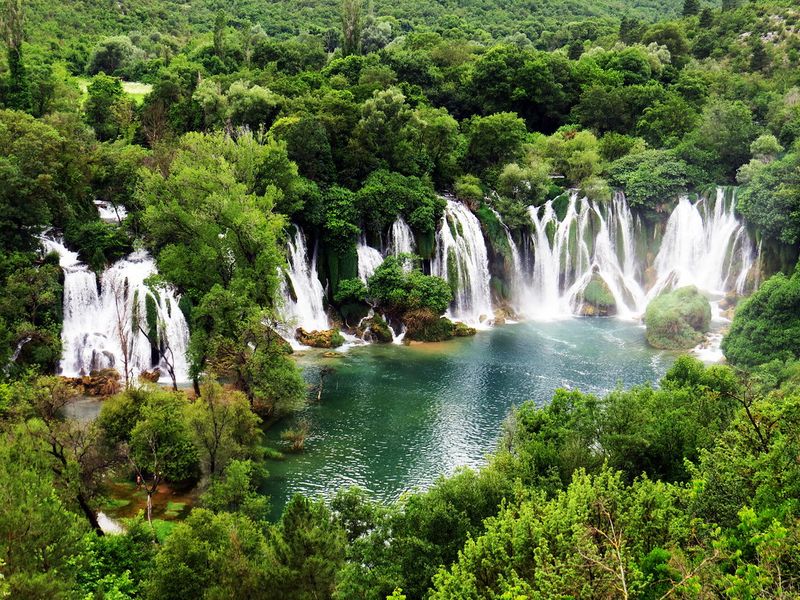
About an hour’s drive from Mostar, Kravice Waterfalls feel like a reward for travelers willing to venture off the main tourist path. The falls cascade over a wide crescent-shaped cliff, dropping roughly 25 meters into a pool of vivid turquoise water that practically glows in the afternoon sun.
The surrounding landscape is dense with willows and other greenery, which gives the whole area a lush, almost theatrical quality. In the summer months, the pool below the falls becomes a popular swimming spot, and small wooden boats can be rented to paddle closer to the base of the cascades.
The sound of the water is constant and genuinely soothing.
Getting to Kravice typically involves a short hike down a trail from the parking area, and the path is manageable for most fitness levels. Facilities near the site include basic cafes and restrooms, keeping the experience comfortable without over-commercializing the natural setting.
Early morning visits reward those who make the effort, as the crowds thin considerably and the light hits the mist in remarkable ways. Kravice is the kind of place that ends up in every travel story about Bosnia and Herzegovina.
The Dinaric Alps: Mountains Built for Adventurers
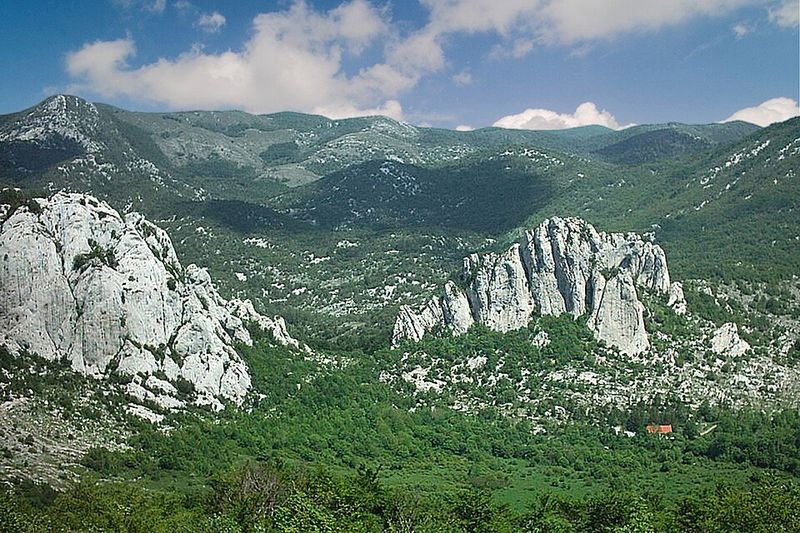
The Dinaric Alps run through Bosnia and Herzegovina like a dramatic spine, offering some of the most striking mountain scenery in the entire Balkan region. These are not soft, rolling hills but genuinely craggy limestone ridges with sheer faces, deep canyons, and high plateaus that stretch as far as the eye can follow.
Bjelasnica and Jahorina are two of the most accessible mountain areas, both sitting close to Sarajevo and both offering excellent hiking in summer and skiing in winter. Bjelasnica hosted alpine skiing events during the 1984 Winter Olympics, and its slopes still draw skiers looking for an affordable and uncrowded alternative to the more famous European resorts.
Wildlife in these mountains includes brown bears, wolves, and lynx, though sightings are rare and typically require guided excursions into more remote areas. The mountain villages scattered across the highlands offer a glimpse into a traditional way of life that has changed very little over generations.
Local guesthouses serve hearty homemade meals featuring lamb, dairy, and wild herbs gathered from the surrounding slopes. The Dinaric Alps are a serious destination for outdoor enthusiasts who want challenge and beauty in equal measure.
Medieval Villages and the Stecak Tombstones
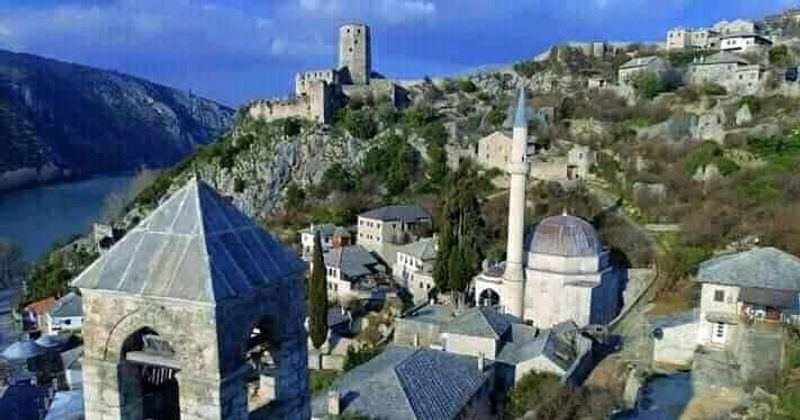
Scattered across the Bosnian countryside are thousands of mysterious carved stone monuments known as stecak, medieval tombstones that date roughly from the 12th to the 16th centuries. Their origin and the culture that produced them remain topics of scholarly debate, which only adds to their quiet intrigue.
The carvings on these stones include spirals, hunting scenes, human figures, and abstract symbols that do not map neatly onto any single religious or cultural tradition. They appear across meadows, forest clearings, and hillsides, often in clusters that suggest the sites of long-vanished communities.
UNESCO recognized the stecak as a World Heritage property in 2016, acknowledging their unique place in European history.
The village of Radimlja near Stolac contains one of the largest and best-preserved collections of stecak, with over 130 stones spread across an open field. Visiting this site feels genuinely unlike anything most travelers have experienced before.
The surrounding medieval villages in rural Bosnia and Herzegovina offer additional context, with stone architecture, old mills, and farming traditions that have survived centuries of change. These tombstones are one of the country’s most underappreciated and quietly extraordinary attractions.
Bosnian Cuisine: Food That Tells the Full Story
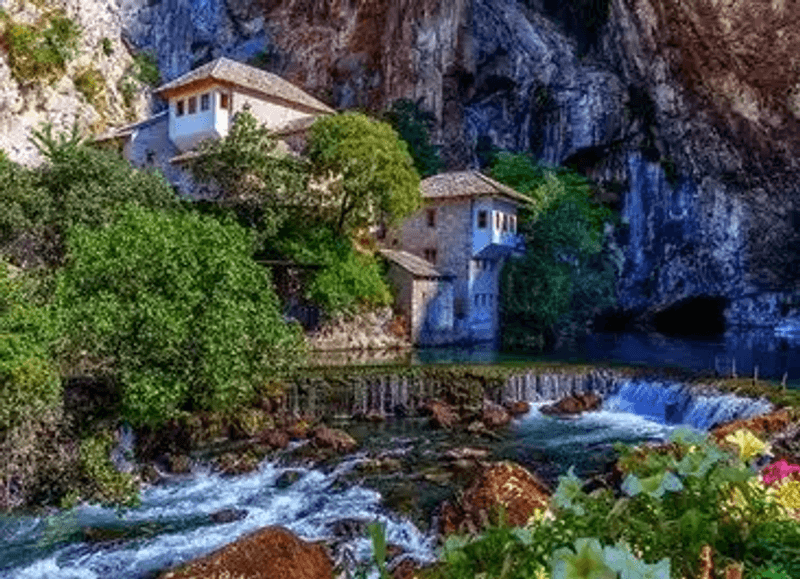
Bosnian cuisine is one of the most honest expressions of the country’s layered identity. Ottoman, Austro-Hungarian, and Mediterranean influences all show up on the plate, creating a food culture that is hearty, flavorful, and deeply tied to local ingredients and seasonal rhythms.
Cevapi is the dish most closely associated with Bosnia and Herzegovina, small hand-rolled sausages of minced meat served with soft somun flatbread, raw onion, and kajmak, a rich dairy cream that adds a tangy, buttery contrast. Every city and town has its own take on cevapi, and the debate over whose version is best is a beloved local tradition that never quite gets resolved.
Burek is another staple, a flaky pastry filled with meat, cheese, or spinach and baked in a wood-fired oven until golden and slightly crispy at the edges. Bosnian coffee culture deserves its own mention, as the traditional method of preparation involves a small copper pot called a dzezva and a ritual of slow pouring that turns a simple drink into a social event.
Meals in Bosnia and Herzegovina are rarely rushed, and that unhurried approach to eating is part of what makes the food experience so genuinely memorable.
The Neretva River Valley: Green Water and Ancient Roads
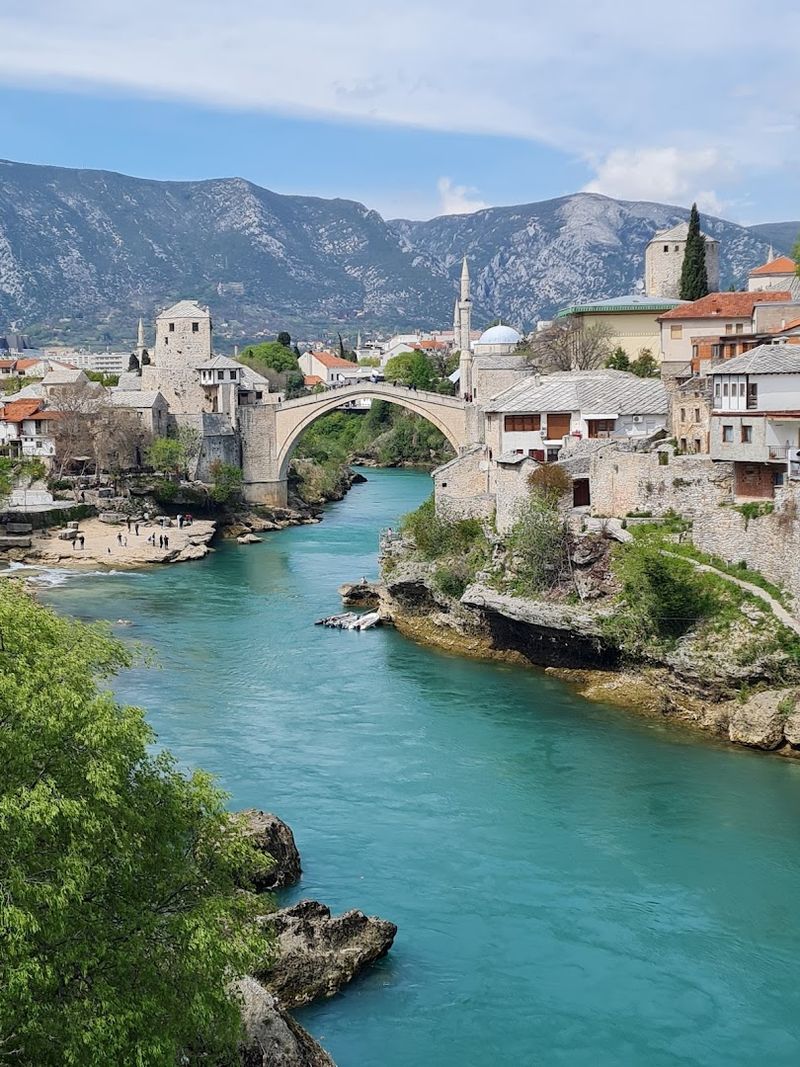
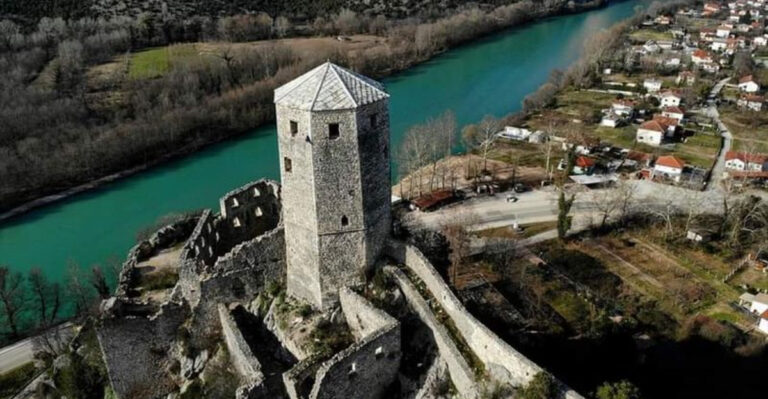
The Neretva River cuts through Bosnia and Herzegovina with a color so intensely green-blue that first-time visitors often stop mid-sentence just to stare at it. The river runs for about 225 kilometers through the country before crossing into Croatia, carving a valley that has served as a natural corridor for travelers and traders for thousands of years.
The valley landscape shifts dramatically along its length, from narrow limestone canyons in the upper reaches to broader, more agricultural plains as it approaches Mostar and the south. Ancient Roman roads once followed this corridor, and the ruins of several medieval fortresses still cling to the ridges above the water, keeping watch over routes that once mattered enormously for regional trade.
Rafting on the Neretva is a popular activity, with sections of the river offering both calm stretches for beginners and more technical rapids for experienced paddlers. The towns and villages along the valley are worth exploring at a relaxed pace, as many preserve traditional architecture and local crafts that the more touristy areas have largely moved away from.
The Neretva Valley is one of those stretches of landscape that tends to make travelers rethink their entire itinerary the moment they see it.
Why 2026 Is the Year to Visit Bosnia and Herzegovina
Tripscout did not single out Bosnia and Herzegovina by accident. The country offers a combination of affordability, authenticity, and sheer variety that is increasingly rare in European travel, especially as more well-known destinations grow crowded and expensive year after year.
The infrastructure for tourism has improved considerably in recent years, with better road connections, more accommodation options across different budget levels, and a growing network of guided tours that cover everything from city history to mountain trekking to culinary experiences. English is widely spoken among younger Bosnians, particularly in the cities, making independent travel more accessible than many first-time visitors expect.
The country also benefits from a genuinely welcoming culture. Hospitality in Bosnia and Herzegovina is not a marketing slogan but a deeply ingrained social value, and visitors consistently remark on how warmly they are received in both urban centers and rural villages.
The travel window before mass tourism fully discovers a destination is always limited, and Bosnia and Herzegovina appears to be right at that tipping point. Booking a trip for 2026 means experiencing a country that still feels like a discovery rather than a destination everyone has already checked off their list.
Share this story