Some castles look old, then others casually reveal they have been standing since before entire countries settled into their modern shape. These European strongholds are not just pretty stone backdrops for postcards, they are survivors with stubborn walls, royal gossip, and centuries of repairs behind them.
You will find presidential offices, family homes, tourist favorites, and cliffside fortresses that have refused to retire. If stones could smirk, these castles absolutely would.
Prague Castle – Czech Republic
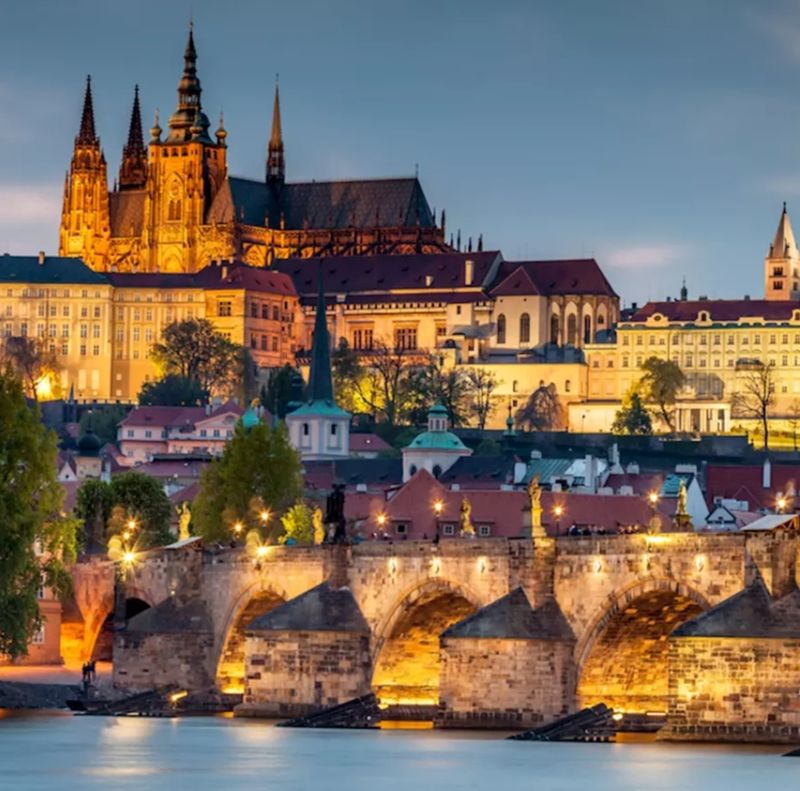
Prague Castle does not whisper its age, it practically clears its throat over the entire city. Founded around 880 AD by Prince Bořivoj, this enormous complex has watched Prague grow from early medieval settlement to one of Europe’s most beloved capitals.
You feel that layered past the moment you pass through its gates.
What makes it so fascinating is that it never really became a sleepy ruin. It still serves as the official residence and workplace of the Czech president, which gives its ancient stones a surprisingly current job description.
Churches, palaces, gardens, halls, and offices all sit together like a historical neighborhood with excellent views.
St. Vitus Cathedral grabs plenty of attention, but the smaller corners are just as rewarding. You can wander courtyards where different architectural styles bump shoulders without apology.
Romanesque traces, Gothic drama, Renaissance elegance, and Baroque confidence all appear in one mighty walk.
Visit early if you prefer fewer elbows in your photos. Prague Castle may be old, but it is not quiet, because everyone wants a look at a place that has been running for more than eleven centuries.
Château de Doué-la-Fontaine – France
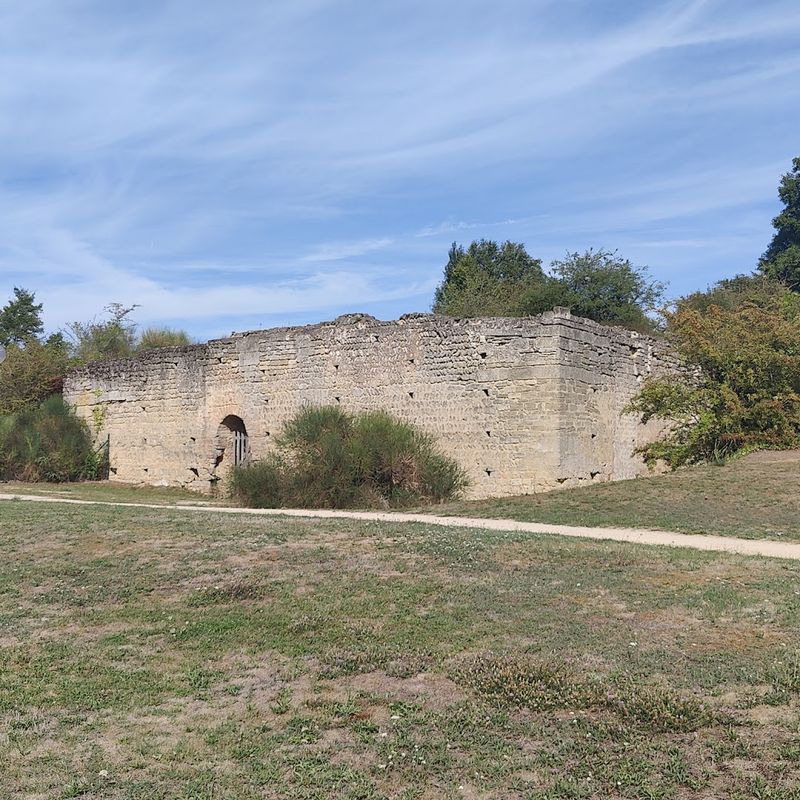
Château de Doué-la-Fontaine is the castle that quietly wins the age contest while everyone else is polishing their turrets. Parts of this French site date to around 950 AD, and its rectangular keep is often described as the oldest known standing castle structure in Europe.
That is quite a résumé for a place many travelers have never heard of.
Do not arrive expecting glittering halls or a fairy-tale skyline. Its charm is tougher, plainer, and more intellectually satisfying.
This was a prototype, a practical step between Carolingian aristocratic residences and the feudal castles that would later dominate medieval Europe.
The stonework tells a story of builders learning how to turn power into architecture. Earlier fortifications were often timber, quicker to build but easier to burn, damage, or replace.
Doué-la-Fontaine shows the moment stone began making a louder promise: we are staying put.
Access can be limited, which somehow adds to its mystique. When you consider its age, even partial survival feels impressive.
This is not the loudest castle on the list, but it may be the one that makes castle history click into place.
Meersburg Castle – Germany
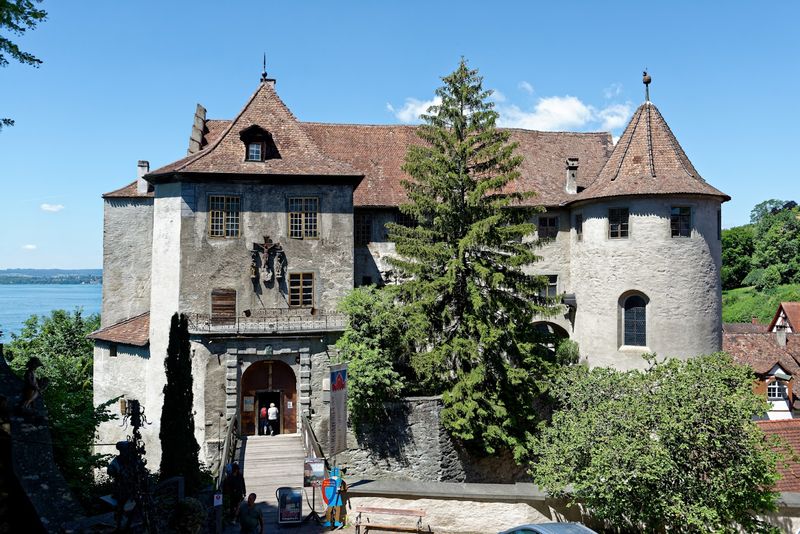
Meersburg Castle greets Lake Constance like it has owned the view forever, and honestly, it almost has. Its origins are often traced back to the 7th century, making it one of Germany’s oldest inhabited castles.
Perched above the water, it combines rugged age with scenery that feels almost unfairly photogenic.
The best part is its lived-in personality. Many castles feel staged after centuries of restoration, but Meersburg still carries the mood of a place shaped by daily use, not just tour brochures.
Rooms, stairways, halls, and defensive corners feel close enough to touch emotionally as well as physically.
Its long survival is especially striking because central Europe was rarely gentle with buildings. Wars, family changes, political shifts, and changing tastes could easily have erased or over-polished it.
Instead, Meersburg kept adapting while holding onto its medieval backbone.
You visit for the age and stay for the atmosphere. The lake glitters below, old stone surrounds you, and suddenly the centuries feel less like dates in a textbook.
This castle proves that endurance can be beautiful without needing to shout about itself.
Windsor Castle – England
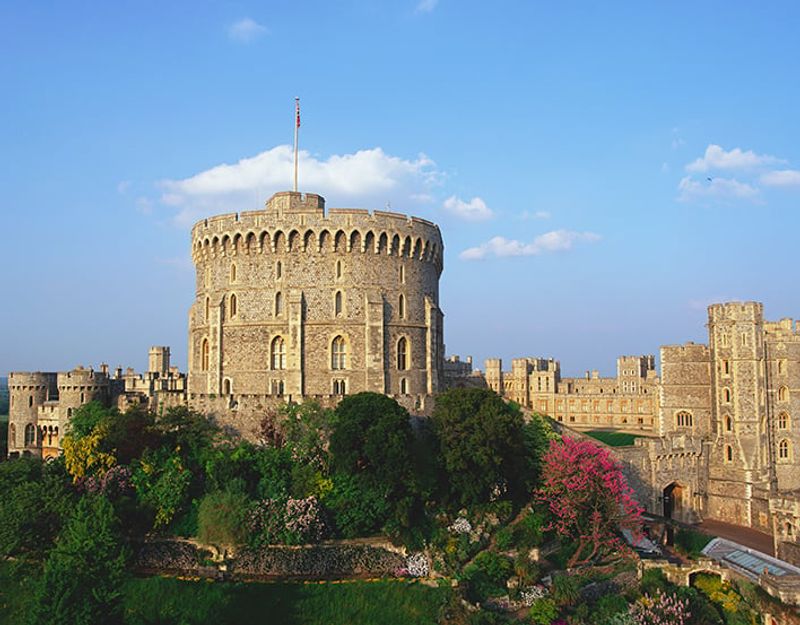
Windsor Castle is what happens when a medieval fortress refuses to become merely decorative. Begun around 1070 by William the Conqueror, it has remained tied to monarchy for nearly a thousand years.
That makes it less a retired monument and more a royal institution with very old walls.
It is widely recognized as the oldest and largest occupied castle in the world. That phrase sounds grand because it is, but the practical reality is even better.
Windsor has had to keep functioning through dynastic drama, fires, ceremonies, repairs, renovations, and the constant demands of modern state life.
The medieval core still matters, even after centuries of change. Henry II replaced early timber defenses with stone, and later monarchs reshaped the complex to match taste, power, and protocol.
The result is a castle that wears many centuries at once without losing its fortress identity.
Visitors often come for royal glamour, but the age is the real showstopper. You are not just seeing a palace with nice carpets.
You are walking through a working stronghold that began as Norman strategy and somehow ended up hosting modern royal history too.
Warwick Castle – England
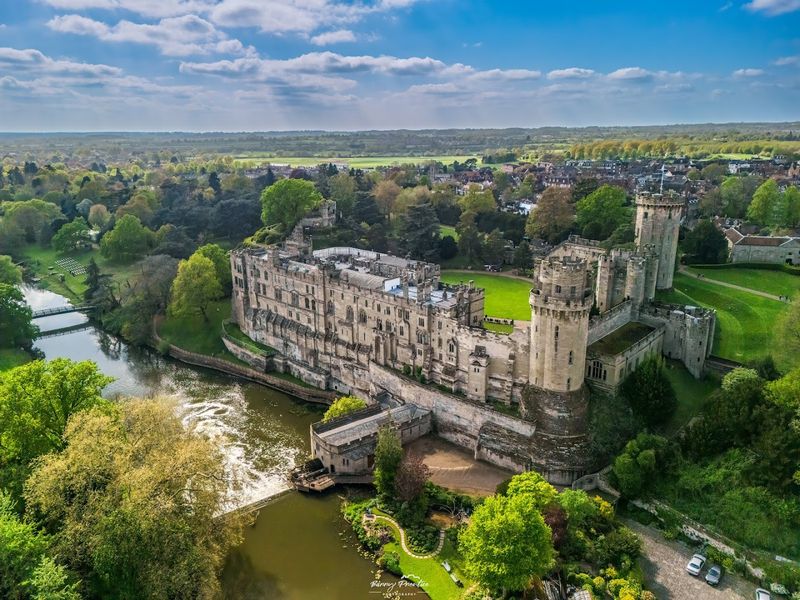
Warwick Castle has the kind of origin story that starts with dirt, timber, and serious defensive nerves. An Anglo-Saxon burh stood on the site in 914, and William the Conqueror built a wooden motte-and-bailey castle there in 1068.
Later stone rebuilding turned it into the muscular medieval landmark you see today.
This is not a castle frozen at one perfect moment. It evolved, and that is exactly what makes it interesting.
From early defenses to stone towers and curtain walls, Warwick shows how medieval military architecture became more ambitious, more permanent, and much harder to argue with.
Today it is a major visitor attraction, complete with exhibitions, performances, and enough spectacle to keep even reluctant history companions awake. Yet beneath the entertainment, the bones of the place remain serious.
You can still sense why controlling this site mattered.
Warwick’s great trick is balancing fun with genuine weight. It has pageantry, yes, but it also has the stubborn presence of a fortress built for uncertain times.
Come for the towers, stay for the reminder that castles were once business, not decoration.
Hohensalzburg Fortress – Austria
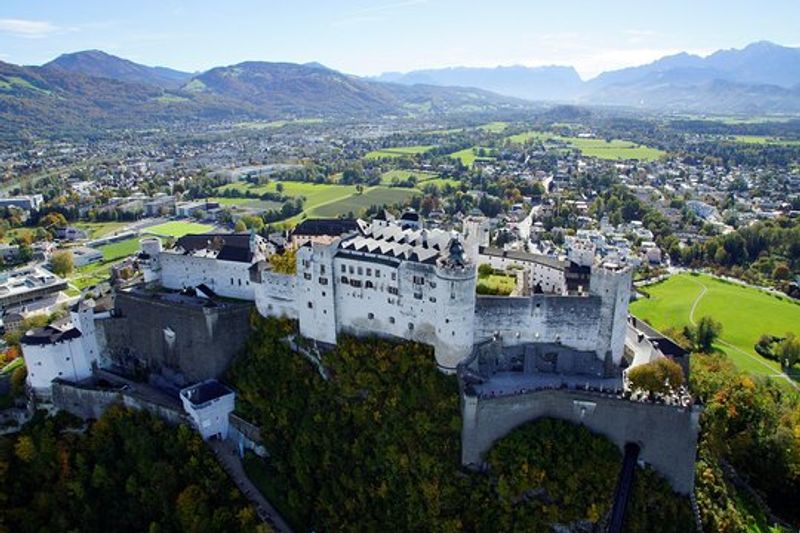
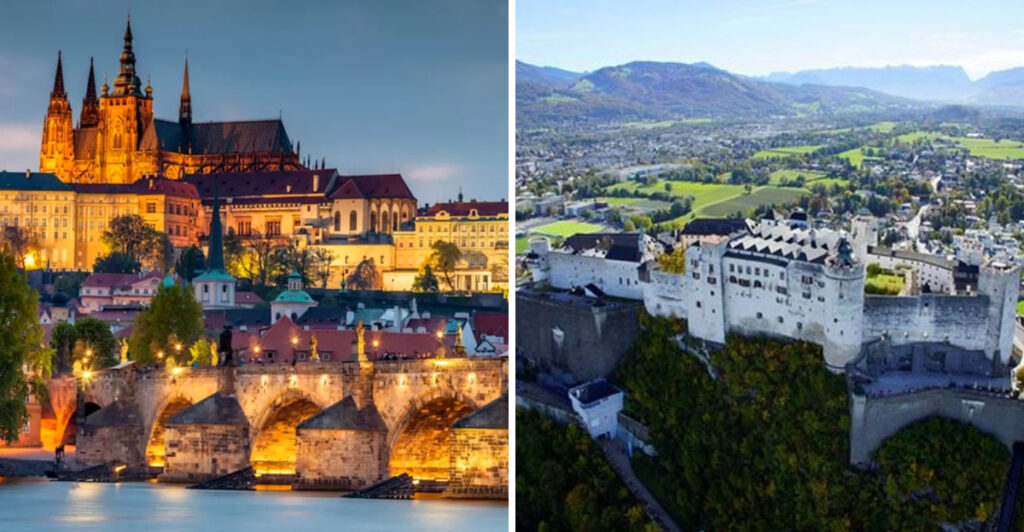
Hohensalzburg Fortress looks like Salzburg decided to crown itself in stone. Construction began in 1077 under Archbishop Gebhard I, and the result still dominates the skyline with magnificent confidence.
From below, it seems less placed on the hill than grown out of it.
Its position was not chosen for pretty postcards, though it certainly delivers them now. The fortress was built to project power and provide protection during a tense period of church and imperial politics.
Sitting high above the city made it extremely difficult to capture, which helps explain its remarkable preservation.
Over the centuries, archbishops expanded and improved it, especially during the late 15th and early 16th centuries. You can still explore medieval apartments, courtyards, defensive features, and viewpoints that make Salzburg look delightfully manageable.
The fortress feels complete in a way many ancient castles can only envy.
What I love about Hohensalzburg is its sheer self-assurance. It does not need theatrical ruins or mystery fog to impress you.
It simply stands there, enormous and intact, proving that good placement and thick walls can do wonders for a building’s long-term career.
Alcázar of Segovia – Spain
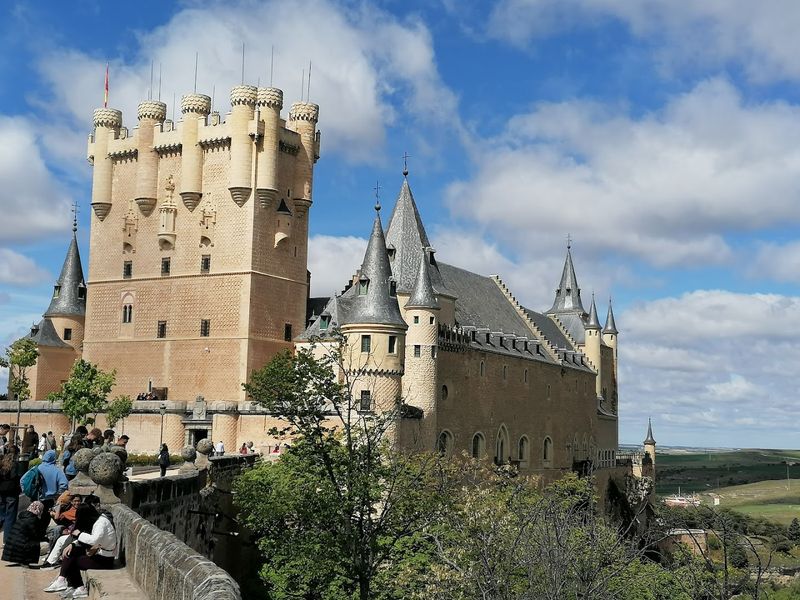
The Alcázar of Segovia seems ready to sail straight off its rocky perch. Its distinctive shape is often compared to the bow of a ship, and once you see it, you cannot unsee it.
First clearly mentioned in the 12th century, it became one of Spain’s most memorable royal residences.
The site itself had defensive importance long before the castle gained its famous silhouette. Romans and Moors used the area strategically, and medieval rulers later turned it into a palace-fortress with serious style.
By the 13th century, its Gothic character was taking shape.
Inside and out, the Alcázar has the theatrical confidence of a building that knows visitors will stare. Towers, halls, armory displays, and sweeping views across Segovia all help explain its lasting fame.
It is now part of a UNESCO World Heritage setting and serves as a museum and archive.
People often mention its influence on fairy-tale castle imagery, and that is fair. Still, it is more than a pretty outline.
The Alcázar stands because it combined royal prestige, military purpose, and an unforgettable location into one sharp, stone-built statement.
Rochester Castle – England
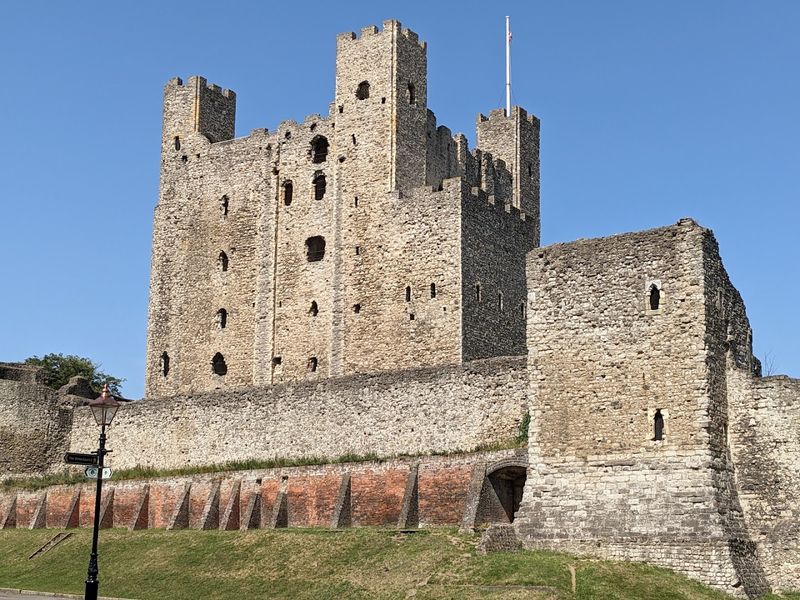
Rochester Castle does not bother being delicate, and that is exactly its appeal. Its great 12th-century stone keep still rises with blunt Norman confidence beside the River Medway.
Even in ruin, it looks prepared to disagree firmly with anyone approaching the walls.
The castle’s design reflects a period when fortifications were becoming stronger, taller, and more permanent. Stone keeps like Rochester’s were meant to dominate both the landscape and the local imagination.
They were defensive structures, status symbols, and unmistakable warnings bundled into one massive package.
Rochester also earned its fame through conflict. The castle suffered sieges, damage, and hard use, including a dramatic attack during the reign of King John.
Its survival gives you a visible lesson in medieval warfare without needing a dusty lecture.
Today, the shell of the keep remains deeply impressive. Climb around the site and you quickly understand why height, thickness, and position mattered so much.
Rochester may not be polished like a royal palace, but its ruined strength has real charisma. It feels honest, imposing, and wonderfully stubborn after nearly nine centuries.
Killyleagh Castle – Northern Ireland
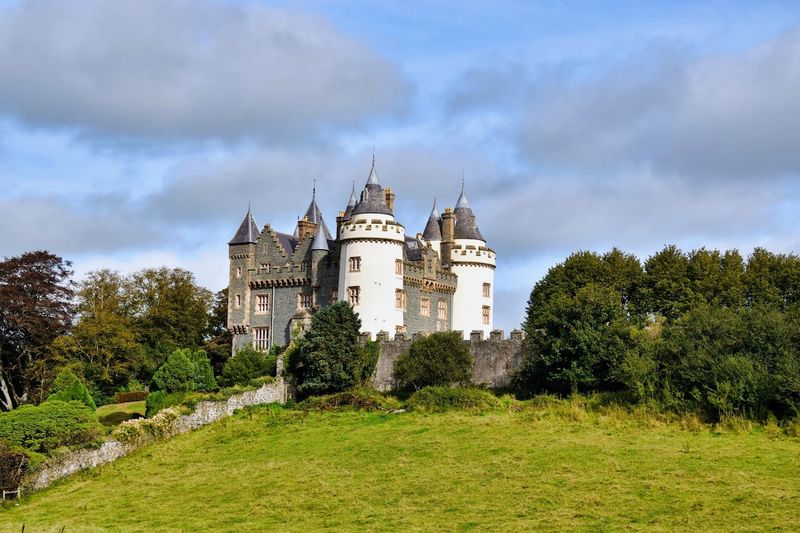
Killyleagh Castle looks wonderfully at home in its village, as if the centuries simply agreed to walk around it. With foundations dating to the 12th century, it is one of Ireland’s oldest continuously inhabited castles.
That living status gives it a warmth many grander ruins cannot match.
The castle has changed over time, of course, because long-lived buildings rarely stay untouched. Rebuilding and remodeling gave it the striking twin-towered appearance visitors admire today.
Still, beneath the later details lies a medieval origin that keeps the whole place grounded in deep history.
Its private ownership makes it feel less like a museum object and more like a family story written in stone. The same broad lineage has remained connected to it for centuries, which is remarkable in a region with no shortage of political and social upheaval.
Castles often changed hands by force, marriage, money, or misfortune.
Killyleagh reminds you that not every castle was only about battle. Some became homes first and legends second.
You may not roam every room, but just seeing it still inhabited makes the past feel oddly neighborly, as though medieval Ireland never fully packed up.
Reichsburg Cochem – Germany
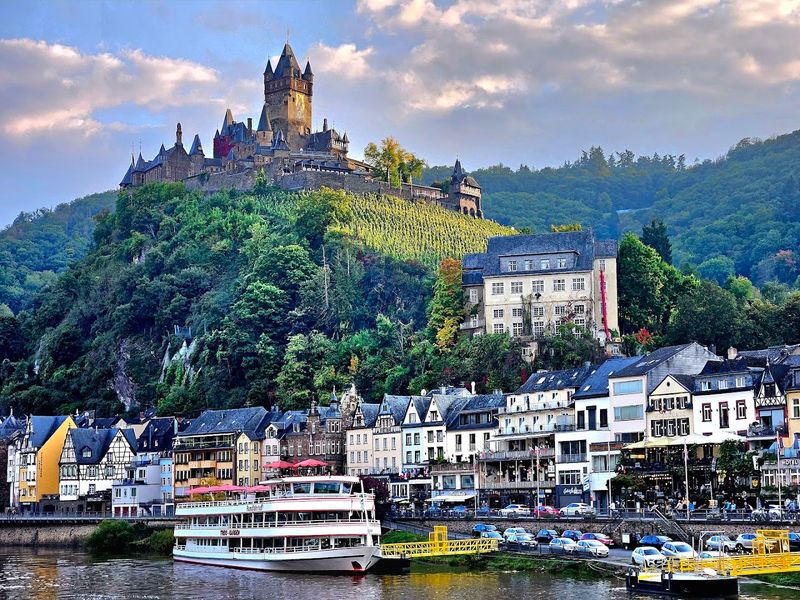
Reichsburg Cochem knows how to make an entrance from high above the Moselle River. Originally built around the 11th century, it occupied a strategic position over one of Germany’s most important river landscapes.
Trade, tolls, defense, and prestige all flowed through views like this.
The castle you see today is partly a resurrection story. It was destroyed in the 17th century and later rebuilt in the 19th century as a romantic summer residence.
That means its appearance blends medieval roots with later imagination, which gives it a slightly theatrical but still deeply historic personality.
Do not let the reconstruction fool you into dismissing it. The site’s medieval significance remains central to its identity, and the hilltop position explains why it mattered in the first place.
Castles along the Moselle helped control movement, wealth, and influence in a landscape shaped by river traffic.
Visiting Reichsburg Cochem is pure visual pleasure. Vineyards climb nearby slopes, the river bends below, and the towers look ready for their close-up.
It may have been rebuilt, but its old bones and commanding perch still carry the authority of a true medieval stronghold.
Share this story