There is a place in central Florida where the 1800s feel close enough to touch, where wooden buildings creak with old stories and the smell of aged timber drifts through Spanish moss-draped grounds. Most people rush past Dade City on their way to bigger attractions, not realizing they are missing something genuinely rare.
This open-air museum spreads across 16 wooded acres and holds a collection of restored pioneer buildings, farm tools, household artifacts, and hands-on history that few places in the state can match. Whether you are a history lover, a curious family, or simply someone who wants to slow down and see old Florida as it actually was, this place delivers something that no theme park ever could.
Keep reading to find out exactly what makes this hidden corner of Pasco County worth every minute of your time.
Finding the Village: Location and First Impressions
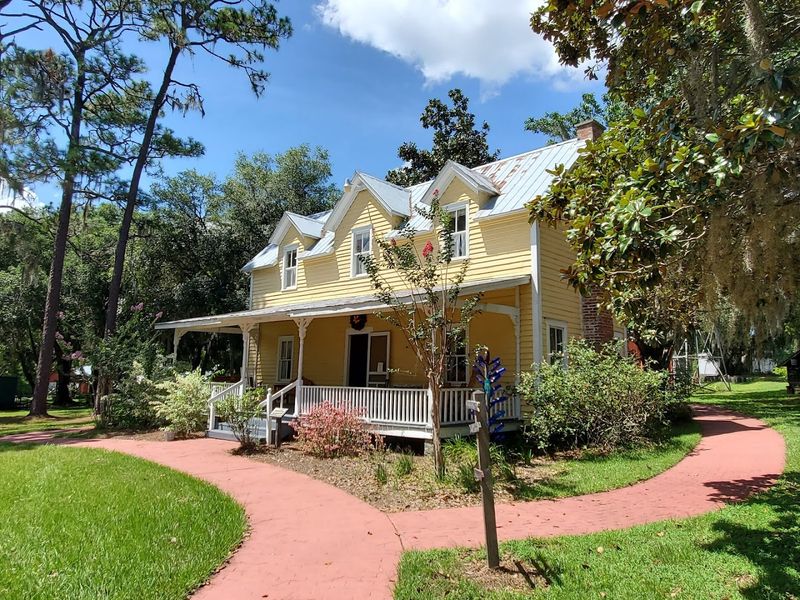
The address is 15602 Pioneer Museum Rd, Dade City, tucked along a quiet road that feels like it belongs to another era before you even park the car.
Free parking is available right on the grounds, which is a small but welcome detail that sets the tone for the whole experience. There are no crowds pushing past you, no long lines snaking around barriers, and no chaotic entry process to navigate.
The moment you arrive, the property announces itself through towering oaks and a landscape that feels deliberately unhurried. The museum sits in Pasco County in west-central Florida, roughly an hour north of Tampa.
The grounds are open Tuesday through Saturday from 10 AM to 5 PM.
A Living Slice of Old Florida History
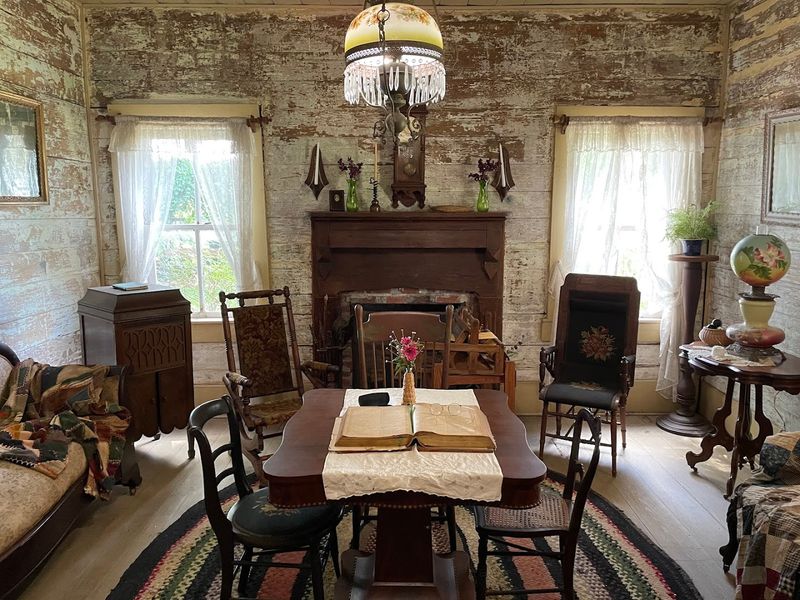
The Pioneer Florida Museum and Village has been collecting donated buildings and artifacts since 1961, which means the depth of what you find here has been building for more than six decades.
The museum focuses on Florida pioneer life from roughly the mid-1800s through the early 1900s, a period that most history books skip over in favor of more glamorous eras. What you get here is the real, unglamorous, fascinating truth of how everyday settlers built lives from scratch in a subtropical wilderness.
Across 16 wooded acres, relocated historic structures stand alongside footpaths that wind through the property in a way that rewards slow exploration. Nothing feels rushed or staged.
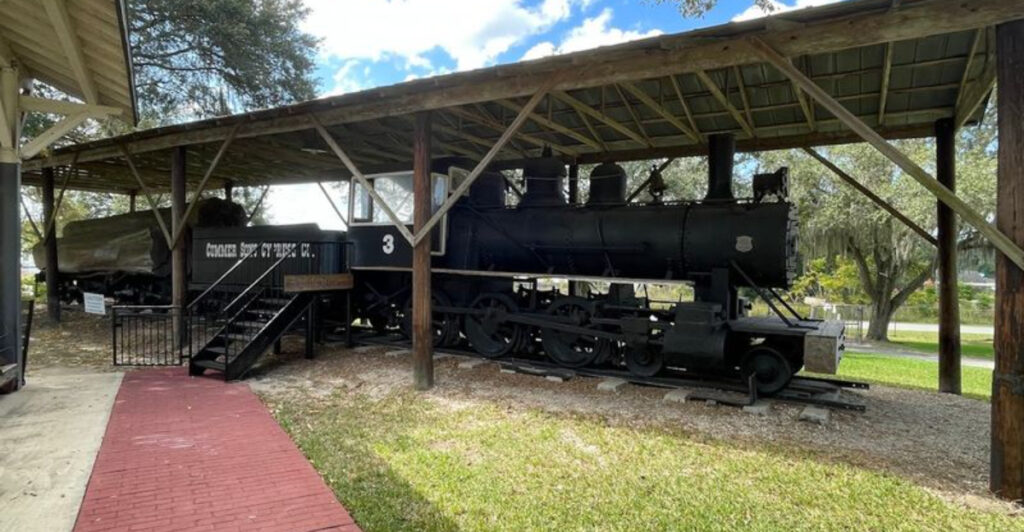
The museum holds an impressive range of artifacts indoors and out, from household goods and farm tools to a steam engine and exhibits that explain the daily struggles of Florida’s earliest rural communities. It is genuinely hard to see everything in one visit.
The Overstreet House: A Home Frozen in the 1890s
One of the most talked-about structures on the grounds is the 1890s Overstreet House, a relocated and carefully restored pioneer home that gives visitors a real sense of domestic life more than a century ago.
Walking through the rooms, you notice how small the spaces are, how purposeful every piece of furniture looks, and how much ingenuity went into managing daily life without modern conveniences. The details inside are not reproductions thrown together for effect.
The museum has filled the house with authentic period items, donated by families whose ancestors actually used them. That connection to real people and real lives makes the whole experience feel grounded rather than theatrical.
The Overstreet House is the kind of stop where you find yourself pausing longer than expected, reading the small informational cards and trying to picture the family that once called it home. It earns its place as a centerpiece of the village.
The Trilby Train Depot: A Piece of Henry Plant’s Legacy
Railroad history runs deep in this part of Florida, and the museum honors that legacy with the relocated Trilby train depot, connected to the railway network that entrepreneur Henry Plant helped build across the state in the late 1800s.
Henry Plant’s railroad expansion opened up central Florida to commerce, agriculture, and settlement in ways that permanently shaped the region. Having one of his original train stations preserved and accessible on the museum grounds is a genuinely rare opportunity to stand inside a piece of that transformation.
The depot is compact but full of character, with period details that help you picture the activity that once buzzed around it. Travelers, freight, and local farmers all passed through stations like this one as Florida grew from a sparsely settled territory into a real economic force.
Train enthusiasts and history buffs alike tend to linger here longer than anywhere else on the grounds, and it is easy to understand why once you step inside.
The General Store: Old Florida Commerce on Display
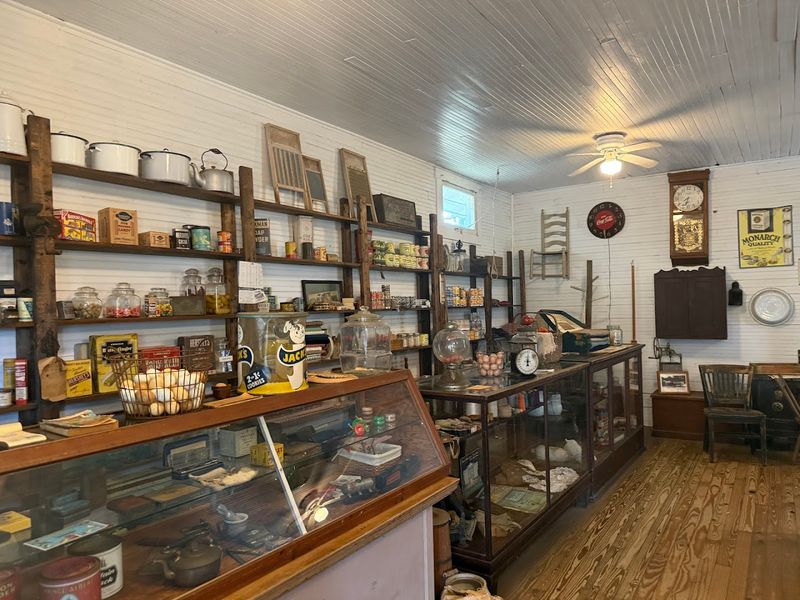
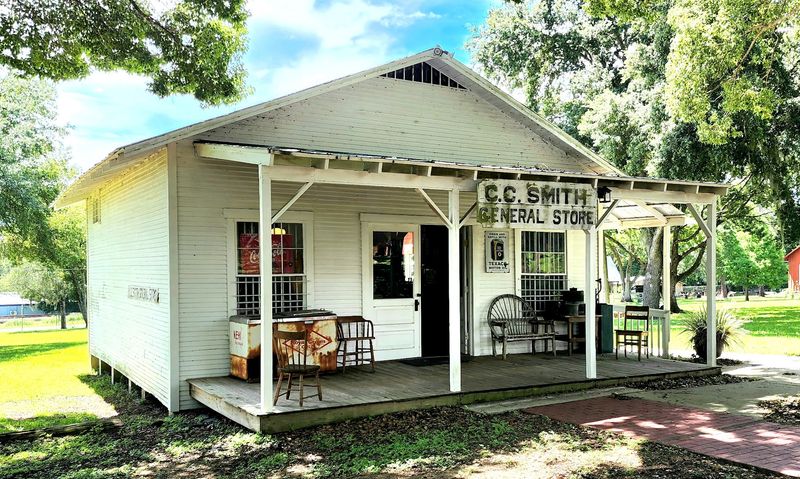
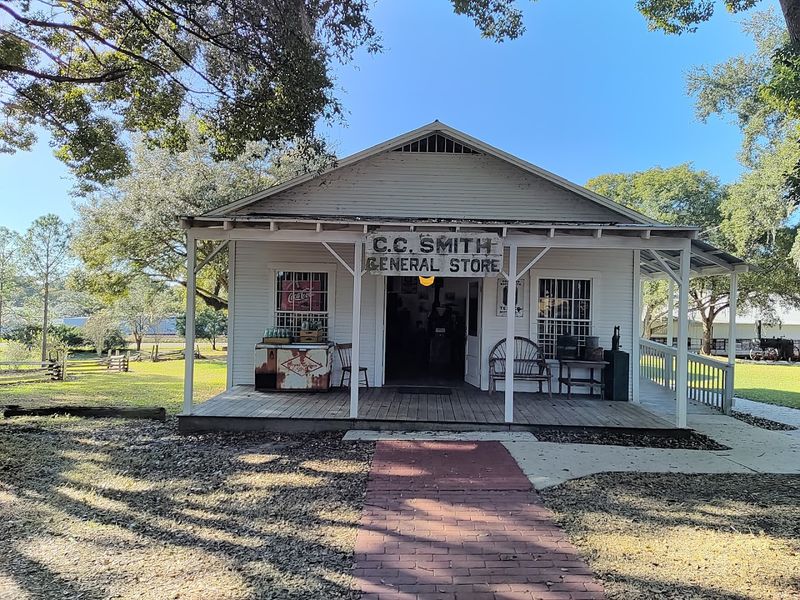
Before the age of supermarkets and online shopping, the general store was the heartbeat of every rural Florida community, and the museum’s restored example captures that spirit with impressive authenticity.
Shelves hold period goods and packaging, the wooden counter looks worn from years of transactions, and the overall layout gives you a clear picture of how settlers sourced everything from fabric to food in a single stop. It is a compact building, but every inch is used intentionally.
What makes the general store particularly engaging is how it connects to other parts of the village. You can trace the path from the farm fields to the blacksmith shop to the store and start to understand how these pioneer communities functioned as interconnected systems rather than isolated households.
The general store also tends to be a favorite with younger visitors, who enjoy spotting items that look completely foreign compared to anything they would find on a modern shelf. Old commerce has its own kind of drama.
The Blacksmith Shop: Where Iron Met Fire
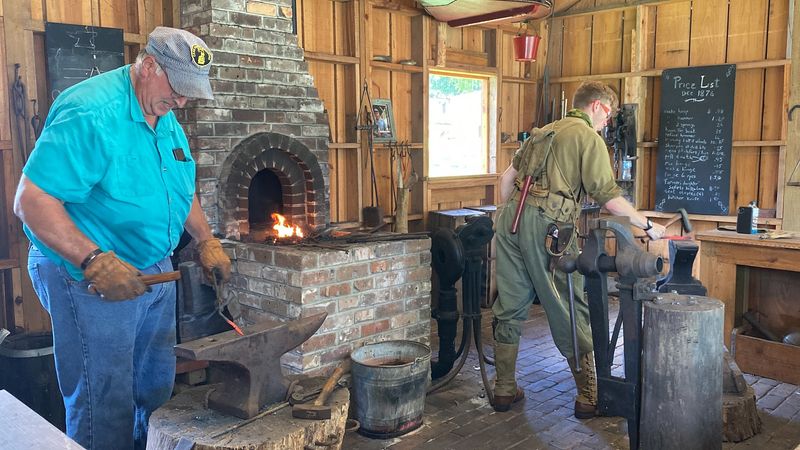
The blacksmith shop is one of the most viscerally engaging stops in the entire village, and during special events, it becomes even more memorable when demonstrators fire up the forge and show visitors exactly how iron was shaped by hand.
A working blacksmith demonstration pulls you in immediately. The sound of hammer on metal, the glow of heated iron, and the physical skill required to bend and form tools from raw material make it clear why the blacksmith was one of the most essential tradespeople in any pioneer settlement.
Even on a regular visit without a live demonstration, the shop holds an impressive collection of tools and equipment that explain the trade clearly. Informational displays walk you through the process from raw metal to finished product.
Kids who attend during event days often describe the blacksmith as the highlight of their entire visit, and it is not hard to see why. Watching something made by hand from scratch has a way of capturing attention that no screen ever could.
The Indoor Collection: Artifacts That Tell Personal Stories
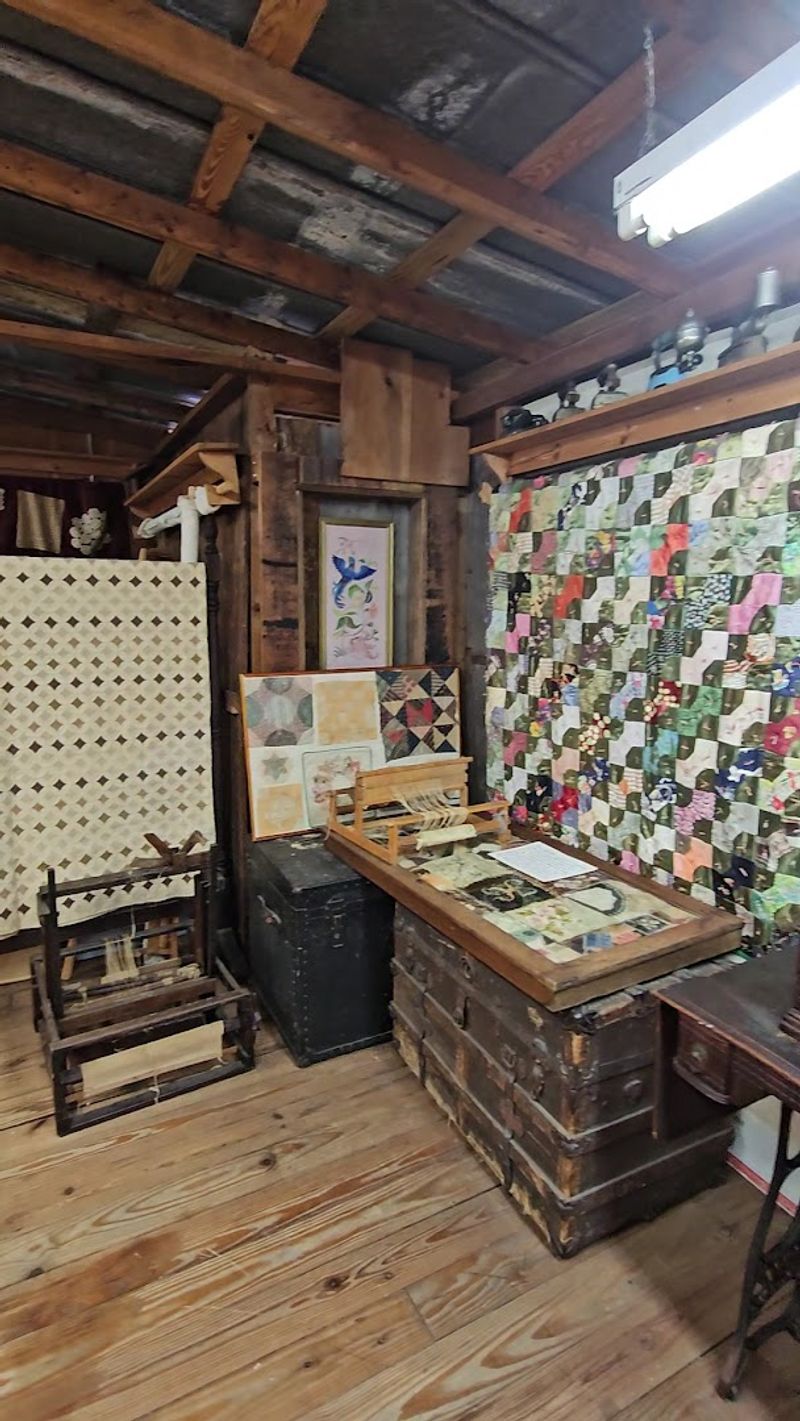
The main building holds an indoor collection that surprises most visitors with its depth and variety. Native beadwork, First Lady dolls, sewing machines, weaving equipment, household antiques, and farm tools are all curated and displayed with clear context.
What sets this collection apart is how personal it feels. Many items were donated by local families, which means the objects on display once belonged to real people who lived in this region.
That provenance gives the whole exhibit a warmth that replicated or purchased collections rarely achieve.
The farm tool section alone could occupy a dedicated hour, especially for anyone who grew up around agriculture and can identify what they are looking at. For those who cannot, the labels and staff explanations fill in the gaps generously.
The indoor space is also a practical refuge on particularly hot or rainy Florida days. You can spend a serious chunk of time inside and still feel like you have not seen everything the collection has to offer.
The Steam Engine and Farm Equipment Displays
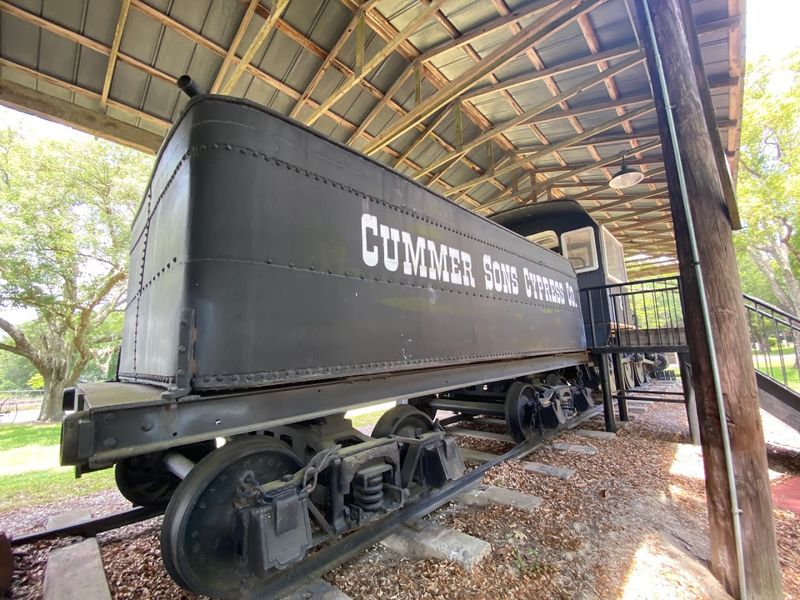
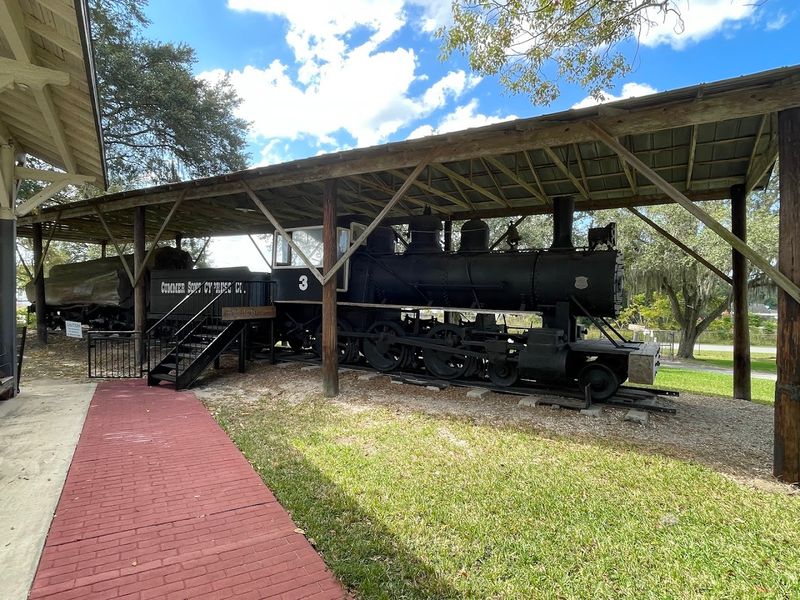
Few things communicate the scale of early agricultural labor quite like standing next to a full-size steam engine and realizing that this machine once powered the work of an entire farming operation.
The museum grounds hold an impressive collection of old farm equipment, from plows and cultivators to machines most modern visitors have never seen before. Each piece comes with enough context to understand its function, which transforms what could be a passive display into an active learning experience.
Florida’s agricultural history is often overshadowed by its tourism story, but this museum makes a compelling case that the farming era shaped the state just as profoundly. Citrus groves, cattle ranches, and small-scale subsistence farms were the backbone of life here long before theme parks arrived.
The steam engine in particular draws a crowd during event days, when demonstrators explain its mechanics and operation in terms that make the technology feel both impressive and surprisingly logical for its time.
Special Events: When the Village Truly Comes to Life
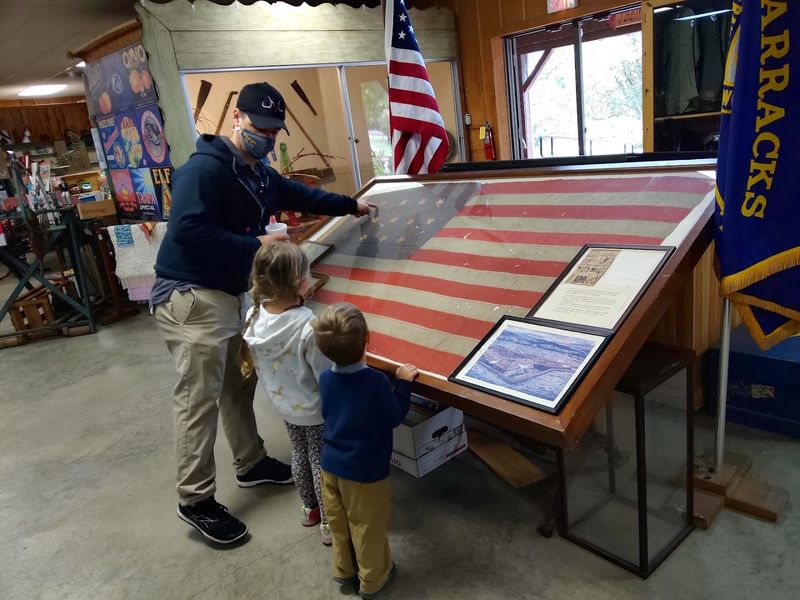
The museum hosts a rotating calendar of special events throughout the year, and attending one of them transforms the experience from a quiet self-guided tour into something closer to a full-day celebration of history.
Past events have included Farm Festivals with quilt shows, draft horses pulling equipment, live music, food vendors, re-enactors, and alligator demonstrations. Each event brings a different flavor to the grounds while keeping the focus on Florida heritage and pioneer culture.
Re-enactors in period clothing add a layer of storytelling that static displays cannot replicate. When someone walks up to explain a craft or skill in character, the history stops being abstract and becomes something you can watch, ask questions about, and remember.
If you have flexibility in your travel schedule, checking the events calendar at pioneerfloridamuseum.org before you visit is absolutely worth the extra step. An event day stretches five hours without effort, and many visitors leave wishing they had more time.
The Church and the Community It Represents
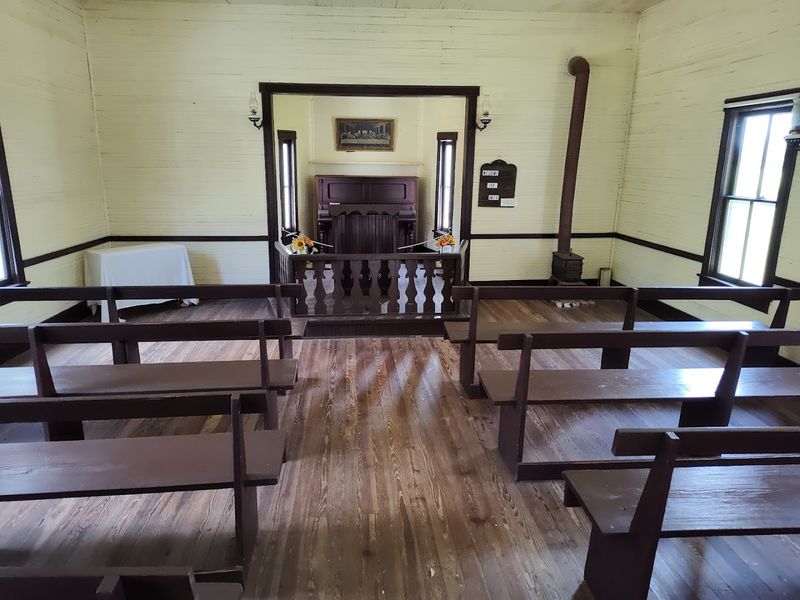
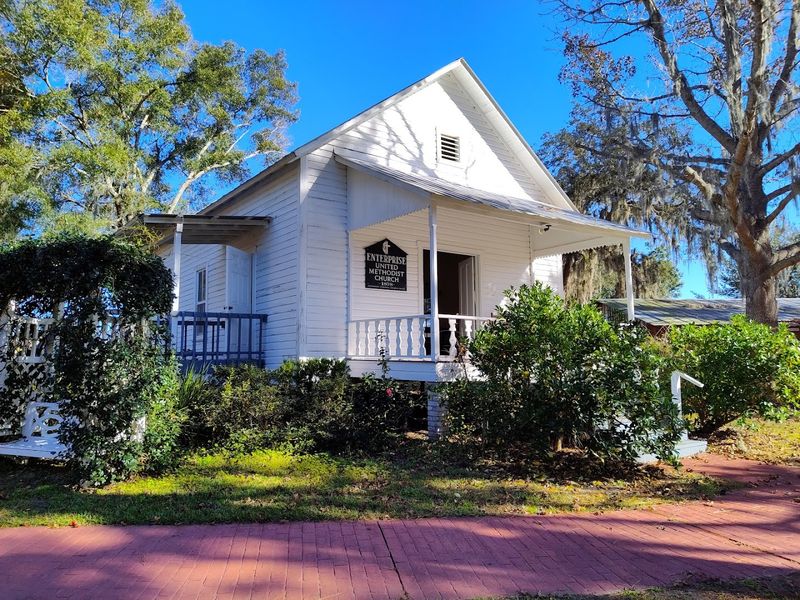
A relocated historic church stands on the museum grounds as a reminder that pioneer communities organized their social and spiritual lives around shared spaces long before they had much else in common.
The church is modest by any standard, a small wooden structure with simple interior details that reflect the practical priorities of the people who built it. There was no excess here, only what was needed to gather, reflect, and connect.
For many visitors, the church is one of the more quietly moving stops on the grounds. It does not demand attention the way a steam engine or blacksmith demonstration does, but it rewards those who slow down and spend a few minutes inside thinking about what community meant in an era when neighbors were sometimes miles apart.
The building also serves as a backdrop for some of the museum’s seasonal events, where it becomes part of living history demonstrations that bring the pioneer experience into sharper focus for visitors of all ages.
The Grounds Themselves: 16 Wooded Acres Worth Exploring
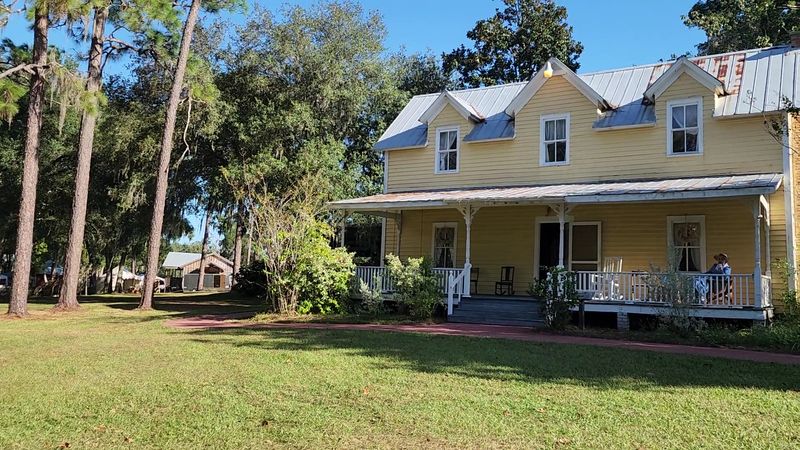
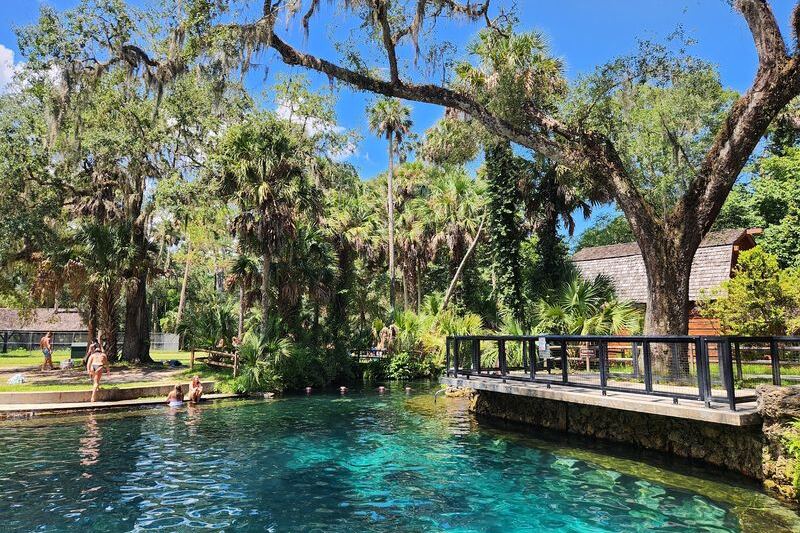
The physical setting of the museum is one of its most underrated qualities. Sixteen wooded acres of shaded paths, towering oaks, and open clearings make the walk between buildings genuinely pleasant rather than just functional.
Spanish moss hangs from the trees in the way it does throughout old Florida, and the overall atmosphere feels appropriately unhurried. You are not being funneled through a tight circuit or rushed past exhibits.
The grounds are well-maintained without feeling manicured to the point of artificiality. There is a natural quality to the landscape that reinforces the historical setting rather than competing with it.
Picnic areas on the property make it easy to bring lunch and settle in for a longer visit, and the free parking means you are not watching a meter while you explore. A self-guided tour of the full grounds takes roughly an hour and a half at a comfortable pace, though curious visitors often stretch that considerably.
Admission Pricing and Membership Options
Getting into the museum is refreshingly affordable compared to most Florida attractions. Adult admission runs $12, seniors and students pay $10, and children under five get in free, which makes this an easy budget call for families.
For those who fall in love with the place on the first visit, a lifetime family membership is available for $350, which grants unlimited access to the grounds and events at any point in the future. Given how many events the museum runs throughout the year, that option pays for itself faster than you might expect.
The museum also participates in the Harvest Hosts program, which is worth knowing if you travel by RV and like to pair overnight stays with meaningful cultural experiences.
One practical note worth passing along: some vendors at events and within the village prefer cash, so arriving with some on hand avoids any frustration when you find something you want to take home. Small-town museums often run on a cash-friendly model.
Why This Village Deserves a Spot on Your Florida Itinerary
Florida has no shortage of things to do, but places that offer genuine historical depth without a corporate gloss are harder to find than most people realize.
The Pioneer Florida Museum and Village fills that gap with something that feels earned rather than manufactured. Every building was relocated from a real community.
Every artifact was donated by a real family. Every event is planned by people who care about preserving a chapter of Florida’s story that tends to get glossed over in favor of beaches and theme parks.
The museum works for solo visitors who want a quiet afternoon of reflection, for couples interested in local history, and for families with children who need something tangible and interactive to hold their attention.
If you have an afternoon free in the Dade City area, and especially if you have never thought much about what Florida looked like before the twentieth century reshaped it, this village will leave you with a much fuller picture of the state you thought you knew.
Share this story