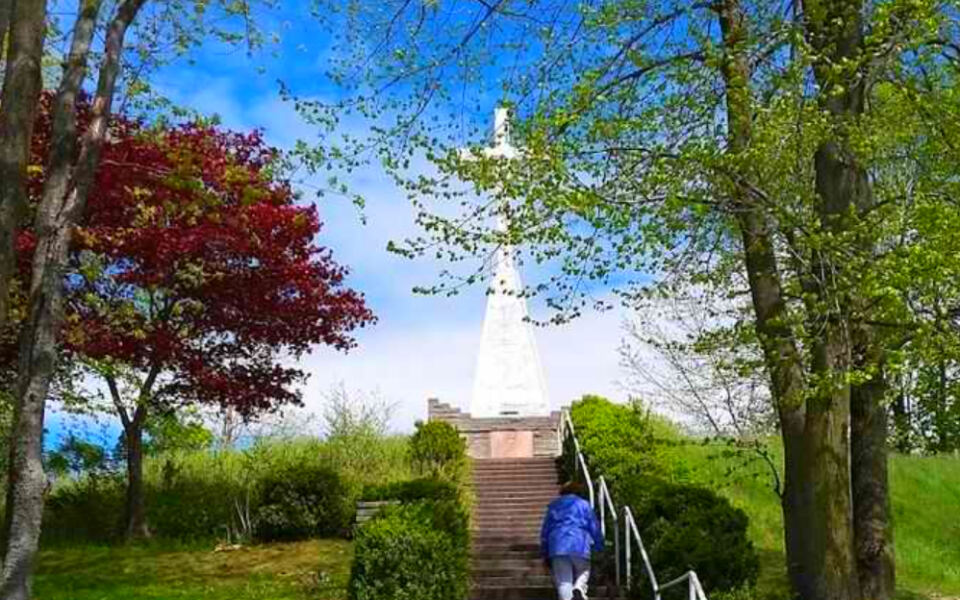
A stark white cross rises above the lakeshore south of Ludington, and it is not trying to be subtle. You spot it, pause, and immediately wonder why this quiet hilltop has such a commanding marker watching over water, road, and sky.
The answer reaches back to French exploration, Indigenous communities, early maps, and a long-running local effort to preserve a place tied to Father Jacques Marquette. Keep reading and I’ll show you how this modest roadside stop manages to pack in Lake Michigan views, Michigan history, picnic-table practicality, and just enough mystery to make a short visit feel surprisingly memorable.
The Address Hides a Bigger Story
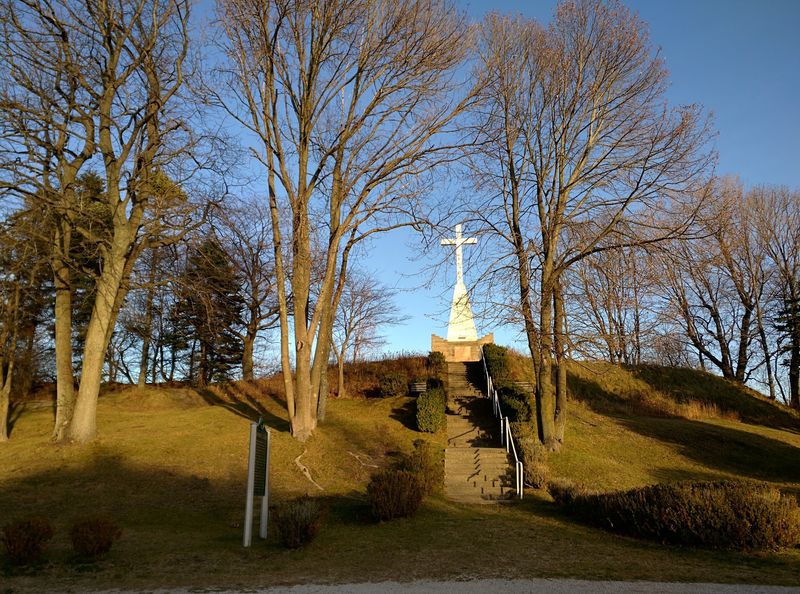
The first detail I like to get right is the practical one: Father Marquette Memorial Cross stands at Father Marquette Memorial Park, 883 S Lakeshore Dr, Ludington, MI 49431, in Pere Marquette Township, Michigan, United States.
That address sounds simple, but the setting does the heavy lifting. The cross rises on a hill south of Ludington, near the mouth of the Pere Marquette River, with views that pull your eyes toward Pere Marquette Lake and Lake Michigan.
I found it easy to understand why travelers notice it quickly. The white structure has a clean, upright presence, and it feels almost like the landscape is pointing at its own history.
This is not a sprawling attraction with ticket booths or dramatic staging. It is a small historical landmark where the road, the hill, and the water meet in a very direct way.
Give it a few minutes, though, because the next layer is the story behind the name.
Why This Hilltop Matters
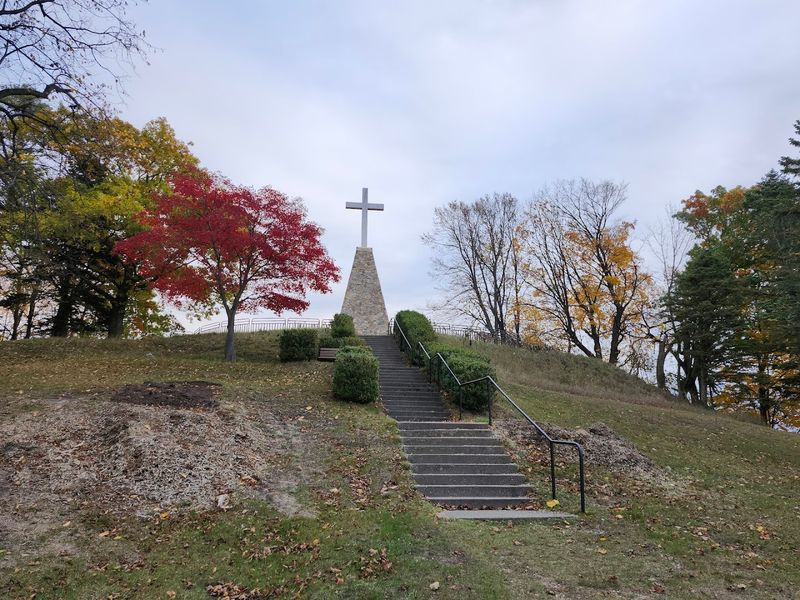
The hill feels quiet now, but its significance comes from a much older chapter in Great Lakes history. Many historians connect this area with the final journey of Father Jacques Marquette, the French Jesuit missionary and explorer whose name appears across the Midwest.
Marquette traveled widely through the Great Lakes region and helped map the northern Mississippi River Valley with Louis Jolliet. His work also included forming relationships with Indigenous communities and learning several Native languages, which shaped how he moved through unfamiliar territory.
The cross marks the site where many believe Marquette’s life ended in 1675, after a difficult expedition. His companions reportedly honored the spot with a large cross, creating the connection this memorial preserves.
I like that the monument does not shout its story. It lets you stand there, read the marker, and piece together how one person’s travels left traces across Michigan.
That quietness matters, because the next surprise is how visible the cross remains today.
A White Cross You Can Spot From Afar
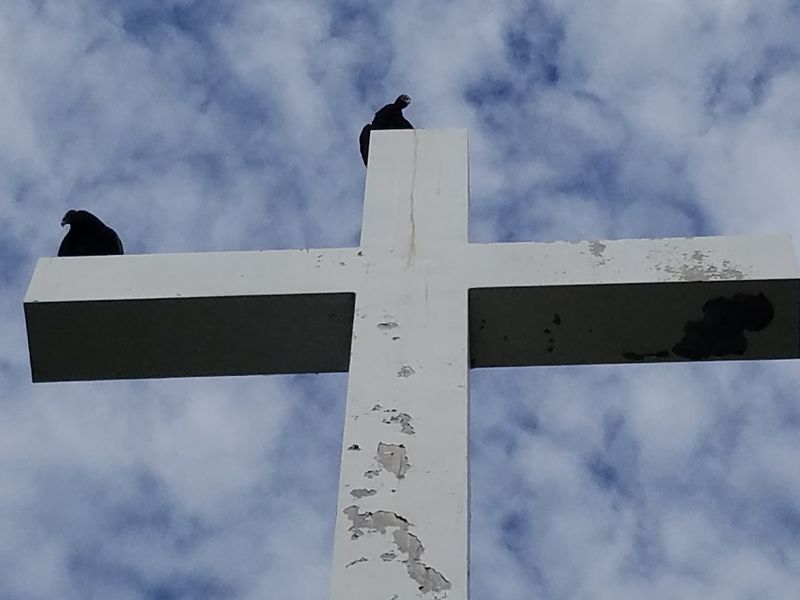
Some landmarks make you hunt for them, but this one does not play hide-and-seek very seriously. The Father Marquette Memorial Cross is stark white, tall, and placed high enough to catch your attention before you have fully decided to stop.
From parts of the Buttersville peninsula and nearby roads, the cross can stand out against the sky. That contrast gives it a crisp outline, especially on clear days when the lake light brightens everything around it.
I noticed that its simplicity is part of its power. There are no complicated shapes to decode, no busy ornamentation, and no need for a long interpretive speech before it makes sense.
The hill does more than display the monument. It also gives you a reason to linger, because the height changes the way the surrounding water and shoreline appear.
Once you finish looking up, your eyes naturally swing outward, and that is where the view takes over next.
Two Waters In One View
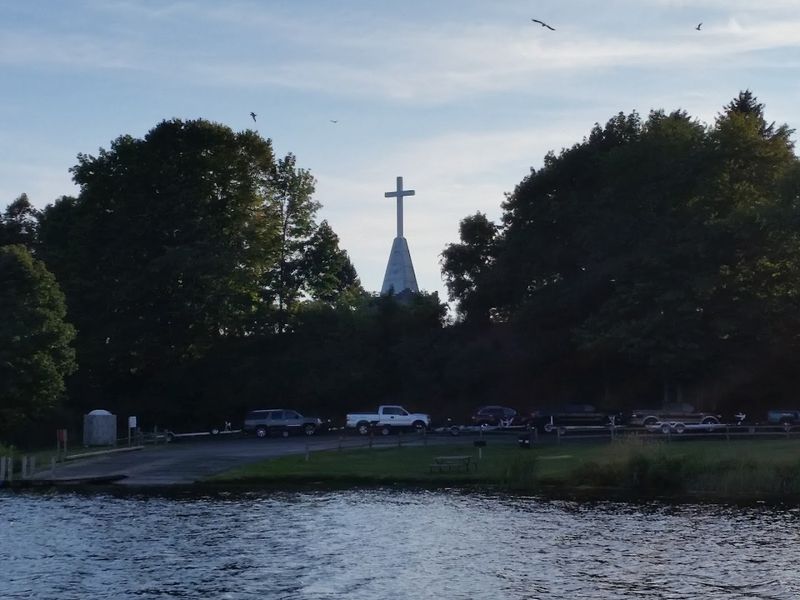
The best part of pausing here is that the landscape refuses to stay in one category. You are close to Pere Marquette Lake, Lake Michigan, and the river corridor that gives this area so much of its local character.
From the hilltop, the water views feel layered rather than flat. Pere Marquette Lake sits nearby, while Lake Michigan adds the larger horizon that makes the stop feel broader than its small footprint suggests.
I have a soft spot for places where you can turn your head and get a new angle without moving far. This memorial delivers that simple pleasure, which is helpful if you have only carved out a short detour.
The setting also explains why the landmark feels rooted here, not randomly planted beside a road. The water, elevation, and history all keep pointing back to movement, travel, and return.
That combination makes the park more than a viewpoint, especially once you notice its everyday uses.
A Memorial With Picnic Table Energy
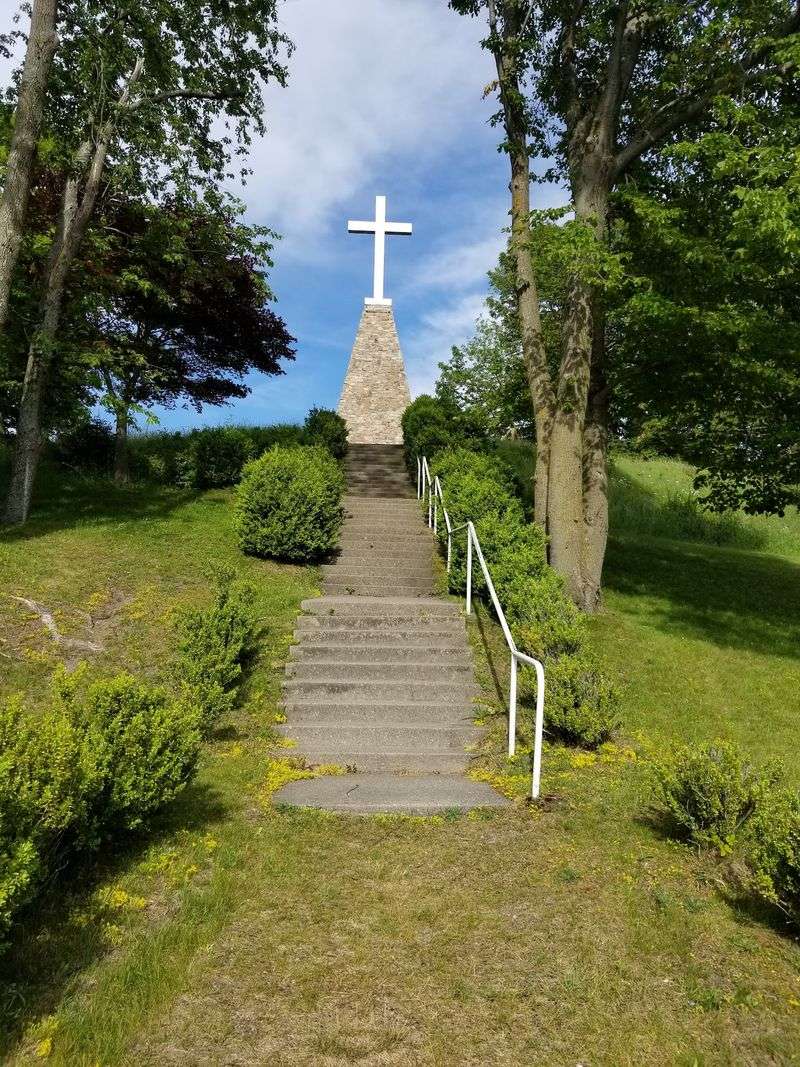
One thing I appreciate about this place is that it does not act too fancy for a picnic. The memorial has historical weight, but the park also has the approachable feel of a local stop where families can sit, snack, and enjoy the breeze.
Nearby amenities can include picnic tables, charcoal grills, a public boat launch, and basic facilities. That practical mix gives the site a casual rhythm, so you might see someone reading a marker while another person is sorting fishing gear.
I find that combination charming, because history feels more memorable when it shares space with normal life. A landmark does not need velvet ropes to matter.
Bring a simple lunch if the weather looks friendly, and give yourself time to look around before heading back to the car. The visit can be quick, but it should not feel rushed.
After all, the park’s everyday side leads naturally into one of its most popular local habits.
Fishing Adds A Local Pulse
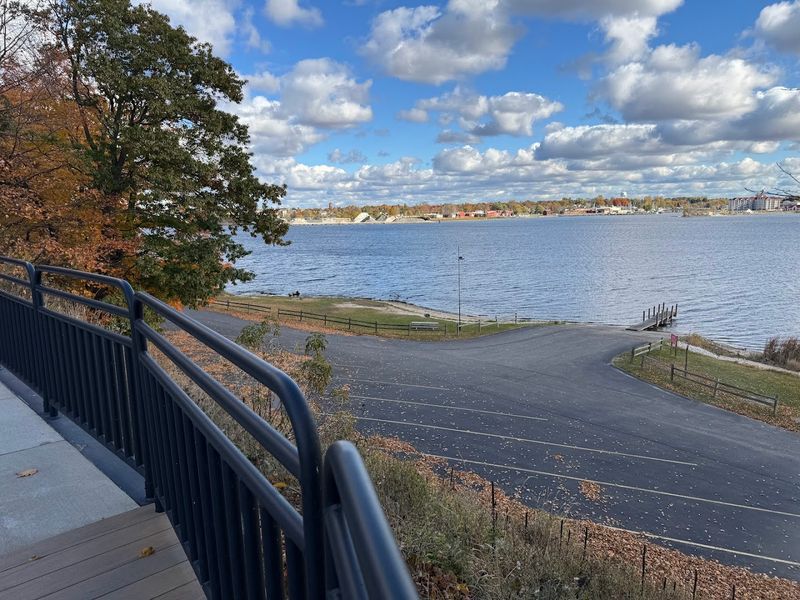
The water nearby brings a steady local pulse to the memorial area. Fishing is part of the scene, and the boat launch gives the park a usefulness that continues beyond history buffs and scenic-road wanderers.
In warmer months, the launch area can support small boating routines, family outings, and relaxed shoreline time. In colder weather, the area has also been used as an access point for ice fishing on Pere Marquette Lake.
I like how that changes the mood without changing the identity of the place. The cross remains the visual anchor, while the lake keeps reminding you that Ludington’s outdoor life is never far away.
Of course, conditions on the water deserve respect, so check local guidance and use good judgment before any fishing plan. This is a park, not a shortcut around common sense.
Still, the blend of monument and lake activity gives the stop a lived-in feeling, which makes its preservation story even more interesting.
The Dedication Date Has A Twist
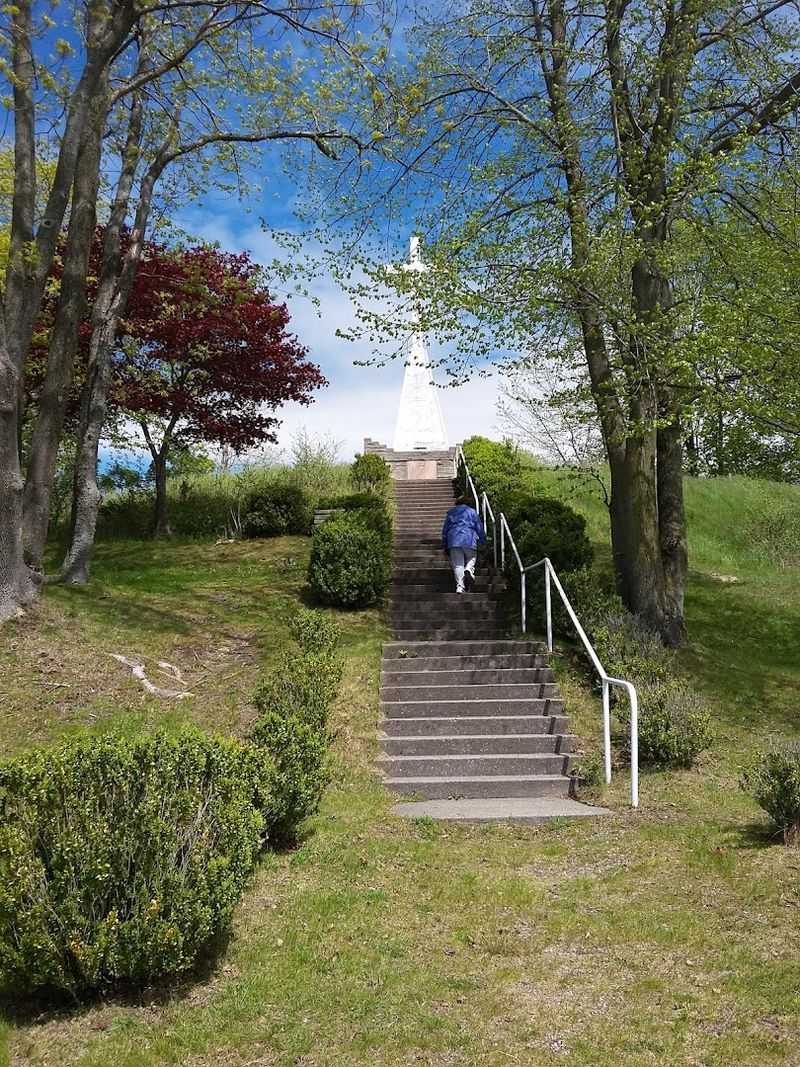
The memorial’s timeline has one of those details that makes local history slightly chewy, in the best possible way. Some references point to a cross being erected in 1937, while the City of Ludington officially erected the present monument in 1955.
The dedication took place on July 23, 1955, giving the site a mid-century civic chapter layered over its much older story. That date matters because it shows how later generations chose to publicly mark Marquette’s connection to this shoreline.
I always enjoy finding these small timeline wrinkles, because they prove that monuments have their own biographies. They are not just about the person remembered, but also about the people who decided remembrance needed a visible shape.
At the base, the marker helps explain why the cross stands here and what it means to the area. Read it slowly, because the next chapter reaches beyond Ludington.
Marquette’s travels were far wider than this hill.
Marquette’s Larger Great Lakes Footprint
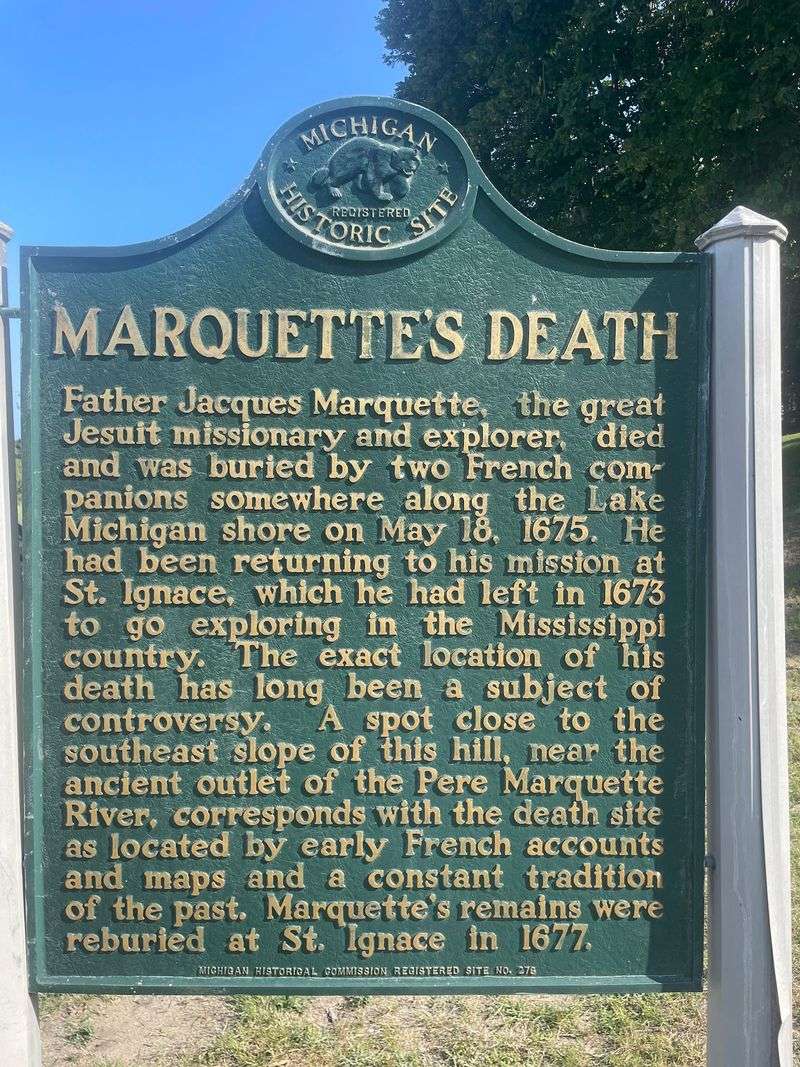
It is tempting to treat the cross as a purely local landmark, but Marquette’s name stretches across a much larger Great Lakes map. He established important early European mission communities at Sault Ste.
Marie in 1668 and St. Ignace in 1671.
His partnership with Louis Jolliet in exploring and mapping the northern Mississippi River Valley connected Great Lakes travel routes with a wider continental story. That larger context gives the Ludington memorial more depth than its small park footprint might suggest.
I found myself thinking about how place names become familiar before their stories do. Marquette appears on schools, towns, roads, and institutions, yet this cross brings the name back to a person moving through difficult country with specific goals.
The memorial does not cover every chapter, and it does not need to. It offers a fixed point where you can begin asking better questions.
Those questions soon lead to the Indigenous communities whose knowledge shaped travel in this region.
A Story Entwined With Indigenous Communities
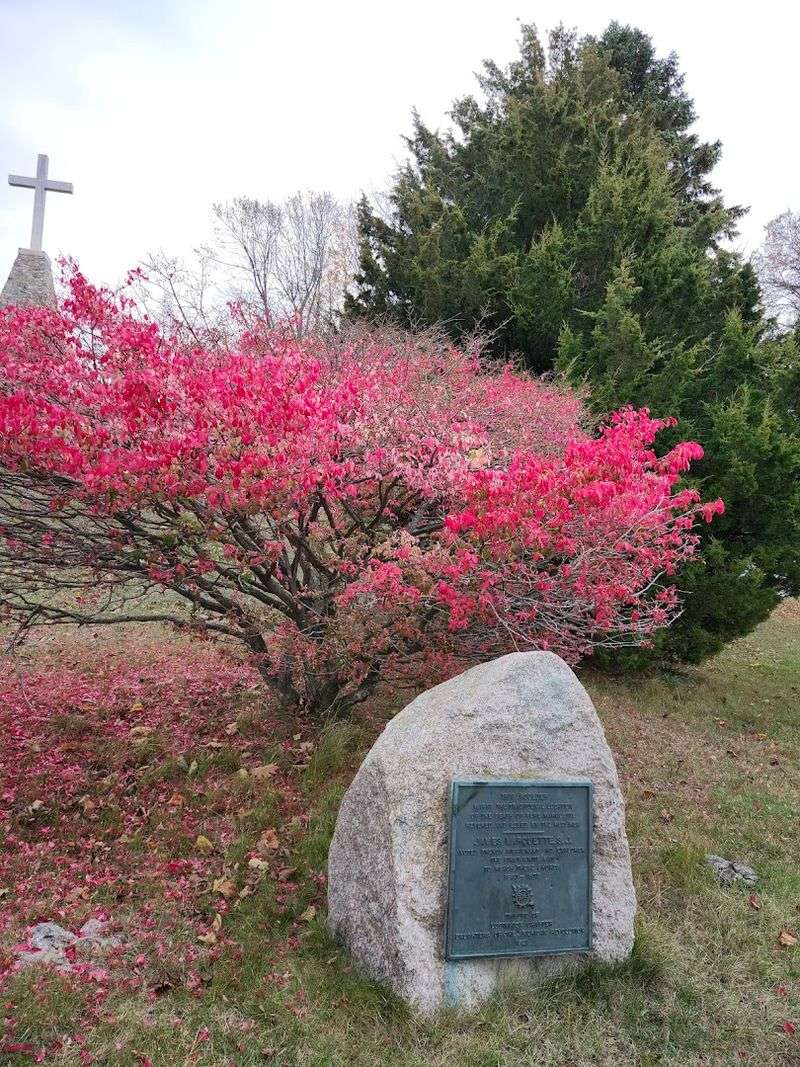
The story connected to this memorial cannot be separated from the Indigenous communities of the Great Lakes. Marquette was known for learning several Native languages and building relationships with groups including the Ottawa, Chippewa, and Anishinaabe.
Those relationships mattered because travel through the region depended on knowledge, guidance, and communication. The landscape around Ludington was not an empty stage waiting for explorers, but a lived-in world with its own routes and meaning.
Two years after Marquette’s passing, Ottawa tribal members carried his remains to St. Ignace for reburial at his mission, according to historical accounts. That act is often described as respectful, and it adds emotional weight to the Ludington site without needing dramatic language.
I think this is one reason the cross feels more layered than a simple roadside marker. It points toward cultural contact, faith, travel, and memory all at once.
And because memory can be complicated, the modern chapter adds another turn.
Preservation Became Part Of The Plot
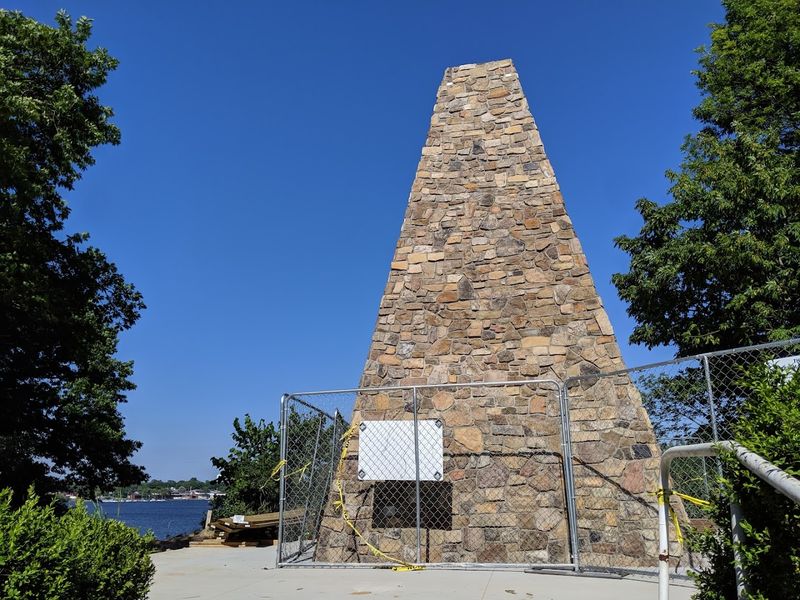
The modern story of the cross includes preservation, community attention, and a bit of public debate. In 2017, controversy surrounding the monument led Pere Marquette Township to sell the property to the Pere Marquette Memorial Association.
That nonprofit group became responsible for ongoing preservation and maintenance, which kept the landmark standing as a visible part of the local landscape. The arrangement also shows how historical places can require practical decisions long after the original dedication ceremony is over.
I do not think visitors need to arrive with a stack of civic documents to appreciate the site. Still, knowing this recent chapter makes the cross feel less frozen in the past.
It is a monument people continue to discuss, maintain, and define. That living conversation is part of what you are seeing when you stop there today.
Once you understand that, even a quick roadside visit feels more intentional, especially if you plan it well.
How I Would Time A Visit
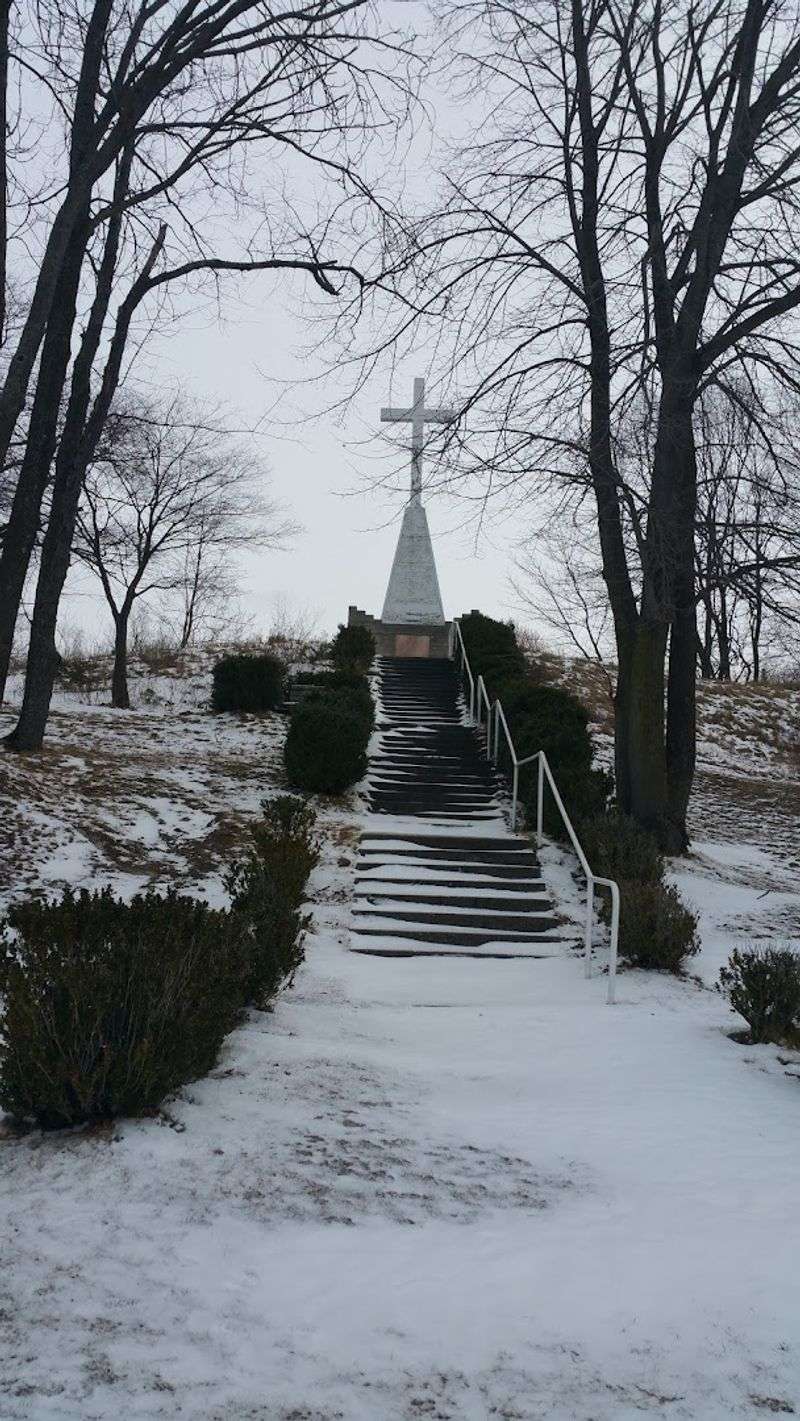
The park is listed as open 24 hours, which makes timing flexible, but daylight gives you the best chance to appreciate the marker and the water views. I would choose a clear morning or late afternoon, when the sky helps the white cross stand out.
Parking can be limited, so I would treat the visit as a short, thoughtful stop rather than a huge outing. Bring a camera, a light jacket for lake breezes, and a few extra minutes for reading the marker without doing the tourist speed-walk shuffle.
The site works well as a quiet detour south of Ludington, especially if you enjoy history served without a long line. It also pairs naturally with a simple picnic or a pause near the launch area.
My favorite approach is to arrive with curiosity, not a packed agenda. The reward is modest but satisfying.
Stay long enough for the view to settle, and the whole place starts to feel less like a stop and more like a story.
Share this story