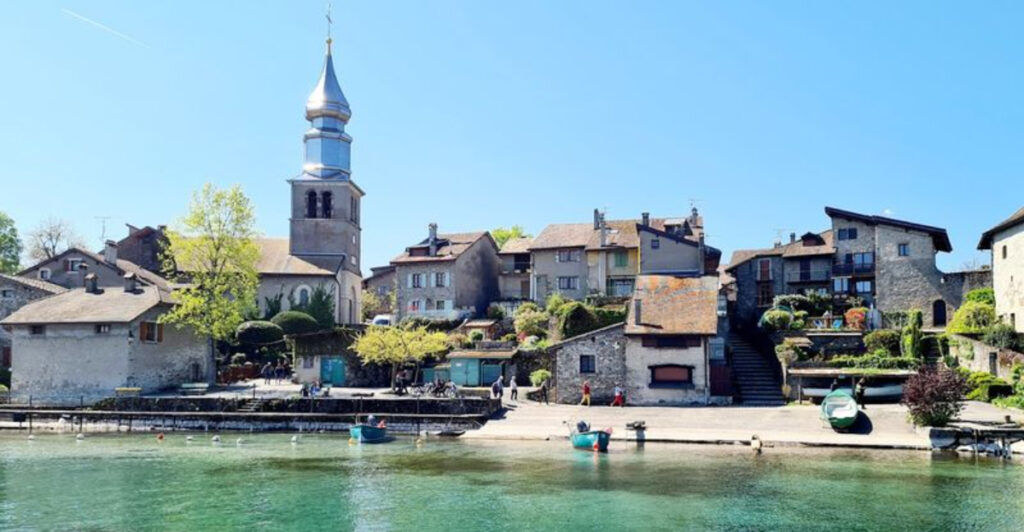
France is famous for the Eiffel Tower, Versailles, and the French Riviera, but the country is quietly hiding dozens of places that are just as beautiful and far less crowded. Some of my favorite French memories have nothing to do with the big landmarks.
They come from wandering down a cobbled lane in a sleepy village, stumbling on a medieval market, or sitting by a river with nowhere to be. These 12 places prove that the most charming corners of France are often the ones nobody is rushing to visit.
Dinan, Brittany
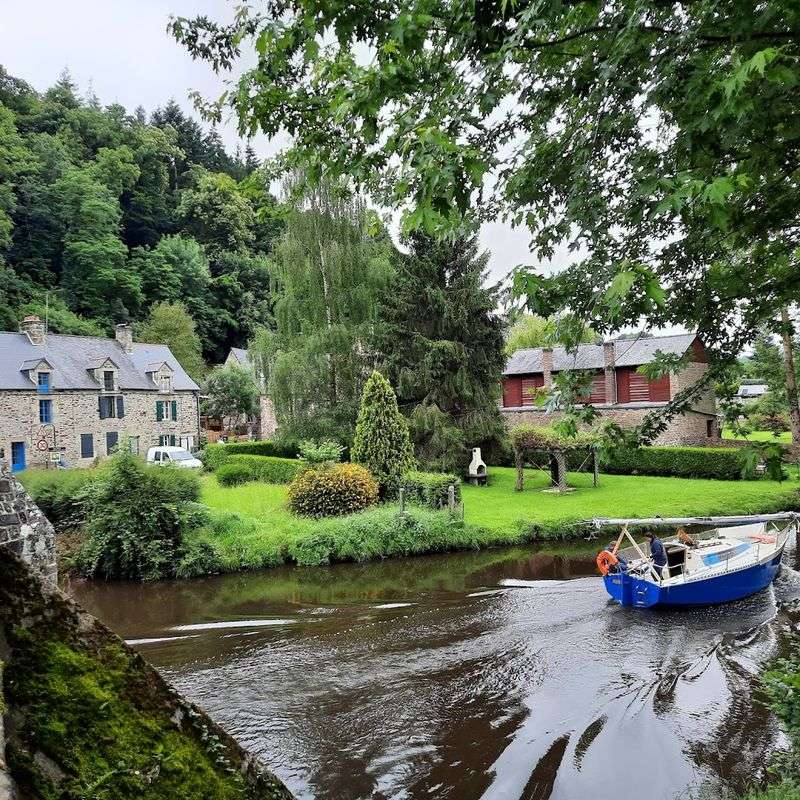
Dinan is the kind of medieval town that makes you feel like you accidentally walked into a history book, and honestly, that is not a bad problem to have. Its old stone walls wrap around the center like a protective hug, and the half-timbered houses lean over the streets at angles that should be structurally illegal but are absolutely gorgeous.
The steep Rue du Jerzual winds down to the old port on the Rance River, and the walk alone is worth the trip. I once spent an entire afternoon doing nothing but wandering it, stopping at every little workshop and cafe.
Nearby Mont-Saint-Michel gets all the attention, but Dinan has kept its soul in a way that feels rare. It is well-known enough to have good restaurants, but quiet enough that you can still find a bench and breathe.
Visit in spring for the calmest experience.
Collonges-la-Rouge, Corrèze
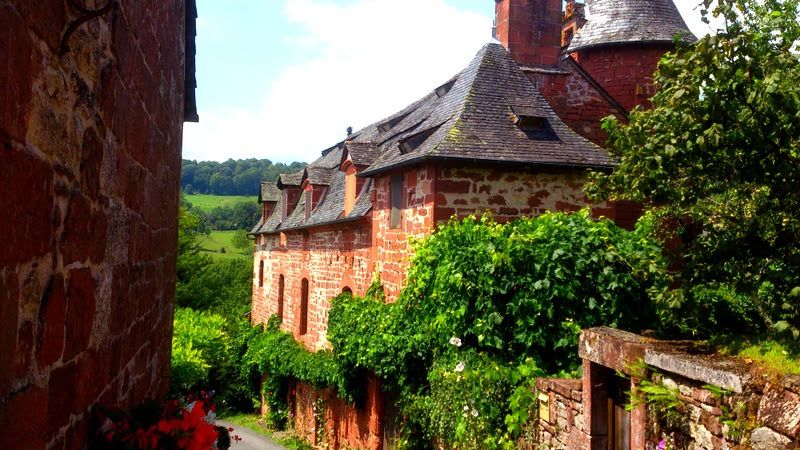
Every building in Collonges-la-Rouge is built from deep red sandstone, which gives the whole village a warm, almost otherworldly glow that no filter can replicate. The name literally translates to “red,” and the village commits to that identity completely.
Many of its old homes look like miniature chateaux, which is an impressive flex for a village this size.
It holds the official “Les Plus Beaux Villages de France” label, a network that now includes 180 villages across the country. That title is well-earned here.
The streets are narrow, the architecture is theatrical, and the whole place feels like it was designed by someone who really loved drama.
Go early in the morning if you visit in summer. The red stone catches the light beautifully, and you will have the lanes mostly to yourself before the day-trippers arrive.
Autumn is also a fantastic time, when the surrounding Correze countryside turns golden.
Saint-Cirq-Lapopie, Lot
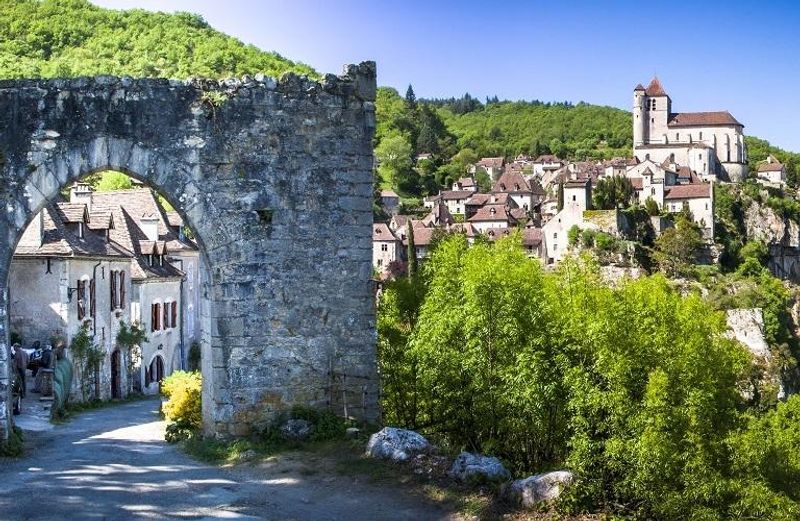
Perched dramatically above the Lot River on a rocky cliff, Saint-Cirq-Lapopie has a flair for the theatrical without being showy about it. The cobbled streets curl between half-timbered houses, old craft workshops, and the ruins of a fortification that once guarded the whole valley below.
The surrealist poet Andre Breton famously refused to live anywhere else after discovering the village, which tells you something about the effect this place has on people. It can draw crowds in July and August, but the village still manages to feel timeless rather than touristy, especially if you arrive before 9am.
Spring and autumn are the sweet spots for visiting. The surrounding Lot Valley is lush, the light is soft, and you get the full beauty of the place without the summer scramble.
It is the kind of spot that rewards slow travelers who are not in a hurry to tick anything off a list.
Albi, Occitanie
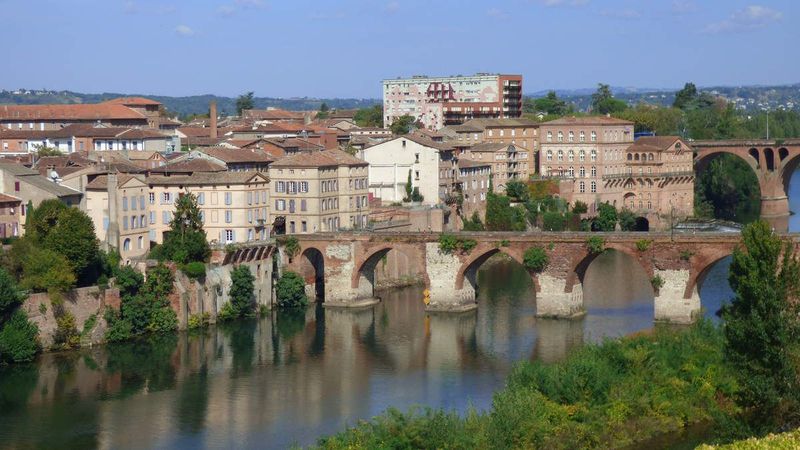
Albi is not a village, but it earns its spot on this list by being one of the most underrated mid-sized cities in France. The entire old town is a UNESCO World Heritage Site, which sounds impressive until you actually stand in front of the Sainte-Cecile Cathedral and realize that no photograph has ever done it justice.
The cathedral is built entirely from brick and looks more like a fortress than a church, which was apparently the point. It dominates the skyline in the most unapologetic way possible.
Inside, there are stunning frescoes that most people have never heard of.
The Toulouse-Lautrec Museum is also here, housed in the Berbie Palace right next to the cathedral. Albi was the painter’s birthplace, and the museum holds the largest collection of his work in the world.
For history, culture, and beauty without Paris-level chaos, Albi is genuinely hard to beat.
Vannes, Brittany
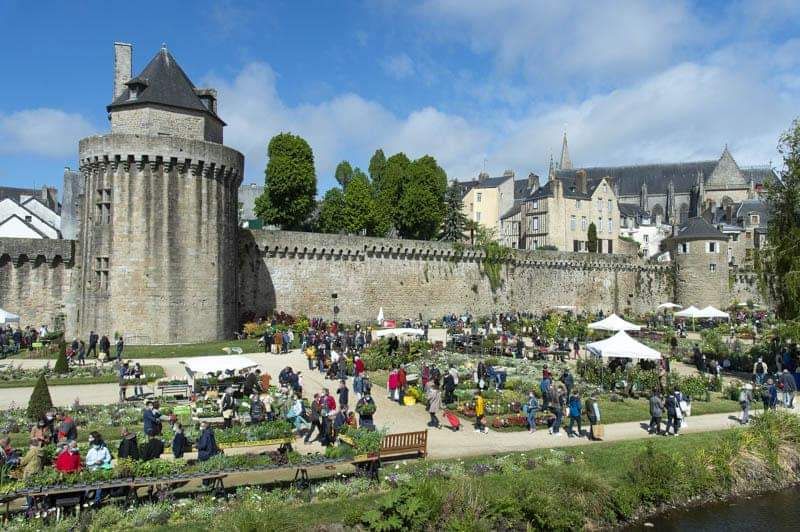
Vannes has figured out the rare trick of being polished and genuinely charming at the same time, without tipping into the kind of over-groomed prettiness that feels fake. Its medieval walls are intact, its half-timbered houses are painted in cheerful colors, and the gardens running along the old ramparts are some of the most pleasant in Brittany.
France.fr groups Vannes alongside Dinan and Saint-Malo as one of Brittany’s great walled medieval towns, which is solid company. The old port area is lovely for an evening walk, and the weekly market brings the whole town to life.
What makes Vannes especially useful for travelers is its location. It sits right at the top of the Gulf of Morbihan, one of the most beautiful bays in France, and serves as an excellent base for island-hopping or coastal cycling.
It is one of those cities that rewards staying two nights instead of one.
Sarlat-la-Canéda, Dordogne
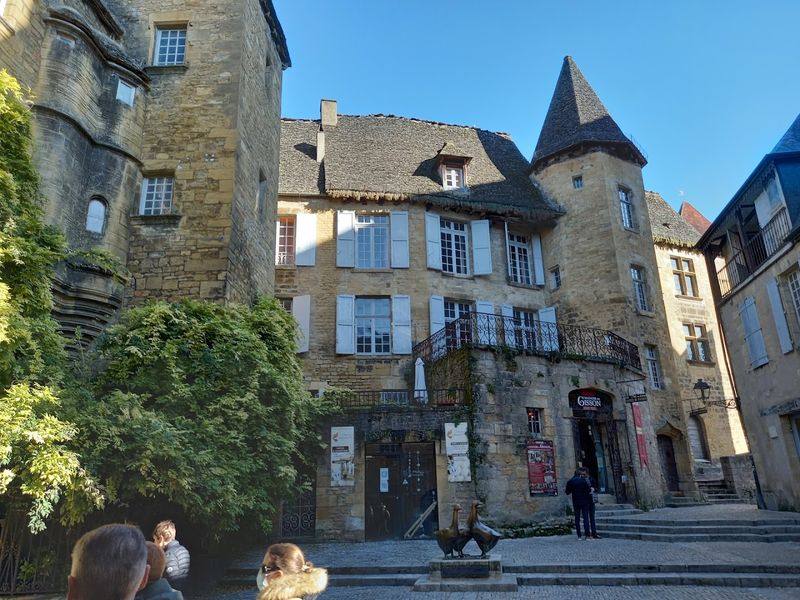
Sarlat gets a reputation for being touristy, and in fairness, the Saturday market does pull a crowd. But visit on a weekday morning or in the early evening, and the old town reveals itself as one of the most beautifully preserved medieval centers in France.
The golden limestone buildings practically glow.
France.fr calls the old town the heart of the Perigord Noir, and the description fits. Narrow streets open suddenly onto Gothic and Renaissance mansions, medieval squares, and old churches that have been quietly standing there for centuries.
The food scene is equally serious: foie gras, truffles, walnuts, and duck confit are local staples, not tourist traps.
Sarlat rewards the traveler who slows down. Skip the souvenir shops and spend your time in the back lanes, where the architecture is just as good and the crowds thin out quickly.
Early October is a particularly lovely time to visit when the market is still running but summer has cooled.
Carennac, Dordogne Valley
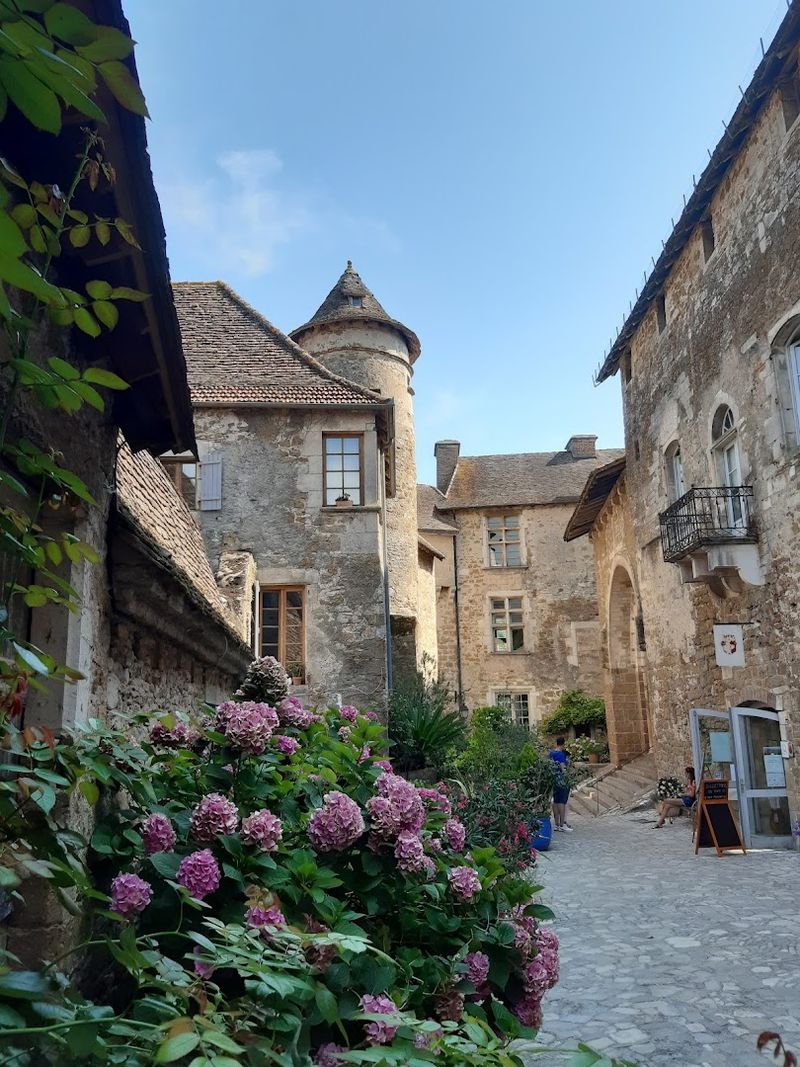
Carennac is the village you find when you stop following the tourist map and just drive along the Dordogne River until something catches your eye. It is quieter than Rocamadour, less famous than Collonges-la-Rouge, and all the better for it.
France.fr includes it among the region’s most beautiful villages, and it earns that mention without any fuss.
The honey-colored stone houses cluster around a Romanesque priory that dates back to the 11th century. Francois de Salignac de la Mothe-Fenelon, the famous French author and archbishop, once lived here.
That kind of literary heritage tends to go unannounced in Carennac, which only adds to its appeal.
There are no major queues, no overpriced ice cream stands, and no pressure to be anywhere in particular. The riverside setting is peaceful and the lanes are genuinely pretty.
Carennac is the definition of charm without the checklist, which is exactly why it belongs on this list.
Autoire, Lot
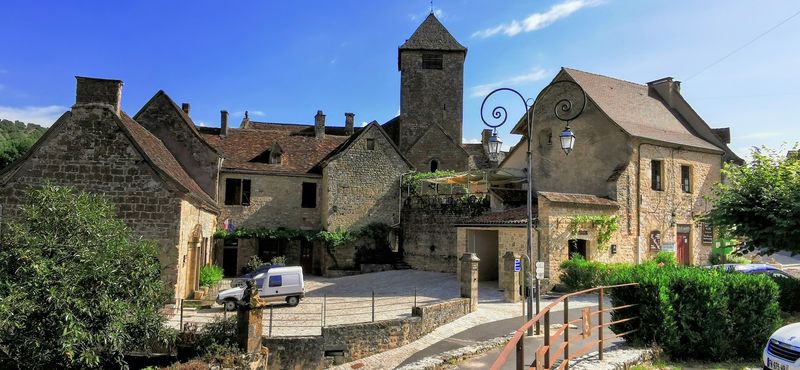
Autoire is the kind of village that makes you wonder why it does not have its own postcard line yet. Tucked into a natural amphitheater of limestone cliffs in the Lot region, it is surrounded by the kind of scenery that stops you mid-step.
France.fr calls it “breath-taking” in its Dordogne Valley roundup, and that is not an exaggeration.
The village is small and elegant, with old stone manor houses, a pretty church, and lanes that are genuinely quiet even in summer. There is also a waterfall nearby that most visitors miss entirely because they do not know to look for it.
That kind of hidden bonus is very on-brand for Autoire.
It is best suited for travelers who are happy with a long walk, a good view, and a slow lunch rather than a packed itinerary. No big museums, no gift shops, just a very good-looking village sitting peacefully under its cliffs.
That is enough.
Yvoire, Haute-Savoie
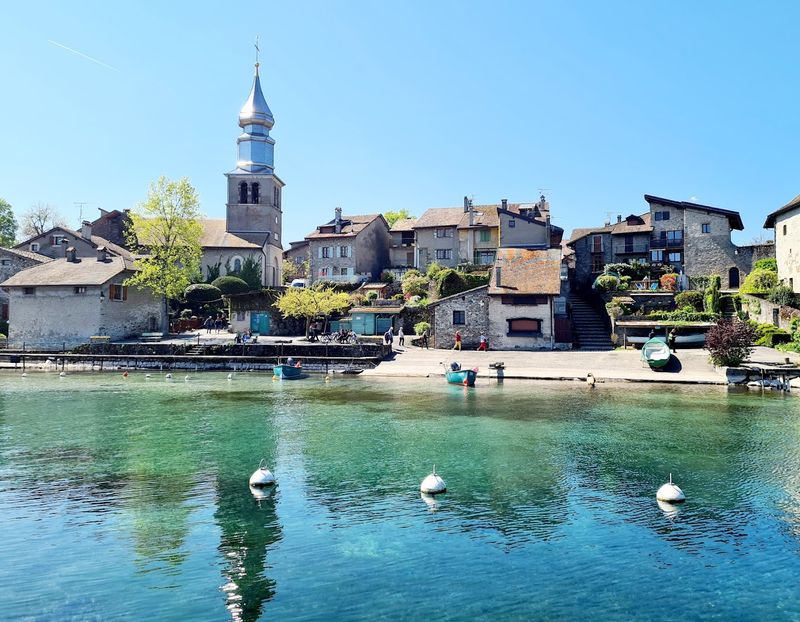
Sitting right on the edge of Lake Geneva, Yvoire manages to be romantic without trying too hard, which is a skill not every French village has mastered. The medieval center is filled with flowers spilling from window boxes and over old stone walls, and the lake glittering in the background does not hurt either.
Yvoire is part of the official “Most Beautiful Villages of France” network, a label it wears without being smug about it. The 14th-century castle is still privately owned but visible from the streets, adding to the feeling that this place has been quietly getting on with being beautiful for several centuries.
Summer brings visitors, but the scale stays manageable compared with the big Alpine resorts nearby. A boat trip on Lake Geneva from Yvoire is one of those simple pleasures that costs very little and delivers a lot.
The village also has a famous garden called the Garden of Five Senses, which is worth an hour of your afternoon.
La Roque-Gageac, Dordogne
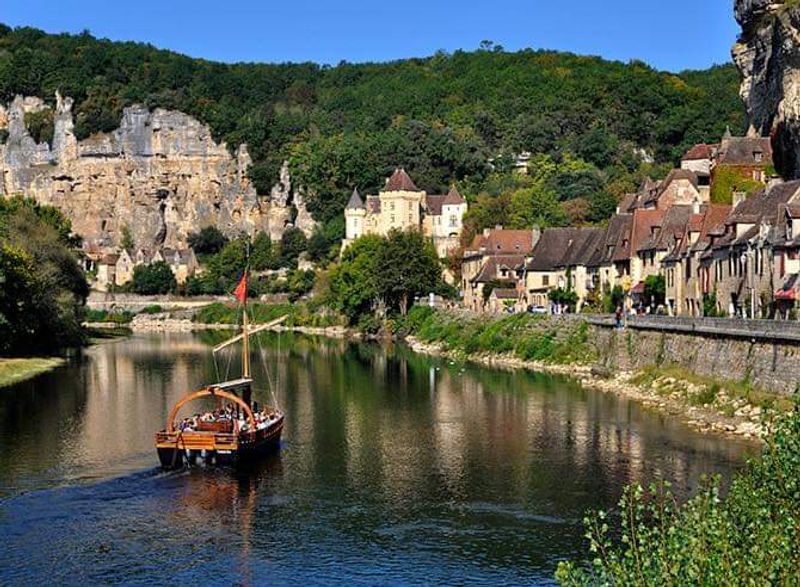
La Roque-Gageac has one of the most dramatic settings of any village in France, full stop. The golden stone houses are literally built into a cliff face that drops straight down to the Dordogne River, and the whole scene looks like someone sketched it and then forgot to make it fictional.
It is part of the “Plus Beaux Villages de France” network, and on this occasion the label is not doing any heavy lifting. The village earns it.
The best way to appreciate the setting is from the water, where a traditional flat-bottomed gabarre boat gives you the full picture. Riverside walks along the bank are equally rewarding and completely free.
La Roque-Gageac can get busy in peak summer, but it never feels overwhelmed the way a major city might. The cliff itself also creates a microclimate warm enough for exotic plants to grow, including cacti and banana trees, which is a genuinely surprising detail for southwest France.
Eguisheim, Alsace
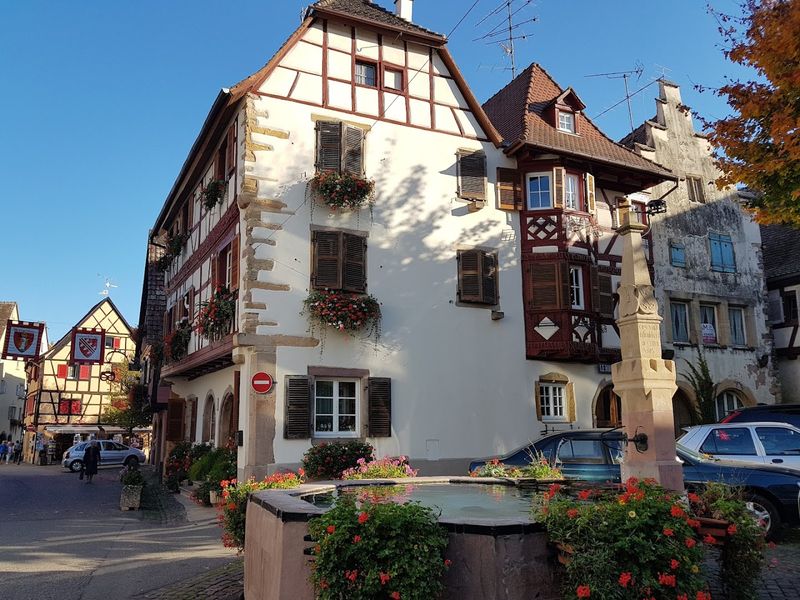
Eguisheim is built in concentric circles, which is either the work of a very organized medieval town planner or a stroke of accidental genius. Either way, walking its circular streets past brightly painted half-timbered houses feels like a particularly cheerful loop you never want to exit.
France.fr includes Eguisheim in its selection of favorite “Most Beautiful Villages of France,” and Alsace as a whole has a strong claim to being France’s most photogenic wine region. The village sits in the middle of the Alsace Wine Route, so the combination of architecture and local Riesling is hard to argue with.
Nearby Colmar gets most of the tourism traffic, and while Colmar is beautiful, Eguisheim is softer and more intimate. Staying overnight after the day-trippers leave is the move here.
The village quiets down considerably, the window boxes glow in the evening light, and you get the whole place more or less to yourself.
Saint-Suliac, Brittany
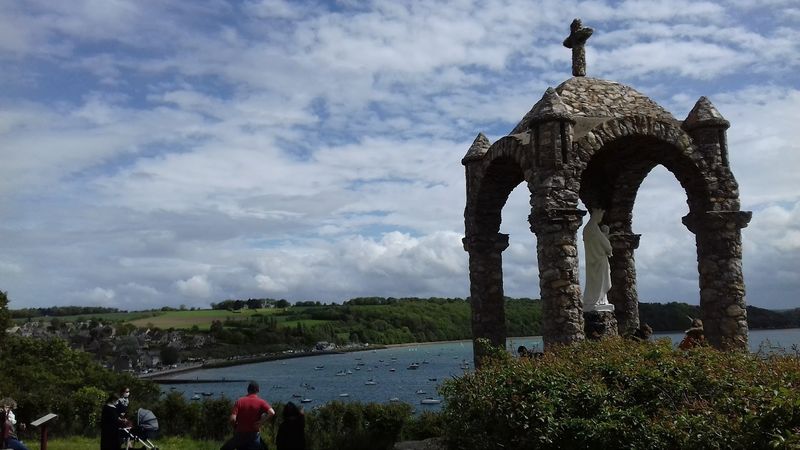
Saint-Suliac is the Breton village that The Guardian recently called one of northeastern Brittany’s lesser-known treasures, and for once a travel recommendation actually undersells the place. It sits on the Rance estuary with granite stone houses, a sturdy old church, and a fishing heritage that gives it a grounded, lived-in character that is hard to fake.
The village also has Viking roots, which is not something you expect to discover in a quiet corner of Brittany but is apparently true. There is an annual festival celebrating that Norse heritage, which sounds like an excellent reason to time your visit carefully.
Saint-Suliac does not have a long list of attractions, and that is precisely the point. It is a place for slow mornings, short walks along the estuary, and the particular pleasure of being somewhere that has not been packaged for tourists yet.
If coastal Brittany charm is what you are after, this village delivers it without the fanfare of the bigger names.
Share this story