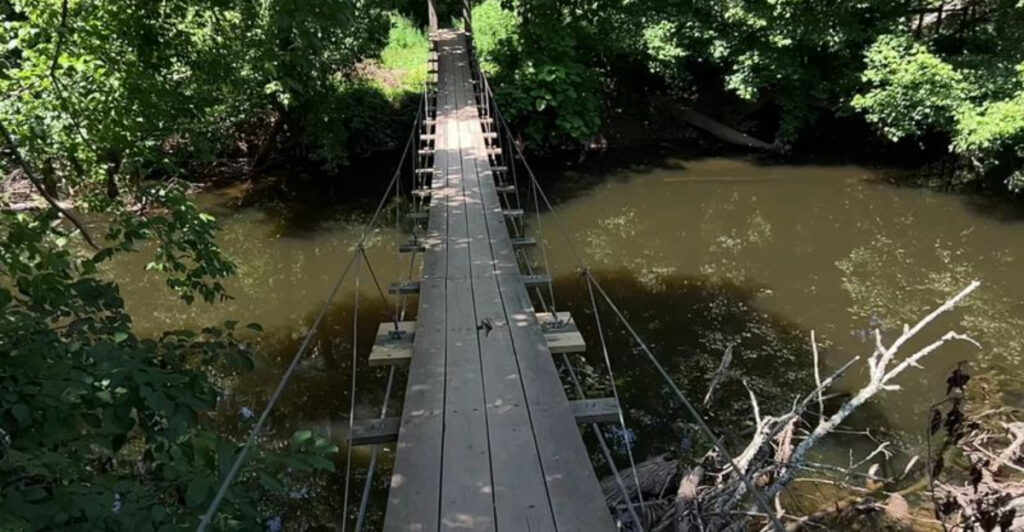
New Jersey is full of surprises, and one of the best ones is hiding in plain sight just outside of Princeton. A short but rewarding 2.5-mile hike winds through quiet woods, past open historic fields, and ends at a swinging suspension bridge stretched over Stony Brook that most people never even know exists.
This is not just a trail through the trees. Princeton Battlefield State Park combines American Revolution history with accessible outdoor adventure in a way that makes the whole trip feel genuinely worthwhile.
Whether you are a history enthusiast, a casual hiker, or just someone looking for a different kind of afternoon, this park delivers something memorable. The bridge alone is worth lacing up your shoes for, but the story of the land you walk across on the way there makes the experience even richer.
Where The Trail Begins: Location And Access
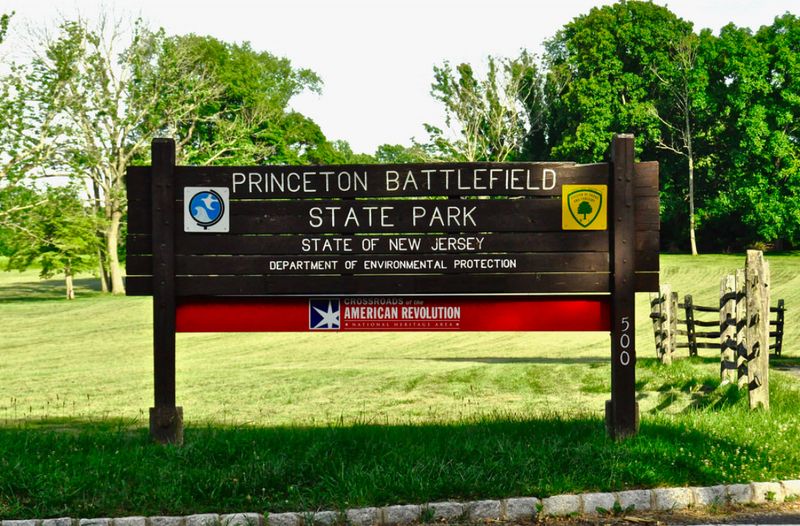
Princeton Battlefield State Park sits at 500 Mercer Rd, Princeton, NJ 08540, and getting there is straightforward whether you are coming from the center of Princeton or from a nearby highway. The parking lot is small but rarely overwhelming, and it places you right at the heart of the property.
From the lot, the trailhead begins just beyond the historic Clarke House, which serves as a natural starting point for the entire hike. A trail map is posted near the parking area, so it is worth stopping to study it before heading out, since the trails themselves are not heavily marked once you get deeper into the woods.
The park is open from dawn to dusk, which gives plenty of flexibility for planning your visit. Leashed dogs are welcome on the trails, and there is no entry fee, making this one of the most accessible outdoor destinations in central New Jersey.
The Battle That Changed Everything
On January 3, 1777, one of the most consequential moments of the American Revolution unfolded on the very ground you walk across at this park. General George Washington led a bold surprise attack against British forces at Princeton, securing a victory that shifted the momentum of the entire war.
Before this battle, Washington had endured a string of losses in New York and retreated across New Jersey into Pennsylvania. He crossed the Delaware River on December 25, 1776, struck at Trenton, and then turned his forces toward Princeton in a move that caught the British off guard.
Thomas Paine’s words, “These are the times that try men’s souls,” captured the desperation of that period. The Princeton victory forced the British to abandon New Jersey entirely and gave the Continental Army a renewed sense of purpose.
Walking across that open field, the weight of that history is genuinely present.
The Clarke House: The Last Standing Witness
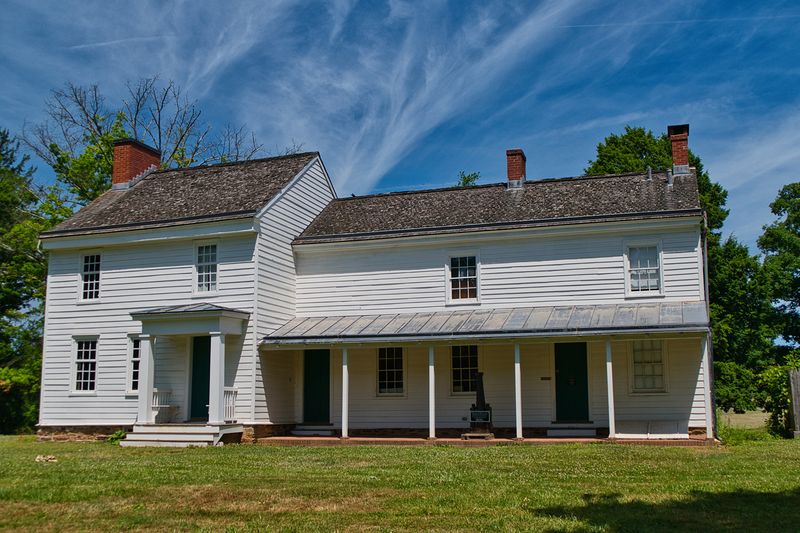
The Clarke House is the only full structure still standing on the battlefield that existed during the actual fighting in 1777. After the battle ended, the house served as a field hospital, and that history is preserved through the artifacts and displays inside.
The house operates on limited hours, Wednesday through Friday from 10 AM to 4 PM, Saturday 10 AM to 4 PM, and Sunday from 1 to 4 PM. It is closed Monday and Tuesday.
Hours can shift unexpectedly, so calling ahead at +1 609-921-0074 or checking the official park website before visiting is a smart move.
The staff inside are notably knowledgeable and enthusiastic about the site’s history. Tours of the house tend to be detailed and engaging, covering not just the battle itself but also what life was like for the family who lived there during the British occupation of the region.
The Swinging Bridge Over Stony Brook
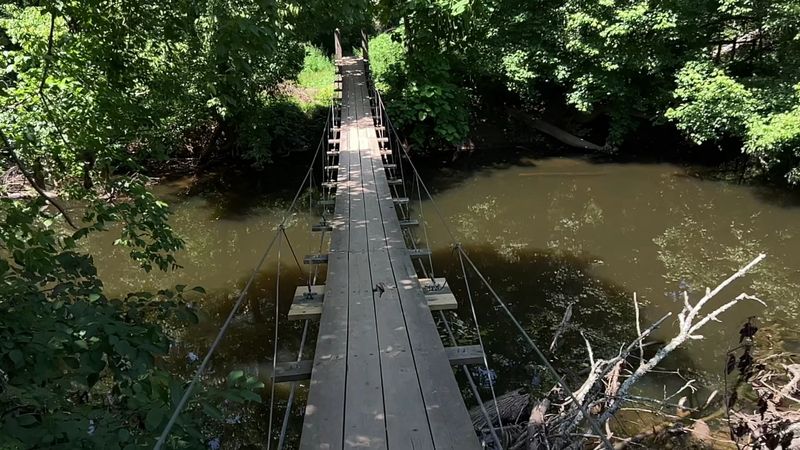
The Swinging Bridge over Stony Brook is the clear highlight of the hike and the feature that keeps people talking long after they leave. Stretched across the narrow creek deep in the wooded section of the park, this suspension footbridge sways gently as you cross it, making it a genuinely fun experience for hikers of all ages.
Reaching the bridge takes roughly a mile of walking from the parking area along mostly flat, wide trail paths. The route passes through dense tree cover, which keeps the walk cool and shaded during warmer months.
The bridge itself is the only crossing point over the water in this section of the park, so the route is out and back.
There are additional trails on the far side of the bridge worth exploring if you have extra time. The whole out-and-back journey to the bridge and back typically covers around 2.5 to 3 miles total, depending on which connecting paths you follow.
Trail Conditions And What To Expect Underfoot
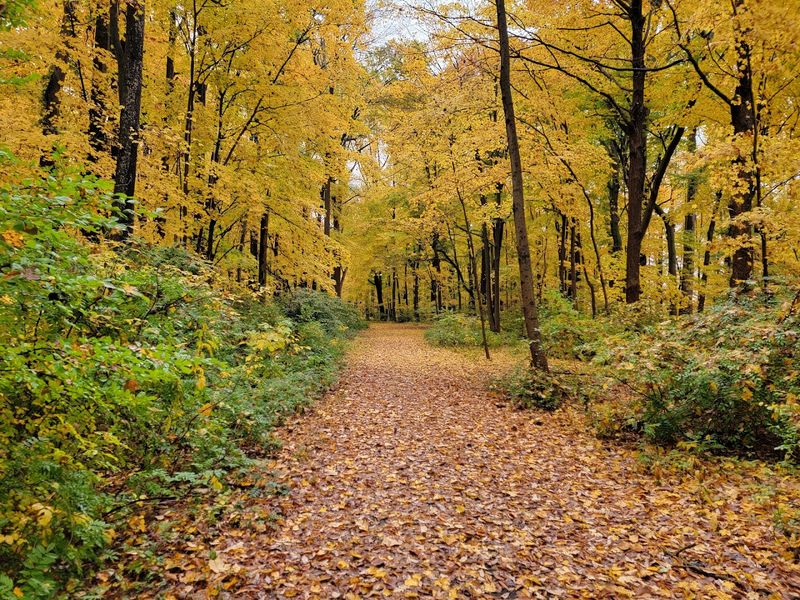
The trails at Princeton Battlefield State Park are generally flat and wide, which makes them accessible to most hikers regardless of fitness level. There are very few significant elevation changes along the main paths, so the hike feels more like a steady walk through the woods than a demanding climb.
Conditions underfoot can get muddy after rain, particularly in the wooded sections closer to Stony Brook. Wearing trail shoes or waterproof sneakers is a practical choice, especially in spring or after wet weather.
The tree canopy provides solid coverage from direct sun along most of the wooded portion of the trail.
Bug spray is a genuinely useful item to bring, particularly in warmer months when insects are active near the creek and shaded areas. The trails are well-maintained overall, but trail markers are minimal, so downloading a GPS map of the park before you arrive will save you from unnecessary detours along the way.
Trail Markings And Navigation Tips
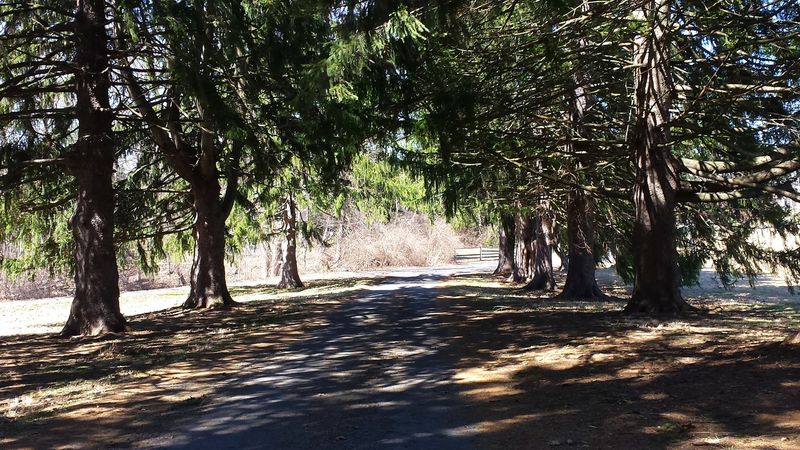
One of the most common frustrations reported by people who hike Princeton Battlefield State Park is the lack of trail signage once you move away from the main open field. The paths themselves are clear and easy to follow on the ground, but without named markers on trees or posts, it can be difficult to know exactly which trail you are on at any given moment.
Bringing a phone loaded with a GPS app that has the park trails mapped is genuinely the most reliable solution. Several mapping apps include the named trails within the park, including the Trolley Trail and others, so you can orient yourself even when physical signs are absent.
The trail network is not complex, and the paths are essentially straight lines that intersect at a handful of junctions. Getting completely turned around is unlikely, but knowing your position on the map makes the experience smoother and lets you focus on the surroundings rather than second-guessing your direction.
Historical Monuments And Commemorative Columns
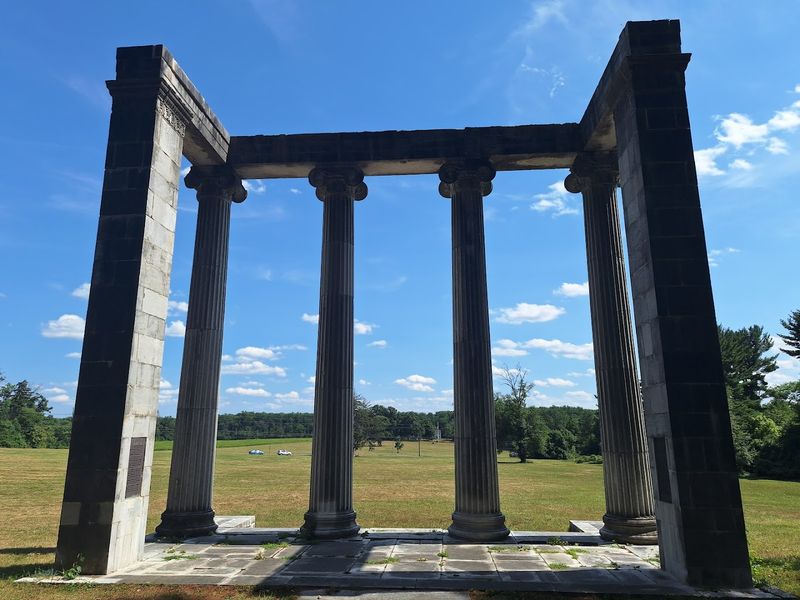
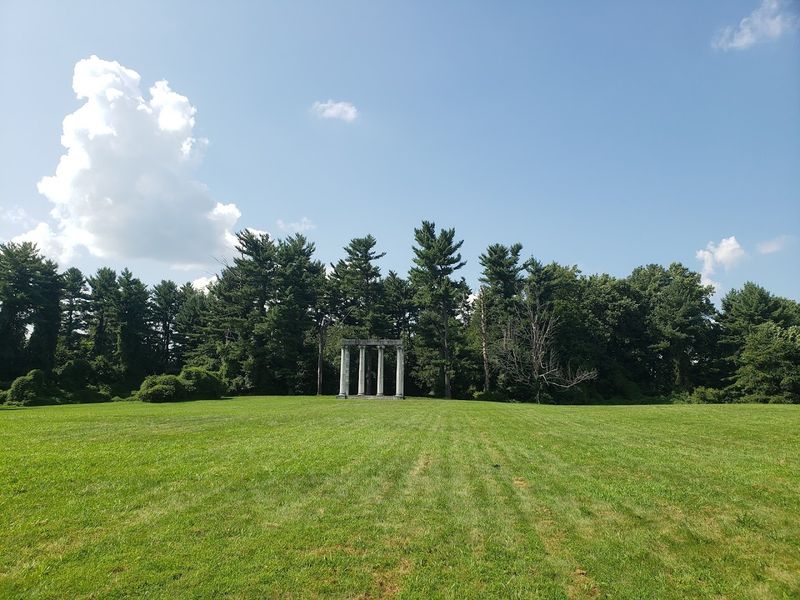
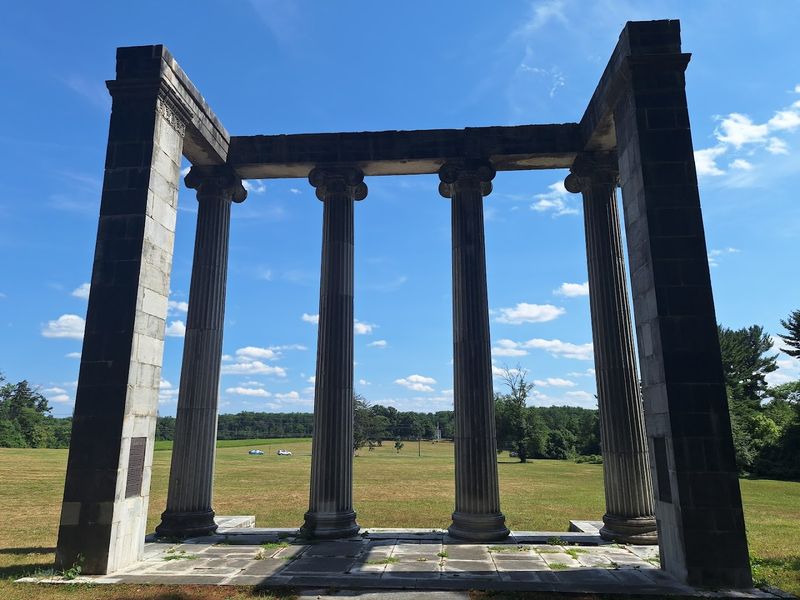
Scattered across the battlefield grounds are monuments and commemorative columns that mark significant moments and locations from the Battle of Princeton. Several of the columns were originally part of a mansion and now carry plaques honoring those who fought on the field in 1777.
One plate behind the columns specifically remembers soldiers who fell during the battle. Standing at these markers while looking out over the open field gives the landscape a quiet weight that is hard to describe but easy to feel.
The open space of the battlefield is wide and mostly unobstructed, which makes it easy to understand the scale of what happened there.
Reaching the columns from the main parking lot requires crossing the grass, as there is no paved path leading directly to them. The ground is generally manageable for most people, though those with mobility concerns may find the unpaved crossing a bit challenging.
Wearing sturdy footwear makes the short walk across the field much easier.
Wildlife Along The Trail

The wooded trails at Princeton Battlefield State Park are home to a variety of wildlife that shows up unexpectedly during hikes. Foxes have been spotted moving through the tree line, snakes as well and bird activity is consistent throughout the park, making it a worthwhile spot for casual bird-watching as well as hiking.
The park is officially noted as a bird-watching destination, and the mix of open fields and dense woodland creates habitat variety that supports a wide range of species. Bringing binoculars adds a useful dimension to the visit, particularly in the early morning hours when bird activity tends to be at its highest.
The area near Stony Brook, especially around the Swinging Bridge, tends to be particularly active with wildlife due to the water source nearby. Keeping noise low and moving at a relaxed pace increases the chances of spotting animals going about their routines.
The trail experience here is as much about the natural environment as it is about the history.
Seasonal Highlights And Best Times To Visit

Princeton Battlefield State Park has something to offer across multiple seasons, which keeps it worth returning to throughout the year. In spring, the trails through the woods become lush and green, and the creek near the Swinging Bridge runs at a lively level after seasonal rain.
Summer brings dense tree cover that keeps the wooded portions of the trail shaded, though bugs become more active near the water during this time. Fall is widely considered the best season for the hike, as the foliage along the trail turns and the open battlefield takes on a different character under cooler skies.
Winter offers its own draw, since the park is listed as a cross-country skiing destination when conditions allow. The flat, wide trails are well-suited to skiing, and the battlefield field itself becomes a clean open stretch of snow.
The Clarke House operates on reduced hours in winter, so checking ahead before a cold-weather visit is always a good idea.
The Battle Of Princeton Reenactment
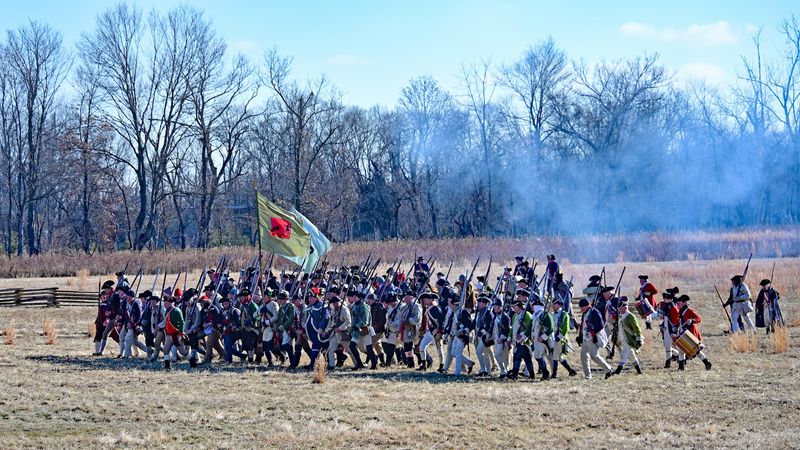
Each year, Princeton Battlefield State Park hosts a reenactment of the Battle of Princeton, drawing history enthusiasts and curious visitors from across the region. The event brings the events of January 3, 1777 back to life on the actual ground where they occurred, which gives the experience an authenticity that a museum exhibit simply cannot replicate.
During past reenactments, participants have demonstrated how muskets were fired, explained period military tactics, and walked guests through the sequence of events that led to Washington’s victory. The presenters are typically well-prepared and comfortable answering detailed questions from the crowd.
The reenactment usually takes place in early January to coincide with the battle’s anniversary, though the park’s official website and social media channels are the best sources for confirmed dates and details each year. Attendance can vary, but the event tends to draw a mix of families, school groups, and dedicated history enthusiasts who appreciate the real-world context the battlefield provides.
Accessibility And Family-Friendly Features
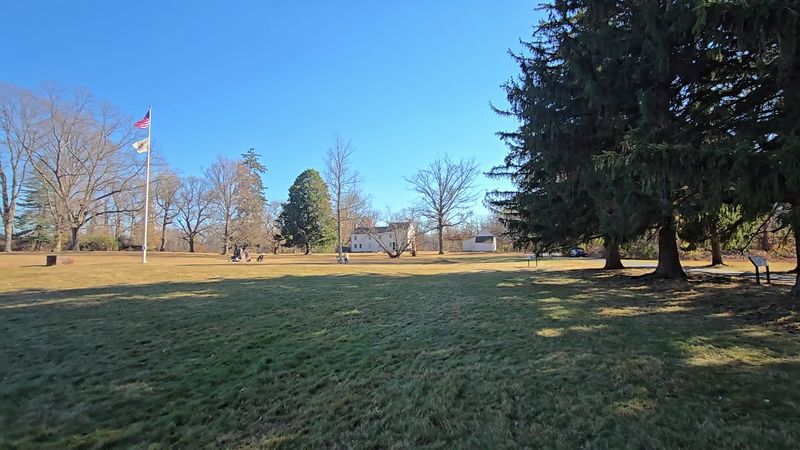
Princeton Battlefield State Park is designed to be accessible to a broad range of visitors. Paved pathways run through portions of the grounds, making parts of the site manageable for those using wheelchairs or strollers.
The open battlefield area itself is grass and may present more of a challenge on uneven ground, but the main paths are clearly easier to navigate.
The trails leading into the woods and toward the Swinging Bridge are wide and flat, which makes them well-suited for families with younger children. The hike to the bridge is not technically demanding, and the reward of crossing the suspension bridge tends to be a highlight for kids and adults alike.
Dogs on leashes are welcome throughout the park, which makes it a popular destination for people looking to combine a dog walk with a history lesson. There is no entry fee, restroom facilities are available near the parking area, and the overall setup is straightforward enough for first-time visitors to navigate without confusion.
Why This Park Deserves A Spot On Your New Jersey List
Princeton Battlefield State Park earns its place as one of central New Jersey’s most underrated outdoor destinations by offering something that most parks cannot match: a genuine combination of accessible hiking, natural beauty, and real historical significance all within a single visit.
The Swinging Bridge over Stony Brook gives the hike a clear destination that makes the walk feel purposeful rather than just a loop through the woods. The flat, wide trails keep the route open to a wide range of people, from first-time hikers to families with young children to older adults looking for a relaxed outdoor afternoon.
The fact that the park carries no entry fee and welcomes leashed dogs makes it even easier to build a visit around. Add in the Clarke House, the battlefield monuments, the wildlife, and the annual reenactment, and this park covers more ground than its modest footprint suggests.
For anyone in the Princeton area, skipping it would be a genuine missed opportunity.
Share this story