The Czech Republic is a fairy tale country hiding in plain sight, packed with jaw-dropping castles that have survived wars, royalty, and centuries of history. From the winding streets of Prague to the forested hills of Bohemia and Moravia, these castles tell stories that no textbook can fully capture.
Whether you love history, architecture, or just want to feel like royalty for a day, this list has something for every kind of traveler. Get ready to discover 15 of the most breathtaking castles the Czech Republic has to offer.
Prague Castle – Prague
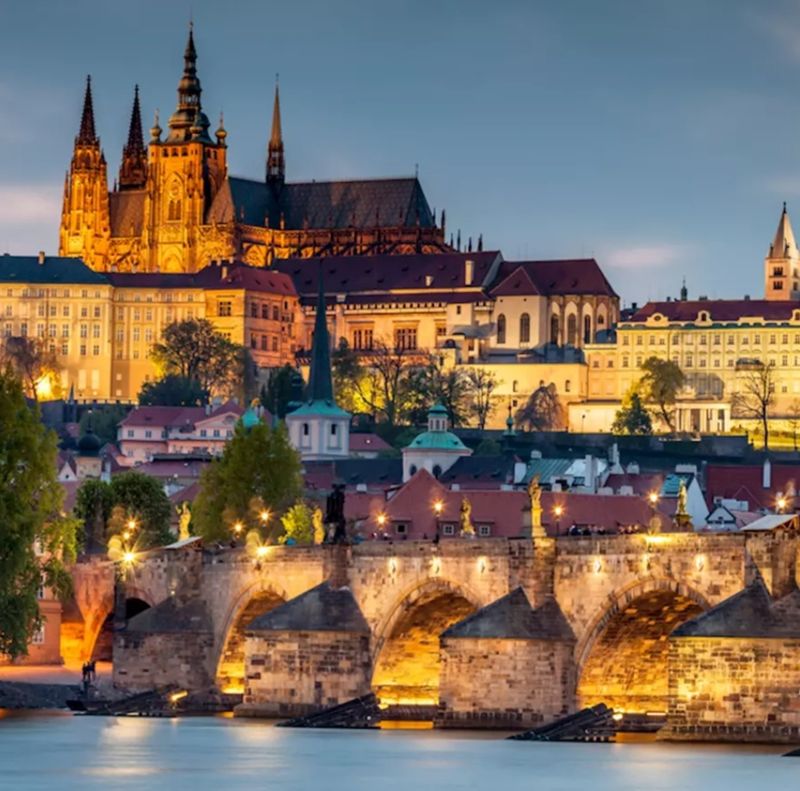
Stretching nearly half a mile across a hilltop above the Vltava River, Prague Castle is officially the largest ancient castle complex on Earth. That is not a rumor or a tourist brochure exaggeration.
The Guinness World Records confirmed it, and one walk through its endless courtyards will make you a believer.
Founded way back in the 9th century, this fortress has been home to kings, Holy Roman Emperors, and even modern Czech presidents. St. Vitus Cathedral alone could swallow a small neighborhood, with its soaring Gothic spires and stunning stained glass windows.
Golden Lane, a narrow street of colorful tiny houses once home to castle guards, is one of the quirkiest spots inside.
The views from the castle walls over the red-roofed city below are absolutely unforgettable. Plan at least half a day here because rushing through Prague Castle is practically a crime.
Buy tickets in advance during peak summer months to skip the long lines at the gates.
Karlštejn Castle – Central Bohemia
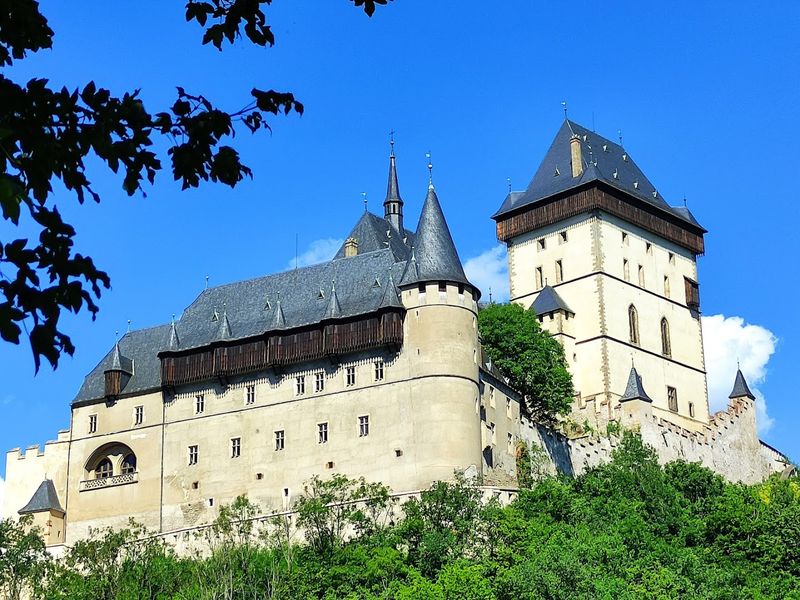
Emperor Charles IV built Karlštejn Castle in the 1340s with one very specific job in mind: keeping the royal crown jewels safe. The place was essentially a medieval bank vault dressed up in Gothic towers and dramatic stone walls.
It worked beautifully for centuries.
Sitting on a steep hill surrounded by thick forests, Karlštejn looks exactly like the castle your childhood imagination sketched out. The layered structure climbs upward in stages, with the most sacred and secure rooms at the very top.
The Chapel of the Holy Cross, which once held the imperial regalia, is decorated with over 2,000 precious stones and 129 painted panels. That is not decoration.
That is a flex.
Getting there from Prague takes about 40 minutes by train, making it one of the easiest day trips from the city. The village at the foot of the hill is full of cozy restaurants and souvenir shops perfect for a post-castle stroll.
Guided tours fill up fast, so booking ahead is genuinely worth the effort.
Český Krumlov Castle – South Bohemia
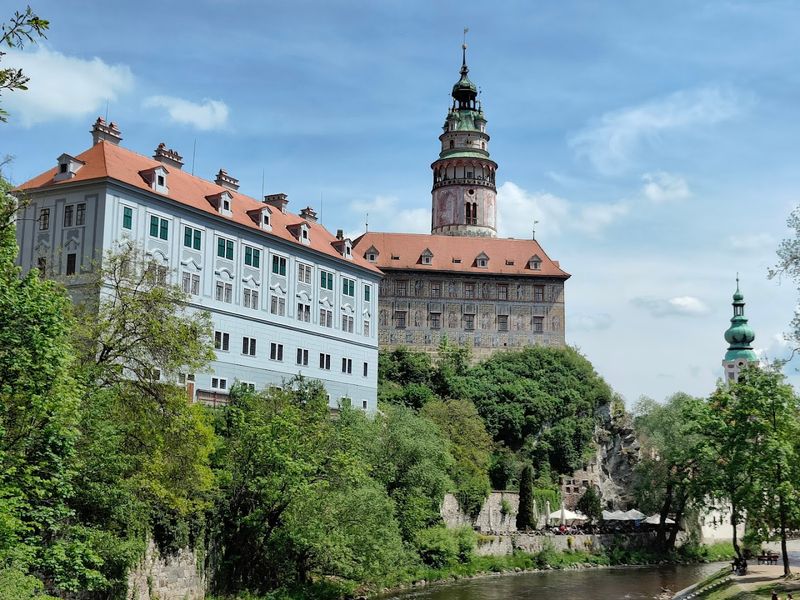
Few places on Earth make you feel like you have accidentally walked into a painted storybook, but Český Krumlov Castle pulls it off without even trying. Its famous round tower, painted in soft shades of pink and cream, rises above a horseshoe bend in the Vltava River like something out of a Renaissance painting.
UNESCO agreed, listing the entire town as a World Heritage Site.
The castle dates back to the 13th century and mixes Gothic, Renaissance, and Baroque styles across its five courtyards. Inside, you will find lavishly decorated state rooms, a Baroque theater that is still used for performances today, and a sprawling terraced garden above the town.
The theater, with its original 17th-century stage machinery still intact, is one of the best-preserved in all of Europe.
The town below the castle is equally charming, full of cobblestone lanes, riverside cafes, and artisan shops. Summer brings festivals, open-air concerts, and guided castle tours in multiple languages.
Arriving early in the morning lets you enjoy the atmosphere before the tour groups arrive in full force.
Hluboká Castle – South Bohemia
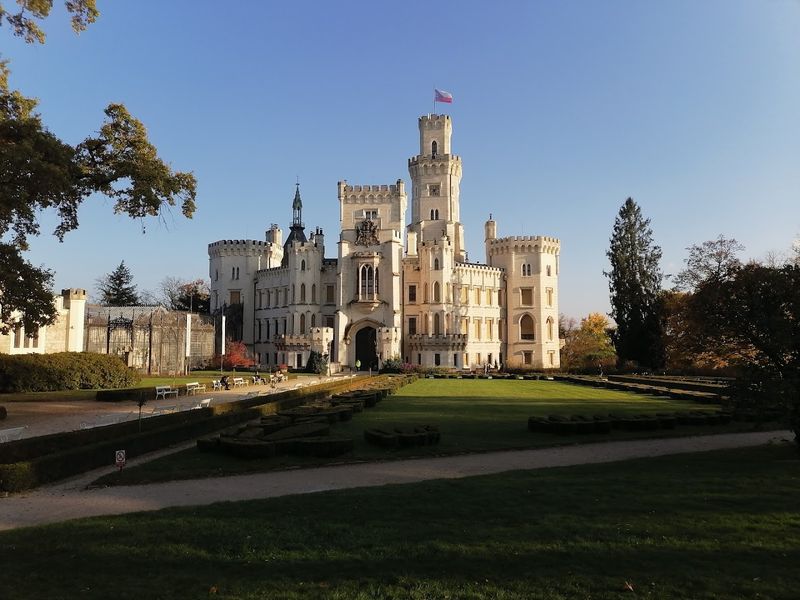
Blindingly white against a backdrop of green parkland, Hluboká Castle looks like it was designed by someone who loved Windsor Castle a little too much. That is exactly what happened.
The Schwarzenberg noble family remodeled it in the 19th century to resemble the famous English royal residence, and the results are genuinely spectacular.
The Neo-Gothic architecture features 11 towers, ornate battlements, and grand archways that frame perfectly manicured gardens. Inside, the rooms are filled with carved wooden ceilings, antique furniture, Flemish tapestries, and an impressive collection of weapons and art.
The interiors feel like a living museum curated by someone with extremely expensive taste.
Located near the town of České Budějovice, Hluboká is easy to reach by bus or car and pairs well with a visit to the nearby Budvar brewery. The surrounding English-style park is free to walk through and gorgeous in all seasons.
Spring visits reward you with blooming flowers framing the white walls, while winter turns the whole scene into something close to a snow globe. This one is worth every minute of the journey.
Lednice Castle – South Moravia
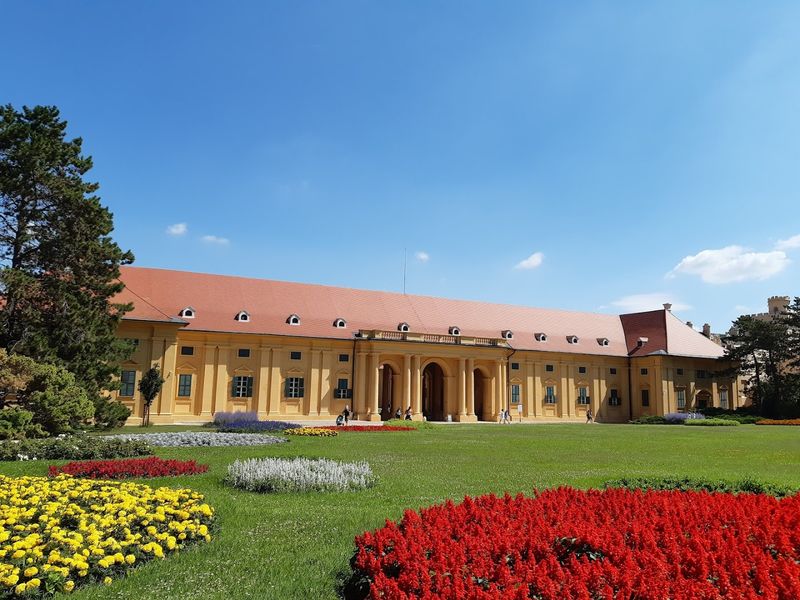
Calling Lednice Castle just a castle is like calling the Louvre just a building. This grand Neo-Gothic palace sits inside a massive UNESCO-listed landscape that stretches across nearly 700 square kilometers of gardens, lakes, and romantic follies.
It is one of the most elaborately designed noble estates in all of Central Europe.
The Liechtenstein family spent centuries shaping the land around Lednice into a masterpiece of landscape design. Highlights include a soaring minaret that pops up unexpectedly among the trees, a functioning greenhouse full of exotic plants, and a romantic island pavilion reachable only by boat.
The combination of architecture and nature here feels genuinely unlike anything else on this list.
The castle interiors are equally impressive, featuring richly decorated rooms, carved woodwork, and a grand library that book lovers will want to live inside permanently. Lednice is often visited alongside nearby Valtice Castle as part of the Lednice-Valtice Cultural Landscape.
Renting a bike to explore the grounds is the best way to see everything without rushing. Pack a picnic and spend the whole afternoon wandering through one of Europe’s most beautiful designed landscapes.
Konopiště Castle – Near Prague
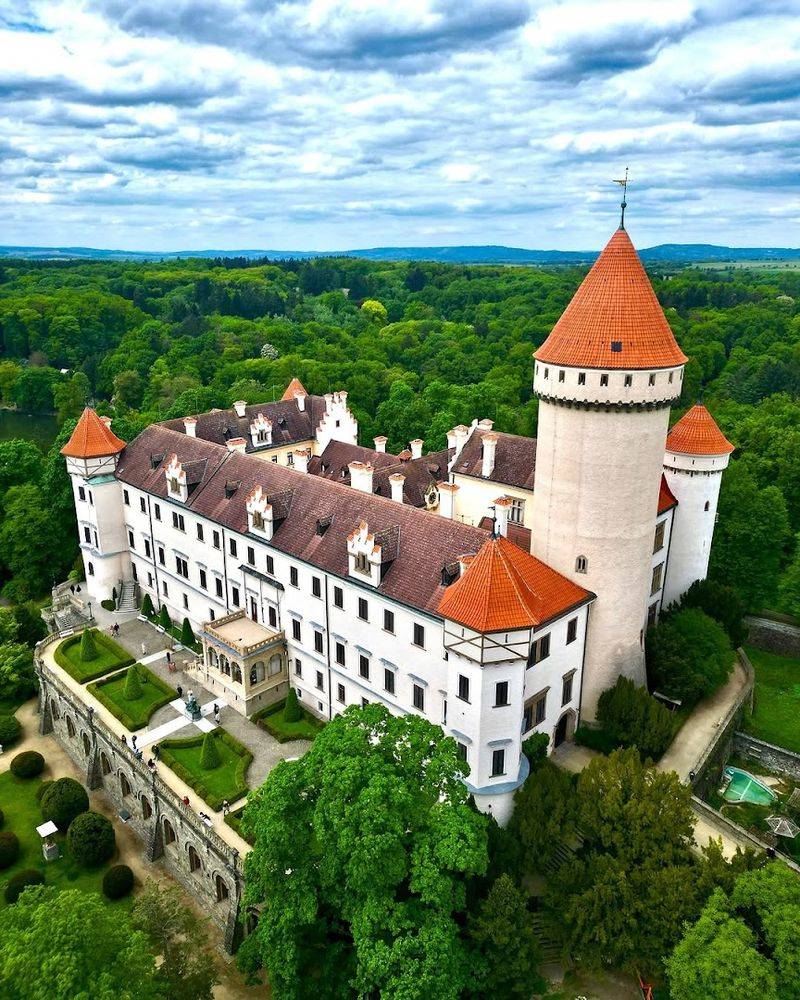
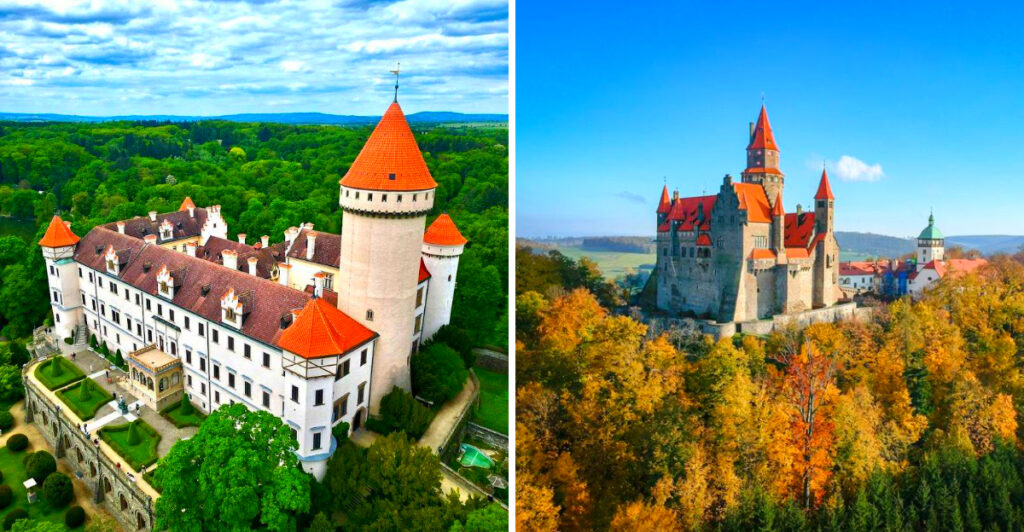
History buffs will recognize Konopiště Castle as the final home of Archduke Franz Ferdinand, whose assassination in 1914 set off the chain of events that led to World War One. Standing inside these walls, that connection to history feels surprisingly personal and a little spine-tingling.
The castle itself is a handsome mix of medieval stonework and late 19th-century renovation, blending old fortress bones with comfortable aristocratic interiors. Franz Ferdinand was an obsessive collector, and the results are on full display inside.
The castle holds one of Europe’s largest private collections of hunting trophies, thousands of them, displayed across rooms with a dedication that borders on overwhelming.
The surrounding park is one of the loveliest parts of the visit. A famous rose garden blooms brilliantly in late spring and early summer, filling the air with fragrance and color.
Bear enclosures near the castle entrance have housed bears for centuries, a quirky tradition that continues today. Konopiště sits about 44 kilometers south of Prague, making it a popular and very manageable day trip.
Go on a weekday if possible to enjoy the atmosphere without the weekend crowds pressing in.
Křivoklát Castle – Central Bohemia
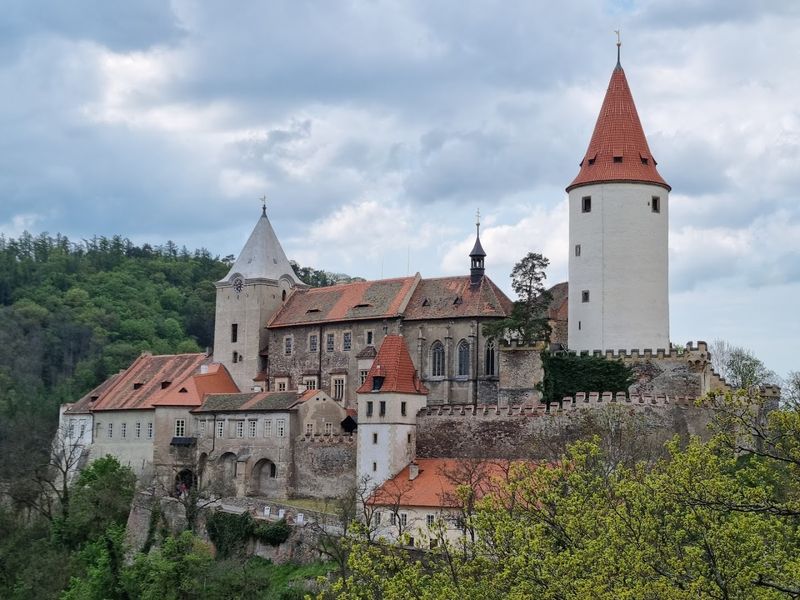
Hidden deep in the forests of the Křivoklát Protected Landscape Area, this castle feels like it belongs to a different era entirely. The trees press in close on all sides, and the stone towers rise above the canopy with a quiet authority that more famous castles often lack.
Křivoklát earns its atmosphere the old-fashioned way.
Dating back to the 12th century, it began as a royal hunting lodge before evolving into a full fortress. Over the centuries it served as a royal residence, a treasury, and yes, a prison.
The dungeon tour is genuinely chilling, with original cells and torture equipment that medieval justice was far less gentle than fairy tales suggest.
The castle chapel is one of the finest examples of Gothic architecture in the country, featuring beautiful stone carvings and a remarkable altarpiece. The great hall is also worth lingering in, with its high vaulted ceiling and medieval atmosphere fully intact.
Trains from Prague to Beroun connect to a local line that drops you practically at the castle gate. The surrounding hiking trails through the forested valley make Křivoklát a perfect full-day adventure for nature lovers and history fans alike.
Bouzov Castle – Moravia
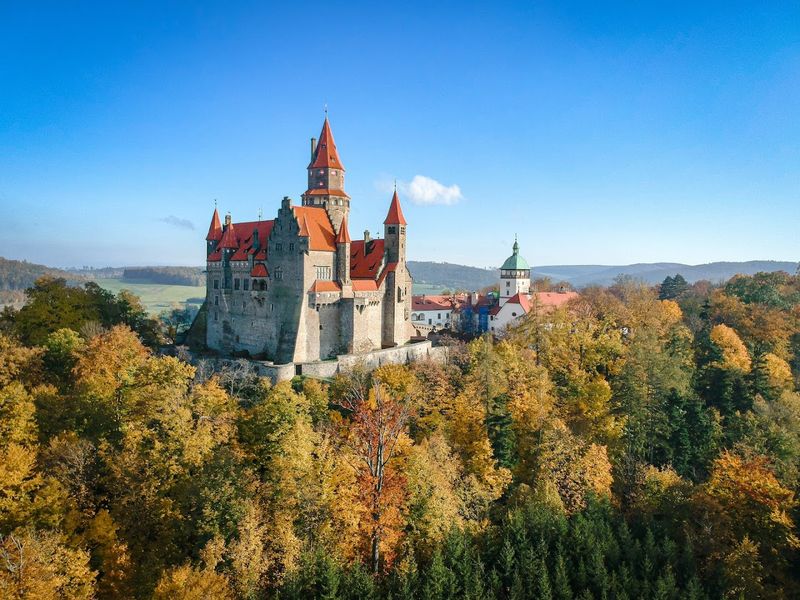
Movie directors looking for the perfect fairytale castle location have been showing up at Bouzov for decades, and it is not hard to understand why. Towers, turrets, a working drawbridge, and dramatically pointed rooflines combine to create the single most cinematic castle silhouette in the Czech Republic.
It looks like it was built specifically to be filmed.
Originally a 14th-century Gothic fortress, Bouzov was extensively restored by the Teutonic Knights in the late 19th and early 20th centuries. The renovation was thorough and theatrical, resulting in interiors packed with carved furniture, tapestries, suits of armor, and ceremonial weapons.
The Knights clearly had strong opinions about interior design.
Located in the hilly Moravia region, Bouzov sits far enough off the main tourist trail to feel like a genuine discovery. Visitor numbers are lower here than at the more famous Bohemian castles, which means you often get to enjoy the rooms and courtyards without being shoulder-to-shoulder with tour groups.
Guided tours are the only way inside, and they run regularly throughout the day in Czech, German, and English. Bouzov is one of those places that rewards the traveler willing to go just a little bit out of their way.
Pernštejn Castle – South Moravia
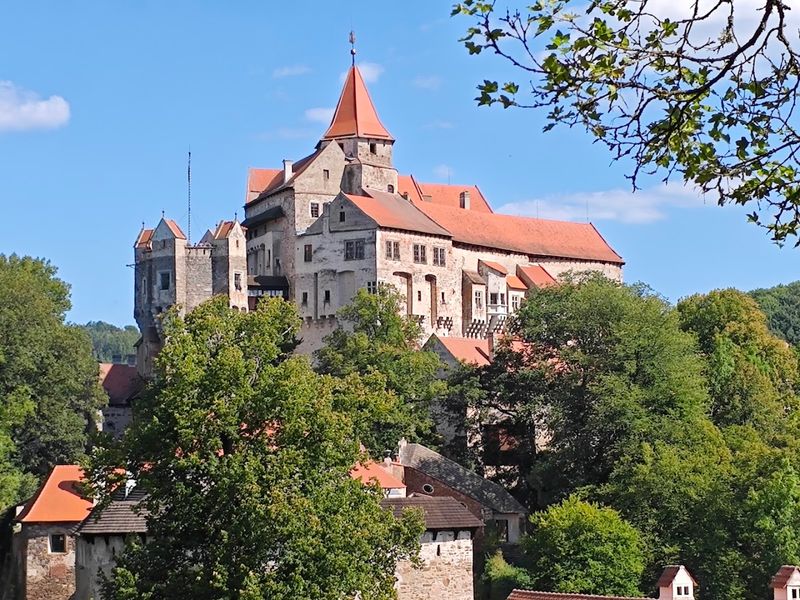
Armies tried for centuries to crack Pernštejn Castle open, and every single one of them failed. Known as one of the best-preserved Gothic fortresses in Europe, this hilltop stronghold was engineered so cleverly that it was never successfully besieged.
Medieval military architects were clearly having a very productive century when they designed this one.
Built by the powerful Pernštejn noble family in the 13th century, the castle grew and evolved over the following 300 years without ever losing its rugged defensive character. The thick outer walls, deep moat, and complex gate system made it practically impenetrable.
Walking through those defenses today, you can almost feel the strategic thinking baked into every stone.
Inside the walls, the atmosphere shifts from fortress to residence, with Gothic halls, a chapel, and rooms that reflect different periods of the castle’s long history. The interiors were never heavily modernized, which gives Pernštejn a raw authenticity that more polished castles sometimes lose.
The surrounding South Moravian countryside is quietly beautiful, especially in autumn when the forested hills turn gold and red. Pernštejn is genuinely underrated and deserves a spot on every serious castle lover’s itinerary.
Český Šternberk Castle – Central Bohemia
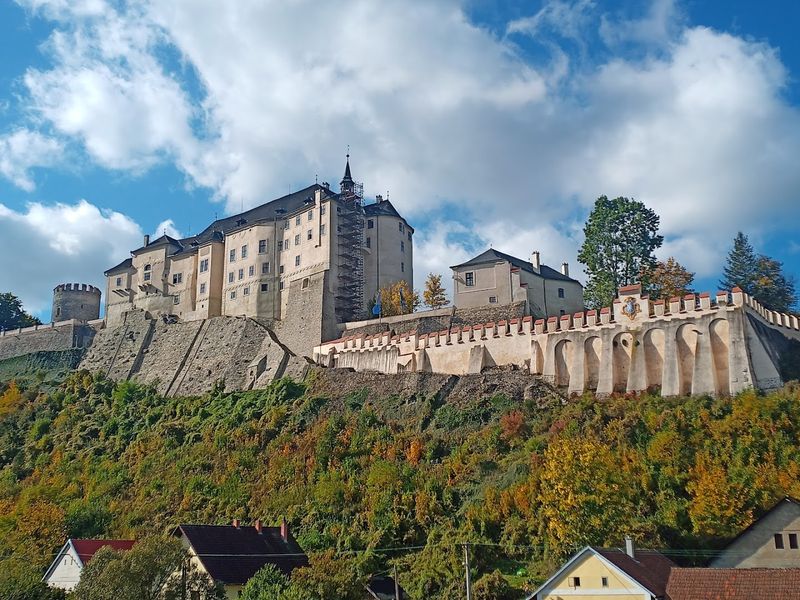
Some castles belong to history books. Český Šternberk belongs to one family, and it has for nearly 800 years straight. The Šternberk family built this fortress in the 13th century and, with a brief interruption, has owned and lived in it ever since.
That kind of continuity is extraordinarily rare in European castle history.
The castle clings dramatically to a rocky cliff above the Sázava River, its towers reflected in the water below on calm days. The original Gothic structure was updated over the centuries with Baroque and Rococo elements, giving the interiors a layered richness that reflects every era of the family’s long story.
Ornate painted ceilings, family portraits, and period furniture fill the rooms with personal history rather than generic museum displays.
Because the family still lives in part of the castle, visiting Český Šternberk feels genuinely different from most tourist sites. The guided tours have a warmth and personal touch that institutional attractions rarely manage.
The surrounding Sázava River valley is popular with canoeists and hikers, making the area worth spending a full day exploring. The castle is located about 45 kilometers southeast of Prague, easily reachable by car and worth every kilometer of the drive.
Rožmberk Castle – South Bohemia
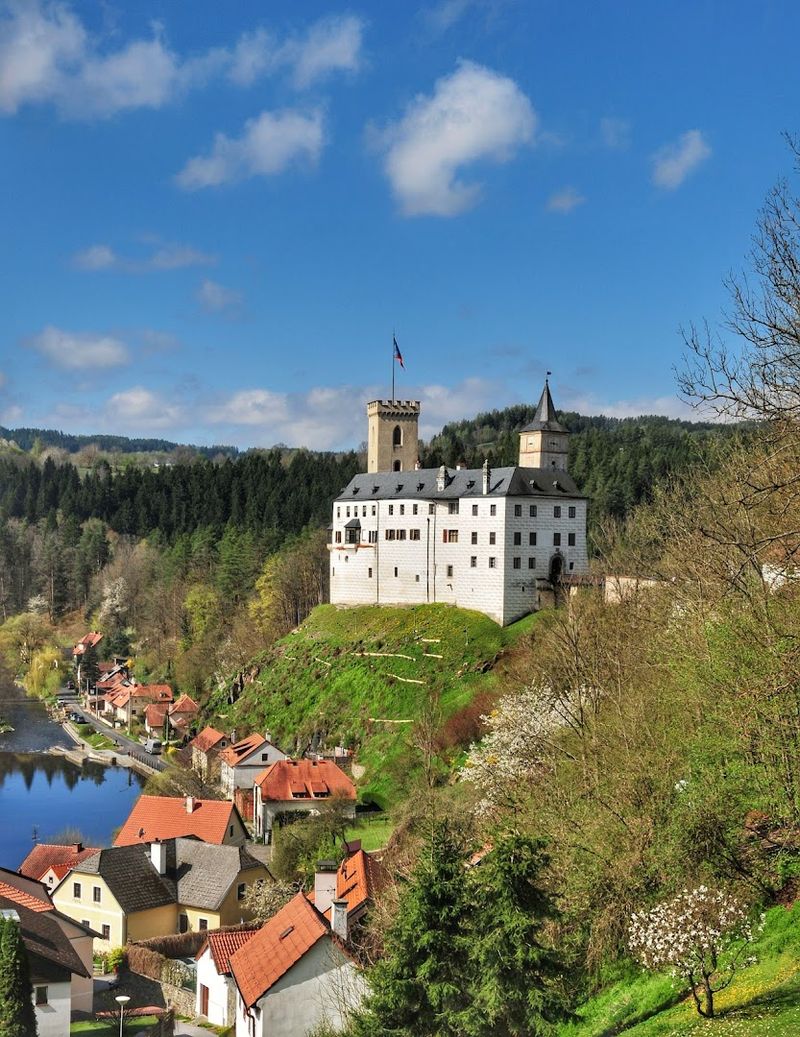
Perched on a rocky spur above a dramatic loop of the Vltava River, Rožmberk Castle looks like it grew out of the landscape rather than being built on top of it. The rock, the river, and the fortress feel completely inseparable, as if nature and architecture reached a very satisfying agreement back in the 13th century.
The Rožmberk family, one of the most powerful noble dynasties in Bohemian history, founded the castle and gave it their name. At the height of their power, they controlled enormous swaths of southern Bohemia from these walls.
The castle complex features two distinct towers, Jakobinka and Horní Hrad, connected by a series of courtyards and residential buildings that evolved over several centuries.
Inside, the rooms are filled with Gothic and Renaissance furnishings, weapons collections, and portraits of the Rožmberk family that stare down at you with varying degrees of intensity. The White Lady ghost legend associated with the castle adds a pleasantly spooky layer to any visit.
Rožmberk nad Vltavou village below the castle is tiny but charming, with a handful of riverside restaurants perfect for a relaxed lunch after exploring the fortress above.
Vyšehrad Castle – Prague
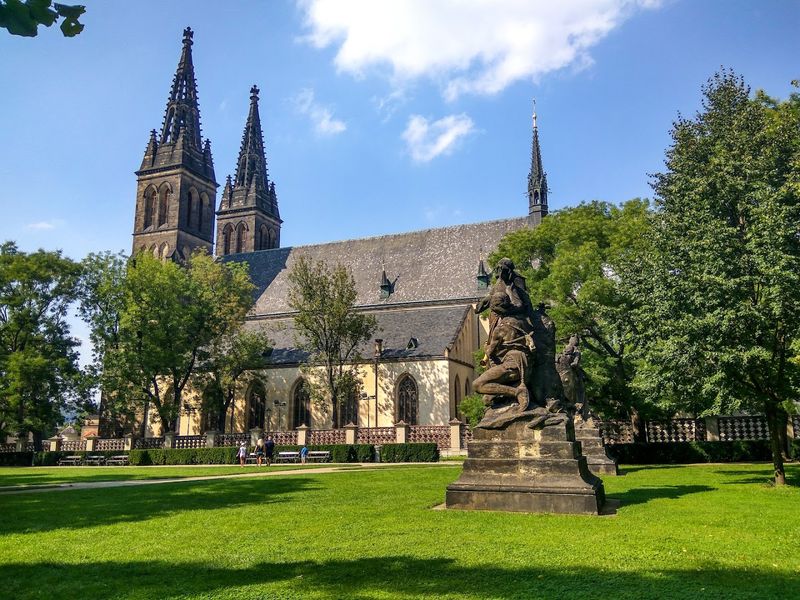
Every visitor to Prague looks up at the famous castle on the hill across the river, but far fewer make the trip to Vyšehrad, and that is honestly their loss. This ancient fortress on a cliff above the Vltava River is quieter, less crowded, and loaded with a cultural significance that goes right to the heart of Czech national identity.
Legend says Vyšehrad was the original seat of the Přemyslid dynasty, the founding royal family of Bohemia. While historians debate the details, the site has been sacred to Czech culture for over a thousand years.
The Neo-Gothic Basilica of St. Peter and St. Paul dominates the skyline with its twin black spires, and the Vyšehrad Cemetery next door is the resting place of Czech composers, artists, and writers including Antonín Dvořák.
The fortress walls offer some of the best panoramic views in all of Prague, looking out over the river bends and the city spreading in every direction. The park inside the grounds is a favorite spot for local families and joggers, giving Vyšehrad a relaxed, lived-in feel.
Admission to the grounds is free, though the basilica and casemates charge a small fee. A perfect afternoon escape from the tourist crowds of central Prague.
Troja Château – Prague
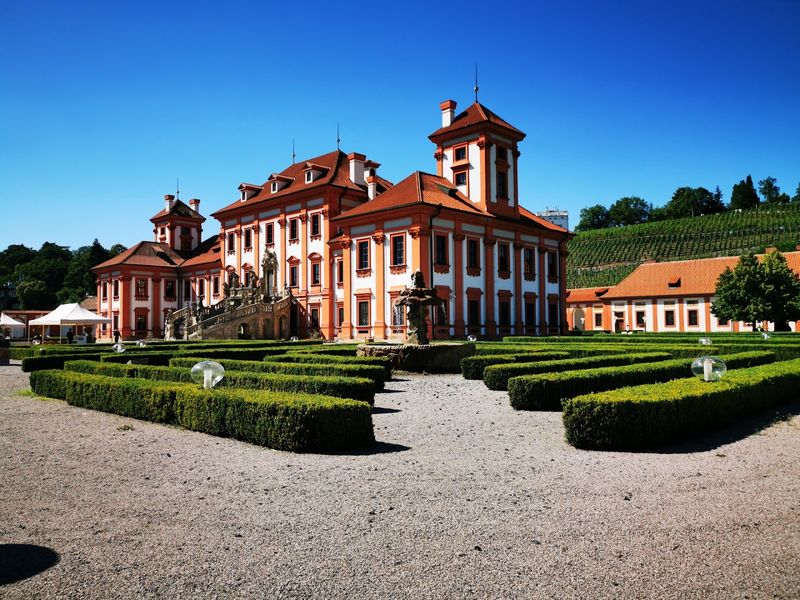
Tucked away in the northern suburbs of Prague, Troja Château is the kind of place that makes you wonder why more people are not talking about it. This stunning Baroque palace was built in the late 17th century as a summer retreat for the Sternberg noble family, and it was designed to impress from every possible angle.
Mission absolutely accomplished.
The grand ceremonial staircase at the entrance is the château’s showstopper, decorated with sculptures of battling giants and mythological figures in a style that is dramatic without tipping into ridiculous. The main hall inside is covered floor to ceiling with elaborate frescoes glorifying the Habsburg dynasty, painted with an enthusiasm that borders on competitive.
The overall effect is opulent in the best possible way.
The formal French gardens surrounding the château are beautifully maintained and free to visit, making them a favorite spot for Prague locals on warm weekends. A working vineyard on the property produces wine that you can sample on-site, which feels like a very civilized way to end a castle visit.
Troja also houses a collection of 19th-century Czech art. It sits near Prague Zoo, making it easy to combine both into one memorable day out north of the city center.
Houska Castle – Central Bohemia
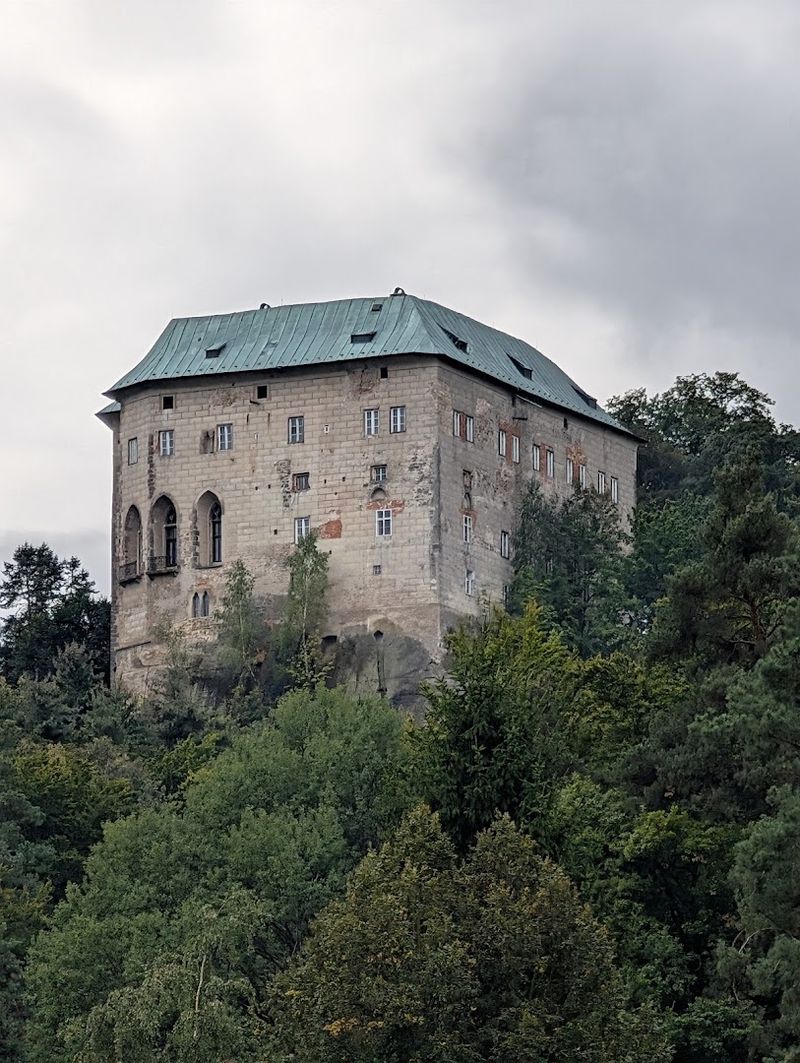
Most castles were built to keep enemies out. Houska Castle, according to local legend, was built to keep something in.
Specifically, a bottomless pit in the ground beneath the chapel that medieval locals believed was a literal gateway to the underworld. Whether you believe that or not, it makes for an extraordinarily memorable tour.
Built in the 13th century by the Přemyslid dynasty, Houska sits in the middle of a remote forest with no nearby town, no water source, and no obvious strategic or economic purpose. Historians are still not entirely sure why it was built where it was.
That mystery alone makes it one of the most fascinating castles in the country, independent of any supernatural stories attached to it.
The castle has changed hands many times, including a dark chapter during World War Two when it was used by the Nazi SS for unknown purposes, adding yet another layer of eerie history to the place. The Gothic chapel inside is genuinely beautiful, with original medieval frescoes that have survived remarkably well.
Houska is located about 50 kilometers north of Prague and is best reached by car. Paranormal enthusiasts, history lovers, and curious travelers all find something compelling here.
Go before sunset for maximum atmosphere.
Valtice Castle – South Moravia
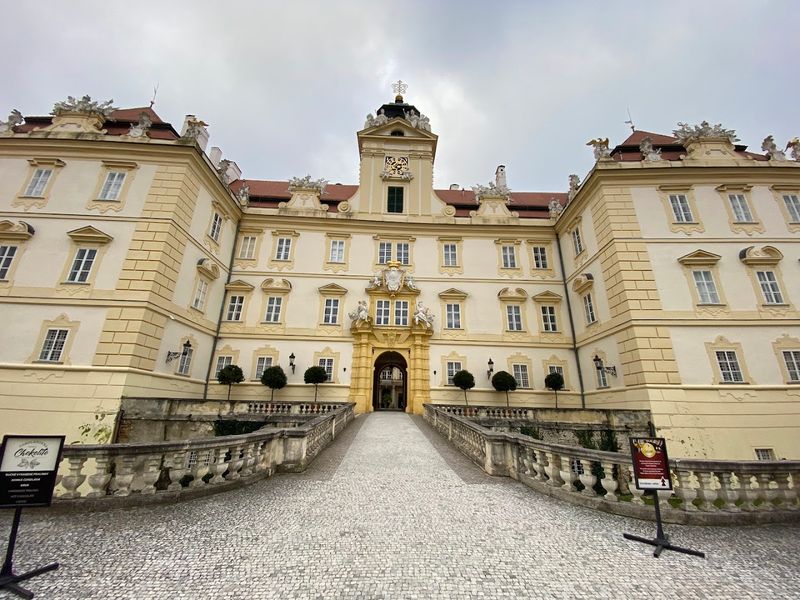
Wine lovers, this one is specifically for you. Valtice Castle is a magnificent Baroque palace sitting at the heart of South Moravia’s most famous wine-producing region, and its cellars are stocked accordingly.
The National Wine Salon of the Czech Republic is housed right here, offering tastings of the country’s finest wines in an appropriately grand setting.
The Liechtenstein family, who also shaped the nearby Lednice estate, transformed Valtice into one of the most elegant Baroque residences in Central Europe during the 17th and 18th centuries. The palace facade is long, symmetrical, and beautifully proportioned, with a church integrated into one wing in a way that feels both ambitious and very aristocratic.
The interiors feature state rooms with painted ceilings, period furnishings, and a ceremonial hall that still hosts concerts and cultural events.
Valtice is best visited as part of the wider Lednice-Valtice Cultural Landscape, a UNESCO World Heritage area where bike paths connect the two palaces through vineyards, forests, and romantic garden structures. The town of Valtice itself is charming and relaxed, with excellent local restaurants serving Moravian cuisine alongside regional wines.
This is a castle that rewards slow travel, lingering tastings, and absolutely no rushing whatsoever.
Share this story