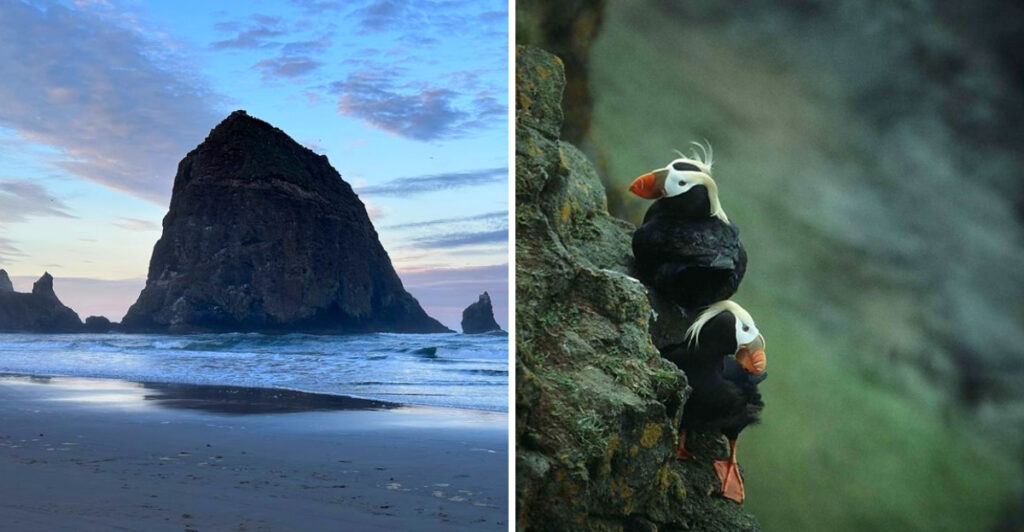
There is a stretch of the Oregon Coast where a massive basalt rock rises straight out of the Pacific Ocean, and the sight of it stops people in their tracks every single time. Tufted puffins nest on its upper slopes each spring and summer, making this one of the few places in the continental United States where you can actually watch these birds up close without a boat or a telescope.
The rock draws families, photographers, birdwatchers, and curious travelers from across the country, and yes, even folks making the drive all the way from Oklahoma have said it was absolutely worth every mile. Read on to find out everything you need to know before your visit to this unforgettable spot on the Pacific Coast.
Where Haystack Rock Stands: Address, Location, and First Impressions
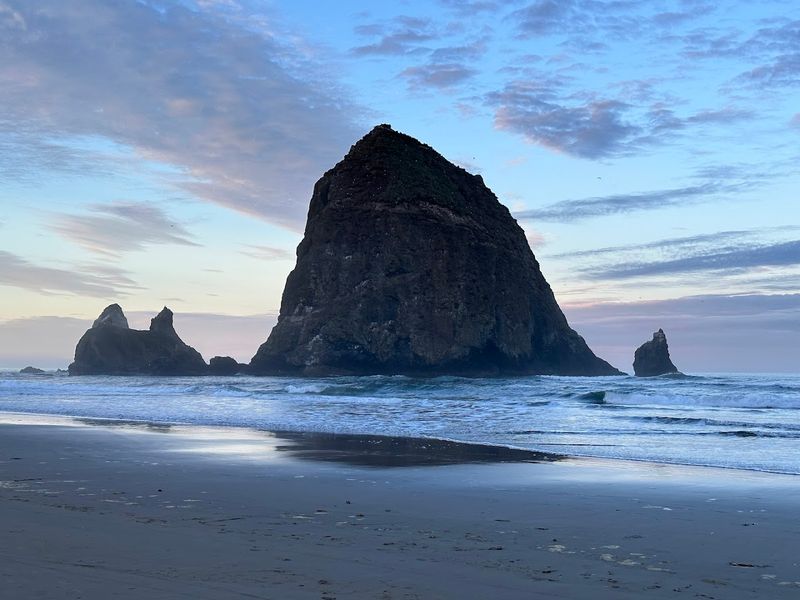
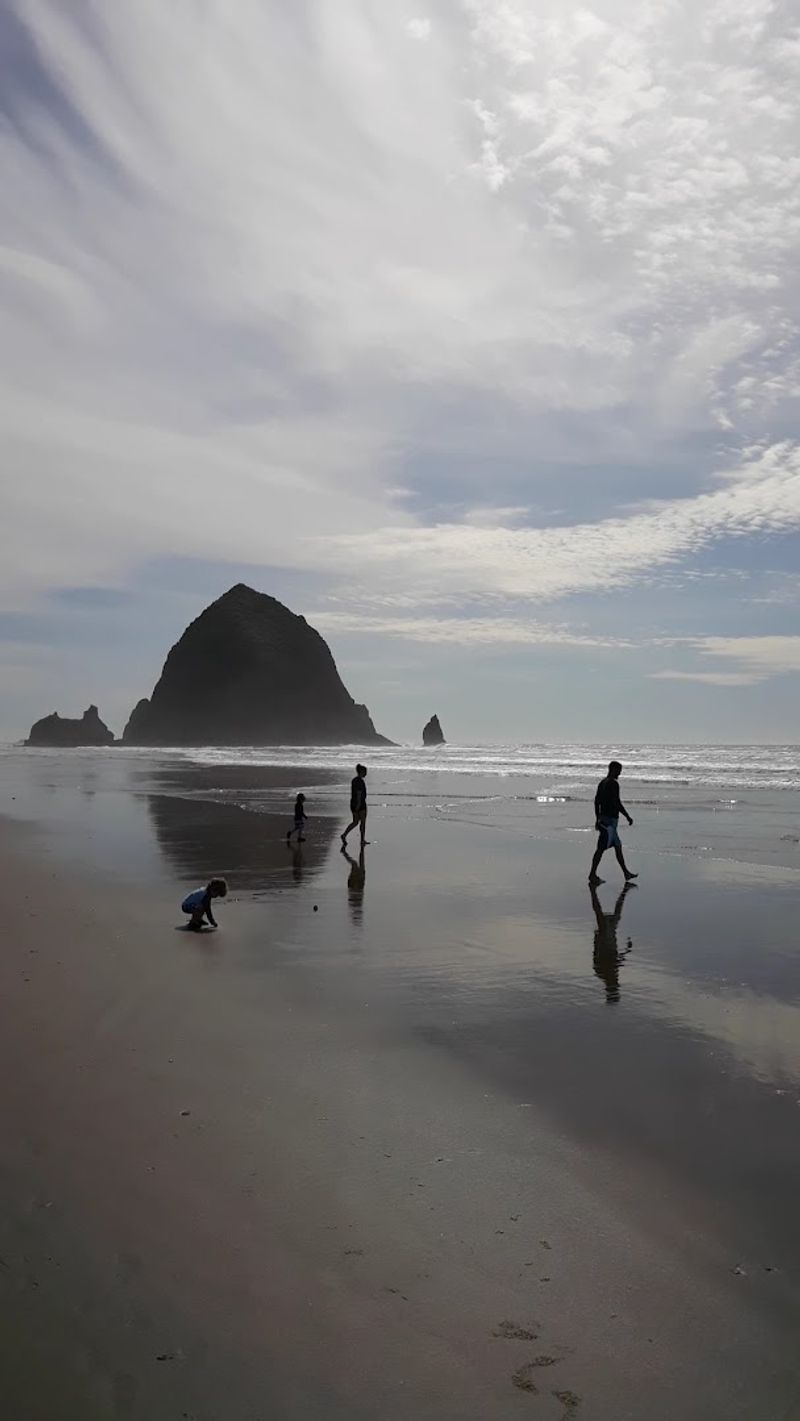
Few natural landmarks in the Pacific Northwest announce themselves quite like this one does. Haystack Rock sits right on the beach in Cannon Beach, Oregon, at US-101, Cannon Beach, OR 97110, and the moment you crest the dunes and see it rising 235 feet straight out of the sand, your jaw genuinely drops.
The rock is a basalt sea stack formed by ancient lava flows, and it has been shaped over thousands of years by wind, waves, and salt air. At low tide, the base becomes accessible on foot, so you can walk right up to it and feel the scale of the thing pressing down on you in the best possible way.
Cannon Beach itself is a small, laid-back coastal town with galleries, cafes, and shops lining Hemlock Street just a short walk from the beach. The town has a relaxed, creative vibe that feels nothing like a tourist trap.
Whether you are arriving from Portland, Seattle, or making a long road trip from somewhere like Oklahoma, this destination rewards the effort with views that feel almost cinematic from the very first step onto the sand.
The Tufted Puffins: Oregon’s Most Charming Seasonal Residents

Tufted puffins are the kind of birds that make you stop mid-sentence and just stare. With their glossy black bodies, vivid orange beaks, and wild yellow feather tufts sweeping back from their eyes, they look almost too dramatic to be real.
Every year between April and July, these birds return to nest on the grassy upper slopes of Haystack Rock, making it one of the most reliable places in the continental United States to see them without getting on a boat. Volunteers from the Haystack Rock Awareness Program are usually stationed on the beach with spotting scopes, and they are genuinely excited to point the birds out and share what they know.
The best viewing happens during the early morning hours when the birds are most active, flying in and out of their burrow sites. Binoculars help, but even without them, you can often spot the puffins circling the rock or perching on the rocky outcroppings.
Visitors who have traveled from as far as Oklahoma specifically to see these birds often describe the moment of first spotting one as a genuine highlight of their entire Pacific Coast trip.
Tide Pools at the Base: A Living Marine Garden Worth Exploring
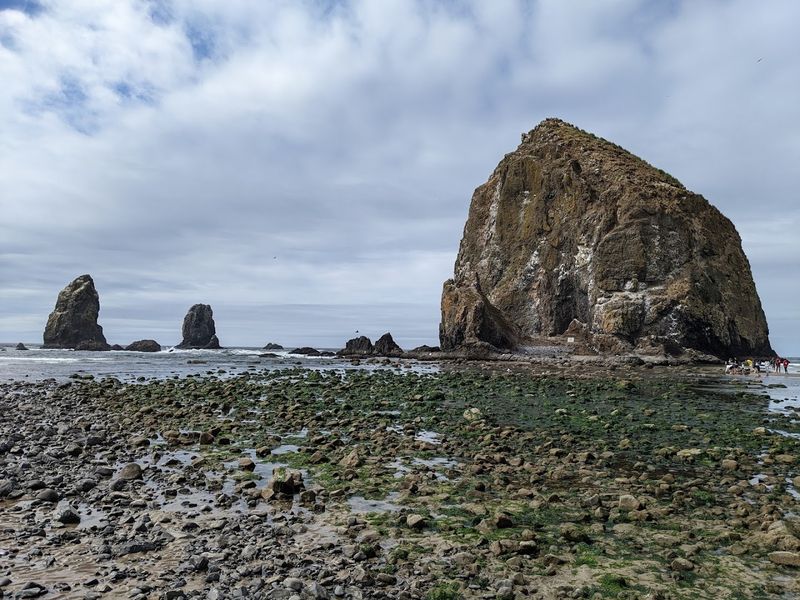
The tide pools surrounding Haystack Rock are officially designated as a Marine Garden, which means the wildlife living in them is protected and should never be removed or disturbed. That protection is part of why these pools remain so vibrant and full of life year after year.
At low tide, the rocky platforms around the base of the rock reveal an entire ecosystem packed into shallow pools of seawater. Neon-green anemones wave their tentacles, purple sea stars cling to wet rock surfaces, hermit crabs scuttle across the bottom, and small fish dart between crevices.
The colors are surprisingly vivid, especially on a bright morning when sunlight cuts through the water.
Checking the tide chart before your visit is one of the smartest moves you can make. A minus tide gives you the most access and the best views of the marine life.
Volunteers from the Haystack Rock Awareness Program patrol the area and are happy to answer questions, identify species, and remind visitors to step carefully and avoid touching the animals. The whole experience feels more like a guided nature walk than a casual beach stop, and that is a very good thing.
The Haystack Rock Awareness Program: Volunteers Who Make It Better
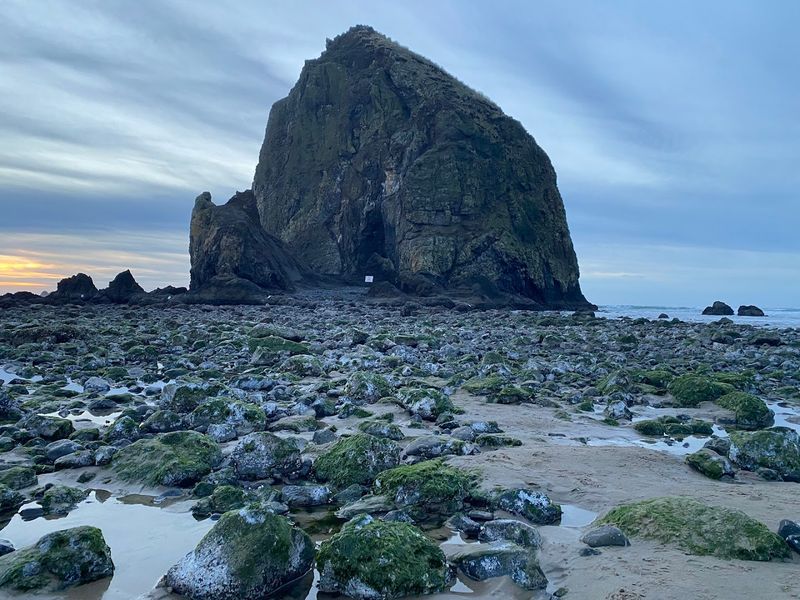
Not every natural landmark comes with its own team of passionate educators ready to make your visit more meaningful, but Haystack Rock does. The Haystack Rock Awareness Program, known as HRAP, has been operating for decades and sends trained volunteers to the beach during low tides to help visitors understand and respect the ecosystem they are exploring.
These volunteers set up spotting scopes aimed at the upper rock during puffin season, point out species hiding in the tide pools, and gently redirect anyone who accidentally starts to step on protected areas. Their approach is welcoming rather than preachy, which makes a real difference in how visitors feel about the experience.
HRAP also runs educational programs for school groups and offers resources online for anyone who wants to learn more before arriving. The program is free, funded largely by donations and community support from the Cannon Beach area.
Talking with a HRAP volunteer is genuinely one of the highlights of the visit, and many travelers, including those who have made long drives from states like Oklahoma, say the interaction added real depth to what could have been just a quick photo stop.
Sunrise and Sunset: When the Rock Looks Its Most Spectacular

There is a reason photographers return to this beach over and over again. The light here does something special at both ends of the day, and Haystack Rock provides a subject so bold and vertical that it anchors every composition without effort.
Sunrise visits reward early risers with soft, diffused light that wraps around the rock’s eastern face and turns the wet sand into a mirror. The beach is quieter at that hour, and you can hear the waves clearly without the background noise of crowds.
Sunset visits are more popular and for good reason: the sky behind the rock shifts through shades of orange, pink, and deep purple as the sun drops toward the horizon over the Pacific.
Evening tide often leaves a thin layer of water on the sand that reflects the sky perfectly, creating double-exposure-style photos that feel almost too good to be real. Wedding photographers return here constantly because the combination of natural light and dramatic scenery is nearly impossible to replicate anywhere else on the coast.
Whether you set your alarm for dawn or linger until dusk, the rock rewards your patience with a view that stays with you long after you have driven home.
Seabirds Beyond Puffins: A Full Colony Above the Waterline
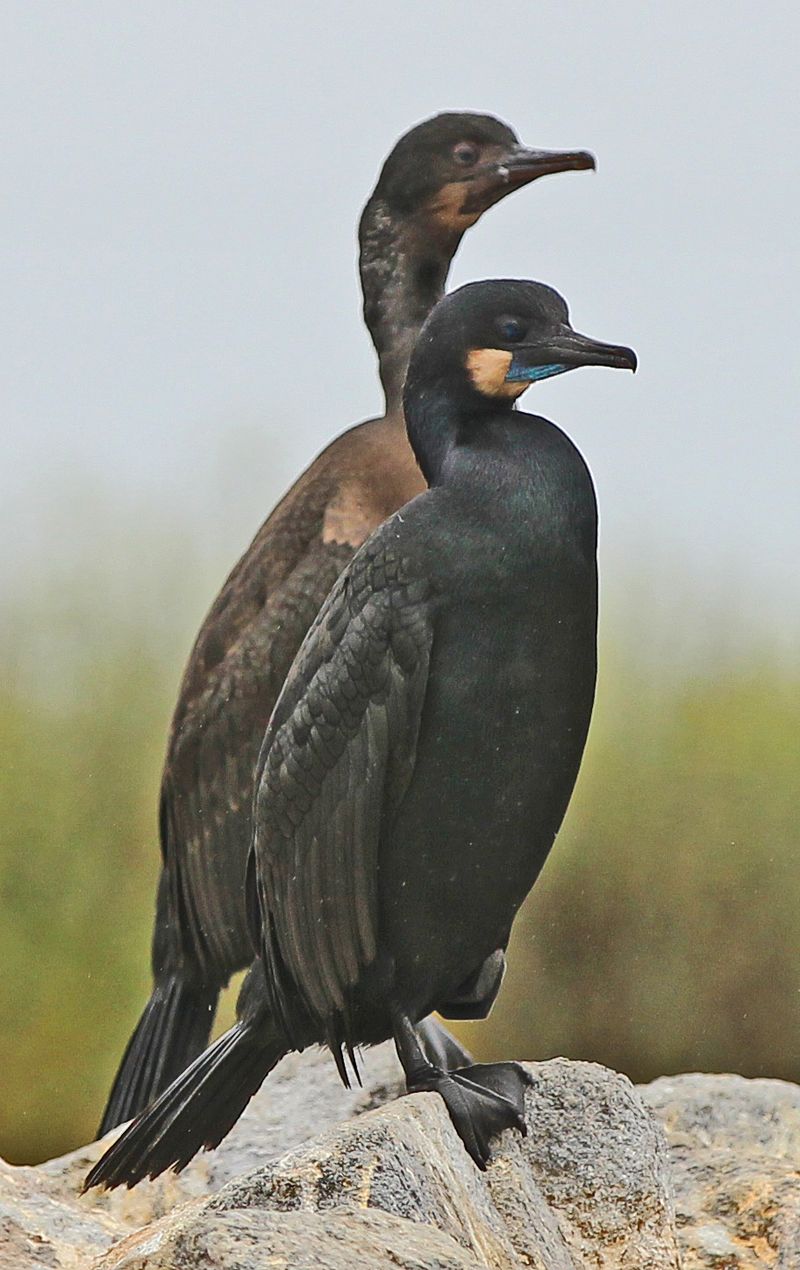
Tufted puffins get most of the attention, but Haystack Rock is home to a surprisingly diverse colony of nesting seabirds that are worth knowing about before you arrive. The upper portions of the rock serve as nesting habitat for Brandt’s cormorants, pelagic cormorants, and common murres, all of which are present in significant numbers during the breeding season.
Common murres are particularly striking: sleek black-and-white birds that stand upright on narrow rock ledges and look somewhat like small penguins from a distance. They nest in dense, noisy groups and can be spotted through binoculars even when the light is not ideal.
Western gulls also nest on the rock and are far more territorial than they appear, especially when approached too closely.
The sheer number of birds calling and circling above the rock on a busy spring morning creates a sensory experience that goes well beyond just watching wildlife. The sound carries across the beach, and the constant aerial activity above the rock’s summit makes it feel alive in a way that few natural landmarks manage.
Birdwatchers who have visited coastal reserves from Oregon all the way to Oklahoma consistently rank this colony as one of the most accessible and impressive they have encountered.
Wildlife on the Beach: Elk, Bunnies, and More Than You Expect
The wildlife at Cannon Beach is not limited to what lives in the ocean or on the rock. Roosevelt elk are a regular presence in and around the beach area, and sightings of herds grazing near the parking lots or wandering along the edges of the beach are surprisingly common.
One visitor counted more than twenty elk near the lot on a single afternoon visit.
Wild rabbits also appear frequently around the town and the beach access points, moving calmly through the grass as if they have long since decided that humans are not particularly interesting. The combination of elk, rabbits, seabirds, and marine life makes a single visit feel like a naturalist’s checklist come to life.
The key thing to remember with the elk is to keep a respectful distance. They are large, powerful animals, and while they tend to be calm around people, getting too close is never a good idea.
The same common-sense rules apply here as they would in any wildlife area. Watching a herd of elk move slowly across a coastal meadow with Haystack Rock visible in the background is one of those genuinely unexpected moments that makes this destination feel richer than most travel guides prepare you for.
Best Time to Visit: Seasons, Crowds, and Practical Timing
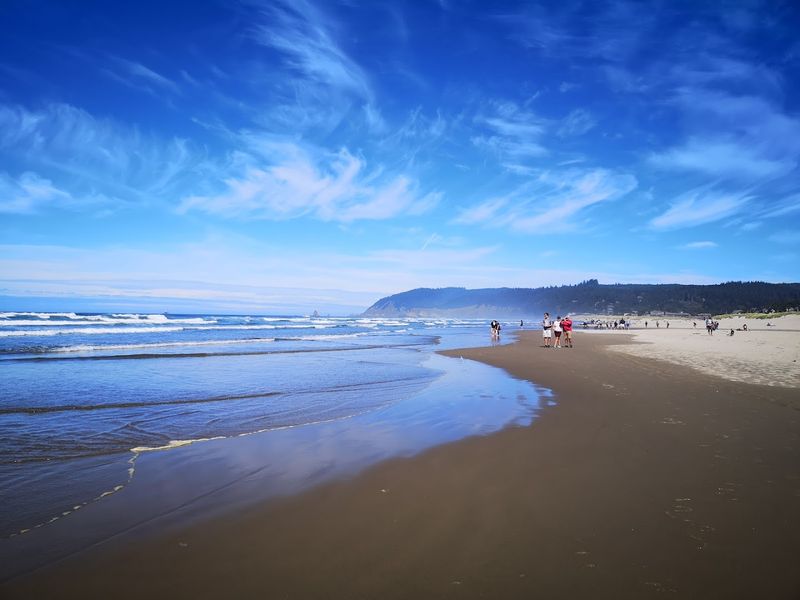
Spring and early summer, roughly April through July, represent the most rewarding window for a visit if seeing tufted puffins is your main goal. The birds are present, the days are getting longer, and the coastal weather, while never fully predictable, offers more clear stretches than the deep winter months.
That said, Cannon Beach is genuinely beautiful in every season. Winter visits bring dramatic surf, moody skies, and a quieter beach that feels almost meditative.
Summer weekends draw larger crowds, and parking can get tight, so arriving early in the morning makes a significant difference in how relaxed the experience feels.
Checking a tide chart and planning your arrival around a low or minus tide is the single most useful piece of planning advice for any visit. The Cannon Beach city website posts tide information, and the HRAP website also provides guidance on the best times for tide pool access.
Visitors coming from far away, including those making the cross-country trek from Oklahoma, often find that spending at least one full day rather than a rushed afternoon allows them to catch both a low tide and a sunset, which together make for an experience that is genuinely hard to beat.
Parking, Access, and Getting to the Beach Without the Stress
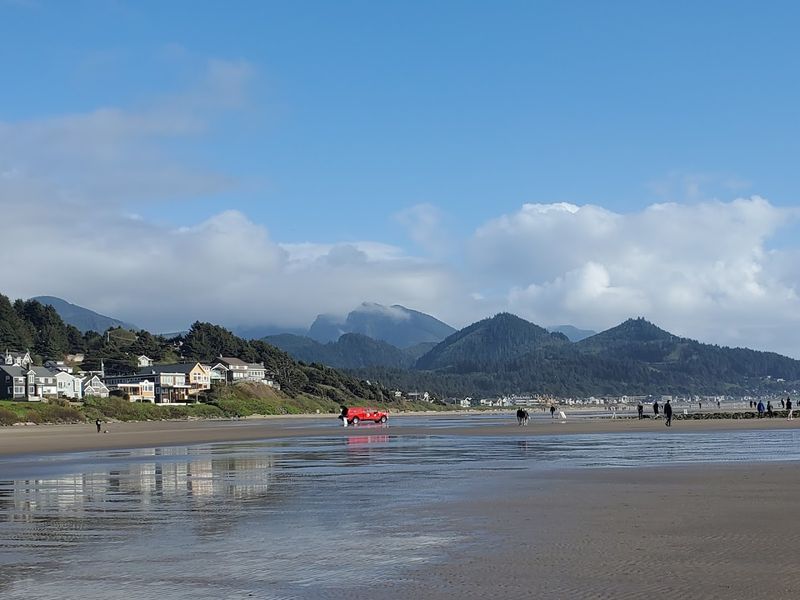
Getting to the beach at Cannon Beach is straightforward, but parking requires a little strategy, especially during busy weekends and summer months. Street parking is available along the roads near the beach access points, and free parking can also be found near Cannon Beach City Hall, which is a short walk from the sand.
Several staircases lead from the street level down to the beach, and the descent itself offers a lovely preview of the view waiting at the bottom. The stairs are not steep enough to be difficult for most visitors, but wearing comfortable shoes makes the whole experience more enjoyable, especially if you plan to walk along the beach for a while.
If you are approaching from the south on US-101, it is easy to miss the downtown area along Hemlock Street, which runs parallel to the main highway. Slowing down and following the beach access signs will get you where you need to go without looping back.
The beach itself is wide and packed enough to walk on comfortably, so once you are down there, the distance from the parking area to the rock feels manageable and pleasant rather than like a chore.
The Town of Cannon Beach: Shops, Food, and Small-Town Charm
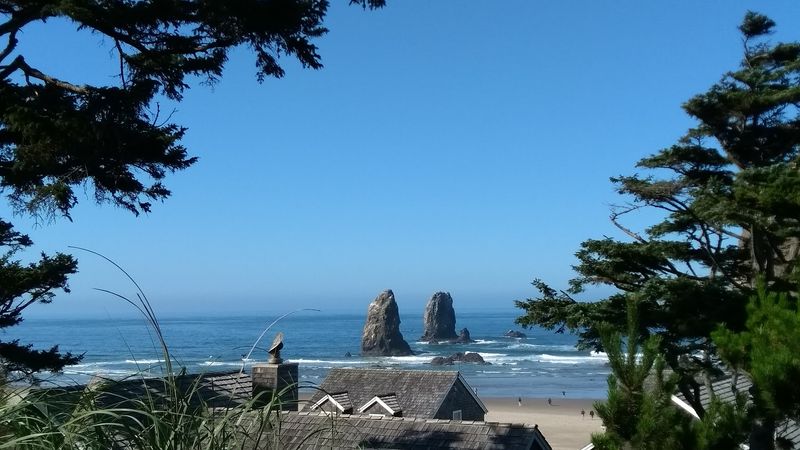
After spending time on the beach, the town of Cannon Beach itself is well worth a slow wander. Hemlock Street, the main commercial strip, is lined with independent art galleries, bookshops, clothing boutiques, and a solid selection of restaurants and cafes that cater to both quick bites and longer sit-down meals.
The town has managed to hold onto a relaxed, small-town personality despite being a well-known destination, which is not easy to do. The galleries feature work from local and regional artists, and the quality is genuinely high.
Picking up a piece of art or a handmade item here feels like a much more meaningful souvenir than anything you would find at a generic gift shop.
Food options near the beach are plentiful and within walking distance, so there is no need to drive anywhere after your time on the sand. Coffee shops are a welcome stop after a breezy morning walk, and several restaurants serve fresh seafood sourced from the Pacific Coast.
Whether you are wrapping up a day trip from Portland or the tail end of a long road journey from somewhere like Oklahoma, the town of Cannon Beach offers a genuinely satisfying place to rest, eat, and reflect on what you just experienced.
Share this story