Italy has a way of making every photo look like a postcard, but the real question is whether the actual landmarks hold up when you are standing right in front of them. Spoiler: most of them do, and several of them will leave you completely speechless.
From ancient ruins to golden basilicas to cliffside villages, Italy is packed with places that earn every pixel of their fame. I have visited quite a few of these spots myself, and I can honestly say the photos never tell the whole story.
The Colosseum, Rome
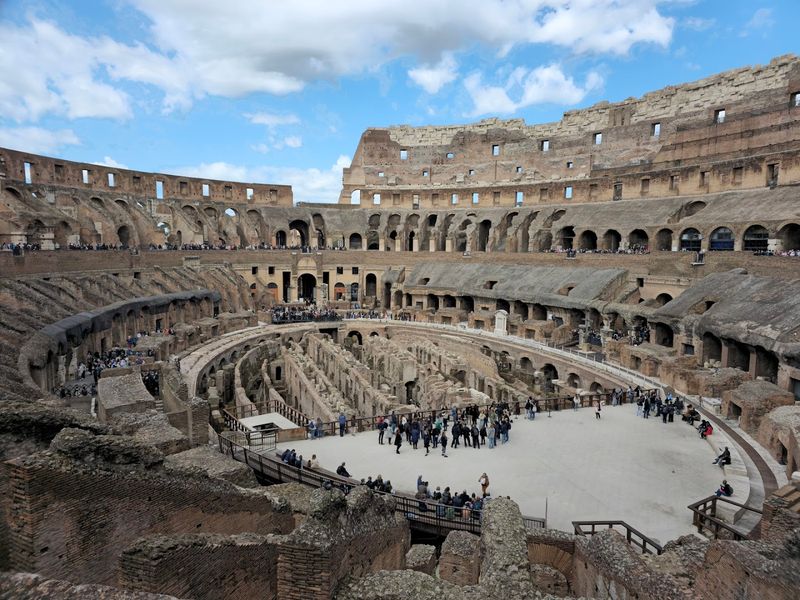
Nothing quite prepares you for the moment the Colosseum appears around a street corner in Rome. It is enormous in a way that photos simply cannot communicate.
I rounded a bend on my first visit and genuinely stopped walking mid-step.
Built around 70 AD, this amphitheater once held up to 80,000 spectators who came to watch gladiatorial contests. That number alone is staggering.
The structure is nearly 2,000 years old and still standing with jaw-dropping presence.
Book tickets in advance online to skip the notoriously long queues. The underground and arena floor levels require separate tickets but are absolutely worth it.
Seeing the hypogeum below, where animals and gladiators waited before battles, adds a completely different layer to the experience. Go early in the morning for fewer crowds and better light for photos.
Trevi Fountain, Rome
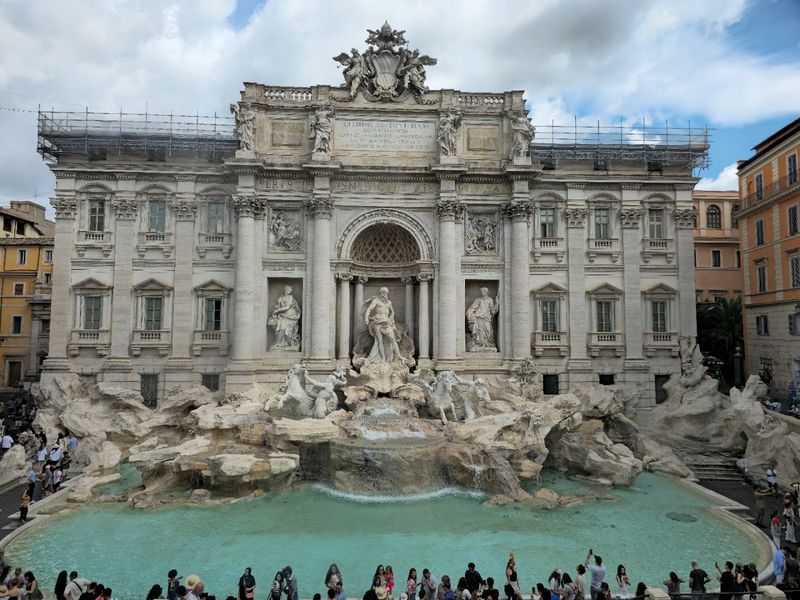
The Trevi Fountain is genuinely theatrical, and that is not an exaggeration. Baroque sculpture, rushing water, and a palace facade all crammed into one small piazza create something that feels almost too dramatic to be real.
Oceanus, the god of all water, commands the center of the fountain with two winged horses and their triton guides. The whole composition is a power move in marble.
It took sculptor Nicola Salvi about 30 years to complete, finishing in 1762.
Yes, it is crowded. Go before 8am if you want breathing room and genuinely good photos.
The tradition of tossing a coin over your left shoulder with your right hand supposedly guarantees a return trip to Rome. Around 3,000 euros worth of coins are thrown in daily, and the money is donated to charity.
That detail alone makes the fountain feel a little less touristy.
Vatican Museums and Sistine Chapel, Vatican City
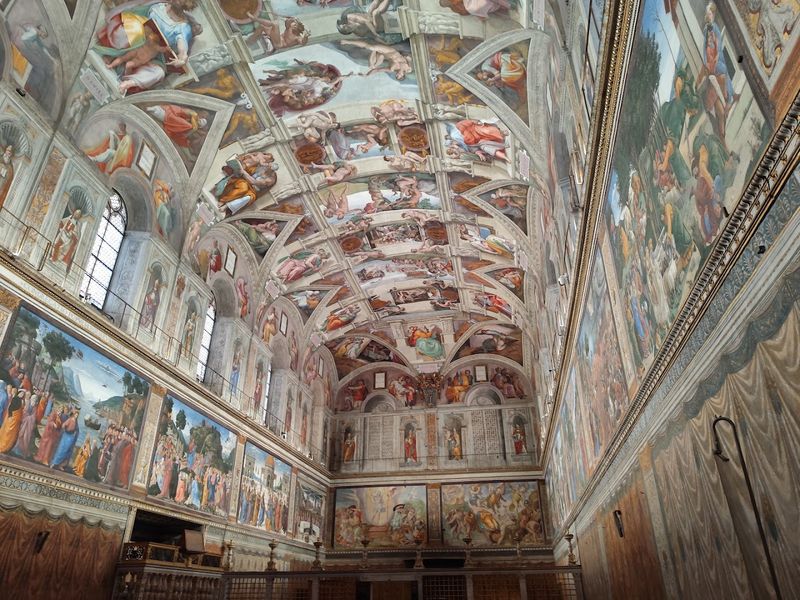
Technically a separate country, but the Vatican Museums are non-negotiable on any Italy trip. The sheer volume of art and history packed into these halls is almost unreasonable.
Michelangelo’s Sistine Chapel ceiling is the headline act, but the supporting cast is equally impressive.
The Gallery of Maps alone is worth an hour of your time. Painted between 1580 and 1585, it features 40 topographical maps of Italian regions that are still remarkably accurate.
The tapestry galleries and ancient sculpture halls could fill an entire day on their own.
Pre-booking a guided tour is genuinely one of the smartest moves you can make here. The museums cover about 9 miles of galleries, and without context, it is easy to rush past something extraordinary.
Photography is not allowed inside the Sistine Chapel, so put the phone away and just look up. That ceiling will not disappoint.
St. Peter’s Basilica, Vatican City
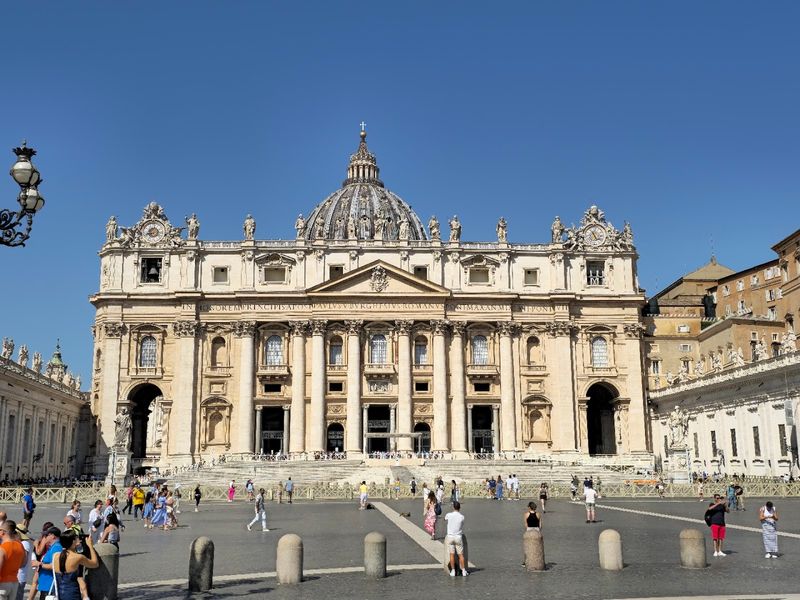
St. Peter’s Basilica has the audacity to be even bigger inside than it looks from the outside, which is saying something given that the exterior already dominates the entire skyline. The scale of this church is genuinely hard to process.
Michelangelo’s Pieta sits behind protective glass near the entrance and is one of the most quietly powerful sculptures in existence. Carved when Michelangelo was only 24 years old, it is the only work he ever signed.
Bernini’s towering bronze baldachin over the papal altar is another showstopper at nearly 30 meters tall.
Entry to the basilica is free, which feels almost too good given what is inside. Climbing to the top of the dome offers one of Rome’s best panoramic views.
Dress modestly since covered shoulders and knees are required for entry. Arrive early to avoid long security lines and to experience the nave without shoulder-to-shoulder crowds.
Pompeii Archaeological Park, Campania
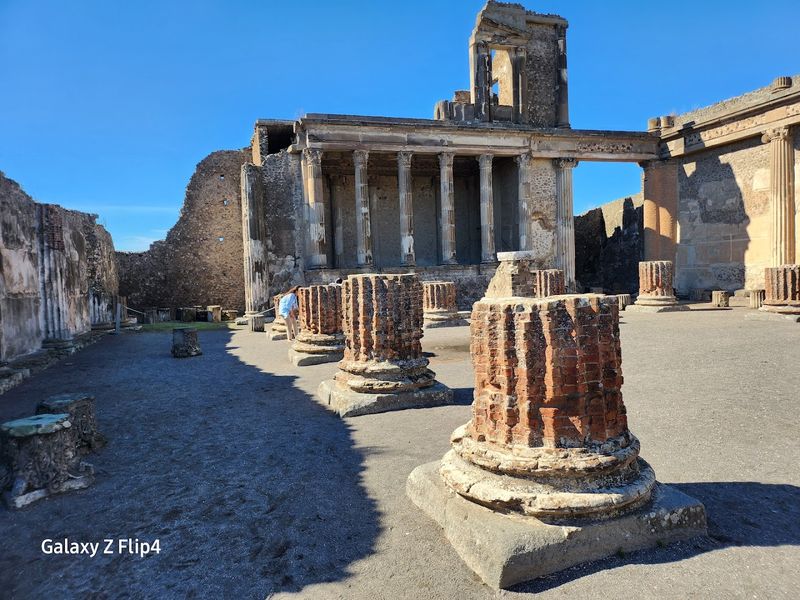
Pompeii is one of those places that genuinely changes how you think about history. Walking down an actual Roman street, past an actual bakery with grain mills still in place, is a completely different experience from reading about ancient life in a textbook.
Mount Vesuvius erupted in 79 AD and buried the city under meters of volcanic ash, which paradoxically preserved it remarkably well. Frescoes, mosaics, political graffiti, and even loaves of bread have been found here.
The city had fast food restaurants called thermopolia, with built-in counter holes for food containers.
Wear comfortable shoes because the site covers about 170 acres and the original stone streets are uneven. Grab a map at the entrance or use the official app to navigate.
The Garden of the Fugitives, where plaster casts of eruption victims are displayed, is one of the most sobering and memorable stops in the entire park.
Milan Cathedral, Milan
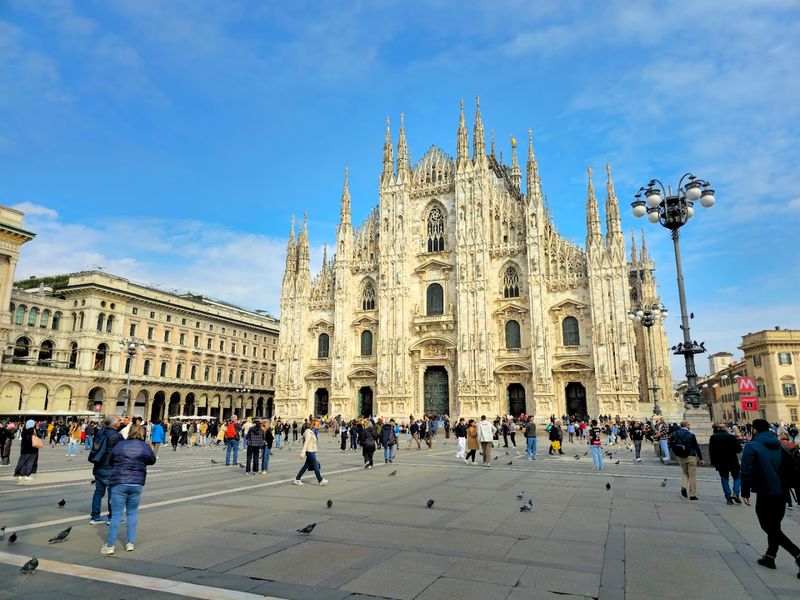
The Duomo di Milano took nearly six centuries to complete, and you can actually believe it when you are standing in front of it. Every centimeter of the facade is covered in marble carvings, statues, and spires pointing skyward like an architectural fever dream.
There are over 3,400 statues decorating the exterior alone, which makes it one of the most statue-dense buildings on earth. The rooftop terrace is where things get really interesting.
Walking among the spires with the city spread out below feels genuinely surreal.
You can take stairs or an elevator to reach the rooftop, and the elevator option is worth every euro if you want to save your legs for the rest of the day. The interior is equally stunning, with 52 massive columns and stained glass windows that fill the nave with colored light.
Book rooftop access in advance during peak season to avoid long waits at the ticket desk.
Leaning Tower of Pisa, Pisa
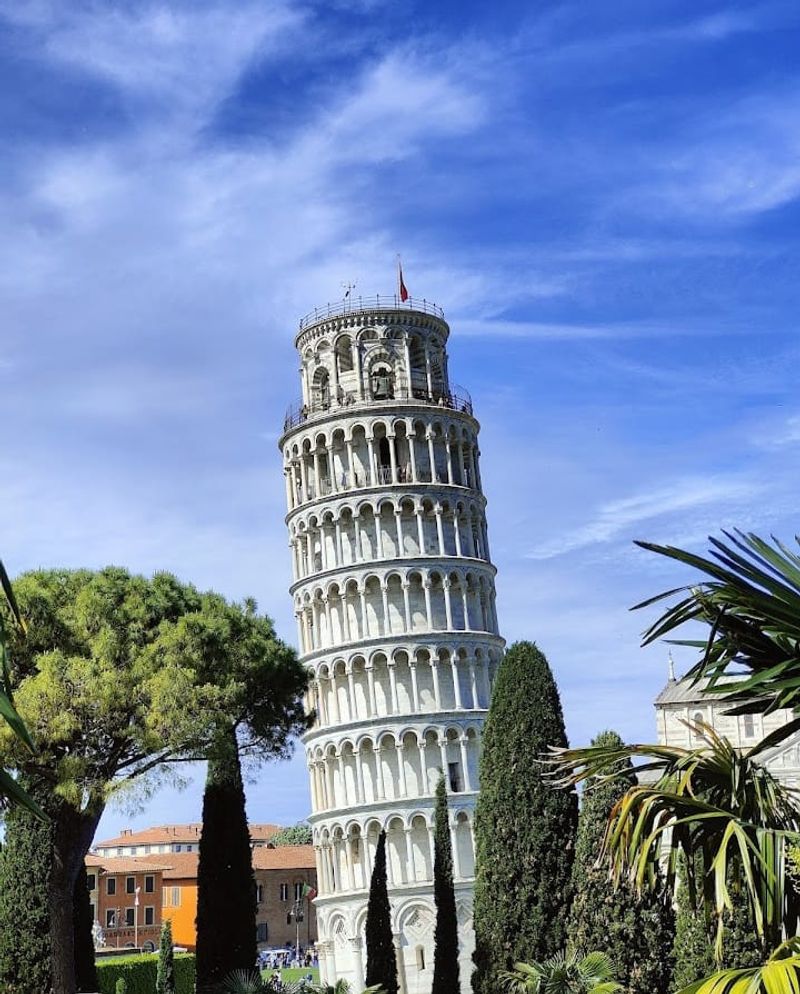
Here is the honest truth about the Leaning Tower of Pisa: it leans way more than photos suggest. Standing at the base and looking up at the tilt genuinely triggers a mild sense of alarm, which is both unsettling and entertaining at the same time.
Construction began in 1173 and the lean started almost immediately due to soft soil on one side. It took nearly 200 years to finish, partly because of wars and partly because nobody could figure out what to do about the tilt.
Engineers spent years in the 1990s stabilizing it so it would not fall over entirely.
The Piazza dei Miracoli surrounding the tower is stunning in its own right. The Cathedral and the Baptistery are both worth your time and are often overlooked because everyone is busy taking those classic push-the-tower photos.
Climbing the tower is allowed with a timed ticket, and the view from the top is genuinely dizzying in the best way.
St. Mark’s Basilica, Venice
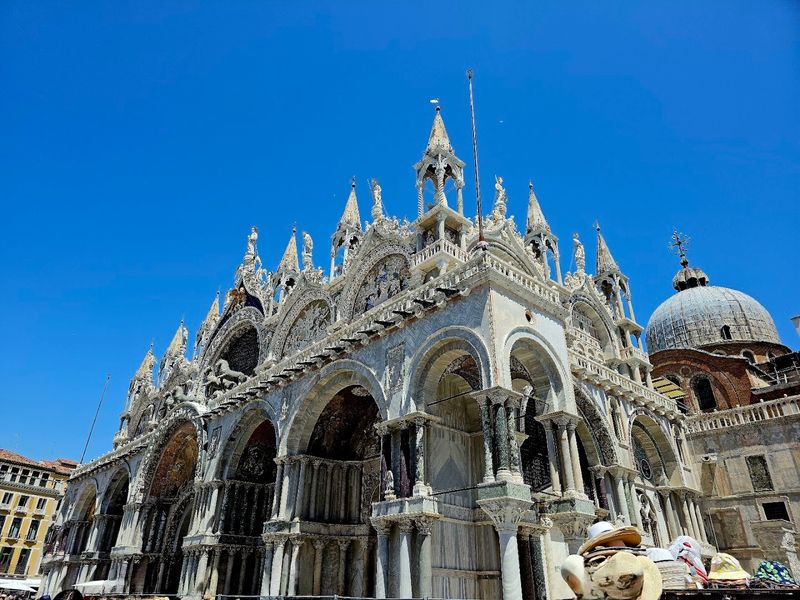
St. Mark’s Basilica is what happens when a city decides that subtlety is completely overrated. Every surface, inside and out, is covered in golden mosaics, marble inlays, and Byzantine ornamentation that makes the whole building look like it belongs in a different era entirely.
The basilica was built to house the remains of St. Mark the Evangelist, which were smuggled out of Alexandria in 828 AD, reportedly hidden under pork to deter Muslim customs officials. That backstory alone makes the place more interesting.
The four bronze horses above the entrance are replicas since the originals are kept inside to protect them from pollution.
Entry to the main basilica is free, but the museum, treasury, and Pala d’Oro altarpiece require separate tickets. Queues can be very long in peak season.
Book a timed entry slot in advance to skip the line. The interior is dimly lit and gloriously golden, so give your eyes time to adjust before pulling out the camera.
Doge’s Palace, Venice
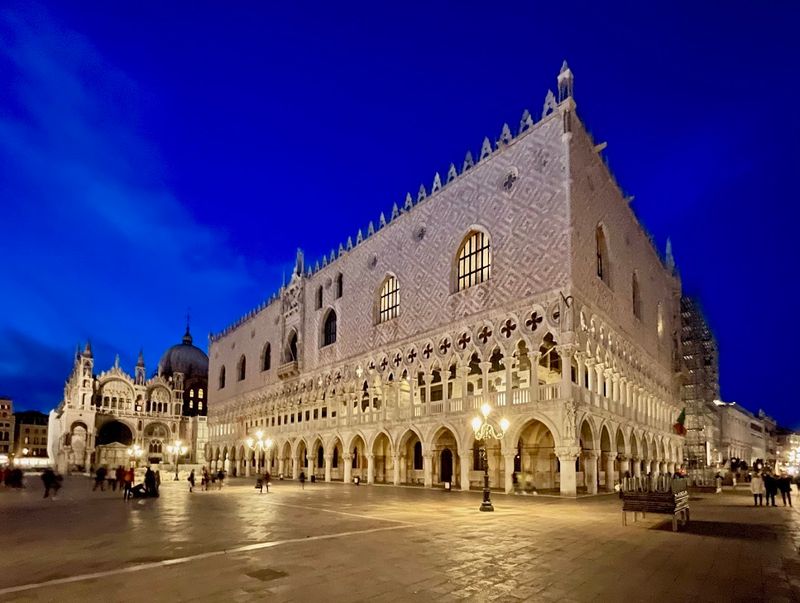
The Doge’s Palace has one of the most striking exteriors in Venice, which is already a city full of architectural overachievers. Its pink and white diamond-patterned marble facade and Gothic arches make it look almost impossibly elegant sitting right on the waterfront.
For over a thousand years, this was the seat of Venetian political power. The Doge, Venice’s elected ruler, lived and worked here while also running one of the most powerful maritime empires in European history.
The Grand Council Chamber inside is massive and covered in enormous paintings by Tintoretto and Veronese.
The Secret Itineraries tour takes you through hidden rooms, the Doge’s private apartments, and the notorious prison cells via the Bridge of Sighs. The bridge got its name from the sighs of prisoners who crossed it on their way to jail after catching their last glimpse of Venice through the stone lattice windows.
Book this tour separately since it sells out fast.
Rialto Bridge, Venice
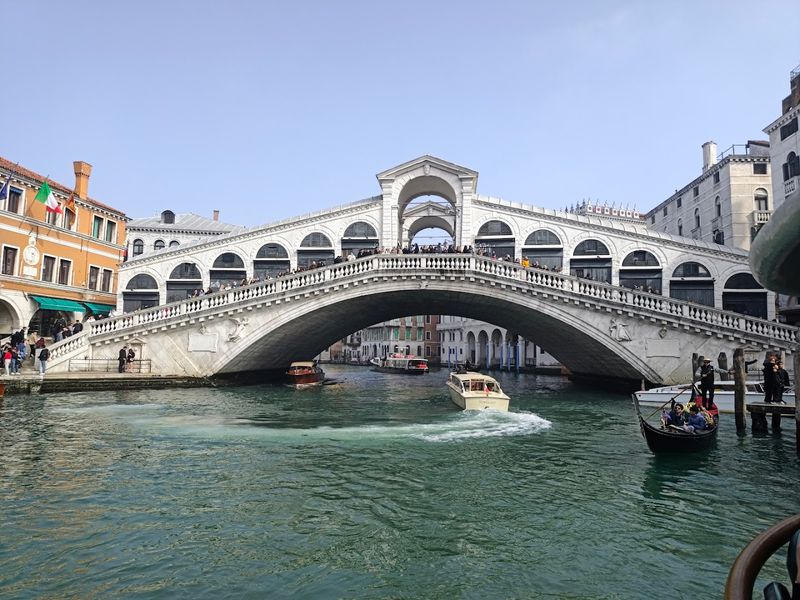
Four bridges cross the Grand Canal in Venice, but only one of them has its own dedicated crowd of photographers at all hours of the day. The Rialto Bridge is Venice’s most iconic crossing, and it absolutely earns that status.
Built between 1588 and 1591, it was the only bridge across the Grand Canal for centuries. The design by Antonio da Ponte beat out proposals from Michelangelo and Palladio, which is either a great story about underdogs or a very awkward historical footnote depending on how you look at it.
Small shops line the covered walkway across the top.
Early morning is the best time to visit if you want the bridge with minimal crowds. By mid-morning, it becomes a full contact sport of selfie sticks and tour groups.
The view from the bridge looking down the Grand Canal toward the Ca’ d’Oro palace is genuinely one of the best views in Venice. A water taxi ride under the bridge also gives a great perspective.
Uffizi Gallery, Florence
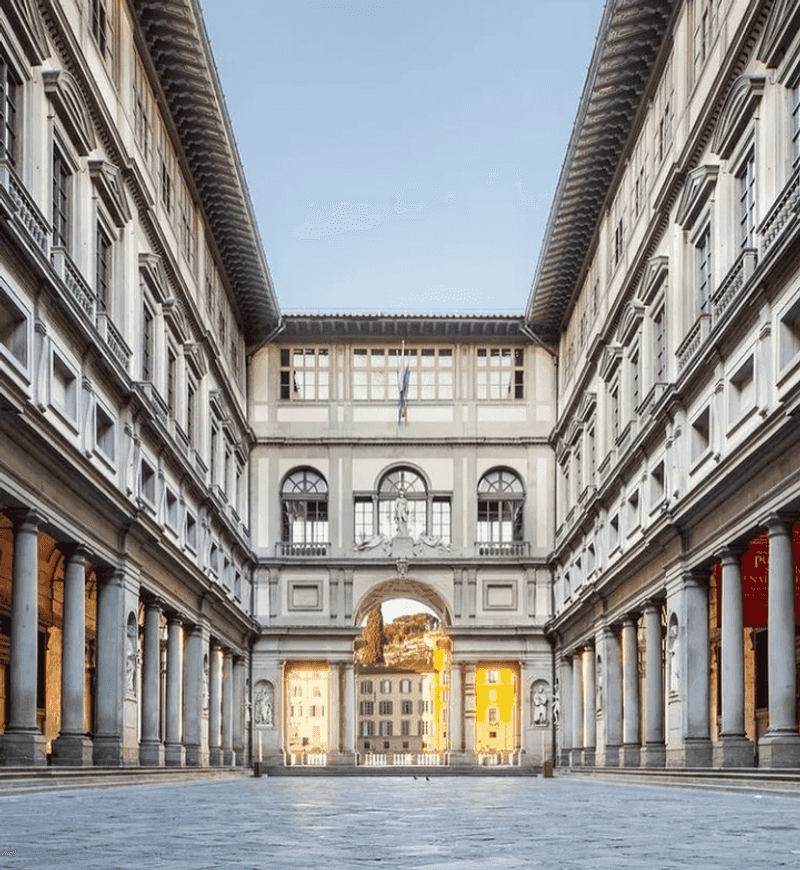
The Uffizi Gallery is the kind of museum where you turn a corner expecting one masterpiece and find three more hanging right behind it. Botticelli’s Birth of Venus and Primavera are here, but so is work by Leonardo, Caravaggio, Raphael, and Titian all within the same building.
The gallery was originally built in 1560 as offices for Florentine magistrates, which is why it is called the Uffizi, meaning offices. The Medici family later converted it into a private art collection that eventually became one of the world’s first public museums.
The building itself is a piece of Renaissance history.
Pre-booking tickets is essential, especially between April and October when queues without reservations can stretch for hours. The rooftop terrace cafe has views over Florence that pair well with an espresso and a moment of quiet reflection after three hours of Renaissance overload.
Allow at least three to four hours for a proper visit.
Arena di Verona, Verona
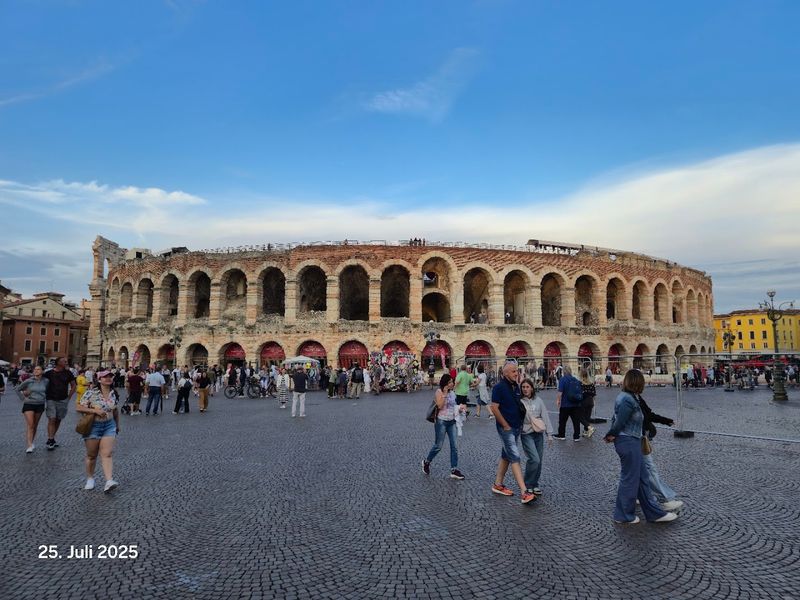
Most Roman amphitheaters are impressive ruins. The Arena di Verona is an impressive ruin that also hosts world-class opera performances, which puts it in a very exclusive club of ancient structures that are still actively earning their keep.
Built in the first century AD, it originally held up to 30,000 spectators for gladiatorial games. Today it seats around 15,000 for its famous summer opera festival, which has been running since 1913.
Seeing Aida or Nabucco performed here under the open sky is one of those experiences that sticks with you for years.
During the day, you can tour the interior and walk down into the arena floor, which gives a solid sense of the structure’s scale. Tickets for opera performances sell months in advance, so plan ahead if that is your goal.
Verona itself is a beautiful city with plenty to explore beyond the arena, including the famous Juliet’s House, which is charming even if the Romeo connection is entirely fictional.
Cinque Terre, Liguria
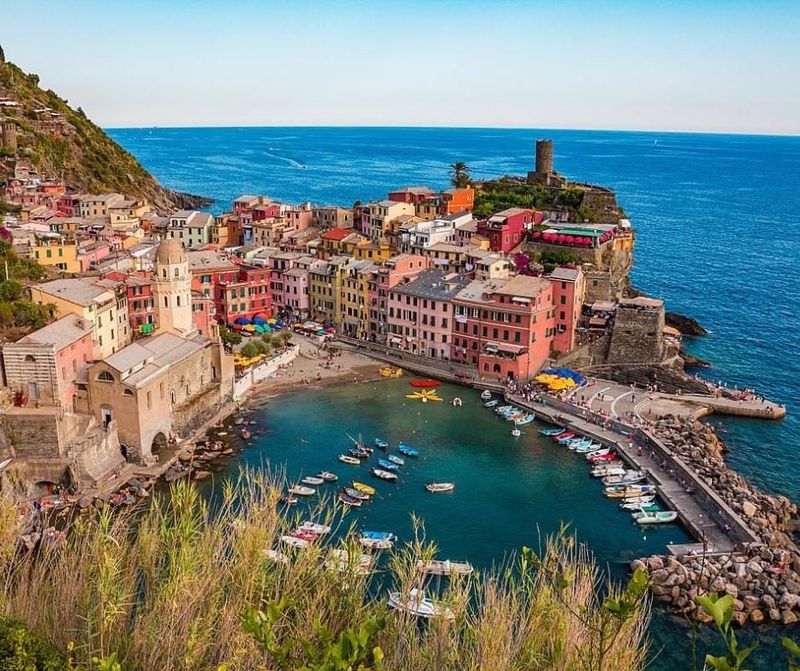
Cinque Terre is five villages clinging to cliffs above the Ligurian Sea, and yes, it really does look exactly like the photos. The difference is that photos cannot capture the specific chaos of narrow alleyways, steep staircases, and the sound of waves crashing below painted houses.
The five villages are Monterosso al Mare, Vernazza, Corniglia, Manarola, and Riomaggiore, each with its own personality. Vernazza is widely considered the most beautiful.
Corniglia is the only one not directly on the water, perched on a hilltop that requires climbing 382 steps from the train station below.
The Cinque Terre Card covers train travel between villages and access to the coastal hiking paths, which is the best way to experience the area. The Sentiero Azzurro trail connecting the villages is occasionally closed due to landslides, so check conditions before planning your route.
Visit in May or early June for fewer crowds and wildflowers along the paths.
Valley of the Temples, Agrigento
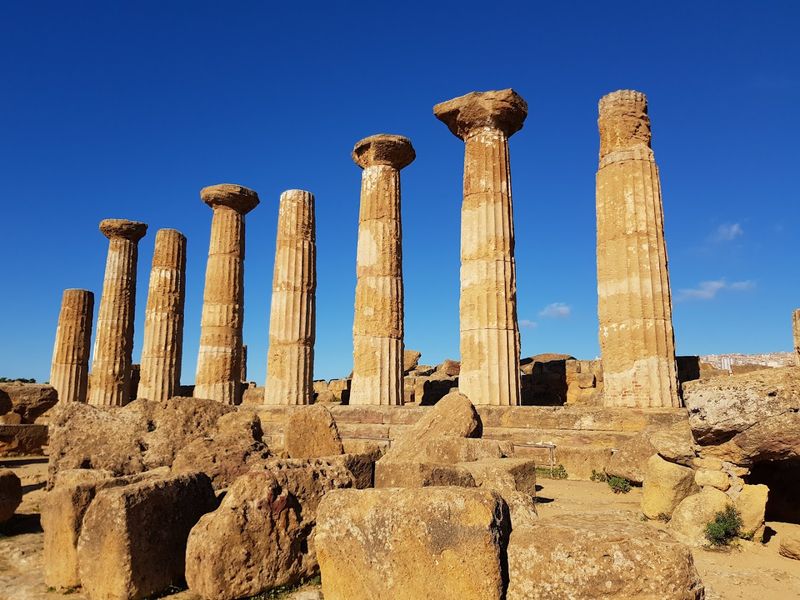
Sicily does not always top Italy travel lists, but anyone who has stood among the Greek temples at Agrigento understands why it absolutely should. The Valley of the Temples is one of the finest collections of ancient Greek architecture outside of Greece itself, and the setting is remarkable.
The Temple of Concordia, built around 440 BC, is one of the best-preserved Greek temples in the world. It survived largely because it was converted into a Christian church in the 6th century, which is a slightly ironic twist of historical luck.
The almond trees scattered throughout the site bloom in February, making early spring visits particularly striking.
The park covers a large area, so comfortable footwear is a must. Entrance fees are very reasonable by European standards.
Evening visits are possible in summer when the temples are lit up dramatically against the dark sky. Allow at least three hours to properly explore the site without feeling rushed between the major temple structures.
Paestum Archaeological Park, Campania
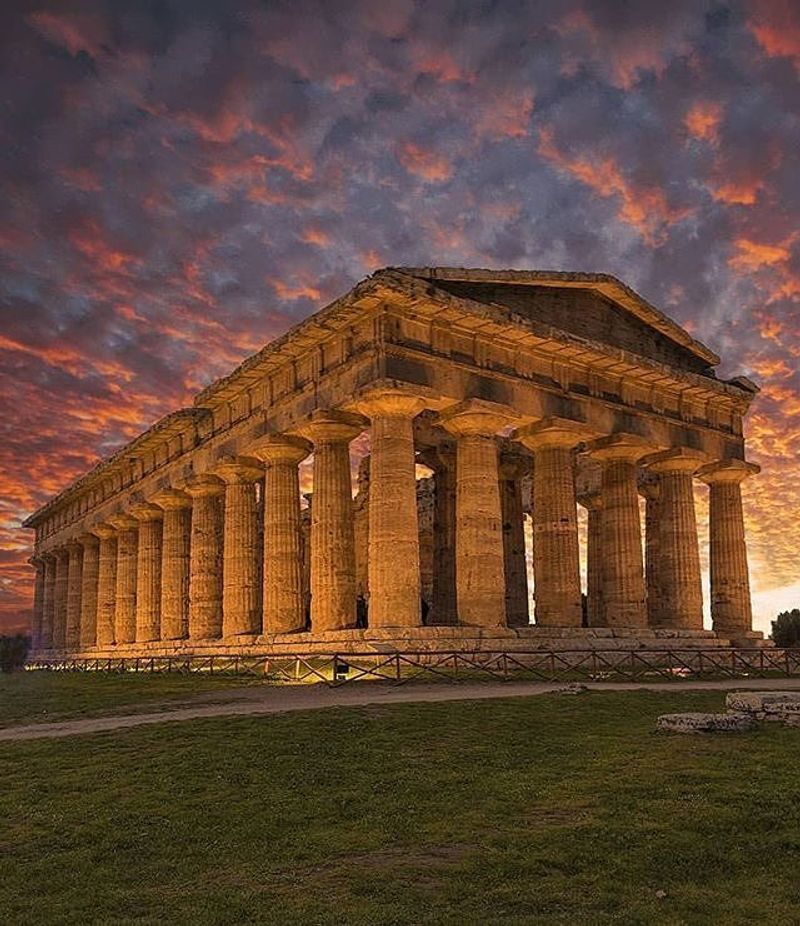
Paestum is the archaeological site that travelers who have already done Pompeii tend to discover, and then immediately wonder why nobody told them about it sooner. Three ancient Greek temples standing in an open field with almost no crowds is a genuinely rare experience in Italy.
Founded by Greek colonists around 600 BC, Paestum predates the Roman period entirely. The Temple of Neptune, despite its name, was likely dedicated to Hera and dates to around 450 BC.
Its columns are so well preserved that it looks almost newly built, which is both impressive and slightly uncanny.
The on-site museum is excellent and often overlooked by visitors who spend all their time outside. It houses the famous Tomb of the Diver, a unique example of ancient Greek figurative painting from around 480 BC.
Paestum is easily reachable by train from Salerno or Naples. Go on a weekday to have the temples almost entirely to yourself, which feels like a genuine privilege.
Share this story