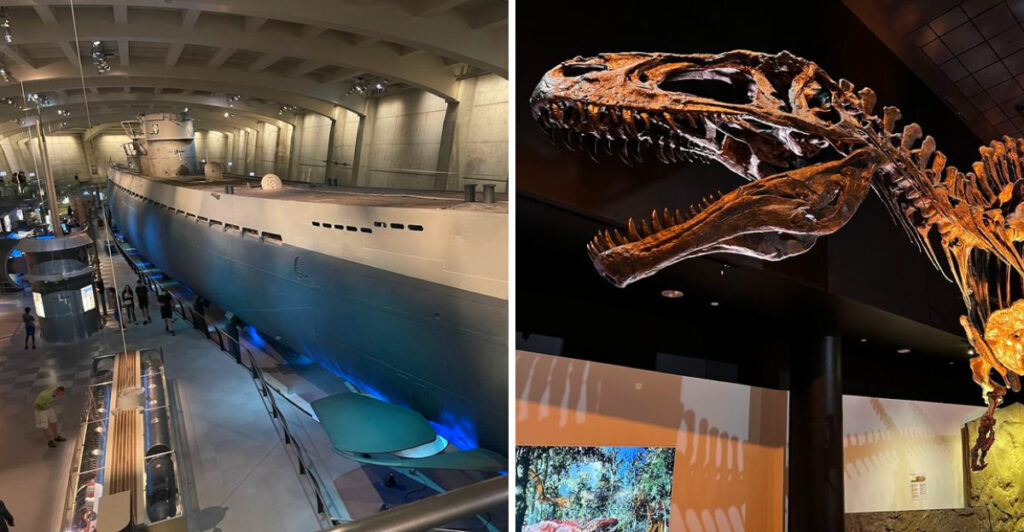
America is packed with incredible museums that bring history, art, science, and culture to life in ways that textbooks simply cannot match. From New York City to New Orleans, these institutions hold some of the most fascinating collections on the planet.
Whether you love dinosaurs, fine art, space exploration, or world history, there is a museum out there with your name on it. Here are 15 top museums in the U.S. that deserve a spot on your must-visit list.
The Metropolitan Museum of Art – New York City
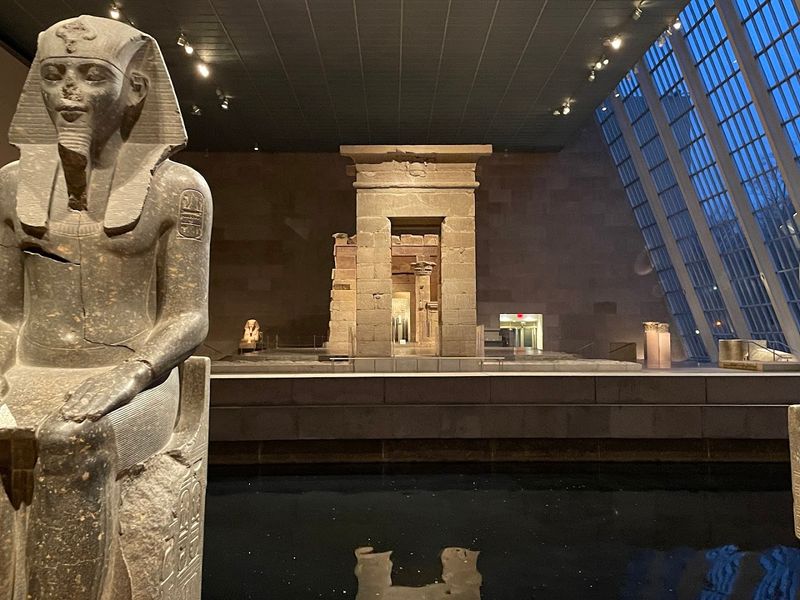
Stepping through the doors of The Met feels a little like time travel. One moment you are standing in front of a 3,000-year-old Egyptian temple, and the next you are face-to-face with a Van Gogh masterpiece.
With over two million works spanning 5,000 years of human creativity, this place is genuinely overwhelming in the best possible way.
Located along Fifth Avenue next to Central Park, The Met is the largest art museum in the United States. Its galleries cover ancient civilizations, European paintings, Asian art, medieval armor, and so much more.
Plan to spend at least half a day here because one visit will never feel like enough.
Admission is pay-what-you-wish for New York State residents, while out-of-state visitors pay a set fee. The rooftop garden offers stunning views of Central Park and is open seasonally.
Grab a map at the entrance and pick your favorite sections first, then wander freely. The Met is not just a museum; it is a full-blown cultural adventure that rewards every curious visitor who walks through its iconic doors.
Smithsonian National Museum of Natural History – Washington, D.C.
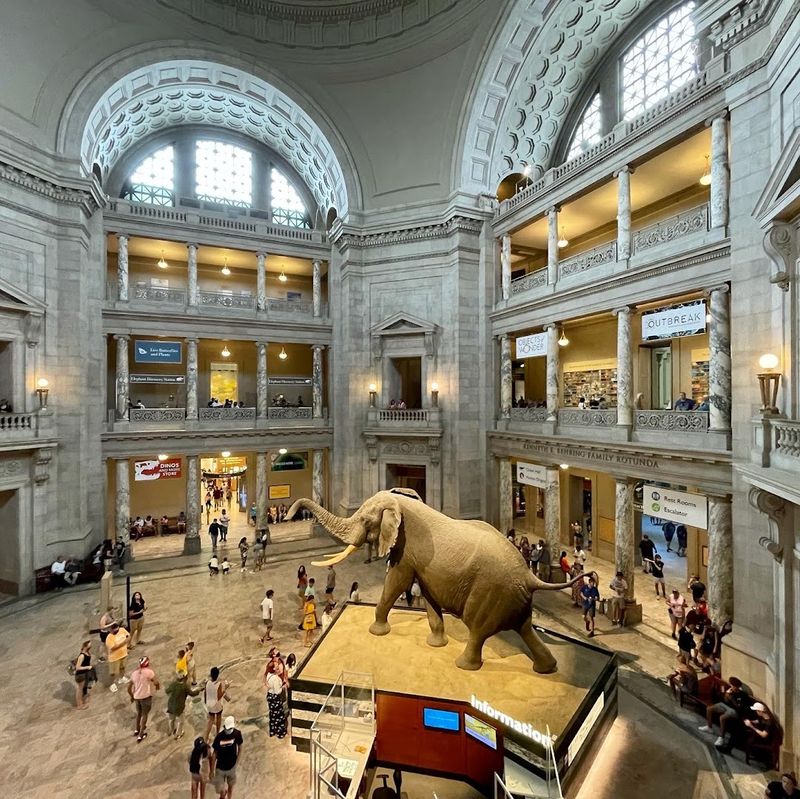
Right in the heart of Washington, D.C., sits one of the most jaw-dropping free museums on Earth. The Smithsonian National Museum of Natural History welcomes around eight million visitors every year, and once you see what is inside, that number makes total sense.
The building alone is impressive, but what is waiting inside is even better.
The Hope Diamond, one of the world’s most famous gemstones, is displayed here and draws massive crowds daily. Beyond that sparkling blue beauty, the museum features towering dinosaur skeletons, a live butterfly pavilion, and fascinating exhibits on human origins.
Kids especially love the fossil hall, where ancient creatures seem ready to roam again.
Since admission is completely free, this museum is one of the smartest stops on any D.C. trip. It sits right on the National Mall, making it easy to combine with other Smithsonian visits nearby.
Wear comfortable shoes because the building is enormous and you will be walking a lot. Whether you are seven or seventy, the National Museum of Natural History has something that will make your eyes go wide and your curiosity run wild.
National Air and Space Museum – Washington, D.C.

Humans have always looked up at the sky and wondered what was out there. The National Air and Space Museum is the place where that wonder turns into real history you can see, touch, and feel.
This Smithsonian gem holds the world’s largest collection of aviation and space artifacts, and it pulls in more visitors than almost any other museum in the country.
Walk beneath the Wright Brothers’ original Flyer, stand next to the Apollo 11 command module, and reach out to touch an actual moon rock. The exhibits trace the full story of human flight, from the earliest gliders to modern space exploration.
Interactive simulators and IMAX films add an extra layer of excitement that keeps visitors of all ages engaged for hours.
Like most Smithsonian museums, admission is free, which makes it an unbeatable value. A second location in Chantilly, Virginia, called the Steven F.
Udvar-Hazy Center, houses even more aircraft including the Space Shuttle Discovery. If you have any interest in aviation, science, or the history of space exploration, this museum will absolutely deliver.
Few places on Earth let you get this close to the machines that changed the world forever.
American Museum of Natural History – New York City
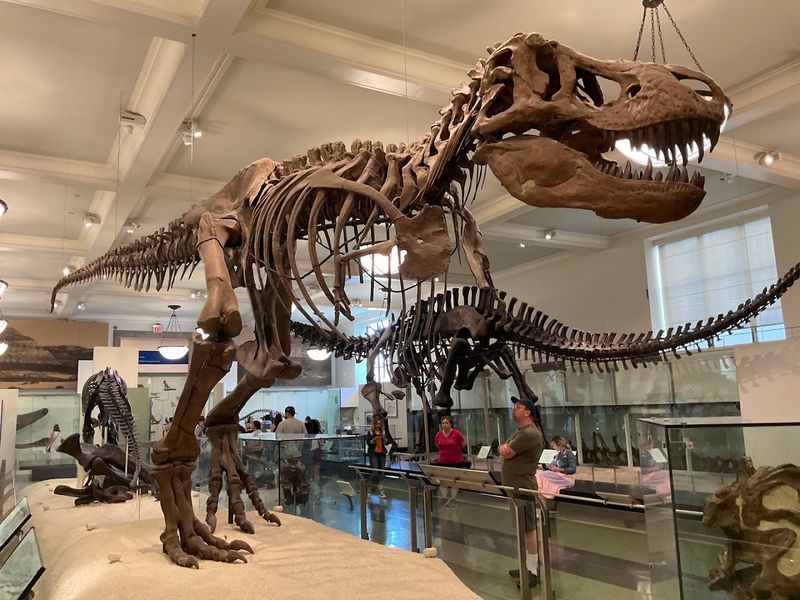
You might recognize this building from the movie Night at the Museum, and yes, it really is that spectacular in person. The American Museum of Natural History in New York City has been capturing imaginations since 1869, and it has not slowed down one bit.
With 45 permanent exhibition halls, it is one of the largest natural history museums in the entire world.
The dinosaur halls on the fourth floor are legendary. Massive fossil skeletons loom overhead while you walk through ancient ecosystems that vanished millions of years ago.
The Hayden Planetarium, housed inside the Rose Center for Earth and Space, offers mind-bending space shows that make you feel tiny in the most wonderful way possible.
Located on the Upper West Side near Central Park, the museum is a short walk from Central Park West and easy to reach by subway. Admission is priced by suggested donation for New York residents, while general admission applies to out-of-state visitors.
Budget at least three to four hours to cover the highlights. The sheer scale of the collections here, from ancient cultures to ocean life to cosmic phenomena, makes every visit feel like a brand new adventure.
National Gallery of Art – Washington, D.C.

Not many places in the world let you stand inches away from a Leonardo da Vinci painting without paying a single dollar, but the National Gallery of Art in Washington, D.C. is one of them. Free admission and a world-class collection make this one of the most generous cultural gifts any government has ever offered its people.
Seriously, it is hard to overstate how good this museum is.
The West Building houses European masterpieces from the 13th through the 19th centuries, including works by Vermeer, Rembrandt, and Monet. The East Building focuses on modern and contemporary art, featuring bold installations and abstract works that challenge and delight in equal measure.
A moving walkway connects the two buildings underground, which is a surprisingly fun touch.
The National Gallery sits right on the National Mall, making it easy to combine with visits to the nearby Smithsonian museums. The sculpture garden outside is a lovely spot to relax between gallery sessions, especially in warmer months.
Art lovers will want to carve out a solid three hours at minimum. Whether you are a first-time visitor or a seasoned art enthusiast, the collection here consistently delivers moments that stop you in your tracks.
Museum of Modern Art (MoMA) – New York City

Somewhere in MoMA, there is a Campbell’s Soup Can painting staring back at visitors who cannot quite decide if it is genius or grocery store art. That delightful confusion is exactly what makes the Museum of Modern Art one of the most talked-about museums on the planet.
Since 1929, MoMA has been the home of bold, boundary-pushing creativity in New York City.
The permanent collection includes iconic works by Picasso, Frida Kahlo, Jackson Pollock, and Andy Warhol. Van Gogh’s Starry Night lives here too, and the line of people waiting to photograph it never seems to shrink.
Beyond the classics, MoMA regularly hosts cutting-edge contemporary exhibitions that keep the experience fresh and surprising no matter how many times you visit.
Located in Midtown Manhattan, MoMA is easy to reach and well worth the admission price. Friday evenings are free for New York City residents, which is a great way to experience the museum without the weekend crowds.
The in-house restaurant and design store are both worth a stop before you leave. MoMA challenges you to think differently about art, creativity, and what it means to make something that truly matters in the modern world.
The Art Institute of Chicago – Chicago
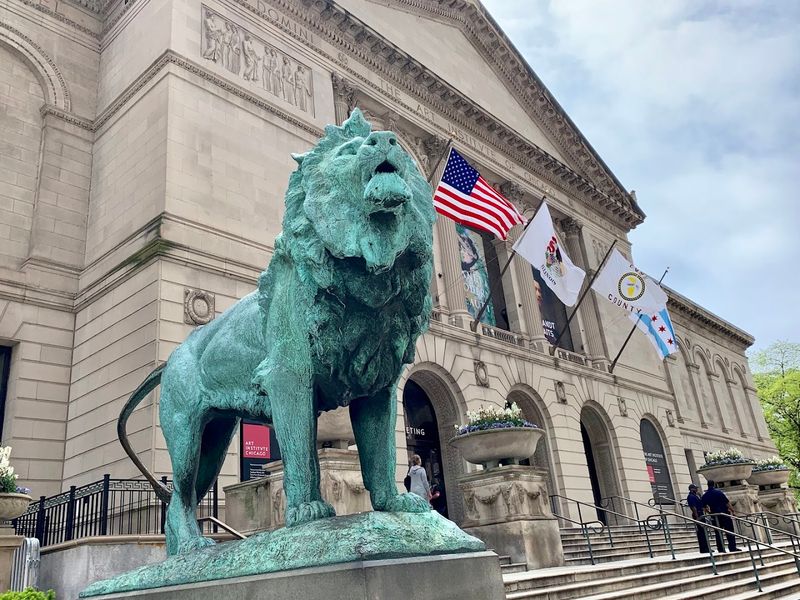
Two bronze lions guard the entrance to the Art Institute of Chicago, and they have been doing so since 1894. Locals love dressing them up in sports gear during championship seasons, but inside the museum, the real stars are the paintings.
This is one of the oldest and most respected art museums in the entire country, and it absolutely earns that reputation.
Georges Seurat’s A Sunday on La Grande Jatte and Edward Hopper’s Nighthawks are just two of the showstopping works waiting inside. The Impressionist and post-Impressionist collection is considered one of the finest outside of Europe, drawing art historians and casual visitors alike.
The Thorne Miniature Rooms, a collection of tiny historically accurate interiors, are a quirky highlight that surprises almost everyone who finds them.
Located on Michigan Avenue in the heart of downtown Chicago, the Art Institute is easy to reach from most parts of the city. Admission pricing varies, with discounts available for students, children, and Illinois residents.
Plan to spend at least two to three hours, though serious art lovers could easily fill an entire day here. The combination of iconic works, thoughtful curation, and stunning architecture makes every visit genuinely memorable.
The Getty Center – Los Angeles

Perched high on a hilltop in the Santa Monica Mountains, the Getty Center greets visitors with sweeping views of Los Angeles before they even step inside a single gallery. The architecture alone, designed by Richard Meier and completed in 1997, is worth the trip.
White travertine buildings, terraced gardens, and open-air plazas create an atmosphere unlike any other art museum in the world.
Inside, the collection focuses on European paintings, drawings, sculpture, and decorative arts from the Middle Ages through the 19th century. Photography from the 19th century onward is also a major strength of the Getty’s holdings.
Highlights include works by Rembrandt, Monet, and Van Gogh, displayed in naturally lit galleries that make the colors pop in a remarkable way.
Admission to the Getty Center is completely free, though parking costs a fee. A tram ride up the hill from the parking structure adds a fun arrival experience.
The Central Garden, designed by artist Robert Irwin, is a living work of art that changes with the seasons. Visiting on a clear day rewards you with panoramic views stretching all the way to the Pacific Ocean.
Few museums in the U.S. blend art, architecture, and landscape this beautifully.
National WWII Museum – New Orleans
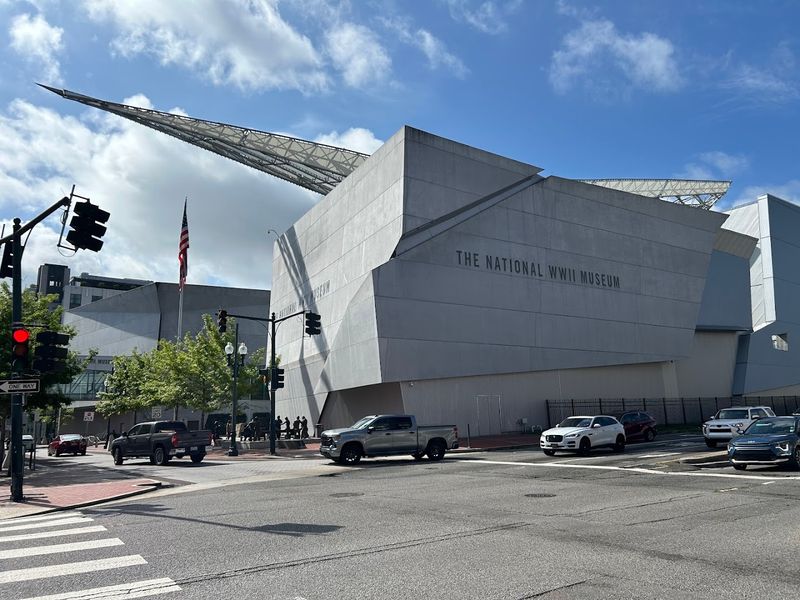
Walking through the National WWII Museum in New Orleans feels less like visiting a museum and more like being pulled directly into history. The exhibits are immersive, emotional, and deeply respectful of the millions of people whose lives were shaped by the war.
Opened in 2000, this institution has grown into one of the most visited museums in the entire United States.
Personal stories are at the heart of everything here. Oral history recordings, authentic artifacts, and dramatic multimedia presentations put a human face on a conflict that changed the entire world.
The four-dimensional film Beyond All Boundaries, narrated by Tom Hanks, is an absolute must-watch and is included with admission.
The museum covers both the European and Pacific theaters of the war in impressive detail. Interactive exhibits let visitors experience the decisions soldiers and commanders faced in real time, adding a level of engagement rarely found in history museums.
The campus continues to expand, with new pavilions and exhibits added in recent years. Located in the Warehouse District of New Orleans, it is easy to combine with a visit to the city’s famous food and music scene.
This museum does not just inform; it genuinely moves you.
National Museum of African American History and Culture – Washington, D.C.
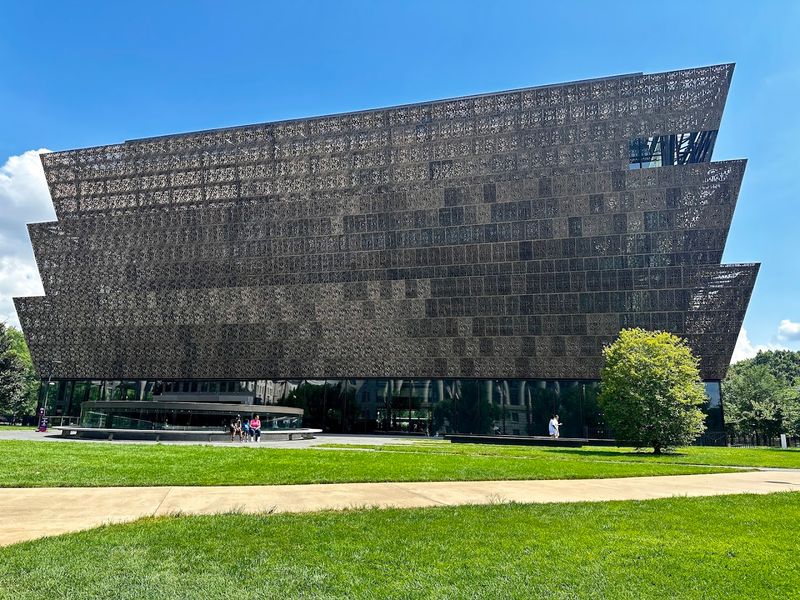
The building itself tells a story before you even walk through the doors. The National Museum of African American History and Culture features a striking bronze latticed exterior inspired by traditional West African ironwork, and it stands as a powerful symbol of resilience and creativity.
Opened in 2016 on the National Mall, it quickly became one of the most significant cultural institutions in the country.
The collection spans more than 36,000 objects, covering everything from the era of slavery to the Civil Rights Movement to contemporary African American contributions in music, sports, and politics. The lower levels, which explore the history of slavery and segregation, are sobering and deeply important.
Upper floors celebrate art, culture, achievement, and joy in equal measure.
Timed entry passes are required and are free of charge, though they can be hard to snag during peak seasons so book well in advance. The Sweet Home Cafe inside the museum serves food inspired by African American culinary traditions, and it is genuinely delicious.
Plan to spend at least three to four hours here, though many visitors find themselves staying longer. This museum is one of those rare places that changes how you see history, culture, and what it means to be American.
California Science Center – Los Angeles

Few museum moments in America can match the sheer awe of standing next to the Space Shuttle Endeavour and realizing just how enormous this machine actually is. The California Science Center in Los Angeles is home to one of only four surviving space shuttles in the entire world, and it is easily the star attraction of this already impressive institution.
Admission to the main exhibits is free, which makes it even harder to pass up.
Beyond the shuttle, the museum offers hands-on exhibits exploring ecosystems, the human body, air and space science, and world geography. The Ecosystems exhibit uses live animals, real plants, and interactive displays to show how different environments around the world function and connect.
It is the kind of place where kids run from one exhibit to the next while parents quietly learn just as much.
Located in Exposition Park near USC, the Science Center is easy to reach by public transit or car. The IMAX theater on-site screens science and nature films that pair well with the exhibits.
A separate ticketed experience allows visitors to see the shuttle preparation for its permanent vertical display, which will recreate a launch configuration. Science has never looked this thrilling, and the California Science Center proves it every single day.
Museum of Fine Arts – Boston
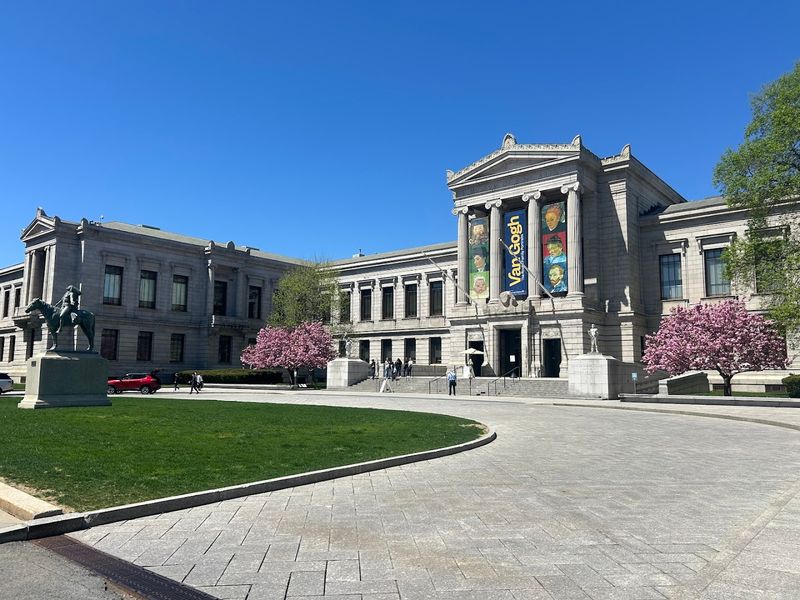
Boston has a well-earned reputation for doing things with a certain level of seriousness and excellence, and the Museum of Fine Arts fits that reputation perfectly. With nearly 500,000 works of art in its collection, the MFA Boston is one of the most comprehensive art museums in the entire Western Hemisphere.
It has been a cultural anchor for the city since 1870.
The Egyptian collection is among the finest in the world outside of Cairo, featuring mummies, coffins, and ancient artifacts collected during major archaeological expeditions in the early 20th century. American art is another major strength, with an outstanding collection of colonial portraits, landscape paintings, and decorative arts that trace the country’s visual history beautifully.
The museum also holds impressive holdings in Asian art, European paintings, and contemporary works, giving every visitor plenty of directions to explore. Special exhibitions rotate throughout the year, so repeat visits always offer something fresh.
Admission is priced for adults and discounted for students and children, with free admission for Boston residents on certain days. The on-site restaurant and cafe make it easy to recharge mid-visit.
The MFA Boston rewards slow, attentive visitors who are willing to wander beyond the highlights and discover unexpected treasures around every corner.
Houston Museum of Natural Science – Houston
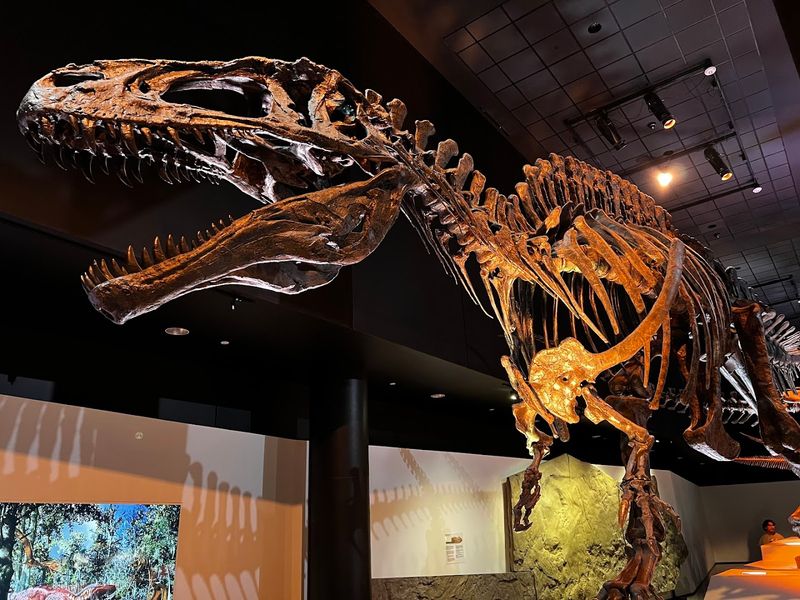
Houston is not exactly the first city that comes to mind when people think of natural history museums, but the Houston Museum of Natural Science might just change that assumption permanently. It is consistently ranked among the top ten most visited museums in the entire country, drawing over two million visitors annually to its impressive campus in Hermann Park.
That is a lot of people, and they keep coming back for good reason.
The Morian Hall of Paleontology is a showstopper, featuring over 60 mounted specimens including some of the most complete dinosaur skeletons ever discovered. The Wiess Energy Hall explores the science and history of the oil and gas industry in a surprisingly engaging way.
A separate gem and mineral hall dazzles visitors with crystals and stones that look like they belong on another planet.
The Burke Baker Planetarium and the Cockrell Butterfly Center, which houses a three-story glass conservatory filled with live tropical butterflies, are both ticketed add-ons worth every penny. The museum is located near the Houston Zoo and the Museum of Fine Arts Houston, making it easy to plan a full day of exploration in the neighborhood.
Science here is presented with energy, color, and a genuine enthusiasm that is hard to resist.
Museum of Science and Industry – Chicago

A real German U-boat submarine sits inside this museum, and that sentence alone should be enough to get you through the front door. The Museum of Science and Industry in Chicago is one of the largest science museums in the Western Hemisphere, and it has been sparking curiosity and wonder since 1933.
The building itself, a stunning piece of neoclassical architecture, was originally constructed for the 1893 World’s Columbian Exposition.
The U-505 submarine, captured during World War II, is the centerpiece of one of the most dramatic museum experiences in the country. Visitors can tour the inside of the vessel and learn about the daring mission that secured it.
The Coal Mine exhibit takes guests on a simulated underground mining journey that has been thrilling visitors for decades.
Science Storm features a five-story tornado and a massive lightning demonstration that draws gasps from crowds of all ages. The Christmas Around the World exhibit, held each holiday season, transforms the main hall into a breathtaking display of trees decorated in styles from dozens of countries.
Located in Hyde Park on Chicago’s South Side, the museum is a short drive or train ride from downtown. Few places manage to make science feel this exciting, surprising, and genuinely fun for everyone involved.
National Museum of American History – Washington, D.C.

The original Star-Spangled Banner, the actual flag that inspired Francis Scott Key to write the national anthem, is displayed inside this museum, and seeing it in person is a genuinely goosebump-inducing experience. The National Museum of American History is the Smithsonian’s tribute to the full, complicated, and endlessly fascinating story of the United States.
It sits on the National Mall and is, like most Smithsonian institutions, completely free to visit.
The collections here range from pop culture icons to presidential artifacts to industrial machinery. Julia Child’s actual kitchen was dismantled and reconstructed inside the museum, complete with her original pots, pans, and the iconic pegboard.
Archie Bunker’s chair from All in the Family, Muhammad Ali’s boxing gloves, and Dorothy’s ruby slippers from The Wizard of Oz all call this place home.
History here does not feel dry or distant. The curators do an excellent job of weaving together stories from everyday Americans alongside major historical events, creating a portrait of a nation that is always evolving.
The museum recently updated several of its major galleries with fresh exhibits and modern design. Plan at least two to three hours for a solid visit.
This is the kind of museum that sends you home wanting to learn even more about the country you live in.
Share this story