There is a small town on the Oregon coast where the beach stretches for miles, the streets stay quiet even on weekends, and the air smells like salt and pine trees. Most people drive right past it on Highway 101 without stopping, and the folks who live there are perfectly fine with that.
This place has the kind of laid-back, unhurried energy that bigger coastal towns lost decades ago. Tucked between towering Neahkahnie Mountain and the Pacific Ocean, it draws in a certain type of traveler, the kind who prefers a long walk on the sand over a crowded boardwalk.
Once you find it, you will understand immediately why locals guard it like a well-kept secret.
Where Exactly This Hidden Stretch of Coast Lives
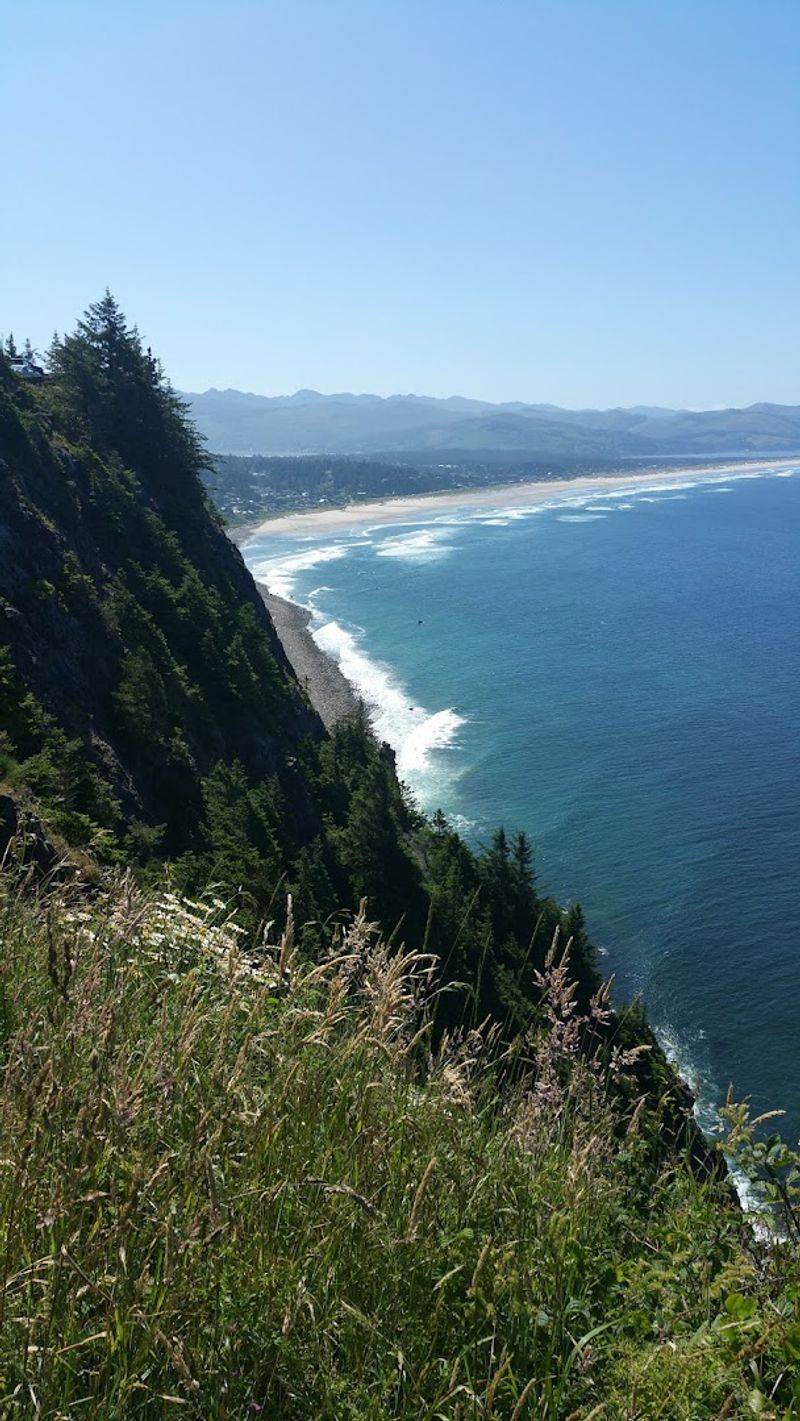
Manzanita sits quietly in Tillamook County, Oregon, right along U.S. Route 101, roughly 25 miles north of Tillamook and about 25 miles south of Seaside.
The official address for the city government is through Manzanita, OR 97130, and the town itself is easy to miss if you blink at the wrong moment on the highway.
The population hovered around 603 people at the 2020 census, which tells you everything about the pace of life here. For a comparison, some neighborhoods in Oklahoma City have more residents on a single block than this entire town does.
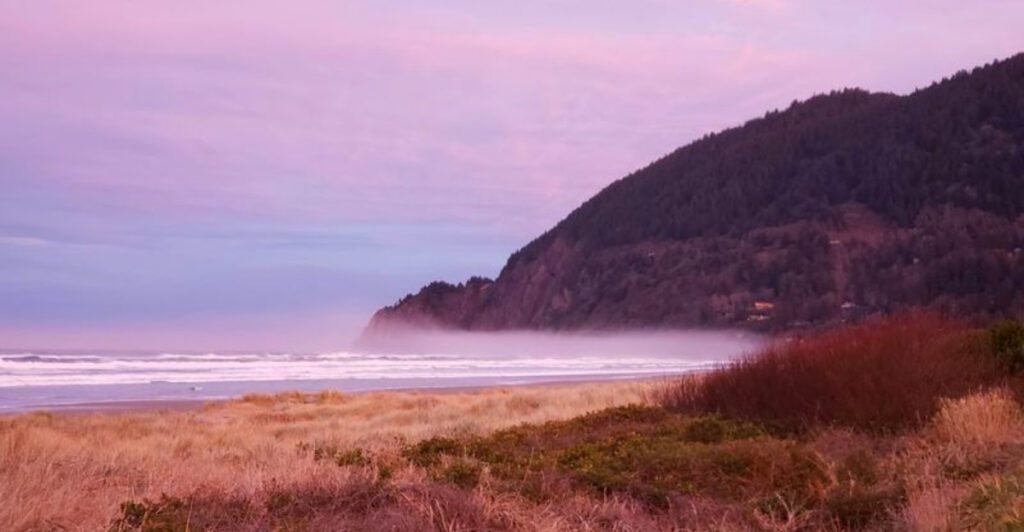
What makes the location special is the geography surrounding it. Neahkahnie Mountain rises sharply to the north, acting like a natural wall that shields the town from heavy wind and keeps the atmosphere surprisingly sheltered for a Pacific coast community.
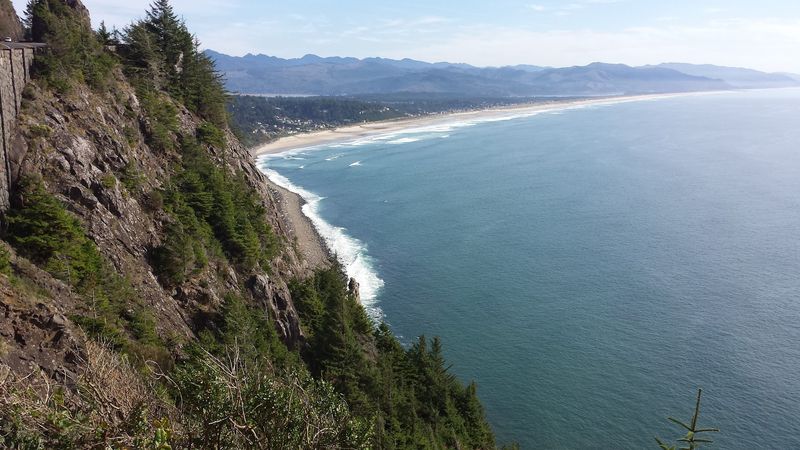
The beach itself runs for about seven miles of uninterrupted sand, wide and flat, with barely a soul on it most mornings. That combination of mountain backdrop, ocean frontage, and near-total anonymity on the map is exactly what makes Manzanita the kind of place travelers stumble onto and then quietly refuse to tell their friends about.
The Seven-Mile Beach That Barely Anyone Knows About
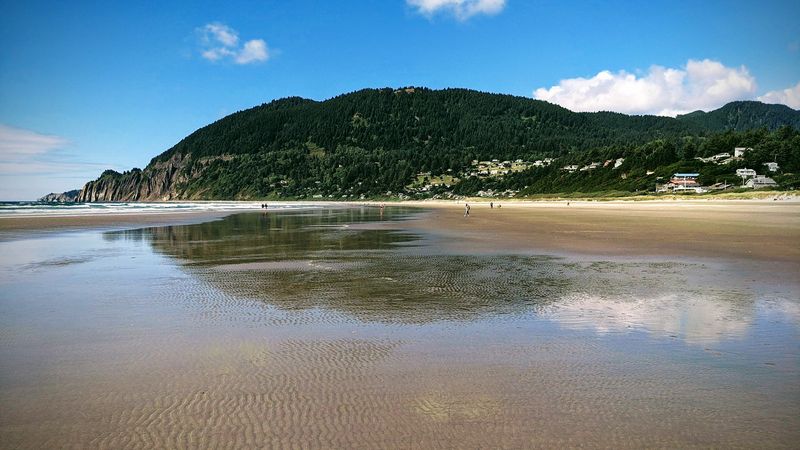
Seven miles of sand, and on a Tuesday morning in late spring, you might count fewer than a dozen people on the whole stretch. That is not an exaggeration.
The beach at Manzanita runs from the base of Neahkahnie Mountain all the way south toward the Nehalem Bay area, and it is consistently one of the least crowded long beaches on the entire Oregon coast.
The sand itself is fine and dark gold, packed firm near the waterline so walking it does not feel like a workout. Surfers show up regularly because the waves here have a reliable shape, and the water temperature keeps things honest, meaning you will not see casual swimmers, just the dedicated ones in wetsuits.
Low tide reveals tide pools tucked near the rocky outcroppings at the northern end, filled with sea stars, anemones, and small crabs that seem completely unbothered by visitors. Locals from towns much larger than Manzanita, including some who have made the drive from as far as Oklahoma, have called this stretch one of the most peaceful beaches they have ever stood on.
That kind of quiet is genuinely rare on any coastline, and here it comes standard with every visit.
Neahkahnie Mountain and the Trails Above the Town
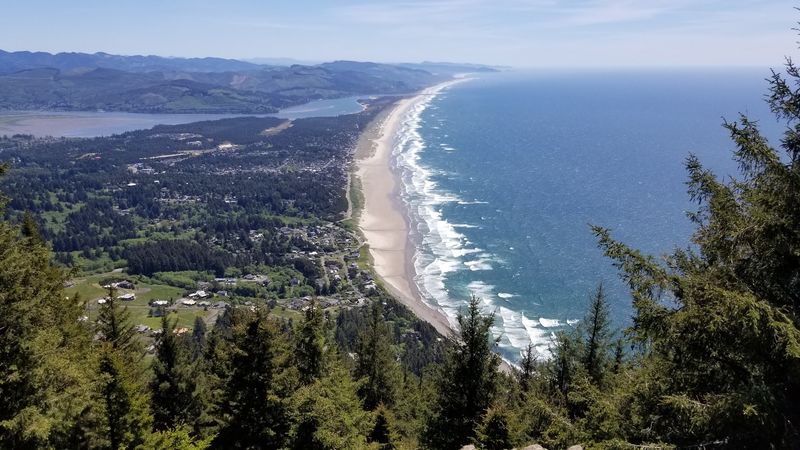
Right at the northern edge of town, Neahkahnie Mountain rises to about 1,631 feet, and the trail to its summit is one of the most rewarding short hikes on the Oregon coast. The path winds through dense Sitka spruce and old-growth forest before breaking out onto an open ridge with views that stretch from Tillamook Head all the way down the coastline.
The hike itself takes most people between two and three hours round trip, depending on pace. It is steep in sections, but nothing that requires technical gear, just decent shoes and the willingness to breathe hard for a bit.
From the top, you can look straight down at Manzanita and watch the waves hitting that long, quiet beach from a completely different perspective. On clear days, the horizon line looks sharp and endless, and the town below appears so small that it barely registers as a place at all.
The mountain also carries a legend about buried Spanish treasure somewhere on its slopes, a story that has circulated for generations and adds a layer of mystery to every walk through the trees. Whether or not the treasure exists, the view from the summit is reward enough for the climb.
What the Downtown Actually Looks Like
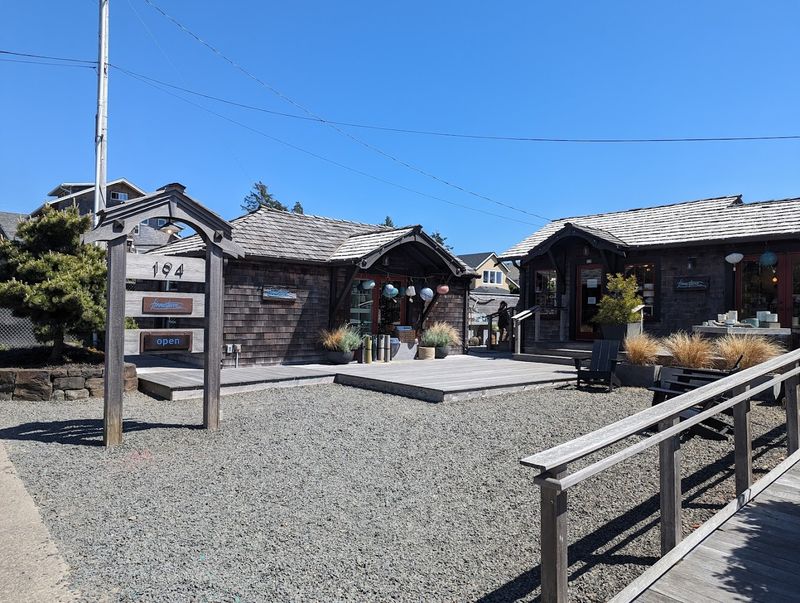
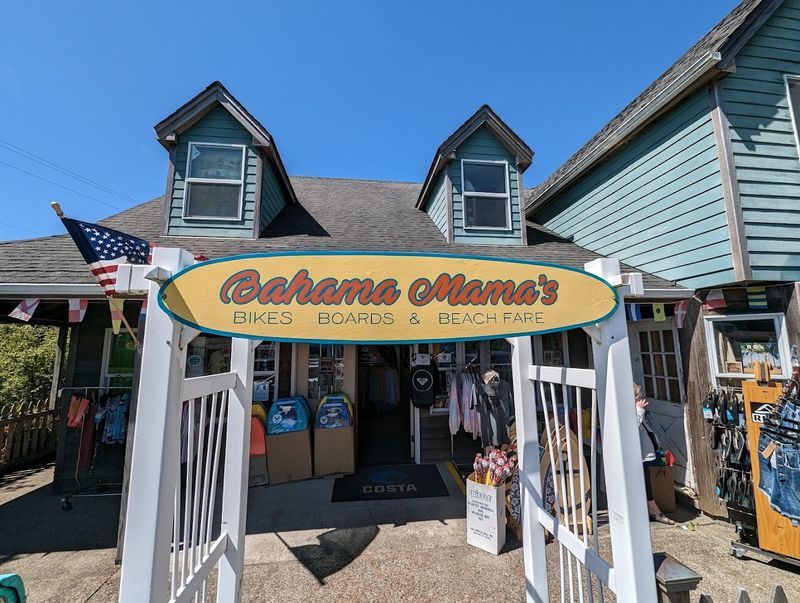
The downtown area of Manzanita is genuinely tiny, and that is part of its appeal. A handful of blocks hold a collection of independent shops, small galleries, a bookstore, a coffee spot, and a few places to eat.
There are no chain restaurants here, no big box stores, and no neon signs competing for attention.
Laneda Avenue is the main commercial street, and it runs just a few blocks before ending near the beach access. On a summer afternoon it has foot traffic, but the kind where you can still hold a conversation without raising your voice.
The local art scene punches above its weight for a town this size. Galleries display work from Pacific Northwest artists, and the quality is consistently high.
Several artists have relocated to Manzanita specifically because of the light and the landscape, which is the kind of thing you hear in bigger creative communities but rarely in a town of 600 people.
Visitors who have come from places like Oklahoma, expecting a coastal tourist trap, are often surprised by how functional and authentic the small commercial district feels. Everything here seems to exist because someone genuinely wanted it to, not because a developer decided it would sell.
The Nehalem Bay State Park Connection
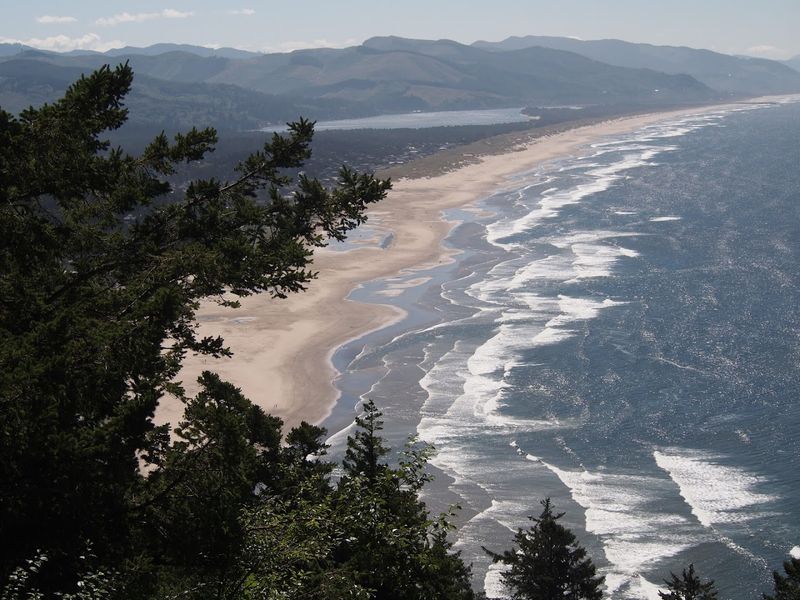
Just south of town, Nehalem Bay State Park occupies a long sandy spit between the Pacific Ocean and Nehalem Bay, and it is one of the most versatile state parks on the Oregon coast. The park offers camping, horseback riding trails, a bike path, and direct beach access, all within a short drive or even a bike ride from Manzanita.
The bay side of the spit is calm and protected, which makes it ideal for kayaking and paddleboarding. Rentals are available nearby, and the bay waters are shallow enough that beginners feel comfortable without feeling bored.
The campground itself books up fast in summer, so planning ahead matters. Sites range from tent-only spots tucked under the trees to full hookup sites for larger rigs, and there is even a hiker-biker camp for those arriving on two wheels.
Watching the sun set from the bay side while the ocean rumbles on the other side of the dunes is the kind of experience that makes people extend their trips by a day or two. The park also connects to a network of trails that loop through coastal forest, giving hikers a completely different perspective from the open beach just steps away.
Surfing Culture on a Quiet Coast
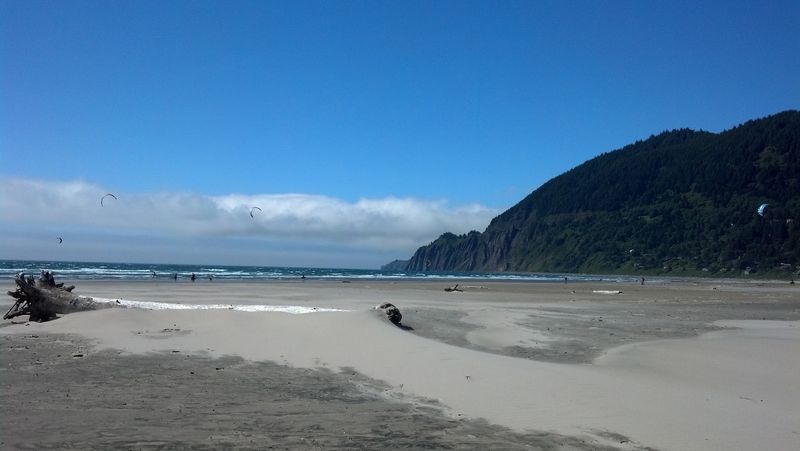
Manzanita has a low-key surf scene that most visitors never notice, and the locals who surf here are perfectly content keeping it that way. The beach break at the main access point produces consistent waves that work well for intermediate surfers, and the lack of crowds means more waves per person than you would find at better-known spots up and down the coast.
Water temperatures run cold year-round, typically in the low 50s Fahrenheit, so a full wetsuit is not optional. That cold water acts as a natural filter, keeping the lineup to people who are serious about being there rather than just showing up for the aesthetic.
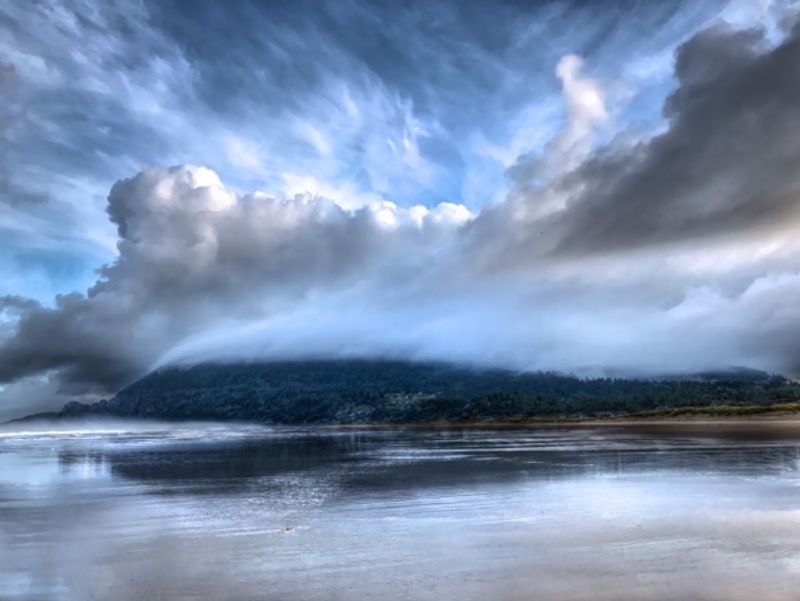
Early mornings before the wind picks up tend to offer the cleanest conditions. The fog that rolls in from the ocean sits low over the water and gives the whole scene a muted, cinematic quality that is hard to describe but easy to remember.
There are no surf schools operating directly in Manzanita as of this writing, but the town of Manzanita itself is close enough to other coastal communities where lessons are available. For those who already know what they are doing, the breaks here offer a genuinely satisfying session without the frustration of competing for every set.
The Food Situation for Hungry Travelers
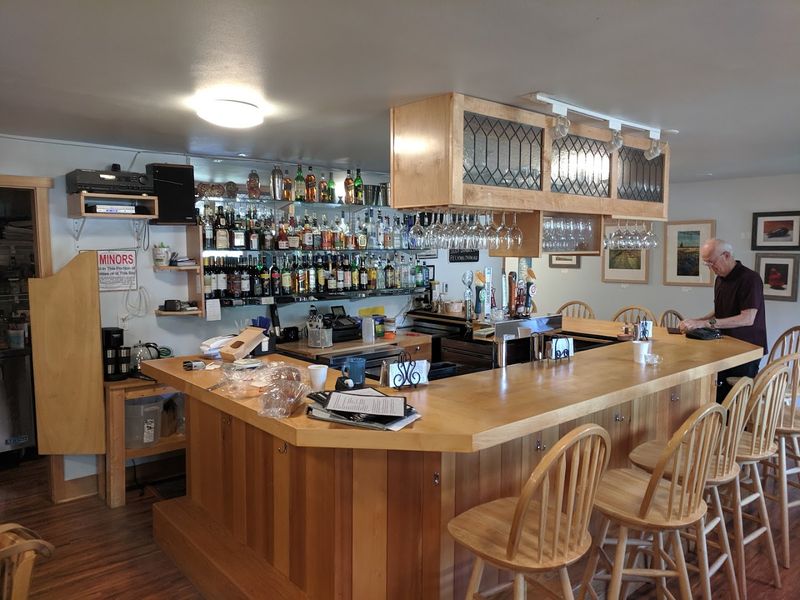
For a town with barely 600 residents, Manzanita punches well above its weight when it comes to food. The options are limited in number but high in quality, which is actually a better outcome than the reverse situation found in plenty of larger tourist towns.
A few standout spots line Laneda Avenue. The bakery options in town produce fresh pastries and breads that sell out early on weekends, so arriving before 9 a.m. is a practical strategy rather than an overreaction.
Coffee is taken seriously here, which is exactly what you would expect from a town in the Pacific Northwest.
Seafood, naturally, features prominently on local menus. Dungeness crab, fresh fish tacos, and clam chowder made with actual clams rather than the canned version show up regularly, and the sourcing tends to be local and straightforward.
Dinner options are fewer, and some spots close earlier than visitors from larger cities expect. Checking hours before you arrive saves a disappointing walk down a dark Laneda Avenue.
The food scene here is not trying to impress anyone with complexity; it just delivers honest, well-made plates in a relaxed setting, which turns out to be exactly what most people want after a day on the beach.
Wildlife You Might Actually See Here
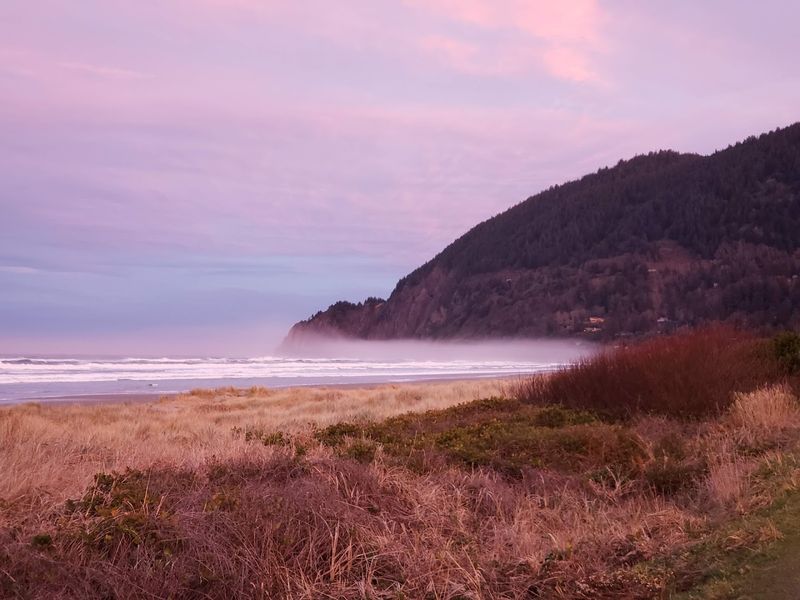
The wildlife around Manzanita is one of the quieter selling points of the area, and it genuinely surprises first-time visitors. Brown pelicans cruise the shoreline in loose formations, flying low over the surf with the kind of effortless glide that makes them look like they are showing off.
Harbor seals haul out on sandbars near the mouth of the Nehalem River, and they are remarkably unbothered by people watching from a respectful distance. During certain times of year, gray whales migrate along this stretch of coast, and the open beach gives excellent sightlines for spotting spouts offshore without any equipment beyond your own eyes.
Shorebirds work the tideline constantly, particularly sanderlings and dunlins that chase the retreating waves with a focused energy that is almost comedic to watch. Birders who travel specifically for coastal species find this stretch of Oregon coast highly productive without the crowds of more famous birding destinations.
Black-tailed deer wander the edges of town at dusk, unbothered and unhurried, moving through yards and along the forest margins like they know the town belongs to them as much as anyone. Watching one pause at the tree line while the ocean sounds in the background is a distinctly Manzanita kind of moment.
Best Times of Year to Make the Trip
Summer is the obvious choice for most visitors, and July through early September does bring the most reliable dry weather and warmest temperatures. Highs in the mid-60s Fahrenheit are typical, which is not exactly beach-blanket weather by the standards of, say, a Florida vacation, but it works perfectly for walking, hiking, and exploring.
The shoulder seasons, specifically May through June and September through October, offer something that summer cannot: the same scenery with noticeably fewer people. Accommodation prices drop, parking spots open up without a hunt, and the beach genuinely feels private in a way that July does not deliver.
Winter on the Oregon coast is dramatic and worth experiencing at least once. Storms roll in from the Pacific and produce waves that reframe your understanding of the word powerful.
The town stays open, locals carry on, and the cafes feel especially warm when the rain is coming sideways outside.
Travelers from landlocked states like Oklahoma often find the winter coast a revelation, an entirely different kind of landscape than anything they have seen before. Spring arrives slowly here, but when the wildflowers bloom on the hillsides above town and the fog lifts by midday, the whole place looks freshly painted and entirely worth the wait.
Where to Stay Without Breaking the Bank
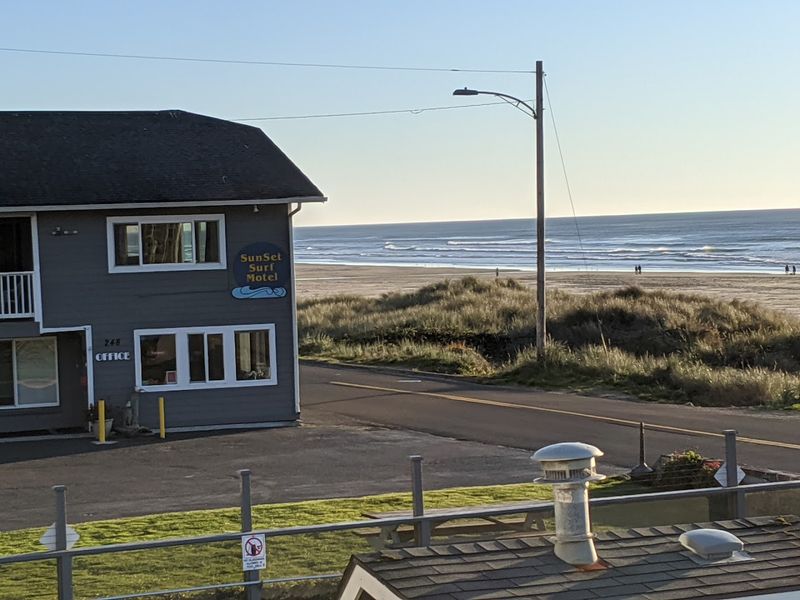
Accommodation in Manzanita runs the range from vacation rentals and small inns to a few bed-and-breakfast-style options scattered through the residential streets. The town has no large hotel chains, which keeps the character of the place intact and means every overnight option feels personal rather than corporate.
Vacation rentals dominate the market here, and many of them sit within a few blocks of the beach. Booking through established rental platforms works well, though availability in peak summer weeks gets snapped up months in advance by repeat visitors who have been coming back for years.
The Inn at Manzanita is one of the more established lodging options in town, offering rooms with a Pacific Northwest cottage aesthetic that fits the surroundings without trying too hard. Rates vary significantly by season, and the off-season deals are genuinely good for the quality on offer.
Camping at Nehalem Bay State Park provides a budget-friendly alternative that puts you within easy reach of town while giving you the full outdoor experience. Visitors who have stayed in both settings often say the campground mornings, coffee made over a small stove with ocean sounds in the background, are the part of the trip they remember longest.
Every option here feels earned rather than packaged.
The Local Character That Sets This Place Apart
A town of 600 people develops a personality that larger places simply cannot replicate, and Manzanita has one that is immediately readable. The residents here tend to be a mix of longtime locals whose families have been on this stretch of coast for generations and newer arrivals who came for a visit, fell for the place, and never fully left.
There is a strong creative streak running through the community. Artists, writers, and musicians show up in numbers that seem disproportionate to the population, and that concentration of people who chose this place deliberately gives it an energy that feels intentional rather than accidental.
The town also has a genuine environmental ethic. Beach cleanups happen regularly, local businesses lean toward sustainable practices, and the general attitude toward the natural surroundings is protective rather than exploitative.
That is not performed environmentalism for tourist approval; it is simply how the community operates.
People from all over the country find their way here, including visitors from Oklahoma and other landlocked states who describe the coast as a kind of reset button for the nervous system. The locals are friendly without being performatively welcoming, helpful when asked, and refreshingly unbothered by whether you find the town charming.
They already know it is, and they are not in a hurry to convince anyone else.
Why the Locals Are Right to Keep It Quiet
There is a version of Manzanita that exists in a future where too many people find it at once, and the locals who live there now are doing their quiet best to delay that version as long as possible. The concern is not unfriendliness; it is the very reasonable observation that what makes a place special is often the first thing to go when it becomes popular.
The beach stays clean because there are not too many people on it. The restaurants stay good because they are not overwhelmed by volume.
The trails stay quiet because the parking lots do not overflow. All of that is connected to the fact that Manzanita has not yet shown up on every travel list and social media feed.
Visitors who do find their way here tend to be the kind of people who take care of places, who pack out their trash, respect the tide pools, and do not blast music on the beach. That self-selection process is fragile, and the locals know it.
Coming here means accepting a kind of responsibility to leave it as you found it, which is a fair trade for access to one of the most quietly extraordinary stretches of the Oregon coast. Some places earn their reputation by being discovered, and others earn it by staying exactly as they are, which is something Oklahoma and every other state could stand to learn from a town this small and this sure of itself.
Share this story