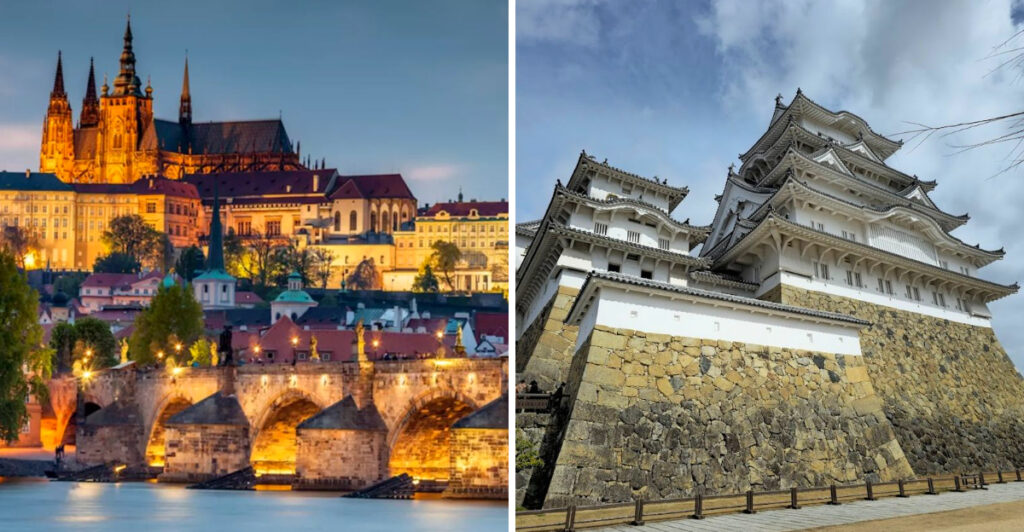
Castles have fascinated people for centuries, and for good reason. These massive stone fortresses were built to protect, impress, and sometimes intimidate entire kingdoms.
From hilltop strongholds to sprawling walled cities, the world’s largest castles still standing today are jaw-dropping reminders of just how ambitious ancient builders really were. Get ready to explore fifteen incredible castles that have survived wars, weather, and centuries of history.
Malbork Castle, Poland
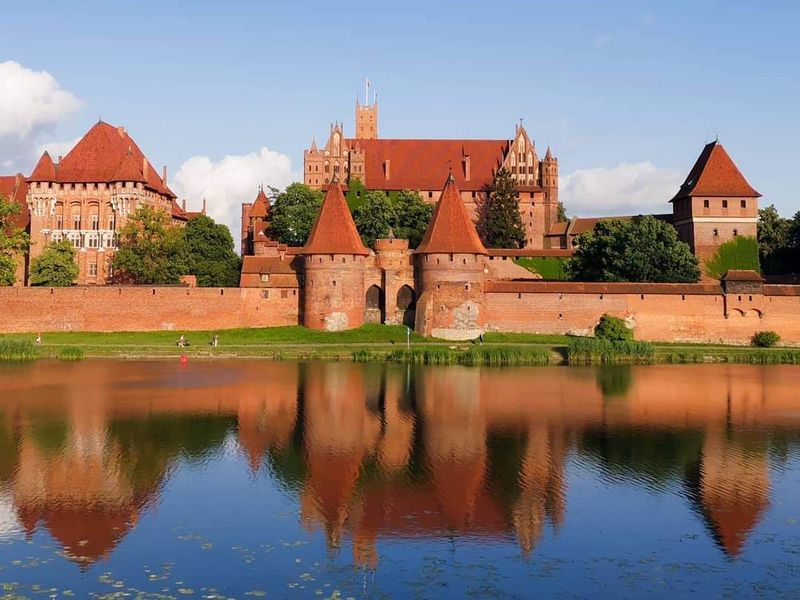
Covering roughly 21 hectares of land, Malbork Castle is so enormous that calling it a fortress almost feels like an understatement. Built in the 13th century by the Teutonic Knights, this red-brick giant was constructed as a military headquarters and administrative center all rolled into one.
It was essentially a walled city that happened to also be a castle.
The Teutonic Knights were a German crusading order, and they poured serious resources into making Malbork the most powerful stronghold in medieval Europe. The castle includes three interconnected sections, each with its own defensive walls, courtyards, and towers.
Walking from one section to another, you start to realize just how massive this place really is.
Today, Malbork is a UNESCO World Heritage Site and Poland’s most visited historical monument. Visitors can explore grand banquet halls, climb watchtowers, and wander through underground passages.
Restoration efforts have kept the castle in remarkable condition considering its age. If you ever find yourself in northern Poland, this is one stop you absolutely cannot skip.
Prague Castle, Czech Republic
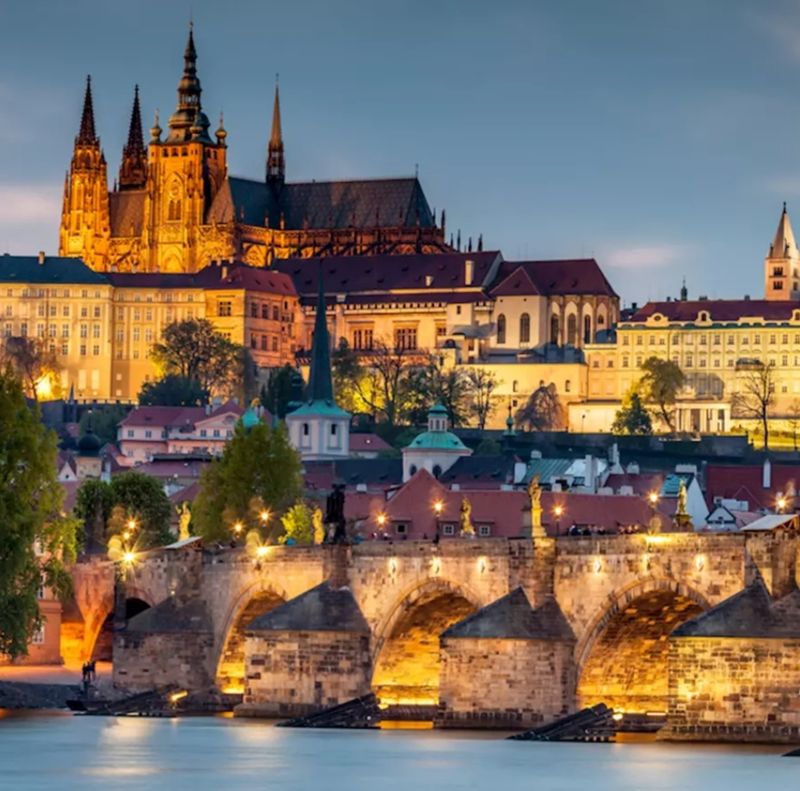
Stretching across nearly 70,000 square meters, Prague Castle is officially recognized by Guinness World Records as the largest ancient castle complex on the planet. That is a staggering amount of real estate for a place that started as a simple wooden fortress back in the 9th century.
Over the centuries, it grew into something truly extraordinary.
Inside the complex, you will find St. Vitus Cathedral, the Old Royal Palace, multiple churches, a monastery, gardens, and even a tiny street of medieval houses called Golden Lane. Czech kings, Holy Roman Emperors, and modern-day presidents have all called this place home at various points in history.
The castle has never stopped being relevant.
Visitors today can spend an entire day exploring the grounds without seeing everything. The views of Prague from the castle walls are absolutely stunning, especially in the early morning when the city is still quiet.
Admission is free to walk around the outer areas, though individual buildings require tickets. Prague Castle is not just a historical site, it is the beating heart of Czech national identity.
Windsor Castle, United Kingdom
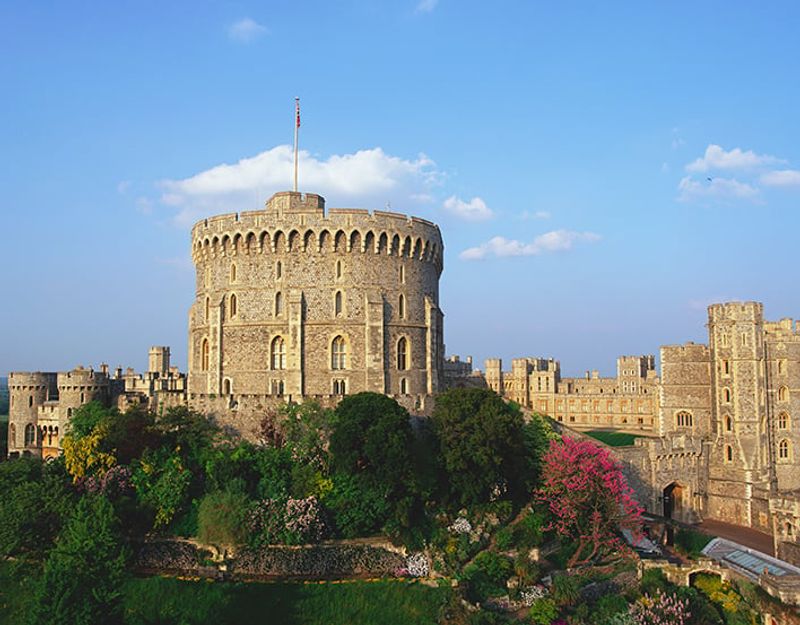
No castle on Earth has been continuously lived in longer than Windsor Castle. For over 900 years, it has served as a royal residence, a military headquarters, and a symbol of British endurance through some of history’s most turbulent moments.
Queen Elizabeth II spent many weekends here and considered it one of her favorite homes.
With more than 1,000 rooms spread across its sprawling grounds, Windsor is not exactly cozy. The State Apartments are decorated with priceless artworks, tapestries, and furniture collected by monarchs over centuries.
St. George’s Chapel, located within the castle walls, is the burial site of numerous British kings and queens, including Henry VIII.
What makes Windsor especially fascinating is that it is still a fully functioning royal residence. The Changing of the Guard ceremony happens right here, drawing enormous crowds every morning.
The Long Walk, a three-mile tree-lined path leading up to the castle, offers one of the most iconic views in all of England. Visitors can tour the State Apartments and St. George’s Chapel when the royal family is not in residence, making every visit feel like a peek behind the curtain of British history.
Mehrangarh Fort, India
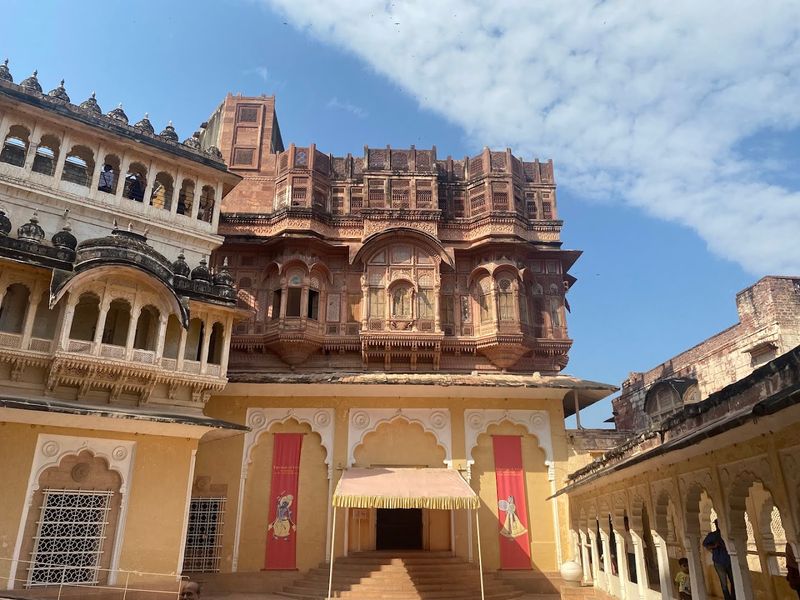
Standing 122 meters above the city of Jodhpur, Mehrangarh Fort looks less like something humans built and more like something nature carved out of sheer rock. Its walls rise up to 36 meters high in some places, and they are thick enough that entire palaces were constructed inside them.
This fort was built to be seen and feared from miles away.
Founded in 1459 by Rao Jodha, the ruler who also founded the city of Jodhpur, Mehrangarh has survived multiple sieges and centuries of political change. The fort contains seven gates, each built to commemorate a specific military victory.
Handprints near one of the gates mark the spots where royal widows walked to their deaths in a practice called sati, a haunting reminder of the fort’s complex history.
Inside, ornate palaces feature some of the most intricate stone carvings in all of Rajasthan. The museum within the fort houses royal palanquins, weapons, paintings, and costumes that tell the story of the Rathore dynasty in vivid detail.
The views from the ramparts stretch across Jodhpur’s famous blue-painted rooftops in every direction. Mehrangarh is a place where history feels genuinely alive.
Hohensalzburg Fortress, Austria
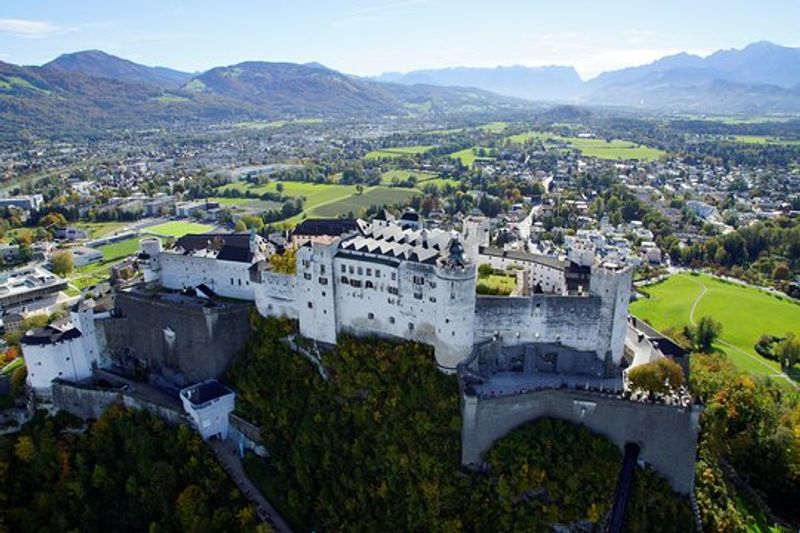
Perched 120 meters above the rooftops of Salzburg, Hohensalzburg Fortress has been watching over this city since 1077, making it one of the oldest and best-preserved medieval castles in all of Europe. Unlike many historic sites that have been heavily reconstructed, Hohensalzburg retains much of its original medieval structure, which is pretty remarkable given how much history has happened around it.
The fortress was built by Archbishop Gebhard of Salzburg during a time of intense political conflict between the Pope and the Holy Roman Emperor. Over the following centuries, it was expanded and strengthened by successive archbishops who wanted to make sure nobody could push them around.
It worked. The fortress was never successfully taken by force.
Today, Hohensalzburg is one of Austria’s most visited tourist attractions and can be reached by a funicular railway that runs from the old town below. Inside, visitors can explore medieval state rooms decorated with elaborate woodcarvings, a Gothic throne room, and a collection of medieval torture devices that will make your skin crawl.
The panoramic views of Salzburg and the surrounding Alps are genuinely breathtaking. On a clear day, you can see for what feels like forever.
Spis Castle, Slovakia
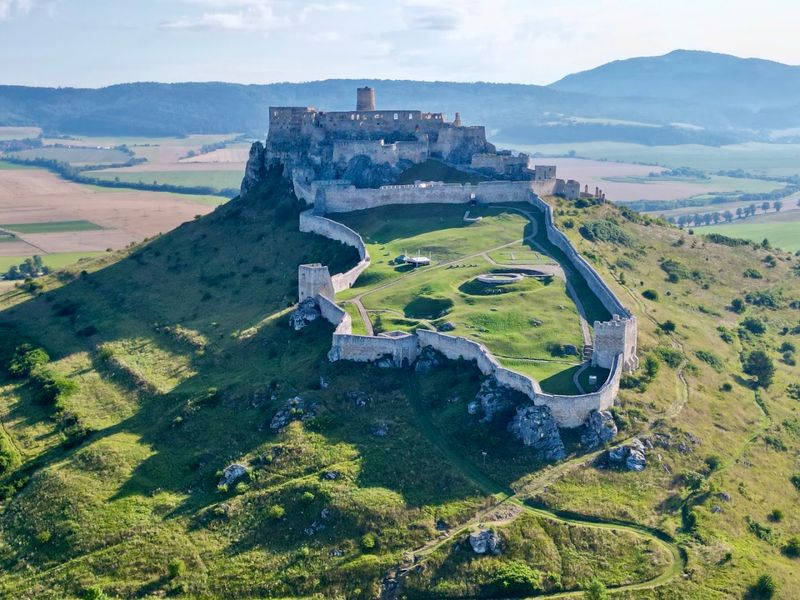
Even in ruins, Spis Castle manages to be absolutely commanding. Sprawling across a massive hilltop in eastern Slovakia, this UNESCO World Heritage Site covers more than four hectares and is considered one of the largest castle complexes in Central Europe.
What you see today is only a fraction of what once stood here at the height of its power.
The castle’s history stretches back to the 12th century, though the site had been occupied long before that. It served as an administrative center, a military stronghold, and eventually a home for various noble families.
A devastating fire in 1780 left much of the castle in the ruined state visitors see today, but the scale of the remaining walls and towers is still jaw-dropping.
Getting to Spis Castle requires a bit of a hike up a grassy hillside, but the effort is completely worth it. From the top, you get sweeping views of the surrounding Slovak countryside, dotted with small villages and rolling hills.
The castle ruins have also been used as a filming location for several movies and television productions over the years. Wandering through the crumbling corridors, it is easy to imagine what life here once looked like.
Buda Castle, Hungary
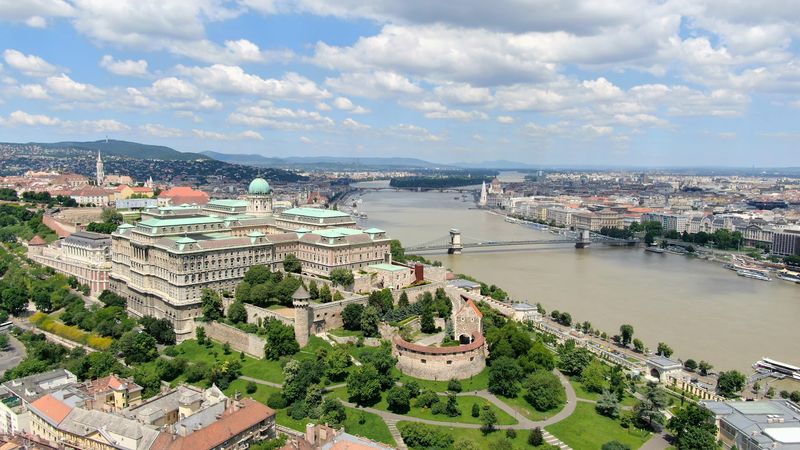
Sitting high above the Danube River on Castle Hill, Buda Castle has one of the most dramatic settings of any castle in Europe. The current Baroque palace that most visitors recognize was completed in the 18th century, but the site has hosted a royal residence since the 13th century.
What stands today is the result of centuries of rebuilding, destruction, and rebuilding again.
The castle was heavily damaged during World War II when Soviet and German forces fought brutal battles across Budapest. After the war, massive restoration efforts brought the palace back to its current grand appearance.
Today it houses the Hungarian National Gallery and the Budapest History Museum, two of the country’s most important cultural institutions.
The surrounding castle district is a neighborhood unto itself, filled with cobblestone streets, Gothic church ruins, and medieval house facades. Fisherman’s Bastion, a fairy-tale terrace just steps from the castle, offers some of the most photographed views of the Hungarian Parliament building across the river.
Visiting Buda Castle feels like stepping into multiple centuries at once, since every corner reveals a different layer of Hungarian history. The funicular railway connecting the castle to the riverbank below is a fun way to arrive in style.
Edinburgh Castle, Scotland
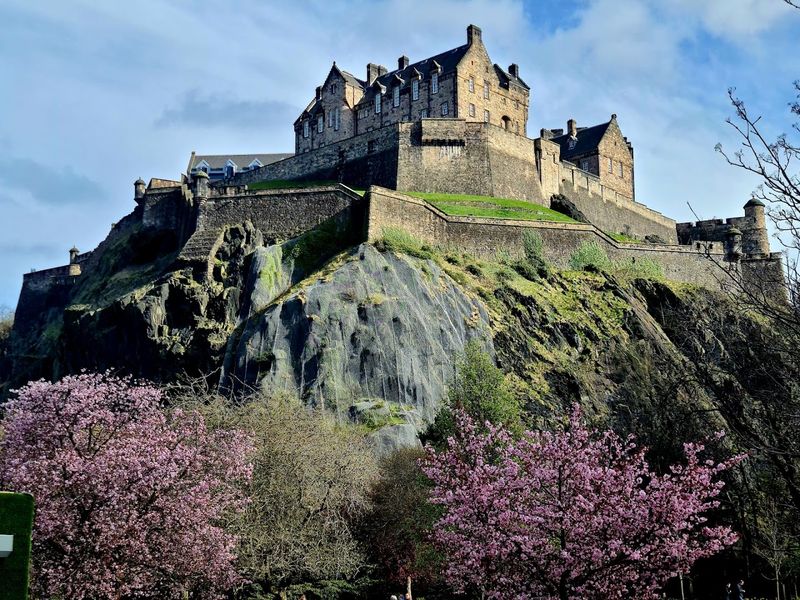
Few castles in the world have a more dramatic entrance than Edinburgh Castle, which sits on top of a 700-million-year-old volcanic rock right in the middle of Scotland’s capital city. You can see it from almost anywhere in Edinburgh, looming above the rooftops like it owns the place.
Honestly, for most of Scottish history, it basically did.
The castle has been a royal residence, a military garrison, a prison, and a national symbol all at different points in its long history. The oldest surviving building on the rock, St. Margaret’s Chapel, dates back to the early 12th century.
It is the oldest building in Edinburgh and one of the oldest in all of Scotland, yet it still holds regular services today.
Among the castle’s most prized possessions are the Honours of Scotland, the oldest surviving crown jewels in the British Isles. The Stone of Destiny, on which Scottish kings were traditionally crowned, is also kept here.
Every day at precisely one o’clock, a cannon is fired from the castle walls, a tradition dating back to 1861 that still startles unsuspecting tourists. Edinburgh Castle welcomes over two million visitors a year, making it Scotland’s most visited paid attraction by a wide margin.
Himeji Castle, Japan
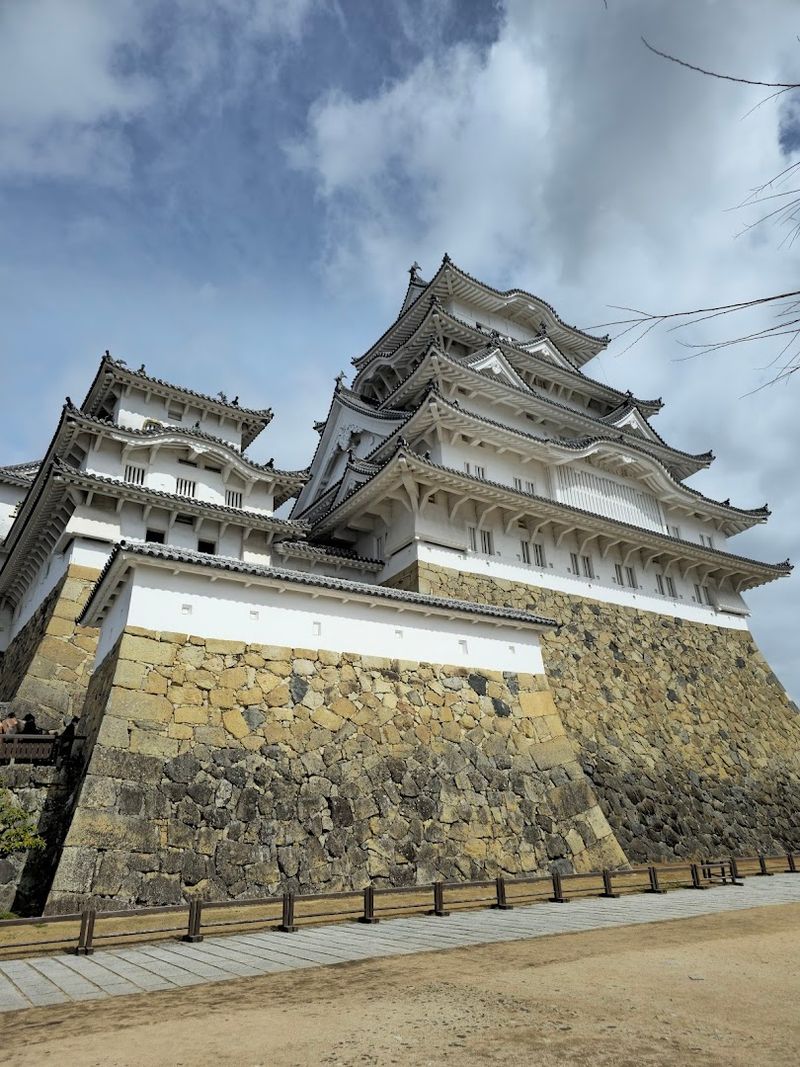
Called the White Heron Castle because of its brilliant white exterior and elegant silhouette, Himeji Castle is widely considered the finest example of Japanese castle architecture still standing anywhere in the world. It looks almost too beautiful to have ever been a military fortress, yet its design is packed with clever defensive tricks that would have made any attacker’s life extremely difficult.
Built in the 14th century and expanded significantly in the early 1600s, Himeji survived both World War II bombing raids and centuries of earthquakes and fires that destroyed so many other Japanese castles. The main tower stands seven stories tall, though from the outside it appears to have only five floors.
Hidden rooms and false staircases were built into the structure to confuse invaders who made it past the outer walls.
Walking through Himeji’s maze of gates, corridors, and courtyards, you quickly realize that getting lost was the whole point. The castle grounds are especially spectacular in spring when hundreds of cherry blossom trees burst into bloom around the main tower.
Himeji is a UNESCO World Heritage Site and one of Japan’s twelve original castles that survive in their authentic historical form. It is a genuinely unforgettable place to visit.
Citadel of Aleppo, Syria
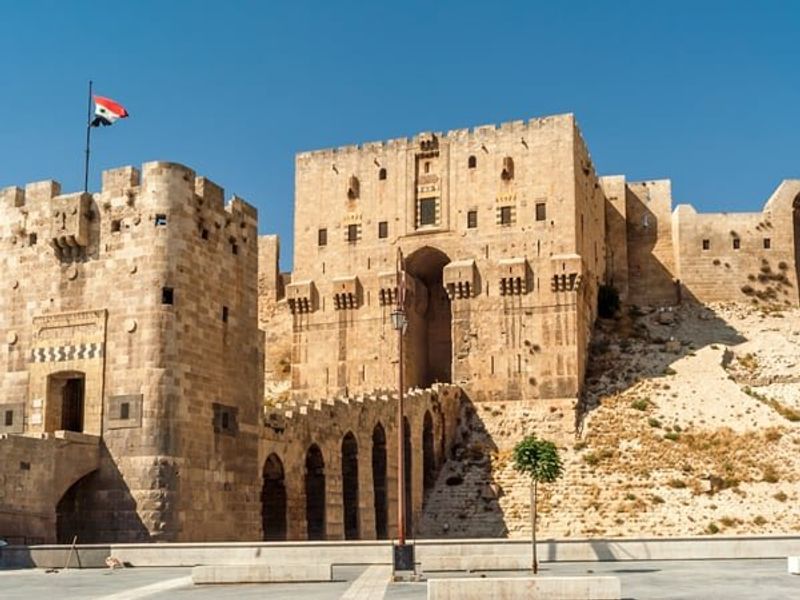
Rising from the center of one of the world’s oldest continuously inhabited cities, the Citadel of Aleppo has been a fortress for at least three thousand years. The hill it sits on was first used as a defensive position in the third millennium BC, meaning people have been fortifying this exact spot since before most modern civilizations even existed.
That kind of history is genuinely staggering.
The massive stone fortifications visible today were largely built during the 12th and 13th centuries under the Ayyubid dynasty, the same ruling family as the famous military leader Saladin. The citadel includes a palace, a mosque, a throne room, bathhouses, and an elaborate system of underground passages.
Its deep moat and steep sloping walls made it one of the most formidable defensive structures in the medieval Middle East.
The citadel suffered significant damage during the Syrian civil war that began in 2011, and ongoing restoration efforts are working to preserve what remains. Despite the damage, the sheer scale and age of the structure still communicate its former power and importance.
The Citadel of Aleppo is listed as a UNESCO World Heritage Site and stands as a symbol of both the city’s incredible history and its resilience. It remains one of the most significant ancient fortresses anywhere on Earth.
Burghausen Castle, Germany
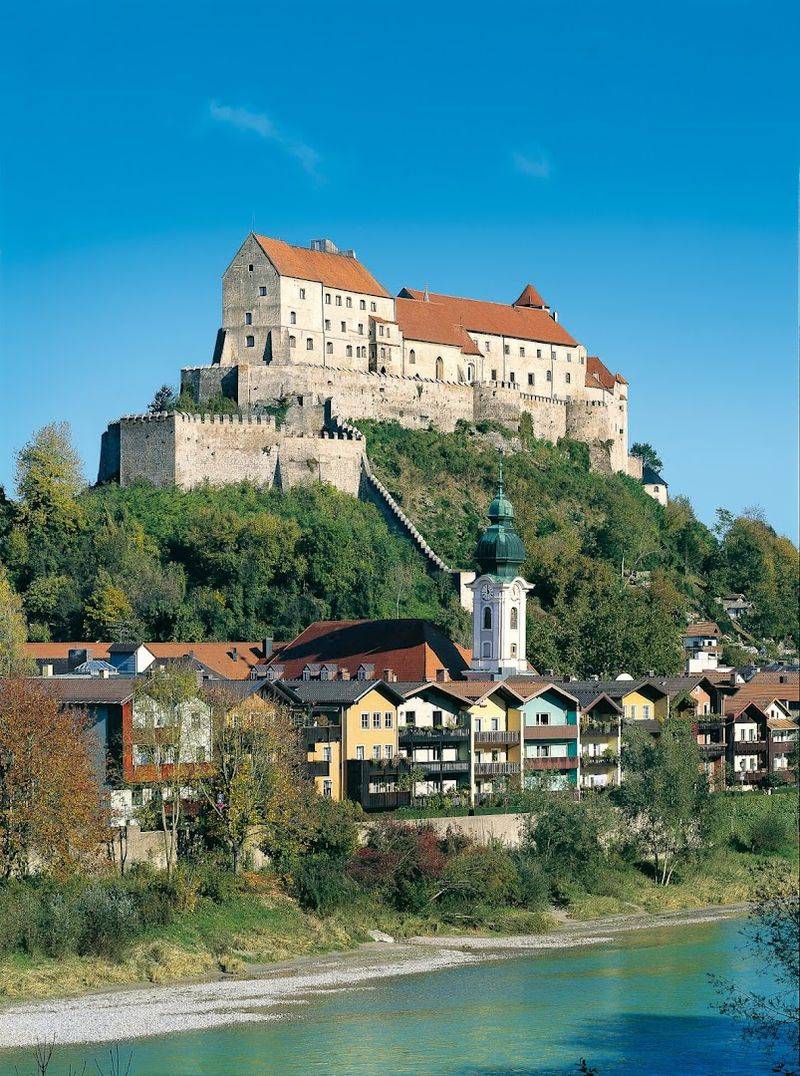
Stretching over 1,051 meters from end to end, Burghausen Castle holds the record for the longest castle complex in the entire world. That is over a kilometer of fortified walls, towers, gates, and courtyards running along a narrow ridge above the Bavarian town of Burghausen.
Trying to walk the whole length in one go is a genuine workout.
The castle was built by the Dukes of Bavaria starting in the 13th century, and it was expanded over the following three centuries into the extraordinary chain of six interconnected courtyards that exists today. Each courtyard served as a separate line of defense, meaning attackers who broke through one gate immediately faced another.
The design was essentially a defensive obstacle course.
The main castle at the northern end of the complex houses a museum with medieval weapons, furniture, and artwork. The outer courtyards contain additional buildings that have been converted into exhibition spaces and concert venues.
Every summer, Burghausen hosts a jazz festival in the castle courtyard that draws thousands of visitors. Standing at one end of the castle and looking down the ridge toward the other end, it is almost impossible to believe a single structure could be this long.
Burghausen is one of Germany’s most underrated historical treasures.
Topkapi Palace, Turkey
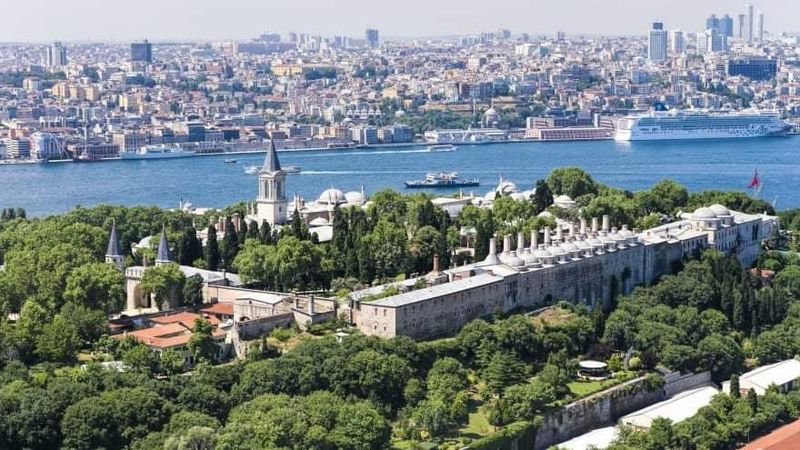
For nearly four hundred years, Topkapi Palace was the nerve center of one of the most powerful empires the world has ever seen. The Ottoman sultans ruled their vast territories from these sprawling grounds overlooking the point where Europe meets Asia across the Bosphorus strait.
The location alone tells you everything about how the Ottomans saw themselves: at the center of the world.
Construction began in the 1460s under Sultan Mehmed II, the conqueror of Constantinople, and the palace grew steadily over the following centuries. At its peak, Topkapi housed thousands of people including the sultan’s family, his court, his government officials, and the famous harem.
The harem alone contained over 400 rooms, making it a palace within a palace.
Today, Topkapi is one of Istanbul’s most visited museums, attracting millions of visitors every year. The treasury section displays jaw-dropping artifacts including the Topkapi Dagger, the Spoonmaker’s Diamond, and relics from the Prophet Muhammad.
The palace kitchens, which once fed thousands of people daily, now display an enormous collection of Chinese porcelain. Wandering through the courtyards, it is easy to feel the weight of centuries of imperial history pressing down from every direction.
Topkapi is not just a palace, it is a world unto itself.
Moscow Kremlin, Russia
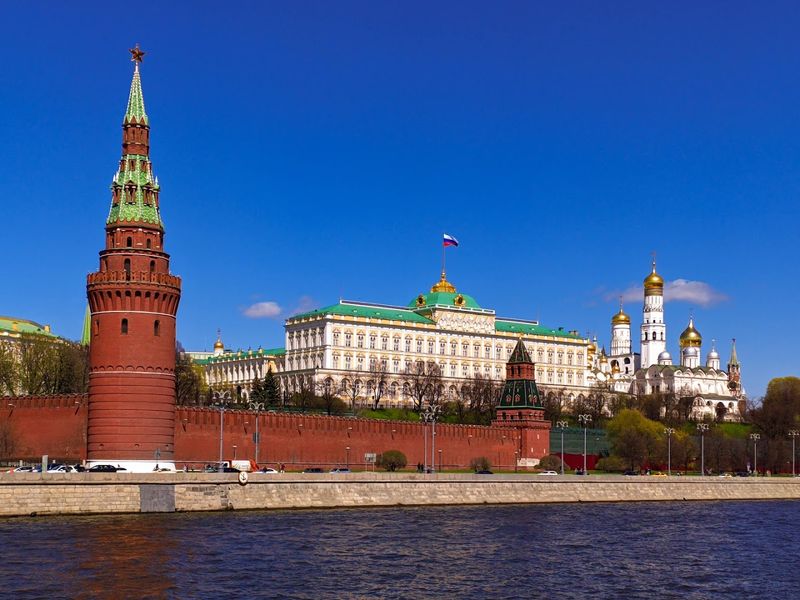
The word kremlin simply means fortress in Russian, and there are kremlins in cities all across Russia. But when anyone says the Kremlin, they mean only one place: the triangular walled complex in the heart of Moscow that has been the center of Russian power for over five centuries.
Few places on Earth carry as much political and historical weight as these red-brick walls.
The current walls and towers were built between 1485 and 1516, replacing an earlier white limestone fortress. Inside the 27-hectare complex, you will find five palaces, four cathedrals, and numerous other historic buildings.
The cathedrals are particularly stunning, with gilded domes that catch the sunlight and interiors covered in centuries-old frescoes and icons.
The Kremlin Armory Museum houses one of the most extraordinary collections of royal treasures in the world, including Faberge eggs, royal carriages, coronation robes, and the famous Cap of Monomakh, a jeweled crown used in Russian coronations for centuries. The Diamond Fund, a separate exhibition within the Kremlin, displays state diamonds and imperial regalia that will make your eyes go wide.
Despite being a working government complex where Russia’s president still has offices, significant portions of the Kremlin are open to tourists every day. It is simultaneously a living political institution and a museum of Russian civilization.
Predjama Castle, Slovenia
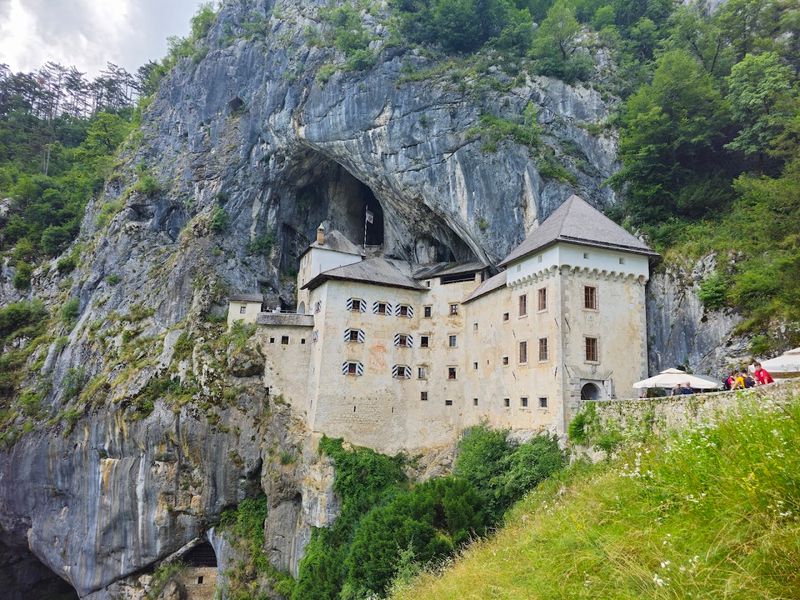
Tucked inside the gaping mouth of a natural cave carved into a 123-meter cliff face, Predjama Castle might be the most visually striking castle on this entire list. From a distance, it looks like the cliff itself grew a building.
Up close, the combination of natural rock and man-made walls is even more surreal. Nobody builds castles like this anymore, mostly because nobody could figure out how.
The castle’s most famous resident was Erasmus of Lueg, a 15th-century knight who used Predjama as his base while defying the Habsburg Emperor. The cave system behind the castle contained a network of secret tunnels that allowed Erasmus to receive supplies even when the castle was under siege.
According to legend, he was eventually killed in a rather undignified way while using the castle’s bathroom.
The tunnels behind the castle are now open for guided tours, and they stretch for several kilometers through the hillside. The cave system stays a constant cool temperature year-round, making it a refreshing visit on a hot summer day.
The main castle contains period-furnished rooms and exhibits about the history of the site and its famous inhabitants. Predjama is located near the famous Postojna Cave, so many visitors combine both sites into a single day trip.
It is genuinely unlike any other castle in the world.
Ksiaz Castle, Poland
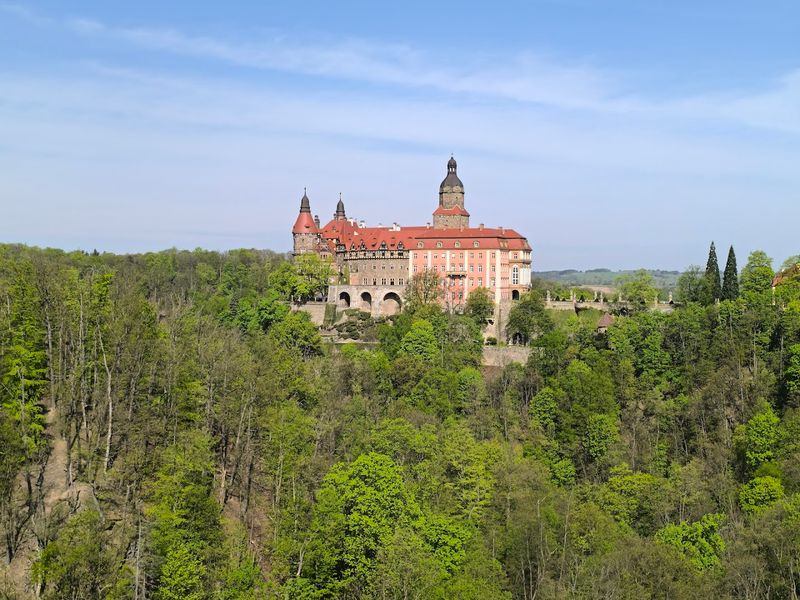
Hidden deep in the forested hills of Lower Silesia, Ksiaz Castle is the kind of place that looks like it belongs in a fairy tale, right up until you learn about its darker history. With around 400 rooms spread across its Gothic, Baroque, and Renaissance wings, it is the third-largest castle in Poland and one of the most architecturally complex in Central Europe.
The building itself is a physical timeline of several centuries of construction and renovation.
The castle was originally built in the 13th century and expanded by various noble families over the following centuries. During World War II, the Nazis seized the property and began secret underground construction beneath the castle, the purpose of which is still not entirely clear.
Tunnels stretching for kilometers were dug by forced laborers, and theories about what was planned for them range from a military headquarters to a hiding place for looted treasure.
After the war, the castle fell into disrepair under communist rule and was partly used as a hotel. Restoration work has been ongoing for decades, and today visitors can tour the ornate state rooms, the terraced gardens, and portions of the mysterious underground tunnels.
The surrounding parkland is beautiful for walks in any season. Ksiaz is a castle that rewards curious visitors who want history with a side of genuine mystery.
Share this story