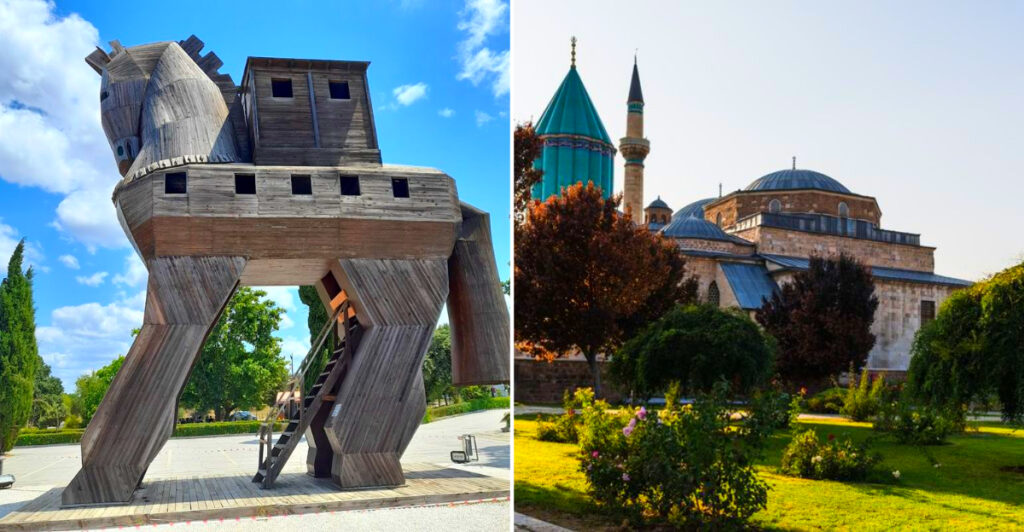
Turkey has been home to some of the most powerful empires, boldest builders, and most fascinating cultures the world has ever seen. Long before modern borders were drawn, this land was already packed with cities, temples, and kingdoms that shaped human civilization.
What makes Turkey truly remarkable is that you do not need a history textbook to find the past here. You can walk through a 2,000-year-old marketplace, touch a carved stone pillar older than any written language, or sit inside a cave church that early believers once called home.
From the rocky plateaus of central Anatolia to the sun-baked coasts of the Mediterranean, every corner of this country holds something ancient and extraordinary. The 17 regions covered in this article are proof that in Turkey, history does not sit quietly in museums.
It stands outside, in plain sight, waiting for you to notice it.
1. Cappadocia
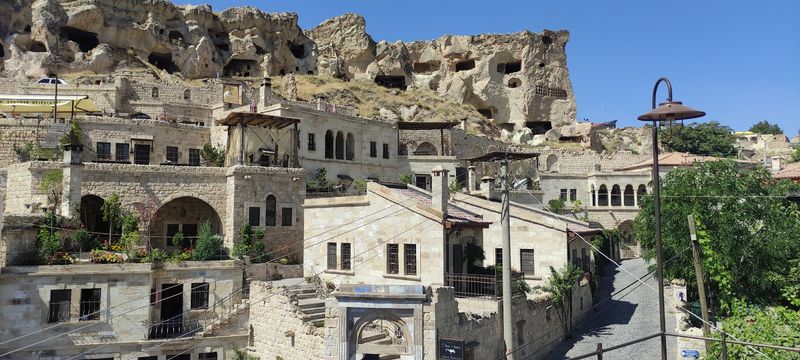
Few places on Earth look like Cappadocia, and even fewer places carry its kind of layered, multi-era history packed into one landscape.
The region sits in central Anatolia and has been continuously inhabited since at least the Hittite period around the 18th century BC. Persians, Romans, and Byzantines all left their mark here before the landscape became what visitors see today.
What truly sets Cappadocia apart are its underground cities. Places like Derinkuyu and Kaymakli stretch several floors below the surface and once sheltered thousands of people during times of conflict.
Early Christian communities carved entire churches into the soft volcanic rock, decorating the walls with detailed frescoes that have survived for over a thousand years. The Goreme Open Air Museum is a UNESCO World Heritage Site and gives visitors direct access to these remarkable rock-cut sanctuaries.
Cappadocia is not a ruin. It is an entire civilization preserved in stone.
2. Ephesus (Aegean Region)
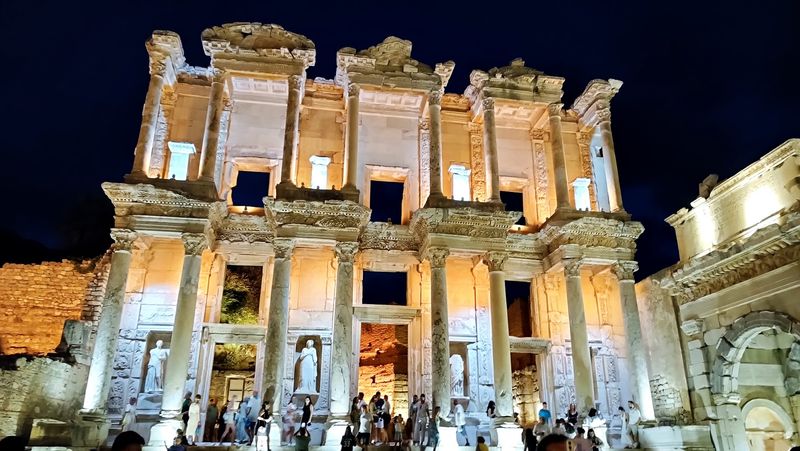
Marble streets, a theater built for 25,000 spectators, and a library facade that has stood for nearly 2,000 years. Ephesus delivers all of this and more.
Located near the modern city of Selcuk in the Aegean region, Ephesus was once one of the largest cities in the Roman Empire, with a population estimated at over 200,000 people at its peak.
The Library of Celsus is the most photographed structure here, and for good reason. Built in the 2nd century AD as a tomb and library for the Roman senator Celsus, it remains one of the best-preserved ancient facades anywhere in the world.
The site also held the Temple of Artemis, one of the original Seven Wonders of the Ancient World, though only a single column remains standing today.
Walking the main boulevard of Ephesus gives a clear picture of how grand Roman urban planning actually was.
3. Troy (Çanakkale Province)
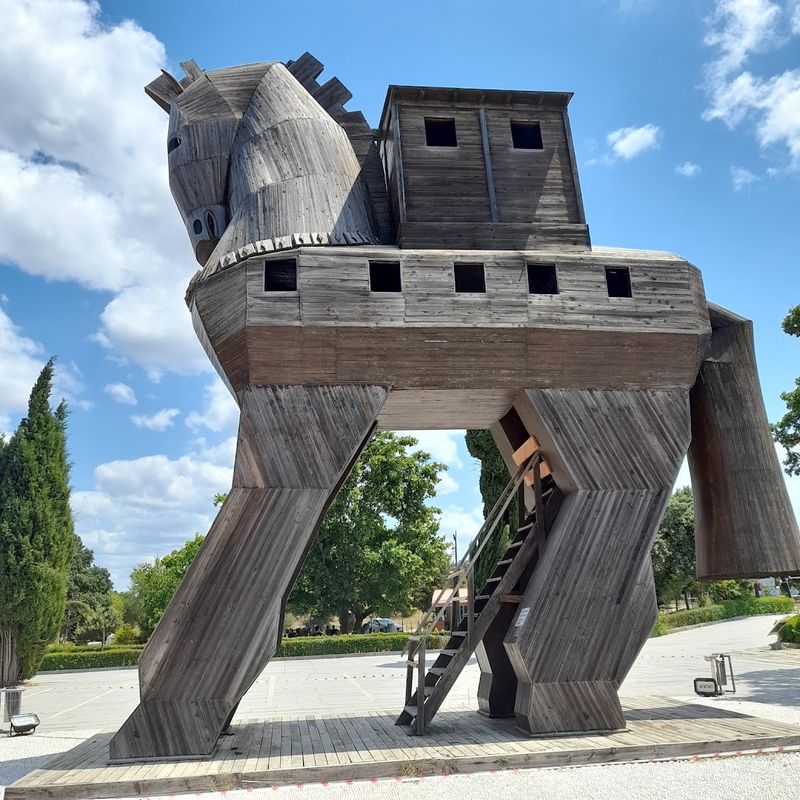
Homer wrote about it, historians debated it for centuries, and archaeologists eventually proved it was real. Troy is not just a legend.
Located in northwestern Turkey near the Dardanelles strait, this site contains at least nine distinct layers of settlement stacked on top of each other, spanning roughly 4,000 years of continuous human occupation.
The most famous layer, Troy VI or VII, corresponds to the period associated with the Trojan War, dating to around 1200 BC. Excavations have uncovered fortification walls, ramps, towers, and evidence of large-scale conflict.
German archaeologist Heinrich Schliemann began serious excavations here in the 1870s and famously uncovered what he called Priam’s Treasure, a collection of gold artifacts now stored in a Moscow museum.
Troy became a UNESCO World Heritage Site in 1998. A large replica wooden horse at the entrance gives visitors a playful nod to the story that made this place immortal.
4. Göbekli Tepe (Southeastern Anatolia)
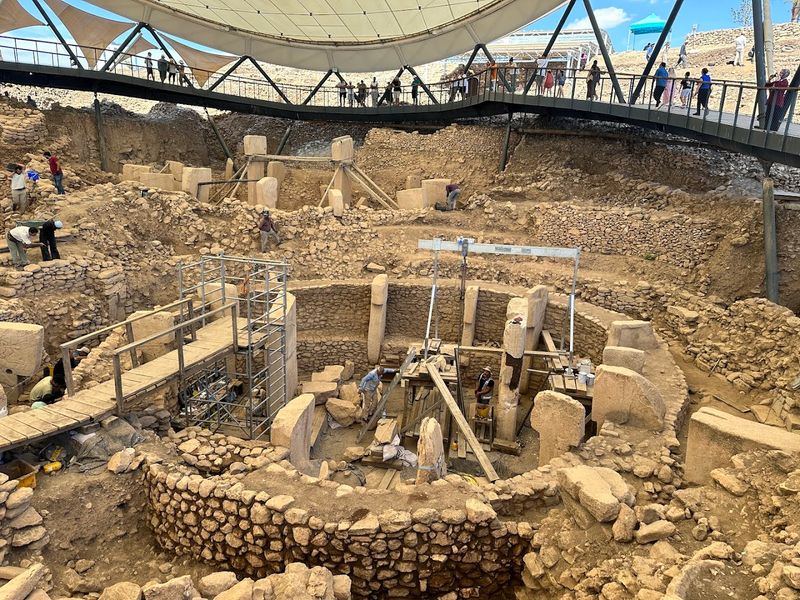
Before farming, before pottery, before written language, humans were already building monumental structures. Gobekli Tepe changed everything historians thought they knew about early civilization.
Located near Sanliurfa in southeastern Anatolia, this site dates back to approximately 9500 to 8000 BCE, making it the oldest known example of large-scale ritual construction on Earth. That puts it roughly 6,000 years older than Stonehenge.
The site features large circular enclosures filled with T-shaped limestone pillars, many of which are carved with detailed images of animals including foxes, snakes, and birds. These carvings were made by hunter-gatherers, not farmers.
German archaeologist Klaus Schmidt began excavating the site in 1994 and concluded that the people who built it organized specifically to do so, suggesting that communal belief systems may have preceded, and possibly driven, the development of agriculture.
Only a fraction of the site has been excavated so far, meaning the biggest discoveries may still be underground.
5. Mount Nemrut (Adıyaman)
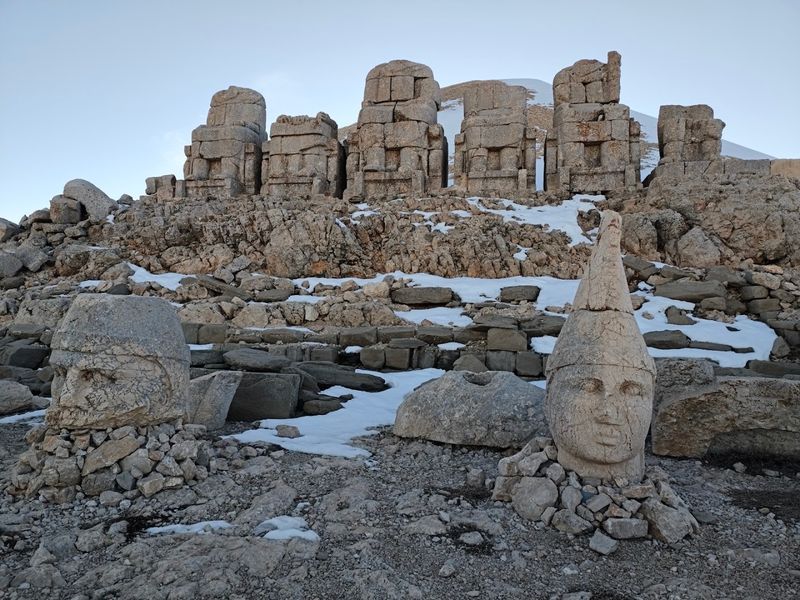
Imagine climbing a mountain and finding giant stone heads staring back at you from the summit. That is exactly what awaits at Mount Nemrut.
King Antiochus I of the Commagene Kingdom ordered the construction of this enormous funerary monument in the 1st century BC. He wanted to be remembered alongside the gods, so he built a massive burial mound and surrounded it with colossal statues of Greek and Persian deities, as well as himself.
The stone heads, some reaching nearly 2 meters in height, have toppled from their original bodies over the centuries and now rest at odd angles across the mountaintop, creating one of the most dramatic archaeological landscapes in the world.
Antiochus I saw Commagene as a bridge between East and West, and his monument reflected that vision by blending Greek, Persian, and Anatolian religious traditions into one site.
Mount Nemrut became a UNESCO World Heritage Site in 1987 and sits at an elevation of 2,134 meters above sea level.
6. Pergamon (Bergama)
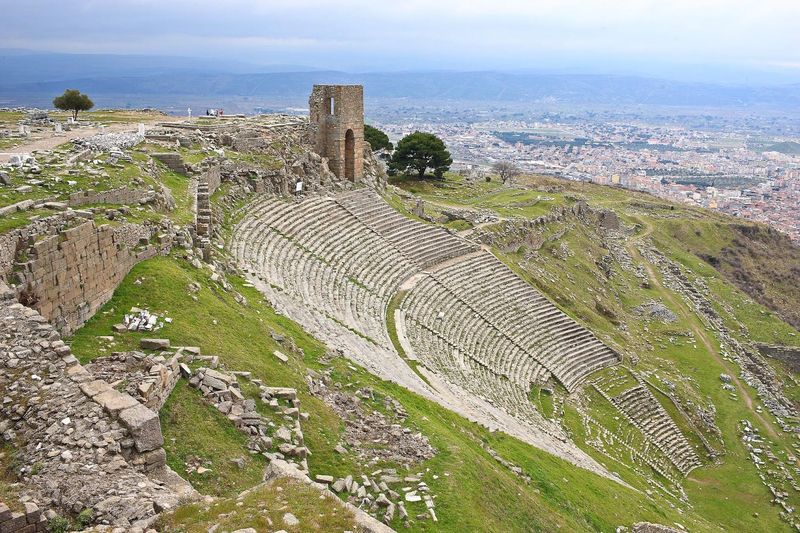
Built on a dramatic hilltop in western Turkey, Pergamon was not just a city. It was a statement about power, culture, and ambition.
At its peak in the 2nd century BC, Pergamon served as the capital of the Kingdom of Pergamon and became one of the most important centers of Hellenistic civilization. Its library reportedly held 200,000 scrolls, second only to the legendary Library of Alexandria in Egypt.
The theater at Pergamon is considered the steepest in the ancient world, with 80 rows of seats cut directly into the hillside at a near-vertical angle. The engineering required to build it without modern tools is remarkable.
Pergamon is also the origin of the word parchment. When Egypt cut off papyrus exports to limit Pergamon’s library growth, the city developed a writing material made from animal skin, which the Romans called pergamena.
The site is a UNESCO World Heritage Site and includes the impressive Temple of Trajan, which still stands largely intact on the acropolis.
7. Antalya Region (Ancient Lycia & Pamphylia)
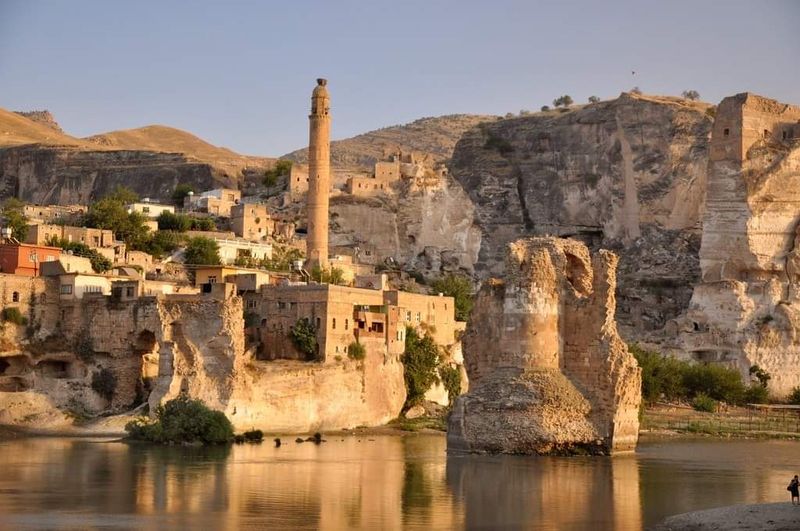
The Antalya region is often celebrated for its beaches, but beneath the modern tourism surface lies one of the most historically rich coastlines in the ancient world.
Ancient Lycia occupied the southwestern part of this region and was home to a unique confederation of independent city-states. The Lycians had their own language, their own legal system, and a distinctive tradition of carving elaborate tombs directly into cliff faces to resemble wooden houses.
Pamphylia, to the east, produced cities like Aspendos, Perge, and Side. Aspendos is home to a Roman theater built in 155 AD that is so well preserved it still hosts live performances today.
Perge features a colonnaded main street, a large bath complex, and a stadium that once held 12,000 spectators. The site has yielded some of the finest Roman sculptures now displayed in the Antalya Museum.
Traveling through this region means passing through multiple ancient civilizations within a single afternoon drive.
8. Hierapolis & Pamukkale
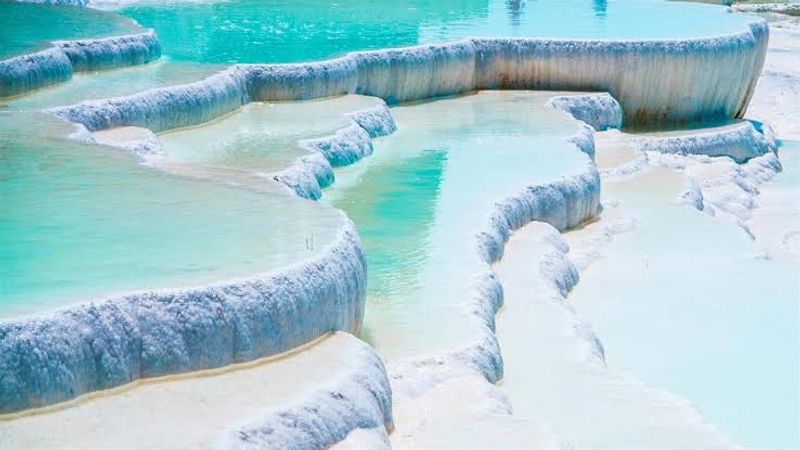
Pamukkale is famous worldwide for its white mineral terraces, but the ancient city sitting directly on top of them deserves equal attention.
Hierapolis was founded in the 2nd century BC by the Attalid kings of Pergamon and later became a thriving Roman spa city. Its location above thermal springs made it a popular destination for healing, and the city grew into a major early Christian center as well.
The necropolis at Hierapolis is one of the largest ancient cemeteries in Turkey, containing hundreds of tombs, sarcophagi, and mausoleums spread across a wide area. Wandering through it gives a clear sense of how seriously this city took the afterlife.
The site also contains the Plutonium, a cave believed in antiquity to be an entrance to the underworld due to the toxic carbon dioxide gas that seeps from the ground and was lethal to animals brought near it.
Both Hierapolis and Pamukkale together form a UNESCO World Heritage Site recognized in 1988.
9. Safranbolu (Black Sea Region)
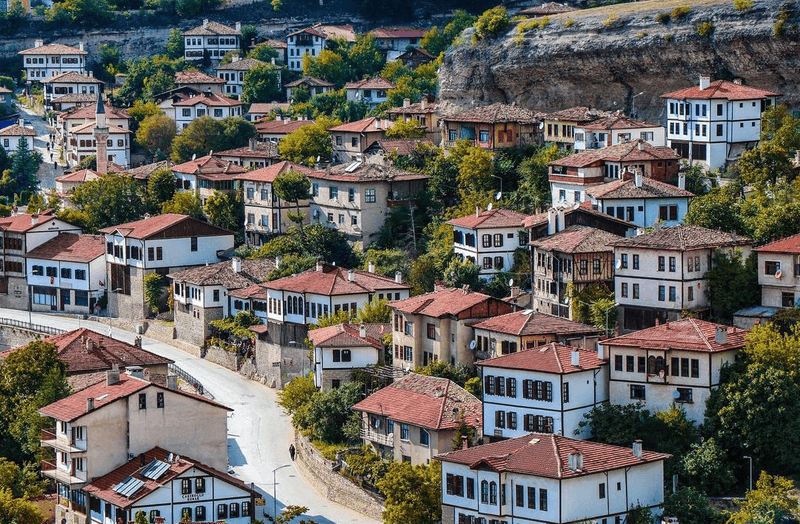
Most historic towns have one or two preserved buildings scattered among modern construction. Safranbolu chose a different approach and preserved the entire town.
Located in the Black Sea region of northern Turkey, Safranbolu was a prosperous trading center during the Ottoman period, particularly from the 17th to the 19th century. Its wealth came from the saffron trade, which is also where the town gets its name.
The old quarter, known as Carsi, contains over 1,000 registered historic structures including timber-framed houses with overhanging upper floors, hans, hammams, and mosques. The architecture follows a consistent Ottoman style that has been maintained and restored rather than replaced.
UNESCO added Safranbolu to its World Heritage List in 1994, recognizing the town as an outstanding example of a traditional Ottoman settlement that has survived largely intact.
The Cinci Han, a 17th-century caravanserai, still stands in the town center and once served merchants traveling the Silk Road trading routes through northern Anatolia.
10. Ani (Kars Province)
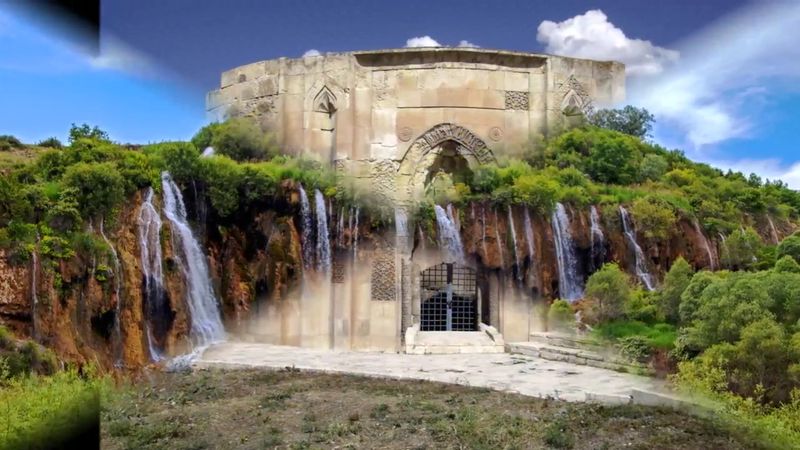
There is a city in northeastern Turkey that once rivaled Constantinople in size and importance. Today it sits largely empty, but its ruins are extraordinary.
Ani was the capital of the Bagratid Armenian Kingdom in the 10th and 11th centuries and at its height housed a population estimated at 100,000 people. It was known across the medieval world for its churches, palaces, and fortifications.
The city changed hands numerous times, passing through Seljuk, Georgian, Mongol, and Ottoman control before being gradually abandoned. What remains today includes the Cathedral of Ani, built between 989 and 1001 AD, the Church of the Redeemer, and a series of impressive defensive walls stretching across the plateau.
The site sits on a triangular plateau surrounded by deep ravines on two sides and the border with Armenia on the other, giving it a naturally isolated and dramatic setting.
Ani became a UNESCO World Heritage Site in 2016, bringing international attention to its long-overlooked significance.
11. Mardin (Southeastern Anatolia)
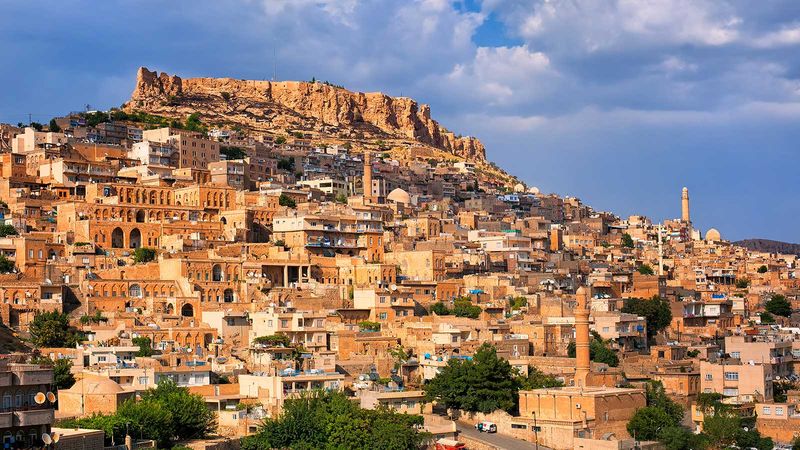
Mardin does not just sit in history. It is built from it, with every stone building on its hillside telling a story that stretches back thousands of years.
Located in southeastern Anatolia, Mardin occupies a dramatic ridge overlooking the flat Mesopotamian plains that extend toward Syria and Iraq. The city has been inhabited since at least the Bronze Age and has passed through Assyrian, Roman, Byzantine, Arab, Seljuk, and Ottoman rule.
What makes Mardin especially remarkable is that its ancient religious institutions are still active. The Deyrulzafaran Monastery, also known as the Saffron Monastery, was founded in the 5th century AD and continues to function as a working Syriac Orthodox monastery today.
The city’s architecture is built almost entirely from local golden-colored limestone, giving the entire hillside a warm, unified appearance that has remained consistent for centuries.
Mardin’s old city was nominated for UNESCO World Heritage status and represents one of the rare places where multiple ancient religious communities have coexisted for over a millennium.
12. Hattusa (Çorum Province)
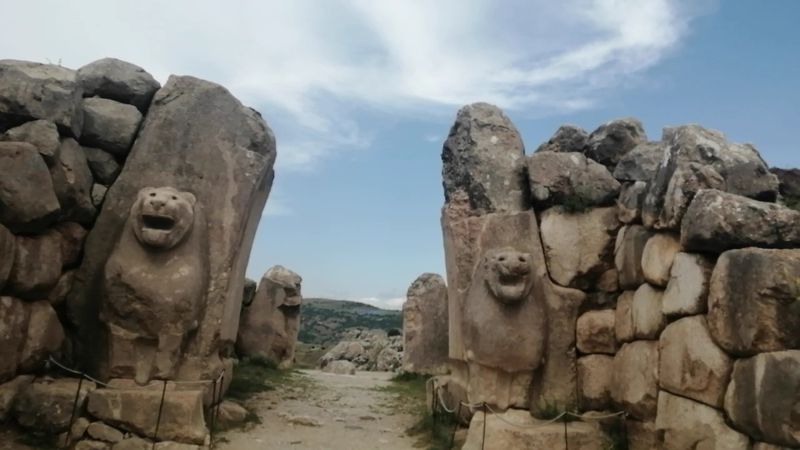
The Hittites were one of the great superpowers of the ancient world, and Hattusa was their capital. For centuries, this city stood at the center of an empire that challenged Egypt and shaped the ancient Near East.
Located near the modern village of Boghazkoy in Corum province, Hattusa served as the Hittite capital from roughly 1600 to 1200 BC. At its peak, the city covered approximately 180 hectares and housed temples, palaces, and a population of tens of thousands.
The site features several impressive gates including the Lion Gate, the Sphinx Gate, and the King’s Gate, each decorated with massive carved figures that once guarded the city’s entrances. The city walls, stretching over 6 kilometers, incorporated a series of towers and postern tunnels built from large stone blocks.
Hattusa is also where the world’s oldest known international peace treaty was signed, between Hittite King Hattusili III and Egyptian Pharaoh Ramesses II around 1259 BC. A replica of that treaty hangs at the United Nations headquarters in New York.
13. Konya
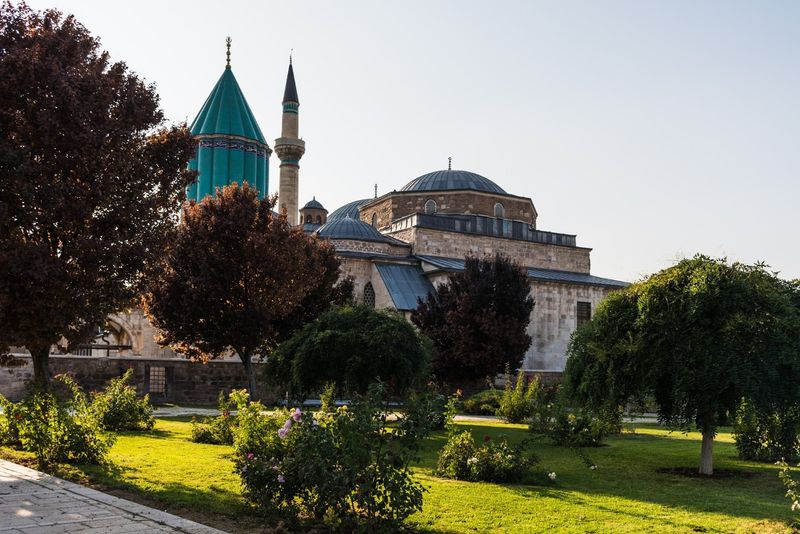
Konya holds a unique position in Turkey’s historical landscape because its significance is both political and deeply spiritual, spanning over three thousand years of continuous settlement.
The city was an important center during the Hittite period and later became the capital of the Seljuk Sultanate of Rum in the 12th and 13th centuries. During this era, Konya became one of the most cultured cities in the Islamic world, attracting scholars, poets, and architects from across the region.
The most famous figure associated with Konya is the 13th-century poet and mystic Jalal ad-Din Rumi, known simply as Rumi. His mausoleum, now housed in the Mevlana Museum, draws millions of visitors every year and remains an active place of spiritual significance.
The Sufi order he inspired, the Mevlevi Order, developed the practice of the Sema ceremony, commonly known as the Whirling Dervishes ritual, which UNESCO recognized as an Intangible Cultural Heritage in 2008.
Konya also contains well-preserved Seljuk-era mosques, madrasas, and caravanserais that document a pivotal period in Anatolian architectural history.
14. Alacahöyük
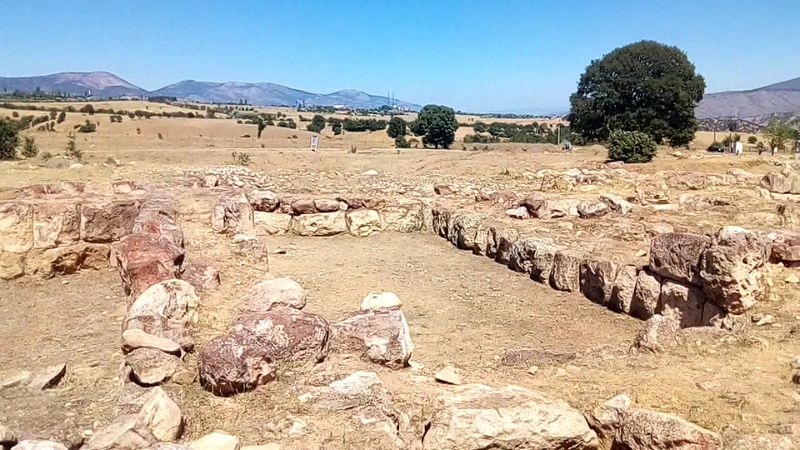
While Hattusa tends to get most of the Hittite spotlight, Alacahoyuk quietly holds some of the oldest and most refined artifacts from ancient Anatolia.
Located in Corum province, not far from Hattusa, the site has been inhabited since at least the Chalcolithic period, around 4000 BC. Its most significant finds come from the Early Bronze Age royal tombs, dating to approximately 2350 to 2150 BC, which predate the Hittite period entirely.
Archaeologists excavating these tombs uncovered an extraordinary collection of gold and silver vessels, bronze weapons, ceremonial standards, and jewelry of remarkable craftsmanship. Many of these artifacts are now displayed in the Museum of Anatolian Civilizations in Ankara.
The Hittites later built their own city on top of the earlier settlement and constructed the Sphinx Gate, a monumental entrance decorated with carved relief figures depicting religious ceremonies and processions. This gate remains one of the most detailed examples of Hittite monumental art still in its original location.
15. Assos (Behramkale)
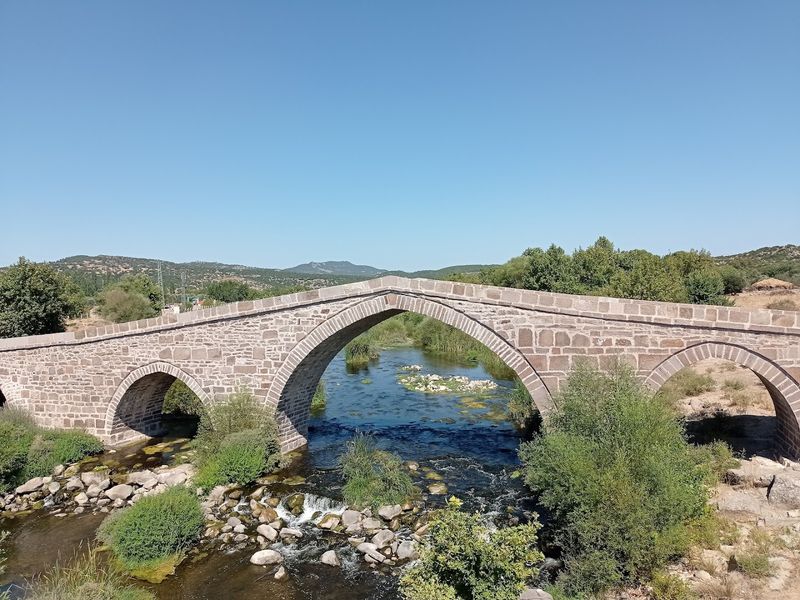
Aristotle lived here. That single fact alone makes Assos worth knowing about, but the site offers far more than just a famous former resident.
Assos, now known as Behramkale, sits on a volcanic hilltop in the Canakkale province overlooking the Aegean Sea and the Greek island of Lesbos. The ancient city was founded by Greek colonists around 900 BC and later became an independent city-state under the rule of Hermias, a former student of Plato.
Aristotle arrived in Assos around 347 BC, spent three years here, and established a school of philosophy. He also married Pythias, the niece of Hermias, during his time in the city.
The Temple of Athena, built in the 6th century BC, is the only Doric temple ever constructed in Asia Minor. Its remaining columns sit at the very top of the hill and offer one of the most historically layered panoramic views anywhere in Turkey.
The ancient harbor below the acropolis still functions as a small fishing port today, a rare example of continuous use spanning nearly three millennia.
16. Şanlıurfa
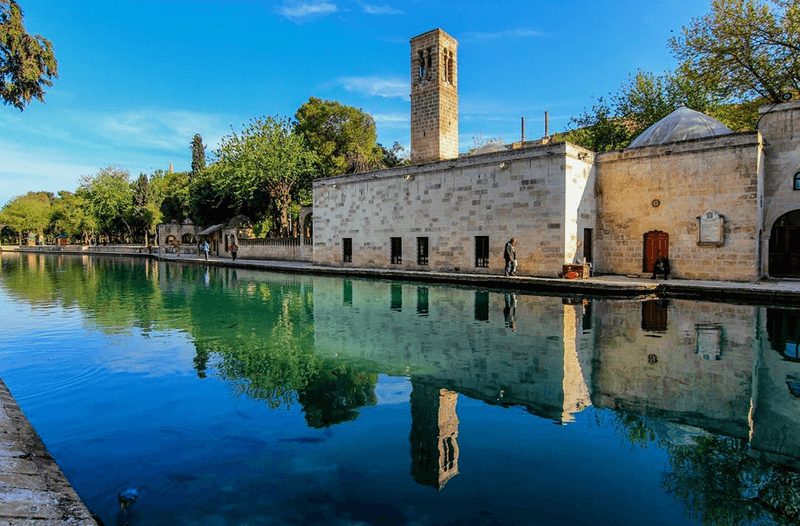
Some cities are old. Sanliurfa is ancient in a way that makes most other old cities seem relatively recent.
Located in southeastern Turkey near the Syrian border, Sanliurfa is widely considered one of the oldest continuously inhabited cities on Earth. It sits just 12 kilometers from Gobekli Tepe, the world’s oldest known ritual site, which falls within its province.
The city is deeply tied to biblical and Quranic tradition. It is traditionally identified as the birthplace of the prophet Abraham, and the Balikligol, or Pool of Sacred Fish, marks the spot where local tradition says Abraham was thrown into a fire that miraculously turned into water.
The old city contains a well-preserved bazaar, the Gumruk Han caravanserai, ancient mosques, and a hilltop citadel with two Roman columns still standing at its summit.
The Sanliurfa Archaeology and Mosaic Museum, opened in 2015, houses artifacts from Gobekli Tepe and is considered one of the most important archaeological museums in the Middle East.
17. Iznik (Nicaea)
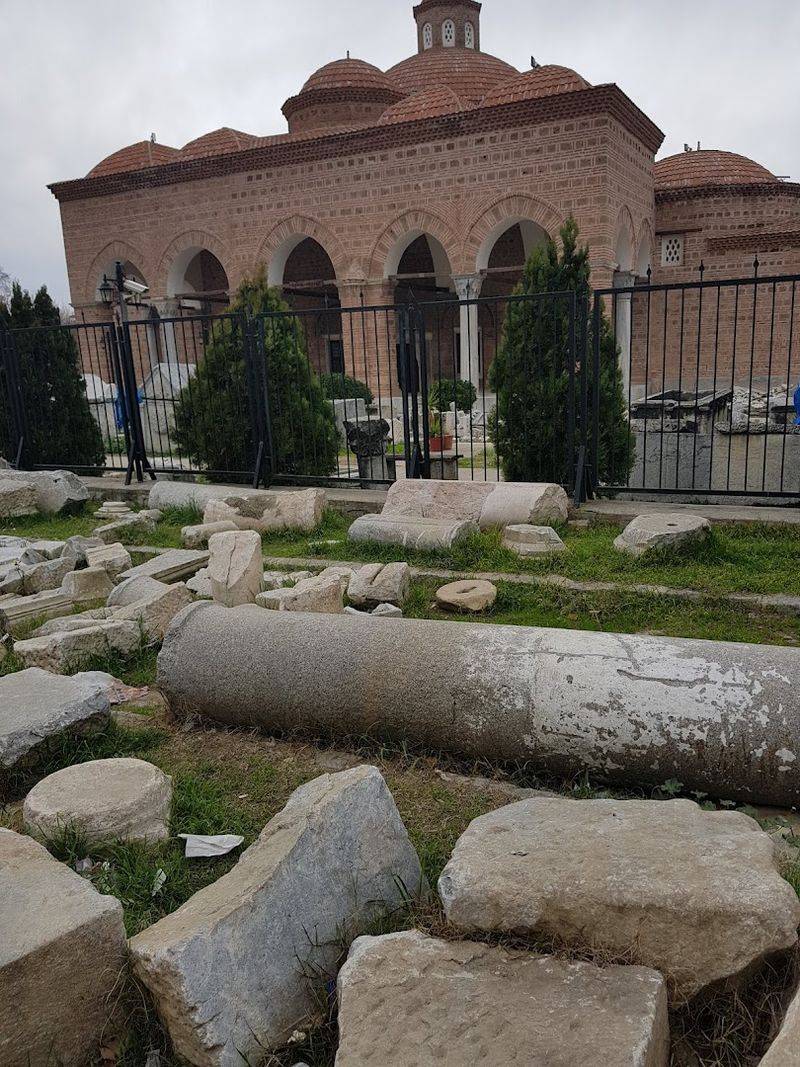
Behind the town’s current reputation for decorative ceramic tiles lies a history that shaped the entire Christian world. Iznik was once the stage for decisions that billions of people still live by today.
Known in antiquity as Nicaea, this town in the Bursa province of northwestern Turkey hosted the First Council of Nicaea in 325 AD, convened by Roman Emperor Constantine I. That council established the Nicene Creed, a foundational statement of Christian belief still recited in churches worldwide.
A second major council was held here in 787 AD, making Nicaea one of only two cities in history to have hosted two Ecumenical Councils of the Christian Church.
The ancient city walls, originally built by the Romans and reinforced by the Byzantines, still surround much of the modern town. Stretching approximately 5 kilometers in circumference, they include multiple gates and towers in varying states of preservation.
The Hagia Sophia church in Iznik, distinct from its more famous counterpart in Istanbul, dates to the 6th century and is where the Second Council of Nicaea was held.
Share this story