There is a place in Oregon where old church pews sit next to hand-blown glass bottles, where stained glass windows glow in the afternoon light, and where a single visit can send your renovation plans in a completely new direction. It lives inside a genuine 1890s mill building, and the moment you walk through the door, you realize this is not your average antique store.
The sheer scale of what has been collected here, sourced from all over the country, is the kind of thing that makes you forget what time it is. Whether you are restoring a century-old farmhouse or just love beautiful old things, this Oregon treasure is worth every mile of the drive.
The Address, Location, and Setting
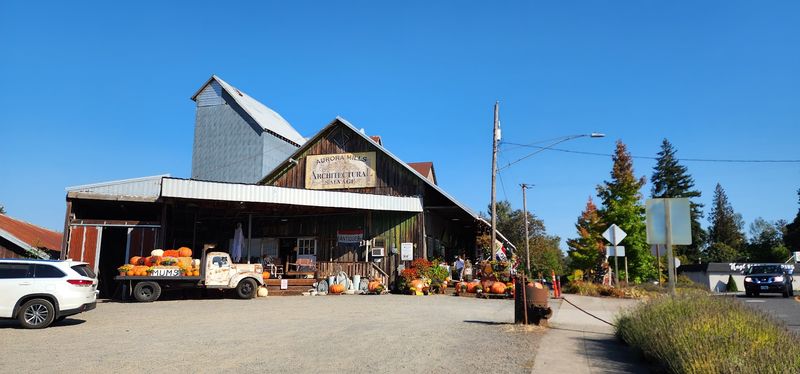
Aurora Mills Architectural Salvage sits at 14971 1st St NE, Aurora, OR 97002, tucked into the small historic town of Aurora, about 25 miles south of Portland along the I-5 corridor. The building itself is a genuine 1890s mill, and that history is not just a marketing angle.
You feel it the moment you see the structure from the parking lot.
The weathered wood exterior, the wide-open warehouse doors, and the sprawling grounds give the place a personality that modern retail stores simply cannot fake. Aurora is already a destination for antique lovers, with several shops lining its main street, but this one commands its own category entirely.
The grounds extend well beyond the main building, with a lumber yard and an outdoor display area that reward visitors who take their time. The shop is open Tuesday through Sunday from 10 AM to 5 PM and is closed on Mondays.
You can reach them at 503-678-6083 or visit auroramills.com before making the trip. Coming here without a plan is fine, but coming with a rough idea of what you need will save you from spending half the day in happy confusion.
The 10,000-Square-Foot Interior
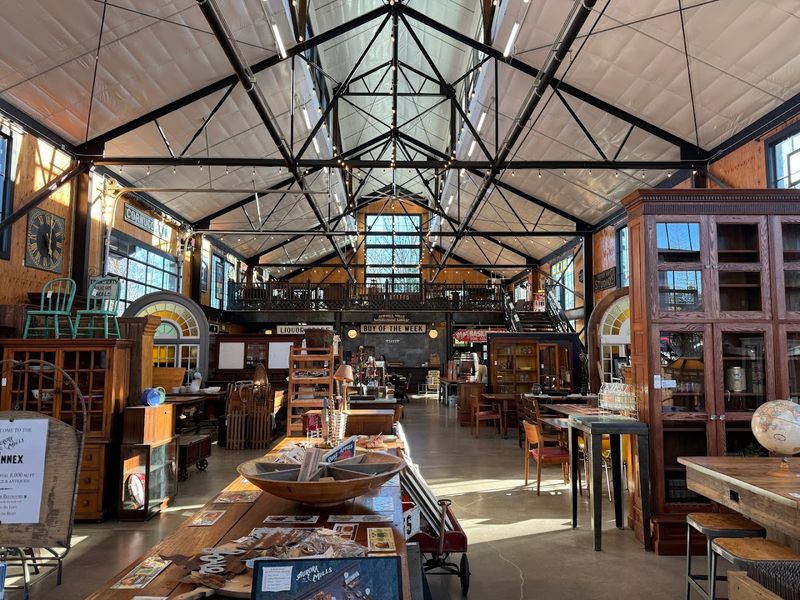
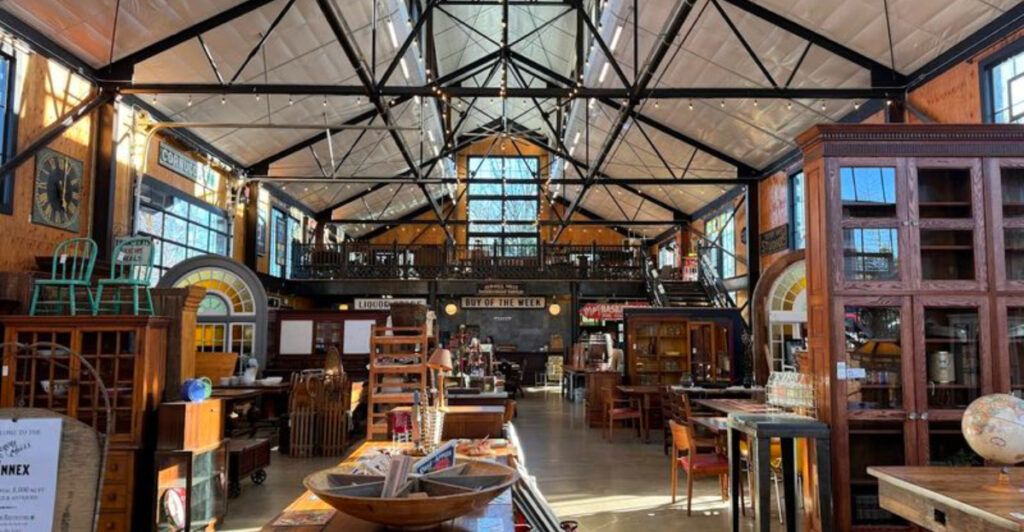
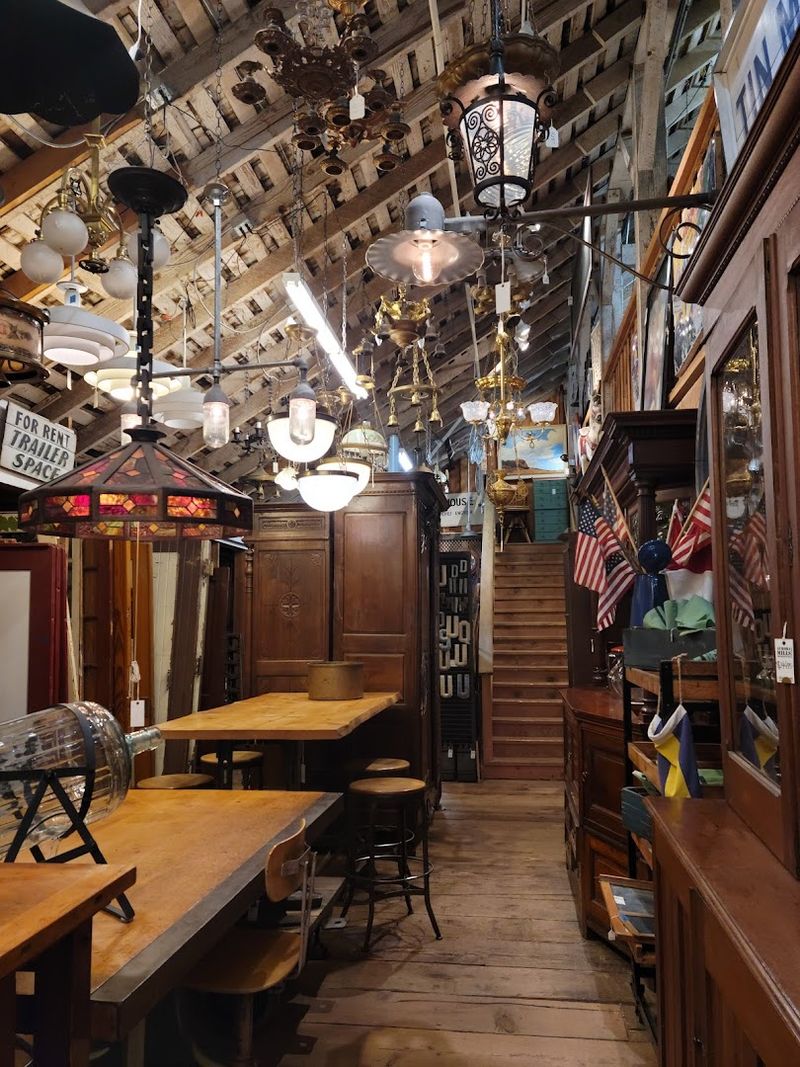
The scale of this place genuinely catches you off guard. The main showroom stretches across roughly 10,000 square feet, and that number only starts to make sense once you are standing in the middle of it, surrounded by row after row of salvaged pieces that seem to go on forever.
High ceilings, exposed beams, and the smell of old wood set the mood immediately.
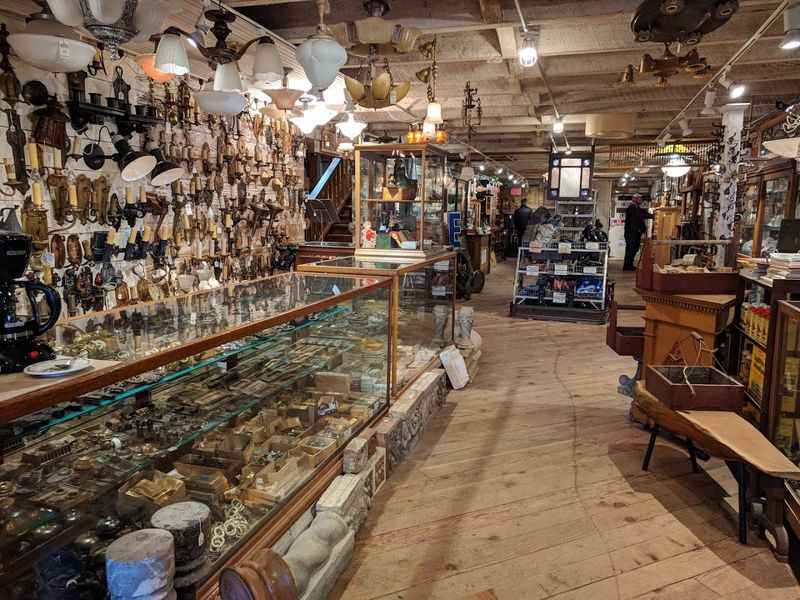
The layout is dense but navigated with care. Display cases hold smaller hardware pieces like antique glass door knobs, vintage locks, and decorative hinges.
Larger architectural elements, such as mantels, columns, and built-in cabinetry units, are arranged along the walls and in open floor sections. It takes real effort to move through everything at a proper pace.
First-time visitors often underestimate how long they will spend here. An hour turns into two without much effort, and two hours can stretch into an entire afternoon.
The staff does not rush you, which makes the whole experience feel more like exploring a well-organized museum than shopping in a store. Budget your time generously, because there is always one more corner worth checking.
Stained Glass Windows and Expert Restoration
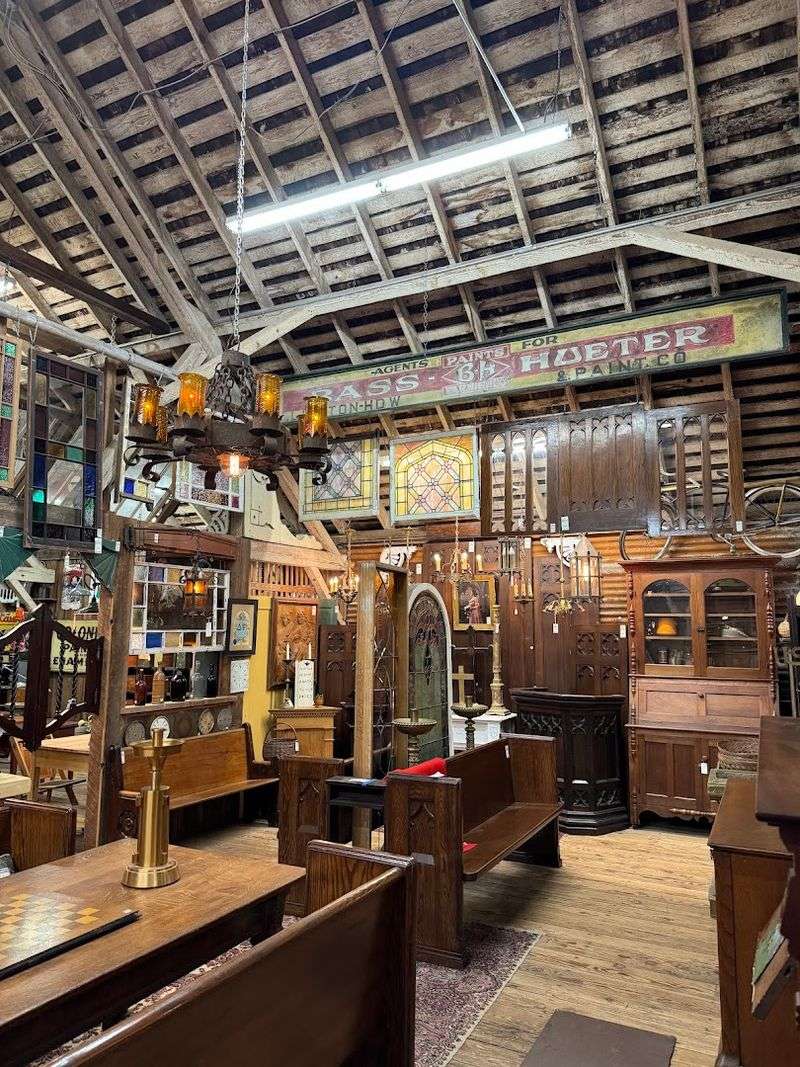
Few things at Aurora Mills generate as much conversation as the stained glass collection. Panels of every size line the showroom, their colors shifting with the light throughout the day.
Some pieces are small enough to fit a bathroom transom; others are grand enough to anchor a Victorian parlor wall.
What separates this shop from a standard reseller is the in-house expertise. Staff member Nathan Potter has earned a serious reputation among visitors for his deep knowledge of historic glass and his skill at restoration and custom fitting.
Customers restoring 100-year-old homes have called this shop from across Oregon, often after striking out everywhere else, and Nathan has guided them through the entire process, from identifying the right piece to coaching them through a DIY installation at home.
One customer found a stained glass window here that matched the exact era and rough dimensions of their existing 1910 window frame, then received step-by-step guidance on re-cementing and finishing the install themselves. That kind of hands-on support is rare in the salvage world and keeps people coming back.
If you own a historic home, this is one resource you genuinely do not want to overlook.
Antique Hardware and Vintage Architectural Details
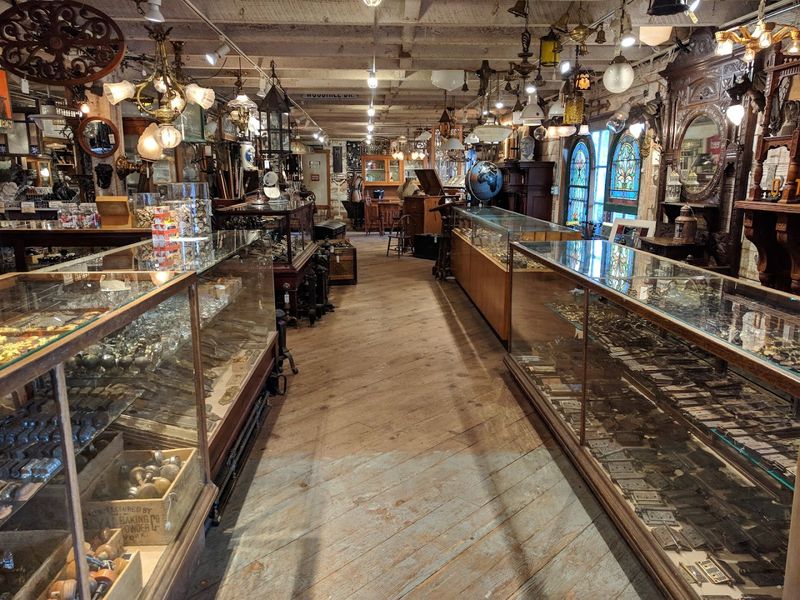
Hardware is one of those categories where Aurora Mills really earns its reputation. The display cases near the entrance hold a carefully curated selection of antique door knobs, escutcheons, mortise locks, window pulls, and decorative brackets that you simply cannot find at a home improvement chain.
Many pieces date back to the late 1800s and early 1900s, and the variety is staggering.
Glass door knobs get a lot of attention, and rightfully so. The faceted antique versions here have a clarity and weight that reproductions never quite match.
Brass hardware in original finishes, cast iron bin pulls, and ornate keyhole covers round out a collection that is a genuine resource for anyone doing period-accurate restoration work.
Prices on smaller hardware pieces can surprise shoppers who are used to flea market rates, but the quality and rarity of what is on offer justifies the investment for most buyers. The staff is happy to pull items from the cases so you can get a proper look, and they can usually speak to the age and origin of most pieces without hesitation.
For restoration projects where the details really matter, this hardware selection is hard to beat anywhere in the Pacific Northwest.
Reclaimed Wood and the Lumber Yard
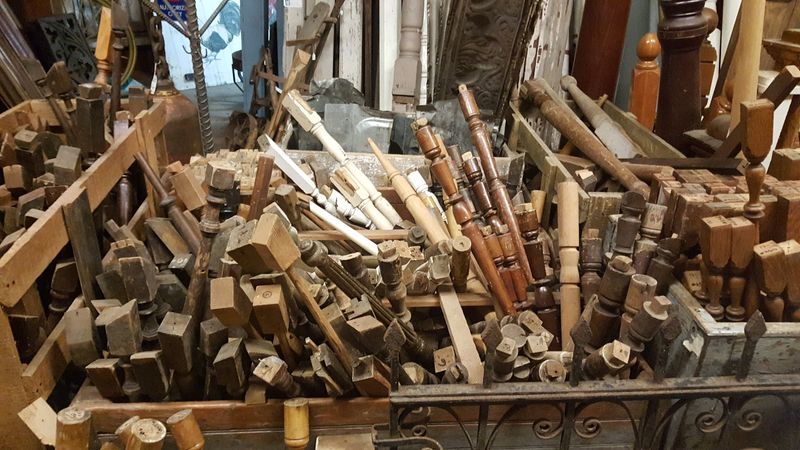
Beyond the main showroom, Aurora Mills operates a lumber yard that holds a rotating stock of reclaimed wood in various species, dimensions, and conditions. Old-growth fir is the most sought-after material here, and for good reason.
The tight grain density of century-old timber simply does not exist in newly harvested wood, and builders and craftspeople who work with it know the difference immediately.
Barn wood, wide-plank flooring, vintage tongue-and-groove paneling, and structural timbers all cycle through this yard depending on what the shop has sourced recently. One customer who purchased a stained glass window here also found old-growth fir at the lumber yard to build out the frame, making Aurora Mills a one-stop resource for an entire restoration project.
The yard rewards visitors who take their time sorting through what is available. Pieces are generally organized by type, but the best finds often require a bit of digging.
If you are planning a project that needs reclaimed wood, it is worth calling ahead to ask what is currently in stock. The staff can give you a general sense of what has come in recently, saving you a trip if the specific material you need is not currently available.
Vintage Furniture and Large Statement Pieces
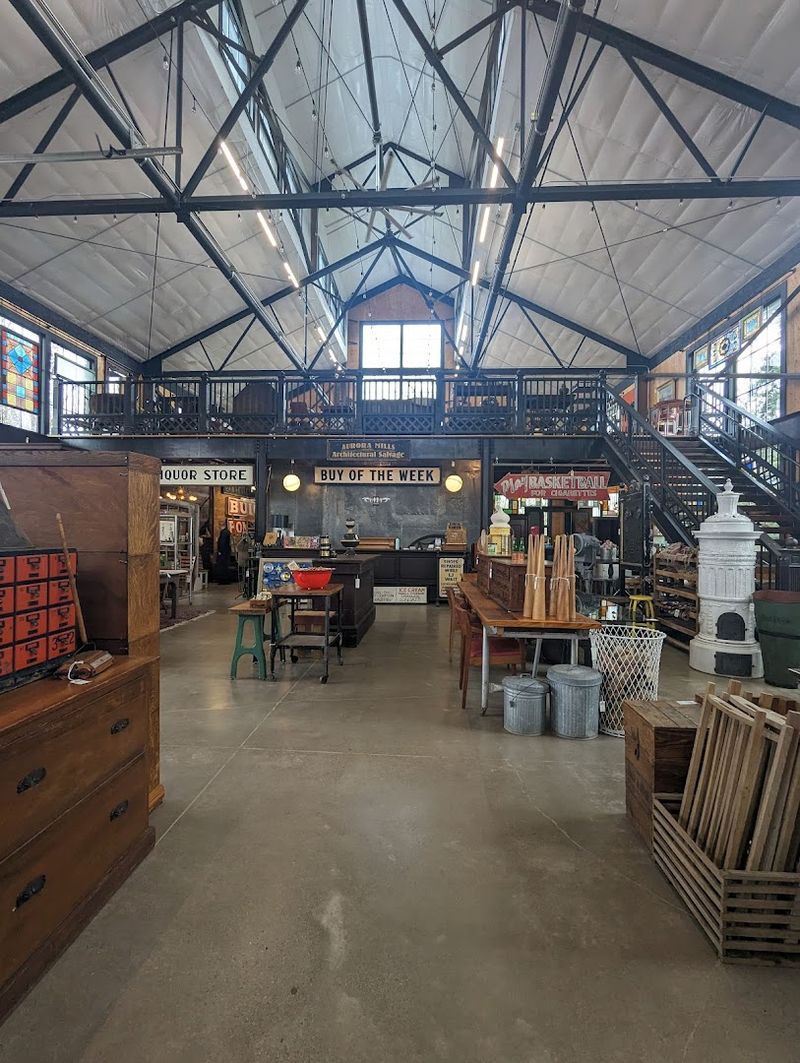
The furniture section at Aurora Mills operates on a different scale than most antique shops. Church pews, wardrobe cabinets, farmhouse tables, and ornate Victorian settees occupy the floor space alongside pieces that would look at home in a boutique hotel lobby.
Several large items carry sold tickets, which tells you something about how quickly the best pieces move.
A kitchen island and counter setup in the kitchen display area has been a consistent conversation starter, with pricing around the $4,000 range that most visitors find surprisingly reasonable given the craftsmanship and material quality involved. Handmade pieces like custom wardrobes and reclaimed wood countertops are priced to reflect the labor that went into them, and the shop does not apologize for that.
Shoppers looking for bargain-bin deals may find the price tags jarring at first, but the pieces here are not mass-produced reproductions. Each item has a provenance, a material story, and often a level of craftsmanship that modern furniture manufacturing has largely abandoned.
For anyone furnishing a historic home or looking for a true statement piece that will outlast everything else in the room, the investment tends to make a lot of sense in the long run.
Vintage Signs, Mannequins, and Curiosity Finds
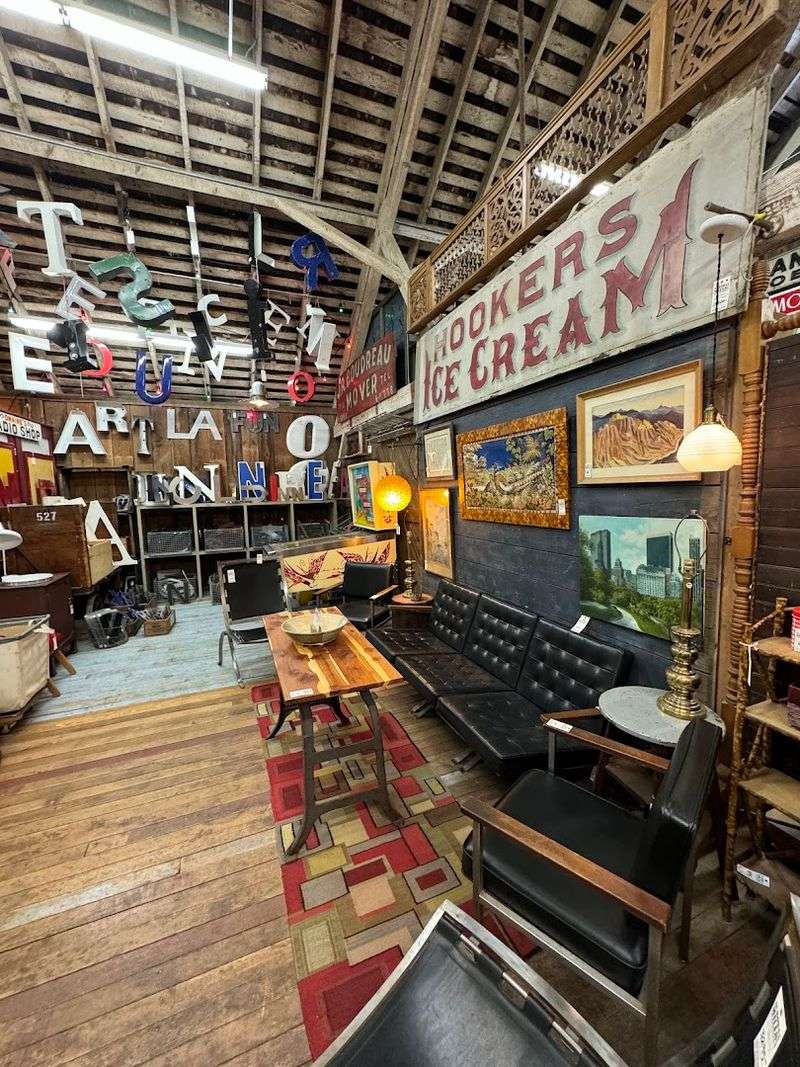
Not everything at Aurora Mills is structural. Scattered throughout the showroom are the kinds of objects that stop you mid-stride and make you reach for your phone to take a photo.
Vintage advertising signs, old metal trade placards, and antique mannequins in various states of character populate corners and wall spaces throughout the building.
These pieces attract a different kind of buyer than the restoration crowd. Interior designers, prop stylists, restaurant owners, and collectors of Americana all find material here that works for visual storytelling in commercial and residential spaces.
An old enamel sign or a well-worn store mannequin from the early twentieth century carries a visual weight that reproduction decor simply cannot replicate.
The curation of these items is one of the things that sets Aurora Mills apart from a standard junk shop. The staff has a clear eye for what qualifies as genuinely interesting versus what is just old.
The result is a collection where nearly every piece earns its place on the floor. Visitors who come without a specific project in mind often leave with something from this category, because the right object has a way of making its purpose obvious the moment you see it.
The Staff and Their Knowledge
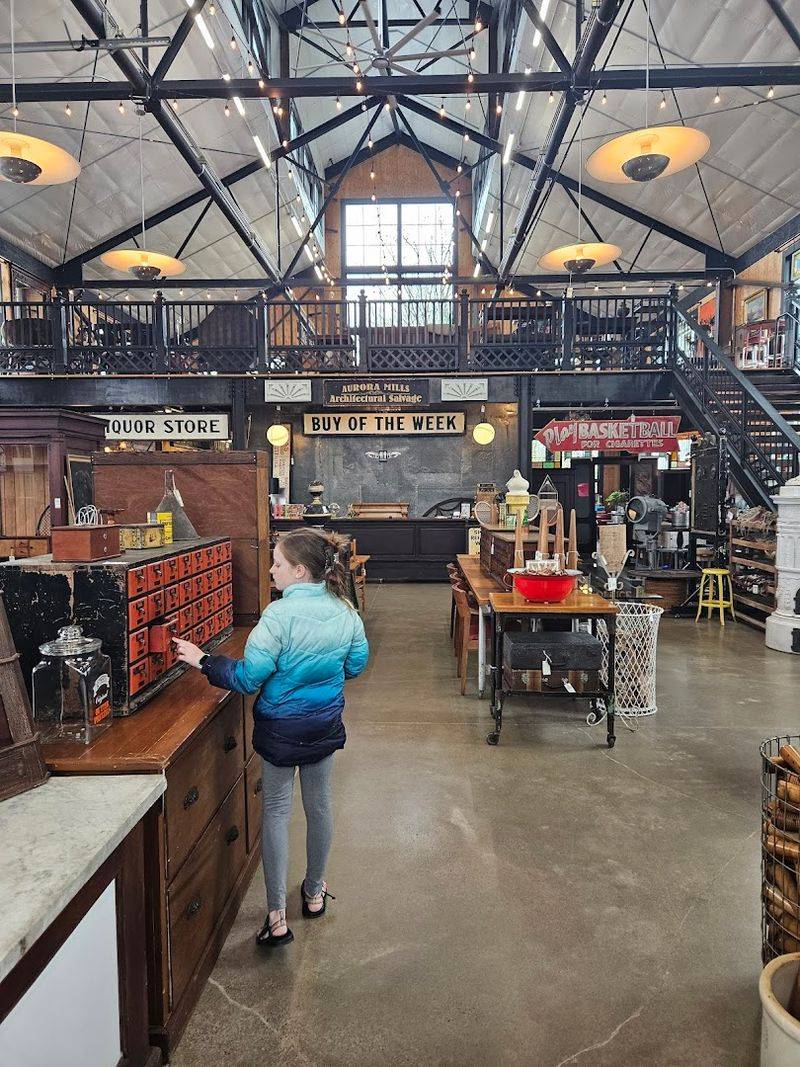
A salvage store is only as good as the people who can help you navigate it, and Aurora Mills clears that bar by a comfortable margin. The staff here are consistently described as friendly, professional, and genuinely knowledgeable, which matters enormously when you are trying to identify a piece of hardware from 1905 or figure out whether a particular window frame will work in your specific application.
Nathan Potter, the in-house glass expert, has become something of a local legend among restoration homeowners across Oregon. His willingness to walk customers through complex projects, answer questions over the phone, and provide guidance on DIY installations has generated loyalty that goes well beyond a single transaction.
Several customers have returned specifically because of the relationship they built with him during a previous visit.
The broader team maintains the same approachable standard. They give you space to wander without hovering, but they are easy to find when you have a question.
For anyone who finds large salvage stores overwhelming, having knowledgeable staff nearby makes a real difference. This is not a place where you will feel ignored or rushed, and that combination of expertise and patience is genuinely rare in the salvage world.
Pricing, Value, and What to Expect
Pricing at Aurora Mills is one of the most discussed aspects of the shop, and it is worth addressing directly before you make the trip. This is not a discount outlet, and the prices reflect that clearly.
Small hardware items can run over $100, larger furniture pieces can climb into the thousands, and rare architectural elements are priced accordingly.
The reasoning behind those numbers becomes clearer when you understand what it takes to source, transport, clean, and properly display items gathered from properties across the country. The labor involved in acquiring and presenting a single ornate mantelpiece or a set of antique French doors is substantial, and the shop prices its inventory to reflect that reality honestly.
That said, not every item carries a premium price tag. Plenty of mid-range pieces exist throughout the showroom for buyers who are working with tighter budgets.
The key is coming with realistic expectations and a clear sense of what you are looking for. Bargain hunters may leave frustrated, but serious collectors and restoration professionals tend to find the pricing fair relative to the quality and rarity of what is available.
Knowing your project needs ahead of time helps you focus your energy on the sections most relevant to your budget.
Tips for Making the Most of Your Visit
A few practical habits will make your visit to Aurora Mills significantly more productive and enjoyable. Bring a measuring tape.
This sounds obvious, but it is easy to fall in love with a door, window frame, or piece of furniture without knowing whether it will actually fit your space. Dimensions matter enormously in restoration work, and knowing your measurements in advance saves you from making an expensive mistake.
Come with a general sense of what you are after, even if it is broad. The store covers so much ground that arriving with zero direction can lead to genuine sensory overload.
A rough category, such as hardware, windows, flooring, or furniture, gives you a starting point and helps the staff point you toward the most relevant sections quickly.
Dogs are welcome, which makes the visit more enjoyable for pet owners who do not want to leave their companion in a hot car. The shop is closed on Mondays, so plan accordingly.
Hours run from 10 AM to 5 PM Tuesday through Sunday. If you are driving from Portland, the location just off I-5 near Aurora makes it an easy day trip that pairs well with a stroll through the rest of the town’s antique district afterward.
Share this story