Ohio might not be the first place that comes to mind when you think of stunning waterfalls, but this state is hiding some seriously impressive natural wonders. From dramatic 65-foot plunges to peaceful cascades tucked inside caves, Ohio’s waterfalls offer something for every kind of adventurer.
May is the absolute best time to visit, when spring rains push water levels to their peak and fresh green leaves frame every view. Pack your hiking boots and get ready to be amazed.
Brandywine Falls — Cuyahoga Valley National Park
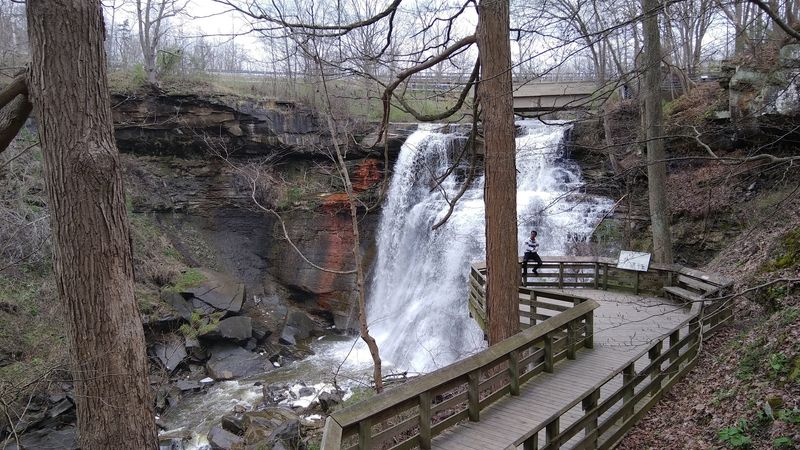
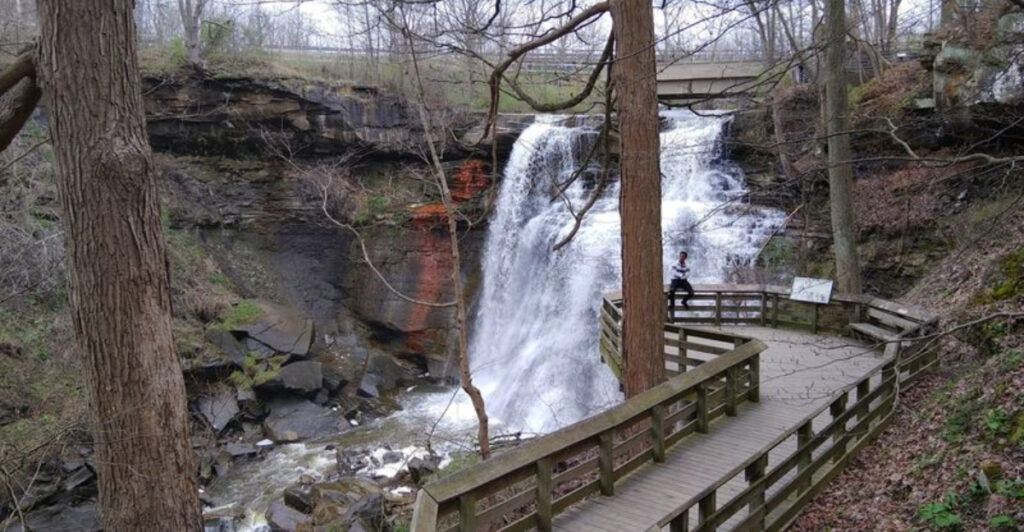
Standing at roughly 65 feet tall, Brandywine Falls is the kind of waterfall that makes your jaw drop before you even reach the viewing platform. It roars into a deep, rocky gorge while ferns and wildflowers line every inch of the surrounding trail.
Visiting in May means you catch it at full power, with snowmelt and spring rain combining to create an absolutely thunderous flow.
The boardwalk trail leading to the falls is well-maintained and suitable for most fitness levels, making it a great choice for families and casual hikers alike. The mist rising from the base creates a cool, refreshing atmosphere that feels like nature’s own air conditioning.
Early morning visits reward you with golden light filtering through the trees and far fewer crowds.
Cuyahoga Valley National Park surrounds the falls with miles of additional trails, so you can easily turn this into a full-day outdoor adventure. The historic Inn at Brandywine Falls sits just steps away if you want to extend your stay overnight.
This is the waterfall that defines Ohio’s natural beauty, and May is hands down the best month to witness it in full, glorious action.
Cedar Falls — Hocking Hills State Park
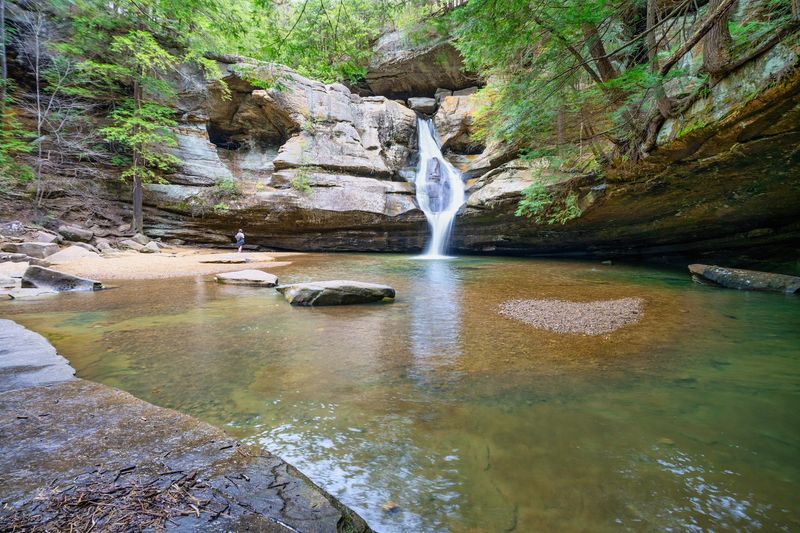
Despite its name, Cedar Falls is actually surrounded by hemlock trees, not cedars. Early settlers got the identification wrong, but the name stuck anyway, giving this waterfall a charming little quirk to go along with its breathtaking appearance.
What nobody got wrong was just how spectacular this place looks after a good spring rain.
Cedar Falls is widely considered the most powerful waterfall in Ohio, especially during May when runoff pushes the water into a frothy, wide cascade that fills the whole gorge with sound. The hike to reach it is short and relatively easy, clocking in at under a mile round trip from the main parking area.
That accessibility makes it wildly popular, but the payoff is absolutely worth sharing the trail.
The surrounding forest creates a canopy of fresh green leaves in spring, turning the whole experience into something almost dreamlike. Mossy boulders line the creek below, and the sound of rushing water echoes off the sandstone walls in a way that feels almost musical.
Hocking Hills State Park offers plenty of nearby trails and attractions, so Cedar Falls pairs perfectly with a full day of exploring the region’s incredible natural scenery.
Ash Cave Falls — Hocking Hills State Park
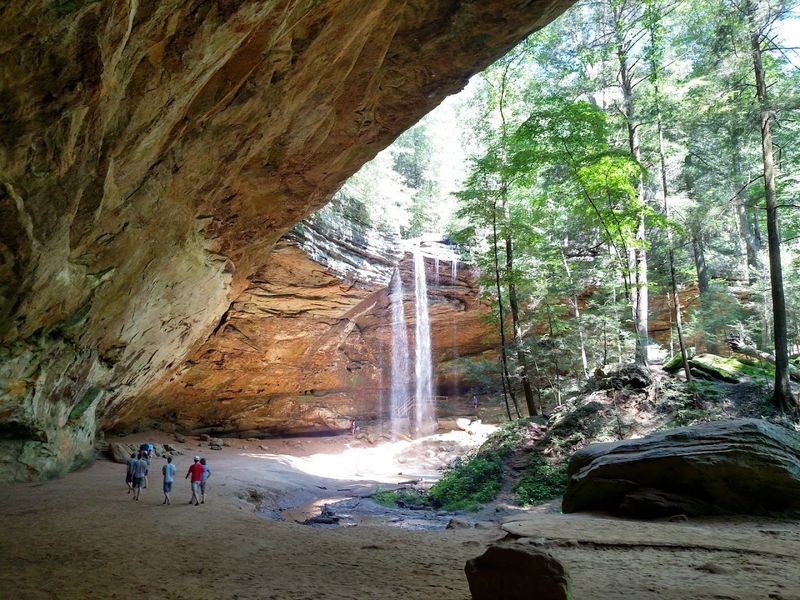
Imagine walking into a cave so large it could hold a five-story building, and then looking up to see a waterfall pouring down like a natural shower curtain. That is exactly what Ash Cave delivers, and it never gets old no matter how many times you visit.
The recess cave stretches nearly 700 feet wide, making it the largest of its kind in Ohio.
In May, the waterfall at Ash Cave transforms from a seasonal trickle into a genuine flowing curtain of water that catches the light in magical ways. The acoustics inside the cave amplify every drop, creating a soft, echoing sound that feels almost meditative.
The flat, paved trail to the cave is only half a mile long and completely accessible, making this one of the most welcoming natural sites in the entire state.
Native Americans used this cave for shelter long before European settlers arrived, and standing inside it today still gives you that same sense of ancient protection. The sandstone walls are stained with centuries of moisture and mineral deposits, creating patterns that look like abstract paintings.
Ash Cave is proof that Ohio’s natural wonders can be both jaw-dropping and deeply peaceful at the very same time.
Old Man’s Cave Falls — Hocking Hills
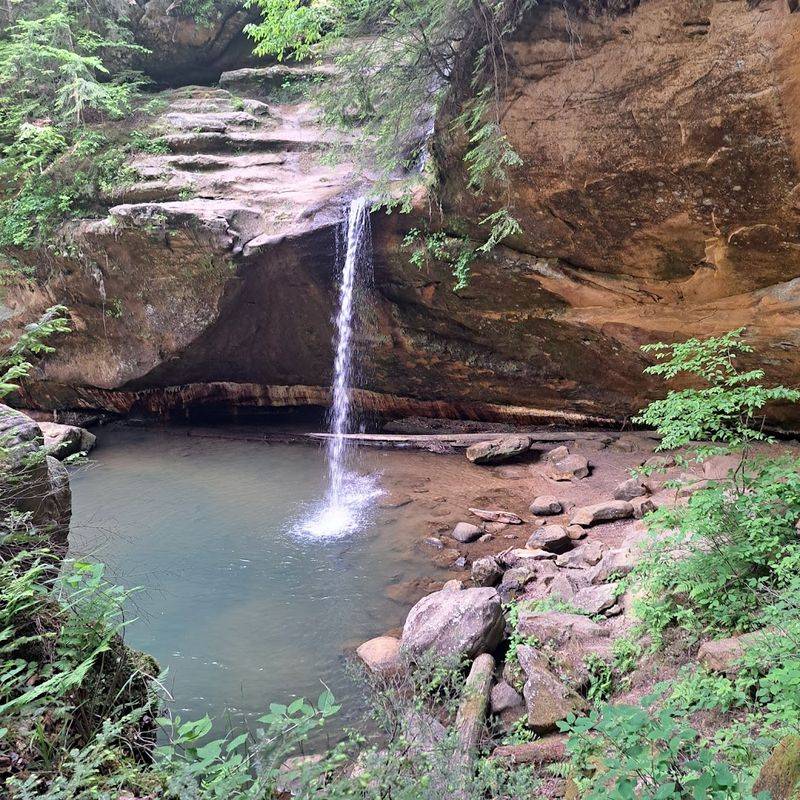
You do not just visit one waterfall at Old Man’s Cave. You visit several, all strung together along one of the most scenic gorge trails in the entire Midwest.
The upper falls greet you near the start of the trail, but the whole hike feels like a continuous waterfall experience from beginning to end, especially in May when every stream is running high.
The trail winds through narrow passages, over stone bridges, and past towering recess caves carved by centuries of water erosion. Spring adds an almost electric quality to the greenery here, with mosses glowing neon green and wildflowers poking up between the sandstone boulders.
The sound of moving water follows you the entire way, which makes the hike feel energizing rather than tiring.
Old Man’s Cave gets its name from a hermit named Richard Rowe who reportedly lived in the main cave during the 1800s. That backstory gives the place a wonderfully mysterious personality that kids and adults both find fascinating.
The trail loop is about six miles total, but shorter options exist for those who want a quicker taste of the magic. Either way, this is one hike in Ohio that will absolutely leave a lasting impression on anyone who tries it.
Charleston Falls — Tipp City
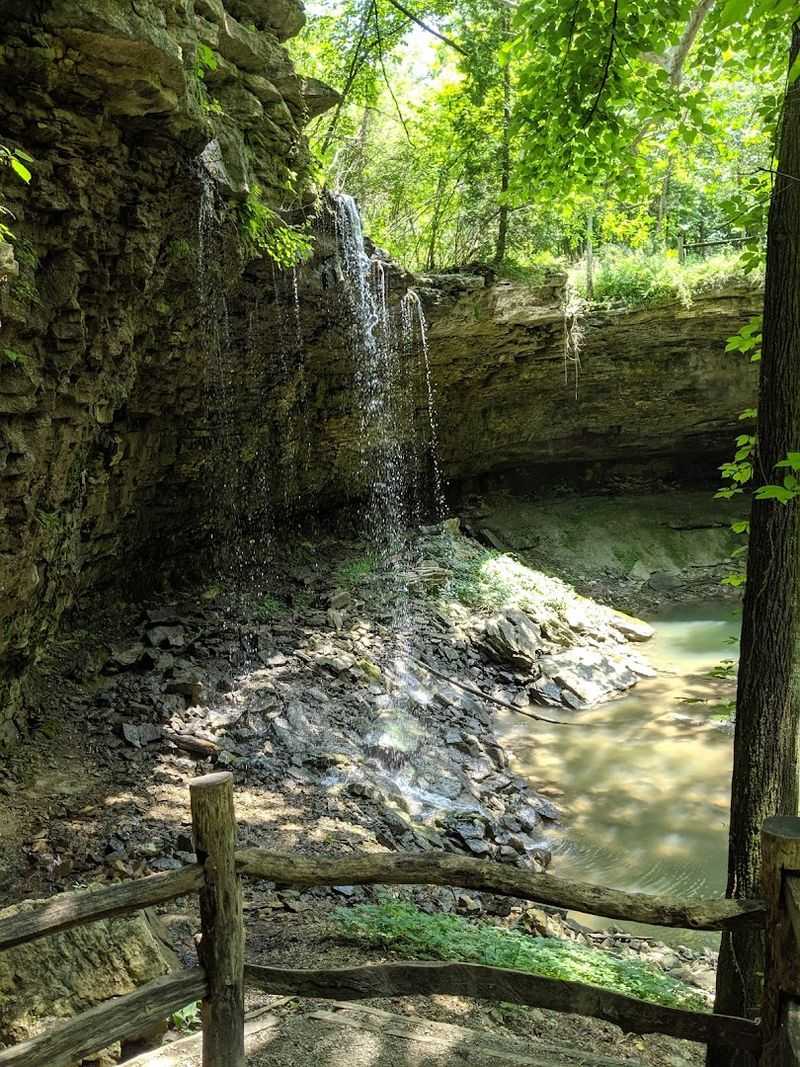
Western Ohio does not get nearly enough credit for its natural scenery, and Charleston Falls is the best argument for changing that opinion. Stretching 37 feet tall, it holds the title of tallest waterfall in western Ohio, and locals proudly call it their own mini Niagara.
In May, the water volume swells dramatically, turning this already impressive drop into something truly show-stopping.
The falls sit inside Charleston Falls Preserve, a peaceful 216-acre nature area managed by the Miami County Park District. A short, well-marked trail leads you through a cedar grove and along a limestone gorge before the falls suddenly appear around a bend in the path.
That moment of first seeing it never loses its punch, no matter how many times you make the trip.
The limestone geology here is different from the sandstone cliffs found in Hocking Hills, giving Charleston Falls a distinct, sharp-edged character that photography enthusiasts absolutely love. Rare plants grow along the gorge walls, including some species found almost nowhere else in the region.
The preserve also hosts a variety of bird species in spring, so bringing binoculars along with your camera is never a bad idea. This one is genuinely worth the drive for anyone who has not yet made the trip.
Dundee Falls — Beach City Wildlife Area
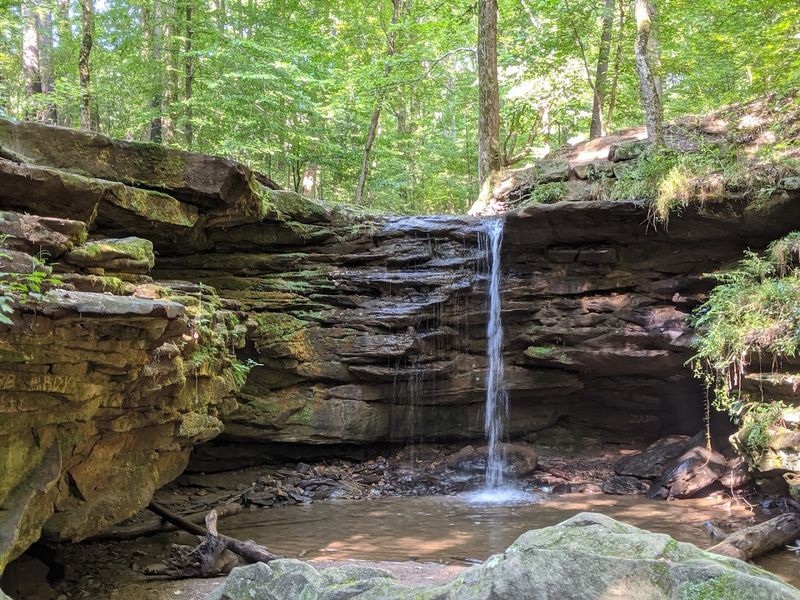
Some waterfalls demand your attention with sheer size and noise. Dundee Falls earns your admiration with quiet charm and a sense of genuine discovery.
Tucked inside the Beach City Wildlife Area in Wayne County, this hidden gem rewards the hikers who seek it out with a serene, forested setting that feels completely removed from the outside world.
The falls themselves are modest in height, but the consistent flow and the surrounding woodland create an atmosphere that feels almost like stumbling onto a secret. In May, the forest canopy is fresh and full, filtering sunlight into soft beams that dance across the water surface.
Birdsong fills the air around the falls, making this one of the most peaceful waterfall experiences Ohio has to offer.
Because Dundee Falls is not heavily advertised or widely promoted, you are far less likely to share it with a crowd. That solitude is part of the appeal for hikers who prefer their nature experiences without the background noise of other visitors.
The trail conditions can be uneven and muddy in spring, so sturdy footwear is strongly recommended. Bring a picnic, take your time, and let this quiet little waterfall remind you that the best discoveries are often the ones you have to work just a little harder to find.
Great Falls of Tinkers Creek — Bedford Reservation
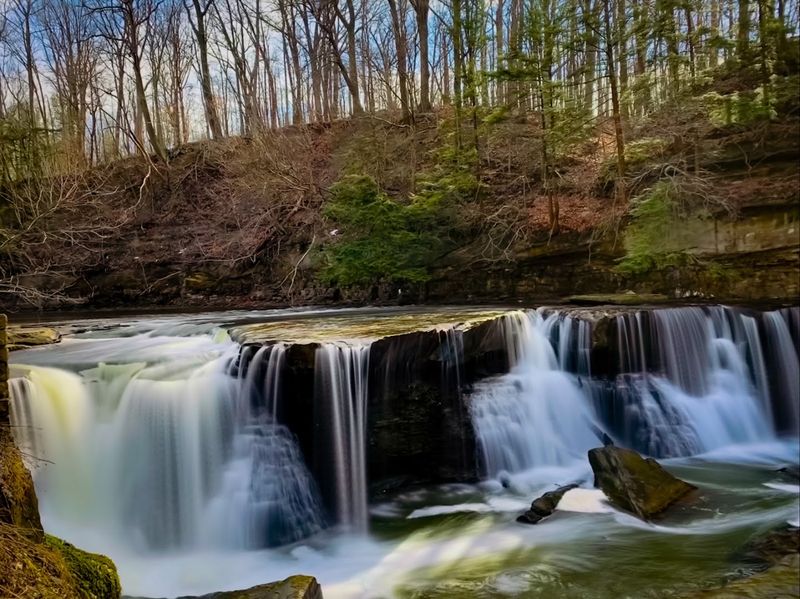
Width matters just as much as height when it comes to waterfalls, and the Great Falls of Tinkers Creek makes a compelling case for that argument. Spreading across the creek bed in a series of layered cascades, this wide, dramatic waterfall creates one of the most visually striking scenes in the entire Cleveland Metroparks system.
Spring runoff in May pushes every stream to its fullest, amplifying the already impressive spectacle.
The falls drop roughly 25 feet over shale and sandstone ledges, creating a tiered effect that looks almost architectural from the overlook above. The surrounding gorge adds serious depth to the view, with forested walls rising on both sides and reflecting in the churning water below.
Photographers consistently rank this location among the top natural shooting spots in northeastern Ohio.
Bedford Reservation surrounds the falls with miles of hiking trails, bridle paths, and picnic areas, making it easy to build a full outdoor day around the visit. The Egbert Picnic Area nearby offers restrooms and parking, which adds a layer of convenience that more remote waterfalls simply cannot match.
Tinkers Creek Gorge is also a designated National Natural Landmark, so you are visiting a place that has officially been recognized for its outstanding ecological importance. That is a pretty solid endorsement.
Chagrin Falls — Village of Chagrin Falls
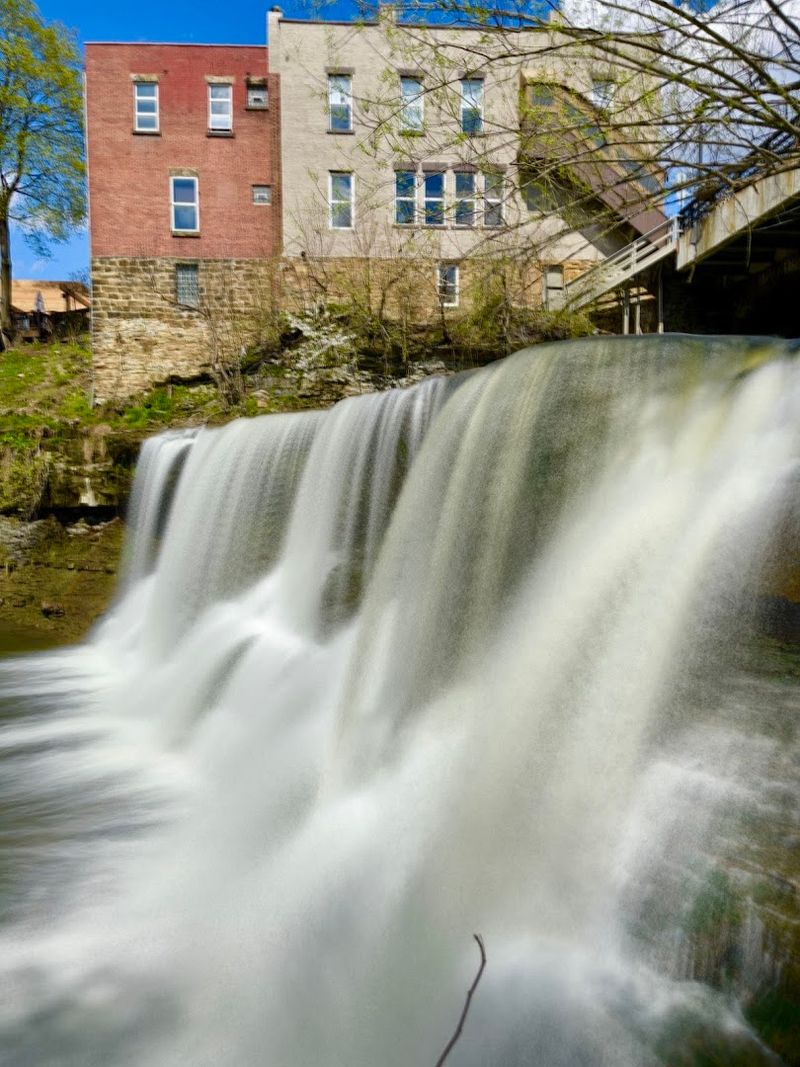
Not many towns in America are named after their waterfall, but Chagrin Falls wears that identity with enormous pride. The 20-foot cascade runs right through the heart of this picturesque northeastern Ohio village, visible from the main street bridge and surrounded by independent shops, restaurants, and historic buildings.
It is the kind of scene that makes you stop mid-stride just to stare.
In May, the water runs strong and clear, catching the light in ways that make every smartphone photo look professionally composed. The village itself adds a layer of charm that purely wilderness waterfalls simply cannot offer.
Grabbing a scoop of ice cream from the iconic Jeni’s Splendid Ice Creams location nearby while watching the falls rush below is basically a required activity.
The falls are accessible year-round and completely free to view from multiple vantage points, including a dedicated overlook platform just steps from the main parking area. Evening visits are especially atmospheric when the waterfall is lit up and the town glows warmly around it.
Chagrin Falls hosted a popular comic strip called Funky Winkerbean for decades, further cementing its status as a beloved Ohio landmark. Whether you come for the water or the small-town atmosphere, you will absolutely leave wanting to come back again.
Lanterman’s Mill Falls — Youngstown
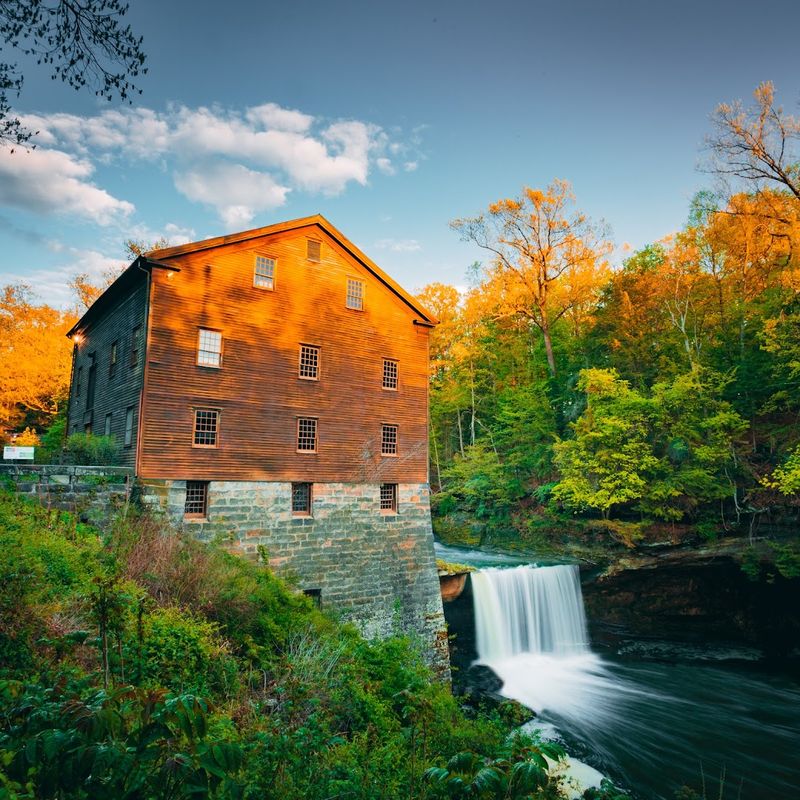
History and nature collide spectacularly at Lanterman’s Mill Falls, where a working 19th-century gristmill sits just steps from one of the most photographed waterfalls in Ohio. Located inside Mill Creek Park in Youngstown, this spot has been drawing visitors for well over a century, and the combination of rushing water and creaking wooden mill machinery gives it a storybook quality that is hard to replicate anywhere else.
The falls themselves tumble over rocky outcroppings in a series of cascades that grow noticeably more powerful during May’s peak flow season. Spring also brings out vivid green reflections in the water, making the whole scene feel almost too beautiful to be real.
The restored mill still grinds corn on select days, so timing your visit right can add a genuinely hands-on historical dimension to the experience.
Mill Creek Park stretches across nearly 4,400 acres and includes lakes, trails, gardens, and additional scenic overlooks, all within the Youngstown city limits. That makes Lanterman’s Mill Falls a surprisingly accessible urban nature escape that many Ohioans outside the area have not yet discovered.
The stone bridge near the mill creates one of the most classic waterfall photo compositions in the entire state. Pack your camera, wear waterproof shoes, and plan to spend at least a few hours soaking it all in.
Paine Falls — Painesville
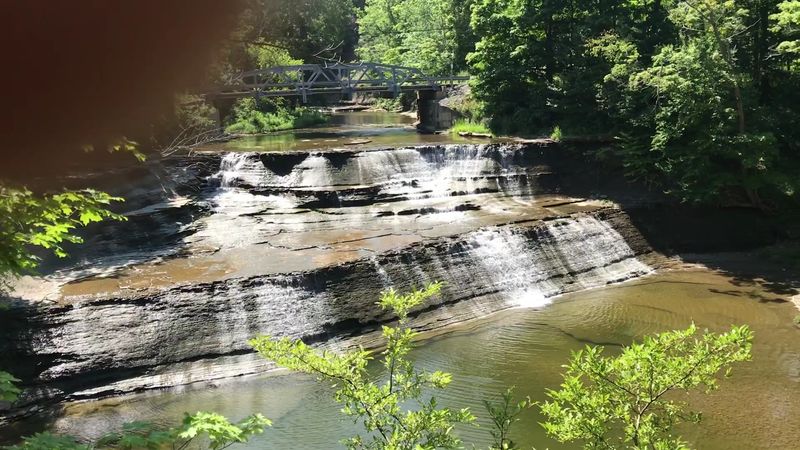
Two tiers are always better than one, and Paine Falls delivers exactly that with a graceful double-drop that tumbles through a wooded park in Lake County. The upper and lower tiers each have their own personality, with the upper section rushing over a rocky ledge and the lower portion spreading out into a wider, calmer pool.
Together, they create a waterfall experience that feels both exciting and deeply relaxing.
A wooden footbridge near the falls provides one of the best viewing angles in the park, framing the water perfectly against the surrounding forest. In May, the trees are fully leafed out and brilliantly green, creating a backdrop that makes every photo look like it belongs on a nature magazine cover.
The sound of the water echoing through the quiet park adds to the overall sense of calm that this spot radiates.
Paine Falls Park is part of the Lake Metroparks system, which means it is well-maintained, free to enter, and easy to navigate for visitors of all ages. The park includes picnic shelters and walking paths that wind along the creek both above and below the falls.
Parking is conveniently located just a short walk from the main viewing area. For a peaceful May afternoon that costs nothing but a little drive time, Paine Falls is an unbeatable choice.
Share this story